

Explainable AI: A Review of Machine Learning Interpretability Methods
Open accessThe DOI matches its Crossref record; 170 of the 170 references it cites were found in a registry or an index.
Abstract
Recent advances in artificial intelligence (AI) have led to its widespread industrial adoption, with machine learning systems demonstrating superhuman performance in a significant number of tasks. However, this surge in performance, has often been achieved through increased model complexity, turning such systems into “black box” approaches and causing uncertainty regarding the way they operate and, ultimately, the way that they come to decisions. This ambiguity has made it problematic for machine learning systems to be adopted in sensitive yet critical domains, where their value could be immense, such as healthcare. As a result, scientific interest in the field of Explainable Artificial Intelligence (XAI), a field that is concerned with the development of new methods that explain and interpret machine learning models, has been tremendously reignited over recent years. This study focuses on machine learning interpretability methods; more specifically, a literature review and taxonomy of these methods are presented, as well as links to their programming implementations, in the hope that this survey would serve as a reference point for both theorists and practitioners.
Overview
The claims and statistics of this paper haven’t been checked yet.
Free: it reads the open-access text and checks the first 5 claims that cite a source we can check. Create a free account to check every claim.
Integrity signals
Registry
Cites
Statistics
Figures




Verification
Claims the paper makes
The claims and statistics of this paper haven’t been checked yet.
Free: it reads the open-access text and checks the first 5 claims that cite a source we can check. Create a free account to check every claim.
Claims other papers make about this one
Each is checked against this paper’s own text: does it say what the citing paper says it does?
The source backs part of the claim, not all of it — or backs it for a different population, condition or comparison.
In the citing paper
“While valuable, these techniques can sometimes be inconsistent or fail to capture the true decision-making process of highly complex models, potentially leading to a false sense of interpretability66.”
From Bias recognition and mitigation strategies in artificial intelligence healthcare applications (2025) · cites this paper as [66]
Experimental — accuracy not yet measuredThe source backs part of the claim, not all of it — or backs it for a different population, condition or comparison.
In the citing paper
“These methods facilitate a deeper understanding of the model’s internal logic, support debugging and optimization processes, and help identify key variables that most strongly influence students’ behavioral intentions toward GenAI adoption (Linardatos et al., 2020).”
From A two-step structural equation modeling and explainable machine learning framework for understanding university students’ adoption of generative AI: balancing intrinsic motivations and perceived risks (2026) · cites this paper as Linardatos et al., 2020
Experimental — accuracy not yet measuredThe source backs part of the claim, not all of it — or backs it for a different population, condition or comparison.
In the citing paper
“Yet, there is no common taxonomy neither within one field (such as data science) nor between different fields (law and data science).”
From Transparency of AI in Healthcare as a Multilayered System of Accountabilities: Between Legal Requirements and Technical Limitations (2022) · cites this paper as Linardatos et al., 2021
Experimental — accuracy not yet measuredThe source backs part of the claim, not all of it — or backs it for a different population, condition or comparison.
In the citing paper
“Despite the substantial amount of research devoted to solving the black-box issue of AI, many scholars in the field agree that a clear relevant taxonomy is missing (Doshi-Velez and Kim, 2017; Adadi and Berrada, 2018; Linardatos et al., 2021).”
From Transparency of AI in Healthcare as a Multilayered System of Accountabilities: Between Legal Requirements and Technical Limitations (2022) · cites this paper as Linardatos et al., 2021
Experimental — accuracy not yet measuredThe source backs part of the claim, not all of it — or backs it for a different population, condition or comparison.
In the citing paper
“Prior research on XAI across industries, has also found that the perceived quality of explanations is closely tied to their actionability and practical relevance for end users [8].”
From Explainable AI in hospital clinical decision support systems: A scoping review of healthcare professionals’ perspectives (2026) · cites this paper as [8]
Experimental — accuracy not yet measured
5 more claims about this paper
Create a free account to see every claim other papers make about this one.
Self-check
Percentages, sums and reported differences re-computed from the paper’s own numbers.
The self-check needs the paper’s full text.
Citations
Cites
ImageNet classification with deep convolutional neural networks
Krizhevsky, A., Sutskever, I., & Hinton, G. E. (2017) · Communications of the ACM · doi:10.1145/3065386 · Cited by 112,155 · cited 1×
“An improvement over the initial method was proposed in [24], where the well-known Krizhevsky network [25] was utilised in order to outperform state-of-the-art saliency models by a large margin, increasing the amount of explained information by 67% when compared to state-of-the art.”
LeCun, Y., Bengio, Y., & Hinton, G. (2015) · Nature · doi:10.1038/nature14539 · Cited by 84,126
XGBoost: A Scalable Tree Boosting System
Chen, T., & Guestrin, C. (2016) · Proceedings of the 22nd ACM SIGKDD International Conference on Knowledge Discovery and Data Mining · doi:10.1145/2939672.2939785 · Cited by 54,569 · cited 1×
“On the one hand, there are the so called black-box models, which include deep learning [2] and ensembles [8–10].”
Greedy function approximation: A gradient boosting machine
Friedman, J. H. (2001) · The Annals of Statistics · doi:10.1214/aos/1013203451 · Cited by 30,731 · cited 3×
“[59] PDPbox InterpretML Skater PH G Agnostic tab 589.”
Grad-CAM: Visual Explanations from Deep Networks via Gradient-Based Localization
Selvaraju, R. R., Cogswell, M., Das, A., Vedantam, R., Parikh, D., & Batra, D. (2017) · 2017 IEEE International Conference on Computer Vision (ICCV) · doi:10.1109/iccv.2017.74 · Cited by 24,513
A Unified Approach to Interpreting Model Predictions
Lundberg, S., & Lee, S.-I. (2017) · arXiv · doi:10.48550/arxiv.1705.07874 · Cited by 23,707 · cited 3×
“The breakDown method, as proposed in [62], is similar to SHAP [48], as both, based on the conditioned responses of a black-box model, attempt to attribute them proportionally to the input features.”
Classification and Regression by randomForest
Liaw, A. I., & Wiener, M. C. (2007) · Cited by 18,594
"Why Should I Trust You?": Explaining the Predictions of Any Classifier
Ribeiro, M. T., Singh, S., & Guestrin, C. (2016) · Proceedings of the 22nd ACM SIGKDD International Conference on Knowledge Discovery and Data Mining · doi:10.1145/2939672.2939778 · Cited by 17,555
Visualizing and understanding convolutional networks
Zeiler, M. D., & Fergus, R. (2014) · Lecture Notes in Computer Science · doi:10.1007/978-3-319-10590-1_53 · Cited by 15,839 · cited 8×
“[44] showed that, while the Deconvolution [32], Guided BackPropagation [31], and LRP [37] methods help in interpreting deep neural networks, they do not produce the theoretically correct interpretation, even in the simplest neural network setting; a linear model developed while using data that were produced by a linea…”
InfluentialLearning Deep Features for Discriminative Localization
Zhou, B., Khosla, A., Lapedriza, A., Oliva, A., & Torralba, A. (2016) · 2016 IEEE Conference on Computer Vision and Pattern Recognition (CVPR) · doi:10.1109/cvpr.2016.319 · Cited by 11,428 · cited 2×
“In many cases, this is achieved through exploiting the gradient information flowing through the layers of the network, Grad-CAM [35], a direct extension of [34], being a prime and most influential example in terms of citations per year.”
Research works printed but not linked: 3
- Luss, R., Chen, P.Y., Dhurandhar, A., Sattigeri, P., Zhang, Y., Shanmugam, K., and Tu, C.C. (2019). Generating contrastive explanations with monotonic attribute functions. arXiv.
- Van Looveren, A., and Klaise, J. (2019). Interpretable counterfactual explanations guided by prototypes. arXiv.
- Wang, X., Jin, H., and He, K. (2019). Natural language adversarial attacks and defenses in word level. arXiv.
Cited by
Items 601–700 of 1,016
Ahmed, A. H. A., Jin, W., & Ali, M. A. H. (2022) · Journal of Advanced Concrete Technology · doi:10.3151/jact.20.404 · Cited by 27
On the Intersection of Explainable and Reliable AI for Physical Fatigue Prediction
Narteni, S., Orani, V., Cambiaso, E., Rucco, M., & Mongelli, M. (2022) · IEEE Access · doi:10.1109/access.2022.3191907 · Cited by 28
A detailed study of interpretability of deep neural network based top taggers
Khot, A., Neubauer, M. S., & Roy, A. (2023) · Machine Learning Science and Technology · doi:10.1088/2632-2153/ace0a1 · Cited by 34
Giudice, M. D. (2024) · Methodology · doi:10.5964/meth.11235 · Cited by 38
An attribution graph-based interpretable method for CNNs
Zheng, X., Zhang, L., Xu, C., Chen, X., & Cui, Z. (2024) · Neural Networks · doi:10.1016/j.neunet.2024.106597 · Cited by 31
A survey of deep causal models and their industrial applications
Li, Z., Zhu, Z., Guo, X., Zheng, S., Guo, Z., Qiang, S., & Zhao, Y. (2024) · Artificial Intelligence Review · doi:10.1007/s10462-024-10886-0 · Cited by 45
“However, many deep learning models are black boxes with poor interpretability since they are more interested in correlations than causality as inputs and outputs[49, 50, 51].”
BackgroundWatanabe, A., Ketabi, S., Namdar, K., & Khalvati, F. (2022) · Frontiers in Radiology · doi:10.3389/fradi.2022.991683 · Cited by 31
Automated Structure Discovery for Scanning Tunneling Microscopy
Kurki, L. T., Oinonen, N., & Foster, A. S. (2024) · ACS Nano · doi:10.1021/acsnano.3c12654 · Cited by 29
Federated Abnormal Heart Sound Detection with Weak to No Labels
Qiu, W., Quan, C., Yu, Y., Kara, E., Qian, K., Hu, B., Schuller, B. W., & Yamamoto, Y. (2024) · Cyborg and Bionic Systems · doi:10.34133/cbsystems.0152 · Cited by 28
“(c) Leveraging the highdimensional features extracted from heart sound records, it is necessary to select an effective feature importance analysis scheme to retain the most influential feature set [20].”
BackgroundMascarenhas, M., Martins, M., Ribeiro, T., Afonso, J. P. L., Cardoso, P., Mendes, F., Cardoso, H., Almeida, R., Ferreira, J. P. S., Fonseca, J., et al. (2024) · Diagnostics · doi:10.3390/diagnostics14182100 · Cited by 31
“Beyond interpretability [41,42,61,62], explainability [63,64] is also important when implementing SaMDs.”
Alex David, S., Begum, A., Kalilulah, S. I., Ruth Naveena, N., Rajathi, K., & Hemalatha, D. (2024) · International Conference on Power, Energy, Control and Transmission Systems (ICPECTS) · doi:10.1109/icpects62210.2024.10780014 · Cited by 25
Du, J., Tao, X., Zhu, L., Wang, H., Qi, W., Min, X., Wei, S., Zhang, X., & Liu, Q. (2025) · Frontiers in Public Health · doi:10.3389/fpubh.2025.1544894 · Cited by 27
Gerakari, M., Katsileros, A., Kleftogianni, K., Tani, E., Bebeli, P. J., & Papasotiropoulos, V. (2025) · Agronomy · doi:10.3390/agronomy15030757 · Cited by 25
Ethical Considerations for Generative Artificial Intelligence in Plastic Surgery
Dhawan, R., Brooks, K. D., Shauly, O., Shay, D., & Losken, A. (2025) · Plastic & Reconstructive Surgery Global Open · doi:10.1097/gox.0000000000006825 · Cited by 29
Wang, C.-C., & Chien, C.-H. (2025) · Processes · doi:10.3390/pr13072256 · Cited by 35
Gashi, M., Vuković, M., Jekic, N., Thalmann, S., Holzinger, A., Jean-Quartier, C., & Jeanquartier, F. (2022) · BioMedInformatics · doi:10.3390/biomedinformatics2010009 · Cited by 30
Analyzing Suicide Risk From Linguistic Features in Social Media: Evaluation Study
Lao, C., Lane, J., & Suominen, H. (2022) · JMIR Formative Research · doi:10.2196/35563 · Cited by 37
A Framework for Predicting Airfare Prices Using Machine Learning
Fadhil, H. M., Abdullah, M. N., & Younis, M. I. (2022) · Iraqi Journal of Computer Communication Control and System Engineering · doi:10.33103/uot.ijccce.22.3.8 · Cited by 27
Nguyen, D. D., Tanveer, M., Mai, H., Pham, T. Q. D., Khan, H., Park, C. W., & Kim, G. M. (2023) · Fuel · doi:10.1016/j.fuel.2023.128742 · Cited by 25
Saliency of breast lesions in breast cancer detection using artificial intelligence
Pertuz, S. D., Ortega, D., Suarez, É., Cancino, W., Africano, G., Rinta-Kiikka, I. C., Arponen, O., Paris, S., & Lozano, A. (2023) · Scientific Reports · doi:10.1038/s41598-023-46921-3 · Cited by 34
“In recent years, the question of the interpretability of AI systems has increasingly gained attention in the machine learning community 3–5, 7, 32 .”
BackgroundArtificial Intelligence in the Differential Diagnosis of Cardiomyopathy Phenotypes
Cau, R., Pisu, F., Suri, J. S., Montisci, R., Gatti, M., Mannelli, L., Gong, X., & Saba, L. (2024) · Diagnostics · doi:10.3390/diagnostics14020156 · Cited by 29
“Conversely, explainability refers to the capability to elucidate an AI-generated decision-making process using language that is intelligible to humans, enabling an understanding of why a model produces a specific outcome [12,76,77].”
BackgroundUnlabeled learning algorithms and operations: overview and future trends in defense sector
Oliveira, E. E., Rodrigues, M., Pereira, J. P., Lopes, A. M., Mestric, I. I., & Bjelogrlic, S. (2024) · Artificial Intelligence Review · doi:10.1007/s10462-023-10692-0 · Cited by 28
“The method’s superiority was demonstrated by showing considerable benefits over gradient based methods when applied to models that were trained on natural images and genomics data (Linardatos et al. 2021).”
InfluentialUnravelling Power of the Unseen: Towards an Interdisciplinary Synthesis of Generative AI Regulation
Cheng, L., & Liu, X. (2024) · International Journal of Digital Law and Governance · doi:10.1515/ijdlg-2024-0008 · Cited by 31
“…Wang, and Qin 2021),computervision(e.g., WileyandLucas2018), machine translation (e.g., Wilks 1972), and machine learning (e.g., Linardatos, Papastefanopoulos, and Kotsiantis2020),toname a few, depending ondi ff erent application objectives.”
BackgroundAutomated recognition of emotional states of horses from facial expressions
Feighelstein, M., Ricci-Bonot, C., Hasan, H., Weinberg, H., Rettig, T., Segal, M., Distelfeld, T., Shimshoni, I., Mills, D. S., & Zamansky, A. (2024) · PLoS ONE · doi:10.1371/journal.pone.0302893 · Cited by 26
A survey of post-hoc xai methods from a visualization perspective: Challenges and opportunities
Bhati, D., Amiruzzaman, M., Zhao, Y., Guercio, A., & Le, T. (2025) · IEEE Access · doi:10.1109/access.2025.3581136 · Cited by 24
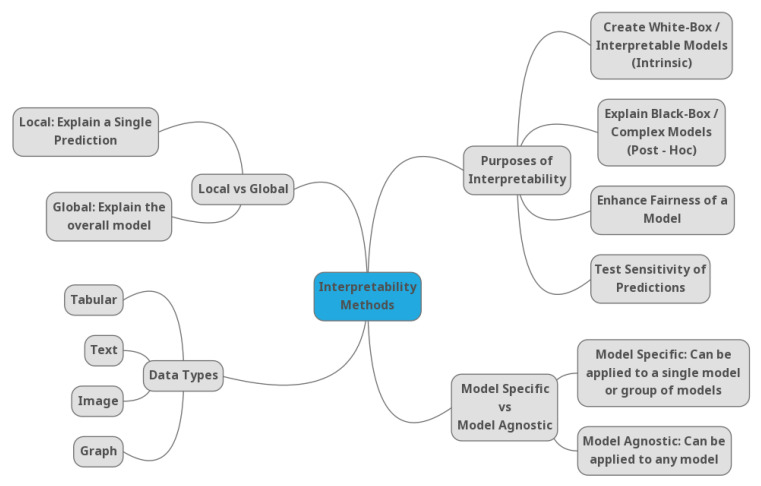
“Linardatos et al. [6] contributed by categorizing XAI techniques into ‘‘interpreting closed box models,’’ ‘‘con-structing glass box models,’’ ‘‘promoting fairness in AI,’’ and ‘‘analyzing sensitivity.’’”
Dong, J., Zhang, H., Cui, M., Lin, Y., Wu, H., & Bi, C. (2023) · Visual Informatics · doi:10.1016/j.visinf.2023.11.003 · Cited by 29
Jaotombo, F., Adorni, L., Ghattas, B., & Boyer, L. (2023) · PLoS ONE · doi:10.1371/journal.pone.0289795 · Cited by 30
Sudarsono, B., Listyaningrum, P., Tentama, F., & Ghozali, F. A. (2024) · International Journal of Evaluation and Research in Education (IJERE) · doi:10.11591/ijere.v13i3.26175 · Cited by 31
“The present approach continues to be teacher-oriented, and is completely implemented in schools [21]–[23].”
BackgroundCausal hybrid modeling with double machine learning—applications in carbon flux modeling
Cohrs, K.-H., Varando, G., Carvalhais, N., Reichstein, M., & Camps‐Valls, G. (2024) · Machine Learning Science and Technology · doi:10.1088/2632-2153/ad5a60 · Cited by 40
Aggregation Rules of Short Peptides
Wang, J., Liu, Z., Zhao, S., Zhang, Y. L., Xu, T., Li, S. Z., & Li, W. (2024) · JACS Au · doi:10.1021/jacsau.4c00501 · Cited by 28
Zhou, J., Qi, H., Peng, K., Zhang, Y., & Khandelwal, M. (2024) · Tunnelling and Underground Space Technology · doi:10.1016/j.tust.2024.106081 · Cited by 24
Cuoco, E., Cavaglià, M., Heng, I. S., Keitel, D., & Messenger, C. (2025) · Living Reviews in Relativity · doi:10.1007/s41114-024-00055-8 · Cited by 53
Zhou, J., Liu, Z., Li, C., Du, K., & Yang, H. (2025) · Underground Space · doi:10.1016/j.undsp.2024.11.004 · Cited by 26
de Oliveira, A. C., Azevedo, J. P. C., Ruback, L., Moreira, R., Teixeira, S. S., & Teles, A. S. (2025) · IEEE Access · doi:10.1109/access.2025.3556245 · Cited by 29
“Conversely, one of the goals of XAI is to provide post-hoc methods for explanations after a model is trained [54].”
InfluentialVijayanand, D., & Nair, S. G. S. (2024) · Intelligent Decision Technologies · doi:10.1177/18724981241289751 · Cited by 40
“63 In addition to being model-agnostic, it provides explanations that are both local and global and is more dependable when dealing with any kind of data.”
Rezzoug, A., Khan, A. A., Murtaza, N., & Rizvi, S. A. S. (2025) · Engineering Applications of Artificial Intelligence · doi:10.1016/j.engappai.2025.111756 · Cited by 24
Dhindsa, A., Bhatia, S., Agrawal, S., & Sohi, B. S. (2021) · Entropy · doi:10.3390/e23020257 · Cited by 24
“Loss of information is another reason for adopting methods that rely only on hyperparameter tuning [69] for constructing machine models.”
MethodMinagi, A., Hirano, H., & Takemoto, K. (2022) · Journal of Imaging · doi:10.3390/jimaging8020038 · Cited by 26
“In this context, it might be useful for investigating how explainability [21] in DNN models alters due to UAPs, given that their techniques are typically used in medical imaging applications [22].”
BackgroundPredicting emergency department utilization among children with asthma using deep learning models
AlSaad, R., Malluhi, Q. M., Janahi, I. A., & Boughorbel, S. (2022) · Healthcare Analytics · doi:10.1016/j.health.2022.100050 · Cited by 30
Amri, E., Dardouillet, P., Benoît, A., Courteille, H., Bolon, P., Dubucq, D., & Crédoz, A. (2022) · Remote Sensing · doi:10.3390/rs14153565 · Cited by 29
“They provide results demonstrating the expressiveness of SHAP values in terms of discrimination ability between different output classes and better alignment with human intuition compared to many other existing methods [62].”
ResultA Survey on Explainable Anomaly Detection for Industrial Internet of Things
Huang, Z., & Wu, Y. (2022) · IEEE Conference on Dependable and Secure Computing (DSC) · doi:10.1109/dsc54232.2022.9888874 · Cited by 33
“Pantelis et al. [24] covered a number of machine learning interpretability methods but with a focus on taxonomy and programming implementation.”
MethodA robust estimator of mutual information for deep learning interpretability
Piras, D., Peiris, H. V., Pontzen, A., Lucie-Smith, L., Guo, N., & Nord, B. (2023) · Machine Learning Science and Technology · doi:10.1088/2632-2153/acc444 · Cited by 35
Semantic Segmentation of Terrestrial Laser Scans of Railway Catenary Arches: A Use Case Perspective
Ton, B., Ahmed, F., & Linssen, J. (2022) · Sensors · doi:10.3390/s23010222 · Cited by 26
Unveiling Hidden DNN Defects with Decision-Based Metamorphic Testing
Yuan, Y., Pang, Q., & Wang, S. (2022) · IEEE/ACM International Conference on Automated Software Engineering (ASE) · doi:10.1145/3551349.3561157 · Cited by 27
“, a nose or a wheel), and DNN predictions can be formulated as a voting scheme among visual concepts [18, 34].”
BackgroundXiao, H. R., Hu, W., Zhou, H. L., & Liu, G. P. (2023) · IEEE Transactions on Automation Science and Engineering · doi:10.1109/tase.2023.3242198 · Cited by 24
“Besides, when a predictive model is considered a black box, its internal processes are either unknown to the observer or are known but uninterpretable by humans [18], [19].”
BackgroundSapkota, S., & Paudyal, D. R. (2023) · Sensors · doi:10.3390/s23125432 · Cited by 24
Sun, X., Liu, X., & Zhou, Y. (2023) · Remote Sensing · doi:10.3390/rs15164106 · Cited by 28
Zhai, S., Chen, K., Yang, L., Li, Z., Yu, T., Chen, L., & Zhu, H. (2024) · The Science of The Total Environment · doi:10.1016/j.scitotenv.2024.170232 · Cited by 24
Disentangled Explanations of Neural Network Predictions by Finding Relevant Subspaces
Chormai, P., Herrmann, J., Müller, K., & Montavon, G. (2024) · IEEE Transactions on Pattern Analysis and Machine Intelligence · doi:10.1109/tpami.2024.3388275 · Cited by 58
Applications of Multimodal Artificial Intelligence in Non-Hodgkin Lymphoma B Cells
Isavand, P., Aghamiri, S. S., & Amin, R. (2024) · Biomedicines · doi:10.3390/biomedicines12081753 · Cited by 28
“Several sample datasets must be used to train models to improve accuracy and generalizability for the clinical interpretation [120,121].”
BackgroundMethodTeneggi, J., Yi, P. H., & Sulam, J. (2023) · Radiology Artificial Intelligence · doi:10.1148/ryai.230159 · Cited by 27
Chen, X., Tian, Y., Zheng, C., & Liu, X. (2024) · Forests · doi:10.3390/f15040705 · Cited by 28
Transparency: The Missing Link to Boosting AI Transformations in Chemical Engineering
Yuan, Y., Chaffart, D., Wu, T., & Zhu, J. (2024) · Engineering · doi:10.1016/j.eng.2023.11.024 · Cited by 25
Wang, Z., Wang, Q., Yang, F., Wang, C., Yang, M., & Yu, J. (2024) · Separation and Purification Technology · doi:10.1016/j.seppur.2024.127790 · Cited by 25
Ramya, S., Srinath, S., & Tuppad, P. (2024) · Case Studies in Chemical and Environmental Engineering · doi:10.1016/j.cscee.2024.100822 · Cited by 30
Mbonyinshuti, F., Nkurunziza, J., Niyobuhungiro, J., & Kayitare, E. (2024) · Acta Logistica · doi:10.22306/al.v11i2.510 · Cited by 36
“On the other hand, as digital technology builds up, deep learning prediction models, such as LSTM time series models, are being applied more frequently for time series prediction in the health sector and this include medicine demand prediction and supply planning [4].”
Miranda, E., Aryuni, M., Rahmawati, M. I., Hiererra, S. E., & Sano, A. V. D. (2024) · Computers and Education Artificial Intelligence · doi:10.1016/j.caeai.2024.100312 · Cited by 35
“Local interpretability, on the other hand, provides explanations for a given model prediction [29].”
BackgroundA review on the efficacy of artificial intelligence for managing anxiety disorders
Das, K. P., & Gavade, P. (2024) · Frontiers in Artificial Intelligence · doi:10.3389/frai.2024.1435895 · Cited by 28
Akande, O., Okolie, J. A., Kimera, R., & Ogbaga, C. C. (2025) · Green Energy and Intelligent Transportation · doi:10.1016/j.geits.2025.100260 · Cited by 27
Ndao, M. L., Youness, G., Niang, N., & Saporta, G. (2025) · Engineering Applications of Artificial Intelligence · doi:10.1016/j.engappai.2025.110144 · Cited by 27
A Review of the Applications, Benefits, and Challenges of Generative AI for Sustainable Toxicology
Alam, F., Alnazzawi, T. S. M., Mehmood, R., & Almaghthawi, A. (2025) · Current Research in Toxicology · doi:10.1016/j.crtox.2025.100232 · Cited by 28
“The explainability of the AI model is the extent to which humans can understand the model ’ s decision (Dosilovic et al., 2018; Linardatos et al., 2020).”
Interpretable Machine Learning for Legume Yield Prediction Using Satellite Remote Sensing Data
Petropoulos, T., Benos, L. T., Berruto, R., Miserendino, G., Marinoudi, V., Busato, P., Zisis, C., & Bochtis, D. (2025) · Applied Sciences · doi:10.3390/app15137074 · Cited by 29
Manimaran, G., Peimankar, A., Puthusserypady, S. K., Momeni, M., Asyari, R. A. I., Jahan, M. S., Moll, J., Wiil, U. K., & Ebrahimi, A. (2025) · Computers in Biology and Medicine · doi:10.1016/j.compbiomed.2025.111324 · Cited by 37
A Meta Survey of Quality Evaluation Criteria in Explanation Methods
Löfström, H., Hammar, K., & Johansson, U. (2022) · Lecture notes in business information processing · doi:10.1007/978-3-031-07481-3_7 · Cited by 46
Elsherbini, A. M., Alsamman, A. M., Elsherbiny, N. M., El‐Sherbiny, M., Ahmed, R., Ebrahim, H. A., & Bakkach, J. (2022) · International Journal of Environmental Research and Public Health · doi:10.3390/ijerph192113890 · Cited by 24
Counterfactual explanations as interventions in latent space
Crupi, R., Castelnovo, A., Regoli, D., & González, B. S. M. (2022) · Data Mining and Knowledge Discovery · doi:10.1007/s10618-022-00889-2 · Cited by 43
Airport terminal passenger forecast under the impact of COVID-19 outbreaks: A case study from China
Tang, H., Yu, J., Lin, B., Yang, G., Wang, Z., Chen, X., Yang, L., Lin, T., & Xiao, F. (2022) · Journal of Building Engineering · doi:10.1016/j.jobe.2022.105740 · Cited by 26
“To address this problem, scientific interest in the field of explainable artificial intelligence (XAI) has grown rapidly, and many approaches have been proposed to help interpret complex ML models [46,47].”
BackgroundExplainable Deep Learning for Supervised Seismic Facies Classification Using Intrinsic Method
Noh, K., Kim, D., & Byun, J. (2023) · IEEE Transactions on Geoscience and Remote Sensing · doi:10.1109/tgrs.2023.3236500 · Cited by 26
“intelligence” (XAI) [14], [16], [17], [18].”
Explainability of deep learning models in medical video analysis: a survey
Kolárik, M., Sarnovský, M., Paralič, J., & Babič, F. (2023) · PeerJ Computer Science · doi:10.7717/peerj-cs.1253 · Cited by 31
Yeramosu, T., Ahmad, W., Satpathy, J., Farrar, J. M., Golladay, G. J., & Patel, N. K. (2023) · Bone & Joint Open · doi:10.1302/2633-1462.46.bjo-2023-0044.r1 · Cited by 24
A New Perspective on Evaluation Methods for Explainable Artificial Intelligence (XAI)
Speith, T., & Langer, M. (2023) · IEEE International Requirements Engineering Conference Workshops (REW) · doi:10.1109/rew57809.2023.00061 · Cited by 35
Marzia, S., AlejandroVital-Soto, & Azab, A. (2023) · Manufacturing Letters · doi:10.1016/j.mfglet.2023.07.013 · Cited by 26
Höfler, L. (2024) · Sensors and Actuators B Chemical · doi:10.1016/j.snb.2024.136528 · Cited by 27
Applications of Explainable AI (XAI) in Education
Liu, Q., Pinto, J. D. G., & Paquette, L. (2024) · Postdigital science and education · doi:10.1007/978-3-031-64487-0_5 · Cited by 36
Explaining Graph Neural Networks for Vulnerability Discovery
Ganz, T., Härterich, M., Warnecke, A., & Rieck, K. (2021) · ACM Workshop on Artificial Intelligence and Security (AISec) · doi:10.1145/3474369.3486866 · Cited by 31
Interpretable part-whole hierarchies and conceptual-semantic relationships in neural networks
Garau, N., Bisagno, N., Sambugaro, Z., & Conci, N. (2022) · IEEE Computer Society Conference on Computer Vision and Pattern Recognition/Proceedings - IEEE Computer Society Conference on Computer Vision and Pattern Recognition/Proceedings · doi:10.1109/cvpr52688.2022.01332 · Cited by 32
“However, the achieved performances have come at the expense of model complexity, making it difficult to interpret how neural networks work [34].”
BackgroundArtificial Intelligence in Interdisciplinary Life Science and Drug Discovery Research
Bajorath, J. (2022) · Future Science OA · doi:10.2144/fsoa-2022-0010 · Cited by 27
“Therefore, increasing attention is being paid to model-agnostic approaches for ‘explainable AI’ (XAI) that make it possible to rationalize the outcome of predictions and interpret them in chemical or biological terms [18,19].”
BackgroundFox, S., & Rey, V. F. (2024) · Machine Learning and Knowledge Extraction · doi:10.3390/make6030071 · Cited by 22
“More broadly, a survey of interpretability has yielded a taxonomy of interpretability methods [72].”
BackgroundOkolie, C. J., ADELEKE, A. K., Mills, J. P., Smit, J. L., Maduako, I., Bagheri, H., Komar, T., & Wang, S. (2024) · International Journal of Image and Data Fusion · doi:10.1080/19479832.2024.2329563 · Cited by 24
“Explainability enables the identification of cause-and-effect relationships within the inputs and outputs of the system (Linardatos et al .”
Ethical Dimensions of Digital Phenotyping Within the Context of Mental Healthcare
D’Alfonso, S., Coghlan, S., Schmidt, S., & Mangelsdorf, S. N. (2024) · Journal of Technology in Behavioral Science · doi:10.1007/s41347-024-00423-9 · Cited by 28
“Whilst often used interchangeably, technically interpretability and explainability are distinct concepts (Linardatos et al., 2021).”
Learning Controllers for Continuum Soft Manipulators: Impact of Modeling and Looming Challenges
Falotico, E., Donato, E., Alessi, C., Setti, E., Nazeer, M. S., Agabiti, C., Caradonna, D., Bianchi, D., Piqué, F., Ansari, Y. T., et al. (2024) · Advanced Intelligent Systems · doi:10.1002/aisy.202400344 · Cited by 34
Guo, Z., Feng, C., Liu, Y., & Liu, Q. (2024) · Agricultural Water Management · doi:10.1016/j.agwat.2024.109157 · Cited by 28
Zhu, W., Xu, N., & Hower, J. C. (2025) · Energy · doi:10.1016/j.energy.2025.134781 · Cited by 27
Brunyé, T. T., Mitroff, S. R., & Elmore, J. G. (2025) · Journal of the American Medical Informatics Association · doi:10.1093/jamia/ocaf123 · Cited by 32
Jacob, M. S., Xu, A., Qian, K., Qi, Z.-X., Li, X., & Zhang, B. (2025) · Journal of Fungi · doi:10.3390/jof11110758 · Cited by 27
“The collaboration between experts has resulted in the development of smart cultivation systems by integrating environmental sensor feedback and AI-controlled units to replicate expert decisions [201].”
Artificial Intelligence for the Diagnosis and Management of Cancers: Potentials and Challenges
Wang, M., Chang, W., & Zhang, Y. (2025) · MedComm · doi:10.1002/mco2.70460 · Cited by 24
Gijón, A., Eiraudo, S., Manjavacas, A., Schiera, D. S., Molina-Solana, M., & Gómez‐Romero, J. (2025) · Computer Physics Communications · doi:10.1016/j.cpc.2025.109761 · Cited by 33
Park, C.-H., Kim, B. R., Park, H. K., Lim, S. M., Kim, E., Jeong, J. H., & Kim, G. H. (2021) · Cerebral Cortex · doi:10.1093/cercor/bhab474 · Cited by 25
Catellani, P., Carfora, V., & Piastra, M. (2022) · Frontiers in Psychology · doi:10.3389/fpsyg.2022.825602 · Cited by 22
“Second, the GCM can guarantee an explanation of the DRL policy, once the training process has been completed, in a way that the DNN alone could not provide (Linardatos et al., 2021).”
BackgroundInterpretable Deep Learning Applied to Rip Current Detection and Localization
Rampal, N., Shand, T. D., Wooler, A., & Rautenbach, C. (2022) · Remote Sensing · doi:10.3390/rs14236048 · Cited by 22
“Section 2.3 discusses how Grad-CAM is used for object localization and for model development.”
InfluentialSekaran, K., Alsamman, A. M., Doss, C. G. P., & Zayed, H. (2023) · Metabolic Brain Disease · doi:10.1007/s11011-023-01171-0 · Cited by 22
“Additionally, increased performance is frequently achieved through increased model complexity, transforming such systems into "black box" methods and resulting in uncertainty about how they function and, ultimately, how they make decisions (Linardatos et al. 2020).”
BackgroundInterpretable Diabetic Retinopathy Diagnosis Based on Biomarker Activation Map
Zang, P., Hormel, T. T., Wang, J., Guo, Y., Bailey, S. T., Flaxel, C. J., Huang, D., Hwang, T. S., & Jia, Y. (2023) · IEEE Transactions on Biomedical Engineering · doi:10.1109/tbme.2023.3290541 · Cited by 27
“1 in the Supplementary) [28], [29], [30], which is distinct from DR diagnosis in several regards and consequently poses many challenges in presenting clinically meaningful attention maps.”
BackgroundSilent Vulnerable Dependency Alert Prediction with Vulnerability Key Aspect Explanation
Sun, J., Xing, Z., Lu, Q., Xu, X., Zhu, L., Hoang, T., & Zhao, D. (2023) · ACM/IEEE International Conference on Software Engineering: Companion Proceedings (ICSE-Companion) · doi:10.1109/icse48619.2023.00089 · Cited by 40
Elucidating precipitation in FeCrAl alloys through explainable AI: A case study
Ravi, S. K., Roy, I., Roychowdhury, S., Feng, B., Ghosh, S., Reynolds, C., Umretiya, R. V., Rebak, R. B., & Hoffman, A. (2023) · Computational Materials Science · doi:10.1016/j.commatsci.2023.112440 · Cited by 27
“To resolve this need, we have utilized a new branch of AI\ML which has recently garnered much research interest called Explainable AI (XAI) and Interpretable ML (IML) [25 – 32].”
Yang, L., Oeding, J. F., de Marinis, R., Marigi, E. M., & Sánchez‐Sotelo, J. (2023) · Journal of Shoulder and Elbow Surgery · doi:10.1016/j.jse.2023.09.021 · Cited by 24
Medicinal plants recognition using heterogeneous leaf features: an intelligent approach
Sharma, M., Kumar, N., Sharma, S., Kumar, S., Singh, S., & Mehandia, S. (2023) · Multimedia Tools and Applications · doi:10.1007/s11042-023-17639-1 · Cited by 22
Machine Learning in Cybersecurity : Applications, Challenges and Future Directions
Thawait, N. K. (2024) · International Journal of Scientific Research in Computer Science Engineering and Information Technology · doi:10.32628/cseit24102125 · Cited by 24
Renftle, M., Trittenbach, H., Poznic, M., & Heil, R. (2024) · Humanities and Social Sciences Communications · doi:10.1057/s41599-024-03277-x · Cited by 31
“Almost all existing XAI algorithms contribute in some way to approximating complex ML models with simpler functions (e.g., Guidotti et al., 2019), or with functions that use interpreted instead of technical attributes (e.g., Bau et al., 2017; Kim et al., 2018; Linardatos et al., 2021).”
MethodYu, S. I., Jeon, J., Shin, Y.-U., & Bae, H. (2024) · ACS ES&T Engineering · doi:10.1021/acsestengg.4c00142 · Cited by 22
Değer, Z. T., & Taşkın, G. (2022) · Neural Computing and Applications · doi:10.1007/s00521-022-07159-8 · Cited by 26
“Interested readers can refer to [30, 50] for further details.”
Background
Metadata
- Authors
- Linardatos, P., Papastefanopoulos, V., & Kotsiantis, S.
- Affiliations
- University of Patras (GR)
- Corresponding author
- Linardatos, Pantelis
- Venue
- Entropy
- Publisher
- MDPI AG
- Published
- 2020-12-25
- Volume
- 23
- Issue
- 1
- Pages
- 18
- ISSN
- 1099-4300 (ISSN-L)
- PMC
- PMC7824368
- OpenAlex
- W3116286104
- Cited by
- 2,922
- References
- 162
- Citations by year
- 2026: 485 · 2025: 702 · 2024: 701 · 2023: 565 · 2022: 370 · 2021: 97 · 2020: 1
- FWCI
- 8.89
- Type
- journal article
- Language
- en
- Open access
- gold
- doi.org
- Licence
- Locations
- Entropy (publishedVersion, cc-by)
- PubMed Central (publishedVersion, cc-by)
- PubMed (publishedVersion)
- DOAJ (DOAJ: Directory of Open Access Journals) (submittedVersion, cc-by-sa)
- Topics
- Physical Sciences › Computer Science › Artificial Intelligence › Explainable Artificial Intelligence (XAI)
- Physical Sciences › Computer Science › Software › Software Testing and Debugging Techniques
- Physical Sciences › Computer Science › Artificial Intelligence › Adversarial Robustness in Machine Learning
- Keywords
- explainable AI, model interpretability, black-box models, medical applications
About these checks
Registry, retraction, Cites and statistics results are computed, not judged, with one exception: a printed reference that no index lists is read once by a model before it counts as a citation error. Claims are extracted by a model and kept only when their quote appears verbatim in the text; each cited source is then checked, with a model’s help, for whether it says what the claim relies on. Those verdicts can be wrong — read the claim’s quote and the cited source before relying on one.
Statistics and arithmetic are recomputed, not judged.
Confidence bands are shown only for fields calibrated on our annotated test set. None is calibrated yet, so no band is shown.
What counts as a claim ›How we measure confidence ›How we check this ›
Are you an author, or do you see a problem with this page? Request a review
Data sources
Bibliographic data: Semantic Scholar, OpenAlex, Crossref.
Contains information from the Semantic Scholar Academic Graph Datasets, made available under the ODC Attribution License (ODC-BY 1.0).
Semantic Scholar’s data is described in: Kinney, R., et al. (2023). The Semantic Scholar Open Data Platform. arXiv:2301.10140.
