

Explainable AI: A Review of Machine Learning Interpretability Methods
Open accessThe DOI matches its Crossref record; 170 of the 170 references it cites were found in a registry or an index.
Abstract
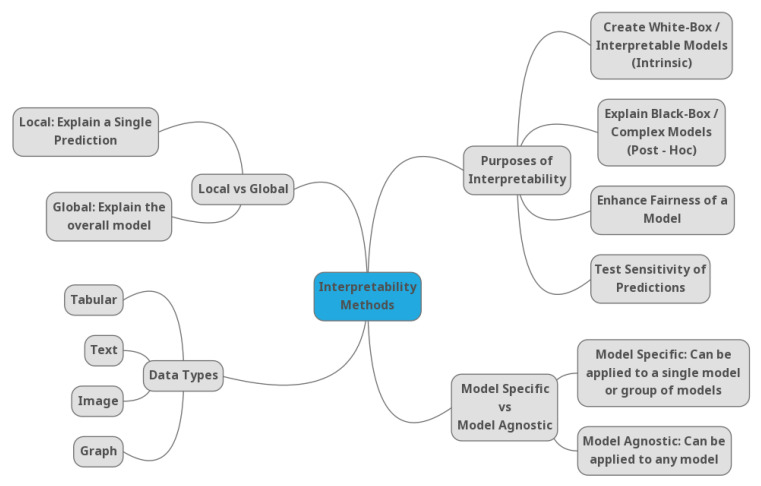
Recent advances in artificial intelligence (AI) have led to its widespread industrial adoption, with machine learning systems demonstrating superhuman performance in a significant number of tasks. However, this surge in performance, has often been achieved through increased model complexity, turning such systems into “black box” approaches and causing uncertainty regarding the way they operate and, ultimately, the way that they come to decisions. This ambiguity has made it problematic for machine learning systems to be adopted in sensitive yet critical domains, where their value could be immense, such as healthcare. As a result, scientific interest in the field of Explainable Artificial Intelligence (XAI), a field that is concerned with the development of new methods that explain and interpret machine learning models, has been tremendously reignited over recent years. This study focuses on machine learning interpretability methods; more specifically, a literature review and taxonomy of these methods are presented, as well as links to their programming implementations, in the hope that this survey would serve as a reference point for both theorists and practitioners.
Overview
The claims and statistics of this paper haven’t been checked yet.
Free: it reads the open-access text and checks the first 5 claims that cite a source we can check. Create a free account to check every claim.
Integrity signals
Registry
Cites
Statistics
Figures




Verification
Claims the paper makes
The claims and statistics of this paper haven’t been checked yet.
Free: it reads the open-access text and checks the first 5 claims that cite a source we can check. Create a free account to check every claim.
Claims other papers make about this one
Each is checked against this paper’s own text: does it say what the citing paper says it does?
The source backs part of the claim, not all of it — or backs it for a different population, condition or comparison.
In the citing paper
“While valuable, these techniques can sometimes be inconsistent or fail to capture the true decision-making process of highly complex models, potentially leading to a false sense of interpretability66.”
From Bias recognition and mitigation strategies in artificial intelligence healthcare applications (2025) · cites this paper as [66]
Experimental — accuracy not yet measuredThe source backs part of the claim, not all of it — or backs it for a different population, condition or comparison.
In the citing paper
“These methods facilitate a deeper understanding of the model’s internal logic, support debugging and optimization processes, and help identify key variables that most strongly influence students’ behavioral intentions toward GenAI adoption (Linardatos et al., 2020).”
From A two-step structural equation modeling and explainable machine learning framework for understanding university students’ adoption of generative AI: balancing intrinsic motivations and perceived risks (2026) · cites this paper as Linardatos et al., 2020
Experimental — accuracy not yet measuredThe source backs part of the claim, not all of it — or backs it for a different population, condition or comparison.
In the citing paper
“Yet, there is no common taxonomy neither within one field (such as data science) nor between different fields (law and data science).”
From Transparency of AI in Healthcare as a Multilayered System of Accountabilities: Between Legal Requirements and Technical Limitations (2022) · cites this paper as Linardatos et al., 2021
Experimental — accuracy not yet measuredThe source backs part of the claim, not all of it — or backs it for a different population, condition or comparison.
In the citing paper
“Despite the substantial amount of research devoted to solving the black-box issue of AI, many scholars in the field agree that a clear relevant taxonomy is missing (Doshi-Velez and Kim, 2017; Adadi and Berrada, 2018; Linardatos et al., 2021).”
From Transparency of AI in Healthcare as a Multilayered System of Accountabilities: Between Legal Requirements and Technical Limitations (2022) · cites this paper as Linardatos et al., 2021
Experimental — accuracy not yet measuredThe source backs part of the claim, not all of it — or backs it for a different population, condition or comparison.
In the citing paper
“Prior research on XAI across industries, has also found that the perceived quality of explanations is closely tied to their actionability and practical relevance for end users [8].”
From Explainable AI in hospital clinical decision support systems: A scoping review of healthcare professionals’ perspectives (2026) · cites this paper as [8]
Experimental — accuracy not yet measured
5 more claims about this paper
Create a free account to see every claim other papers make about this one.
Self-check
Percentages, sums and reported differences re-computed from the paper’s own numbers.
The self-check needs the paper’s full text.
Citations
Cites
ImageNet classification with deep convolutional neural networks
Krizhevsky, A., Sutskever, I., & Hinton, G. E. (2017) · Communications of the ACM · doi:10.1145/3065386 · Cited by 112,155 · cited 1×
“An improvement over the initial method was proposed in [24], where the well-known Krizhevsky network [25] was utilised in order to outperform state-of-the-art saliency models by a large margin, increasing the amount of explained information by 67% when compared to state-of-the art.”
LeCun, Y., Bengio, Y., & Hinton, G. (2015) · Nature · doi:10.1038/nature14539 · Cited by 84,126
XGBoost: A Scalable Tree Boosting System
Chen, T., & Guestrin, C. (2016) · Proceedings of the 22nd ACM SIGKDD International Conference on Knowledge Discovery and Data Mining · doi:10.1145/2939672.2939785 · Cited by 54,569 · cited 1×
“On the one hand, there are the so called black-box models, which include deep learning [2] and ensembles [8–10].”
Greedy function approximation: A gradient boosting machine
Friedman, J. H. (2001) · The Annals of Statistics · doi:10.1214/aos/1013203451 · Cited by 30,731 · cited 3×
“[59] PDPbox InterpretML Skater PH G Agnostic tab 589.”
Grad-CAM: Visual Explanations from Deep Networks via Gradient-Based Localization
Selvaraju, R. R., Cogswell, M., Das, A., Vedantam, R., Parikh, D., & Batra, D. (2017) · 2017 IEEE International Conference on Computer Vision (ICCV) · doi:10.1109/iccv.2017.74 · Cited by 24,513
A Unified Approach to Interpreting Model Predictions
Lundberg, S., & Lee, S.-I. (2017) · arXiv · doi:10.48550/arxiv.1705.07874 · Cited by 23,707 · cited 3×
“The breakDown method, as proposed in [62], is similar to SHAP [48], as both, based on the conditioned responses of a black-box model, attempt to attribute them proportionally to the input features.”
Classification and Regression by randomForest
Liaw, A. I., & Wiener, M. C. (2007) · Cited by 18,594
"Why Should I Trust You?": Explaining the Predictions of Any Classifier
Ribeiro, M. T., Singh, S., & Guestrin, C. (2016) · Proceedings of the 22nd ACM SIGKDD International Conference on Knowledge Discovery and Data Mining · doi:10.1145/2939672.2939778 · Cited by 17,555
Visualizing and understanding convolutional networks
Zeiler, M. D., & Fergus, R. (2014) · Lecture Notes in Computer Science · doi:10.1007/978-3-319-10590-1_53 · Cited by 15,839 · cited 8×
“[44] showed that, while the Deconvolution [32], Guided BackPropagation [31], and LRP [37] methods help in interpreting deep neural networks, they do not produce the theoretically correct interpretation, even in the simplest neural network setting; a linear model developed while using data that were produced by a linea…”
InfluentialLearning Deep Features for Discriminative Localization
Zhou, B., Khosla, A., Lapedriza, A., Oliva, A., & Torralba, A. (2016) · 2016 IEEE Conference on Computer Vision and Pattern Recognition (CVPR) · doi:10.1109/cvpr.2016.319 · Cited by 11,428 · cited 2×
“In many cases, this is achieved through exploiting the gradient information flowing through the layers of the network, Grad-CAM [35], a direct extension of [34], being a prime and most influential example in terms of citations per year.”
Research works printed but not linked: 3
- Luss, R., Chen, P.Y., Dhurandhar, A., Sattigeri, P., Zhang, Y., Shanmugam, K., and Tu, C.C. (2019). Generating contrastive explanations with monotonic attribute functions. arXiv.
- Van Looveren, A., and Klaise, J. (2019). Interpretable counterfactual explanations guided by prototypes. arXiv.
- Wang, X., Jin, H., and He, K. (2019). Natural language adversarial attacks and defenses in word level. arXiv.
Cited by
Items 701–800 of 1,016
Toward Holistic Energy Management by Electricity Load and Price Forecasting: A Comprehensive Survey
Mustafa, K., Khan, S., Aslam, S., Herodotou, H., Ashraf, N., Daraz, A., & Alkhalifah, T. (2023) · IEEE Access · doi:10.1109/access.2023.3334164 · Cited by 24
“Many existing load and price prediction algorithms are based on ‘‘black-box’’ methods that are not easy for non-technical people to understand [91], [92].”
BackgroundFan, M., Wang, H., Zhang, J., Hosseini, S. A., & Lu, D. (2024) · International journal of greenhouse gas control · doi:10.1016/j.ijggc.2024.104061 · Cited by 22
Explainable AI for Interpretation of Ovarian Tumor Classification Using Enhanced ResNet50
Guha, S., Kodipalli, A., Fernandes, S. L., & Dasar, S. K. (2024) · Diagnostics · doi:10.3390/diagnostics14141567 · Cited by 24
“Linardatos, P. et al. [16] provided a review of various interpretability methods in the Machine Learning domain.”
MethodDubey, Y. K., Bhongade, A., Palsodkar, P., & Fulzele, P. R. (2024) · Diagnostics · doi:10.3390/diagnostics14242770 · Cited by 25
“Ongoing research investigates their applications in a variety of fields, including Alzheimer’s disease, where interpretability is critical for good clinical decision-making [23].”
Ojo, I. P., & Tomy, A. (2025) · World Journal of Advanced Research and Reviews · doi:10.30574/wjarr.2025.25.2.0492 · Cited by 21
“While ML models offer superior detection capabilities, their interpretability, or lack thereof, hinders their deployment in environments requiring clear justifications for decisions (Linardatos, Papastefanopoulos and Kotsiantis, 2020).”
Biases in Artificial Intelligence Application in Pain Medicine
Jumreornvong, O., Perez, A., Malave, B., Fatimah, M., Kia, A., & Nwaneshiudu, C. A. (2025) · Journal of Pain Research · doi:10.2147/jpr.s495934 · Cited by 24
“64 These interventions demonstrate how AI can serve as a powerful tool to mitigate inequities and create a more inclusive approach to pain management. https://doi.org/10.2147/JPR.S495934 Our review, as seen in Table 5, recommends minimizing bias in AI pain management by creating pain assessment…”
InfluentialChaudhary, M., Gaur, L., Chakrabarti, A., Singh, G., Jones, P. K., & Kraus, S. (2025) · Journal of Innovation & Knowledge · doi:10.1016/j.jik.2025.100700 · Cited by 30
Alves, E., Gurupadayya, B., & Prabhakaran, P. (2025) · Critical Reviews in Analytical Chemistry · doi:10.1080/10408347.2025.2575352 · Cited by 39
Time-Frequency Representations of Brain Oscillations: Which One Is Better?
Bârzan, H., Ichim, A.-M., Moca, V. V., & Muresan, R. C. (2022) · Frontiers in Neuroinformatics · doi:10.3389/fninf.2022.871904 · Cited by 26
“As we have shown here, explainable AI techniques (Došilovi´c et al., 2018; Barredo Arrieta et al., 2020; Linardatos et al., 2020) are able to provide insights into why a machine learning model can learn and to indicate where and how relevant information is expressed in the neural data.”
BackgroundMethodTowards explainable interactive multiobjective optimization: R-XIMO
Misitano, G., Afşar, B., Lárraga, G., & Miettinen, K. (2022) · Autonomous Agents and Multi-Agent Systems · doi:10.1007/s10458-022-09577-3 · Cited by 30
“For reviews on the recent advancements in XAI, see, e.g., [15, 37].”
BackgroundOn the role of artificial intelligence in psychiatry
Rocheteau, E. (2022) · The British Journal of Psychiatry · doi:10.1192/bjp.2022.132 · Cited by 23
“23 Therefore, how can we trust that the algorithm is reliable without explanation, and even if we could, can it be used if the psychiatrist does not agree with the decision?”
BackgroundHeatDeCam: Detecting Hidden Spy Cameras via Thermal Emissions
Yu, Z., Li, Z., Chang, Y., Fong, S., Liu, J., & Zhang, N. (2022) · ACM SIGSAC Conference on Computer and Communications Security (CCS) · doi:10.1145/3548606.3560669 · Cited by 29
“These two examples show that the model primarily focuses on the To disrupt this feature in the experiments, we shuffle the spatial distribution of the raw infrared data within the heated regions while maintaining their statistical distribution.”
BackgroundDas, T., Kaur, H., Gour, P., Prasad, K., Lynn, A. M., Prakash, A., & Kumar, V. (2022) · Briefings in Bioinformatics · doi:10.1093/bib/bbac442 · Cited by 22
Explainable Machine Learning to Identify Patient-specific Biomarkers for Lung Cancer
Sobhan, M., & Mondal, A. M. (2022) · IEEE International Conference on Bioinformatics and Biomedicine (BIBM) · doi:10.1109/bibm55620.2022.9995516 · Cited by 24
A Generalized Explanation Framework for Visualization of Deep Learning Model Predictions
Wang, P., & Vasconcelos, N. M. (2023) · IEEE Transactions on Pattern Analysis and Machine Intelligence · doi:10.1109/tpami.2023.3241106 · Cited by 28
“Several survey papers [47], [48], [49], [50] provide a more comprehensive review of the field.”
BackgroundInterpretable Skin Cancer Classification based on Incremental Domain Knowledge Learning
Rezk, E., Eltorki, M., & El-Dakhakhni, W. W. (2023) · Journal of Healthcare Informatics Research · doi:10.1007/s41666-023-00127-4 · Cited by 29
An Explainable Artificial Intelligence Approach for Multi-Criteria ABC Item Classification
Qaffas, A. A., HajKacem, M. A. B., N’Cir, C.-E. B., & Nasraoui, O. (2023) · Journal of theoretical and applied electronic commerce research · doi:10.3390/jtaer18020044 · Cited by 36
Martos, O., Hoque, M. Z., Keskinarkaus, A., Kemi, N., Näpänkangas, J. P., Eskuri, M., Pohjanen, V., Kauppila, J. H., & Seppänen, T. (2023) · Pathology - Research and Practice · doi:10.1016/j.prp.2023.154694 · Cited by 22
“The “ black-boxness ” of DL models has been also possible to overcome in recent years with the advances in Explainable AI [84], where heatmaps, saliency maps, occlusion maps and other similar techniques can be applied to visualize the area that DL model derives its results from.”
MethodShaping the future of tunneling with data and emerging technologies
Apoji, D., Sheil, B. B., & Soga, K. (2023) · Data-Centric Engineering · doi:10.1017/dce.2023.24 · Cited by 21
“Unfortunately, machine learning models have been notoriously tagged as “ black box ” systems, as the way they operate and make decisions is less transparent (Linardatos et al., 2021).”
BackgroundPostprocessing of Ensemble Weather Forecasts Using Permutation-Invariant Neural Networks
Höhlein, K., Schulz, B., Westermann, R., & Lerch, S. (2023) · Artificial Intelligence for the Earth Systems · doi:10.1175/aies-d-23-0070.1 · Cited by 34
“ML explainability has attracted substantial interest throughout the last decade (for recenct surveys see, e.g., Guidotti et al. 2018; Linardatos et al. 2020; Burkart and Huber 2021) and is increasingly adopted in the earth-system sciences (e.g., Reichstein et al. 2019; Höhlein et al. 2020; Labe and…”
BackgroundXAI-CF — Examining the role of explainable artificial intelligence in cyber forensics
Alam, S., & Altıparmak, Z. (2026) · Engineering Applications of Artificial Intelligence · doi:10.1016/j.engappai.2026.113892 · Cited by 29
“Some researchers [48, 49, 50] argue the trade-off of simplicity with accuracy and state that a self-explainable model is less accurate than a post-hoc model.”
Khani, P., Moeinaddini, E., Abnavi, N. D., & Shahraki, A. (2024) · Transactions on Emerging Telecommunications Technologies · doi:10.1002/ett.4970 · Cited by 31
“19,20 For example, in References 21,22, authors tried to use XAI methods and techniques to explain the model behavior for feature selection in network traffic analysis.”
MethodInfluentialHooe, S. L., Breger, J. C., & Medintz, I. L. (2024) · Molecular Systems Design & Engineering · doi:10.1039/d4me00017j · Cited by 22
Mkhatshwa, J., Kavu, T. D., & Daramola, O. (2024) · Computation · doi:10.3390/computation12060113 · Cited by 28
“The foundation of SHAP values is Shapley values, a notion borrowed from [39] game theory.”
BackgroundAljubran, M., & Horne, R. N. (2024) · Geothermal Energy · doi:10.1186/s40517-024-00304-7 · Cited by 21
“The machine learning literature shows a variety of explainability techniques, such as Gradients, Grad-CAM, Guided BackPropagation, DeepLIFT, Deconvolution, amongst others [77–83].”
MethodCaleca, F., Confuorto, P., Raspini, F., Segoni, S., Tofani, V., Casagli, N., & Moretti, S. (2024) · The Science of The Total Environment · doi:10.1016/j.scitotenv.2024.175277 · Cited by 22
Nassabeh, M., You, Z., Keshavarz, A., & Iglauer, S. (2025) · Journal of Energy Storage · doi:10.1016/j.est.2025.115908 · Cited by 24
Winkler, P. W., Zsidai, B., Senorski, E. H., Pruneski, J. A., Hirschmann, M. T., Ley, C., Tischer, T., Herbst, E., Pareek, A., Musahl, V., et al. (2025) · Journal of Experimental Orthopaedics · doi:10.1002/jeo2.70247 · Cited by 23
“Extensive research and development efforts are also focused on advancing eXplainable and inter-pretable AI (XAI) systems, in order to mitigate the black ‐ box nature of AI systems [23].”
The Power of AI-Generated Content: Evidence From the Peer-to-Peer Accommodation Market
Fan, N., Li, X. R., Liu, C., & Fan, Z. (2025) · Journal of Travel Research · doi:10.1177/00472875251332951 · Cited by 26
“Second, ALE can provide unbiased results even though a machine learning model’s predictors are correlated; it therefore overcomes the major flaw of methods such as partial dependence plots (Linardatos et al., 2021).”
Nkwocha, C. L., & Chandel, A. K. (2025) · Computers · doi:10.3390/computers14100443 · Cited by 21
Tiensuu, H., Tamminen, S., Puukko, E., & Röning, J. (2021) · Applied Sciences · doi:10.3390/app112210897 · Cited by 26
Drobnjak, S., Stojanović, M., Djordjević, D., Bakrač, S., Jovanović, J. M., & Djordjević, A. (2022) · Frontiers in Environmental Science · doi:10.3389/fenvs.2022.896158 · Cited by 22
“The Random Forest model employs regression trees to estimate the dependent (Linardatos et al., 2020).”
MethodDeshpande, N. M., Gite, S., Pradhan, B., & Assiri, M. E. (2022) · Computer Modeling in Engineering & Sciences · doi:10.32604/cmes.2022.021225 · Cited by 28
Kikuchi, M., Kobayashi, K., Itoh, S., Kasuga, K., Miyashita, A., Ikeuchi, T., Yumoto, E., Kosaka, Y., Fushimi, Y., Takeda, T., et al. (2022) · Computational and Structural Biotechnology Journal · doi:10.1016/j.csbj.2022.08.007 · Cited by 24
“This is because there is a trade-off between the predictive accuracy and the interpretability of the model [12].”
BackgroundSalih, A. M., Galazzo, I. B., Cruciani, F., Brusini, L., & Radeva, P. I. (2022) · Proceedings - International Conference on Image Processing · doi:10.1109/icip46576.2022.9897253 · Cited by 30
“While XAI approaches can be grouped into different categories (for more details, we kindly refer the interested reader to [3] for a comprehensive taxonomy), Local Interpretable Model-Agnostic Explanations (LIME) and SHapley Additive exPlanations (SHAP) are the two most popular and well performing…”
BackgroundTangible Explainable AI - an Initial Conceptual Framework
Colley, A., Väänänen, K., & Häkkilä, J. (2022) · International Conference on Mobile and Ubiquitous Multimedia (MUM) · doi:10.1145/3568444.3568456 · Cited by 27
“from black-box models to transparent surrogate models [27, 28], or 2) presenting taxonomies of the problem space, e.”
BackgroundNghiem, N., Atkinson, J., Nguyen, B. P., Tran‐Duy, A., & Wilson, N. (2023) · Health Economics Review · doi:10.1186/s13561-023-00422-1 · Cited by 24
PREDICTING BANKING STOCK PRICES USING RNN, LSTM, AND GRU APPROACH
Satria, D. (2023) · Applied Computer Science · doi:10.35784/acs-2023-06 · Cited by 27
Recent advances in computational design of structural multi-principal element alloys
Anand, A., Liu, S.-J., & Singh, C. V. (2023) · iScience · doi:10.1016/j.isci.2023.107751 · Cited by 23
“One of the strategies is to use ML models with high interpretability, such as decision trees, linear regression, and logistic regression, which might sacrifice the accuracy of the model.(99,100) Another approach is to build analytical functions fitted usingMLmethods and obtain the direct relation between features and…”
An algorithm based on fuzzy ordinal classification to predict students’ academic performance
Gámez, J. C. V., Esteban, A., Rodriguez-Lozano, F. J., & Zafra, A. (2023) · Applied Intelligence · doi:10.1007/s10489-023-04810-2 · Cited by 25
“The difference is that in black-box models, it is unknown how the input parameters are related to obtaining the outputs; while in white-box models, the steps and relationships between the input variables to provide the output are known [49].”
SHAP model explainability in ECMO–PAL mortality prediction: a critical analysis
Fernández, M. V., de Aledo, A. L. G., Moya, F. D. P. D., & Badía, I. M. (2023) · Intensive Care Medicine · doi:10.1007/s00134-023-07252-z · Cited by 20
“Many methods have emerged to offer both local and global explanations of these algorithms [2].”
MethodData-Driven Machine Learning to Predict Antibacterial Activity of Cerium-Doped Nanoparticles
Perfecto‐Avalos, Y., Navarro-López, D. E., Martínez-Beltrán, S., Rojas-Torres, D. E., Ávila, K. D. S., Robles, T. I., Zavala, A., de Luna, M. A., Sanchez-Martinez, A., Ceballos-Sanchez, O., et al. (2023) · ACS Applied Nano Materials · doi:10.1021/acsanm.3c03651 · Cited by 20
Acharya, D., Farazi, M. R., Rolland, V., Petersson, L., Rosebrock, U., Smith, D., Ford, J. H., Wang, D., Tuck, G. N., Little, L. R., et al. (2024) · Fisheries Research · doi:10.1016/j.fishres.2024.106939 · Cited by 22
Application of artificial intelligence and machine learning in drug repurposing
Ghandikota, S. K., & Jegga, A. G. (2024) · Progress in molecular biology and translational science · doi:10.1016/bs.pmbts.2024.03.030 · Cited by 28
Qiu, W., Quan, C., Zhu, L., Yu, Y., Wang, Z., Ma, Y., Sun, M., Chang, Y., Qian, K., Hu, B., et al. (2024) · IEEE Transactions on Biomedical Engineering · doi:10.1109/tbme.2024.3393557 · Cited by 26
“At the same time, deep learning models are like “black-boxes” with interpretability challenges [22], [23].”
BackgroundDeep learning based approaches to enhance energy efficiency in autonomous driving systems
Kwak, J., Lee, Y., Choi, M., & Lee, S. (2024) · Energy · doi:10.1016/j.energy.2024.132625 · Cited by 23
Korica-Pehserl, P., Gayar, N. E., & Pang, W. (2021) · Lecture notes in computer science · doi:10.1007/978-3-030-91608-4_33 · Cited by 24
“• Safety: We need to further research on security of explainability of AI, including methods to prohibit the fooling of XAI methods through perturbations and randomized input as well as methods to mitigate inferring private and sensitive information through explanations, see [9, 10, 13, 17, 19-21].”
BackgroundMethodBuilding trust in deep learning-based immune response predictors with interpretable explanations
Borole, P., & Rajan, A. (2024) · Communications Biology · doi:10.1038/s42003-024-05968-2 · Cited by 26
“Explainable Artificial Intelligence (XAI) techniques have been proposed in recent years to help explain and understand the output of deep learning models used in image classification [44, 60, 51, 17, 49, 52, 48] and NLP classification tasks [18, 1, 32, 13, 34].”
BackgroundLin, S., Dong, M., Cao, X., Liang, Z., Guo, H., & Zheng, H. (2024) · Engineering Analysis with Boundary Elements · doi:10.1016/j.enganabound.2024.03.019 · Cited by 20
Sajdeya, R., & Narouze, S. (2024) · Current Opinion in Anaesthesiology · doi:10.1097/aco.0000000000001408 · Cited by 27
Predicting Reactivity and Passivation of Solid-State Battery Interfaces
Lomeli, E. G., Ransom, B., Ramdas, A., Jost, D., Moritz, B., Sendek, A. D., Reed, E. J., & Devereaux, T. (2024) · ACS Applied Materials & Interfaces · doi:10.1021/acsami.4c06095 · Cited by 19
Pacholec, C., Flatland, B., Xie, H., & Zimmerman, K. (2024) · Veterinary Clinical Pathology · doi:10.1111/vcp.13401 · Cited by 27
“29,30 Explainability is considered a way for the AI model to gain the trust of medical professionals when the sys-tem is implemented and is often abbreviated as “XAI.””
Pickering, L., Cohen, K. D. O., & Baets, B. D. (2025) · International Journal of Fuzzy Systems · doi:10.1007/s40815-025-02022-z · Cited by 37
“Linardatos et al. [16] are an excellent source for those looking for a thorough review of the many interpretability methods.”
InfluentialGhorbani, S., Ghorbany, S., & Noorzai, E. (2025) · Cleaner Waste Systems · doi:10.1016/j.clwas.2025.100299 · Cited by 23
Zhang, X., Kong, Y., Yan, Y., Liu, Y., Gao, Q., Li, J., Li, G., & Yuan, J. (2025) · Waste Management · doi:10.1016/j.wasman.2025.114981 · Cited by 20
He, J., & Zhang, Z. (2025) · Laws · doi:10.3390/laws14040054 · Cited by 26
“Especially in advanced AI, millions or billions of parameters make their internal logic extremely complex, making it difficult even for designers to fully explain their decision-making processes (Linardatos et al. 2021).”
Malaria cell image classification by explainable artificial intelligence
Raihan, M. J., & Nahid, A.-A. (2021) · Health and Technology · doi:10.1007/s12553-021-00620-z · Cited by 22
“Many types of research have been conducted towards eXplainable Artificial Intelligence (XAI) [35, 36].”
BackgroundManicka, S., & Levin, M. G. (2022) · Entropy · doi:10.3390/e24010107 · Cited by 21
“These efforts to explicate the information-processing mechanisms of complex dynamical models have given birth to a new field dedicated to solving the problem of “interpretability” [48].”
BackgroundShimizu, H., Enda, K., Shimizu, T., Ishida, Y., Ishizu, H., Ise, K., Tanaka, S., & Iwasaki, N. (2022) · Journal of Clinical Medicine · doi:10.3390/jcm11072021 · Cited by 19
Opportunities and risks in the use of AI in career development practice
Wilson, M., Robertson, P., Cruickshank, P., & Gkatzia, D. (2022) · Journal of the National Institute for Career Education and Counselling · doi:10.20856/jnicec.4807 · Cited by 27
“The ability for all stakeholders to understand the design, and to monitor the outputs of AI is a pre-requisite for achieving this, hence the importance placed on explainability and interpretability of AI systems (Linardatos et al., 2020).”
BackgroundReview on Epilepsy Detection with Explainable Artificial Intelligence
Rathod, P., & Naik, S. T. (2022) · International Conference on Emerging Trends in Engineering and Technology (ICETET) · doi:10.1109/icetet-sip-2254415.2022.9791595 · Cited by 21
Nguyen, M. B., Villemain, O., Friedberg, M. K., Løvstakken, L., Rusin, C. G., & Mertens, L. (2022) · Frontiers in Radiology · doi:10.3389/fradi.2022.881777 · Cited by 22
“While the terms interpretable and explainable are sometimes used interchangeably, some consider eXplainable AI the approach to develop models that explain why it came to its decisions while interpretable ML seeks to describe how a model came to its decision (48).”
BackgroundAn Overview of Explainable AI Methods, Forms and Frameworks
Kumar, D., & Mehta, M. A. (2022) · Intelligent systems reference library · doi:10.1007/978-3-031-12807-3_3 · Cited by 32
A Short Review on Explainable Artificial Intelligence in Renewable Energy and Resources
Ersöz, B., Sağıroğlu, Ş., & Bülbül, H. İ. (2022) · International Conference on Renewable Energy Research and Applications (ICRERA) · doi:10.1109/icrera55966.2022.9922870 · Cited by 22
“- Gradients; According to which each gradient quantifies how much a change in each input dimension would change the predictions in a small neighborhood around the input is gradient-based attribution method [21].”
BackgroundA dynamic learning-based ECG feature extraction method for myocardial infarction detection
Sun, Q., Xu, Z., Liang, C., Zhang, F., Li, J., Liu, R., Chen, T., Ji, B., Chen, Y., & Wang, C. (2022) · Physiological Measurement · doi:10.1088/1361-6579/acaa1a · Cited by 23
“In addition, we compare the performance ofmutual information (Linardatos et al 2021) andReliefF (Pedregosa et al 2011) as initial filtermethods.”
BackgroundMethodInterpretation for Variational Autoencoder Used to Generate Financial Synthetic Tabular Data
Wu, J., Plataniotis, K. N., Liu, L., Amjadian, E., & Lawryshyn, Y. (2023) · Algorithms · doi:10.3390/a16020121 · Cited by 19
Explainable deep learning: concepts, methods, and new developments
Samek, W. (2023) · Elsevier eBooks · doi:10.1016/b978-0-32-396098-4.00008-9 · Cited by 26
Leem, S., Oh, J., So, D., & Moon, J. (2023) · Entropy · doi:10.3390/e25040571 · Cited by 20
Nguyen, H. V., & Byeon, H. (2023) · Mathematics · doi:10.3390/math11092030 · Cited by 23
Artificial Intelligence Algorithms Need to Be Explainable—or Do They?
Bradshaw, T., McCradden, M. D., Jha, A. K., Dutta, J., Saboury, B., Siegel, E. L., & Rahmim, A. (2023) · Journal of Nuclear Medicine · doi:10.2967/jnumed.122.264949 · Cited by 19
“First,it should be recognized that the term XAI refers to a variety of approaches, most of which were originally developed for uses outside of medicine ( 2 ).”
BackgroundBhusal, D., Shin, H. J., Shewale, A. A., Veerabhadran, M. K., Clifford, M., Rampazzi, S., & Rastogi, N. (2023) · International Conference on Availability, Reliability and Security (ARES) · doi:10.1145/3600160.3600193 · Cited by 36
“Although many explanation methods focus on the goodness of the explanations [52, 62], the usability and human factors of these methods receive insufficient attention [28, 83].”
BackgroundA new ordinal mixed-data sampling model with an application to corporate credit rating levels
Goldmann, L., Crook, J. N., & Calabrese, R. (2023) · European Journal of Operational Research · doi:10.1016/j.ejor.2023.10.017 · Cited by 20
Feleki, A., Apostolopoulos, I. D., Moustakidis, S., Papageorgiou, E. I., Papathanasiou, N. D., Apostolopoulos, D. J., & Papandrianos, N. I. (2023) · Applied Sciences · doi:10.3390/app132111953 · Cited by 21
Developing Transparent IDS for VANETs Using LIME and SHAP: An Empirical Study
Hassan, F., Yu, J., Syed, Z. S., Magsi, A. H., & Ahmed, N. (2023) · Computers, materials & continua/Computers, materials & continua (Print) · doi:10.32604/cmc.2023.044650 · Cited by 19
Cecil, R. M., & Sugden, L. A. (2023) · PLoS Computational Biology · doi:10.1371/journal.pcbi.1010979 · Cited by 21
An Improved Ensemble Method for Predicting Hyperchloremia in Adults With Diabetic Ketoacidosis
Obaido, G., Ogbuokiri, B., Chukwu, C. W., Osaye, F. J., Egbelowo, O. F., Uzochukwu, M. I., Mienye, I. D., Aruleba, K., Primus, M., & Achilonu, O. (2024) · IEEE Access · doi:10.1109/access.2024.3351188 · Cited by 21
“Furthermore, there has been a shift in the perception of machine learning models from being considered ‘‘black-box’’ approaches to ones that can provide interpretable results [45], [46], [47].”
BackgroundPore, S., Banerjee, A., & Roy, K. (2024) · Molecular Informatics · doi:10.1002/minf.202300210 · Cited by 19
Multiscale Physics-Informed Neural Network Framework to Capture Stochastic Thin-Film Deposition
Chaffart, D., Yuan, Y., & Ricardez‐Sandoval, L. (2024) · The Journal of Physical Chemistry C · doi:10.1021/acs.jpcc.3c07168 · Cited by 21
eXplainable Artificial Intelligence (XAI) for improving organisational regility
Shafiabady, N., Hadjinicolaou, N., Hettikankanamage, N. D., MohammadiSavadkoohi, E., Wu, M., & Vakilian, J. (2024) · PLoS ONE · doi:10.1371/journal.pone.0301429 · Cited by 28
Harnessing machine learning potential for personalised drug design and overcoming drug resistance
Hakami, M. A. (2024) · Journal of drug targeting · doi:10.1080/1061186x.2024.2365934 · Cited by 22
“…clinicians may hesitate to trust Ml-driven predictions without understanding the underlying rationale or decision-making process. enhancing the interpretability of Ml models is crucial for facilitating their adoption in clinical practice and ensuring transparent decision-making [84].”
Carvalho, D., Goethel, M. F., Silva, A. J., Vilas‐Boas, J. P., Pyne, D. B., & Fernandes, R. J. (2024) · Applied Sciences · doi:10.3390/app14125218 · Cited by 25
Onwuka, S., Bravo-Merodio, L., Gkoutos, G. V., & Acharjee, A. (2024) · iScience · doi:10.1016/j.isci.2024.110298 · Cited by 21
“Therefore, balancing model performance with complexity is essential, 33,34 with post-hoc explainability techniques, 35 also known as explainable AI (XAI), 36 emerging as key resources.”
Explainable AI-Empowered Neuromorphic Computing Framework for Consumer Healthcare
Sai, S., Sharma, S., & Chamola, V. (2024) · IEEE Transactions on Consumer Electronics · doi:10.1109/tce.2024.3438160 · Cited by 23
“This can be achieved through various XAI methods [30], which have been developed to explain the decision-making process of AI models, and have been used in the field of healthcare [31], specifically for predictive modelling [32] SHAP [33] calculates the contribution of each feature in the prediction…”
Ojha, A., Shayesteh, S., Sharifironizi, A., Liu, Y., & Jebelli, H. (2024) · Automation in Construction · doi:10.1016/j.autcon.2024.105670 · Cited by 21
Wyatt, L. S., van Karnenbeek, L. M., Wijkhuizen, M., Geldof, F., & Dashtbozorg, B. (2024) · Applied Sciences · doi:10.3390/app14188108 · Cited by 24
Jafari, S., Kim, J., & Byun, Y.-C. (2024) · Energy Reports · doi:10.1016/j.egyr.2024.09.010 · Cited by 22
Unsupervised Anomaly Detection and Explanation in Network Traffic with Transformers
Kummerow, A., Abrha, E., Eisenbach, M., & Rösch, D. (2024) · Electronics · doi:10.3390/electronics13224570 · Cited by 22
Henninger, M., & Strobl, C. (2024) · Behaviormetrika · doi:10.1007/s41237-024-00253-2 · Cited by 29
“Holzinger et al. (2020) and Linardatos et al. (2021) provide overviews of additional interpretation techniques that are aimed for applications outside the social sciences, such as engineering or data science.”
Replacing Neural Networks by Optimal Analytical Predictors for the Detection of Phase Transitions
Arnold, J., & Schäfer, F. (2022) · Physical Review X · doi:10.1103/physrevx.12.031044 · Cited by 41
“The more expressive a ML model [40, 47, 48], such as an NN, the more resources are needed to train it, and the more difficult it is to interpret the underlying functional dependence of its predictions on the input [49, 50].”
BackgroundAgnostic Explanation of Model Change based on Feature Importance
Muschalik, M., Fumagalli, F., Hammer, B., & Hüllermeier, E. (2022) · Künstliche Intell. · doi:10.1007/s13218-022-00766-6 · Cited by 25
“To this end, various explanation methods have been proposed that address different explanation needs [1, 3, 26, 33].”
BackgroundExplaining Full-Disk Deep Learning Model for Solar Flare Prediction Using Attribution Methods
Pandey, C., Angryk, R. A., & Aydin, B. (2023) · Lecture notes in computer science · doi:10.1007/978-3-031-43430-3_5 · Cited by 21
“Deep learning models are often seen as black boxes due to their intricate data representations, making them difficult to understand, leading to issues of inconsistency in the discovered patterns [21].”
BackgroundExplainable AI applications in the Medical Domain: a systematic review
Prentzas, N., Kakas, A., & Pattichis, C. S. (2023) · arXiv · doi:10.48550/arxiv.2308.05411 · Cited by 19
Explainable AI (XAI) In Biomedical Signal and Image Processing: Promises and Challenges
Yang, G., Rao, A., Fernandez-Maloigne, C., Calhoun, V., & Menegaz, G. (2022) · 2022 IEEE International Conference on Image Processing (ICIP) · doi:10.1109/icip46576.2022.9897629 · Cited by 18
“Therefore, interpretability does not axiomatically entail explainability and vice versa, following [1].”
BackgroundInfluentialPredicting the Cost of Rework in High-Rise Buildings Using Graph Convolutional Networks
Mostofi, F., Tokdemir, O. B., Toğan, V., & Arditi, D. (2024) · Journal of Construction Engineering and Management · doi:10.1061/jcemd4.coeng-14739 · Cited by 18
Krishnamoorthy, U., & Balasubramani, S. (2024) · Advanced Theory and Simulations · doi:10.1002/adts.202400479 · Cited by 22
Hachaj, T., & Piekarczyk, M. (2025) · Applied Sciences · doi:10.3390/app15020538 · Cited by 20
A comparative analysis of deep learning and chemometric approaches for spectral data modeling
Gariso, R., Coutinho, J. P. L., Rato, T. J., & Reis, M. S. (2025) · Analytica Chimica Acta · doi:10.1016/j.aca.2025.343766 · Cited by 18
Dong, Y., Batallé, D., & Deprez, M. (2025) · Human Brain Mapping · doi:10.1002/hbm.70190 · Cited by 24
Conventional and cutting-edge advances in plant virus detection: emerging trends and techniques
Singh, A., Yasheshwar, Kaushik, N. K., Kala, D., Nagraik, R., Gupta, S., Kaushal, A., Walia, Y., Dhir, S., & Noorani, M. S. (2025) · 3 Biotech · doi:10.1007/s13205-025-04253-1 · Cited by 23
“Frequently used approaches in ML include decision trees, random forests, k-nearest neighbors, support vector machines, artificial neural networks, naive Bayes, linear regression, and linear discriminant analysis (Linardatos et al. 2020).”
Vultureanu‐Albişi, A., Murarețu, I., & Bădică, C. (2025) · Information · doi:10.3390/info16040282 · Cited by 23
Metadata
- Authors
- Linardatos, P., Papastefanopoulos, V., & Kotsiantis, S.
- Affiliations
- University of Patras (GR)
- Corresponding author
- Linardatos, Pantelis
- Venue
- Entropy
- Publisher
- MDPI AG
- Published
- 2020-12-25
- Volume
- 23
- Issue
- 1
- Pages
- 18
- ISSN
- 1099-4300 (ISSN-L)
- PMC
- PMC7824368
- OpenAlex
- W3116286104
- Cited by
- 2,922
- References
- 162
- Citations by year
- 2026: 485 · 2025: 702 · 2024: 701 · 2023: 565 · 2022: 370 · 2021: 97 · 2020: 1
- FWCI
- 8.89
- Type
- journal article
- Language
- en
- Open access
- gold
- doi.org
- Licence
- Locations
- Entropy (publishedVersion, cc-by)
- PubMed Central (publishedVersion, cc-by)
- PubMed (publishedVersion)
- DOAJ (DOAJ: Directory of Open Access Journals) (submittedVersion, cc-by-sa)
- Topics
- Physical Sciences › Computer Science › Artificial Intelligence › Explainable Artificial Intelligence (XAI)
- Physical Sciences › Computer Science › Software › Software Testing and Debugging Techniques
- Physical Sciences › Computer Science › Artificial Intelligence › Adversarial Robustness in Machine Learning
- Keywords
- explainable AI, model interpretability, black-box models, medical applications
About these checks
Registry, retraction, Cites and statistics results are computed, not judged, with one exception: a printed reference that no index lists is read once by a model before it counts as a citation error. Claims are extracted by a model and kept only when their quote appears verbatim in the text; each cited source is then checked, with a model’s help, for whether it says what the claim relies on. Those verdicts can be wrong — read the claim’s quote and the cited source before relying on one.
Statistics and arithmetic are recomputed, not judged.
Confidence bands are shown only for fields calibrated on our annotated test set. None is calibrated yet, so no band is shown.
What counts as a claim ›How we measure confidence ›How we check this ›
Are you an author, or do you see a problem with this page? Request a review
Data sources
Bibliographic data: Semantic Scholar, OpenAlex, Crossref.
Contains information from the Semantic Scholar Academic Graph Datasets, made available under the ODC Attribution License (ODC-BY 1.0).
Semantic Scholar’s data is described in: Kinney, R., et al. (2023). The Semantic Scholar Open Data Platform. arXiv:2301.10140.
