

Explainable AI: A Review of Machine Learning Interpretability Methods
Open accessThe DOI matches its Crossref record; 170 of the 170 references it cites were found in a registry or an index.
Abstract
Recent advances in artificial intelligence (AI) have led to its widespread industrial adoption, with machine learning systems demonstrating superhuman performance in a significant number of tasks. However, this surge in performance, has often been achieved through increased model complexity, turning such systems into “black box” approaches and causing uncertainty regarding the way they operate and, ultimately, the way that they come to decisions. This ambiguity has made it problematic for machine learning systems to be adopted in sensitive yet critical domains, where their value could be immense, such as healthcare. As a result, scientific interest in the field of Explainable Artificial Intelligence (XAI), a field that is concerned with the development of new methods that explain and interpret machine learning models, has been tremendously reignited over recent years. This study focuses on machine learning interpretability methods; more specifically, a literature review and taxonomy of these methods are presented, as well as links to their programming implementations, in the hope that this survey would serve as a reference point for both theorists and practitioners.
Overview
The claims and statistics of this paper haven’t been checked yet.
Free: it reads the open-access text and checks the first 5 claims that cite a source we can check. Create a free account to check every claim.
Integrity signals
Registry
Cites
Statistics
Figures




Verification
Claims the paper makes
The claims and statistics of this paper haven’t been checked yet.
Free: it reads the open-access text and checks the first 5 claims that cite a source we can check. Create a free account to check every claim.
Claims other papers make about this one
Each is checked against this paper’s own text: does it say what the citing paper says it does?
The source backs part of the claim, not all of it — or backs it for a different population, condition or comparison.
In the citing paper
“While valuable, these techniques can sometimes be inconsistent or fail to capture the true decision-making process of highly complex models, potentially leading to a false sense of interpretability66.”
From Bias recognition and mitigation strategies in artificial intelligence healthcare applications (2025) · cites this paper as [66]
Experimental — accuracy not yet measuredThe source backs part of the claim, not all of it — or backs it for a different population, condition or comparison.
In the citing paper
“These methods facilitate a deeper understanding of the model’s internal logic, support debugging and optimization processes, and help identify key variables that most strongly influence students’ behavioral intentions toward GenAI adoption (Linardatos et al., 2020).”
From A two-step structural equation modeling and explainable machine learning framework for understanding university students’ adoption of generative AI: balancing intrinsic motivations and perceived risks (2026) · cites this paper as Linardatos et al., 2020
Experimental — accuracy not yet measuredThe source backs part of the claim, not all of it — or backs it for a different population, condition or comparison.
In the citing paper
“Yet, there is no common taxonomy neither within one field (such as data science) nor between different fields (law and data science).”
From Transparency of AI in Healthcare as a Multilayered System of Accountabilities: Between Legal Requirements and Technical Limitations (2022) · cites this paper as Linardatos et al., 2021
Experimental — accuracy not yet measuredThe source backs part of the claim, not all of it — or backs it for a different population, condition or comparison.
In the citing paper
“Despite the substantial amount of research devoted to solving the black-box issue of AI, many scholars in the field agree that a clear relevant taxonomy is missing (Doshi-Velez and Kim, 2017; Adadi and Berrada, 2018; Linardatos et al., 2021).”
From Transparency of AI in Healthcare as a Multilayered System of Accountabilities: Between Legal Requirements and Technical Limitations (2022) · cites this paper as Linardatos et al., 2021
Experimental — accuracy not yet measuredThe source backs part of the claim, not all of it — or backs it for a different population, condition or comparison.
In the citing paper
“Prior research on XAI across industries, has also found that the perceived quality of explanations is closely tied to their actionability and practical relevance for end users [8].”
From Explainable AI in hospital clinical decision support systems: A scoping review of healthcare professionals’ perspectives (2026) · cites this paper as [8]
Experimental — accuracy not yet measured
5 more claims about this paper
Create a free account to see every claim other papers make about this one.
Self-check
Percentages, sums and reported differences re-computed from the paper’s own numbers.
The self-check needs the paper’s full text.
Citations
Cites
ImageNet classification with deep convolutional neural networks
Krizhevsky, A., Sutskever, I., & Hinton, G. E. (2017) · Communications of the ACM · doi:10.1145/3065386 · Cited by 112,155 · cited 1×
“An improvement over the initial method was proposed in [24], where the well-known Krizhevsky network [25] was utilised in order to outperform state-of-the-art saliency models by a large margin, increasing the amount of explained information by 67% when compared to state-of-the art.”
LeCun, Y., Bengio, Y., & Hinton, G. (2015) · Nature · doi:10.1038/nature14539 · Cited by 84,126
XGBoost: A Scalable Tree Boosting System
Chen, T., & Guestrin, C. (2016) · Proceedings of the 22nd ACM SIGKDD International Conference on Knowledge Discovery and Data Mining · doi:10.1145/2939672.2939785 · Cited by 54,569 · cited 1×
“On the one hand, there are the so called black-box models, which include deep learning [2] and ensembles [8–10].”
Greedy function approximation: A gradient boosting machine
Friedman, J. H. (2001) · The Annals of Statistics · doi:10.1214/aos/1013203451 · Cited by 30,731 · cited 3×
“[59] PDPbox InterpretML Skater PH G Agnostic tab 589.”
Grad-CAM: Visual Explanations from Deep Networks via Gradient-Based Localization
Selvaraju, R. R., Cogswell, M., Das, A., Vedantam, R., Parikh, D., & Batra, D. (2017) · 2017 IEEE International Conference on Computer Vision (ICCV) · doi:10.1109/iccv.2017.74 · Cited by 24,513
A Unified Approach to Interpreting Model Predictions
Lundberg, S., & Lee, S.-I. (2017) · arXiv · doi:10.48550/arxiv.1705.07874 · Cited by 23,707 · cited 3×
“The breakDown method, as proposed in [62], is similar to SHAP [48], as both, based on the conditioned responses of a black-box model, attempt to attribute them proportionally to the input features.”
Classification and Regression by randomForest
Liaw, A. I., & Wiener, M. C. (2007) · Cited by 18,594
"Why Should I Trust You?": Explaining the Predictions of Any Classifier
Ribeiro, M. T., Singh, S., & Guestrin, C. (2016) · Proceedings of the 22nd ACM SIGKDD International Conference on Knowledge Discovery and Data Mining · doi:10.1145/2939672.2939778 · Cited by 17,555
Visualizing and understanding convolutional networks
Zeiler, M. D., & Fergus, R. (2014) · Lecture Notes in Computer Science · doi:10.1007/978-3-319-10590-1_53 · Cited by 15,839 · cited 8×
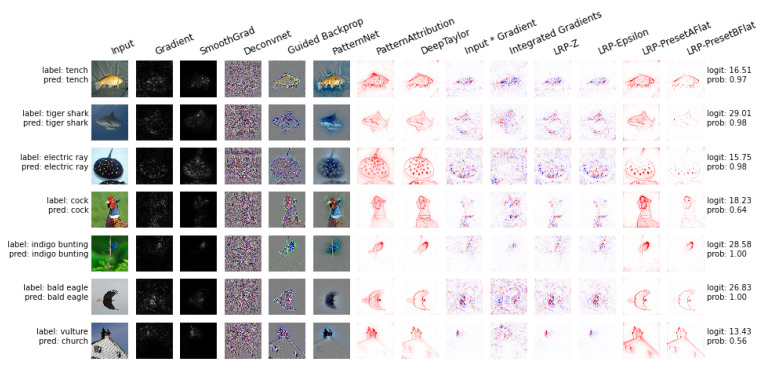
“[44] showed that, while the Deconvolution [32], Guided BackPropagation [31], and LRP [37] methods help in interpreting deep neural networks, they do not produce the theoretically correct interpretation, even in the simplest neural network setting; a linear model developed while using data that were produced by a linea…”
InfluentialLearning Deep Features for Discriminative Localization
Zhou, B., Khosla, A., Lapedriza, A., Oliva, A., & Torralba, A. (2016) · 2016 IEEE Conference on Computer Vision and Pattern Recognition (CVPR) · doi:10.1109/cvpr.2016.319 · Cited by 11,428 · cited 2×
“In many cases, this is achieved through exploiting the gradient information flowing through the layers of the network, Grad-CAM [35], a direct extension of [34], being a prime and most influential example in terms of citations per year.”
Research works printed but not linked: 3
- Luss, R., Chen, P.Y., Dhurandhar, A., Sattigeri, P., Zhang, Y., Shanmugam, K., and Tu, C.C. (2019). Generating contrastive explanations with monotonic attribute functions. arXiv.
- Van Looveren, A., and Klaise, J. (2019). Interpretable counterfactual explanations guided by prototypes. arXiv.
- Wang, X., Jin, H., and He, K. (2019). Natural language adversarial attacks and defenses in word level. arXiv.
Cited by
On the Opportunities and Risks of Foundation Models
Bommasani, R., Hudson, D. A., Adeli, E., Altman, R., Arora, S., von Arx, S., Bernstein, M. S., Bohg, J., Bosselut, A., Brunskill, E., et al. (2021) · arXiv · doi:10.48550/arxiv.2108.07258 · Cited by 2,676
Ali, S., Abuhmed, T., El-Sappagh, S., Muhammad, K., Alonso-Moral, J. M., Confalonieri, R., Guidotti, R., Del Ser, J., Díaz-Rodríguez, N., & Herrera, F. (2023) · Information Fusion · doi:10.1016/j.inffus.2023.101805 · Cited by 1,762
The Role of AI in Hospitals and Clinics: Transforming Healthcare in the 21st Century
Maleki Varnosfaderani, S., & Forouzanfar, M. (2024) · Bioengineering · doi:10.3390/bioengineering11040337 · Cited by 931
“Interpretability ensures that AI models provide clear explanations for their decisions, fostering trust with clinicians who can understand the reasoning behind recommendations [153].”
BackgroundThe Rise and Potential of Large Language Model Based Agents: A Survey
Xi, Z., Chen, W., Guo, X., He, W., Ding, Y., Hong, B., Zhang, M., Wang, J., Jin, S., Zhou, E., et al. (2023) · arXiv · doi:10.48550/arxiv.2309.07864 · Cited by 972
The rise and potential of large language model based agents: a survey
Xi, Z., Chen, W., Guo, X., He, W., Ding, Y., Hong, B., Zhang, M., Wang, J., Jin, S., Zhou, E., et al. (2025) · Science China Information Sciences · doi:10.1007/s11432-024-4222-0 · Cited by 970
“LLM-based agents have limitations because of hallucination [228], the lack of training data and tuning for specific fields [229], untransparent decision-making process [230] and susceptibility to adversarial attacks [231].”
Artificial intelligence for multimodal data integration in oncology
Lipkova, J., Chen, R. J., Chen, B., Lu, M. Y., Barbieri, M., Shao, D., Vaidya, A. J., Chen, C., Zhuang, L., Williamson, D. F. K., et al. (2022) · Cancer Cell · doi:10.1016/j.ccell.2022.09.012 · Cited by 777
Unleashing the potential of prompt engineering for large language models
Chen, B., Zhang, Z., Langrené, N., & Zhu, S. (2025) · Patterns · doi:10.1016/j.patter.2025.101260 · Cited by 490
AI for next generation computing: Emerging trends and future directions
Gill, S. S., Xu, M., Ottaviani, C., Patros, P., Bahsoon, R., Shaghaghi, A., Golec, M., Stankovski, V., Wu, H., Abraham, A., et al. (2022) · Internet of Things · doi:10.1016/j.iot.2022.100514 · Cited by 686
“Is a computing system stable and robust enough to execute orkloads? Are the trained models black boxes or causally explainable? These are just a few examples of challenges that are faced efore a computing system can be implemented [212].”
Yang, G., Ye, Q., & Xia, J. (2022) · Information Fusion · doi:10.1016/j.inffus.2021.07.016 · Cited by 717
Lekadir, K., Frangi, A. F., Porras, A. R., Glocker, B., Cintas, C., Langlotz, C. P., Weicken, E., Asselbergs, F. W., Prior, F., Collins, G. S., et al. (2025) · BMJ · doi:10.1136/bmj-2024-081554 · Cited by 957
Antoniadi, A. M., Du, Y., Guendouz, Y., Wei, L., Mazo, C., Becker, B. A., & Mooney, C. (2021) · Applied Sciences · doi:10.3390/app11115088 · Cited by 629
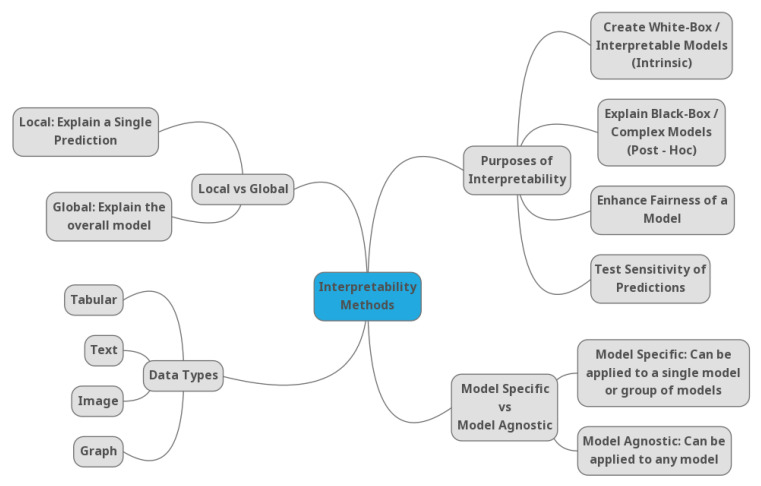
“A rapid advancement of XAI is evident, and the recent study by Linardatos et al. [132] has identified four main areas of focus: methods for explaining complex black-box models, methods for creating white-box models, methods that promote fairness and restrict the existence of discrimination, and…”
BackgroundMethodRemote patient monitoring using artificial intelligence: Current state, applications, and challenges
Shaik, T., Tao, X., Higgins, N., Li, L., Gururajan, R., Zhou, X., & Acharya, U. R. (2023) · WIREs Data Mining and Knowledge Discovery · doi:10.1002/widm.1485 · Cited by 515
“Linardatos et al. (2020) reviewed machine learning interpretability methods.”
Bibri, S. E., Krogstie, J., Kaboli, A., & Alahi, A. (2024) · Environmental Science and Ecotechnology · doi:10.1016/j.ese.2023.100330 · Cited by 536
Ethical and social risks of harm from Language Models
Weidinger, L., Mellor, J., Rauh, M., Griffin, C., Uesato, J., Huang, P.-S., Cheng, M., Glaese, M., Balle, B., Kasirzadeh, A., et al. (2021) · arXiv · doi:10.48550/arxiv.2112.04359 · Cited by 477
“A range of tools has been proposed and discussed to make AI systems, and specifically NLP and language models, more explainable and interpretable (for reviews see (Belinkov and Glass, 2019; Bommasani et al., 2021; Linardatos et al., 2021)).”
BackgroundExplainable artificial intelligence (XAI) in finance: a systematic literature review
Černevičienė, J., & Kabašinskas, A. (2024) · Artificial Intelligence Review · doi:10.1007/s10462-024-10854-8 · Cited by 289
“Increasing the complexity of the model often leads to higher predictive accuracy, but also reduces its capacity to provide explainable predictions (Linardatos et al. 2020).”
Ferreira, C., & Gonçalves, G. (2022) · Journal of Manufacturing Systems · doi:10.1016/j.jmsy.2022.05.010 · Cited by 417
A., S., & R., S. (2023) · Decision Analytics Journal · doi:10.1016/j.dajour.2023.100230 · Cited by 432
Attention is all you need: utilizing attention in AI-enabled drug discovery
Zhang, Y., Liu, C., Liu, M., Liu, T., Lin, H., Huang, C.-B., & Ning, L. (2023) · Briefings in Bioinformatics · doi:10.1093/bib/bbad467 · Cited by 377
Schwalbe, G., & Finzel, B. (2024) · Data Mining and Knowledge Discovery · doi:10.1007/s10618-022-00867-8 · Cited by 328
“2021 [85] P, R Technical, with source code 3”
BackgroundInfluentialJafar, A., Bibi, N., Naqvi, R. A., Sadeghi-Niaraki, A., & Jeong, D. (2024) · Frontiers in Plant Science · doi:10.3389/fpls.2024.1356260 · Cited by 320
“Decision trees, random forests, k-nearest neighbors, support vector machines, arti fi cial neural networks, naive Bayes, linear regression, and linear discriminant analysis are among the frequently used approaches (Linardatos et al, 2021).”
MethodMukhamediev, R. I., Popova, Y., Kuchin, Y., Zaitseva, E., Kalimoldayev, A., Symagulov, A., Levashenko, V., Abdoldina, F., Gopejenko, V., Yakunin, K., et al. (2022) · Mathematics · doi:10.3390/math10152552 · Cited by 292
Combining Human and Artificial Intelligence: Hybrid Problem-Solving in Organizations
Raisch, S., & Fomina, K. (2025) · Academy of Management Review · doi:10.5465/amr.2021.0421 · Cited by 280
“While the inclusion of explainable AI methods enables this learning, the use of generative AI always limits the resulting models ’ transparency (Linardatos et al., 2020).”
BackgroundMethodInfluentialExplainable Artificial Intelligence in CyberSecurity: A Survey
Capuano, N., Fenza, G., Loia, V., & Stanzione, C. (2022) · IEEE Access · doi:10.1109/access.2022.3204171 · Cited by 330
“High-performance AI systems, particularly those based on DL, behave similarly to black boxes that provide good results but can hardly justify a given output in a human-understandable way [12], [13].”
BackgroundBias recognition and mitigation strategies in artificial intelligence healthcare applications
Hasanzadeh, F., Josephson, C. B., Waters, G., Adedinsewo, D., Azizi, Z., & White, J. A. (2025) · npj Digital Medicine · doi:10.1038/s41746-025-01503-7 · Cited by 320
“For example, while decision tree models provide clear feature usage insights, deep learning models offer limited insights 66 .”
InfluentialNazar, M., Alam, M. M., Yafi, E., & Su'ud, M. M. (2021) · IEEE Access · doi:10.1109/access.2021.3127881 · Cited by 312
Ethical use of Artificial Intelligence in Health Professions Education: AMEE Guide No. 158
Masters, K. (2023) · Medical Teacher · doi:10.1080/0142159x.2023.2186203 · Cited by 302
“The ethical problem of algorithm non-transparency is being addressed to some extent through Explainable Artificial Intelligence (XAI: Linardatos et al. 2020), but the problem still exists, and probably will for some time.”
BackgroundMersha, M., Lam, K., Wood, J., AlShami, A. K., & Kalita, J. (2024) · Neurocomputing · doi:10.1016/j.neucom.2024.128111 · Cited by 237
“Conve-niently, it can additionally be used to improve the robustness of the model by identifying the parts of the images that are irrelevant to the prediction and discarding them [108].”
BackgroundNeupane, S., Ables, J., Anderson, W., Mittal, S., Rahimi, S., Banicescu, I., & Seale, M. (2022) · IEEE Access · doi:10.1109/access.2022.3216617 · Cited by 236
“in [69] divided explainability methods into four groups based on: the data types used, the scope of explanation, the purpose of explanation, and the”
MethodNazir, S., Dickson, D. M., & Akram, M. U. (2023) · Computers in Biology and Medicine · doi:10.1016/j.compbiomed.2023.106668 · Cited by 283
“Some of the reviews have covered Machine Learning (ML) interpretability [23], trustwor-thiness for DNN [24], explanations types [25], objective quality evaluation of explanations [25], responsible AI [2], post-hoc explainability techniques [2], and evaluation of the model explanation [26].”
BackgroundHaque, A. B., Islam, A. K. M. N., & Mikalef, P. (2023) · Technological Forecasting and Social Change · doi:10.1016/j.techfore.2022.122120 · Cited by 240
“Linardatos et al., 2021 This study highlights the programming implementation in recent studies that contributes to increasing the interpretability of ML models from both theorist and practitioner perspectives.”
BackgroundKiseleva, A., Kotzinos, D., & De Hert, P. (2022) · Frontiers in Artificial Intelligence · doi:10.3389/frai.2022.879603 · Cited by 278
“Since the very first promising results of AI in healthcare, the “black-box” problem [opacity of how AI comes to decisions (Linardatos et al., 2021)] became a cornerstone of its successful application in clinical practice 4 .”
BackgroundBibri, S. E., Huang, J., Jagatheesaperumal, S. K., & Krogstie, J. (2024) · Environmental Science and Ecotechnology · doi:10.1016/j.ese.2024.100433 · Cited by 242
Chin, M. H., Afsar-Manesh, N., Bierman, A. S., Chang, C., Colón-Rodríguez, C. J., Dullabh, P., Duran, D. G., Fair, M., Hernandez-Boussard, T., Hightower, M., et al. (2023) · JAMA Network Open · doi:10.1001/jamanetworkopen.2023.45050 · Cited by 275
Alkhanbouli, R., Matar Abdulla Almadhaani, H., Alhosani, F., & Simsekler, M. C. E. (2025) · BMC Medical Informatics and Decision Making · doi:10.1186/s12911-025-02944-6 · Cited by 214
“SHAP, on the other hand, provides a consistent method for calculating the contribution of each feature to the model’s output, making it particularly useful for feature attribution, though it can be computationally intensive [1].”
InfluentialFour principles of explainable artificial intelligence
Phillips, P. J., Hahn, C. A., Fontana, P. C., Yates, A. N., Greene, K., Broniatowski, D. A., & Przybocki, M. A. (2021) · doi:10.6028/nist.ir.8312 · Cited by 262
Trustworthy ai: A computational perspective
Liu, H., Wang, Y., Fan, W., Liu, X., Li, Y., Jain, S., Liu, Y., Jain, A., & Tang, J. (2023) · ACM Transactions on Intelligent Systems and Technology · doi:10.1145/3546872 · Cited by 261
“However, they are treated as black-boxes, since most deep models are too complicated and opaque to be understood, as well as they are developed without explainability [213].”
BackgroundSentiment Analysis for Fake News Detection
Alonso, M. A., Vilares, D., Gómez-Rodríguez, C., & Vilares, J. (2021) · Electronics · doi:10.3390/electronics10111348 · Cited by 239
“The creation of explainable AI systems [195] is becoming more and more important, and therefore, it is necessary to add mechanisms both to the SA methods used and to the resulting fake news detection systems.”
MethodArtificial intelligence for literature reviews: opportunities and challenges
Bolaños, F., Salatino, A., Osborne, F., & Motta, E. (2024) · Artificial Intelligence Review · doi:10.1007/s10462-024-10902-3 · Cited by 246
Ennab, M., & Mcheick, H. (2024) · Frontiers in Robotics and AI · doi:10.3389/frobt.2024.1444763 · Cited by 238
Abbas, Q., Jeong, W., & Lee, S. W. (2025) · Healthcare · doi:10.3390/healthcare13172154 · Cited by 236
“These methods are designed to provide insights into which features influence a model’s decision, how sensitive the model is to input variations, and how the trustworthiness of its predictions varies across contexts [14].”
A Review on Explainable Artificial Intelligence for Healthcare: Why, How, and When?
Bharati, S., Mondal, M. R. H., & Podder, P. (2024) · IEEE Transactions on Artificial Intelligence · doi:10.1109/tai.2023.3266418 · Cited by 203
“Using feature importance as a tool, researchers have been able to better describe the properties and importance of extracted features, as well as the relationships between those features and the outcomes they predict [12, 113, 127].”
MethodMachine learning models and over-fitting considerations
Charilaou, P., & Battat, R. (2022) · World Journal of Gastroenterology · doi:10.3748/wjg.v28.i5.605 · Cited by 208
Investigating Explainability of Generative AI for Code through Scenario-based Design
Sun, J., Liao, Q. V., Muller, M., Agarwal, M., Houde, S., Talamadupula, K., & Weisz, J. D. (2022) · 27th International Conference on Intelligent User Interfaces · doi:10.1145/3490099.3511119 · Cited by 219
“A full review of XAI techniques is beyond the scope of this paper and can be found in many recent survey papers [1, 29, 55, 56].”
BackgroundExplainable AI for clinical and remote health applications: A survey on tabular and time series data
Di Martino, F., & Delmastro, F. (2023) · Artificial Intelligence Review · doi:10.1007/s10462-022-10304-3 · Cited by 216
“In addition, evaluating the level of consistency of explanations generated by multiple methods may provide some preliminary insights into AI systems’ reliability, despite sensitivity analysis may be needed to better expose model vulnerabilities and draw more accurate conclusions about stability and robustness properti…”
MethodJahmunah, V., Ng, E. Y. K., Tan, R.-S., Oh, S. L., & Acharya, U. R. (2022) · Computers in Biology and Medicine · doi:10.1016/j.compbiomed.2022.105550 · Cited by 210
Leng, J., Zhu, X., Huang, Z., Li, X., Zheng, P., Zhou, X., Mourtzis, D., Wang, B., Qi, Q., Shao, H., et al. (2024) · Journal of Manufacturing Systems · doi:10.1016/j.jmsy.2024.02.010 · Cited by 205
Artificial intelligence in healthcare delivery: Prospects and pitfalls
Olawade, D. B., David-Olawade, A. C., Wada, O. Z., Asaolu, A. J., Adereni, T., & Ling, J. (2024) · Journal of Medicine, Surgery, and Public Health · doi:10.1016/j.glmedi.2024.100108 · Cited by 180
Kute, D. V., Pradhan, B., Shukla, N., & Alamri, A. (2021) · IEEE Access · doi:10.1109/access.2021.3086230 · Cited by 209
“[97] presented a comprehensive review of machine learning interpretabilitymethods using 4 categories– (i) Methods for explaining black box models (17 methods focused on DL method interpretations, 16 methods that can”
MethodA Survey of Explainable Artificial Intelligence for Smart Cities
Javed, A. R., Ahmed, W., Pandya, S., Maddikunta, P. K. R., Alazab, M., & Gadekallu, T. R. (2023) · Electronics · doi:10.3390/electronics12041020 · Cited by 193
Friha, O., Amine Ferrag, M., Kantarci, B., Cakmak, B., Ozgun, A., & Ghoualmi-Zine, N. (2024) · IEEE Open Journal of the Communications Society · doi:10.1109/ojcoms.2024.3456549 · Cited by 189
Nasarian, E., Alizadehsani, R., Acharya, U. R., & Tsui, K.-L. (2024) · Information Fusion · doi:10.1016/j.inffus.2024.102412 · Cited by 207
Gala, D., Behl, H., Shah, M., & Makaryus, A. N. (2024) · Healthcare · doi:10.3390/healthcare12040481 · Cited by 183
“This emphasis on explainability not only fosters trust among healthcare professionals but also ensures that AI recommendations align with the logic of clinical expertise [61,62].”
Post-hoc vs ante-hoc explanations: xAI design guidelines for data scientists
Retzlaff, C. O., Angerschmid, A., Saranti, A., Schneeberger, D., Röttger, R., Müller, H., & Holzinger, A. (2024) · Cognitive Systems Research · doi:10.1016/j.cogsys.2024.101243 · Cited by 194
“See Linardatos et al. (2021) for further discussion.”
Javed, H., El-Sappagh, S., & Abuhmed, T. (2024) · Artificial Intelligence Review · doi:10.1007/s10462-024-11005-9 · Cited by 180
A Review on Explainability in Multimodal Deep Neural Nets
Joshi, G., Walambe, R., & Kotecha, K. (2021) · IEEE Access · doi:10.1109/access.2021.3070212 · Cited by 204
“[81] Explainability methods for the critical domain of healthcare are discussed.”
MethodThousands of AI Authors on the Future of AI
Grace, K., Sandkühler, J. F., Stewart, H., Weinstein-Raun, B., Thomas, S., Stein-Perlman, Z., Salvatier, J., Brauner, J., & Korzekwa, R. C. (2025) · Journal of Artificial Intelligence Research · doi:10.1613/jair.1.19087 · Cited by 201
Cembrowska-Lech, D., Krzemińska, A., Miller, T., Nowakowska, A., Adamski, C., Radaczyńska, M., Mikiciuk, G., & Mikiciuk, M. (2023) · Biology · doi:10.3390/biology12101298 · Cited by 175
“…can be a significant limitation, particularly in a scientific context where understanding the underlying biological mechanisms is crucial [197,198]; • Overfitting: AI and ML models, particularly more complex models, such as deep learning models, can be prone to overfitting, where they perform…”
BackgroundExplainable and interpretable artificial intelligence in medicine: a systematic bibliometric review
Frasca, M., La Torre, D., Pravettoni, G., & Cutica, I. (2024) · Discover Artificial Intelligence · doi:10.1007/s44163-024-00114-7 · Cited by 190
“As a result, it can identify the cause of a problem and foresee what will happen if the input or computational parameters change [10].”
InfluentialMachine learning in precision diabetes care and cardiovascular risk prediction
Oikonomou, E. K., & Khera, R. (2023) · Cardiovascular Diabetology · doi:10.1186/s12933-023-01985-3 · Cited by 190
“To bridge the interpretability gap of complex “black box” algorithms, various approaches have emerged including Local Interpretable Model-agnostic Explanations (LIME) and SHapley Additive exPlanations (SHAP) [119, 120] (Fig.”
MethodFisher, S., & Rosella, L. C. (2022) · BMC Public Health · doi:10.1186/s12889-022-14422-z · Cited by 174
“Some machine learning models are viewed as more interpretable than others, including penalized regression methods and single decision trees; however, this perceived advantage often comes at the cost of model performance [48].”
BackgroundAllgaier, J., Mulansky, L., Draelos, R. L., & Pryss, R. (2023) · Artificial Intelligence in Medicine · doi:10.1016/j.artmed.2023.102616 · Cited by 170
From Blackbox to Explainable AI in Healthcare: Existing Tools and Case Studies
Srinivasu, P. N., Sandhya, N., Jhaveri, R. H., & Raut, R. (2022) · Mobile Information Systems · doi:10.1155/2022/8167821 · Cited by 171
“Table 3 represents the various characteristics like the acceptable input type, a local and global explainable toolkit feature, and the model-specific and agnostic feature associated with the toolkits [38].”
BackgroundExplainable AI Over the Internet of Things (IoT): Overview, State-of-the-Art and Future Directions
Jagatheesaperumal, S. K., Pham, Q.-V., Ruby, R., Yang, Z., Xu, C., & Zhang, Z. (2022) · IEEE Open Journal of the Communications Society · doi:10.1109/ojcoms.2022.3215676 · Cited by 171
“Others focus on specific functionality, such as security [30, 31], healthcare [32, 33, 34], augmentation [35], robots [36, 37], and the solutions associated with ML models [38, 39, 40] for exploring insights into the decisions made by the systems.”
Tool Learning with Foundation Models
Qin, Y., Hu, S., Lin, Y., Chen, W., Ding, N., Cui, G., Zeng, Z., Huang, Y., Xiao, C., Han, C., et al. (2023) · arXiv · doi:10.48550/arxiv.2304.08354 · Cited by 184
“Foundation models are criticized for lacking transparency in their decision-making process (Linardatos et al., 2020), which can be a significant concern in applications such as healthcare or finance, where interpretability is critical for making informed decisions.”
(2024) · doi:10.1145/3704435 · Cited by 184
“Foundation models are criticized for lacking transparency in their decision-making process (Linardatos et al., 2020), which can be a significant concern in applications such as healthcare or finance, where interpretability is critical for making informed decisions.”
Interpretable and explainable machine learning: A methods‐centric overview with concrete examples
Marcinkevičs, R., & Vogt, J. E. (2023) · WIREs Data Mining and Knowledge Discovery · doi:10.1002/widm.1493 · Cited by 161
Explainable Artificial Intelligence for Human Decision Support System in the Medical Domain
Knapič, S., Malhi, A., Saluja, R., & Främling, K. (2021) · Machine Learning and Knowledge Extraction · doi:10.3390/make3030037 · Cited by 171
Machine Learning for Perovskite Solar Cells and Component Materials: Key Technologies and Prospects
Liu, Y., Tan, X., Liang, J., Han, H., Xiang, P., & Yan, W. (2023) · Advanced Functional Materials · doi:10.1002/adfm.202214271 · Cited by 174
An explainable machine learning approach for Alzheimer’s disease classification
Alatrany, A. S., Khan, W., Hussain, A., Kolivand, H., & Al-Jumeily, D. (2024) · Scientific Reports · doi:10.1038/s41598-024-51985-w · Cited by 172
“Literature contains several works to analyse the complex models and open the black box of decision-making processes 14 however, very few recent research have focused on the interpretability and explainability of ML models in AD.”
Madakumbura, G. D., Thackeray, C. W., Norris, J., Goldenson, N., & Hall, A. (2021) · Nature Communications · doi:10.1038/s41467-021-24262-x · Cited by 162
Explainable Artificial Intelligence by Genetic Programming: A Survey
Mei, Y., Chen, Q., Lensen, A., Xue, B., & Zhang, M. (2023) · IEEE Transactions on Evolutionary Computation · doi:10.1109/tevc.2022.3225509 · Cited by 164
“XAI research has seen a rapid growth in recent years, with a range of XAI survey papers [21], [22], [23], [24], [25], [26].”
BackgroundCOVID-19 image classification using deep learning: Advances, challenges and opportunities
Aggarwal, P., Mishra, N. K., Fatimah, B., Singh, P., Gupta, A., & Joshi, S. D. (2022) · Computers in Biology and Medicine · doi:10.1016/j.compbiomed.2022.105350 · Cited by 168
“There is a need to explore more methods of Explainable AI for COVID-19 diagnosis as used in other applications [147,148].”
Kumar, N., Sharma, M., Singh, V. P., Madan, C., & Mehandia, S. (2022) · Biomedical Signal Processing and Control · doi:10.1016/j.bspc.2022.103596 · Cited by 175
Kannangara, K. K. P. M., Zhou, W., Ding, Z., & Hong, Z. (2022) · Journal of Rock Mechanics and Geotechnical Engineering · doi:10.1016/j.jrmge.2022.01.002 · Cited by 163
Interpretability research of deep learning: A literature survey
Xu, B., & Yang, G. (2024) · Information Fusion · doi:10.1016/j.inffus.2024.102721 · Cited by 211
A survey on explainable artificial intelligence for cybersecurity
Rjoub, G., Bentahar, J., Abdel Wahab, O., Mizouni, R., Song, A., Cohen, R., Otrok, H., & Mourad, A. (2023) · IEEE Transactions on Network and Service Management · doi:10.1109/tnsm.2023.3282740 · Cited by 158
“As a reference for both theorists and practitioners, the authors in [31] provide a literature review and taxonomy of ML interpretability methods, along with links to their programming implementations.”
MethodThe coming of age of interpretable and explainable machine learning models
Lisboa, P. J. G., Saralajew, S., Vellido, A., Fernández-Domenech, R., & Villmann, T. (2023) · Neurocomputing · doi:10.1016/j.neucom.2023.02.040 · Cited by 198
Bock, K. W. D., Coussement, K., Caigny, A. D., Słowiński, R., Baesens, B., Boute, R. N., Choi, T., Delen, D., Kraus, M., Lessmann, S., et al. (2023) · European Journal of Operational Research · doi:10.1016/j.ejor.2023.09.026 · Cited by 210
“…and 2. review papers published outside the OR field that investigate explainable AI solely from a methodological (Barredo Arrieta et al., 2020; Linardatos, Papastefanopoulos, & Kotsiantis, 2021) or general (Islam, Ahmed, Barua, & Begum, 2022) perspective, with a domain-agnostic approach,…”
BackgroundExplainable Predictive Maintenance of Rotating Machines Using LIME, SHAP, PDP, ICE
Gawde, S., Patil, S., Kumar, S., Kamat, P. V., Kotecha, K. V., & Alfarhood, S. (2024) · IEEE Access · doi:10.1109/access.2024.3367110 · Cited by 185
“Post-hoc explainable techniques include explanations based on text or Global (explaining the entire model) [60].”
MethodMachine learning in microseismic monitoring
Anikiev, D., Birnie, C. E., bin Waheed, U., Alkhalifah, T. A., Gu, C., Verschuur, D. J., & Eisner, L. (2023) · Earth-Science Reviews · doi:10.1016/j.earscirev.2023.104371 · Cited by 156
“We see a trend in general in ML towards understanding more about our networks inner workings, or, in other words, towards explainable AI (Linardatos et al., 2020).”
BackgroundMachine learning for nanoplasmonics
Masson, J., Biggins, J. S., & Ringe, E. (2023) · Nature Nanotechnology · doi:10.1038/s41565-022-01284-0 · Cited by 158
Lee, J., Park, D., Lee, M., Lee, H., Park, K., Lee, I., & Ryu, S. (2023) · Materials Horizons · doi:10.1039/d3mh00039g · Cited by 188
Tool learning with large language models: a survey
Qu, C., Dai, S., Wei, X., Cai, H., Wang, S., Yin, D., Xu, J., & Wen, J.-R. (2025) · Frontiers of Computer Science · doi:10.1007/s11704-024-40678-2 · Cited by 491
“Due to the diverse and multifaceted nature of user queries in the real-world, which may encompass multiple languages and modalities, LLMs often face challenges in consistently understanding different types of input.”
Next-gen agriculture: integrating AI and XAI for precision crop yield predictions
Mohan, R. N. V. J., Rayanoothala, P. S., & Sree, R. P. (2025) · Frontiers in Plant Science · doi:10.3389/fpls.2024.1451607 · Cited by 148
Bifarin, O. O. (2023) · PLoS ONE · doi:10.1371/journal.pone.0284315 · Cited by 159
Woodman, R. J., & Mangoni, A. A. (2023) · Aging Clinical and Experimental Research · doi:10.1007/s40520-023-02552-2 · Cited by 186
Sanmarchi, F., Fanconi, C., Golinelli, D., Gori, D., Hernandez‐Boussard, T., & Capodici, A. (2023) · Journal of Nephrology · doi:10.1007/s40620-023-01573-4 · Cited by 155
A Survey on Explainable Anomaly Detection
Li, Z., Zhu, Y., & Van Leeuwen, M. (2024) · ACM Transactions on Knowledge Discovery from Data · doi:10.1145/3609333 · Cited by 139
“Meanwhile, a refined taxonomy, distilled from existing surveys on XAI techniques, is presented below and used to categorize XAD methods.”
MethodInfluentialLi, Y., Yabuki, N., & Fukuda, T. (2022) · Sustainable Cities and Society · doi:10.1016/j.scs.2022.104140 · Cited by 177
MLOps: A Taxonomy and a Methodology
Testi, M., Ballabio, M., Frontoni, E., Iannello, G., Moccia, S., Soda, P., & Vessio, G. (2022) · IEEE Access · doi:10.1109/access.2022.3181730 · Cited by 158
“An explainable model does not necessarily translate into one that humans are able to understand (internal logic or underlying processes) [90].”
BackgroundNagpal, M., Siddique, M. A., Sharma, K., Sharma, N., & Mittal, A. K. (2024) · Water Science & Technology · doi:10.2166/wst.2024.259 · Cited by 156
Multi-Objective Hyperparameter Optimization in Machine Learning—An Overview
Karl, F., Pielok, T., Moosbauer, J., Pfisterer, F., Coors, S., Binder, M., Schneider, L., Thomas, J., Richter, J., Lang, M., et al. (2023) · ACM Transactions on Evolutionary Learning and Optimization · doi:10.1145/3610536 · Cited by 204
“, interpretability, robustness, or fairness [Arrieta et al. 2020; Linardatos et al. 2021].”
BackgroundGenomic language models: opportunities and challenges
Benegas, G., Ye, C., Albors, C., Li, J. C., & Song, Y. S. (2025) · Trends in Genetics · doi:10.1016/j.tig.2024.11.013 · Cited by 186
“As a result, a series of methods have been developed to interpret deep learning models, including those specific to genomics [106–108].”
Shapley variable importance cloud for interpretable machine learning
Ning, Y., Ong, M. E. H., Chakraborty, B., Goldstein, B. A., Ting, D. S. W., VAUGHAN, R. D., & Liu, N. (2022) · Patterns · doi:10.1016/j.patter.2022.100452 · Cited by 159
Artificial intelligence in metabolomics: a current review
Chi, J., Shu, J., Li, M., Mudappathi, R., Jin, Y., Lewis, F., Boon, A., Qin, X., Liu, L., & Gu, H. (2024) · TrAC Trends in Analytical Chemistry · doi:10.1016/j.trac.2024.117852 · Cited by 149
XAIR: A Systematic Metareview of Explainable AI (XAI) Aligned to the Software Development Process
Clement, T., Kemmerzell, N., Abdelaal, M., & Amberg, M. (2023) · Machine Learning and Knowledge Extraction · doi:10.3390/make5010006 · Cited by 131
A Review on Interpretable and Explainable Artificial Intelligence in Hydroclimatic Applications
Başağaoğlu, H., Chakraborty, D., do Lago, C. A. F., Gutierrez, L., Şahinli, M. A., Giacomoni, M. H., Furl, C. V., Mirchi, A., Moriasi, D. N., & Şengör, S. S. (2022) · Water · doi:10.3390/w14081230 · Cited by 152
“There is no concrete mathematical definition, formality, or measured metric for inter-pretability or explainability [8,24].”
BackgroundHuman-centered evaluation of explainable AI applications: a systematic review
Kim, J., Maathuis, H., & Sent, D. (2024) · Frontiers in Artificial Intelligence · doi:10.3389/frai.2024.1456486 · Cited by 130
“For more details about the dichotomies described above, the reader is referred to Linardatos et al. (2020).”
BackgroundMhlanga, D. (2022) · Sustainability · doi:10.3390/su14137804 · Cited by 130
Automatic assessment of pain based on deep learning methods: A systematic review
Gkikas, S., & Tsiknakis, M. (2023) · Computer Methods and Programs in Biomedicine · doi:10.1016/j.cmpb.2023.107365 · Cited by 163
Metadata
- Authors
- Linardatos, P., Papastefanopoulos, V., & Kotsiantis, S.
- Affiliations
- University of Patras (GR)
- Corresponding author
- Linardatos, Pantelis
- Venue
- Entropy
- Publisher
- MDPI AG
- Published
- 2020-12-25
- Volume
- 23
- Issue
- 1
- Pages
- 18
- ISSN
- 1099-4300 (ISSN-L)
- PMC
- PMC7824368
- OpenAlex
- W3116286104
- Cited by
- 2,922
- References
- 162
- Citations by year
- 2026: 485 · 2025: 702 · 2024: 701 · 2023: 565 · 2022: 370 · 2021: 97 · 2020: 1
- FWCI
- 8.89
- Type
- journal article
- Language
- en
- Open access
- gold
- doi.org
- Licence
- Locations
- Entropy (publishedVersion, cc-by)
- PubMed Central (publishedVersion, cc-by)
- PubMed (publishedVersion)
- DOAJ (DOAJ: Directory of Open Access Journals) (submittedVersion, cc-by-sa)
- Topics
- Physical Sciences › Computer Science › Artificial Intelligence › Explainable Artificial Intelligence (XAI)
- Physical Sciences › Computer Science › Software › Software Testing and Debugging Techniques
- Physical Sciences › Computer Science › Artificial Intelligence › Adversarial Robustness in Machine Learning
- Keywords
- explainable AI, model interpretability, black-box models, medical applications
About these checks
Registry, retraction, Cites and statistics results are computed, not judged, with one exception: a printed reference that no index lists is read once by a model before it counts as a citation error. Claims are extracted by a model and kept only when their quote appears verbatim in the text; each cited source is then checked, with a model’s help, for whether it says what the claim relies on. Those verdicts can be wrong — read the claim’s quote and the cited source before relying on one.
Statistics and arithmetic are recomputed, not judged.
Confidence bands are shown only for fields calibrated on our annotated test set. None is calibrated yet, so no band is shown.
What counts as a claim ›How we measure confidence ›How we check this ›
Are you an author, or do you see a problem with this page? Request a review
Data sources
Bibliographic data: Semantic Scholar, OpenAlex, Crossref.
Contains information from the Semantic Scholar Academic Graph Datasets, made available under the ODC Attribution License (ODC-BY 1.0).
Semantic Scholar’s data is described in: Kinney, R., et al. (2023). The Semantic Scholar Open Data Platform. arXiv:2301.10140.
