

Multi-Sequence LSTM-RNN Deep Learning and Metaheuristics for Electric Load Forecasting
Open accessThe DOI matches its Crossref record; 41 of the 41 references it cites were found in a registry or an index.
Abstract
Short term electric load forecasting plays a crucial role for utility companies, as it allows for the efficient operation and management of power grid networks, optimal balancing between production and demand, as well as reduced production costs. As the volume and variety of energy data provided by building automation systems, smart meters, and other sources are continuously increasing, long short-term memory (LSTM) deep learning models have become an attractive approach for energy load forecasting. These models are characterized by their capabilities of learning long-term dependencies in collected electric data, which lead to accurate prediction results that outperform several alternative statistical and machine learning approaches. Unfortunately, applying LSTM models may not produce acceptable forecasting results, not only because of the noisy electric data but also due to the naive selection of its hyperparameter values. Therefore, an optimal configuration of an LSTM model is necessary to describe the electric consumption patterns and discover the time-series dynamics in the energy domain. Finding such an optimal configuration is, on the one hand, a combinatorial problem where selection is done from a very large space of choices; on the other hand, it is a learning problem where the hyperparameters should reflect the energy consumption domain knowledge, such as the influential time lags, seasonality, periodicity, and other temporal attributes. To handle this problem, we use in this paper metaheuristic-search-based algorithms, known by their ability to alleviate search complexity as well as their capacity to learn from the domain where they are applied, to find optimal or near-optimal values for the set of tunable LSTM hyperparameters in the electrical energy consumption domain. We tailor both a genetic algorithm (GA) and particle swarm optimization (PSO) to learn hyperparameters for load forecasting in the context of energy consumption of big data. The statistical analysis of the obtained result shows that the multi-sequence deep learning model tuned by the metaheuristic search algorithms provides more accurate results than the benchmark machine learning models and the LSTM model whose inputs and hyperparameters were established through limited experience and a discounted number of experimentations.
Overview
The claims and statistics of this paper haven’t been checked yet.
Free: it reads the open-access text and checks the first 5 claims that cite a source we can check. Create a free account to check every claim.
Integrity signals
Registry
Cites
Statistics
Figures

Verification
Claims the paper makes
The claims and statistics of this paper haven’t been checked yet.
Free: it reads the open-access text and checks the first 5 claims that cite a source we can check. Create a free account to check every claim.
Claims other papers make about this one
Each is checked against this paper’s own text: does it say what the citing paper says it does?
The cited source says what the claim attributes to it.
In the citing paper
“Bouktif et al. [43] optimized the LSTM hyperparameters in their prediction model using GA and PSO.”
From Prediction of Heat and Cold Loads of Factory Mushroom Houses Based on EWT Decomposition (2023) · cites this paper as [43]
Self-check
Percentages, sums and reported differences re-computed from the paper’s own numbers.
The self-check needs the paper’s full text.
Citations
Cites
Hochreiter, S., & Schmidhuber, J. (1997) · Neural Computation · doi:10.1162/neco.1997.9.8.1735 · Cited by 102,318 · cited 1×
“In particular, LSTM networks, deep learning variations proposed by Hochreiter and Schmidhuber [8], were designed specially to learn long-term dependencies present in sequential data.”
BackgroundKennedy, J., & Eberhart, R. (2002) · Proceedings of ICNN'95 - International Conference on Neural Networks · doi:10.1109/icnn.1995.488968 · Cited by 58,192
Particle swarm optimization: An overview
Poli, R., Kennedy, J., & Blackwell, T. (2007) · Swarm Intelligence · doi:10.1007/s11721-007-0002-0 · Cited by 21,101 · cited 1×
“It is evolved by imitating the social behavior of a school of fishes and a flock of birds that collectively search for the best locations and are likely to move close to an optimum fitness function [39].”
BackgroundA new optimizer using particle swarm theory
Eberhart, R., & Kennedy, J. (2002) · MHS'95. Proceedings of the Sixth International Symposium on Micro Machine and Human Science · doi:10.1109/mhs.1995.494215 · Cited by 16,067 · cited 1×
“Particle swarm optimization developed by Kennedy and Eberhart in 1995 was inspired by the social behavior [38].”
Method(2012) · Cited by 8,009
Neural Networks and the Bias/Variance Dilemma
Geman, S., Bienenstock, E., & Doursat, R. (1992) · Neural Computation · doi:10.1162/neco.1992.4.1.1 · Cited by 3,578 · cited 1×
“A deeper neural network with more layers will have a greater capacity, but more layers can eventually result in a decrease in the performance due to high variance and model overfitting and thus a reduced generalization power for the electricity dataset [43].”
BackgroundTime series analysis forecasting and control
Janacek, G. (2010) · Journal of Time Series Analysis · doi:10.1111/j.1467-9892.2009.00643.x · Cited by 2,584 · cited 1×
“Traditional linear statistical models such as autoregressive (AR), moving average (MA) and autoregressive integrated moving average (ARIMA) have remained the baseline for time-series predictions, with extensive use in several industrial applications [3,4].”
BackgroundA Comparative Analysis of Selection Schemes Used in Genetic Algorithms
Goldberg, D. E., & Deb, K. (1991) · Foundations of Genetic Algorithms · doi:10.1016/b978-0-08-050684-5.50008-2 · Cited by 2,407 · cited 1×
“A large tournament value results in a stronger selective pressure, and the population can converge to a faster solution, at the cost of the solution being potentially not as good [44].”
BackgroundEngineering Optimization: An Introduction with Metaheuristic Applications
Yang, X. (2010) · Wiley eBooks · doi:10.1002/9780470640425 · Cited by 1,248 · cited 1×
“In our case, metaheuristics will select from an infinite number of configurations the appropriate lags as well as the best parameter setting for an accurate time series analysis using deep learning [13].”
BackgroundApplied Time Series Econometrics
(2004) · Cambridge University Press eBooks · doi:10.1017/cbo9780511606885 · Cited by 1,196 · cited 1×
“If the selected lags are not relevant, this may unnecessarily increase the curse of dimensionality, slow down the training process, and lead to model overfitting [41].”
Background
Research works printed but not linked: 5
- Defilippo, S.B.; Neto, G.G.; Hippert, H.S. Short-term load forecasting by artificial neural networks specified by genetic algorithms-a simulation study over a Brazilian dataset. In Proceedings of the XIII Simposio Argentino de Investigación Operativa (SIO)-JAIIO 44, Rosario, Santa Fe, Argentina, 31 August-1 September 2015.
- Brownlee, J. Clever Algorithms: Nature-Inspired Programming Recipes; Lulu Press: Morrisville, NY, USA, 2011.
- Holland, J.H.; Goldberg, D. Genetic Algorithms in Search, Optimization and Machine Learning; Addison-Wesley: Boston, MA, USA, 1989.
- Holland, J.H. Adaptation in Natural and Artificial Systems; University of Michigan Press: Ann Arbor, MI, USA, 1975.
- Meyer-Baese, A.; Schmid, V.J. Pattern Recognition and Signal Analysis in Medical Imaging; Elsevier: Amsterdam, The Netherlands, 2014.
Cited by
Items 101–200 of 286
Effect of Clustering in Federated Learning on Non-IID Electricity Consumption Prediction
Nightingale, J. S., Wang, Y., Zobiri, F., & Mustafa, M. (2022) · IEEE PES Innovative Smart Grid Technologies Europe · doi:10.1109/isgt-europe54678.2022.9960569 · Cited by 18
“An LSTM model was used with hyperparameters selected from an LSTM electrical load forecasting model [20].”
MethodMachine Learning Applications for Renewable-Based Energy Systems
Graditi, G., Buonanno, A., Caliano, M., Somma, M. D., & Valenti, M. (2023) · EAI/Springer Innovations in Communication and Computing · doi:10.1007/978-3-031-26496-2_9 · Cited by 15
A Self-Adaptive Cuckoo Search Algorithm Using a Machine Learning Technique
Caselli, N., Soto, R., Crawford, B., Valdivia, S., & Olivares, R. (2021) · Mathematics · doi:10.3390/math9161840 · Cited by 13
“In deep, machine learning integrates with metaheuristics is proposed to forecast different classes of problems, such as electric load [24], economic recessions [25], optimise the low-carbon flexible job shop scheduling problem [26] and other industrial problems [27].”
BackgroundShort-Term Electricity Demand Forecasting Using Deep Neural Networks: An Analysis for Thai Data
Chapagain, K., Gurung, S., Kulthanavit, P., & Kittipiyakul, S. (2023) · Applied System Innovation · doi:10.3390/asi6060100 · Cited by 16
Integration of Artificial Intelligence Techniques for Energy Management
Chander, B., & Kumaravelan, G. (2024) · Wiley eBooks · doi:10.1002/9781394166923.ch1 · Cited by 18
Yang, B., Lu, C., Yi, B., & Li, S. (2024) · Journal of Hydrology · doi:10.1016/j.jhydrol.2024.132034 · Cited by 12
Henselmeyer, S., & Grzegorzek, M. (2021) · Applied Sciences · doi:10.3390/app11114927 · Cited by 12
“From this category, especially Gated Recurrent Units (GRU) [14] and the even more powerful Long Short-Term Memory (LSTM) networks [15] and their combined usage with convolutional networks [11,16], the Genetic Algorithm (GA) and Particle Swarm Optimization (PSO) for hyperparameter search [17,18] shall be mentioned.”
BackgroundPredicting Beijing Air Quality Using Bayesian Optimized CNN-RNN Hybrid Model
Tu, Z., & Wu, Z. (2022) · Asia Conference on Algorithms, Computing and Machine Learning (CACML) · doi:10.1109/cacml55074.2022.00104 · Cited by 12
AI-Enhanced Predictive Maintenance in Manufacturing Processes
Netisopakul, P., & Phumee, N. (2022) · International Conference on Control, Automation and Systems (ICCAS) · doi:10.23919/iccas55662.2022.10003774 · Cited by 12
“The authors of [4] proposed using metaheuristic-search-based algorithms to find optimal or near optimal LSTM hyperparameter values.”
BackgroundMethodInfluentialMedium-Term Load Forecasting Using ANN and RNN in Microgrid Integrating Renewable Energy Source
Dewangan, F., & Biswal, M. (2023) · International Conference for Innovation in Technology (INOCON) · doi:10.1109/inocon57975.2023.10101126 · Cited by 12
Demand forecasting based on ann integrating solar distributed generation
Bibin, G. S., Vennila, H., Giri, N. C., & Chinchu, M. (2023) · AIP conference proceedings · doi:10.1063/5.0170693 · Cited by 11
An Ensemble Approach to Predict a Sustainable Energy Plan for London Households
Buyo, N., Sheikh-Akbari, A., & Saleem, F. (2025) · Sustainability · doi:10.3390/su17020500 · Cited by 16
Short-term electrical load forecasting strategy based on EEMD-SSA-BiLSTM
Zhang, X. (2025) · Signal Image and Video Processing · doi:10.1007/s11760-025-04347-6 · Cited by 11
Lee, Y.-D., Jiang, J., Ho, Y. H., Lin, W.-C., Chih, H.-C., & Huang, W. (2020) · Energies · doi:10.3390/en13071844 · Cited by 11
Study on Volleyball‐Movement Pose Recognition Based on Joint Point Sequence
Li, X. (2023) · Computational Intelligence and Neuroscience · doi:10.1155/2023/2198495 · Cited by 11
“In the process of the human body performing ball sports, the features selected based on joint point information should have general behavior [19].”
BackgroundPinthong, S., Ditthakit, P., Salaeh, N., Wipulanusat, W., Weesakul, U., Elkhrachy, I., Yadav, K. K., & Kushwaha, N. L. (2023) · Engineered Science · doi:10.30919/es1047 · Cited by 12
Wang, J., Tan, Y., Yu, J., Yu, H., Wang, M., & Zhou, M. (2025) · Energy Reports · doi:10.1016/j.egyr.2025.03.014 · Cited by 11
A hybrid deep learning model–based LSTM and modified genetic algorithm for air quality applications
Bouakline, O., Merabet, Y. E., Elidrissi, A., Khomsi, K., & Leghrib, R. (2024) · Environmental Monitoring and Assessment · doi:10.1007/s10661-024-13447-8 · Cited by 10
“These gates are governed by Eqs.5 to 9 (Bouktif et al., 2020; Drewil & Al-Bahadili, 2022; Yadav & Thakkar, 2024).”
Course Evaluation Based on Deep Learning and SSA Hyperparameters Optimization
Pramanik, P. K. D., Sinhababu, N., Nayyar, A., Masud, M., & Choudhury, P. (2021) · Computers, materials & continua/Computers, materials & continua (Print) · doi:10.32604/cmc.2022.021839 · Cited by 10
Elghalhoud, O., Naik, K., Zaman, M., & Goel, N. (2022) · doi:10.1145/3551661.3561364 · Cited by 14
Zhang, Y., Li, X., Xin, R., Chew, L. W., & Liu, C. (2024) · Energy · doi:10.1016/j.energy.2024.131525 · Cited by 9
Deep learning framework for wind speed prediction in Saudi Arabia
Alabdulhadi, A., Rehman, S., Ali, A., & Shafiullah, M. (2024) · Neural Computing and Applications · doi:10.1007/s00521-024-10766-2 · Cited by 9
Bouktif, S., Ouni, A., & Lazarova‐Molnar, S. (2022) · Energies · doi:10.3390/en15051741 · Cited by 10
“So, looking into the ability of deep learning variants [91–93] for analyzing time-series energy-use data, is an attractive path.”
BackgroundSelf-citationSreekumar, G., Martin, J. P., Raghavan, S., Joseph, C. T., & Raja, S. P. (2024) · IEEE Systems Man and Cybernetics Magazine · doi:10.1109/msmc.2023.3334483 · Cited by 9
Artificial intelligence and design of experiments for resource adequacy assessment in power systems
Priesmann, J., Münch, J., Tillmanns, M., Ridha, E., Spiegel, T., Reich, M., Adam, M., Nolting, L., & Praktiknjo, A. (2024) · Energy Strategy Reviews · doi:10.1016/j.esr.2024.101368 · Cited by 11
A novel green learning artificial intelligence model for regional electrical load prediction
Huang, H.-H., & Huang, Y.-H. (2024) · Expert Systems with Applications · doi:10.1016/j.eswa.2024.124907 · Cited by 10
Kounlavong, K., Sadik, L., Keawsawasvong, S., & Jamsawang, P. (2024) · Arabian Journal for Science and Engineering · doi:10.1007/s13369-024-09379-7 · Cited by 9
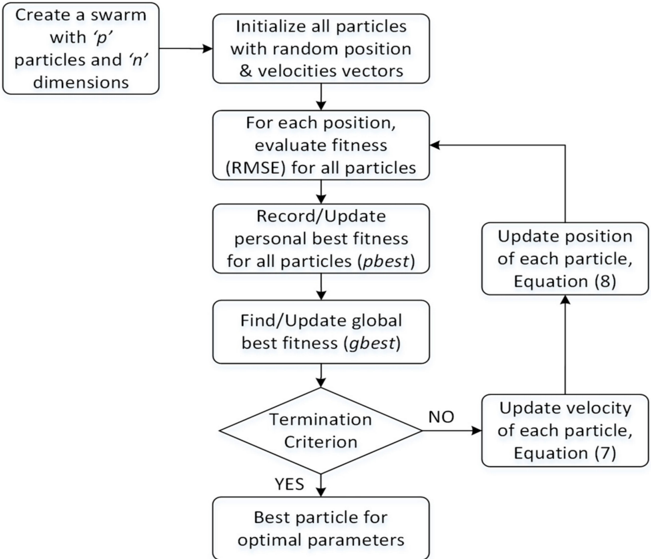
“Figure 6 presents the flowchart of how the PSO algorithm works as adapted from Bouktif et al. [44].”
Evolution characteristics of potential evapotranspiration over the Three-River Headwaters Region
Jiang, Z., Shi, H., Liu, S., Zhou, Z., Wang, Y., & Cai, H. (2021) · Hydrological Sciences Journal · doi:10.1080/02626667.2021.1957105 · Cited by 10
Automatic Selection of Temperature Variables for Short-Term Load Forecasting
Esclapez, A. C., López, M., Valero, S., & Senabre, C. (2022) · Sustainability · doi:10.3390/su142013339 · Cited by 9
“A long short-term memory model is used with a hyperparameter adjustment in [14].”
MethodFSNet: A Hybrid Model for Seasonal Forecasting
Rebei, A., Amayri, M., & Bouguila, N. (2023) · IEEE Transactions on Emerging Topics in Computational Intelligence · doi:10.1109/tetci.2023.3290050 · Cited by 9
“In [36], Muzaffar et al. used exogenous variables including temperature, humidity, and wind speed and compared the performance for their LSTM based framework with classic forecasting methods.”
ResultPrediction of Heat and Cold Loads of Factory Mushroom Houses Based on EWT Decomposition
Zuo, H., Zheng, W., Wang, M., & Zhang, X. (2023) · Sustainability · doi:10.3390/su152115270 · Cited by 8
Yalçın, S., & Herdem, M. S. (2022) · Bilecik Şeyh Edebali Üniversitesi Fen Bilimleri Dergisi · doi:10.35193/bseufbd.1037563 · Cited by 8
Bulut, M., Aydilek, H., Erten, M. Y., & Özcan, E. (2024) · Engineering Applications of Artificial Intelligence · doi:10.1016/j.engappai.2024.109602 · Cited by 8
Liu, Y., Li, B., & Liang, H. (2025) · Electronics · doi:10.3390/electronics14112287 · Cited by 8
Implication of Diverse Modalities for Electrical Load Forecasting
Azeem, A., Ismail, I. B., Jameel, S. M., & Harindran, V. R. (2021) · International Conference on Electrical, Control and Instrumentation Engineering (ICECIE) · doi:10.1109/icecie52348.2021.9664713 · Cited by 8
Wang, M., Yingnan, Z., Wang, B., & Deng, Z. (2021) · Mathematical Problems in Engineering · doi:10.1155/2021/6661798 · Cited by 8
“is hardness is accentuated by the complexity of electricity-consumption data patterns [44].”
BackgroundYang, W., & Chang, X. (2025) · Computer Methods and Programs in Biomedicine Update · doi:10.1016/j.cmpbup.2025.100190 · Cited by 7
Rojek, I., Mikołajewski, D., Andryszczyk, M., Bednarek, T., & Tyburek, K. (2025) · Energies · doi:10.3390/en18133315 · Cited by 7
Predicting E-Consumer Preferences for Collection and Delivery Points Using Deep Learning
Moussaoui, A. E. E. (2025) · Advances in computational intelligence and robotics book series · doi:10.4018/979-8-3693-7478-8.ch017 · Cited by 7
Dadhich, R. C., & Gupta, P. C. (2022) · Electric Power Systems Research · doi:10.1016/j.epsr.2022.108837 · Cited by 7
Yang, H., Ran, M., & Feng, H. (2023) · Buildings · doi:10.3390/buildings13061423 · Cited by 7
“Data-driven models applied in the field of building energy consumption prediction include Multiple Linear Regression (MLR) [8], Back Propagation Neural Network (BPNN) [9], Support Vector Regression (SVR) [10], Random Forest (RF) [11], K-Nearest Neighbors (KNN) regression [12], and Least Absolute Shrinkage and Selectio…”
MethodShams, S. R., Choi, Y., Singh, D., Kayastha, S. G., & Park, J. (2025) · The Science of The Total Environment · doi:10.1016/j.scitotenv.2025.179684 · Cited by 8
Xie, Z., Zhu, J., Wang, F., Li, W., & Wang, T. (2020) · IET Intelligent Transport Systems · doi:10.1049/itr2.12007 · Cited by 7
“[21], an LSTM model with a convolutional neural network was proposed for network intrusion detection.”
MethodBifurcations and loss jumps in RNN training
Eisenmann, L., Monfared, Z., Göring, N., & Durstewitz, D. (2023) · neural information processing systems · doi:10.52202/075280-3090 · Cited by 31
Impact of Hybridization of Deep Learning Models for Temporal Data Learning
Singh, B., & Jaiswal, R. (2021) · IEEE Uttar Pradesh Section International Conference on Electrical, Electronics and Computer Engineering (UPCON) · doi:10.1109/upcon52273.2021.9667589 · Cited by 7
Su, Y., & Feng, X. (2026) · Technological Forecasting and Social Change · doi:10.1016/j.techfore.2025.124515 · Cited by 6
Sustainable Air Quality Detection Using Sequential Forward Selection-Based ML Algorithms
Rezk, N. G., AlShathri, S. I., Sayed, A., Hemdan, E. E., & El-Behery, H. (2024) · Sustainability · doi:10.3390/su162410835 · Cited by 6
Renewable Electricity Management Cloud System for Smart Communities Using Advanced Machine Learning
Mehta, Y., Lo, V., Mehta, V., Agrawal, K., Madabathula, C. T., Chang, E., & Gao, J. Z. (2025) · Energies · doi:10.3390/en18061418 · Cited by 7
Mid-Term Load Forecasting by LSTM Model of Deep Learning with Hyper-Parameter Tuning
Prajesh, A., Jain, P., & Sharma, S. (2023) · Algorithms for intelligent systems · doi:10.1007/978-981-19-8742-7_57 · Cited by 6
Bhatnagar, M., Dwivedi, V., & Rozinaj, G. (2023) · International Conference on Systems, Signals and Image Processing · doi:10.1109/iwssip58668.2023.10180242 · Cited by 6
“The approach can be applied to other forecasting problems to enhance the accuracy of predictive models [5].”
BackgroundHaque, H., & Razzak, M. A. (2024) · IEEE Transactions on Industry Applications · doi:10.1109/tia.2024.3351112 · Cited by 6
“The extreme learning machine with metaheuristic optimization including different deep learning methods have been utilized to present comparisons and better outcomes [22], [23], [24], [25].”
MethodPrice Forecasting on a Large Scale Data Set using Time Series and Neural Network Models
G, P. K., Babu, K. R. R., Sangeetha, U., Thomas, R., Saigopika, Walter, S., & Thomas, S. (2022) · KSII Transactions on Internet and Information Systems · doi:10.3837/tiis.2022.12.008 · Cited by 8
“Later the multivariate Neural network models such as BPN [5], RNN [6] extended LSTM are used for long term prediction as it supports the planting time and harvesting time.”
MethodSultana, N. N. (2025) · Energy and Built Environment · doi:10.1016/j.enbenv.2025.05.012 · Cited by 7
Forecasting Energy Demand in Quicklime Manufacturing: A Data-Driven Approach
Leon‐Medina, J. X., Gonzalez, J. E. F., Rodríguez, N. Y. C., González-Niño, M. E., Moreno, S., Pineda-Muñoz, W. A., Celys, C. P. S., Suarez, B. U., & Pozo, F. (2025) · Sensors · doi:10.3390/s25247632 · Cited by 6
Short-term Load Forecasting of Central China based on DPSO-LSTM
Yang, J., Zhang, X., & Bao, Y. (2021) · IEEE International Electrical and Energy Conference (CIEEC) · doi:10.1109/cieec50170.2021.9510278 · Cited by 5
“1b illustrate the hidden structure of RNN and LSTM respectively, where determining the nonlinear activation function in RNN is usually considered as a parameter selection problem and commonly set based on experimental experience [11].”
BackgroundBayesian-Optimized GCN-BiLSTM-Adaboost Model for Power-Load Forecasting
Li, J., Li, J., Li, J., & Zhang, G. (2025) · Electronics · doi:10.3390/electronics14163332 · Cited by 5
Regional Medium-Term Hourly Electricity Demand Forecasting Based on LSTM
Sun, H., Duan, D., Zhang, H., Choi, S., Luo, J. R., & Yang, L. (2023) · IEEE Power Engineering Society General Meeting · doi:10.1109/pesgm52003.2023.10253011 · Cited by 5
Prasetyo, B. S., Adytia, D., & Aditya, I. A. (2023) · International Conference on Data Science and Its Applications (ICoDSA) · doi:10.1109/icodsa58501.2023.10277176 · Cited by 5
“A combination of two or a hybrid model can also produce better results, as shown in [6], where the LSTM-RNN algorithm's combination makes better accuracy than the usual LSTM model.”
ResultKumar, A., Kumar, S., Gupta, N., Theinnoi, N., & Pham, D. T. (2024) · Springer series in advanced manufacturing · doi:10.1007/978-3-031-64936-3_11 · Cited by 5
Jasiński, T. (2022) · Renewable and Sustainable Energy Reviews · doi:10.1016/j.rser.2022.112217 · Cited by 5
Li, M., Wang, H., Wang, T., Wang, A., Wu, W., & Lahdelma, R. (2026) · Energy · doi:10.1016/j.energy.2026.140563 · Cited by 4
Ayuso, D. V., Román‐Gallego, J., & Zato, C. (2026) · Energies · doi:10.3390/en19102347 · Cited by 4
Event Effects Estimation on Electricity Demand Forecasting
Hirose, K., Wada, K., Hori, M., & Taniguchi, R.-I. (2020) · Energies · doi:10.3390/en13215839 · Cited by 4
Agga, A., Abbou, A., Labbadi, M., & Touileb, R. (2022) · Lecture notes in networks and systems · doi:10.1007/978-3-031-02447-4_19 · Cited by 4
Medium term Solar Power Prediction using stacked LSTM based deep learning Technique
Parida, A. K., Kumar, D., Sahoo, R. R., & Balabantaray, B. K. (2022) · IEEE International Conference on Cybernetics, Cognition and Machine Learning Applications (ICCCMLA) · doi:10.1109/icccmla56841.2022.9989067 · Cited by 4
“LSTM is a part of the RNN family, the main concept behind the RNN technique is the feedback layer i.e. the output of the model not only depend upon the input data but also on the previous output or hidden layer [17-18].”
BackgroundFlexibility Forecast at Local Energy Community Level
Firoozi, H., Khajeh, H., & Laaksonen, H. J. J. (2021) · IEEE PES Innovative Smart Grid Technologies Europe · doi:10.1109/isgteurope52324.2021.9640214 · Cited by 4
Machado, J. M., Chaves, A., Montenegro, L., Alves, C. T., Durães, D. A., Machado, R., & Nováis, P. (2024) · Logic Journal of IGPL · doi:10.1093/jigpal/jzae058 · Cited by 4
Net Load Forecasting Using LSTM_OOA Model
Kakati, A., Intodia, S., Singh, C., & Sreekumar, S. (2024) · International Conference on Trends in Engineering Systems and Technologies (ICTEST) · doi:10.1109/ictest60614.2024.10576115 · Cited by 4
“Various metaheuristic algorithms like Genetic Algorithm (GA), Particle Swarm Optimization (PSO), Gravitational Search Approach (GSA), Ant Colony Optimization (ACO), and Teaching Learning Based Optimization (TLBO) are used for the hyperparameter optimization of LSTM [21]–[23].”
MethodSadik, L., Samui, P., Keawsawasvong, S., Al-Jeznawi, D., & Samui, R. (2024) · Transportation Infrastructure Geotechnology · doi:10.1007/s40515-024-00508-1 · Cited by 3
“Figure 6 presents the flowchart of how the PSO algorithm works as adapted from Bouktif et al. (2020).”
Literature survey on combining machine learning and metaheuristics for decision-making
Kharitonov, A., Abani, J. I., Nahhas, A., & Turowski, K. (2025) · Procedia Computer Science · doi:10.1016/j.procs.2025.01.083 · Cited by 5
Uday Kiran, G., Srilakshmi, J., Lavanya, B., & Priyanka, B. (2025) · International Research Journal of Multidisciplinary Technovation · doi:10.54392/irjmt2552 · Cited by 3
Wei, H., Jiao, Y., Wang, H., Wang, W., Liu, J., & Yan, J. (2025) · Case Studies in Thermal Engineering · doi:10.1016/j.csite.2025.107155 · Cited by 3
Kansal, P., Bedi, J., & Jain, S. (2025) · Scientific Reports · doi:10.1038/s41598-025-23940-w · Cited by 4
Jannah, N., Gunawan, T. S., Yusoff, S. H., Hanifah, M. S. A., Sapihie, S. N. M., & Adlan, H. (2025) · IEEE Access · doi:10.1109/access.2025.3631152 · Cited by 3
“Traditional sequence models such as Long Short-Term Memory (LSTM) networks [24], [29], [30], [36], Temporal Convolutional Networks (TCN) [23], and Transformer-based models [18], [28], [33], [35], [37], [39], [40], [42] have significantly improved PV forecasting accuracy compared to statistical and…”
An Intrusion Detection for Internet of Medical Things Based on Deep Learning Techniques
Mohammad, A. E., & Abdulrahman, A. A. (2026) · Ibn AL- Haitham Journal For Pure and Applied Science · doi:10.30526/39.1.4222 · Cited by 3
“This type of structural adjustment is necessary for the data pipeline to convert the input format to the expected size of the recurrent model 13-15 .”
Ding, S., Du, B., Sun, K., Xu, J., Ning, H., & Liu, Z. (2026) · Engineering Applications of Artificial Intelligence · doi:10.1016/j.engappai.2026.114184 · Cited by 3
AI‐Driven Battery Management for E‐Mobility: Predicting State of Health and Remaining Useful Life
Nagarale, S. D., Patil, B. P., & Sharma, D. P. (2026) · Applied Computational Intelligence and Soft Computing · doi:10.1155/acis/7495734 · Cited by 3
LIU, Y. J., Feng, S., & Liu, M. (2026) · International Scientific Technical and Economic Research · doi:10.71451/istaer2615 · Cited by 3
“The advantage of this kind of method is that it can deal with variable length sequences naturally, but its recursive structure determines that the information must be transferred gradually along the time chain [20] .”
Yu, D., Xu, R., Jiang, L., & Wang, G. (2026) · ACM SIGKDD Conference on Knowledge Discovery and Data Mining (KDD) · doi:10.1145/3770855.3818841 · Cited by 4
“…by its practical significance, energy consumption prediction has been studied using a variety of approaches, including traditional statistical models [2, 34], classical machine learning methods [8, 21, 26, 33], general deep learning methods [5, 54, 55], Transformers [1, 56], and Diffusion [15, 16].”
Osonuga, A., Dave, M., Ogieuhi, I. J., Olawade, D. B., & Boussios, S. (2026) · Journal of Personalized Medicine · doi:10.3390/jpm16070377 · Cited by 5
“The ability to process variable-length sequences makes RNN architectures particularly suitable for continuous monitoring applications where signal duration varies significantly [37].”
A Hybrid Prediction of Drought using Artificial Intelligence and Machine Learning
Sewal, N., & Virmani, C. (2023) · International Conference on Advances in Computing, Communication Control and Networking (ICAC3N) · doi:10.1109/icac3n60023.2023.10541818 · Cited by 3
“Models based on fuzzy logic have gained space in assessing risk in the diverse fields of engineering sciences [13 – 16].”
BackgroundYapıcı, A. T., & Abut, N. (2025) · Journal of Polytechnic · doi:10.2339/politeknik.1674525 · Cited by 3
A Prediction Model for Normal Variation of Somatosensory Evoked Potential During Scoliosis Surgery
Fei, N., Li, R., Cui, H., & Hu, Y. S. (2022) · International Journal of Neural Systems · doi:10.1142/s0129065723500053 · Cited by 3
Impact of Hyperparameter tuning on Solar PV Performance using Machine Learning for Moscow, Russia
Okoli, K., Onah, U. F., Ibukun, H. A., Achirgbenda, V. T., & Joseph, I. (2023) · IEEE International Conference on Soft Computing and Measurements (SCM) · doi:10.1109/scm58628.2023.10159093 · Cited by 3
“In such cases, a combination of both techniques can be used, where Bayesian optimization is used to narrow down the search space and then grid search is used to find the optimal hyperparameters within that space [14].”
MethodAn Analysis of Metaheuristics Techniques to Optimize Hyper-Parameters for Deep Learning Models
Singh, J., Sandhu, J. K., & Kumar, Y. (2023) · International Conference on Circuit, Power and Computing Technologies · doi:10.1109/iccpct58313.2023.10244831 · Cited by 3
Saving Energy and Maintaining Indoor Comfort Level: A Reinforcement Learning Based Approach
Bouktif, S., & Ahmad, A. (2023) · IEEE International Conference on Smart Energy Grid Engineering (SEGE) · doi:10.1109/sege59172.2023.10274587 · Cited by 3
Self-citationRNN-based Model for an Optimal COVID-19 Cases Detection using Clinical Reports
Khanday, A. M. U. D., Bouktif, S., & Ouni, A. (2023) · International Conference on Optimization and Applications (ICOA) · doi:10.1109/icoa58279.2023.10308812 · Cited by 3
“As LSTM has been used in several prediction tasks [9], [10] and in different domains [11], [12], we take advantage of its ability to mine texts [11] and classify them in a sophisticated way especially, by using words embedding.”
MethodSelf-citationIndonesian load prediction estimation using long short term memory
Yuniarti, E., Nurmaini, S., & Suprapto, B. Y. (2022) · IAES International Journal of Artificial Intelligence · doi:10.11591/ijai.v11.i3.pp1026-1032 · Cited by 3
Forecasting of Residential Energy Utilisation Based on Regression Machine Learning Schemes
Mosetlhe, T., & Yusuff, A. A. (2024) · Energies · doi:10.3390/en17184681 · Cited by 4
RNN‐Based Sequence‐Aware Recommenders for Tourist Attractions
Lee, H. J., Kim, Y. S., Lee, W. S., Choi, I. H., & Lee, C. K. (2025) · CAAI Transactions on Intelligence Technology · doi:10.1049/cit2.70027 · Cited by 2
Solar irradiance estimation using a hybrid deep learning model with metaheuristic algorithms
Asghar, R., Quercio, M., Sabino, L., Milillo, D., Mahrouch, A., & Fulginei, F. R. (2025) · International Symposium on Innovative Approaches in Smart Technologies (ISAS) · doi:10.1109/isas66241.2025.11101966 · Cited by 2
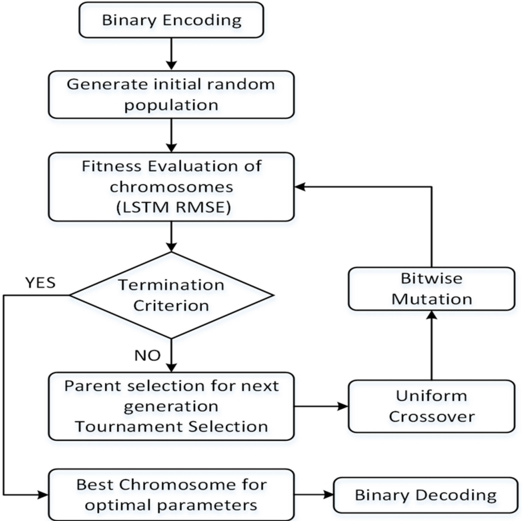
“This algorithm used different operations, including selection, crossover, and mutation, to improve the diversity of its populations [10].”
Deep Learning-Based State Estimation for Sodium-Ion Batteries Using Long Short-Term Memory Network
Li, Y. H., Li, Y., Zhu, J., Dai, H., Li, Z., & Jiang, B. (2025) · Batteries · doi:10.3390/batteries12010006 · Cited by 5
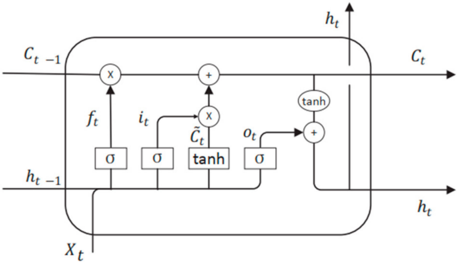
“As shown in Figure 9, the LSTM cell employs three gating functions—input, forget, and output—to regulate its memory update process [55].”
Machine Learning Applications in Smart Grid
Velimirovic, L. Z., Janjic, A. D., & Velimirović, J. D. (2023) · Disruptive technologies and digital transformations for society 5.0 · doi:10.1007/978-981-19-7677-3_12 · Cited by 3
Siva, S., Senthil, K., Muthamilselvan, T., & Paramasivan, S. K. (2024) · Global NEST Journal · doi:10.30955/gnj.005631 · Cited by 2
Fan, W., Lu, M., An, Y., Chen, D., & Zhong, K. (2024) · Asia Energy and Electrical Engineering Symposium (AEEES) · doi:10.1109/aeees61147.2024.10544598 · Cited by 2
“…can only handle short-term dependency problems, making it difficult to solve long-term dependency problems when using RNN, and its memory ability is limited [9] ; Moreover, when the sequence is long, its learning and memory abilities will decrease, leading to the problem of gradient disappearance.”
BackgroundMultimodal speech emotion recognition optimization using genetic algorithm
Michael, S., & Zahra, A. (2024) · Bulletin of Electrical Engineering and Informatics · doi:10.11591/eei.v13i5.7409 · Cited by 2
“While the GA algorithm was chosen because it has superior performance compared to several other optimization algorithms, such as particle swarm optimization (PSO) [25], as well as the bayesian algorithm (BA) and grid search (GS) [26].”
MethodInnovative Approaches to Long-term Power Load Forecasting with Autoformer
Sun, D., & He, Z. (2024) · doi:10.1109/ictech63197.2024.00042 · Cited by 2
“…in deep learning and neural network technologies have introduced enhanced approaches for time series prediction, such as Recurrent Neural Networks (RNN) and Long Short-Term Memory (LSTM) networks [5] time-varying state information, making them well-suited for time series forecasting tasks [6].”
Multiscale Time Series Modeling in Energy Demand Prediction: A CWT-Aided Hybrid Model
Sezer, E., Yıldırım, G., & Özdemir, M. T. (2025) · Applied Sciences · doi:10.3390/app151910801 · Cited by 2
“The output gate is the gate that determines what information is to be output from the current cell state [36].”
Das, R., & Dwivedi, M. (2021) · International Journal of Innovative Research in Computer Science & Technology · doi:10.21276/ijircst.2021.9.5.2 · Cited by 2
Metadata
- Authors
- Bouktif, S., Fiaz, A., Ouni, A., & Serhani, M. A.
- Affiliations
- United Arab Emirates University (AE)
- École de Technologie Supérieure (CA)
- Corresponding author
- Bouktif, Salah
- Venue
- Energies
- Publisher
- MDPI AG
- Published
- 2020-01-13
- Volume
- 13
- Issue
- 2
- Pages
- 391
- ISSN
- 1996-1073 (ISSN-L)
- OpenAlex
- W2999869395
- Cited by
- 256
- References
- 39
- Citations by year
- 2026: 29 · 2025: 42 · 2024: 48 · 2023: 46 · 2022: 44 · 2021: 37 · 2020: 10
- FWCI
- 11.75
- Type
- journal article
- Language
- en
- Open access
- gold
- dx.doi.org
- Licence
- Locations
- Energies (publishedVersion, cc-by)
- Espace ÉTS (ETS) (acceptedVersion)
- RePEc: Research Papers in Economics (submittedVersion)
- DOAJ (DOAJ: Directory of Open Access Journals) (submittedVersion, cc-by-sa)
- Funders
- United Arab Emirates University (G00002211)
- Topics
- Physical Sciences › Engineering › Electrical and Electronic Engineering › Energy Load and Power Forecasting
- Physical Sciences › Engineering › Electrical and Electronic Engineering › Smart Grid Energy Management
- Social Sciences › Decision Sciences › Management Science and Operations Research › Stock Market Forecasting Methods
- Keywords
- short-term load forecasting, LSTM hyperparameter optimization, genetic algorithm, particle swarm optimization, metaheuristic search, energy consumption time series, power grid management, smart meter data
About these checks
Registry, retraction, Cites and statistics results are computed, not judged, with one exception: a printed reference that no index lists is read once by a model before it counts as a citation error. Claims are extracted by a model and kept only when their quote appears verbatim in the text; each cited source is then checked, with a model’s help, for whether it says what the claim relies on. Those verdicts can be wrong — read the claim’s quote and the cited source before relying on one.
Statistics and arithmetic are recomputed, not judged.
Confidence bands are shown only for fields calibrated on our annotated test set. None is calibrated yet, so no band is shown.
What counts as a claim ›How we measure confidence ›How we check this ›
Are you an author, or do you see a problem with this page? Request a review
Data sources
Bibliographic data: Semantic Scholar, OpenAlex, Crossref.
Contains information from the Semantic Scholar Academic Graph Datasets, made available under the ODC Attribution License (ODC-BY 1.0).
Semantic Scholar’s data is described in: Kinney, R., et al. (2023). The Semantic Scholar Open Data Platform. arXiv:2301.10140.
