

Multi-Sequence LSTM-RNN Deep Learning and Metaheuristics for Electric Load Forecasting
Open accessThe DOI matches its Crossref record; 41 of the 41 references it cites were found in a registry or an index.
Abstract
Short term electric load forecasting plays a crucial role for utility companies, as it allows for the efficient operation and management of power grid networks, optimal balancing between production and demand, as well as reduced production costs. As the volume and variety of energy data provided by building automation systems, smart meters, and other sources are continuously increasing, long short-term memory (LSTM) deep learning models have become an attractive approach for energy load forecasting. These models are characterized by their capabilities of learning long-term dependencies in collected electric data, which lead to accurate prediction results that outperform several alternative statistical and machine learning approaches. Unfortunately, applying LSTM models may not produce acceptable forecasting results, not only because of the noisy electric data but also due to the naive selection of its hyperparameter values. Therefore, an optimal configuration of an LSTM model is necessary to describe the electric consumption patterns and discover the time-series dynamics in the energy domain. Finding such an optimal configuration is, on the one hand, a combinatorial problem where selection is done from a very large space of choices; on the other hand, it is a learning problem where the hyperparameters should reflect the energy consumption domain knowledge, such as the influential time lags, seasonality, periodicity, and other temporal attributes. To handle this problem, we use in this paper metaheuristic-search-based algorithms, known by their ability to alleviate search complexity as well as their capacity to learn from the domain where they are applied, to find optimal or near-optimal values for the set of tunable LSTM hyperparameters in the electrical energy consumption domain. We tailor both a genetic algorithm (GA) and particle swarm optimization (PSO) to learn hyperparameters for load forecasting in the context of energy consumption of big data. The statistical analysis of the obtained result shows that the multi-sequence deep learning model tuned by the metaheuristic search algorithms provides more accurate results than the benchmark machine learning models and the LSTM model whose inputs and hyperparameters were established through limited experience and a discounted number of experimentations.
Overview
The claims and statistics of this paper haven’t been checked yet.
Free: it reads the open-access text and checks the first 5 claims that cite a source we can check. Create a free account to check every claim.
Integrity signals
Registry
Cites
Statistics
Figures

Verification
Claims the paper makes
The claims and statistics of this paper haven’t been checked yet.
Free: it reads the open-access text and checks the first 5 claims that cite a source we can check. Create a free account to check every claim.
Claims other papers make about this one
Each is checked against this paper’s own text: does it say what the citing paper says it does?
The cited source says what the claim attributes to it.
In the citing paper
“Bouktif et al. [43] optimized the LSTM hyperparameters in their prediction model using GA and PSO.”
From Prediction of Heat and Cold Loads of Factory Mushroom Houses Based on EWT Decomposition (2023) · cites this paper as [43]
Self-check
Percentages, sums and reported differences re-computed from the paper’s own numbers.
The self-check needs the paper’s full text.
Citations
Cites
Hochreiter, S., & Schmidhuber, J. (1997) · Neural Computation · doi:10.1162/neco.1997.9.8.1735 · Cited by 102,318 · cited 1×
“In particular, LSTM networks, deep learning variations proposed by Hochreiter and Schmidhuber [8], were designed specially to learn long-term dependencies present in sequential data.”
BackgroundKennedy, J., & Eberhart, R. (2002) · Proceedings of ICNN'95 - International Conference on Neural Networks · doi:10.1109/icnn.1995.488968 · Cited by 58,192
Particle swarm optimization: An overview
Poli, R., Kennedy, J., & Blackwell, T. (2007) · Swarm Intelligence · doi:10.1007/s11721-007-0002-0 · Cited by 21,101 · cited 1×
“It is evolved by imitating the social behavior of a school of fishes and a flock of birds that collectively search for the best locations and are likely to move close to an optimum fitness function [39].”
BackgroundA new optimizer using particle swarm theory
Eberhart, R., & Kennedy, J. (2002) · MHS'95. Proceedings of the Sixth International Symposium on Micro Machine and Human Science · doi:10.1109/mhs.1995.494215 · Cited by 16,067 · cited 1×
“Particle swarm optimization developed by Kennedy and Eberhart in 1995 was inspired by the social behavior [38].”
Method(2012) · Cited by 8,009
Neural Networks and the Bias/Variance Dilemma
Geman, S., Bienenstock, E., & Doursat, R. (1992) · Neural Computation · doi:10.1162/neco.1992.4.1.1 · Cited by 3,578 · cited 1×
“A deeper neural network with more layers will have a greater capacity, but more layers can eventually result in a decrease in the performance due to high variance and model overfitting and thus a reduced generalization power for the electricity dataset [43].”
BackgroundTime series analysis forecasting and control
Janacek, G. (2010) · Journal of Time Series Analysis · doi:10.1111/j.1467-9892.2009.00643.x · Cited by 2,584 · cited 1×
“Traditional linear statistical models such as autoregressive (AR), moving average (MA) and autoregressive integrated moving average (ARIMA) have remained the baseline for time-series predictions, with extensive use in several industrial applications [3,4].”
BackgroundA Comparative Analysis of Selection Schemes Used in Genetic Algorithms
Goldberg, D. E., & Deb, K. (1991) · Foundations of Genetic Algorithms · doi:10.1016/b978-0-08-050684-5.50008-2 · Cited by 2,407 · cited 1×
“A large tournament value results in a stronger selective pressure, and the population can converge to a faster solution, at the cost of the solution being potentially not as good [44].”
BackgroundEngineering Optimization: An Introduction with Metaheuristic Applications
Yang, X. (2010) · Wiley eBooks · doi:10.1002/9780470640425 · Cited by 1,248 · cited 1×
“In our case, metaheuristics will select from an infinite number of configurations the appropriate lags as well as the best parameter setting for an accurate time series analysis using deep learning [13].”
BackgroundApplied Time Series Econometrics
(2004) · Cambridge University Press eBooks · doi:10.1017/cbo9780511606885 · Cited by 1,196 · cited 1×
“If the selected lags are not relevant, this may unnecessarily increase the curse of dimensionality, slow down the training process, and lead to model overfitting [41].”
Background
Research works printed but not linked: 5
- Defilippo, S.B.; Neto, G.G.; Hippert, H.S. Short-term load forecasting by artificial neural networks specified by genetic algorithms-a simulation study over a Brazilian dataset. In Proceedings of the XIII Simposio Argentino de Investigación Operativa (SIO)-JAIIO 44, Rosario, Santa Fe, Argentina, 31 August-1 September 2015.
- Brownlee, J. Clever Algorithms: Nature-Inspired Programming Recipes; Lulu Press: Morrisville, NY, USA, 2011.
- Holland, J.H.; Goldberg, D. Genetic Algorithms in Search, Optimization and Machine Learning; Addison-Wesley: Boston, MA, USA, 1989.
- Holland, J.H. Adaptation in Natural and Artificial Systems; University of Michigan Press: Ann Arbor, MI, USA, 1975.
- Meyer-Baese, A.; Schmid, V.J. Pattern Recognition and Signal Analysis in Medical Imaging; Elsevier: Amsterdam, The Netherlands, 2014.
Cited by
Items 201–286 of 286
Optimal electric load forecasting for systems by an adaptive Crow Search Algorithm: A case study
Li, B., Sun, H., & Teimourian, M. (2022) · Concurrency and Computation Practice and Experience · doi:10.1002/cpe.7120 · Cited by 2
“Furthermore, because of the similar usages of the metaheuristics in SVR models, two similar cases including SVR-CGA 50 and SVR-CAS, 35 LSTM-RNN, 51 andExtremeLearningMachine(ELM) 52 arealsoconsideredincomparison.”
Daily Power Plant Load Prediction using Grammatical Evolution
Aditya, I. A., Simaremare, A. A., Raharjo, J., Suyanto, S., & Wijayanto, I. (2022) · IEEE International Conference on Electrical Engineering, Computer and Information Technology (ICEECIT) · doi:10.1109/iceecit55908.2022.10030558 · Cited by 2
Krstovic, J., Bačanin, N., Zivkovic, M. Z., Bozovic, A., Stanković, M. S., Antonijević, M., & Bezdan, T. (2023) · Algorithms for intelligent systems · doi:10.1007/978-981-99-3485-0_31 · Cited by 2
Solar Power Prediction Using LSTM_WaOA Model
Kumar, R., Mishra, B. S., Das, B., Singh, C., & Sreekumar, S. (2024) · International Conference on Trends in Engineering Systems and Technologies (ICTEST) · doi:10.1109/ictest60614.2024.10576191 · Cited by 2
“This leads to enhanced convergence of the LSTM model [20].”
BackgroundMethodA Comparative Study of Machine Learning Modeling in Electricity Load ForecastingPreprint
Mohammadi, S., Nabavi, S. A., Motlagh, N. H., Anvari‐Moghaddam, A., Tarkoma, S., & Geyer, P. (2022) · SSRN Electronic Journal · doi:10.2139/ssrn.4200148 · Cited by 2
Çeşitli Tekrarlayan Sinir Ağları Kullanarak Siber Saldırı Tespiti
Yalçın, N., ÇAKIR, S., & Ünaldı, S. (2024) · Karaelmas Science and Engineering Journal · doi:10.7212/karaelmasfen.1516627 · Cited by 1
Structural prediction of potent non-coding RNAs
Beura, A., Manjunath, G. K., Dakal, T. C., & Kumar, A. (2025) · Progress in molecular biology and translational science · doi:10.1016/bs.pmbts.2025.05.002 · Cited by 1
Real-time manufacturing process monitoring using GRU with PSO algorithm
Yilma, A. A., Yang, C.-L., & Woldegiorgis, B. H. (2025) · Applied Intelligence · doi:10.1007/s10489-025-06617-9 · Cited by 1
Joshi, A., Kumar, P., & Raman, B. (2025) · Lecture notes in civil engineering · doi:10.1007/978-981-96-1352-6_17 · Cited by 1
Multimodal data analysis in emotion recognition: a review
Berdyshev, D. A., & Shishkin, A. G. (2025) · Modeling and Analysis of Information Systems · doi:10.18255/1818-1015-2025-3-252-281 · Cited by 1
Musbah, H., Aly, H. H., & Othoman, A. (2025) · IEEE International Conference on Smart Energy Grid Engineering (SEGE) · doi:10.1109/sege65970.2025.11203401 · Cited by 1
“LSTMs, in particular, addressed the vanishing gradient problem plaguing traditional RNNs, enabling robust performance in both short-and medium-term forecasting scenarios [6, 7].”
Understanding time-series building energy data: A review of challenges and forecasting approaches
(2025) · International Journal of Development and Sustainability · doi:10.63212/ijds25102301 · Cited by 1
Zhong, L., Huang, Y., Huang, S., Zeng, Y., & Li, H. (2025) · Australian Journal of Electrical & Electronics Engineering · doi:10.1080/1448837x.2025.2585697 · Cited by 1
Sengar, S., & Kumar, A. (2025) · Iranian Journal of Science and Technology Transactions of Electrical Engineering · doi:10.1007/s40998-025-00978-0 · Cited by 1
“Multiple challenges like scalability and adaptability issues are rising while forecasting load due to the rising patterns of energy consumption, and rising power grid complexity (Bouktif et al. 2020).”
Electricity Load Forecasting: a Systematic Literature Mapping
Groehs, G. A., & Teive, R. C. G. (2025) · Seminar on Power Electronics and Control (SEPOC) · doi:10.1109/sepoc67005.2025.11297637 · Cited by 1
Bridging detection and forecasting: Refined WaveNet for robust smart building energy monitoring
Berrima, C., Tra, V., & Amayri, M. (2026) · Sustainable Energy Grids and Networks · doi:10.1016/j.segan.2026.102142 · Cited by 1
Yanaganti, R., Shiva, C. K., & Kamisetti, P. (2025) · International Conference on Recent Trends in Electrical, Electronics and Computing Technologies (ICRTEECT) · doi:10.1109/icrteect67512.2025.11448888 · Cited by 1
“Model combination increases model capability to discover nonlinear time patterns together with efficient hyperparameter optimization [28].”
Singh, P., & Nagpal, S. (2026) · CLEI electronic journal · doi:10.19153/cleiej.29.2.1 · Cited by 1
“Review of Literature [4] have proposed an approach that provides valuable benefits by improving forecasting accuracy through the use of LSTM models optimized with metaheuristic techniques like GA and PSO.”
Yoon, Y., Seo, B., Han, J., Lee, K. H., & Cho, S. (2020) · KIEAE Journal · doi:10.12813/kieae.2020.20.6.169 · Cited by 1
Short-term Load Forecasting using Convolutional Neural Network and Long Short-term Memory
Ghassaei, S., & Ravanmehr, R. (2021) · Iranian Electric Industry Journal of Quality and Productivity · doi:10.52547/ieijqp.10.1.35 · Cited by 1
Estudo Preliminar do Uso de Meta-heurísticas para Seleção de Canais em Sistemas BCI-SSVEP
Queiroz, R., & Fantinato, D. G. (2021) · Escola Regional de Computação Aplicada à Saúde (ERCAS) · doi:10.5753/ercas.2021.17440 · Cited by 1
Genomics and neural networks in electrical load forecasting with computational intelligence
Theerthagiri, P. (2023) · Elsevier eBooks · doi:10.1016/b978-0-323-98352-5.00009-4 · Cited by 1
Angel, T. S., Sengupta, P., Pandi, V. R., & Kanakasabapathy, P. (2023) · Lecture notes in networks and systems · doi:10.1007/978-981-99-3963-3_9 · Cited by 1
Radhya, S., Toemali, Y. M., Jovan, F., & Prabowo, A. S. (2024) · International Conference on Technology Innovation and Its Applications (ICTIIA) · doi:10.1109/ictiia61827.2024.10761853 · Cited by 1
“However, LSTMs are like SVMs in the sense that they are also sensitive to their hyperparameters [4].”
A Deep Learning-based Dynamic Demand Response Framework
Haque, A. (2021) · VTechWorks (Virginia Tech) · Cited by 1
Predictive Analysis in Power Grid: A System-wide Application of Artificial Intelligence
Atique, T. (2020) · ThinkTech (Texas Tech University)
Cross-Domain Energy Consumption Prediction via ED-LSTM Networks
Tao, Y., Kong, F., Wenjun, J. U., Li, H., & Hou, R. (2021) · IEICE Transactions on Information and Systems · doi:10.1587/transinf.2020bdp0006 · Cited by 1
“Di ff erence method [28] and exponential smoothing [29] was used to remove the impact of seasonal factors.”
MethodPriesmann, J., Münch, J., Ridha, E., Spiegel, T. F., Reich, M., Adam, M., Nolting, L., & Praktiknjo, A. (2021) · arXiv (Cornell University) · doi:10.48550/arxiv.2112.04889 · Cited by 4
Advanced Methods of Power Load Forecasting
García-Díaz, J. C., & Trull-Domínguez, Ó. (2022) · MDPI eBooks · doi:10.3390/books978-3-0365-4217-1
A Dual Long Short-Term Memory Model in Forecasting the Number of COVID-19 Infections
Lai, J.-P., & Pai, P. (2023) · Electronics · doi:10.3390/electronics12030759
Mohan, R., Prabakaran, G., & Priyaradhikadevi, T. (2023) · International Journal of Electrical and Electronics Engineering · doi:10.14445/23488379/ijeee-v10i1p117
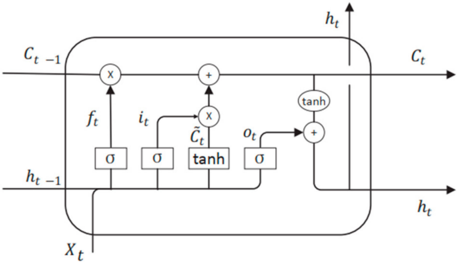
“The LSTM is fed as input to distinct gates once the process is implemented on the memory cell: reset (forget) gate, write (input) gate, and read (output) gate [21].”
Short-Term PV Power Prediction Based on NGO-BILSTM
Liu, J., Cong, L., Zhao, H., Han, Z., & Li, Z. (2023) · International Conference on Electronic Engineering and Informatics (EEI) · doi:10.1109/eei59236.2023.10212498
“A. Bi-directional long short-term memory neural network As a development of recurrent neural network (RNN) [13] , long short-term memory neural network (LSTM) [14] efficiently prevents gradient disappearance or explosion in RNN and addresses its long-term reliance issue.”
BackgroundA Reinforcement Learning Based Approach to Recommend Appropriate Occupant Behaviours
Bouktif, S., Ahmad, A., Khan, S., & Alkaabi, N. (2023) · IEEE International Conference on Big Data and Artificial Intelligence (BDAI) · doi:10.1109/bdai59165.2023.10257055
Self-citation(2024) · International Research Journal of Modernization in Engineering Technology and Science · doi:10.56726/irjmets49584
Electricity Price Prediction Framework Based on Two-Stage Time Series Decomposition
Huang, Y., Wu, C., Li, C., Wang, Z., & Li, K. (2024) · Lecture notes in electrical engineering · doi:10.1007/978-981-97-0877-2_58
Research on Short Term Power Load Forecasting Based on Wavelet and BiLSTM
Liao, R., Ren, J., & Ji, C. (2024) · Lecture notes of the Institute for Computer Sciences, Social Informatics and Telecommunications Engineering · doi:10.1007/978-3-031-53401-0_7
Evolutionary deep learning for long-term cancer survival prediction
Fadhil, E. A., & Al-Sarray, B. (2024) · AIP conference proceedings · doi:10.1063/5.0209562
Bashir, S. A., Nusa, A. M. K., & Abdullahi, I. M. (2023) · i-manager's Journal on Data Science & Big Data Analytics (JDS). · doi:10.26634/jds.1.2.20334
Evaluation of Load Forecasting in Intelligent Grid Systems Through Machine Learning Techniques
Pushpa, P., & Indora, S. (2024) · Lecture notes in electrical engineering · doi:10.1007/978-981-97-2508-3_25
Optimisation des procédures d’imagerie à visée dosimétrique en radiothérapie interne vectorisée
Nzatsi, M. C. (2024) · theses.fr (ABES) · doi:10.70675/27cb56a3za80fz4122z892bzc87a6ba77ce1
Integrating Metaheuristics and Machine Learning for Wellbeing Management
AlSenani, S., & Bouktif, S. (2024) · Wiley eBooks · doi:10.1002/9781394287024.ch12
Self-citationArtificial intelligence in energy
Abdi, N., Albaseer, A. M., & Abdallah, M. M. (2025) · Elsevier eBooks · doi:10.1016/b978-0-44-313219-3.00080-0
Advancing Hyperparameter Optimization in Deep Neural Networks: A Genetic Algorithm Approach
Satish, M. V. (2025) · International Journal for Research in Applied Science and Engineering Technology · doi:10.22214/ijraset.2025.73376
Toward Safety-First Human-Like Decision Making for Autonomous Vehicles in Time-Varying Traffic Flow
Wang, X. H., Yu, J., Huang, J., Wu, Q., Vlacic, L., & Sun, C. (2026) · Proceedings of the IEEE · doi:10.1109/jproc.2026.3679470 · Cited by 1
“LSTM-RNN [60]: It uses long short-term memory networks to process sequential data, such as vehicle motion and surrounding traffic states, capturing long-term dependencies to output driving intention.”
Zoidis, N. (2024) · DSpace - NTUA (National Technical University of Athens) · doi:10.26240/heal.ntua.26533
Data Automation with Deep Learning: A Systematic Review
Chacón-Pajuelo, E., Iglesias-Reyes, J., & Flores-Castañeda, R. O. (2025) · LACCEI International Multi-Conference for Engineering, Education and Technology (LACCEI) · doi:10.18687/laccei2025.1.1.1769
Karkraoui, M. E., & Hicham, A. (2025) · Journal of Computer Science · doi:10.3844/jcssp.2025.2423.2433
Setyaji, G., & Kusrini, K. (2025) · Jurnal CoSciTech (Computer Science and Information Technology) · doi:10.37859/coscitech.v6i2.9231
Ahmed, A., Ali, S., Raza, A., Hussain, I., & kim, D. (2026) · PeerJ Computer Science · doi:10.7717/peerj-cs.3449
Enhanced Stock Market Movements towards Economic Sustainability using LSTM Hybrid Algorithm
Garg, R., Makhmudov, S., Eshchanov, T., Allashkurov, D. M., Garg, M., & Karn, A. (2025) · International Conference on Advancement in Electronics & Communication Engineering (AECE) · doi:10.1109/aece67531.2025.11386738
“The recent surge in machine learning and deep learning has brought to light the fact that LSTM networks possess much greater competence in modeling sequential dependencies [7].”
Current applications of artificial intelligence in rural power grids
akademiâ, T. S., & Канвековна, Б. А. (2026) · doi:10.26897/2687-1149-2026-1-105-113
Yilma, A. A., Yang, C.-L., & Woldegiorgis, B. H. (2026) · Chemical Engineering Research and Design · doi:10.1016/j.cherd.2026.03.009
Hamza, S., Lafifi, B., Hamlaoui, A., & Rouaiguia, A. (2026) · Innovative Infrastructure Solutions · doi:10.1007/s41062-026-02582-5
Bromberger, D. A., Garcia, V. J., Rodrigues, S. D., Kunz, V. M., & Canha, L. N. (2026) · SSRN Electronic Journal · doi:10.2139/ssrn.6439882
Wang, J., Yin, L., & He, H. (2026) · Alexandria Engineering Journal · doi:10.1016/j.aej.2026.03.024
Moratilla, S. D. L. M. (2025) · e_Buah
Hate Speech Detection Using Deep Learning Algorithms
Sawant, S. D., Bharne, S., & Narawade, V. (2026) · Lecture notes in networks and systems · doi:10.1007/978-3-032-19179-3_22
Investigation of modern approaches for automated short answer grading
Hussain, S. A., & Abdullah, N. A. Z. (2026) · AIP conference proceedings · doi:10.1063/5.0328153
Cement Plant Power Demand Prediction Using 1D Convolutional Neural Network Model: A Case Study
Abdulabbas, T. E., Mahmoud, S. M., Al-Jubouri, H., Du, P. H., Aleja, K. S., & Agha, M. S. A. (2026) · Journal of Engineering and Sustainable Development · doi:10.31272/jeasd.3242
Sahu, A. K., & Kumar, M. (2026) · International Journal of experimental research and review · doi:10.52756/ijerr.2026.v50.007
“Some studies conducted experiments by varying the number of users and the distribution of training data to evaluate the effectiveness of these systems, finding that classification accuracy reduces as the number of participating clients increases (Bouktif et al., 2020).”
Rathi.M, & Gomathy, C. (2025) · International Conference on Sustainable Computing and Smart Systems (ICSCSS) · doi:10.1109/icscss64956.2025.11500654
An Edge-Resident Kalman-Corrected Forecasting Framework for AMI-Based Distributed Demand Response
Park, M.-J., & Yang, H.-S. (2026) · IEEE Access · doi:10.1109/access.2026.3705628
“LSTM and SVM can model nonlinear behavior more effectively, yet they also remain static once trained [4], [5].”
Li, H., Han, L., Ma, X., Yuan, L., Mingjia, L. V., & Wei, Z. (2026) · IEEE Access · doi:10.1109/access.2026.3705736
“Bouktif et al. [3] utilized Long Short-Term Memory (LSTM) combined with meta-heuristic algorithms to capture the cyclical nature of loads through multi-sequence learning.”
Khan, A. M., & Wyrwa, A. (2026) · Energy and AI · doi:10.1016/j.egyai.2026.100826
Terkeş, M., Demirci, A., Dagal, I., Gökalp, E., & Cali, Ü. (2026) · Energy Reports · doi:10.1016/j.egyr.2026.109462
Anandaraman, D., Ganesh, G., Rajamani, M., & Pavithra, S. (2025) · International Conference on Emerging Research in Computational Science (ICERCS) · doi:10.1109/icercs65898.2025.11580753
“The authors found that one LSTM model can produce accurate forecasts for multiple distinct usage groups on a large scale [13].”
Amrillah, M. F., Suprapto, B. Y., & Herlina, H. (2026) · Advances in engineering research/Advances in Engineering Research · doi:10.2991/978-94-6239-731-6_5
Accelerated Energy Forecasting Models with Metaheuristics for Swift Solutions in Building Management
Criado-Ramón, D., Cojocaru, M. R., Ruiz, L. G. B., Servadei, L., Wille, R., Cuéllar, M. P., & Pegalajar, M. C. (2026) · Big Data and Cognitive Computing · doi:10.3390/bdcc10080245
Boundary-Refined DeepLabV3+ for Short- and Medium-Term Load Forecasting in Regional Power Grids
Majewska, L., & Kubicka, B. (2023) · Journal of Applied Automation Technologies · doi:10.64972/jaat.2023v1.315p28e:375-388
“Day-ahead decisions need accurate peak magnitude and timing, whereas week-ahead planning needs stable trends across working days, weekends, and weather regimes [3].”
Bi-Mamba-Based Net-Load Forecasting Method with Multidimensional Temporal Information Fusion
Guo, G., Zhang, K., Wang, Z., Li, F., Huang, J., & Bao, X. (2026) · Energies · doi:10.3390/en19153682
Dynamic Sign Language Recognition: A Hybrid Approach Combining MediaPipe and LSTM
Farhan, Y., Haimer, Z., Lamaamar, O., & Madi, A. A. (2026) · CommIT (Communication and Information Technology) Journal · doi:10.21512/commit.v20i2.14176
Wang, X., Li, L., Zhao, C., Song, L., Zhao, Z., Wang, K., Du, L., & Zhu, Q. (2026) · SSRN Electronic Journal · doi:10.2139/ssrn.7428953
Dharavath, M., Kowsalya, S. S. N., Kumar, M. K. V., Yarram, V. K., Priyatharsini, G. S., Nagaraj, S. S., & Marakini, V. (2026) · doi:10.1109/icsmartgrid70882.2026.11680714
“Gradient-boosted trees have established state-of-the-art in tabular energy datasets, and the notion that neural networks will inevitably beat them has yet to be strictly tested on small-to-medium scale building deployments [2.”
Very Short-Term Power Load Forecasting Based on Hybrid VMD-LSTM Neural Network
Deepakbhai, C. H., Funde, N., & Dixit, R. (2026) · IEEE International Conference on Sustainable Energy and Future Electric Transportation (SEFET) · doi:10.1109/sefet69291.2026.11687139
“Sub-hourly forecasting at 5-minute resolution has become increasingly important as grid operators require finer temporal granularity to manage rapid fluctuations introduced by intermittent renewable generation sources [4].”
Houdaif, O., Mzili, M., Mzili, T., & Ezzazi, I. (2026) · The Journal of Supercomputing · doi:10.1007/s11227-026-08859-x
Akpınar, M., Durrani, U. K., Akpinar, K. O., & Malik, A. (2026) · Smart Energy · doi:10.1016/j.segy.2026.100270
Long-term Energy Forecasting Methodologies: Review and Discussion
Shubber, A. I. A., & Alkaldy, E. A. (2025) · CENTRAL ASIAN JOURNAL OF MATHEMATICAL THEORY AND COMPUTER SCIENCES · doi:10.51699/cajmtcs.v6i2.745
Laganà, F. (2026) · Sensors · doi:10.3390/s26206445
“Feature selection, genetic algorithms and metaheuristic optimisation procedures have subsequently been introduced to configure LSTM models and multisequence forecasting architectures [20,21].”
AI-Driven Dynamic Electric Pricing and Appliances Scheduling
Paramathma, M. K., Sunder, K. S., Sowmya, P. S., Hemadri, M. V., Reddy, A. H., & Divya, V. S. (2026) · IEEE International Conference on Renewable Energy and Sustainable E-Mobility (RESEM) · doi:10.1109/resem70152.2026.11721597
“Further work in the field has been done by Bouktif et al. [3].”
Rezaei, Z., & Sharifi, A. (2026) · Sustainable Futures · doi:10.1016/j.sftr.2026.102232
Astutiningtyas, L., & Kharisudin, I. (2025) · Unnes Journal of Mathematics · doi:10.15294/ujm.v13i1.11939
Grid-Aware Deep Learning Electricity Demand Forecasting for EV Charging Infrastructure Planning
Ullah, Z., DeSantis, M., Rubino, L., & Zafar, A. (2026) · IEEE International Conference on Smart Energy Grid Engineering (SEGE) · doi:10.1109/sege70974.2026.11738957
A systematic review of artificial intelligence driven energy management in smart grids
Kumar, S., Pandey, A. K., Savitha, P. B., Nandini, K. K., Agajo, J., & Giri, N. C. (2026) · Discover Artificial Intelligence · doi:10.1007/s44163-026-02607-z
“…for evaluating the power system’s stability [36] Methods adopted in the literature Year Purpose ANN [67] 2024 TSA ELM + TF [67] 2023 TSA CNN + SAE [68] 2018 TSA Ensemble NN + ELM [71] 2020 TSA SVR + FL [70] 2019 VSA DT + SVM + ANN [72] 2022 TSA RNN + LSTM [73] 2022 TSA SVR [74] 2022 VSA SVM [75]…”
InfluentialSaffee, N. B., Satpathy, P. R., Ramachandaramurthy, V. K., & Jha, V. (2026) · Energy Reports · doi:10.1016/j.egyr.2026.109908
Gourisaria, M. K., Mittal, I., Ghosh, D., Paul, A., Saxena, V., & Nayak, M. R. (2026) · doi:10.1109/nmitcon70171.2026.11754366
Wen, D., Gong, W., Li, Y., Zhao, Y., & Ding, Y. (2026) · doi:10.1109/iotaiee70863.2026.11749442
Metadata
- Authors
- Bouktif, S., Fiaz, A., Ouni, A., & Serhani, M. A.
- Affiliations
- United Arab Emirates University (AE)
- École de Technologie Supérieure (CA)
- Corresponding author
- Bouktif, Salah
- Venue
- Energies
- Publisher
- MDPI AG
- Published
- 2020-01-13
- Volume
- 13
- Issue
- 2
- Pages
- 391
- ISSN
- 1996-1073 (ISSN-L)
- OpenAlex
- W2999869395
- Cited by
- 256
- References
- 39
- Citations by year
- 2026: 29 · 2025: 42 · 2024: 48 · 2023: 46 · 2022: 44 · 2021: 37 · 2020: 10
- FWCI
- 11.75
- Type
- journal article
- Language
- en
- Open access
- gold
- dx.doi.org
- Licence
- Locations
- Energies (publishedVersion, cc-by)
- Espace ÉTS (ETS) (acceptedVersion)
- RePEc: Research Papers in Economics (submittedVersion)
- DOAJ (DOAJ: Directory of Open Access Journals) (submittedVersion, cc-by-sa)
- Funders
- United Arab Emirates University (G00002211)
- Topics
- Physical Sciences › Engineering › Electrical and Electronic Engineering › Energy Load and Power Forecasting
- Physical Sciences › Engineering › Electrical and Electronic Engineering › Smart Grid Energy Management
- Social Sciences › Decision Sciences › Management Science and Operations Research › Stock Market Forecasting Methods
- Keywords
- short-term load forecasting, LSTM hyperparameter optimization, genetic algorithm, particle swarm optimization, metaheuristic search, energy consumption time series, power grid management, smart meter data
About these checks
Registry, retraction, Cites and statistics results are computed, not judged, with one exception: a printed reference that no index lists is read once by a model before it counts as a citation error. Claims are extracted by a model and kept only when their quote appears verbatim in the text; each cited source is then checked, with a model’s help, for whether it says what the claim relies on. Those verdicts can be wrong — read the claim’s quote and the cited source before relying on one.
Statistics and arithmetic are recomputed, not judged.
Confidence bands are shown only for fields calibrated on our annotated test set. None is calibrated yet, so no band is shown.
What counts as a claim ›How we measure confidence ›How we check this ›
Are you an author, or do you see a problem with this page? Request a review
Data sources
Bibliographic data: Semantic Scholar, OpenAlex, Crossref.
Contains information from the Semantic Scholar Academic Graph Datasets, made available under the ODC Attribution License (ODC-BY 1.0).
Semantic Scholar’s data is described in: Kinney, R., et al. (2023). The Semantic Scholar Open Data Platform. arXiv:2301.10140.
