

Nano-Enhanced Phase Change Materials in Latent Heat Thermal Energy Storage Systems: A Review
Open accessThe DOI matches its Crossref record; 94 of the 94 references it cites were found in a registry or an index; 110 of the 346 sources its claims cite were checked for support.
Abstract
Latent heat thermal energy storage systems (LHTES) are useful for solar energy storage and many other applications, but there is an issue with phase change materials (PCMs) having low thermal conductivity. This can be enhanced with fins, metal foam, heat pipes, multiple PCMs, and nanoparticles (NPs). This paper reviews nano-enhanced PCM (NePCM) alone and with additional enhancements. Low, middle, and high temperature PCM are classified, and the achievements and limitations of works are assessed. The review is categorized based upon enhancements: solely NPs, NPs and fins, NPs and heat pipes, NPs with highly conductive porous materials, NPs and multiple PCMs, and nano-encapsulated PCMs. Both experimental and numerical methods are considered, focusing on how well NPs enhanced the system. Generally, NPs have been proven to enhance PCM, with some types more effective than others. Middle and high temperatures are lacking compared to low temperature, as well as combined enhancement studies. Al2O3, copper, and carbon are some of the most studied NP materials, and paraffin PCM is the most common by far. Some studies found NPs to be insignificant in comparison to other enhancements, but many others found them to be beneficial. This article also suggests future work for NePCM and LHTES systems.
Overview
CoChat Summary
TL;DR
This review surveys nano-enhanced phase change materials (NePCM) for latent heat thermal energy storage, covering nanoparticles used alone and combined with fins, heat pipes, porous foams, multiple PCMs, and nano-encapsulation. It concludes that nanoparticles generally enhance PCM performance, but the "best" nanoparticle is highly situational and depends on the base PCM, melting temperature, and companion enhancement.
Key findings
- Nanoparticles were effective in nearly every reviewed case, but some studies found them weak relative to other enhancements (e.g., metal foam, heat pipes, fins). Paraffin is by far the most studied PCM, and Al₂O₃, copper, and carbon are the most studied nanoparticle materials.
- Comparative nanoparticle studies report wide-ranging thermal conductivity gains at 5% mass fraction in paraffin (A82): MWCNTs 26.7%, GNPs 154.9%, ZnO 2.6%, TiO₂ 3.6%, Al₂O₃ 6.5%, and MgO 8.4% [42]. Javadi et al. found Cu best and SiO₂ worst, with 0.2 volume fraction raising thermal conductivity up to 55% and "blade"-shaped particles most efficient [45].
- Specific quantitative outcomes cited: Algarni et al. reported a 32% overall efficiency enhancement in an evacuated tube solar collector with Cu NePCM [39]; Murugan et al. found melting time lowest at 0.3 wt% MWCNTs (−30%) and solidification lowest at 0.9 wt% (−42.2%) [43]; Mahdavi et al. reduced full charge time from 2100 min to 341 min with four heat pipes and cut discharging time by 96%, at a 14% storage-capacity penalty [82]; Ma et al. raised paraffin thermal conductivity to 1.95 W/mK with Cu at 1.9% mass fraction versus 0.216 W/mK unenhanced and 1.073 W/mK with expanded graphite [90]; Yu et al. reported SiO₂ nanoparticles increasing thermal conductivity 23.2× in solid and 9.2× in liquid state [92].
- Middle- and high-temperature NePCM studies are scarce compared with low-temperature work, and combined-enhancement studies (especially NPs with multiple PCMs) are limited; only one study combining multiple PCMs and NPs was identified [93].
Methods
- Narrative literature review of experimental and numerical studies on NePCM in LHTES systems, organized by enhancement category: nanoparticles alone, NPs with fins, NPs with heat pipes, NPs with highly conductive porous materials, NPs with multiple PCMs, and nano-encapsulated PCMs.
- PCMs are classified as low (<120 °C), middle (120–300 °C), and high (>300 °C) melting temperature following Huang et al. [8]; studies are summarized in five tables (Tables 1–5) covering PCM, nanoparticle type, phase-change process, study type, and result.
- No meta-analysis or pooled quantitative synthesis is performed; findings are reported study by study.
Limitations
- Stated by the paper: middle- and high-temperature NePCM research is lacking relative to low-temperature work; combined enhancement studies are fewer than NP-alone studies; most NP-plus-fin studies are numerical, with experimental work needed; nanoparticle sinking/agglomeration and the resulting inconsistency are unresolved; and there is no strong pattern identifying the best nanoparticle across studies.
- Evident from the text: as a narrative review it provides no standardized comparison metric, so cross-study quantitative claims (e.g., percentage improvements) come from heterogeneous setups and are not directly comparable; several summarized results are drawn from conference proceedings and figures rather than uniform primary data.
Model-written summary. Check it against the paper before relying on it.
Integrity signals
Registry
Cites
Statistics
Figures
Verification
Claims the paper makes
95 Valid · 9 Not valid · 235 Not checked · 58 Own results and interpretations
Every source the paper cites for this claim was checked and supports it.
In the paper
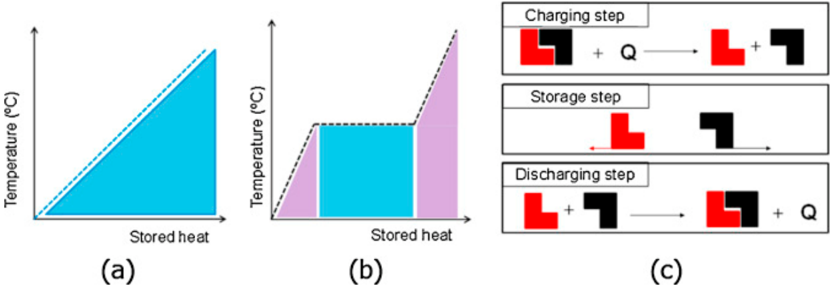
“The higher thermal storage density, large array of PCMs, and nearly isothermal behavior of LHTES systems (shown in Figure 1b) make them more convenient than the other methods [2].”
§ Nano-Enhanced Phase Change Materials in Latent Heat Thermal Energy Storage Systems: A Review > 1. Introduction to Latent Heat Thermal Energy Storage
What the sources say
- Supportedcites [2] 2. Khan, Z.; Khan, Z.; Ghafoor, A. A review of performance enhancement of PCM based latent heat storage system within the context of materials, thermal stability and compatibility. Energy Convers. Manag. 2016, 115, 132-158. [CrossRef] source
The Introduction says LHS systems offer “almost isothermal operation of thermal storage/retrieval.” Section 4 likewise describes heat storage as a “nearly isothermal process.” (LLM, conf=0.95)
plain- Asserted: passes — The authors put it forward as true.
- Checkable: passes — It can be checked against evidence.
- Load-bearing: unclear — It is unclear whether the paper’s conclusions depend on it.
- Based: passes — The paper gives a reason why it holds.
- Supported
Every source the paper cites for this claim was checked and supports it.
In the paper
“The higher thermal storage density, large array of PCMs, and nearly isothermal behavior of LHTES systems (shown in Figure 1b) make them more convenient than the other methods [2].”
§ Nano-Enhanced Phase Change Materials in Latent Heat Thermal Energy Storage Systems: A Review > 1. Introduction to Latent Heat Thermal Energy Storage
What the sources say
- Supportedcites [2] 2. Khan, Z.; Khan, Z.; Ghafoor, A. A review of performance enhancement of PCM based latent heat storage system within the context of materials, thermal stability and compatibility. Energy Convers. Manag. 2016, 115, 132-158. [CrossRef] source
The Introduction identifies higher thermal storage density as an advantage of latent heat storage and compares the greater mass of rock (SHS) needed to store the same energy as several PCMs (LHS). It also identifies a wide range of PCMs and nearly isothermal operation, the other advantages in the citing sentence. (LLM, conf=0.93)
plainstates a cause- Asserted: passes — The authors put it forward as true.
- Checkable: passes — It can be checked against evidence.
- Load-bearing: passes — The paper’s conclusions depend on it.
- Based: passes — The paper gives a reason why it holds.
- Supported
Every source the paper cites for this claim was checked and supports it.
In the paper
“and the stable temperature allows nearly isothermal heating/cooling [1].”
§ Nano-Enhanced Phase Change Materials in Latent Heat Thermal Energy Storage Systems: A Review > 1. Introduction to Latent Heat Thermal Energy Storage
What the sources say
- Supportedcites [1] 1. Sarbu, I.; Sebarchievici, C. A comprehensive review of thermal energy storage. Sustainability 2018, 10, 191. [CrossRef] source
Section 4, “Latent-Heat or Phase-Change Storage” (page not provided), says heat is absorbed or released at almost constant temperature during phase change and describes the storage process as isothermal. This supports the claim that LHTES enables nearly isothermal heating and cooling. (LLM, conf=0.94)
plainstates a cause- Asserted: passes — The authors put it forward as true.
- Checkable: passes — It can be checked against evidence.
- Load-bearing: passes — The paper’s conclusions depend on it.
- Based: passes — The paper gives a reason why it holds.
- Supported
Every source the paper cites for this claim was checked and supports it.
In the paper
“The higher thermal storage density, large array of PCMs, and nearly isothermal behavior of LHTES systems (shown in Figure 1b) make them more convenient than the other methods [2].”
§ Nano-Enhanced Phase Change Materials in Latent Heat Thermal Energy Storage Systems: A Review > 1. Introduction to Latent Heat Thermal Energy Storage
What the sources say
- Supportedcites [2] 2. Khan, Z.; Khan, Z.; Ghafoor, A. A review of performance enhancement of PCM based latent heat storage system within the context of materials, thermal stability and compatibility. Energy Convers. Manag. 2016, 115, 132-158. [CrossRef] source
The Introduction describes latent heat storage as a promising method because PCMs are widely available, storage density is higher, and operation is almost isothermal. Section 4 likewise calls it a better choice of heat storage on the basis of its density and nearly isothermal process. (LLM, conf=0.93)
plain- Asserted: passes — The authors put it forward as true.
- Checkable: passes — It can be checked against evidence.
- Load-bearing: unclear — It is unclear whether the paper’s conclusions depend on it.
- Based: passes — The paper gives a reason why it holds.
- Supported
Every source the paper cites for this claim was checked and supports it.
In the paper
“This means that LHTES systems can take up less volume to store the same amount of energy as SHS”
§ Nano-Enhanced Phase Change Materials in Latent Heat Thermal Energy Storage Systems: A Review > 1. Introduction to Latent Heat Thermal Energy Storage
What the sources say
- Supportedcites [1] 1. Sarbu, I.; Sebarchievici, C. A comprehensive review of thermal energy storage. Sustainability 2018, 10, 191. [CrossRef] source
Section 4, “Latent-Heat or Phase-Change Storage,” says that latent-heat storage increases energy storage density and therefore reduces volume. Its comparison of LHS with SHS supports the claim that LHTES can use less volume for the same stored energy. (LLM, conf=0.93)
plainstates a cause- Asserted: passes — The authors put it forward as true.
- Checkable: passes — It can be checked against evidence.
- Load-bearing: passes — The paper’s conclusions depend on it.
- Based: passes — The paper gives a reason why it holds.
- Supported
175 more claims · 41 with their cited sources checked
Create a free account to see all 397 claims and to verify the 7 references still open.
- It may state two separate claims as one. 178
- Probably not a substantial claim. 44
- The quote only partly states this claim. 13
Self-check
Percentages, sums and reported differences re-computed from the paper’s own numbers.
Each contradiction between two passages listed here was confirmed by an independent check.
Rated minor: it would not touch a result — a value no result rests on, a p-value that stays on the same side of the significance level, or a conflict that is clerical, resolved elsewhere in the paper, or outside its own findings.
In the paper
§ Nano-Enhanced Phase Change Materials in Latent Heat Thermal Energy Storage Systems: A Review > 3.1.8. Fatty Acids
“Melting and cooling rates increased with the concentration of NPs, due to increased thermal conductivity [60].”
§ Nano-Enhanced Phase Change Materials in Latent Heat Thermal Energy Storage Systems: A Review > 4. Conclusions
“| et al. (2020) | (54.4 • C) | Fe 2 O 3 | Melting and solidification | Experimental | melting and |”
Rated minor: it would not touch a result — a value no result rests on, a p-value that stays on the same side of the significance level, or a conflict that is clerical, resolved elsewhere in the paper, or outside its own findings.
In the paper
§ Nano-Enhanced Phase Change Materials in Latent Heat Thermal Energy Storage Systems: A Review > 3.1.4. Paraffin with Carbons
“A 2018 study tested the melting and solidification of paraffin PCM with a melting range of 58-60 • C and MWCNTs.”
§ Nano-Enhanced Phase Change Materials in Latent Heat Thermal Energy Storage Systems: A Review > 4. Conclusions
“| Murugan et al. (2018) [43] | Paraffin (18-23 • C) Low | MWCNT | Melting and solidification | Experimental | up to 0.3 wt % MWCNT, solidification up to |”
Rated minor: it would not touch a result — a value no result rests on, a p-value that stays on the same side of the significance level, or a conflict that is clerical, resolved elsewhere in the paper, or outside its own findings.
In the paper
§ Nano-Enhanced Phase Change Materials in Latent Heat Thermal Energy Storage Systems: A Review > 3.1.1. Water NePCMs with Cu
“Khodadadi and Hosseinizadeh were among the first researchers to study NePCMs, with their numerical model for water PCM enhanced with copper NPs.They studied the influence dispersion of NPs on the thermal conductivity, solidification rate, and latent heat of fusion.The latent heat of fusion was lowered, the rate of heat release was increased, and thermal conductivity was enhanced with the addition of NPs.It was concluded that NePCM was promising for thermal energy storage applications [28].”
§ Nano-Enhanced Phase Change Materials in Latent Heat Thermal Energy Storage Systems: A Review > References
“29. Khodadadi, J.M.; Hosseinizadeh, S.F. Nanoparticle-enhanced phase change materials (NEPCM) with great potential for improved thermal energy storage. Int. Commun. Heat Mass Transf. 2007, 34, 534-543. [CrossRef]”
Rated minor: it would not touch a result — a value no result rests on, a p-value that stays on the same side of the significance level, or a conflict that is clerical, resolved elsewhere in the paper, or outside its own findings.
In the paper
§ Nano-Enhanced Phase Change Materials in Latent Heat Thermal Energy Storage Systems: A Review > 3.2. NePCM and Fins
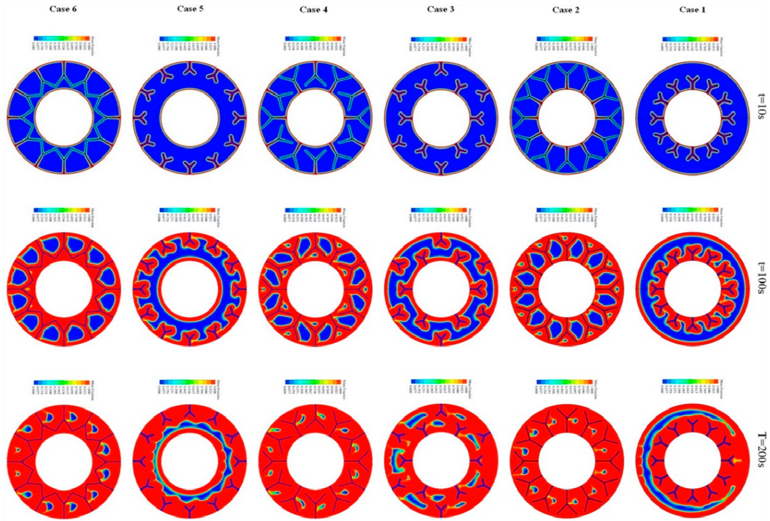
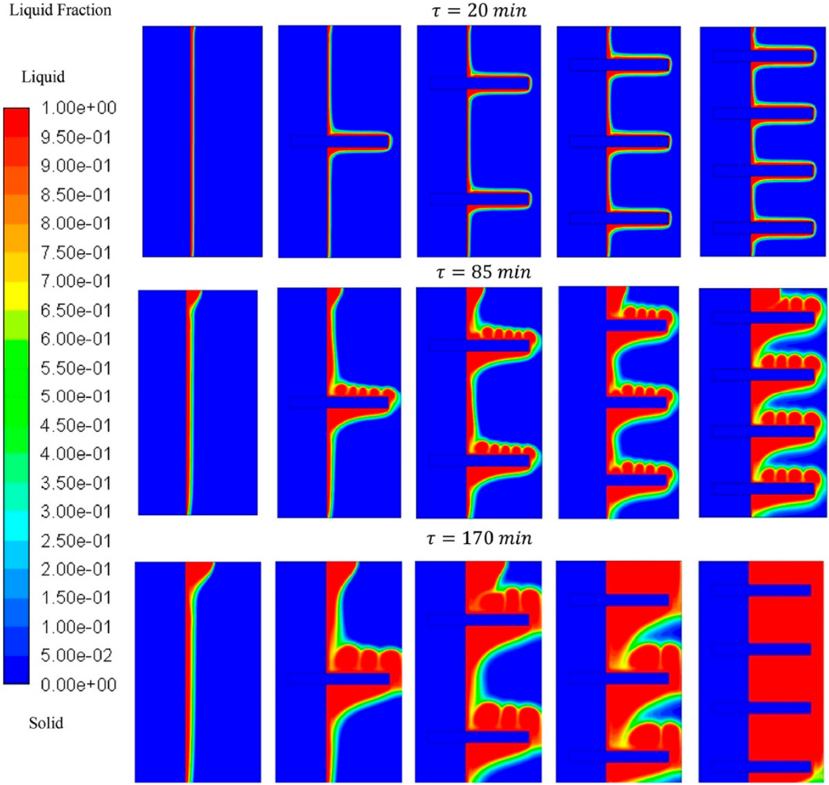
“Copper oxide particles were chosen also by Li et al. [77], who examined the charging process of paraffin PCM with different sizes and configurations of Y-shaped fins.Six different cases of fins were studied.As is demonstrated in Figure 11, the fourth case, with long, thin fins alternating attachment to the outer and inner wall, was the best case.”
§ Nano-Enhanced Phase Change Materials in Latent Heat Thermal Energy Storage Systems: A Review > 4. Conclusions
“Figure: 11 Figure 11 . Figure 11.The liquid fraction in the six different cases at different times.(Copyright 2020 Elsevier) [80].”
Cited works that were retracted
Works this paper cites that were later retracted, from the retraction notices publishers deposit. Major when the notice came out before this paper was published.
A note, not an issue: for example, a cited work that was retracted only after this paper was published, which its authors could not have known.
In the paper
“…and Hosseinizadeh (2007) [28] Water (0 ◦C) Low Cu Solidification Numerical The NPs enhanced the heat transfer and solidification Jourabian and Farhadi (2015) [29] Ice (0 ◦C) Low Cu Melting Numerical (2D) NPs increased the thermal conductivity Feng et al. (2015) [30] Water (0…”
Cited work 10.1007/s12206-015-0828-0 · retracted 2021-11-02 · notice 10.1007/s12206-021-0946-9 · this paper published 2021-06-25
Citations
Cites
1 retracted
Jourabian, M., & Farhadi, M. (2015) · Journal of Mechanical Science and Technology · doi:10.1007/s12206-015-0828-0 · Cited by 50 · cited 3×
“…and Hosseinizadeh (2007) [28] Water (0 ◦C) Low Cu Solidification Numerical The NPs enhanced the heat transfer and solidification Jourabian and Farhadi (2015) [29] Ice (0 ◦C) Low Cu Melting Numerical (2D) NPs increased the thermal conductivity Feng et al. (2015) [30] Water (0…”
BackgroundInfluentialRetractedReview on thermal energy storage with phase change materials and applications
Sharma, A., Tyagi, V. V., Chen, C. R., & Buddhi, D. (2009) · Renewable and Sustainable Energy Reviews · doi:10.1016/j.rser.2007.10.005 · Cited by 5,936 · cited 7×
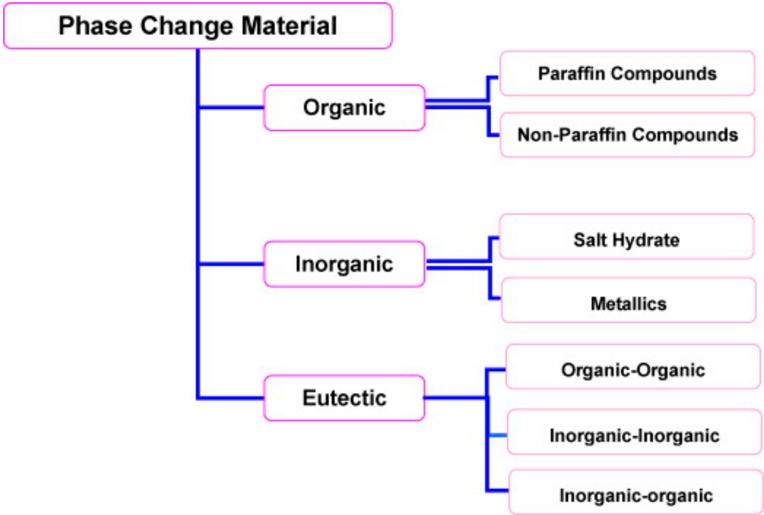
“Paraffins are composed of straight chain nalkanes (CH3–(CH2)–CH3); the general formula for fatty acids is CH3(CH2)2n•COOH; salt hydrates are composed of inorganic salts and water (AB•nH2O), and metallic hydrates consist of metals with low melting points relative to most metals [9].”
BackgroundInfluentialA Comprehensive Review of Thermal Energy Storage
Sarbu, I., & Sebarchievici, C. (2018) · Sustainability · doi:10.3390/su10010191 · Cited by 1,311 · cited 9×
“Temperature change is what drives SHS, as shown in Figure 1a [1].”
BackgroundInfluentialKhan, Z., Khan, Z., & Ghafoor, A. (2016) · Energy Conversion and Management · doi:10.1016/j.enconman.2016.02.045 · Cited by 765 · cited 5×
“They also have the disadvantage of low thermal conductivity, as well as toxicity, corrosivity, instability, and flammability, while also being much more expensive than paraffin [1,2].”
BackgroundMethodInfluentialKhodadadi, J. M., & Hosseinizadeh, S. F. (2007) · International Communications in Heat and Mass Transfer · doi:10.1016/j.icheatmasstransfer.2007.02.005 · Cited by 715 · cited 1×
“…(2005) [27] Paraffin wax (67 ◦C) Low Carbon nanofibers Solidification Experimental andanalytical (1D) The nanofibers enhanced the PCM performance Khodadadi and Hosseinizadeh (2007) [28] Water (0 ◦C) Low Cu Solidification Numerical The NPs enhanced the heat transfer and…”
BackgroundPhase change materials and thermal energy storage for buildings
de Gracia, A., & Cabeza, L. F. (2015) · Energy and Buildings · doi:10.1016/j.enbuild.2015.06.007 · Cited by 688 · cited 1×
“(a) Sensible heat, (b) latent heat, (c) thermo-chemical thermal energy storage systems (Copyright 2015 Gracia and Cabeza) [4].”
BackgroundEffect of carbon nanofiber additives on thermal behavior of phase change materials
Elgafy, A., & Lafdi, K. (2005) · Carbon · doi:10.1016/j.carbon.2005.06.042 · Cited by 430 · cited 7×
“Authors PCM Melting Point (◦C) Nanoparticle Type Phase Change Process Study Case Result Elgafy and Lafdi (2005) [27] Paraffin wax (67 ◦C) Low Carbon nanofibers Solidification Experimental andanalytical (1D) The nanofibers enhanced the PCM performance Khodadadi and Hosseinizadeh (2007) [28] Water (0 ◦C) Low Cu Solidifi…”
BackgroundInfluentialNanoparticles enhanced phase change materials (NePCMs)-A recent review
Tariq, S. L., Ali, H. M., Akram, M. A., Janjua, M. M., & Ahmadlouydarab, M. (2020) · Applied Thermal Engineering · doi:10.1016/j.applthermaleng.2020.115305 · Cited by 405 · cited 2×
“Even some medical applications exist, including smart textiles, which can work to either heat or cool the person depending on the need [6].”
BackgroundChieruzzi, M., Cerritelli, G. F., Miliozzi, A., & Kenny, J. M. (2013) · Nanoscale Research Letters · doi:10.1186/1556-276x-8-448 · Cited by 381 · cited 1×
“…◦C) Middle COOHfunctionalized Graphene nanoplatelets (f-GNP) Melting and solidification Experimental andnumerical (2D) f-GNPs enhance PCM at 5% concentration Chieruzzi et al. (2013) [66] NaNO3-KNO3 (223–232 ◦C) Middle SiO2, Al2O3, TiO2, and SiO2-Al2O3 Melting and solidification Experimental 1.0…”
BackgroundInfluentialJiang, Z. Y., & Qu, Z. G. (2019) · Applied Energy · doi:10.1016/j.apenergy.2019.03.043 · Cited by 380 · cited 2×
“Jiang and Qu [5] used a heat pipe in a PCM-based lithium-ion battery thermal management system, where it was found that the heat pipe increased the efficiency of the cooling system significantly.”
Background
Research works printed but not linked: 3
- 34. Zaidan, M.J.; Alhamdo, M.H. Improvement in heat transfer inside a phase change energy system. Int. J. Mech. Mechatron. Eng. 2018, 18, 33-46.
- 43. Temel, Ü.N.; Çiftçi, B.Y. Determination of thermal properties of a82 organic phase change material embedded with different type nanoparticles. Farkli Tipte Nanoparçaciklarla Katkilanan A82 Organik Faz De giştiren Malzemenin Termal. Özell İkler İn İn Belirlenmesi 2018, 38, 75-85.
- 65. Manickam, R.; Kalidoss, P.; Suresh, S.; Venkatachalapathy, S. Erythritol based nano-PCM for solar thermal energy storage. Int. Res. J. Eng. Technol. 2019, 6, 1631-1636.
Cited by
Nano-enhanced phase change materials: Fundamentals and applications
Said, Z., Pandey, A. K., Tiwari, A. K., Kalidasan, B., Jamil, F., Thakur, A. K., Tyagi, V. V., Sarı, A., & Ali, H. M. (2024) · Progress in Energy and Combustion Science · doi:10.1016/j.pecs.2024.101162 · Cited by 386
Togun, H., Sultan, H. S., Mohammed, H. I., Sadeq, A. M., Biswas, N., Hasan, H. A., Homod, R. Z., Abdulkadhim, A. H., Yaseen, Z. M., & Talebizadehsardari, P. (2024) · Journal of Energy Storage · doi:10.1016/j.est.2023.109840 · Cited by 245
Progress and key challenges in catalytic combustion of lean methane
Feng, X., Jiang, L., Li, D., Tian, S., Zhu, X., Wang, H., He, C., & Li, K. (2022) · Journal of Energy Chemistry · doi:10.1016/j.jechem.2022.08.001 · Cited by 211
Ghosh, D., Ghose, J., Datta, P., Kumari, P., & Paul, S. (2022) · Journal of Energy Storage · doi:10.1016/j.est.2022.105179 · Cited by 163
A brief review on different hybrid methods of enhancement within latent heat storage systems
Khademi, A., Shank, K. J., Mehrjardi, S. A. A., Tiari, S., Sorrentino, G., Said, Z., Chamkha, A. J., & Ushak, S. (2022) · Journal of Energy Storage · doi:10.1016/j.est.2022.105362 · Cited by 122
Self-citationSaid, Z., Sohail, M. A., Pandey, A. K., Sharma, P., Waqas, A., Chen, W., Nguyen, P. Q. P., Nguyen, V. N., Pham, N. D. K., & Nguyen, X. P. (2023) · Journal of Cleaner Production · doi:10.1016/j.jclepro.2023.137736 · Cited by 121
A Review of Thermal Property Enhancements of Low-Temperature Nano-Enhanced Phase Change Materials
Williams, J. D., & Peterson, G. P. (2021) · Nanomaterials · doi:10.3390/nano11102578 · Cited by 111
Tiari, S., & Hockins, A. (2021) · Journal of Energy Storage · doi:10.1016/j.est.2021.103541 · Cited by 83
Self-citationDhaidan, N. S., Hassan, A. F., Al-Gaheeshi, A. M. R., et al. (2023) · Journal of Energy Storage · doi:10.1016/j.est.2023.108162 · Cited by 75
Sathishkumar, A., Sundaram, P., Cheralathan, M., & Kumar, P. G. (2023) · Journal of Energy Storage · doi:10.1016/j.est.2023.110079 · Cited by 88
Bait, O. (2024) · Solar Energy · doi:10.1016/j.solener.2024.112322 · Cited by 79
Experimental study of a latent heat thermal energy storage system assisted by varying annular fins
Tiari, S., Hockins, A., & Shank, K. J. (2022) · Journal of Energy Storage · doi:10.1016/j.est.2022.105603 · Cited by 68
Self-citationSharma, A., Singh, P. K., Makki, E., Giri, J. P., & Sathish, T. (2024) · Heliyon · doi:10.1016/j.heliyon.2024.e25800 · Cited by 84
Patil, J. R., Mahanwar, P. A., Sundaramoorthy, E., & Mundhe, G. S. (2023) · Journal of Polymer Engineering · doi:10.1515/polyeng-2022-0254 · Cited by 62
Adesusi, O. M., Adetunji, O. R., Kuye, S. I., Musa, A. I., Erinle, T. J., Gbadamosi-Olatunde, O. B., & Ipadeola, S. O. (2022) · International Journal of Thermofluids · doi:10.1016/j.ijft.2023.100360 · Cited by 56
Tavakoli, A., Hashemi, J., Najafian, M., & Ebrahimi, A. (2023) · Renewable Energy · doi:10.1016/j.renene.2023.119200 · Cited by 57
Recent advancements in indirect solar dryer performance and the associated thermal energy storage
Shekata, G. D., Tibba, G. S., & Baheta, A. T. (2024) · Results in Engineering · doi:10.1016/j.rineng.2024.102877 · Cited by 61
Shank, K. J., & Tiari, S. (2023) · Energies · doi:10.3390/en16104165 · Cited by 54
“These include nanoparticle dispersion [15], heat pipes [16], porous matrices/conductive foams [17], and extended surfaces and fins [18] within PCM.”
BackgroundSelf-citationPascual, S., Lisbona, P., & Romeo, L. M. (2022) · Energies · doi:10.3390/en15228570 · Cited by 58
A review of phase change materials and heat enhancement methodologies
Saqib, M., & Andrzejczyk, R. (2022) · Wiley Interdisciplinary Reviews Energy and Environment · doi:10.1002/wene.467 · Cited by 54
“Given data extracted mostly from Tofani and Tiari (2021) and partly (2021) searched by ourselves, which is best to our knowledge.”
BackgroundMethodWang, Y., Guo, B., Peng, L., Li, Y., Cao, C., Zhang, G., Gao, J., Song, P., Shi, Y., Cao, K., et al. (2024) · Advanced Nanocomposites · doi:10.1016/j.adna.2024.06.001 · Cited by 43
Kwasi-Effah, C. C., & Okpako, O. (2025) · Frontiers in Energy Research · doi:10.3389/fenrg.2025.1651471 · Cited by 60
Research and development on phase change material-integrated cloth: A review
Shahid, M. A., Hossaın, M. T., Hossain, I., Limon, M. G. M., Rabbani, M., & Rahim, A. (2024) · Journal of Industrial Textiles · doi:10.1177/15280837241262518 · Cited by 44
“19 One novel approach to cutting energy consumption is to make use of thermal energy storage (TES).”
Zacharias, A., Baby, R., Maria, H. J., & Thomas, S. (2024) · Renewable and Sustainable Energy Reviews · doi:10.1016/j.rser.2024.115195 · Cited by 44
Tan, J., Liew, Y. Y., Bahar, R., et al. (2024) · Solar Energy Materials and Solar Cells · doi:10.1016/j.solmat.2024.113227 · Cited by 40
Zahid, I., Farooq, M., Farhan, M., Usman, M., Qamar, A., Imran, M. A., Alqahtani, M. A., Anwar, S., Sultan, M. A., & Javaid, M. Y. (2022) · Energies · doi:10.3390/en15228416 · Cited by 42
Aziz, A., Waheed, W., Mourad, A., Abderrahmane, A., Younis, O., Abu‐Nada, E., & Alazzam, A. (2023) · Journal of Energy Storage · doi:10.1016/j.est.2023.109579 · Cited by 45
Nano-Enhanced Phase Change Materials for Thermal Energy Storage: A Bibliometric Analysis
Mohammadpour, J., Lee, A., Timchenko, V., & Taylor, R. A. (2022) · Energies · doi:10.3390/en15093426 · Cited by 44
“Another method is the nano e capsulated phase change terial (NEPCM), which can be adopted in base fl ids [2,18,19].”
BackgroundMethodInfluentialSundaram, P., Sathishkumar, A., Prabakaran, R., Kumar, P. G., & Kim, S. C. (2023) · Journal of Energy Storage · doi:10.1016/j.est.2023.108257 · Cited by 38
A review of the recent advances in the heat transfer physics in latent heat storage systems
Sarath, K. P., Osman, M. F., Mukhesh, R., Manu, K. V., & Deepu, M. (2023) · Thermal Science and Engineering Progress · doi:10.1016/j.tsep.2023.101886 · Cited by 51
Shank, K. J., Bernat, J., Justice, Q., Niksiar, P., & Tiari, S. (2023) · Journal of Energy Storage · doi:10.1016/j.est.2023.107692 · Cited by 31
Self-citationHai, T., Omar, I., Alizadeh, A., Varshney, N., Dixit, S., Sultan, A. J., Anqi, A. E. M., Bhatnagar, S., Rajab, H., & Singh, N. S. S. (2025) · Scientific Reports · doi:10.1038/s41598-025-96599-y · Cited by 32
“A review of nano-enhanced PCMs highlights that Al 2 O 3 , copper, and carbon-based nanoparticles are particularly effective in improving PCM performance, although fins generally offer superior enhancements 40 .”
Bouzennada, T., Ghchem, K., Zahi, N., Alhadri, M., & Kolsi, L. (2023) · Case Studies in Thermal Engineering · doi:10.1016/j.csite.2023.103080 · Cited by 31
A review on assessment of thermal conductivity enhancement strategies for phase change materials
Rahman, I. U., Khan, H., Khan, N., Manca, O., Buonomo, B., & Nardini, S. (2025) · International Communications in Heat and Mass Transfer · doi:10.1016/j.icheatmasstransfer.2025.109644 · Cited by 44
Solar Hot Water Systems Using Latent Heat Thermal Energy Storage: Perspectives and Challenges
Modi, N., Wang, X., & Negnevitsky, M. (2023) · Energies · doi:10.3390/en16041969 · Cited by 28
“In the last decade, various techniques have been improve the heat transfer rate in the LHTES systems [54] for solar energy heat ], [58], positions [59,60], multi-tube heat heat ex-changers [62], nanoparticles and porous matrixes [6,63], types of fins [7,66], etc.”
BackgroundFaizan, M., Alkaabi, A. K., & Afgan, I. (2024) · Applied Thermal Engineering · doi:10.1016/j.applthermaleng.2024.123494 · Cited by 23
Adera, B., Ancha, V. R., Tadiwose, T., & Getahun, E. (2025) · International Journal of Thermofluids · doi:10.1016/j.ijft.2025.101418 · Cited by 37
Alasmari, A., Aljibori, H. S. S., Alimi, F. R., et al. (2024) · International Communications in Heat and Mass Transfer · doi:10.1016/j.icheatmasstransfer.2024.107992 · Cited by 21
Dynamic emissivity control in MXene-based materials for next-generation thermal camouflage
Bharti, R., Butt, M. M., & Dey, A. (2025) · Journal of Porous Materials · doi:10.1007/s10934-024-01738-x · Cited by 20
“Furthermore, because of their high latent heat and efficiency in thermal management, phase change materials, or PCMs, allow for smart temperature control [110, 111].”
Perumalsamy, J., Punniakodi, S. B. M., Selvam, C., et al. (2025) · Journal of Composites Science · doi:10.3390/jcs9030120 · Cited by 20
“However, LHS materials suffer from poor thermal conductivity, and studies have been performed to alleviate this effect [5,6].”
Jirawattanapanit, A., Abderrahmane, A., Mourad, A., Guedri, K., Younis, O., Bouallègue, B., Subkrajang, K., Rajchakit, G., & Shah, N. A. (2022) · Nanomaterials · doi:10.3390/nano12152519 · Cited by 19
Ouikhalfan, M., Hekimoğlu, G., Sarı, A., Gençel, O., & Tyagi, V. V. (2022) · Energy & Fuels · doi:10.1021/acs.energyfuels.1c04140 · Cited by 24
Li, W., Wang, J., Zhang, Y., Zhang, X., Fan, W., & Zhao, J. (2022) · Journal of Energy Storage · doi:10.1016/j.est.2022.105814 · Cited by 17
Faizan, M., & Afgan, I. (2025) · Applied Energy · doi:10.1016/j.apenergy.2025.125939 · Cited by 17
A comprehensive review on solar drying using paraffin wax as PCM
Shah, M. A., & Ramana, P. V. (2025) · Journal of Renewable and Sustainable Energy · doi:10.1063/5.0239679 · Cited by 20
Tony, M. A. (2021) · Energy Sources Part A Recovery Utilization and Environmental Effects · doi:10.1080/15567036.2021.2001119 · Cited by 16
“Moreover, according to the literature cited (Tofani and Tiari 2021; Wang, et al., 2021”
Chinnasamy, V., & Cho, H. (2022) · International Journal of Energy Research · doi:10.1002/er.7664 · Cited by 14
Kumari, P., Raj, A., & Ghosh, D. (2024) · Journal of Thermal Science and Engineering Applications · doi:10.1115/1.4065490 · Cited by 16
Nabwey, H. A., & Tony, M. A. (2024) · Scientific Reports · doi:10.1038/s41598-024-71848-8 · Cited by 20
“Previous work is reported previously by other workers 21,43 .”
ResultTransforming thermal storage: The role of nano-enhanced PCMs in modern energy applications
Rasool, G., Ali, A. B. M., Said, Y., Jameel, M., Benabdallah, F., Faisal, R. S., Formanova, S. B., & Khan, M. I. (2025) · International Communications in Heat and Mass Transfer · doi:10.1016/j.icheatmasstransfer.2025.109315 · Cited by 15
Jafari, M. A., Attan, N., Tabish, M. S., & Amarkhil, A. (2023) · Journal of Thermal Analysis and Calorimetry · doi:10.1007/s10973-023-12347-2 · Cited by 15
“PCMs have a wide range of applications, including building energy conservation [8], thermal solar energy storage [9], temperature regulating textiles [10], refrigeration systems [11] food storage, and waste heat recovery.”
BackgroundHe, F., Hong, W., Liu, Z., Zhu, Y., Li, Y., Jiang, Z., Chen, Z., & Yang, W. (2024) · Thermochimica Acta · doi:10.1016/j.tca.2024.179853 · Cited by 13
Shank, K. J., Bernat, J., Regal, E., Leise, J., Ji, X., & Tiari, S. (2022) · Sustainability · doi:10.3390/su14148920 · Cited by 15
“Further analysis of the charging and discharging behaviors of an LHTES system enhanced with 10 and 20 annular fins can be read in the previous study by Tiari and Hockins [28].”
BackgroundInfluentialSelf-citationAskar, S., Fotowat, S., Momeni, M., et al. (2022) · Journal of Energy Storage · doi:10.1016/j.est.2022.105680 · Cited by 12
Kumari, P., & Ghosh, D. (2023) · Journal of Thermal Analysis and Calorimetry · doi:10.1007/s10973-023-12501-w · Cited by 12
Ouardy, K. E., Akhrouf, A., Faik, A., & Mir, Y. (2026) · Nanotechnology Reviews · doi:10.1515/ntrev-2025-0207 · Cited by 17
Younis, O., Mozaffari, M., Ahmed, A., & Ghalambaz, M. (2024) · Buildings · doi:10.3390/buildings14082322 · Cited by 13
Narbuts, J., & Vanaga, R. (2025) · Environmental and Climate Technologies · doi:10.2478/rtuect-2025-0025 · Cited by 17
Pandya, M., Ansu, A. K., Sharma, R. K., Tripathi, D., Tyagi, V. V., & Sarı, A. (2023) · ECS Journal of Solid State Science and Technology · doi:10.1149/2162-8777/ace477 · Cited by 8
Investigation on Melting Process of Finned Thermal Energy Storage with Rotational Actuation
Liu, Y., Meng, X., Lv, X., et al. (2024) · Energies · doi:10.3390/en17174209 · Cited by 8
Zheng, R., Cai, Z., Wang, C., Shen, J., Xie, S., & Qi, Z. (2023) · Journal of Thermal Analysis and Calorimetry · doi:10.1007/s10973-023-12355-2 · Cited by 8
“Latent heat energy storage materials based on the phase change materials (PCMs) provide a promising approach for efficient thermal energy management and utilization, because they can store and release thermal energy reversibly [1, 2].”
BackgroundKim, H., Seo, J., & Hassan, Y. A. (2024) · Physics of Fluids · doi:10.1063/5.0213318 · Cited by 7
Gupta, S. K., Kumari, S., & Singh, A. P. (2026) · Energy Storage and Saving · doi:10.1016/j.enss.2025.06.002 · Cited by 12
Recent progress on passive cooling strategies for Li-ion battery of electric vehicles
Shruti, G., Salunkhe, P. B., & Shenoy, B. S. (2026) · Journal of Energy Storage · doi:10.1016/j.est.2026.121550 · Cited by 9
Investigations of Energy Conversion and Surface Effect for Laser-Illuminated Gold Nanorod Platforms
Radomski, P., Zaccagnini, F., Ziółkowski, P., Petronella, F., Sio, L. D., Koulali, A., & Mikielewicz, D. P. (2024) · Energies · doi:10.3390/en17112587 · Cited by 6
A Proposed Strategy to Evaluate Nanomaterials in Construction to Boost Sustainable Architecture
Konbr, U., & Mamdouh, H. (2022) · Civil Engineering and Architecture · doi:10.13189/cea.2022.100732 · Cited by 6
Hammoodi, K. A., Hamdi, J. D., & Hyal, L. S. (2026) · International Communications in Heat and Mass Transfer · doi:10.1016/j.icheatmasstransfer.2026.111060 · Cited by 6
Yu, C., Yang, P., Wang, B., Li, M., Niu, M., Yuan, K., Xuan, W., Lu, Q., Cao, W., & Wang, Q. (2023) · Materials Chemistry Frontiers · doi:10.1039/d3qm01174g · Cited by 5
Investigation the thermal performance of Nano-Enhanced Phase Change Material (NEPCM) in an enclosure
Khazaal, M. A., Daneh-Dezfuli, A., & HABEEB, L. (2024) · Al Rafidain Journal of Engineering Sciences · doi:10.61268/s7wgnk73 · Cited by 8
Rogillio, C., Niksiar, P., Torab, H., & Tiari, S. (2025) · Energy Conversion and Management · doi:10.1016/j.enconman.2025.120839 · Cited by 3
Self-citationJafari, F., Semprini, G., Bònoli, A., et al. (2026) · Applied Thermal Engineering · doi:10.1016/j.applthermaleng.2025.129686 · Cited by 3
Jayabal, R., Nagappan, B., Jena, S. P., et al. (2026) · Results in Engineering · doi:10.1016/j.rineng.2026.111193 · Cited by 3
Thermal Energy Storage Technologies: A Review of Current Landscape and Future Directions
Tekle, A. (2026) · F1000Research · doi:10.12688/f1000research.176639.2 · Cited by 8
Experimental analysis of a latent heat thermal energy storage unit enhanced by branched fins
Pandiri, S., Murphy, J., Fouladi, K., & Tiari, S. (2025) · Frontiers in Thermal Engineering · doi:10.3389/fther.2025.1561295 · Cited by 4
Self-citationParametric Study of Photovoltaic System Integrated with Organic Phase Change Material using ANSYS
Rosli, M. A. M., Salimen, N., Rafaizul, N. I. A. M., et al. (2023) · Journal of Advanced Research in Fluid Mechanics and Thermal Sciences · doi:10.37934/arfmts.106.1.7689 · Cited by 3
Albisher, H., & Safa, M. A. (2024) · NANO · doi:10.1142/s1793292024501042 · Cited by 3
Xu, X., Feng, T., & Zhang, X. (2022) · SSRN Electronic Journal · doi:10.2139/ssrn.4125199 · Cited by 3
Karthikeyan, S., Kanna, I. V., Prasanna, R., S, R. R. K., Sharma, S., Ramachandran, T., Arunachalam, K. P., & Fish, H. (2026) · Materials Technology · doi:10.1080/10667857.2025.2606943 · Cited by 2
Advances in nanotechnology in phase change materials and their applications
Abdullah, M., Obayedullah, M., Khair, M. A., Habibullah, M., Islam, M. N., Hossain, D., & Shuvo, M. S. I. (2026) · Materials Today Sustainability · doi:10.1016/j.mtsust.2026.101305 · Cited by 8
Investigation of Fractal Fins towards Heat Transfer Properties in Thermal Storage System
Li, B., Zhou, H., Huo, Y., & Rao, Z. (2024) · Heat Transfer Engineering · doi:10.1080/01457632.2024.2325279 · Cited by 4
“The second approach seeks to enhance heat transfer by integrating thermally conductive entities like fins, foam metals, and heat pipes, among others [1].”
Benyahia, I., Abderrahmane, A., Khetib, Y., Alazwari, M. A., Younis, O., Belazreg, A., & Laouedj, S. (2025) · Physics · doi:10.3390/physics7020017 · Cited by 3
Song, Y., & Yao, Y. (2025) · Case Studies in Thermal Engineering · doi:10.1016/j.csite.2025.107447 · Cited by 1
Edomah, N., Ugwu, N., & Afahakan, I. (2026) · Engineering Research Express · doi:10.1088/2631-8695/ae48ac · Cited by 1
Vinoth Kanna, I., Subramani, R., Rusho, M. A., et al. (2026) · Oxford Open Materials Science · doi:10.1093/oxfmat/itag010 · Cited by 1
Yadav, A., Ayah, E. I. S. A., Kalidasan, B., Said, Z., Bahman, A. M., & Pandey, A. K. (2026) · Renewable and Sustainable Energy Reviews · doi:10.1016/j.rser.2026.117076 · Cited by 3
Zinnah, M. A., Hassan, N., Rasul, M. G., & Silva, S. D. (2026) · Journal of Thermal Analysis and Calorimetry · doi:10.1007/s10973-026-15685-z · Cited by 2
“Nonetheless, there are numerous disadvantages associated with employing PCM in energy storage devices, since the majority exhibit inadequate thermal conductivity [21, 22].”
Experimental evaluation of a modular phase-change material-based thermal energy storage system
Zemanek, J., Vaclavik, A., Hercík, R., Byrtus, R., Macháček, Z., Schwär, F., Walter, M., Martínek, R., Hameed, I. A., & Koziorek, J. (2026) · Applied Thermal Engineering · doi:10.1016/j.applthermaleng.2026.131927 · Cited by 1
Phase Change Materials in Hot Water Generation Systems: A Review
Berrocal, D. I., Blandón, J., Rosario, M. D. L. Á. O. D., Rosario, O. D., Harris, I., & James, A. (2022) · International Engineering, Sciences and Technology Conference (IESTEC) · doi:10.1109/iestec54539.2022.00103 · Cited by 1
Influence of Nanoparticles on Thermophysical Properties of PCMs
Tiwari, A. K., Kumar, A., & Said, Z. (2023) · Materials horizons · doi:10.1007/978-981-99-5475-9_4 · Cited by 1
NUMERICAL ANALYSIS OF A LATENT HEAT THERMAL ENERGY STORAGE UNIT ASSISTED WITH POROUS FINS
Shank, K. J., Mahdavi, M., & Tiari, S. (2023) · Proceeding of Second Thermal and Fluids Engineering Conference · doi:10.1615/tfec2023.esy.046336
Self-citationEnhancement of Energy Storage Using Phase Change Material and Nano Materials in Advancement
Samanta, H., Paul, J., Mukherjee, S., et al. (2024) · Lecture notes in mechanical engineering · doi:10.1007/978-981-99-5990-7_67
He, F., Hong, W., Liu, Z., et al. (2024) · SSRN Electronic Journal · doi:10.2139/ssrn.4875480
A Sustainable Strategy for Latent Heat Thermal Energy Storage with Recycled Concrete–PCM CompositePreprint
Jafari, F., Dongellini, M., Semprini, G., et al. (2025) · SSRN Electronic Journal · doi:10.2139/ssrn.5472608
Jebali, M., Hajlaoui, K., Yaïci, W., Ali, M. H., Alrasheedi, N. H., Bouzidi, M., Mohamed, M., & Talebizadehsardari, P. (2025) · International Journal of Energy Research · doi:10.1155/er/7592616
“A review by Tofani and Tiari [24] provides a comprehensive analysis of the different approaches to enhance PCMs using nanoparticles.”
Kaj, R., Nakisa, M., Rabeti, M., & Ahi, M. (2025) · Heliyon · doi:10.1016/j.heliyon.2025.e44224 · Cited by 1
Choifin, M., Arifin, Z., Ubaidillah, U., & Kristiawan, B. (2025) · IOP Conference Series Earth and Environmental Science · doi:10.1088/1755-1315/1542/1/012002
“…in recent literature, the addition of nanoparticles can markedly influence the thermal properties of PCM, resulting in higher efficiency and performance in thermal energy applications such as building heating and cooling systems, solar thermal energy collectors, and energy storage systems [13].”
Experimental evaluation of a modular phase-change material-based thermal energy storage systemPreprint
Zemanek, J., Vaclavik, A., Hercík, R., et al. (2026) · SSRN Electronic Journal · doi:10.2139/ssrn.6313709
Kumar, M., & Rakshit, D. (2026) · International Communications in Heat and Mass Transfer · doi:10.1016/j.icheatmasstransfer.2026.111061 · Cited by 1
Jiménez, C. M., Ricca, J. E. R., Jäckel, R., Ramos, J. A. A., Barrios, G., Blanco, A. R., & Gutierrez-Urueta, G. L. (2026) · Resources · doi:10.3390/resources15040051
Osman, M. F., Vijayan, A. N., & Deepu, M. (2026) · Journal of Energy Storage · doi:10.1016/j.est.2026.121924
Metadata
- Authors
- Tofani, K., & Tiari, S.
- Affiliations
- Gannon University (US)
- Corresponding author
- Tiari, Saeed
- ORCID
- Tiari, Saeed
- Venue
- Energies
- Publisher
- MDPI AG
- Published
- 2021-06-25
- Volume
- 14
- Issue
- 13
- Pages
- 3821
- ISSN
- 1996-1073 (ISSN-L)
- OpenAlex
- W3175481636
- Cited by
- 114
- References
- 93
- Citations by year
- 2026: 34 · 2025: 18 · 2024: 21 · 2023: 22 · 2022: 16 · 2021: 3
- FWCI
- 6.62
- Type
- journal article
- Language
- en
- Open access
- gold
- doi.org
- Licence
- Locations
- Energies (publishedVersion, cc-by)
- RePEc: Research Papers in Economics (submittedVersion)
- DOAJ (DOAJ: Directory of Open Access Journals) (submittedVersion, cc-by-sa)
- Topics
- Physical Sciences › Engineering › Mechanical Engineering › Phase Change Materials Research
- Physical Sciences › Engineering › Mechanical Engineering › Adsorption and Cooling Systems
- Physical Sciences › Energy › Renewable Energy, Sustainability and the Environment › Solar Thermal and Photovoltaic Systems
- Keywords
- nano-enhanced phase change materials, latent heat storage, thermal conductivity enhancement, nanoparticles, metal foam, heat pipes, fins, porous media, solar energy storage, alkanes, Al2O3 nanoparticles, copper nanoparticles, carbon nanoparticles
About these checks
Registry, retraction, Cites and statistics results are computed, not judged, with one exception: a printed reference that no index lists is read once by a model before it counts as a citation error. Claims are extracted by a model and kept only when their quote appears verbatim in the text; each cited source is then checked, with a model’s help, for whether it says what the claim relies on. Those verdicts can be wrong — read the claim’s quote and the cited source before relying on one.
The claim verdicts this report counts are experimental: their accuracy is not yet measured.
A language model drew the claims from the paper on 2026-09-28, under version 3 of the claim definition (prompt extract-v3).
A second model labelled each claim on 2026-09-28 (model jev-1.13-20260917, definition revision gold-guideline-v0.2).
Cited sources are checked with a language model’s help (gpt-6-sol).
Statistics and arithmetic are recomputed, not judged.
Confidence bands are shown only for fields calibrated on our annotated test set. None is calibrated yet, so no band is shown.
What counts as a claim ›How we measure confidence ›How we check this ›
Are you an author, or do you see a problem with this page? Request a review
Data sources
Bibliographic data: Semantic Scholar, OpenAlex, Crossref.
Contains information from the Semantic Scholar Academic Graph Datasets, made available under the ODC Attribution License (ODC-BY 1.0).
Semantic Scholar’s data is described in: Kinney, R., et al. (2023). The Semantic Scholar Open Data Platform. arXiv:2301.10140.
