

The DOI matches its Crossref record; 138 of the 139 references it cites were found in a registry or an index.
Secondary Aroma: Influence of Wine Microorganisms in Their Aroma Profile
Open accessAbstract
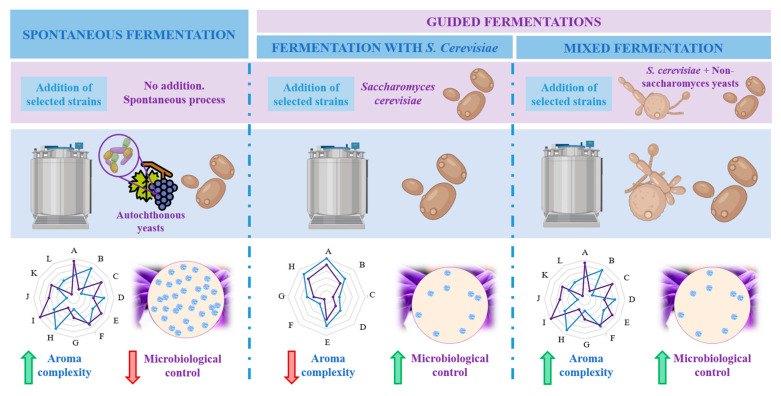
Aroma profile is one of the main features for the acceptance of wine. Yeasts and bacteria are the responsible organisms to carry out both, alcoholic and malolactic fermentation. Alcoholic fermentation is in turn, responsible for transforming grape juice into wine and providing secondary aromas. Secondary aroma can be influenced by different factors; however, the influence of the microorganisms is one of the main agents affecting final wine aroma profile. Saccharomyces cerevisiae has historically been the most used yeast for winemaking process for its specific characteristics: high fermentative metabolism and kinetics, low acetic acid production, resistance to high levels of sugar, ethanol, sulfur dioxide and also, the production of pleasant aromatic compounds. Nevertheless, in the last years, the use of non-saccharomyces yeasts has been progressively growing according to their capacity to enhance aroma complexity and interact with S. cerevisiae, especially in mixed cultures. Hence, this review article is aimed at associating the main secondary aroma compounds present in wine with the microorganisms involved in the spontaneous and guided fermentations, as well as an approach to the strain variability of species, the genetic modifications that can occur and their relevance to wine aroma construction.
Overview
The claims and statistics of this paper haven’t been checked yet.
Run the check — free, no account needed. It reads the open-access text and checks the sources it cites.
Integrity signals
Registry
Cites
Statistics
Figures
Verification
Claims the paper makes
The claims and statistics of this paper haven’t been checked yet.
Run the check — free, no account needed. It reads the open-access text and checks the sources it cites.
Claims other papers make about this one
Each is checked against this paper’s own text: does it say what the citing paper says it does?
The source backs part of the claim, not all of it — or backs it for a different population, condition or comparison.
In the citing paper
“It possesses a sweet, rose-like, and honey-like aroma, which is produced through the deamination, hydroxylation, and reduction of phenylalanine [36,94].”
From The Metabolic Pathways of Yeast and Acetic Acid Bacteria During Fruit Vinegar Fermentation and Their Influence on Flavor Development (2025) · cites this paper as [94]
Experimental — accuracy not yet measuredThe source backs part of the claim, not all of it — or backs it for a different population, condition or comparison.
In the citing paper
“Saccharomyces cerevisiae releases volatile sulfides, such as 3-thiohexanol-1-ol, by cleaving the carbon–sulfur bonds of glutathione and cysteine.”
From The Metabolic Pathways of Yeast and Acetic Acid Bacteria During Fruit Vinegar Fermentation and Their Influence on Flavor Development (2025) · cites this paper as [94]
Experimental — accuracy not yet measuredThe source backs part of the claim, not all of it — or backs it for a different population, condition or comparison.
In the citing paper
“This process imparts a distinctive thiol flavor to wines [94,95].”
From The Metabolic Pathways of Yeast and Acetic Acid Bacteria During Fruit Vinegar Fermentation and Their Influence on Flavor Development (2025) · cites this paper as [94]
Experimental — accuracy not yet measuredThe check wasn’t confident either way, so it gives no verdict — never disputed.
In the citing paper
“Benzyl alcohol typically exhibits the highest odor activity value among the alcohols in vinegar.”
From The Metabolic Pathways of Yeast and Acetic Acid Bacteria During Fruit Vinegar Fermentation and Their Influence on Flavor Development (2025) · cites this paper as [94]
Experimental — accuracy not yet measured
Self-check
Percentages, sums and reported differences re-computed from the paper’s own numbers.
The self-check needs the paper’s full text.
Citations
Cites
Ribéreau‐Gayon, P., Glories, Y., Maujean, A., & Dubourdieu, D. (2006) · Wiley eBooks · doi:10.1002/0470010398 · Cited by 1,385
Not your ordinary yeast: non- Saccharomyces yeasts in wine production uncovered
Jolly, N. P., Varela, C., & Pretorius, I. S. (2014) · FEMS Yeast Research · doi:10.1111/1567-1364.12111 · Cited by 861 · cited 5×
“pulcherrima (telemorphic form of Metschnikowia pulcherrima), among others [21,51].”
BackgroundInfluentialStyger, G., Prior, B. A., & Bauer, F. F. (2011) · Journal of Industrial Microbiology & Biotechnology · doi:10.1007/s10295-011-1018-4 · Cited by 681 · cited 12×
“cerevisiae fermentations and also, different enzymes have demonstrated a key role in their formation, such as alcohol acetyltransferases (Atf1p and Atf2p), isoamyl alcohol acetyltransferase or ethanol acetyltransferase (implied in the formation of acetate esters) or the acyl-CoA:ethanol O-acyltransferase, related with…”
BackgroundInfluentialPadilla, B., Gil, J. V., & Manzanares, P. (2016) · Frontiers in Microbiology · doi:10.3389/fmicb.2016.00411 · Cited by 503
Rapp, A., & Mandery, H. (1986) · Experientia · doi:10.1007/bf01941764 · Cited by 465
Microbial Contribution to Wine Aroma and Its Intended Use for Wine Quality Improvement
Belda, I., Ruíz, J., Esteban‐Fernández, A., Navascués, E., Marquina, D., Santos, A., & Moreno-Arribas, M. V. (2017) · Molecules · doi:10.3390/molecules22020189 · Cited by 350 · cited 12×
“Besides, same species synthesized very low amounts of 1-propanol [3,8,19].”
BackgroundInfluentialKnight, S. J., Klaere, S., Fedrizzi, B., & Goddard, M. R. (2015) · Scientific Reports · doi:10.1038/srep14233 · Cited by 327
Studies on acetate ester production by non-Saccharomyces wine yeasts
Rojas, V., Gil, J. V., Piñaga, F., & Manzanares, P. (2001) · International Journal of Food Microbiology · doi:10.1016/s0168-1605(01)00552-9 · Cited by 320 · cited 4×
“anomala Isoamyl acetate Wine Banana [53]”
BackgroundInfluentialFlavor composition of wines: A review
Schreier, P. H., & JENNINGS, W. G. (1979) · C R C Critical Reviews in Food Science and Nutrition · doi:10.1080/10408397909527273 · Cited by 311 · cited 2×
“Besides, in the group of the unsaturated fatty acids is worthy to mention 9-decenoic acid which possesses preservative properties and is relevant from an aroma point of view when transformed into ethyl ester [31].”
BackgroundAcetic acid bacteria spoilage of bottled red wine—A review
Bartowsky, E. J., & Henschke, P. A. (2007) · International Journal of Food Microbiology · doi:10.1016/j.ijfoodmicro.2007.10.016 · Cited by 304
Research works printed but not linked: 5
- (2020, November 15). National Center for Biotechnology NCBI Taxonomy Browser, Available online: https://www.ncbi.nlm.nih.gov/Taxonomy/Browser/wwwtax.cgi.
- Carrau, F. (2006). Native yeasts for low input winemaking: Searching for wine diversity and increased complexity. Advances in Applied Microbiology V. 111, Academic Press.
- Morata, A. (2018). Malolactic Fermentation. Red Wine Technology, Academic Press.
- Amaresan, N., Annapurna, K., Sankaranarayanan, A.M., and Senthil Kumar, K.K. (2020). Mitesh Dwivedi Gluconobacter. Beneficial Microbes in Agro-Ecology, Academic Press.
- Cifuentes, A. (2021). Microbiomics to Define Wine Terroir. Comprehensive Foodomics, Elsevier.
Cited by
Sorted by citations
Role of Yeasts on the Sensory Component of Wines
Romano, P., Braschi, G., Siesto, G., Patrignani, F., & Lanciotti, R. (2022) · Foods · doi:10.3390/foods11131921 · Cited by 103
“In any case, these are molecules with very low thresholds of perception that, even if present in minimal quantities, can significantly impact the generation of the sensory profile of the final product [20].”
BackgroundAlcoholic Fermentation as a Source of Congeners in Fruit Spirits
Stanzer, D., Čiča, K. H., Blesić, M., Murtić, M. S., Mrvčić, J., & Spaho, N. (2023) · Foods · doi:10.3390/foods12101951 · Cited by 84
“cerevisiae is capable of synthesizing mainly hexanoic and octanoic acids in high amounts but also pentanoic, decanoic, and 3-methylbutanoic acids [81].”
BackgroundInfluentialChanges of lipid oxidation, volatile and taste-active compounds during pan-heating of pork belly
Wang, X., Wang, X., Zhang, X., Liu, S., Yu, J., Cui, H., Xia, S., & Ho, C. (2023) · Food Research International · doi:10.1016/j.foodres.2023.113106 · Cited by 81
Liang, L., Ma, Y., Jiang, Z., Sam, F. E., Peng, S., Li, M., & Wang, J. (2022) · Food Research International · doi:10.1016/j.foodres.2022.112379 · Cited by 74
Wang, F., Zhao, P., Du, G., Zhai, J., Guo, Y., & Wang, X. (2024) · Food Chemistry · doi:10.1016/j.foodchem.2024.139981 · Cited by 66
Wei, R., Ding, Y., Chen, N., Wang, L., Gao, F., Zhang, L., Song, R., Liu, Y., Li, H., & Wang, H. (2022) · Food Research International · doi:10.1016/j.foodres.2022.111372 · Cited by 59
Influence of nitrogen status on fermentation performances of non- Saccharomyces yeasts: a review
Li, J., Yuan, M., Meng, N., Li, H., Sun, J., & Sun, B. (2023) · Food Science and Human Wellness · doi:10.26599/fshw.2022.9250050 · Cited by 53
Zhang, B., Liu, H., Xue, J., Tang, C., Duan, C., & Yan, G. (2022) · LWT · doi:10.1016/j.lwt.2022.113360 · Cited by 48
Ge, Y., Wu, Y., Aihaiti, A., Wang, L., Wang, Y., Xing, J., Zhu, M., & Hong, J. (2025) · Microorganisms · doi:10.3390/microorganisms13030477 · Cited by 49
“It possesses a sweet, rose-like, and honey-like aroma, which is produced through the deamination, hydroxylation, and reduction of phenylalanine [36,94].”
Huang, M., Liu, X., Li, X., Sheng, X., Li, T., Tang, W., Yu, Z., & Wang, Y. (2022) · Molecules · doi:10.3390/molecules27228097 · Cited by 47
“The aroma compounds in fruit wines, mainly produced by alcoholic fermentation through yeast, have a prominent contribution to the quality characteristics of fruit wines [20].”
BackgroundSun, X., Yu, L., Xiao, M., Zhang, C., Zhao, J., Narbad, A., Chen, W., Zhai, Q., & Tian, F. (2024) · Food Chemistry · doi:10.1016/j.foodchem.2024.141019 · Cited by 46
Jahan, F. M., Razavi, S. H., Shafiepour, M., Afraei, M., & Nouri, M. (2025) · The Microbe · doi:10.1016/j.microb.2025.100623 · Cited by 43
The formation of volatiles in fruit wine process and its impact on wine quality
Tan, J., Ji, M., Gong, J., & Chitrakar, B. (2024) · Applied Microbiology and Biotechnology · doi:10.1007/s00253-024-13084-8 · Cited by 42
“During these processes, sugars and other nutrients in fruit musts are converted to alcohols, organic acids, esters, aldehydes, ketones, terpenes, phenolic compounds, etc. (Table S1), contributing to wine taste, flavor, and aroma (Carpena et al. 2020).”
Che, X., Li, B., Zeng, J., Chen, Y., Liu, J., Zeng, W., Cai, W., Wan, Y., & Fu, G. (2024) · Food Research International · doi:10.1016/j.foodres.2024.115051 · Cited by 40
Wang, S., Zhang, Q., Zhao, P., Ma, Z., Zhang, J., Ma, W., & Wang, X. (2022) · Food Chemistry X · doi:10.1016/j.fochx.2022.100281 · Cited by 39
Sarkar, S., Sha, S. P., & Ghatani, K. (2023) · Frontiers in Sustainable Food Systems · doi:10.3389/fsufs.2023.1040567 · Cited by 40
Zhang, Z., Wang, H., Xia, H., Sun, L., Zhang, Q., Yang, H., & Zhang, J. (2023) · Food Chemistry X · doi:10.1016/j.fochx.2023.100930 · Cited by 37
“The Hanseniaspora genus, which includes species like H. uvarum , H. vineae , and H. guilliermondii , is commonly observed in the early phases of wine fermentation (Carpena et al., 2020; de Filippis et al., 2017; Padilla et al., 2016).”
BackgroundZhang, Z., Zhang, Q., Yang, H., Sun, L., Xia, H., Sun, W., Wang, Z., & Zhang, J. (2022) · Foods · doi:10.3390/foods11182775 · Cited by 36
“Interestingly, Lactobacillus contributed to the production f methyl esters and isobutyl esters (Figure 7), which could provide the wine with fruity odors [16].”
BackgroundHuang, D. S., Yao, Z., Liu, Y., Song, Y., Zhao, X., & Qin, Y. (2023) · LWT · doi:10.1016/j.lwt.2023.115059 · Cited by 34
Fazio, N. A., Russo, N., Foti, P., Pino, A., Caggia, C., & Randazzo, C. L. (2023) · Microorganisms · doi:10.3390/microorganisms11051338 · Cited by 33
“Therefore, secondary aromas have a greater influence among the main volatile compounds that define the overall quality of wine, for which the yeast inoculum and the fermentation methodology play an essential role [69].”
BackgroundResultInfluentialCai, W., Wan, Y., Chen, Y., Fan, H., Li, M., Wu, S., Lin, P., Zeng, T., Luo, H., Huang, D., et al. (2024) · Food Microbiology · doi:10.1016/j.fm.2024.104556 · Cited by 27
Impact of vineyard management on grape fungal community and Montepulciano d’Abruzzo wine quality
Perpetuini, G., Rossetti, A. P., Battistelli, N., Zulli, C., Cichelli, A., Arfelli, G., & Tofalo, R. (2022) · Food Research International · doi:10.1016/j.foodres.2022.111577 · Cited by 26
Selvanathan, Y. K., & Masngut, N. (2023) · LWT · doi:10.1016/j.lwt.2023.114818 · Cited by 26
Gao, F., Guan, L., Zeng, G., Hao, X., Li, H., & Wang, H. (2023) · Food Chemistry X · doi:10.1016/j.fochx.2023.101091 · Cited by 24
“Some nonvolatile aroma precursors in grapes are released in wine during alcohol fermentation by the action of microorganisms and enzymes (Carpena et al., 2021).”
BackgroundPredictive evolution of metabolic phenotypes using model‐designed environments
Jouhten, P., Konstantinidis, D., Pereira, F. M., Andrejev, S., Grkovska, K., Castillo, S., Ghiaci, P., Beltran, G., Almaas, E., Mas, A., et al. (2022) · Molecular Systems Biology · doi:10.15252/msb.202210980 · Cited by 23
“…and raspberry-like flavor; and (ii) branched-chain amino acid-derived higher alcohols (2-methyl-1-butanol and 3-methyl-1-butanol) and their acetate esters (2-methylbutylacetate and isoamyl acetate; Swiegers et al , 2005; Carpena et al , 2021), which have a banana and pear scent and fruity flavor.”
Avîrvarei, A.-C., Pop, C. R., Mudura, E., Ranga, F., Hegheş, S. C., Gál, E., Zhao, H., Fărcaș, A. C., Chiș, M. S., & Coldea, T. E. (2023) · Antioxidants · doi:10.3390/antiox12071457 · Cited by 21
Genetic basis of barley contributions to beer flavor
Sayre‐Chavez, B., Bettenhausen, H. M., Windes, S., Aron, P. M., Cistué, L., Fisk, S., Helgerson, L., Heuberger, A. L., Tynan, S., Hayes, P. M., et al. (2022) · Journal of Cereal Science · doi:10.1016/j.jcs.2022.103430 · Cited by 21
Shahrajabian, M. H., & Sun, W. (2023) · Letters in Drug Design & Discovery · doi:10.2174/1570180820666230228115450 · Cited by 21
Ma, Y., Peng, S., Mi, L., Li, M., Jiang, Z., & Wang, J. (2023) · Food Research International · doi:10.1016/j.foodres.2023.113638 · Cited by 21
Ding, Y., Wang, L., Gao, Y., Zhang, Z., Song, Y., Wang, H., & Li, H. (2024) · Food Bioscience · doi:10.1016/j.fbio.2024.105149 · Cited by 20
He, H., Fengping, A., Li, C., Dong, Q., Huang, Q., Wang, J., Song, H., & Geng, F. (2026) · Food Hydrocolloids · doi:10.1016/j.foodhyd.2026.112479 · Cited by 20
Ruiz-de-Villa, C., Poblet, M., Otero, R. R. C., Bordons, A., Reguant, C., & Rozés, N. (2022) · Food Microbiology · doi:10.1016/j.fm.2022.104212 · Cited by 20
Characteristics of four yeasts and the effects of yeast diversity on the fermentation of baijiu
Yan, C., Zhang, Q., Wang, J., Chang, X., Yao, L., Chen, X., & Li, X. (2023) · Food Bioscience · doi:10.1016/j.fbio.2023.103094 · Cited by 20
Qin, Y., Xu, H., Sun, J., Cheng, X., Lei, J., Lian, W., Chen, H., Huang, W., Zhang, M., & Ya, C. (2024) · Food Chemistry X · doi:10.1016/j.fochx.2024.101223 · Cited by 19
“As the microbial community proliferates extensively, carbohydrates, proteins, and lipids undergo enzymatic transformations mediated by microbial enzymes (Carpena et al., 2021).”
BackgroundChanprasartsuk, O.-O., & Prakitchaiwattana, C. (2022) · International Journal of Food Microbiology · doi:10.1016/j.ijfoodmicro.2022.109636 · Cited by 19
Mirsalami, S. M., & Alihosseini, A. (2023) · Food and Humanity · doi:10.1016/j.foohum.2023.06.013 · Cited by 18
Aguiar-Cervera, J., Visinoni, F., Zhang, P., Hollywood, K. A., Vrhovšek, U., Severn, O., & Delneri, D. (2024) · Food Microbiology · doi:10.1016/j.fm.2024.104585 · Cited by 18
Bekris, F., Lola, D., Papadopoulou, E., Vasileiadis, S., Paramithiotis, S., Kotseridis, Y., & Karpouzas, D. G. (2024) · LWT · doi:10.1016/j.lwt.2024.116543 · Cited by 17
Cardinale, M., Trinchera, R., Natrella, G., Difonzo, G., Benedittis, C. D., D’amato, I., Mascellani, M., Paradiso, V. M., & Rustioni, L. (2021) · Foods · doi:10.3390/foods10081913 · Cited by 16
“The last two clusters grouped several relevant compounds, including 2-phenylethanol and its acetate ester, potentially related to floral and honey perception [44], as well as medium-chain fatty acids (C6–C8–C10).”
BackgroundLeali, N. F., Salvetti, E., Luzzini, G., Salini, A., Slaghenaufi, D., Fusco, S., Ugliano, M., Torriani, S., & Binati, R. L. (2024) · Fermentation · doi:10.3390/fermentation10030128 · Cited by 16
“Ethyl hexanoate and octanoate are essential cider compounds and ethyl acetate [30,31].”
BackgroundNatural Fiano Wines Fermented in Stainless Steel Tanks, Oak Barrels, and Earthenware Amphora
Renzo, M. D., Letizia, F., Martino, C. D., Karaulli, J., Kongoli, R., Testa, B., Avino, P., Guerriero, E., Albanese, G., Monaco, M., et al. (2023) · Processes · doi:10.3390/pr11041273 · Cited by 15
Li, Y., Ma, Y., Xu, M., Yaqoob, S., Aregbe, A. Y., & Xiong, Y. (2023) · International Journal of Food Science & Technology · doi:10.1111/ijfs.16857 · Cited by 15
Zhang, B., Zhang, C., Li, J., Zhou, P., Lan, Y., Duan, C., & Yan, G. (2023) · Food Microbiology · doi:10.1016/j.fm.2023.104460 · Cited by 15
Coppola, F., Testa, B., Cozzolino, R., Karaulli, J., Pannella, G., Renzo, M. D., Matarazzo, C., Succi, M., & Iorizzo, M. (2025) · European Food Research and Technology · doi:10.1007/s00217-025-04730-0 · Cited by 16
“Many of these volatile compounds are commonly found in wines and are derived both from the grapes and from the yeast metabolism during fermentation [103, 104].”
Influence of natural deep eutectic solvents on the release of volatile compounds from heated tobacco
Tan, J., Li, N., Wang, X., Yan, J., Wentao, Z., & Yuqing, D. (2021) · Industrial Crops and Products · doi:10.1016/j.indcrop.2021.114171 · Cited by 14
Impact of Fungi on the World Economy and Its Sustainability: Current Status and Potentials
Singh, I., & Thakur, P. (2023) · Springer eBooks · doi:10.1007/978-981-19-9103-5_1 · Cited by 15
Fazio, N. A., Sanzo, R. D., Marino, G., Carabetta, S., Ligato, F., Ioppolo, F., Russo, M., Randazzo, C. L., Caggia, C., & Caccamo, M. (2025) · Food Bioscience · doi:10.1016/j.fbio.2025.106559 · Cited by 14
Montagner, P. L., Guilbaud, M., Miot‐Sertier, C., Brocard, L., Albertin, W., Ballestra, P., Dols‐Lafargue, M., Renouf, V., Moine, V., Bellon‐Fontaine, M., et al. (2022) · Food Microbiology · doi:10.1016/j.fm.2023.104217 · Cited by 14
Dynamic changes in volatile components during dark tea wine processing
Xu, W., Zhu, Y., Lin, L., Bouphun, T., & Li, P. (2024) · LWT · doi:10.1016/j.lwt.2024.115783 · Cited by 13
Boban, A., Vrhovšek, U., Carlin, S., Mucalo, A., & Budić-Leto, I. (2022) · Metabolites · doi:10.3390/metabo12121295 · Cited by 13
“Yeasts are the primary producers of these fatty acids, which are worth mentioning because of their ability to convert to ethyl ester [45].”
BackgroundWang, L., Yin, H., Shao, X., Zhang, Z., Zhong, X., Wei, R., Ding, Y., Wang, H., & Li, H. (2023) · Food Chemistry X · doi:10.1016/j.fochx.2023.100978 · Cited by 13
“Among these factors, the impact of microorganisms is considered the most significant in shaping the final aroma profile of wine (Carpena et al., 2021).”
BackgroundCosme, F., Vilela, A., Oliveira, I. V., Aires, A., Pinto, T., & Gonçalves, B. C. (2025) · Chemosensors · doi:10.3390/chemosensors13090337 · Cited by 12
Lei, X., Wang, Y., Zhu, Z., Dai, O., Chen, S., Wen, C., & Pang, J. (2025) · Trends in Food Science & Technology · doi:10.1016/j.tifs.2025.105333 · Cited by 12
Ruiz-de-Villa, C., Gombau, J., Poblet, M., Bordons, A., Canals, J. M., Zamora, F., Reguant, C., & Rozés, N. (2023) · LWT · doi:10.1016/j.lwt.2023.115540 · Cited by 12
Aged to Perfection: The Scientific Symphony behind Port Wine, Vinegar, and Acetic Acid Bacteria
Mota, J. V. M., & Vilela, A. (2024) · Fermentation · doi:10.3390/fermentation10040200 · Cited by 18
Bai, X., Gao, H., Lan, M., Wang, J., & Dong, Z. (2025) · Food Bioscience · doi:10.1016/j.fbio.2025.105904 · Cited by 12
Characterisation of Tannin and Aroma Profiles of Pinot Noir Wines Made with or without Grape Pomace
Wimalasiri, P. M., Zhan, J., & Tian, B. (2022) · Fermentation · doi:10.3390/fermentation8120718 · Cited by 12
Ruiz-de-Villa, C., Poblet, M., Bordons, A., Reguant, C., & Rozés, N. (2023) · International Journal of Food Microbiology · doi:10.1016/j.ijfoodmicro.2023.110367 · Cited by 12
Sequential culture with aroma‐producing yeast strains to improve the quality of Kyoho wine
Lai, Y., Hou, C., Lin, S., Lo, Y., Chen, C., Hsieh, C., Lin, H., & Cheng, K. (2023) · Journal of Food Science · doi:10.1111/1750-3841.16468 · Cited by 12
Ge, X., Liu, Y., Wang, X., Gao, C., Mu, J., Wang, W., & Wang, J. (2024) · LWT · doi:10.1016/j.lwt.2024.115918 · Cited by 11
Lei, Y., Li, T., Chen, L., Deng, M., Jin, L., Li, Y., & Li, D. (2024) · Flavour and Fragrance Journal · doi:10.1002/ffj.3786 · Cited by 11
Eder, M. L. R., Fariña, L., Carrau, F., & Rosa, A. L. (2024) · Food Chemistry · doi:10.1016/j.foodchem.2024.142155 · Cited by 12
Buican, B.-C., Luchian, C. E., Colibaba, C., Niculaua, M., BORDEAN, M.-E., Καλλιθράκα, Σ., & Cotea, V. V. (2025) · Horticulturae · doi:10.3390/horticulturae11030302 · Cited by 13
Muñoz‐Castells, R., Moreno, J. J., García‐Martínez, T., Mauricio, J. C., & Moreno‐García, J. (2023) · Fermentation · doi:10.3390/fermentation9121023 · Cited by 11
Frioni, T., Romanini, E., Pagani, S., Zozzo, F. D., Lambri, M., Vercesi, A., Gatti, M., Poni, S., & Gabrielli, M. (2023) · Australian Journal of Grape and Wine Research · doi:10.1155/2023/1482548 · Cited by 10
Zhang, B., Yu, C., Wang, M., Zhao, X., Lin, L., Yan, G., & Zhang, C. (2024) · LWT · doi:10.1016/j.lwt.2024.116816 · Cited by 10
Boban, A., Vrhovšek, U., Carlin, S., Milanović, V., Kljusurić, J. G., Jurun, Z., & Budić-Leto, I. (2024) · Applied Food Research · doi:10.1016/j.afres.2024.100554 · Cited by 10
Lei, W., Mao, Y., Liu, C., Pan, F., Ma, K., & Li, J. (2024) · Food Research International · doi:10.1016/j.foodres.2024.115245 · Cited by 10
Influence of Terroir on Microbial Diversity and Wine Volatilome
Alcalá-Jiménez, M. T., García‐Martínez, T., Mauricio, J. C., Moreno, J. J., & Peinado, R. A. (2025) · Applied Sciences · doi:10.3390/app15063237 · Cited by 10
Zhou, X., Wang, H., Wang, C., Tan, Q., Liu, Y., Chen, H., Zhang, Y., Zhang, Y., Liu, S., & Suo, H. (2024) · Food Bioscience · doi:10.1016/j.fbio.2024.105308 · Cited by 9
Mazzucco, M. B., Jovanovich, M., Rodríguez, M. E., Oteiza, J. M., & Lopes, C. A. (2025) · Fermentation · doi:10.3390/fermentation11020079 · Cited by 9
“…(P), which suggests that the metabolism of this strain is primarily responsible for the production of the acetic acid and ethyl acetate found in P and Seq P-S ciders, compounds that contribute to the perception of sourness and roughness in cider and are undesirable at high concentrations [50,53].”
Metagenomic bacterial diversity and metabolomics profiling of Buttafuoco wine production
Zambianchi, S., Patrone, V., Becchi, P. P., Callegari, M. L., Stagnati, L., Lucini, L., Morelli, L., & Busconi, M. (2023) · Food Control · doi:10.1016/j.foodcont.2023.109657 · Cited by 9
Screening of Indigenous Hanseniaspora Strains from China for Ethanol Reduction in Wine
Yang, H., Wei, Y., Feng, W., Zhang, H., Jiang, J., & Qin, Y. (2025) · Foods · doi:10.3390/foods14071113 · Cited by 8
“It is produced by yeasts through the anaerobic conversion of phenylalanine [30].”
Lakićević, S. H., Karabegović, I., Cvetković, D. J., Lazić, M., Jančić, R., & Popović‐Djordjević, J. B. (2022) · Horticulturae · doi:10.3390/horticulturae8040277 · Cited by 8
Aru, V., Nittnaus, A. P., Sørensen, K. M., Toldam-Andersen, T., & Engelsen, S. B. (2022) · Metabolites · doi:10.3390/metabo12070672 · Cited by 8
Colautti, A., Golinelli, F., Iacumin, L., Tomasi, D., Cantone, P., & Mian, G. (2023) · OENO One · doi:10.20870/oeno-one.2023.57.2.7507 · Cited by 8
“…characteristics of the obtained wines, which are also typical of the geographical location, using the so-called French term ‘terroir’ but influenced by a variety of factors as well (Mezzasalma et al., 2017, Carpena et al., 2021, Bokulich et al., 2016, Liu et al., 2020, Tomasi et al., 2022).”
MethodEffect of abiotic and biotic factors on Brettanomyces bruxellensis bioadhesion properties
Montagner, P. L., Bakhtiar, Y., Miot‐Sertier, C., Guilbaud, M., Albertin, W., Moine, V., Dols‐Lafargue, M., & Masneuf‐Pomarède, I. (2024) · Food Microbiology · doi:10.1016/j.fm.2024.104480 · Cited by 8
Karadimou, C., Kalogiouri, N. P., Χατζηδημητρίου, Ε., Ouroumi, N., Gkrimpizis, T., Theocharis, S., Menkissoglu‐Spiroudi, U., & Koundouras, S. (2025) · Food Chemistry · doi:10.1016/j.foodchem.2025.142968 · Cited by 7
Liu, J., Zhang, S., Zhao, W., Zhang, A., Wang, Z., & Liu, J. (2025) · Food Research International · doi:10.1016/j.foodres.2025.117056 · Cited by 7
Yang, H., Wang, Z., Zhang, Z., Shu, C., Zhu, J., Li, Y., & Zhang, J. (2024) · Foods · doi:10.3390/foods13020252 · Cited by 7
Ohwofasa, A., Tian, B., Torrico, D. D., Dhami, M. K., Winefield, C. S., & On, S. L. W. (2024) · Food Bioscience · doi:10.1016/j.fbio.2024.104562 · Cited by 7
Development of Korean Indigenous Low-Temperature-Tolerant Yeast for Enhancing the Flavor of Yakju
Park, J., Choi, J.-S., Park, H., Lee, S.-B., & Park, H.-D. (2021) · Fermentation · doi:10.3390/fermentation7040260 · Cited by 7
“Isoamyl alcohol is a major volatile compound among higher alcohols, which boosts the aroma and flavor [42].”
BackgroundRamoba, L., Monyama, M. C., & Moganedi, K. L. M. (2022) · Beverages · doi:10.3390/beverages8040067 · Cited by 7
Application of aroma-producing yeasts and ageing technology in Kyoho-fortified wine
Lai, Y., Chen, C., Lo, Y., Hsieh, C., Hsu, F., & Cheng, K. (2023) · European Food Research and Technology · doi:10.1007/s00217-023-04332-8 · Cited by 7
Correlation of the presence of acrolein with higher alcohols, glycerol, and acidity in cachaças
Alvarenga, G. F., Machado, A. M. D. R., Barbosa, R. B., Ferreira, V. R. F., Santiago, W. D., Teixeira, M. L., Nelson, D. L., & Cardoso, M. D. G. (2023) · Journal of Food Science · doi:10.1111/1750-3841.16523 · Cited by 6
Impact of Selected Yeast Strains on Quality Parameters of Obtained Sauerkraut
Satora, P., & Strnad, S. (2024) · Applied Sciences · doi:10.3390/app14083462 · Cited by 6
Torres‐Díaz, L. L., Gónzalez-Lázaro, M., de Urturi, I. S., Murillo‐Peña, R., Pérez‐Álvarez, E. P., & Garde‐Cerdán, T. (2025) · LWT · doi:10.1016/j.lwt.2025.117525 · Cited by 6
Volatile Compounds as Markers of Terroir and Winemaking Practices in Fetească Albă Wines of Romania
(Rebigan), I. C. B., Cioroiu, I. B., Niculaua, M., Nechita, B., & Cotea, V. V. (2025) · Beverages · doi:10.3390/beverages11030067 · Cited by 6
“In Aramic and Davino, higher levels of pentyl acetate intensify pear and banana fragrances, enriching the wines’ fruity appeal [54].”
Boban, A., Milanović, V., Cardinali, F., Radman, S., Osimani, A., Aquilanti, L., Garofalo, C., Rampanti, G., & Budić-Leto, I. (2025) · Applied Food Research · doi:10.1016/j.afres.2025.101145 · Cited by 6
Bottle Aging Affected Aromatic and Phenolic Wine Composition More than Yeast Starter Strains
Garde‐Cerdán, T., de Urturi, I. S., Murillo‐Peña, R., Iribarren, M., Román, S. M., Rubio‐Bretón, P., & Pérez‐Álvarez, E. P. (2022) · Applied Sciences · doi:10.3390/app12094478 · Cited by 6
Predictive modeling of wine fruity ester production based on nitrogen profiles of initial juice
Zhu, Z., Bai, X., Xiong, S., Guan, X., Li, A., & Tao, Y. (2024) · Food Bioscience · doi:10.1016/j.fbio.2024.105658 · Cited by 6
Effects of micro-oxygenation on the aroma of Cabernet Sauvignon wine from Ningxia, China
Zhang, Z., Zhang, Q., Wang, H., Xia, H., Sun, L., & Zhang, J. (2022) · International journal of agricultural and biological engineering · doi:10.25165/j.ijabe.20221504.7158 · Cited by 6
Kodchasee, P., Pharin, N., Suwannarach, N., Unban, K., Saenjum, C., Kanpiengjai, A., Sakar, D., Shetty, K., Zarnkow, M., & Khanongnuch, C. (2023) · Journal of Fungi · doi:10.3390/jof9020165 · Cited by 6
“rhodanensis P3, the confirmed ethyl acetate (fruity aroma), isoamyl acetate (banana aroma) and 2-phenethyl acetate (2PA), have been described as good characteristics and pleasant aromatic properties to wine [67,68].”
BackgroundCharnock, H. M., Pickering, G. J., & Kemp, B. S. (2023) · Journal of Food Composition and Analysis · doi:10.1016/j.jfca.2023.105834 · Cited by 6
Liu, H., Zhang, C., Zhang, B., Jia, W., He, L., Sun, Y., Li, J., Zhou, P., Guan, X., Liu, S., et al. (2024) · Australian Journal of Grape and Wine Research · doi:10.1155/2024/5602066 · Cited by 5
Unlocking fruit dimensions: Quantification of functional traits driving plant–frugivore interactions
Nguyen, L. M. N., Chronopoulou, E. L., Escaliante, G. A. S., Valenta, K., & Nevo, O. (2026) · Applications in Plant Sciences · doi:10.1002/aps3.70036 · Cited by 5
Mihelčič, A., Vanzo, A., Sivilotti, P., Vrščaj, B., & Lisjak, K. (2023) · OENO One · doi:10.20870/oeno-one.2023.57.2.7239 · Cited by 5
Effect of Indigenous Non-Saccharomyces Yeasts on Lipid Compositions of Maraština Wine
Boban, A., Vrhovšek, U., Masuero, D., Milanović, V., & Budić-Leto, I. (2025) · Foods · doi:10.3390/foods14020269 · Cited by 5
Jeong, D., & Kim, Y. S. (2025) · Applied Biological Chemistry · doi:10.1186/s13765-024-00975-7 · Cited by 5
“They are also involved as ester precursors that are critical for the flavor of alcoholic beverages [4].”
Perpetuini, G., Rossetti, A. P., Giordano, L., Pulcini, M., Dufrusine, B., Battistelli, N., Zulli, C., Arfelli, G., Palliotti, A., Dainese, E., et al. (2023) · Fermentation · doi:10.3390/fermentation9020150 · Cited by 5
Metadata
- Authors
- Carpena, M., Fraga-Corral, M., Otero, P., Nogueira, R. A., Garcia-Oliveira, P., Prieto, M. A., & Simal-Gandara, J.
- Affiliations
- Nutrition and Bromatology Group, Analytical and Food Chemistry Department, Faculty of Food Science and Technology, University of Vigo, Ourense Campus, E-32004 Ourense, Spain
- Universidade de Santiago de Compostela (ES)
- Universidade de Vigo (ES)
- Universidade Politécnica de Bragança (PT)
- Corresponding author
- Prieto, Miguel A.
- ORCID
- Venue
- Foods
- Publisher
- MDPI AG
- Published
- 2020-12-27
- Volume
- 10
- Issue
- 1
- Pages
- 51
- ISSN
- 2304-8158 (ISSN-L)
- PMC
- PMC7824511
- OpenAlex
- W3114274140
- Cited by
- 172
- References
- 139
- Citations by year
- 2026: 30 · 2025: 45 · 2024: 38 · 2023: 33 · 2022: 22 · 2021: 4
- FWCI
- 1.25
- Type
- journal article
- Language
- en
- Open access
- gold
- doi.org
- Licence
- Locations
- Foods (publishedVersion, cc-by)
- Europe PMC (PubMed Central) (publishedVersion, other-oa)
- PubMed Central (publishedVersion, cc-by)
- PubMed (publishedVersion)
- Portuguese National Funding Agency for Science, Research and Technology (RCAAP Project by FCT) (submittedVersion, other-oa)
- DOAJ (DOAJ: Directory of Open Access Journals) (submittedVersion, cc-by-sa)
- Investigo repository of University of Vigo (University of Vigo) (submittedVersion, cc-by)
- Investigo Institutional repository of UVigo (Universidade de Vigo) (submittedVersion, cc-by)
- Funders
- European Commission
- Ministerio de Ciencia e Innovación (RYC 2017, RYC‐2017‐22891, IJCI-2016-27774)
- Universidade de Vigo (ED481B-2019/096, ED481A-2019/295)
- Xunta de Galicia (ED481A, ED481A-2019/295, ED481B‐2019‐096, ED481B-)
- Topics
- Life Sciences › Agricultural and Biological Sciences › Food Science › Fermentation and Sensory Analysis
- Life Sciences › Agricultural and Biological Sciences › Plant Science › Horticultural and Viticultural Research
- Life Sciences › Biochemistry, Genetics and Molecular Biology › Biotechnology › Biochemical and biochemical processes
- Keywords
- wine aroma profile, Saccharomyces cerevisiae, non-Saccharomyces yeasts, mixed yeast cultures, malolactic fermentation, alcoholic fermentation, wine spoilage bacteria, aroma compounds, strain differences, spontaneous fermentation
About these checks
Registry, retraction, Cites and statistics results are computed, not judged, with one exception: a printed reference that no index lists is read once by a model before it counts as a citation error. Claims are extracted by a model and kept only when their quote appears verbatim in the text; each cited source is then checked, with a model’s help, for whether it says what the claim relies on. Those verdicts can be wrong — read the claim’s quote and the cited source before relying on one.
Statistics and arithmetic are recomputed, not judged.
Confidence bands are shown only for fields calibrated on our annotated test set. None is calibrated yet, so no band is shown.
What counts as a claim ›How we measure confidence ›How we check this ›
Are you an author, or do you see a problem with this page? Request a review
