

The DOI matches its Crossref record; 92 of the 92 references it cites were found in a registry or an index; none of the 86 sources its claims cite is checked for support yet.
Preservative Potential of Anethum graveolens Essential Oil on Fish Fillet Quality and Shelf Life During Refrigerated Storage
Open accessAbstract
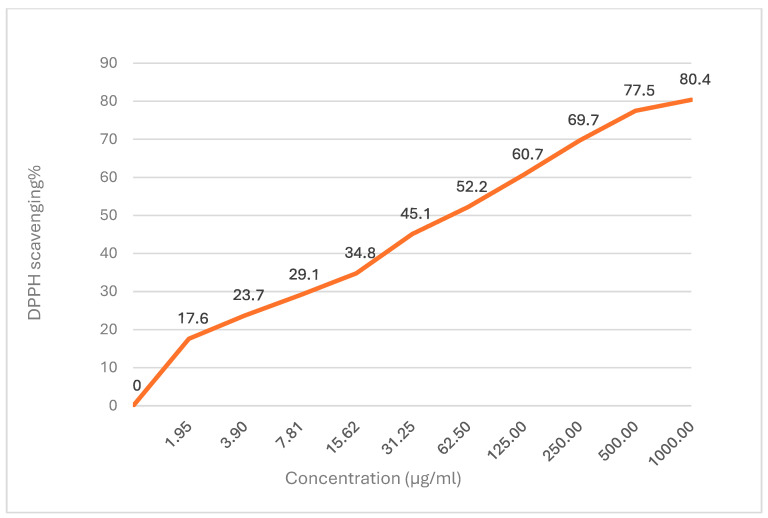
This study estimated the preservative potential of Dill essential oil (DEO, Anethum graveolens) in terms of the quality and shelf life of Pangasius bocourti (basa fish) fillets during cold storage. GC-MS analysis of DEO’s chemical composition identified monoterpenes, including α-phellandrene (21.81%), d-limonene (18.54%), carvone (17.42%), and Dill ether (14.82%). DEO showed concentration-dependent antioxidant properties in the DPPH assay, with an IC50 of 48.3 ± 0.9 µg/mL (mean ± SE). Its antibacterial efficacy against various foodborne pathogens was evaluated using the resazurin turbidimetric microdilution method. Fish fillets were treated with DEO at 200, 2000, and 4000 ppm, and compared to the untreated control and 200 ppm butylhydroxytoluene (BHT)-treated groups. Physicochemical parameters, microbial growth, and sensory characteristics were assessed over a 15-day period at 2.5 °C ± 0.5 °C. Higher concentrations of DEO effectively preserved the pH, water-holding capacity, and color stability of the fillets. Microbial analysis showed that DEO, particularly at 4000 ppm, significantly inhibited the growth of aerobic bacteria, lactic acid bacteria, coliforms, and staphylococci compared with the control. Sensory evaluation revealed that DEO treatment, especially at 4000 ppm, maintained the odor, color, texture, and overall acceptability of fish fillets throughout storage. These results suggest that Anethum graveolens L. essential oil can serve as an effective natural preservative to enhance the quality and prolong the shelf life of refrigerated fish fillets.
Overview
CoChat Summary
TL;DR
Dill essential oil (DEO, *Anethum graveolens*) was rich in monoterpenes, showed antioxidant and antibacterial activity in vitro, and when applied to basa fish fillets at 2000–4000 ppm during 15 days at 2.5 °C helped maintain physicochemical and sensory quality. DEO, especially at 4000 ppm, reduced some microbial counts and may serve as a natural preservative alternative to BHT, though effects varied by parameter and storage time.
Key findings
- GC-MS identified α-phellandrene (21.81%), d-limonene (18.54%), carvone (17.42%), and Dill ether (14.82%) as major DEO constituents; DEO had concentration-dependent DPPH scavenging with an IC50 of 48.3 ± 0.9 µg/mL.
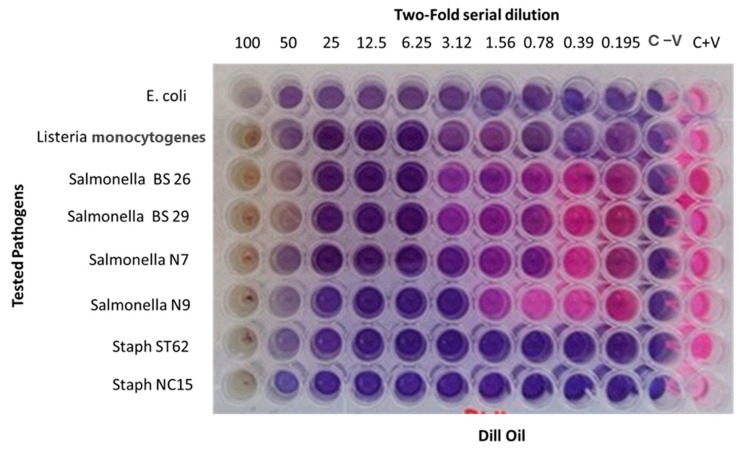
- DEO was more active against Gram-positive bacteria, with MICs as low as 0.195 mg/mL for *Listeria monocytogenes* ATCC 19115 and *Staphylococcus aureus* ST62/NC15; Gram-negative MICs were higher: *E. coli* ATCC 25922 ≥3.9 mg/mL, *Salmonella* BS26/BS29 6.25 mg/mL, and N7/N9 3.12 mg/mL.
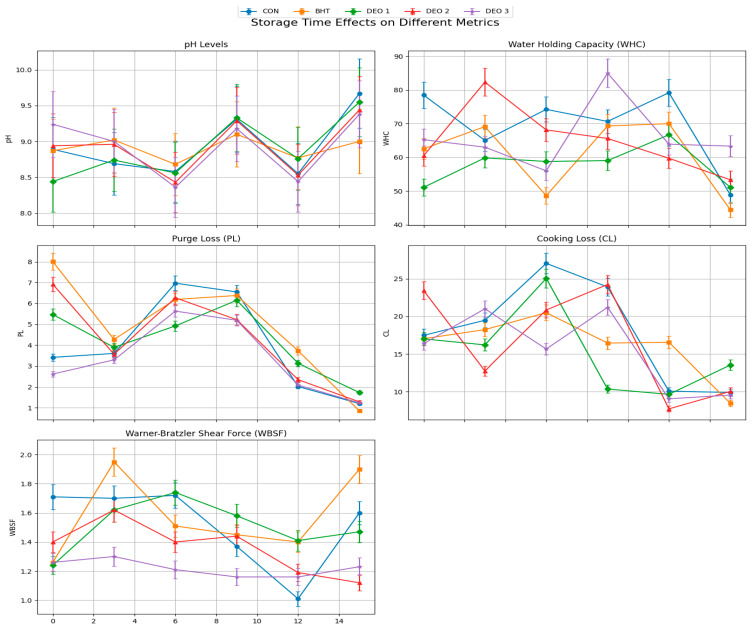
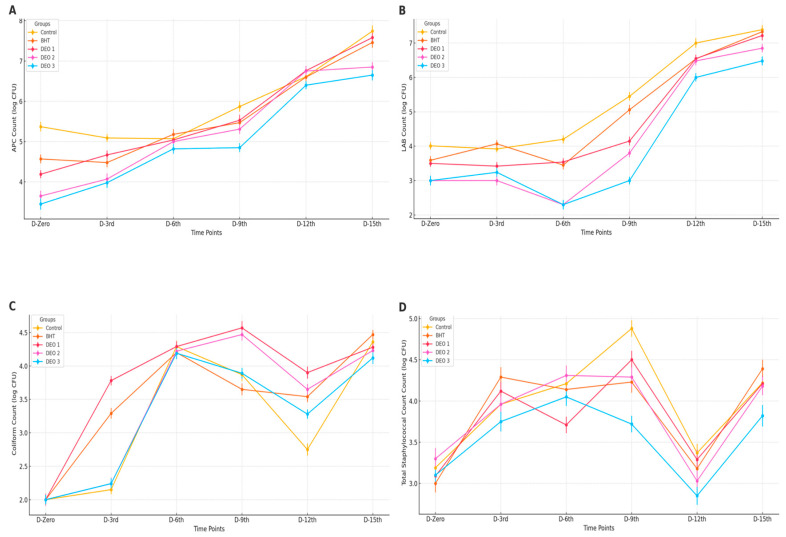
- In refrigerated basa fillets, DEO at 4000 ppm maintained pH, water-holding capacity, color stability, and sensory attributes better than control; on day 9, higher DEO reduced aerobic plate count below 5 log CFU/g and DEO-treated groups had lower staphylococcal counts than control.
- By 12–15 days, APC and LAB exceeded 6 log CFU/g in all groups, including DEO-treated fish; many microbial differences were not statistically significant except at specific time points.
Methods
- DEO was obtained by hydrodistillation, analyzed by GC-MS, tested for antioxidant activity by DPPH assay, and screened for antibacterial activity using resazurin-based turbidimetric microdilution MIC/MBC against *E. coli*, *Salmonella enterica* isolates, *L. monocytogenes*, and *S. aureus* strains.
- Fresh *Pangasius bocourti* fillets (7.5 kg total, 300 g each) were divided into five groups: control, 200 ppm BHT, and DEO at 200, 2000, and 4000 ppm; fillets were dipped for 30 min, stored at 2.5 ± 0.5 °C, and analyzed on days 0, 3, 6, 9, 12, and 15.
- Analyses included pH, WHC, purge loss, cooking loss, Warner–Bratzler shear force, instrumental color, microbial counts (APC, LAB, coliforms, staphylococci), and sensory evaluation by a trained 10-member panel using a 9-point hedonic scale; data were analyzed with GLMs, Tukey’s test, and PCA.
Limitations
- The paper states the study focused on only one fish type and one constant storage setting, and that future research should define mechanisms of action and estimate in vivo safety data.
- Evident from the text: many microbial effects were not statistically significant (e.g., APC, LAB, and coliforms generally p > 0.05 except at specific days), and the experiment was conducted in duplicate with sensory evaluation by a 10-member panel.
- Evident from the text: no in vivo safety, consumer acceptance, or shelf-life validation beyond the 15-day refrigerated storage period is reported.
Model-written summary. Check it against the paper before relying on it.
Integrity signals
Registry
Cites
Statistics
Figures
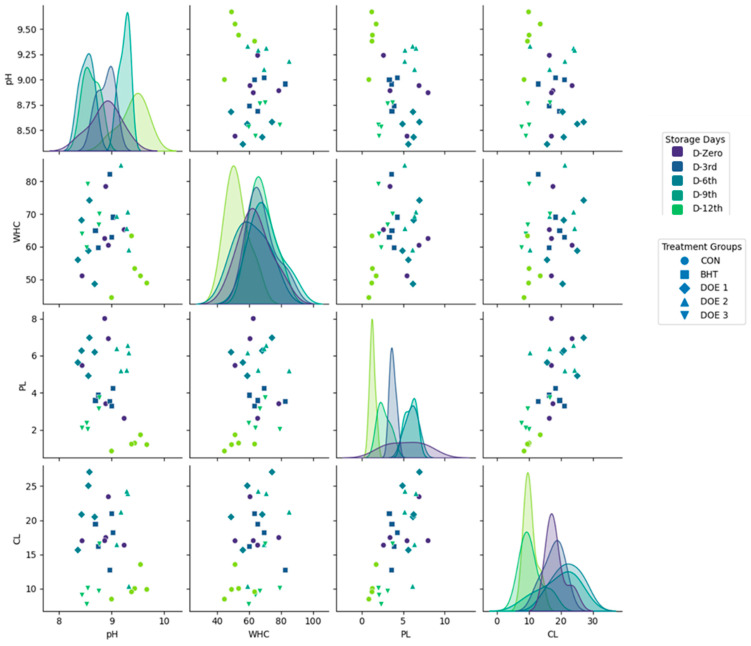
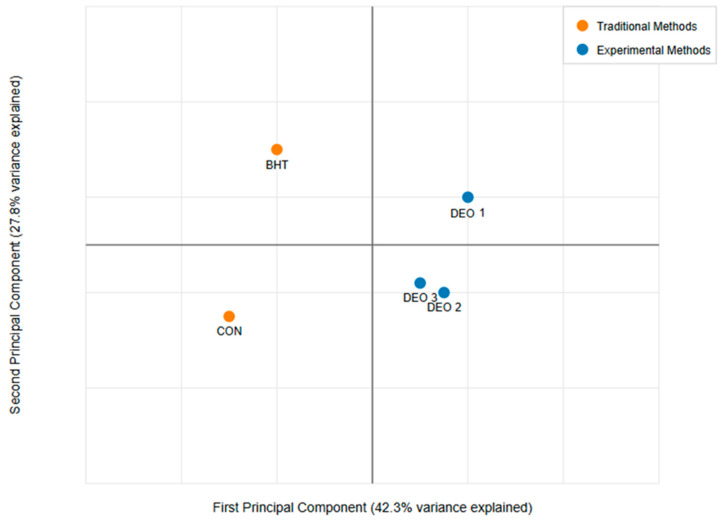
Verification
Claims the paper makes
169 Own result · 56 Own interpretation · 44 Check pending · 21 No full text of the sources · 6 Not checked yet · 5 Own method
A result the paper reports from its own data — it cites no other source for it, so there is none to check. The quote shows it is in the paper.
In the paper
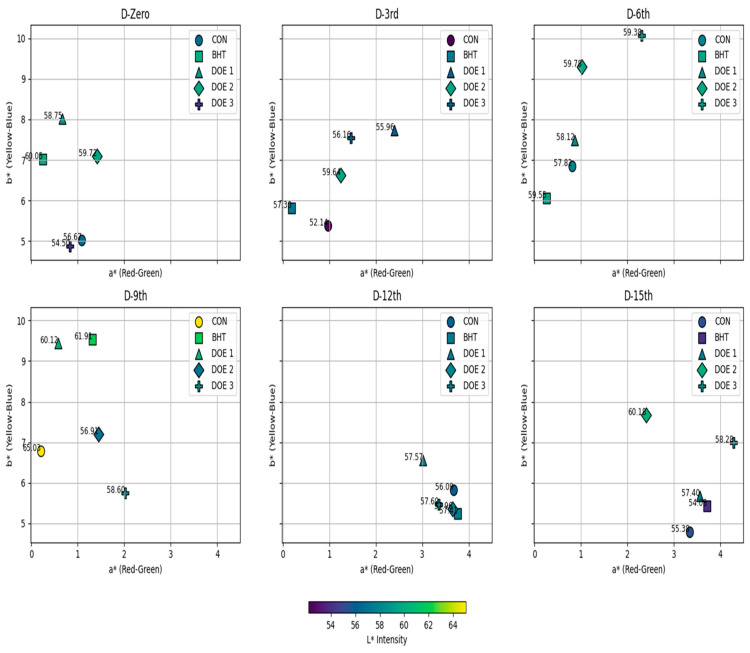
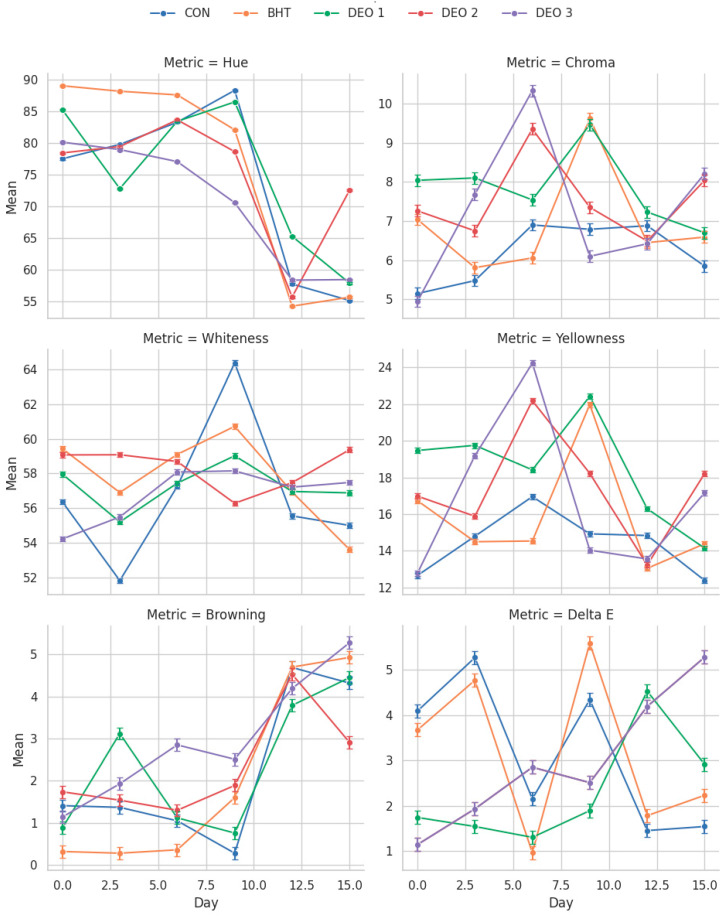
“On the twelfth day post-treatment, all groups had higher L* (p < 0.05) compared to the control.”
§ Preservative Potential of Anethum graveolens Essential Oil on Fish Fillet Quality and Shelf Life During Refrigerated Storage > 3. Results > 3.4. Physicochemical Analysis of Fish Fillets
plain- Asserted: passes — The authors put it forward as true.
- Checkable: passes — It can be checked against evidence.
- Load-bearing: unclear — It is unclear whether the paper’s conclusions depend on it.
- Based: passes — The paper gives a reason why it holds.
A result the paper reports from its own data — it cites no other source for it, so there is none to check. The quote shows it is in the paper.
In the paper
“On the third day post-treatment, both DEO-1 and DEO-3 exhibited the highest b* values compared to the control and other fish-treated groups (p < 0.05).”
§ Preservative Potential of Anethum graveolens Essential Oil on Fish Fillet Quality and Shelf Life During Refrigerated Storage > 3. Results > 3.4. Physicochemical Analysis of Fish Fillets
plain- Asserted: passes — The authors put it forward as true.
- Checkable: passes — It can be checked against evidence.
- Load-bearing: unclear — It is unclear whether the paper’s conclusions depend on it.
- Based: passes — The paper gives a reason why it holds.
A result the paper reports from its own data — it cites no other source for it, so there is none to check. The quote shows it is in the paper.
In the paper
“Six days post-treatment, the DEO-2- and DEO-3-supplied groups exhibited a higher Chroma value (p < 0.05) than the other groups.”
§ Preservative Potential of Anethum graveolens Essential Oil on Fish Fillet Quality and Shelf Life During Refrigerated Storage > 3. Results > 3.4. Physicochemical Analysis of Fish Fillets
plainstates an association- Asserted: passes — The authors put it forward as true.
- Checkable: passes — It can be checked against evidence.
- Load-bearing: unclear — It is unclear whether the paper’s conclusions depend on it.
- Based: passes — The paper gives a reason why it holds.
A result the paper reports from its own data — it cites no other source for it, so there is none to check. The quote shows it is in the paper.
In the paper
“Statistical analysis confirmed that treatment (G), time (T), and their interaction (G*T) significantly influenced the WBSF values (p < 0.001), highlighting the role of antioxidant supplementation in texture modification.”
§ Preservative Potential of Anethum graveolens Essential Oil on Fish Fillet Quality and Shelf Life During Refrigerated Storage > 3. Results > 3.4. Physicochemical Analysis of Fish Fillets
plainstates a cause- Asserted: passes — The authors put it forward as true.
- Checkable: passes — It can be checked against evidence.
- Load-bearing: passes — The paper’s conclusions depend on it.
- Based: passes — The paper gives a reason why it holds.
A result the paper reports from its own data — it cites no other source for it, so there is none to check. The quote shows it is in the paper.
In the paper
“On the third day post-treatment, DEO-2-supplied fish exhibited the highest WHC value compared to all other groups (p < 0.05).”
§ Preservative Potential of Anethum graveolens Essential Oil on Fish Fillet Quality and Shelf Life During Refrigerated Storage > 3. Results > 3.4. Physicochemical Analysis of Fish Fillets
plain- Asserted: passes — The authors put it forward as true.
- Checkable: passes — It can be checked against evidence.
- Load-bearing: unclear — It is unclear whether the paper’s conclusions depend on it.
- Based: passes — The paper gives a reason why it holds.
187 more claims
Create a free account to see all 301 claims and to verify the 56 references still open.
- It may state two separate claims as one. 94
- Probably not a substantial claim. 25
Self-check
Percentages, sums and reported differences re-computed from the paper’s own numbers.
Each contradiction between two passages listed here was confirmed by an independent check.
Rated major: it would touch a result — a value a result rests on, reported and recomputed p-values on opposite sides of the significance level, two passages that conflict with no sign which is right, or a cited work retracted before this paper was published.
In the paper
§ Preservative Potential of Anethum graveolens Essential Oil on Fish Fillet Quality and Shelf Life During Refrigerated Storage > 5. Conclusions
“Microbial analysis showed that DEO significantly reduced the growth of aerobic plate count, lactic acid bacteria, coliforms, and Staphylococci.”
§ Preservative Potential of Anethum graveolens Essential Oil on Fish Fillet Quality and Shelf Life During Refrigerated Storage > 3. Results > 3.5. Fish Fillet Microbial Analysis
“The BHT and/or DEO treatments generally did not affect coliform levels (p > 0.05), with two exceptions: on the third and ninth days after treatment, fish treated with DEO-2 and BHT exhibited higher coliform counts than the control and other treated groups (p < 0.05).”
Rated major: it would touch a result — a value a result rests on, reported and recomputed p-values on opposite sides of the significance level, two passages that conflict with no sign which is right, or a cited work retracted before this paper was published.
In the paper
§ Preservative Potential of Anethum graveolens Essential Oil on Fish Fillet Quality and Shelf Life During Refrigerated Storage > 5. Conclusions
“Microbial analysis showed that DEO significantly reduced the growth of aerobic plate count, lactic acid bacteria, coliforms, and Staphylococci.”
§ Preservative Potential of Anethum graveolens Essential Oil on Fish Fillet Quality and Shelf Life During Refrigerated Storage > 3. Results > 3.5. Fish Fillet Microbial Analysis
“Although the DEO-treated groups, especially DEO-3, showed numerically lower lactic acid bacteria counts (~1.5 log CFU/g) on day 9 compared to the control, these reductions were not statistically significant (p > 0.05).”
Rated major: it would touch a result — a value a result rests on, reported and recomputed p-values on opposite sides of the significance level, two passages that conflict with no sign which is right, or a cited work retracted before this paper was published.
In the paper
§ Preservative Potential of Anethum graveolens Essential Oil on Fish Fillet Quality and Shelf Life During Refrigerated Storage > 3. Results > 3.3. In Vitro Antimicrobial Assay
“For Escherichia coli ATCC 25922, growth inhibition was observed at concentrations ≥ 3.9 mg/mL.”
§ Preservative Potential of Anethum graveolens Essential Oil on Fish Fillet Quality and Shelf Life During Refrigerated Storage > 4. Discussion
“Nevertheless, it demonstrated a slightly higher antimicrobial potential on E. coli at 0.098 mg/mL than the value reported by Mujović et al. (2024) [8]”
Rated minor: it would not touch a result — a value no result rests on, a p-value that stays on the same side of the significance level, or a conflict that is clerical, resolved elsewhere in the paper, or outside its own findings.
In the paper
§ Preservative Potential of Anethum graveolens Essential Oil on Fish Fillet Quality and Shelf Life During Refrigerated Storage > 2. Material and Methods > 2.8. Fish Fillet Microbial Analysis
“The aerobic plate count (APC), coliform count, lactic acid bacteria count, and staphylococcal count of Basa fillets generated from compared groups were assessed over 12 days (0, 3, 6, 9, and 12 days)”
§ Preservative Potential of Anethum graveolens Essential Oil on Fish Fillet Quality and Shelf Life During Refrigerated Storage > 3. Results > 3.5. Fish Fillet Microbial Analysis
“As the storage duration increased, all groups, including the positive control and BHT-treated samples, showed an increasing trend, reaching over 6 log CFU/g at 12 and 15 d post-treatment (p < 0.05) (Figure 7A).”
Citations
Cites
Essential oils: Their antibacterial properties and potential applications in foods—A review
Burt, S. (2004) · International Journal of Food Microbiology · doi:10.1016/j.ijfoodmicro.2004.03.022 · Cited by 10,488
Mechanisms of membrane toxicity of hydrocarbons
Sikkema, J., de Bont, J. A., & Poolman, B. (1995) · Microbiological Reviews · doi:10.1128/mr.59.2.201-222.1995 · Cited by 2,685
Reference methods for the assessment of physical characteristics of meat
Honikel, K. O. (1998) · Meat Science · doi:10.1016/s0309-1740(98)00034-5 · Cited by 2,659
Shahidi, F., Janitha, P. K., & Wanasundara, P. D. (1992) · Critical Reviews in Food Science and Nutrition · doi:10.1080/10408399209527581 · Cited by 2,238
Protein Oxidation in Muscle Foods: A Review
Lund, M. N., Heinonen, M., Baron, C. P., & Estévez, M. (2011) · Molecular Nutrition & Food Research · doi:10.1002/mnfr.201000453 · Cited by 1,005
Cai, Y.-Z., Sun, M., Xing, J., Luo, Q., & Corke, H. (2006) · Life Sciences · doi:10.1016/j.lfs.2005.11.004 · Cited by 727
Carotenoids and Their Isomers: Color Pigments in Fruits and Vegetables
Khoo, H.-E., Prasad, K. N., Kong, K.-W., Jiang, Y., & Ismail, A. (2011) · Molecules · doi:10.3390/molecules16021710 · Cited by 523
Zengin, H., & Baysal, A. (2014) · Molecules · doi:10.3390/molecules191117773 · Cited by 519
(2007) · PubMed · Cited by 500
Tian, J., Ban, X., Zeng, H. M., He, J., Chen, Y., & Wang, Y. (2012) · PLoS ONE · doi:10.1371/journal.pone.0030147 · Cited by 426
Research works printed but not linked: 3
- Bragadóttir, M. (2001). Endogenous Antioxidants in Fish. [Ph.D. Thesis, University of Iceland].
- Faustman, C. (2014, January 15–18). Meat Quality Myoglobin Chemistry and Modifications That Influence (Color and) Color Stability. Proceedings of the American Meat Science Association, 67th Annual Reciprocal Meat Conference, Madison, WI, USA.
- Ruangamnart, 2015, Chemical Compositions and Antibacterial Activity of Essential Oil from Dill Fruits (Anethum graveolens L.) Cultivated in Thailand, Mahidol Univ. J. Pharm. Sci., 42, 135
Cited by
Öz, M., & Üstüner, E. (2026) · Fish Physiology and Biochemistry · doi:10.1007/s10695-026-01729-6 · Cited by 10
Use of essential oils in foods from animal origin to improve their safety, a systematic review
García‐Díez, J., Moura, D., Cenci-Goga, B., Saraiva, S., & Saraiva, C. (2026) · Food Control · doi:10.1016/j.foodcont.2026.112172 · Cited by 5
Rezene Esansiyel Yağının Alabalık Filetolarının Raf Ömrü Üzerine Etkisi
Kuzgun, N. K. (2025) · Journal of Anatolian Environmental and Animal Sciences · doi:10.35229/jaes.1811368
Almughamisi, M. A., Uguru, H., Dennis, A., Ali, O. A. A., Alharthi, S., Sami, R., Kadi, R. H., Alnajeebi, A. M., Alqahtani, A. N., Alaoufi, S. H., et al. (2026) · PLoS ONE · doi:10.1371/journal.pone.0347254
The influence of aromatic plants on the quality of food products
Vasyukova, A. T., Krivoshonok, K., Edwards, A. R., Михайлович, П. Н., Karpov, V. I., & Беленков, А. И. (2026) · Proceedings of the Voronezh State University of Engineering Technologies · doi:10.20914/2310-1202-2026-1-67-76
Metadata
- Authors
- Tayel, A., Hassanin, F. S., Edris, S. N., Hamad, A., & Sabeq, I. I.
- Affiliations
- Benha University (EG)
- Corresponding author
- Sabeq, Islam I.
- Venue
- Foods
- Publisher
- MDPI AG
- Published
- 2025-04-30
- Volume
- 14
- Issue
- 9
- Pages
- 1591
- ISSN
- 2304-8158 (ISSN-L)
- PMC
- PMC12071382
- OpenAlex
- W4410004777
- Cited by
- 7
- References
- 92
- Citations by year
- 2026: 6 · 2025: 1
- FWCI
- 4.08
- Type
- journal article
- Language
- en
- Open access
- gold
- doi.org
- Licence
- Locations
- Foods (publishedVersion, cc-by)
- PubMed (publishedVersion)
- PubMed Central (publishedVersion, cc-by)
- DOAJ (DOAJ: Directory of Open Access Journals) (submittedVersion, cc-by-sa)
- Topics
- Life Sciences › Agricultural and Biological Sciences › Animal Science and Zoology › Meat and Animal Product Quality
- Life Sciences › Agricultural and Biological Sciences › Food Science › Essential Oils and Antimicrobial Activity
- Life Sciences › Agricultural and Biological Sciences › Plant Science › Postharvest Quality and Shelf Life Management
- Keywords
- dill essential oil, dill, Pangasius bocourti, fish fillet preservation, natural preservatives, cold storage, shelf life, antibacterial activity, foodborne pathogens, antioxidant activity, monoterpenes, water holding capacity, color stability, sensory quality, lactic acid bacteria, aerobic bacteria
About these checks
Registry, retraction, Cites and statistics results are computed, not judged, with one exception: a printed reference that no index lists is read once by a model before it counts as a citation error. Claims are extracted by a model and kept only when their quote appears verbatim in the text; each cited source is then checked, with a model’s help, for whether it says what the claim relies on. Those verdicts can be wrong — read the claim’s quote and the cited source before relying on one.
A language model drew the claims from the paper on 2026-11-12, under version 3 of the claim definition (model deepseek-v4.1-flash, prompt extract-v3).
A second model labelled each claim on 2026-11-12 (model jev-1.13-20260917, definition revision gold-guideline-v0.2).
Statistics and arithmetic are recomputed, not judged.
Confidence bands are shown only for fields calibrated on our annotated test set. None is calibrated yet, so no band is shown.
What counts as a claim ›How we measure confidence ›How we check this ›
Are you an author, or do you see a problem with this page? Request a review
Data sources
Bibliographic data: Semantic Scholar, OpenAlex, Crossref.
Contains information from the Semantic Scholar Academic Graph Datasets, made available under the ODC Attribution License (ODC-BY 1.0).
Semantic Scholar’s data is described in: Kinney, R., et al. (2023). The Semantic Scholar Open Data Platform. arXiv:2301.10140.
