

The Use of Upcycled Defatted Sunflower Seed Flour as a Functional Ingredient in Biscuits
Open accessThe DOI matches its Crossref record; 32 of the 32 references it cites were found in a registry or an index.
Abstract
Defatted sunflower seed flour (DSSF) is an upcycled by-product of sunflower oil extraction, rich in protein, fibre and antioxidants. This study assessed the instrumental and sensory quality of biscuits enriched with DSSF at 18% and 36% w/w as a replacement for wheat flour. Measurements included colour, texture, total phenolic content (TPC) and antioxidant capacity. Sensory analysis was carried out with Quantitative Descriptive Analysis (QDA). The inclusion of DSSF significantly increased the protein content of the biscuits, as well as the TPC and antioxidant capacity of the biscuits. The resulting products were significantly darker, less red and less yellow with increasing DSSF levels, while hardness (measured instrumentally) increased. Sensory results agreed with colour measurements, concluding that DSSF biscuits were more “Brown” than the control, and with texture measurements where biscuits with 36% DSSF had a significantly firmer bite. In addition, DSSF biscuits at 36% inclusion had higher QDA scores for “Off-note” and the lowest scores for “Crumbly” and “Crumb aeration”. DSSF biscuits at 18% inclusion were similar to the control in most parameters and should be considered for further developments. These results show the potential of the upcycled DSSF by-product as a novel, sustainable and healthy food ingredient.
Overview
The claims and statistics of this paper haven’t been checked yet.
Free: it reads the open-access text and checks the first 5 claims that cite a source we can check. Create a free account to check every claim.
Integrity signals
Registry
Cites
Statistics
Figures
Verification
Claims the paper makes
The claims and statistics of this paper haven’t been checked yet.
Free: it reads the open-access text and checks the first 5 claims that cite a source we can check. Create a free account to check every claim.
Claims other papers make about this one
Each is checked against this paper’s own text: does it say what the citing paper says it does?
The source backs part of the claim, not all of it — or backs it for a different population, condition or comparison.
In the citing paper
“The taste and texture of an upcycled food may differ from conventional products, and thus these foods appear more [57] or less favourable [8,56,58] than their conventional alternatives.”
From Challenges for Upcycled Foods: Definition, Inclusion in the Food Waste Management Hierarchy and Public Acceptability (2021) · cites this paper as [8]
Experimental — accuracy not yet measuredThe cited source says what the claim attributes to it.
In the citing paper
“For example, upcycled biscuit appears darker or less aerated than conventional alternatives [8].”
From Challenges for Upcycled Foods: Definition, Inclusion in the Food Waste Management Hierarchy and Public Acceptability (2021) · cites this paper as [8]
The cited source says what the claim attributes to it.
In the citing paper
“These studies revealed that the sensory characteristics of upcycled foods are conditional and depend on the product formulation and the proportion of upcycled ingredients [8,9,56,57].”
From Challenges for Upcycled Foods: Definition, Inclusion in the Food Waste Management Hierarchy and Public Acceptability (2021) · cites this paper as [8]
The cited source says what the claim attributes to it.
In the citing paper
“These studies demonstrated that incorporating upcycled ingredients into the food product formulation influences its intrinsic cues [8,56,57,58].”
From Challenges for Upcycled Foods: Definition, Inclusion in the Food Waste Management Hierarchy and Public Acceptability (2021) · cites this paper as [8]
The cited source says what the claim attributes to it.
In the citing paper
“Some upcycled ingredients are high in protein [8], fibre [9,57] and antioxidants [8] and have a low glycaemic index [9].”
From Challenges for Upcycled Foods: Definition, Inclusion in the Food Waste Management Hierarchy and Public Acceptability (2021) · cites this paper as [8]
2 more claims about this paper
Create a free account to see every claim other papers make about this one.
Self-check
Percentages, sums and reported differences re-computed from the paper’s own numbers.
The self-check needs the paper’s full text.
Citations
Cites
Colorimetry of Total Phenolics with Phosphomolybdic-Phosphotungstic Acid Reagents
Singleton, V. L., & Rossi, J. A. (1965) · American Journal of Enology and Viticulture · doi:10.5344/ajev.1965.16.3.144 · Cited by 24,852 · cited 2×
“Total Phenolic Content (TPC) TPC was measured for the DSSF, wheat flour and biscuits according to Singleton and Rossi [13] with some modifications.”
MethodApak, R., Güçlü, K., Özyürek, M., & Karademir, S. E. (2004) · Journal of Agricultural and Food Chemistry · doi:10.1021/jf048741x · Cited by 2,820
Francis, G., Makkar, H. P. S., & Becker, K. (2001) · Aquaculture · doi:10.1016/s0044-8486(01)00526-9 · Cited by 2,320 · cited 1×
“On the other hand, some limitations include a high insoluble fibre content, the residue solvents used for oil extraction in the cake [3] and the presence of anti-nutrients such as protease inhibitors, saponins and arginase inhibitor [4].”
BackgroundA review of Maillard reaction in food and implications to kinetic modelling
Martins, S. I. F. S., Jongen, W. M. F., & van Boekel, M. A. J. S. (2000) · Trends in Food Science & Technology · doi:10.1016/s0924-2244(01)00022-x · Cited by 1,459 · cited 1×
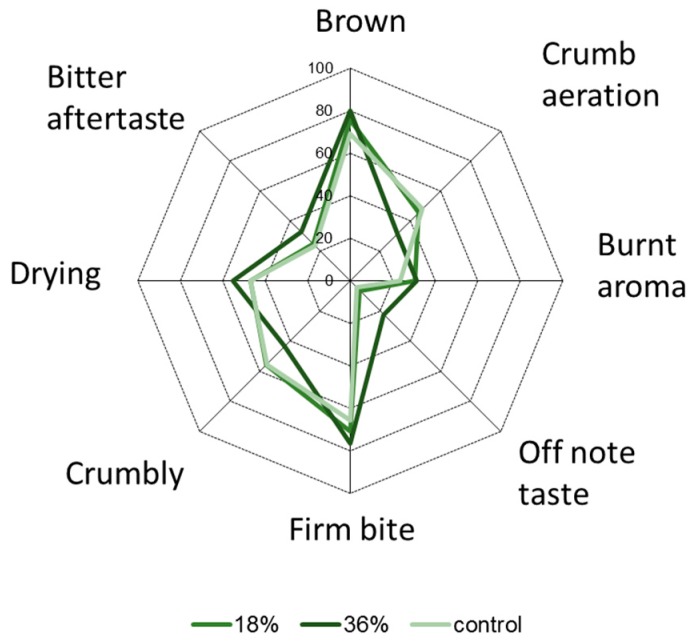
“This descriptor scored significantly higher in DSSF biscuits compared to the control, probably due to an acceleration of the Maillard reaction rate in DSSF biscuits [34].”
BackgroundSudha, M. L., Baskaran, V., & Leelavathi, K. (2007) · Food Chemistry · doi:10.1016/j.foodchem.2006.12.016 · Cited by 659 · cited 1×
“The hydration properties of DSSF fell in the same range reported by other authors on apple pomace [18,19].”
BackgroundAjila, C. M., Leelavathi, K., & Prasada Rao, U. J. S. (2008) · Journal of Cereal Science · doi:10.1016/j.jcs.2007.10.001 · Cited by 599 · cited 2×
“[33] reported higher TPC in biscuits made with blueberry and grape seeds, while Ajila, Leelavathi and Rao [12] reported that biscuits with mango peel powder had higher DPPH activity.”
ResultPiluzza, G., & Bullitta, S. (2011) · Pharmaceutical Biology · doi:10.3109/13880209.2010.501083 · Cited by 334 · cited 1×
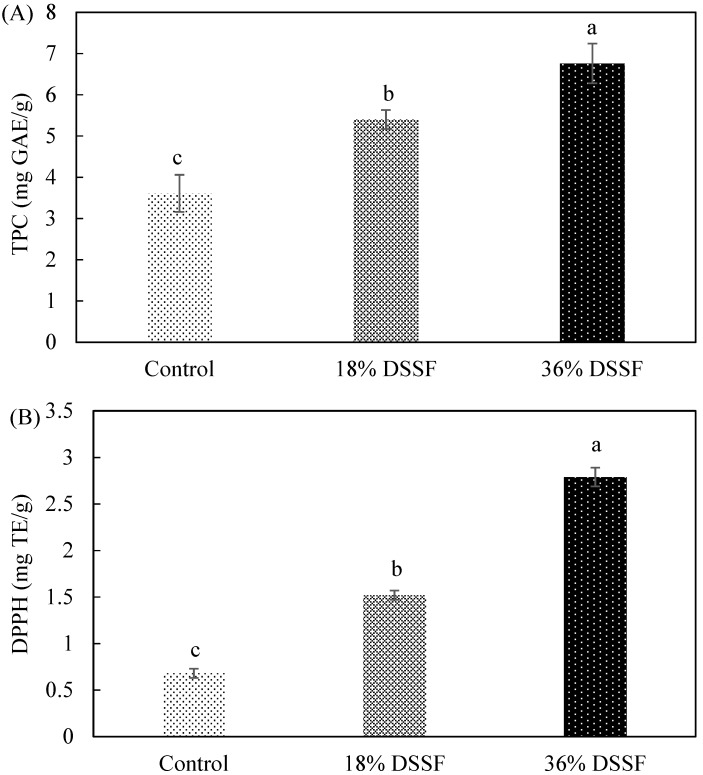
“The higher antioxidant capacity of the 36% DSSF biscuits can be explained by the higher TPC content, since high correlation between antioxidant capacity and phenolic compounds has been reported [31].”
BackgroundVaher, M., Matso, K., Levandi, T., Helmja, K., & Kaljurand, M. (2010) · Procedia Chemistry · doi:10.1016/j.proche.2009.12.013 · Cited by 229 · cited 1×
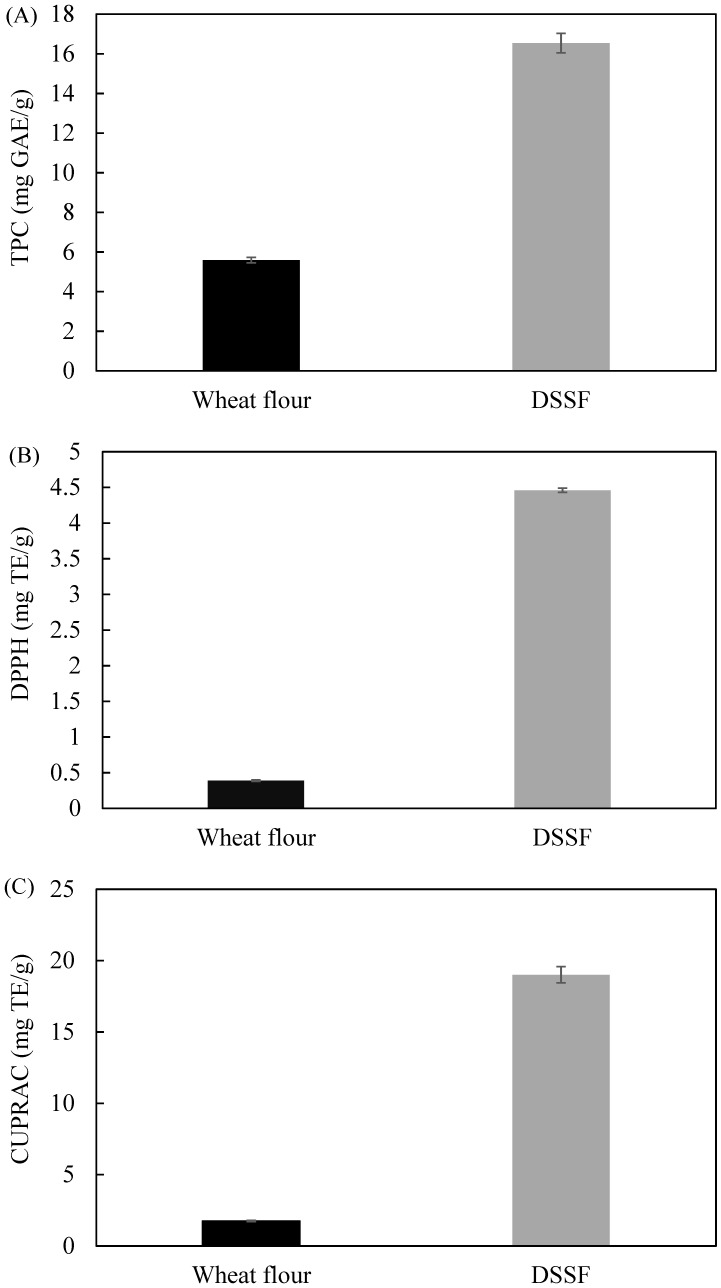
“On the other hand, wheat flour has been reported to have very low polyphenol content [23], which justifies its lower antioxidant capacity compared to DSSF.”
BackgroundRapeseed and sunflower meal: a review on biotechnology status and challenges
Lomascolo, A., Uzan-Boukhris, E., Sigoillot, J.-C., & Fine, F. (2012) · Applied Microbiology and Biotechnology · doi:10.1007/s00253-012-4250-6 · Cited by 197 · cited 1×
“Previous studies have shown that sunflower flour is a good source of phenolic compounds including chlorogenic, caffeic, p-hydroxybenzoic, p-coumaric, cinamic, m-hydroxybenzoic, vanillic, syringic, transcinnamic, isoferulic and sinapic acids, which are compounds with high antioxidant capacity [22].”
BackgroundPhysical, textural, and sensory characteristics of wheat and amaranth flour blend cookies
Chauhan, A., Saxena, D. C., & Singh, S. (2016) · Cogent Food & Agriculture · doi:10.1080/23311932.2015.1125773 · Cited by 167
Cited by
Oilseed crop sunflower (Helianthus annuus) as a source of food: Nutritional and health benefits
Adeleke, B. S., & Babalola, O. O. (2020) · Food Science & Nutrition · doi:10.1002/fsn3.1783 · Cited by 404
“Sunflower seeds can be processed into different forms, such as flour, roasted, baked, or boiled as composite functional foods (Grasso et al., 2019).”
BackgroundPetraru, A., Ursachi, F., & Amariei, S. (2021) · Plants · doi:10.3390/plants10112487 · Cited by 201
Moshtaghian, H., Bolton, K., & Rousta, K. (2021) · Foods · doi:10.3390/foods10112874 · Cited by 150
Consumer preferences for upcycled ingredients: A case study with biscuits
Grasso, S., & Asioli, D. (2020) · Food Quality and Preference · doi:10.1016/j.foodqual.2020.103951 · Cited by 140
Self-citationFilho, J. G. D. O., & Egea, M. B. (2021) · Journal of Food Science · doi:10.1111/1750-3841.15719 · Cited by 154
Hadidi, M., Aghababaei, F., & McClements, D. J. (2023) · Food Hydrocolloids · doi:10.1016/j.foodhyd.2023.109329 · Cited by 120
Bárta, J., Bartová, V., Jarošová, M., Švajner, J., Smetana, P., Kadlec, J., Filip, V., Kyselka, J., Berčíková, M., Zdráhal, Z., et al. (2021) · Foods · doi:10.3390/foods10112766 · Cited by 103
Defining Upcycled Food Products
Spratt, O., Suri, R., & Deutsch, J. (2021) · Journal of Culinary Science & Technology · doi:10.1080/15428052.2020.1790074 · Cited by 83
Quality of muffins enriched with upcycled defatted sunflower seed flour
Grasso, S., Liu, S., & Methven, L. (2019) · LWT · doi:10.1016/j.lwt.2019.108893 · Cited by 81
Self-citationAntioxidant Potential of Cookies Formulated with Date Seed Powder
Najjar, Z., Kizhakkayil, J., Shakoor, H. I., Platat, C., Stathopoulos, C. E., & Ranasinghe, M. (2022) · Foods · doi:10.3390/foods11030448 · Cited by 86
Nutraceutical and Pharmaceutical Behavior of Bioactive Compounds of Miracle Oilseeds: An Overview
Morya, S., Menaa, F., Jiménez-López, C., Lourenço‐Lopes, C., BinMowyna, M. N., & Alqahtani, A. (2022) · Foods · doi:10.3390/foods11131824 · Cited by 72
Moshtaghian, H., Bolton, K., & Rousta, K. (2023) · British Food Journal · doi:10.1108/bfj-09-2022-0757 · Cited by 59
Potential of a Sunflower Seed By-Product as Animal Fat Replacer in Healthier Frankfurters
Grasso, S., Pintado, T., Pérez‐Jiménez, J., Ruíz‐Capillas, C., & Herrero, A. M. (2020) · Foods · doi:10.3390/foods9040445 · Cited by 51
Self-citationMulțescu, M., Marinaș, I. C., Susman, I. E., & Belc, N. (2022) · Foods · doi:10.3390/foods11030253 · Cited by 56
The rising status of edible seeds in lifestyle related diseases: A review
Kakkar, S., Tandon, R., & Tandon, N. (2022) · Food Chemistry · doi:10.1016/j.foodchem.2022.134220 · Cited by 41
Characterisation of Muffins with Upcycled Sunflower Flour
Grasso, S., Pintado, T., Pérez‐Jiménez, J., Ruíz‐Capillas, C., & Herrero, A. M. (2021) · Foods · doi:10.3390/foods10020426 · Cited by 35
“Researchers have so far used it on both baked goods [4,5] and meat product applications [6], reporting promising results.”
BackgroundSelf-citationSunflower seed cake as a source of nutrients in gluten-free bread
Blicharz‐Kania, A., Pecyna, A., Zdybel, B., Andrejko, D., & Marczuk, A. (2023) · Scientific Reports · doi:10.1038/s41598-023-38094-w · Cited by 34
Current Trends in the Realm of Baking: When Indulgent Consumers Demand Healthy Sustainable Foods
Martínez, M. M., & Gómez, M. (2019) · Foods · doi:10.3390/foods8100518 · Cited by 32
Szydłowska‐Czerniak, A., Poliński, S., & Momot, M. (2021) · Applied Sciences · doi:10.3390/app11041558 · Cited by 30
Chakraborty, R., Sabruna, S., Roy, R., Majumdar, S., & Roy, S. (2021) · SN Applied Sciences · doi:10.1007/s42452-020-03988-1 · Cited by 31
Moshtaghian, H., Bolton, K., & Rousta, K. (2023) · International Journal of Food Science & Technology · doi:10.1111/ijfs.16588 · Cited by 36
Sunflower protein enrichment. Methods and potential applications
Murru, M., & Calvo, C. L. (2020) · OCL · doi:10.1051/ocl/2020007 · Cited by 26
“However, one-third replacement of the wheat flour would deliver a biscuit more similar to the reference (Grasso et al., 2019).”
BackgroundSunflower microgreen powder as functional component to enhance the quality of gluten-free cakes
Mansouri, M., Noshad, M., Mehrnia, M. A., & Hojjati, M. (2024) · LWT · doi:10.1016/j.lwt.2024.116049 · Cited by 24
Náthia-Neves, G., & Alonso, E. (2022) · Biomass Conversion and Biorefinery · doi:10.1007/s13399-022-02380-w · Cited by 24
“Grasso et al. [51], for example, studied the partial replacement of wheat flour by SbP in biscuits and obtained a product rich in protein, TPC, and antioxidant activity.”
Brennan, C. (2024) · Foods · doi:10.3390/foods13030427 · Cited by 13
Trismus appliances and indications for use.
Lund, T. W., & Cohen, J. I. (1993) · PubMed · Cited by 21
Tsykhanovska, I., Stabnikova, О., Riabchykov, М., Лазарєва, Т., & Korolyova, N. (2024) · Plant Foods for Human Nutrition · doi:10.1007/s11130-024-01232-4 · Cited by 14
“However, the significant drawback of muffins is a low level of bioactive compounds in their composition, such as essential amino-acids, macro-and microelements, natural anti-oxidants, fibres, and vitamins [1, 2].”
InfluentialChappa, L. R. (2022) · International Journal of Bioresource Science · doi:10.30954/2347-9655.01.2022.1 · Cited by 20
“Its seeds can be processed into various forms like flour, roasted, baked, or boiled as a composite functional meal (Wanjari and Waghmare, 2015; Grasso et al. 2019).”
Kaur, R., Ghoshal, G., & Chauhan, S. (2024) · Journal of Food Measurement & Characterization · doi:10.1007/s11694-024-02443-8 · Cited by 11
“However, the utilization of sunflower meals in the diet of humans is restricted because of its high fiber content, soluble sugars, traces of solvent residue from the extraction process and polyphenols that limit the usage of protein [4].”
A Study on the Potential of Using Melon Wastes in Biscuit Production
Ertaş, N., & Aslan, M. (2020) · Kahramanmaraş Sütçü İmam Üniversitesi Tarım ve Doğa Dergisi · doi:10.18016/ksutarimdoga.vi.681812 · Cited by 11
“The increase in the spread factor of cookies fortified with melon waste is in agreement with the studies on enriched with mango waste (Ashoush and Gadallah, 2011) and sunflower waste (Grasso et al., 2019).”
BackgroundResultVerde, C. L., Toto, C., Paterson, N., Chin, J., Owens, C. P., & Senger, L. W. (2023) · Journal of Food Science · doi:10.1111/1750-3841.16692 · Cited by 10
“Similarly, Grasso et al. (2019) reported changes to cookie taste and flavor when SFF replacement exceeded 18% of total flour.”
BackgroundEffect of Moisture Content on Sunflower Seed Physical and Mechanical Properties
Ali, K. A. M., Zong, W., Lin, Y., & El-Ghany, H. M. A. (2021) · International journal of engineering research in Africa · doi:10.4028/www.scientific.net/jera.57.169 · Cited by 9
Girotto, F., Merlino, M. V., Giovanelli, G., Condurso, C., & Piazza, L. (2024) · International Journal of Food Science & Technology · doi:10.1111/ijfs.17208 · Cited by 9
Zhang, G., Li, Z., & Charalampopoulos, D. (2024) · Chemical and Biological Technologies in Agriculture · doi:10.1186/s40538-024-00633-6 · Cited by 10
Turning waste into wealth: Vietnamese consumer willingness-to-pay for upcycled biscuits
Nguyễn, Q. C., Vo, M. A. N., Ung-Pham, T., & Lê, V. V. M. (2025) · Food Quality and Preference · doi:10.1016/j.foodqual.2025.105534 · Cited by 9
Xu, S., Wu, Z., Shi, K., Jin, Y., Guo, Q. Q., Liu, H., Qin, Z., & Wang, X. (2023) · International Journal of Food Science & Technology · doi:10.1111/ijfs.16736 · Cited by 7
Vasileiou, C., Dimoula, M., Drosou, C., Kavetsou, E., Stergiopoulos, C., Gogou, E., Boukouvalas, C. J., & Krokida, M. K. (2025) · AgriEngineering · doi:10.3390/agriengineering7050146 · Cited by 9
Bioactive Phytochemicals from Sunflower (Helianthus annuus L.) Oil Processing Byproducts
Egea, M. B., Filho, J. G. D. O., Bertolo, M. R. V., de Araújo, J. C., Gautério, G. V., & Lemes, A. C. (2021) · Reference series in phytochemistry · doi:10.1007/978-3-030-63961-7_4-1 · Cited by 11
Cytotoxicity Assessment and Nutritional Profiling of Bio-Active Compounds Obtained from Food Waste
Adascalului, M., Mulțescu, M., Mihai, A. L., Bobea, S. A., Florea, C., & Belc, N. (2022) · Processes · doi:10.3390/pr11010089 · Cited by 7
Dossa, S., Rinovetz, A., Neagu, C., Stoin, D., Lalescu, D. V., Jianu, C., Radulov, I., Serpe, L., Brinzeu, A., & Alexa, E. (2026) · Applied Sciences · doi:10.3390/app16010461 · Cited by 6
Ermiş, E., Tuğla, B. K., & Külsoy, B. (2020) · Turkish Journal of Agriculture - Food Science and Technology · doi:10.24925/turjaf.v8i12.2512-2517.2609 · Cited by 6
“(TPC) and Antioxidant Activity (AA) Analyses The extract preparation for total phenolic content (TPC) and antioxidant activity (AA) analyses were done according to methods reported previously (Apak et al., 2006; Grasso et al., 2019).”
MethodRozan, M. A., & Boriy, E. G. (2022) · Egyptian Journal of Food Science · doi:10.21608/ejfs.2022.131392.1130 · Cited by 6
Designing Package Labels for Upcycled Food Products in Japan: Case Study of Broccoli Stem Snack
Seo, Y., & Mori, R. (2024) · Journal of Food Products Marketing · doi:10.1080/10454446.2024.2389268 · Cited by 7
“In some cases, these ingredients are selected for their novel functions – such as fortifying both processing and storage conditions or enhancing nutritional benefits – to create empowered food products (Bas-Bellver et al., 2023; Grasso et al., 2019; Lacivita et al., 2023; Moshtaghian et al., 2022).”
Kayode, R. M. O., Egwumah, O. R., Kayode, B. I., & Joshua, V. A. (2024) · Ceylon Journal of Science · doi:10.4038/cjs.v53i3.8408 · Cited by 5
“Hardness, as defined by Grasso et al. (2019), is the characteristic of a biscuit that represents its maximal resistance to impact at the time the sample started to break.”
BackgroundKausar, T., Hussain, A., Ainee, A., Firdous, N., Ahmed, A., Arshad, R., Ali, S., Hussain, A., Sajid, A., Majeed, M. R., et al. (2025) · Discover Sustainability · doi:10.1007/s43621-025-01380-w · Cited by 5
“Grasso et al. [32] determined water and oil holding capacities of defatted SSP and reported lesser water holding capacity, whereas higher oil holding capacity by defatted seeds powder, as compared to current results of full fat SSP. Defatting of sunflower seeds used in their results was the reason…”
InfluentialSingh, R., Aliani, M., Blunt, W. A., & Köksel, F. (2026) · Sustainable Food Proteins · doi:10.1002/sfp2.70072 · Cited by 4
“…food industry by-products such as sun-flower meal and canola meal, while offering opportunities to enhance sustainability of food systems through valorization, contain non-volatile compounds like phenolics that contribute to bitterness (Grasso et al. 2019; Nandasiri et al. 2021; Cai et al. 2025).”
Bioactive Phytochemicals from Sunflower (Helianthus annuus L.) Oil Processing By-products
Egea, M. B., Filho, J. G. D. O., Bertolo, M. R. V., de Araújo, J. C., Gautério, G. V., & Lemes, A. C. (2023) · Reference series in phytochemistry · doi:10.1007/978-3-030-91381-6_4 · Cited by 5
Tsykhanovska, I., Tovma, L., Yevlash, V., Лазарєва, Т., Blahyi, O., Alexandrov, A., Riabchykov, М., Svidlo, K., Korolyova, N., & Gontar, T. (2023) · Eastern-European Journal of Enterprise Technologies · doi:10.15587/1729-4061.2023.276429 · Cited by 4
“At the same time, a low content of phenolic compounds in FESSK [7] provides its light color [8], which indicates the possibility of introducing FESSK into flour confectionery products without deteriorating the coloration of the finished product.”
BackgroundMethodInfluentialDogra, S. (2024) · Elsevier eBooks · doi:10.1016/b978-0-443-13769-3.00007-8 · Cited by 5
Mesquita, L. M. D. S., de Aguiar, E. V., Contieri, L. S., Togni, V. B., Forli, B. C. A., Sanches, V. L., dos Santos, F. G., da Silva, L. G. S., Fernandes, D. M., Capriles, V. D., et al. (2025) · ACS Food Science & Technology · doi:10.1021/acsfoodscitech.4c01008 · Cited by 3
Tsykhanovska, I., Tovma, L., Лазарєва, Т., Blahyi, O., Alexandrov, A., Riabchykov, М., Kaplun, S., Rikunov, O., & Smahin, O. (2023) · Eastern-European Journal of Enterprise Technologies · doi:10.15587/1729-4061.2023.273933 · Cited by 3
“The expediency of using secondary products of processing oilseeds, in particular sunflower flour, in the production of flour products is associated with an increase in biological value and an improvement in the technological and taste qualities of the products obtained [5].”
BackgroundInfluentialSeed cycling: Approach for polycystic ovarian syndrome
Zafar, M., Rabail, R., Bibi, S., Jebreen, A. M. Y., Khan, M. A., & Aadil, R. M. (2024) · Food and Humanity · doi:10.1016/j.foohum.2024.100274 · Cited by 4
Girotto, F. (2024) · Foods and raw materials · doi:10.21603/2308-4057-2026-1-662 · Cited by 2
“However, this limitation can be addressed through a preliminary dehulling step before oil extraction [4, 5].”
de Andrade, T. N., Ramirez, B. F. D., Camargo, G. A., & Pacheco, M. T. B. (2024) · OBSERVATÓRIO DE LA ECONOMÍA LATINOAMERICANA · doi:10.55905/oelv22n8-158 · Cited by 4
Upcycling of Sunflower and Sesame Press Cakes as Functional Ingredients in Cookies
Jasińska‐Kuligowska, I., Kuligowski, M., Wyszyński, M., & Kidoń, M. (2025) · Sustainability · doi:10.3390/su17157056 · Cited by 3
Hussein, A., Mahammad, A., Abd‐El‐Messieh, S. L., Farag, S. E. A., & Mehaya, F. M. (2020) · Egyptian Journal of Chemistry · doi:10.21608/ejchem.2020.50954.3050 · Cited by 2
“Similarly, Grasso et al. [6] reported that replacing up to 18% of wheat flour with defatted sunflower seeds flour for biscuit enrichment was acceptable.”
BackgroundResultInfluentialPaterson, S. C., Mulholland, T. C., Mehta, A., & Serventi, L. (2023) · Sustainable development goals series · doi:10.1007/978-3-031-12358-0_3 · Cited by 2
Papakonstantinou, E., Alsab, V., Lympaki, F., Chanioti, S., Giannoglou, M., & Katsaros, G. I. (2024) · European Journal of Clinical Nutrition · doi:10.1038/s41430-024-01482-0 · Cited by 2
Onuabuchi, I. C., Moses, A., Anyika-Elekeh, J. U., Ezenwa, H. C., & David-Chukwu, N. P. (2025) · African Journal of Agricultural Science and Food Research · doi:10.62154/ajasfr.2025.019.01032 · Cited by 2
Acorn Flour Pasta: Functional and Technological Aspects
Gülüm, L., Köksal, S. E., Güler, E., Kelleci, O., & Tutar, Y. (2025) · Turkish Journal of Agriculture - Food Science and Technology · doi:10.24925/turjaf.v13is2.3570-3582.8190 · Cited by 1
“Although there are limited studies specifically addressing Acorn flour in relation to the CUPRAC assay, Grasso et al. (2019) provide a broader discussion on alternative flours.”
Osunrinade, O. A., & Olatunji, B. F. (2025) · Food Science and Preservation · doi:10.11002/fsp.2025.32.4.650 · Cited by 2
Seed wastes and byproducts: reformulation of meat products
Cavalheiro, C. P., da Silva, M. C. A., Ruíz‐Capillas, C., & Herrero, A. M. (2021) · Elsevier eBooks · doi:10.1016/b978-0-12-824044-1.00031-3 · Cited by 3
Tsykhanovska, I., Еvlash, V., & Лазарєва, Т. (2023) · doi:10.30525/978-9934-26-328-6-22 · Cited by 1
KARPUZ ÇEKİRDEĞİ UNU İKAMELİ BESLEYİCİ BİSKÜVİ ÜRETİMİ
Köten, M. (2024) · GIDA / THE JOURNAL OF FOOD · doi:10.15237/gida.gd23113 · Cited by 1
(2024) · Journal of Food Chemistry and Nanotechnology · doi:10.17756/jfcn.2024-179 · Cited by 3
“Sunflower seed flour was employed in other trials that used food additives and revealed an increase in diameter [33], spirulina powder [34], and mandarin peel powder [35].”
MethodGunaseelan, S., & Pillai, P. K. S. (2025) · Springer proceedings in physics · doi:10.1007/978-981-96-6541-9_1 · Cited by 1
Revisión del perfil de ácidos grasos en semillas oleaginosas, fitomejoramiento y aplicaciones
Distancia, U. N. A. Y. A., Restrepo, M. P. V., Restrepo, R. A. R., Distancia, U. N. A. Y. A., Ramírez-Lasso, M. F., Buenaventura, U. D. S., Grisales, S. O., de Colombia, U. N., Moreno-Villarreal, L. D., Distancia, U. N. A. Y. A., et al. (2025) · Revista U D C A Actualidad & Divulgación Científica · doi:10.31910/rudca.v28.n2.2025.2663 · Cited by 1
Ishii, A. (2021) · Chapman University Digital Commons (Chapman University) · doi:10.36837/chapman.000228 · Cited by 1
Функционально-технологические свойства подсолнечной муки
Фролова, А. Е., & Щетинин, М. П. (2021) · Хранение и переработка сельхозсырья · doi:10.36107/spfp.2020.349
Enrichment of biscuits with protein to improve health effects
Salem, A., Alehosseini, E., & Jafari, S. M. (2021) · Food Science and Technology · doi:10.52547/fsct.18.113.377
Kumar, A., Abhishek, A., Kumar, S., Ankush, A., Pandey, V., Gupta, O., Ram, S., & Singh, G. P. (2023) · Journal of Cereal Research · doi:10.25174/2582-2675/2023/130241
Development and Quality Evaluation of Calcium Rich Biscuits Incorporating Eggshell PowderPreprint
Islam, S., Rahman, M. R., Hassan, M. J., & Liu, S. (2024) · SSRN Electronic Journal · doi:10.2139/ssrn.4695798
The effect of ultrasound on the feed mixture of sunflower cake and whey
Волончук, С. К., Mazalevskiy, V. B., Станкевич, С. В., & Chekryga, G. P. (2024) · Food systems · doi:10.21323/2618-9771-2023-6-4-449-456
Acceptability and Desirability in Making Macaroons Enriched with Coconut Curd (LATIK)
Tamundong, M. Q. J., & Aliguyon, P. A. (2022) · EDUCATUM Journal of Science Mathematics and Technology · doi:10.37134/ejsmt.vol9.2.12.2022
Nutritive Value of Biscuits Prepared by Incorporating some Oil Seeds Flour
Shams-Eldin, E. M. M., Doweidar, M. M., Saleh, S. A. A., & Abbas, M. S. (2024) · Egyptian Journal of Chemistry · doi:10.21608/ejchem.2024.287190.9677
Akter, T., Ferdous, K. A., Sohel, M. M. H., & Rahman, M. A. (2024) · Asian Research Journal of Agriculture · doi:10.9734/arja/2024/v17i3482
Plant-protein extraction from side streams: upcycling strategies and applications
Liu, J., Sharma, N., Duan, X., & Kamani, M. H. (2024) · Elsevier eBooks · doi:10.1016/b978-0-443-13370-1.00011-9 · Cited by 1
Yağlı tohum küspelerinin gıda endüstrisinde kullanım olanakları
Ersan, B. G., & Yorulmaz, A. (2025) · Gıda ve Yem Bilimi Teknolojisi Dergisi · doi:10.56833/gidaveyem.1697469 · Cited by 2
Beta glukan: Kaynaklarına göre sağlık faydaları ve besinlerdeki kullanımı
Özen, S., Özbek, H. N., & Göğüş, F. (2025) · Gıda ve Yem Bilimi Teknolojisi Dergisi · doi:10.56833/gidaveyem.1712327
Development of Gluten-Free Rice Flour-Based Muffins Enriched With Flaxseed and Cinnamon Powder
Fatima, K., Hashmi, M. S., Irshad, M. A., Ahmad, A., Riaz, A., & Alam, S. (2025) · Sarhad Journal of Agriculture · doi:10.17582/journal.sja/2025/41.4.1837.1845
Valorisation of melon seed (Cucumis melo L.)
Zhang, G. (2024) · CentAUR (University of Reading) · doi:10.48683/1926.00114247
Zhang, G., Li, Z., & Charalampopoulos, D. (2024) · Figshare · doi:10.6084/m9.figshare.26756866
Chen, Q., Oliveira, W. D. S., Reineccius, G. A., Ismail, B., & Dias, F. F. G. (2026) · Food Chemistry · doi:10.1016/j.foodchem.2026.148026
Kaur, R., Ghoshal, G., & Chauhan, S. (2026) · Biocatalysis and Agricultural Biotechnology · doi:10.1016/j.bcab.2026.103951
DEWI, A. C. (2026) · Unika Repositor (Unika)
Dossa, S., Argyelan, C., Rinovetz, A., Neagu, C., Stoin, D., Lalescu, D. V., Jianu, C., Radulov, I., Serpe, L., Brinzeu, A., et al. (2026) · Sustainability · doi:10.3390/su18115441
Mia, M. S., Tahmid, M. R., & Ara, R. (2026) · Discover Food · doi:10.1007/s44187-026-01096-4
“Similar trends were observed in biscuits enriched with alternative seed flours, where higher substitu-tion levels led to increased fat content due to the intrinsic fat in seeds [44].”
Isah, Y. J., Khemthong, C., Suttisansanee, U., Thangsiri, S., Chupeerach, C., Chamchan, R., & On‐Nom, N. (2026) · LWT · doi:10.1016/j.lwt.2026.119742
Isah, Y. J., Suttisansanee, U., Khemthong, C., Chaveanghong, S., Chupeerach, C., Chamchan, R., & On‐Nom, N. (2026) · Food Chemistry X · doi:10.1016/j.fochx.2026.104369
“Beyond their nutritional benefits, these compositional attributes contribute to water retention, structural stabilization, and textural development, thereby influencing dough rheology and final product quality (Grasso et al., 2019; Yalcin et al., 2023).”
The Effects of Mineral Fertilizers and Organic Amendments on the Growth and Yield of Sunflower
Essomo, E. S., Arrey, D. B., Afanga, Y. A., Nehemiah, B., & Efua, S. E. (2026) · American Journal of Plant Sciences · doi:10.4236/ajps.2026.1710064
Cobbinah‐Sam, E., & Onwude, D. I. (2026) · Trends in Food Science & Technology · doi:10.1016/j.tifs.2026.106198
Azizah, K. N., Meiliya, F. I., Nuraini, D., & Zuhroh, N. (2026) · NaCIA (National Conference on Innovative Agriculture)
Metadata
- Authors
- Grasso, S., Omoarukhe, E., Wen, X., Papoutsis, K., & Methven, L.
- Affiliations
- University of Reading (GB)
- School of Agriculture, Policy and Development, University of Reading, Reading RG6 6AR, UK
- School of Agriculture and Food Science, University College Dublin, D04 V1W8 Dublin, Ireland
- University College Dublin (IE)
- Corresponding author
- Grasso, Simona
- Venue
- Foods
- Publisher
- MDPI AG
- Published
- 2019-08-01
- Volume
- 8
- Issue
- 8
- Pages
- 305
- ISSN
- 2304-8158 (ISSN-L)
- PMC
- PMC6722723
- OpenAlex
- W2965781221
- Semantic Scholar
- 21fb8224fa0f1b91abe3e7c64c370ba6465d5044
- Cited by
- 85
- References
- 32
- Citations by year
- 2026: 9 · 2025: 11 · 2024: 20 · 2023: 12 · 2022: 9 · 2021: 13 · 2020: 8 · 2019: 2
- FWCI
- 6.09
- Type
- journal article
- Language
- en
- Open access
- gold
- doi.org
- Licence
- Locations
- Foods (publishedVersion, cc-by)
- Europe PMC (PubMed Central) (publishedVersion, cc-by)
- PubMed Central (publishedVersion, cc-by)
- PubMed (publishedVersion)
- CentAUR (University of Reading) (acceptedVersion)
- DOAJ (DOAJ: Directory of Open Access Journals) (submittedVersion, cc-by-sa)
- Funders
- Food Pump Priming Awards from the Research Dean for Food at the University of Reading (Grant number E3630500)
- Topics
- Health Sciences › Nursing › Nutrition and Dietetics › Food composition and properties
- Life Sciences › Agricultural and Biological Sciences › Food Science › Seed and Plant Biochemistry
- Life Sciences › Agricultural and Biological Sciences › Food Science › Food Nutrient Composition and Product Development
- Keywords
- upcycling, cookies, wheat flour substitution, functional food ingredients, protein content, total phenolic content, antioxidant capacity, sensory quality, instrumental texture, color, off-flavor
About these checks
Registry, retraction, Cites and statistics results are computed, not judged, with one exception: a printed reference that no index lists is read once by a model before it counts as a citation error. Claims are extracted by a model and kept only when their quote appears verbatim in the text; each cited source is then checked, with a model’s help, for whether it says what the claim relies on. Those verdicts can be wrong — read the claim’s quote and the cited source before relying on one.
Statistics and arithmetic are recomputed, not judged.
Confidence bands are shown only for fields calibrated on our annotated test set. None is calibrated yet, so no band is shown.
What counts as a claim ›How we measure confidence ›How we check this ›
Are you an author, or do you see a problem with this page? Request a review
Data sources
Bibliographic data: Semantic Scholar, OpenAlex, Crossref.
Contains information from the Semantic Scholar Academic Graph Datasets, made available under the ODC Attribution License (ODC-BY 1.0).
Semantic Scholar’s data is described in: Kinney, R., et al. (2023). The Semantic Scholar Open Data Platform. arXiv:2301.10140.
