

The Use of Upcycled Defatted Sunflower Seed Flour as a Functional Ingredient in Biscuits
Open accessThe DOI matches its Crossref record; 32 of the 32 references it cites were found in a registry or an index.
Abstract
Defatted sunflower seed flour (DSSF) is an upcycled by-product of sunflower oil extraction, rich in protein, fibre and antioxidants. This study assessed the instrumental and sensory quality of biscuits enriched with DSSF at 18% and 36% w/w as a replacement for wheat flour. Measurements included colour, texture, total phenolic content (TPC) and antioxidant capacity. Sensory analysis was carried out with Quantitative Descriptive Analysis (QDA). The inclusion of DSSF significantly increased the protein content of the biscuits, as well as the TPC and antioxidant capacity of the biscuits. The resulting products were significantly darker, less red and less yellow with increasing DSSF levels, while hardness (measured instrumentally) increased. Sensory results agreed with colour measurements, concluding that DSSF biscuits were more “Brown” than the control, and with texture measurements where biscuits with 36% DSSF had a significantly firmer bite. In addition, DSSF biscuits at 36% inclusion had higher QDA scores for “Off-note” and the lowest scores for “Crumbly” and “Crumb aeration”. DSSF biscuits at 18% inclusion were similar to the control in most parameters and should be considered for further developments. These results show the potential of the upcycled DSSF by-product as a novel, sustainable and healthy food ingredient.
Overview
The claims and statistics of this paper haven’t been checked yet.
Free: it reads the open-access text and checks the first 5 claims that cite a source we can check. Create a free account to check every claim.
Integrity signals
Registry
Cites
Statistics
Figures
Verification
Claims the paper makes
The claims and statistics of this paper haven’t been checked yet.
Free: it reads the open-access text and checks the first 5 claims that cite a source we can check. Create a free account to check every claim.
Claims other papers make about this one
Each is checked against this paper’s own text: does it say what the citing paper says it does?
The source backs part of the claim, not all of it — or backs it for a different population, condition or comparison.
In the citing paper
“The taste and texture of an upcycled food may differ from conventional products, and thus these foods appear more [57] or less favourable [8,56,58] than their conventional alternatives.”
From Challenges for Upcycled Foods: Definition, Inclusion in the Food Waste Management Hierarchy and Public Acceptability (2021) · cites this paper as [8]
Experimental — accuracy not yet measuredThe cited source says what the claim attributes to it.
In the citing paper
“For example, upcycled biscuit appears darker or less aerated than conventional alternatives [8].”
From Challenges for Upcycled Foods: Definition, Inclusion in the Food Waste Management Hierarchy and Public Acceptability (2021) · cites this paper as [8]
The cited source says what the claim attributes to it.
In the citing paper
“These studies revealed that the sensory characteristics of upcycled foods are conditional and depend on the product formulation and the proportion of upcycled ingredients [8,9,56,57].”
From Challenges for Upcycled Foods: Definition, Inclusion in the Food Waste Management Hierarchy and Public Acceptability (2021) · cites this paper as [8]
The cited source says what the claim attributes to it.
In the citing paper
“These studies demonstrated that incorporating upcycled ingredients into the food product formulation influences its intrinsic cues [8,56,57,58].”
From Challenges for Upcycled Foods: Definition, Inclusion in the Food Waste Management Hierarchy and Public Acceptability (2021) · cites this paper as [8]
The cited source says what the claim attributes to it.
In the citing paper
“Some upcycled ingredients are high in protein [8], fibre [9,57] and antioxidants [8] and have a low glycaemic index [9].”
From Challenges for Upcycled Foods: Definition, Inclusion in the Food Waste Management Hierarchy and Public Acceptability (2021) · cites this paper as [8]
2 more claims about this paper
Create a free account to see every claim other papers make about this one.
Self-check
Percentages, sums and reported differences re-computed from the paper’s own numbers.
The self-check needs the paper’s full text.
Citations
Cites
Colorimetry of Total Phenolics with Phosphomolybdic-Phosphotungstic Acid Reagents
Singleton, V. L., & Rossi, J. A. (1965) · American Journal of Enology and Viticulture · doi:10.5344/ajev.1965.16.3.144 · Cited by 24,852 · cited 2×
“Total Phenolic Content (TPC) TPC was measured for the DSSF, wheat flour and biscuits according to Singleton and Rossi [13] with some modifications.”
MethodApak, R., Güçlü, K., Özyürek, M., & Karademir, S. E. (2004) · Journal of Agricultural and Food Chemistry · doi:10.1021/jf048741x · Cited by 2,820
Francis, G., Makkar, H. P. S., & Becker, K. (2001) · Aquaculture · doi:10.1016/s0044-8486(01)00526-9 · Cited by 2,320 · cited 1×
“On the other hand, some limitations include a high insoluble fibre content, the residue solvents used for oil extraction in the cake [3] and the presence of anti-nutrients such as protease inhibitors, saponins and arginase inhibitor [4].”
BackgroundA review of Maillard reaction in food and implications to kinetic modelling
Martins, S. I. F. S., Jongen, W. M. F., & van Boekel, M. A. J. S. (2000) · Trends in Food Science & Technology · doi:10.1016/s0924-2244(01)00022-x · Cited by 1,459 · cited 1×
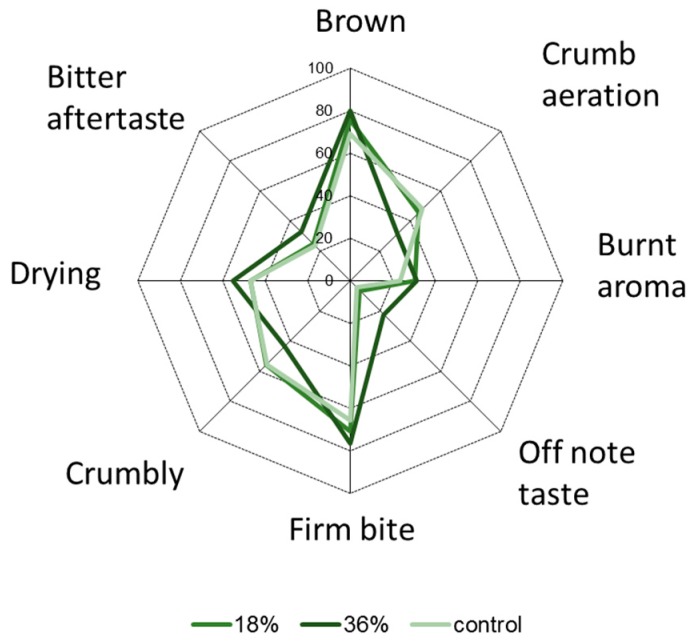
“This descriptor scored significantly higher in DSSF biscuits compared to the control, probably due to an acceleration of the Maillard reaction rate in DSSF biscuits [34].”
BackgroundSudha, M. L., Baskaran, V., & Leelavathi, K. (2007) · Food Chemistry · doi:10.1016/j.foodchem.2006.12.016 · Cited by 659 · cited 1×
“The hydration properties of DSSF fell in the same range reported by other authors on apple pomace [18,19].”
BackgroundAjila, C. M., Leelavathi, K., & Prasada Rao, U. J. S. (2008) · Journal of Cereal Science · doi:10.1016/j.jcs.2007.10.001 · Cited by 599 · cited 2×
“[33] reported higher TPC in biscuits made with blueberry and grape seeds, while Ajila, Leelavathi and Rao [12] reported that biscuits with mango peel powder had higher DPPH activity.”
ResultPiluzza, G., & Bullitta, S. (2011) · Pharmaceutical Biology · doi:10.3109/13880209.2010.501083 · Cited by 334 · cited 1×
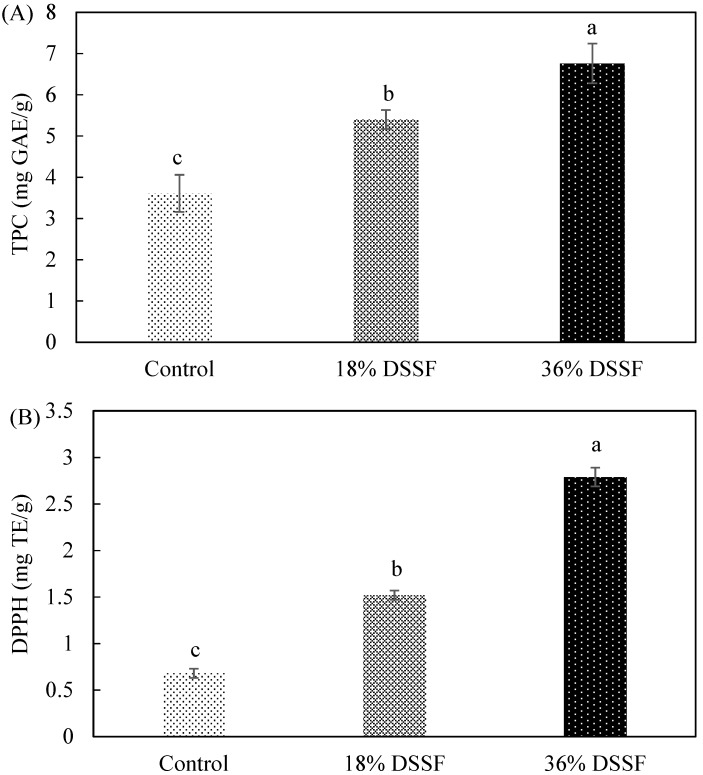
“The higher antioxidant capacity of the 36% DSSF biscuits can be explained by the higher TPC content, since high correlation between antioxidant capacity and phenolic compounds has been reported [31].”
BackgroundVaher, M., Matso, K., Levandi, T., Helmja, K., & Kaljurand, M. (2010) · Procedia Chemistry · doi:10.1016/j.proche.2009.12.013 · Cited by 229 · cited 1×
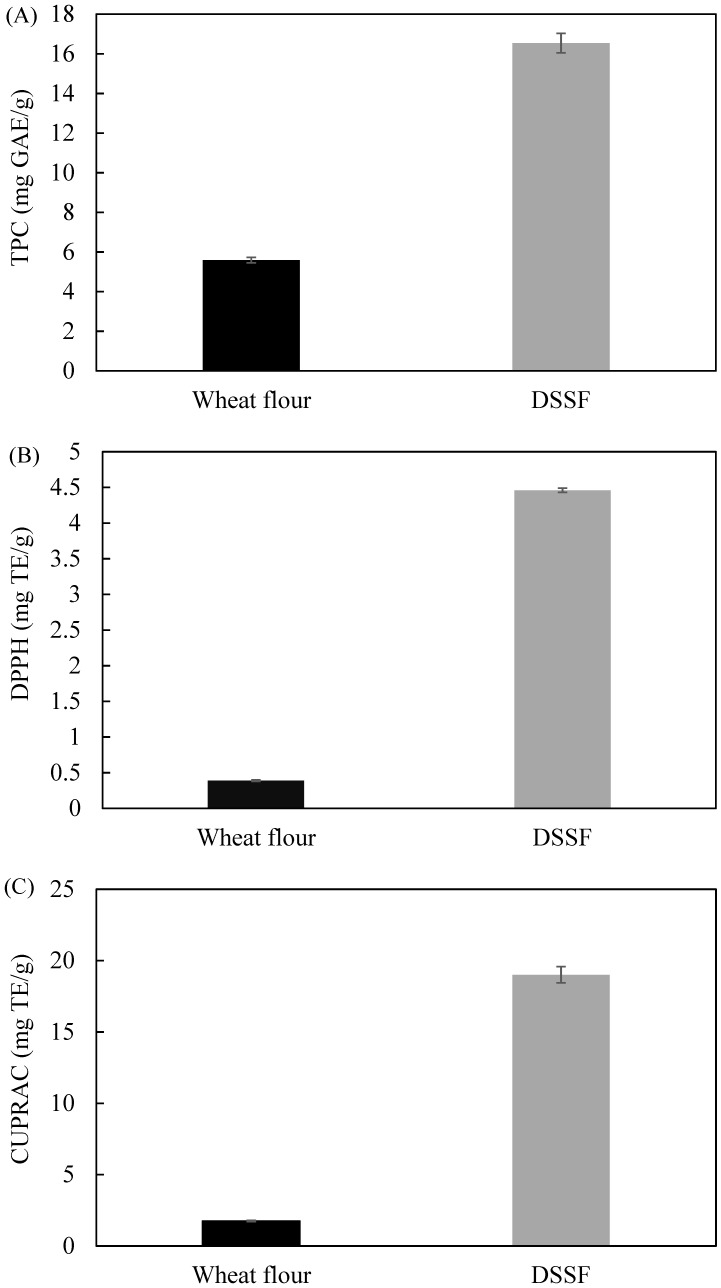
“On the other hand, wheat flour has been reported to have very low polyphenol content [23], which justifies its lower antioxidant capacity compared to DSSF.”
BackgroundRapeseed and sunflower meal: a review on biotechnology status and challenges
Lomascolo, A., Uzan-Boukhris, E., Sigoillot, J.-C., & Fine, F. (2012) · Applied Microbiology and Biotechnology · doi:10.1007/s00253-012-4250-6 · Cited by 197 · cited 1×
“Previous studies have shown that sunflower flour is a good source of phenolic compounds including chlorogenic, caffeic, p-hydroxybenzoic, p-coumaric, cinamic, m-hydroxybenzoic, vanillic, syringic, transcinnamic, isoferulic and sinapic acids, which are compounds with high antioxidant capacity [22].”
BackgroundPhysical, textural, and sensory characteristics of wheat and amaranth flour blend cookies
Chauhan, A., Saxena, D. C., & Singh, S. (2016) · Cogent Food & Agriculture · doi:10.1080/23311932.2015.1125773 · Cited by 167
Reducing the glycemic index of short dough biscuits by using apple pomace as a functional ingredient
Alongi, M., Melchior, S., & Anese, M. (2019) · LWT · doi:10.1016/j.lwt.2018.10.068 · Cited by 166 · cited 7×
“This could be related to the higher amino acid content and the lower sugars in DSSF. Similar results for the descriptor baked flavour were reported by Alongi, Melchior and Anese [19] where apple pomace at 18% and 36% inclusion was added in biscuits.”
BackgroundResultInfluentialGonzález‐Pérez, S., Merck, K. B., Vereijken, J. M., van Koningsveld, G. A., Gruppen, H., & Voragen, A. G. J. (2002) · Journal of Agricultural and Food Chemistry · doi:10.1021/jf011245d · Cited by 141 · cited 1×
“This by-product has a high protein content (40–50%) [2] and is used primarily in ruminant feed [1].”
BackgroundNaknaen, P., Itthisoponkul, T., Sondee, A., & Angsombat, N. (2016) · Food Science and Biotechnology · doi:10.1007/s10068-016-0057-z · Cited by 129 · cited 2×
“and astringent taste of by-products, which is due to the high phenolic content [10,35].”
BackgroundVamanu, E., & Niță, S. (2012) · BioMed Research International · doi:10.1155/2013/313905 · Cited by 120
Özbek, Z. A., Çağındı, Ö., & Köse, E. (2015) · Journal of Food Quality · doi:10.1111/jfq.12133 · Cited by 104 · cited 2×
“[33] reported higher TPC in biscuits made with blueberry and grape seeds, while Ajila, Leelavathi and Rao [12] reported that biscuits with mango peel powder had higher DPPH activity.”
BackgroundResultImpact of dairy protein powders on biscuit quality
Gallagher, E., Kenny, S., & Arendt, E. K. (2005) · European Food Research and Technology · doi:10.1007/s00217-005-1140-5 · Cited by 95 · cited 1×
“The contribution of protein content to biscuit hardness has been previously reported with whey protein concentrates and defatted soy flour addition [27,28].”
BackgroundSensory and Consumer Perception of the Addition of Grape Seed Extracts in Cookies
Davidov‐Pardo, G., Moreno, M. J. P., Arozarena, Í., Arroyo, R. M., Bleibaum, R. N., & Bruhn, C. (2012) · Journal of Food Science · doi:10.1111/j.1750-3841.2012.02991.x · Cited by 92 · cited 3×
“Upon consumption, the phenolic compounds in DSSF may interact with the glycoproteins in saliva, resulting in less saliva being available to dissolve the biscuits and spread the fat in the mouth [36].”
BackgroundInfluentialInfluence of pineapple, apple and melon by-products on cookies: physicochemical and sensory aspects
de Toledo, N. M. V., Nunes, L. P., da Silva, P. P. M., Spoto, M. H. F., & Canniatti-Brazaca, S. G. (2017) · International Journal of Food Science and Technology · doi:10.1111/ijfs.13383 · Cited by 91
Preparation and Quality Evaluation of Flour and Biscuit from Sweet Potato
Srivastava, S. (2012) · Journal of Food Processing & Technology · doi:10.4172/2157-7110.1000192 · Cited by 89 · cited 1×
“The decrease in thickness and diameter in biscuits with DSSF inclusion might be due to the dilution of gluten [17] or increase in fibre content [24] and is in agreement with similar studies on by-product incorporation [10,19].”
ResultPapoutsis, K., Pristijono, P., Golding, J. B., Stathopoulos, C. E., Bowyer, M. C., Scarlett, C. J., & Vuong, Q. V. (2018) · European Food Research and Technology · doi:10.1007/s00217-018-3049-9 · Cited by 84
Self-citationHidalgo, A., Brandolini, A., Čanadanović-Brunet, J., Ćetković, G., & Tumbas Šaponjac, V. (2018) · Food Chemistry · doi:10.1016/j.foodchem.2018.06.062 · Cited by 83
Kohajdová, Z., Karovičová, J., Magala, M., & Kuchtová, V. (2014) · Chemical Papers · doi:10.2478/s11696-014-0567-1 · Cited by 76 · cited 2×
“The decrease in thickness and diameter in biscuits with DSSF inclusion might be due to the dilution of gluten [17] or increase in fibre content [24] and is in agreement with similar studies on by-product incorporation [10,19].”
MethodResultEffect of incorporation of defatted soyflour on the quality of sweet biscuits
Gandhi, A., Kotwaliwale, N., Kawalkar, J., Srivastav, D., Parihar, V., & NADH, P. R. (2001) · Journal of Food Science and Technology · Cited by 58
PROSPECTS OF USING BY-PRODUCTS OF SUNFLOWER OIL PRODUCTION IN COMPOUND FEED INDUSTRY
Yegorov, B., Турпурова, Т. М., Sharabaeva, E., & Bondar, Y. Р. (2019) · Food Science and Technology · doi:10.15673/fst.v13i1.1337 · Cited by 50 · cited 4×
“The main by-product of the oil extraction process, which can constitute up to 36% of the mass of the processed seeds [1], is the so-called sunflower meal or cake.”
BackgroundInfluentialA novel steam explosion sterilization improving solid-state fermentation performance
Zhao, Z., Wang, L., & Chen, H. (2015) · Bioresource Technology · doi:10.1016/j.biortech.2015.05.099 · Cited by 49 · cited 1×
“Steam explosion, involving high pressure and high temperature, has recently been used on various substrates and by-products to break insoluble fibre into smaller soluble dietary fibre units [5,6], to decompose some anti-nutrients [7] and as a sterilisation method [8].”
BackgroundPhysico-Chemical Characteristics of Cookies Prepared with Tomato Pomace Powder
Ahmad Bhat, M., & Ahsan, H. (2016) · Journal of Food Processing & Technology · doi:10.4172/2157-7110.1000543 · Cited by 44 · cited 3×
“These results agree with those from Kuchtová, Karovičová, Kohajdová, Minarovičová and Kimličková [10], Bhat and Hafiza [25] and de Toledo et al.”
BackgroundZhang, X., Han, G., Jiang, W., Zhang, Y., Li, X., & Li, M. (2016) · BioResources · doi:10.15376/biores.11.3.6590-6599 · Cited by 42
Gbenga-Fabusiwa, F. J., Oladele, E., Oboh, G., Adefegha, S. A., & Oshodi, A. A. (2018) · Journal of Food Biochemistry · doi:10.1111/jfbc.12526 · Cited by 29 · cited 1×
“[32], who found that biscuits produced from pigeon pea–wheat flour had higher phenolic content and antioxidant activities compared to those produced with wheat flour only.”
BackgroundDetoxification of Rapeseed Meals by Steam Explosion
Xu-hui, G., Dong, W., & He, Y.-C. (2011) · Journal of the American Oil Chemists Society · doi:10.1007/s11746-011-1852-6 · Cited by 26 · cited 1×
“Steam explosion, involving high pressure and high temperature, has recently been used on various substrates and by-products to break insoluble fibre into smaller soluble dietary fibre units [5,6], to decompose some anti-nutrients [7] and as a sterilisation method [8].”
BackgroundPhenolic and antioxidant potential of sunflower meal
Wanjari, N., & Waghmare, J. S. (2015) · Advances in Applied Science Research · Cited by 26
Effects of white grape preparation on sensory quality of cookies
Kuchtová, V., Karovičová, J., Kohajdová, Z., Minarovičová, L., & Kimličková, V. (2016) · Acta Chimica Slovaca · doi:10.1515/acs-2016-0014 · Cited by 15 · cited 12×
“Short dough biscuits were prepared according to the modified method of Kuchtová, Karovičová, Kohajdová, Minarovičová and Kimličková [10].”
BackgroundResultInfluentialJung, J. Y., Heo, J. M., & Yang, J. (2019) · BioResources · doi:10.15376/biores.14.1.1512-1524 · Cited by 11 · cited 1×
“Steam explosion, involving high pressure and high temperature, has recently been used on various substrates and by-products to break insoluble fibre into smaller soluble dietary fibre units [5,6], to decompose some anti-nutrients [7] and as a sterilisation method [8].”
Background
Cited by
Oilseed crop sunflower (Helianthus annuus) as a source of food: Nutritional and health benefits
Adeleke, B. S., & Babalola, O. O. (2020) · Food Science & Nutrition · doi:10.1002/fsn3.1783 · Cited by 404
“Sunflower seeds can be processed into different forms, such as flour, roasted, baked, or boiled as composite functional foods (Grasso et al., 2019).”
BackgroundPetraru, A., Ursachi, F., & Amariei, S. (2021) · Plants · doi:10.3390/plants10112487 · Cited by 201
Moshtaghian, H., Bolton, K., & Rousta, K. (2021) · Foods · doi:10.3390/foods10112874 · Cited by 150
Consumer preferences for upcycled ingredients: A case study with biscuits
Grasso, S., & Asioli, D. (2020) · Food Quality and Preference · doi:10.1016/j.foodqual.2020.103951 · Cited by 140
Self-citationFilho, J. G. D. O., & Egea, M. B. (2021) · Journal of Food Science · doi:10.1111/1750-3841.15719 · Cited by 154
Metadata
- Authors
- Grasso, S., Omoarukhe, E., Wen, X., Papoutsis, K., & Methven, L.
- Affiliations
- University of Reading (GB)
- School of Agriculture, Policy and Development, University of Reading, Reading RG6 6AR, UK
- School of Agriculture and Food Science, University College Dublin, D04 V1W8 Dublin, Ireland
- University College Dublin (IE)
- Corresponding author
- Grasso, Simona
- Venue
- Foods
- Publisher
- MDPI AG
- Published
- 2019-08-01
- Volume
- 8
- Issue
- 8
- Pages
- 305
- ISSN
- 2304-8158 (ISSN-L)
- PMC
- PMC6722723
- OpenAlex
- W2965781221
- Cited by
- 85
- References
- 32
- Citations by year
- 2026: 9 · 2025: 11 · 2024: 20 · 2023: 12 · 2022: 9 · 2021: 13 · 2020: 8 · 2019: 2
- FWCI
- 6.09
- Type
- journal article
- Language
- en
- Open access
- gold
- doi.org
- Licence
- Locations
- Foods (publishedVersion, cc-by)
- Europe PMC (PubMed Central) (publishedVersion, cc-by)
- PubMed Central (publishedVersion, cc-by)
- PubMed (publishedVersion)
- CentAUR (University of Reading) (acceptedVersion)
- DOAJ (DOAJ: Directory of Open Access Journals) (submittedVersion, cc-by-sa)
- Funders
- Food Pump Priming Awards from the Research Dean for Food at the University of Reading (Grant number E3630500)
- Topics
- Health Sciences › Nursing › Nutrition and Dietetics › Food composition and properties
- Life Sciences › Agricultural and Biological Sciences › Food Science › Seed and Plant Biochemistry
- Life Sciences › Agricultural and Biological Sciences › Food Science › Food Nutrient Composition and Product Development
- Keywords
- upcycling, cookies, wheat flour substitution, functional food ingredients, protein content, total phenolic content, antioxidant capacity, sensory quality, instrumental texture, color, off-flavor
About these checks
Registry, retraction, Cites and statistics results are computed, not judged, with one exception: a printed reference that no index lists is read once by a model before it counts as a citation error. Claims are extracted by a model and kept only when their quote appears verbatim in the text; each cited source is then checked, with a model’s help, for whether it says what the claim relies on. Those verdicts can be wrong — read the claim’s quote and the cited source before relying on one.
Statistics and arithmetic are recomputed, not judged.
Confidence bands are shown only for fields calibrated on our annotated test set. None is calibrated yet, so no band is shown.
What counts as a claim ›How we measure confidence ›How we check this ›
Are you an author, or do you see a problem with this page? Request a review
Data sources
Bibliographic data: Semantic Scholar, OpenAlex, Crossref.
Contains information from the Semantic Scholar Academic Graph Datasets, made available under the ODC Attribution License (ODC-BY 1.0).
Semantic Scholar’s data is described in: Kinney, R., et al. (2023). The Semantic Scholar Open Data Platform. arXiv:2301.10140.
