

The Rise of Wine among Ancient Civilizations across the Mediterranean Basin
Open accessThe DOI matches its Crossref record; 156 of the 157 references it cites were found in a registry or an index; none of the 325 sources its claims cite is checked for support yet.
Abstract
The purpose of this work is to present the archaeological and historical background of viticulture and winemaking from ancient times to the present day in the Mediterranean basin. According to recent archaeological, archaeochemical and archaeobotanical data, winemaking emerged during the Neolithic period (c. 7th–6th millennium BC) in the South Caucasus, situated between the basins of the Black and Caspian Seas, and subsequently reached the Iberian Peninsula and Western Europe during the local beginning of Iron Age (c. 8th century BC), following the main maritime civilizations. This review summarises the most relevant findings evidencing that the expansion of wine production, besides depending on adequate pedo-climatic conditions and wine-growing practices, also required the availability of pottery vessels to properly ferment, store and transport wine without deterioration. The domestication of wild grapevines enabled the selection of more productive varieties, further sustaining the development of wine trade. Other fermented beverages such as mead and beer gradually lost their relevance and soon wine became the most valorised. Together with grapes, it became an object and a system of value for religious rituals and social celebrations throughout successive ancient Western civilizations. Moreover, wine was used for medicinal purposes and linked to a wide variety of health benefits. In everyday life, wine was a pleasant drink consumed by the elite classes and commoner populations during jubilee years, festivals, and banquets, fulfilling the social function of easy communication. In the present work, emphasis is put on the technical interpretation of the selected archaeological and historical sources that may explain present viticultural and oenological practices. Hopefully, this review will contribute to nurturing mutual understanding between archaeologists and wine professionals.
Overview
CoChat Summary
TL;DR
This review synthesizes archaeological, archaeochemical, archaeobotanical, and historical evidence to argue that winemaking emerged during the Neolithic (c.7th–6th millennium BC) in the South Caucasus and spread across the Mediterranean, reaching the Iberian Peninsula and Western Europe by the local beginning of the Iron Age (c.8th century BC). It emphasizes pottery vessels, yeast and grapevine domestication, and wine’s enduring social, religious, medicinal, and economic roles.
Key findings
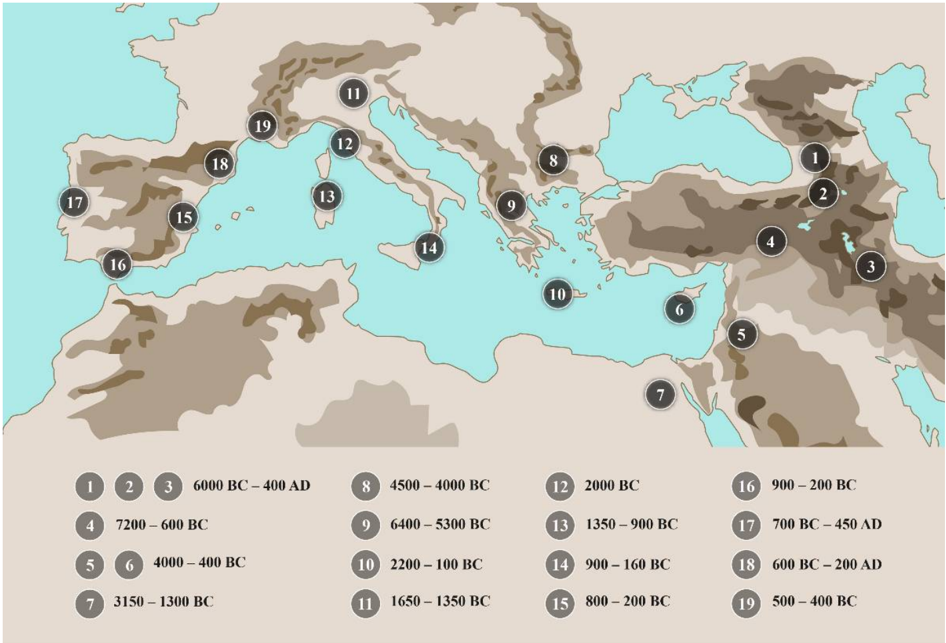
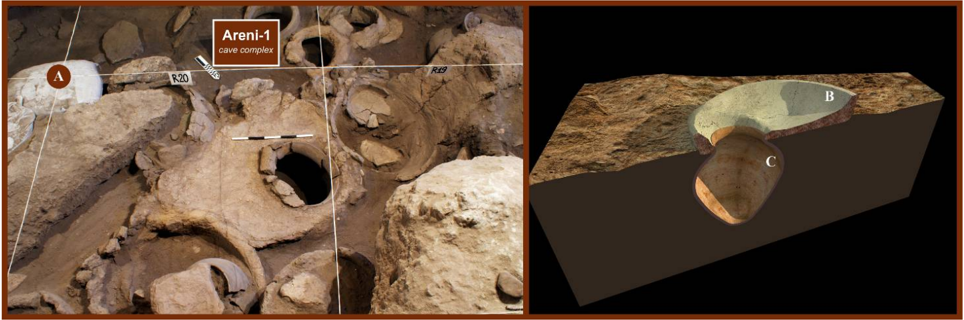
- The earliest culture associated with wine is dated 6000–4000 BC in the South Caucasus; winemaking evidence appears on pottery jars at Shulaveris Gora and Gadachrili Gora (c.6000 BC), and the Areni-1 cave complex in Armenia has a winemaking facility dated to 6100 years ago (c.4100 BC), with LC-MS/MS detecting tartaric acid and the red pigment anthocyanin malvidin.
- Wine remains were recovered at Hajji Firuz Tepe in north-western Iran (c.5400–5000 BC); by 4000–2000 BC the Kura-Araxes/Early Transcaucasian Culture spread across the Near East, and during the Early Bronze Age (3500–2400 BC) wine gradually spread beyond the Armenian Highlands toward Mesopotamia, the East Mediterranean, Northern Africa, the Southern Balkans, and the Levant.
- For wine yeasts, 95% of strains isolated worldwide belong to the same cluster; divergence between wine and saké lineages is estimated at about 11,900 years, within the vineyard group about 2700 years and saké group about 3800 years, consistent with the earliest archaeological evidence for winemaking at approximately 9000 years before present.
- Chemical data in Table 4 show wild *V. sylvestris* wines from northeastern Spain with ethanol 8.5–10.8% (v/v), total acidity 8.2–9.5 g/L, pH 3.40–3.53, and colour intensity 10.2–11.5, while domesticated *V. sativa* from Israel had ethanol 11.0–11.9% (v/v), total acidity 2.6–6.0 g/L, pH 3.52–3.88, and colour intensity 2.5–8.6.
Methods
- Narrative review of archaeological, archaeochemical, archaeobotanical, pictorial, and written sources from ancient times to the present in the Mediterranean basin, with selected examples tracing techniques from the Black and Caspian Sea basins to the Mediterranean.
- Evidence includes pottery residues, archaeobotanical remains, inscriptions, papyri, ostraca, and classical texts such as Theophrastus, Cato, Varro, Columella, Pliny the Elder, Palladius, and the *Geoponika*; tables compile archaeological milestones and wine-composition data.
- No primary experimental data are presented; the work is a synthesis and technical interpretation from viticultural and oenological perspectives.
Limitations
- The paper states that the rarity of viable yeasts recovered from ancient ceramic vessels limits elucidation of relationships with ancient specimens; it also notes that the dating of grape domestication is subject to discussion and that identifying true *V. sylvestris* is difficult because of hybridization and feral populations.
- The paper notes that few known archaeological remains give an accurate idea of the true dimension of Phoenician wine in present Portuguese territory.
- Evident from the text: this is a narrative review with selected examples rather than a systematic review, so coverage is illustrative rather than exhaustive, and no explicit limitations section is provided.
Model-written summary. Check it against the paper before relying on it.
Integrity signals
Registry
Cites
Statistics
Figures
Verification
Claims the paper makes
0 Valid · 1 Not valid · 238 Not checked · 30 Own results and interpretations
In the paper
“The domestication was elicited by various divergent selective pressures depending on its niche (e.g., bread, saké, beer, wine), requiring the development of customized genomes for better survival in the fermenting environments”
§ The Rise of Wine among Ancient Civilizations across the Mediterranean Basin > 1.1.2. The Domestication of S. cerevisiae
What the sources say
- Not checked yetcites [33] Steensels, J.; Gallone, B.; Voordeckers, K.; Verstrepen, K.J. Domestication of industrial microbes. Curr. Biol. 2019, 29, R381-R393. [CrossRef] source
plainstates a cause- Asserted: passes — The authors put it forward as true.
- Checkable: passes — It can be checked against evidence.
- Load-bearing: unclear — It is unclear whether the paper’s conclusions depend on it.
- Based: passes — The paper gives a reason why it holds.
In the paper
“The production of fermented beverages and foods is contemporary with the onset and expansion of agriculture [5]”
§ The Rise of Wine among Ancient Civilizations across the Mediterranean Basin > 1.1. The Pre-Requisites for Producing Alcoholic Beverages
What the sources say
- Not checked yetcites [5] McGovern, P.E. Uncorking the Past: The Quest for Wine, Beer, and Other Alcoholic Beverages; University of California Press: Berkeley, CA, USA, 2009. source
plainstates an association- Asserted: passes — The authors put it forward as true.
- Checkable: passes — It can be checked against evidence.
- Load-bearing: unclear — It is unclear whether the paper’s conclusions depend on it.
- Based: passes — The paper gives a reason why it holds.
A conclusion the paper draws from its own results — it cites no other source for it, so there is none to check. The quote shows it is in the paper.
In the paper
“and subsequently reached the Iberian Peninsula and Western Europe during the local beginning of Iron Age (c.8th century BC), following the main maritime civilizations”
§ The Rise of Wine among Ancient Civilizations across the Mediterranean Basin > Abstract
plain- Asserted: passes — The authors put it forward as true.
- Checkable: passes — It can be checked against evidence.
- Load-bearing: passes — The paper’s conclusions depend on it.
- Based: unclear — It is unclear why the paper says it holds.
In the paper
“However, the process is limited by yeast ethanol tolerance that rarely supersedes 16 to 17% (v/v), depending on the fermentation conditions”
§ The Rise of Wine among Ancient Civilizations across the Mediterranean Basin > 1.1.3. The Suitability of S. cerevisiae Metabolic Performance and Crop Preservation
What the sources say
- Not checked yetcites [28] Ribéreau-Gayon, P.; Dubourdieu, D.; Donèche, B.B.; Lonvaud, A.A. Handbook of Enology. Volume 1, The Microbiology of Wine and Vinifications, 3rd ed.; John Wiley and Sons Ltd.: Chichester, UK, 2021. source
plainstates a cause- Asserted: passes — The authors put it forward as true.
- Checkable: passes — It can be checked against evidence.
- Load-bearing: unclear — It is unclear whether the paper’s conclusions depend on it.
- Based: passes — The paper gives a reason why it holds.
In the paper
“At the end of the 19th century, the classical Louis de Pasteur experience, where crushed grapes spontaneously fermented in laboratory flasks, if performed with sound and rot grapes, showed that S. cerevisiae is much more frequent in the samples with rotten grapes”
§ The Rise of Wine among Ancient Civilizations across the Mediterranean Basin > 1.1.1. Fermenting Yeasts: The Agents of Ethanol Production
What the sources say
- Not checked yetcites [31] Barata, A.; Malfeito-Ferreira, M.; Loureiro, V. The microbial ecology of wine grape berries. Int. J. Food Microbiol. 2012, 153, 243-259. [CrossRef] [PubMed] source
plainstates an association- Asserted: passes — The authors put it forward as true.
- Checkable: passes — It can be checked against evidence.
- Load-bearing: unclear — It is unclear whether the paper’s conclusions depend on it.
- Based: passes — The paper gives a reason why it holds.
133 more claims
Create a free account to see all 269 claims and to verify the 316 references still open.
- It may state two separate claims as one. 99
- Probably not a substantial claim. 55
- The quote only partly states this claim. 2
Self-check
Percentages, sums and reported differences re-computed from the paper’s own numbers.
Each contradiction between two passages listed here was confirmed by an independent check.
Rated minor: it would not touch a result — a value no result rests on, a p-value that stays on the same side of the significance level, or a conflict that is clerical, resolved elsewhere in the paper, or outside its own findings.
In the paper
§ The Rise of Wine among Ancient Civilizations across the Mediterranean Basin > 3.1. Grapevine Primary Domestication Centres
“during the Early Bronze Age (3500-3300 cal BP), to be the first place where domesticated varieties were surely used.”
§ The Rise of Wine among Ancient Civilizations across the Mediterranean Basin > 2.1. The First Steps of Wine-Growing and Consumption
“During the Early Bronze Age (EBA: 3500-2400 BC), wine gradually spread beyond the borders of the Armenian Highlands”
Rated minor: it would not touch a result — a value no result rests on, a p-value that stays on the same side of the significance level, or a conflict that is clerical, resolved elsewhere in the paper, or outside its own findings.
In the paper
§ The Rise of Wine among Ancient Civilizations across the Mediterranean Basin > 2.1. The First Steps of Wine-Growing and Consumption
“During the Early Bronze Age (EBA: 3500-2400 BC), wine gradually spread beyond the borders of the Armenian Highlands”
§ The Rise of Wine among Ancient Civilizations across the Mediterranean Basin > 4. Conclusions
“Late EBA(2400-2100 BC) | Plastered basins for treading grapes”
Citations
Cites
Zohary, D., Hopf, M., & Weiss, E. (2012) · Oxford University Press eBooks · doi:10.1093/acprof:osobl/9780199549061.001.0001 · Cited by 2,987
Population genomics of domestic and wild yeasts
Liti, G., Carter, D. M., Moses, A. M., Warringer, J., Parts, L., James, S. A., Davey, R. P., Roberts, I. N., Burt, A., Koufopanou, V., et al. (2009) · Nature · doi:10.1038/nature07743 · Cited by 1,392
Fermented beverages of pre- and proto-historic China
McGovern, P. E., Zhang, J., Tang, J., Zhang, Z., Hall, G. R., Moreau, R. A., Nuñez, A., Butrym, E. D., Richards, M. P., Wang, C.-S., et al. (2004) · Proceedings of the National Academy of Sciences · doi:10.1073/pnas.0407921102 · Cited by 1,091 · cited 1×
“Interestingly, the period is consistent with the earliest archaeological evidence for winemaking, approximately 9000 years before present times [39].”
ResultBrewers' spent grain: generation, characteristics and potential applications
Mussatto, S. I., Dragone, G., & Roberto, I. C. (2006) · Journal of Cereal Science · doi:10.1016/j.jcs.2005.06.001 · Cited by 1,086
Historical origins and genetic diversity of wine grapes
THIS, P., LACOMBE, T., & THOMAS, M. (2006) · Trends in Genetics · doi:10.1016/j.tig.2006.07.008 · Cited by 902
Genetic structure and domestication history of the grape
Myles, S., Boyko, A. R., Owens, C. L., Brown, P. J., Grassi, F., Aradhya, M. K., Prins, B., Reynolds, A., Chia, J.-M., Ware, D., et al. (2011) · Proceedings of the National Academy of Sciences · doi:10.1073/pnas.1009363108 · Cited by 790
The microbial ecology of wine grape berries
Barata, A., Malfeito-Ferreira, M., & Loureiro, V. (2012) · International Journal of Food Microbiology · doi:10.1016/j.ijfoodmicro.2011.11.025 · Cited by 703
Self-citationRibéreau‐Gayon, P., Dubourdieu, D., Donèche, B. B., Lonvaud, A. A., Darriet, P., & Towey, J. (2021) · Wiley eBooks · doi:10.1002/9781119588320 · Cited by 555
Bread, beer and wine: Saccharomyces cerevisiae diversity reflects human history
LEGRAS, J., MERDINOGLU, D., CORNUET, J., & KARST, F. (2007) · Molecular Ecology · doi:10.1111/j.1365-294x.2007.03266.x · Cited by 548
How did Saccharomyces evolve to become a good brewer?
PISKUR, J., ROZPEDOWSKA, E., POLAKOVA, S., MERICO, A., & COMPAGNO, C. (2006) · Trends in Genetics · doi:10.1016/j.tig.2006.02.002 · Cited by 513
ARROYO‐GARCÍA, R., RUIZ‐GARCÍA, L., BOLLING, L., OCETE, R., LÓPEZ, M. A., ARNOLD, C., ERGUL, A., SÖYLEMEZO˝LU, G., UZUN, H. I., CABELLO, F., et al. (2006) · Molecular Ecology · doi:10.1111/j.1365-294x.2006.03049.x · Cited by 492
Saccharomyces cerevisiae in the Production of Fermented Beverages
Walker, G., & Stewart, G. (2016) · Beverages · doi:10.3390/beverages2040030 · Cited by 485
Evidence for Domesticated and Wild Populations of Saccharomyces cerevisiae
Fay, J. C., & Benavides, J. A. (2005) · PLoS Genetics · doi:10.1371/journal.pgen.0010005 · Cited by 447
Egypt, Canaan, and Israel in Ancient Times
Redford, D. B. (1992) · Princeton University Press eBooks · doi:10.1515/9780691214658 · Cited by 392
Terral, J.-F., Tabard, E., Bouby, L., Ivorra, S., Pastor, T., Figueiral, I., Picq, S., Chevance, J.-B., Jung, C., Fabre, L., et al. (2010) · Annals of Botany · doi:10.1093/aob/mcp298 · Cited by 367
Early Neolithic wine of Georgia in the South Caucasus
McGovern, P., Jalabadze, M., Batiuk, S., Callahan, M. P., Smith, K. E., Hall, G. R., Kvavadze, E., Maghradze, D., Rusishvili, N., Bouby, L., et al. (2017) · Proceedings of the National Academy of Sciences · doi:10.1073/pnas.1714728114 · Cited by 354
The broad spectrum revisited: Evidence from plant remains
Weiss, E., Wetterstrom, W., Nadel, D., & Bar-Yosef, O. (2004) · Proceedings of the National Academy of Sciences · doi:10.1073/pnas.0402362101 · Cited by 324
Yeast Biotechnology: Diversity and Applications
(2009) · Springer eBooks · doi:10.1007/978-1-4020-8292-4 · Cited by 315
Archaeology as cultural history words and things in Iron Age Greece
Morris, I. (2000) · Cited by 314
Bread, beer and wine: Yeast domestication in the Saccharomyces sensu stricto complex
Sicard, D., & Legras, J.-L. (2011) · Comptes Rendus. Biologies · doi:10.1016/j.crvi.2010.12.016 · Cited by 284
Wang, Q., Liu, W., Liti, G., Wang, S., & Bai, F. (2012) · Molecular Ecology · doi:10.1111/j.1365-294x.2012.05732.x · Cited by 272
Evidence of a secondary grapevine domestication centre detected by SSR analysis
Grassi, F., Labra, M., Imazio, S., Spada, A., Sgorbati, S., Scienza, A., & Florin, S. A. L. A. (2003) · Theoretical and Applied Genetics · doi:10.1007/s00122-003-1321-1 · Cited by 265
Evidence for S. cerevisiae Fermentation in Ancient Wine
Cavalieri, D., McGovern, P. E., Hartl, D. L., Mortimer, R., & Polsinelli, M. (2003) · Journal of Molecular Evolution · doi:10.1007/s00239-003-0031-2 · Cited by 258
The origin and adaptive evolution of domesticated populations of yeast from Far East Asia
Duan, S.-F., Han, P.-J., Wang, Q.-M., Liu, W.-Q., Shi, J.-Y., Li, K., Zhang, X.-L., & Bai, F.-Y. (2018) · Nature Communications · doi:10.1038/s41467-018-05106-7 · Cited by 244 · cited 1×
“related to cell adherence and biofilm formation, claimed as being important to survive in nature while not necessary in liquid ferments [37].”
Barnard, H., Dooley, A. N., Areshian, G., Gasparyan, B., & Faull, K. F. (2011) · Journal of Archaeological Science · doi:10.1016/j.jas.2010.11.012 · Cited by 211
Domestication of Industrial Microbes
Steensels, J., Gallone, B., Voordeckers, K., & Verstrepen, K. J. (2019) · Current Biology · doi:10.1016/j.cub.2019.04.025 · Cited by 211
The evolution of plant reproductive systems: how often are transitions irreversible?
Barrett, S. C. H. (2013) · Proceedings of the Royal Society B: Biological Sciences · doi:10.1098/rspb.2013.0913 · Cited by 211
de Andrés, M. T., Benito, A., Perez-Rivera, G., Rubio, R. O., López, M. Á., Gaforio, L., Muñoz, G., Cabello, F., Martínez-Zapater, J. M., & Arroyo-García, R. A. (2011) · Molecular Ecology · doi:10.1111/j.1365-294x.2011.05395.x · Cited by 196
The Origins and Ancient History of Wine
(2003) · Routledge eBooks · doi:10.4324/9780203392836 · Cited by 196
A population genomics insight into the Mediterranean origins of wine yeast domestication
Almeida, P., Barbosa, R., Zalar, P., Imanishi, Y., Shimizu, K., Turchetti, B., Legras, J., Serra, M., Dequin, S., Couloux, A., et al. (2015) · Molecular Ecology · doi:10.1111/mec.13341 · Cited by 178
Riaz, S., De Lorenzis, G., Velasco, D., Koehmstedt, A., Maghradze, D., Bobokashvili, Z., Musayev, M., Zdunic, G., Laucou, V., Andrew Walker, M., et al. (2018) · BMC Plant Biology · doi:10.1186/s12870-018-1351-0 · Cited by 172
Saccharomyces diversity and evolution: a budding model genus
Hittinger, C. T. (2013) · Trends in Genetics · doi:10.1016/j.tig.2013.01.002 · Cited by 168
Fletcher, W. J., Boski, T., & Moura, D. (2007) · The Holocene · doi:10.1177/0959683607077027 · Cited by 167
Uncorking the Past: The Quest for Wine, Beer, and Other Alcoholic Beverages
McGovern, P. E. (2009) · University of California Press eBooks · doi:10.1525/9780520944688 · Cited by 166
McGovern, P. E., Mirzoian, A., & Hall, G. R. (2009) · Proceedings of the National Academy of Sciences · doi:10.1073/pnas.0811578106 · Cited by 148
Garnier, N., & Valamoti, S. M. (2016) · Journal of Archaeological Science · doi:10.1016/j.jas.2016.03.003 · Cited by 144
Origin and domestication of the wine yeast Saccharomyces cerevisiae
Martini, A. (1993) · Journal of Wine Research · doi:10.1080/09571269308717966 · Cited by 130
Johnson, H. (1989) · Simon and Schuster eBooks · Cited by 130
Palaeogenomic insights into the origins of French grapevine diversity
Ramos-Madrigal, J., Runge, A. K. W., Bouby, L., Lacombe, T., Samaniego Castruita, J. A., Adam-Blondon, A.-F., Figueiral, I., Hallavant, C., Martínez-Zapater, J. M., Schaal, C., et al. (2019) · Nature Plants · doi:10.1038/s41477-019-0437-5 · Cited by 129
(2015) · doi:10.1093/acref/9780198705383.001.0001 · Cited by 125
Beginning of viniculture in France
McGovern, P. E., Luley, B. P., Rovira, N., Mirzoian, A., Callahan, M. P., Smith, K. E., Hall, G. R., Davidson, T., & Henkin, J. M. (2013) · Proceedings of the National Academy of Sciences · doi:10.1073/pnas.1216126110 · Cited by 115
Fernández, E., Pérez-Pérez, A., Gamba, C., Prats, E., Cuesta, P., Anfruns, J., Molist, M., Arroyo-Pardo, E., & Turbón, D. (2014) · PLoS Genetics · doi:10.1371/journal.pgen.1004401 · Cited by 109 · cited 1×
“In fact, maritime routes took agriculture during Neolithic times from the Levant (8500 BC) to Western Europe (5200 BC) in a journey advancing at the pace of about 1 km/year [82,83], spreading a vast array of tools and emerging technologies [84].”
BackgroundKefir as a Functional Beverage Gaining Momentum towards Its Health Promoting Attributes
Ganatsios, V., Nigam, P., Plessas, S., & Terpou, A. (2021) · Beverages · doi:10.3390/beverages7030048 · Cited by 92
Grape-pressings from northern Greece: the earliest wine in the Aegean?
Valamoti, S. M., Mangafa, M., Koukouli-Chrysanthaki, C., & Malamidou, D. (2007) · Antiquity · doi:10.1017/s0003598x00094837 · Cited by 84
Mead production: Selection and characterization assays of Saccharomyces cerevisiae strains
Pereira, A. P., Dias, T., Andrade, J., Ramalhosa, E., & Estevinho, L. M. (2009) · Food and Chemical Toxicology · doi:10.1016/j.fct.2009.05.028 · Cited by 84
The Aesthetics of the Greek Banquet: Images of Wine and Ritual
Lissarrague, F. (1990) · doi:10.1515/9781400861156 · Cited by 84
Ucchesu, M., Orrù, M., Grillo, O., Venora, G., Usai, A., Serreli, P. F., & Bacchetta, G. (2015) · Vegetation History and Archaeobotany · doi:10.1007/s00334-014-0512-9 · Cited by 83
Hovsepyan, R., & Willcox, G. (2008) · Vegetation History and Archaeobotany · doi:10.1007/s00334-008-0158-6 · Cited by 81
Núñez, D. R., & Walker, M. J. (1989) · Review of Palaeobotany and Palynology · doi:10.1016/0034-6667(89)90033-x · Cited by 80
Sweeter than wine? The use of the grape in early western Asia
Miller, N. F. (2008) · Antiquity · doi:10.1017/s0003598x00097696 · Cited by 79
First evidence of white wine in ancient Egypt from Tutankhamun's tomb
Guasch-Jané, M. R., Andrés-Lacueva, C., Jáuregui, O., & Lamuela-Raventós, R. M. (2006) · Journal of Archaeological Science · doi:10.1016/j.jas.2005.11.012 · Cited by 74
An update on the diversity, ecology and biogeography of the Saccharomyces genus
Alsammar, H., & Delneri, D. (2020) · FEMS Yeast Research · doi:10.1093/femsyr/foaa013 · Cited by 73
Phylogeographical structure and conservation genetics of wild grapevine
Grassi, F., Labra, M., Imazio, S., Rubio, R. O., Failla, O., Scienza, A., & Sala, F. (2006) · Conservation Genetics · doi:10.1007/s10592-006-9118-9 · Cited by 68
The Domestication of the Grapevine Vitis Vinifera L. in the Near East
Zohary, D. (2003) · Routledge eBooks · doi:10.4324/9780203392836-12 · Cited by 68
Nelson, M. (2005) · doi:10.4324/9780203309124 · Cited by 67
Batiuk, S. D. (2013) · Journal of Anthropological Archaeology · doi:10.1016/j.jaa.2013.08.002 · Cited by 60
Yeasts in the Production of Wine
(2019) · doi:10.1007/978-1-4939-9782-4 · Cited by 57
Is there a future for wild grapevine (Vitis vinifera subsp. silvestris) in the Rhine Valley?
Arnold, C., Schnitzler, A., Douard, A., Peter, R., & Gillet, F. (2005) · Biodiversity and Conservation · doi:10.1007/s10531-004-9789-9 · Cited by 56
The origin of the ancient Egyptian drink Shedeh revealed using LC/MS/MS
Guasch-Jané, M. R., Andrés-Lacueva, C., Jáuregui, O., & Lamuela-Raventós, R. M. (2006) · Journal of Archaeological Science · doi:10.1016/j.jas.2005.06.013 · Cited by 53
The limits and potential of paleogenomic techniques for reconstructing grapevine domestication
Wales, N., Ramos Madrigal, J., Cappellini, E., Carmona Baez, A., Samaniego Castruita, J. A., Romero-Navarro, J. A., Carøe, C., Ávila-Arcos, M. C., Peñaloza, F., Moreno-Mayar, J. V., et al. (2016) · Journal of Archaeological Science · doi:10.1016/j.jas.2016.05.014 · Cited by 53
Geoponika : farm work : a modern translation of the Roman and Byzantine farming handbook
Bassus, C., & Dalby, A. (2011) · Prospect Books · Cited by 52
Nishiaki, Y. A., Guliyev, F., & Kadowaki, S. (2015) · American Journal of Archaeology · doi:10.3764/aja.119.3.0279 · Cited by 51
Vouillamoz, J. F., McGovern, P. E., Ergul, A., Söylemezoğlu, G., Tevzadze, G., Meredith, C. P., & Grando, M. S. (2006) · Plant Genetic Resources · doi:10.1079/pgr2006114 · Cited by 51
Wilkinson, K. N., Gasparian, B., Pinhasi, R., Avetisyan, P., Hovsepyan, R., Zardaryan, D., Areshian, G. E., Bar-Oz, G., & Smith, A. (2012) · Journal of Field Archaeology · doi:10.1179/0093469011z.0000000002 · Cited by 49
Areshian, G. E., Gasparyan, B., Avetisyan, P. S., Pinhasi, R., Wilkinson, K., Smith, A., Hovsepyan, R., & Zardaryan, D. (2012) · Antiquity · doi:10.1017/s0003598x00062499 · Cited by 48
Columella, L. I. M., & Ash, H. B. (1941) · Digital Loeb Classical Library · doi:10.4159/dlcl.columella-agriculture.1941 · Cited by 48
Buxó, R. (2007) · Vegetation History and Archaeobotany · doi:10.1007/s00334-007-0133-7 · Cited by 47
Genetic Relationships Among Portuguese Cultivated and Wild Vitis vinifera L. Germplasm
Cunha, J., Ibáñez, J., Teixeira-Santos, M., Brazão, J., Fevereiro, P., Martínez-Zapater, J. M., & Eiras‐Dias, J. E. (2020) · Frontiers in Plant Science · doi:10.3389/fpls.2020.00127 · Cited by 45
Harutyunyan, M., & Malfeito-Ferreira, M. (2022) · Beverages · doi:10.3390/beverages8010010 · Cited by 44
Self-citationHamon, C., Jalabadze, M., Agapishvili, T., Baudouin, E., Koridze, I., & Messager, E. (2015) · Quaternary International · doi:10.1016/j.quaint.2015.01.055 · Cited by 44
Indigenous yeast population from Georgian aged wines produced by traditional “Kakhetian” method
Capece, A., Siesto, G., Poeta, C., Pietrafesa, R., & Romano, P. (2013) · Food Microbiology · doi:10.1016/j.fm.2013.07.008 · Cited by 43
Ocete, R., Arroyo-García, R. A., Morales, M. L., Cantos, M., Gallardo, A., Pérez, M. A., Gómez, I., & López, M. Á. (2015) · Vitis · doi:10.5073/vitis.2011.50.11-16 · Cited by 42
New insights on the genetic basis of Portuguese grapevine and on grapevine domestication
Lopes, M. S., Mendonça, D., Rodrigues dos Santos, M., Eiras-Dias, J. E., & da Câmara Machado, A. (2009) · Genome · doi:10.1139/g09-048 · Cited by 42
Characterization of Portuguese populations of Vitis vinifera L. ssp. sylvestris (Gmelin) Hegi
Cunha, J., Baleiras-Couto, M., Cunha, J. P., Banza, J., Soveral, A., Carneiro, L. C., & Eiras-Dias, J. E. (2007) · Genetic Resources and Crop Evolution · doi:10.1007/s10722-006-9189-y · Cited by 40
Pecci, A., Borgna, E., Mileto, S., Dalla Longa, E., Bosi, G., Florenzano, A., Mercuri, A. M., Corazza, S., Marchesini, M., & Vidale, M. (2020) · Journal of Archaeological Science · doi:10.1016/j.jas.2020.105256 · Cited by 39
The Near-Eastern Roots of the Neolithic in South Asia
Gangal, K., Sarson, G. R., & Shukurov, A. (2014) · PLoS ONE · doi:10.1371/journal.pone.0095714 · Cited by 39
Limier, B., Ivorra, S., Bouby, L., Figueiral, I., Chabal, L., Cabanis, M., Ater, M., Lacombe, T., Ros, J., Brémond, L., et al. (2018) · Journal of Archaeological Science · doi:10.1016/j.jas.2018.10.001 · Cited by 38
Vins et amphores de Grande Grèce et de Sicile: IVe IIIe s. avant J.-C.
Vandermersch, C. (1994) · doi:10.4000/books.pcjb.957 · Cited by 38
Drori, E., Rahimi, O., Marrano, A., Henig, Y., Brauner, H., Salmon-Divon, M., Netzer, Y., Prazzoli, M. L., Stanevsky, M., Failla, O., et al. (2017) · Scientific Reports · doi:10.1038/srep44463 · Cited by 37
Characterizing a Middle Bronze Palatial Wine Cellar from Tel Kabri, Israel
Koh, A. J., Yasur-Landau, A., & Cline, E. H. (2014) · PLoS ONE · doi:10.1371/journal.pone.0106406 · Cited by 36
A Survey of Evidence for Feasting in Mycenaean Society
Wright, J. C. (2004) · Hesperia · doi:10.2972/hesp.2004.73.2.133 · Cited by 36
Taskesenlioglu, M. Y., Ercisli, S., Kupe, M., & Ercisli, N. (2022) · Sustainability · doi:10.3390/su14031496 · Cited by 33
Orendi, A., & Deckers, K. (2018) · Vegetation History and Archaeobotany · doi:10.1007/s00334-018-0667-x · Cited by 30
Introgression Among Cultivated and Wild Grapevine in Tuscany
D’Onofrio, C. (2020) · Frontiers in Plant Science · doi:10.3389/fpls.2020.00202 · Cited by 30
Valamoti, S. M., Pagnoux, C., Ntinou, M., Bouby, L., Bonhomme, V., & Terral, J.-F. (2020) · Vegetation History and Archaeobotany · doi:10.1007/s00334-019-00733-6 · Cited by 30
Mercuri, A. M., Torri, P., Florenzano, A., Clò, E., Mariotti Lippi, M., Sgarbi, E., & Bignami, C. (2021) · Sustainability · doi:10.3390/su13042287 · Cited by 29
Egyptians, Canaanites, and Philistines in the Period of the Emergence of Israel
Singer, I., Finḳelshṭayn, Y., & Na’aman, N. (1994) · Cited by 29
Kvavadze, E., Boschian, G., Chichinadze, M., Gagoshidze, I., Gavagnin, K., Martkoplishvili, I., & Rova, E. (2019) · Journal of Field Archaeology · doi:10.1080/00934690.2019.1669254 · Cited by 27
Phoenician lime for Phoenician wine: Iron Age plaster from a wine press at Tell el-Burak, Lebanon
Orsingher, A., Amicone, S., Kamlah, J., Sader, H., & Berthold, C. (2020) · Antiquity · doi:10.15184/aqy.2020.4 · Cited by 26
The Routledge Handbook of Wine and Culture
Charters, S., Demossier, M., Dutton, J., Harding, G., Maguire, J. S., Marks, D., & Unwin, T. (2022) · doi:10.4324/9781003034711 · Cited by 26
Thurmond, D. L. (2017) · doi:10.1163/9789004334595 · Cited by 25
Ekhvaia, J., Gurushidze, M., Blattner, F. R., & Akhalkatsi, M. (2014) · Genetic Resources and Crop Evolution · doi:10.1007/s10722-014-0125-2 · Cited by 25
The Pre-colonial Pheonician Emporium of Huelva ca. 900-770 BC
GONZALEZ DE CANALES, F., SERRANO, L., & LLOMPART, J. (2006) · BABESCH - Bulletin Antieke Beschaving · doi:10.2143/bab.81.0.2014422 · Cited by 23
A Idade do Ferro orientalizante no vale do Tejo: as duas margens de um mesmo rio
Arruda, A. M. (2017) · Consejo Superior de Investigaciones Científicas eBooks · Cited by 23
Wine: The 8,000 Year-Old Story of the Wine Trade
Pellechia, T. (2006) · Cited by 22
Vitis vinifera in the Iberian Peninsula: A review
Iriarte-Chiapusso, M. J., Ocete, C. A., Beloqui, B. H., & Ocete, R. (2016) · Plant Biosystems - An International Journal Dealing with all Aspects of Plant Biology · doi:10.1080/11263504.2016.1165751 · Cited by 21
Aston, D. A. (2005) · �GYPTEN UND LEVANTE Internationale Zeitschrift f�r �gyptische Arch�ologie und deren Nachbargebiete / EGYPT AND THE LEVANT International Journal for Egyptian Archaeology and Related Disciplines · doi:10.1553/aeundl14s175 · Cited by 20
The Archaeobotany of Grape and Wine in Hittite Anatolia
White, C. E., & Miller, N. F. (2018) · Die Welt des Orients · doi:10.13109/wdor.2018.48.2.209 · Cited by 19
Vitis flower types: from the wild to crop plants
Coito, J. L., Silva, H. G., Ramos, M. J. N., Cunha, J., Eiras-Dias, J., Amâncio, S., Costa, M. M. R., & Rocheta, M. (2019) · PeerJ · doi:10.7717/peerj.7879 · Cited by 18
Food and Drink in Antiquity Readings from the Graeco-Roman World A Sourcebook
Donahue, J. F. (2015) · doi:10.5040/9781472555670 · Cited by 18
The Late Bronze Egyptian Estate at Aphek
Gadot, Y. (2010) · Tel Aviv · doi:10.1179/033443510x12632070179388 · Cited by 17
Aversano, R., Basile, B., Buonincontri, M. P., Carucci, F., Carputo, D., Frusciante, L., & Di Pasquale, G. (2017) · PLOS ONE · doi:10.1371/journal.pone.0186298 · Cited by 17
Schmitt, A., Badreshany, K., Tachatou, E., & Sader, H. (2018) · Levant · doi:10.1080/00758914.2018.1547004 · Cited by 17
Grape and wine culture in Georgia, the South Caucasus
Maghradze, D., Samanishvili, G., Mekhuzla, L., Mdinaradze, I., Tevzadze, G., Aslanishvili, A., Chavchanidze, P., Lordkipanidze, D., Jalabadze, M., Kvavadze, E., et al. (2016) · BIO Web of Conferences · doi:10.1051/bioconf/20160703027 · Cited by 16
Samaria: from the Bedrock to the Omride Palace
Franklin, N. (2004) · Levant · doi:10.1179/lev.2004.36.1.189 · Cited by 16
Ancient Wine: The Search for the Origins of Viniculture
McGovern, P. E. (2019) · doi:10.1515/9780691198965 · Cited by 16
The meaning of wine in Egyptian tombs: the three amphorae from Tutankhamun's burial chamber
Jané, M. R. G. (2011) · Antiquity · doi:10.1017/s0003598x00068356 · Cited by 15
Valle, A. M. (2014) · Lucentum · doi:10.14198/lvcentvm2014.33.04 · Cited by 15
Nebish, A., Tello, J., Ferradás, Y., Aroutiounian, R., Martínez-Zapater, J. M., & Ibáñez, J. (2021) · OENO One · doi:10.20870/oeno-one.2021.55.4.4815 · Cited by 13
Current distribution and characterization of the wild grapevine populations in Andalusia (Spain)
Cantos, M., Arroyo-García, R., García, J. L., Lara, M., Morales, R., López, M. Á., Gallardo, A., Ocete, C. A., Rodríguez, Á., Valle, J. M., et al. (2017) · Comptes Rendus. Biologies · doi:10.1016/j.crvi.2017.01.004 · Cited by 13
Jordà, G. P., Parreño, C. M., Martín, A. M., & Santos, D. Q. (2013) · Dialnet (Universidad de la Rioja) · Cited by 13
Portuguese Vitis vinifera L. Germplasm: Accessing Its Diversity and Strategies for Conservation
Cunha, J., Santos, M. T., Brazão, J., Fevereiro, P. S., & Eduardo, J. (2013) · InTech eBooks · doi:10.5772/52639 · Cited by 12
Morphometric comparison of current, Roman‐era and medieval Vitis seeds from the north‐west of Spain
Boso, S., Gago, P., Santiago, J. L., Teira‐Brión, A., Martín‐Seijo, M., Rey‐Castiñeira, J., Ocete, R., Ocete, C., & Martínez, M. C. (2020) · Australian Journal of Grape and Wine Research · doi:10.1111/ajgw.12439 · Cited by 12
Multispectral imaging reveals biblical-period inscription unnoticed for half a century
Faigenbaum-Golovin, S., Mendel-Geberovich, A., Shaus, A., Sober, B., Cordonsky, M., Levin, D., Moinester, M., Sass, B., Turkel, E., Piasetzky, E., et al. (2017) · PLOS ONE · doi:10.1371/journal.pone.0178400 · Cited by 11
Beer: A Global Journey through the Past and Present
Arthur, J. W. (2022) · doi:10.1093/oso/9780197579800.001.0001 · Cited by 10
From Honey Wine to the Cultivation of the Grape: An Early History of Fermented Beverages
Rasmussen, S. C. (2015) · ACS Symposium Series · doi:10.1021/bk-2015-1211.ch004 · Cited by 10
Harutyunyan, M., Viana, R., Granja-Soares, J., Martins, M., Ribeiro, H., & Malfeito-Ferreira, M. (2022) · Fermentation · doi:10.3390/fermentation8020085 · Cited by 10
Self-citationForest Oak Woodlands and Fruit Tree Soils Are Reservoirs of Wine-Related Yeast Species
Chandra, M., Mota, M., Silva, A. C., & Malfeito-Ferreira, M. (2020) · American Journal of Enology and Viticulture · doi:10.5344/ajev.2020.19067 · Cited by 9
Self-citationHistorical Wines of Portugal: The Classification, Consumer Associations and Marketing Implications
de Almeida Costa, A. I., Marano-Marcolini, C., Malfeito-Ferreira, M., & Loureiro, V. (2021) · Foods · doi:10.3390/foods10050979 · Cited by 9
Self-citationLaneri, N. (2018) · Die Welt des Orients · doi:10.13109/wdor.2018.48.2.225 · Cited by 9
The Phoenician diaspora in the westernmost Mediterranean: recent discoveries
Suárez-Padilla, J., Jiménez-Jáimez, V., & Caro, J. L. (2021) · Antiquity · doi:10.15184/aqy.2021.105 · Cited by 9
Bioarchaeology: a profitable dialogue between microbiology and archaeology
Brüssow, H. (2020) · Microbial Biotechnology · doi:10.1111/1751-7915.13527 · Cited by 9
Rego, P., & Aira Rodriguez, M. (1993) · Vegetation History and Archaeobotany · doi:10.1007/bf00198587 · Cited by 8
Batmaz, A. (2019) · Ethnoarchaeology · doi:10.1080/19442890.2019.1573283 · Cited by 8
Alcohol and Humans: A Long and Social Affair
(2019) · doi:10.1093/oso/9780198842460.001.0001 · Cited by 8
The Knowledge of Viticulture in Hittite Anatolia: An Interdisciplinary Approach
Corti, C. (2018) · Die Welt des Orients · doi:10.13109/wdor.2018.48.2.285 · Cited by 7
Evaluation of breeding potential of wild grape originating from Armenia
Margaryan, K., Maul, E., Muradyan, Z., Hovhannisyan, A., Melyan, G., & Aroutiounian, R. (2019) · BIO Web of Conferences · doi:10.1051/bioconf/20191501006 · Cited by 7
Quixal Santos, D., Pérez Jordà, G., Moreno Martín, A., Mata Parreño, C., & Carrión Marco, Y. (2016) · Archivo Español de Arqueología · doi:10.3989/aespa.089.016.002 · Cited by 7
Mata, D. R. (2018) · Revista de historia de El Puerto · Cited by 7
Frankel, D., & Webb, J. M. (2014) · Antiquity · doi:10.1017/s0003598x00101097 · Cited by 7
Kefir and Koumiss Origin, Health Benefits and Current Status of Knowledge
Behera, S. K., Panda, S. K., Kayitesi, E., & Mulaba-Bafubiandi, A. F. (2017) · doi:10.1201/9781315205359-18 · Cited by 6
A presença fenícia em Lisboa: novos vestígios descobertos no alto da colina do Castelo de São Jorge
Sousa, E., & Guerra, S. (2018) · SAGVNTVM. Papeles del Laboratorio de Arqueología de Valencia · doi:10.7203/sagvntvm.50.10636 · Cited by 6
Mazzucco, N., Ibáñez, J. J., Capuzzo, G., Gassin, B., Mineo, M., & Gibaja, J. F. (2020) · PLOS ONE · doi:10.1371/journal.pone.0235874 · Cited by 5
Pereira, P. A. (2017) · doi:10.21747/9789898351715/vin2017 · Cited by 5
Agroforestry and the Reappraisal of Roman Viticulture
Van Limbergen, D. (2020) · Global Environment · doi:10.3197/ge.2020.130208 · Cited by 5
La producción vinícola en Hispania: procesos de producción y comercialización del vino romano
Cervantes, Y. P. (2015) · RECERCAT (Consorci de Serveis Universitaris de Catalunya) · Cited by 5
Wine Shipments to Samaria from Royal Vineyards
Suriano, M. J. (2016) · Tel Aviv · doi:10.1080/03344355.2016.1161371 · Cited by 3
Trainor, C. P. (2021) · The Annual of the British School at Athens · doi:10.1017/s0068245421000095 · Cited by 3
The Material Culture of Hittite ‘God-drinking’
Heffron, Y. (2014) · Journal of Ancient Near Eastern Religions · doi:10.1163/15692124-12341261 · Cited by 3
Multidisciplinary investigation of identity of the “Areni” grape variety
Hovhannisyan, N., Dallakyan, M., Yesayan, A., Bagoyan, T., Melyan, G., & Gasparyan, B. (2015) · BIO Web of Conferences · doi:10.1051/bioconf/20150501013 · Cited by 3
Wine and Oil Allocations in the Samaria Ostraca
Rosen, B. (1986) · Tel Aviv · doi:10.1179/tav.1986.1986.1.39 · Cited by 3
Pottery Sherds for Writing: An Overview of the Practice
(2020) · Using Ostraca in the Ancient World · doi:10.1515/9783110712902-003 · Cited by 3
The wild and the cultivated: Wine in euripides' Bacchae
Ruck, C. A. P. (1982) · Journal of Ethnopharmacology · doi:10.1016/0378-8741(82)90012-5 · Cited by 2
(2003) · The Origins and Ancient History of Wine · doi:10.4324/9780203392836-14 · Cited by 2
O final da Idade do Ferro, romanizaçao e romanidade da foz do Guadiana
de Sousa, E., Arruda, A. M., & Pereira, C. (2020) · Portuguese National Funding Agency for Science, Research and Technology (RCAAP Project by FCT) · Cited by 2
HIERATIC WINE JAR DOCKETS FROM TUTHMOSIS’S IV TEMPLE IN GURNA
EISSA, M. A., & NASSAR, M. A. (2020) · Shedet · doi:10.21608/shedet.2020.137645 · Cited by 1
(1998)
(2013) · doi:10.4462/annbotrm-10326
(2015) · Digital Access to Scholarship at Harvard (DASH) (Harvard University)
Arruda, A. M. (2014) · Unpublished · doi:10.13140/2.1.3291.0084
Damasco, G., Delpiano, D., Larcher, R., Nardin, T., Perra, M., & Lovicu, G. (2020) · VITIS - Journal of Grapevine Research · doi:10.5073/vitis.2020.59.93-100
(2015) · Electronic Theses and Dissertations Repository (University of Pisa)
Research works printed but not linked: 46
- McGovern, P.E.; Fleming, S.J.; Katz, S.H. (Eds.) The Origins and Ancient History of Wine (Food and Nutrition in History and Antropology Series No. 11); Routledge: London, UK; New York, NY, USA, 2003. · DOI · Paper page
- McGovern, P.E. Ancient Wine: The Search for the Origins of Viniculture; Princeton University Press: Princeton, NJ, USA, 2007.
- Unwin, T. Wine and the Vine: An Historical Geography of Viticulture and the Wine Trade; Routledge: London, UK; New York, NY, USA, 1996.
- Charters, S. Wine and Society: The Social and Cultural Context of a Drink; Butterworth-Heinemann: Oxford, UK, 2006.
- Rasmussen, S.C., Ed.; ACS Symposium Series No. 1211; American Chemical Society: Washington, DC, USA, 2015; pp. 89-138.
- Peacock, D., Blue, L., Whitewright, J., Eds.; BAR International Series No. 2286; Archaeopress: Oxford, UK, 2011; pp. 11-34.
- Dunbabin, K.M.D. The Roman Banquet: Images of Conviviality; Cambridge University Press: Cambridge, UK, 2003.
- Harutyunyan, A. Testimonies of wine offerings in the Armenian lapidary inscriptions. Rev. Ejmiatsin 2011, 2, 121-129.
- Lesko, L.H. Egyptian wine production during the New Kingdom. In The Origins and Ancient History of Wine; · DOI · Paper page
- Norrie, P. The History of Wine as a Medicine: From its Beginnings in China to the Present Day; Cambridge Scholars Publishing: Newcastle upon Tyne, UK, 2019.
- Jouanna, J. Wine and medicine in ancient Greece. In Greek Medicine from Hippocrates to Galen: Selected Papers; van der Eijk, P., Allies, N., Eds.; Brill: Leiden, The Netherlands, 2012; pp. 173-193.
- Godley, A.D. Herodotus: The Persian Wars; Volume I: Books 1-2; Loeb Classical Library 117; Harvard University Press: Cambridge, MA, USA, 1975.
- Hooper, W.D.; Ash, H. Varro: De Re Rustica (On Agriculture); Loeb Classical Library, Harvard University Press: Cambridge, MA, USA, 1934.
- Forster, E.S.; Heffner, E.H. Columella: On Agriculture; Volume II: Books 5-9; Loeb Classical Library 407; Harvard University Press: Cambridge, MA, USA, 1954.
- Forster, E.S.; Heffner, E.H. Columella: On Agriculture; Volume III: Books 10-12; On Trees. Loeb Classical Library 408; Harvard University Press: Cambridge, MA, USA, 1955.
- Rackham, H. Pliny: Natural History; Volume IV: Books 12-16; Loeb Classical Library 370; Harvard University Press: Cambridge, MA, USA, 1945.
- Rackham, H. Pliny: Natural History; Volume V: Books 17-19; Loeb Classical Library 371; Harvard University Press: Cambridge, MA, USA, 1950.
- Jones, W.H.S. Pliny: Natural History; Volume VI: Books 20-23; Loeb Classical Library 392; Harvard University Press: Cambridge, MA, USA, 1951.
- Gorny, R.L. Viticulture and Ancient Anatolia. In The Origins and Ancient History of Wine; · DOI · Paper page
- Renfrew, J.M. Palaeoethnobotanical finds of Vitis from Greece. In The Origins and Ancient History of Wine; · DOI · Paper page
- Badler, V.R. The dregs of civilization: 5000-year-old wine and beer: Residues from Godin Tepe, Iran. Bull. Can. Soc. Mesop. Stud. 2000, 35, 48-56.
- Menozzi, 2002, Palaeoenvironmental investigations in the Massaciuccoli basin (NW Tuscany, Italy), Atti Soc. Tosc. Sci. Nat. Mem. Serie B, 109, 177
- Castelletti, 1995, Indagine preliminare sull’archeologia della vite (Vitis vinifera L.) in base ai caratteri diagnostici del vinacciolo, Riv. Archeol. Dell’antica Prov. Diocesi Como, 176, 333
- Gómez-Bellard, C., Guérin, P., and Pérez-Jordà, G. (1993). Témoignage d’une production de vin dans l’Espagne préromaine. La production du vin et de L’huile en Méditerranée. Actes du Symposium International, Aix-en-Provence et Toulon, 20–22 Novembre, 1991, École française d’Athènes. Bulletin de Correspondance Hellénique, Supplément 26.
- Janssen, 1985, A preliminary palynological study of peat deposits near an oppidum in the Lower Tagus Valley, Portugal. Actas Reun. Quaternário Ibérico 1985, 2, 226–236, Actas Reun. Quaternário Ibérico, 2, 226
- Avetisyan, 2008, Recently found archaeological sites of Armenia (Agarak), Aram. Armen. J. Near East. Stud., 3, 39
- Kalantaryan, 2005, Newly discovered rock-cut mausoleum of Agarak, Cult. Anc. Armen., 13, 154
- 2018, Various aspects of the Turdetani-Punic wine and winery of the sierra de San Cristóbal, in El Puerto de Santa María (Cádiz), Rev. Hist. Puerto, 60, 9
- Brun, J.-P., Garnier, N., Olcese, G., Eds.; Propylaeum: Heidelberg, Germany, 2020; pp. 73-87. 137.
- Maghradze, D., Rustioni, L., Turok, J., Scienza, A., Failla, O., Eds.; Julius Kühn-Institut: Quedlinburg, Germany, 2012; pp. 27-38. 146.
- Hmayakyan, 2010, The Hittite marnuwa, Aram. Armen. J. Near East. Stud., 5, 127
- Greppin, 2008, Did the good wines come from Armenia?, Aram. Armen. J. Near East. Stud., 3, 47
- McGovern, P.E., Fleming, S.J., Katz, S.H., Eds.; Routledge: London, UK; New York, NY, USA, 2003; pp. 123-131. 152. Palanjyan, R.S. Towards some problems of ancient wine-making of the Armenian Highland. In "BEYOND ARAGATS", Archae- ological Studies in Memory of Telemak Khachatryan; Avetisyan, H., Ed.; "Gitutjun" Publishing House: Yerevan, Armenia, 2018; pp. 276-280. 153.
- Powell, M.A. Wine and the vine in ancient Mesopotamia: The cuneiform evidence. In The Origins and Ancient History of Wine; · DOI · Paper page
- James, T.G.H. The earliest history of wine and its importance in ancient Egypt. In The Origins and Ancient History of Wine; · DOI · Paper page
- Palmer, R. Wine and viticulture in the Linear A and B texts of the Bronze Age Aegean. In The Origins and Ancient History of Wine; · DOI · Paper page
- Martínez-Valle, A., Ed.; Ayuntamiento de Requena: Valencia, Spain, 2013; pp. 149-158. 161.
- Allhoff, F. (2008). Muse in a stem glass: Art, wine, and philosophy. Wine and Philosophy: A Symposium on Thinking and Drinking, Blackwell Publishing.
- Dalby, A. (2003). Bacchus: A Biography, British Museum Press.
- Johnston, P.A. Pottery Production at the Phoenician colony of El Castillo de Doña Blanca (El Puerto de Santa María, Spain) c. 750-550 BCE. Ph.D. Dissertation, Harvard University, Cambridge, MA, USA, 2015. 165. Gómez-Bellard, C.; Costa, B.; Gómez-Bellard, F.; Gurrea, R.; Grau, E.; Martínez-Valle, R. La Colonización Fenicia de la Isla de Ibiza, Excavaciones Arqueológicas en España No. 157; Ministerio de Cultura: Madrid, Spain, 1990. 166. Arruda, A.M. A Idade do Ferro orientalizante no vale do Tejo: As duas margens de um mesmo rio. In Territorios Comparados: Los Valles del Guadalquivir, el Guadiana y el Tajo en Época Tartésica, Reunión Científica en Mérida, 3-4 Diciembre, 2015; Anejos de Archivo Español de Arqueología 80;
- Arruda, A.M., Ed.; Centro de Arqueologia da Universidade de Lisboa: Lisbon, Portugal, 2014; pp. 512-535. 168. Delpino, F. Viticoltura, produzione e consumo del vino nell'Etruria protostorica. In Archeologia Della Vite e del Vino in Toscana e nel Lazio: Dalle Tecniche Dell'Indagine Archeologica Alle Prospettive DELLA biologia Molecolare;
- Ciacci, A., Rendini, P., Zifferero, A., Eds.; All'Insegna del Giglio: Florence, Italy, 2012; pp. 189-199. 169.
- Ocete, 1999, Ecologia, ampelografía e estado sanitário de algumas populações de videira silvestre do Alentejo, Enologia, 33, 8
- Martins, 2009, Um regresso ao tema das videiras silvestres, Rev. Assoc. Port. Enol., 53, 8
- Olmo, H.P. The origin and domestication of the Vinifera grape. In The Origins and Ancient History of Wine; · DOI · Paper page
- Maghradze, D., Rustioni, L., Turok, J., Scienza, A., Failla, O., Eds.; Julius Kühn-Institut: Quedlinburg, Germany, 2012; pp. 39-43. 202.
Cited by
Adamashvili, N., Zhizhilashvili, N., & Tricase, C. (2024) · Computers · doi:10.3390/computers13030072 · Cited by 103
Evaluation of the Phytochemistry–Therapeutic Activity Relationship for Grape Seeds Oil
Gîtea, M., BUNGAU, S. G., Gîtea, D., Pașca, B., Purza, A. L., & Radu, A.-F. (2023) · Life · doi:10.3390/life13010178 · Cited by 62
Photosynthesis governed by nanoparticulate titanium dioxide. The Pisum sativum L. case study
Skiba, E., Pietrzak, M., Michlewska, S., Gruszka, J., Malejko, J., Godlewska‐Żyłkiewicz, B., & Wolf, W. M. (2023) · Environmental Pollution · doi:10.1016/j.envpol.2023.122735 · Cited by 33
Agroforestry Systems in Wine Production-Mitigating Climate Change in the Mosel Region
Riekötter, N., & Hassler, M. (2022) · Forests · doi:10.3390/f13111755 · Cited by 16
An evolution of forensic linguistics: From manual analysis to machine learning – A narrative review
Mani, R. T., Palimar, V., Pai, M. S., Shwetha, T. M., & Krishnan, M. N. (2025) · Forensic Science International Reports · doi:10.1016/j.fsir.2025.100417 · Cited by 14
Metadata
- Authors
- Harutyunyan, M., & Malfeito-Ferreira, M.
- Affiliations
- University of Lisbon (PT)
- LEAF—Linking Landscape, Environment, Agriculture and Food—Research Center, Associated Laboratory TERRA, Instituto Superior de Agronomia, Universidade de Lisboa, Tapada da Ajuda, 1349-017 Lisboa, Portugal
- Corresponding author
- Harutyunyan, Mkrtich
- Venue
- Heritage
- Publisher
- MDPI AG
- Published
- 2022-04-02
- Volume
- 5
- Issue
- 2
- Pages
- 788-812
- ISSN
- 2571-9408 (ISSN-L)
- OpenAlex
- W4225585618
- Semantic Scholar
- 9beb70de5a5c7a0812de1a3798d7f43fba24668b
- Cited by
- 76
- References
- 157
- Citations by year
- 2026: 22 · 2025: 24 · 2024: 17 · 2023: 9 · 2022: 4
- FWCI
- 18.95
- Type
- journal article
- Language
- en
- Open access
- gold
- doi.org
- Licence
- Locations
- Heritage (publishedVersion, cc-by)
- DOAJ (DOAJ: Directory of Open Access Journals) (submittedVersion)
- Portuguese National Funding Agency for Science, Research and Technology (RCAAP Project by FCT) (submittedVersion, other-oa)
- Funders
- Calouste Gulbenkian Foundation (No239337/2020)
- Fundação para a Ciência e Tecnologia (UIDB/04129/2020 and UIDP/04129/2020)
- Topics
- Social Sciences › Archeology › Archaeology and ancient environmental studies
- Social Sciences › Arts and Humanities › Archeology (arts and humanities) › Ancient Mediterranean Archaeology and History
- Social Sciences › Business, Management and Accounting › Tourism, Leisure and Hospitality Management › Wine Industry and Tourism
- Keywords
- viticulture, winemaking, wine history, Mediterranean basin, Neolithic, South Caucasus, grapevine domestication, wine trade, ceramic vessel, fermented beverages, Mead, beer, religious rituals, archaeobotany, oenology
About these checks
Registry, retraction, Cites and statistics results are computed, not judged, with one exception: a printed reference that no index lists is read once by a model before it counts as a citation error. Claims are extracted by a model and kept only when their quote appears verbatim in the text; each cited source is then checked, with a model’s help, for whether it says what the claim relies on. Those verdicts can be wrong — read the claim’s quote and the cited source before relying on one.
A language model drew the claims from the paper on 2026-11-24, under version 3 of the claim definition (model deepseek-v4.1-flash, prompt extract-v3).
A second model labelled each claim on 2026-11-24 (model jev-1.13-20260917, definition revision gold-guideline-v0.2).
Statistics and arithmetic are recomputed, not judged.
Confidence bands are shown only for fields calibrated on our annotated test set. None is calibrated yet, so no band is shown.
What counts as a claim ›How we measure confidence ›How we check this ›
Are you an author, or do you see a problem with this page? Request a review
Data sources
Bibliographic data: Semantic Scholar, OpenAlex, Crossref.
Contains information from the Semantic Scholar Academic Graph Datasets, made available under the ODC Attribution License (ODC-BY 1.0).
Semantic Scholar’s data is described in: Kinney, R., et al. (2023). The Semantic Scholar Open Data Platform. arXiv:2301.10140.
