

Flood Risk in Urban Areas: Modelling, Management and Adaptation to Climate Change. A Review
Open accessThe DOI matches its Crossref record; 357 of the 357 references it cites were found in a registry or an index.
Abstract
The modelling and management of flood risk in urban areas are increasingly recognized as global challenges. The complexity of these issues is a consequence of the existence of several distinct sources of risk, including not only fluvial, tidal and coastal flooding, but also exposure to urban runoff and local drainage failure, and the various management strategies that can be proposed. The high degree of vulnerability that characterizes such areas is expected to increase in the future due to the effects of climate change, the growth of the population living in cities, and urban densification. An increasing awareness of the socio-economic losses and environmental impact of urban flooding is clearly reflected in the recent expansion of the number of studies related to the modelling and management of urban flooding, sometimes within the framework of adaptation to climate change. The goal of the current paper is to provide a general review of the recent advances in flood-risk modelling and management, while also exploring future perspectives in these fields of research.
Overview
The claims and statistics of this paper haven’t been checked yet.
Free: it reads the open-access text and checks the first 5 claims that cite a source we can check. Create a free account to check every claim.
Integrity signals
Registry
Cites
Statistics
Figures
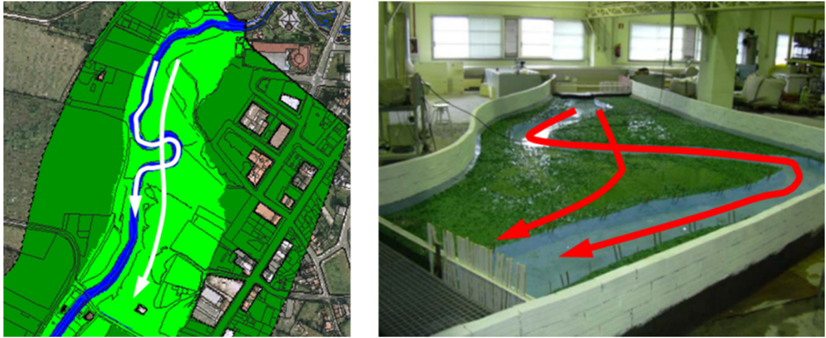
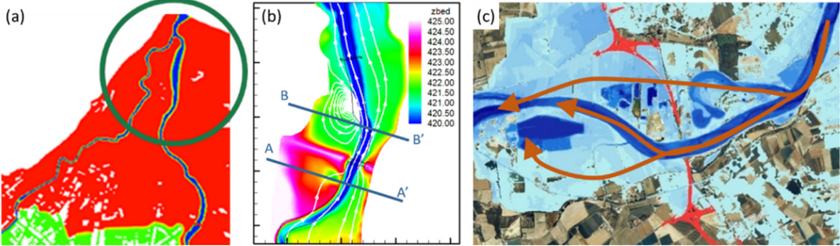
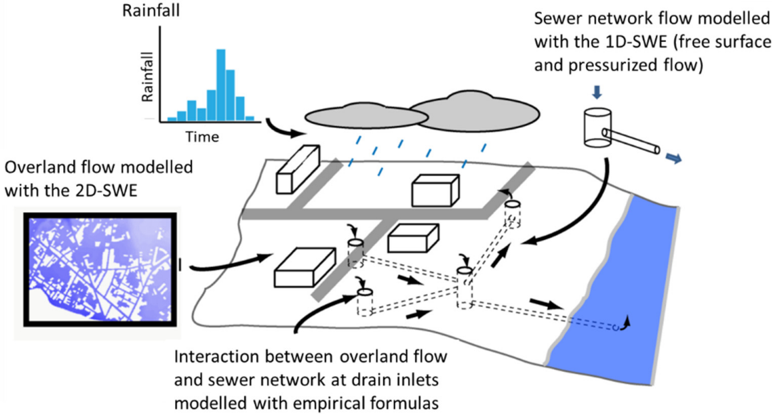
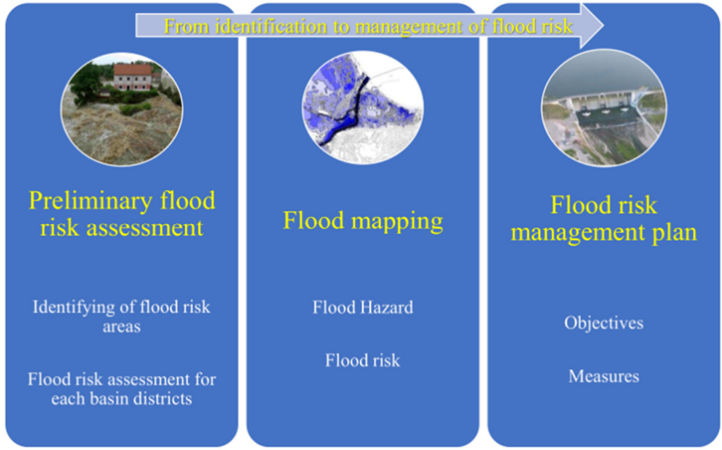
Verification
Claims the paper makes
The claims and statistics of this paper haven’t been checked yet.
Free: it reads the open-access text and checks the first 5 claims that cite a source we can check. Create a free account to check every claim.
Claims other papers make about this one
Each is checked against this paper’s own text: does it say what the citing paper says it does?
The source backs part of the claim, not all of it — or backs it for a different population, condition or comparison.
In the citing paper
“In recent years, advancements in flood vulnerability assessments have stressed the need for robust methodologies that account for non-stationary approaches and real-time data sources to address climate change and increasing extreme weather events [7].”
From Urban Flood Vulnerability Assessment in Freetown, Sierra Leone: AHP Approach (2024) · cites this paper as [7]
Experimental — accuracy not yet measured
Self-check
Percentages, sums and reported differences re-computed from the paper’s own numbers.
The self-check needs the paper’s full text.
Citations
Cites
Transforming Our World: The 2030 Agenda for Sustainable Development
(2018) · A New Era in Global Health · doi:10.1891/9780826190123.ap02 · Cited by 19,351 · cited 2×
“…legislation and global agendas, such as the Sendai Framework for Disaster Risk Reduction (2015–2030) [229], the Sustainable Development Goals [230], the Paris Climate Agreement [231], and the EU Strategy on Adaptation to Climate Change. natives originate in different regions with their own…”
Social Vulnerability to Environmental Hazards*
Cutter, S. L., Boruff, B. J., & Shirley, W. L. (2003) · Social Science Quarterly · doi:10.1111/1540-6237.8402002 · Cited by 5,702 · cited 2×
“The methodology proposed by [178] to build a social vulnerability index (SoVI) has been one of the most frequently used in the literature to quantify social vulnerability, yet there is presently a large variety of other methods and variables in use to quantify vulnerability, and some recent studies…”
MethodSendai Framework for Disaster Risk Reduction 2015-2030
(2018) · Human Rights Documents Online · doi:10.1163/2210-7975_hrd-9813-2015016 · Cited by 3,392
Future flood losses in major coastal cities
Hallegatte, S., Green, C., Nicholls, R. J., & Corfee-Morlot, J. (2013) · Nature Climate Change · doi:10.1038/nclimate1979 · Cited by 2,503
Nature-based solutions to address global societal challenges
(2016) · doi:10.2305/iucn.ch.2016.13.en · Cited by 2,064 · cited 2×
“Performance-based metrics are often based on the results of hydrological or hydraulic models and are, therefore, considered to be more precise and objective than multi-criteria index-based metrics [212].”
BackgroundKabisch, N., Frantzeskaki, N., Pauleit, S., Naumann, S., Davis, M., Artmann, M., Haase, D., Knapp, S., Korn, H., Stadler, J., et al. (2016) · Ecology and Society · doi:10.5751/es-08373-210239 · Cited by 1,490 · cited 1×
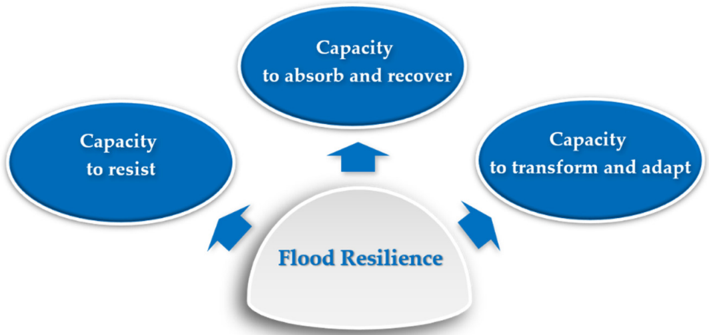
“Flood resilience is increasingly seen as a complement to existing flood ‐ risk ‐ manage ‐ ment approaches, being as it is a promising concept for dealing with the increasingly se ‐ vere consequences of climate change in general, and with increasing flood risk in particu ‐ lar [196].”
BackgroundThe science, policy and practice of nature-based solutions: An interdisciplinary perspective
Nesshöver, C., Assmuth, T., Irvine, K. N., Rusch, G. M., Waylen, K. A., Delbaere, B., Haase, D., Jones-Walters, L., Keune, H., Kovacs, E., et al. (2017) · Science of The Total Environment · doi:10.1016/j.scitotenv.2016.11.106 · Cited by 1,342 · cited 2×
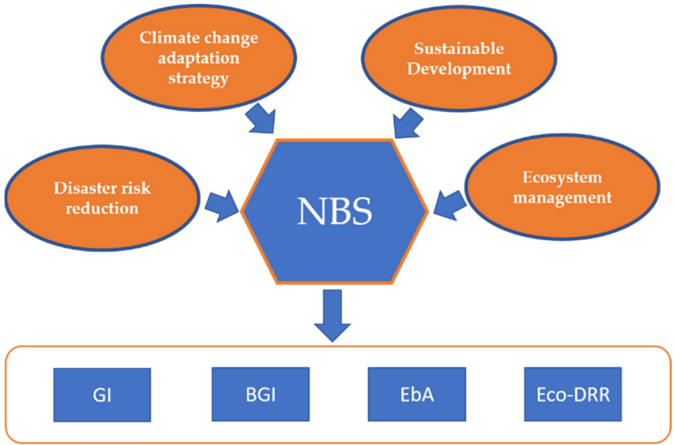
“In this context, some authors argue for a deeper understanding of the hydro-ecological effects of NBSs on different scales and within a diversity of environmental conditions [235,254].”
BackgroundResilience and disaster risk reduction: an etymological journey
Alexander, D. E. (2013) · Natural Hazards and Earth System Sciences · doi:10.5194/nhess-13-2707-2013 · Cited by 1,293 · cited 1×
“Much work in the literature has been dedicated to defining resilience as a concept to use in flood management [197–200].”
BackgroundBates, P. D., Horritt, M. S., & Fewtrell, T. J. (2010) · Journal of Hydrology · doi:10.1016/j.jhydrol.2010.03.027 · Cited by 1,273
A Review of Risk Perceptions and Other Factors that Influence Flood Mitigation Behavior
Bubeck, P., Botzen, W. J. W., & Aerts, J. C. J. H. (2012) · Risk Analysis · doi:10.1111/j.1539-6924.2011.01783.x · Cited by 1,201 · cited 1×
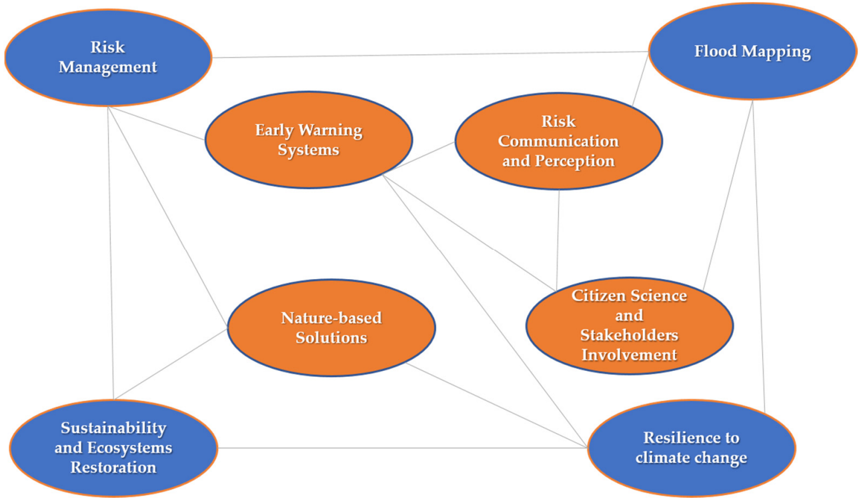
“…and the environment Natural flood management is part of this new philosophy, embracing related terms such as “making space for the river”, “ecosystem ‐ following sections, the progress in the above-mentioned trends are discussed, highlighting all potential interconnections between them (Figure 7).”
Background
Research works printed but not linked: 3
- 19. IPCC Summary for policymakers. In Climate Change 2014: Impacts, Adaptation, and Vulnerability. Part A: Global and Sectoral Aspects ; Contribution of Working Group II to the Fifth Assessment Report of the Intergovernmental Panel on Climate Change; Cambridge University Press: Cambridge, UK; New York, NY, USA, 2014.
- 54. Blad é , E.; Cea, L.; Corestein, G.; Escolano, E.; Puertas, J.; V á zquez-Cend ó n, E.; Dolz, J.; Coll, A. Iber: Herramienta de simulaci ó n num é rica del flujo en r í os. Rev. Int. Metod. Numer. Calc. Disen. Ing. 2014 , 30 , 1-10. [CrossRef]
- 19. based solutions. Sustainability 2019 , 11 , 6788. [CrossRef]
Cited by
Items 301–379 of 379
Waste Management Efforts in Flood Problems by The Government of Palembang: A Legal Perspective
Azhar, A., Putri, C. A., & Wijaya, B. S. (2025) · Jurnal Bina Mulia Hukum · doi:10.24198/jbmh.v10i1.2182
Hydrodynamic model and flood risk map creation of inceağri stream basin in Gazipaşa district
Çanak, İ. F. (2025) · Alanya Alaaddin Keykubat University Institutional Repository
Tharziansyah, M., & Rahman, A. (2026) · Journal of Sustainability Science and Management · doi:10.46754/jssm.2026.02.010
EXPLORING GLOBAL RESEARCH TRENDS ON FLOOD DISASTER RISK MANAGEMENT
Ramlee, S. N. S., Knight, V. F., Zainol, N. A. M., Mokhtar, M. A. M., Ramli, S. H., & Kassim, Z. (2026) · International Journal of Innovation and Industrial Revolution · doi:10.35631/ijirev.824007
Current Issues of Media Space: Book of Abstracts
Bondar, Y. (2025) · doi:10.17721/cims.2025.7
Zeroual, D., Boukhelkhal, I., Abdelali, B., & Lounis, I. (2026) · Ecological Engineering & Environmental Technology · doi:10.12912/27197050/220341
A Review of Urban Flooding Management Approaches: Predictive Modeling for Stormwater Catch Basins
Rosario, R. D. (2026) · Materials research proceedings · doi:10.21741/9781644904152-36
Amiluddin, A., Derka, I. T., Faradella, M., Sugianti, D. H., Katminto, K., Novita, E., & Hidayah, E. (2026) · Jurnal Teknotan · doi:10.24198/jt.vol20n1.13
Sagala, S., Yuanita, C. N., Putra, D. D., Prilandita, N., Mariany, A., Pratama, N. H., & Fakhri, F. (2026) · Advances in Social Science, Education and Humanities Research/Advances in social science, education and humanities research · doi:10.2991/978-2-38476-571-3_5
Flood Disaster Mitigation Strategy in Kuala Lumpur
Dewi, P. T., Umar, I., Hermon, D., & Febriandi (2026) · Jurnal Penelitian Pendidikan IPA · doi:10.29303/jppipa.v12i4.14202
“Furthermore, vulnerability maps can serve as strategic guidance in building better, more planned, and more climate-adaptive drainage infrastructure and flood control systems (Cea & Costabile, 2022).”
Al-Rawas, G., Nikoo, M. R., Hassani, M. R., Janbehsarayi, S. F. M., & Niksokhan, M. H. (2026) · Land Use Policy · doi:10.1016/j.landusepol.2026.108087
Machine learning-based modeling of watershed drainage density in different climates
Chapi, K., Sarbazi, M., Fatehi, Z., & Faizi, S. (2026) · Modeling Earth Systems and Environment · doi:10.1007/s40808-026-02819-3 · Cited by 2
“…in recent decades, drainage density has become central to predictive modeling of flood risk (Azadtalab et al. 2020; Bersabe and Jun 2025; Cea and Costabile 2022; Chapi et al. 2017; Dey et al. 2024; Melesse et al. 2019 ; Taromideh et al. 2022), soil erosion (Aouragh et al. 2023; Chen et…”
ZAHLI, S. E. (2026) · Water Practice & Technology · doi:10.2166/wpt.2026.271
Infiltration well as a method of flood mitigation in Surakarta: A parametric study
Chrismaningwang, G., Dananjaya, R. H., Surjandari, N. S., Setiawan, B., Fitri, S. N., & Purwana, Y. M. (2026) · AIP conference proceedings · doi:10.1063/5.0334271
Lazzarin, T., Costabile, P., & Viero, D. P. (2026) · International Conference on Challenges and Perspectives in Urban Water Management Systems (CSDU-CSSI Days) · doi:10.3390/engproc2026135029
Self-citationIrawan, L. Y., Huda, M. N., Pradana, I. H., & Mapa, M. T. (2026) · Jurnal Pengelolaan Sumberdaya Alam dan Lingkungan (Journal of Natural Resources and Environmental Management) · doi:10.29244/jpsl.16.3.380
“Flood exposure around the world is rising due to unpredictable rainfall from global climate changes [1–2].”
A Scalable Edge-Integrated Architecture for Urban Flood Monitoring and Prediction
Mandal, R., Sharma, B., Chutia, D., & Choudhury, N. (2026) · SN Computer Science · doi:10.1007/s42979-026-05039-9
“Recent scholarship emphasizes integrated perspectives that combine physical processes, infrastructure characteristics, and social consequences, moving beyond single source conceptualizations [ 28– 29 ].”
Dynamic Evaluation of Sewer Capacity for Street Flow Modelling During Urban Pluvial Floods
Gullotta, A., Bayas-Jiménez, L., & Campisano, A. P. (2026) · International Conference on Challenges and Perspectives in Urban Water Management Systems (CSDU-CSSI Days) · doi:10.3390/engproc2026135031
Masud, A., Peppa, M. V., Solano‐Correa, Y. T., Mills, J. P., & Button, C. (2026) · Geocarto International · doi:10.1080/10106049.2026.2681279
Yang, S., & Kim, B. H. S. (2026) · Climate Services · doi:10.1016/j.cliser.2026.100677
Modelación hidrodinámica en zonas deltaicas para evaluar alternativas de solución a inundaciones
Pérez, J., Villanueva, J. R. E., & Nardini, A. (2026) · Congresos UEX actas de congresos · doi:10.17398/3101-7177.2.103
“Estos modelos permiten simular con mayor detalle espacial procesos de inundación de llanuras aluviales e interacción río–mar. (Cea & Costabile, 2022), No obstante, su confiabilidad depende en gran medida de la calidad de los datos de entrada, tales como el modelo digital de elevación (DEM), los…”
Heo, I.-S., Yun, H. S., & Lee, S.-J. (2026) · Sustainability · doi:10.3390/su18125982
Li, H., Huang, M., Wang, Y., Cai, K., Liu, B., Xiao, H., & Zhou, Y. (2026) · Applied Sciences · doi:10.3390/app16125914
Gupta, L., & Dixit, J. (2026) · Environmental and Sustainability Indicators · doi:10.1016/j.indic.2026.101376 · Cited by 1
Arias-Hidalgo, M., Torres-Monroy, J., Sánchez-Marín, D., Alvarado-Mora, M., & Domínguez-Granda, L. (2026) · Research Square · doi:10.21203/rs.3.rs-9869766/v1
Wang, J., Xiang, Z., & Jun, X. (2026) · Frontiers in Environmental Science · doi:10.3389/fenvs.2026.1808860
A situational harm-reduction approach to flood risk management
Aitken, A., & McKie, R. E. (2026) · Sustainable and Resilient Infrastructure · doi:10.1080/23789689.2026.2690302
Assouane, S. (2026) · Archipel (Université du Québec à Montréal)
Harnessing Open Spaces: Integrated Solutions for Flood Resilience in Housing Development
Mohammad, N. K., Raid, M. M., Suratman, R., Muin, Z. A., Mohsin, A., Yusoff, M. M., Azali, N. S., & Ariff, A. H. (2026) · Advances in Science, Technology & Innovation/Advances in science, technology & innovation · doi:10.1007/978-3-032-23463-6_5
Proyecto ICARIA: impactos económicos por inundaciones en el Área Metropolitana de Barcelona
Coronas, À. D. L. C., Russo, B., Pacho-Gómez, S., & Yubero, D. (2026) · UPCommons institutional repository (Universitat Politècnica de Catalunya)
Slongo, C., Siegele, D., & Matt, D. T. (2026) · Advances in Science, Technology & Innovation/Advances in science, technology & innovation · doi:10.1007/978-3-032-20832-3_28
miao, S., & Reyes, S. (2026) · Urban Climate · doi:10.1016/j.uclim.2026.103062
Dalimunthe, S. A., Santosa, B. H., Surtiari, G. A. K., Hakim, A. M. Y., Reksa, A. F. A., Zevenbergen, C., Putiamini, S., Agustan, A., Lamijo, L., & Purwana, R. (2026) · Frontiers in Sustainable Cities · doi:10.3389/frsc.2026.1857403
Zhao, S., Wang, X., & Cai, R. (2026) · Water · doi:10.3390/w18151806
Co-designing stormwater adaptations through community-informed urban pluvial flood modeling
Spangler, A., Hadjimichael, A., Blash, C., Adib, M., Wu, H. J., Cameron, M., Welty, C., Minor-Terrell, D., & Zaitchik, B. F. (2026) · Sustainable Cities and Society · doi:10.1016/j.scs.2026.107750
Urban Stormwater Management and Drainage Assessment: A Case Study of Churu, Rajasthan
Choudhary, S. S., Nema, S., Bansal, A. K., & Jat, M. K. (2026) · Deltas of the world · doi:10.1007/978-3-032-09207-6_13
Simon, J., Stocker, M., Falkenrodt, L.-M., Mahesh, B., Rathmann, J., Buermann, W., Can, Y. S., André, E., & Beck, C. (2026) · Urban forestry & urban greening · doi:10.1016/j.ufug.2026.129617
“However, urbanisation also amplifies exposure to climate and environmental hazards (Dodman et al., 2022), including flooding (Cea and Costabile, 2022), air pollution (Sicard et al., 2023), and biodiversity loss (Elmqvist et al., 2013).”
Voters Support and Are Willing to Pay for Local Climate Adaptation Policies
Scheuch, E. G. (2026) · Urban Affairs Review · doi:10.1177/10780874261475229
Husaini, R., Perdinan, P., & Novindra, N. (2026) · Research Square · doi:10.21203/rs.3.rs-10560084/v1
Kim, E., Kim, T., Oh, Y.-J., & Koo, J.-Y. (2026) · Journal of The Korean Society of Water and Wastewater · doi:10.11001/jksww.2026.40.3.449
Deepthi, K. P., Vignesh, K. S., Pradeepa, C., & Senthil, R. (2026) · Geographies · doi:10.3390/geographies6030078
“Flood generation also varies by urban setting: coastal cities face compound pluvial and tidal hazards, riverine cities face fluvial overflows, and hill cities face flash flooding [15,16].”
Bùi, T. N. L. (2026) · Vietnam Institute for Building Science and Technology · doi:10.59382/j-ibst.2026.vi.vol2-5
Robust discharge coefficient modeling in triangular weirs via an enhanced Adam-optimized BP network
Zeng, G., Xu, M., & Zheng, Y. (2026) · Frontiers in Water · doi:10.3389/frwa.2026.1890874
Chen, W., You, G. J., Hwang, G.-W., Lin, J., & Hung, S. Y. (2026) · Journal of Hydrology Regional Studies · doi:10.1016/j.ejrh.2026.103932
Nsiah, J. J., Mensah, R. K., Amuah, E. E. Y., Prempeh, O. B., & Honu, W. S. (2026) · Total Environment Advances · doi:10.1016/j.teadva.2026.200171
Lee, H., Ok, G., Choi, B., Lee, S., Kim, D., & Kim, Y. (2026) · Water · doi:10.3390/w18182232
Adeyemi, A. B., Komolafe, A. A., Nakalembe, C., & Adebayo, A. D. (2026) · International Journal of River Basin Management · doi:10.1080/15715124.2026.2727417
Gkika, E. C., Kargas, A. D., Pierrakos, G., Sepetis, A. K., & Karamargiola, E. (2026) · Journal of Governance and Regulation · doi:10.22495/jgrv15i3art20
Salleh, M. R. M., Alias, N. E., Muniandy, J. M., Harmay, N. S. M., Sa’adi, Z., Sa’ari, R., Rahman, M. Z. A., & Yusoff, A. R. (2026) · Modeling Earth Systems and Environment · doi:10.1007/s40808-026-02892-8
“…and magnitude of flood events have increased markedly over the past few decades, a trend closely linked to anthropogenic climate change and shifts in hydrological regimes (Cea and Costabile 2022), rapid urbanization (Daksiya et al. 2021), and unsustainable land-use changes (Janizadeh et al. 2021).”
Lutonsky, T., Birschitzky, V. C., Jeschke, S., Buttinger‐Kreuzhuber, A., Wandel, N., Cornel, D., Haase, V., Klein, R., Waser, J., & Wimmer, M. H. (2026) · Journal of Hydrology · doi:10.1016/j.jhydrol.2026.136500
Laboratory Study of the Dynamics of a Pollutant Within a City Block During Urban Flooding
Fagour, C., Proust, S., & Mignot, E. (2026) · Water Resources Research · doi:10.1029/2025wr042960
“High flows can result in fatalities as well as significant material, environmental, and socio‐economic damage (UNISDR, 2009), which is reflected in the extensive research work devoted to modeling, managing, and adapting to urban flood risks (Cea & Costabile, 2022; Mignot & Dewals, 2022).”
Saputra, M. A. (2026) · Jurnal Rekayasa Sipil dan Arsitektur · doi:10.51903/qg5d7x69
Remeta, L., Sutanto, S. J., Bhowmik, R. D., Budamala, V., & Paparrizos, S. (2026) · International Journal of Disaster Risk Reduction · doi:10.1016/j.ijdrr.2026.106469
Prieto, N. E. C., & Buitrago, C. A. V. (2024) · Evolutionary Studies in Imaginative Culture
Designing Environmentally Friendly Drainager Systems In Flood-Potential Urban Areas
Djaelani, M. (2024) · International Journal of Health Economics and Social Sciences (IJHESS)
An Analysis of Flood Forecasting Parameters in the Bandar Segamat Sub-Basin using HEC-HMS
Azli, N. E. A. (2025) · Progress in Engineering Application and Technology
Kahveci, B., & Yıldız, N. E. (2026) · Journal of Anatolian Environmental and Animal Sciences · doi:10.35229/jaes.2012851
Analisis Kos Faedah dalam Kerangka Pembuat Keputusan bagi Pengurusan Tebatan Banjir
Saad, N. A., Yusof, Z., Faudzi, S. M. M., & Halim, H. (2026) · Journal of Building Performance
Sroyer, M. R., & Faidiban, P. (2026) · Journal of Agrocomplex and Engineering
Ezzine, A., Hermassi, T., & Kochlef, E. (2026) · Acta Geophysica · doi:10.1007/s11600-026-02036-7
Assessing flood-prone areas using stream order analysis: a case study of Auckland, New Zealand
Rotimi, F. E., Annadi, S. M., & Purushothaman, M. B. (2026) · Urbanization, sustainability and society. · doi:10.1108/uss-01-2026-0001
Garshasbi, D., Mruksirisuk, P., & Thanvisitthpon, N. T. (2026) · Climate Risk Management · doi:10.1016/j.crm.2026.100892
Development of a climate-adaptive flood defence index to support planning and design decisions
Nguyen, B. T. (2026) · Water Practice & Technology · doi:10.2166/wpt.2026.495
Luca, D. L. D., Lucantonio, M., Biondi, D., Cruscomagno, F., Napolitano, F., Ridolfi, E., Getuli, V., Bruttini, A., & Cinquepalmi, F. (2026) · International Journal of Disaster Risk Reduction · doi:10.1016/j.ijdrr.2026.106495
Flood risk exposure and housing security in Québec: A spatial and policy analysis
Moon, H. (2026) · Spectrum Research Repository (Concordia University)
Helmi, M., Cappelli, F., Dastourani, M., Kleidorfer, M., & Grimaldi, S. (2026) · Hydrology · doi:10.3390/hydrology13100278
Towards a smart city: A framework for smart flood management in Sarajevo
Hadžić, E., Mulaomerović–Šeta, A., Lazović, N., Milišić, H., & Blagojević, B. (2026) · International Scientific Conference Green Building · doi:10.5937/greenb26059h
Purnama, I. A., Angin, I. K. P., & Setiawan, R. (2026) · Journal of Advanced Sciences and Mathematics Education · doi:10.58524/jasme.v6i3.1384
“Rather than emphasizing flood prevention alone, flood resilience focuses on improving the capacity of urban systems to anticipate, withstand, adapt to, and recover from flood events while maintaining essential urban functions (Cea & Costabile, 2022; Mabrouk et al., 2024; L. Wang et al., 2022).”
Flood Susceptibility Mapping in San Antonio, Texas Using the Analytical Hierarchy Process and GIS
Mayukh, A. A. A., Chowdhury, M. S., Kim, Y. J., & Youn, S. (2026) · IEEE International Geoscience and Remote Sensing Symposium (IGARSS) · doi:10.1109/igarss60577.2026.11730587
“With the continued growth of urban areas and climate change, the patterns of risks may shift to a higher level over the years [15].”
Chen, C., Zhang, Y., Wu, P., Wang, L., Lou, Y., & Hu, T. (2026) · Journal of Hydrology Regional Studies · doi:10.1016/j.ejrh.2026.104119
Xu, J., Wang, Y., Wang, C., & Lin, Q. (2026) · Journal of Flood Risk Management · doi:10.1111/jfr3.70272
Alves, L. M. C., Tabet, B. L., Rezende, O. M., & Miguez, M. G. (2026) · Land · doi:10.3390/land15112044
Salih, A., Zhang, Q., Raschellà, A., Mohammed, A., Abdullah, B. M., Qiu, Y., Hashim, K., Aldhaibani, O. A., & Maheshwari, M. K. (2026) · Hydrology · doi:10.3390/hydrology13110291
A Particle Filter Estimation of Taylor’s Law Fluctuation Scaling in Water Demand
Sattler, B. J., Cheong, S. A., Joerin, J., & Pelz, P. (2026) · elib (German Aerospace Center)
Djamaluddin, J., Zubair, H., Dariati, T., Demmallino, E. B., Iswoyo, H., & Arif, S. (2026) · Ecological Engineering & Environmental Technology · doi:10.12912/27197050/226436
kaleshani, F. A., Jelodar, M. B., Piadeh, F., Wilkinson, S., & Balaei, B. (2026) · International Journal of Disaster Risk Reduction · doi:10.1016/j.ijdrr.2026.106548
Kusuma, M. S. B., Pratama, F., Rohmat, F. I. W., Wulandari, S., & Wijayasari, W. (2026) · Results in Engineering · doi:10.1016/j.rineng.2026.113930
Elkhateeb, A., Ayad, H. M., & Fathi, A. A. (2026) · Alexandria Engineering Journal · doi:10.1016/j.aej.2026.10.002
Sofiyah, E. S., Suryawan, I. W. K., Suhardono, S., Ulhasanah, N., Sari, M. M., Rahman, A., & Lee, C. (2026) · International Journal of Disaster Risk Reduction · doi:10.1016/j.ijdrr.2026.106433
Metadata
- Authors
- Cea, L., & Costabile, P.
- Affiliations
- Universidade da Coruña (ES)
- University of Calabria (IT)
- Corresponding author
- Cea, Luís
- Costabile, Pierfranco
- Venue
- Hydrology
- Publisher
- MDPI AG
- Published
- 2022-03-18
- Volume
- 9
- Issue
- 3
- Pages
- 50
- ISSN
- 2306-5338 (ISSN-L)
- OpenAlex
- W4220807507
- Cited by
- 317
- References
- 357
- Citations by year
- 2026: 101 · 2025: 94 · 2024: 75 · 2023: 33 · 2022: 14
- FWCI
- 21.52
- Type
- journal article
- Language
- en
- Open access
- gold
- doi.org
- Licence
- Locations
- Hydrology (publishedVersion, cc-by)
- DOAJ (DOAJ: Directory of Open Access Journals) (submittedVersion)
- Archive of Doctoral Theses and Digital Collections (University of Calabria) (submittedVersion, cc-by)
- RUC (Universidade Da Coruña) (submittedVersion, cc-by)
- Topics
- Physical Sciences › Environmental Science › Global and Planetary Change › Flood Risk Assessment and Management
- Physical Sciences › Environmental Science › Environmental Engineering › Urban Stormwater Management Solutions
- Physical Sciences › Environmental Science › Water Science and Technology › Hydrology and Watershed Management Studies
- Keywords
- urban flooding, flood risk modelling, flood risk management, climate change adaptation, urban runoff, drainage failure, coastal flooding, tidal flooding, urban densification, socio-economic losses
About these checks
Registry, retraction, Cites and statistics results are computed, not judged, with one exception: a printed reference that no index lists is read once by a model before it counts as a citation error. Claims are extracted by a model and kept only when their quote appears verbatim in the text; each cited source is then checked, with a model’s help, for whether it says what the claim relies on. Those verdicts can be wrong — read the claim’s quote and the cited source before relying on one.
Statistics and arithmetic are recomputed, not judged.
Confidence bands are shown only for fields calibrated on our annotated test set. None is calibrated yet, so no band is shown.
What counts as a claim ›How we measure confidence ›How we check this ›
Are you an author, or do you see a problem with this page? Request a review
Data sources
Bibliographic data: Semantic Scholar, OpenAlex, Crossref.
Contains information from the Semantic Scholar Academic Graph Datasets, made available under the ODC Attribution License (ODC-BY 1.0).
Semantic Scholar’s data is described in: Kinney, R., et al. (2023). The Semantic Scholar Open Data Platform. arXiv:2301.10140.
