

Work Addiction, Obsessive-Compulsive Personality Disorder, Burn-Out, and Global Burden of Disease: Implications from the ICD-11
Open accessThe DOI matches its Crossref record; 69 of the 70 references it cites were found in a registry or an index.
Abstract
Occupational stress and high workload are being increasingly recognized as significant contributors to the diseases and disorders constituting major components of the global burden of disease. A more detailed definition of burn-out was recently included by the World Health Organization (WHO) in the eleventh revision of the International Classification of Diseases (ICD-11) which reflects a growing acknowledgment of the role of professional work in mental health. One of the symptoms of obsessive-compulsive personality disorder/anankastic personality disorder (OCPD/APD) is an undue preoccupation with productivity to the exclusion of pleasure and interpersonal relationships. This compulsive overworking is closely related to the concept of work addiction, and OCPD/APD was suggested to be its major risk factor. OCPD/APD is the most prevalent personality disorder and one that appears to produce the highest direct and indirect medical costs. At the same time, it is vastly understudied. In recent years, it has been repeatedly emphasized that it requires consistent conceptualization and clarification of its overlapping with similar conditions. Even though the limited existing studies suggest its strong relationship with burn-out and depression among employed individuals, there has been no systematic effort to investigate its role in the consequences of occupational stress and high workload. This paper identifies several substantial gaps in the current understanding of the relationships between work addiction, OCPD/APD, burn-out, and the global burden of disease within the context of the WHO’s plan of developing evidence-based guidelines on mental wellbeing in the workplace.
Overview
The claims and statistics of this paper haven’t been checked yet.
Free: it reads the open-access text and checks the first 5 claims that cite a source we can check. Create a free account to check every claim.
Integrity signals
Registry
Cites
Statistics
Figures
Verification
Claims the paper makes
The claims and statistics of this paper haven’t been checked yet.
Free: it reads the open-access text and checks the first 5 claims that cite a source we can check. Create a free account to check every claim.
Claims other papers make about this one
Each is checked against this paper’s own text: does it say what the citing paper says it does?
The cited source says what the claim attributes to it.
In the citing paper
“Stress has increasingly been recognized as a significant health issue, especially within the working population (Atroszko et al., 2020; Eurofound, 2017).”
From Learning how to recover from stress: Results from an internet-based randomized controlled pilot trial (2023) · cites this paper as Atroszko et al., 2020
Self-check
Percentages, sums and reported differences re-computed from the paper’s own numbers.
The self-check needs the paper’s full text.
Citations
Cites
Diagnostic and Statistical Manual of Mental Disorders
American Psychiatric Association (2013) · doi:10.1176/appi.books.9780890425596 · Cited by 116,369
Vos, T., Allen, C., Arora, M., Barber, R. M., Bhutta, Z. A., Brown, A., Carter, A., Casey, D. C., Charlson, F. J., Chen, A. Z., et al. (2016) · The Lancet · doi:10.1016/s0140-6736(16)31678-6 · Cited by 7,253
No health without mental health
Prince, M., Patel, V., Saxena, S., Maj, M., Maselko, J., Phillips, M. R., & Rahman, A. (2007) · The Lancet · doi:10.1016/s0140-6736(07)61238-0 · Cited by 3,753
Sick individuals and sick populations
Rose, G. (2001) · International Journal of Epidemiology · doi:10.1093/ije/30.3.427 · Cited by 3,736 · cited 1×
“It has been demonstrated that the prevalence of a disease or disorder in a population has a relationship with the average level of behaviors related to that disease/disorder within the population [75].”
BackgroundPsychological Stress and Disease
Cohen, S., Janicki-Deverts, D., & Miller, G. E. (2007) · JAMA · doi:10.1001/jama.298.14.1685 · Cited by 3,168 · cited 1×
“Long working hours and stress (including occupational stress) are among the most well-recognized risk factors for a host of diseases and disorders including CVD [6], cancer [7], depression and anxiety [8], diabetes [9], and substance use and abuse [10].”
BackgroundInterventions to prevent and reduce physician burnout: a systematic review and meta-analysis
West, C. P., Dyrbye, L. N., Erwin, P. J., & Shanafelt, T. D. (2016) · The Lancet · doi:10.1016/s0140-6736(16)31279-x · Cited by 2,362
Depression and cardiovascular disease: a clinical review
Hare, D. L., Toukhsati, S. R., Johansson, P., & Jaarsma, T. (2014) · European Heart Journal · doi:10.1093/eurheartj/eht462 · Cited by 1,362 · cited 8×
“Long working hours and stress (including occupational stress) are among the most well-recognized risk factors for a host of diseases and disorders including CVD [6], cancer [7], depression and anxiety [8], diabetes [9], and substance use and abuse [10].”
BackgroundInfluentialLichtman, J. H., Froelicher, E. S., Blumenthal, J. A., Carney, R. M., Doering, L. V., Frasure-Smith, N., Freedland, K. E., Jaffe, A. S., Leifheit-Limson, E. C., Sheps, D. S., et al. (2014) · Circulation · doi:10.1161/cir.0000000000000019 · Cited by 1,208 · cited 2×
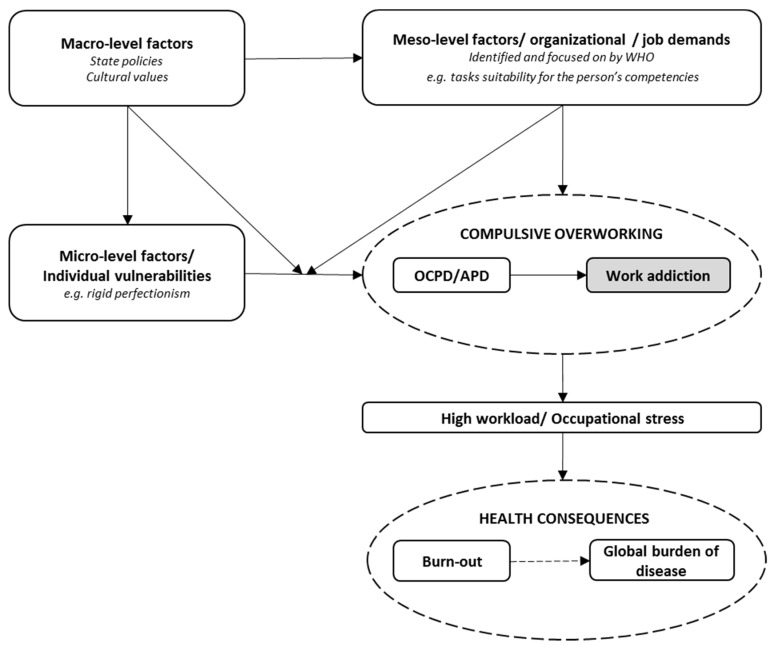
“Moreover, burn-out is a potential mediator between OCPD/APD/work addiction, and other health problems such as CVD or substance abuse—with which burn-out, as well as long working hours, in general—have been previously associated [43–47] (the path between burn-out and other disorders is represented by a dashed line in F…”
BackgroundPerfectionism as a transdiagnostic process: A clinical review
Egan, S. J., Wade, T. D., & Shafran, R. (2011) · Clinical Psychology Review · doi:10.1016/j.cpr.2010.04.009 · Cited by 961
Melamed, S., Shirom, A., Toker, S., Berliner, S., & Shapira, I. (2006) · Psychological Bulletin · doi:10.1037/0033-2909.132.3.327 · Cited by 943 · cited 8×
“Long working hours and stress (including occupational stress) are among the most well-recognized risk factors for a host of diseases and disorders including CVD [6], cancer [7], depression and anxiety [8], diabetes [9], and substance use and abuse [10].”
BackgroundInfluential
Research works printed but not linked: 1
- Robinson B.E. Chained to the Desk: A Guidebook for Workaholics, Their Partners and Children, and the Clinicians Who Treat Them NYU Press New York, NY, USA 2014
Cited by
Bruyneel, A., Bouckaert, N., de Noordhout, C. M., Detollenaere, J., Kohn, L., Pirson, M., Sermeus, W., & den Heede, K. V. (2022) · International Journal of Nursing Studies · doi:10.1016/j.ijnurstu.2022.104385 · Cited by 214
“Burnout is a syndrome that is conceptualized as chronic workplace stress that has not been successfully managed and has resulted in feelings of emotional exhaustion, depersonalization, and a lack of personal accomplishment (Maslach et al., 1996; Atroszko et al., 2020).”
BackgroundWorkload, Workaholism, and Job Performance: Uncovering Their Complex Relationship
Spagnoli, P., Haynes, N. J., Kovalchuk, L. S., Clark, M. A., Buono, C., & Balducci, C. (2020) · International Journal of Environmental Research and Public Health · doi:10.3390/ijerph17186536 · Cited by 147
“This is understandable since workaholism is closely related to obsessive–compulsive personality disorder and a perfectionistic tendency is an important ingredient in such disorder [9].”
BackgroundInfluentialOccupational Burnout and Productivity Loss: A Cross-Sectional Study Among Academic University Staff
Amer, S. A. A. M., Elotla, S. F., Ameen, A. E., Shah, J., & Fouad, A. (2022) · Frontiers in Public Health · doi:10.3389/fpubh.2022.861674 · Cited by 80
Mohammadian, Y., & Nasirzadeh, N. (2021) · Toxicology and Industrial Health · doi:10.1177/07482337211031691 · Cited by 57
“COPD is a progressive disease that could be initiated after exposure to vapors, gases, fumes, and dust (Atroszko et al., 2020).”
BackgroundBruyneel, A., Bouckaert, N., Pirson, M., Sermeus, W., & den Heede, K. V. (2023) · Intensive and Critical Care Nursing · doi:10.1016/j.iccn.2023.103596 · Cited by 64
Falco, A., Girardi, D., Sipio, A. D., Calvo, V., Marogna, C., & Snir, R. (2020) · International Journal of Environmental Research and Public Health · doi:10.3390/ijerph17134750 · Cited by 52
Work addiction, work engagement, job burnout, and perceived stress: A network analysis
Bereznowski, P., Atroszko, P. A., & Konarski, R. (2023) · Frontiers in Psychology · doi:10.3389/fpsyg.2023.1130069 · Cited by 49
“Meta-analyses and reviews suggest that compulsive overworking could lead to occupational stress, deteriorated work engagement, job burnout, and eventually, a global burden of disease (Patel, 2011; Clark et al., 2016; Di Stefano and Gaudiino, 2019; Atroszko et al., 2020a).”
BackgroundAtroszko, P. A., Atroszko, B., & Charzyńska, E. (2021) · International Journal of Environmental Research and Public Health · doi:10.3390/ijerph18168590 · Cited by 40
“Furthermore, study and work addiction have been linked to anankastia/ obsessive-compulsive personality disorder (OCPD), which is also the most prevalent personality disorder in the general population (see [71]).”
BackgroundBruyneel, A., Dauvergne, J. E., Bouckaert, N., Caillet, A., Sermeus, W., Poiroux, L., & den Heede, K. V. (2025) · Journal of Clinical Nursing · doi:10.1111/jocn.17650 · Cited by 37
Sathaporn, K., & Pitanupong, J. (2022) · BMC Psychology · doi:10.1186/s40359-022-00842-4 · Cited by 42
“Moreover, burnout, a syndrome characterized by three dimensions: feelings of energy depletion or exhaustion; increased mental distance from one’s job, or feelings of negativism or cynicism related to one’s job as well as reduced professional efficacy [21], is one factor that influences the demonstration of empathetic…”
BackgroundClinical Implications of ICD-11 for Diagnosing and Treating Personality Disorders
Bach, B., & Mulder, R. (2022) · Current Psychiatry Reports · doi:10.1007/s11920-022-01364-x · Cited by 40
Unravelling Work Drive: A Comparison between Workaholism and Overcommitment
Avanzi, L., Perinelli, E., Vignoli, M., Junker, N. M., & Balducci, C. (2020) · International Journal of Environmental Research and Public Health · doi:10.3390/ijerph17165755 · Cited by 37
“Based on the idea that workaholism has been considered a true obsession for work and that obsessive-compulsive personality disorder has, among its correlates, an excessive conscientiousness and scrupulousness (see [29]), we argue that workaholism shares several cognitive and behavioral aspects with conscientiousness.”
BackgroundLiu, M., Liu, L., Lv, Z., Ma, F., Mao, Y., & Liu, Y. (2023) · Journal of Advanced Nursing · doi:10.1111/jan.15925 · Cited by 34
Mazzetti, G., Guglielmi, D., & Schaufeli, W. B. (2020) · International Journal of Environmental Research and Public Health · doi:10.3390/ijerph17228550 · Cited by 39
“Workaholism shares intrusive thoughts (related to work), the inability to relax, and an intense concentration on oneself related to a failure in enacting effective coping strategies, such as seeking social support [60].”
BackgroundLyu, X., Hu, J., Xu, X., Xianyu, Y., & Dong, W. (2021) · BMC Nursing · doi:10.1186/s12912-021-00591-6 · Cited by 35
“Job burnout is an important factor affecting employees’ health and their pursuit of medical care; however, this condition does not fall within the category of disease [54].”
BackgroundMa, F., Zhu, Y., Liu, L., Chen, H., Liu, Y., & Zhang, F. (2025) · Journal of Nursing Management · doi:10.1155/jonm/3793927 · Cited by 42
Work Addiction and Work Engagement: a Network Approach to Cross-Cultural Data
Bereznowski, P., Bereznowska, A., Atroszko, P. A., & Konarski, R. (2021) · International Journal of Mental Health and Addiction · doi:10.1007/s11469-021-00707-8 · Cited by 34
Self‐care in prevention of burnout amongst counselling professionals: A systematic literature review
Turner, M., & Rankine, R. (2024) · Counselling and Psychotherapy Research · doi:10.1002/capr.12837 · Cited by 35
An adaptive modelling approach to employee burnout in the context of the big five personality traits
Bashkirova, A., Compagner, A., Henningsen, D. M., & Treur, J. (2023) · Cognitive Systems Research · doi:10.1016/j.cogsys.2022.12.010 · Cited by 34
Influence of Mutual Support on Burnout among Intensive Care Unit Healthcare Professionals
Haruna, J., Unoki, T., Ishikawa, K., Okamura, H., Kamada, Y., & Hashimoto, N. (2022) · SAGE Open Nursing · doi:10.1177/23779608221084977 · Cited by 31
“In 2019, WHO included burnout in the revised International Classification of Diseases-11 (Atroszko et al., 2020).”
BackgroundWorkaholism and the Enactment of Bullying Behavior at Work: A Prospective Analysis
Balducci, C., Menghini, L., Conway, P. M., Burr, H., & Zaniboni, S. (2022) · International Journal of Environmental Research and Public Health · doi:10.3390/ijerph19042399 · Cited by 23
“This process of transmission of workaholic tendencies may contribute to create what has been called the “addictive organization” [67], which may have substantial human costs in terms of burnout and overwork-related disorders [1].”
BackgroundAdvancing Workaholism Research
Balducci, C., Spagnoli, P., & Clark, M. A. (2020) · International Journal of Environmental Research and Public Health · doi:10.3390/ijerph17249435 · Cited by 20
“The “viewpoint” article by Atroszko and colleagues [18] serves as a good starting point to read the Special Issue contributions.”
BackgroundAzoulay, É., Myatra, S. N., Calle, G. H. L., Jaber, S., Boulanger, C., Demirkýran, O., Θεοδωρακοπούλου, Μ., Paiva, J.-A., Arabi, Y. M., Burghi, G., et al. (2025) · Intensive Care Medicine · doi:10.1007/s00134-025-08134-2 · Cited by 23
“Occupational burnout is a multi-faceted, WHO-defined work phenomena that is distinct from, but associated with, anxiety and depression [44].”
Work Addiction and Stimulant Use: Latent Profile Analysis in a Representative Population Study
Kun, B., Fetahu, D., Mervó, B., Mägi, A., Eisinger, A., Paksi, B., & Demetrovics, Z. (2023) · International Journal of Mental Health and Addiction · doi:10.1007/s11469-023-01076-0 · Cited by 27
“…the problematic nature of one’s relationship with work, in line with former studies indicating possible comorbidities as well as negative mental health consequences of work addiction (Atroszko et al., 2020), clearly differentiate between the different levels of other psychopathological symptoms.”
Workaholism e burnout entre docentes de pós-graduação stricto sensu
Barreto, M. F. C., Galdino, M. J. Q., Fernandes, F. A. G., Martins, J. T., Marziale, M. H. P., & Haddad, M. D. C. F. L. (2022) · Revista de Saúde Pública · doi:10.11606/s1518-8787.2022056003883 · Cited by 30
“Masculino 112 (52,6) 101 (47,4) 0,77 180 (84,5) 33 (15,5) 0,39 151 (70,9) 62 (29,1) 0,15 Feminino 191 (51,3) 181 (48,7) 324 (87,1) 48 (12,9) 284 (76,3) 88 (23,7)”
Atroszko, P. A., Mytlewska, W. M., & Atroszko, B. (2020) · Health Psychology Report · doi:10.5114/hpr.2020.98734 · Cited by 21
“In this context, both EDs and WA share substantial comorbidities with particular disorders such as frequent co-occurrence of AN and WA with obsessive-compulsive personality disorder (OCPD) (Atroszko, 2019a, b; Atroszko et al., 2020; Blinder et al., 2006; Lilenfeld et al., 2006).”
BackgroundMethodInfluentialA daily diary investigation on the job-related affective experiences fueled by work addiction
Balducci, C., Spagnoli, P., Avanzi, L., & Clark, M. A. (2021) · Journal of Behavioral Addictions · doi:10.1556/2006.2020.00102 · Cited by 23
“Emotional exhaustion is the first emerging component of burnout (Lee & Ashforth, 1996) – a very prevalent phenomenon among workers (see Atroszko et al., 2020).”
BackgroundFekih‐Romdhane, F., Sawma, T., Akel, M., Obeïd, S., Brytek‐Matera, A., & Hallit, S. R. (2022) · International Journal of Mental Health and Addiction · doi:10.1007/s11469-022-00909-8 · Cited by 21
“Prevention and intervention programs are currently lacking (Atroszko et al., 2020; Austin, 2016); some approaches targeting both constructs have been proposed, such as cognitive-behavioral therapies (Atroszko et al., 2021), which are suggested to act on shared features of both WA and FA (e.g., poor…”
InfluentialGečaitė-Stončienė, J., Fineberg, N. A., Podlipskytė, A., Neverauskas, J., Juškienė, A., Mickuvienė, N., & Burkauskas, J. (2020) · International Journal of Environmental Research and Public Health · doi:10.3390/ijerph17218132 · Cited by 22
“Due to the tendency of “workaholic behavior” [12,21], people with OCPD are more prone to work-related fatigue, which itself is associated with work-related rumination and poorer sleep quality [22].”
BackgroundThe Antecedents and Consequences of Workaholism: Findings From the Modern Japanese Labor Market
Akutsu, S., Katsumura, F., & Yamamoto, S. (2022) · Frontiers in Psychology · doi:10.3389/fpsyg.2022.812821 · Cited by 20
Czerwiński, S. K., Lawendowski, R., Kierzkowski, M., & Atroszko, P. A. (2022) · Musicae Scientiae · doi:10.1177/10298649221095135 · Cited by 25
Woropay-Hordziejewicz, N., Buźniak, A., Lawendowski, R., & Atroszko, P. A. (2022) · Sustainability · doi:10.3390/su14148617 · Cited by 17
Atroszko, P. A. (2022) · Studies in neuroscience, psychology and behavioral economics · doi:10.1007/978-3-031-04772-5_9 · Cited by 17
Balducci, C., Spagnoli, P., Toderi, S., & Clark, M. A. (2021) · Work & Stress · doi:10.1080/02678373.2021.1976883 · Cited by 16
“According to Griffiths et al. (2018) and Atroszko et al. (2020), workaholism is intimately connected with obsessive compulsive personality – that is, an enduring psychological problem.”
BackgroundKızıloğlu, M., Kırcaburun, K., Özsoy, E., & Griffiths, M. D. (2022) · International Journal of Mental Health and Addiction · doi:10.1007/s11469-022-00973-0 · Cited by 21
“Work addiction research has basically focused on the causes (Andreassen et al., 2016; Spurk et al., 2015), consequences (Atroszko et al., 2020; Burke & Fiskenbaun, 2009), and measurement issues (Andreassen et al., 2012a, 2012b; Robinson, 1999; Schaufeli et al., 2006).”
Rachubińska, K., Cybulska, A. M., Kupcewicz, E., Jurewicz, A., Pańczyk, M., Cymbaluk‐Płoska, A., Jurczak, J., & Grochans, E. (2022) · Journal of Clinical Medicine · doi:10.3390/jcm11216288 · Cited by 16
Bereznowski, P., & Konarski, R. (2020) · Polish Psychological Bulletin · doi:10.24425/ppb.2020.133768 · Cited by 17
Muhammad, N., Ullah, S. R., Nagi, T. K., & Yousaf, R. A. (2023) · Cureus · doi:10.7759/cureus.37828 · Cited by 16
“Introduction And Background Due to its related mental, social, and interpersonal incapacity, depression has become a severe public health concern with a growing prevalence and worldwide disease burden [1].”
BackgroundAtroszko, P. A., Kun, B., Buźniak, A., Czerwiński, S. K., Schneider, Z., Woropay-Hordziejewicz, N., Bakker, A. B., Balducci, C., Demetrovics, Z., Griffiths, M. D., et al. (2025) · Journal of Behavioral Addictions · doi:10.1556/2006.2025.00011 · Cited by 16
“Workaholic leaders tend to generate excessive demands on their followers and increase WA risk (Atroszko & Atroszko, 2020).”
InfluentialAtroszko, P. A. (2024) · International Journal of Mental Health and Addiction · doi:10.1007/s11469-024-01243-x · Cited by 13
“Moreover, while it is defined by excessive work, it does not include any clinically relevant aspects, such as those typically associated with consequences of high workload and occupational stress (see Atroszko et al., 2020).”
Is obsessive–compulsive personality disorder related to stress‐related exhaustion?
Gulin, S., Ellbin, S., Jonsdottir, I. H., & Lindqvist Bagge, A. (2021) · Brain and Behavior · doi:10.1002/brb3.2171 · Cited by 11
“Excessive devotion to work (cf. compulsive overworking, workaholism) has been described as a somewhat persistent behavioral pattern (Atroszko et al., 2020).”
BackgroundCharzyńska, E., Buźniak, A., Czerwiński, S. K., Woropay-Hordziejewicz, N., Schneider, Z., Aavik, T., Adamovic, M., Adams, B. G., Almahjoob, S. M., Almoshawah, S. A. S., et al. (2025) · Journal of Behavioral Addictions · doi:10.1556/2006.2025.00005 · Cited by 14
“One of the most significant is the fact that work addiction has been investigated in two mostly parallel lines of research and, to some extent, distinct frameworks (Atroszko & Atroszko, 2020; Atroszko et al., 2019, 2020).”
Atroszko, B., & Atroszko, P. A. (2020) · Ars Educandi · doi:10.26881/ae.2020.17.01 · Cited by 17
Principles for Managing Burnout among Catholic Church Professionals
Plante, T. G. (2022) · Pastoral Psychology · doi:10.1007/s11089-022-01039-7 · Cited by 16
“Organization and listed in the International Classification of Disease (ICD-11; Atroszko et al., 2020).”
Liu, W., Wang, Y., & Yao, H. (2024) · Current Psychology · doi:10.1007/s12144-024-06090-6 · Cited by 14
“Second, higher levels of worka-holic characteristics mean that individuals are exposed to more stressors (e.g., those in the interpersonal, chemical, and physical environment) at work, thereby increasing health risks (Chung & Kwon, 2013; Atroszko et al., 2020).”
Avcı, M. Z. (2025) · Psychiatric Quarterly · doi:10.1007/s11126-025-10176-0 · Cited by 10
Economic Impact of Work-Related Musculoskeletal Disorders—A Systematic Review
Rosado, A. S., Baptista, J. S., Haik, M. N., & Guedes, J. C. (2022) · Studies in systems, decision and control · doi:10.1007/978-3-031-12547-8_48 · Cited by 8
Atroszko, P. A., Buźniak, A., Woropay-Hordziejewicz, N., Kierzkowski, M., & Lawendowski, R. (2023) · Musicae Scientiae · doi:10.1177/10298649231184920 · Cited by 10
“Currently, it is suggested that OCPD/anankastia may be a major risk factor for work addiction (P. A. Atroszko, 2019a, 2019b; P. A. Atroszko et al., 2020).”
BackgroundResultWorkaholism and quality of work-life: a psychosocial pathway to brain-drain syndrome
Akinwale, O. E., Kuye, O. L., & Akinwale, O. E. (2023) · Management Decision · doi:10.1108/md-04-2023-0670 · Cited by 26
Bodó, V., Horváth, Z., Paksi, B., Eisinger, A., Felvinczi, K., Demetrovics, Z., & Kun, B. (2024) · Comprehensive Psychiatry · doi:10.1016/j.comppsych.2024.152513 · Cited by 8
Bereznowski, P., Konarski, R., Pallesen, S., & Atroszko, P. A. (2024) · International Journal of Mental Health and Addiction · doi:10.1007/s11469-023-01234-4 · Cited by 11
“Perfectionism associated with OCPD may still be a strong risk factor in many cases, analogously to work addiction (Atroszko et al., 2020); however, all these premises suggest that problematic over-studying can be viewed as an addictive disorder/problem and measured as such.”
Peters, E. M. J., Schedlowski, M., Watzl, C., & Gimsa, U. (2021) · PPmP - Psychotherapie · Psychosomatik · Medizinische Psychologie · doi:10.1055/a-1322-3205 · Cited by 11
Lei, M., Alam, G. M., & Bashir, K. (2025) · Humanities and Social Sciences Communications · doi:10.1057/s41599-025-05043-z · Cited by 14
“Drawing from Maslach ’ s foundational research, the WHO de fi nes burnout as a syndrome which is caused by chronic workplace stress that has not been effectively handled (Atroszko et al. 2020).”
Seretis, D., Hart, C. M., & Maguire, T. (2022) · Journal of Personality Assessment · doi:10.1080/00223891.2022.2145963 · Cited by 7
“In spite of some important studies published recently on OCPD (Atroszko et al., 2020; Pinto et al., 2018; Wheaton & Ward, 2020), this personality disorder is still poorly investigated, and little is known about phenomenological aspects and correlates that can aid assessment and therapy of…”
BackgroundGonzález, A., Achiardi, O. A., Valencia, M., & Cabello‐Verrugio, C. (2023) · Advances in experimental medicine and biology · doi:10.1007/978-3-031-26163-3_5 · Cited by 8
Exploring the Relationship Between Work Addiction and Burnout
Towch, S. V., Atroszko, P. A., & Pontes, H. M. (2024) · International Journal of Mental Health and Addiction · doi:10.1007/s11469-024-01397-8 · Cited by 10
“Urgent attention is required due to the reported high prevalence rates of work addiction across Europe and North America (Atroszko et al., 2020); thus, further research is vital to understand its impact on well-being and society and develop intervention strategies.”
Kenyhercz, V., Frikker, G., Kaló, Z., Demetrovics, Z., & Kun, B. (2022) · Sustainability · doi:10.3390/su14169940 · Cited by 11
Asplund, R. P., Carvallo, F., Christensson, H., Videsäter, E., Häggman, A., Ljótsson, B., Carlbring, P., & Andersson, G. (2023) · Internet Interventions · doi:10.1016/j.invent.2023.100681 · Cited by 6
“Stress has increasingly been recognized as a significant health issue, especially within the working population (Atroszko et al., 2020; Euro-found, 2017).”
BackgroundAiragnes, G., Fisk, D., Haddad, R. E., Faou, A.-L. L., & Limosin, F. (2024) · Journal of Prevention · doi:10.1007/s10935-024-00770-6 · Cited by 6
“Indeed, some authors have suggested a mediation role of burnout on the association between workaholism and health problems, including substance use (Atroszko et al., 2020).”
InfluentialThe Relationship of Study Addiction with Social Support and Satisfaction with Intimate Relationships
Godzwon, J. M., Wielewska, M. K., & Atroszko, P. A. (2022) · International Journal of Mental Health and Addiction · doi:10.1007/s11469-022-00874-2 · Cited by 6
“It was recently emphasized that harm caused by work addiction may be especially significant in relation to other people from the immediate environment of the workaholic, including work colleagues, recipients of work, and family members (Atroszko & Atroszko, 2020).”
InfluentialPsychometric properties of the Bergen Work Addiction Scale in a Greek sample of health professionals
Bellali, T., Minasidou, E., Galanis, P., Karagkounis, C., Liamopoulou, P., & Manomenidis, G. (2022) · Health Psychology Report · doi:10.5114/hpr/153494 · Cited by 9
“According to Atroszko et al. (2020), no single factor determines whether an individual will become work-addicted; thus work addiction goes far beyond personality, being a combination of factors including dispositional traits (e.g., needs, traits, values), socio-cultural experiences (e.g., social…”
BackgroundReinhardt, P., Ellbin, S., Carlander, A., Hadžibajramović, E., Jónsdóttir, I. H., & Bagge, A. L. (2023) · Journal of Clinical Psychology · doi:10.1002/jclp.23617 · Cited by 8
Az egészségromlás és az egészségmagatartás-változás kvalitatív vizsgálata munkafüggők körében
Kun, B., Hamrák, A., Kenyhercz, V., Demetrovics, Z., & Kaló, Z. (2021) · Magyar Pszichológiai Szemle · doi:10.1556/0016.2021.00007 · Cited by 9
Non-drug Addiction: Addiction to Work
Atroszko, P. A. (2022) · Springer eBooks · doi:10.1007/978-3-030-92392-1_183 · Cited by 12
Bostan, A., Balcıoğlu, Y. S., & Elçi, M. (2025) · SAGE Open · doi:10.1177/21582440251347007 · Cited by 9
“Harmonious passion, characterized by a voluntary and enjoyable engagement in work, contrasts with obsessive passion, where the compulsion to work can lead to negative outcomes (Atroszko et al., 2020).”
Bochniarz, K. T., Jurek, P., & Atroszko, P. A. (2025) · Sustainability · doi:10.3390/su17083478 · Cited by 8
Buźniak, A., Woropay-Hordziejewicz, N., Bereznowska, A., & Atroszko, P. A. (2022) · Current Problems of Psychiatry · doi:10.2478/cpp-2022-0022 · Cited by 8
Russo, E., Atroszko, P. A., Zaniboni, S., Toderi, S., & Balducci, C. (2023) · Sustainability · doi:10.3390/su151713009 · Cited by 8
“Indeed, although the genesis of the phenomenon is still unclear and may be related to certain underlying dispositional characteristics such as obsessive-compulsive personality [7,8], research has shown that working conditions such as a chronically high workload may be implicated [9].”
BackgroundObsessive-compulsive disorder and its association with work addiction and job stress
Özsoy, T., & Balaban, Ö. (2025) · Work · doi:10.3233/wor-230639 · Cited by 7
“The main antecedent of work addiction is employees’ individual differences [24].”
Burnout and Moral Injury Among Consultation-Liaison Psychiatry Trainees
Sales, P. M. G., Arshed, A., Cosmo, C. S. A., Li, P., Garrett, M., & Cohen, M. A. (2021) · Psychodynamic Psychiatry · doi:10.1521/pdps.2021.49.4.543 · Cited by 6
Psychosocial functioning in personality disorders
Kramer, U., Panfilis, C. D., Barkauskienė, R., Bertsch, K., Hutsebaut, J., Kaera, A., Mendoza-Alvarez, M., Kongerslev, M., Renneberg, B., Schmahl, C. G., et al. (2025) · Borderline Personality Disorder and Emotion Dysregulation · doi:10.1186/s40479-025-00326-y · Cited by 8
Doğan, P., & Tarhan, M. (2026) · Journal of Clinical Nursing · doi:10.1111/jocn.70352 · Cited by 4
Vitaningdyah, F., & Sumartik, S. (2024) · Innovative Technologica Methodical Research Journal · doi:10.47134/innovative.v2i1.37 · Cited by 4
“Burnout merupakan gangguan atas pekerjaan akibat rasa lelah berlebih, sinism, serta turunnya efikasi professional (Afriyie, 2021; Atroszko, 2020; Duong, 2021; Kordsmeyer, 2022; Lin, 2021; Lucas, 2022; Poelmann, 2021; Saravanabavan, 2023).”
BackgroundMorkevičiūtė, M., & Endriulaitienė, A. (2023) · Scandinavian Journal of Psychology · doi:10.1111/sjop.12990 · Cited by 8
Vernmark, K., Hursti, T. J., Blom, V., Asplund, R. P., Nathanson, E., Engelro, L., Radvogin, E., & Andersson, G. (2024) · Clinical Psychology in Europe · doi:10.32872/cpe.12899 · Cited by 5
“During the last decades, rapid advancements in society have transformed how we live, work, and interact, resulting in higher exposure to mental strain (Atroszko et al., 2020).”
Sheng, J., Zheng, G., Wang, H., & Xu, Z. (2025) · Frontiers in Public Health · doi:10.3389/fpubh.2025.1631122 · Cited by 6
“Work addiction refers to an excessive and compulsive involvement in work (18), where individuals struggle to control their time and energy spent on it, regardless of outcomes (19).”
Work-related musculoskeletal disorder and its costs: a short review
Rosado, A. S., Baptista, J. S., & Guedes, J. C. (2021) · Symposium on Occupational Safety and Health (SOSH) · doi:10.24840/978-972-752-279-8_0056-0064 · Cited by 3
Akinwale, O. E., Kuye, O. L., & Akinwale, O. E. (2023) · International journal of organizational analysis · doi:10.1108/ijoa-05-2023-3772 · Cited by 9
Luszuk, P. M., Stelnicki, P., Lawendowski, R., Czerwiński, S. K., & Atroszko, P. A. (2024) · Health Psychology Report · doi:10.5114/hpr/176084 · Cited by 5
“…unaddressed with any prevention or intervention solutions (Atroszko et al., 2016b), and it may develop into work addiction (Atroszko et al., 2016a), which is likely associated with considerable individual, social, and economic harms and costs (Atrosz-ko et al., 2020; Atroszko & Atroszko, 2020).”
BackgroundKenyhercz, V., Horváth, Z., Demetrovics, Z., & Kun, B. (2025) · International Journal of Mental Health and Addiction · doi:10.1007/s11469-025-01499-x · Cited by 3
“Research on work addiction increasingly raises questions not only about its context and consequences (Clark et al., 2016) but also about its definition (Atroszko et al., 2020).”
Chauca-Bajaña, L., Balladares, A. D. O., Bustamante, I. C., Salcedo, A. C. S., Suarez-Palacios, J. C., Villao-León, X. A., Peña, F. J. M., Cevallos, R. C. E., Tolozano-Benites, R., & Ron, B. V. (2025) · International Journal of Environmental Research and Public Health · doi:10.3390/ijerph22091393 · Cited by 6
“It is included in the 11th edition of the International Classification of Diseases (ICD-11) as a condition resulting from chronic workplace stress that has not been successfully managed [1,2].”
Atroszko, P. A., & Atroszko, B. (2020) · Current Problems of Psychiatry · doi:10.2478/cpp-2020-0017 · Cited by 3
Mahran, H. M., Fattah, M. A. A.-H. A. A., & Saleh, N. M. A. (2022) · Egyptian Nursing Journal · doi:10.4103/enj.enj_5_22 · Cited by 4
Incorporating Diversity and Inclusion in Early Childhood Education
Khaskheli, K. (2023) · Journal of Education Review Provision · doi:10.55885/jerp.v1i3.215 · Cited by 6
Schosser, A., Senft, B., & Rauner, M. S. (2021) · Central European Journal of Operations Research · doi:10.1007/s10100-021-00773-2 · Cited by 3
Non-Drug Addiction: Addiction to Work
Atroszko, P. A. (2022) · Springer eBooks · doi:10.1007/978-3-030-67928-6_183-1 · Cited by 4
Alamsyah, T., & Abadiyah, R. (2024) · Innovative Technologica Methodical Research Journal · doi:10.47134/innovative.v1i1.77 · Cited by 2
Sampedro, C. S., Fernández‐Peña, R., Ruiz-Pellón, N., Martín-Melón, R., & Ortego, C. (2026) · Nursing Outlook · doi:10.1016/j.outlook.2026.102715 · Cited by 9
Hu, W., Ji, Y., Chai, F., Xu, D., Wang, Y., Xu, C., & Li, X. Z. (2026) · Journal of Nursing Management · doi:10.1155/jonm/6835251 · Cited by 2
Atroszko, P. A. (2022) · Springer eBooks · doi:10.1007/978-3-030-92392-1_177 · Cited by 3
Network Approach to Work Addiction: A Cross-Cultural Study
Bereznowski, P., Atroszko, P. A., & Konarski, R. (2024) · SAGE Open · doi:10.1177/21582440241245414 · Cited by 6
“Finally, the network approach may prove useful in clarifying the relationship between work addiction and anankastia/OCPD, which was suggested to be its major risk factor (Atroszko, 2019b; Atroszko et al., 2020).”
Intact habit learning in work addiction: Evidence from a probabilistic sequence learning task
Pesthy, Z. V., Berta, K., Vékony, T., Németh, D., & Kun, B. (2025) · Addictive Behaviors Reports · doi:10.1016/j.abrep.2025.100589 · Cited by 3
“…serious health risks, including depression, burnout, heightened anxiety or increased substance use, and various somatic symptoms, such as cardiovascular issues or back pain (Atroszko et al., 2020; Kun et al., 2023; Matsudaira et al., 2013; Salanova et al., 2016; Serrano-Fern ´ andez et al., 2021).”
Zheng, G., Sheng, J., Wang, H., & Xu, Z. (2025) · Frontiers in Psychiatry · doi:10.3389/fpsyt.2025.1631792 · Cited by 10
“Also, it is linked to mental health issues such as anxiety and depression, as individuals struggle to relax and may experience emotional breakdowns (7).”
C, V. M. M., Venis, P., Glannie, A. R., & Varghese, L. A. (2022) · Healthline · doi:10.51957/healthline_307_2021 · Cited by 1
Choobsaz, A., Taher, M., Tabatabaee, S. M., & Hoosseinkhanzadeh, A. A. (2023) · مجله علمی دانشگاه علوم پزشکی رفسنجان · doi:10.52547/jrums.22.3.5 · Cited by 1
Kim, E. Y., Kim, H., Choi, S., CHO, H. A., Cho, S., & Kang, M. (2025) · Industrial Health · doi:10.2486/indhealth.2025-0002 · Cited by 1
“This condition is characterized by three primary symptoms: energy depletion and fatigue; increased psychological distance from work, and negative and cynical feelings; decreased job efficiency and a sense of unfulfilled accomplishment 9) .”
Amparan, C. I., Gonzalez, K. D., Pennathur, A., Mancera, B. M., & Pennathur, P. R. (2025) · Journal of Public Health Research · doi:10.1177/22799036251395259 · Cited by 4
“33,34 The US NAEM also issued a call in 2019 to address its growing impact.”
Work Addiction and Creativity: Balanced View and Benefits of Workaholism
Atroszko, P. A., & Luszuk, P. M. (2025) · The Journal of Creative Behavior · doi:10.1002/jocb.70064 · Cited by 1
Neurofeedback as an intervention in the management of burnout: a systematic review
Beukes, J., Patron, D., Theron, N., & Besharati, S. N. (2026) · Journal of Mental Health · doi:10.1080/09638237.2026.2646290 · Cited by 1
“Burnout poses a significant occupational and psychological risk, contributing to the global burden of mental health disorders (Amanullah & Shankar, 2020; Atroszko et al., 2020; Maslach et al., 2016).”
Atroszko, P. A. (2022) · Springer eBooks · doi:10.1007/978-3-030-67928-6_177-1 · Cited by 1
Metadata
- Authors
- Atroszko, P. A., Demetrovics, Z., & Griffiths, M. D.
- Affiliations
- University of Gdańsk (PL)
- Eötvös Loránd University (HU)
- Nottingham Trent University (GB)
- Corresponding author
- Atroszko, Paweł A.
- Venue
- International Journal of Environmental Research and Public Health
- Publisher
- MDPI AG
- Published
- 2020-01-20
- Volume
- 17
- Issue
- 2
- Pages
- 660
- ISSN
- 1660-4601 (ISSN-L)
- PMC
- PMC7014139
- OpenAlex
- W2999635410
- Cited by
- 138
- References
- 70
- Citations by year
- 2026: 15 · 2025: 24 · 2024: 21 · 2023: 20 · 2022: 30 · 2021: 18 · 2020: 10
- FWCI
- 21.31
- Type
- journal article
- Language
- en
- Open access
- gold
- doi.org
- Licence
- Locations
- International Journal of Environmental Research and Public Health (publishedVersion, cc-by)
- Europe PMC (PubMed Central) (publishedVersion, cc-by)
- PubMed Central (publishedVersion, cc-by)
- PubMed (publishedVersion)
- Nottingham Trent University's Institutional Repository (Nottingham Trent Repository) (acceptedVersion)
- RePEc: Research Papers in Economics (submittedVersion)
- DOAJ (DOAJ: Directory of Open Access Journals) (submittedVersion)
- Funders
- Hungarian National Research, Development and Innovation Office (K111938, KKP126835)
- Topics
- Social Sciences › Psychology › Social Psychology › Workaholism, burnout, and well-being
- Social Sciences › Psychology › Social Psychology › Stress and Burnout Research
- Health Sciences › Medicine › Public Health, Environmental and Occupational Health › Occupational Health and Burnout
- Keywords
- workaholism, obsessive-compulsive personality disorder, burnout, global burden of disease, ICD-11, occupational stress, workload, depression, health care costs, overwork
- MeSH terms
- Global Burden of Disease, Burnout, Psychological, Compulsive Personality Disorder, Humans, Interpersonal Relations, Obsessive-Compulsive Disorder, Workload, Behavior, Addictive, International Classification of Diseases
About these checks
Registry, retraction, Cites and statistics results are computed, not judged, with one exception: a printed reference that no index lists is read once by a model before it counts as a citation error. Claims are extracted by a model and kept only when their quote appears verbatim in the text; each cited source is then checked, with a model’s help, for whether it says what the claim relies on. Those verdicts can be wrong — read the claim’s quote and the cited source before relying on one.
Statistics and arithmetic are recomputed, not judged.
Confidence bands are shown only for fields calibrated on our annotated test set. None is calibrated yet, so no band is shown.
What counts as a claim ›How we measure confidence ›How we check this ›
Are you an author, or do you see a problem with this page? Request a review
Data sources
Bibliographic data: Semantic Scholar, OpenAlex, Crossref.
Contains information from the Semantic Scholar Academic Graph Datasets, made available under the ODC Attribution License (ODC-BY 1.0).
Semantic Scholar’s data is described in: Kinney, R., et al. (2023). The Semantic Scholar Open Data Platform. arXiv:2301.10140.
