

Psychometric Properties of the Climate Change Worry Scale
Open accessThe DOI matches its Crossref record; 79 of the 81 references it cites were found in a registry or an index.
Abstract
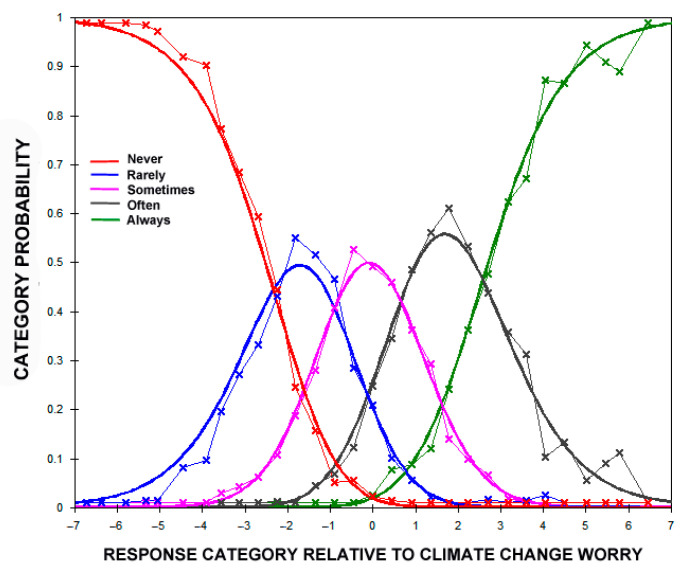
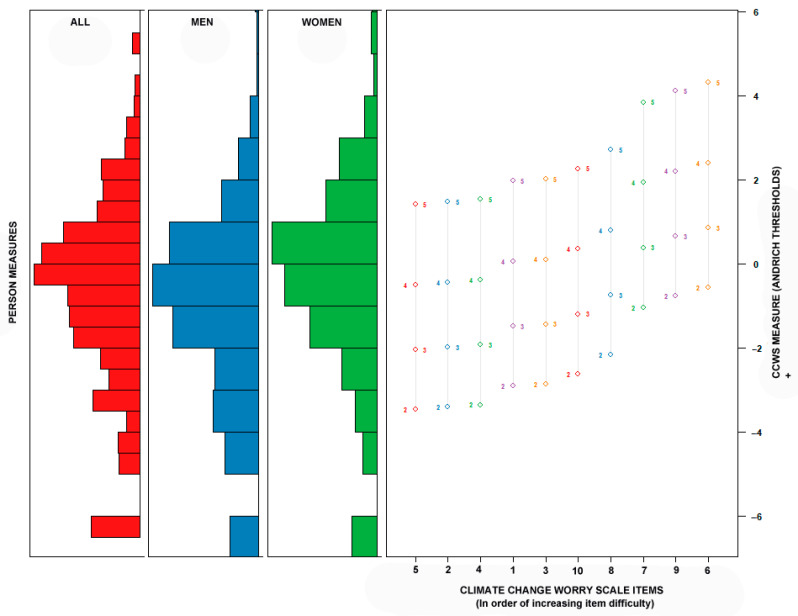
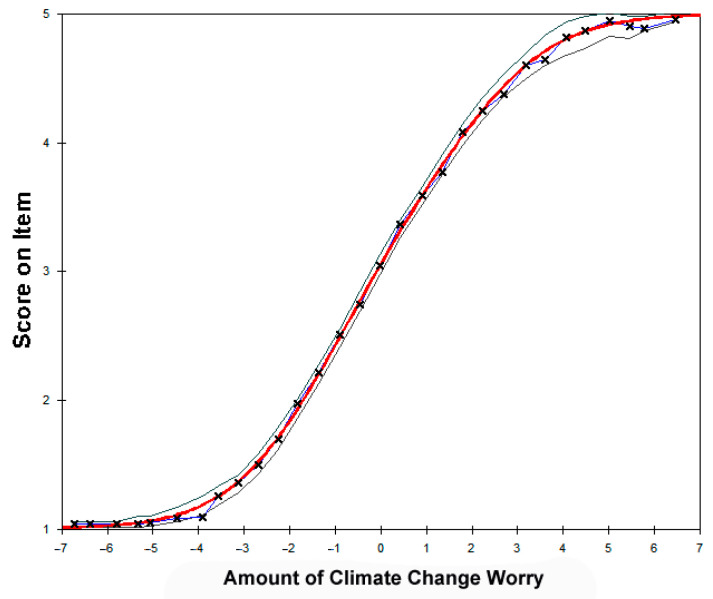
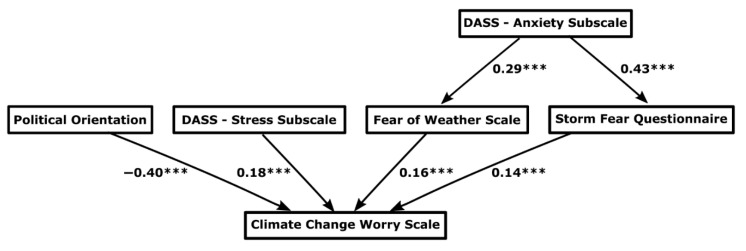
Climate change worry involves primarily verbal-linguistic thoughts about the changes that may occur in the climate system and the possible effects of these changes. Such worry is one of several possible psychological responses (e.g., fear, anxiety, depression, and trauma) to climate change. Within this article, the psychometric development of the ten-item Climate Change Worry Scale (CCWS) is detailed in three studies. The scale was developed to assess proximal worry about climate change rather than social or global impacts. Study 1 provided evidence that the CCWS items were internally consistent, constituted a single factor, and that the facture structure of the items was invariant for men and women. The results from Study 1 also indicated a good fit with a Rasch model of the items. Study 2 affirmed the internal consistency of the CCWS items and indicated that peoples’ responses to the measure were temporally stable over a two-week test–retest interval (r = 0.91). Study 3 provided support for the convergent and divergent validity of the CCWS through its pattern of correlations with several established clinical and weather-related measures. The limitations of the studies and the possible uses of the CCWS were discussed. The current work represents a starting point.
Overview
The claims and statistics of this paper haven’t been checked yet.
Free: it reads the open-access text and checks the first 5 claims that cite a source we can check. Create a free account to check every claim.
Integrity signals
Registry
Cites
Statistics
Figures
Verification
Claims the paper makes
The claims and statistics of this paper haven’t been checked yet.
Free: it reads the open-access text and checks the first 5 claims that cite a source we can check. Create a free account to check every claim.
Claims other papers make about this one
Each is checked against this paper’s own text: does it say what the citing paper says it does?
The source backs part of the claim, not all of it — or backs it for a different population, condition or comparison.
In the citing paper
“A further two studies showed eco-anxiety was not significant after adjustment for covariates [53, 63].”
From The relationship between climate change and mental health: a systematic review of the association between eco-anxiety, psychological distress, and symptoms of major affective disorders (2024) · cites this paper as [63]
Experimental — accuracy not yet measuredThe source backs part of the claim, not all of it — or backs it for a different population, condition or comparison.
In the citing paper
“Nine studies, all utilising the DASS-21, reported significant small-to-moderate (r = .22 to 0.46) positive correlations between eco-anxiety with stress symptoms [38, 42, 48, 50, 56, 62–65].”
From The relationship between climate change and mental health: a systematic review of the association between eco-anxiety, psychological distress, and symptoms of major affective disorders (2024) · cites this paper as [63]
Experimental — accuracy not yet measuredThe source backs part of the claim, not all of it — or backs it for a different population, condition or comparison.
In the citing paper
“Two studies found small but significant (r = .17 to 0.30) positive relationships [63, 66], although these were no longer significant after adjustment.”
From The relationship between climate change and mental health: a systematic review of the association between eco-anxiety, psychological distress, and symptoms of major affective disorders (2024) · cites this paper as [63]
Experimental — accuracy not yet measuredThe source backs part of the claim, not all of it — or backs it for a different population, condition or comparison.
In the citing paper
“Notably, one study found that, when controlling for other mental health outcomes, stress was the only assessed mental health outcome that remained significantly associated with eco-anxiety [63].”
From The relationship between climate change and mental health: a systematic review of the association between eco-anxiety, psychological distress, and symptoms of major affective disorders (2024) · cites this paper as [63]
Experimental — accuracy not yet measuredThe cited source says what the claim attributes to it.
In the citing paper
“Seven studies found small-to-moderate positive associations [38, 42, 45, 58, 63, 65, 66], whereas other studies showed no or minimal significance in adjusted analyses [19, 53, 63, 66], and one study found a negative association [52].”
3 more claims about this paper
Create a free account to see every claim other papers make about this one.
Self-check
Percentages, sums and reported differences re-computed from the paper’s own numbers.
The self-check needs the paper’s full text.
Citations
Cites
Coefficient Alpha and the Internal Structure of Tests
Cronbach, L. J. (1951) · Psychometrika · doi:10.1007/bf02310555 · Cited by 43,931
lavaan : An R Package for Structural Equation Modeling
Rosseel, Y. (2012) · Journal of Statistical Software · doi:10.18637/jss.v048.i02 · Cited by 27,955
Lovibond, P. F., & Lovibond, S. H. (1995) · Behaviour Research and Therapy · doi:10.1016/0005-7967(94)00075-u · Cited by 14,523 · cited 19×
“The DASS instruction set asks people to respond to the items using the timeframe of “over the past week” and a four-point rating scale that ranges from 0 (“Did not apply to me at all”) to 3 (“Applied to me very much or most of the time”).”
BackgroundMethodInfluentialSensitivity of Goodness of Fit Indexes to Lack of Measurement Invariance
Chen, F. F. (2007) · Structural Equation Modeling: A Multidisciplinary Journal · doi:10.1080/10705510701301834 · Cited by 12,217
(2014) · Cambridge University Press eBooks · doi:10.1017/cbo9781107415379 · Cited by 11,249
Construal-level theory of psychological distance.
Trope, Y., & Liberman, N. (2010) · Psychological Review · doi:10.1037/a0018963 · Cited by 6,618 · cited 1×
“Because climate change may be unrealized for some people, the assessment of climate change fear may be less informative at this point, but certainly should be considered for the future [95,96].”
BackgroundDevelopment and validation of the Penn State Worry Questionnaire
Meyer, T. J., Miller, M. L., Metzger, R. L., & Borkovec, T. D. (1990) · Behaviour Research and Therapy · doi:10.1016/0005-7967(90)90135-6 · Cited by 5,099 · cited 6×
“I notice that I have been worrying about climate change [43].”
BackgroundMethodResultInfluentialMeasures of multivariate skewness and kurtosis with applications
MARDIA, K. V. (1970) · Biometrika · doi:10.1093/biomet/57.3.519 · Cited by 4,792
Putnick, D. L., & Bornstein, M. H. (2016) · Developmental Review · doi:10.1016/j.dr.2016.06.004 · Cited by 4,369
Use Omega Rather than Cronbach’s Alpha for Estimating Reliability. But…
Hayes, A. F., & Coutts, J. J. (2020) · Communication Methods and Measures · doi:10.1080/19312458.2020.1718629 · Cited by 2,675 · cited 1×
“Because McDonald’s omega (ω) provides a more conservative estimate of internal consistency, the author also calculated this statistic as well [83,84].”
Background
Research works printed but not linked: 7
- Clayton S.D. Manning C.D. Psychology and Climate Change: Human Perceptions, Impacts, and Responses Academic Press London, UK 2018
- Albrecht G.A. Solastalgia and the new mourning Mourning Nature Consulo A. Landman K. McGill-Queens University Press Montreal, QC, CA 2017 292 315
- Roser-Renouf C. Nisbet M.C. The measurement of key behavioral science constructs in climate change research Int. J Sustain. 2008 3 37 95
- Barlow D. Anxiety and Its Disorders: The Nature and Treatment of Anxiety and Panic 2nd ed. Guilford Press New York, NY, USA 2002
- Tallis F. Davey G. Capuzzo N. The phenomenology of non-pathological worry: A preliminary investigation Worrying: Perspectives on Theory, Assessment and Treatment Davey G. Tallis F. John Wiley & Sons, Ltd. Chichester, UK 1994 61 89
- Allen M.J. Yen W.M. Introduction to Measurement Theory Waveland Press Prospect Heights, IL, USA 1979
- DeVellis R.F. Scale Development: Theory and Applications 4th ed. Sage Publications Los Angeles, CA, USA 2017
Cited by
Hickman, C., Marks, E., Pihkala, P., Clayton, S., Lewandowski, R. E., Mayall, E. E., Wray, B., Mellor, C., & van Susteren, L. (2021) · The Lancet Planetary Health · doi:10.1016/s2542-5196(21)00278-3 · Cited by 2,324
Toward a taxonomy of climate emotions
Pihkala, P. (2022) · Frontiers in Climate · doi:10.3389/fclim.2021.738154 · Cited by 471
“Worry includes both cognitive elements, such as repetitive and at least partly uncontrollable chains of thoughts and images, and an affective dimension of feeling troubled (Verplanken et al., 2020; Stewart, 2021).”
BackgroundThe Hogg Eco-Anxiety Scale: Development and validation of a multidimensional scale
Hogg, T. L., Stanley, S. K., O'Brien, L. V., Wilson, M. S., & Watsford, C. R. (2021) · Global Environmental Change · doi:10.1016/j.gloenvcha.2021.102391 · Cited by 465
Ágoston, C., Csaba, B., Nagy, B., Kőváry, Z., Dúll, A., Rácz, J., & Demetrovics, Z. (2022) · International Journal of Environmental Research and Public Health · doi:10.3390/ijerph19042461 · Cited by 242
“This objective dovetails well with the trends in questionnaire development on eco-anxiety [17,49] and climate change worry [50] that ran in parallel with this research.”
ResultYoung People's Voices on Climate Anxiety, Government Betrayal and Moral Injury: A Global Phenomenon
Hickman, C., Marks, E., Pihkala, P., Clayton, S., Lewandowski, E. R., Mayall, E. E., Wray, B., Mellor, C., & van Susteren, L. (2021) · SSRN Electronic Journal · doi:10.2139/ssrn.3918955 · Cited by 189
Ágoston, C., Urbán, R., Nagy, B., Csaba, B., Kőváry, Z., Kovács, K., Varga, A., Dúll, A., Mónus, F., Shaw, C. A., et al. (2022) · Climate Risk Management · doi:10.1016/j.crm.2022.100441 · Cited by 153
Soutar, C., & Wand, A. P. F. (2022) · International Journal of Environmental Research and Public Health · doi:10.3390/ijerph19020990 · Cited by 140
“involves negative or apprehensive thoughts about climate change that may be repetitive, difficult to control, or persistent [14].”
BackgroundCosh, S. M., Ryan, R., Fallander, K., Robinson, K., Tognela, J., Tully, P. J., & Lykins, A. D. (2024) · BMC Psychiatry · doi:10.1186/s12888-024-06274-1 · Cited by 138
Lawrance, E. L., Jennings, N., Kioupi, V., Thompson, R., Diffey, J., & Vercammen, A. (2022) · The Lancet Planetary Health · doi:10.1016/s2542-5196(22)00172-3 · Cited by 123
Eco-emotions and Psychoterratic Syndromes: Reshaping Mental Health Assessment Under Climate Change
Cianconi, P., Hanife, B., Grillo, F., Betrò, S., Lesmana, C. B. J., & Janiri, L. (2023) · The Yale Journal of Biology and Medicine · doi:10.59249/earx2427 · Cited by 163
Global priorities for climate change and mental health research
Charlson, F., Ali, S., Augustinavicius, J., Benmarhnia, T., Birch, S., Clayton, S., Fielding, K., Jones, L., Juma, D., Snider, L., et al. (2022) · Environment International · doi:10.1016/j.envint.2021.106984 · Cited by 103
A meta-analysis on the relationship between climate anxiety and wellbeing
Gago, T., Sargisson, R. J., & Milfont, T. L. (2024) · Journal of Environmental Psychology · doi:10.1016/j.jenvp.2024.102230 · Cited by 87
Ramadan, R., Randell, A., Lavoie, S., Gao, C. X., Manrique, P. C., Anderson, R., McDowell, C., & Zbukvic, I. (2023) · Early Intervention in Psychiatry · doi:10.1111/eip.13374 · Cited by 76
“Some used existing and psychometrically validated measures such as Clayton and Karazsia (2020) Climate Change Anxiety Scale (Reyes et al., 2021; Schwartz et al., 2022; Simon et al., 2022), Schultz (2001) Environmental Concern Scale (Davis et al., 2019) or the Climate Change Worry Scale developed by Stewart (2021) (Orr…”
BackgroundInfluentialSynthesising psychometric evidence for the Climate Anxiety Scale and Hogg Eco-Anxiety Scale
Hogg, T. L., Stanley, S. K., & O’Brien, L. V. (2023) · Journal of Environmental Psychology · doi:10.1016/j.jenvp.2023.102003 · Cited by 99
Parmentier, M.-L., Weiss, K., Aroua, A., Betry, C., Rivière, M., & Navarro, O. (2024) · Journal of Anxiety Disorders · doi:10.1016/j.janxdis.2023.102799 · Cited by 73
Longitudinal relations between climate change concern and psychological wellbeing
McBride, S. E., Hammond, M. D., Sibley, C. G., & Milfont, T. L. (2021) · Journal of Environmental Psychology · doi:10.1016/j.jenvp.2021.101713 · Cited by 86
Martin, G., Cosma, A. P., Roswell, T., Anderson, M. P., Treble, M., Leslie, K., Card, K. G., Closson, K., Kennedy, A. M., & Gislason, M. (2023) · Social Science & Medicine · doi:10.1016/j.socscimed.2023.116008 · Cited by 79
Innocenti, M., Perilli, A., Santarelli, G., Carluccio, N., Zjalic, D., Acquadro Maran, D., Ciabini, L., & Cadeddu, C. (2023) · Climate · doi:10.3390/cli11090190 · Cited by 61
Psychometric properties of the climate change anxiety scale
Cruz, S. M., & High, A. C. (2022) · Journal of Environmental Psychology · doi:10.1016/j.jenvp.2022.101905 · Cited by 82
Léger‐Goodes, T., Malboeuf‐Hurtubise, C., Hurtubise, K., Simons, K., Boucher, A., Paradis, P.-O., Herba, C. M., Camden, C., & Généreux, M. (2023) · PLoS ONE · doi:10.1371/journal.pone.0284774 · Cited by 88
Massazza, A., Teyton, A., Charlson, F., Benmarhnia, T., & Augustinavicius, J. (2022) · The Lancet Planetary Health · doi:10.1016/s2542-5196(22)00120-6 · Cited by 92
Heinzel, S., Tschorn, M., Schulte-Hutner, M., Schäfer, F., Reese, G., Pohle, C., Peter, F., Neuber, M., Liu, S., Keller, J., et al. (2023) · Frontiers in Psychology · doi:10.3389/fpsyg.2023.1239425 · Cited by 50
“This is in line with prior work reporting weak to moderate but consistent positive associations between negative eco-emotions and poor mental health (Stanley et al., 2021; Stewart, 2021; Ogunbode et al., 2023).”
ResultGalway, L. P., Beery, T. H., Buse, C. G., & Gislason, M. (2021) · Climate · doi:10.3390/cli9100146 · Cited by 57
“Research increasingly indicates that climate worry may be a multidimensional construct [51].”
BackgroundMethodInfluentialİklim Değişikliği Endişesi Ölçeği: Türkçeye Uyarlama Çalışması
Gezer, M., & İlhan, M. (2021) · Ege coğrafya dergisi :/Ege coğrafya dergisi · doi:10.51800/ecd.932817 · Cited by 64
Eco-anxiety and climate-anxiety linked to indirect exposure: A scoping review of empirical research
Jarrett, J. A., Gauthier, S., Baden, D. A., Ainsworth, B., & Dorey, L. (2024) · Journal of Environmental Psychology · doi:10.1016/j.jenvp.2024.102326 · Cited by 66
“…limited longitudinal designs (n = 6), three of which evaluated the measures for consistency over time (Hogg et al., 2021; Innocenti et al., 2021; Stewart, 2021), and three used the measures to analyse relationships between variables over time (Pavani, Nicolas, & Bonetto, 2023; Whitmarsh et al.,…”
Plohl, N., Mlakar, I., Musil, B., & Smrke, U. (2023) · Frontiers in Psychology · doi:10.3389/fpsyg.2023.1297782 · Cited by 39
“While climate anxiety and worry represent two distinct constructs, they are highly related (Stewart, 2021).”
BackgroundMethodResultInfluentialTürkarslan, K. K., Kozak, E. D., & Yıldırım, J. C. (2023) · Journal of Environmental Psychology · doi:10.1016/j.jenvp.2023.102147 · Cited by 35
Pro-environmental behaviours of generation Z: A cross-cultural approach
Juma‐Michilena, I., Molina, M. E. R., Saura, I. G., & Belda‐Miquel, S. (2024) · International Review on Public and Nonprofit Marketing · doi:10.1007/s12208-024-00395-9 · Cited by 67
“…produced by climate change, which continues to create economic, social, physical, and health impacts that require mitigation and adaptation (Stewart, 2021), this study, through the presentation and empirical analysis of a theoretical model, analysed the individual pro-environmental…”
Ágoston, C., Buvár, Á., Dúll, A., Szabó, Z. Á., & Varga, A. (2024) · Journal of Cleaner Production · doi:10.1016/j.jclepro.2024.143037 · Cited by 56
Awareness, worry, and hope regarding climate change among nurses: A cross-sectional study
Fertelli, T. K. (2023) · Archives of Environmental & Occupational Health · doi:10.1080/19338244.2023.2278521 · Cited by 36
“CCWSwas developed by Stewart(2021)and tested for validity and reliability in Turkish by Gezer and _ Ilhan (2021).”
MethodExploring Climate Emotions in Canada’s Provincial North
Galway, L. P., & Beery, T. H. (2022) · Frontiers in Psychology · doi:10.3389/fpsyg.2022.920313 · Cited by 50
“This idea of a web of emotions is aligned with a move away from using single-item measures in climate emotions Frontiers in Psychology | www.frontiersin.org 7 June 2022 | Volume 13 | Article 920313 research (Stewart, 2021), for example, the Climate Anxiety Scale (Wullenkord et al., 2021).”
MethodPsychometric properties of the Italian version of the climate change worry scale
Innocenti, M., Santarelli, G., Faggi, V., Ciabini, L., Castellini, G., Galassi, F., & Ricca, V. (2022) · The Journal of Climate Change and Health · doi:10.1016/j.joclim.2022.100140 · Cited by 31
Leite, Â. M. T., Lopes, D., & Pereira, L. H. (2023) · Behavioral Sciences · doi:10.3390/bs13120966 · Cited by 41
“A complete understanding of climate anxiety must encompass relational, psychosocial, cultural, ethical, legal, and political factors [18] and can be related to a variety of emotions, including worry [21], fear [22], anger [23], sadness, despair, guilt and shame [24], or hope [25].”
BackgroundNiedzwiedz, C. L., Kankawale, S. M., & Katikireddi, S. V. (2023) · medRxiv · doi:10.1101/2023.12.19.23300198 · Cited by 28
İKLİM DEĞİŞİKLİĞİ KAYGI ÖLÇEĞİ: TÜRKÇEYE UYARLAMA, GEÇERLİK VE GÜVENİRLİK ÇALIŞMASI
Özbay, S., & Alcı, B. (2021) · R&S - Research Studies Anatolia Journal · doi:10.33723/rs.958016 · Cited by 41
İLASLAN, N., & Orak, N. Ş. (2024) · BMC Nursing · doi:10.1186/s12912-024-02252-w · Cited by 41
“The scale was developed by Stewart [24] and was translated into Turkish by Gezer and İlhan [25].”
MethodClimate Anxiety: Current Evidence and Future Directions
Boehme, B. A. E., Kinsman, L. M., Norrie, H. J., Tessier, E. D., Fleming, S. W., & Asmundson, G. J. G. (2024) · Current Psychiatry Reports · doi:10.1007/s11920-024-01538-9 · Cited by 26
“While other measures of climate anxiety appear in the literature (e.g., Climate Change Worry Scale; [39]), they have yet to undergo necessary psychometric testing.”
Regnoli, G. M., Tiano, G., & Rosa, B. D. (2024) · Climate · doi:10.3390/cli12080118 · Cited by 32
“…the aim of the present study and clearly highlights the usefulness of considering the role of other variables in the relationship between emotions and mental health, especially considering that the psychoterratic states investigated can take on both an adaptive and maladaptive function [25].”
BackgroundMethodInfluentialAnxiety and Worry about Six Categories of Climate Change Impacts
Stewart, A. E., Chapman, H. E., & Davis, J. B. L. (2023) · International Journal of Environmental Research and Public Health · doi:10.3390/ijerph21010023 · Cited by 28
“Climate change worry that becomes persistent in a person’s life and additionally involves increases in their autonomic arousal (increases in heart rate, breathing, sweating, and tension) can lead to climate anxiety [68].”
BackgroundMethodInfluentialSelf-citationZeier, P., & Wessa, M. (2024) · Discover Sustainability · doi:10.1007/s43621-024-00209-2 · Cited by 34
“…environmental psychological research offers a variety of well validated questionnaires on anxiety-related experiences, e.g., the Climate Anxiety Scale [15], the Hogg Eco-Anxiety Scale [16], or the Climate Change Worry Scale [17], comparatively fewer instruments on other eco-emotions are available.”
Tümer, A., İpek, M., & Ercan, Z. (2024) · Halk Sağlığı Hemşireliği Dergisi · doi:10.54061/jphn.1396915 · Cited by 27
Collery, A., & Niedzwiedz, C. L. (2025) · BMJ Mental Health · doi:10.1136/bmjment-2024-301318 · Cited by 41
Development and Validation of an Eating-Related Eco-Concern Questionnaire
Qi, B., Presseller, E. K., Cooper, G. E., Kapadia, A., Dumain, A. S., Jayawickreme, S., Bulik‐Sullivan, E. C., van Furth, E. F., Thornton, L. M., Bulik, C. M., et al. (2022) · Nutrients · doi:10.3390/nu14214517 · Cited by 32
“The CCWS also demonstrates convergent and divergent validity with widely used clinical measures of worry, anxiety, and weather-related fear [21].”
BackgroundMethodResultInfluentialOrrù, L., Taccini, F., & Mannarini, S. (2024) · Behavioral Sciences · doi:10.3390/bs14030255 · Cited by 33
“Eco-anxiety has been one of the psychological effects of the climate change emergency and is related to difficult emotion regulation and climate change worry [6,7].”
Backgroundvan Dijk, S., van Schie, K., Smeets, T., & Mertens, G. (2024) · Journal of Anxiety Disorders · doi:10.1016/j.janxdis.2024.102957 · Cited by 29
İKLİM DEĞİŞİKLİĞİ ANKSİYETESİ ÖLÇEĞİ’NİN TÜRKÇE UYARLAMASI: GEÇERLİK VE GÜVENİRLİK ÇALIŞMASI
CEBECİ, F., KARAMAN, M., ÖZTÜRK, A. F., Uzun, K., ALTIN, O., ARICI, A., & Artan, T. (2022) · Ufkun Ötesi Bilim Dergisi · doi:10.54961/uobild.1129602 · Cited by 42
The Eco-Generativity Scale (EGS): A New Resource to Protect the Environment and Promote Health
Di Fabio, A., & Svicher, A. (2023) · International Journal of Environmental Research and Public Health · doi:10.3390/ijerph20156474 · Cited by 21
“Others psychological constructs associated with negative psychological states and environmental challenges are climate change worry [12], climate anxiety [13], environmental distress [14], ecological stress [15], and ecological grief [16], just to name a few.”
BackgroundPublic Concern about Water Safety, Weather, and Climate: Insights from the World Risk Poll
Inwald, J. F., de Bruin, W. B., Yaggi, M., & Árvai, J. (2023) · Environmental Science & Technology · doi:10.1021/acs.est.2c03964 · Cited by 27
Climate change anxiety positively predicts antenatal distress in expectant female parents
Lykins, A. D., Bonich, M., Sundaraja, C., & Cosh, S. (2024) · Journal of Anxiety Disorders · doi:10.1016/j.janxdis.2023.102801 · Cited by 20
A systematic review of climate emotions and mental health in adults
Pitt, C., Norris, K., & Pecl, G. (2023) · Global Environmental Psychology · doi:10.5964/gep.11405 · Cited by 20
“G e r m a n v e r s i o n o f C l i m a t e C h a n g e A n x i e t y S c a l e ( C l a y t o n & K a r a z s i a , 2 020 ; W u ll e n k o r d e t a l ., 2021 ) .”
Niedzwiedz, C. L., Olsen, J. R., Rizeq, J., Afework, T., Hill-Harding, C. K. V., Shaw, R. J., Thomas, R., Kariuki, S. M., Katikireddi, S. V., Weaver, A. J., et al. (2024) · Journal of Epidemiology & Community Health · doi:10.1136/jech-2024-222716 · Cited by 26
“65 Importantly, climate worry has been related to engagement in proenvironmental behaviour.”
The co‐benefits of biodiversity citizen science for well‐being and nature relatedness
Eichholtzer, A. C., Driscoll, D. A., Patrick, R., Galletta, L., & Lawson, J. T. (2023) · Applied Psychology Health and Well-Being · doi:10.1111/aphw.12502 · Cited by 24
Climate change on the brain: Neural correlates of climate anxiety
Carlson, J. M., Foley, J., & Fang, L. (2024) · Journal of Anxiety Disorders · doi:10.1016/j.janxdis.2024.102848 · Cited by 25
Impact of Climate Change Education on Pregnant Women's Anxiety and Awareness
Kaya, L., Keleş, E., Baydili, K. N., Kaya, Z., & Kumru, P. (2024) · Public Health Nursing · doi:10.1111/phn.13455 · Cited by 20
Impacts of Antarctic summer sea-ice extremes
Doddridge, E. W., Hobbs, W. R., Auger, M., Boyd, P. W., Chua, S. M. T., Cook, S., Corney, S. P., Emmerson, L., Fraser, A. D., Heil, P., et al. (2025) · PNAS Nexus · doi:10.1093/pnasnexus/pgaf164 · Cited by 38
Gebhardt, N., van Bronswijk, K., Bunz, M., Müller, T., Niessen, P., & Nikendei, C. (2023) · PubMed Central · doi:10.25646/11656 · Cited by 26
Martin, G., Roswell, T., & Cosma, A. P. (2024) · Wellbeing Space and Society · doi:10.1016/j.wss.2024.100198 · Cited by 28
Niedzwiedz, C. L., Kankawale, S. M., & Katikireddi, S. V. (2025) · Nature Mental Health · doi:10.1038/s44220-025-00550-z · Cited by 82
Greaves, S., Harvey, C., & Kotera, Y. (2023) · Earth · doi:10.3390/earth4040045 · Cited by 19
Çimşir, E., Şahin, M. D., & Akdoğan, R. (2024) · Cambridge Prisms Global Mental Health · doi:10.1017/gmh.2024.20 · Cited by 19
“However, it is worth noting that, similar to much of the research on the mental health impacts of the climate crisis (e.g. Helm et al., 2018; Hogg et al., 2021; Stewart, 2021), the current adaptations of the HEAS-13 have been conducted primarily in Western countries.”
BackgroundResultLarionow, P., Gawrych, M., Mackiewicz, J., Michalak, M., Mudło‐Głagolska, K., Preece, D. A., & Stewart, A. E. (2024) · Healthcare · doi:10.3390/healthcare12111128 · Cited by 19
“The Climate Change Worry Scale (CCWS) [3] is a self-report measure for assessing the level of ruminating thoughts that people experience about climate change.”
BackgroundMethodResultInfluentialSelf-citationClimate change worry among nurses and their hope levels for climate change prevention
Duran, S., & Kaynak, S. (2024) · BMC Nursing · doi:10.1186/s12912-024-02067-9 · Cited by 26
“The scale was originally developed by Stewart (2021) [11].”
BackgroundMethodNature Relatedness May Play a Protective Role and Contribute to Eco-Distress
Smith, C., Allen, A., Schaffer, V., & Kannis‐Dymand, L. (2024) · Ecopsychology · doi:10.1089/eco.2023.0004 · Cited by 21
“Climate Change Worry Scale (Stewart, 2021) is a 10-item self-report assessment of proximal worry about climate change.”
InfluentialEco‐anxiety: Towards a medical model and the new framework of ecolalgia
Christodoulou, N., Laaidi, K., & Geoffroy, P. A. (2024) · Bipolar Disorders · doi:10.1111/bdi.13446 · Cited by 28
Geraci, A., Giordano, G., Cucinella, N., Cannavò, M., Cavarretta, M. V., Alesi, M., Caci, B., D’Amico, A., Gentile, A., Iannello, N. M., et al. (2024) · Current Psychology · doi:10.1007/s12144-024-06263-3 · Cited by 16
“…crisis, which may provide a useful arena for understanding how it could be linked to other psychological dimensions encompassing unpleasant states in response to the degradation of the Earth’s climate, such as the concept of worry towards the environment (Lutz et al., 2023; Stewart, 2021).”
InfluentialStevens, M., Raat, H., Ferrando, M., Vallina, B., Lucas, R., Middlemiss, L., Redón, J., Rocher, E., & van Grieken, A. (2022) · BMC Public Health · doi:10.1186/s12889-022-13968-2 · Cited by 17
Donati, M. A., Santisi, S., Leonardo, L. D., & Primi, C. (2024) · International Journal of Behavioral Development · doi:10.1177/01650254241266119 · Cited by 14
“We hypothesized that the scale would maintain the unidimensional structure found in adults (Innocenti et al., 2022; Stewart, 2021).”
InfluentialPsychological impact of climate change emergency: an attempt to define eco-anxiety
Orrù, L., & Mannarini, S. (2024) · Frontiers in Psychology · doi:10.3389/fpsyg.2024.1375803 · Cited by 36
“In addition to post-traumatic stress disorder following a catastrophic event, anxiety and depression were also diagnosed in the absence of a specific event; so much so that there was a specific declination of these two clinical frameworks emerged with related measurement scales, such as the Climate Change Anxiety Scale…”
InfluentialLarionow, P., Mackiewicz, J., Mudło‐Głagolska, K., Michalak, M., Mazur, M., Gawrych, M., Komorowska, K., & Preece, D. A. (2024) · Healthcare · doi:10.3390/healthcare12222255 · Cited by 23
“…altruistic, and biospheric concerns) [22], the experience of climate change (i.e., a people’s level of recognition of being affected by climate change) [7,23], pro-environmental behaviour (e.g., recycling, turning off lights), and climate change worry (i.e., ruminations about climate change) [24].”
Eco-Anxiety and Planetary Hope: Experiencing the Twin Disasters of COVID-19 and Climate Change
(2022) · Springer eBooks · doi:10.1007/978-3-031-08431-7 · Cited by 14
Spano, G., Ricciardi, E., Tinella, L., Caffò, A. O., Sanesi, G., & Bosco, A. (2024) · Heliyon · doi:10.1016/j.heliyon.2024.e41406 · Cited by 15
“…of Climate Emotions (ICE – [15]) which detect eight types of emotional responses to climate change, the Climate Change Worry Scale (CCWS - [16]), and the Climate Change Distress Scale [17] preceding others at a time when there was only a general discussion concerning stress and adverse…”
Buswell, G., Williams, M. O., Marks, E. M., & Morgan, G. (2025) · Cogent Mental Health · doi:10.1080/28324765.2025.2449878 · Cited by 15
“The items on the Climate Change Worry Scale (CCWS; Stewart, 2021) focus on worried thoughts about the climate crisis: the author distinguished “worry” from “anxiety” based on the theory of worry as a mainly cognitive experience, whilst arguing “anxiety” involves bodily sensations (e.g. Borkovec et…”
Eco-anxiety or simply eco-worry? Incremental validity study in a representative Spanish sample
Jiménez, M. L. V., Alonso-Ferres, M., & Díaz‐Silveira, C. (2025) · Frontiers in Psychology · doi:10.3389/fpsyg.2025.1560024 · Cited by 14
“…and the most intensely experienced (Böhm et al., 2023; Bouman et al., 2020; Gregersen et al., 2024; Martin et al., 2023; van der Linden, 2017; Stewart, 2021); (2) eco-worry plays a constructive role with respect to the commitment to pro-environmental behaviors (van der Linden, 2017), with no…”
Shinan‐Altman, S., & Hamama‐Raz, Y. (2023) · Sustainability · doi:10.3390/su151813689 · Cited by 12
Worry and hope levels of nursing students about climate change: A cross-sectional study
Mat, S. T. B. (2024) · Journal of Psychiatric Nursing · doi:10.14744/phd.2023.00187 · Cited by 19
“The scale developed by Stewart (2021) [22] was adapted into Turkish by Gezer and İlhan (2021).”
MethodSosyal Hizmet Öğrencilerinin İklim Değişikliği Farkındalıklarının ve Kaygı Düzeylerinin Belirlenmesi
Ceylan, H., Sevgili, A., & Aslan, Ş. (2024) · Üniversite Araştırmaları Dergisi · doi:10.32329/uad.1442686 · Cited by 18
A meta-analysis on the relationship between climate anxiety and wellbeingPreprint
Gago, T., Sargisson, R. J., & Milfont, T. L. (2023) · doi:10.31234/osf.io/eaq4k · Cited by 11
Conceptualizing Young People's Experiences of Climate Change Awareness: A Narrative Review
Watson, D., Hogg, T. L., Crandon, T., Vercammen, A., Watfern, C., Aruta, J. J. B. R., Charlson, F., & Lawrance, E. L. (2025) · Annals of the New York Academy of Sciences · doi:10.1111/nyas.70114 · Cited by 16
The effect of climate change anxiety on social work students in Turkey
Doğan, H., & Buz, S. (2023) · International Social Work · doi:10.1177/00208728231208007 · Cited by 11
“Stewart (2021) reported a Cronbach’s alpha reliability coefficient of 0.95 and a McDonald’s omega coefficient of 0.95, while Gezer and İlhan (2021), who conducted the Turkish adaptation, found a Cronbach’s alpha reliability coefficient of 0.91.”
InfluentialÇelik, Ö. M., Akçakaya, S. D., & Ekici, E. M. (2025) · BMC Public Health · doi:10.1186/s12889-025-22482-0 · Cited by 15
“The Climate Worry Scale, originally developed by Stew-art [27] in 2021, was adapted into Turkish by Gezer and İlhan [28] in the same year.”
Orr, M., Stewart, A. E., & Grundstein, A. (2020) · International Journal of Environmental Research and Public Health · doi:10.3390/ijerph17155619 · Cited by 11
“The Climate Change Worry Scale, developed by Stewart [16] was used to measure respondents’ level of concern regarding climate change and its effects.”
MethodSelf-citationSouth American Validation of a Survey to Assess Eco-Anxiety in Adults (ECO-ANS-LATAM)
Mejia, C. R., Álvarez-Risco, A., Vizcardo, D. A. A., Sedano-Ochoa, L., Rivera, M. F. M., Jaramillo, C. S., Cedillo-Balcázar, J., Mamani-Benito, O. J., Esteban, R. F. C., Pacheco, J. M. A., et al. (2024) · Journal of Clinical Medicine · doi:10.3390/jcm13082398 · Cited by 10
“In the “Climate Change Worry Scale”, very similar topics to the previously mentioned scale were evaluated [22].”
Buca Eğitim Fakültesi öğrencilerinin küresel iklim değişikliğine yönelik endişe düzeyleri
Semenderoğlu, A., Sanlı, V., & Arslan, K. (2024) · lnternational Journal of Geography and Geography Education · doi:10.32003/igge.1550018 · Cited by 11
Asare‐Nuamah, P., Botchway, E., Nuamah, N. J., & Anane-Aboagye, M. (2025) · Climate and Development · doi:10.1080/17565529.2024.2448180 · Cited by 12
“…that negative climate emotions, such as fear, hopelessness, grief, worry, anger, shame, despair and guilt (Ojala, 2017; Stanley et al., 2021; Stewart, 2021), are predominant among children and youth due to climate change, although positive climate emotions, such as hope and optimism, have…”
Regnoli, G. M., Parola, A., & Rosa, B. D. (2025) · European Journal of Investigation in Health Psychology and Education · doi:10.3390/ejihpe15020024 · Cited by 14
“…(Kalcza-Janosi et al., 2023; Vargová et al., 2024; Regnoli et al., 2023), as well as instruments on the same worry construct but oriented towards investigating different domains of interest, such as the Climate Change Worry Scale and the Penn State Worry Scale (Stewart, 2021; Morani et al., 1999).”
InfluentialEmotion regulation, climate distress, and climate action in climate activist and student samples
Ortner, C. N. M., Armstrong, M., & Ulmer, E.-J. (2025) · Discover Psychology · doi:10.1007/s44202-025-00338-3 · Cited by 13
“…be important to distinguish between worry, which comprises negative thoughts and apprehension about climate change, and anxiety, which includes a broader range of cognitive-emotional responses, and may include impacts on daily functioning in relationships and occupational activities [11, 13, 14].”
Kırımer‐Aydınlı, F., Juárez-Castelán, M. A., Hakim, N., Gül, P., Unal, A. B., Aguayo‐Estremera, R., Fortis, A. P., Rojas-Russell, M. E., & Gallo, V. (2025) · Current Psychology · doi:10.1007/s12144-025-08270-4 · Cited by 11
“Six of the published instruments were developed in English (Bowler & Schwarzer, 1991; Clayton & Karazsia, 2020; Higginbotham et al., 2007; Hogg et al., 2021; Searle & Gow, 2010; Stewart, 2021) while three of them (in the same article) were developed in Hungarian (Ágoston et al., 2022a).”
InfluentialFuture Actions towards Climate Change: The Role of Threat Perception and Emotions
Aguilar‐Luzón, M. D. C., Carmona, B., & Loureiro, A. (2023) · European Journal of Sustainable Development · doi:10.14207/ejsd.2023.v12n4p379 · Cited by 9
Anthropocene nostalgia for the 1980s in Netflix’s Stranger Things
Relidzyńska, A. (2021) · European Journal of American Culture · doi:10.1386/ejac_00055_1 · Cited by 10
Hannachi, T., Yakimova, S., & Somat, A. (2024) · International Journal of Environmental Research and Public Health · doi:10.3390/ijerph21091158 · Cited by 12
“Beyond the clinical aspect assessed by the CCAS, the psychological reaction to the environmental crisis is assessed either as worry via the Climate Change Worry Scale [12] or as distress and impairment by the Climate Change Distress and Impairment Scale [13].”
BackgroundMethodLau, S. S. S., Appiah, K., Ho, C. C. Y., Cheng, M. C. H., & Yang, B.-Y. (2024) · The Journal of Climate Change and Health · doi:10.1016/j.joclim.2024.100364 · Cited by 11
“The Climate Change Worry Scale was developed by Stewart on a US sample in 2020 to measure climate change-related worry but not anxiety [17].”
Tecuta, L., Casu, G., & Tomba, E. (2024) · Frontiers in Psychology · doi:10.3389/fpsyg.2024.1441561 · Cited by 13
“Participants’ scores in EREC and CCWS were compared using repeated measures ANOVA.”
InfluentialKaruga, F. F., Szmyd, B. M., Petroniec, K., Walter, A., Pawełczyk, A. M., Sochal, M., Białasiewicz, P., Strzelecki, D., Respondek‐Liberska, M., Tadros-Zins, M., et al. (2022) · International Journal of Environmental Research and Public Health · doi:10.3390/ijerph192013575 · Cited by 11
“Stewart developed a new measure of climate change worry, with worry being a core of both anxiety and depression [28].”
BackgroundÜniversite Öğrencilerinin İklim Değişikliği Endişe Düzeylerinin Belirlenmesi
Usta, G. (2023) · Selçuk Üniversitesi Sosyal Bilimler Enstitüsü Dergisi · doi:10.52642/susbed.1282642 · Cited by 8
Adolescents Concerned about Climate Change: A Hermeneutic Study
Drumm, K., & Vandermause, R. K. (2023) · International Journal of Environmental Research and Public Health · doi:10.3390/ijerph20227063 · Cited by 11
“These adult-based studies, while valuable, infer mental health outcomes pre-analysis such as anxiety [13,20] and worry [21].”
BackgroundKurt, G., & Akdur, R. (2024) · Sustainability · doi:10.3390/su16062269 · Cited by 13
Fabio, A. D., & Svicher, A. (2024) · Frontiers in Psychology · doi:10.3389/fpsyg.2024.1173303 · Cited by 8
“…a 10-item unidimensional scale measuring worry (persistent, repetitive, and uncontrolled thoughts) about climate change, concerns on future changes that climate may bring, and dysfunctional responses to worries, showing a one-factor solution with good psychometric properties (Stewart, 2021).”
BackgroundImpact of Emotional Perceptions and Social Influences on Green Consumption Practices in Vietnam
Le, N. V. N., Lam, P. H., Tuyet, C. H., & Hoa, N. T. L. (2024) · Challenges in Sustainability · doi:10.56578/cis120103 · Cited by 17
“…using 5 observed variables (Chen, 2022; Ibrahim & Al-Ajlouni, 2018), climate change concerns have been measured using 10 observed variables (Stewart, 2021), attitude toward green products variable has been measured using 4 observed variables (Kamalanon et al., 2022), social influence has…”
Effect of Global Climate Change Concern on Environmental Sensitivity of Nursing Students
Ayar, D., Gözüaçık, B., & Şen, B. (2024) · Public Health Nursing · doi:10.1111/phn.13434 · Cited by 11
“The descriptive information form was developed by reviewing the literature (Stewart 2021; Gezer and İlhan 2021; Yeşil and Turan, 2020; Tümer, İpek, and Ercan 2024).”
Adaptation of the Climate Anxiety Scale in Indonesian version: The sample of young adults
Jaro’ah, S., & Saffana, K. (2023) · Psikohumaniora Jurnal Penelitian Psikologi · doi:10.21580/pjpp.v8i2.17462 · Cited by 11
“Some of the currently used measurement instruments are the Eco-anxiety Scale, which has been validated in the Turkish context (Uzun et al., 2022); the Climate Change Worry Scale (Stewart, 2021); the Hogg Eco-Anxiety Scale (Hogg et al., 2021); and the Climate Anxiety Scale (Clayton & Karazsia, 2020).”
Method
Metadata
- Authors
- Stewart, A. E.
- Affiliations
- University of Georgia (US)
- Corresponding author
- Stewart, Alan E.
- ORCID
- Stewart, Alan E.
- Venue
- International Journal of Environmental Research and Public Health
- Publisher
- MDPI AG
- Published
- 2021-01-09
- Volume
- 18
- Issue
- 2
- Pages
- 494
- ISSN
- 1660-4601 (ISSN-L)
- PMC
- PMC7826965
- OpenAlex
- W3118579120
- Semantic Scholar
- 0ca9e67524c20e8c40d115ebb8c1d3338f5081e7
- Cited by
- 286
- References
- 81
- Citations by year
- 2026: 71 · 2025: 67 · 2024: 68 · 2023: 47 · 2022: 21 · 2021: 11
- FWCI
- 50.91
- Type
- journal article
- Language
- en
- Open access
- gold
- doi.org
- Licence
- Locations
- International Journal of Environmental Research and Public Health (publishedVersion, cc-by)
- Europe PMC (PubMed Central) (publishedVersion, other-oa)
- PubMed Central (publishedVersion, cc-by)
- PubMed (publishedVersion)
- RePEc: Research Papers in Economics (submittedVersion)
- DOAJ (DOAJ: Directory of Open Access Journals) (submittedVersion)
- Topics
- Social Sciences › Sociology and Political Science › Climate Change Communication and Perception
- Social Sciences › Psychology › Experimental and Cognitive Psychology › Anxiety, Depression, Psychometrics, Treatment, Cognitive Processes
- Social Sciences › Decision Sciences › Management Science and Operations Research › Psychometric Methodologies and Testing
- Keywords
- climate change concern, psychometric properties, scale development, Rasch model, test-retest reliability, convergent and discriminant validity, gender invariance, climate anxiety
- MeSH terms
- Anxiety, Anxiety Disorders, Female, Humans, Male, Psychometrics, Surveys and Questionnaires, Reproducibility of Results, Climate Change
About these checks
Registry, retraction, Cites and statistics results are computed, not judged, with one exception: a printed reference that no index lists is read once by a model before it counts as a citation error. Claims are extracted by a model and kept only when their quote appears verbatim in the text; each cited source is then checked, with a model’s help, for whether it says what the claim relies on. Those verdicts can be wrong — read the claim’s quote and the cited source before relying on one.
Statistics and arithmetic are recomputed, not judged.
Confidence bands are shown only for fields calibrated on our annotated test set. None is calibrated yet, so no band is shown.
What counts as a claim ›How we measure confidence ›How we check this ›
Are you an author, or do you see a problem with this page? Request a review
Data sources
Bibliographic data: Semantic Scholar, OpenAlex, Crossref.
Contains information from the Semantic Scholar Academic Graph Datasets, made available under the ODC Attribution License (ODC-BY 1.0).
Semantic Scholar’s data is described in: Kinney, R., et al. (2023). The Semantic Scholar Open Data Platform. arXiv:2301.10140.
