

The Relationship between Mindful Attention Awareness, Perceived Stress and Subjective Wellbeing
Open accessThe DOI matches its Crossref record; 83 of the 84 references it cites were found in a registry or an index, and 1 are not checked yet.
Abstract
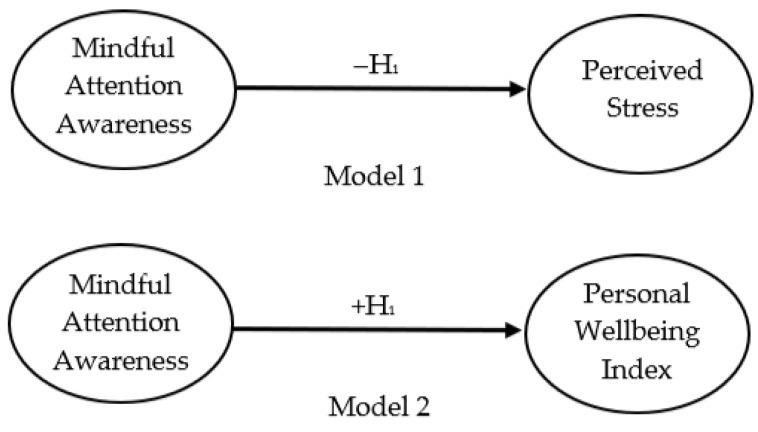
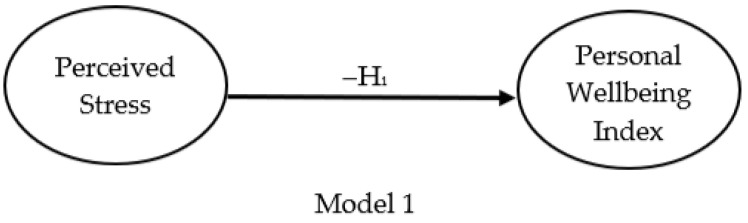
It has been suggested that mindfulness is a predictive factor in self-reported perceived stress. The present study aimed to investigate the link between mindful attention awareness, perceived stress and subjective wellbeing without the presence of a complementary intervention to promote mindfulness-based strategies. Methods: The online survey participants (N = 257) were university students enrolled in initial teacher training. Self-report measures included the Mindful Attention Awareness Scale (MAAS), Perceived Stress Scale (PSS) and Personal Wellbeing Index (PWI). Results: PWI was negatively correlated with PSS (r = −0.550, p = .001), MAAS was negatively correlated with PSS (r = −0.567, p = .001) and positively correlated with PWI (r = 0.336, p = .001). The mean score for PSS (M = 20.61, SD = 6.62) was above the reported norm (14.2). Conclusions: The findings suggest that higher levels of mindful attention awareness may be associated with lower levels of perceived stress and higher subjective wellbeing levels and lower levels of perceived stress may be associated with higher subjective wellbeing. The findings confirm that pre-service teachers are a demographic that experiences elevated levels of perceived stress regardless of the stage in initial teacher training programs.
Overview
The claims and statistics of this paper haven’t been checked yet.
Free: it reads the open-access text and checks the first 5 claims that cite a source we can check. Create a free account to check every claim.
Integrity signals
Registry
Cites
Statistics
Figures
Verification
Claims the paper makes
The claims and statistics of this paper haven’t been checked yet.
Free: it reads the open-access text and checks the first 5 claims that cite a source we can check. Create a free account to check every claim.
Self-check
Percentages, sums and reported differences re-computed from the paper’s own numbers.
The self-check needs the paper’s full text.
Citations
Cites
A Global Measure of Perceived Stress
Cohen, S., Kamarck, T., & Mermelstein, R. (1983) · Journal of Health and Social Behavior · doi:10.2307/2136404 · Cited by 32,807 · cited 2×
“When investigating the experiences of postgraduate (n = 151) and undergraduate (n = 159) PSTs, Geng and colleagues [5] reported postgraduate PSTs perceived stress (measured with the Perceived Stress Scale; [12] were significantly higher than undergraduate PSTs and that the two groups experienced different stressors.”
The satisfaction with life scale
Diener, E., Emmons, R. A., Larsen, R. J., & Griffin, S. (1985) · Journal of Personality Assessment · doi:10.1207/s15327752jpa4901_13 · Cited by 31,768 · cited 1×
“Subjective wellbeing refers to satisfaction with life and the presence of positive effect, also referred to as the hedonic approach [46].”
Cohen, L., Manion, L., & Morrison, K. (2007) · Routledge eBooks · doi:10.4324/9780203029053 · Cited by 20,105
Fredrickson, B. L. (2001) · American Psychologist · doi:10.1037//0003-066x.56.3.218 · Cited by 18,025
The benefits of being present: Mindfulness and its role in psychological well-being
Brown, K. W., & Ryan, R. M. (2003) · Journal of Personality and Social Psychology · doi:10.1037/0022-3514.84.4.822 · Cited by 13,448 · cited 6×
““Dispositional and state mindfulness predict self-regulated behavior and positive emotional states” [37] p.”
InfluentialUsing Self-Report Assessment Methods to Explore Facets of Mindfulness
Baer, R. A., Smith, G. T., Hopkins, J., Krietemeyer, J., & Toney, L. (2006) · Assessment · doi:10.1177/1073191105283504 · Cited by 7,511 · cited 1×
“Nonetheless, one of the most commonly used self-report measures is the Five Facets of Mindfulness Questionnaire (FFMQ; [34]) with five sub-scales that measure mindfulness as a stable trait.”
Mindfulness training as a clinical intervention: a conceptual and empirical review
Baer, R. A. (2003) · Clinical Psychology: Science and Practice · doi:10.1093/clipsy.bpg015 · Cited by 4,577 · cited 1×
“Mindfulness is the process of maintaining focus on present reality [23]; it is a way of paying attention [24].”
Mindfulness training as a clinical intervention: A conceptual and empirical review.
Baer, R. A. (2003) · Clinical Psychology: Science and Practice · doi:10.1093/clipsy/bpg015 · Cited by 4,576
Know thyself and become what you are: a eudaimonic approach to psychological well-being
Ryff, C. D., & Singer, B. H. (2008) · Journal of Happiness Studies · doi:10.1007/s10902-006-9019-0 · Cited by 3,149 · cited 1×
“A fundamental aspect of psychological wellbeing is forming positive social relationships [19,20].”
Appraisal, coping, health status, and psychological symptoms
Folkman, S., Lazarus, R. S., Gruen, R. J., & DeLongis, A. (1986) · Journal of Personality and Social Psychology · doi:10.1037/0022-3514.50.3.571 · Cited by 2,917 · cited 1×
“The ability to appraise or assess a potential stressor and re-appraise stressors relates to the transactional stress model [56].”
Research works printed but not linked: 5
- Kostanski M. The role of mindfulness in reducing stress for pre-service students Proceedings of the Australian Association for Research in Education Conference, Fremantle Victoria, Australia 26 November–1 December 2007 1 9
- Grant-Smith D. de Zwaan L. Chapman R. Gillett-Swan J. ‘It’s the worst, but real experience is invaluable’: Pre-service teacher perspectives of the costs and benefits of professional experience Teacher Education In and For Uncertain Times Heck D. Ambrosetti A. Springer Singapore 2018 15 33
- Buckworth J. Issues in the teaching practicum The Challenge of Teaching through the Eyes of Pre-Service Teachers 1st ed. Geng G. Smith P. Black P. Springer Singapore 2017 9 17 · DOI
- Hanh T.N. The Miracle of Mindfulness|An Introduction to the Practice of Meditation Beacon Press Boston, MA, USA 1999
- Creswell J. Educational Research: Planning, Conducting and Evaluating Quantitative and Qualitative Research 4th ed. Pearson New International Pearson Harlow, Essex, UK 2014
Cited by
A Scope Review of the Teacher Well-being Research Between 1968 and 2021
Zhang, L., Chen, J., Li, X., & Zhan, Y. (2023) · The Asia-Pacific Education Researcher · doi:10.1007/s40299-023-00717-1 · Cited by 95
“…by Jin et al., 2021), school-level factors (e.g., distance education requirement by Casacchia et al., 2021), personal factors (e.g., mindfulness by Hepburn et al., 2021), and effects on teacher personal development (e.g., teacher presenteeism by Kidger et al., 2021), teaching process (e.g.,…”
Exploring Islamic Mindfulness: Cultural Practices and Their Impact on Public Health Outcomes
Aldbyani, A. (2024) · Mindfulness · doi:10.1007/s12671-024-02485-5 · Cited by 42
“They are advised to observe their inner and outer experiences with a gentle, inquisitive, and compassionate attitude, refraining from any immediate efforts to alter these encounters (Hepburn et al., 2021).”
Atta, M. H. R., El‐Ashry, A. M., & Mousa, M. A. E.-G. A. (2024) · Journal of research in nursing · doi:10.1177/17449871241252011 · Cited by 35
“This enhancement supports the notion that mindfulness interventions contribute positively to cognitive processes fundamental to emotional well-being (Hepburn et al., 2021).”
Self-disclosure, mindfulness, and their relationships with happiness and well-being
Aldahadha, B. (2023) · Middle East Current Psychiatry · doi:10.1186/s43045-023-00278-5 · Cited by 36
“Which is the best predictor of happiness and wellness, self-disclosure or mindfulness? The purpose and importance of the study Some studies have found that mindfulness can help with emotional and wellness disorders [46].”
BackgroundFleckney, P. (2023) · Landscape and Urban Planning · doi:10.1016/j.landurbplan.2023.104753 · Cited by 28
Metadata
- Authors
- Hepburn, S.-J., Carroll, A., & McCuaig, L.
- Affiliations
- The University of Queensland (AU)
- Corresponding author
- Hepburn, Stevie-Jae
- Venue
- International Journal of Environmental Research and Public Health
- Publisher
- MDPI AG
- Published
- 2021-11-23
- Volume
- 18
- Issue
- 23
- Pages
- 12290
- ISSN
- 1660-4601 (ISSN-L)
- PMC
- PMC8656828
- OpenAlex
- W3217658222
- Cited by
- 58
- References
- 84
- Citations by year
- 2026: 10 · 2025: 15 · 2024: 18 · 2023: 9 · 2022: 6
- FWCI
- 5.63
- Type
- journal article
- Language
- en
- Open access
- gold
- doi.org
- Licence
- Locations
- International Journal of Environmental Research and Public Health (publishedVersion, cc-by)
- PubMed Central (publishedVersion, cc-by)
- PubMed (publishedVersion)
- RePEc: Research Papers in Economics (submittedVersion)
- DOAJ (DOAJ: Directory of Open Access Journals) (submittedVersion, cc-by-sa)
- Funders
- Australian Government
- University of Queensland
- Topics
- Social Sciences › Psychology › Clinical Psychology › Mindfulness and Compassion Interventions
- Social Sciences › Psychology › Social Psychology › Psychological Well-being and Life Satisfaction
- Social Sciences › Psychology › Developmental and Educational Psychology › Student Stress and Coping
- Keywords
- mindful attention awareness, perceived stress, subjective well-being, mindfulness, pre-service teachers, initial teacher education, university students, Personal Wellbeing Index, Mindful Attention Awareness Scale
- MeSH terms
- Educational Personnel, Attention, Awareness, Humans, Surveys and Questionnaires, Stress, Psychological, Mindfulness
About these checks
Registry, retraction, Cites and statistics results are computed, not judged, with one exception: a printed reference that no index lists is read once by a model before it counts as a citation error. Claims are extracted by a model and kept only when their quote appears verbatim in the text; each cited source is then checked, with a model’s help, for whether it says what the claim relies on. Those verdicts can be wrong — read the claim’s quote and the cited source before relying on one.
Statistics and arithmetic are recomputed, not judged.
Confidence bands are shown only for fields calibrated on our annotated test set. None is calibrated yet, so no band is shown.
What counts as a claim ›How we measure confidence ›How we check this ›
Are you an author, or do you see a problem with this page? Request a review
How to cite
Cite CoChat for the checks on this page, and the paper for its own findings.
- This page
- CoChat. (2026). Citation check: The Relationship between Mindful Attention Awareness, Perceived Stress and Subjective Wellbeing. https://app.cochat.ai/papers/10.3390/ijerph182312290
- The paper
- Hepburn, S.-J., Carroll, A., & McCuaig, L. (2021). The Relationship between Mindful Attention Awareness, Perceived Stress and Subjective Wellbeing. International Journal of Environmental Research and Public Health. https://doi.org/10.3390/ijerph182312290
Data sources
Bibliographic data: Semantic Scholar, OpenAlex, Crossref.
Contains information from the Semantic Scholar Academic Graph Datasets, made available under the ODC Attribution License (ODC-BY 1.0).
Semantic Scholar’s data is described in: Kinney, R., et al. (2023). The Semantic Scholar Open Data Platform. arXiv:2301.10140.
