

COVID-19-Related Social Isolation Predispose to Problematic Internet and Online Video Gaming Use in Italy
Open accessThe DOI matches its Crossref record; 101 of the 101 references it cites were found in a registry or an index.
Abstract
COVID-19 pandemic and its related containment measures have been associated with increased levels of stress, anxiety and depression in the general population. While the use of digital media has been greatly promoted by national governments and international authorities to maintain social contacts and healthy lifestyle behaviors, its increased access may also bear the risk of inappropriate or excessive use of internet-related resources. The present study, part of the COVID Mental hEalth Trial (COMET) study, aims at investigating the possible relationship between social isolation, the use of digital resources and the development of their problematic use. A cross sectional survey was carried out to explore the prevalence of internet addiction, excessive use of social media, problematic video gaming and binge watching, during Italian phase II (May–June 2020) and III (June–September 2020) of the pandemic in 1385 individuals (62.5% female, mean age 32.5 ± 12.9) mainly living in Central Italy (52.4%). Data were stratified according to phase II/III and three groups of Italian regions (northern, central and southern). Compared to the larger COMET study, most participants exhibited significant higher levels of severe-to-extremely-severe depressive symptoms (46.3% vs. 12.4%; p < 0.01) and extremely severe anxiety symptoms (77.8% vs. 7.5%; p < 0.01). We also observed a rise in problematic internet use and excessive gaming over time. Mediation analyses revealed that COVID-19-related general psychopathology, stress, anxiety, depression and social isolation play a significant role in the emergence of problematic internet use, social media addiction and problematic video gaming. Professional gamers and younger subjects emerged as sub-populations particularly at risk of developing digital addictions. If confirmed in larger and more homogenous samples, our findings may help in shedding light on possible preventive and treatment strategies for digital addictions.
Overview
The claims and statistics of this paper haven’t been checked yet.
Free: it reads the open-access text and checks the first 5 claims that cite a source we can check. Create a free account to check every claim.
Integrity signals
Registry
Cites
Statistics
Figures
Verification
Claims the paper makes
The claims and statistics of this paper haven’t been checked yet.
Free: it reads the open-access text and checks the first 5 claims that cite a source we can check. Create a free account to check every claim.
Claims other papers make about this one
Each is checked against this paper’s own text: does it say what the citing paper says it does?
The source backs part of the claim, not all of it — or backs it for a different population, condition or comparison.
In the citing paper
“Our results are in line with previous reports from Italy, confirming a substantial proportion of mental health issues and high levels of loneliness among young adults during the COVID-19 pandemic [69, 70].”
From Psychological correlates of perceived loneliness in college students before and during the COVID-19 stay-at-home period: a longitudinal study (2023) · cites this paper as [70]
Experimental — accuracy not yet measured
Self-check
Percentages, sums and reported differences re-computed from the paper’s own numbers.
The self-check needs the paper’s full text.
Citations
Cites
Diagnostic and Statistical Manual of Mental Disorders
American Psychiatric Association (2013) · doi:10.1176/appi.books.9780890425596 · Cited by 116,369
The psychological impact of quarantine and how to reduce it: Rapid review of the evidence
Brooks, S. K., Webster, R. K., Smith, L. E., Woodland, L., Wessely, S., Greenberg, N., & Rubin, G. J. (2020) · The Lancet · doi:10.1016/s0140-6736(20)30460-8 · Cited by 16,378 · cited 1×
“However, the unmediated online communication channels have also generated an uncontrollable amount of low-quality, biased and false contents, disinformation epidemiology (the so-called “COVID-19 infodemic”) and information overload, which might have in turn predisposed some to the onset of psychological distress sympt…”
BackgroundLovibond, P. F., & Lovibond, S. H. (1995) · Behaviour Research and Therapy · doi:10.1016/0005-7967(94)00075-u · Cited by 14,523 · cited 1×
“Furthermore, considering that DASS total score was established as the primary outcome in the ‘COVID-IT-mental health’ study [28], further analyses were conducted by grouping DASS total score and subscales categories according to the Lovibond and Lovibond [55] severity ratings and comparing our findings with those foun…”
ResultStatistical mediation analysis with a multicategorical independent variable
Hayes, A. F., & Preacher, K. J. (2014) · British Journal of Mathematical and Statistical Psychology · doi:10.1111/bmsp.12028 · Cited by 3,403 · cited 2×
“AQ physical aggression, TAS total score and all its subscales, as documented in previous studies [21,54].”
MethodResultInternet addiction: a systematic review of epidemiological research for the last decade
Kuss, D., Griffiths, M., Karila, L., & Billieux, J. (2014) · Current Pharmaceutical Design · doi:10.2174/13816128113199990617 · Cited by 1,374
Torous, J., Bucci, S., Bell, I. H., Kessing, L. V., Faurholt‐Jepsen, M., Whelan, P., Carvalho, A. F., Keshavan, M., Linardon, J., & Firth, J. (2021) · World Psychiatry · doi:10.1002/wps.20883 · Cited by 1,199 · cited 1×
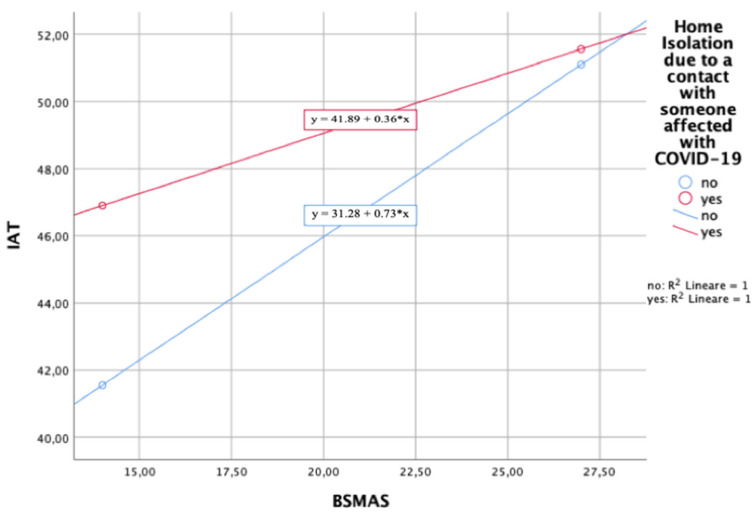
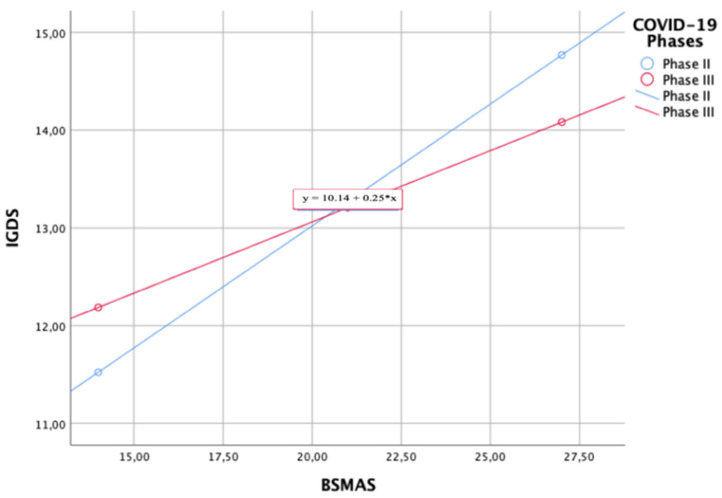
“In addition, a positive correlation was found between the IAT, IGDS and BSMS, by underlining the potential mediatory role of the internet in incenting online addictive behaviors such as PVGD and social media addiction [70].”
BackgroundThe consequences of the COVID-19 pandemic on mental health and implications for clinical practice
Fiorillo, A., & Gorwood, P. (2020) · European Psychiatry · doi:10.1192/j.eurpsy.2020.35 · Cited by 1,190
Self-citationModification in the Proposed Diagnostic Criteria for Internet Addiction
Beard, K. W., & Wolf, E. M. (2001) · CyberPsychology & Behavior · doi:10.1089/109493101300210286 · Cited by 1,008
Bottesi, G., Ghisi, M., Altoè, G., Conforti, E., Melli, G., & Sica, C. (2015) · Comprehensive Psychiatry · doi:10.1016/j.comppsych.2015.04.005 · Cited by 701 · cited 1×
“The Depression, Anxiety and Stress Scale (DASS-21, Italian short version) [46] is a self-reported questionnaire consisting of 21 items subdivided into three subscales: depression, anxiety and stress.”
Background
Cited by
Alimoradi, Z., Lotfi, A., Lin, C.-Y., Griffiths, M. D., & Pakpour, A. H. (2022) · Current Addiction Reports · doi:10.1007/s40429-022-00435-6 · Cited by 187
Riboldi, I., Cavaleri, D., Calabrese, A., Capogrosso, C. A., Piacenti, S., Bartoli, F., Crocamo, C., & Carrà, G. (2023) · Revista de Psiquiatría y Salud Mental · doi:10.1016/j.rpsm.2022.04.005 · Cited by 86
Self-citationHikikomori and modern-type depression in Italy: A new phenotypical trans-cultural characterization?
Orsolini, L., Bellagamba, S., Volpe, U., & Kato, T. A. (2022) · International Journal of Social Psychiatry · doi:10.1177/00207640221099408 · Cited by 63
“…has been demonstrated that Hikikomori individuals are more likely to be associated with addictive behaviours, such as Internet Gaming Disorder (IGD), Internet Addiction (IA) and Smartphone addiction (Lee et al., 2013; Long et al., 2021; Tateno et al., 2019; Volpe et al., 2022; Yong et al., 2019).”
BackgroundSelf-citationInternet use and internet-based addictive behaviours during coronavirus pandemic
Petrović, Z. K., Peraica, T., Kozarić‐Kovačić, D., & Palavra, I. R. (2022) · Current Opinion in Psychiatry · doi:10.1097/yco.0000000000000804 · Cited by 64
Orsolini, L., Longo, G., & Volpe, U. (2023) · International Journal of Environmental Research and Public Health · doi:10.3390/ijerph20054446 · Cited by 48
Self-citation
Metadata
- Authors
- Volpe, U., Orsolini, L., Salvi, V., Albert, U., Carmassi, C., Carrà, G., Cirulli, F., Dell’Osso, B., Luciano, M., Menculini, G., Nanni, M., Pompili, M., Sani, G., Sampogna, G., Group, W., & Fiorillo, A.
- Affiliations
- Marche Polytechnic University (IT)
- University of Trieste (IT)
- University of Pisa (IT)
- University of Milano-Bicocca (IT)
- Istituto Superiore di Sanità (IT)
- University of Milan (IT)
- University of Campania "Luigi Vanvitelli" (IT)
- University of Perugia (IT)
- University of Ferrara (IT)
- Sapienza University of Rome (IT)
- Università Cattolica del Sacro Cuore (IT)
- Corresponding author
- Volpe, Umberto
- ORCID
- Venue
- International Journal of Environmental Research and Public Health
- Publisher
- MDPI AG
- Published
- 2022-01-29
- Volume
- 19
- Issue
- 3
- Pages
- 1539
- ISSN
- 1660-4601 (ISSN-L)
- PMC
- PMC8835465
- OpenAlex
- W4210421649
- Cited by
- 57
- References
- 101
- Citations by year
- 2026: 5 · 2025: 10 · 2024: 11 · 2023: 15 · 2022: 15
- FWCI
- 18.34
- Type
- journal article
- Language
- en
- Open access
- gold
- doi.org
- Licence
- Locations
- International Journal of Environmental Research and Public Health (publishedVersion, cc-by)
- PubMed Central (publishedVersion, cc-by)
- PubMed (publishedVersion)
- Archivio Istituzionale della Ricerca (Universita Degli Studi Di Milano) (submittedVersion, other-oa)
- Università Politecnica delle Marche (Università Politecnica delle Marche) (submittedVersion, cc-by)
- ArTS Archivio della ricerca di Trieste (University of Trieste https://www.units.it/) (submittedVersion, cc-by)
- RePEc: Research Papers in Economics (submittedVersion)
- CINECA IRIS Institutial research information system (University of Pisa) (submittedVersion, cc-by)
- BOA (University of Milano-Bicocca) (submittedVersion, cc-by)
- DOAJ (DOAJ: Directory of Open Access Journals) (submittedVersion)
- UCL Discovery (University College London) (submittedVersion)
- Archivio Istituzionale della Ricerca - Università degli Studi della Campania "Luigi Vanvitelli" (submittedVersion)
- IRIS Research product catalog (Sapienza University of Rome) (submittedVersion)
- PubliCatt (Università Cattolica del Sacro Cuore) (submittedVersion, cc-by)
- Funders
- European Commission
- Università Politecnica delle Marche
- Università di Pisa
- National Institutes of Health
- Topics
- Social Sciences › Sociology and Political Science › Impact of Technology on Adolescents
- Social Sciences › Psychology › Clinical Psychology › COVID-19 and Mental Health
- Social Sciences › Psychology › Clinical Psychology › Sexuality, Behavior, and Technology
- Keywords
- COVID-19 pandemic, social isolation, problematic internet use, internet addiction, problematic video gaming, binge-watching, social media addiction, depression, anxiety, stress, digital addiction, professional gamers, Italian regions
- MeSH terms
- COVID-19, SARS-CoV-2, Adult, Cross-Sectional Studies, Female, Humans, Male, Middle Aged, Social Isolation, Behavior, Addictive, Video Games, Internet, Young Adult, Pandemics
About these checks
Registry, retraction, Cites and statistics results are computed, not judged, with one exception: a printed reference that no index lists is read once by a model before it counts as a citation error. Claims are extracted by a model and kept only when their quote appears verbatim in the text; each cited source is then checked, with a model’s help, for whether it says what the claim relies on. Those verdicts can be wrong — read the claim’s quote and the cited source before relying on one.
Statistics and arithmetic are recomputed, not judged.
Confidence bands are shown only for fields calibrated on our annotated test set. None is calibrated yet, so no band is shown.
What counts as a claim ›How we measure confidence ›How we check this ›
Are you an author, or do you see a problem with this page? Request a review
How to cite
Cite CoChat for the checks on this page, and the paper for its own findings.
- This page
- CoChat. (2026). Citation check: COVID-19-Related Social Isolation Predispose to Problematic Internet and Online Video Gaming Use in Italy. https://app.cochat.ai/papers/10.3390/ijerph19031539
- The paper
- Volpe, U., Orsolini, L., Salvi, V., Albert, U., Carmassi, C., Carrà, G., Cirulli, F., Dell’Osso, B., Luciano, M., Menculini, G., Nanni, M., Pompili, M., Sani, G., Sampogna, G., Group, W., & Fiorillo, A. (2022). COVID-19-Related Social Isolation Predispose to Problematic Internet and Online Video Gaming Use in Italy. International Journal of Environmental Research and Public Health. https://doi.org/10.3390/ijerph19031539
Data sources
Bibliographic data: Semantic Scholar, OpenAlex, Crossref.
Contains information from the Semantic Scholar Academic Graph Datasets, made available under the ODC Attribution License (ODC-BY 1.0).
Semantic Scholar’s data is described in: Kinney, R., et al. (2023). The Semantic Scholar Open Data Platform. arXiv:2301.10140.
