

Mediterranean Diet versus Very Low-Calorie Ketogenic Diet: Effects of Reaching 5% Body Weight Loss on Body Composition in Subjects with Overweight and with Obesity—A Cohort Study
Open accessThe DOI matches its Crossref record; 55 of the 55 references it cites were found in a registry or an index.
Abstract
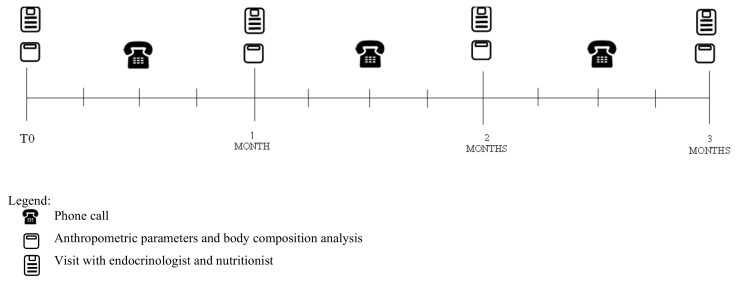
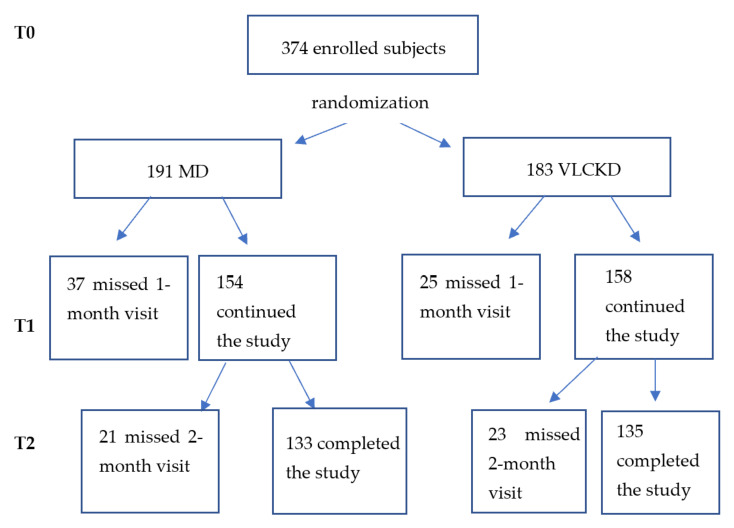
The best nutritional strategy to fight the rise in obesity remains a debated issue. The Mediterranean diet (MD) and the Very Low-Calorie Ketogenic diet (VLCKD) are effective at helping people lose body weight (BW) and fat mass (FM) while preserving fat-free mass (FFM). This study aimed to evaluate the time these two diets took to reach a loss of 5% of the initial BW and how body composition was affected. We randomized 268 subjects with obesity or overweight in two arms, MD and VLCKD, for a maximum of 3 months or until they reached 5% BW loss. This result was achieved after one month of VLCKD and 3 months of MD. Both diets were effective in terms of BW (p < 0.0001) and FM loss (p < 0.0001), but the MD reached a higher reduction in both waist circumference (p = 0.0010) and FM (p = 0.0006) and a greater increase in total body water (p = 0.0017) and FFM (p = 0.0373) than VLCKD. The population was also stratified according to gender, age, and BMI. These two nutritional protocols are both effective in improving anthropometrical parameters and body composition, but they take different time spans to reach the goal. Therefore, professionals should evaluate which is the most suitable according to each patient’s health status.
Overview
The claims and statistics of this paper haven’t been checked yet.
Free: it reads the open-access text and checks the first 5 claims that cite a source we can check. Create a free account to check every claim.
Integrity signals
Registry
Cites
Statistics
Figures
Verification
Claims the paper makes
The claims and statistics of this paper haven’t been checked yet.
Free: it reads the open-access text and checks the first 5 claims that cite a source we can check. Create a free account to check every claim.
Claims other papers make about this one
Each is checked against this paper’s own text: does it say what the citing paper says it does?
The source backs part of the claim, not all of it — or backs it for a different population, condition or comparison.
In the citing paper
“The Mediterranean diet also appears to have favourable effects on SM mass, including the attenuation of aging-related losses of lean mass even in the absence of a concomitant physical exercise programme [99,100].”
From Optimised Skeletal Muscle Mass as a Key Strategy for Obesity Management (2025) · cites this paper as [100]
Experimental — accuracy not yet measured
Self-check
Percentages, sums and reported differences re-computed from the paper’s own numbers.
The self-check needs the paper’s full text.
Citations
Cites
(2000) · PubMed · Cited by 13,173
Estruch, R., Ros, E., Salas-Salvadó, J., Covas, M.-I., Corella, D., Arós, F., Gómez-Gracia, E., Ruiz-Gutiérrez, V., Fiol, M., Lapetra, J., et al. (2018) · New England Journal of Medicine · doi:10.1056/nejmoa1800389 · Cited by 3,616 · cited 1×
“The MD not only helps with weight loss maintenance but also has beneficial effects on cardiovascular risk factors, cognitive functions, and mood [27,28].”
BackgroundEuropean Guidelines for Obesity Management in Adults
Yumuk, V., Tsigos, C., Fried, M., Schindler, K., Busetto, L., Micic, D., & Toplak, H. (2015) · Obesity Facts · doi:10.1159/000442721 · Cited by 3,432 · cited 2×
“To avoid weight gain after a diet period, it is important to define realistic goals to gradually change lifestyle habits and maintain weight loss over time [41].”
BackgroundResultBioelectrical impedance analysis?part I: review of principles and methods
KYLE, U. (2004) · Clinical Nutrition · doi:10.1016/j.clnu.2004.06.004 · Cited by 3,200 · cited 3×
“The results of this study confirmed those of other ones in the literature where both the MD and VLCKD were efficient in reducing body weight, waist circumference, and fat mass while preserving FFM and BCM in subjects with overweight or obesity [24,34–37,42,43].”
MethodInfluentialEsposito, K., Marfella, R., Ciotola, M., Di Palo, C., Giugliano, F., Giugliano, G., D'Armiento, M., D'Andrea, F., & Giugliano, D. (2004) · JAMA · doi:10.1001/jama.292.12.1440 · Cited by 2,126
Wing, R. R., Lang, W., Wadden, T. A., Safford, M., Knowler, W. C., Bertoni, A. G., Hill, J. O., Brancati, F. L., Peters, A., Wagenknecht, L., et al. (2011) · Diabetes Care · doi:10.2337/dc10-2415 · Cited by 1,828
THE DIET AND 15-YEAR DEATH RATE IN THE SEVEN COUNTRIES STUDY
KEYS, A., MIENOTTI, A., KARVONEN, M. J., ARAVANIS, C., BLACKBURN, H., BUZINA, R., DJORDJEVIC, B. S., DONTAS, A. S., FIDANZA, F., KEYS, M. H., et al. (1986) · American Journal of Epidemiology · doi:10.1093/oxfordjournals.aje.a114480 · Cited by 1,790 · cited 1×
“Epidemiological studies have noticed increased longevity and reduced morbidity in Mediterranean countries, which follow the MD, compared to the USA or Northern Europe populations [25,26].”
BackgroundMediterranean diet pyramid today. Science and cultural updates
Bach-Faig, A., Berry, E. M., Lairon, D., Reguant, J., Trichopoulou, A., Dernini, S., Medina, F. X., Battino, M., Belahsen, R., Miranda, G., et al. (2011) · Public Health Nutrition · doi:10.1017/s1368980011002515 · Cited by 1,622
Dinu, M., Pagliai, G., Casini, A., & Sofi, F. (2018) · European Journal of Clinical Nutrition · doi:10.1038/ejcn.2017.58 · Cited by 1,016 · cited 1×
“The MD not only helps with weight loss maintenance but also has beneficial effects on cardiovascular risk factors, cognitive functions, and mood [27,28].”
BackgroundMagkos, F., Fraterrigo, G., Yoshino, J., Luecking, C., Kirbach, K., Kelly, S. C., de las Fuentes, L., He, S., Okunade, A. L., Patterson, B. W., et al. (2016) · Cell Metabolism · doi:10.1016/j.cmet.2016.02.005 · Cited by 886 · cited 15×
“Indeed, losing at least 5% of body weight creates a significant reduction in fat mass (8 ± 3%) and not only an improvement in multi-organ insulin sensitivity and beta cell function but also in blood pressure and heart rate, as was seen in a recent RCT on 40 subjects with obesity [7].”
BackgroundResultInfluentialMaintenance of Lost Weight and Long-Term Management of Obesity
Hall, K. D., & Kahan, S. (2018) · Medical Clinics of North America · doi:10.1016/j.mcna.2017.08.012 · Cited by 876 · cited 1×
“Counseling, positive reinforcement, and motivation could help patients avoid weight regain [61].”
BackgroundStern, L., Iqbal, N., Seshadri, P., Chicano, K. L., Daily, D. A., McGrory, J., Williams, M., Gracely, E. J., & Samaha, F. F. (2004) · Annals of Internal Medicine · doi:10.7326/0003-4819-140-10-200405180-00007 · Cited by 831 · cited 1×
“In fact, people who follow a hypocaloric diet are able to continue losing weight over time, while people who follow a VLCKD tend to regain a bit of weight during or after the reintroduction phase [59].”
BackgroundStrength and muscle mass loss with aging process. Age and strength loss
Keller, K., & Engelhardt, M. (2019) · Muscle Ligaments and Tendons Journal · doi:10.32098/mltj.04.2013.17 · Cited by 497
Updating the Mediterranean Diet Pyramid towards Sustainability: Focus on Environmental Concerns
Serra-Majem, L., Tomaino, L., Dernini, S., Berry, E. M., Lairon, D., Ngo de la Cruz, J., Bach-Faig, A., Donini, L. M., Medina, F.-X., Belahsen, R., et al. (2020) · International Journal of Environmental Research and Public Health · doi:10.3390/ijerph17238758 · Cited by 378 · cited 1×
“In 2010, the Mediterranean Diet (MD) became an intangible heritage of humanity by UNESCO [17].”
BackgroundHeymsfield, S. B., Gonzalez, M. C. C., Shen, W., Redman, L., & Thomas, D. (2014) · Obesity Reviews · doi:10.1111/obr.12143 · Cited by 350 · cited 1×
“Maximizing fat loss while preserving lean mass and its function is a central goal of overweight and obesity treatment [46]; in fact, fat-free mass represents a key determinant of the magnitude of one’s resting metabolic rate (RMR) [47].”
BackgroundProtective mechanisms of the Mediterranean diet in obesity and type 2 diabetes
Schröder, H. (2007) · The Journal of Nutritional Biochemistry · doi:10.1016/j.jnutbio.2006.05.006 · Cited by 337 · cited 1×
“The MD suggests consuming more low-energy-density foods [22], and compared with many other dietary patterns (i.”
BackgroundDeterminants of weight loss maintenance: a systematic review
Varkevisser, R. D. M., van Stralen, M. M., Kroeze, W., Ket, J. C. F., & Steenhuis, I. H. M. (2019) · Obesity Reviews · doi:10.1111/obr.12772 · Cited by 295 · cited 1×
“Generally, these two behavioral changes require time to be adopted, and when choosing the most suitable dietary pattern, it is important to consider not only the general health benefits but also the individual [6,9].”
BackgroundMuscogiuri, G., El Ghoch, M., Colao, A., Hassapidou, M., Yumuk, V., Busetto, L., & Obesity Management Task Force (OMTF) of the European Association for the Study of Obesity (EASO) (2021) · Obesity Facts · doi:10.1159/000515381 · Cited by 289
Caprio, M., Infante, M., Moriconi, E., Armani, A., Fabbri, A., Mantovani, G., Mariani, S., Lubrano, C., Poggiogalle, E., Migliaccio, S., et al. (2019) · Journal of Endocrinological Investigation · doi:10.1007/s40618-019-01061-2 · Cited by 283 · cited 6×
“Therefore, combining these two nutritional therapies might be a winning strategy to help people healthily lose weight, increasing their motivation [11,29,32,33].”
BackgroundInfluentialSelf-citationThe regulation of the release of ketone bodies by the liver
Krebs, H. A. (1966) · Advances in Enzyme Regulation · doi:10.1016/0065-2571(66)90027-6 · Cited by 259 · cited 1×
“This ketosis state, called “physiological ketosis”, should not be confused with diabetic ketoacidosis [31] because in the first case, ketonemia reaches maximum levels of 7–8 mmol/L with no changes in pH (7.”
BackgroundMetabolic Slowing with Massive Weight Loss despite Preservation of Fat-Free Mass
Johannsen, D. L., Knuth, N. D., Huizenga, R., Rood, J. C., Ravussin, E., & Hall, K. D. (2012) · The Journal of Clinical Endocrinology & Metabolism · doi:10.1210/jc.2012-1444 · Cited by 254 · cited 1×
“Maximizing fat loss while preserving lean mass and its function is a central goal of overweight and obesity treatment [46]; in fact, fat-free mass represents a key determinant of the magnitude of one’s resting metabolic rate (RMR) [47].”
BackgroundCastellana, M., Conte, E., Cignarelli, A., Perrini, S., Giustina, A., Giovanella, L., Giorgino, F., & Trimboli, P. (2020) · Reviews in Endocrine and Metabolic Disorders · doi:10.1007/s11154-019-09514-y · Cited by 249 · cited 1×
“The VLCKD is contraindicated for people affected by type 1 diabetes mellitus (T1DM), recent cardiovascular or cerebrovascular events, severe hepatic and renal insufficiency, gout episodes, kidney stones, hydroelectrolytic alterations, psychiatric disease, and pregnant and breastfeeding women [15,32].”
BackgroundSystematic Review of the Mediterranean Diet for Long-Term Weight Loss
Mancini, J. G., Filion, K. B., Atallah, R., & Eisenberg, M. J. (2016) · The American Journal of Medicine · doi:10.1016/j.amjmed.2015.11.028 · Cited by 248 · cited 1×
“, low-carbohydrate diets and calorie-restricted diets) [24].”
Dietary fat is not a major determinant of body fat
Willett, W. C., & Leibel, R. L. (2002) · The American Journal of Medicine · doi:10.1016/s0002-9343(01)00992-5 · Cited by 241 · cited 1×
“, the Western diet), it provides a low glycemic load because it is rich in foods high in dietary fibers, which give great satiety after a meal [23].”
BackgroundMoreno, B., Bellido, D., Sajoux, I., Goday, A., Saavedra, D., Crujeiras, A. B., & Casanueva, F. F. (2014) · Endocrine · doi:10.1007/s12020-014-0192-3 · Cited by 222
Gomez-Arbelaez, D., Bellido, D., Castro, A. I., Ordoñez-Mayan, L., Carreira, J., Galban, C., Martinez-Olmos, M. A., Crujeiras, A. B., Sajoux, I., & Casanueva, F. F. (2017) · The Journal of Clinical Endocrinology & Metabolism · doi:10.1210/jc.2016-2385 · Cited by 214
Moreno, B., Crujeiras, A. B., Bellido, D., Sajoux, I., & Casanueva, F. F. (2016) · Endocrine · doi:10.1007/s12020-016-1050-2 · Cited by 204
Optimal Diet Strategies for Weight Loss and Weight Loss Maintenance
Kim, J. Y. (2021) · Journal of Obesity & Metabolic Syndrome · doi:10.7570/jomes20065 · Cited by 193 · cited 2×
“The VLCKD provides less than 700–800 kcal/day with carbohydrates ranging between 30 and 50 g per day, preferably <30 g, and <30–40 g/day of fats, mainly from extra virgin olive oil [12,13,32].”
BackgroundBautista-Castaño, I., Molina‐Cabrillana, J., Montoya-Alonso, J. A., & Serra‐Majem, L. (2004) · International Journal of Obesity · doi:10.1038/sj.ijo.0802602 · Cited by 192
Advantages and Disadvantages of the Ketogenic Diet: A Review Article
Batch, J. T., Lamsal, S. P., Adkins, M., Sultan, S., & Ramirez, M. N. (2020) · Cureus · doi:10.7759/cureus.9639 · Cited by 181 · cited 1×
“, type 2 diabetes (T2DM), hypertension, cardiovascular diseases (CVD), cancer, and sleep apnea), and it is associated with increased mortality risk [3].”
BackgroundThe Management of Very Low-Calorie Ketogenic Diet in Obesity Outpatient Clinic: A Practical Guide
Muscogiuri, G., Barrea, L., Laudisio, D., Pugliese, G., Salzano, C., Savastano, S., & Colao, A. (2019) · Journal of Translational Medicine · doi:10.1186/s12967-019-2104-z · Cited by 180 · cited 2×
“On the other hand, a ketogenic diet is characterized by no more than 30–50 g/day of carbohydrates [29,30].”
BackgroundImpact of obesity on COVID-19 patients
Yu, W., Rohli, K. E., Yang, S., & Jia, P. (2020) · Journal of Diabetes and its Complications · doi:10.1016/j.jdiacomp.2020.107817 · Cited by 169 · cited 2×
“Achieving a healthy weight is considered a risk modifier and has favorable effects on blood pressure, glucose metabolism, and cardiac and vascular functions [1].”
BackgroundPaoli, A., Bianco, A., Grimaldi, K., Lodi, A., & Bosco, G. (2013) · Nutrients · doi:10.3390/nu5125205 · Cited by 142 · cited 2×
“Sometimes the time necessary to reach the goal of losing 5% of body weight is a key factor, since people with overweight or with obesity may lose their motivation and abandon the nutritional protocol, starting the so-called yo-yo effect [11].”
BackgroundCastro, A. I., Gomez-Arbelaez, D., Crujeiras, A. B., Granero, R., Aguera, Z., Jimenez-Murcia, S., Sajoux, I., Lopez-Jaramillo, P., Fernandez-Aranda, F., & Casanueva, F. F. (2018) · Nutrients · doi:10.3390/nu10101348 · Cited by 140 · cited 2×
“These body composition changes seem to be associated with better food control and quality of life, which could contribute to maintaining weight loss over time [36].”
BackgroundResultIs there an optimal diet for weight management and metabolic health?
Thom, G., & Lean, M. (2017) · Gastroenterology · doi:10.1053/j.gastro.2017.01.056 · Cited by 119 · cited 1×
“Our study, in fact, showed that in two different time spans the results on body weight and body composition are similar, but it could be interesting to schedule a follow-up visit after 6 or 12 months to check weight maintenance, as this is the most challenging aspect of diet therapy [60].”
BackgroundFrom Mediterranean diet to Mediterranean lifestyle: a narrative review
Diolintzi, A., Panagiotakos, D. B., & Sidossis, L. S. (2019) · Public Health Nutrition · doi:10.1017/s1368980019000612 · Cited by 94 · cited 1×
“MD also supports correct hydration, extra virgin olive oil as a seasoning, home-made food preparation, sociable eating with family or friends, regular physical activity, relaxation, and rest [20,21].”
BackgroundConfusion in the nomenclature of ketogenic diets blurs evidence
Trimboli, P., Castellana, M., Bellido, D., & Casanueva, F. F. (2020) · Reviews in Endocrine and Metabolic Disorders · doi:10.1007/s11154-020-09546-9 · Cited by 81 · cited 1×
“On the other hand, a ketogenic diet is characterized by no more than 30–50 g/day of carbohydrates [29,30].”
BackgroundWhitton, C., Ramos-García, C. O., Kirkpatrick, S. I., Healy, J. D., Dhaliwal, S. S., Boushey, C. J., Collins, C. E., Rollo, M. E., & Kerr, D. A. (2022) · Advances in Nutrition · doi:10.1093/advances/nmac085 · Cited by 62 · cited 1×
“People tend to frequently misestimate their food portions and sometimes forget their consumptions of some food, such as vegetables or seasonings [58].”
BackgroundLandry, M. J., Crimarco, A., Perelman, D., Durand, L. R., Petlura, C., Aronica, L., Robinson, J. L., Kim, S. H., & Gardner, C. D. (2021) · Nutrients · doi:10.3390/nu13030967 · Cited by 60 · cited 1×
“This nutritional approach is considered sustainable and provides a high consumption of local fruit and vegetables, whole grains, legumes, nuts and seeds, blue fish, eggs, white meats, and dairy products, and a low consumption of red and processed meats with respect to correct portion sizes and weekly frequencies [18,1…”
BackgroundAndréoli, A., Lauro, S., Daniele, N. D., Sorge, R. P., Celi, M., & Volpe, S. L. (2007) · European Journal of Clinical Nutrition · doi:10.1038/sj.ejcn.1602800 · Cited by 57 · cited 1×
“The preservation of FFM, especially of body cellular mass, is an important issue, as its reduction alters energy metabolism and decreases muscle strength as well as lung and immune capacity [44,45].”
BackgroundDi Rosa, C., Lattanzi, G., Taylor, S. F., Manfrini, S., & Khazrai, Y. M. (2020) · Obesity Research & Clinical Practice · doi:10.1016/j.orcp.2020.08.009 · Cited by 54
Self-citationBarrea, L., Muscogiuri, G., Aprano, S., Vetrani, C., de Alteriis, G., Varcamonti, L., Verde, L., Colao, A., & Savastano, S. (2022) · International Journal of Obesity · doi:10.1038/s41366-022-01152-w · Cited by 42 · cited 1×
“observed a significant increase in the phase angle (considered an inflammation marker) in 260 women after 1 month of VLCKD, but in our study, we did not observe any changes in the phase angle in all subgroups [52].”
BackgroundTragni, E., Vigna, L., Ruscica, M., Macchi, C., Casula, M., Santelia, A., Catapano, A. L., & Magni, P. (2021) · Nutrients · doi:10.3390/nu13061804 · Cited by 41 · cited 1×
“4%), and at the end of the protocol, 33% of participants reached a normal weight [53].”
BackgroundEffectiveness of a Very Low Calorie Ketogenic Diet on Testicular Function in Overweight/Obese Men
Mongioì, L. M., Cimino, L., Condorelli, R. A., Magagnini, M. C., Barbagallo, F., Cannarella, R., La Vignera, S., & Calogero, A. E. (2020) · Nutrients · doi:10.3390/nu12102967 · Cited by 40 · cited 2×
“In any case, even in these studies, the researchers observed a significant reduction in body weight and BMI compared to baseline [48,49].”
BackgroundResultLa Vignera, S., Cannarella, R., Galvano, F., Grillo, A., Aversa, A., Cimino, L., Magagnini, C. M., Mongioì, L. M., Condorelli, R. A., & Calogero, A. E. (2021) · Endocrine · doi:10.1007/s12020-020-02518-8 · Cited by 36
Pros & cons of some popular extreme weight-loss diets
Shilpa, J., & Mohan, V. (2018) · The Indian Journal of Medical Research · doi:10.4103/ijmr.ijmr_1793_18 · Cited by 34 · cited 1×
“However, it is important to remember that a VLCKD is not sustainable in the long term, and it requires a gradual transition to a Mediterranean diet [57].”
BackgroundEvaluation of between-methods agreement of extracellular water measurements in adults and children
Silva, A. M., Heymsfield, S. B., Gallagher, D., Albu, J., Pi-Sunyer, X. F., Pierson, R. N., Wang, J., Heshka, S., Sardinha, L. B., & Wang, Z. (2008) · American Journal of Clinical Nutrition · doi:10.1093/ajcn/88.2.315 · Cited by 33 · cited 1×
“It is clear that the MD is a nutritional protocol useful for the prevention and management of non-communicable diseases such as obesity and metabolic and cardiovascular diseases with high diet adherence and satisfaction by patients [56], but nowadays, the Very-Low-Calorie Ketogenic diet has become even more popular, e…”
BackgroundWood, R. J., Gregory, S. M., Sawyer, J., Milch, C. M., Matthews, T. D., & Headley, S. A. E. (2012) · Metabolic Syndrome and Related Disorders · doi:10.1089/met.2011.0104 · Cited by 32 · cited 1×
“Although a diet poor in carbohydrates may increase muscle catabolism [55], exacerbating fat-free mass loss during weight loss, the VLCKD preserved FFM and body cellular mass.”
BackgroundRondanelli, M., Perna, S., Ilyas, Z., Peroni, G., Bazire, P., Sajuox, I., Maugeri, R., Nichetti, M., & Gasparri, C. (2021) · Endocrine · doi:10.1007/s12020-021-02860-5 · Cited by 28 · cited 1×
“Our study confirmed other results in the literature about weight loss, BMI, and WC reduction after one month of VLCKD, and they are also in line with FFM preservation [51].”
ResultCarneiro‐Barrera, A., Amaro‐Gahete, F. J., Jurado‐Fasoli, L., Sáez-Roca, G., Martín-Carrasco, C., Tinahones, F. J., & Ruiz, J. R. (2022) · Nutrients · doi:10.3390/nu14132731 · Cited by 25 · cited 1×
“0001) thanks to a Mediterranean diet [50].”
Martins, P. C., Hansen, F., Silva, A. M., & Silva, D. A. S. (2018) · Physiological Measurement · doi:10.1088/1361-6579/aaf8cd · Cited by 20 · cited 1×
“The preservation of FFM, especially of body cellular mass, is an important issue, as its reduction alters energy metabolism and decreases muscle strength as well as lung and immune capacity [44,45].”
BackgroundObesity 2021: Current Clinical Management of a Chronic, Serious Disease
Kushner (2021) · The Journal of Family Practice · doi:10.12788/jfp.0221 · Cited by 8 · cited 4×
“Many patients with obesity [8,9] and type 2 diabetes [10] are not aware that losing at least 5% of their body weight could improve their quality of life.”
BackgroundInfluentialDiete chetogeniche: ruolo nel trattamento di sovrappeso e obesità
Spera, G., & Mariani, S. (2017) · L Endocrinologo · doi:10.1007/s40619-017-0376-1 · Cited by 5 · cited 2×
“5 g/kg ideal body weight/day to preserve free fat mass [12,32,33].”
BackgroundCheskin, L. J., & Kahan, S. I. (2008) · BMJ Evidence-Based Medicine · doi:10.1136/ebm.13.6.176 · Cited by 4 · cited 1×
“Epidemiological studies have noticed increased longevity and reduced morbidity in Mediterranean countries, which follow the MD, compared to the USA or Northern Europe populations [25,26].”
Background(2013) · Europe PMC (PubMed Central)
Research works printed but not linked: 1
- Masood W. Annamaraju P. Uppaluri K.R. Ketogenic Diet StatPearls Publishing Treasure Island, FL, USA 2022 29763005
Cited by
Panganiban, J. A., Kehar, M., Ibrahim, S. H., Hartmann, P., Sood, S., Hassan, S. M., Ramirez, C. M., Kohli, R., Censani, M., Mauney, E. E., et al. (2025) · Obesity Pillars · doi:10.1016/j.obpill.2025.100164 · Cited by 73
Calcaterra, V., Magenes, V. C., Massini, G., De Sanctis, L., Fabiano, V., & Zuccotti, G. (2024) · Nutrients · doi:10.3390/nu16070938 · Cited by 35
“In 2022, Mei et al. [14] conducted a study to evaluate the therapeutic effect of a Mediterranean diet combined with a low-carbohydrate (LC) dietary model in 72 overweight patients with PCOS over a period of 12 weeks.”
BackgroundKetogenic Diets for Body Weight Loss: A Comparison with Other Diets
Dyńka, D., Rodzeń, Ł., Rodzeń, M., Pacholak-Klimas, A., Ede, G., Sethi, S., Łojko, D., Bartoń, K., Berry, K., Deptuła, A., et al. (2025) · Nutrients · doi:10.3390/nu17060965 · Cited by 47
“The KD also significantly reduced triglycerides, insulin, glucose, and inflammatory cytokines compared to the Western diet [209].”
Florkowski, M. R., Abiona, E., Frank, K. M., & Brichacek, A. L. (2024) · Frontiers in Nutrition · doi:10.3389/fnut.2024.1392666 · Cited by 29
Boyajian, J. L., Islam, P., Abosalha, A. K., Schaly, S., Thareja, R., Kassab, A., Arora, K., Santos, M., Shum-Tim, C., & Prakash, S. (2024) · Microbiome Research Reports · doi:10.20517/mrr.2024.05 · Cited by 30
Metadata
- Authors
- Di Rosa, C., Lattanzi, G., Spiezia, C., Imperia, E., Piccirilli, S., Beato, I., Gaspa, G., Micheli, V., De Joannon, F., Vallecorsa, N., Ciccozzi, M., Defeudis, G., Manfrini, S., & Khazrai, Y.
- Affiliations
- Unit of Food Science and Human Nutrition, Campus Bio-Medico University of Rome, 00128 Rome, Italy
- Università Campus Bio-Medico (IT)
- Corresponding author
- Khazrai, Yeganeh
- ORCID
- Venue
- International Journal of Environmental Research and Public Health
- Publisher
- MDPI AG
- Published
- 2022-10-11
- Volume
- 19
- Issue
- 20
- Pages
- 13040
- ISSN
- 1660-4601 (ISSN-L)
- PMC
- PMC9603454
- OpenAlex
- W4304588324
- Semantic Scholar
- 693c5becb906de61d969cb001a84945d37af8461
- Cited by
- 47
- References
- 55
- Citations by year
- 2026: 9 · 2025: 19 · 2024: 18 · 2023: 1
- FWCI
- 5.88
- Type
- journal article
- Language
- en
- Open access
- gold
- doi.org
- Licence
- Locations
- International Journal of Environmental Research and Public Health (publishedVersion, cc-by)
- PubMed Central (publishedVersion, cc-by)
- PubMed (publishedVersion)
- RePEc: Research Papers in Economics (submittedVersion)
- DOAJ (DOAJ: Directory of Open Access Journals) (submittedVersion)
- IRIS eCampus Telematic University (Università degli Studi eCampus) (submittedVersion)
- IRIS Research product catalog (Sapienza University of Rome) (submittedVersion)
- Topics
- Health Sciences › Medicine › Physiology (medical) › Diet and metabolism studies
- Health Sciences › Medicine › Physiology (medical) › Dietary Effects on Health
- Health Sciences › Medicine › Public Health, Environmental and Occupational Health › Nutritional Studies and Diet
- Keywords
- Mediterranean diet, very low-calorie ketogenic diet, obesity, overweight, weight loss, body composition, fat mass, fat-free mass, waist circumference, total body water
- MeSH terms
- Body Composition, Humans, Obesity, Cohort Studies, Weight Loss, Diet, Mediterranean, Overweight, Diet, Ketogenic
About these checks
Registry, retraction, Cites and statistics results are computed, not judged, with one exception: a printed reference that no index lists is read once by a model before it counts as a citation error. Claims are extracted by a model and kept only when their quote appears verbatim in the text; each cited source is then checked, with a model’s help, for whether it says what the claim relies on. Those verdicts can be wrong — read the claim’s quote and the cited source before relying on one.
Statistics and arithmetic are recomputed, not judged.
Confidence bands are shown only for fields calibrated on our annotated test set. None is calibrated yet, so no band is shown.
What counts as a claim ›How we measure confidence ›How we check this ›
Are you an author, or do you see a problem with this page? Request a review
Data sources
Bibliographic data: Semantic Scholar, OpenAlex, Crossref.
Contains information from the Semantic Scholar Academic Graph Datasets, made available under the ODC Attribution License (ODC-BY 1.0).
Semantic Scholar’s data is described in: Kinney, R., et al. (2023). The Semantic Scholar Open Data Platform. arXiv:2301.10140.
