

The DOI matches its Crossref record; 111 of the 113 references it cites were found in a registry or an index.
Bioactivities from Marine Algae of the Genus Gracilaria
Open accessAbstract
Seaweeds are an important source of bioactive metabolites for the pharmaceutical industry in drug development. Many of these compounds are used to treat diseases like cancer, acquired immune-deficiency syndrome (AIDS), inflammation, pain, arthritis, as well as viral, bacterial, and fungal infections. This paper offers a survey of the literature for Gracilaria algae extracts with biological activity, and identifies avenues for future research. Nineteen species of this genus that were tested for antibacterial, antiviral, antifungal, antihypertensive, cytotoxic, spermicidal, embriotoxic, and anti-inflammatory activities are cited from the 121 references consulted.
Overview
The claims and statistics of this paper haven’t been checked yet.
Run the check — free, no account needed. It reads the open-access text and checks the sources it cites.
Integrity signals
Registry
Cites
Statistics
Figures
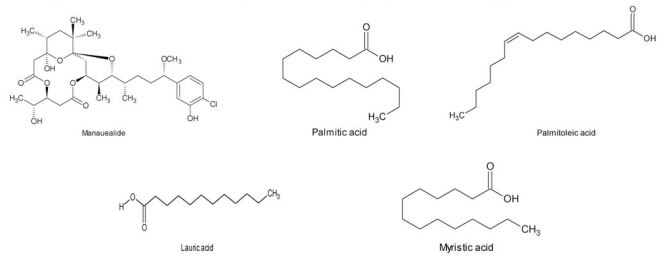
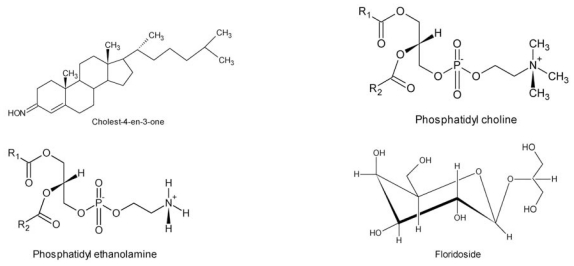
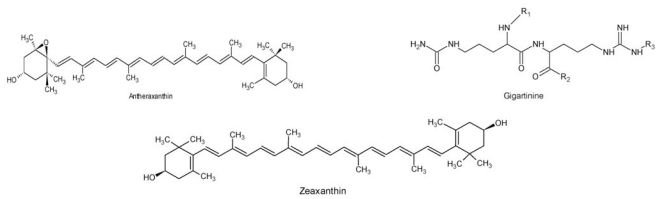


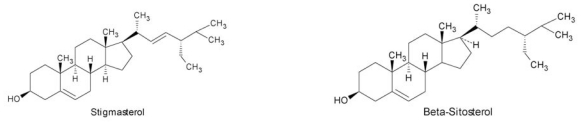
Verification
Claims the paper makes
The claims and statistics of this paper haven’t been checked yet.
Run the check — free, no account needed. It reads the open-access text and checks the sources it cites.
Claims other papers make about this one
Each is checked against this paper’s own text: does it say what the citing paper says it does?
The cited source says what the claim attributes to it.
In the citing paper
“Macroalgae also produce antimicrobial compounds (de Almeida et al., 2011), so it is possible that the normal intestinal microbiota of manatees was affected by a high macroalgal intake, with an associated increase in Clostridiales.”
From Novel Lethal Clostridial Infection in Florida Manatees (Trichechus manatus latirostris): Cause of the 2013 Unusual Mortality Event in the Indian River Lagoon (2022) · cites this paper as de Almeida et al., 2011
In the citing paper
“Different studies [49,50] with extracts from red algae were carried out. These extracts were administrated to female rats in the first seven days of their pregnancies. As result, it was demonstrated that these extracts have post-coital contraceptive protection in the rats without showing any relevant adverse effect.”
From The Potential of Seaweeds as a Source of Functional Ingredients of Prebiotic and Antioxidant Value (2019) · cites this paper as [50]
Self-check
Percentages, sums and reported differences re-computed from the paper’s own numbers.
The self-check needs the paper’s full text.
Citations
Cites
1 retracted
Biomedical Compounds from Marine organisms
Jha, R. K., & Zi-rong, X. (2004) · Marine Drugs · doi:10.3390/md203123 · Cited by 324
RetractedFaulkner, D. J. (1990) · Natural Product Reports · doi:10.1039/np9900700269 · Cited by 4,880
Brine Shrimp: A Convenient General Bioassay for Active Plant Constituents
Meyer, B., Ferrigni, N. R., Putnam, J. E., Jacobsen, L. B., Nichols, D. E., & McLaughlin, J. (1982) · Planta Medica · doi:10.1055/s-2007-971236 · Cited by 4,841
Natural products as sources of new drugs over the period 1981–2002
Newman, D. J., Cragg, G. M., & Snader, K. M. (2003) · Journal of Natural Products · doi:10.1021/np030096l · Cited by 3,082
Metabolites from algae with economical impact
Cardozo, K. H. M., Guaratini, T., Barros, M. P., Falcão, V. D. R., Tonon, Â. P., Lopes, N. P., Campos, S. C. G., Torres, M. A., Souza, A. D. O., Colepicolo, P., et al. (2006) · Comparative Biochemistry and Physiology Part C Toxicology & Pharmacology · doi:10.1016/j.cbpc.2006.05.007 · Cited by 960
Medicinal and pharmaceutical uses of seaweed natural products: A review
Smit, A. J. (2004) · Journal of Applied Phycology · doi:10.1023/b:japh.0000047783.36600.ef · Cited by 806
Microglia as effector cells in brain damage and repair: focus on prostanoids and nitric oxide
Minghetti, L. (1998) · Progress in Neurobiology · doi:10.1016/s0301-0082(97)00052-x · Cited by 562
Chapman, V. J., & Chapman, D. J. (1980) · Springer eBooks · doi:10.1007/978-94-009-5806-7 · Cited by 535
Marine Derived Polysaccharides for Biomedical Applications: Chemical Modification Approaches
d’Ayala, G. G., Malinconico, M., & Laurienzo, P. (2008) · Molecules · doi:10.3390/molecules13092069 · Cited by 516
An Update Review of Saffron and its Active Constituents
Rı́os, J. L., Recio, M. C., Giner, R. M., & Máñez, S. (1996) · Phytotherapy Research · doi:10.1002/(sici)1099-1573(199605)10:3 · Cited by 504
Research works printed but not linked: 24
- Lahaye, 1993, Marine algae as a source of dietary fibers: Determination of soluble and insoluble dietary fiber contents in some ‘sea vegetable’, J. Sci. Food Agric, 54, 523
- Premila, 1996, Antimicrobial activity of some marine algae of south-west coast of India, Indian J. Mar. Sci, 26, 201
- Jha, 2004, Biomedical compounds from marine organisms, Mar Drugs, 2, 123, 10.3390/md203123 · DOI
- Rehm, 2001, Marine biotechnology, Biotechnology, 10, 441
- Linsert, 1994, Revolution in infant formula brewing in Herman’s calves. DNA algae, Genet. Eng. Biotechnol. Monit, 1, 45
- Khotimchenko, 1963, Fatty acids of marine algae from the 12 substances from marine algae Puerto Rico, Antimicrob. Agents Chemother, 161, 68
- Combres, 1986, Fatty acid and sterol composition of red algae of the Indian ocean, Oceanol. Acta, 9, 339
- Castedo, 1985, Sterols from red and brown algae from the Galician coast, An. Quim. Ser. C, 8, 113
- Vilalta, 1984, Natural marine products from algae and cnidaria of the Galician estuaries, Cuad. Area Cienc. Mar, 2, 617
- Talarico, 1978, Properties and ultrastructures of r-phycoerythrin from Gracilaria verrucosa, Photosynthetica, 12, 369
- Chenieux, 1980, Seaweeds of French atlantic coast with antimitotic activity, Planta Med, 40, 152
- Avanzini, 1987, Green, red and brown algae from North Adriatic sea as source of possible cytotoxic products, Fitoterapia, 58, 391
- Sridhar, 1984, Biological activity of some marine algal extracts, Indian J. Mar. Sci, 13, 90
- Albuquerque, 1983, Detection of antimicrobial activity in marine seaweeds, Rev. Inst. Antibiot. Univ. Fed Pernambuco Recife, 21, 127
- Kamat, 1992, Bioactivity of marine organisms. VI. Antiviral evaluation of marine algal extracts from the Indian Coast, Bot. Mar, 35, 161, 10.1515/botm.1992.35.2.161 · DOI
- Nakamura, 1994, Anti-human immunodeficiency virus (HIV) activities of aqueous extracts from marine algae, Nat. Med, 48, 173
- Levring, T (1980). Tenth International Seaweed Symposium, Walter de Gruyter & Co.
- Parekh, 1984, Fatty acid content of some Indian marine algae, Indian J. Mar. Sci, 13, 45
- Roh, 1994, Structure of floridoside, a glycerol glycoside from the marine red alga Gracilaria verrucosa, Korean J. Pharmacogn, 25, 117
- Levring, T (1980). Tenth International Seaweed Symposium, Walter de Gruyter & Co.
- Matsuhashi, 1974, Effects of the freezing and drying method and the mechanical dehydration method by pressure on gel properties of dried agar, Reito, 49, 756
- Shi, 1983, Seasonal variation in yield, physical properties and chemical composition of agar from Gracilaria verrucosa, Oceanol. Limnol. Sin, 14, 272
- Aihara, 1968, Occurrence of antheraxanthin in two Rhodophyceae Acanthophora spicifera and Gracilaria lichenoides, Phytochemistry, 7, 497, 10.1016/S0031-9422(00)90896-3 · DOI
- Parekh, 1984, Fatty acid content of some Indian marine algae, Indian J. Mar. Sci, 13, 45
Cited by
Sorted by citations
Items 201–251 of 251
Murugesan, M., Pandurangan, P., Samrot, A. V., Sengupta, P., Dutta, S., & Pandey, V. K. (2024) · Vegetos · doi:10.1007/s42535-024-00914-3 · Cited by 1
Félix, F., de Magalhães, C. R., Marrero-Alemán, C., Duarte, D., Parente, P., Fatsini, E., Oliveira, C. C. V., & Cabrita, E. (2024) · Aquaculture · doi:10.1016/j.aquaculture.2024.741955 · Cited by 1
Acosta-Calderón, J. A., Alquicira, E. F. R., Quiróz-González, N., Méndez, M. D. J. T., & Islas‐Villanueva, V. (2025) · Phycological Research · doi:10.1111/pre.12585 · Cited by 1
Cosmeceuticals from Marine Sources: Algal Products as Green Cosmetics
Zovia, I., Ijaz, A., Munir, A., Mumtaz, A., Arshad, M., Ahmad, A., & Javed, S. (2025) · Springer eBooks · doi:10.1007/978-3-031-86087-4_7 · Cited by 1
Exploring the potential of Baltic macroalgae for food preservation
Tirtantyo, P. A., Blümel, M., Welsch, C., Wenzel‐Storjohann, A., & Taşdemir, D. (2025) · Algal Research · doi:10.1016/j.algal.2025.104141 · Cited by 1
Harnessing the bioactive potential of Indian seaweeds through multivariate analysis
Verma, P., Kumar, D., Mishra, G., & Sahoo, D. (2025) · Discover Oceans · doi:10.1007/s44289-025-00087-0 · Cited by 1
Hong, H., Chen, L., Zhou, Z., Yang, C., Yang, Y., Zha, L., Zhang, X., Liu, M., Zhao, J., Bi, G., et al. (2025) · npj Materials Degradation · doi:10.1038/s41529-025-00699-z · Cited by 1
Sinha, A., Sharma, K., Mittal, V., Lowanshi, A., Gulati, R., & Ahlawat, Y. (2025) · Elsevier eBooks · doi:10.1016/b978-0-443-32920-3.00031-8 · Cited by 2
Mulio, A. T., Chiu, C., Chan, Y., Lu, W., & Li, P. (2026) · International Journal of Biological Macromolecules · doi:10.1016/j.ijbiomac.2026.152586 · Cited by 1
From structure to application: the versatile cell walls of Chlorophyta
Kowalczyk, J., Malec, P., & Funk, C. (2026) · Bioresource Technology · doi:10.1016/j.biortech.2026.135359 · Cited by 1
Complete sequence of mitochondrial DNA of Gracilaria tenuistipitata (Rhodophyta)
Liu, N., Li, Y., Liu, C., Liu, T., & Chen, W. (2018) · Mitochondrial DNA Part B · doi:10.1080/23802359.2018.1464410 · Cited by 1
Pembuatan Dodol Jelly dengan Penambahan Agar Strip (Gracilaria sp.) di Kabupaten Karawang
Tanjung, A., Saputra, R. S. H., Prasetyawati, S. B., & Adi, C. P. (2020) · PELAGICUS · doi:10.15578/plgc.v1i3.8913 · Cited by 1
Novel Anti-amoebic Properties of Agarophytes Gracilaria changii and Gracilaria salicornia Extracts
Goh, T.-K., Yow, Y., Anwar, A., Khan, N. A., & Ong, S. (2022) · The Natural Products Journal · doi:10.2174/2210315512666220803164452 · Cited by 1
Metabolomics of Different Seaweeds in Functional Food Prospects
Pabbathi, N. P. P., Velidandi, A., Shukla, P. J., Nathani, N. M., & Mootapally, C. (2022) · BENTHAM SCIENCE PUBLISHERS eBooks · doi:10.2174/9789815051872122010017 · Cited by 1
Mechanisms of antiinflammatory effects of naturally derived secondary metabolites
Maheswari, R. T. U., Kumar, P., & Rajan, M. (2023) · Elsevier eBooks · doi:10.1016/b978-0-323-99988-5.00013-9 · Cited by 1
Sasadara, M. M. V., Nayaka, N. M. D. M. W., Yuda, P. E. S. K., Cahyaningsih, E., & Dewi, N. L. K. A. A. (2022) · Jurnal Ilmiah Medicamento · doi:10.36733/medicamento.v9i1.5344 · Cited by 1
Salas, I., Fadhlullah, M. Z. F., & Adi, C. P. (2023) · Journal of Applied Phycology · doi:10.1007/s10811-023-03139-0 · Cited by 1
Manuguerra, S., Arena, R., Curcuraci, E., Renda, G., Rannou, M., Hellio, C., Messina, C. M., & Santulli, A. (2024) · Water · doi:10.3390/w16182667 · Cited by 1
Raj, C. T. D., Palaninathan, V., Kandaswamy, S., Kumar, V., & James, R. A. (2024) · Heliyon · doi:10.1016/j.heliyon.2024.e41132 · Cited by 1
Rasheed, R., & Padmavati, G. (2025) · National Academy Science Letters · doi:10.1007/s40009-024-01600-3 · Cited by 1
ANTIOXIDANT ACTIVITY OF THE TOPICAL PREPARATION OF BULUNG SANGU (Gracilaria spp) EXTRACT
Sasadara, M. M. V., Wirawan, I. G. P., Sritamin, M., Suada, I. K., & Adiartayasa, W. (2020) · International Journal of Biosciences and Biotechnology · doi:10.24843/ijbb.2020.v07.i02.p04 · Cited by 1
Cavalcante, D. N. D. C., Garcia, M. S., Aranha, M. L. G., ALMEIDA, A. A., Merey, F. M., Crispim, B. D. A., Barufatti, A., Pisani, L. P., Fonseca, G., Braga, A. R. C., et al. (2021) · Journal of Applied Phycology · doi:10.1007/s10811-021-02421-3 · Cited by 1
Marine Algae and Chronic Diseases
Senthilkumar, K., & Kim, S. (2015) · doi:10.1002/9783527679577.ch32 · Cited by 1
Extraction Technologies for Bioactive Polysaccharides
Qari, R., & Ravindran, R. (2021) · doi:10.1002/9781119542650.ch8 · Cited by 1
Calorific and characteristics of seaweed Gracilaria sp. flour-based boba pearls in IndonesiaPreprint
Salas, I., Fadhlullah, M. Z. F., & Adi, C. P. (2023) · Research Square · doi:10.21203/rs.3.rs-2825343/v1 · Cited by 1
Sikdar, P., & Ramana, M. V. (2014)
Dhinakaran, D. I., raja, P. K., kumar, K. K., Vigneshwaran, G., & Marimuthu, T. (2016) · International Journal of Marine Science · doi:10.5376/ijms.2016.06.0020
The effectiveness of potential marine plants as pathogen bacterial inhibitory compaunds
Kaimudin, M., Sumarsana, & Mutiara, R. (2019) · IOP Conference Series Earth and Environmental Science · doi:10.1088/1755-1315/339/1/012050
Applications of Metabolities Extracted from Macroalgae to Fight Neglected Diseases in Brazil
Alves, J. P. S., Farias, C. D. S., Silva, C. C. D. S., & de Souza, A. L. B. (2021) · Journal of Bioengineering, Technologies and Health · doi:10.34178/jbth.v4i3.172
APPLICATIONS OF METABOLITES EXTRACTED FROM MACROALGAE TO FIGHT NEGLECTED DISEASES IN BRAZIL
Alves, J. P. S., Farias, C. D. S., Silva, C. C. D. S., & de Souza, A. L. B. (2021) · doi:10.5151/siintec2021-208740
Skin Whitening with Seaweeds: Looking into Emerging Products in the Natural Cosmeceutical Market.
Köse, A. (2022) · Springer eBooks · doi:10.1007/978-3-030-92174-3_27
Gracilaria Cultivation and the Role of Its Associated Bacteria for Biomass Production
Umashree, V. R., & Arunkumar, K. (2022) · Springer eBooks · doi:10.1007/978-3-030-91955-9_28
Hudi, L., Wignyanto, Nurika, I., & Hidayat, N. (2023) · AIP conference proceedings · doi:10.1063/5.0116534
Treatment Using Seaweeds in Fishes and Shrimp by In Vivo Method
Bharath, R., Karthikeyan, K., Vidya, R., & Sudhakaran, R. (2023) · Springer protocols handbooks/Springer protocols · doi:10.1007/978-1-0716-3032-7_20
Promising Seaweeds against Human Viruses: A Review
Rana, B., & Chahal, K. (2022) · Indian Journal of Pharmaceutical Sciences · doi:10.36468/pharmaceutical-sciences.1093
Umadevi, K., & R.Prasanthi (2023) · International Journal For Multidisciplinary Research · doi:10.36948/ijfmr.2023.v05i03.3343
Mulyasari, Taufik, I., Setijaningsih, L., & Subaryono, S. (2021) · IOP Conference Series Earth and Environmental Science · doi:10.1088/1755-1315/860/1/012034
Shojaee, A., Jahandideh, A., Omran, A. N., Haghdoost, N. S., & Khosravi, M. (2023) · PubMed Central · doi:10.18502/cmm.2023.150672
Rani, M. R., Azemi, A. K., Bakar, K., Abu-Bakar, L., Muhammad, T. S. T., & Ismail, N. (2024) · Natural Product Research · doi:10.1080/14786419.2024.2327851
Curcuraci, E., Hellio, C., Messina, C. M., & Santulli, A. (2024) · Springer eBooks · doi:10.1007/978-3-031-65529-6_13
Sánchez, E. C., Reséndiz, M. L. N., Dreckmann, K. M., Hernández, O. E., & Abel Sentíes, G. (2025) · Journal of Applied Phycology · doi:10.1007/s10811-025-03457-5
Udeshini, I., & Gunathilake, V. K. (2025) · Research Square · doi:10.21203/rs.3.rs-6549548/v1
laboni, H. A., Sarkar., S. S. A. B., Islam, M. A., Islam, M. A., Islam, M., Lyzu, C., Rahman, M. M., Alam, M. M., Shohael, A. M., & Karim, M. R. (2025) · Pharmacological Research - Natural Products · doi:10.1016/j.prenap.2025.100324
Mohammad, S. A., Meriga, B., Islam, M. S., & Dubey, A. (2026) · Algal Research · doi:10.1016/j.algal.2026.104556
Snega, R., Thoshi Tarun, K., & Saravanan, M. (2026) · Oral and Maxillofacial Surgery · doi:10.1007/s10006-026-01645-2
Visu, G., Muruganantham, N., Anitha, P., Govindharaju, R., & Anusuya, V. (2026) · Environmental Nanotechnology Monitoring & Management · doi:10.1016/j.enmm.2026.101184
Peng, H., Du, Y., Ding, Q., Du, D., Dong, R., Ran, C., Zhang, Z., Yao, Y., Liang, H., Li, M., et al. (2026) · Reviews in Aquaculture · doi:10.1111/raq.70202
Dumuţa, A., Cozmuța, A. M., Scarfı̀, S., Moussa, M., Mirata, S., Baldassari, S., Drava, G., Malta, E., Andrade, M. M., Pop, F., et al. (2026) · Food Production Processing and Nutrition · doi:10.1186/s43014-026-00414-8
Know your seaweed: fundamental knowledge needed to bring new species into cultivation
Augytė, S., & Yarish, C. (2026) · Botanica Marina · doi:10.1515/bot-2026-0059
Metadata
- Authors
- De Almeida, C. L. F., De S. Falcão, H., De M. Lima, G. R., De A. Montenegro, C., Lira, N. S., De Athayde-Filho, P. F., Rodrigues, L. C., De Souza, M. D. F. V., Barbosa-Filho, J. M., & Batista, L. M.
- Affiliations
- Department of Pharmaceutical Sciences, Laboratory of Pharmaceutical Technology, Federal University of Paraiba, João Pessoa, PB 58051-900, Brazil
- Universidade Federal da Paraíba (BR)
- Corresponding author
- Batista, Leônia M.
- ORCID
- Batista, Leônia M.
- Venue
- International Journal of Molecular Sciences
- Publisher
- MDPI AG
- Published
- 2011-07-15
- Volume
- 12
- Issue
- 7
- Pages
- 4550-4573
- ISSN
- 1422-0067 (ISSN-L)
- PMC
- PMC3155369
- OpenAlex
- W2080981798
- Cited by
- 252
- References
- 113
- Citations by year
- 2026: 8 · 2025: 14 · 2024: 15 · 2023: 21 · 2022: 31 · 2021: 23 · 2020: 16 · 2019: 28 · 2018: 17 · 2017: 10 · 2016: 13 · 2015: 17 · 2014: 10 · 2013: 13 · 2012: 13
- FWCI
- 1.22
- Type
- journal article
- Language
- en
- Open access
- gold
- doi.org
- Licence
- Locations
- International Journal of Molecular Sciences (publishedVersion, cc-by)
- Europe PMC (PubMed Central) (publishedVersion, cc-by)
- PubMed Central (publishedVersion, cc-by)
- PubMed (publishedVersion)
- Funders
- Coordenação de Aperfeiçoamento de Pessoal de Nível Superior
- Conselho Nacional de Desenvolvimento Científico e Tecnológico
- Fundação de Apoio à Pesquisa do Estado da Paraíba
- Topics
- Life Sciences › Agricultural and Biological Sciences › Aquatic Science › Seaweed-derived Bioactive Compounds
- Life Sciences › Biochemistry, Genetics and Molecular Biology › Biotechnology › Marine Sponges and Natural Products
- Physical Sciences › Earth and Planetary Sciences › Oceanography › Marine and coastal plant biology
- Keywords
- Gracilaria, red algae, marine algae, bioactive metabolites, antibacterial activity, antiviral activity, antifungal activity, antihypertensive effect, cytotoxicity, spermicidal activity, embryotoxicity, anti-inflammatory activity, drug development
- MeSH terms
- Animals, Anti-Infective Agents, Anti-Inflammatory Agents, Anticonvulsants, Bacteria, Cell Survival, DNA Viruses, Fungi, Humans, Nervous System, Plant Extracts, Platelet Aggregation, RNA Viruses, Gracilaria
About these checks
Registry, retraction, Cites and statistics results are computed, not judged, with one exception: a printed reference that no index lists is read once by a model before it counts as a citation error. Claims are extracted by a model and kept only when their quote appears verbatim in the text; each cited source is then checked, with a model’s help, for whether it says what the claim relies on. Those verdicts can be wrong — read the claim’s quote and the cited source before relying on one.
Statistics and arithmetic are recomputed, not judged.
Confidence bands are shown only for fields calibrated on our annotated test set. None is calibrated yet, so no band is shown.
What counts as a claim ›How we measure confidence ›How we check this ›
Are you an author, or do you see a problem with this page? Request a review
