

Functional Properties of Pea (Pisum sativum, L.) Protein Isolates Modified with Chymosin
Open accessThe DOI matches its Crossref record; 50 of the 50 references it cites were found in a registry or an index.
Abstract
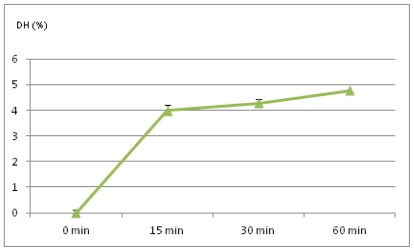
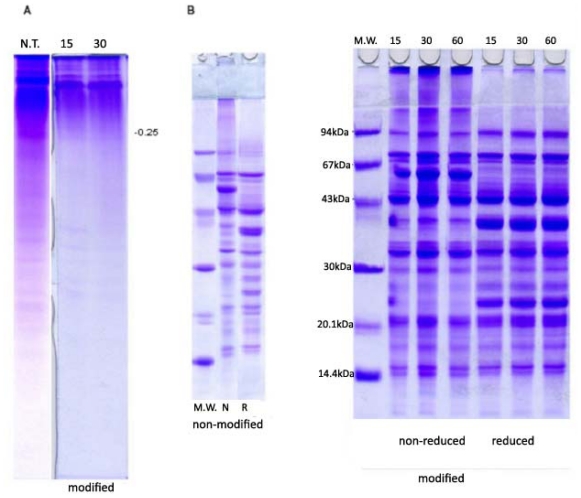
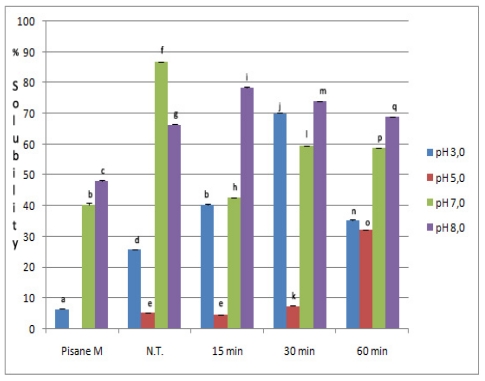
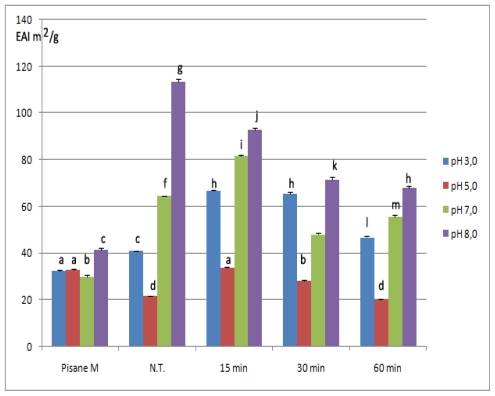
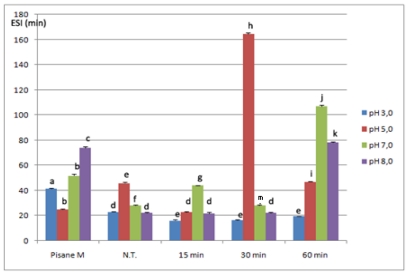
In this paper, the effects of limited hydrolysis on functional properties, as well as on protein composition of laboratory-prepared pea protein isolates, were investigated. Pea protein isolates were hydrolyzed for either 15, 30 and 60 min with recombined chymosin (Maxiren). The effect of enzymatic action on solubility, emulsifying and foaming properties at different pH values (3.0; 5.0; 7.0 and 8.0) was monitored. Chymosin can be a very useful agent for improvement of functional properties of isolates. Action of this enzyme caused a low degree of hydrolysis (3.9–4.7%), but improved significantly functional properties of pea protein isolates (PPI), especially at lower pH values (3.0–5.0). At these pH values all hydrolysates had better solubility, emulsifying activity and foaming stability, while longer-treated samples (60 min) formed more stable emulsions at higher pH values (7.0, 8.0) than initial isolates. Also, regardless of pH value, all hydrolysates showed improved foaming ability. A moderate positive correlation between solubility and emulsifying activity index (EAI) (0.74) and negative correlation between solubility and foam stability (−0.60) as well as between foam stability (FS) and EAI (−0.77) were observed. Detected enhancement in functional properties was a result of partial hydrolysis of insoluble protein complexes.
Overview
The claims and statistics of this paper haven’t been checked yet.
Free: it reads the open-access text and checks the first 5 claims that cite a source we can check. Create a free account to check every claim.
Integrity signals
Registry
Cites
Statistics
Figures
Verification
Claims the paper makes
The claims and statistics of this paper haven’t been checked yet.
Free: it reads the open-access text and checks the first 5 claims that cite a source we can check. Create a free account to check every claim.
Claims other papers make about this one
Each is checked against this paper’s own text: does it say what the citing paper says it does?
The source backs part of the claim, not all of it — or backs it for a different population, condition or comparison.
In the citing paper
“Enzymatic hydrolysis using proteases (papain, trypsin, chymosin) effectively improves solubility, emulsifying, and foaming characteristics by selectively cleaving peptide bonds [42].”
From Pea Protein Isolates: From Extraction to Functionality. (2025) · cites this paper as [42]
Experimental — accuracy not yet measured
Self-check
Percentages, sums and reported differences re-computed from the paper’s own numbers.
The self-check needs the paper’s full text.
Citations
Cites
Bradford, M. M. (1976) · Analytical Biochemistry · doi:10.1016/0003-2697(76)90527-3 · Cited by 255,302 · cited 1×
“In supernatant protein content was measured using method of Bradford [47].”
MethodDISC ELECTROPHORESIS – II METHOD AND APPLICATION TO HUMAN SERUM PROTEINS*
Davis, B. J. (1964) · Annals of the New York Academy of Sciences · doi:10.1111/j.1749-6632.1964.tb14213.x · Cited by 18,892 · cited 1×
“Protein hydrolysates were analyzed by PAGE, following the general procedure by Davis [45] using 7% (w/v) acrylamide gels.”
Method(1971) · Soil Science Society of America Journal · doi:10.2136/sssaj1971.03615995003500050003x · Cited by 6,358
Emulsifying properties of proteins: evaluation of a turbidimetric technique
Pearce, K. N., & Kinsella, J. E. (1978) · Journal of Agricultural and Food Chemistry · doi:10.1021/jf60217a041 · Cited by 2,476 · cited 1×
“Emulsifying properties were measured according to procedure of Pearce and Kinsella [48].”
MethodFling, S. P., & Gregerson, D. S. (1986) · Analytical Biochemistry · doi:10.1016/0003-2697(86)90228-9 · Cited by 934 · cited 2×
“SDS-PAGE was conducted following the procedure by Fling and Gregerson [46] using 5% (w/v) stacking and 12.”
MethodInfluentialBoye, J. I., Aksay, S., Roufik, S., Ribéreau, S., Mondor, M., Farnworth, E., & Rajamohamed, S. H. (2010) · Food Research International · doi:10.1016/j.foodres.2009.07.021 · Cited by 825 · cited 1×
“Properties of these proteins are well documented [30–34], so significant differences in amino acid composition, and structure and, consequently, different functionality of these proteins are already known [35].”
BackgroundPownall, T. L., Udenigwe, C. C., & Aluko, R. E. (2010) · Journal of Agricultural and Food Chemistry · doi:10.1021/jf904456r · Cited by 479 · cited 1×
“Proteins of different plant sources such as soy [4–7], pea bean [1,2,8,9], rice [10], peanuts [11,12] cowpea [13] were the object of limited enzymatic hydrolysis.”
BackgroundProfile and Functional Properties of Seed Proteins from Six Pea (Pisum sativum) Genotypes
Barac, M., Cabrilo, S., Pesic, M., Stanojevic, S., Zilic, S., Macej, O., & Ristic, N. (2010) · International Journal of Molecular Sciences · doi:10.3390/ijms11124973 · Cited by 368 · cited 1×
“[29] showed that pea (Pisum sativum, L.”
Self-citationOgunwolu, S. O., Henshaw, F. O., Mock, H.-P., Santros, A., & Awonorin, S. O. (2009) · Food Chemistry · doi:10.1016/j.foodchem.2009.01.011 · Cited by 318 · cited 1×
“Also, dependence between both parameters and pH had similar U-shape profile, which was in agreement with previous investigations based on PPI [41], and other plant proteins [42].”
ResultZhao, G., Liu, Y., Zhao, M., Ren, J., & Yang, B. (2011) · Food Chemistry · doi:10.1016/j.foodchem.2011.01.046 · Cited by 289 · cited 1×
“Proteins of different plant sources such as soy [4–7], pea bean [1,2,8,9], rice [10], peanuts [11,12] cowpea [13] were the object of limited enzymatic hydrolysis.”
Background
Cited by
Composition, physicochemical properties of pea protein and its application in functional foods
Lu, Z. X., He, J. F., Zhang, Y. C., & Bing, D. J. (2020) · Critical Reviews in Food Science and Nutrition · doi:10.1080/10408398.2019.1651248 · Cited by 529
“member of protease, chymosin was characterized with the broad specificity similar to that of pepsin A and the PPI functional properties were improved after chymosin treatments (Barac et al. 2011).”
BackgroundInfluentialComposition, Nutritional Value, and Health Benefits of Pulses
Hall, C., Hillen, C., & Garden Robinson, J. (2017) · Cereal Chemistry · doi:10.1094/cchem-03-16-0069-fi · Cited by 422
Gao, Z., Shen, P., Lan, Y., Cui, L., Ohm, J.-B., Chen, B., & Rao, J. (2020) · Food Research International · doi:10.1016/j.foodres.2020.109045 · Cited by 374
Recent progress in the utilization of pea protein as an emulsifier for food applications
Burger, T. G., & Zhang, Y. (2019) · Trends in Food Science & Technology · doi:10.1016/j.tifs.2019.02.007 · Cited by 370
Ge, J., Sun, C., Corke, H., Gul, K., Gan, R., & Fang, Y. (2020) · Comprehensive Reviews in Food Science and Food Safety · doi:10.1111/1541-4337.12573 · Cited by 318
“Many researchers have applied this structure-modifying technique to effectively improve the solubility of pea protein at different pH values (Bajaj et al., 2017; Barac et al., 2011, 2012; Felix et al., 2017; Klost & Drusch, 2019a).”
InfluentialProtein‐Based Delivery Systems for the Nanoencapsulation of Food Ingredients
Fathi, M., Donsi, F., & McClements, D. J. (2018) · Comprehensive Reviews in Food Science and Food Safety · doi:10.1111/1541-4337.12360 · Cited by 254
García Arteaga, V., Apéstegui Guardia, M., Muranyi, I., Eisner, P., & Schweiggert-Weisz, U. (2020) · Innovative Food Science & Emerging Technologies · doi:10.1016/j.ifset.2020.102449 · Cited by 230
Wani, I. A., Sogi, D. S., Shivhare, U. S., & Gill, B. S. (2015) · Food Research International · doi:10.1016/j.foodres.2014.08.027 · Cited by 213
Sharif, H. R., Williams, P. A., Sharif, M. K., Abbas, S., Majeed, H., Masamba, K. G., Safdar, W., & Zhong, F. (2018) · Food Hydrocolloids · doi:10.1016/j.foodhyd.2017.01.002 · Cited by 213
Functional and food application of plant proteins – a review
Tan, M., Nawaz, M. A., & Buckow, R. (2023) · Food Reviews International · doi:10.1080/87559129.2021.1955918 · Cited by 214
“In other plant proteins such as rapeseed, [197–199] sesame, [200,201] sunflower([202,203]) and pea, [204] hydrolytic treatment presents a positive effect on the FC.”
BackgroundMahdavian Mehr, H., & Koocheki, A. (2020) · Food Hydrocolloids · doi:10.1016/j.foodhyd.2020.105899 · Cited by 205
Zha, F., Dong, S., Rao, J., & Chen, B. (2019) · Food Hydrocolloids · doi:10.1016/j.foodhyd.2019.01.046 · Cited by 193
Shen, Y., & Li, Y. (2021) · Food Hydrocolloids · doi:10.1016/j.foodhyd.2021.106686 · Cited by 164
Enzymatic Hydrolysis of Pulse Proteins as a Tool to Improve Techno-Functional Properties
Vogelsang-O’Dwyer, M., Sahin, A. W., Arendt, E. K., & Zannini, E. (2022) · Foods · doi:10.3390/foods11091307 · Cited by 180
“[66] Pea protein isolate Chymosin EAI: increased at pH 3; increased/no difference at pH 5 depending on HT; increased/decreased at pH 7 depending on HT; decreased at pH 8 ESI: decreased at pH 3; increased/decreased at pH 5 depending on HT; increased/no difference at pH 7 and 8 depending on HT”
BackgroundInfluentialFunctional properties of pea protein hydrolysates in emulsions and spray-dried microcapsules
Tamm, F., Herbst, S., Brodkorb, A., & Drusch, S. (2016) · Food Hydrocolloids · doi:10.1016/j.foodhyd.2016.02.032 · Cited by 156
Techno-functional properties of pea (Pisum sativum) protein isolates: A review
Barac, M., Pesic, M., Stanojevic, S., Kostic, A., & Cabrilo, S. (2015) · Acta Periodica Technologica · doi:10.2298/apt1546001b · Cited by 133
“(6, 17) attributed this to the different ratio of the major proteins, which is in turn influenced by genotype characteristics, environmental conditions, and processing conditions (10, 18-20).”
BackgroundMethodResultInfluentialSelf-citationBarać, M., Pešić, M. B., Stanojević, S. P., Kostić, A. Ž., & Bivolarevic, V. (2014) · Journal of Food Science and Technology · doi:10.1007/s13197-014-1298-6 · Cited by 140
“Several studies (Pesic et al. 2005; Khatib et al. 2002; Maninder et al. 2007; Barac et al. 2010, 2011) attributed this to different ratio for the major proteins, which is in turn influenced by genotype characteristics, environmental conditions and processing conditions (Periago et al. 1998;…”
BackgroundMethodSelf-citationKlost, M., & Drusch, S. (2019) · Food Hydrocolloids · doi:10.1016/j.foodhyd.2018.03.013 · Cited by 117
“Close attention has to be paid to the enzyme selection, the hydrolysis parameters, and the degree of hydrolysis applied since functional properties can also be impaired under certain conditions (Avramenko et al., 2013; Barać et al., 2011; Tsumura et al., 2005).”
BackgroundOyinloye, T. M., & Yoon, W. B. (2021) · Journal of Food Engineering · doi:10.1016/j.jfoodeng.2020.110127 · Cited by 109
Pea protein composition, functionality, modification, and food applications: A review.
Shen, Y., Hong, S., & Li, Y. (2022) · Advances in Food and Nutrition Research · doi:10.1016/bs.afnr.2022.02.002 · Cited by 107
Impact of plasma reactive species on the structure and functionality of pea protein isolate
Bu, F., Nayak, G., Bruggeman, P., Annor, G., & Ismail, B. P. (2022) · Food Chemistry · doi:10.1016/j.foodchem.2021.131135 · Cited by 105
Enzymatic Modification of Plant Proteins for Improved Functional and Bioactive Properties
Olatunde, O. O., Owolabi, I. O., Fadairo, O., Ghosal, A., Coker, O. J., Soladoye, O. P., Aluko, R. E., & Bandara, N. (2022) · Food and Bioprocess Technology · doi:10.1007/s11947-022-02971-5 · Cited by 112
“Over the years, enzymatic modification has gained massive attention as an effective, highly sensitive, highly reproducible, green, and cost-effective modification for plant-based proteins (Aluko, 2008; Barać et al., 2011).”
BackgroundAbdollahi, M., & Undeland, I. (2018) · Food and Bioprocess Technology · doi:10.1007/s11947-018-2138-x · Cited by 97
Pea proteins as emerging biopolymers for the emulsification and encapsulation of food bioactives
Hadidi, M., Boostani, S., & Jafari, S. M. (2021) · Food Hydrocolloids · doi:10.1016/j.foodhyd.2021.107474 · Cited by 104
Laguna, L., Picouet, P., Guárdia, M. D., Renard, C. M. G. C., & Sarkar, A. (2017) · LWT · doi:10.1016/j.lwt.2017.06.021 · Cited by 97
Othmeni, I., Karoui, R., & Blecker, C. S. (2024) · International Journal of Biological Macromolecules · doi:10.1016/j.ijbiomac.2024.134818 · Cited by 98
Zhang, X., Wang, L., Chen, Z., Li, Y., Luo, X., & Li, Y. (2019) · RSC Advances · doi:10.1039/c8ra10559f · Cited by 85
Zhang, R., Han, Y., Xie, W., Liu, F., & Chen, S. (2022) · Journal of Agricultural and Food Chemistry · doi:10.1021/acs.jafc.2c01936 · Cited by 86
Enhanced functionality of pea-rice protein isolate blends through direct steam injection processing
Pietrysiak, E., Smith, D. M., Smith, B. M., & Ganjyal, G. M. (2017) · Food Chemistry · doi:10.1016/j.foodchem.2017.09.132 · Cited by 83
Bera, I., O’Sullivan, M., Flynn, D., & Shields, D. C. (2023) · Molecules · doi:10.3390/molecules28073204 · Cited by 100
Kowalczyk, D., Gustaw, W., Zięba, E., Lisiecki, S., Stadnik, J., & Baraniak, B. (2016) · Food Hydrocolloids · doi:10.1016/j.foodhyd.2016.04.006 · Cited by 76
Hinderink, E. B. A., Kaade, W., Sagis, L., Schroën, K., & Berton-Carabin, C. C. (2020) · Food Hydrocolloids · doi:10.1016/j.foodhyd.2019.105610 · Cited by 70
Benjamin, O., Silcock, P. J., Beauchamp, J. D., Buettner, A., & Everett, D. W. (2014) · Journal of Food Science · doi:10.1111/1750-3841.12593 · Cited by 83
Ghanghas, N., Mukilan, M. T., Sharma, S., & Prabhakar, P. K. (2020) · Food Reviews International · doi:10.1080/87559129.2020.1733596 · Cited by 65
“from emulsion during a specific period of time at definite temperature and gravitational field.([78,83]) Emulsion formation depends on various factors such as homogenizer type, degree of homogenization, volume fraction of oil, pH, and volume of dispersion, type of oil and also on the starch incorporated into the food.”
BackgroundZhang, Y., & Romero, H. M. (2020) · International Journal of Biological Macromolecules · doi:10.1016/j.ijbiomac.2020.08.019 · Cited by 65
Wang, L., Zhang, X., Liu, F., Ding, Y., Wang, R., Luo, X., Li, Y., & Chen, Z. (2017) · Innovative Food Science & Emerging Technologies · doi:10.1016/j.ifset.2017.01.005 · Cited by 68
Ma, C., Yan, J., Li, W., Wang, Y., McClements, D. J., Liu, X., & Liu, F. (2024) · Food Hydrocolloids · doi:10.1016/j.foodhyd.2024.109946 · Cited by 56
Peanparkdee, M., & Iwamoto, S. (2020) · Food Reviews International · doi:10.1080/87559129.2020.1733595 · Cited by 55
“isolate as carrier material showed an acceptable stability during digestion, which could be attributed to a low water solubility of pea protein isolate.([92]) 342 M.”
BackgroundImproving functional properties of pea protein isolate for microencapsulation of flaxseed oil
Bajaj, P. R., Bhunia, K., Kleiner, L., Joyner, H. S., Smith, D. M., Ganjyal, G. M., & Sablani, S. S. (2017) · Journal of Microencapsulation · doi:10.1080/02652048.2017.1317045 · Cited by 52
Saad, A. M., Osman, A., Mohamed, A. S., & Ramadan, M. F. (2019) · International Journal of Peptide Research and Therapeutics · doi:10.1007/s10989-019-09863-x · Cited by 44
Bennetau‐Pelissero, C. (2019) · Reference series in phytochemistry · doi:10.1007/978-3-319-78030-6_3 · Cited by 46
Yang, R., Zhu, L., Meng, D., Wang, Q., Zhou, K., Wang, Z., & Zhou, Z. (2021) · Critical Reviews in Food Science and Nutrition · doi:10.1080/10408398.2021.1883545 · Cited by 35
“Food pressing technologies, such as high-pressure homogenization, hydrolysis, limited hydrolysis, and heat treatment, can also influence PPI by changing its structure and properties (Donsi et al. 2010; Barac et al. 2011; Peng et al. 2016).”
BackgroundAssad-Bustillos, M., Palier, J., Rabesona, H., Choiset, Y., Valle, G. D., & Féron, G. (2019) · Journal of Texture Studies · doi:10.1111/jtxs.12486 · Cited by 37
Leelapunnawut, S., Ngamwonglumlert, L., Devahastin, S., Derossi, A., Caporizzi, R., & Chiewchan, N. (2022) · Foods · doi:10.3390/foods11243947 · Cited by 37
“Pea protein isolate also contains a well-balanced amino acid profile [13].”
BackgroundModification of plant proteins as alternatives to animal proteins: a review
Ye, S., Park, H., & Baik, M. (2024) · Food Science and Biotechnology · doi:10.1007/s10068-024-01705-x · Cited by 40
“Enzymatic modification is characterized by its specificity, mild operating conditions, and controllability, making it particularly valuable in the food industry for improving the quality and functionality of plant-based food products (Aluko, 2008; Barać et al., 2011).”
Meijers, M. G. J., Meinders, M. B. J., Vincken, J., & Wierenga, P. A. (2023) · Journal of Agricultural and Food Chemistry · doi:10.1021/acs.jafc.3c01589 · Cited by 37
Miscibility of Quillaja Saponins with other Co‐surfactants under Different pH Values
Reichert, C. L., Salminen, H., Leuenberger, B. H., Hinrichs, J., & Weiß, J. (2015) · Journal of Food Science · doi:10.1111/1750-3841.13097 · Cited by 34
Akkam, Y., Rababah, T., Costa, R. M. S., Almajwal, A. M., Feng, H., Andrade, J. E., Abulmeaty, M. M. A., & Razak, S. (2021) · Nanomaterials · doi:10.3390/nano11040887 · Cited by 30
“The SDS-PAGE was conducted as described previously [30].”
Berrazaga, I., Bourlieu‐Lacanal, C., Laleg, K., Jardin, J., Briard‐Bion, V., Dupont, D., Walrand, S., & Micard, V. (2020) · PLoS ONE · doi:10.1371/journal.pone.0232425 · Cited by 34
“Polypeptides of 12, 14, 16, 29, 50 and 66 to 82 kDa could be ascribed to the polypeptide constituents of vicilin and convicilin, respectively [35,37,38].”
BackgroundAntioxidants Properties and Effect of Processing Methods on Bioactive Compounds of Legumes
López-Cortéz, M. D. S., Rosales-Martínez, P., Arellano‐Cárdenas, S., & Cornejo‐Mazón, M. (2016) · InTech eBooks · doi:10.5772/63757 · Cited by 27
“The effects of limited hydrolysis on functional properties, as well as on protein composition of laboratory‐prepared pea protein isolates, were investigated by [103].”
BackgroundPolyphenol release from protein and polysaccharide embedded plant extracts during in vitro digestion
Işık, N., Alteheld, B., Kühn, S., Schulze-Kaysers, N., Kunz, B., Wollseifen, H. R., Stehle, P., & Lesser, S. (2014) · Food Research International · doi:10.1016/j.foodres.2014.02.012 · Cited by 23
Cerdán‐Leal, M. A., López-Alarcón, C. A., Ortiz‐Basurto, R. I., Luna‐Solano, G., & Jiménez‐Fernández, M. (2019) · Cereal Chemistry · doi:10.1002/cche.10253 · Cited by 25
Drago, S. R., Franco-Miranda, H., Cian, R. E., Betancur‐Ancona, D., & Chel‐Guerrero, L. (2016) · Plant Foods for Human Nutrition · doi:10.1007/s11130-016-0565-2 · Cited by 27
“It could be classified as extensive hydrolyzate (DH >10 %) [18], which is very interesting in regards to bioactive peptides, since low peptide chain long is related with higher ACEI and antioxidant properties [4].”
BackgroundThirulogasundar, A., Shi, D., Stone, A. K., Xu, C., Bhagwat, A., Lu, Y., Polley, B., House, J. D., Bhowmik, P., Rajagopalan, N., et al. (2024) · Journal of Food Measurement & Characterization · doi:10.1007/s11694-023-02228-5 · Cited by 25
Fang, L., Wang, T., & Lamsal, B. P. (2017) · Industrial Crops and Products · doi:10.1016/j.indcrop.2017.10.031 · Cited by 20
“It has been reported that 304 the emulsification ability of rice protein (Paraman et al., 2007), soy protein isolate 305 (Kim et al., 1990) and pea protein isolate (Barac et al., 2011) can be enhanced by 306 partial enzyme hydrolysis.”
BackgroundSareen, J., Shi, D., Stone, A. K., Xu, C., Polley, B., House, J. D., Bhowmik, P., Rajagopalan, N., Tanaka, T., & Nickerson, M. T. (2023) · European Food Research and Technology · doi:10.1007/s00217-023-04358-y · Cited by 25
“[42] reported decreasing trends for FC for hemp, rapeseed, and pea proteins as hydrolysis progressed, indicating that an increase in hydrophobicity may not contribute to efficient foaming ability.”
BackgroundInfluentialEncapsulation technologies for polyphenol-loaded microparticles in food industry
Popović, D. A., Milinčić, D. D., Pešić, M. B., Kalušević, A., Tešić, Ž., & Nedović, V. (2019) · Elsevier eBooks · doi:10.1016/b978-0-12-815353-6.00012-4 · Cited by 24
Self-citationGanesh, S., Ningtyas, D. W., & Prakash, S. (2022) · Food Bioscience · doi:10.1016/j.fbio.2022.101914 · Cited by 19
Pea soluble polysaccharide improves stability of acidic pea protein dispersions
Tran, M. T., Nakamura, A., Li, R., & Corredig, M. (2023) · Food Hydrocolloids · doi:10.1016/j.foodhyd.2023.109423 · Cited by 19
Thammasena, R., & Liu, D. C. (2019) · Asian-Australasian Journal of Animal Sciences · doi:10.5713/ajas.19.0361 · Cited by 22
“Barać et al [15] clarified that several factors had an effect”
BackgroundUtilization of Sunflower Proteins
Pedroche, J. (2015) · Elsevier eBooks · doi:10.1016/b978-1-893997-94-3.50019-2 · Cited by 26
Saallah, S., Ishak, N. H., & Sarbon, N. M. (2020) · Food Research · doi:10.26656/fr.2017.4(4).348 · Cited by 17
“Similar results were obtained by Barac et al. (2011).”
Pea Protein Isolates: From Extraction to Functionality.
Harasym, J., Paroń, O., & Pejcz, E. (2025) · Molecules · doi:10.3390/molecules30234650 · Cited by 18
Mechanisms behind protein-protein interactions in a β-lg-legumin co-precipitate
Kristensen, H. T., Christensen, M., Hansen, M. S., Hammershøj, M., & Dalsgaard, T. K. (2021) · Food Chemistry · doi:10.1016/j.foodchem.2021.131509 · Cited by 18
Zhang, C., Zhang, L., Yue, Z., Cui, R., Wu, H., Xu, M., Liu, W., Liu, R., Xu, L., & Song, L. (2025) · LWT · doi:10.1016/j.lwt.2025.117885 · Cited by 13
Sofi, S. A., Rafiq, S., Majid, D., Binobead, M. A., Ali, M. A., Elshikh, M. S., & Dar, B. N. (2024) · Radiation Physics and Chemistry · doi:10.1016/j.radphyschem.2024.112139 · Cited by 14
Chen, X., Chu, X., Li, X., Cao, F., Guo, Q., & Wang, J. (2023) · Food Research International · doi:10.1016/j.foodres.2023.112548 · Cited by 17
Mechanically activated hydrolysis of plant-derived proteins in food industry
Dome, K., Bychkov, A., Бычкова, Е. С., Akimenko, Z., Chernonosov, A. А., Kalambet, Y., & Ломовский, О. И. (2019) · Foods and raw materials · doi:10.21603/2308-4057-2019-2-255-263 · Cited by 14
“Modern studies confirm that plant raw materials – and legumes in particular – are suitable for isolation and modification of proteins, short peptides, and amino acids [5, 6].”
BackgroundPlengsaengsri, P., Pimsuwan, T., Wiriya-Aree, T., Luecha, J., Nualkaekul, S., & Deetae, P. (2019) · IOP Conference Series Earth and Environmental Science · doi:10.1088/1755-1315/346/1/012080 · Cited by 15
“4 2434-9 [18] Barać M, Čabrilo S, Pešić M, Stanojević S, Pavlićević M, Maćej O and Ristić N 2011 Functional properties of pea (Pisum sativum, L.”
Functional characteristics and molecular structural modification of plant proteins. Review
Kolpakova, V. V., & Бызов, В. А. (2024) · Food systems · doi:10.21323/2618-9771-2024-7-3-324-335 · Cited by 14
Esposito, E., Campolo, M., Casili, G., Lanza, M., Filippone, A., Peritore, A. F., & Cuzzocrea, S. (2018) · Future Microbiology · doi:10.2217/fmb-2018-0102 · Cited by 13
Zhao, X., Gao, R., Cui, C., & Sun‐Waterhouse, D. (2024) · Journal of Cereal Science · doi:10.1016/j.jcs.2024.103913 · Cited by 11
Synthesis of Nano-Scale Biopolymer Particles from Legume Protein Isolates and Carrageenan
Koralegedara, I. D., Hettiarachchi, C. A., Prasantha, B. D. R., & Wimalasiri, K. M. S. (2020) · Food Technology and Biotechnology · doi:10.17113/ftb.58.02.20.6279 · Cited by 8
Wan, Z., Fei, T., & Wang, T. (2022) · Food Materials Research · doi:10.48130/fmr-2022-0017 · Cited by 8
Кравченко, И. В., Furalyov, V. A., Пшенникова, Е. С., Костылева, Е. В., Середа, А. С., Курбатова, Е. И., Цурикова, Н. В., Fedorov, A. N., & Popov, V. O. (2024) · Applied Biochemistry and Microbiology · doi:10.1134/s0003683824604335 · Cited by 9
Proteases catalyzing vicilin cleavage in developing pea (Pisum sativum L.) seeds
Wilson, K. A., & Tan‐Wilson, A. L. (2018) · Journal of Plant Physiology · doi:10.1016/j.jplph.2018.03.015 · Cited by 6
Bennetau‐Pelissero, C. (2018) · Reference series in phytochemistry · doi:10.1007/978-3-319-54528-8_3-1 · Cited by 17
Butseekhot, S., Ploypetchara, T., Sorndech, W., Sumsakul, W., Siricoon, S., Chiramet, A., & Aluko, R. E. (2024) · Food Research · doi:10.26656/fr.2017.8(s2).146 · Cited by 5
“Legumin was identified with two bands of basic (Mw 20 and 23 kDa) subunits (Barć et al ., 2011; Pebrianti et al ., 2019).”
BackgroundFranco-Londoño, M., & Saldaña, M. D. A. (2025) · The Journal of Supercritical Fluids · doi:10.1016/j.supflu.2025.106691 · Cited by 4
Evaluation of Functional and Nutritional Properties of Hydrolyzed Broad Bean and Quinoa Flours
Gremasqui, I. D. L. A., Giménez, M. A., Lobo, M. O., & Samman, N. C. (2022) · doi:10.3390/blsf2021008012 · Cited by 5
“[8], hydrolysates with DH > 10% are characterized by good nutritive values.”
BackgroundLiu, L., Qin, J., Lan, B., Hu, X., Liao, T., Tian, X., & Wu, Z. (2024) · Food and Bioproducts Processing · doi:10.1016/j.fbp.2024.07.009 · Cited by 4
Jeerakul, C., Kitsanayanyong, L., Pansawat, N., Boonbumrung, S., Klaypradit, W., & Tepwong, P. (2024) · Food Research · doi:10.26656/fr.2017.8(2).465 · Cited by 3
“Generally, the FS is affected by the stability and gas permeability of the protein film that is formed on the air - liquid surface (Barać et al., 2011).”
Uhlarik, A., Ćeran, M., Mamlić, Z., Vasiljević, S., Katanski, S., Dolapčev-Rakić, A., & Đukić, V. (2024) · Legume Research - An International Journal · doi:10.18805/lrf-803 · Cited by 3
Melchior, S., Filippo, G. D., Lopriore, M., Calligaris, S., Innocente, N., & Nicoli, M. C. (2026) · European Food Research and Technology · doi:10.1007/s00217-026-05037-4 · Cited by 2
“1 b and c) enabled the easier orientation of the molecules at the air-water interface [ 6 , 23 ].”
Bagiyal, M., Kaur, L., Lee, H., Morton, J. D., Russell, A. C., & Singh, J. (2026) · Food Hydrocolloids · doi:10.1016/j.foodhyd.2026.112603 · Cited by 2
Li, Z., Shang, X., Xu, Z., Xu, J., Tang, Y., & Rui, Y. A. N. G. (2026) · Food Chemistry · doi:10.1016/j.foodchem.2026.149765 · Cited by 3
Rice bran oil-in-water optimized emulsions for the development of plant-based foods and beverages
Benitez, L. O., Petelin, R., Malvasio, M., Monetta, D., Rasia, M. C., Musumeci, M. A., & Castagnini, J. M. (2024) · Exploration of Foods and Foodomics · doi:10.37349/eff.2024.00026 · Cited by 3
Pea Protein Derived Bioactive Peptides Stimulate Bone Health Promoting Effects
Arora, H. (2020) · ERA: Education and Research Archive (University of Alberta) · doi:10.7939/r3-ws1n-gp07 · Cited by 2
Olatunde, O. O., & Bandara, N. (2025) · Food Hydrocolloids · doi:10.1016/j.foodhyd.2025.112149 · Cited by 5
Mukhtar, K., Ying, J., Wang, Y., & Selomulya, C. (2026) · Comprehensive Reviews in Food Science and Food Safety · doi:10.1111/1541-4337.70461 · Cited by 4
“Enzymatic modification is an effective, sensitive, and cost-efficient method for modifying plant proteins (Barać et al. 2011 ).”
Unlocking the future of food with the new paradigm of plant-based proteins
Feo, M. D., Conte, A., & Nobile, M. A. D. (2026) · Frontiers in Nutrition · doi:10.3389/fnut.2026.1818969 · Cited by 1
Madina, A., Bai, R., Xi, J., Aidana, R., & Ding, W. (2026) · Journal of the Science of Food and Agriculture · doi:10.1002/jsfa.70829 · Cited by 1
Кравченко, И. В., Furalyov, V. A., Пшенникова, Е. С., Костылева, Е. В., Середа, А. С., Курбатова, Е. И., Цурикова, Н. В., Fedorov, A. N., & Popov, V. O. (2024) · Прикладная биохимия и микробиология · doi:10.31857/s0555109924040031 · Cited by 3
Food emulsions stabilised by blends of plant and dairy proteins
Hinderink, E. B. A. (2021) · doi:10.18174/537414 · Cited by 3
Pea protein functionality : Tailor-made through fractionation
Kornet, R. (2021) · doi:10.18174/552551 · Cited by 1
Franco-Londoño, M., & Saldaña, M. D. A. (2024) · SSRN Electronic Journal · doi:10.2139/ssrn.5070716 · Cited by 1
Vegetable Protein Functionality From Milk Analogue To Fiber
Vanessa, J., & Galante, R. (2013)
Statistical methods and its applications in Whey protein binding (Bos Taurus)
Basavarajaiah, D. M., Narasimhamurthy, B., Krishnamurthy, T. N., & wadeyar, K. (2023) · GSC Biological and Pharmaceutical Sciences · doi:10.30574/gscbps.2023.23.3.0234
Nanostructured Protein-based Systems
Chen, S., Han, Y., Wang, S., & Luo, Y. (2023) · Royal Society of Chemistry eBooks · doi:10.1039/bk9781839165566-00366
Metadata
- Authors
- Barać, M., Čabrilo, S., Pešić, M., Stanojević, S., Pavlićević, M., Maćej, O., & Ristić, N.
- Affiliations
- University of Belgrade (RS)
- High Technical School of Vocational Studies, Nemanjina 2, Pozarevac 12000, Serbia
- Faculty of Agriculture, University of Belgrade, Nemanjina 6, Belgrade-Zemun 11000, Serbia
- Corresponding author
- Barać, Miroljub
- Venue
- International Journal of Molecular Sciences
- Publisher
- MDPI AG
- Published
- 2011-11-29
- Volume
- 12
- Issue
- 12
- Pages
- 8372-8387
- ISSN
- 1422-0067 (ISSN-L)
- PMC
- PMC3257075
- OpenAlex
- W2156006361
- Semantic Scholar
- df63a85e5b2281c818ff2828523e26eb27edc2c6
- Cited by
- 113
- References
- 49
- Citations by year
- 2026: 14 · 2025: 5 · 2024: 15 · 2023: 7 · 2022: 8 · 2021: 10 · 2020: 13 · 2019: 14 · 2018: 7 · 2017: 7 · 2016: 5 · 2015: 3 · 2014: 4 · 2013: 1
- FWCI
- 0.65
- Type
- journal article
- Language
- en
- Open access
- gold
- doi.org
- Licence
- Locations
- International Journal of Molecular Sciences (publishedVersion, cc-by)
- Europe PMC (PubMed Central) (publishedVersion, cc-by)
- PubMed Central (publishedVersion, cc-by)
- PubMed (publishedVersion)
- AgroSpace (University of Belgrade, Faculty of Agriculture) (submittedVersion, cc-by)
- DOAJ (DOAJ: Directory of Open Access Journals) (submittedVersion, cc-by-sa)
- Topics
- Life Sciences › Agricultural and Biological Sciences › Food Science › Protein Hydrolysis and Bioactive Peptides
- Life Sciences › Agricultural and Biological Sciences › Food Science › Proteins in Food Systems
- Life Sciences › Agricultural and Biological Sciences › Food Science › Food Nutrient Composition and Product Development
- Keywords
- pea protein isolate, Pisum sativum, chymosin, enzymatic hydrolysis, protein functional properties, solubility, emulsifying activity, foam stability, pH dependence, degree of hydrolysis, protein complexes
- MeSH terms
- Emulsions, Hydrogen-Ion Concentration, Hydrolysis, Plant Proteins, Protein Hydrolysates, Chymosin, Pisum sativum
About these checks
Registry, retraction, Cites and statistics results are computed, not judged, with one exception: a printed reference that no index lists is read once by a model before it counts as a citation error. Claims are extracted by a model and kept only when their quote appears verbatim in the text; each cited source is then checked, with a model’s help, for whether it says what the claim relies on. Those verdicts can be wrong — read the claim’s quote and the cited source before relying on one.
Statistics and arithmetic are recomputed, not judged.
Confidence bands are shown only for fields calibrated on our annotated test set. None is calibrated yet, so no band is shown.
What counts as a claim ›How we measure confidence ›How we check this ›
Are you an author, or do you see a problem with this page? Request a review
Data sources
Bibliographic data: Semantic Scholar, OpenAlex, Crossref.
Contains information from the Semantic Scholar Academic Graph Datasets, made available under the ODC Attribution License (ODC-BY 1.0).
Semantic Scholar’s data is described in: Kinney, R., et al. (2023). The Semantic Scholar Open Data Platform. arXiv:2301.10140.
