

Functional Properties of Pea (Pisum sativum, L.) Protein Isolates Modified with Chymosin
Open accessThe DOI matches its Crossref record; 50 of the 50 references it cites were found in a registry or an index.
Abstract
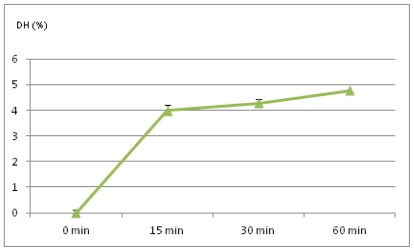
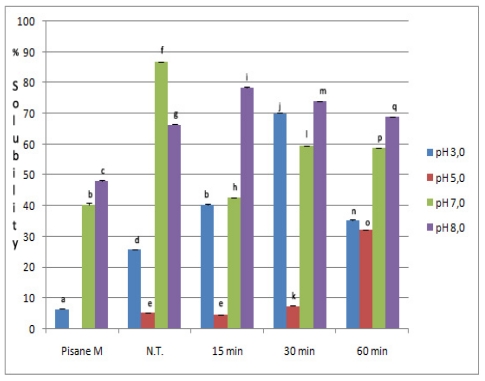
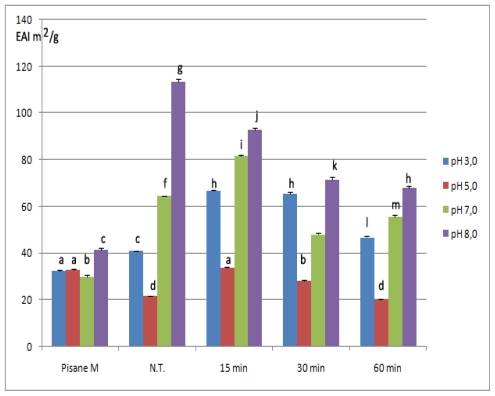
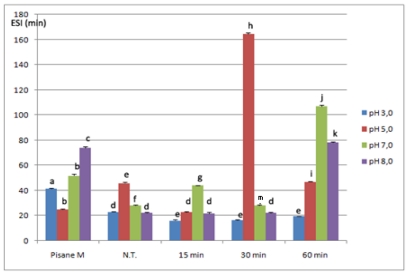
In this paper, the effects of limited hydrolysis on functional properties, as well as on protein composition of laboratory-prepared pea protein isolates, were investigated. Pea protein isolates were hydrolyzed for either 15, 30 and 60 min with recombined chymosin (Maxiren). The effect of enzymatic action on solubility, emulsifying and foaming properties at different pH values (3.0; 5.0; 7.0 and 8.0) was monitored. Chymosin can be a very useful agent for improvement of functional properties of isolates. Action of this enzyme caused a low degree of hydrolysis (3.9–4.7%), but improved significantly functional properties of pea protein isolates (PPI), especially at lower pH values (3.0–5.0). At these pH values all hydrolysates had better solubility, emulsifying activity and foaming stability, while longer-treated samples (60 min) formed more stable emulsions at higher pH values (7.0, 8.0) than initial isolates. Also, regardless of pH value, all hydrolysates showed improved foaming ability. A moderate positive correlation between solubility and emulsifying activity index (EAI) (0.74) and negative correlation between solubility and foam stability (−0.60) as well as between foam stability (FS) and EAI (−0.77) were observed. Detected enhancement in functional properties was a result of partial hydrolysis of insoluble protein complexes.
Overview
The claims and statistics of this paper haven’t been checked yet.
Free: it reads the open-access text and checks the first 5 claims that cite a source we can check. Create a free account to check every claim.
Integrity signals
Registry
Cites
Statistics
Figures
Verification
Claims the paper makes
The claims and statistics of this paper haven’t been checked yet.
Free: it reads the open-access text and checks the first 5 claims that cite a source we can check. Create a free account to check every claim.
Claims other papers make about this one
Each is checked against this paper’s own text: does it say what the citing paper says it does?
The source backs part of the claim, not all of it — or backs it for a different population, condition or comparison.
In the citing paper
“Enzymatic hydrolysis using proteases (papain, trypsin, chymosin) effectively improves solubility, emulsifying, and foaming characteristics by selectively cleaving peptide bonds [42].”
From Pea Protein Isolates: From Extraction to Functionality. (2025) · cites this paper as [42]
Experimental — accuracy not yet measured
Self-check
Percentages, sums and reported differences re-computed from the paper’s own numbers.
The self-check needs the paper’s full text.
Citations
Cites
Bradford, M. M. (1976) · Analytical Biochemistry · doi:10.1016/0003-2697(76)90527-3 · Cited by 255,302 · cited 1×
“In supernatant protein content was measured using method of Bradford [47].”
MethodDISC ELECTROPHORESIS – II METHOD AND APPLICATION TO HUMAN SERUM PROTEINS*
Davis, B. J. (1964) · Annals of the New York Academy of Sciences · doi:10.1111/j.1749-6632.1964.tb14213.x · Cited by 18,892 · cited 1×
“Protein hydrolysates were analyzed by PAGE, following the general procedure by Davis [45] using 7% (w/v) acrylamide gels.”
Method(1971) · Soil Science Society of America Journal · doi:10.2136/sssaj1971.03615995003500050003x · Cited by 6,358
Emulsifying properties of proteins: evaluation of a turbidimetric technique
Pearce, K. N., & Kinsella, J. E. (1978) · Journal of Agricultural and Food Chemistry · doi:10.1021/jf60217a041 · Cited by 2,476 · cited 1×
“Emulsifying properties were measured according to procedure of Pearce and Kinsella [48].”
MethodFling, S. P., & Gregerson, D. S. (1986) · Analytical Biochemistry · doi:10.1016/0003-2697(86)90228-9 · Cited by 934 · cited 2×
“SDS-PAGE was conducted following the procedure by Fling and Gregerson [46] using 5% (w/v) stacking and 12.”
MethodInfluentialBoye, J. I., Aksay, S., Roufik, S., Ribéreau, S., Mondor, M., Farnworth, E., & Rajamohamed, S. H. (2010) · Food Research International · doi:10.1016/j.foodres.2009.07.021 · Cited by 825 · cited 1×
“Properties of these proteins are well documented [30–34], so significant differences in amino acid composition, and structure and, consequently, different functionality of these proteins are already known [35].”
BackgroundPownall, T. L., Udenigwe, C. C., & Aluko, R. E. (2010) · Journal of Agricultural and Food Chemistry · doi:10.1021/jf904456r · Cited by 479 · cited 1×
“Proteins of different plant sources such as soy [4–7], pea bean [1,2,8,9], rice [10], peanuts [11,12] cowpea [13] were the object of limited enzymatic hydrolysis.”
BackgroundProfile and Functional Properties of Seed Proteins from Six Pea (Pisum sativum) Genotypes
Barac, M., Cabrilo, S., Pesic, M., Stanojevic, S., Zilic, S., Macej, O., & Ristic, N. (2010) · International Journal of Molecular Sciences · doi:10.3390/ijms11124973 · Cited by 368 · cited 1×
“[29] showed that pea (Pisum sativum, L.”
Self-citationOgunwolu, S. O., Henshaw, F. O., Mock, H.-P., Santros, A., & Awonorin, S. O. (2009) · Food Chemistry · doi:10.1016/j.foodchem.2009.01.011 · Cited by 318 · cited 1×
“Also, dependence between both parameters and pH had similar U-shape profile, which was in agreement with previous investigations based on PPI [41], and other plant proteins [42].”
ResultZhao, G., Liu, Y., Zhao, M., Ren, J., & Yang, B. (2011) · Food Chemistry · doi:10.1016/j.foodchem.2011.01.046 · Cited by 289 · cited 1×
“Proteins of different plant sources such as soy [4–7], pea bean [1,2,8,9], rice [10], peanuts [11,12] cowpea [13] were the object of limited enzymatic hydrolysis.”
BackgroundWu, W. U., Hettiarachchy, N. S., & Qi, M. (1998) · Journal of the American Oil Chemists' Society · doi:10.1007/s11746-998-0235-0 · Cited by 271
Functional properties of soy protein hydrolysates obtained by selective proteolysis
Tsumura, K., Saito, T., Tsuge, K., Ashida, H., Kugimiya, W., & Inouye, K. (2005) · LWT - Food Science and Technology · doi:10.1016/j.lwt.2004.06.007 · Cited by 232
Chabanon, G., Chevalot, I., Framboisier, X., Chenu, S., & Marc, I. (2007) · Process Biochemistry · doi:10.1016/j.procbio.2007.07.009 · Cited by 232
Heat-Induced Gelation of Pea Legumin: Comparison with Soybean Glycinin
O'Kane, F. E., Happe, R. P., Vereijken, J. M., Gruppen, H., & van Boekel, M. A. J. S. (2004) · Journal of Agricultural and Food Chemistry · doi:10.1021/jf035215h · Cited by 219
Functional properties of proteolytic enzyme modified soy protein isolate
Kim, S. Y., Park, P. S. W., & Rhee, K. C. (1990) · Journal of Agricultural and Food Chemistry · doi:10.1021/jf00093a014 · Cited by 215 · cited 2×
“It is well known that the effect of enzymatic hydrolysis is dependent on numerous factors such as type of enzyme [24,25] and treatment conditions (enzyme-substrate ratio, reaction temperature, time of enzyme action, characteristics of substrate) [21].”
BackgroundYin, S.-W., Tang, C.-H., Cao, J.-S., Hu, E.-K., Wen, Q.-B., & Yang, X.-Q. (2008) · Food Chemistry · doi:10.1016/j.foodchem.2007.07.030 · Cited by 206 · cited 1×
“Different enzymes, including trypsin [14,15] papain [16–18], pepsin [4,19,20] and several commercial proteases with different activity [11,21–23], were used.”
MethodEmulsifying and Foaming Properties of Commercial Yellow Pea (Pisum sativum L.) Seed Flours
Aluko, R. E., Mofolasayo, O. A., & Watts, B. M. (2009) · Journal of Agricultural and Food Chemistry · doi:10.1021/jf902199x · Cited by 200
Maninder, K., Sandhu, K. S., & Singh, N. (2007) · Food Chemistry · doi:10.1016/j.foodchem.2006.11.037 · Cited by 197
Chen, L., Chen, J., Ren, J., & Zhao, M. (2011) · Food Hydrocolloids · doi:10.1016/j.foodhyd.2010.08.013 · Cited by 194
Gharsallaoui, A., Saurel, R., Chambin, O., & Voilley, A. (2012) · Food and Bioprocess Technology · doi:10.1007/s11947-010-0497-z · Cited by 180 · cited 10×
“Enzymatic hydrolysis curves of pea protein isolate (PPI) obtained with chymosin are presented in Figure 1.”
ResultInfluentialSome functional properties of oat bran protein concentrate modified by trypsin
Guan, X., Yao, H., Chen, Z., Shan, L., & Zhang, M. (2007) · Food Chemistry · doi:10.1016/j.foodchem.2006.01.011 · Cited by 166 · cited 1×
“Different enzymes, including trypsin [14,15] papain [16–18], pepsin [4,19,20] and several commercial proteases with different activity [11,21–23], were used.”
MethodAngiotensin I-converting enzyme inhibitory activity of chickpea and pea protein hydrolysates
Barbana, C., & Boye, J. I. (2010) · Food Research International · doi:10.1016/j.foodres.2010.05.003 · Cited by 142
Characterization of Pea Vicilin. 1. Denoting Convicilin as the α-Subunit of the Pisum Vicilin Family
O'Kane, F. E., Happe, R. P., Vereijken, J. M., Gruppen, H., & van Boekel, M. A. J. S. (2004) · Journal of Agricultural and Food Chemistry · doi:10.1021/jf035104i · Cited by 138
Hydrophobicity, Solubility, and Emulsifying Properties of Enzyme‐Modified Rice Endosperm Protein
Paraman, I., Hettiarachchy, N. S., Schaefer, C., & Beck, M. I. (2007) · Cereal Chemistry · doi:10.1094/cchem-84-4-0343 · Cited by 122 · cited 1×
“Proteins of different plant sources such as soy [4–7], pea bean [1,2,8,9], rice [10], peanuts [11,12] cowpea [13] were the object of limited enzymatic hydrolysis.”
BackgroundDissociation and aggregation of pea legumin induced by pH and ionic strength
Gueguen, J., Chevalier, M., And, J. B., & Schaeffer, F. (1988) · Journal of the Science of Food and Agriculture · doi:10.1002/jsfa.2740440208 · Cited by 121
van der Ven, C., Gruppen, H., de Bont, D. B. A., & Voragen, A. G. J. (2002) · Journal of Agricultural and Food Chemistry · doi:10.1021/jf011190f · Cited by 116 · cited 1×
“It is well known that the effect of enzymatic hydrolysis is dependent on numerous factors such as type of enzyme [24,25] and treatment conditions (enzyme-substrate ratio, reaction temperature, time of enzyme action, characteristics of substrate) [21].”
BackgroundYoshie-Stark, Y., Wada, Y., Schott, M., & Wäsche, A. (2005) · LWT · doi:10.1016/j.lwt.2005.03.006 · Cited by 108 · cited 1×
“Different enzymes, including trypsin [14,15] papain [16–18], pepsin [4,19,20] and several commercial proteases with different activity [11,21–23], were used.”
MethodDong, X., Zhao, M., Shi, J., Yang, B. J., Li, J., Luo, D., Jiang, G., & Jiang, Y. (2011) · Innovative Food Science & Emerging Technologies · doi:10.1016/j.ifset.2011.07.002 · Cited by 107 · cited 1×
“Proteins of different plant sources such as soy [4–7], pea bean [1,2,8,9], rice [10], peanuts [11,12] cowpea [13] were the object of limited enzymatic hydrolysis.”
BackgroundCharacterisation of lipoxygenase from pea seeds (Pisum sativum var. Telephone L.)
Szymanowska, U., Jakubczyk, A., Baraniak, B., & Kur, A. (2009) · Food Chemistry · doi:10.1016/j.foodchem.2009.03.045 · Cited by 94 · cited 1×
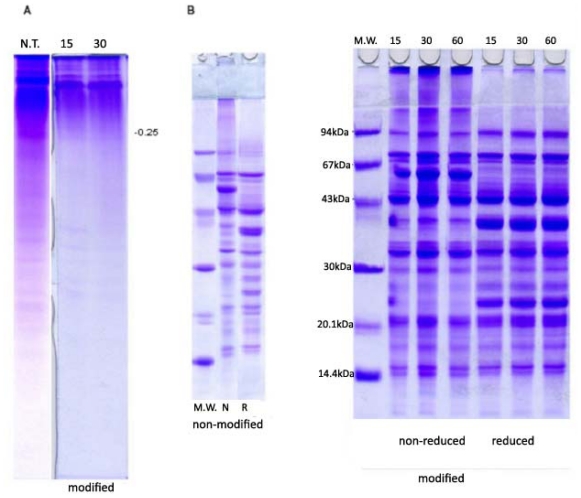
“The molecular weight of identified subunits and polypeptides calculated based on the Em value was consistent with the previous work of several authors [39,40].”
ResultAluko, R. E. (2008) · Journal of AOAC INTERNATIONAL · doi:10.1093/jaoac/91.4.947 · Cited by 90 · cited 1×
“Proteins of different plant sources such as soy [4–7], pea bean [1,2,8,9], rice [10], peanuts [11,12] cowpea [13] were the object of limited enzymatic hydrolysis.”
BackgroundO'Kane, F. E., Happe, R. P., Vereijken, J. M., Gruppen, H., & van Boekel, M. A. J. S. (2004) · Journal of Agricultural and Food Chemistry · doi:10.1021/jf035105a · Cited by 87
Herceg, Z., Jambrak, A. ., Lelas, V., Krešić, G., & Franetović, M. (2006) · Journal of Food Engineering · doi:10.1016/j.jfoodeng.2006.01.055 · Cited by 78 · cited 1×
“[43], addition of carbohydrates in solutions of whey proteins resulted in significant improvement of foaming and emulsifying properties.”
BackgroundAssessment of Soy Genotype and Processing Method on Quality of Soybean Tofu
Stanojević, S. P., Barać, M., Pešić, M. B., & Vucelić-Radović, B. (2011) · Journal of Agricultural and Food Chemistry · doi:10.1021/jf2006672 · Cited by 78 · cited 1×
“[37] proved that chymosin hydrolyzed thermally-treated soy proteins.”
BackgroundSelf-citationPreparation and Characterization of Papain-Modified Sesame ( Sesamum indicum L.) Protein Isolates
Bandyopadhyay, K., & Ghosh, S. (2002) · Journal of Agricultural and Food Chemistry · doi:10.1021/jf020320x · Cited by 76
Ibrahim, H. R. (1998) · Food / Nahrung · doi:10.1002/(sici)1521-3803(199808)42:03/04<187::aid-food187>3.3.co;2-6 · Cited by 75
Clemente, A., Vioque, J., Sánchez-Vioque, R., Pedroche, J., & Millán, F. (1999) · Journal of Agricultural and Food Chemistry · doi:10.1021/jf981315p · Cited by 72 · cited 1×
“Generally, plant protein hydrolysates can be classified into two groups, partially hydrolyzed (degree of hydrolysis (DH) < 10%) and intensively hydrolyzed (DH > 10%) [26].”
BackgroundTsoukala, A., Papalamprou, E. M., Makri, E. A., Doxastakis, G. I., & Braudo, E. E. (2006) · Colloids and Surfaces B Biointerfaces · doi:10.1016/j.colsurfb.2006.08.019 · Cited by 66 · cited 2×
“[8] that had shown trypsin to produce protein hydrolysates with lower solubility at pH values near 7.”
BackgroundPreparation and Characterization of Protein Isolate from Cowpea ( Vigna unguiculata L. Walp.)
Horax, R., HETTIARACHCHY, N. S., Chen, P., & Jalaluddin, M. (2004) · Journal of Food Science · doi:10.1111/j.1365-2621.2004.tb15500.x · Cited by 65
Functional properties of hydrolysates from Phaseolus lunatus seeds
Betancur‐Ancona, D., Martínez‐Rosado, R., Corona‐Cruz, A., Castellanos‐Ruelas, A., Jaramillo‐Flores, M. E., & Chel‐Guerrero, L. (2009) · International Journal of Food Science & Technology · doi:10.1111/j.1365-2621.2007.01690.x · Cited by 61 · cited 2×
“It is well known that the effect of enzymatic hydrolysis is dependent on numerous factors such as type of enzyme [24,25] and treatment conditions (enzyme-substrate ratio, reaction temperature, time of enzyme action, characteristics of substrate) [21].”
BackgroundRibotta, P. D., & Rosell, C. M. (2010) · Starch - Stärke · doi:10.1002/star.200900259 · Cited by 59
Arcan, İ., & Yemenicioğlu, A. (2009) · Food Research International · doi:10.1016/j.foodres.2009.09.012 · Cited by 56 · cited 1×
“Different enzymes, including trypsin [14,15] papain [16–18], pepsin [4,19,20] and several commercial proteases with different activity [11,21–23], were used.”
MethodLe Gall, M., Guéguen, J., Séve, B., & Quillien, L. (2005) · Journal of Agricultural and Food Chemistry · doi:10.1021/jf040314w · Cited by 47 · cited 1×
“Proteins of different plant sources such as soy [4–7], pea bean [1,2,8,9], rice [10], peanuts [11,12] cowpea [13] were the object of limited enzymatic hydrolysis.”
BackgroundKamara, M. T., Amadou, I., Fatmata, T., & Hui-ming, Z. (2010) · International Journal of Food Science & Technology · doi:10.1111/j.1365-2621.2010.02260.x · Cited by 42
Effect of Limited Hydrolysis on Traditional Soy Protein Concentrate
Barać, M., Jovanovic, S. T., Stanojević, S. P., & Pešić, M. B. (2006) · Sensors · doi:10.3390/s6091087 · Cited by 32 · cited 1×
“Different enzymes, including trypsin [14,15] papain [16–18], pepsin [4,19,20] and several commercial proteases with different activity [11,21–23], were used.”
MethodSelf-citationKaramać, M., Amarowicz, R., & Kostyra, H. (2002) · Czech Journal of Food Sciences · doi:10.17221/3502-cjfs · Cited by 25
Survival of dietary antigens in the digestive tract of calves intolerant to soyabean products
Sissons, J. W., & Thurston, S. M. (1984) · Research in Veterinary Science · doi:10.1016/s0034-5288(18)31913-1 · Cited by 22 · cited 2×
“First, these proteins were stable against chymosin action, which was in agreement with the results of Sissons and Thurston [36] based on pure soy proteins.”
ResultMolecular characterisation and heat-induced gelation of pea vicilin and legumin
O’Kane, F. E. (2004) · doi:10.18174/40538 · Cited by 21
Limited tryptic hydrolysis of pea legumin: molecular mass and conformational stability of legumin-T
Schwenke, K. D., Henning, T., Dudek, S., Dautzenberg, H., Danilenko, A. N., Kozhevnikov, G. O., & Braudo, E. E. (2001) · International Journal of Biological Macromolecules · doi:10.1016/s0141-8130(00)00167-7 · Cited by 17 · cited 1×
“The molecular weight of identified subunits and polypeptides calculated based on the Em value was consistent with the previous work of several authors [39,40].”
ResultSurvival of dietary antigens in the digestive tract of calves intolerant to soybean products.
Sissons, J. W., & Thurston, S. M. (1984) · PubMed · Cited by 17
Improvement of pea protein quality by enzymatic modification
Sijtsma, L., Tezera, D., Hustinx, J. C. A., & Vereijken, J. M. (1998) · Food / Nahrung · doi:10.1002/(sici)1521-3803(199808)42:03/04<215::aid-food215>3.3.co;2-1 · Cited by 16
Cited by
Composition, physicochemical properties of pea protein and its application in functional foods
Lu, Z. X., He, J. F., Zhang, Y. C., & Bing, D. J. (2020) · Critical Reviews in Food Science and Nutrition · doi:10.1080/10408398.2019.1651248 · Cited by 529
“member of protease, chymosin was characterized with the broad specificity similar to that of pepsin A and the PPI functional properties were improved after chymosin treatments (Barac et al. 2011).”
BackgroundInfluentialComposition, Nutritional Value, and Health Benefits of Pulses
Hall, C., Hillen, C., & Garden Robinson, J. (2017) · Cereal Chemistry · doi:10.1094/cchem-03-16-0069-fi · Cited by 422
Gao, Z., Shen, P., Lan, Y., Cui, L., Ohm, J.-B., Chen, B., & Rao, J. (2020) · Food Research International · doi:10.1016/j.foodres.2020.109045 · Cited by 374
Recent progress in the utilization of pea protein as an emulsifier for food applications
Burger, T. G., & Zhang, Y. (2019) · Trends in Food Science & Technology · doi:10.1016/j.tifs.2019.02.007 · Cited by 370
Ge, J., Sun, C., Corke, H., Gul, K., Gan, R., & Fang, Y. (2020) · Comprehensive Reviews in Food Science and Food Safety · doi:10.1111/1541-4337.12573 · Cited by 318
“Many researchers have applied this structure-modifying technique to effectively improve the solubility of pea protein at different pH values (Bajaj et al., 2017; Barac et al., 2011, 2012; Felix et al., 2017; Klost & Drusch, 2019a).”
Influential
Metadata
- Authors
- Barać, M., Čabrilo, S., Pešić, M., Stanojević, S., Pavlićević, M., Maćej, O., & Ristić, N.
- Affiliations
- University of Belgrade (RS)
- High Technical School of Vocational Studies, Nemanjina 2, Pozarevac 12000, Serbia
- Faculty of Agriculture, University of Belgrade, Nemanjina 6, Belgrade-Zemun 11000, Serbia
- Corresponding author
- Barać, Miroljub
- Venue
- International Journal of Molecular Sciences
- Publisher
- MDPI AG
- Published
- 2011-11-29
- Volume
- 12
- Issue
- 12
- Pages
- 8372-8387
- ISSN
- 1422-0067 (ISSN-L)
- PMC
- PMC3257075
- OpenAlex
- W2156006361
- Semantic Scholar
- df63a85e5b2281c818ff2828523e26eb27edc2c6
- Cited by
- 113
- References
- 49
- Citations by year
- 2026: 14 · 2025: 5 · 2024: 15 · 2023: 7 · 2022: 8 · 2021: 10 · 2020: 13 · 2019: 14 · 2018: 7 · 2017: 7 · 2016: 5 · 2015: 3 · 2014: 4 · 2013: 1
- FWCI
- 0.65
- Type
- journal article
- Language
- en
- Open access
- gold
- doi.org
- Licence
- Locations
- International Journal of Molecular Sciences (publishedVersion, cc-by)
- Europe PMC (PubMed Central) (publishedVersion, cc-by)
- PubMed Central (publishedVersion, cc-by)
- PubMed (publishedVersion)
- AgroSpace (University of Belgrade, Faculty of Agriculture) (submittedVersion, cc-by)
- DOAJ (DOAJ: Directory of Open Access Journals) (submittedVersion, cc-by-sa)
- Topics
- Life Sciences › Agricultural and Biological Sciences › Food Science › Protein Hydrolysis and Bioactive Peptides
- Life Sciences › Agricultural and Biological Sciences › Food Science › Proteins in Food Systems
- Life Sciences › Agricultural and Biological Sciences › Food Science › Food Nutrient Composition and Product Development
- Keywords
- pea protein isolate, Pisum sativum, chymosin, enzymatic hydrolysis, protein functional properties, solubility, emulsifying activity, foam stability, pH dependence, degree of hydrolysis, protein complexes
- MeSH terms
- Emulsions, Hydrogen-Ion Concentration, Hydrolysis, Plant Proteins, Protein Hydrolysates, Chymosin, Pisum sativum
About these checks
Registry, retraction, Cites and statistics results are computed, not judged, with one exception: a printed reference that no index lists is read once by a model before it counts as a citation error. Claims are extracted by a model and kept only when their quote appears verbatim in the text; each cited source is then checked, with a model’s help, for whether it says what the claim relies on. Those verdicts can be wrong — read the claim’s quote and the cited source before relying on one.
Statistics and arithmetic are recomputed, not judged.
Confidence bands are shown only for fields calibrated on our annotated test set. None is calibrated yet, so no band is shown.
What counts as a claim ›How we measure confidence ›How we check this ›
Are you an author, or do you see a problem with this page? Request a review
Data sources
Bibliographic data: Semantic Scholar, OpenAlex, Crossref.
Contains information from the Semantic Scholar Academic Graph Datasets, made available under the ODC Attribution License (ODC-BY 1.0).
Semantic Scholar’s data is described in: Kinney, R., et al. (2023). The Semantic Scholar Open Data Platform. arXiv:2301.10140.
