

The DOI matches its Crossref record; 42 of the 42 references it cites were found in a registry or an index.
Beta-Glucans Improve Growth, Viability and Colonization of Probiotic Microorganisms
Open accessAbstract
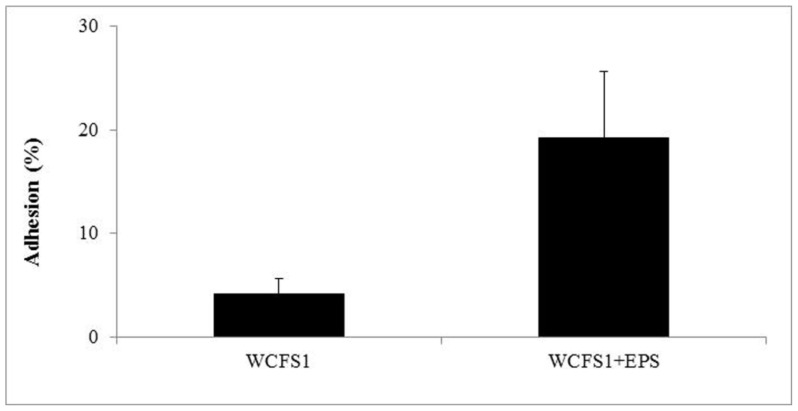
Probiotics, prebiotics and synbiotics are frequently-used components for the elaboration of functional food. Currently, most of the commercialized probiotics are limited to a few strains of the genera Bifidobacteria, Lactobacillus and Streptococcus, most of which produce exopolysaccharides (EPS). This suggests that the beneficial properties of these microorganisms may be related to the biological activities of these biopolymers. In this work we report that a 2-substituted-(1,3)-β-d-glucan of non-dairy bacterial origin has a prebiotic effect on three probiotic strains. Moreover, the presence of this β-d-glucan potentiates in vitro adhesion of the probiotic Lactobacillus plantarum WCFS1 to human intestinal epithelial cells.
Overview
The claims and statistics of this paper haven’t been checked yet.
Run the check — free, no account needed. It reads the open-access text and checks the sources it cites.
Integrity signals
Registry
Cites
Statistics
Figures
Verification
Claims the paper makes
The claims and statistics of this paper haven’t been checked yet.
Run the check — free, no account needed. It reads the open-access text and checks the sources it cites.
Claims other papers make about this one
Each is checked against this paper’s own text: does it say what the citing paper says it does?
The source backs part of the claim, not all of it — or backs it for a different population, condition or comparison.
In the citing paper
“β-D-glucan produced from P. parvulus 2.6 has been shown to enhance the growth and increase adherence to intestinal cells of different probiotic strains in vitro [165]”
From Lactic Acid Bacteria Exopolysaccharides Producers: A Sustainable Tool for Functional Foods (2021) · cites this paper as [165]
Experimental — accuracy not yet measured
Self-check
Percentages, sums and reported differences re-computed from the paper’s own numbers.
The self-check needs the paper’s full text.
Citations
Cites
Dietary modulation of the human colonic microbiota: updating the concept of prebiotics
Gibson, G. R., Probert, H. M., Loo, J. V., Rastall, R. A., & Roberfroid, M. B. (2004) · Nutrition Research Reviews · doi:10.1079/nrr200479 · Cited by 2,539
Complete genome sequence of Lactobacillus plantarum WCFS1
Kleerebezem, M., Boekhorst, J., van Kranenburg, R., Molenaar, D., Kuipers, O. P., Leer, R., Tarchini, R., Peters, S. A., Sandbrink, H. M., Fiers, M. W. E. J., et al. (2003) · Proceedings of the National Academy of Sciences · doi:10.1073/pnas.0337704100 · Cited by 1,472
Probiotics, Prebiotics, and Synbiotics
de Vrese, M., & Schrezenmeir, J. (2008) · Advances in biochemical engineering, biotechnology · doi:10.1007/10_2008_097 · Cited by 1,061
Schell, M. A., Karmirantzou, M., Snel, ., Vilanova, D., Berger, B. W., Pessi, G., Zwahlen, M.-C., Desiere, F., Peer Bork, B., Delley, M., et al. (2002) · Proceedings of the National Academy of Sciences · doi:10.1073/pnas.212527599 · Cited by 942
Prebiotic digestion and fermentation.
Cummings, J., Macfarlane, G., & Englyst, H. (2001) · American Journal of Clinical Nutrition · doi:10.1093/ajcn/73.2.415s · Cited by 664
Cairns, J. R. K., & Esen, A. (2010) · Cellular and Molecular Life Sciences · doi:10.1007/s00018-010-0399-2 · Cited by 643
Complete genome sequence of the probiotic lactic acid bacterium Lactobacillus acidophilus NCFM
Altermann, E., Russell, W. M., Azcárate-Peril, M. A., Barrangou, R., Buck, B. L., McAuliffe, O. E., Souther, N. E., Dobson, A., Duong, T., Callanan, M. J., et al. (2005) · Proceedings of the National Academy of Sciences · doi:10.1073/pnas.0409188102 · Cited by 611
Protection from gastrointestinal diseases with the use of probiotics
Marteau, P. R., de Vrese, M., Cellier, C., & Schrezenmeir, J. (2001) · American Journal of Clinical Nutrition · doi:10.1093/ajcn/73.2.430s · Cited by 596
New Scientific Paradigms for Probiotics and Prebiotics
Reid, G., Sanders, M. E., Gaskins, H. R., Gibson, G. R., Mercenier, A., Rastall, R. A., Roberfroid, M. B., Rowland, I. R., Cherbut, C., & Klaenhammer, T. R. (2003) · Journal of Clinical Gastroenterology · doi:10.1097/00004836-200308000-00004 · Cited by 498
Manning, T. S., & Gibson, G. R. (2004) · Best Practice & Research Clinical Gastroenterology · doi:10.1016/j.bpg.2003.10.008 · Cited by 480
Cited by
Sorted by citations
Items 101–180 of 180
Clinical benefits of β-glucan supplementation in children: a review
Bhoite, R., Satyavrat, V., & Sadananda, M. P. (2022) · Discover Food · doi:10.1007/s44187-022-00038-0 · Cited by 13
How do Lycium barbarum polysaccharides promote the adhesion of Lactobacillus to Caco-2 cells?
Liu, M., Sun, Z., Shi, C., Wang, J., Wang, T., Dziugan, P., Zhang, B., Zhao, H., & Jia, G. (2021) · Journal of Functional Foods · doi:10.1016/j.jff.2021.104929 · Cited by 13
Notararigo, S., Varela, E., Otal, A., Antolı́n, M., Guarner, F., & López, P. (2022) · International Journal of Molecular Sciences · doi:10.3390/ijms23031527 · Cited by 13
Self-citationIn Vitro Screening and Evaluation of Synbiotics
Skalkam, M. L., Wiese, M., Nielsen, D. S., & van Zanten, G. (2015) · Elsevier eBooks · doi:10.1016/b978-0-12-802189-7.00033-2 · Cited by 13
Saxami, G., Mitsou, E. K., Kerezoudi, E. N., Mavrouli, I., Vlassopoulou, M., Koutrotsios, G., Mountzouris, K. C., Zervakis, G. I., & Kyriacou, A. (2023) · Microorganisms · doi:10.3390/microorganisms11020414 · Cited by 13
Notararigo, S., Varela, E., Otal, A., Cristobo, I., Antolı́n, M., Guarner, F., Prieto, A., & López, P. (2021) · Frontiers in Microbiology · doi:10.3389/fmicb.2021.621280 · Cited by 12
Self-citationSugihara, N., Okada, Y., Tomioka, A., Ito, S., Tanemoto, R., Nishii, S., Mizoguchi, A., Inaba, K., Hanawa, Y., Horiuchi, K., et al. (2023) · Gut and Liver · doi:10.5009/gnl220100 · Cited by 12
Llamas-Arriba, M. G., Pérez-Ramos, A., Puertas, A. I., López, P., Dueñas, M. T., & Prieto, A. (2018) · Frontiers in Microbiology · doi:10.3389/fmicb.2018.02041 · Cited by 13
Self-citationRevalorization of Cava (Spanish Sparkling Wine) Lees on Sourdough Fermentation
Martín-Garcia, A., Riu-Aumatell, M., & López‐Tamames, E. (2022) · Fermentation · doi:10.3390/fermentation8030133 · Cited by 11
Liu, X., Chen, D., Li, Q., Zhang, C., Zhang, L., Qu, H., Wang, W.-Q., Zhou, Y., Huang, Y., Xiao, L., et al. (2022) · Fermentation · doi:10.3390/fermentation9010025 · Cited by 11
Functional properties of the fermented alcoholic beverages
Τσούπρας, Α., Moran, D., Lordan, R., & Zabetakis, I. (2023) · Elsevier eBooks · doi:10.1016/b978-0-12-823811-0.00013-4 · Cited by 12
Jang, H.-Y., Jung, S., Park, E.-O., Kim, S.-D., Kim, J.-K., Chae, S., Cha, Y., & Lee, S. (2023) · Journal of Functional Foods · doi:10.1016/j.jff.2023.105668 · Cited by 11
DEVELOPMENT OF PRODUCT CONTAINING MICROENCAPSULATED PROBIOTICS: AN UPDATE ON ISSUES
Alli, S. M. A. (2013) · Journal of Drug Delivery and Therapeutics · doi:10.22270/jddt.v3i5.600 · Cited by 11
Exploring the Probiotic Potential of Dairy Industrial-Relevant Lactobacilli
Rocchetti, M. T., Russo, P., Spano, G., Santis, L. D., Iarusso, I., Simone, N. D., Brahimi, S., Fiocco, D., & Capozzi, V. (2022) · Applied Sciences · doi:10.3390/app12104989 · Cited by 10
Self-citationToh, M., & Liu, S. (2017) · AMB Express · doi:10.1186/s13568-017-0456-4 · Cited by 10
Draft Genome Sequence of Pediococcus parvulus 2.6, a Probiotic β-Glucan Producer Strain
Pérez-Ramos, A., Mohedano, M. L., Puertas, A. I., Lamontanara, A., Orrù, L., Spano, G., Capozzi, V., Dueñas, M. T., & López, P. (2016) · Genome Announcements · doi:10.1128/genomea.01381-16 · Cited by 9
Self-citationSchlörmann, W., Bockwoldt, J. A., Mayr, M. F., Lorkowski, S., Dawczynski, C., Rohn, S., Ehrmann, M. A., & Glei, M. (2021) · Food & Function · doi:10.1039/d1fo02175c · Cited by 10
Walachowski, S., Breyne, K., Sécher, T., Cougoule, C., Guzylack‐Piriou, L., Meyer, E., Foucras, G., & Tabouret, G. (2022) · Frontiers in Immunology · doi:10.3389/fimmu.2022.1086413 · Cited by 10
Production of exopolysaccharides in a Kenyan fermented milk, mursik
Muigei, S. C. (2014) · Cited by 9
Li, Q., Zhang, Y., Guo, X., Guo, S., Ma, C., Zhang, S., Lu, P., Shi, Q., Johnston, L. J., & Dong, B. (2025) · Animal Advances · doi:10.48130/animadv-0025-0024 · Cited by 10
Weissella confusa with thermostable β-hemolytic exopolysaccharide
Siavoshi, F., Ebrahimi, H., & Sarrafnejad, A. (2021) · Toxicon · doi:10.1016/j.toxicon.2021.09.015 · Cited by 8
Vovk, S., Pоlоvyi, I., Petryshyn, M., Sablik, P., Vantukh, A., & Januś, E. (2023) · Acta Scientiarum Polonorum. Zootechnica · doi:10.21005/asp.2022.21.4.01 · Cited by 10
Scientific and practical aspects of the use of prebiotics in the process of feeding ruminants
Vovk, S. O., & Pоlоvyi, I. (2020) · Scientific Messenger of LNU of Veterinary Medicine and Biotechnologies · doi:10.32718/nvlvet-a9202 · Cited by 8
Beta-Glucans as a therapeutic agent: Literature Review
Andrade, E. F., & Orlando, D. R. (2018) · Madridge Journal of Food Technology · doi:10.18689/mjft-1000123 · Cited by 8
Polimeni, B., Correa, F., Trevisi, P., & Luise, D. (2025) · animal · doi:10.1016/j.animal.2025.101749 · Cited by 7
Nguyen, T.-L., Toh, M., Lu, Y., Ku, S. C. Y., & Liu, S. (2022) · Foods · doi:10.3390/foods11030250 · Cited by 7
INFLUENCE OF EXOPOLYSACCHARIDE ON THE GROWTH OF LACTIC ACID BACTERIA
TSUDA, H., Okuda, S., Haraguchi, T., & Kodama, K. (2019) · Italian Journal of Food Science · doi:10.14674/ijfs-1317 · Cited by 7
Main Technological Challenges Associated With the Incorporation of Probiotic Cultures into Foods
Marino, M., Innocente, N., Melchior, S., Calligaris, S., & Maifreni, M. (2021) · Elsevier eBooks · doi:10.1016/b978-0-12-822909-5.00028-9 · Cited by 7
Bukša, A., Petrović, F., & Maglica, Ž. (2025) · Microorganisms · doi:10.3390/microorganisms13061313 · Cited by 6
POTENSI PREBIOTIC DARI EKSTRAK JAMUR TIRAM PUTIH (PLEUROTUS OSTREATUS)
Setyawan, R. H., Saskiawan, I., Widhyastuti, N., Kasirah, K., & Mulyadi, M. (2023) · BERITA BIOLOGI · doi:10.55981/beritabiologi.2023.806 · Cited by 6
Zipori, D., Brychcy, M., Weiß, A., & Schmidt, H. (2025) · Food Microbiology · doi:10.1016/j.fm.2025.104862 · Cited by 5
Gaur, S. S., & Annapure, U. S. (2022) · World Journal of Microbiology and Biotechnology · doi:10.1007/s11274-022-03404-3 · Cited by 5
Untargeted metabolic footprinting uncovers key biochemical changes in fermented camel milk
Wang, D., Li, J., Li, L., Guo, S., & Chen, Y. (2024) · LWT · doi:10.1016/j.lwt.2024.116089 · Cited by 5
Zhang, J., Liu, H., Yin, S., Wang, N., Wang, S., Wang, C., Kang, J., Gupta, A. J., Guo, Q. M., & Liu, Y. (2024) · Bioactive Carbohydrates and Dietary Fibre · doi:10.1016/j.bcdf.2024.100432 · Cited by 5
Puertas, A. I., Llamas-Arriba, M. G., Etxebeste, O., Berregi, I., Pardo, M. Á., Prieto, A., López, P., & Dueñas, M. T. (2023) · International Journal of Food Microbiology · doi:10.1016/j.ijfoodmicro.2023.110199 · Cited by 5
Self-citationArena, M. P., Russo, P., Fiocco, D., Capozzi, V., & Spano, G. (2015) · Elsevier eBooks · doi:10.1016/b978-0-12-802189-7.00028-9 · Cited by 5
Self-citationProbiotics as Potential Adsorbent of Aflatoxin
Sabran, M. R., Jamaluddin, R., Ahmad, F. N., & Lim, Y. J. (2015) · Elsevier eBooks · doi:10.1016/b978-0-12-802189-7.00027-7 · Cited by 6
Mohammadi, M. B., Sharifan, A., & Yousefi, S. (2025) · Journal of Food Measurement & Characterization · doi:10.1007/s11694-025-03468-3 · Cited by 4
Jeenpitak, T., Pattarapisitporn, A., Tangjaidee, P., Khumsap, T., Yawootti, A., Phongthai, S., Noma, S., & Klangpetch, W. (2026) · Foods · doi:10.3390/foods15010145 · Cited by 4
The symbiotic effect of oat β-glucan enriching bio-low fat yogurt
Ibrahim, M. N. G., & Selezneva, I. S. (2019) · Научный журнал НИУ ИТМО. Серия «Процессы и аппараты пищевых производств» · doi:10.17586/2310-1164-2019-12-4-111-116 · Cited by 4
Dietary Factors in Prevention of PediatricEscherichia coliInfection: A Model Using Domestic Piglets
Liu, Y., & Ji, P. (2018) · ILAR Journal · doi:10.1093/ilar/ilz005 · Cited by 4
Liu, Y., Liu, F., Yu, Y. M., Zhang, Y., Ren, C., & Liu, Y. (2025) · International Journal of Electrochemical Science · doi:10.1016/j.ijoes.2025.101144 · Cited by 3
Global scenario of fermented dairy products: current advancements and future challenges
Gurumayum, S., Kaur, S., Rasane, P., & Singh, J. (2022) · Elsevier eBooks · doi:10.1016/b978-0-323-85793-2.00011-4 · Cited by 3
Probiotics and Prebiotics and the Gut Microbiota
Quigley, E. M. M. (2013) · CRC Press eBooks · doi:10.1201/b15561-13 · Cited by 3
Bounaama, K., Dahou, A. E.-A., Meskini, Z., Abbad, A., Tahlaiti, H., & Homrani, A. (2022) · Selcuk Journal of Agricultural and Food Sciences · doi:10.15316/sjafs.2022.048 · Cited by 2
Τσούπρας, Α., Gkika, D. A., Markopoulos, T., Curran, R., Scallon, C., Karali, M., & Kyzas, G. Z. (2024) · Reference series in phytochemistry · doi:10.1007/978-3-031-38663-3_214 · Cited by 2
Isolation and identification of Streptomyces sp. D-6 and its protective effect on Crucian auratus
Zhao, W., Dai, Z., Qiu, Y., Wang, J., He, L., Khan, T. A., Yi, G., & Xia, L. (2025) · Microbial Pathogenesis · doi:10.1016/j.micpath.2025.107491 · Cited by 2
Lactic acid bacteria: a cell factory for delivering functional biomolecules in dairy products
Silvetti, T., Morandi, S., & Brasca, M. (2017) · Wiley eBooks · doi:10.1002/9781119115007.ch14 · Cited by 2
Fortification of dairy product Narine with polysaccharides from oyster mushroom
Antonceva, E., & Shamtsyan, M. (2020) · E3S Web of Conferences · doi:10.1051/e3sconf/202021501001 · Cited by 1
Abdominal pain models: mechanisms and therapies and experimental models
Lucarini, E., Mannelli, L. D. C., & Ghelardini, C. (2020) · doi:10.36118/pharmadvances.03.2020.04 · Cited by 1
Probiotics and Prebiotics in Immune System Protection
Nova, E., Abad, C., Gómez-Martínez, S., Pozo-Rubio, T., & Marcos, A. (2013) · CRC Press eBooks · doi:10.1201/b15561-14 · Cited by 3
Prebiotic Treatment Influence the Adhesion Properties of Three Lactobacillus strains
Sredkova, P., Iliev, I. N., Dzhambazov, B. M., & Batsalova, T. (2017) · International Journal of Current Microbiology and Applied Sciences · doi:10.20546/ijcmas.2017.609.358 · Cited by 1
Mukherjee, A., & Ganguli, A. (2013) · Cited by 1
β-glucan on yoghurt manufactured with Lactobacillus plantarum strains as adjunct culture
Kılıç, G. B., & Akpınar, D. (2013)
Lammers, T. (2018) · Digital Library of Theses and Dissertations (Universidade de São Paulo) · doi:10.11606/d.9.2018.tde-12112018-143314
Sharova, N. Y., & Manzhieva, B. S. (2020) · Научный журнал НИУ ИТМО. Серия «Процессы и аппараты пищевых производств» · doi:10.17586/2310-1164-2020-10-2-49-61
Kaur, G., Kalia, A., & Sodhi, H. S. (2021) · Agricultural Research Journal · doi:10.5958/2395-146x.2021.00151.4
Pоlоvyi, I. (2020) · Foothill and mountain agriculture and stockbreeding · doi:10.32636/01308521.2022-(72)-1-9
Antioxidant and prebiotic activity of (1→3)-β-D-glucan obtained from Rhodotorula mucilaginosa
Lobo, P. T. D., Teshima, E., & de Assis, S. A. (2023) · Seven Editora eBooks · doi:10.56238/uniknowindevolp-053
Large Intestine and Gut–Brain–Microbiota Interactions
(2023) · Royal Society of Chemistry eBooks · doi:10.1039/bk9781839162428-00172
Ma, C., Guo, H., Chang, H., Huang, S. W., Jiang, S., Huo, D., Zhang, J., & Zhu, X. (2020) · Figshare · doi:10.6084/m9.figshare.13059166
Ma, C., Guo, H., Chang, H., Huang, S. W., Jiang, S., Huo, D., Zhang, J., & Zhu, X. (2020) · Figshare · doi:10.6084/m9.figshare.13059172
Ma, C., Guo, H., Chang, H., Huang, S. W., Jiang, S., Huo, D., Zhang, J., & Zhu, X. (2020) · Figshare · doi:10.6084/m9.figshare.13059163
Ma, C., Guo, H., Chang, H., Huang, S. W., Jiang, S., Huo, D., Zhang, J., & Zhu, X. (2020) · Figshare · doi:10.6084/m9.figshare.13059169
Ma, C., Guo, H., Chang, H., Huang, S., Jiang, S., Huo, D., Zhang, J., & Zhu, X. (2020) · Figshare · doi:10.6084/m9.figshare.13059157
Ma, C., Guo, H., Chang, H., Huang, S., Jiang, S., Huo, D., Zhang, J., & Zhu, X. (2020) · Figshare · doi:10.6084/m9.figshare.13059151
Iakhno, S., Umu, Ö. C. O., Håkenåsen, I. M., Åkesson, C. P., Mydland, L. T., Press, C. M., Sørum, H. R., & Øverland, M. (2020) · Figshare · doi:10.6084/m9.figshare.12257756
Iakhno, S., Umu, Ö. C. O., Håkenåsen, I. M., Åkesson, C. P., Mydland, L. T., Press, C. M., Sørum, H. R., & Øverland, M. (2020) · Figshare · doi:10.6084/m9.figshare.12257792
Iakhno, S., Umu, Ö. C. O., Håkenåsen, I. M., Åkesson, C. P., Mydland, L. T., Press, C. M., Sørum, H. R., & Øverland, M. (2020) · Figshare · doi:10.6084/m9.figshare.12257765
Iakhno, S., Umu, Ö. C. O., Håkenåsen, I. M., Åkesson, C. P., Mydland, L. T., Press, C. M., Sørum, H. R., & Øverland, M. (2020) · Figshare · doi:10.6084/m9.figshare.12257780
Ma, C., Guo, H., Chang, H., Huang, S., Jiang, S., Huo, D., Zhang, J., & Zhu, X. (2020) · Figshare · doi:10.6084/m9.figshare.13059160
Iakhno, S., Umu, Ö. C. O., Håkenåsen, I. M., Åkesson, C. P., Mydland, L. T., Press, C. M., Sørum, H. R., & Øverland, M. (2020) · Figshare · doi:10.6084/m9.figshare.12257774
Ma, C., Guo, H., Chang, H., Huang, S., Jiang, S., Huo, D., Zhang, J., & Zhu, X. (2020) · Figshare · doi:10.6084/m9.figshare.13059154
Iakhno, S., Umu, Ö. C. O., Håkenåsen, I. M., Åkesson, C. P., Mydland, L. T., Press, C. M., Sørum, H. R., & Øverland, M. (2020) · Figshare · doi:10.6084/m9.figshare.12257783
Iakhno, S., Umu, Ö. C. O., Håkenåsen, I. M., Åkesson, C. P., Mydland, L. T., Press, C. M., Sørum, H. R., & Øverland, M. (2020) · Figshare · doi:10.6084/m9.figshare.12257771
Iakhno, S., Umu, Ö. C. O., Håkenåsen, I. M., Åkesson, C. P., Mydland, L. T., Press, C. M., Sørum, H. R., & Øverland, M. (2020) · Figshare · doi:10.6084/m9.figshare.12257786
Harnessing mushroom β-glucans towards enhancing probiotics viability and their bioactivities
Ogidi, C. O. (2026) · Journal of Food Bioactives · doi:10.26599/jfb.2026.95034445
Fermentation—A Potential Game Changer in the Development of Plant-Based Cream Cheese Alternatives
Libberecht, S., Matysek, J., Sevenich, R., Rauh, C., & Loeffler, M. (2026) · Foods · doi:10.3390/foods15152692
Lavanya, M., & Namasivayam, S. K. R. (2026) · Food Control · doi:10.1016/j.foodcont.2026.112512 · Cited by 1
Vamanu, E., Dinu, L.-D., Geană, E., Ciucure, C. T., Grosu, A. C., Roșca, R., & Gatea, F. (2026) · Nutraceuticals · doi:10.3390/nutraceuticals6030054
Metadata
- Authors
- Russo, P., López, P., Capozzi, V., De Palencia, P. F., Dueñas, M. T., Spano, G., & Fiocco, D.
- Affiliations
- University of Foggia (IT)
- Centro de Investigaciones Biológicas Margarita Salas (ES)
- Biology Research Center, Department of Molecular Microbiology and Infection Biology, 28040 Madrid, Spain
- University of the Basque Country (ES)
- Corresponding author
- Spano, Giuseppe
- ORCID
- Venue
- International Journal of Molecular Sciences
- Publisher
- MDPI AG
- Published
- 2012-05-18
- Volume
- 13
- Issue
- 5
- Pages
- 6026-6039
- ISSN
- 1422-0067 (ISSN-L)
- PMC
- PMC3382753
- OpenAlex
- W2024105035
- Cited by
- 176
- References
- 42
- Citations by year
- 2026: 6 · 2025: 8 · 2024: 6 · 2023: 17 · 2022: 21 · 2021: 18 · 2020: 23 · 2019: 10 · 2018: 15 · 2017: 16 · 2016: 5 · 2015: 12 · 2014: 7 · 2013: 9 · 2012: 3
- FWCI
- 15.22
- Type
- journal article
- Language
- en
- Open access
- gold
- doi.org
- Licence
- Locations
- International Journal of Molecular Sciences (publishedVersion, cc-by)
- Europe PMC (PubMed Central) (publishedVersion, cc-by)
- PubMed Central (publishedVersion, cc-by)
- PubMed (publishedVersion)
- Communities in ADDI (Universidad del Pais Vasco) (submittedVersion, cc-by)
- Archivio Istituzionale della Ricerca (Universita Degli Studi Di Milano) (submittedVersion, other-oa)
- DIGITAL.CSIC (Spanish National Research Council (CSIC)) (submittedVersion, cc-by)
- LA Referencia (Red Federada de Repositorios Institucionales de Publicaciones Científicas) (submittedVersion, cc-by)
- DOAJ (DOAJ: Directory of Open Access Journals) (submittedVersion, cc-by-sa)
- Hispana (submittedVersion, cc-by)
- Topics
- Life Sciences › Agricultural and Biological Sciences › Food Science › Probiotics and Fermented Foods
- Health Sciences › Nursing › Nutrition and Dietetics › Microbial Metabolites in Food Biotechnology
- Life Sciences › Agricultural and Biological Sciences › Food Science › Polysaccharides Composition and Applications
- Keywords
- β-glucan, prebiotics, probiotics, Lactobacillus plantarum WCFS1, bacterial adhesion, intestinal epithelial cells, exopolysaccharides, probiotic viability, colonization, functional foods
- MeSH terms
- Bacterial Proteins, Bifidobacterium, Cell Adhesion, Glucosidases, Humans, Proteoglycans, Streptococcus, Caco-2 Cells, Probiotics, beta-Glucans, Lactiplantibacillus plantarum, Prebiotics
About these checks
Registry, retraction, Cites and statistics results are computed, not judged, with one exception: a printed reference that no index lists is read once by a model before it counts as a citation error. Claims are extracted by a model and kept only when their quote appears verbatim in the text; each cited source is then checked, with a model’s help, for whether it says what the claim relies on. Those verdicts can be wrong — read the claim’s quote and the cited source before relying on one.
Statistics and arithmetic are recomputed, not judged.
Confidence bands are shown only for fields calibrated on our annotated test set. None is calibrated yet, so no band is shown.
What counts as a claim ›How we measure confidence ›How we check this ›
Are you an author, or do you see a problem with this page? Request a review
