

The Role of Glucose Transporters in Brain Disease: Diabetes and Alzheimer’s Disease
Open accessThe DOI matches its Crossref record; 195 of the 198 references it cites were found in a registry or an index.
Abstract
The occurrence of altered brain glucose metabolism has long been suggested in both diabetes and Alzheimer’s diseases. However, the preceding mechanism to altered glucose metabolism has not been well understood. Glucose enters the brain via glucose transporters primarily present at the blood-brain barrier. Any changes in glucose transporter function and expression dramatically affects brain glucose homeostasis and function. In the brains of both diabetic and Alzheimer’s disease patients, changes in glucose transporter function and expression have been observed, but a possible link between the altered glucose transporter function and disease progress is missing. Future recognition of the role of new glucose transporter isoforms in the brain may provide a better understanding of brain glucose metabolism in normal and disease states. Elucidation of clinical pathological mechanisms related to glucose transport and metabolism may provide common links to the etiology of these two diseases. Considering these facts, in this review we provide a current understanding of the vital roles of a variety of glucose transporters in the normal, diabetic and Alzheimer’s disease brain.
Overview
The claims and statistics of this paper haven’t been checked yet.
Free: it reads the open-access text and checks the first 5 claims that cite a source we can check. Create a free account to check every claim.
Integrity signals
Registry
Cites
Statistics
Figures
Verification
Claims the paper makes
The claims and statistics of this paper haven’t been checked yet.
Free: it reads the open-access text and checks the first 5 claims that cite a source we can check. Create a free account to check every claim.
Claims other papers make about this one
Each is checked against this paper’s own text: does it say what the citing paper says it does?
In the citing paper
“They have the ability to directly affect their target, since SGLT1 and SGLT2 co-receptors are expressed in the human central nervous system and play an important role in maintaining glucose homeostasis.”
From Neuroprotective effect of SGLT2 inhibitors. (2021) · cites this paper as [18]
Self-check
Percentages, sums and reported differences re-computed from the paper’s own numbers.
The self-check needs the paper’s full text.
Citations
Cites
1 retracted
- Retracted
Alzheimer's disease: the amyloid cascade hypothesis
Hardy, J. A., & Higgins, G. A. (1992) · Science · doi:10.1126/science.1566067 · Cited by 7,484 · cited 1×
“Furthermore, overproduction of amyloid beta peptide (Aβ) along with early onset familial AD is suggested to be a key player in AD [129].”
BackgroundThe Pathobiology of Diabetic Complications
Brownlee, M. (2005) · Diabetes · doi:10.2337/diabetes.54.6.1615 · Cited by 5,339
Grundke-Iqbal, I., Iqbal, K., Tung, Y. C., Quinlan, M., Wisniewski, H. M., & Binder, L. I. (1986) · Proceedings of the National Academy of Sciences · doi:10.1073/pnas.83.13.4913 · Cited by 3,676
Neurofibrillary tangles but not senile plaques parallel duration and severity of Alzheimer's disease
Arriagada, P. V., Growdon, J. H., Hedley-Whyte, E. T., & Hyman, B. T. (1992) · Neurology · doi:10.1212/wnl.42.3.631 · Cited by 2,668
Brain Metabolism during Fasting*
Owen, O. E., Morgan, A. P., Kemp, H. G., Sullivan, J. M., Herrera, M. G., & Cahill, G. F. (1967) · Journal of Clinical Investigation · doi:10.1172/jci105650 · Cited by 1,646
Sequence and Structure of a Human Glucose Transporter
Mueckler, M., Caruso, C., Baldwin, S. A., Panico, M., Blench, I., Morris, H. R., Allard, W. J., Lienhard, G. E., & Lodish, H. F. (1985) · Science · doi:10.1126/science.3839598 · Cited by 1,547
Insulin receptors are widely distributed in the central nervous system of the rat
HAVRANKOVA, J., ROTH, J., & BROWNSTEIN, M. (1978) · Nature · doi:10.1038/272827a0 · Cited by 1,111
Glucose transporters in the 21st Century
Thorens, B., & Mueckler, M. (2010) · American Journal of Physiology-Endocrinology and Metabolism · doi:10.1152/ajpendo.00712.2009 · Cited by 1,013 · cited 1×
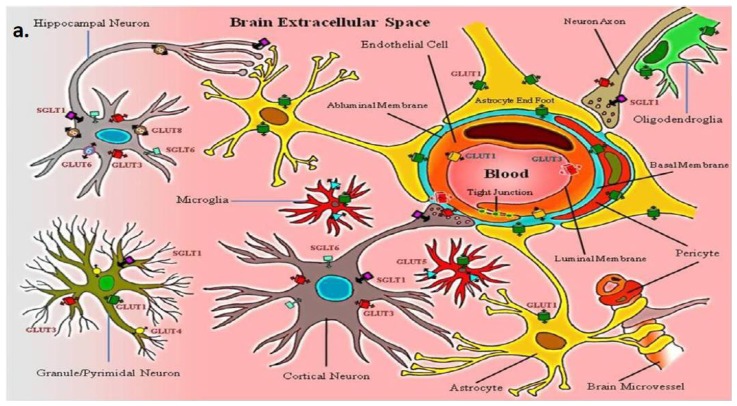
“Expression of different isoforms of both the GLUT and SGLT families has been shown to be cell type specific [22,24,25] (Table 1 and Figure 1a).”
Background(1995) · PubMed Central · doi:10.2967/jnumed.120.252510a · Cited by 996
Research works printed but not linked: 1
- Shah K.K. Abbruscato T.J. Function of sodium/glucose co-transporter at the blood-brain barrier in diabetes Fourth Annual Diabetes Drug Discovery: New Diabetes Drug Targets and Candidates Cambridge Healthtech Institute Boston, MA, USA 2011
Cited by
Chen, Z., & Zhong, C. (2013) · Progress in Neurobiology · doi:10.1016/j.pneurobio.2013.06.004 · Cited by 673
Glucose transporters in brain in health and disease
Koepsell, H. (2020) · Pflügers Archiv - European Journal of Physiology · doi:10.1007/s00424-020-02441-x · Cited by 558
“AD is the most abundant cause of progressive intellectual failure in aged humans [36, 369, 456].”
BackgroundGlucose Transporters at the Blood-Brain Barrier: Function, Regulation and Gateways for Drug Delivery
Patching, S. G. (2017) · Molecular Neurobiology · doi:10.1007/s12035-015-9672-6 · Cited by 361
Impact of Metabolic Syndrome on Neuroinflammation and the Blood–Brain Barrier
Van Dyken, P., & Lacoste, B. (2018) · Frontiers in Neuroscience · doi:10.3389/fnins.2018.00930 · Cited by 359
Neuroprotective effect of SGLT2 inhibitors.
Pawlos, A., Broncel, M., Woźniak, E., & Gorzelak-Pabiś, P. (2021) · Molecules · doi:10.3390/molecules26237213 · Cited by 304
“SGLTs are responsible for the transport of glucose, galactose and sodium ions against the concentration gradients [18].”
BackgroundBlood-brain barrier–penetrating siRNA nanomedicine for Alzheimer’s disease therapy
Zhou, Y., Zhu, F., Liu, Y., Zheng, M., Wang, Y., Zhang, D., Anraku, Y., Zou, Y., Li, J., Wu, H., et al. (2020) · Science Advances · doi:10.1126/sciadv.abc7031 · Cited by 300
Kopp, K. O., Glotfelty, E. J., Li, Y., & Greig, N. H. (2022) · Pharmacological Research · doi:10.1016/j.phrs.2022.106550 · Cited by 298
Immunometabolism in the Brain: How Metabolism Shapes Microglial Function
Bernier, L.-P., York, E. M., & MacVicar, B. A. (2020) · Trends in Neurosciences · doi:10.1016/j.tins.2020.08.008 · Cited by 283
Insulin Resistance and Alzheimer’s Disease: Bioenergetic Linkages
Neth, B. J., & Craft, S. (2017) · Frontiers in Aging Neuroscience · doi:10.3389/fnagi.2017.00345 · Cited by 272
Di Marco, L. Y., Venneri, A., Farkas, E., Evans, P. C., Marzo, A., & Frangi, A. F. (2015) · Neurobiology of Disease · doi:10.1016/j.nbd.2015.08.014 · Cited by 262
Blood-brain barrier transport machineries and targeted therapy of brain diseases
Barar, J., Rafi, M. A., Pourseif, M. M., & Omidi, Y. (2016) · BioImpacts · doi:10.15171/bi.2016.30 · Cited by 257
Dewanjee, S., Chakraborty, P., Bhattacharya, H., Chacko, L., Singh, B., Chaudhary, A., Javvaji, K., Pradhan, S. R., Vallamkondu, J., Dey, A., et al. (2022) · Free Radical Biology and Medicine · doi:10.1016/j.freeradbiomed.2022.09.032 · Cited by 229
Glucose Transporters in Brain: In Health and in Alzheimer’s Disease
Szablewski, L. (2016) · Journal of Alzheimer's Disease · doi:10.3233/jad-160841 · Cited by 211
“These results were confirmed in animal studies [17].”
InfluentialAlzheimer’s Disease: Etiology, Neuropathology and Pathogenesis
Sheppard, O., & Coleman, M. P. (2020) · Exon Publications eBooks · doi:10.36255/exonpublications.alzheimersdisease.2020.ch1 · Cited by 208
Watson, L. S., Wilken-Resman, B., Williams, A., DiLucia, S., Sánchez, G., McLeod, T., & Sims‐Robinson, C. (2022) · Diabetes and Vascular Disease Research · doi:10.1177/14791641221118626 · Cited by 204
Mitochondrial dysfunction in Alzheimer’s disease
D’Alessandro, M. C. B., Kanaan, S., Geller, M., Praticò, D., & Daher, J. P. L. (2025) · Ageing Research Reviews · doi:10.1016/j.arr.2025.102713 · Cited by 192
Rojas-Gutierrez, E., Muñoz-Arenas, G., Treviño, S., Espinosa, B., Chavez, R., Rojas, K., Flores, G., Díaz, A., & Guevara, J. (2017) · Synapse · doi:10.1002/syn.21990 · Cited by 192
Wheeler, M. J., Dempsey, P. C., Grace, M. S., Ellis, K. A., Gardiner, P. A., Green, D. J., & Dunstan, D. W. (2017) · Alzheimer's & Dementia: Translational Research & Clinical Interventions · doi:10.1016/j.trci.2017.04.001 · Cited by 183
Blood-Brain Barrier Protection as a Therapeutic Strategy for Acute Ischemic Stroke
Sifat, A. E., Vaidya, B., & Abbruscato, T. J. (2017) · The AAPS Journal · doi:10.1208/s12248-017-0091-7 · Cited by 171
Self-citationEnergy Metabolism Decline in the Aging Brain—Pathogenesis of Neurodegenerative Disorders
Błaszczyk, J. W. (2020) · Metabolites · doi:10.3390/metabo10110450 · Cited by 162
Cognitive dysfunction in diabetes: abnormal glucose metabolic regulation in the brain
Zhang, S., Zhang, Y., Wen, Z., Yang, Y., Bu, T., Bu, X., & Ni, Q. (2023) · Frontiers in Endocrinology · doi:10.3389/fendo.2023.1192602 · Cited by 160
Hamzé, R., Delangre, E., Tolu, S., Moreau, M., Janel, N., Bailbé, D., & Movassat, J. (2022) · International Journal of Molecular Sciences · doi:10.3390/ijms232315287 · Cited by 158
The solute carrier transporters and the brain: Physiological and pharmacological implications
Hu, C., Tao, L., Cao, X., & Chen, L. (2020) · Asian Journal of Pharmaceutical Sciences · doi:10.1016/j.ajps.2019.09.002 · Cited by 157
Bonfili, L., Cecarini, V., Gogoi, O., Berardi, S., Scarpona, S., Angeletti, M., Rossi, G., & Eleuteri, A. M. (2020) · Neurobiology of Aging · doi:10.1016/j.neurobiolaging.2019.11.004 · Cited by 132
Brain glucose transporters: Implications for neurologic disease
Benarroch, E. E. (2014) · Neurology · doi:10.1212/wnl.0000000000000328 · Cited by 125
Brain Metabolic Alterations in Alzheimer’s Disease
Ardanaz, C. G., Ramírez, M. J., & Solas, M. (2022) · International Journal of Molecular Sciences · doi:10.3390/ijms23073785 · Cited by 125
Pervin, Z., & Stephen, J. M. (2021) · AIMS neuroscience · doi:10.3934/neuroscience.2021021 · Cited by 125
Type 2 Diabetes Mellitus as a Risk Factor for Alzheimer’s Disease: Review and Meta-Analysis
Athanasaki, A., Melanis, K., Tsantzali, I., Stefanou, M., Ntymenou, S., Paraskevas, S. G., Κalamatianos, T., Boutati, E. I., Lambadiari, V., Voumvourakis, K. I., et al. (2022) · Biomedicines · doi:10.3390/biomedicines10040778 · Cited by 121
Sun, Y., Li, P., Zhu, Y. D., Zhu, X., Zhang, Y., Liu, M., & Liu, Y. (2021) · Biosensors and Bioelectronics · doi:10.1016/j.bios.2021.113600 · Cited by 113
Glucose metabolism and AD: evidence for a potential diabetes type 3
González, A., Calfío, C., Churruca, M., & Maccioni, R. B. (2022) · Alzheimer's Research & Therapy · doi:10.1186/s13195-022-00996-8 · Cited by 112
“On the other hand, a 50% decrease in ATP production has been observed in late-onset AD [79].”
BackgroundIncreased Glucose Transport into Neurons Rescues Aβ Toxicity in Drosophila
Niccoli, T., Cabecinha, M., Tillmann, A., Kerr, F., Wong, C. T., Cardenes, D., Vincent, A. J., Bettedi, L., Li, L., Grönke, S., et al. (2016) · Current Biology · doi:10.1016/j.cub.2016.07.017 · Cited by 112
Wiciński, M., Wódkiewicz, E., Górski, K., Walczak, M., & Malinowski, B. (2020) · Pharmaceuticals · doi:10.3390/ph13110379 · Cited by 110
The role of tanycytes in hypothalamic glucosensing
Elizondo‐Vega, R., Cortes‐Campos, C., Barahona, M. J., Oyarce, K. A., Carril, C. A., & García‐Robles, M. A. (2015) · Journal of Cellular and Molecular Medicine · doi:10.1111/jcmm.12590 · Cited by 101
Puthiyedth, N., Riveros, C., Berretta, R., & Moscato, P. (2016) · PLOS ONE · doi:10.1371/journal.pone.0152342 · Cited by 100
Magnetic resonance spectroscopy reveals abnormalities of glucose metabolism in the Alzheimer's brain
Mullins, R., Reiter, D., & Kapogiannis, D. (2018) · Annals of Clinical and Translational Neurology · doi:10.1002/acn3.530 · Cited by 99
Mei, J., Li, Y., Niu, L., Liang, R., Tang, M., Cai, Q., Xu, J., Zhang, D., Yin, X., Liu, X., et al. (2024) · Translational Neurodegeneration · doi:10.1186/s40035-024-00431-y · Cited by 99
Functions of amyloid precursor protein in metabolic diseases
Guo, Y., Wang, Q., Chen, S., & Xu, C. (2020) · Metabolism · doi:10.1016/j.metabol.2020.154454 · Cited by 98
Alzheimer’s disease and type 2 diabetes mellitus: Pathophysiologic and pharmacotherapeutics links
Rojas, M., Chávez-Castillo, M., Bautista, J., Ortega, Á., Nava, M., Salazar, J., Díaz-Camargo, E., Medina, O., Rojas-Quintero, J., & Bermúdez, V. (2021) · World Journal of Diabetes · doi:10.4239/wjd.v12.i6.745 · Cited by 94
Dong, M., Wen, S., & Zhou, L. (2022) · Diabetes, Metabolic Syndrome and Obesity: Targets and Therapy · doi:10.2147/dmso.s375559 · Cited by 90
Glucose metabolism, neural cell senescence and Alzheimer's disease
Wang, Q., Duan, L., Li, X., Wang, Y., Guo, W., Guan, F., & Ma, S. (2022) · International Journal of Molecular Sciences · doi:10.3390/ijms23084351 · Cited by 90
Can the emerging field of immunometabolism provide insights into neuroinflammation?
Lynch, M. A. (2020) · Progress in Neurobiology · doi:10.1016/j.pneurobio.2019.101719 · Cited by 88
Deciphering the Roles of Metformin in Alzheimer’s Disease: A Snapshot
Liao, W., Xu, J., Li, B., Ruan, Y., Li, T., & Liu, J. (2022) · Frontiers in Pharmacology · doi:10.3389/fphar.2021.728315 · Cited by 84
“GLUT-3 is expressed in neurons, and thus it is in charge of glucose uptake into neurons (Shah et al., 2012).”
BackgroundYang, L., Wang, Y., Zheng, G., Li, Z., & Mei, J. (2023) · International Journal of Biological Macromolecules · doi:10.1016/j.ijbiomac.2023.124316 · Cited by 84
Szablewski, L. (2021) · International Journal of Molecular Sciences · doi:10.3390/ijms22158142 · Cited by 84
Chang, Y., Chan, M., Yang, Y., Li, C., & Hsiao, M. (2023) · Cancer Letters · doi:10.1016/j.canlet.2023.216179 · Cited by 83
Cisternas, P., Zolezzi, J. M., Martínez, M., Torres, V. I., Wong, G. W., & Inestrosa, N. C. (2018) · Journal of Neurochemistry · doi:10.1111/jnc.14608 · Cited by 80
Imaging and Molecular Mechanisms of Alzheimer’s Disease: A Review
Femminella, G. D., Thayanandan, T., Calsolaro, V., Komici, K., Rengo, G., Corbi, G., & Ferrara, N. (2018) · International Journal of Molecular Sciences · doi:10.3390/ijms19123702 · Cited by 79
Sifat, A. E., Vaidya, B., Kaisar, M. A., Cucullo, L., & Abbruscato, T. J. (2018) · Journal of Neurochemistry · doi:10.1111/jnc.14561 · Cited by 79
Self-citationQi, G., Mi, Y., Liu, Z., Fan, R., Qiao, Q., Sun, Y., Ren, B., & Liu, X. (2017) · Journal of Functional Foods · doi:10.1016/j.jff.2017.04.031 · Cited by 78
Dysfunction of the Blood-Brain Barrier—A Key Step in Neurodegeneration and Dementia
Noe, C. R., Noe-Letschnig, M., Handschuh, P., Noe, C. A., & Lanzenberger, R. (2020) · Frontiers in Aging Neuroscience · doi:10.3389/fnagi.2020.00185 · Cited by 73
El-Sahar, A. E., Rastanawi, A. A., El-Yamany, M. F., & Saad, M. A. (2020) · Life Sciences · doi:10.1016/j.lfs.2020.118076 · Cited by 70
Emerging roles of long non-coding RNAs in the pathogenesis of Alzheimer’s disease
Cortini, F., Roma, F., & Villa, C. (2019) · Ageing Research Reviews · doi:10.1016/j.arr.2019.01.001 · Cited by 69
Sandeep, M. S., & Chilkunda, N. D. (2017) · Biomedicine & Pharmacotherapy · doi:10.1016/j.biopha.2017.07.142 · Cited by 69
Glycolysis-Derived Compounds From Astrocytes That Modulate Synaptic Communication
Gonçalves, C.-A., Rodrigues, L., Bobermin, L. D., Zanotto, C., Vizuete, A., Quincozes-Santos, A., Souza, D. O., & Leite, M. C. (2019) · Frontiers in Neuroscience · doi:10.3389/fnins.2018.01035 · Cited by 68
Long non-coding RNAs in brain development, synaptic biology, and Alzheimer’s disease
Shi, C., Zhang, L., & Qin, C. (2017) · Brain Research Bulletin · doi:10.1016/j.brainresbull.2017.03.010 · Cited by 67
Lin, K.-J., Wang, T., Chen, S., Lin, K.-L., Liou, C., Lan, M., Chuang, Y., Chuang, J., Wang, P., Lee, J., et al. (2021) · Antioxidants · doi:10.3390/antiox10121935 · Cited by 66
Hypometabolism, Alzheimer’s Disease, and Possible Therapeutic Targets: An Overview
Raut, S., Bhalerao, A., Powers, M., Gonzalez, M., Mancuso, S., & Cucullo, L. (2023) · Cells · doi:10.3390/cells12162019 · Cited by 65
“astrocytes, oligodendrocytes [6], microglia [7], and neurons [8] as the final recipient of glucose absorption, coordinates glucose uptake among a variety of cell types inside the brain [9].”
BackgroundSu, C., Yen, S.-C., Li, T.-W., & Sun, Y. (2016) · Analytical Chemistry · doi:10.1021/acs.analchem.6b00272 · Cited by 63
Role of DPP-4 and SGLT2 Inhibitors Connected to Alzheimer Disease in Type 2 Diabetes Mellitus
Sim, A. Y., Barua, S., Kim, J. Y., Lee, Y.-H., & Lee, J. E. (2021) · Frontiers in Neuroscience · doi:10.3389/fnins.2021.708547 · Cited by 62
Anandhan, A., Lei, S., Levytskyy, R. M., Pappa, A., Panayiotidis, M. I., Cerny, R. L., Khalimonchuk, O., Powers, R., & Franco, R. (2016) · Molecular Neurobiology · doi:10.1007/s12035-016-9906-2 · Cited by 62
Shi, Y., Wang, H., Zhu, Z., Ye, Q., Lin, F., & Cai, G. (2022) · The Science of The Total Environment · doi:10.1016/j.scitotenv.2022.160129 · Cited by 62
Santos, R. X., Correia, S. C., Alves, M. G., Oliveira, P. F., Cardoso, S., Carvalho, C., Duarte, A. I., Santos, M. S., & Moreira, P. I. (2014) · Biochimica et Biophysica Acta (BBA) - Molecular Basis of Disease · doi:10.1016/j.bbadis.2014.04.011 · Cited by 61
Long Non-coding RNAs in Pathogenesis of Neurodegenerative Diseases
Zhou, S., Xiao, Y., Wang, M., Meng, Y., Song, D., Yang, H., Wang, D., Bi, J., & Xu, S. (2021) · Frontiers in Cell and Developmental Biology · doi:10.3389/fcell.2021.719247 · Cited by 60
Naughton, B. J., Duncan, F. J., Murrey, D. A., Meadows, A. S., Newsom, D. E., Stoicea, N., White, P., Scharre, D. W., Mccarty, D. M., & Fu, H. (2014) · Journal of Alzheimer's Disease · doi:10.3233/jad-140606 · Cited by 59
Parkinson's disease and glucose metabolism impairment
Chen, L., Wang, C., Qin, L., & Zhang, H. (2025) · Translational Neurodegeneration · doi:10.1186/s40035-025-00467-8 · Cited by 58
Engineered Liposomes in Interventional Theranostics of Solid Tumors
Kommineni, N., Chaudhari, R., Conde, J., Tamburacı, S., Çeçen, B., Chandra, P., & Prasad, R. (2023) · ACS Biomaterials Science & Engineering · doi:10.1021/acsbiomaterials.3c00510 · Cited by 58
Zhang, Y., Ding, N., Hao, X., Zhao, J., Zhao, Y., Li, Y., & Li, Z. (2022) · Frontiers in Aging Neuroscience · doi:10.3389/fnagi.2022.1018371 · Cited by 57
Samman, W. A., Selim, S., Fayoumi, H. M. E., El-Sayed, N. M., Mehanna, E. T., & Hazem, R. M. (2023) · Pharmaceuticals · doi:10.3390/ph16050753 · Cited by 57
Li, H., Zeng, F., Huang, C., Pu, Q., Thomas, E. R., Chen, Y., & Li, X. (2023) · CNS Neuroscience & Therapeutics · doi:10.1111/cns.14411 · Cited by 56
Yonamine, C. Y., Michalani, M. L. E., Moreira, R. J., & Machado, U. F. (2023) · International Journal of Molecular Sciences · doi:10.3390/ijms242216480 · Cited by 54
Biomarkers in the Diagnosis and Prognosis of Alzheimer’s Disease
Schaffer, C., Sarad, N., DeCrumpe, A., Goswami, D., Herrmann, S., Morales, J., Patel, P., & Osborne, J. (2014) · SLAS TECHNOLOGY · doi:10.1177/2211068214559979 · Cited by 53
Biswas, J., Gupta, S., Verma, D., Gupta, P., Singh, A., Tiwari, S., Goswami, P., Sharma, S., & Singh, S. (2017) · Cellular Signalling · doi:10.1016/j.cellsig.2017.10.018 · Cited by 52
Li, S., Zhu, A., Zhu, T., Zhang, J. Z. H., & Tian, Y. (2017) · Analytical Chemistry · doi:10.1021/acs.analchem.7b00881 · Cited by 52
Glucose-Sensing in the Reward System
Koekkoek, L. L., Mul, J. D., & la Fleur, S. E. (2017) · Frontiers in Neuroscience · doi:10.3389/fnins.2017.00716 · Cited by 51
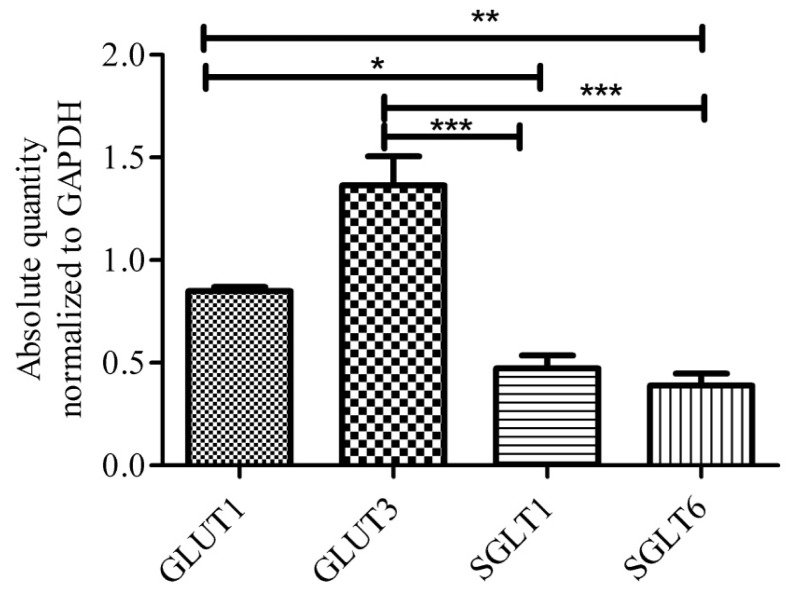
“In mice, whole-brain SGLT6 was tested, and equal levels of mRNA were found for SGLT6 compared to SGLT1 (Shah et al., 2012).”
Drug Access to the Central Nervous System in Alzheimer’s Disease: Preclinical and Clinical Insights
Mehta, D. C., Short, J. L., Hilmer, S. N., & Nicolazzo, J. A. (2014) · Pharmaceutical Research · doi:10.1007/s11095-014-1522-0 · Cited by 51
Sarikaya, İ., Sarıkaya, A., & Sharma, P. N. (2019) · Journal of Nuclear Medicine Technology · doi:10.2967/jnmt.119.226969 · Cited by 51
Relevance of Sugar Transport across the Cell Membrane
Carbó, R., & Rodríguez, E. (2023) · International Journal of Molecular Sciences · doi:10.3390/ijms24076085 · Cited by 51
Glial lipid droplets and neurodegeneration in a Drosophila model of complex I deficiency
Cabirol, M.-J., Khalil, B., Rival, T., Faivre‐Sarrailh, C., & Besson, M. T. (2017) · Glia · doi:10.1002/glia.23290 · Cited by 49
Kahl, K. G., Stapel, B., & Frieling, H. (2019) · Progress in Neuro-Psychopharmacology and Biological Psychiatry · doi:10.1016/j.pnpbp.2018.09.004 · Cited by 47
Expression of glucose transporters in human neurodegenerative diseases
Głuchowska, K., Pliszka, M., & Szablewski, L. (2021) · Biochemical and Biophysical Research Communications · doi:10.1016/j.bbrc.2020.12.067 · Cited by 47
Does hyperglycemia downregulate glucose transporters in the brain?
Leão, L. L., Tangen, G. G., Barca, M. L., Engedal, K., Santos, S. H. S., Machado, F. S. M., de Paula, A. M. B., & Monteiro-Júnior, R. S. (2020) · Medical Hypotheses · doi:10.1016/j.mehy.2020.109614 · Cited by 48
Microphysiological systems for recapitulating physiology and function of blood-brain barrier
Seo, S., Kim, H., Sung, J. H., Choi, N., Lee, K., & Kim, H. N. (2019) · Biomaterials · doi:10.1016/j.biomaterials.2019.119732 · Cited by 47
Mechanisms Associated with Type 2 Diabetes as a Risk Factor for Alzheimer-Related Pathology
Su, M., Nadéri, K., Samson-Desvignes, N., Youssef, I., Fülöp, L., Bozsó, Z., Laroche, S., Delatour, B., & Davis, S. (2019) · Molecular Neurobiology · doi:10.1007/s12035-019-1475-8 · Cited by 47
Jia, Y., Wang, N., Zhang, Y., Xue, D., Lou, H., & Liu, X. (2020) · Aging and disease · doi:10.14336/ad.2019.0519 · Cited by 46
Singh, D. D., Shati, A. A., Alfaifi, M. Y., Elbehairi, S. E. I., Han, I., Choi, E. H., & Yadav, D. K. (2022) · Cells · doi:10.3390/cells11233767 · Cited by 46
Effect of high glucose condition on glucose metabolism in primary astrocytes
Staricha, K. L., Meyers, N., Garvin, J., Liu, Q., Rarick, K. R., Harder, D. R., & Cohen, S. S. (2020) · Brain Research · doi:10.1016/j.brainres.2020.146702 · Cited by 45
Kahl, K. G., Georgi, K., Bleich, S., Muschler, M., Hillemacher, T., Hilfiker-Kleinert, D., Schweiger, U., Ding, X., Kotsiari, A., & Frieling, H. (2016) · Journal of Psychiatric Research · doi:10.1016/j.jpsychires.2016.02.002 · Cited by 44
SGLT-2 Inhibitors and the Inflammasome: What’s Next in the 21st Century?
Kounatidis, D. C., Vallianou, N. G., Evangelopoulos, A. A., Vlahodimitris, I., Grivakou, E., Kotsi, E., Dimitriou, K., Skourtis, A., & Mourouzis, I. S. (2023) · Nutrients · doi:10.3390/nu15102294 · Cited by 44
Al-Ahmad, A. J. (2017) · American Journal of Physiology-Cell Physiology · doi:10.1152/ajpcell.00116.2017 · Cited by 41
Raut, S., Patel, R., & Al-Ahmad, A. J. (2021) · Fluids and Barriers of the CNS · doi:10.1186/s12987-020-00235-y · Cited by 41
Shah, K. K., Boreddy, P. R., & Abbruscato, T. J. (2015) · Fluids and Barriers of the CNS · doi:10.1186/s12987-015-0005-y · Cited by 41
Self-citationAltered protein phosphorylation as a resource for potential AD biomarkers
Henriques, A. G., Müller, T., Oliveira, J. M., Cova, M. M., Silva, C. B. D. C. E., & Silva, O. A. B. D. C. E. (2016) · Scientific Reports · doi:10.1038/srep30319 · Cited by 41
Jin, T., Mehrens, H. S., Wang, P., & Kim, S. (2017) · Journal of Cerebral Blood Flow & Metabolism · doi:10.1177/0271678x17707419 · Cited by 40
Sweet Taste Receptor Signaling Network: Possible Implication for Cognitive Functioning
Welcome, M. O., Mastorakis, N. E., & Pereverzev, V. A. (2015) · Neurology Research International · doi:10.1155/2015/606479 · Cited by 40
Marco, A. D., Vignone, D., Paz, O. G., Fini, I., Battista, M. R., Cellucci, A., Bracacel, E., Auciello, G., Veneziano, M., Khetarpal, V. K., et al. (2020) · Cells · doi:10.3390/cells9040994 · Cited by 40
Navigating the intersection: Diabetes and Alzheimer's intertwined relationship
Kale, M. B., Bhondge, H. M., Wankhede, N. L., Shende, P. V., Thanekar, R., Aglawe, M. M., Rahangdale, S. R., Taksande, B. G., Pandit, S. B., Upaganlawar, A. B., et al. (2024) · Ageing Research Reviews · doi:10.1016/j.arr.2024.102415 · Cited by 39
An engineered neurovascular unit for modeling neuroinflammation
Seo, S., Choi, C., Yi, K. S., Kim, S. U., Lee, K., Choi, N., Lee, H. J., Cha, S.-H., & Kim, H. N. (2021) · Biofabrication · doi:10.1088/1758-5090/abf741 · Cited by 39
O-GlcNAcylation and neuronal energy status: Implications for Alzheimer’s disease
Pinho, T. S., Verde, D. M., Correia, S. C., Cardoso, S. M., & Moreira, P. I. (2018) · Ageing Research Reviews · doi:10.1016/j.arr.2018.05.003 · Cited by 38
Welcome, M. O., & Mastorakis, N. E. (2018) · NeuroMolecular Medicine · doi:10.1007/s12017-018-8503-0 · Cited by 38
Discerning the Role of Blood Brain Barrier Dysfunction in Alzheimer’s Disease
Tao, Q., Lin, R.-R., Chen, Y.-H., & Wu, Z. (2022) · Aging and Disease · doi:10.14336/ad.2022.0130-1 · Cited by 38
Metadata
- Authors
- Shah, K., DeSilva, S., & Abbruscato, T.
- Affiliations
- Texas Tech University Health Sciences Center (US)
- Corresponding author
- Abbruscato, Thomas
- ORCID
- Abbruscato, Thomas
- Venue
- International Journal of Molecular Sciences
- Publisher
- MDPI AG
- Published
- 2012-10-03
- Volume
- 13
- Issue
- 10
- Pages
- 12629-12655
- ISSN
- 1422-0067 (ISSN-L)
- PMC
- PMC3497292
- OpenAlex
- W2065380426
- Cited by
- 288
- References
- 198
- Citations by year
- 2026: 14 · 2025: 27 · 2024: 25 · 2023: 27 · 2022: 33 · 2021: 23 · 2020: 29 · 2019: 23 · 2018: 15 · 2017: 22 · 2016: 25 · 2015: 10 · 2014: 12 · 2013: 3
- FWCI
- 0.73
- Type
- journal article
- Language
- en
- Open access
- gold
- doi.org
- Licence
- Locations
- International Journal of Molecular Sciences (publishedVersion, cc-by)
- PubMed Central (publishedVersion, cc-by)
- PubMed (publishedVersion)
- DOAJ (DOAJ: Directory of Open Access Journals) (submittedVersion, cc-by-sa)
- Funders
- National Institutes of Health
- National Institute of Neurological Disorders and Stroke (R01NS076012)
- Topics
- Life Sciences › Neuroscience › Neurology › Barrier Structure and Function Studies
- Life Sciences › Biochemistry, Genetics and Molecular Biology › Molecular Biology › Metabolism, Diabetes, and Cancer
- Life Sciences › Neuroscience › Cellular and Molecular Neuroscience › Alzheimer's disease research and treatments
- Keywords
- glucose transporters, brain glucose metabolism, diabetes mellitus, Alzheimer's disease, blood-brain barrier, glucose transporter isoforms
- MeSH terms
- Alzheimer Disease, Animals, Blood-Brain Barrier, Brain, Diabetes Mellitus, Glucose, Humans, Glucose Transport Proteins, Facilitative
About these checks
Registry, retraction, Cites and statistics results are computed, not judged, with one exception: a printed reference that no index lists is read once by a model before it counts as a citation error. Claims are extracted by a model and kept only when their quote appears verbatim in the text; each cited source is then checked, with a model’s help, for whether it says what the claim relies on. Those verdicts can be wrong — read the claim’s quote and the cited source before relying on one.
Statistics and arithmetic are recomputed, not judged.
Confidence bands are shown only for fields calibrated on our annotated test set. None is calibrated yet, so no band is shown.
What counts as a claim ›How we measure confidence ›How we check this ›
Are you an author, or do you see a problem with this page? Request a review
Data sources
Bibliographic data: Semantic Scholar, OpenAlex, Crossref.
Contains information from the Semantic Scholar Academic Graph Datasets, made available under the ODC Attribution License (ODC-BY 1.0).
Semantic Scholar’s data is described in: Kinney, R., et al. (2023). The Semantic Scholar Open Data Platform. arXiv:2301.10140.
