

The Role of Glucose Transporters in Brain Disease: Diabetes and Alzheimer’s Disease
Open accessThe DOI matches its Crossref record; 195 of the 198 references it cites were found in a registry or an index.
Abstract
The occurrence of altered brain glucose metabolism has long been suggested in both diabetes and Alzheimer’s diseases. However, the preceding mechanism to altered glucose metabolism has not been well understood. Glucose enters the brain via glucose transporters primarily present at the blood-brain barrier. Any changes in glucose transporter function and expression dramatically affects brain glucose homeostasis and function. In the brains of both diabetic and Alzheimer’s disease patients, changes in glucose transporter function and expression have been observed, but a possible link between the altered glucose transporter function and disease progress is missing. Future recognition of the role of new glucose transporter isoforms in the brain may provide a better understanding of brain glucose metabolism in normal and disease states. Elucidation of clinical pathological mechanisms related to glucose transport and metabolism may provide common links to the etiology of these two diseases. Considering these facts, in this review we provide a current understanding of the vital roles of a variety of glucose transporters in the normal, diabetic and Alzheimer’s disease brain.
Overview
The claims and statistics of this paper haven’t been checked yet.
Free: it reads the open-access text and checks the first 5 claims that cite a source we can check. Create a free account to check every claim.
Integrity signals
Registry
Cites
Statistics
Figures
Verification
Claims the paper makes
The claims and statistics of this paper haven’t been checked yet.
Free: it reads the open-access text and checks the first 5 claims that cite a source we can check. Create a free account to check every claim.
Claims other papers make about this one
Each is checked against this paper’s own text: does it say what the citing paper says it does?
In the citing paper
“They have the ability to directly affect their target, since SGLT1 and SGLT2 co-receptors are expressed in the human central nervous system and play an important role in maintaining glucose homeostasis.”
From Neuroprotective effect of SGLT2 inhibitors. (2021) · cites this paper as [18]
Self-check
Percentages, sums and reported differences re-computed from the paper’s own numbers.
The self-check needs the paper’s full text.
Citations
Cites
1 retracted
- Retracted
Alzheimer's disease: the amyloid cascade hypothesis
Hardy, J. A., & Higgins, G. A. (1992) · Science · doi:10.1126/science.1566067 · Cited by 7,484 · cited 1×
“Furthermore, overproduction of amyloid beta peptide (Aβ) along with early onset familial AD is suggested to be a key player in AD [129].”
BackgroundThe Pathobiology of Diabetic Complications
Brownlee, M. (2005) · Diabetes · doi:10.2337/diabetes.54.6.1615 · Cited by 5,339
Grundke-Iqbal, I., Iqbal, K., Tung, Y. C., Quinlan, M., Wisniewski, H. M., & Binder, L. I. (1986) · Proceedings of the National Academy of Sciences · doi:10.1073/pnas.83.13.4913 · Cited by 3,676
Neurofibrillary tangles but not senile plaques parallel duration and severity of Alzheimer's disease
Arriagada, P. V., Growdon, J. H., Hedley-Whyte, E. T., & Hyman, B. T. (1992) · Neurology · doi:10.1212/wnl.42.3.631 · Cited by 2,668
Brain Metabolism during Fasting*
Owen, O. E., Morgan, A. P., Kemp, H. G., Sullivan, J. M., Herrera, M. G., & Cahill, G. F. (1967) · Journal of Clinical Investigation · doi:10.1172/jci105650 · Cited by 1,646
Sequence and Structure of a Human Glucose Transporter
Mueckler, M., Caruso, C., Baldwin, S. A., Panico, M., Blench, I., Morris, H. R., Allard, W. J., Lienhard, G. E., & Lodish, H. F. (1985) · Science · doi:10.1126/science.3839598 · Cited by 1,547
Insulin receptors are widely distributed in the central nervous system of the rat
HAVRANKOVA, J., ROTH, J., & BROWNSTEIN, M. (1978) · Nature · doi:10.1038/272827a0 · Cited by 1,111
Glucose transporters in the 21st Century
Thorens, B., & Mueckler, M. (2010) · American Journal of Physiology-Endocrinology and Metabolism · doi:10.1152/ajpendo.00712.2009 · Cited by 1,013 · cited 1×
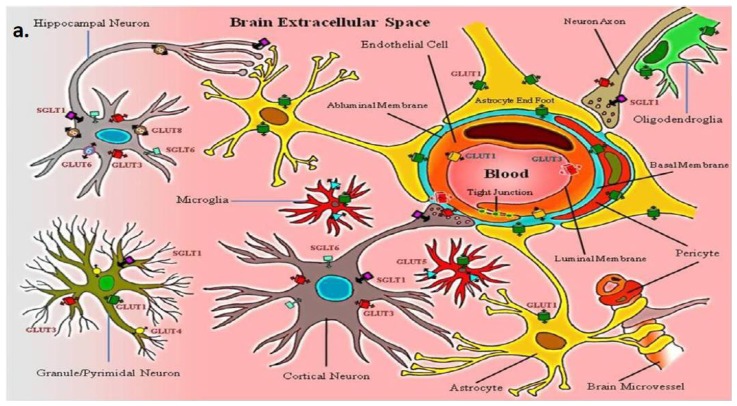
“Expression of different isoforms of both the GLUT and SGLT families has been shown to be cell type specific [22,24,25] (Table 1 and Figure 1a).”
Background(1995) · PubMed Central · doi:10.2967/jnumed.120.252510a · Cited by 996
Research works printed but not linked: 1
- Shah K.K. Abbruscato T.J. Function of sodium/glucose co-transporter at the blood-brain barrier in diabetes Fourth Annual Diabetes Drug Discovery: New Diabetes Drug Targets and Candidates Cambridge Healthtech Institute Boston, MA, USA 2011
Cited by
Items 101–200 of 336
Long non-coding RNAs in Alzheimer's disease
Zhang, Z. (2015) · Current Topics in Medicinal Chemistry · doi:10.2174/1568026615666150813142956 · Cited by 37
Effect of canagliflozin and metformin on cortical neurotransmitters in a diabetic rat model
Arafa, N. M. S., Marie, M.-A. S., & AlAzimi, S. A. M. (2016) · Chemico-Biological Interactions · doi:10.1016/j.cbi.2016.08.016 · Cited by 37
The Interplay between Diabetes and Alzheimer’s Disease—In the Hunt for Biomarkers
Kubis-Kubiak, A., Dyba, A. J., & Piwowar, A. (2020) · International Journal of Molecular Sciences · doi:10.3390/ijms21082744 · Cited by 37
Bridging the gap: glucose transporters, Alzheimer’s, and future therapeutic prospects
Albaik, M., Saleh, D. S., Kauther, D., Mohammed, H., Alfarra, S., Alghamdi, A., Ghaboura, N., & Sindi, I. A. (2024) · Frontiers in Cell and Developmental Biology · doi:10.3389/fcell.2024.1344039 · Cited by 36
Piątkowska‐Chmiel, I., Herbet, M., Gawrońska‐Grzywacz, M., Pawłowski, K., Ostrowska-Leśko, M., & Dudka, J. (2023) · Psychopharmacology · doi:10.1007/s00213-023-06341-7 · Cited by 36
Li, Y., Jiang, T., Du, M., He, S., Huang, N., Cheng, B., Yan, C., Tang, W., Gao, W., Guo, H., et al. (2023) · Experimental & Molecular Medicine · doi:10.1038/s12276-023-01112-y · Cited by 36
Transendothelial glucose transport is not restricted by extracellular hyperglycaemia
Tumova, S., Kerimi, A., Porter, K. E., & Williamson, G. (2016) · Vascular Pharmacology · doi:10.1016/j.vph.2016.11.001 · Cited by 35
Glucose, Fructose, and Urate Transporters in the Choroid Plexus Epithelium
Chiba, Y., Murakami, R., Matsumoto, K., Wakamatsu, K., Nonaka, W., Uemura, N., Yanase, K., Kamada, M., & Ueno, M. (2020) · International Journal of Molecular Sciences · doi:10.3390/ijms21197230 · Cited by 35
Bruns, I., Sauer, B., Burger, M. C., Eriksson, J. A., Hofmann, U., Braun, Y., Harter, P. N., Luger, A., Ronellenfitsch, M. W., Steinbach, J. P., et al. (2018) · Journal of Biological Chemistry · doi:10.1074/jbc.ra118.006993 · Cited by 35
Travica, N., Ried, K., Hudson, I. L., Sali, A., Scholey, A. B., & Pipingas, A. (2020) · Frontiers in Integrative Neuroscience · doi:10.3389/fnint.2020.00047 · Cited by 35
Gabbouj, S., Natunen, T., Koivisto, H., Jokivarsi, K., Takalo, M., Marttinen, M., Wittrahm, R., Kemppainen, S., Naderi, R., Posado-Fernández, A., et al. (2019) · Neurobiology of Aging · doi:10.1016/j.neurobiolaging.2018.11.008 · Cited by 34
Transferrin Receptor 1 Facilitates Poliovirus Permeation of Mouse Brain Capillary Endothelial Cells
Mizutani, T., Ishizaka, A., & Nihei, C.-I. (2015) · Journal of Biological Chemistry · doi:10.1074/jbc.m115.690941 · Cited by 34
Repurposing SGLT2 Inhibitors for Neurological Disorders: A Focus on the Autism Spectrum Disorder
Nakhal, M. M., Aburuz, S., Sadek, B. S., & Akour, A. A. (2022) · Molecules · doi:10.3390/molecules27217174 · Cited by 33
Huang, C., Hoque, M. T., & Bendayan, R. (2023) · Frontiers in Pharmacology · doi:10.3389/fphar.2023.1118580 · Cited by 33
Mitochondria in Alzheimer’s Disease and Diabetes-Associated Neurodegeneration: License to Heal!
Cardoso, S., Correia, S. C., Carvalho, C., & Moreira, P. I. (2017) · Handbook of experimental pharmacology · doi:10.1007/164_2017_3 · Cited by 34
Wicha, P., Das, S., & Mahakkanukrauh, P. (2021) · Anatomy & Cell Biology · doi:10.5115/acb.20.290 · Cited by 32
Multiplexing Biomarker Methods, Proteomics and Considerations for Alzheimer’s Disease
Robinson, R. A. S., Amin, B., & Guest, P. C. (2017) · Advances in experimental medicine and biology · doi:10.1007/978-3-319-52479-5_2 · Cited by 32
GLUT1 activity contributes to the impairment of PEDF secretion by the RPE.
Calado, S. M., Alves, L. S., Simão, S., & Silva, G. A. (2016) · Europe PMC (PubMed Central) · Cited by 32
Wang, H., Lei, X., Zhang, Z., Ommati, M. M., Tang, Z., & Yuan, J. (2022) · Toxicology · doi:10.1016/j.tox.2022.153192 · Cited by 32
A Possible Neurodegeneration Mechanism Triggered by Diabetes
Farhadi, A., Vosough, M., Zhang, J., Tahamtani, Y., & Shahpasand, K. (2019) · Trends in Endocrinology and Metabolism · doi:10.1016/j.tem.2019.07.012 · Cited by 31
Erdoğan, M. E., Aydın, S., Yanar, K., Mengi, M., Kansu, A. D., Cebe, T., Belce, A., Çelikten, M., & Çakatay, U. (2017) · Metabolic Brain Disease · doi:10.1007/s11011-017-9983-6 · Cited by 31
Identification of New Targets and the Virtual Screening of Lignans against Alzheimer’s Disease
Maia, M. D. S., Rodrigues, G. C. S., de Sousa, N. F., Scotti, M. T., Scotti, L., & Mendonça, F. J. B. (2020) · Oxidative Medicine and Cellular Longevity · doi:10.1155/2020/3098673 · Cited by 31
Nguyen, H., Mejia, E. M., Chang, W., Wang, Y., Watson, E. J., On, N. H., Miller, D. W., & Hatch, G. M. (2016) · Journal of Neurochemistry · doi:10.1111/jnc.13753 · Cited by 30
Rani, R., Kumar, A., Jaggi, A. S., & Singh, N. (2021) · Journal of Basic and Clinical Physiology and Pharmacology · doi:10.1515/jbcpp-2020-0330 · Cited by 30
Modeling of Hypo/Hyperglycemia and Their Impact on Breast Cancer Progression Related Molecules
Adham, S. A., Rawahi, H. A., Habib, S., Al-Moundhri, M. S., Viloria‐Petit, A., & Coomber, B. L. (2014) · PLoS ONE · doi:10.1371/journal.pone.0113103 · Cited by 30
Shin, B., Cepeda, C., Estrada‐Sánchez, A. M., Levine, M. S., Hodaei, L., Dai, Y., Jung, J. W., Ganguly, A., Clark, P. M., & Devaskar, S. U. (2018) · Journal of Neuroscience · doi:10.1523/jneurosci.0503-18.2018 · Cited by 29
GLUT12 Expression in Brain of Mouse Models of Alzheimer’s Disease
Gil‐Iturbe, E., Solas, M., Cuadrado‐Tejedor, M., García‐Osta, A., Escoté, X., Ramírez, M. J., & Lostao, M. P. (2019) · Molecular Neurobiology · doi:10.1007/s12035-019-01743-1 · Cited by 29
Xenobiotic transport and metabolism in the human brain
Silva‐Adaya, D., Garza-Lombó, C., & Gonsebatt, M. E. (2021) · NeuroToxicology · doi:10.1016/j.neuro.2021.08.004 · Cited by 29
Insulin deficiency results in reversible protein kinase A activation and tau phosphorylation
van der Harg, J. M., Eggels, L., Bangel, F. N., Ruigrok, S. R., Zwart, R., Hoozemans, J. J. M., la Fleur, S. E., & Scheper, W. (2017) · Neurobiology of Disease · doi:10.1016/j.nbd.2017.04.005 · Cited by 28
Progressive development of melanoma-induced cachexia differentially impacts organ systems in mice
Graça, F. A., Stephan, A., Wang, Y., Shirinifard, A., Jiao, J., Vogel, P., Labelle, M., & Demontis, F. (2022) · Cell Reports · doi:10.1016/j.celrep.2022.111934 · Cited by 28
El Massry, M., Alaeddine, L. M., Ali, L., Saad, C., & Eid, A. A. (2021) · Current Medicinal Chemistry · doi:10.2174/0929867327666200908114902 · Cited by 27
Brain Endothelial Cells Utilize Glycolysis for the Maintenance of the Transcellular Permeability
Kim, E. S., Kim, K., Lee, C. H., Jeon, M., Lee, S. B., Lee, J. H., & Kim, D.-G. (2022) · Molecular Neurobiology · doi:10.1007/s12035-022-02778-7 · Cited by 27
Sifat, A. E., Vaidya, B., Villalba, H., Albekairi, T. H., & Abbruscato, T. J. (2018) · American Journal of Physiology-Cell Physiology · doi:10.1152/ajpcell.00187.2018 · Cited by 27
Self-citationIancu, C. V., Bocci, G., Ishtikhar, M., Khamrai, M., Oreb, M., Oprea, T. I., & Choe, J. (2022) · Scientific Reports · doi:10.1038/s41598-022-05383-9 · Cited by 26
Alterations of membrane protein expression in red blood cells of Alzheimer's disease patients
Várady, G., Szabó, E., Fehér, Á., Németh, A., Zámbó, B., Pákáski, M., Janka, Z., & Sarkadi, B. (2015) · Alzheimer s & Dementia Diagnosis Assessment & Disease Monitoring · doi:10.1016/j.dadm.2015.06.007 · Cited by 26
Amo-Aparicio, J., Dinarello, C. A., & Lopez-Vales, R. (2024) · Neural Regeneration Research · doi:10.4103/1673-5374.391330 · Cited by 25
“Low glucose availability in the AD brain can be due to vascular changes (Nortley et al., 2019), insulin resistance (Neth and Craft, 2017), or downregulation of GLUTs (Shah et al., 2012).”
BackgroundModelling the Human Blood–Brain Barrier in Huntington Disease
Vignone, D., Paz, O. G., Fini, I., Cellucci, A., Auciello, G., Battista, M. R., Gloaguen, I., Fortuni, S., Cariulo, C., Khetarpal, V. K., et al. (2022) · International Journal of Molecular Sciences · doi:10.3390/ijms23147813 · Cited by 25
Nunes, A. R., Alves, M. G., Moreira, P. I., Oliveira, P. F., & Silva, B. M. (2014) · Current Neuropharmacology · doi:10.2174/1570159x13666141204220539 · Cited by 24
Hyperinsulinemia or Insulin Resistance: What Impacts the Progression of Alzheimer’s Disease?
Hegde, V., Dhurandhar, N. V., & Reddy, P. H. (2019) · Journal of Alzheimer's Disease · doi:10.3233/jad-190808 · Cited by 23
Down-Regulated Drebrin Aggravates Cognitive Impairments in a Mouse Model of Alzheimer’s Disease
Liu, Y., Xu, Y., Zhang, L., Huang, L., Yü, P., Zhu, H., Deng, W., & Qin, C. (2017) · International Journal of Molecular Sciences · doi:10.3390/ijms18040800 · Cited by 23
Nday, C. M., Eleftheriadou, D., & Jackson, G. E. (2018) · Journal of Neurochemistry · doi:10.1111/jnc.14256 · Cited by 22
4′-Chlorodiazepam Protects Mitochondria in T98G Astrocyte Cell Line from Glucose Deprivation
Báez-Jurado, E., Guio-Vega, G. P., Echeverría, V., Sandoval-Rueda, D. A., & Barreto, G. E. (2017) · Neurotoxicity Research · doi:10.1007/s12640-017-9733-x · Cited by 22
Wada, N., Yamanaka, S., Shibato, J., Rakwal, R., Hirako, S., Iizuka, Y., Kim, H., Matsumoto, A., Kimura, A., Takenoya, F., et al. (2016) · Genomics Data · doi:10.1016/j.gdata.2016.09.004 · Cited by 22
Olagoke, O. C., Afolabi, B. A., & da Rocha, J. B. T. (2020) · Molecular and Cellular Biochemistry · doi:10.1007/s11010-020-03976-4 · Cited by 22
Human Glucose Transporters in Health and Selected Neurodegenerative Diseases
Szablewski, L. (2025) · International Journal of Molecular Sciences · doi:10.3390/ijms26157392 · Cited by 21
Turano, E., Busetto, G., Marconi, S., Guzzo, F., Farinazzo, A., Commisso, M., Bistaffa, E., Angiari, S., Musumeci, S., Sotgiu, S., et al. (2015) · Neurobiology of Aging · doi:10.1016/j.neurobiolaging.2014.12.033 · Cited by 21
Biswas, J., Gupta, S., Verma, D., & Singh, S. (2017) · Neuroscience · doi:10.1016/j.neuroscience.2017.05.018 · Cited by 21
Hyperpolarized [1-13C]lactate flux increased in the hippocampal region in diabetic mice
Choi, Y., Song, J. E., Lee, J. E., Kim, E., Kim, C. H., Kim, D., & Song, H. (2019) · Molecular Brain · doi:10.1186/s13041-019-0505-9 · Cited by 21
Andrographolide restores glucose uptake in rat hippocampal neurons
Gherardelli, C., Cisternas, P., Gutiérrez, J., Martínez, M., & Inestrosa, N. C. (2020) · Journal of Neurochemistry · doi:10.1111/jnc.15229 · Cited by 21
Khosa, A., Saha, R. N., & Singhvi, G. (2019) · Elsevier eBooks · doi:10.1016/b978-0-12-816505-8.00005-9 · Cited by 20
Kim, M., Bang, J., & Jeon, W. K. (2020) · Translational Stroke Research · doi:10.1007/s12975-019-00748-1 · Cited by 20
Bila, I., Dzydzan, O., Brodyak, I. V., & Sybirna, N. O. (2019) · Open Life Sciences · doi:10.1515/biol-2019-0033 · Cited by 20
Su, K., Chandramouli, V., Ismail‐Beigi, F., & Muzic, R. F. (2014) · Molecular Imaging and Biology · doi:10.1007/s11307-014-0737-0 · Cited by 19
Abubakar, M., Nama, L., Ansari, M. M., Ansari, M. M., Bhardwaj, S., Daksh, R., Syamala, K. L. V., Jamadade, M. S., Chhabra, V., Kumar, D., et al. (2024) · Current Topics in Medicinal Chemistry · doi:10.2174/0115680266293416240515075450 · Cited by 19
Increased Glucose Transport into Neurons Rescues Aβ Toxicity in Drosophila
Niccoli, T., Cabecinha, M., Tillmann, A., Kerr, F., Wong, C. T., Cardenes, D., Vincent, A. J., Bettedi, L., Li, L., Grönke, S., et al. (2016) · Current Biology · doi:10.1016/j.cub.2016.09.018 · Cited by 19
Streptozotocin mechanisms and its role in rodent models for Alzheimer’s disease
Chik, M. W., Ramli, N. A., Hazalin, N. A. M. N., & Singh, G. K. S. (2022) · Toxin Reviews · doi:10.1080/15569543.2022.2150646 · Cited by 18
Sharma, S., Archie, S. R., Kanchanwala, V., Mimun, K., Rahman, M. A., Zhang, Y., & Abbruscato, T. J. (2022) · Frontiers in Drug Delivery · doi:10.3389/fddev.2022.886099 · Cited by 18
Self-citationNopparat, C., Chaopae, W., Boontem, P., Sopha, P., Wongchitrat, P., & Govitrapong, P. (2021) · Neurochemical Research · doi:10.1007/s11064-021-03290-5 · Cited by 18
Krishnan, S., Chang, A. C., Stoltz, B. M., & Prasadarao, N. V. (2016) · The Journal of Infectious Diseases · doi:10.1093/infdis/jiw306 · Cited by 18
Herbet, M., Natorska‑Chomicka, D., Korga, A., Ostrowska, M., Izdebska, M., Gawrońska‑Grzywacz, M., Piątkowska‑Chmiel, I., Pawłowski, K., Ślaska, B., Poleszak, E., et al. (2019) · Molecular Medicine Reports · doi:10.3892/mmr.2019.9865 · Cited by 17
“Due to the restrictive permeability of the BBB, the brain relies heavily upon glucose transporters for the delivery of key nutrients (12).”
BackgroundDiabetes of the Brain: Computational Approaches and Interventional Strategies
Narasimhan, K., Meenakumari, G., Gauthaman, K., Kamal, M. A., Abuzenadeh, A. M., Al-Qahtani, M., & Kanagasabai, R. (2014) · CNS & Neurological Disorders - Drug Targets · doi:10.2174/18715273113126660156 · Cited by 17
A monocarboxylate transporter rescues frontotemporal dementia and Alzheimer’s disease models
Xu, D., Vincent, A. J., González‐Gutiérrez, A., Aleyakpo, B., Anoar, S., Giblin, A., Atilano, M. L., Adams, M. L., Shen, D., Thoeng, A., et al. (2023) · PLoS Genetics · doi:10.1371/journal.pgen.1010893 · Cited by 17
Byun, M. S., Kim, H. J., Yi, D., Choi, H. J., Baek, H., Lee, J. H., Choe, Y. M., Lee, S. H., Ko, K., Sohn, B. K., et al. (2019) · NeuroImage Clinical · doi:10.1016/j.nicl.2019.101765 · Cited by 16
Age-related pathophysiological alterations in molecular stress markers and key modulators of hypoxia
Pinky, P., Neha, N., Salman, M., Kumar, P., Khan, M. A., Jamal, A., & Parvez, S. (2023) · Ageing Research Reviews · doi:10.1016/j.arr.2023.102022 · Cited by 16
Exploring the Biological Effects of Anti-Diabetic Vanadium Compounds in the Liver, Heart and Brain
Dayanand, Y., Pather, R., Xulu, N. D., Booysen, I. N., Sibiya, N. H., Khathi, A., & Ngubane, P. S. (2024) · Diabetes Metabolic Syndrome and Obesity · doi:10.2147/dmso.s417700 · Cited by 16
Age- and Sex-Associated Glucose Metabolism Decline in a Mouse Model of Alzheimer’s Disease
Gherardelli, C., Cisternas, P., Vera-Salazar, R. F., Méndez‐Orellana, C., & Inestrosa, N. C. (2022) · Journal of Alzheimer s Disease · doi:10.3233/jad-215273 · Cited by 15
Martins, S., Müller‐Schiffmann, A., Erichsen, L., Bohndorf, M., Wruck, W., Sleegers, K., Broeckhoven, C. V., Korth, C., & Adjaye, J. (2020) · International Journal of Molecular Sciences · doi:10.3390/ijms21124516 · Cited by 14
Ni, Y., Zhou, Y., Zhou, M., & Zhang, L. (2015) · Neuroscience Letters · doi:10.1016/j.neulet.2015.07.041 · Cited by 14
Sandoval, K. E., Wooten, J. S., Harris, M. P., Schaller, M. L., Umbaugh, D. S., & WITT, K. A. (2018) · Current Developments in Nutrition · doi:10.1093/cdn/nzy065 · Cited by 14
An overview of addiction to sugar
Onaolapo, A. Y., Onaolapo, O. J., & Olowe, O. A. (2020) · Elsevier eBooks · doi:10.1016/b978-0-12-816918-6.00009-3 · Cited by 15
Li, X., Yang, M., Wang, T., Liu, S., Han, H., & Dong, P. (2025) · Metabolic Brain Disease · doi:10.1007/s11011-025-01753-0 · Cited by 14
Yu, Z., Chen, L., Park, Y., Cong, Q., Han, X., Zhao, B., & Jung, Y. M. (2016) · Physical Chemistry Chemical Physics · doi:10.1039/c6cp05978c · Cited by 14
Histone Methylation, Energy Metabolism, and Alzheimer's Disease
Fu, J., & An, L. (2024) · Aging and Disease · doi:10.14336/ad.2024.0899 · Cited by 14
Sengupta, A., Ghosh, S., Sharma, S., & Sonawat, H. M. (2020) · Metabolites · doi:10.3390/metabo10070277 · Cited by 14
Andreoli, M. F., Stoker, C., Rossetti, M. F., Lazzarino, G. P., Luque, E. H., & Ramos, J. G. (2016) · Nutrition Research · doi:10.1016/j.nutres.2016.05.003 · Cited by 13
Shafiek, M. Z., Zaki, H. F., Mohamed, A. F., & Ibrahim, W. W. (2025) · Journal of Neuroimmune Pharmacology · doi:10.1007/s11481-025-10196-4 · Cited by 12
“In turn, neuroinflammation further exacerbates the BBB's destruction and increases its permeability leads to a vicious cycle of neuroinflammation (Shah and DeSilva 2012; Van Dyken and Lacoste 2018).”
The interplay between sodium/glucose cotransporter type 2 and mitochondrial ionic environment
Borriello, G., Buonincontri, V., Donato, A. D., Corte, M. D., Gravina, I., Iulianiello, P., Joshi, R., Mone, P., Cacciola, G., & Viggiano, D. (2024) · Mitochondrion · doi:10.1016/j.mito.2024.101878 · Cited by 12
Arosio, B., Casati, M., Gussago, C., Ferri, E., Abbate, C., Scortichini, V., Colombo, E. V., Rossi, P. D., & Mari, D. (2016) · Journal of Alzheimer s Disease · doi:10.3233/jad-160324 · Cited by 12
Mechanisms of neuroprotective action of incretin mimetics
Vlasov, T. D., Симаненкова, А. В., Владимировна, Д. С., & Shlyakhto, E. V. (2016) · Diabetes Mellitus · doi:10.14341/dm7192 · Cited by 12
Azam, A. A., Ismail, I. S., Kumari, Y., Shaikh, M. F., Abas, F., & Shaari, K. (2020) · PLoS ONE · doi:10.1371/journal.pone.0238503 · Cited by 12
Wang, M., Yan, H., & Bai, Y. (2024) · Reviews in the Neurosciences · doi:10.1515/revneuro-2024-0046 · Cited by 11
Alzheimer's disease: from molecular pathways to therapies
Feng, J.-Q., Yang, L.-L., Ya-xi, L., & Yao, X. (2026) · Molecular Biomedicine · doi:10.1186/s43556-026-00443-2 · Cited by 11
Metabolism of Mannose in Cultured Primary Rat Neurons
Rastedt, W., Blumrich, E., & Dringen, R. (2017) · Neurochemical Research · doi:10.1007/s11064-017-2241-9 · Cited by 11
Kačerová, T., Yates, A. G., Dai, J., Shepherd, D., Pires, E., de Jel, S., Gong, Q., Schiffer, E., Jernerén, F., Olsén, T., et al. (2025) · Alzheimer s & Dementia · doi:10.1002/alz.70521 · Cited by 11
Verma, H., Kaur, S., Jeeth, P., Kumar, P., Saraboji, K., Dhiman, M., & Mantha, A. K. (2024) · Metabolic Brain Disease · doi:10.1007/s11011-024-01469-7 · Cited by 11
Lin, J., Tsai, B. C., Kao, H., Chiang, C.-Y., Chen, Y., Chen, W. S., Ho, T., Yao, C., Kuo, W., & Huang, C. (2022) · Probiotics and Antimicrobial Proteins · doi:10.1007/s12602-022-09982-w · Cited by 11
Mondal, R., Deb, S., Chowdhury, D., Sarkar, S., Roy, A. G., Shome, G., Sarkar, V., Lahiri, D., & Benito‐León, J. (2024) · Neuroscience Letters · doi:10.1016/j.neulet.2024.138028 · Cited by 11
Cerebellar Synaptopathy in Streptozotocin-Induced Diabetic Rats
Niyomchan, A., Sricharoenvej, S., Lanlua, P., & Baimai, S. (2019) · International Journal of Morphology · doi:10.4067/s0717-95022019000100028 · Cited by 11
Type-2 diabetes, a co-morbidity in Covid-19: does insulin signaling matter?
Mishra, D., & Dey, C. S. (2021) · Biochemical Society Transactions · doi:10.1042/bst20201062 · Cited by 10
Kim, J., Kang, S., & Chang, K. (2022) · International Journal of Molecular Sciences · doi:10.3390/ijms231810602 · Cited by 10
The Prelude on Novel Receptor and Ligand Targets Involved in the Treatment of Diabetes Mellitus
Jonnalagadda, V. G., Av, R. R., Pittala, S., Shaik, A., & Na, S. (2014) · Europe PMC (PubMed Central) · doi:10.5681/apb.2014.031 · Cited by 10
Li, Y., Wang, H., Wang, Y., Chen, Z., Liu, Y., Tian, W., Kang, X., Pashang, A., Kulasiri, D., Yang, X., et al. (2024) · MedComm · doi:10.1002/mco2.768 · Cited by 9
Modulating Mitochondrial Dynamics Mitigates Cognitive Impairment in Rats with Myocardial Infarction
Jinawong, K., Piamsiri, C., Apaijai, N., Maneechote, C., Arunsak, B., Nawara, W., Thonusin, C., Pintana, H., Chattipakorn, N., & Chattipakorn, S. C. (2024) · Current Neuropharmacology · doi:10.2174/1570159x22666240131114913 · Cited by 9
Brain energetics and glucose transport in metabolic diseases: role in neurodegeneration
Méndez-Flores, O. G., Hernández‐Kelly, L. C., Olivares-Bañuelos, T. N., López‐Ramírez, G., & Ortega, A. (2024) · Nutritional Neuroscience · doi:10.1080/1028415x.2024.2306427 · Cited by 9
Pertussis Toxin Administered Spinally Induces a Hypoglycemic Effect on Normal and Diabetic Mice
Sim, Y., Park, S.-H., Kim, S.-S., Lim, S.-M., Jung, J., Lee, J.-K., & Suh, H. (2014) · Pharmacology · doi:10.1159/000363578 · Cited by 9
Shin, B., Cepeda, C., Eghbali, M., Byun, S. Y., Levine, M. S., & Devaskar, S. U. (2021) · Experimental Neurology · doi:10.1016/j.expneurol.2021.113603 · Cited by 9
Saka, W. A., Anigbogu, C. N., Kehinde, M., & Jaja, S. I. (2022) · Current Research in Physiology · doi:10.1016/j.crphys.2022.11.003 · Cited by 9
Marathe, K., Gupta, D., Barve, K. H., & Bodas, D. (2025) · Brain Research Bulletin · doi:10.1016/j.brainresbull.2025.111662 · Cited by 8
Chemical exchange sensitive MRI of glucose uptake using xylose as a contrast agent
Wang, J., Fukuda, M., Chung, J. J., Wang, P., & Jin, T. (2020) · Magnetic Resonance in Medicine · doi:10.1002/mrm.28557 · Cited by 8
Avocado Oil and Diabetic Complications Related to Mitochondrial Dysfunction
Cortés‐Rojo, C., Montoya-Pérez, R. D. C., Rodríguez-Orozco, A. R., Saavedra‐Molina, A., & Calderón‐Cortés, E. (2019) · Elsevier eBooks · doi:10.1016/b978-0-12-813822-9.00006-0 · Cited by 8
Metadata
- Authors
- Shah, K., DeSilva, S., & Abbruscato, T.
- Affiliations
- Texas Tech University Health Sciences Center (US)
- Corresponding author
- Abbruscato, Thomas
- ORCID
- Abbruscato, Thomas
- Venue
- International Journal of Molecular Sciences
- Publisher
- MDPI AG
- Published
- 2012-10-03
- Volume
- 13
- Issue
- 10
- Pages
- 12629-12655
- ISSN
- 1422-0067 (ISSN-L)
- PMC
- PMC3497292
- OpenAlex
- W2065380426
- Cited by
- 288
- References
- 198
- Citations by year
- 2026: 14 · 2025: 27 · 2024: 25 · 2023: 27 · 2022: 33 · 2021: 23 · 2020: 29 · 2019: 23 · 2018: 15 · 2017: 22 · 2016: 25 · 2015: 10 · 2014: 12 · 2013: 3
- FWCI
- 0.73
- Type
- journal article
- Language
- en
- Open access
- gold
- doi.org
- Licence
- Locations
- International Journal of Molecular Sciences (publishedVersion, cc-by)
- PubMed Central (publishedVersion, cc-by)
- PubMed (publishedVersion)
- DOAJ (DOAJ: Directory of Open Access Journals) (submittedVersion, cc-by-sa)
- Funders
- National Institutes of Health
- National Institute of Neurological Disorders and Stroke (R01NS076012)
- Topics
- Life Sciences › Neuroscience › Neurology › Barrier Structure and Function Studies
- Life Sciences › Biochemistry, Genetics and Molecular Biology › Molecular Biology › Metabolism, Diabetes, and Cancer
- Life Sciences › Neuroscience › Cellular and Molecular Neuroscience › Alzheimer's disease research and treatments
- Keywords
- glucose transporters, brain glucose metabolism, diabetes mellitus, Alzheimer's disease, blood-brain barrier, glucose transporter isoforms
- MeSH terms
- Alzheimer Disease, Animals, Blood-Brain Barrier, Brain, Diabetes Mellitus, Glucose, Humans, Glucose Transport Proteins, Facilitative
About these checks
Registry, retraction, Cites and statistics results are computed, not judged, with one exception: a printed reference that no index lists is read once by a model before it counts as a citation error. Claims are extracted by a model and kept only when their quote appears verbatim in the text; each cited source is then checked, with a model’s help, for whether it says what the claim relies on. Those verdicts can be wrong — read the claim’s quote and the cited source before relying on one.
Statistics and arithmetic are recomputed, not judged.
Confidence bands are shown only for fields calibrated on our annotated test set. None is calibrated yet, so no band is shown.
What counts as a claim ›How we measure confidence ›How we check this ›
Are you an author, or do you see a problem with this page? Request a review
Data sources
Bibliographic data: Semantic Scholar, OpenAlex, Crossref.
Contains information from the Semantic Scholar Academic Graph Datasets, made available under the ODC Attribution License (ODC-BY 1.0).
Semantic Scholar’s data is described in: Kinney, R., et al. (2023). The Semantic Scholar Open Data Platform. arXiv:2301.10140.
