

The Role of Growth Hormone and Insulin-Like Growth Factor-I in the Liver
Open accessThe DOI matches its Crossref record; 93 of the 94 references it cites were found in a registry or an index.
Abstract
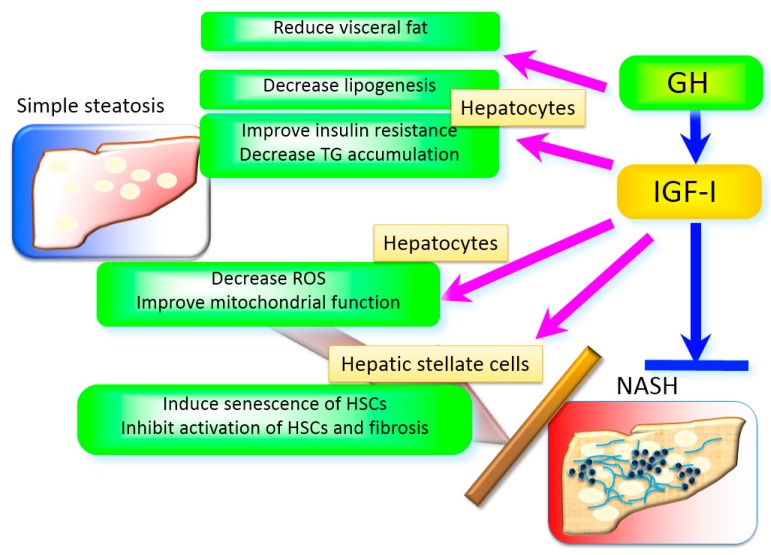
Adult growth hormone deficiency (GHD) is characterized by metabolic abnormalities associated with visceral obesity, impaired quality of life, and increased mortality. Patients with adult GHD show increased prevalence of non-alcoholic fatty liver disease (NAFLD)/non-alcoholic steatohepatitis (NASH), and growth hormone (GH) replacement therapy has been shown to improve these conditions. It has also been demonstrated that a decrease in the GH insulin-like growth factor-I (IGF-I) axis is closely associated with the progression of general NAFLD, suggesting a physiological role of these hormones for the maintenance of the liver. NASH histologically demonstrates inflammation, necrosis, and fibrosis, in addition to steatosis (and is a serious disease because it can progress to liver cirrhosis and hepatocellular carcinoma in a subset of cases). While fibrosis determines the prognosis of the patient, efficacious treatment for fibrosis is crucial; however, it has not yet been established. Recent studies have clarified the essential roles of GH and IGF-I in the liver. GH profoundly reduces visceral fat, which plays an important role in the development of NAFLD. Furthermore, GH directly reduces lipogenesis in the hepatocytes. IGF-I induces cellular senescence and inactivates hepatic stellate cells, therefore ameliorating fibrosis. IGF-I treatment has been shown to improve animal models of NASH and cirrhosis, suggesting potential clinical applications of IGF-I in these conditions. In this review, I will focus on the important roles of GH and IGF-I in the liver, their underlying mechanisms, and their potential therapeutic applications.
Overview
The claims and statistics of this paper haven’t been checked yet.
Free: it reads the open-access text and checks the first 5 claims that cite a source we can check. Create a free account to check every claim.
Integrity signals
Registry
Cites
Statistics
Figures
Verification
Claims the paper makes
The claims and statistics of this paper haven’t been checked yet.
Free: it reads the open-access text and checks the first 5 claims that cite a source we can check. Create a free account to check every claim.
Claims other papers make about this one
Each is checked against this paper’s own text: does it say what the citing paper says it does?
The source backs part of the claim, not all of it — or backs it for a different population, condition or comparison.
In the citing paper
“Studies performed in patients with MAFLD have shown that the level of IGF-1 is lower in MAFLD patients than in healthy controls and is negatively associated with the histological severity of MAFLD [[126], [127], [128]].”
From Emerging role of liver-bone axis in osteoporosis (2024) · cites this paper as [128]
Experimental — accuracy not yet measured
Self-check
Percentages, sums and reported differences re-computed from the paper’s own numbers.
The self-check needs the paper’s full text.
Citations
Cites
Nonalcoholic Fatty Liver Disease
Angulo, P. (2002) · New England Journal of Medicine · doi:10.1056/nejmra011775 · Cited by 5,228
Vernon, G., Baranova, A., & Younossi, Z. M. (2011) · Alimentary Pharmacology & Therapeutics · doi:10.1111/j.1365-2036.2011.04724.x · Cited by 3,074
Angulo, P., Kleiner, D. E., Dam-Larsen, S., Adams, L. A., Bjornsson, E. S., Charatcharoenwitthaya, P., Mills, P. R., Keach, J. C., Lafferty, H. D., Stahler, A., et al. (2015) · Gastroenterology · doi:10.1053/j.gastro.2015.04.043 · Cited by 2,987
Senescence of Activated Stellate Cells Limits Liver Fibrosis
Krizhanovsky, V., Yon, M., Dickins, R. A., Hearn, S., Simon, J., Miething, C., Yee, H., Zender, L., & Lowe, S. W. (2008) · Cell · doi:10.1016/j.cell.2008.09.015 · Cited by 2,027
Pathogenesis of Liver Fibrosis
Hernandez-Gea, V., & Friedman, S. L. (2011) · Annual Review of Pathology: Mechanisms of Disease · doi:10.1146/annurev-pathol-011110-130246 · Cited by 1,809
Nonalcoholic fatty liver disease
Adams, L. A. (2005) · Canadian Medical Association Journal · doi:10.1503/cmaj.045232 · Cited by 1,610
Normal growth and development in the absence of hepatic insulin-like growth factor I
Yakar, S., Liu, J.-L., Stannard, B., Butler, A., Accili, D., Sauer, B., & LeRoith, D. (1999) · Proceedings of the National Academy of Sciences · doi:10.1073/pnas.96.13.7324 · Cited by 1,420
Mechanisms of hepatic fibrogenesis
Lee, U. E., & Friedman, S. L. (2011) · Best Practice & Research Clinical Gastroenterology · doi:10.1016/j.bpg.2011.02.005 · Cited by 923
Circulating levels of IGF-1 directly regulate bone growth and density
Yakar, S., Rosen, C. J., Beamer, W. G., Ackert-Bicknell, C. L., Wu, Y., Liu, J.-L., Ooi, G. T., Setser, J., Frystyk, J., Boisclair, Y. R., et al. (2002) · Journal of Clinical Investigation · doi:10.1172/jci15463 · Cited by 844
Growth hormone deficiency in adulthood and the effects of growth hormone replacement: a review
Carroll, P. V., Christ the members of Growth Hormon, E. R., Bengtsson, B. Å., Carlsson, L., Christiansen, J. S., Clemmons, D., Hintz, R., Ho, K., Laron, Z., Sizonenko, P., et al. (1998) · The Journal of Clinical Endocrinology & Metabolism · doi:10.1210/jcem.83.2.4594 · Cited by 822
Cited by
Rinella, M. E., Neuschwander-Tetri, B. A., Siddiqui, M. S., Abdelmalek, M. F., Caldwell, S., Barb, D., Kleiner, D. E., & Loomba, R. (2023) · Hepatology · doi:10.1097/hep.0000000000000323 · Cited by 2,667
The roles of signaling pathways in bone repair and regeneration
Majidinia, M., Sadeghpour, A., & Yousefi, B. (2018) · Journal of Cellular Physiology · doi:10.1002/jcp.26042 · Cited by 513
Sarcopenia and frailty in decompensated cirrhosis
Tandon, P., Montano-Loza, A. J., Lai, J. C., Dasarathy, S., & Merli, M. (2021) · Journal of Hepatology · doi:10.1016/j.jhep.2021.01.025 · Cited by 408
Insulin-Like Growth Factor (IGF) System in Liver Diseases
Adamek, A., & Kasprzak, A. (2018) · International Journal of Molecular Sciences · doi:10.3390/ijms19051308 · Cited by 284
“Concerning the role of the GH/IGF1 system in the pathogenesis of NAFLD/NASH, it has been reported that decrease in the levels of system components is closely associated with the progression of NAFLD [33].”
BackgroundPediatric obesity—Long‐term consequences and effect of weight loss
Marcus, C., Danielsson, P., & Hagman, E. (2022) · Journal of Internal Medicine · doi:10.1111/joim.13547 · Cited by 267
Hutchison, A. L., Tavaglione, F., Romeo, S., & Charlton, M. (2023) · Journal of Hepatology · doi:10.1016/j.jhep.2023.08.030 · Cited by 250
Insulin-Like Growth Factor 1 (IGF-1) Signaling in Glucose Metabolism in Colorectal Cancer
Kasprzak, A. (2021) · International Journal of Molecular Sciences · doi:10.3390/ijms22126434 · Cited by 248
“Both IGFs belong to central hormones involved in metabolic signaling, affecting glucose uptake, lipogenesis, glycogen storage, and suppression of protein degradation [54,55].”
BackgroundGrowth Hormone and Insulin-Like Growth Factor Action in Reproductive Tissues
Ipsa, E., Cruzat, V. F., Kagize, J. N., Yovich, J. L., & Keane, K. N. (2019) · Frontiers in Endocrinology · doi:10.3389/fendo.2019.00777 · Cited by 192
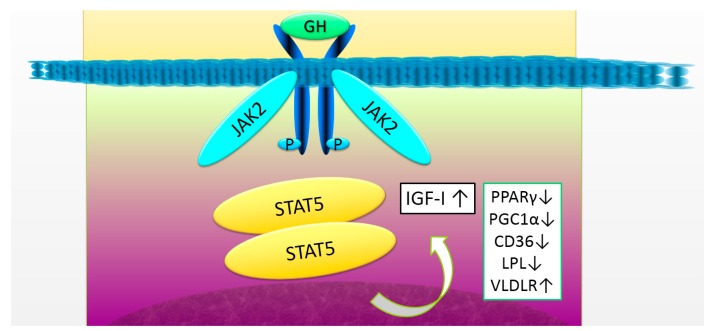
“STAT5b is of most importance and directly regulates the expression of IGF-1 (43, 44), and was demonstrated to be a mediator of GH-induced IGF-1 production in rat granulosa cells (Figure 2) (33, 45, 46).”
BackgroundInsights Into Mechanisms of GDF15 and Receptor GFRAL: Therapeutic Targets
Rochette, L., Zeller, M., Cottin, Y., & Vergely, C. (2020) · Trends in Endocrinology & Metabolism · doi:10.1016/j.tem.2020.10.004 · Cited by 174
“Growth hormone (GH) secreted from the pituitary gland, signals to the liver to stimulate the production of insulinlike growth factor-I (IGF1) and IGFBP acid-labile subunit, via the JAK2-STAT5 pathway [35].”
BackgroundAl-Samerria, S., & Radovick, S. (2021) · Cells · doi:10.3390/cells10102664 · Cited by 184
GDF15 and Cardiac Cells: Current Concepts and New Insights
Rochette, L., Dogon, G., Zeller, M., Cottin, Y., & Vergely, C. (2021) · International Journal of Molecular Sciences · doi:10.3390/ijms22168889 · Cited by 150
Neuroendocrinology and neurobiology of sebaceous glands
Clayton, R. W., Langan, E. A., Ansell, D. M., de Vos, I. J. H. M., Göbel, K., Schneider, M. R., Picardo, M., Lim, X., van Steensel, M. A. M., & Paus, R. (2020) · Biological Reviews · doi:10.1111/brv.12579 · Cited by 117
“Such an autocrine mechanism could be facilitated by pituitary-derived GH, similar to howGH induces IGF-1 production in hepatocytes (Takahashi, 2017) (Fig.”
BackgroundTorre, S. D. (2020) · Frontiers in Endocrinology · doi:10.3389/fendo.2020.572490 · Cited by 143
“According to this, GH deficiency in adults and in obese children is associated with increased prevalence of NAFLD and NASH, while GH replacement therapy improves these conditions (220, 221).”
BackgroundLonardo, A., Mantovani, A., Lugari, S., & Targher, G. (2019) · International Journal of Molecular Sciences · doi:10.3390/ijms20112841 · Cited by 120
“GHD in adults (AGHD), in most cases due to either hypothalamic and pituitary lesions or their treatment, leads to detrimental metabolic consequences typically involved in NAFLD pathogenesis, such as visceral obesity, dyslipidemia, and insulin resistance, carrying an inherently increased prevalence of metabolic syndrom…”
BackgroundKineman, R. D., del Rio-Moreno, M., & Sarmento-Cabral, A. (2018) · Journal of Molecular Endocrinology · doi:10.1530/jme-18-0076 · Cited by 115
Raftar, S. K. A., Ashrafian, F., Abdollahiyan, S., Yadegar, A., Moradi, H. R., Masoumi, M., Vaziri, F., Moshiri, A., Siadat, S. D., & Zali, M. R. (2022) · Scientific Reports · doi:10.1038/s41598-022-06414-1 · Cited by 109
Markers of liver regeneration—the role of growth factors and cytokines: a systematic review
Hoffmann, K., Nagel, A. J., Tanabe, K., Fuchs, J., Dehlke, K., Ghamarnejad, O., Lemekhova, A., & Mehrabi, A. (2020) · BMC Surgery · doi:10.1186/s12893-019-0664-8 · Cited by 94
Perspectives on Precision Medicine Approaches to NAFLD Diagnosis and Management
Lonardo, A., Arab, J. P., & Arrese, M. A. (2021) · Advances in Therapy · doi:10.1007/s12325-021-01690-1 · Cited by 100
“GH replacement therapy is recommended in cases of symptomatic hormone deficiency, which may impact insulin sensitivity, visceral fat, and dyslipidemia [152].”
BackgroundRodríguez, M. J., Sabaj, M., Tolosa, G., Vielma, F. H., Zúñiga, M. J., González, D. R., & Zúñiga‐Hernández, J. (2021) · Cells · doi:10.3390/cells10123406 · Cited by 92
Growth hormone in fertility and infertility: Mechanisms of action and clinical applications
Chang, C., Sung, Y.-W., Hsueh, Y., Chen, Y., Ho, M., Hsu, H.-C., Yang, T., Lin, W.-C., & Chang, H. (2022) · Frontiers in Endocrinology · doi:10.3389/fendo.2022.1040503 · Cited by 78
“As a result, this GHR/ JAK2 complex subsequently phosphorylates STAT5b and upregulates IGF-1 expression in liver cells (37, 78).”
BackgroundArab, J. P., Cabrera, D., Sehrawat, T. S., Jalan‐Sakrikar, N., Verma, V. K., Simonetto, D. A., Cao, S., Yaqoob, U., León, J., Freire, M., et al. (2020) · Journal of Hepatology · doi:10.1016/j.jhep.2020.02.005 · Cited by 71
Adiponectin, Leptin, and IGF-1 Are Useful Diagnostic and Stratification Biomarkers of NAFLD
Marques, V., Afonso, M. B., Bierig, N., Duarte-Ramos, F., Santos-Laso, Á., Jimenez-Agüero, R., Eizaguirre, E., Bujanda, L., Pareja, M. J., Luís, R., et al. (2021) · Frontiers in Medicine · doi:10.3389/fmed.2021.683250 · Cited by 69
“In turn, IGF-1, mainly produced in the liver in response to growth hormone stimulation, is known to regulate insulin sensitivity and decrease hepatic TG accumulation in the liver (45).”
BackgroundBasu, R., Qian, Y., & Kopchick, J. J. (2018) · European Journal of Endocrinology · doi:10.1530/eje-18-0018 · Cited by 73
Visceral fat: A key mediator of NAFLD development and progression
Bansal, S., Vachher, M., Arora, T. K., Kumar, B., & Burman, A. (2023) · Human Nutrition & Metabolism · doi:10.1016/j.hnm.2023.200210 · Cited by 75
The roles of signaling pathways in liver repair and regeneration
Valizadeh, A., Majidinia, M., Samadi‐Kafil, H., Yousefi, M., & Yousefi, B. (2019) · Journal of Cellular Physiology · doi:10.1002/jcp.28336 · Cited by 64
“The deletion of the liver generated GH receptor in mice led to the reduction of IGF‐1 level in the serum (Takahashi, 2017).”
BackgroundNovel insights into the relationship between nonalcoholic fatty liver disease and osteoporosis
Filip, R., Radzki, R., & Bieńko, M. (2018) · Clinical Interventions in Aging · doi:10.2147/cia.s170533 · Cited by 60
“The usual method to diagnose NAFLD has been ultrasonography, sometimes coupled with elevated liver enzymes; however, none of the imaging methods, such as computerized tomography and magnetic resonance, reliably assess steatohepatitis and fibrosis in NAFLD.”
BackgroundInfluentialKodama, T., Yi, J., Newberg, J. Y., Tien, J. C.-Y., Wu, H., Finegold, M. J., Kodama, M., Wei, Z., Tamura, T., Takehara, T., et al. (2018) · Proceedings of the National Academy of Sciences · doi:10.1073/pnas.1808968115 · Cited by 61
“In addition to the well-known role of insulin resistance in NAFLD (14), IGF-1 levels are reported to be correlated with the severity of human NAFLD (17).”
Yang, J., & Ma, Z. (2021) · Ecotoxicology and Environmental Safety · doi:10.1016/j.ecoenv.2021.112034 · Cited by 62
Mukama, T., Srour, B., Johnson, T., Katzke, V. A., & Kaaks, R. (2023) · The Journal of Clinical Endocrinology & Metabolism · doi:10.1210/clinem/dgad212 · Cited by 60
Moon, H., Cho, K., Shin, S., Kim, D. Y., Han, K., & Ro, S. W. (2019) · International Journal of Molecular Sciences · doi:10.3390/ijms20030581 · Cited by 61
“In mammals, IGFs play important roles in various cellular processes in the liver including cell growth, proliferation, and differentiation, as well as tissue repair and hepatic pathogenesis [87].”
BackgroundMaking sense of gut feelings in the traumatic brain injury pathogenesis
Royes, L. F. F., & Gómez‐Pinilla, F. (2019) · Neuroscience & Biobehavioral Reviews · doi:10.1016/j.neubiorev.2019.05.012 · Cited by 58
“Considering that excessive amount of GH opposes to the effects of insulin in the liver and peripheral tissue, the TBI-induced down regulation of peripheral IGF-1 decreases the anabolic effects of GH, resulting in nitrogen wasting and hyperglycemia (see Figure 2) (Takahashi, 2017).”
BackgroundList, E. O., Berryman, D. E., Buchman, M., Parker, C., Funk, K. R., Bell, S. R. C., Duran‐Ortiz, S., Qian, Y., Young, J. A., Wilson, C., et al. (2018) · Endocrinology · doi:10.1210/en.2018-00850 · Cited by 50
Polyzos, S. A., Perakakis, N., Boutari, C., Kountouras, J., Ghaly, W., Anastasilakis, A. D., Karagiannis, A., & Mantzoros, C. S. (2020) · The Journal of Clinical Endocrinology & Metabolism · doi:10.1210/clinem/dgz172 · Cited by 46
Qian, F., & Huo, D. (2020) · Cancer Epidemiology Biomarkers & Prevention · doi:10.1158/1055-9965.epi-20-0743 · Cited by 47
“Epidemiologic and experimental studies have implicated low IGF-1 as a risk factor for the development and progression of nonalcoholic fatty liver disease (37), which is a common risk factor for liver cancer in high-income countries.”
BackgroundYao, Y., Miao, X., Zhu, D., Li, D., Zhang, Y., Song, C., & Liu, K. (2019) · Endocrine · doi:10.1007/s12020-019-01982-1 · Cited by 43
Sex differences in non-alcoholic fatty liver disease: hints for future management of the disease
Salvoza, N. C., Giraudi, P. J., Tiribelli, C., & Rosso, N. (2020) · Exploration of Medicine · doi:10.37349/emed.2020.00005 · Cited by 46
“Furthermore, several animal and clinical studies revealed a strong association of GH deficiency with obesity and fatty liver disease [77, 78].”
BackgroundComplications of Non-Alcoholic Fatty Liver Disease in Extrahepatic Organs
Tomeno, W., Imajo, K., Takayanagi, T., Ebisawa, Y., Seita, K., Takimoto, T., Honda, K., Kobayashi, T., Nogami, A., Kato, T., et al. (2020) · Diagnostics · doi:10.3390/diagnostics10110912 · Cited by 50
“Moreover, GH directly reduces lipogenesis in hepatocytes [63].”
BackgroundMelnik, B. C. (2021) · Biomolecules · doi:10.3390/biom11030404 · Cited by 52
“GH binding to hepatic GH receptor (GHR) is the major mechanism increasing circulatory levels of IGF-1 [46,47].”
BackgroundRiedel, E. O., Hinrichs, A., Kemter, E., Dahlhoff, M., Backman, M., Rathkolb, B., Prehn, C. P., Adamski, J., Renner, S., Blutke, A., et al. (2020) · Molecular Metabolism · doi:10.1016/j.molmet.2020.100978 · Cited by 44
“Patients with adult GH deficiency show an increased prevalence of non-alcoholic fatty liver disease (NAFLD), which improves upon GH treatment (reviewed in [5]).”
BackgroundEmerging role of liver-bone axis in osteoporosis
Gao, H., Peng, X., Li, N., Gou, L., Xu, T., Wang, Y., Qin, J., Liang, H., Ma, P., Li, S., et al. (2024) · Journal of Orthopaedic Translation · doi:10.1016/j.jot.2024.07.008 · Cited by 36
“Studies performed in patients with MAFLD have shown that the level of IGF-1 is lower in MAFLD patients than in healthy controls and is negatively associated with the histological severity of MAFLD [126 – 128].”
BackgroundFrom liver to hormones: The endocrine consequences of cirrhosis
Aldave, J. E. Q., Osorio, E. R. G., Durand‐Vásquez, M. D. C., Rafael-Robles, L. D. P., Yovera, J. G. G., Quispe-Flores, M. A., Urteaga, L. A. C., Román-Gonzaléz, A., Paz‐Ibarra, J., & Concepción‐Zavaleta, M. J. (2024) · World Journal of Gastroenterology · doi:10.3748/wjg.v30.i9.1073 · Cited by 47
“However, the standard diagnosis is defined by a maximum GH response to hypoglycemia below 3 μg/L (3 ng/ mL)[85,92-96].”
Ishikawa, M., Brooks, A. J., Fernandez-Rojo, M. A., Medina, J., Chhabra, Y., Minami, S., Tunny, K. A., Parton, R. G., Vivian, J. P., Rossjohn, J., et al. (2020) · Hepatology · doi:10.1002/hep.31297 · Cited by 36
“(F) HLA-G levels in serum from patients with GHD, patients with GDH following GH treatment, and healthy controls.”
BackgroundMaternal nutrient metabolism in the liver during pregnancy
Fang, H., Li, Q., Wang, H., Ren, Y., Zhang, L., & Yang, L. (2024) · Frontiers in Endocrinology · doi:10.3389/fendo.2024.1295677 · Cited by 41
“On the other hand, IGF-1 can increase insulin resistance, and reduce triglyceride accumulation in hepatocytes (51).”
BackgroundIncreased ATP synthesis might counteract hepatic lipid accumulation in acromegaly
Fellinger, P., Wolf, P. S., Pfleger, L., Krumpolec, P., Krššák, M., Klavins, K., Wolfsberger, S., Micko, A. S. G., Carey, P., Gürtl, B., et al. (2020) · JCI Insight · doi:10.1172/jci.insight.134638 · Cited by 45
“Since GH causes triglyceride lipolysis primarily in visceral adipose tissue, peripherally measured FFA concentrations do not necessarily represent circulating FFA in the portal vein and, therefore, lipid flux from white adipose tissue to the liver (9).”
BackgroundLiu, C., Li, S., Li, Y., Tian, J., Sun, X. X., Song, T., Yan, G., Ding, L., & Sun, H. (2021) · Aging · doi:10.18632/aging.202534 · Cited by 34
“Inadequate GH secretion hinders muscle and skeletal development during adolescence, and can also result in insulin resistance or metabolic disorders in the liver and increase the cardiovascular risk in adults [10, 11].”
Nonalcoholic Fatty Liver Disease and Endocrine Axes—A Scoping Review
von Hafe, M., Borges‐Canha, M., Vale, C., Leite, A. R., Neves, J. S., Carvalho, D. M., & Leite-Moreira, A. F. (2022) · Metabolites · doi:10.3390/metabo12040298 · Cited by 37
“Animal and cell culture studies further support a role for the GH/ insulin-like growth factor-1 (IGF-1) axis in the pathophysiology of NAFLD and its progression to NASH and fibrosis [11].”
BackgroundLiver disease in obesity and underweight: the two sides of the coin. A narrative review
Risi, R., Tuccinardi, D., Mariani, S., Lubrano, C., Manfrini, S., Donini, L. M., & Watanabe, M. (2020) · Eating and Weight Disorders - Studies on Anorexia Bulimia and Obesity · doi:10.1007/s40519-020-01060-w · Cited by 39
“Interestingly, AN is characterized by multiple endocrinological abnormalities, such as hypogonadotropic hypogonadism, resistance to growth hormone and lower levels of insulin-like growth factor 1 [76], all of which are independently associated to the development of chronic liver disease [77, 78].”
BackgroundGH directly inhibits steatosis and liver injury in a sex-dependent and IGF1-independent manner
Sarmento‐Cabral, A., del Río-Moreno, M., Vazquez-Borrego, M. C., Mahmood, M., Gutiérrez-Casado, E., Pelke, N., Guzman, G., Subbaiah, P. V., Córdoba‐Chacón, J., Yakar, S., et al. (2020) · Journal of Endocrinology · doi:10.1530/joe-20-0326 · Cited by 33
“protective role against liver injury by inactivating hepatic stellate cells, thereby reducing fibrosis (Takahashi, 2017), or by promoting an anti-inflammatory response in macrophages (Spadaro et al.”
BackgroundAssociation between Nonalcoholic Fatty Liver Disease and Endocrinopathies: Clinical Implications
Sîngeap, A.-M., Stanciu, C., Huiban, L., Muzica, C. M., Cuciureanu, T., Gîrleanu, I., Chiriac, S. A., Zenovia, S., Năstasă, R., Sfarti, C. V., et al. (2021) · Canadian Journal of Gastroenterology and Hepatology · doi:10.1155/2021/6678142 · Cited by 33
“Growth hormone (GH) is under the control of the hypothalamic-pituitary somatotropic axis, with an importantmetabolic role in the liver, adipose tissue, and skeletal muscle by regulating glucose and lipid metabolism, body composition, and growth in both children and adults [49].”
Non-alcoholic fatty liver disease across endocrinopathies: Interaction with sex hormones
Arefhosseini, S., Ebrahimi‐Mameghani, M., Najafipour, F., & Tutunchi, H. (2022) · Frontiers in Endocrinology · doi:10.3389/fendo.2022.1032361 · Cited by 31
“GH and insulin-like growth factor-1 (IGF-1) are mainly mediated by “hypothalamic-pituitary somatotropic axis” and exert several physiological effects, ranging from promoting cell division/proliferation and growth development to macronutrients metabolism in adipocytes, liver and skeletal muscle through direct or indire…”
BackgroundA Suggested Role of Human Growth Hormone in Control of the COVID-19 Pandemic
Elkarow, M. H., & Hamdy, A. (2020) · Frontiers in Endocrinology · doi:10.3389/fendo.2020.569633 · Cited by 35
“Patients with adult GHD show increased prevalence of nonalcoholic fatty liver disease (NAFLD)/nonalcoholic steatohepatitis (NASH), and GH replacement therapy has been reported to improve these conditions (66).”
BackgroundThe pharmacological management of NAFLD in children and adolescents
Liyanagedera, S., Williams, R. P., Veraldi, S., Nobili, V., & Mann, J. P. (2017) · Expert Review of Clinical Pharmacology · doi:10.1080/17512433.2017.1365599 · Cited by 32
Cabrera, D., Cabello‐Verrugio, C., Solís, N., Martín, D. S., Cofré, C., Pizarro, M., Arab, J. P., Ábrigo, J., Campos, F., Irigoyen, B., et al. (2018) · International Journal of Molecular Sciences · doi:10.3390/ijms19051339 · Cited by 29
“Previous studies in fatty liver models suggest that supplementation with GH could have beneficial effects, particularly in relation to liver steatosis [25,26].”
BackgroundEldin, A. W. J., Tombayoglu, D., Butz, L., Affinati, A. H., Meral, R., Öntan, M. S., Walkovich, K. J., Westerhoff, M. A., Innis, J. W., Parikh, N. D., et al. (2019) · Clinical Diabetes and Endocrinology · doi:10.1186/s40842-019-0082-y · Cited by 27
Szydłowska, J., Gorecka, A., Stępień, J., Rysz, I., & Beń‐Skowronek, I. (2024) · International Journal of Molecular Sciences · doi:10.3390/ijms25073966 · Cited by 30
“The The next stages of pathological liver remodeling are cirrhosis and the onset of hepatocellular carcinoma [68]. next stages of pathological liver remodeling are cirrhosis and the onset of hepatocellular carcinoma [68].”
BackgroundTakahashi, Y. (2023) · Best Practice & Research Clinical Endocrinology & Metabolism · doi:10.1016/j.beem.2023.101816 · Cited by 29
Self-citationVazquez-Uribe, R., Hedin, K. A., Licht, T. R., Nieuwdorp, M., & Sommer, M. O. A. (2024) · Trends in Endocrinology and Metabolism · doi:10.1016/j.tem.2024.04.021 · Cited by 28
“Hormones such as fi broblast growth factor-19 (FGF-19) [50,51], insulin-like growth factor-1 (IGF-1) [52], and glucagon-like peptide-1 (GLP-1) [53,54] are reported to be downregulated during MASLD.”
Afradiasbagharani, P., Hosseini, E., Allahveisi, A., & Bazrafkan, M. (2022) · Middle East Fertility Society Journal · doi:10.1186/s43043-022-00119-1 · Cited by 27
Sarcopenia in cirrhosis: From pathophysiology to interventional therapy
Chen, H., Yang, C., Yan, S., Liu, X., Zhou, L., & Yuan, X. (2024) · Experimental Gerontology · doi:10.1016/j.exger.2024.112571 · Cited by 31
“IGF-1, through direct action or indirectly regulated by growth hormone, improves glucose sensitivity, promotes the production of proteins and prevents their degradation (Takahashi, 2017).”
BackgroundSelvaraj, S., Oh, J., & Borlak, J. T. (2020) · Archives of Toxicology · doi:10.1007/s00204-020-02767-6 · Cited by 26
“Diclofenac treatment reinforced Ghr degradation as evidenced by immunoblotting to suppress hepatic Ghr signaling (Takahashi 2017).”
BackgroundCiresi, A., Guarnotta, V., Campo, D., & Giordano, C. S. D. S. (2018) · International Journal of Endocrinology · doi:10.1155/2018/5421961 · Cited by 25
“In addition, it is well-known that the liver is one of the important target tissues of growth hormone (GH) [4].”
BackgroundShao, R., Tan, X., Pan, M., Huang, J., Huang, L., Bi, B., Huang, X., Wang, J., & Li, X. (2024) · Brain and Behavior · doi:10.1002/brb3.3387 · Cited by 25
“The impact on body weight can be attributed to the role of IGF-1 in improving fat distribution and weight control through increased fat oxidation, inhibition of fat synthesis, and promotion of skeletal muscle growth (Kunitomi et al., 2002; Takahashi, 2017).”
BackgroundPathogenesis of metabolic dysfunction-associated steatotic liver disease and donor liver damage
Gou, C., Zhang, W., Xu, H., Zhang, H., Ding, R., & Zhang, X. (2025) · iLiver · doi:10.1016/j.iliver.2025.100195 · Cited by 27
“49 The prevalence of MASLD in adult patients with growth hormone deficiency is higher than that in the average person.”
Peixe, C. R., Sanchez-García, M. L., Grossman, A. B., Korbonits, M., & Marques, P. (2022) · Growth Hormone & IGF Research · doi:10.1016/j.ghir.2022.101467 · Cited by 21
Córdoba‐Chacón, J., Sarmento‐Cabral, A., del Río-Moreno, M., Díaz‐Ruiz, A., Subbaiah, P. V., & Kineman, R. D. (2018) · Endocrinology · doi:10.1210/en.2018-00669 · Cited by 21
Cristin, L., Montini, A., Martinino, A., Pereira, J. P. S., Giovinazzo, F., & Agnes, S. (2023) · Cells · doi:10.3390/cells12040517 · Cited by 29
“In addition, it has been suggested that GH may play a direct role in hepatic DNL since IGF-1 administration in GHR knock-down mice showed no improvement in TG levels, DNL, or steatosis [2,31].”
BackgroundInfluentialEndocrine Disorders and Metabolic Dysfunction-Associated Steatotic Liver Disease: A Narrative Review
Betlejewska, J., Hubska, J., Roszkowska, Z., Maciejczyk, A., Bachurska, D., Domański, J., Miarka, M., Raszeja‐Wyszomirska, J., Bobrowicz, M., & Ambroziak, U. (2025) · Biomedicines · doi:10.3390/biomedicines13102500 · Cited by 20
“The growth hormone (GH)/insulin-like growth factor-1 (IGF-1) axis is central to systemic metabolic regulation, significantly impacting various organs, including the liver [70–73].”
Growth hormone and nonalcoholic fatty liver disease
Ma, I. L., & Stanley, T. L. (2023) · Immunometabolism · doi:10.1097/in9.0000000000000030 · Cited by 29
“GH is integral to normal growth in childhood [27].”
BackgroundInfluentialMiyauchi, S., Miyake, T., Miyazaki, M., Eguchi, T., Niiya, T., Yamamoto, S., Senba, H., Furukawa, S., Matsuura, B., & Hiasa, Y. (2018) · Journal of Diabetes Investigation · doi:10.1111/jdi.13000 · Cited by 19
Mancini, A., Vergani, E., Bruno, C., Palladino, A., & Brunetti, A. (2019) · Frontiers in Endocrinology · doi:10.3389/fendo.2019.00416 · Cited by 20
“(NAFLD) and increased cardiovascular risk, due to changes in cardiac mass and performance, visceral obesity, insulin resistance, dyslipidemia, vascular atherosclerosis, endothelial dysfunction, hypercoagulability and increased secretion of proinflammatory cytokines (2, 3).”
BackgroundAssociation of chronic liver disease with bone diseases and muscle weakness
Saeki, C., Saito, M., & Tsubota, A. (2024) · Journal of Bone and Mineral Metabolism · doi:10.1007/s00774-023-01488-x · Cited by 21
“Liver disease progression and malnutrition decrease IGF-1 levels, thereby exacerbating or causing ROS production, inflammation, insulin resistance, mitochondrial dysfunction, liver fibrosis, osteoporosis, and sarcopenia [8, 30, 107–109, 111].”
Cellular senescence and liver disease: Mechanisms and therapeutic strategies
Guo, M. (2017) · Biomedicine & Pharmacotherapy · doi:10.1016/j.biopha.2017.11.075 · Cited by 20
Pan, P., & Huang, X. (2022) · International Journal of Molecular Sciences · doi:10.3390/ijms231810768 · Cited by 20
“The GH–GHR interaction can induce the production of ovarian IGF1 via the GHR/ JAK2/STAT5b pathway [145].”
BackgroundBao, Z., Guo, C., Chen, Y., Li, C., Lei, T., Zhou, S., Qi, D., & Xiang, Z. (2023) · Cell Reports · doi:10.1016/j.celrep.2023.112718 · Cited by 19
Maternal hepatic immunology during pregnancy
Yang, L., Meng, Y., Shi, Y., Fang, H., & Zhang, L. (2023) · Frontiers in Immunology · doi:10.3389/fimmu.2023.1220323 · Cited by 24
“GH replacement therapy improves NAFLD/NASH, and IGF-I treatment can improve NASH and cirrhosis in animal models (83).”
BackgroundInsulin-like growth factor-1 and retinopathy of prematurity: A systemic review and meta-analysis
Fu, Y., Lei, C., Ran, Q., Huang, X., Chen, Y., Wang, M., & Zhang, M. (2023) · Survey of Ophthalmology · doi:10.1016/j.survophthal.2023.06.010 · Cited by 16
Guarnotta, V., Mineo, M. I., Radellini, S., Pizzolanti, G., & Giordano, C. S. D. S. (2019) · Therapeutic Advances in Endocrinology and Metabolism · doi:10.1177/2042018819871169 · Cited by 17
GH and Senescence: A New Understanding of Adult GH Action
Chesnokova, V., & Melmed, S. K. (2021) · Journal of the Endocrine Society · doi:10.1210/jendso/bvab177 · Cited by 19
“Specific roles for IGF1 and IGF1 receptor in human aging and in experimental models have been extensively discussed [35-37], with specific observations describing the role of the IGF1 system in cellular senescence [38-41].”
BackgroundCross-talk between insulin signalling and LPS responses in mouse macrophages
Pal, S., Nath, P., Das, D., Hajra, S., & Maitra, S. (2018) · Molecular and Cellular Endocrinology · doi:10.1016/j.mce.2018.04.009 · Cited by 18
Dairy consumption and hepatocellular carcinoma risk
Melnik, B. C. (2021) · Annals of Translational Medicine · doi:10.21037/atm-2020-ubih-06 · Cited by 19
“IGF-1/IGF-1 receptor signaling plays a critical role in hepatocarcinogenesis (45-51), whereas blocking of IGF-1 receptor pathway is regarded as a treatment option in HCC (52-60).”
BackgroundInfluentialKong, T., Gu, Y., Sun, L., Zhou, R., Li, J., & Shi, J. (2023) · Endocrine Journal · doi:10.1507/endocrj.ej23-0157 · Cited by 18
Carvalho-Furtado, A. C. L., Carvalho-Louro, D. M., Regattieri, N. A. T., Rodrigues, M. P., Montenegro, M. L. R. N., Ferro, A. M., Pirangi, P. S., & Naves, L. A. (2019) · Frontiers in Endocrinology · doi:10.3389/fendo.2019.00364 · Cited by 17
Wu, R., Xiong, Y., Gu, Y., Cao, L.-Y., Zhang, S., Song, Z., Fan, P., & Lin, L. (2024) · Neuroscience · doi:10.1016/j.neuroscience.2024.01.025 · Cited by 15
Saeki, C., Kanai, T., Ueda, K., Nakano, M., Oikawa, T., Torisu, Y., Saruta, M., & Tsubota, A. (2023) · Frontiers in Medicine · doi:10.3389/fmed.2023.1233928 · Cited by 16
Cystic fibrosis related liver disease and endocrine considerations
Sherwood, J. S., Ullal, J., KUTNEY, K. A., & Hughan, K. S. (2021) · Journal of Clinical & Translational Endocrinology · doi:10.1016/j.jcte.2021.100283 · Cited by 22
“glucagon as well as GH resistance [68,69].”
Pituitary stalk interruption syndrome and liver changes: From clinical features to mechanisms
Wu, Z., Li, Y., & Chang, B. (2020) · World Journal of Gastroenterology · doi:10.3748/wjg.v26.i44.6909 · Cited by 17
Narrative Review: Glucocorticoids in Alcoholic Hepatitis—Benefits, Side Effects, and Mechanisms
Lü, H. (2022) · Journal of Xenobiotics · doi:10.3390/jox12040019 · Cited by 14
“GH is important in protecting against steatohepatitis [41,42].”
BackgroundHess, S., Kendall, T. J., Peña, M. T., Yamane, K., Soong, D. Y. H., Adams, L. B., Truman, R. W., & Rambukkana, A. (2022) · Cell Reports Medicine · doi:10.1016/j.xcrm.2022.100820 · Cited by 18
Hwang, Y.-A., Lee, H. W., Ahn, S. H., Lee, E. J., Ku, C. R., & Kim, S. U. (2023) · Frontiers in Endocrinology · doi:10.3389/fendo.2022.1057769 · Cited by 17
“In addition, liver-specific GH receptor deletion in mice results in increased hepatic insulin resistance and severe hepatic steatosis and impaired regeneration of hepatocytes, which might suggest the direct effect of GH on hepatocytes via the GH receptor (18).”
BackgroundNutritional Management of a Liver Transplant Candidate
Mishra, S., & Premkumar, M. (2023) · Journal of Clinical and Experimental Hepatology · doi:10.1016/j.jceh.2023.03.012 · Cited by 13
Yang, H., Ou, F., Chang, Q., Jiang, J., Liu, Y., Ji, C., Chen, L., Xia, Y., & Zhao, Y. (2024) · Journal of Cachexia Sarcopenia and Muscle · doi:10.1002/jcsm.13506 · Cited by 17
“31,32 Fourth, frailty has been associated with adverse impacts on intestinal functions, such as impaired immune response, increased permeability, and reduced microbiota diversity, all of which are risk factors for NAFLD and cirrhosis.”
BackgroundTseng, F., Chen, Y.-T., Chi, Y., Chen, P., & Yang, W. (2019) · Medicine · doi:10.1097/md.0000000000014862 · Cited by 14
Fatty Liver in Hormone Receptor-Positive Breast Cancer and Its Impact on Patient's Survival
Taroeno‐Hariadi, K. W., Putra, Y. R., Choridah, L., Widodo, I., Hardianti, M. S., & Aryandono, T. (2021) · Journal of Breast Cancer · doi:10.4048/jbc.2021.24.e41 · Cited by 12
“The synthesis of IGF-1 is downregulated in NAFLD, and the level of IGF-1 is associated with the severity of NAFLD [29].”
BackgroundAzandaryani, Z. S., Davoodian, N., Samiei, A., & Rouzbehan, S. (2019) · Cell Biology International · doi:10.1002/cbin.11113 · Cited by 13
“In recent years, it has been noted that IGF-I deficiency is associated with chronic liver diseases and provided the support of using recombinant IGF-I to treat the patients showing that this factor plays a potential role in liver functions (Takahashi, 2017).”
BackgroundJiménez-Aristizabal, R. F., Carmona, J. U., & Prades, M. (2019) · Journal of Equine Veterinary Science · doi:10.1016/j.jevs.2019.102789 · Cited by 13
Autocrine/paracrine growth hormone in cancer progression
Zhang, X., Pandey, V., Bhardwaj, V., Zhu, T., & Lobie, P. E. (2023) · Endocrine Related Cancer · doi:10.1530/erc-23-0120 · Cited by 16
Kalra, S., Bhattacharya, S., & Rawal, P. (2021) · Medical Sciences · doi:10.3390/medsci9020039 · Cited by 14
Kim, M. J., Kang, H., Jeon, S., Yun, J. H., Choi, E. Y., Jeong, P., Song, B., Kim, S., Cho, S., & Sim, B. (2025) · Cell Communication and Signaling · doi:10.1186/s12964-025-02191-2 · Cited by 10
Brie, B., Sarmento‐Cabral, A., Pascual, F. L., Córdoba‐Chacón, J., Kineman, R. D., & Becú‐Villalobos, D. (2024) · Journal of the Endocrine Society · doi:10.1210/jendso/bvae015 · Cited by 10
“Finally, though there are almost no IGF1Rs in the liver, except for stellate and Kupffer cells [65], a local action of liver IGF1 cannot be discarded, in view of the unexpected results found in the aHepIGF1kd model.”
Villanueva-Ortega, E., Méndez-García, L. A., Garibay-Nieto, G. N., Laresgoiti‐Servitje, E., Medina‐Bravo, P., Olivos‐García, A., Muñoz‐Ortega, M. H., Ventura‐Juárez, J., & Escobedo, G. (2020) · Growth Hormone & IGF Research · doi:10.1016/j.ghir.2020.101332 · Cited by 10
Metadata
- Authors
- Takahashi, Y.
- Affiliations
- Kobe University (JP)
- Corresponding author
- Takahashi, Yutaka
- ORCID
- Takahashi, Yutaka
- Venue
- International Journal of Molecular Sciences
- Publisher
- MDPI AG
- Published
- 2017-07-05
- Volume
- 18
- Issue
- 7
- Pages
- 1447
- ISSN
- 1422-0067 (ISSN-L)
- PMC
- PMC5535938
- OpenAlex
- W2725319743
- Cited by
- 193
- References
- 94
- Citations by year
- 2026: 10 · 2025: 20 · 2024: 24 · 2023: 29 · 2022: 22 · 2021: 24 · 2020: 25 · 2019: 21 · 2018: 14 · 2017: 4
- FWCI
- 2.55
- Type
- journal article
- Language
- en
- Open access
- gold
- doi.org
- Licence
- Locations
- International Journal of Molecular Sciences (publishedVersion, cc-by)
- Europe PMC (PubMed Central) (publishedVersion, cc-by)
- PubMed Central (publishedVersion, cc-by)
- PubMed (publishedVersion)
- Institutional Repositories DataBase (IRDB) (submittedVersion, cc-by)
- Kobe University Repository Kernel (Kobe University) (submittedVersion, cc-by)
- Topics
- Health Sciences › Medicine › Endocrinology, Diabetes and Metabolism › Growth Hormone and Insulin-like Growth Factors
- Health Sciences › Medicine › Hepatology › Liver Disease Diagnosis and Treatment
- Health Sciences › Medicine › Hepatology › Liver physiology and pathology
- Keywords
- growth hormone, insulin-like growth factor I, adult growth hormone deficiency, non-alcoholic fatty liver disease, nonalcoholic steatohepatitis, liver fibrosis, hepatic stellate cells, cellular senescence, lipogenesis, visceral obesity, growth hormone replacement therapy, liver cirrhosis, hepatocellular carcinoma
- MeSH terms
- Age Factors, Animals, Endocrine System Diseases, Humans, Insulin-Like Growth Factor I, Liver, Liver Cirrhosis, Growth Hormone, Non-alcoholic Fatty Liver Disease
About these checks
Registry, retraction, Cites and statistics results are computed, not judged, with one exception: a printed reference that no index lists is read once by a model before it counts as a citation error. Claims are extracted by a model and kept only when their quote appears verbatim in the text; each cited source is then checked, with a model’s help, for whether it says what the claim relies on. Those verdicts can be wrong — read the claim’s quote and the cited source before relying on one.
Statistics and arithmetic are recomputed, not judged.
Confidence bands are shown only for fields calibrated on our annotated test set. None is calibrated yet, so no band is shown.
What counts as a claim ›How we measure confidence ›How we check this ›
Are you an author, or do you see a problem with this page? Request a review
Data sources
Bibliographic data: Semantic Scholar, OpenAlex, Crossref.
Contains information from the Semantic Scholar Academic Graph Datasets, made available under the ODC Attribution License (ODC-BY 1.0).
Semantic Scholar’s data is described in: Kinney, R., et al. (2023). The Semantic Scholar Open Data Platform. arXiv:2301.10140.
