

The Role of Growth Hormone and Insulin-Like Growth Factor-I in the Liver
Open accessThe DOI matches its Crossref record; 93 of the 94 references it cites were found in a registry or an index.
Abstract
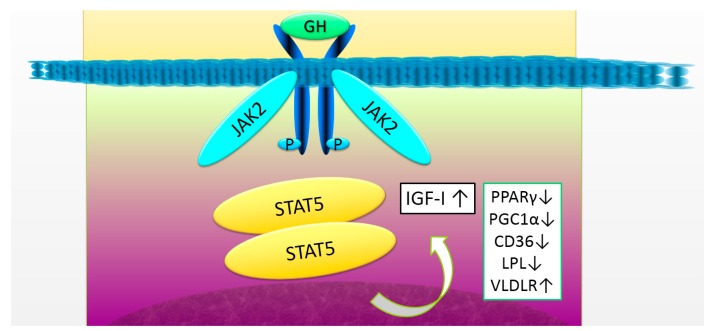
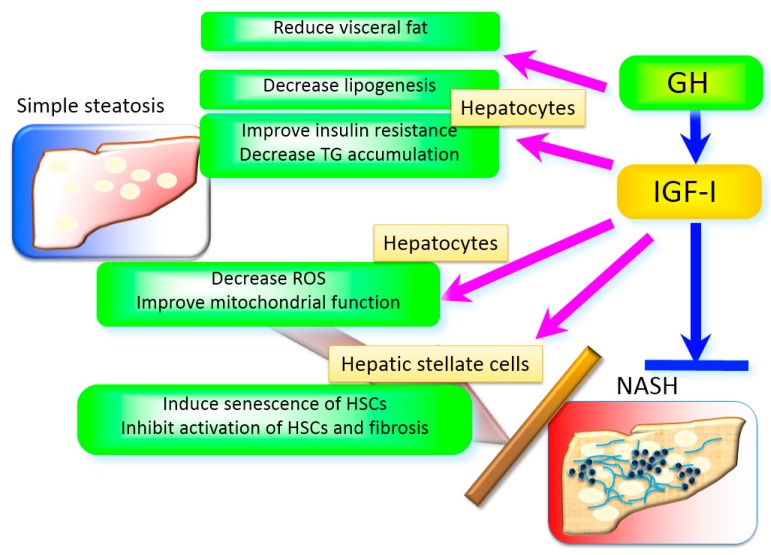
Adult growth hormone deficiency (GHD) is characterized by metabolic abnormalities associated with visceral obesity, impaired quality of life, and increased mortality. Patients with adult GHD show increased prevalence of non-alcoholic fatty liver disease (NAFLD)/non-alcoholic steatohepatitis (NASH), and growth hormone (GH) replacement therapy has been shown to improve these conditions. It has also been demonstrated that a decrease in the GH insulin-like growth factor-I (IGF-I) axis is closely associated with the progression of general NAFLD, suggesting a physiological role of these hormones for the maintenance of the liver. NASH histologically demonstrates inflammation, necrosis, and fibrosis, in addition to steatosis (and is a serious disease because it can progress to liver cirrhosis and hepatocellular carcinoma in a subset of cases). While fibrosis determines the prognosis of the patient, efficacious treatment for fibrosis is crucial; however, it has not yet been established. Recent studies have clarified the essential roles of GH and IGF-I in the liver. GH profoundly reduces visceral fat, which plays an important role in the development of NAFLD. Furthermore, GH directly reduces lipogenesis in the hepatocytes. IGF-I induces cellular senescence and inactivates hepatic stellate cells, therefore ameliorating fibrosis. IGF-I treatment has been shown to improve animal models of NASH and cirrhosis, suggesting potential clinical applications of IGF-I in these conditions. In this review, I will focus on the important roles of GH and IGF-I in the liver, their underlying mechanisms, and their potential therapeutic applications.
Overview
The claims and statistics of this paper haven’t been checked yet.
Free: it reads the open-access text and checks the first 5 claims that cite a source we can check. Create a free account to check every claim.
Integrity signals
Registry
Cites
Statistics
Figures
Verification
Claims the paper makes
The claims and statistics of this paper haven’t been checked yet.
Free: it reads the open-access text and checks the first 5 claims that cite a source we can check. Create a free account to check every claim.
Claims other papers make about this one
Each is checked against this paper’s own text: does it say what the citing paper says it does?
The source backs part of the claim, not all of it — or backs it for a different population, condition or comparison.
In the citing paper
“Studies performed in patients with MAFLD have shown that the level of IGF-1 is lower in MAFLD patients than in healthy controls and is negatively associated with the histological severity of MAFLD [[126], [127], [128]].”
From Emerging role of liver-bone axis in osteoporosis (2024) · cites this paper as [128]
Experimental — accuracy not yet measured
Self-check
Percentages, sums and reported differences re-computed from the paper’s own numbers.
The self-check needs the paper’s full text.
Citations
Cites
Nonalcoholic Fatty Liver Disease
Angulo, P. (2002) · New England Journal of Medicine · doi:10.1056/nejmra011775 · Cited by 5,228
Vernon, G., Baranova, A., & Younossi, Z. M. (2011) · Alimentary Pharmacology & Therapeutics · doi:10.1111/j.1365-2036.2011.04724.x · Cited by 3,074
Angulo, P., Kleiner, D. E., Dam-Larsen, S., Adams, L. A., Bjornsson, E. S., Charatcharoenwitthaya, P., Mills, P. R., Keach, J. C., Lafferty, H. D., Stahler, A., et al. (2015) · Gastroenterology · doi:10.1053/j.gastro.2015.04.043 · Cited by 2,987
Senescence of Activated Stellate Cells Limits Liver Fibrosis
Krizhanovsky, V., Yon, M., Dickins, R. A., Hearn, S., Simon, J., Miething, C., Yee, H., Zender, L., & Lowe, S. W. (2008) · Cell · doi:10.1016/j.cell.2008.09.015 · Cited by 2,027
Pathogenesis of Liver Fibrosis
Hernandez-Gea, V., & Friedman, S. L. (2011) · Annual Review of Pathology: Mechanisms of Disease · doi:10.1146/annurev-pathol-011110-130246 · Cited by 1,809
Nonalcoholic fatty liver disease
Adams, L. A. (2005) · Canadian Medical Association Journal · doi:10.1503/cmaj.045232 · Cited by 1,610
Normal growth and development in the absence of hepatic insulin-like growth factor I
Yakar, S., Liu, J.-L., Stannard, B., Butler, A., Accili, D., Sauer, B., & LeRoith, D. (1999) · Proceedings of the National Academy of Sciences · doi:10.1073/pnas.96.13.7324 · Cited by 1,420
Mechanisms of hepatic fibrogenesis
Lee, U. E., & Friedman, S. L. (2011) · Best Practice & Research Clinical Gastroenterology · doi:10.1016/j.bpg.2011.02.005 · Cited by 923
Circulating levels of IGF-1 directly regulate bone growth and density
Yakar, S., Rosen, C. J., Beamer, W. G., Ackert-Bicknell, C. L., Wu, Y., Liu, J.-L., Ooi, G. T., Setser, J., Frystyk, J., Boisclair, Y. R., et al. (2002) · Journal of Clinical Investigation · doi:10.1172/jci15463 · Cited by 844
Growth hormone deficiency in adulthood and the effects of growth hormone replacement: a review
Carroll, P. V., Christ the members of Growth Hormon, E. R., Bengtsson, B. Å., Carlsson, L., Christiansen, J. S., Clemmons, D., Hintz, R., Ho, K., Laron, Z., Sizonenko, P., et al. (1998) · The Journal of Clinical Endocrinology & Metabolism · doi:10.1210/jcem.83.2.4594 · Cited by 822
Circulating levels of IGF-1 directly regulate bone growth and density
Yakar, S., Rosen, C. J., Beamer, W. G., Ackert-Bicknell, C. L., Wu, Y., Liu, J.-L., Ooi, G. T., Setser, J., Frystyk, J., Boisclair, Y. R., et al. (2002) · Journal of Clinical Investigation · doi:10.1172/jci0215463 · Cited by 739
From NAFLD to NASH to cirrhosis—new insights into disease mechanisms
Wree, A., Broderick, L., Canbay, A., Hoffman, H. M., & Feldstein, A. E. (2013) · Nature Reviews Gastroenterology & Hepatology · doi:10.1038/nrgastro.2013.149 · Cited by 609
Interleukin-22 induces hepatic stellate cell senescence and restricts liver fibrosis in mice
Kong, X., Feng, D., Wang, H., Hong, F., Bertola, A., Wang, F.-S., & Gao, B. (2012) · Hepatology · doi:10.1002/hep.25744 · Cited by 448
Epidemiological modifiers of non-alcoholic fatty liver disease: Focus on high-risk groups
Lonardo, A., Bellentani, S., Argo, C. K., Ballestri, S., Byrne, C. D., Caldwell, S. H., Cortez-Pinto, H., Grieco, A., Machado, M. V., Miele, L., et al. (2015) · Digestive and Liver Disease · doi:10.1016/j.dld.2015.08.004 · Cited by 444
Reduction of Plasma Immunoreactive Somatomedin C during Fasting in Humans*
CLEMMONS, D. R., KLIBANSKI, A., UNDERWOOD, L. E., McARTHUR, J. W., RIDGWAY, E. C., BEITINS, I. Z., & VAN WYK, J. J. (1981) · The Journal of Clinical Endocrinology & Metabolism · doi:10.1210/jcem-53-6-1247 · Cited by 364
Liver-Specific igf-1 Gene Deletion Leads to Muscle Insulin Insensitivity
Yakar, S., Liu, J.-L., Fernandez, A. M., Wu, Y., Schally, A. V., Frystyk, J., Chernausek, S. D., Mejia, W., & Le Roith, D. (2001) · Diabetes · doi:10.2337/diabetes.50.5.1110 · Cited by 343
Kalinchenko, S. Y., Tishova, Y. A., Mskhalaya, G. J., Gooren, L. J. G., Giltay, E. J., & Saad, F. (2010) · Clinical Endocrinology · doi:10.1111/j.1365-2265.2010.03845.x · Cited by 341
Foxo1 integrates insulin signaling with mitochondrial function in the liver
Cheng, Z., Guo, S., Copps, K., Dong, X., Kollipara, R., Rodgers, J. T., Depinho, R. A., Puigserver, P., & White, M. F. (2009) · Nature Medicine · doi:10.1038/nm.2049 · Cited by 321
Svegliati-Baroni, G., Ridolfi, F., Di Sario, A., Casini, A., Marucci, L., Gaggiotti, G., Orlandoni, P., Macarri, G., Perego, L., Benedetti, A., et al. (1999) · Hepatology · doi:10.1002/hep.510290632 · Cited by 320
AISF position paper on nonalcoholic fatty liver disease (NAFLD): Updates and future directions
Lonardo, A., Nascimbeni, F., Targher, G., Bernardi, M., Bonino, F., Bugianesi, E., Casini, A., Gastaldelli, A., Marchesini, G., Marra, F., et al. (2017) · Digestive and Liver Disease · doi:10.1016/j.dld.2017.01.147 · Cited by 306
Non-alcoholic fatty liver disease
Smith, B. W., & Adams, L. A. (2011) · Critical Reviews in Clinical Laboratory Sciences · doi:10.3109/10408363.2011.596521 · Cited by 285
BAILYES, E. M., NAVÉ, B. T., SOOS, M. A., ORR, S. R., HAYWARD, A. C., & SIDDLE, K. (1997) · Biochemical Journal · doi:10.1042/bj3270209 · Cited by 278
Kalinchenko, S. Y., Tishova, Y. A., Mskhalaya, G. J., Gooren, L. J. G., Giltay, E. J., & Saad, F. (2011) · Clinical Endocrinology · doi:10.1111/j.1365-2265.2011.04105.x · Cited by 267
Prevalence, gender, ethnic variations, and prognosis of NASH
Hashimoto, E., & Tokushige, K. (2011) · Journal of Gastroenterology · doi:10.1007/s00535-010-0311-8 · Cited by 264
Kim, K.-H., Chen, C.-C., Monzon, R. I., & Lau, L. F. (2013) · Molecular and Cellular Biology · doi:10.1128/mcb.00049-13 · Cited by 261
Fan, Y., Menon, R. K., Cohen, P., Hwang, D., Clemens, T., DiGirolamo, D. J., Kopchick, J. J., Le Roith, D., Trucco, M., & Sperling, M. A. (2009) · Journal of Biological Chemistry · doi:10.1074/jbc.m109.014308 · Cited by 255
Nonalcoholic fatty liver disease among patients with hypothalamic and pituitary dysfunction
Adams, L. A., Feldstein, A., Lindor, K. D., & Angulo, P. (2004) · Hepatology · doi:10.1002/hep.20140 · Cited by 252
Caro, J. F., Poulos, J., Ittoop, O., Pories, W. J., Flickinger, E. G., & Sinha, M. K. (1988) · Journal of Clinical Investigation · doi:10.1172/jci113451 · Cited by 249
Matsuda, Y., Matsumoto, K., Yamada, A., Ichida, T., Asakura, H., Komoriya, Y., Nishiyama, E., & Nakamura, T. (1997) · Hepatology · doi:10.1002/hep.510260111 · Cited by 198
Cui, Y., Hosui, A., Sun, R., Shen, K., Gavrilova, O., Chen, W., Cam, M. C., Gao, B., Robinson, G. W., & Hennighausen, L. (2007) · Hepatology · doi:10.1002/hep.21713 · Cited by 183
Nishizawa, H., Iguchi, G., Murawaki, A., Fukuoka, H., Hayashi, Y., Kaji, H., Yamamoto, M., Suda, K., Takahashi, M., Seo, Y., et al. (2012) · European Journal of Endocrinology · doi:10.1530/eje-12-0252 · Cited by 178
Self-citationGH-Dependent STAT5 Signaling Plays an Important Role in Hepatic Lipid Metabolism
Barclay, J. L., Nelson, C. N., Ishikawa, M., Murray, L. A., Kerr, L. M., McPhee, T. R., Powell, E. E., & Waters, M. J. (2011) · Endocrinology · doi:10.1210/en.2010-0537 · Cited by 176
Takahashi, Y., Iida, K., Takahashi, K., Yoshioka, S., Fukuoka, H., Takeno, R., Imanaka, M., Nishizawa, H., Takahashi, M., Seo, Y., et al. (2007) · Gastroenterology · doi:10.1053/j.gastro.2006.12.024 · Cited by 175
Self-citationHepatic steatosis in Cushing's syndrome: a radiological assessment using computed tomography
Rockall, A., Sohaib, S., Evans, D., Kaltsas, G., Isidori, A., Monson, J., Besser, G., Grossman, A., & Reznek, R. (2003) · European Journal of Endocrinology · doi:10.1530/eje.0.1490543 · Cited by 172
IGF-I induces senescence of hepatic stellate cells and limits fibrosis in a p53-dependent manner
Nishizawa, H., Iguchi, G., Fukuoka, H., Takahashi, M., Suda, K., Bando, H., Matsumoto, R., Yoshida, K., Odake, Y., Ogawa, W., et al. (2016) · Scientific Reports · doi:10.1038/srep34605 · Cited by 164
Self-citationEndocrine and liver interaction: the role of endocrine pathways in NASH
Loria, P., Carulli, L., Bertolotti, M., & Lonardo, A. (2009) · Nature Reviews Gastroenterology & Hepatology · doi:10.1038/nrgastro.2009.33 · Cited by 162
Inflammation and fibrogenesis in steatohepatitis
Fujii, H., & Kawada, N. (2012) · Journal of Gastroenterology · doi:10.1007/s00535-012-0527-x · Cited by 155
Gazzaruso, C., Gola, M., Karamouzis, I., Giubbini, R., & Giustina, A. (2014) · The Journal of Clinical Endocrinology & Metabolism · doi:10.1210/jc.2013-2394 · Cited by 151
Franco, C., Brandberg, J., Lönn, L., Andersson, B., Bengtsson, B.-Å., & Johannsson, G. (2005) · The Journal of Clinical Endocrinology & Metabolism · doi:10.1210/jc.2004-1657 · Cited by 151
‘Endocrine NAFLD’ a hormonocentric perspective of nonalcoholic fatty liver disease pathogenesis
Lonardo, A., Carani, C., Carulli, N., & Loria, P. (2006) · Journal of Hepatology · doi:10.1016/j.jhep.2006.03.005 · Cited by 149
Donaghy, A., Ross, R., Gimson, A., Hughes, S. C., Holly, J., & Williams, R. (1995) · Hepatology · doi:10.1002/hep.1840210313 · Cited by 148
Sos, B. C., Harris, C., Nordstrom, S. M., Tran, J. L., Balázs, M., Caplazi, P., Febbraio, M., Applegate, M. A. B., Wagner, K.-U., & Weiss, E. J. (2011) · Journal of Clinical Investigation · doi:10.1172/jci42894 · Cited by 138
Conditional Knockout of Mouse Insulin-Like Growth Factor-1 Gene Using the Cre/loxP System
Liu, J.-L., Yakar, S., & LeRoith, D. (2000) · Proceedings of the Society for Experimental Biology and Medicine · doi:10.1046/j.1525-1373.2000.22349.x · Cited by 132
Kim, S. O., Park, J. G., & Lee, Y. I. (1996) · PubMed · Cited by 128
Ichikawa, T., Nakao, K., Hamasaki, K., FURUKAWA, R., Tsuruta, S., Ueda, Y., Taura, N., Shibata, H., Fujimoto, M., Toriyama, K., et al. (2007) · Hepatology International · doi:10.1007/s12072-007-9007-4 · Cited by 124
Hepatic steatosis is associated with low serum testosterone and high serum DHEAS levels in men
Völzke, H., Aumann, N., Krebs, A., Nauck, M., Steveling, A., Lerch, M. M., Rosskopf, D., & Wallaschofski, H. (2010) · International Journal of Andrology · doi:10.1111/j.1365-2605.2009.00953.x · Cited by 123
Lonardo, A., Ballestri, S., Guaraldi, G., Nascimbeni, F., Romagnoli, D., Zona, S., & Targher, G. (2016) · World Journal of Gastroenterology · doi:10.3748/wjg.v22.i44.9674 · Cited by 122
Conchillo, M., de Knegt, R. J., Payeras, M., Quiroga, J. A., Sangro, B., Herrero, J.-I., Castilla‐Cortázar, I., Frystyk, J., Flyvbjerg, A., YOSHIZAWA, C. N., et al. (2005) · Journal of Hepatology · doi:10.1016/j.jhep.2005.03.025 · Cited by 120
Ichikawa, T., Hamasaki, K., Ishikawa, H., Ejima, E., Eguchi, K., & Nakao, K. (2003) · Gut · doi:10.1136/gut.52.6.914 · Cited by 119
Sanz, S., Pucilowska, J. B., Liu, S., Rodríguez-Ortigosa, C. M., Lund, P. K., Brenner, D. A., Fuller, C. R., Simmons, J. G., Pardo, A., Martínez-Chantar, M.-L., et al. (2005) · Gut · doi:10.1136/gut.2003.024505 · Cited by 119
Growth hormone stimulates proliferation of old-aged regenerating liver through forkhead box m1b
Krupczak-Hollis, K. (2003) · Hepatology · doi:10.1053/jhep.2003.08052 · Cited by 115
Low Doses of Insulin-Like Growth Factor-I Induce Mitochondrial Protection in Aging Rats
Puche, J. E., García-Fernández, M., Muntané, J., Rioja, J., González-Barón, S., & Castilla Cortazar, I. (2008) · Endocrinology · doi:10.1210/en.2007-1563 · Cited by 112
Targher, G., Rossini, M., & Lonardo, A. (2015) · Endocrine · doi:10.1007/s12020-015-0640-8 · Cited by 110
The Association Between IGF-1 Levels and the Histologic Severity of Nonalcoholic Fatty Liver Disease
Dichtel, L. E., Corey, K. E., Misdraji, J., Bredella, M. A., Schorr, M., Osganian, S. A., Young, B. J., Sung, J. C., & Miller, K. K. (2017) · Clinical and Translational Gastroenterology · doi:10.1038/ctg.2016.72 · Cited by 106
Growth Hormone Control of Hepatic Lipid Metabolism
Liu, Z., Córdoba‐Chacón, J., Kineman, R. D., Cronstein, B. N., Muzumdar, R. H., Gong, Z., Werner, H., & Yakar, S. (2016) · Diabetes · doi:10.2337/db16-0649 · Cited by 105
Growth Hormone Inhibits Hepatic De Novo Lipogenesis in Adult Mice
Cordoba-Chacon, J., Majumdar, N., List, E. O., Diaz-Ruiz, A., Frank, S. J., Manzano, A., Bartrons, R., Puchowicz, M., Kopchick, J. J., & Kineman, R. D. (2015) · Diabetes · doi:10.2337/db15-0370 · Cited by 102
Diagnostic evaluation of nonalcoholic fatty liver disease.
Adams, L. A., & Talwalkar, J. A. (2006) · PubMed · doi:10.1097/01.mcg.0000168642.38945.f1 · Cited by 99
Nishizawa, H., Takahashi, M., Fukuoka, H., Iguchi, G., Kitazawa, R., & Takahashi, Y. (2012) · Biochemical and Biophysical Research Communications · doi:10.1016/j.bbrc.2012.05.115 · Cited by 97
Self-citationDiagnosis and treatment of growth hormone deficiency in adults
Kargi, A. Y., & Merriam, G. R. (2013) · Nature Reviews Endocrinology · doi:10.1038/nrendo.2013.77 · Cited by 96
Matsumoto, R., Fukuoka, H., Iguchi, G., Nishizawa, H., Bando, H., Suda, K., Takahashi, M., & Takahashi, Y. (2014) · Growth Hormone & IGF Research · doi:10.1016/j.ghir.2014.07.002 · Cited by 91
Self-citationWan, Y., Meng, F., Wu, N., Zhou, T., Venter, J., Francis, H., Kennedy, L., Glaser, T., Bernuzzi, F., Invernizzi, P., et al. (2017) · Hepatology · doi:10.1002/hep.29138 · Cited by 89
Sumida, Y., Yonei, Y., Tanaka, S., Mori, K., Kanemasa, K., Imai, S., Taketani, H., Hara, T., Seko, Y., Ishiba, H., et al. (2015) · Hepatology Research · doi:10.1111/hepr.12408 · Cited by 86
Role of Growth Hormone (GH) in Liver Regeneration
Pennisi, P. A., Kopchick, J. J., Thorgeirsson, S., LeRoith, D., & Yakar, S. (2004) · Endocrinology · doi:10.1210/en.2004-0655 · Cited by 85
Takahashi, Y. (2012) · Endocrine Journal · doi:10.1507/endocrj.ej12-0322 · Cited by 80
Self-citationBallestri, S., Nascimbeni, F., Romagnoli, D., Baldelli, E., & Lonardo, A. (2016) · Advances in Therapy · doi:10.1007/s12325-016-0306-9 · Cited by 80
Cuneo, R. C., Hickman, P. E., Wallace, J. D., Teh, B. T., Ward, G., Veldhuis, J. D., & Waters, M. J. (1995) · Clinical Endocrinology · doi:10.1111/j.1365-2265.1995.tb02031.x · Cited by 69
Characterization of the IGF axis components in isolated rat hepatic stellate cells
Scharf, J.-G., Knittel, T., Dombrowski, F., Müller, L., Saile, B., Braulke, T., Hartmann, H., & Ramadori, G. (1998) · Hepatology · doi:10.1002/hep.510270513 · Cited by 68
Ekberg, S., Luther, M., Nakamura, T., & Jansson, J. (1992) · Journal of Endocrinology · doi:10.1677/joe.0.1350059 · Cited by 66
Mitochondrial protection by low doses of insulin-like growth factor-Iin experimental cirrhosis
Pérez, R., García-Fernández, M., Díaz-Sánchez, M., Puche, J. E., Delgado, G., Conchillo, M., Muntané, J., & Castilla-Cortázar, I. (2008) · World Journal of Gastroenterology · doi:10.3748/wjg.14.2731 · Cited by 63
Skrtic, S., Wallenius, V., Ekberg, S., Brenzel, A., Gressner, A. M., & Jansson, J.-O. (1997) · Endocrinology · doi:10.1210/endo.138.11.5540 · Cited by 62
Aleem, E., Nehrbass, D., Klimek, F., Mayer, D., & Bannasch, P. (2011) · Toxicologic Pathology · doi:10.1177/0192623310396905 · Cited by 62
Nonalcoholic fatty liver in patients with Laron syndrome and GH gene deletion – Preliminary report
Laron, Z., Ginsberg, S., & Webb, M. (2008) · Growth Hormone & IGF Research · doi:10.1016/j.ghir.2008.03.003 · Cited by 61
IGF-I enhances cellular senescence via the reactive oxygen species–p53 pathway
Handayaningsih, A. E., Takahashi, M., Fukuoka, H., Iguchi, G., Nishizawa, H., Yamamoto, M., Suda, K., & Takahashi, Y. (2012) · Biochemical and Biophysical Research Communications · doi:10.1016/j.bbrc.2012.07.140 · Cited by 59
Self-citationGrowth hormone therapy in patients with cirrhosis: A pilot study of efficacy and safety
Donaghy, A. J., Ross, R. J. M., Wicks, C., Hughes, S., Holly, J. M. P., Gimson, A. E., & Williams, R. L. (1997) · Gastroenterology · doi:10.1053/gast.1997.v113.pm9352864 · Cited by 57
Hao, C., Geng, Y., Li, F., Tong, Y., Su, D., Duan, J.-L., & Li, Y. (2011) · APOPTOSIS · doi:10.1007/s10495-011-0634-9 · Cited by 56
Gardner, C. J., Irwin, A. J., Daousi, C., McFarlane, I. A., Joseph, F., Bell, J. D., Thomas, E. L., Adams, V. L., Kemp, G. J., & Cuthbertson, D. J. (2012) · European Journal of Endocrinology · doi:10.1530/eje-12-0002 · Cited by 55
Chishima, S., Kogiso, T., Matsushita, N., Hashimoto, E., & Tokushige, K. (2017) · Internal Medicine · doi:10.2169/internalmedicine.56.7626 · Cited by 51
Metabolic Parameters and Nonalcoholic Fatty Liver Disease in Hypopituitary Men
Hong, J. W., Kim, J. Y., Kim, Y.-E., & Lee, E. J. (2011) · Hormone and Metabolic Research · doi:10.1055/s-0030-1265217 · Cited by 50
Effect of growth hormone on fatty liver in panhypopituitarism
Takano, S., Kanzaki, S., Sato, M., Kubo, T., & Seino, Y. (1997) · Archives of Disease in Childhood · doi:10.1136/adc.76.6.537 · Cited by 45
Brenzel, A., & Gressner, A. M. (1996) · cclm · doi:10.1515/cclm.1996.34.5.401 · Cited by 36
Matsumoto, R., Fukuoka, H., Iguchi, G., Odake, Y., Yoshida, K., Bando, H., Suda, K., Nishizawa, H., Takahashi, M., Yamada, S., et al. (2015) · PLOS ONE · doi:10.1371/journal.pone.0140189 · Cited by 36
Self-citationIncreased hepatic expression of insulin-like growth factor-I receptor in chronic hepatitis C
Stefano, J. T., Correa-Giannella, M. L., Ribeiro, C. M. F., Alves, V. A. F., Massarollo, P. C. B., Machado, M. C. C., & Giannella-Neto, D. (2006) · World Journal of Gastroenterology · doi:10.3748/wjg.v12.i24.3821 · Cited by 32
Sumida, Y., Yonei, Y., Kanemasa, K., Hara, T., Inada, Y., Sakai, K., Imai, S., Hibino, S., Yamaguchi, K., Mitsuyoshi, H., et al. (2010) · Hepatology Research · doi:10.1111/j.1872-034x.2010.00704.x · Cited by 29
Hepatic DsbA‐L protects mice from diet‐induced hepatosteatosis and insulin resistance
Chen, H., Bai, J., Dong, F., Fang, H., Zhang, Y., Meng, W., Liu, B., Luo, Y., Liu, M., Bai, Y., et al. (2017) · The FASEB Journal · doi:10.1096/fj.201600985r · Cited by 29
Meienberg, F., Yee, M. S., Johnston, D. G., Cox, J., Robinson, S., Bell, J. D., Thomas, E. L., Taylor-Robinson, S. D., & Godsland, I. F. (2016) · Clinical Endocrinology · doi:10.1111/cen.13042 · Cited by 27
Fukuda, I., Hizuka, N., Yasumoto, K., Morita, J., Kurimoto, M., & Takano, K. (2008) · Endocrine Journal · doi:10.1507/endocrj.k08e-079 · Cited by 23
ZHANG, J., WANG, M., ZHANG, Z., LUO, Z., LIU, F., & LIU, J. (2015) · Molecular Medicine Reports · doi:10.3892/mmr.2014.3048 · Cited by 21
Adult Growth Hormone Deficiency in Japan: Results of Investigation by Questionnaire.
Kaji, H., Sakurai, T., Iguchi, G., Murata, M., Kishimoto, M., Yoshioka, S., Iida, K., Okimura, Y., & Chihara, K. (2002) · Endocrine Journal · doi:10.1507/endocrj.49.597 · Cited by 21
Tian, L., Wu, Z., Zhao, Y., Meng, Y., Si, Y., Fu, X., Mu, Y., & Han, W. (2009) · Journal of Endocrinology · doi:10.1677/joe-09-0054 · Cited by 16
Li, N., Zhou, L., Zhang, B., Dong, P. H., Lin, W., Wang, H., Xu, R., & Ding, H. (2008) · Digestive and Liver Disease · doi:10.1016/j.dld.2007.11.011 · Cited by 15
Mu, Y., Ruiping, S., Zhang, H., Dong, B., Huang, C., Lin, W., Li, D., & Li, X. (2009) · Hepatology Research · doi:10.1111/j.1872-034x.2009.00512.x · Cited by 14
Tao, X., Shen, D.-M., Ren, H., Zhang, X., Zhang, D., Ye, J., & Gu, B. (2000) · PubMed · Cited by 14
Hoffmann, A., & Muller, H. L. (2017) · Minerva Endocrinology · doi:10.23736/s0391-1977.16.02500-1 · Cited by 7
Cited by
Rinella, M. E., Neuschwander-Tetri, B. A., Siddiqui, M. S., Abdelmalek, M. F., Caldwell, S., Barb, D., Kleiner, D. E., & Loomba, R. (2023) · Hepatology · doi:10.1097/hep.0000000000000323 · Cited by 2,667
The roles of signaling pathways in bone repair and regeneration
Majidinia, M., Sadeghpour, A., & Yousefi, B. (2018) · Journal of Cellular Physiology · doi:10.1002/jcp.26042 · Cited by 513
Sarcopenia and frailty in decompensated cirrhosis
Tandon, P., Montano-Loza, A. J., Lai, J. C., Dasarathy, S., & Merli, M. (2021) · Journal of Hepatology · doi:10.1016/j.jhep.2021.01.025 · Cited by 408
Insulin-Like Growth Factor (IGF) System in Liver Diseases
Adamek, A., & Kasprzak, A. (2018) · International Journal of Molecular Sciences · doi:10.3390/ijms19051308 · Cited by 284
“Concerning the role of the GH/IGF1 system in the pathogenesis of NAFLD/NASH, it has been reported that decrease in the levels of system components is closely associated with the progression of NAFLD [33].”
BackgroundPediatric obesity—Long‐term consequences and effect of weight loss
Marcus, C., Danielsson, P., & Hagman, E. (2022) · Journal of Internal Medicine · doi:10.1111/joim.13547 · Cited by 267
Metadata
- Authors
- Takahashi, Y.
- Affiliations
- Kobe University (JP)
- Corresponding author
- Takahashi, Yutaka
- ORCID
- Takahashi, Yutaka
- Venue
- International Journal of Molecular Sciences
- Publisher
- MDPI AG
- Published
- 2017-07-05
- Volume
- 18
- Issue
- 7
- Pages
- 1447
- ISSN
- 1422-0067 (ISSN-L)
- PMC
- PMC5535938
- OpenAlex
- W2725319743
- Cited by
- 193
- References
- 94
- Citations by year
- 2026: 10 · 2025: 20 · 2024: 24 · 2023: 29 · 2022: 22 · 2021: 24 · 2020: 25 · 2019: 21 · 2018: 14 · 2017: 4
- FWCI
- 2.55
- Type
- journal article
- Language
- en
- Open access
- gold
- doi.org
- Licence
- Locations
- International Journal of Molecular Sciences (publishedVersion, cc-by)
- Europe PMC (PubMed Central) (publishedVersion, cc-by)
- PubMed Central (publishedVersion, cc-by)
- PubMed (publishedVersion)
- Institutional Repositories DataBase (IRDB) (submittedVersion, cc-by)
- Kobe University Repository Kernel (Kobe University) (submittedVersion, cc-by)
- Topics
- Health Sciences › Medicine › Endocrinology, Diabetes and Metabolism › Growth Hormone and Insulin-like Growth Factors
- Health Sciences › Medicine › Hepatology › Liver Disease Diagnosis and Treatment
- Health Sciences › Medicine › Hepatology › Liver physiology and pathology
- Keywords
- growth hormone, insulin-like growth factor I, adult growth hormone deficiency, non-alcoholic fatty liver disease, nonalcoholic steatohepatitis, liver fibrosis, hepatic stellate cells, cellular senescence, lipogenesis, visceral obesity, growth hormone replacement therapy, liver cirrhosis, hepatocellular carcinoma
- MeSH terms
- Age Factors, Animals, Endocrine System Diseases, Humans, Insulin-Like Growth Factor I, Liver, Liver Cirrhosis, Growth Hormone, Non-alcoholic Fatty Liver Disease
About these checks
Registry, retraction, Cites and statistics results are computed, not judged, with one exception: a printed reference that no index lists is read once by a model before it counts as a citation error. Claims are extracted by a model and kept only when their quote appears verbatim in the text; each cited source is then checked, with a model’s help, for whether it says what the claim relies on. Those verdicts can be wrong — read the claim’s quote and the cited source before relying on one.
Statistics and arithmetic are recomputed, not judged.
Confidence bands are shown only for fields calibrated on our annotated test set. None is calibrated yet, so no band is shown.
What counts as a claim ›How we measure confidence ›How we check this ›
Are you an author, or do you see a problem with this page? Request a review
Data sources
Bibliographic data: Semantic Scholar, OpenAlex, Crossref.
Contains information from the Semantic Scholar Academic Graph Datasets, made available under the ODC Attribution License (ODC-BY 1.0).
Semantic Scholar’s data is described in: Kinney, R., et al. (2023). The Semantic Scholar Open Data Platform. arXiv:2301.10140.
