

Chitosan inhibits the rehabilitation of damaged microbes induced by photodynamic inactivation.
Open accessThe DOI matches its Crossref record; 47 of the 48 references it cites were found in a registry or an index, and 1 are not checked yet.
Abstract
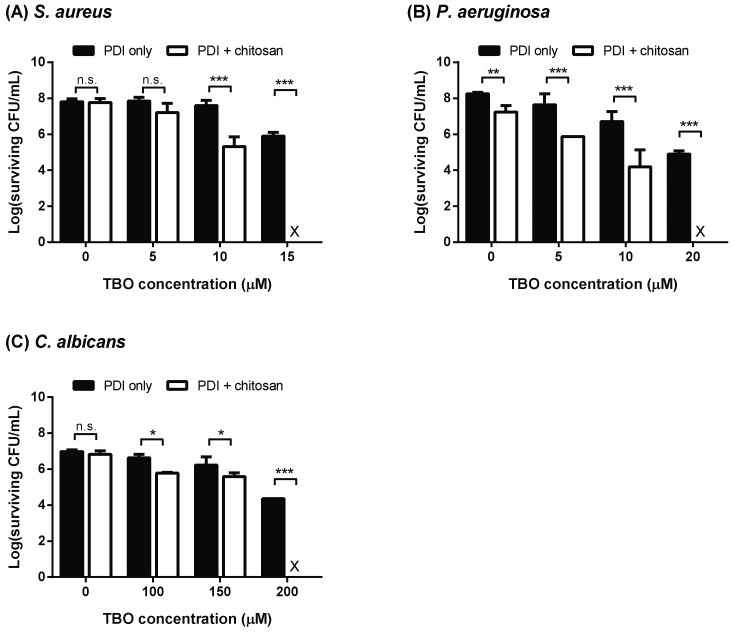
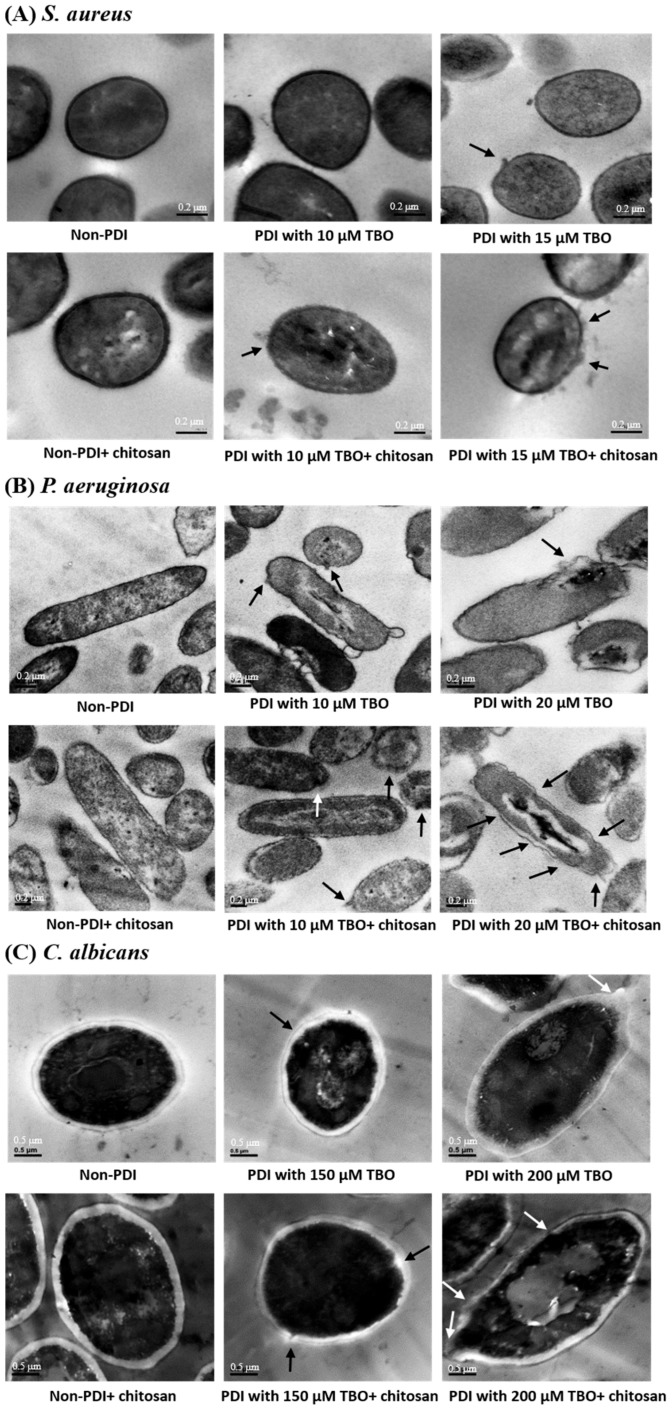
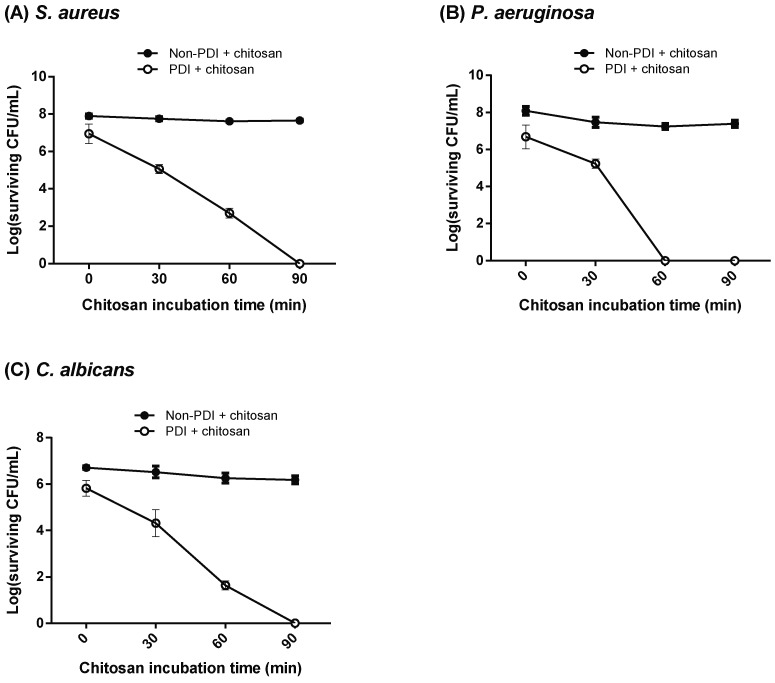
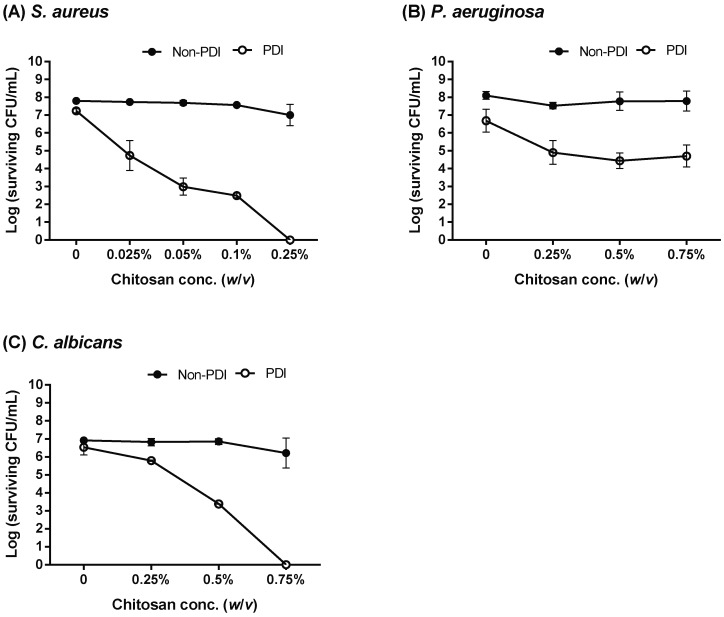
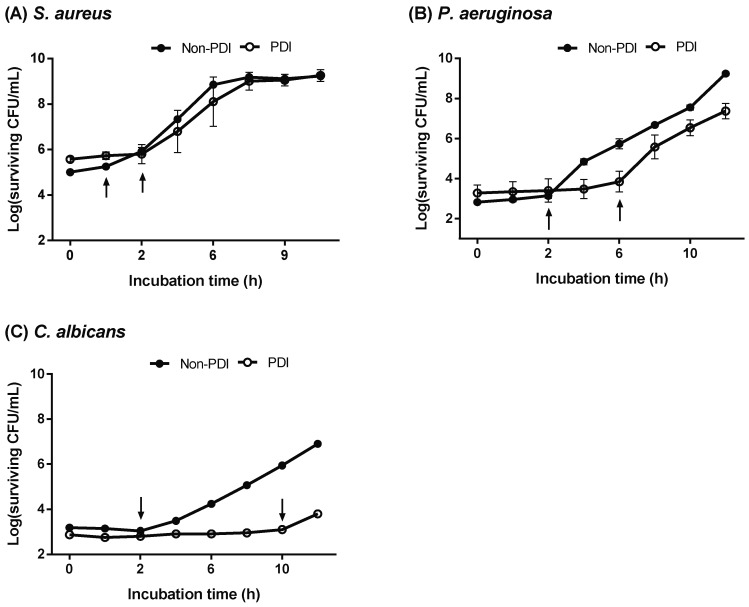
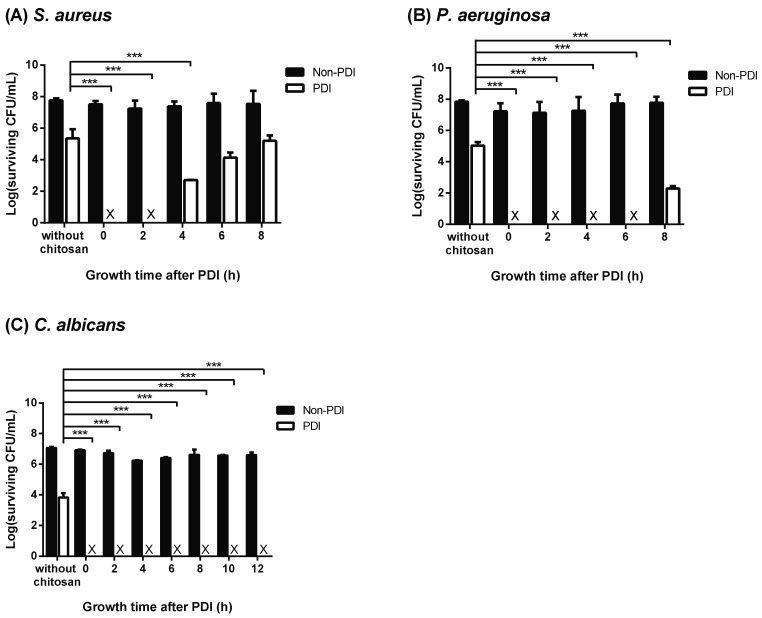
Photodynamic inactivation (PDI) combines the nontoxic photosensitizer (PS) and visible light to generate reactive oxygen species (ROS), which can cause oxidative damages in (on) microbial organisms. Previously, we have shown that chitosan can augment the bactericidal efficacy mediated by PDI against bacteria and Candida. In this study, we showed that the antimicrobial action of chitosan to augment PDI relates to the enlargement of cell surface destruction. The microbial cell surfaces exhibit severe irregular shapes after PDI in the presence of chitosan. Furthermore, increase in the concentrations or incubation time of chitosan significantly reduce the amounts of photosensitizers TBO required, indicating that chitosan could be a synergistic agent with PDI against human pathogens. A prolonged lag phase was found in PDI surviving microbial cells, in which chitosan can act to synergistically eradicate the cells. Once the impaired cells rebuild their cellular functions from PDI-induced damage, the increased cytotoxic effect of chitosan disappeared. Together, our results suggest that chitosan with an augmented bactericidal activity after PDI is to inhibit the rehabilitation of PDI surviving cells, leading to microbial death.
Overview
The claims and statistics of this paper haven’t been checked yet.
Free: it reads the open-access text and checks the first 5 claims that cite a source we can check. Create a free account to check every claim.
Integrity signals
Registry
Cites
Statistics
Figures
Verification
Claims the paper makes
The claims and statistics of this paper haven’t been checked yet.
Free: it reads the open-access text and checks the first 5 claims that cite a source we can check. Create a free account to check every claim.
Claims other papers make about this one
Each is checked against this paper’s own text: does it say what the citing paper says it does?
The cited source says what the claim attributes to it.
In the citing paper
“Indeed, the antifungal activity mediated by chitosan is enhanced after photodynamic inactivation (PDI) treatment (Lin et al., 2018).”
From A Potential Antifungal Effect of Chitosan Against Candida albicans Is Mediated via the Inhibition of SAGA Complex Component Expression and the Subsequent Alteration of Cell Surface Integrity (2019) · cites this paper as Lin et al., 2018
Self-check
Percentages, sums and reported differences re-computed from the paper’s own numbers.
The self-check needs the paper’s full text.
Citations
Cites
International Journal of Molecular Sciences
(2024) · International Journal of Molecular Sciences · doi:10.3390/ijms · Cited by 10,111
Photodynamic therapy for cancer
Dolmans, D. E. J. G. J., Fukumura, D., & Jain, R. K. (2003) · Nature Reviews Cancer · doi:10.1038/nrc1071 · Cited by 6,758 · cited 1×
“Photodynamic therapy (PDT) is an approved therapeutic modality for the treatment of cancers and noncancerous diseases[8, 9].”
BackgroundEpidemiology of Invasive Candidiasis: a Persistent Public Health Problem
Pfaller, M. A., & Diekema, D. J. (2007) · Clinical Microbiology Reviews · doi:10.1128/cmr.00029-06 · Cited by 4,174 · cited 1×
“Indeed, many antibiotic and antifungal agent-resistant pathogens have been found that lead to critical issues in public health, such as methicillin-resistant Staphylococcus aureus (MRSA) [4], multidrug-resistant Pseudomonas aeruginosa [3,5,6], and pathogenic fungi [3,5,6].”
BackgroundChitosan as antimicrobial agent: applications and mode of action.
Rabea, E. I., Badawy, M. E.-T., Stevens, C. V., Smagghe, G., & Steurbaut, W. (2003) · Biomacromolecules · doi:10.1021/bm034130m · Cited by 3,123
Antimicrobial properties of chitosan and mode of action: a state of the art review
Kong, M., Chen, X. G., Xing, K., & Park, H. J. (2010) · International Journal of Food Microbiology · doi:10.1016/j.ijfoodmicro.2010.09.012 · Cited by 3,037 · cited 2×
“Although the antimicrobial properties of chitosan hav been documented in several reviews, the mechanism of chitosan in antimicrobial ac ivity has not yet been fully elucidated [31,35].”
BackgroundChitin and Chitosan Preparation from Marine Sources. Structure, Properties and Applications
Younes, I., & Rinaudo, M. (2015) · Marine Drugs · doi:10.3390/md13031133 · Cited by 2,562 · cited 1×
“Chitosan [poly-(β-1/4)-2-amino-2-deoxy-D-glucopyranose] is a linear polysaccharide, which can be obtained by chitin deacetylation mediated by enzymatic hydrolysis of chitin deacetylase or NaOH alkaline conditions [22-24].”
BackgroundAntimicrobial agents and chemotherapy—1969
Parker, R. H. (1971) · Journal of Chronic Diseases · doi:10.1016/0021-9681(71)90113-5 · Cited by 2,504
Cabello, F. C. (2006) · Environmental Microbiology · doi:10.1111/j.1462-2920.2006.01054.x · Cited by 2,329 · cited 1×
“Due to the emergence of resistance among human pathogens, conventional antimicrobial therapies have become less effective [1-3].”
BackgroundInternational Journal of Food Microbiology
(2015) · Food Microbiology · doi:10.1016/s0740-0020(14)00320-7 · Cited by 2,038
Chitin and chitosan in selected biomedical applications
Anitha, A., Sowmya, S., Kumar, P. T. S., Deepthi, S., Chennazhi, K. P., Ehrlich, H., Tsurkan, M., & Jayakumar, R. (2014) · Progress in Polymer Science · doi:10.1016/j.progpolymsci.2014.02.008 · Cited by 931 · cited 1×
“Due to its biodegradability, biocompatibility and nontoxicity properties, chitosan displays its various important pharmacological applications in biomedical uses, dietary supplement food, agriculture, cosmetics industries and drug delivery[24-27].”
BackgroundChitosan and its antimicrobial potential – a critical literature survey
Raafat, D., & Sahl, H. (2009) · Microbial Biotechnology · doi:10.1111/j.1751-7915.2008.00080.x · Cited by 928
Insights into the mode of action of chitosan as an antibacterial compound.
Raafat, D., von Bargen, K., Haas, A., & Sahl, H.-G. (2008) · Applied and Environmental Microbiology · doi:10.1128/aem.00453-08 · Cited by 888 · cited 1×
“[42] demonstrated that the antibacterial activity of chitosan relates to its binding to the bacterial cell wall and membrane that further interferes with bacterial energy metabolism and electron transfer chain.”
BackgroundEvaluation of different factors affecting antimicrobial properties of chitosan
Hosseinnejad, M., & Jafari, S. M. (2016) · International Journal of Biological Macromolecules · doi:10.1016/j.ijbiomac.2016.01.022 · Cited by 884 · cited 2×
“Although the antimicrobial properties of chitosan hav been documented in several reviews, the mechanism of chitosan in antimicrobial ac ivity has not yet been fully elucidated [31,35].”
BackgroundRecent developments in antibacterial and antifungal chitosan and its derivatives
Verlee, A., Mincke, S., & Stevens, C. V. (2017) · Carbohydrate Polymers · doi:10.1016/j.carbpol.2017.02.001 · Cited by 843 · cited 1×
“The antimicrobial actions of chitosan begin with its electrostatic interaction at the microbial cell surface [36].”
BackgroundJori, G., Fabris, C., Soncin, M., Ferro, S., Coppellotti, O., Dei, D., Fantetti, L., Chiti, G., & Roncucci, G. (2006) · Lasers in Surgery and Medicine · doi:10.1002/lsm.20361 · Cited by 827 · cited 2×
“Photodynamic therapy (PDT) is an approved therapeutic modality for the treatment of cancers and noncancerous diseases [8,9].”
BackgroundPhotoantimicrobials—are we afraid of the light?
Wainwright, M., Maisch, T., Nonell, S., Plaetzer, K., Almeida, A., Tegos, G. P., & Hamblin, M. R. (2017) · The Lancet Infectious Diseases · doi:10.1016/s1473-3099(16)30268-7 · Cited by 713
Antifungal drug resistance: evolution, mechanisms and impact
Revie, N. M., Iyer, K. R., Robbins, N., & Cowen, L. E. (2018) · Current Opinion in Microbiology · doi:10.1016/j.mib.2018.02.005 · Cited by 516 · cited 2×
“Due to the emergence of resistance among human pathogens, conventional antimicrobial therapies have become less effective [1-3].”
BackgroundAntimicrobial Photodynamic Therapy to Control Clinically Relevant Biofilm Infections
Hu, X., Huang, Y.-Y., Wang, Y., Wang, X., & Hamblin, M. R. (2018) · Frontiers in Microbiology · doi:10.3389/fmicb.2018.01299 · Cited by 502 · cited 1×
“PDT activates nontoxic photosensitizers by a specific wavelength of visible light [10,11].”
BackgroundAntimicrobial properties of N-carboxybutyl chitosan
Muzzarelli, R., Tarsi, R., Filippini, O., Giovanetti, E., Biagini, G., & Varaldo, P. E. (1990) · Antimicrobial Agents and Chemotherapy · doi:10.1128/aac.34.10.2019 · Cited by 436 · cited 1×
“Due to its biodegradability, biocompatibility and nontoxicity properties, chitosan displays its various important pharmacological applications in biomedical uses, dietary supplement food, agriculture, cosmetics industries and drug delivery[24-27].”
BackgroundHuang, L., Xuan, Y., Koide, Y., Zhiyentayev, T., Tanaka, M., & Hamblin, M. R. (2012) · Lasers in Surgery and Medicine · doi:10.1002/lsm.22045 · Cited by 394 · cited 1×
“Compared to Gram-positive bacteria, most photosensitizers are less effective against Gram-negative bacteria [39,40].”
BackgroundPhotodynamic inactivation of Gram-negative bacteria: Problems and possible solutions
Malik, Z., Ladan, H., & Nitzan, Y. (1992) · Journal of Photochemistry and Photobiology B: Biology · doi:10.1016/1011-1344(92)85104-3 · Cited by 345 · cited 1×
“The cell wall of Gram-negative bacteria consists of many-layered structures, including peptidoglycan, lipopolysaccharide, and lipoproteins, which might prevent the efficacy of a photosensitizer as well as chitosan [12,41].”
BackgroundTikhonov, V. E., Stepnova, E. A., Babak, V. G., Yamskov, I. A., Palma-Guerrero, J., Jansson, H.-B., Lopez-Llorca, L. V., Salinas, J., Gerasimenko, D. V., Avdienko, I. D., et al. (2006) · Carbohydrate Polymers · doi:10.1016/j.carbpol.2005.10.021 · Cited by 345 · cited 2×
“Chitosan [poly-(β-1/4)-2-amino-2-deoxy-D-glucopyranose] is a linear polysaccharide, which can be obtained by chitin deacetylation mediated by enzymatic hydrolysis of chitin deacetylase or NaOH alkaline conditions [22-24].”
BackgroundKashef, N., & Hamblin, M. R. (2017) · Drug Resistance Updates · doi:10.1016/j.drup.2017.07.003 · Cited by 343 · cited 1×
“Compared to Gram-positive bacteria, most photosensitizers are less effective against Gram-negative bacteria [39,40].”
BackgroundJournal of Photochemistry and Photobiology A
Rani, S. (1996) · Chemistry - A European Journal · Cited by 277
St. Denis, T. G., Dai, T., Izikson, L., Astrakas, C., Anderson, R. R., Hamblin, M. R., & Tegos, G. P. (2011) · Virulence · doi:10.4161/viru.2.6.17889 · Cited by 242
Dynamic Fungal Cell Wall Architecture in Stress Adaptation and Immune Evasion
Hopke, A., Brown, A. J. P., Hall, R. A., & Wheeler, R. T. (2018) · Trends in Microbiology · doi:10.1016/j.tim.2018.01.007 · Cited by 228 · cited 1×
“The cell wall in a bacterium or a fungus not only provides tensile strength for maintaining a definite shape but also protects microbes from environmental stress and immune evasion [37,38].”
BackgroundYayan, J., Ghebremedhin, B., & Rasche, K. (2015) · PLOS ONE · doi:10.1371/journal.pone.0139836 · Cited by 204 · cited 1×
“Indeed, many antibiotic and antifungal agent-resistant pathogens have been found that lead to critical issues in public health, such as methicillin-resistant Staphylococcus aureus (MRSA) [4], multidrug-resistant Pseudomonas aeruginosa [3,5,6], and pathogenic fungi [3,5,6].”
BackgroundEffects of chitosan, pectic acid, lysozyme, and chitinase on the growth of several phytopathogens.
HIRANO, S., & NAGAO, N. (1989) · Agricultural and Biological Chemistry · doi:10.1271/bbb1961.53.3065 · Cited by 203 · cited 1×
“Furthermore, a broad antimicrobial spectrum of chitosan has been reported to be effective against Gram-positive, Gramnegative bacteria and fungi [28, 29].”
BackgroundResistance to antibiotics targeted to the bacterial cell wall
Nikolaidis, I., Favini‐Stabile, S., & Dessen, A. (2014) · Protein Science · doi:10.1002/pro.2414 · Cited by 176 · cited 1×
“The cell wall in a bacterium or a fungus not only provides tensile strength for maintaining a definite shape but also protects microbes from environmental stress and immune evasion [37,38].”
BackgroundPhotodynamic therapy and diagnosis: Principles and comparative aspects
Dobson, J., de Queiroz, G. F., & Golding, J. P. (2018) · The Veterinary Journal · doi:10.1016/j.tvjl.2017.11.012 · Cited by 162 · cited 1×
“PDT activates nontoxic photosensitizers by a specific wavelength of visible light [10,11].”
BackgroundSchafer, M. K.-H., Schmitz, C., Facius, R., Horneck, G., Milow, B., Funken, K.-H., & Ortner, J. (2000) · Photochemistry and Photobiology · doi:10.1562/0031-8655(2000)0710514ssopit2.0.co2 · Cited by 156 · cited 1×
“phthalocyanines, rose bengal (RB), methylene blue (MB), and toluidine blue O (TBO), showed a great capability of controlling infectious diseases[13-16].”
BackgroundEffects of Chitosan on Candida albicans: Conditions for Its Antifungal Activity
Peña, A., Sánchez, N. S., & Calahorra, M. (2013) · BioMed Research International · doi:10.1155/2013/527549 · Cited by 136 · cited 1×
“Furthermore, within the lower pH solution, chitosan forms stronger cationic polymer and is able to interact with negative-charged microbial cell surface, thereby inhibiting microbial growth [40, 41].”
BackgroundHarris, F., Chatfield, L., & Phoenix, D. (2005) · Current Drug Targets · doi:10.2174/1389450054545962 · Cited by 128
Cationic Porphycenes as Potential Photosensitizers for Antimicrobial Photodynamic Therapy
Ragàs, X., Sánchez‐García, D., Ruiz‐González, R., Dai, T., Agut, M., Hamblin, M. R., & Nonell, S. (2010) · Journal of Medicinal Chemistry · doi:10.1021/jm1009555 · Cited by 117 · cited 1×
“phthalocyanines, rose bengal (RB), methylene blue (MB), and toluidine blue O (TBO), showed a great capability of controlling infectious diseases[13-16].”
BackgroundAntifungal drug resistance mechanisms in pathogenic fungi: from bench to bedside
Cuenca‐Estrella, M. (2013) · Clinical Microbiology and Infection · doi:10.1111/1469-0691.12495 · Cited by 112 · cited 1×
“Unlike the abundant range of antibiotics, only four classes of drugs (flucytosine, azoles, echinocandins, and polyenes) with relative toxicity to human cells are currently used to treat fungal infections [7].”
BackgroundCytotoxic effects of antimicrobial photodynamic therapy on keratinocytes in vitro
Zeina, B., Greenman, J., Corry, D. S., & Purcell, W. M. (2002) · British Journal of Dermatology · doi:10.1046/j.1365-2133.2002.04623.x · Cited by 104 · cited 1×
“Presently, neither cytotoxicity nor DNA damage to keratinocytes was found in vitro in MB-or TBO-mediated PDI, by which can cause significant killing of typical skin microbes[19-21].”
BackgroundChitosan Augments Photodynamic Inactivation of Gram-Positive and Gram-Negative Bacteria
Tsai, T., Chien, H., Wang, T.-H., Huang, C., Ker, Y.-B., & Chen, C. (2011) · Antimicrobial Agents and Chemotherapy · doi:10.1128/aac.00550-10 · Cited by 82 · cited 4×
“As described previously, its molecular weight is ≈20 kDa and the degree of deacetylation of chitosan is ≈90% [32,34].”
BackgroundMethodInfluentialAntimicrobial photodynamic therapy: assessment of genotoxic effects on keratinocytes in vitro
Zeina, B., Greenman, J., Corry, D., & Purcell, W. M. (2003) · British Journal of Dermatology · doi:10.1046/j.1365-2133.2003.05091.x · Cited by 80 · cited 1×
“Presently, neither cytotoxicity nor DNA damage to keratinocytes was found in vitro in MB-or TBO-mediated PDI, by which can cause significant killing of typical skin microbes[19-21].”
BackgroundCosta, D. C. S., Gomes, M. C., Faustino, M. A. F., Neves, M. G. P. M. S., Cunha, Â., Cavaleiro, J. A. S., Almeida, A., & Tomé, J. P. C. (2012) · Photochemical & Photobiological Sciences · doi:10.1039/c2pp25113b · Cited by 67 · cited 1×
“phthalocyanines, rose bengal (RB), methylene blue (MB), and toluidine blue O (TBO), showed a great capability of controlling infectious diseases[13-16].”
BackgroundFerber, D. (2000) · Science · doi:10.1126/science.288.5467.792 · Cited by 61
Chen, C.-P., Hsieh, C., Tsai, T., Yang, J., & Chen, C. (2015) · International Journal of Molecular Sciences · doi:10.3390/ijms160920859 · Cited by 53 · cited 1×
“Antimicrobial photodynamic inactivation against a broad range of human pathogens has been reported and recognized as a promising therapeutic modality[11, 12, 17, 31, 33, 34].”
BackgroundCurrent challenges in the management of the infected patient
Nicolau, D. P. (2010) · Current Opinion in Infectious Diseases · doi:10.1097/01.qco.0000393483.10270.ff · Cited by 51 · cited 1×
“Indeed, many antibiotic and antifungal agent-resistant pathogens have been found that lead to critical issues in public health, such as methicillin-resistant Staphylococcus aureus (MRSA) [4], multidrug-resistant Pseudomonas aeruginosa [3,5,6], and pathogenic fungi [3,5,6].”
Chien, H.-F., Chen, C.-P., Chen, Y.-C., Chang, P.-H., Tsai, T., & Chen, C.-T. (2013) · International Journal of Molecular Sciences · doi:10.3390/ijms14047445 · Cited by 47 · cited 4×
“As described previously, its molecular weight is ≈20 kDa and the degree of deacetylation of chitosan is ≈90% [32,34].”
BackgroundMethodInfluentialSpecial section: Focus on anti-microbial photodynamic therapy (PDT)
Winckler, K. D. (2006) · Journal of Photochemistry and Photobiology B Biology · doi:10.1016/j.jphotobiol.2006.09.005 · Cited by 42 · cited 3×
“The activated photosensitizers react with O2 through the type I and type II photochemical reactions to generate reactive oxygen species (ROS), which directly cause oxidative damage to cells, microbes, or tissues, leading to cell death [9,12].”
BackgroundSteiner, R. A., Tadir, Y., Tromberg, B. J., Krasieva, T. B., Ghazains, A. T., Wyss, P., & Berns, M. W. (1996) · Lasers in Surgery and Medicine · doi:10.1002/(sici)1096-9101(1996)18:3<253::aid-lsm6>3.0.co;2-r · Cited by 34
Acetyl xylan esterase-catalyzed deacetylation of chitin and chitosan
Morley, K. L., Chauve, G., Kazlauskas, R. J., Dupont, C., Shareck, F., & MARCHESSAULT, R. H. (2006) · Carbohydrate Polymers · doi:10.1016/j.carbpol.2005.07.034 · Cited by 26 · cited 1×
“Chitosan [poly-(β-1/4)-2-amino-2-deoxy-D-glucopyranose] is a linear polysaccharide, which can be obtained by chitin deacetylation mediated by enzymatic hydrolysis of chitin deacetylase or NaOH alkaline conditions [22-24].”
BackgroundBernerd (2000) · doi:10.1562/0031-8655(2000)071 · Cited by 18
Photodynamic therapy for cosmetic uses on the skin: an update 2010.
Gold, M. H. (2010) · PubMed · Cited by 5
Cited by
Copper sulfide with morphology-dependent photodynamic and photothermal antibacterial activities
Mutalik, C., Okoro, G., Krisnawati, D. I., Jazidie, A., Rahmawati, E. Q., Rahayu, D., Hsu, W.-T., & Kuo, T.-R. (2022) · Journal of Colloid and Interface Science · doi:10.1016/j.jcis.2021.10.019 · Cited by 189
Shih, P.-Y., Liao, Y.-T., Tseng, Y.-K., Deng, F.-S., & Lin, C.-H. (2019) · Frontiers in Microbiology · doi:10.3389/fmicb.2019.00602 · Cited by 156
“Growth curves were measured with a Biowave density meter as previously described (Deng and Lin, 2018).”
MethodMaldonado-Carmona, N., Ouk, T., Calvete, M. J. F., Pereira, M. M., Villandier, N., & Leroy‐Lhez, S. (2020) · Photochemical & Photobiological Sciences · doi:10.1039/c9pp00398c · Cited by 99
Zhang, R., Li, Y., Zhou, M., Wang, C., Feng, P., Miao, W., & Huang, H. (2019) · ACS Applied Materials & Interfaces · doi:10.1021/acsami.9b09020 · Cited by 93
Lo, W.-H., Deng, F.-S., Chang, C., & Lin, C. (2020) · Molecules · doi:10.3390/molecules25215114 · Cited by 98
Metadata
- Authors
- Lin, C.-H., Chien, H.-F., Lin, M.-H., Chen, C.-P., Shen, M., & Chen, C.-T.
- Affiliations
- National Taiwan University (TW)
- Taipei Medical University Hospital (TW)
- Corresponding author
- Chen, Chin-Tin
- Venue
- International Journal of Molecular Sciences
- Publisher
- MDPI AG
- Published
- 2018-09-01
- Volume
- 19
- Issue
- 9
- Pages
- 2598
- ISSN
- 1422-0067 (ISSN-L)
- PMC
- PMC6164787
- OpenAlex
- W2807591421
- Cited by
- 16
- References
- 47
- Citations by year
- 2026: 1 · 2024: 2 · 2021: 7 · 2020: 3 · 2019: 2 · 2018: 1
- FWCI
- 2.45
- Type
- journal article
- Language
- en
- Open access
- gold
- dx.doi.org
- Licence
- Locations
- International Journal of Molecular Sciences (publishedVersion, cc-by)
- Preprints.org (acceptedVersion, cc-by)
- Europe PMC (PubMed Central) (publishedVersion, other-oa)
- PubMed Central (publishedVersion, cc-by)
- PubMed (publishedVersion)
- DOAJ (DOAJ: Directory of Open Access Journals) (submittedVersion, cc-by-sa)
- Funders
- Ministry of Science and Technology, Taiwan (MOST105-2628-B002-018-MY3, MOST103-2320-B038-009, MOST-103)
- National Taiwan University
- Topics
- Life Sciences › Biochemistry, Genetics and Molecular Biology › Cancer Research › Photodynamic Therapy Research Studies
- Life Sciences › Immunology and Microbiology › Applied Microbiology and Biotechnology › Antimicrobial agents and applications
- Life Sciences › Biochemistry, Genetics and Molecular Biology › Molecular Biology › Bacterial biofilms and quorum sensing
- Keywords
- chitosan, photodynamic inactivation, antimicrobial photodynamic therapy, photosensitizers, toluidine blue, Staphylococcus aureus, Pseudomonas aeruginosa, Candida albicans, biocidal efficacy, antimicrobial agents
- MeSH terms
- Anti-Infective Agents, Candida albicans, Cell Survival, Cell Wall, Dose-Response Relationship, Drug, Pseudomonas aeruginosa, Staphylococcus aureus, Time Factors, Tolonium Chloride, Colony Count, Microbial, Photosensitizing Agents, Biofilms, Chitosan
About these checks
Registry, retraction, Cites and statistics results are computed, not judged, with one exception: a printed reference that no index lists is read once by a model before it counts as a citation error. Claims are extracted by a model and kept only when their quote appears verbatim in the text; each cited source is then checked, with a model’s help, for whether it says what the claim relies on. Those verdicts can be wrong — read the claim’s quote and the cited source before relying on one.
Statistics and arithmetic are recomputed, not judged.
Confidence bands are shown only for fields calibrated on our annotated test set. None is calibrated yet, so no band is shown.
What counts as a claim ›How we measure confidence ›How we check this ›
Are you an author, or do you see a problem with this page? Request a review
Data sources
Bibliographic data: Semantic Scholar, OpenAlex, Crossref.
Contains information from the Semantic Scholar Academic Graph Datasets, made available under the ODC Attribution License (ODC-BY 1.0).
Semantic Scholar’s data is described in: Kinney, R., et al. (2023). The Semantic Scholar Open Data Platform. arXiv:2301.10140.
