

Neurotrophic Factor BDNF, Physiological Functions and Therapeutic Potential in Depression, Neurodegeneration and Brain Cancer
Open accessThe DOI matches its Crossref record; 265 of the 271 references it cites were found in a registry or an index; 89 of the 187 sources its claims cite were checked for support.
Abstract
Brain-derived neurotrophic factor (BDNF) is one of the most distributed and extensively studied neurotrophins in the mammalian brain. BDNF signals through the tropomycin receptor kinase B (TrkB) and the low affinity p75 neurotrophin receptor (p75NTR). BDNF plays an important role in proper growth, development, and plasticity of glutamatergic and GABAergic synapses and through modulation of neuronal differentiation, it influences serotonergic and dopaminergic neurotransmission. BDNF acts as paracrine and autocrine factor, on both pre-synaptic and post-synaptic target sites. It is crucial in the transformation of synaptic activity into long-term synaptic memories. BDNF is considered an instructive mediator of functional and structural plasticity in the central nervous system (CNS), influencing dendritic spines and, at least in the hippocampus, the adult neurogenesis. Changes in the rate of adult neurogenesis and in spine density can influence several forms of learning and memory and can contribute to depression-like behaviors. The possible roles of BDNF in neuronal plasticity highlighted in this review focus on the effect of antidepressant therapies on BDNF-mediated plasticity. Moreover, we will review data that illustrate the role of BDNF as a potent protective factor that is able to confer protection against neurodegeneration, in particular in Alzheimer's disease. Finally, we will give evidence of how the involvement of BDNF in the pathogenesis of brain glioblastoma has emerged, thus opening new avenues for the treatment of this deadly cancer.
Overview
CoChat Summary
TL;DR
This review summarizes BDNF signaling through TrkB and p75NTR and its roles in synaptic plasticity, adult neurogenesis, depression, neurodegeneration, and glioblastoma. It argues that BDNF is a key mediator of antidepressant and exercise effects and a potential therapeutic target, though clinical translation remains uncertain.
Key findings
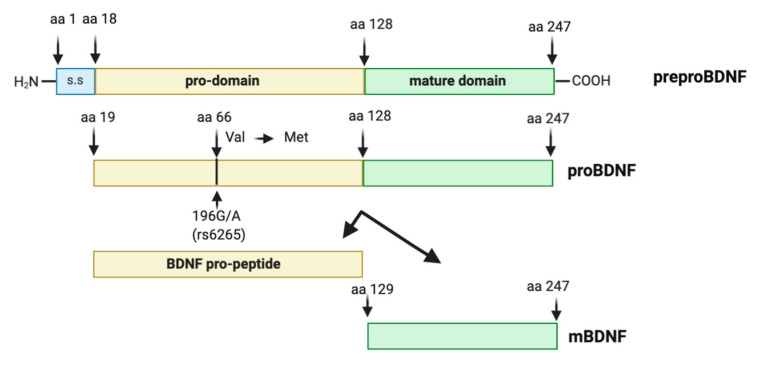
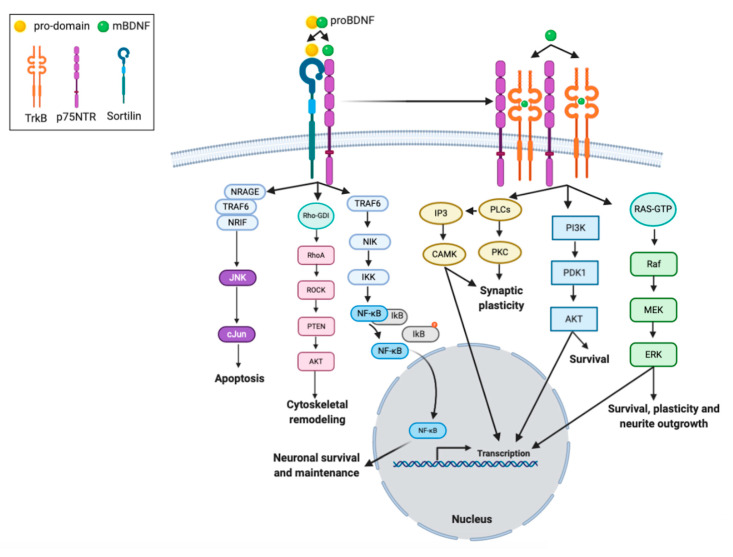
- BDNF is synthesized as preproBDNF (32–35 kDa), cleaved to proBDNF (28–32 kDa), then mature mBDNF (13 kDa); proBDNF and mBDNF can exert opposing effects via p75NTR and TrkB, respectively.
- The human BDNF gene has 11 exons and nine alternative promoters; the Val66Met polymorphism (rs6265) impairs activity-dependent BDNF secretion and has been linked to mood disorders, cognitive/neurodegenerative phenotypes, but replication is inconsistent.
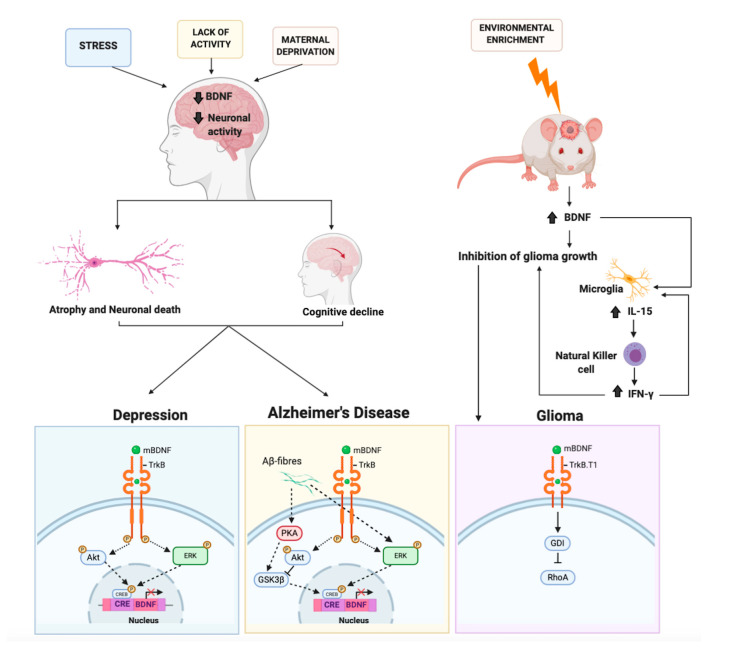
- In major depressive disorder, BDNF mRNA and protein are decreased in hippocampus, prefrontal cortex, and amygdala; antidepressants increase BDNF/TrkB signaling in rodent cortex and hippocampus. Three months of aerobic exercise training increased hippocampal volume by 12% in healthy individuals and 16% in patients with schizophrenia.
- In Alzheimer’s disease, BDNF is reduced and can correlate with disease severity; mouse studies indicate exercise-induced protection requires both adult hippocampal neurogenesis and BDNF. In glioblastoma, BDNF/TrkB can promote tumor growth, but enriched environment/BDNF can also be oncolytic via IL-15/IFN-γ and TrkB.T1.
Methods
- Narrative review; no primary experiments. It synthesizes published literature on BDNF gene structure, transcripts, miRNAs, signaling, Val66Met, depression, neurodegeneration, and brain cancer.
- Evidence discussed includes rodent models, in vitro cell studies, human postmortem brain tissue, serum/platelet BDNF measures, genetic association studies, and meta-analyses.
- No systematic search strategy, inclusion criteria, or quantitative synthesis is reported.
Limitations
- The paper states that human neuroplasticity remains largely indirect because of methodological limitations and ethical constraints, and that there is no evidence that serum BDNF is related to brain BDNF and neuroplasticity.
- The paper states that Val66Met genetic findings are inconsistent, with failed replications possibly due to environmental factors, ethnicity, age, and sex.
- Evident from the text: as a narrative review, it lacks systematic search and quality appraisal; many mechanistic claims rely on rodent or in vitro models, and causal direction in human disease remains uncertain.
Model-written summary. Check it against the paper before relying on it.
Integrity signals
Registry
Cites
Statistics
Figures
Verification
Claims the paper makes
59 Valid · 7 Not valid · 51 Not checked · 18 Own results and interpretations
The cited sources support only part of this claim — read each source’s verdict below.
In the paper
“BDNF protein is also detectable outside of the nervous system in several non-neuronal tissues, such as in endothelial cells [17,18], cardiomyocytes [19], vascular smooth muscle cells [17], leukocytes [20], platelets [21,22], and megakaryocytes [19].”
§ Neurotrophic Factor BDNF, Physiological Functions and Therapeutic Potential in Depression, Neurodegeneration and Brain Cancer > 1. Introduction
What the sources say
- Partly supportedcites [17] Nakahashi T. Fujimura H. Altar C.A. Li J. Kambayashi J. Tandon N.N. Sun B. Vascular endothelial cells synthesize and secrete brain-derived neurotrophic factor FEBS Lett. 2000 470 113 117 10.1016/S0014-5793(00)01302-8 10734218 sourceExperimental — accuracy not yet measured
Our copy squarely supports the endothelial-cell part: Results 3.1 reports BDNF protein by ELISA in HUVEC culture medium (135 +/- 67.2 pg/ml) and cell lysates (52.6 +/- 7.0 pg/ml), and in human coronary artery and bovine pulmonary artery endothelial cultures, with mRNA confirmed in 3.2. It does not support BDNF protein in vascular smooth muscle cells: in HCASMCs our copy detects only BDNF mRNA (RT-PCR 594 bp band and 4.0/1.6 kb Northern bands, Sec. 3.2/Fig. 3), no protein assay was done on smooth muscle cells, and the Introduction/Discussion credit the earlier reports of BDNF in vascular smooth muscle cells to another work ([14]), while the megakaryocytic cell line data (Meg-01, K562) actually show almost no BDNF protein (Discussion). (LLM, conf=0.75)
- Not checked — no full text of the sourcecites [18] Wang H. Ward N. Boswell M. Katz D.M. Secretion of brain-derived neurotrophic factor from brain microvascular endothelial cells Eur. J. Neurosci. 2006 23 1665 1670 10.1111/j.1460-9568.2006.04682.x 16553631 source
- Not checked — no full text of the sourcecites [19] Pius-Sadowska E. Machaliński B. BDNF-A key player in cardiovascular system J. Mol. Cell. Cardiol. 2017 110 54 60 10.1016/j.yjmcc.2017.07.007 28736262 source
- Partly supportedcites [20] Anders Q.S. Ferreira L.V.B. Rodrigues L.C.M. Nakamura-Palacios E.M. BDNF mRNA Expression in Leukocytes and Frontal Cortex Function in Drug Use Disorder Front. Psychiatry 2020 11 469 10.3389/fpsyt.2020.00469 32508693 PMC7248396 sourceExperimental — accuracy not yet measured
Citation [20] is attached specifically to leukocytes. The Methods and Discussion (pages not provided) report BDNF mRNA expression in peripheral-blood leukocytes, but the paper measures RNA rather than demonstrating that BDNF protein is detectable in those cells. The other cell types have separate citations and are not assessed here. (LLM, conf=0.85)
plain- Asserted: passes — The authors put it forward as true.
- Checkable: passes — It can be checked against evidence.
- Load-bearing: unclear — It is unclear whether the paper’s conclusions depend on it.
- Based: passes — The paper gives a reason why it holds.
- Partly supported
The cited sources support only part of this claim — read each source’s verdict below.
In the paper
“Several lines of evidence also suggest that the BDNF/TrkB signaling is involved in adult neurogenesis in the hippocampus with differing effects in the dentate gyrus (DG) and subventricular zone (SVZ) [5].”
§ Neurotrophic Factor BDNF, Physiological Functions and Therapeutic Potential in Depression, Neurodegeneration and Brain Cancer > 1. Introduction
What the sources say
- Partly supportedcites [5] Vilar M. Mira H. Regulation of Neurogenesis by Neurotrophins during Adulthood: Expected and Unexpected Roles Front. Neurosci. 2016 10 26 10.3389/fnins.2016.00026 26903794 PMC4746328 sourceExperimental — accuracy not yet measured
The section on the SGZ says BDNF/TrkB is important for adult hippocampal neurogenesis, while the section on the SVZ describes different, mixed effects on SVZ proliferation and olfactory-bulb neurogenesis. The claim is imprecise in placing both the dentate gyrus and SVZ within the hippocampus; the paper treats them as distinct neurogenic niches. No page numbers were supplied for these passages. (LLM, conf=0.87)
hedgedstates an association- Asserted: passes — The authors put it forward as true.
- Checkable: passes — It can be checked against evidence.
- Load-bearing: unclear — It is unclear whether the paper’s conclusions depend on it.
- Based: passes — The paper gives a reason why it holds.
- Partly supported
Every source the paper cites for this claim was checked and supports it.
In the paper
“The functionality of BDNF Val66Met variant was only confirmed in 2003 [112], where BDNF Val66Met polymorphism was shown to disrupt the episodic memory in humans.”
§ Neurotrophic Factor BDNF, Physiological Functions and Therapeutic Potential in Depression, Neurodegeneration and Brain Cancer > 2. The Human BDNF Gene: Transcripts and Variants > 2.4. The Human BDNF Variant Val66Met
What the sources say
- Supportedcites [112] Egan M.F. Kojima M. Callicott J.H. Goldberg T.E. Kolachana B.S. Bertolino A. Zaitsev E. Gold B. Goldman D. Dean M. The BDNF val66met polymorphism affects activity-dependent secretion of BDNF and human memory and hippocampal function Cell 2003 112 257 269 10.1016/S0092-8674(03)00035-7 12553913 source
The Results report that met/met subjects scored lower on a test of verbal episodic memory, with a significant effect of BDNF genotype in both controls and the full cohort. The Discussion concludes that the polymorphism has significant effects on human verbal episodic memory. This supports the claim that Val66Met impairs episodic memory in humans. (LLM, conf=0.91)
plainstates a cause- Asserted: passes — The authors put it forward as true.
- Checkable: passes — It can be checked against evidence.
- Load-bearing: unclear — It is unclear whether the paper’s conclusions depend on it.
- Based: passes — The paper gives a reason why it holds.
- Supported
The cited sources support only part of this claim — read each source’s verdict below.
In the paper
“The pro-domain of BDNF is the locus of a functional human BDNF polymorphism (SNPs) Val66Met, also known as rs6265 or G196Apolymorphism [109].”
§ Neurotrophic Factor BDNF, Physiological Functions and Therapeutic Potential in Depression, Neurodegeneration and Brain Cancer > 2. The Human BDNF Gene: Transcripts and Variants > 2.4. The Human BDNF Variant Val66Met
What the sources say
- Partly supportedcites [109] Petryshen T.L. Sabeti P.C. Aldinger K.A. Fry B. Fan J.B. Schaffner S.F. Waggoner S.G. Tahl A.R. Sklar P. Population genetic study of the brain-derived neurotrophic factor (BDNF) gene Mol. Psychiatry 2010 15 810 815 10.1038/mp.2009.24 19255578 PMC2888876 sourceExperimental — accuracy not yet measured
The Introduction (page unavailable) places Val66Met at position 66 of the proBDNF protein and describes its role in neuronal and cognitive function. Results > Global diversity of BDNF SNPs (page unavailable) identifies Val66Met as rs6265. Our copy does not identify it as G196A or explicitly locate it in the pro-domain, so those details remain unsupported by this source. (LLM, conf=0.84)
plain- Asserted: passes — The authors put it forward as true.
- Checkable: passes — It can be checked against evidence.
- Load-bearing: unclear — It is unclear whether the paper’s conclusions depend on it.
- Based: passes — The paper gives a reason why it holds.
- Partly supported
The cited sources support only part of this claim — read each source’s verdict below.
In the paper
“mBDNF-TrkB-signaling pathways regulate multiple events, such as apoptosis and survival of neurons [90,91,92], dendritic growth [93,94,95,96], spine maturation and stabilization, development of synapses [96,97,98], learning- and memory-processes-dependent synaptic plasticity [99,100].”
§ Neurotrophic Factor BDNF, Physiological Functions and Therapeutic Potential in Depression, Neurodegeneration and Brain Cancer > 2. The Human BDNF Gene: Transcripts and Variants > 2.3. Biology of BDNF
What the sources say
- Partly supportedcites [90] Patel A.V. Krimm R.F. BDNF is required for the survival of differentiated geniculate ganglion neurons Dev. Biol. 2010 340 419 429 10.1016/j.ydbio.2010.01.024 20122917 PMC2854215 sourceExperimental — accuracy not yet measured
This source is cited for the apoptosis and neuronal-survival portion of the sentence, not the later claims about dendrites, synapses, or plasticity. The Discussion reports that BDNF prevents death of differentiated geniculate ganglion neurons by suppressing Bax-dependent cell death, and links BDNF loss to increased activated caspase-3. Our copy does not establish that this effect specifically involves mature BDNF–TrkB signaling. (LLM, conf=0.82)
- Partly supportedcites [91] Chen J. Shehadah A. Pal A. Zacharek A. Cui X. Cui Y. Roberts C. Lu M. Zeitlin A. Hariri R. Neuroprotective effect of human placenta-derived cell treatment of stroke in rats Cell Transplant. 2013 22 871 879 10.3727/096368911X637380 22469567 sourceExperimental — accuracy not yet measured
Our copy of Chen et al. (2013) supports only the apoptosis/survival facet of the claim, and only in a rat focal-stroke context: the Discussion states 'BDNF also plays an important role in promoting neuroprotection after stroke' and the Abstract/Conclusion attribute PDA001's neuroprotective effects to 'the increase of VEGF, HGF, and BDNF expression, and a decrease of apoptosis' (with reduced TUNEL and cleaved caspase 3, Discussion). The TrkB receptor/signalling pathway is never mentioned, and no passage addresses the other events the claim attributes to mBDNF-TrkB signalling — dendritic growth, spine maturation and stabilization, synapse development, or learning- and memory-dependent synaptic plasticity (searched: 'TrkB', 'BDNF signaling', 'dendritic growth spine synaptogenesis synaptic plasticity learning memory'). The paper is also an intervention study measuring BDNF protein by ELISA/immunostaining, not a source for the general regulatory roles listed in the citing sentence. (LLM, conf=0.65)
- Not checked — no full text of the sourcecites [92] Wu Y. Wang R. Wang Y. Gao J. Feng L. Yang Z. Distinct Impacts of Fullerene on Cognitive Functions of Dementia vs. Non-dementia Mice Neurotox. Res. 2019 36 736 745 10.1007/s12640-019-00075-1 31222673 source
- Supportedcites [93] Gorski J.A. Zeiler S.R. Tamowski S. Jones K.R. Brain-derived neurotrophic factor is required for the maintenance of cortical dendrites J. Neurosci. 2003 23 6856 6865 10.1523/JNEUROSCI.23-17-06856.2003 12890780 PMC6740724 source
This source is cited in the group attached to dendritic growth, not the separately cited claims about neuronal survival or learning and memory. Its Introduction states that BDNF and TrkB signaling can influence cortical dendrite growth, and the section ‘BDNF is required for maintenance of neuronal morphology’ reports a requirement for BDNF in maintaining cortical dendritic structure. Page numbers are unavailable in our copy. (LLM, conf=0.91)
- Supportedcites [94] Kwon M. Fernández J.R. Zegarek G.F. Lo S.B. Firestein B.L. BDNF-promoted increases in proximal dendrites occur via CREB-dependent transcriptional regulation of cypin J. Neurosci. 2011 31 9735 9745 10.1523/JNEUROSCI.6785-10.2011 21715638 PMC3139247 source
This source supports the dendritic-growth portion of the sentence, rather than the separately cited claims about survival or learning and memory. The Introduction describes BDNF as a regulator of dendrite outgrowth and branching, and the Discussion reports BDNF-dependent increases in proximal dendrite number in hippocampal neurons. (LLM, conf=0.91)
- Partly supportedcites [95] Orefice L.L. Waterhouse E.G. Partridge J.G. Lalchandani R.R. Vicini S. Xu B. Distinct roles for somatically and dendritically synthesized brain-derived neurotrophic factor in morphogenesis of dendritic spines J. Neurosci. 2013 33 11618 11632 10.1523/JNEUROSCI.0012-13.2013 23843530 PMC3724547 sourceExperimental — accuracy not yet measured
The Introduction and Discussion report that BDNF synthesized in dendrites regulates spine maturation and pruning, and the section on corresponding synaptic changes reports effects on excitatory synapse number and size. Those findings support the spine-maturation and synapse-development portions associated with this citation. Our copy does not establish dendritic growth or spine stabilization, or identify TrkB signaling as the mechanism for these effects; the citations attached to apoptosis and learning-dependent plasticity are different references. (LLM, conf=0.86)
- Supportedcites [96] Zagrebelsky M. Tacke C. Korte M. BDNF signaling during the lifetime of dendritic spines Cell Tissue Res. 2020 10.1007/s00441-020-03226-5 PMC7529616 32537724 source
This source is cited for dendritic growth and for spine maturation, stabilization, and synapse development, rather than for the separately cited claims about neuronal survival and learning. The Introduction describes BDNF signaling in spine formation and maintenance, and “Dendritic spine maturation and stabilization” explicitly says maturation depends on TrkB signaling. The review also reports TrkB-related regulation of dendritic morphology; because spines form the postsynaptic part of most excitatory synapses, its account of spine formation supports the synapse-development point. (LLM, conf=0.86)
- Could not verifycites [99] Opazo P. Watabe A.M. Grant S.G. O’Dell T.J. Phosphatidylinositol 3-kinase regulates the induction of long-term potentiation through extracellular signal-related kinase-independent mechanisms J. Neurosci. 2003 23 3679 3688 10.1523/JNEUROSCI.23-09-03679.2003 12736339 PMC6742185 sourceExperimental — accuracy not yet measured
The Introduction discusses Ras, PI3-kinase and MAPK signaling in long-term potentiation, but does not connect those findings to mBDNF–TrkB signaling. Searches of our copy for BDNF and TrkB found no passage addressing whether that pathway regulates learning- or memory-related synaptic plasticity. (LLM, conf=0.76)
- Not checked — no full text of the sourcecites [100] Leal G. Bramham C.R. Duarte C.B. BDNF and Hippocampal Synaptic Plasticity Vitam. Horm. 2017 104 153 195 10.1016/bs.vh.2016.10.004 28215294 source
plainstates a cause- Asserted: passes — The authors put it forward as true.
- Checkable: passes — It can be checked against evidence.
- Load-bearing: passes — The paper’s conclusions depend on it.
- Based: passes — The paper gives a reason why it holds.
- Partly supported
75 more claims · 23 with their cited sources checked
Create a free account to see all 135 claims and to verify the 23 references still open.
- It may state two separate claims as one. 47
- Probably not a substantial claim. 14
Citations
Cites
Molecular Mechanisms of Depression: Perspectives on New Treatment Strategies
Lang, U. E., & Borgwardt, S. (2013) · Cellular Physiology and Biochemistry · doi:10.1159/000350094 · Cited by 8,475
A PGC1-α-dependent myokine that drives brown-fat-like development of white fat and thermogenesis
Boström, P., Wu, J., Jedrychowski, M. P., Korde, A., Ye, L., Lo, J. C., Rasbach, K. A., Boström, E. A., Choi, J. H., Long, J. Z., et al. (2012) · Nature · doi:10.1038/nature10777 · Cited by 4,810
Requirement of hippocampal neurogenesis for the behavioral effects of antidepressants
Santarelli, L., Saxe, M., Gross, C., Surget, A., Battaglia, F., Dulawa, S., Weisstaub, N., Lee, J., Duman, R., Arancio, O., et al. (2003) · Science · doi:10.1126/science.1083328 · Cited by 4,321
Domingos da Silveira da Luz, A. C., Pereira Dias, G., do Nascimento Bevilaqua, M. C., Cocks, G., Gardino, P. F., Thuret, S., & Nardi, A. E. (2013) · Neuropsychobiology · doi:10.1159/000353269 · Cited by 3,995
Egan, M. F., Kojima, M., Callicott, J. H., Goldberg, T. E., Kolachana, B. S., Bertolino, A., Zaitsev, E., Gold, B., Goldman, D., Dean, M., et al. (2003) · Cell · doi:10.1016/s0092-8674(03)00035-7 · Cited by 3,888
Chronic antidepressant treatment increases neurogenesis in adult rat hippocampus
Malberg, J. E., Eisch, A. J., Nestler, E. J., & Duman, R. S. (2000) · The Journal of Neuroscience · doi:10.1523/jneurosci.20-24-09104.2000 · Cited by 3,111
Microglia promote learning-dependent synapse formation through brain-derived neurotrophic factor
Parkhurst, C. N., Yang, G., Ninan, I., Savas, J. N., Yates, J. R., Lafaille, J. J., Hempstead, B. L., Littman, D. R., & Gan, W.-B. (2013) · Cell · doi:10.1016/j.cell.2013.11.030 · Cited by 2,599
Trk Receptors: Roles in Neuronal Signal Transduction
Huang, E. J., & Reichardt, L. F. (2003) · Annual Review of Biochemistry · doi:10.1146/annurev.biochem.72.121801.161629 · Cited by 2,537
NMDA receptor subunit diversity: impact on receptor properties, synaptic plasticity and disease
Paoletti, P., Bellone, C., & Zhou, Q. (2013) · Nature Reviews Neuroscience · doi:10.1038/nrn3504 · Cited by 2,523 · cited 1×
“Activation of L-VGCC and NMDA receptors mediate intracellular Ca2+-signaling and regulate several aspects of brain functions (for review [34,35]).”
BackgroundNeurotrophin-regulated signalling pathways
Reichardt, L. F. (2006) · Philosophical Transactions of the Royal Society B: Biological Sciences · doi:10.1098/rstb.2006.1894 · Cited by 2,195
Cited by
Items 601–700 of 994
Su, W., Du, Y., Wang, W., Li, Q., Zhang, J., & He, W. (2025) · Journal of Ethnopharmacology · doi:10.1016/j.jep.2025.119322 · Cited by 5
Tomás-Sanchez, C., Blanco-Álvarez, V. M., González-Barrios, J. A., Martínez‐Fong, D., Soto-Rodríguez, G., Brambila, E., Gonzalez-Vazquez, A., Aguilar-Peralta, A. K., Limón, I. D., Vargas-Castro, V., et al. (2024) · Heliyon · doi:10.1016/j.heliyon.2024.e30017 · Cited by 4
The contribution of mTOR to the immunopathology of bipolar disorder
Bertollo, A. G., Jordan, V. A., Capitanio, M. Z., & Ignácio, Z. M. (2025) · Journal of Neuroimmunology · doi:10.1016/j.jneuroim.2025.578744 · Cited by 3
Bansal, S., Hedau, S. T., Sengupta, S., Sakhuja, P., Agarwal, A., Singh, S., Chopra, R., Gupta, S. K., Singh, P., Andley, M., et al. (2025) · Molecular Medicine Reports · doi:10.3892/mmr.2025.13570 · Cited by 3
The Role of Long Non-Coding RNA in Anxiety Disorders: A Literature Review
López-Rocha, L. D., Ruíz-Hernández, A., Martínez-Coronilla, G., Leija-Montoya, A. G., Peña-Peña, M., Sánchez‐Muñoz, F., Campoy, U. R., & González-Ramírez, J. (2025) · International Journal of Molecular Sciences · doi:10.3390/ijms26115042 · Cited by 5
Ikegami, R., Inoue, T., Takamatsu, Y., Nishio, T., Fukuchi, M., Haga, S., Ozaki, M., & Maejima, H. (2024) · Neuroscience Letters · doi:10.1016/j.neulet.2024.137830 · Cited by 6
Nascimento, M. G. D. F., de Castro, J. M., Medeiros, L. F., Fiuza, K. J., de Oliveira, T. C., Morais, I. T. D. S., Bosco, T. D., Caumo, W., Stein, D. J., & Torres, I. L. D. S. (2024) · International Journal of Developmental Neuroscience · doi:10.1002/jdn.10378 · Cited by 5
The role of TrkB receptor signaling in Alzheimer’s disease
He, K., Nie, L., Dai, Z., Li, S., Yang, X., & Liu, G. (2023) · Human Brain · doi:10.37819/hb.4.1788 · Cited by 2
Ning, H., Zhou, H., Yang, N., Ren, J., Wang, H., Liu, W., & Zhao, Y. (2023) · Experimental Gerontology · doi:10.1016/j.exger.2023.112295 · Cited by 7
Biomarkers For the Diagnosis of Depression: Recent Updates
Kore, M. S., & Prabhavalkar, K. S. (2022) · Current Psychiatry Research and Reviews · doi:10.2174/2666082219666221114114738 · Cited by 4
Zeidan, H. M., Nashaat, N. H., Hemimi, M., Hashish, A. F., Elsaeid, A., EL-Ghaffar, N. A., Helal, S. I., & Meguid, N. A. (2024) · Journal of Molecular Neuroscience · doi:10.1007/s12031-024-02220-8 · Cited by 6
Miyanishi, H., Suga, S., Sumi, K., Takakuwa, M., Izuo, N., Asano, T., Muramatsu, S., & Nitta, A. (2023) · eNeuro · doi:10.1523/eneuro.0162-23.2023 · Cited by 4
Wang, Z., Wu, T., Hu, H., Alabed, A. A. A., Cui, G., Sun, L., Sun, Z., Wang, Y., & Li, P. (2024) · Journal of Psychiatry and Neuroscience · doi:10.1503/jpn.230118 · Cited by 5
Sun, Y., Xiong, F., Wu, L., Liu, Z., Liu, P., Li, W., Zhang, J., & Sun, R. (2026) · Journal of Hazardous Materials · doi:10.1016/j.jhazmat.2026.142036 · Cited by 5
Oluboka, O. J., Habert, J., Khullar, A., Robinson, D. J., Katzman, M. A., Klassen, L. J., Soares, C., Chokka, P. R., Oakander, M. A., McIntyre, R. S., et al. (2025) · CNS Spectrums · doi:10.1017/s1092852925000276 · Cited by 3
Wang, H., Lv, Z., Xia, H., Tang, R., Liu, M., Wang, J., & Wang, J. (2023) · Heliyon · doi:10.1016/j.heliyon.2023.e21153 · Cited by 5
Song, C., Zhao, J., Hao, J., Mi, D., Zhang, J., Liu, Y., Wu, S., Gao, F., & Jiang, W. (2023) · Cell Death Discovery · doi:10.1038/s41420-023-01445-7 · Cited by 3
Functional Medicine Approaches to Neurodegeneration
Kharrazian, D. (2022) · Physical Medicine and Rehabilitation Clinics of North America · doi:10.1016/j.pmr.2022.04.011 · Cited by 3
Haidary, M., Samadi, Y., Rezai, Z., Sadaqat, A., Ahmadi, M. A., Gholami, J., Mohammadi, M. M., & Shojae, M. T. (2025) · Current Research in Pharmacology and Drug Discovery · doi:10.1016/j.crphar.2025.100242 · Cited by 5
Disruption of BDNF signalling in neuropathologies
Paulo-Ramos, A., Rhymes, E. R., Villarroel‐Campos, D., & Sleigh, J. N. (2026) · Biochemical Society Transactions · doi:10.1042/bst20253079 · Cited by 6
Volf, N. V., & Privodnova, E. Y. (2023) · Журнал высшей нервной деятельности им И П Павлова · doi:10.31857/s0044467723030139 · Cited by 3
Abey, N. O., Ebuehi, O. A. T., & Imaga, N. A. (2023) · Nutritional Neuroscience · doi:10.1080/1028415x.2023.2285085 · Cited by 4
Tuna, A., Boyacıoğlu, O., Döndü, A., & Örenay-Boyacıoğlu, S. (2024) · Clinical Psychopharmacology and Neuroscience · doi:10.9758/cpn.24.1223 · Cited by 5
Oral Motor Impairments Contribute to Weight Status of Adults with Severe Cerebral Palsy
Lyster, A. E., Hansen, S. L., Andersen, C. T., Nielsen, J. B., Westerterp, K. R., Wouters, L., Kiens, B., & Ritterband‐Rosenbaum, A. (2023) · Nutrients · doi:10.3390/nu15245042 · Cited by 3
Yilmaz, D., Papiol, S., Keeser, D., Cole, J. H., Malchow, B., Schmitt, A., Falkai, P., Maurus, I., & Roell, L. (2025) · medRxiv · doi:10.1101/2025.01.08.24319554 · Cited by 3
Neurotrophic Factor: Epidermal Growth Factor (EGF) and Depressive Disorder
Islam, M. R., Roknuzzaman, A. S. M., Sarker, R., Haque, M. A., Qusar, M. S., & Kabir, E. R. (2024) · Springer eBooks · doi:10.1007/978-3-031-32035-4_33-1 · Cited by 1
Chen, Y., Cai, W.-K., Yu, J., Shen, M., Zhou, J.-H., Yang, S.-Y., Liu, W., Lu, S., Shi, Y.-K., & Yang, L. (2024) · Heliyon · doi:10.1016/j.heliyon.2024.e25569 · Cited by 2
Matrix-Metalloproteinase-Responsive Brain-Derived Neurotrophic Factor for Spinal Cord Injury Repair
He, J., Cai, H., Wang, Y., et al. (2024) · Processes · doi:10.3390/pr12071510 · Cited by 2
Torres, A. G., Santos, J., & Vazquez-Sanroman, D. B. (2025) · Cannabis and Cannabinoid Research · doi:10.1177/25785125251410807 · Cited by 3
The epigenetic mechanism of metabolic risk in bipolar disorder
Huang, K., Li, S., Yang, M., Teng, Z., Xu, B., Wang, B., Chen, J., Zhao, L., & Wu, H. (2024) · Obesity Reviews · doi:10.1111/obr.13816 · Cited by 4
Hormonal Contraceptives and Depression: A Proteomic Analysis Using Neuronal Models
Thilmany, S., Thomas, A., Reinders, Y., Shakeri, F., Vogel, M., Sickmann, A., Scholl, C., & Thevis, M. (2025) · PROTEOMICS - CLINICAL APPLICATIONS · doi:10.1002/prca.70017 · Cited by 2
Zhang, W., Mu, Q., Chen, P., He, Y., Zhou, Y., Fang, J., Tang, C., Guo, J., Du, W., Lin, L., et al. (2025) · BMC Public Health · doi:10.1186/s12889-025-24181-2 · Cited by 3
Aslan, C., Aslankoç, R., Özmen, Ö., Sülük, B. N., Kavrık, O., & Gümral, N. (2023) · Behavioural Brain Research · doi:10.1016/j.bbr.2023.114763 · Cited by 3
Cipriano, G. L., Raffaele, I., Floramo, A., Argento, V., Donato, D. S., Malatino, C., Silvestro, S., Schepici, G., Astorino, M. F., Calabrò, M., et al. (2026) · International Journal of Molecular Sciences · doi:10.3390/ijms27031269 · Cited by 4
Xu, N., Xu, S., & Wang, L. (2025) · Complementary Therapies in Medicine · doi:10.1016/j.ctim.2025.103307 · Cited by 2
Betto, F., Chiricosta, L., & Mazzon, E. (2023) · Brain Sciences · doi:10.3390/brainsci13070986 · Cited by 2
Singh, L. (2025) · Molecular Neurobiology · doi:10.1007/s12035-025-05376-5 · Cited by 2
Sudesh, R., Vashishth, R., Rajesh, K. M., Batra, D. R., Venkatesan, S., Sultania, A., & Ahmad, F. (2023) · Biochemia Medica · doi:10.11613/bm.2024.010503 · Cited by 6
Ishizaki, Y., Shimizu, S., Kusaka, A., Yoshida, A., Kunisawa, N., & Ohno, Y. (2025) · Journal of Pharmacological Sciences · doi:10.1016/j.jphs.2025.07.002 · Cited by 2
Depressive Behavior and BDNF/TrkB Signaling
Jha, M., Pasupalak, J. K., & Gupta, G. L. (2024) · Springer eBooks · doi:10.1007/978-3-031-32035-4_36-1 · Cited by 4
Zhang, Y., Liu, S., Yang, S., Yao, Y., Zhao, C., Pei, Z., & Zhang, S. (2025) · International Heart Journal · doi:10.1536/ihj.24-748 · Cited by 2
Jonny, J., Larasati, A. D., Sunjaya, Q. A., & Faried, A. (2025) · Chinese Neurosurgical Journal · doi:10.1186/s41016-025-00415-5 · Cited by 3
Ke, Y., Wang, Y., & Hu, Y. (2025) · Neuroscience Letters · doi:10.1016/j.neulet.2025.138268 · Cited by 2
Łuczkowska, K., Kulig, P., Baumert, B., & Machaliński, B. (2022) · Leukemia & lymphoma/Leukemia and lymphoma · doi:10.1080/10428194.2022.2113535 · Cited by 2
Jiang, Z.-F., Xuan, L.-N., Sun, X., Liu, S., & Yin, J. (2023) · Molecular Neurobiology · doi:10.1007/s12035-023-03630-2 · Cited by 3
Yoo, J., Nguyen, C. D., Jeong, S. J., Yang, J. H., Lee, G., Shin, J. C., & Kim, J. (2024) · Research Square · doi:10.21203/rs.3.rs-4002383/v1 · Cited by 3
Cheng, J., Wu, C., Wang, Y., Wang, Z., Yang, H., & Shen, J. (2024) · Pharmacology Biochemistry and Behavior · doi:10.1016/j.pbb.2024.173809 · Cited by 2
Fang, G., Zhou, Y., Zhou, X., Zhou, H., Ge, Y.-Y., Luo, S., Chen, J., & Zhang, L. (2022) · Neuropharmacology · doi:10.1016/j.neuropharm.2022.108981 · Cited by 2
Qi, Z., Qin, L., Gao, M., Yang, R., Liu, C., Wang, N., Li, W., Huang, Y., Wu, L., & Liu, T. (2025) · Journal of Traditional Chinese Medical Sciences · doi:10.1016/j.jtcms.2025.05.002 · Cited by 3
Shin, S., Kim, H., Kim, D. C., & Chang, W. H. (2026) · PLoS ONE · doi:10.1371/journal.pone.0343929 · Cited by 2
Washiyama, M. (2022) · THE JOURNAL OF ISLAND STUDIES · doi:10.5995/jis.23.2.123 · Cited by 2
Liu, S., Du, X., Chen, Z., Zhou, R., Wang, H., Mao, X., Du, J., Zhang, G., Li, H., Song, Y., et al. (2024) · Neuroscience · doi:10.1016/j.neuroscience.2024.09.019 · Cited by 2
Yilmaz, D., Papiol, S., Keeser, D., Cole, J. H., Malchow, B., Walter, H., Meyer‐Lindenberg, A., Hirjak, D., Hasan, A., Schmitt, A., et al. (2025) · NeuroImage Clinical · doi:10.1016/j.nicl.2025.103881 · Cited by 8
Nervous system contributions to small cell lung cancer: Lessons from diverse oncological studies
Liao, S., Kang, K., Yao, Z., & Lü, Y. (2024) · Biochimica et Biophysica Acta (BBA) - Reviews on Cancer · doi:10.1016/j.bbcan.2024.189252 · Cited by 8
Chow, M. Y., Liew, S. S. X., Monif, M., Kamarudin, M. N. A., & Phon, B. W. S. (2025) · Biomedicines · doi:10.3390/biomedicines13112640 · Cited by 4
Yi, H., Hou, X., Guo, Y.-X., Tian, L.-X., Yuan, X., Yao, R.-R., Zhang, Q.-R., Liang, L., Jia, H., Zhao, Y.-L., et al. (2025) · Neuroscience · doi:10.1016/j.neuroscience.2025.08.032 · Cited by 2
Targeting the BDNF/TrkB/CREB pathway: emerging strategies for neuroprotection in Parkinson’s disease
Ahire, C. G., & Kaur, G. (2026) · Molecular Biology Reports · doi:10.1007/s11033-026-11850-7 · Cited by 2
Astragaloside IV is a potential natural neuroprotective agent for stroke: a review
Zhang, Q., Qin, W.-X., Li, X., Zhang, Y.-B., Li, M., Xu, J., & Mao, Z. (2026) · Frontiers in Pharmacology · doi:10.3389/fphar.2025.1718700 · Cited by 4
Environmental enrichment for neuropathic pain via modulation of neuroinflammation
Zhang, J., Zhong, Z.-A., & Xing, W.-Y. (2025) · Frontiers in Molecular Neuroscience · doi:10.3389/fnmol.2025.1547647 · Cited by 3
Zhao, T., Li, H., Jia, Y., Xia, N., Li, X., & Zhang, H. (2025) · Metabolic Brain Disease · doi:10.1007/s11011-025-01637-3 · Cited by 3
Wang, J., Pavlyukov, M. S., Yamashita, D., Cheng, P., Zhang, Z., Kim, S.-H., Nakano, M. A., Xie, W., Chen, D., Frett, B., et al. (2020) · bioRxiv (Cold Spring Harbor Laboratory) · doi:10.1101/2020.12.01.405696 · Cited by 2
Liu, K., Tao, T., Li, R., Wang, H., Wang, L., & Wu, H. (2025) · Biological Trace Element Research · doi:10.1007/s12011-025-04769-w · Cited by 2
The role of neurogenesis in neurodegenerative diseases: Mechanisms and interventions
Chen, R., Qiu, Z., Luo, Y., Fu, Y., Cui, X., & Jiang, M. (2026) · Ageing Research Reviews · doi:10.1016/j.arr.2026.103160 · Cited by 3
Lim, C. R., Ogawa, S., & Kumari, Y. (2024) · Archives of Pharmacal Research · doi:10.1007/s12272-024-01523-z · Cited by 4
Антипова, Т. А., Логвинов, И. О., Deyev, I. E., Povarnina, P. Y., Vakhitova, Y. V., Гудашева, Т. А., & Середенин, С. Б. (2023) · Доклады Российской академии наук Науки о жизни · doi:10.31857/s2686738923600218 · Cited by 2
dos Santos, T. B., de Souza, V. H. S., Lopes, N. C. G., Ferreira, F. A., Leite, C. Q., da Silva, M. G. S., & dos Santos, B. F. (2021) · Research Society and Development · doi:10.33448/rsd-v10i10.19139 · Cited by 6
Duan, W., Ma, J., Qu, S., Zhang, J., Li, M., & Jiang, L. (2025) · Frontiers in Psychiatry · doi:10.3389/fpsyt.2025.1605449 · Cited by 2
Khavarghazalani, B., Emadi, M., Heidari, A., Nahrani, M. H., & Amini, S. (2025) · Brain Research Bulletin · doi:10.1016/j.brainresbull.2025.111593 · Cited by 3
Beltrá, P., Viudes-Sarrión, N., Giner, M. J. L., Tomás-Muñoz, E., Pérez-Cervera, L., Agustín, R. M., Ortega, F. J., Valdesuso, R., Suso‐Martí, L., Binshtok, A. M., et al. (2025) · Neuromodulation Technology at the Neural Interface · doi:10.1016/j.neurom.2025.02.008 · Cited by 3
Sun, Y., Chen, L., Xiao, L., Wang, X., & Hallajzadeh, J. (2025) · Frontiers in Pharmacology · doi:10.3389/fphar.2025.1560305 · Cited by 2
Chen, Q., Zhang, J., Liu, X., Xu, K., Guo, H., Li, Y., Liang, J., Li, Y., & Liang, L. (2024) · Experimental Gerontology · doi:10.1016/j.exger.2024.112556 · Cited by 2
Brain-derived neurotrophic factor supports pericyte and vascular homeostasis in the aging brain
Luo, Q., Quan, W., Cao, Q., Scheffel, C., Hao, W., Yang, J., Furihata, T., Peng, G., Tang, Z., & Liu, Y. (2025) · Acta Neuropathologica Communications · doi:10.1186/s40478-025-02181-y · Cited by 4
Lippolis, M., Lenti, R., Mantuano, P., Luca, A. D., Pantaleo, A., Quaranta, N. A. A., Pilotto, A., Solfrizzi, V., Vuust, P., & Brattico, E. (2024) · medRxiv · doi:10.1101/2024.11.29.24318152 · Cited by 2
Jaskolski, M. R., Diedrich, A. K., Odainic, A., Schmidt, S. V., Schmitz, M., Strizek, B., Gembruch, U., Merz, W. M., & Flöck, A. (2022) · Metabolites · doi:10.3390/metabo12060482 · Cited by 5
Krishnamurthy, R., Krishnamoorthy, C., Dietsch, A. M., & Natarajan, S. K. (2024) · Brain Research · doi:10.1016/j.brainres.2024.149287 · Cited by 3
Xiong, J., Dou, M.-Y., Wang, Y., Zeng, T., Qi, X., Wei, J.-N., Shi, X., Cui, D.-D., Dai, H.-Z., Du, C., et al. (2026) · Molecular Psychiatry · doi:10.1038/s41380-026-03532-4 · Cited by 3
Gu, W., Wu, M., Zhang, R., Liu, P., Jiao, Y., & Rong, H. (2025) · Scientific Reports · doi:10.1038/s41598-025-88344-2 · Cited by 2
Pinkston, B. T. C., Browning, J. L., Larson, A. P., & Olsen, M. L. (2026) · Journal of Neuroscience · doi:10.1523/jneurosci.2002-24.2026 · Cited by 3
Coutellier, L. D., Musazzi, L., & Pavlovic, Z. M. (2022) · Springer eBooks · doi:10.1007/978-3-030-87480-3_4 · Cited by 2
Barros, R. G., de Carvalho, J. N. E., da Silva, C. P., Nishimura, F. G., & Beleboni, R. O. (2025) · Advances in Pharmacological and Pharmaceutical Sciences · doi:10.1155/adpp/6965826 · Cited by 3
Discovery and characterization of vertebrate sialoglycan-binding proteins
Adler, L., Yehuda, S., Varki, A. P., & Padler‐Karavani, V. (2025) · Seminars in Immunology · doi:10.1016/j.smim.2025.101978 · Cited by 2
Experimental modeling of autism spectrum disorders using propionic acid
Бояркин, В. С., Капица, И. Г., & Воронина, Т. А. (2023) · Nauchno-prakticheskii zhurnal «Patogenez» · doi:10.25557/2310-0435.2023.04.32-38 · Cited by 1
Vásquez-Carrasco, E., Albornoz-Gómez, V., Cerda-González, E., González-Guerra, C., Salazar-Díaz, J., Hernández-Martínez, J., Sandoval-Vásquez, C., & Valdés-Badilla, P. A. (2026) · Frontiers in Pharmacology · doi:10.3389/fphar.2026.1835358 · Cited by 1
Proteomic characterization of the medial prefrontal cortex in chronic restraint stress mice
Fu, Y., Gu, Z., Cao, H., Zuo, C., Huang, Y., Song, Y., Miao, J., Jiang, Y., & Wang, F. (2024) · Journal of Proteomics · doi:10.1016/j.jprot.2024.105278 · Cited by 2
Impact of cigarette smoking on neurotrophic factors: insight to BDNF, GDNF, and NGF alterations
Miladpour, B., Mohammadian, F., Alimardani, P., Tabar, M. M. M., & Khedri, A. (2025) · Egyptian Journal of Medical Human Genetics · doi:10.1186/s43042-025-00679-7 · Cited by 1
Bozok, Ü. G., Böyük, G., Bayraktar, B., & Özen, D. (2026) · Brain and Behavior · doi:10.1002/brb3.71452 · Cited by 1
Nautiyal, H., Roy, K. K., & Dwivedi, S. (2026) · ACS Chemical Neuroscience · doi:10.1021/acschemneuro.5c00574 · Cited by 4
Shukla, P., Aggarwal, P., Choudhary, P., & Muthamilarasan, M. (2025) · Proceedings of the Indian National Science Academy · doi:10.1007/s43538-025-00402-5 · Cited by 3
Depressive Behavior and BDNF/TrkB Signaling
Jha, M., Pasupalak, J. K., & Gupta, G. L. (2025) · Springer eBooks · doi:10.1007/978-3-031-73368-0_36 · Cited by 3
Peyvand, P., Allami, P., & Rezaei, N. (2025) · Reviews in the Neurosciences · doi:10.1515/revneuro-2025-0025 · Cited by 1
Sahoo, S. K., Sahu, P. K., Sa, N., & Behera, A. (2026) · ADMET & DMPK · doi:10.5599/admet.3058 · Cited by 2
de Matos, R. J. B., Lima, O. J. D. F., Ribeiro, J. D. S., da Silva, T. R. L., da Conceição, M. C. M., David, M. C. M. M., Silva, T. L. D. A., do Nascimento, E., & Medeiros, J. M. B. (2025) · Nutritional Neuroscience · doi:10.1080/1028415x.2025.2600516 · Cited by 1
Liu, W., Huang, K., Wu, Y., Duan, J., Wang, R., Zhang, Y., Xu, M., Yang, L., & Yang, C. (2024) · Neurobiology of Disease · doi:10.1016/j.nbd.2024.106608 · Cited by 1
Wang, X., Gao, S., Chen, L., Zhang, L., Liu, X., Yin, C., Xiao, X., Xiong, X., & Yang, J. (2025) · Brain Research · doi:10.1016/j.brainres.2025.149837 · Cited by 1
Brain-derived neurotrophic factor (BDNF) and its role in neurobiological processes
Yurkevich, M., & Ibragimova, J. A. (2025) · Medical and Biological Problems of Life Activity · doi:10.58708/2074-2088.2025-2(34)-5-13 · Cited by 1
Ponicidin attenuates Aβ1−42-induced hippocampal cell injury through SIRT1 and PI3K/Akt pathways
Wang, C., Wang, L., Liu, X., Wang, J., Chen, M., & Li, J. J. (2025) · Molecular Biology Reports · doi:10.1007/s11033-025-10854-z · Cited by 2
Zoicas, I., & Kornhuber, J. (2025) · Neuropharmacology · doi:10.1016/j.neuropharm.2025.110656 · Cited by 3
Rashid-López, R., Macías-García, P., Cruz-Gómez, Á. J., Cano-Cano, F., Sánchez-Fernández, F. L., Sarrias-Arrabal, E., del Marco, À., González-Moraleda, Á., Lozano-Soto, E., Sanmartino, F., et al. (2025) · Neurology and Therapy · doi:10.1007/s40120-025-00865-0 · Cited by 2
Eg, P., Liubich, L. D., Петровна, С. Л., et al. (2020) · Cell and Organ Transplantology · doi:10.22494/cot.v8i2.114 · Cited by 1
Metadata
- Authors
- Colucci-D’Amato, L., Speranza, L., & Volpicelli, F.
- Affiliations
- University of Campania "Luigi Vanvitelli" (IT)
- Albert Einstein College of Medicine (US)
- University of Naples Federico II (IT)
- Corresponding author
- Colucci-D’Amato, Luca
- Venue
- International Journal of Molecular Sciences
- Publisher
- MDPI AG
- Published
- 2020-10-21
- Volume
- 21
- Issue
- 20
- Pages
- 7777
- ISSN
- 1422-0067 (ISSN-L)
- PMC
- PMC7589016
- OpenAlex
- W3094053673
- Semantic Scholar
- b708532c0091c2277fb96a67cf47858ee098c33a
- Cited by
- 991
- References
- 271
- Citations by year
- 2026: 149 · 2025: 251 · 2024: 230 · 2023: 187 · 2022: 122 · 2021: 49 · 2020: 3
- FWCI
- 12.52
- Type
- journal article
- Language
- en
- Open access
- gold
- doi.org
- Licence
- Locations
- International Journal of Molecular Sciences (publishedVersion, cc-by)
- PubMed Central (publishedVersion, cc-by)
- PubMed (publishedVersion)
- DOAJ (DOAJ: Directory of Open Access Journals) (submittedVersion, cc-by-sa)
- Archivio Istituzionale della Ricerca - Università degli Studi della Campania "Luigi Vanvitelli" (submittedVersion)
- Topics
- Life Sciences › Neuroscience › Cellular and Molecular Neuroscience › Nerve injury and regeneration
- Health Sciences › Medicine › Pharmacology (medical) › Treatment of Major Depression
- Life Sciences › Neuroscience › Developmental Neuroscience › Neurogenesis and neuroplasticity mechanisms
- Keywords
- brain-derived neurotrophic factor, TrkB receptor, p75 neurotrophin receptor, neuroplasticity, synaptic plasticity, dendritic spines, adult neurogenesis, hippocampus, depression, antidepressant treatment, neurodegeneration, Alzheimer's disease, glioblastoma, neuroprotection, learning and memory
- MeSH terms
- Animals, Antidepressive Agents, Brain Neoplasms, Depression, Humans, Neuronal Plasticity, Oncogenes, Genes, Tumor Suppressor, Neuroprotective Agents, Brain-Derived Neurotrophic Factor, Neurodegenerative Diseases, MicroRNAs
About these checks
Registry, retraction, Cites and statistics results are computed, not judged, with one exception: a printed reference that no index lists is read once by a model before it counts as a citation error. Claims are extracted by a model and kept only when their quote appears verbatim in the text; each cited source is then checked, with a model’s help, for whether it says what the claim relies on. Those verdicts can be wrong — read the claim’s quote and the cited source before relying on one.
The claim verdicts this report counts are experimental: their accuracy is not yet measured.
A language model drew the claims from the paper on 2026-10-10, under version 3 of the claim definition (model deepseek-v4.1-flash, prompt extract-v3).
A second model labelled each claim on 2026-10-10 (model jev-1.13-20260917, definition revision gold-guideline-v0.2).
Cited sources are checked with a language model’s help (qwen3.8-omni-flash and gpt-6-sol).
Statistics and arithmetic are recomputed, not judged.
Confidence bands are shown only for fields calibrated on our annotated test set. None is calibrated yet, so no band is shown.
What counts as a claim ›How we measure confidence ›How we check this ›
Are you an author, or do you see a problem with this page? Request a review
Data sources
Bibliographic data: Semantic Scholar, OpenAlex, Crossref.
Contains information from the Semantic Scholar Academic Graph Datasets, made available under the ODC Attribution License (ODC-BY 1.0).
Semantic Scholar’s data is described in: Kinney, R., et al. (2023). The Semantic Scholar Open Data Platform. arXiv:2301.10140.
