

Osteoporosis Due to Hormone Imbalance: An Overview of the Effects of Estrogen Deficiency and Glucocorticoid Overuse on Bone Turnover
Open accessThe DOI matches its Crossref record; 108 of the 108 references it cites were found in a registry or an index.
Abstract
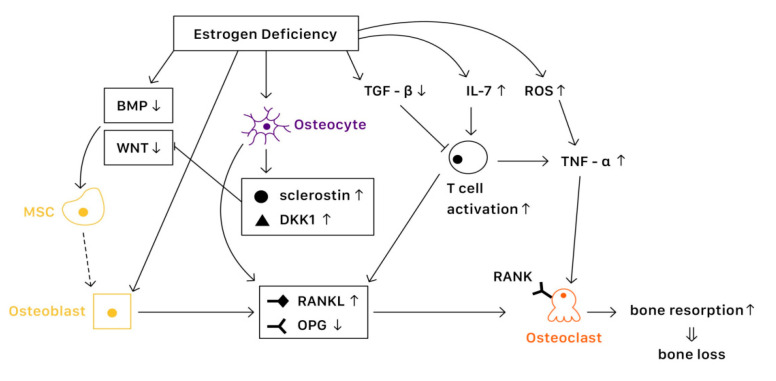
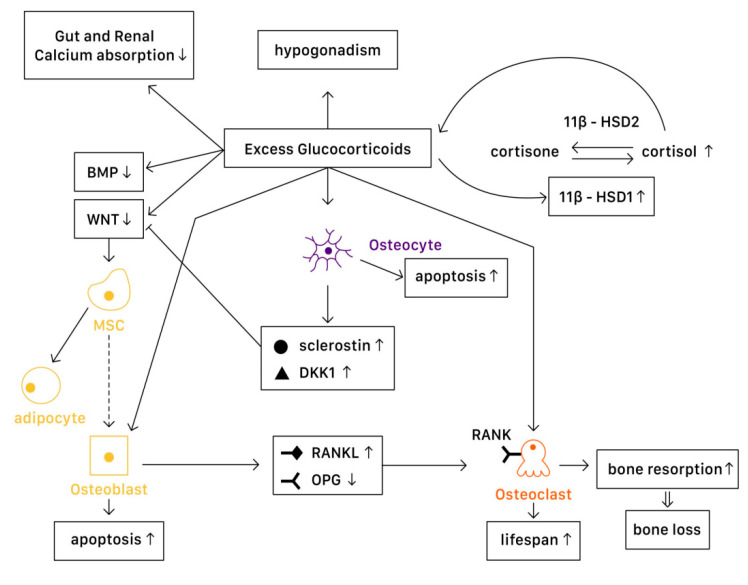
Osteoporosis is a serious health issue among aging postmenopausal women. The majority of postmenopausal women with osteoporosis have bone loss related to estrogen deficiency. The rapid bone loss results from an increase in bone turnover with an imbalance between bone resorption and bone formation. Osteoporosis can also result from excessive glucocorticoid usage, which induces bone demineralization with significant changes of spatial heterogeneities of bone at microscale, indicating potential risk of fracture. This review is a summary of current literature about the molecular mechanisms of actions, the risk factors, and treatment of estrogen deficiency related osteoporosis (EDOP) and glucocorticoid induced osteoporosis (GIOP). Estrogen binds with estrogen receptor to promote the expression of osteoprotegerin (OPG), and to suppress the action of nuclear factor-κβ ligand (RANKL), thus inhibiting osteoclast formation and bone resorptive activity. It can also activate Wnt/β-catenin signaling to increase osteogenesis, and upregulate BMP signaling to promote mesenchymal stem cell differentiation from pre-osteoblasts to osteoblasts, rather than adipocytes. The lack of estrogen will alter the expression of estrogen target genes, increasing the secretion of IL-1, IL-6, and tumor necrosis factor (TNF). On the other hand, excessive glucocorticoids interfere the canonical BMP pathway and inhibit Wnt protein production, causing mesenchymal progenitor cells to differentiate toward adipocytes rather than osteoblasts. It can also increase RANKL/OPG ratio to promote bone resorption by enhancing the maturation and activation of osteoclast. Moreover, excess glucocorticoids are associated with osteoblast and osteocyte apoptosis, resulting in declined bone formation. The main focuses of treatment for EDOP and GIOP are somewhat different. Avoiding excessive glucocorticoid use is mandatory in patients with GIOP. In contrast, appropriate estrogen supplement is deemed the primary treatment for females with EDOP of various causes. Other pharmacological treatments include bisphosphonate, teriparatide, and RANKL inhibitors. Nevertheless, more detailed actions of EDOP and GIOP along with the safety and effectiveness of medications for treating osteoporosis warrant further investigation.
Overview
The claims and statistics of this paper haven’t been checked yet.
Free: it reads the open-access text and checks the first 5 claims that cite a source we can check. Create a free account to check every claim.
Integrity signals
Registry
Cites
Statistics
Figures
Verification
Claims the paper makes
The claims and statistics of this paper haven’t been checked yet.
Free: it reads the open-access text and checks the first 5 claims that cite a source we can check. Create a free account to check every claim.
Claims other papers make about this one
Each is checked against this paper’s own text: does it say what the citing paper says it does?
The cited source says what the claim attributes to it.
In the citing paper
“In addition, estrogen can also increase TGF-β and osteoprotegerin (OPG) levels, which inhibit osteoclast differentiation [[58], [59], [60]].”
From Emerging role of liver-bone axis in osteoporosis (2024) · cites this paper as [59]
Self-check
Percentages, sums and reported differences re-computed from the paper’s own numbers.
The self-check needs the paper’s full text.
Citations
Cites
1 retracted
RETIRED: Osteoporosis in Menopause
Khan, A. A., Fortier, M. P., Fortier, M. P., Reid, R. L., Abramson, B. L., Blake, J. M., Desindes, S., Dodin, S., Graves, L. E., Guthrie, B., et al. (2014) · Journal of Obstetrics and Gynaecology Canada · doi:10.1016/s1701-2163(15)30489-8 · Cited by 68
RetractedEstrogen deficiency and bone loss: an inflammatory tale
Weitzmann, M. N. (2006) · Journal of Clinical Investigation · doi:10.1172/jci28550 · Cited by 990 · cited 5×
“The lack of estrogen will alter the expression of estroge t rget ge s, inc easing the secretion of IL-1, IL-6, and tumor necrosis factor (TNF).”
BackgroundInfluentialEastell, R., O'Neill, T. W., Hofbauer, L. C., Langdahl, B., Reid, I. R., Gold, D. T., & Cummings, S. R. (2016) · Nature Reviews Disease Primers · doi:10.1038/nrdp.2016.69 · Cited by 827 · cited 5×
“Moreover, estrogens stimulate the production of IGF1 and TGFβ by osteoblasts, enhancing bone formation [19].”
BackgroundInfluentialRecommendations for the prevention and treatment of glucocorticoid-induced osteoporosis: 2001 update
American College of Rheumatology Ad Hoc Committee on Glucocorticoid-Induced Osteoporosis (2001) · Arthritis & Rheumatism · doi:10.1002/1529-0131(200107)44:7<1496::aid-art271>3.0.co;2-5 · Cited by 647
Buckley, L., Guyatt, G., Fink, H. A., Cannon, M., Grossman, J., Hansen, K. E., Humphrey, M. B., Lane, N. E., Magrey, M., Miller, M., et al. (2017) · Arthritis Care & Research · doi:10.1002/acr.23279 · Cited by 579
Buckley, L., Guyatt, G., Fink, H. A., Cannon, M., Grossman, J., Hansen, K. E., Humphrey, M. B., Lane, N. E., Magrey, M., Miller, M., et al. (2017) · Arthritis & Rheumatology · doi:10.1002/art.40137 · Cited by 527
Saag, K. G., Zanchetta, J. R., Devogelaer, J., Adler, R. A., Eastell, R., See, K., Krege, J. H., Krohn, K., & Warner, M. R. (2009) · Arthritis & Rheumatism · doi:10.1002/art.24879 · Cited by 493 · cited 1×
“One randomized controlled trial showed significantly greater increases in spine and hip BMD in the teriparatide group compared with the alendronate group during a 36-months therapy [95].”
ResultThe mechanisms of estrogen regulation of bone resorption
Riggs, B. L. (2000) · Journal of Clinical Investigation · doi:10.1172/jci11468 · Cited by 446 · cited 2×
“Studi have also shown that estrogen deficiency directly affects cell differentiation and apoptosis [21].”
BackgroundNF-κB signaling and bone resorption
Abu-Amer, Y. (2013) · Osteoporosis International · doi:10.1007/s00198-013-2313-x · Cited by 340
Bone adaptation requires oestrogen receptor-α
Lee, K., Jessop, H., Suswillo, R., Zaman, G., & Lanyon, L. (2003) · Nature · doi:10.1038/424389a · Cited by 334
Glucocorticoid osteoporosis--mechanisms and management
Reid, I. (1997) · European Journal of Endocrinology · doi:10.1530/eje.0.1370209 · Cited by 278 · cited 1×
“The well-documented effects include reductions in calcium absorption in both the gut and the renal tubule that can affect bone mineralization [64].”
BackgroundEstrogen receptor-α signaling in osteoblast progenitors stimulates cortical bone accrual
Almeida, M., Iyer, S., Martin-Millan, M., Bartell, S. M., Han, L., Ambrogini, E., Onal, M., Xiong, J., Weinstein, R. S., Jilka, R. L., et al. (2013) · Journal of Clinical Investigation · doi:10.1172/jci65910 · Cited by 252 · cited 1×
“demonstrated that ER complex in osteoblast progenitors activated Wnt/β-catenin signaling, thereby increasing osteogenesis [22].”
BackgroundProinflammatory cytokines and osteoporosis
McLean, R. R. (2009) · Current Osteoporosis Reports · doi:10.1007/s11914-009-0023-2 · Cited by 248 · cited 1×
“Estrogen deficiency leads to the increase of IL-7 to promote the activation of T cells, which induce pro-inflammatory molecules such as IL-1, IL-6, and TNFα, resulting in osteoclast formation [25,26].”
BackgroundGlucocorticoid-induced osteoporosis: mechanisms, management, and future perspectives
Seibel, M. J., Cooper, M. S., & Zhou, H. (2013) · The Lancet Diabetes & Endocrinology · doi:10.1016/s2213-8587(13)70045-7 · Cited by 226 · cited 8×
“Hypogonadism is a side effect of long term corticosteroid use; thus, hormone replacement therapy (HRT) is considered as a second-line or third-line treatment in GIOP patients with sex hormone deficiency [7].”
BackgroundInfluentialSaag, K. G., Wagman, R. B., Geusens, P., Adachi, J. D., Messina, O. D., Emkey, R., Chapurlat, R., Wang, A., Pannacciulli, N., & Lems, W. F. (2018) · The Lancet Diabetes & Endocrinology · doi:10.1016/s2213-8587(18)30075-5 · Cited by 209
Walsh, S., Jordan, G. R., Jefferiss, C., Stewart, K., & Beresford, J. N. (2001) · Rheumatology · doi:10.1093/rheumatology/40.1.74 · Cited by 192 · cited 1×
“Affected by excessive glucocorticoid usage, the most significant activities are the decrease in the proliferation of osteogenic precursors [57] and suppression of osteoblast, reducing bone formation [58].”
BackgroundSvejme, O., Ahlborg, H., Nilsson, J., & Karlsson, M. (2012) · BJOG: An International Journal of Obstetrics & Gynaecology · doi:10.1111/j.1471-0528.2012.03324.x · Cited by 164 · cited 1×
“found an increased risk of osteoporosis, fragility fractures, and mortality in females with menopause before age 47 [36].”
BackgroundMechanisms of glucocorticoid-induced osteoporosis.
Canalis, E. (2003) · Current Opinion in Rheumatology · doi:10.1097/00002281-200307000-00013 · Cited by 164
Qiu, C., Chen, H., Wen, J., Zhu, P., Lin, F., Huang, B., Wu, P., Lin, Q., Lin, Y., Rao, H., et al. (2013) · The Journal of Clinical Endocrinology & Metabolism · doi:10.1210/jc.2012-2919 · Cited by 160
Longitudinal patterns in the prevention of osteoporosis in glucocorticoid‐treated patients
Curtis, J. R., Westfall, A. O., Allison, J. J., Becker, A., Casebeer, L., Freeman, A., Spettell, C. M., Weissman, N. W., Wilke, S., & Saag, K. G. (2005) · Arthritis & Rheumatism · doi:10.1002/art.21194 · Cited by 154
Solomon, D. H., Katz, J. N., Jacobs, J. P., La Tourette, A. M., & Coblyn, J. (2002) · Arthritis & Rheumatism · doi:10.1002/art.10613 · Cited by 137 · cited 2×
“Unfortunately, a large proportion of patients are neither investigated properly nor treated according to the recommendations [18,74,75].”
BackgroundGraeff, C., Marín, F., Petto, H., Kayser, O., Reisinger, A., Peña, J. A., Zysset, P. K., & Glüer, C. (2012) · Bone · doi:10.1016/j.bone.2012.10.036 · Cited by 135 · cited 1×
“Advanced bone imaging techniques have also been developed, providing structural information beyond BMD with superior discrimination of fracture in GIOP patients [72].”
BackgroundGlucocorticoid-induced osteoporosis in children: impact of the underlying disease
Leonard, M. B. (2007) · PEDIATRICS · doi:10.1542/peds.2006-2023j · Cited by 123 · cited 1×
“The impact of underlying diseases has also been recognized in children [6].”
BackgroundAdler, R. A., & Hochberg, M. C. (2003) · Archives of Internal Medicine · doi:10.1001/archinte.163.21.2619 · Cited by 105
Uchida, K., Nakajima, H., Miyazaki, T., Yayama, T., Kawahara, H., Kobayashi, S., Tsuchida, T., Okazawa, H., Fujibayashi, Y., & Baba, H. (2009) · Journal of Nuclear Medicine · doi:10.2967/jnumed.109.062570 · Cited by 104 · cited 1×
“The results of Positron Emission Tomography (PET) scan suggest that bisphosphonate has a direct effect on decreasing bone turnover, resulting in increased BMD [84].”
BackgroundSecondary osteoporosis: Underlying disease and the risk for glucocorticoid-induced osteoporosis
Boling, E. P. (2004) · Clinical Therapeutics · doi:10.1016/s0149-2918(04)90001-x · Cited by 98
Glucocorticoid-induced osteoporosis update
Adami, G., & Saag, K. G. (2019) · Current Opinion in Rheumatology · doi:10.1097/bor.0000000000000608 · Cited by 95
Rees, M., Angioli, R., Coleman, R. L., Glasspool, R., Plotti, F., Simoncini, T., & Terranova, C. (2020) · Maturitas · doi:10.1016/j.maturitas.2020.01.005 · Cited by 95 · cited 1×
“To decrease the risk of endometrial hyperplasia and carcinoma with estrogen use, progestogens and the selective estrogen receptor modulator (SERM) are added into estrogen-base hormone therapy for females with an intact uterus [47].”
BackgroundBoschitsch, E., Durchschlag, E., & Dimai, H. P. (2017) · Climacteric · doi:10.1080/13697137.2017.1282452 · Cited by 94 · cited 1×
“3% at the age of 85 years and older [1].”
BackgroundCurtis, J. R., Westfall, A. O., Allison, J., Becker, A., Melton, M. E., Freeman, A., Kiefe, C. I., MacArthur, M., Ockershausen, T., Stewart, E., et al. (2007) · Archives of Internal Medicine · doi:10.1001/archinte.167.6.591 · Cited by 86
Chen, G., Chen, L., Wen, J., Yao, J., Li, L., Lin, L., Tang, K., Huang, H., Liang, J., Lin, W., et al. (2014) · The Journal of Clinical Endocrinology & Metabolism · doi:10.1210/jc.2013-3629 · Cited by 84 · cited 1×
“Interestingly, longer sleep durations as well as longer daytime napping times tend to present higher risks of osteoporosis, which could be explained by the reduction of weight-bearing physical activities due to extended sleeping time [41].”
BackgroundSelf-citationTrabecular bone score improves fracture risk assessment in glucocorticoid-induced osteoporosis
Flórez, H., Hernández‐Rodríguez, J., Muxí, Á., Carrasco, J. L., Prieto‐González, S., Cid, M. C., Espinosa, G., Gómez-Puerta, J. A., Monegal, A., Guañabens, N., et al. (2019) · Rheumatology · doi:10.1093/rheumatology/kez464 · Cited by 80 · cited 1×
“It can provide information relating to trabecular microarchitecture, and is thus capable of greater discriminative power than BMD alone for fracture risk assessment in glucocorticoid-treated patients [69].”
BackgroundHozayen, W. G., El-Desouky, M. A., Soliman, H. A., Ahmed, R. R., & Khaliefa, A. K. (2016) · BMC Complementary and Alternative Medicine · doi:10.1186/s12906-016-1140-y · Cited by 73
Glucocorticoid-induced osteoporosis
Clowes, J. A., Peel, N. F. A., & Eastell, R. (2001) · Current Opinion in Rheumatology · doi:10.1097/00002281-200107000-00015 · Cited by 71 · cited 1×
“Alternatively, testosterone in males with hypogonadism has been shown to prevent bone loss at the lumbar spine in GIOP [92,93].”
BackgroundEstrogen receptors in breast and bone: from virtue of remodeling to vileness of metastasis
Bado, I., Gugala, Z., Fuqua, S. A. W., & Zhang, X. (2017) · Oncogene · doi:10.1038/onc.2017.94 · Cited by 71 · cited 2×
“Additionally, osteocytes inhibit Wnt signaling by forming sclerostin that can bind with Wnt co-receptor LRP5/6, therefore reduce bone formation [23].”
BackgroundChen, Z., Xue, J., Shen, T., Ba, G., Yu, D., & Fu, Q. (2015) · Clinical and Experimental Pharmacology and Physiology · doi:10.1111/1440-1681.12513 · Cited by 69
Parker, S. E., Troisi, R., Wise, L. A., Palmer, J. R., Titus-Ernstoff, L., Strohsnitter, W. C., & Hatch, E. E. (2014) · The Journal of Clinical Endocrinology & Metabolism · doi:10.1210/jc.2013-2954 · Cited by 68 · cited 1×
“revealed an increased incidence of osteoporosis in females with less than 25 years of menstruation [37].”
BackgroundPrevention of Glucocorticoid-Induced Osteoporosis: Experience in a Managed Care Setting
Yood, R. A., Harrold, L. R., Fish, L., Cernieux, J., Emani, S., Conboy, E., & Gurwitz, J. H. (2001) · Archives of Internal Medicine · doi:10.1001/archinte.161.10.1322 · Cited by 67
Kim, J. H., Lee, H.-J., Kang, K. S., Chun, K., & Hwang, G. S. (2014) · Journal of Ginseng Research · doi:10.1016/j.jgr.2014.06.001 · Cited by 67
Solomon, D. H., Katz, J. N., La Tourette, A. M., & Coblyn, J. S. (2004) · Arthritis Care & Research · doi:10.1002/art.20403 · Cited by 66
Jensen, P. R., Andersen, T. L., Hauge, E., Bollerslev, J., & Delaissé, J. (2014) · Bone · doi:10.1016/j.bone.2014.12.004 · Cited by 63 · cited 1×
“Disruption of canopies that covers the bone remodeling surface was also recognized, leading to insufficient osteoblast recruitment [61].”
BackgroundOelzner, P., Schwabe, A., Lehmann, G., Eidner, T., Franke, S., Wolf, G., & Hein, G. E. (2008) · Rheumatology International · doi:10.1007/s00296-008-0576-x · Cited by 62 · cited 1×
“Possible mechanisms for this finding included inflammatory processes and cumulative high glucocorticoid doses [42].”
BackgroundAbrahamsen, B., Vestergaard, P., Rud, B., Bärenholdt, O., Jensen, J. B., Nielsen, S. P., Mosekilde, L., & Brixen, K. (2006) · Journal of Bone and Mineral Research · doi:10.1359/jbmr.020604 · Cited by 62 · cited 1×
“However, underestimation of absolute fracture risks in the Kanis algorithm has been noted [28].”
BackgroundAn update on glucocorticoid-induced osteoporosis
Woolf, A. D. (2007) · Current Opinion in Internal Medicine · doi:10.1097/bor.0b013e328133f5c7 · Cited by 61 · cited 2×
“Due to its modest efficacy and less effective actions than bisphosphonate, it is not considered as a first-line treatment of GIOP [89,91].”
BackgroundMethodAdvanced imaging assessment of bone fragility in glucocorticoid-induced osteoporosis
Kalpakcioglu, B. B., Engelke, K., & Genant, H. K. (2011) · Bone · doi:10.1016/j.bone.2011.02.005 · Cited by 60 · cited 1×
“Advanced methods for assessing macrostructure of bone include volumetric Quantitative Computed Tomography (vQCT), peripheral Quantitative Computed Tomography (pQCT), high-resolution Computed Tomography (hrCT), and high-resolution Magnetic Rresonance Imaging (hrMRI) [73].”
MethodKaji, H., Yamauchi, M., Chihara, K., & Sugimoto, T. (2006) · Endocrine Journal · doi:10.1507/endocrj.53.27 · Cited by 60 · cited 1×
“For the threshold of therapeutic intervention, individual intervention threshold based on FRAX probability and a higher BMD cut-off point are recommended for GIOP [70,71].”
BackgroundGlucocorticoid-induced osteoporosis
Berris, K. A. K., Repp, A. L., & Kleerekoper, M. (2007) · Current Opinion in Endocrinology Diabetes and Obesity · doi:10.1097/med.0b013e3282f15407 · Cited by 59
Liu, K., Jing, Y., Zhang, W., Fu, X., Zhao, H., Zhou, X., Tao, Y., Yang, H., Zhang, Y., Zen, K., et al. (2017) · Bone · doi:10.1016/j.bone.2017.01.014 · Cited by 57 · cited 1×
“In a GIOP mice model, Mi-106b increased its expression and inhibited bone formation partly through targeting BMP2 [60].”
BackgroundAdvances in treatment of glucocorticoid-induced osteoporosis
Hsu, E., & Nanes, M. S. (2017) · Current Opinion in Endocrinology Diabetes and Obesity · doi:10.1097/med.0000000000000368 · Cited by 56 · cited 1×
“Bisphosphonates are the most widely used first-line agents for prevention and treatment in GIOP [79].”
BackgroundÖzdemir, S., Çelik, Ç., Görkemli, H., Kıyıcı, A., & Kaya, B. (2009) · International Journal of Gynecology & Obstetrics · doi:10.1016/j.ijgo.2009.03.016 · Cited by 54 · cited 1×
“Compared with natural menopause, surgical menopause is found to be associated with lower BMD and higher rates of osteoporosis [44,45].”
BackgroundBarriers in the management of glucocorticoid‐induced osteoporosis
Guzman‐Clark, J. R. S., Fang, M. A., Sehl, M. E., Traylor, L., & Hahn, T. J. (2007) · Arthritis Care & Research · doi:10.1002/art.22462 · Cited by 53
Novel use of the ovarian follicular pool to postpone menopause and delay osteoporosis
Andersen, C. Y., & Kristensen, S. G. (2015) · Reproductive BioMedicine Online · doi:10.1016/j.rbmo.2015.05.002 · Cited by 52 · cited 1×
“Nevertheless, further studies are required for to determine feasibility [48].”
BackgroundAge at menarche, age at menopause and duration of fertility as risk factors for osteoporosis
Sioka, C., Fotopoulos, A., Georgiou, A., Xourgia, X., Papadopoulos, A., & Kalef-Ezra, J. A. (2010) · Climacteric · doi:10.3109/13697130903075337 · Cited by 52 · cited 1×
“demonstrated that early menopause between 40 and 45 years of age is correlated with low BMD in postmenopausal females [35].”
BackgroundMcKeown, E., Bykerk, V. P., De Leon, F., Bonner, A., Thorne, C., Hitchon, C. A., Boire, G., Haraoui, B., Ferland, D. S., Keystone, E. C., et al. (2012) · Rheumatology · doi:10.1093/rheumatology/kes079 · Cited by 52
Murphy, D. R., Smolen, L. J., Klein, T. M., & Klein, R. W. (2012) · BMC Musculoskeletal Disorders · doi:10.1186/1471-2474-13-213 · Cited by 49
Akdeniz, N., Akpolat, V., Kale, A., Erdemoğlu, M., Kuyumcuoğlu, U., & Çelik, Y. (2009) · Gynecological Endocrinology · doi:10.1080/09513590802549817 · Cited by 47 · cited 1×
“Low body weight is a well-documented risk factor for osteoporosis, whereas overweightness is a protective factor [39].”
BackgroundOlive oil in the prevention and treatment of osteoporosis after artificial menopause
Liu, H., Huang, H., Li, B., Dong, W., Wang, F., Zheng, X., Chen, Q., Wu, B., & Fan, X. (2014) · Clinical Interventions in Aging · doi:10.2147/cia.s72006 · Cited by 47
Burshell, A., Moericke, R., Correa‐Rotter, R., Chen, P., Warner, M. R., Dalsky, G. P., Taylor, K. A., & Krege, J. H. (2010) · Bone · doi:10.1016/j.bone.2009.12.032 · Cited by 45
Prevention of glucocorticoid-induced osteoporosis: provider practice at an urban county hospital
Aagaard, E., Lin, P., Modin, G. W., & Lane, N. E. (1999) · The American Journal of Medicine · doi:10.1016/s0002-9343(99)00265-x · Cited by 44 · cited 1×
“Not only in the cellular actions, dysregulation of 11β-HSDs is associated with renal calcium loss in primary male osteoporosis [62], which may also contribute to bone loss.”
BackgroundTime since menopause, but not age, is associated with increased risk of osteoporosis
Fistarol, M., Rezende, C. R., Campos, A. L. F., Kakehasi, A. M., & Geber, S. (2019) · Climacteric · doi:10.1080/13697137.2019.1634046 · Cited by 43
Glucocorticoid-Induced Osteoporosis
Lukert, B. P. (1992) · Southern Medical Journal · doi:10.1097/00007611-199208001-00009 · Cited by 42
Zhang, H., Shi, X., Wang, L., Li, X., Zheng, C., Gao, B., Xu, X., Lin, X., Wang, J., Lin, Y., et al. (2018) · Scientific Reports · doi:10.1038/s41598-018-22095-1 · Cited by 42
Lu, S., Wang, C., Jin, Y., Meng, Q., Liu, Q., Liu, Z., Liu, K., Sun, H., & Liu, M. (2017) · Scientific Reports · doi:10.1038/s41598-017-03187-w · Cited by 41
Goh, M., Nguyen, H. H., Khan, N. N., Milat, F., Boyle, J. A., & Vincent, A. J. (2019) · Clinical Endocrinology · doi:10.1111/cen.14049 · Cited by 41 · cited 1×
“Due to the fact that premature ovarian insufficiency and early menopause are closely related to osteoporosis, raising concerns and filling up knowledge gaps among the public are needed [38].”
BackgroundEastell, R., Chen, P., Saag, K. G., Burshell, A., Wong, M., Warner, M. R., & Krege, J. H. (2010) · Bone · doi:10.1016/j.bone.2009.12.021 · Cited by 38
Mendoza, N., Sánchez‐Borrego, R., Villero, J., Baró, F., Calaf, J., Hidalgo, M. J. C., Coronado, P., Estévez, A., Fernández-Moya, J. M., Rodríguez, S. P. G., et al. (2013) · Maturitas · doi:10.1016/j.maturitas.2013.05.021 · Cited by 38
Lekva, T., Bollerslev, J., Kristo, C., Olstad, O. K., Ueland, T., & Jemtland, R. (2010) · The Journal of Clinical Endocrinology & Metabolism · doi:10.1210/jc.2009-0595 · Cited by 38
Glucocorticoid-induced osteoporosis
Kumar, R. (2001) · Current Opinion in Nephrology & Hypertension · doi:10.1097/00041552-200109000-00007 · Cited by 38
Prevalence of Evaluation and Treatment of Glucocorticoid-Induced Osteoporosis in Men
Cruse, L. M., Valeriano, J., Vasey, F. B., & Carter, J. D. (2006) · JCR Journal of Clinical Rheumatology · doi:10.1097/01.rhu.0000242778.65766.22 · Cited by 37
Overman, R. A., Toliver, J. C., Yeh, J., Gourlay, M. L., & Deal, C. L. (2014) · Arthritis Care & Research · doi:10.1002/acr.22346 · Cited by 36
Glucocorticoid-induced Osteoporosis and Its Treatment
Pennisi, P., Trombetti, A., & Rizzoli, R. (2006) · Clinical Orthopaedics & Related Research · doi:10.1097/01.blo.0000200238.29931.1f · Cited by 36 · cited 1×
“Due to its modest efficacy and less effective actions than bisphosphonate, it is not considered as a first-line treatment of GIOP [89,91].”
BackgroundWang, Y.-K., Zhang, Y.-M., QIN, S.-Q., Wang, X., Ma, T., Guo, J.-B., Zhu, C., & Luo, Z.-J. (2018) · Medicine · doi:10.1097/md.0000000000012691 · Cited by 36 · cited 1×
“Studies have proven that bisphosphonates significantly increase BMD of the lumbar spine, total hip, and femoral neck in patients with GIOP [80,81].”
BackgroundUmland, E. M., Karel, L. I., & Santoro, N. F. (2016) · Pharmacotherapy The Journal of Human Pharmacology and Drug Therapy · doi:10.1002/phar.1749 · Cited by 33
LncRNA SNHG1 was down-regulated after menopause and participates in postmenopausal osteoporosis
Huang, S., Zhu, X., Xiao, D., Zhuang, J., Liang, G., Liang, C., Zheng, X., Yu-hong, K., & Chang, Y. (2019) · Bioscience Reports · doi:10.1042/bsr20190445 · Cited by 33 · cited 1×
“An even lower expression level was noted in the postmenopausal osteoporosis group, which might serve as a biomarker for postmenopausal osteoporosis in the future [31].”
BackgroundLiu, S., Li, J., Sheng, Z., Wu, X., & Liao, E. (2010) · Archives of Gerontology and Geriatrics · doi:10.1016/j.archger.2010.09.002 · Cited by 32 · cited 1×
“Moreover, another study has suggested that not only body mass, but also the body composition components and segmental distribution of mass in the trunk and leg are important for the prevention of osteoporosis [40].”
BackgroundÖzkaya, E., Çakır, E., Okuyan, E., Çakır, C., Üstün, G., & Küçüközkan, T. (2010) · Menopause The Journal of The North American Menopause Society · doi:10.1097/gme.0b013e3181e5046d · Cited by 31 · cited 1×
“Compared with natural menopause, surgical menopause is found to be associated with lower BMD and higher rates of osteoporosis [44,45].”
BackgroundYamada, S., TAKAGI, H., Tsuchiya, H., NAKAJIMA, T., OCHIAI, H., ICHIMURA, A., Iwata, H., & Toriyama, T. (2007) · YAKUGAKU ZASSHI · doi:10.1248/yakushi.127.1491 · Cited by 27 · cited 1×
“For moderate and high risks of major fracture patients, oral bisphosphonate is recommended over calcium and vitamin D alone [10,86].”
BackgroundLiu, J., Lu, C., Wu, X., Zhang, Z., Li, J., Guo, B., Li, D., Liang, C., Dang, L., Pan, X., et al. (2017) · Scientific Reports · doi:10.1038/srep41295 · Cited by 27
Sbaihi, M., Rousseau, K., Baloche, S., Meunier, F. J., Fouchereau‐Péron, M., & Dufour, S. (2009) · Journal of Endocrinology · doi:10.1677/joe-08-0492 · Cited by 26 · cited 1×
“In glucocorticoid-induced osteoporosis (GIOP), glucocorticoids induce bone demineralization with significant changes of spatial heterogeneities of bone at microscale, indicating potential risk of fracture [2,3].”
BackgroundOsteoporosis prophylaxis in patients receiving chronic glucocorticoid therapy
Sadat‐Ali, M., Elq, A. H. A., Al-Shafei, B. A., Al-Turki, H. A., & AbuJubara, M. A. (2009) · Annals of Saudi Medicine · doi:10.5144/0256-4947.2009.215 · Cited by 25 · cited 1×
“Nonetheless, pharmacological treatments are at an even lower rate compared with nonpharmacological treatments [76,77].”
BackgroundSato, D., Takahata, M., Ota, M., Fukuda, C., Hasegawa, T., Yamamoto, T., Amizuka, N., Tsuda, E., Okada, A., Hiruma, Y., et al. (2020) · Bone · doi:10.1016/j.bone.2020.115331 · Cited by 25
Prevention of Glucocorticoid-induced Osteoporosis
Saag, K. G. (2004) · Southern Medical Journal · doi:10.1097/00007611-200406000-00008 · Cited by 24 · cited 2×
“According to previous studies, calcitonin increases BMD in GIOP; however, there is no effect shown on fracture reduction [83,89,90].”
BackgroundMethodMazziotti, G., Maffezzoni, F., Doga, M., Hofbauer, L. C., Adler, R. A., & Giustina, A. (2014) · Bone · doi:10.1016/j.bone.2014.07.008 · Cited by 24 · cited 1×
“Along with the bone effects of teriparatide, the decrease in serum HbA1c with some improvement in glucose homeostasis in patients with diabetes and GIOP was recognized among teriparatide users [98].”
BackgroundKan, S.-L., Yuan, Z.-F., Li, Y., Ai, J., Xu, H., Sun, J.-C., & Feng, S. (2016) · Medicine · doi:10.1097/md.0000000000003990 · Cited by 24 · cited 1×
“Studies have proven that bisphosphonates significantly increase BMD of the lumbar spine, total hip, and femoral neck in patients with GIOP [80,81].”
BackgroundRen, H. J., Shen, G., Tang, J., Qiu, T., Zhang, Z., Zhao, W., Yu, X., Huang, J., Liang, D., Yao, Z., et al. (2017) · Scientific Reports · doi:10.1038/s41598-017-10614-5 · Cited by 24 · cited 1×
“A combination therapy of plastrum testudinis extract and alendronate in rat spine has shown synergic effects on preventing GIOP; however, more studies should be conducted for further confirmation and application [88].”
BackgroundTella, S. H., & Gallagher, J. C. (2013) · Expert Opinion on Pharmacotherapy · doi:10.1517/14656566.2013.844790 · Cited by 23 · cited 1×
“There is also a good safety and tolerability profile [51].”
Backgroundvan Bommel, E. J. M., de Jongh, R. T., Brands, M., Heijboer, A. C., den Heijer, M., Serlie, M. J. M., & van Raalte, D. H. (2018) · Bone · doi:10.1016/j.bone.2018.04.025 · Cited by 23
Wang, T., Han, C., Tian, P., Li, P., & Ma, X. (2018) · Orthopaedic Surgery · doi:10.1111/os.12369 · Cited by 23 · cited 1×
“Teriparatide can also reduce the cellular ROS level elevated by the actions of glucocorticoids to facilitate the proliferation of osteocytes [94].”
BackgroundGurban, C., Balaş, M., Vlad, M., Caraba, A., Jianu, A. M., Bernad, E. S., Borza, C., Bănicioiu-Covei, S., & Motoc, A. G. M. (2019) · PubMed · Cited by 23
Xi, L., Song, Y., Wu, W., Qu, Z., Wen, J., Liao, B., Tao, R., Ge, J., & Fang, D. (2020) · Bone · doi:10.1016/j.bone.2020.115334 · Cited by 22 · cited 1×
“In glucocorticoid-induced osteoporosis (GIOP), glucocorticoids induce bone demineralization with significant changes of spatial heterogeneities of bone at microscale, indicating potential risk of fracture [2,3].”
BackgroundCabrera, D. L., Kruger, M. C., Wolber, F. M., Roy, N. C., & Fraser, K. (2020) · BMC Musculoskeletal Disorders · doi:10.1186/s12891-020-03362-7 · Cited by 22 · cited 1×
“Finally, glucocorticoids alter metabolites and lipid profiles, which potentially have a role in regulating bone loss [67,68].”
BackgroundEtani, Y., Ebina, K., Hirao, M., Kitaguchi, K., Kashii, M., Ishimoto, T., Nakano, T., Okamura, G., Miyama, A., Takami, K., et al. (2020) · Bone · doi:10.1016/j.bone.2020.115525 · Cited by 22
Ledwich, L. J., & Clarke, K. (2009) · JCR Journal of Clinical Rheumatology · doi:10.1097/rhu.0b013e31819b65bd · Cited by 21 · cited 1×
“Even among long-term steroid users, such as rheumatoid arthritis patients, less than 40% received recommended DEXA scanning and treatment [17,18].”
BackgroundZhao, L., Cui, B., Liu, J., Zhang, M.-J., Zhao, H., Sun, L., Tao, B., Zhang, L., & Ning, G. (2011) · Menopause The Journal of The North American Menopause Society · doi:10.1097/gme.0b013e318213545a · Cited by 19 · cited 1×
“Several single nucleotide polymorphisms (SNPs), such as estrogen receptor α gene (ESR1) and major histocompatibility complex gene (MHC), were associated with age of natural menopause and possible subsequent osteoporosis [30].”
BackgroundThe impact of serum FSH and estradiol on postmenopausal osteoporosis related to time since menopause
Yoldemir, T., Erenus, M., & Durmuşoğlu, F. (2012) · Gynecological Endocrinology · doi:10.3109/09513590.2012.683066 · Cited by 18
The prevention and treatment of glucocorticoid-induced osteoporosis in clinical practice
Walker-Bone, K. E., Wood, A., Hull, R. G., Ledingham, J. M., McCrae, F., Shaban, R., Thomas, A. L., & Mackay, K. (2004) · Clinical Medicine · doi:10.7861/clinmedicine.4-5-431 · Cited by 18
Yu, S.-F., Chen, J., Chen, Y.-C., Lai, H., Ko, C.-H., Chiu, W.-C., Su, F., Hsu, C., Su, Y., Wu, C., et al. (2017) · Medicine · doi:10.1097/md.0000000000005959 · Cited by 16 · cited 1×
“For the threshold of therapeutic intervention, individual intervention threshold based on FRAX probability and a higher BMD cut-off point are recommended for GIOP [70,71].”
BackgroundPlacios, S., & Ríos, A. M. (2015) · Drugs of today · doi:10.1358/dot.2015.51.2.2281023 · Cited by 15
Lin, T., Liu, J., Yang, S., Liu, X., Feng, X., & Fu, D. (2016) · Indian Journal of Orthopaedics · doi:10.4103/0019-5413.185606 · Cited by 14
Ring, M. R. (2017) · Primary Care Clinics in Office Practice · doi:10.1016/j.pop.2017.02.012 · Cited by 14
Caballero-Uribe, C. V., Acosta‐Vélez, J. G., Hernández-Ruiz, E. A., Rodado, F. M. A., & Peñuela-Epalza, M. (2008) · JCR Journal of Clinical Rheumatology · doi:10.1097/rhu.0b013e31816b1931 · Cited by 12 · cited 1×
“Nonetheless, pharmacological treatments are at an even lower rate compared with nonpharmacological treatments [76,77].”
Backgroundde Quadros, V. P., Tobar, N., Viana, L. R., dos Santos, R. W., Kiyataka, P. H. M., & Gomes‐Marcondes, M. C. C. (2019) · Bone and Joint Research · doi:10.1302/2046-3758.812.bjr-2018-0259.r2 · Cited by 11 · cited 1×
“Protein restriction is associated with muscle and bone loss, increasing fragility in bone [54].”
BackgroundFurukawa, F., Kaminaka, C., Ikeda, T., Kanazawa, N., Yamamoto, Y., Ohta, C., Nishide, T., Tsujioka, K., Hattori, M., Uede, K., et al. (2010) · Clinical and Experimental Dermatology · doi:10.1111/j.1365-2230.2010.03856.x · Cited by 8 · cited 1×
“Urinary deoxypyridinoline (DPD), a marker of bone resorption, also decreases after bisphosphonate use [85].”
BackgroundGlucocorticoid-Induced Osteoporosis Evaluation, Prevention, and Treatment
Werth, V. P. (1997) · JCR Journal of Clinical Rheumatology · doi:10.1097/00124743-199704001-00016 · Cited by 7 · cited 1×
“Due to the interference of intestinal calcium absorption and hypercalciuria by glucocorticoids, vitamin D and calcium supplement are recommended [78].”
BackgroundPrimary male osteoporosis is associated with enhanced glucocorticoid availability
Arampatzis, S., Pasch, A., Lippuner, K., & Mohaupt, M. G. (2013) · Rheumatology · doi:10.1093/rheumatology/ket228 · Cited by 6
Baldi, S., & Becorpi, A. (2009) · PubMed · Cited by 6
Sambrook, P. N., Roux, C., Devogelaer, J.-P., Saag, K., Lau, C.-S., Reginster, J.-Y., Bucci-Rechtweg, C., Su, G., & Reid, D. M. (2012) · Bone · doi:10.1016/j.bone.2011.10.024 · Cited by 3 · cited 1×
“Although a study of comparing zoledronic acid with risedronate in GIOP males showed significantly greater increases in lumbar spine BMD and total hip BMD in the zoledronic acid group, further safety evaluation is needed for IV bisphosphonate [87].”
Result
Research works printed but not linked: 1
- Eisenberg Center at Oregon Health & Science University Osteoporosis Treatments That Help Prevent Broken Bones: A Guide for Women After Menopause Comparative Effectiveness Review Summary Guides for Consumers AHRQ Comparative Effectiveness Reviews Agency for Healthcare Research and Quality (US) Rockville, MD, USA 2005 21919254
Cited by
Jang, W. Y., Kim, M.-Y., & Cho, J. Y. (2022) · International Journal of Molecular Sciences · doi:10.3390/ijms232415482 · Cited by 196
“The activity of osteoclasts can be blocked by the actions of estrogen, while estrogen upregulates the production of osteoprotegerin (OPG) in osteoblasts [98].”
BackgroundPostmenopausal osteoporosis coexisting with sarcopenia: the role and mechanisms of estrogen
Lu, L., & Tian, L. (2023) · Journal of Endocrinology · doi:10.1530/joe-23-0116 · Cited by 193
Insights and implications of sexual dimorphism in osteoporosis
Zhang, Y., Xie, N., Sun, X., Nice, E. C., Liou, Y., Huang, C., Zhu, H., & Shen, Z. (2024) · Bone Research · doi:10.1038/s41413-023-00306-4 · Cited by 184
“285 Regarding osteoporosis, GCs and estrogens have opposing actions on multiple signaling pathways.”
BackgroundElectroactive Biomaterials for Facilitating Bone Defect Repair under Pathological Conditions
Heng, B. C., Bai, Y., Li, X., Lim, L. W., Li, W., Ge, Z., Zhang, X., & Deng, X. (2022) · Advanced Science · doi:10.1002/advs.202204502 · Cited by 178
Molecular and Cellular Mechanisms of Osteoporosis
Zhivodernikov, I. V., Kirichenko, T. V., Markina, Y. V., Postnov, A. Y., & Markin, A. M. (2023) · International Journal of Molecular Sciences · doi:10.3390/ijms242115772 · Cited by 166
“Estrogens also suppress the production of receptor activator of nuclear factor kappa-B (NF-κ B) ligand (RANKL) and increase the production of osteoprotegerin (OPG) by osteoblasts and lymphocytes, which maintain the RANKL/OPG ratio necessary for balanced bone remodeling [10–12].”
Background
Metadata
- Authors
- Cheng, C.-H., Chen, L.-R., & Chen, K.-H.
- Affiliations
- Mackay Memorial Hospital (TW)
- National Yang Ming Chiao Tung University (TW)
- Tzu Chi University (TW)
- Corresponding author
- Chen, Kuo-Hu
- Venue
- International Journal of Molecular Sciences
- Publisher
- MDPI AG
- Published
- 2022-01-25
- Volume
- 23
- Issue
- 3
- Pages
- 1376
- ISSN
- 1422-0067 (ISSN-L)
- PMC
- PMC8836058
- OpenAlex
- W4210278962
- Cited by
- 595
- References
- 108
- Citations by year
- 2026: 148 · 2025: 174 · 2024: 166 · 2023: 72 · 2022: 33
- FWCI
- 24.40
- Type
- journal article
- Language
- en
- Open access
- gold
- doi.org
- Licence
- Locations
- International Journal of Molecular Sciences (publishedVersion, cc-by)
- PubMed Central (publishedVersion, cc-by)
- PubMed (publishedVersion)
- DOAJ (DOAJ: Directory of Open Access Journals) (submittedVersion, cc-by-sa)
- Funders
- Taipei Tzu Chi Hospital (TCRD-TPE-110-06)
- Topics
- Health Sciences › Medicine › Orthopedics and Sports Medicine › Bone health and osteoporosis research
- Life Sciences › Biochemistry, Genetics and Molecular Biology › Molecular Biology › Bone Metabolism and Diseases
- Life Sciences › Biochemistry, Genetics and Molecular Biology › Endocrinology › Estrogen and related hormone effects
- Keywords
- glucocorticoid-induced osteoporosis, bone turnover, bone resorption, estrogen receptor, osteoprotegerin, RANKL, Wnt/β-catenin signaling, BMP signaling, mesenchymal stem cell differentiation, osteoclastogenesis, osteocyte apoptosis, postmenopausal women, estrogen replacement therapy, bisphosphonates, teriparatide, RANKL inhibitor, fracture risk
- MeSH terms
- Bone Resorption, Cell Differentiation, Estrogens, Female, Glucocorticoids, Humans, Osteoblasts, Osteoclasts, Osteocytes, Osteogenesis, Osteoporosis, Tumor Necrosis Factor-alpha, Bone Remodeling, Postmenopause, RANK Ligand
About these checks
Registry, retraction, Cites and statistics results are computed, not judged, with one exception: a printed reference that no index lists is read once by a model before it counts as a citation error. Claims are extracted by a model and kept only when their quote appears verbatim in the text; each cited source is then checked, with a model’s help, for whether it says what the claim relies on. Those verdicts can be wrong — read the claim’s quote and the cited source before relying on one.
Statistics and arithmetic are recomputed, not judged.
Confidence bands are shown only for fields calibrated on our annotated test set. None is calibrated yet, so no band is shown.
What counts as a claim ›How we measure confidence ›How we check this ›
Are you an author, or do you see a problem with this page? Request a review
Data sources
Bibliographic data: Semantic Scholar, OpenAlex, Crossref.
Contains information from the Semantic Scholar Academic Graph Datasets, made available under the ODC Attribution License (ODC-BY 1.0).
Semantic Scholar’s data is described in: Kinney, R., et al. (2023). The Semantic Scholar Open Data Platform. arXiv:2301.10140.
