

Osteoporosis Due to Hormone Imbalance: An Overview of the Effects of Estrogen Deficiency and Glucocorticoid Overuse on Bone Turnover
Open accessThe DOI matches its Crossref record; 108 of the 108 references it cites were found in a registry or an index.
Abstract
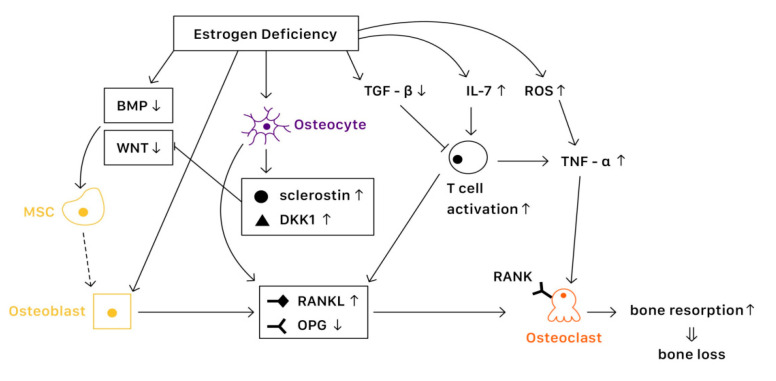
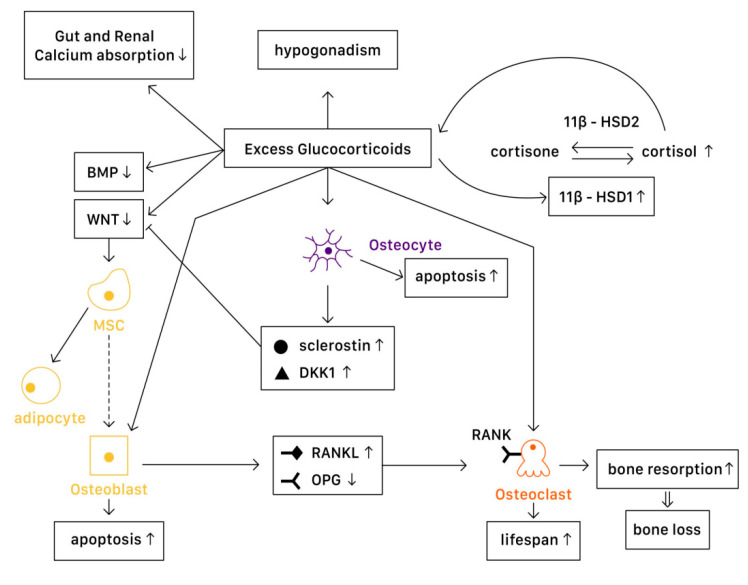
Osteoporosis is a serious health issue among aging postmenopausal women. The majority of postmenopausal women with osteoporosis have bone loss related to estrogen deficiency. The rapid bone loss results from an increase in bone turnover with an imbalance between bone resorption and bone formation. Osteoporosis can also result from excessive glucocorticoid usage, which induces bone demineralization with significant changes of spatial heterogeneities of bone at microscale, indicating potential risk of fracture. This review is a summary of current literature about the molecular mechanisms of actions, the risk factors, and treatment of estrogen deficiency related osteoporosis (EDOP) and glucocorticoid induced osteoporosis (GIOP). Estrogen binds with estrogen receptor to promote the expression of osteoprotegerin (OPG), and to suppress the action of nuclear factor-κβ ligand (RANKL), thus inhibiting osteoclast formation and bone resorptive activity. It can also activate Wnt/β-catenin signaling to increase osteogenesis, and upregulate BMP signaling to promote mesenchymal stem cell differentiation from pre-osteoblasts to osteoblasts, rather than adipocytes. The lack of estrogen will alter the expression of estrogen target genes, increasing the secretion of IL-1, IL-6, and tumor necrosis factor (TNF). On the other hand, excessive glucocorticoids interfere the canonical BMP pathway and inhibit Wnt protein production, causing mesenchymal progenitor cells to differentiate toward adipocytes rather than osteoblasts. It can also increase RANKL/OPG ratio to promote bone resorption by enhancing the maturation and activation of osteoclast. Moreover, excess glucocorticoids are associated with osteoblast and osteocyte apoptosis, resulting in declined bone formation. The main focuses of treatment for EDOP and GIOP are somewhat different. Avoiding excessive glucocorticoid use is mandatory in patients with GIOP. In contrast, appropriate estrogen supplement is deemed the primary treatment for females with EDOP of various causes. Other pharmacological treatments include bisphosphonate, teriparatide, and RANKL inhibitors. Nevertheless, more detailed actions of EDOP and GIOP along with the safety and effectiveness of medications for treating osteoporosis warrant further investigation.
Overview
The claims and statistics of this paper haven’t been checked yet.
Free: it reads the open-access text and checks the first 5 claims that cite a source we can check. Create a free account to check every claim.
Integrity signals
Registry
Cites
Statistics
Figures
Verification
Claims the paper makes
The claims and statistics of this paper haven’t been checked yet.
Free: it reads the open-access text and checks the first 5 claims that cite a source we can check. Create a free account to check every claim.
Claims other papers make about this one
Each is checked against this paper’s own text: does it say what the citing paper says it does?
The cited source says what the claim attributes to it.
In the citing paper
“In addition, estrogen can also increase TGF-β and osteoprotegerin (OPG) levels, which inhibit osteoclast differentiation [[58], [59], [60]].”
From Emerging role of liver-bone axis in osteoporosis (2024) · cites this paper as [59]
Self-check
Percentages, sums and reported differences re-computed from the paper’s own numbers.
The self-check needs the paper’s full text.
Citations
Cites
1 retracted
RETIRED: Osteoporosis in Menopause
Khan, A. A., Fortier, M. P., Fortier, M. P., Reid, R. L., Abramson, B. L., Blake, J. M., Desindes, S., Dodin, S., Graves, L. E., Guthrie, B., et al. (2014) · Journal of Obstetrics and Gynaecology Canada · doi:10.1016/s1701-2163(15)30489-8 · Cited by 68
RetractedEstrogen deficiency and bone loss: an inflammatory tale
Weitzmann, M. N. (2006) · Journal of Clinical Investigation · doi:10.1172/jci28550 · Cited by 990 · cited 5×
“The lack of estrogen will alter the expression of estroge t rget ge s, inc easing the secretion of IL-1, IL-6, and tumor necrosis factor (TNF).”
BackgroundInfluentialEastell, R., O'Neill, T. W., Hofbauer, L. C., Langdahl, B., Reid, I. R., Gold, D. T., & Cummings, S. R. (2016) · Nature Reviews Disease Primers · doi:10.1038/nrdp.2016.69 · Cited by 827 · cited 5×
“Moreover, estrogens stimulate the production of IGF1 and TGFβ by osteoblasts, enhancing bone formation [19].”
BackgroundInfluentialRecommendations for the prevention and treatment of glucocorticoid-induced osteoporosis: 2001 update
American College of Rheumatology Ad Hoc Committee on Glucocorticoid-Induced Osteoporosis (2001) · Arthritis & Rheumatism · doi:10.1002/1529-0131(200107)44:7<1496::aid-art271>3.0.co;2-5 · Cited by 647
Buckley, L., Guyatt, G., Fink, H. A., Cannon, M., Grossman, J., Hansen, K. E., Humphrey, M. B., Lane, N. E., Magrey, M., Miller, M., et al. (2017) · Arthritis Care & Research · doi:10.1002/acr.23279 · Cited by 579
Buckley, L., Guyatt, G., Fink, H. A., Cannon, M., Grossman, J., Hansen, K. E., Humphrey, M. B., Lane, N. E., Magrey, M., Miller, M., et al. (2017) · Arthritis & Rheumatology · doi:10.1002/art.40137 · Cited by 527
Saag, K. G., Zanchetta, J. R., Devogelaer, J., Adler, R. A., Eastell, R., See, K., Krege, J. H., Krohn, K., & Warner, M. R. (2009) · Arthritis & Rheumatism · doi:10.1002/art.24879 · Cited by 493 · cited 1×
“One randomized controlled trial showed significantly greater increases in spine and hip BMD in the teriparatide group compared with the alendronate group during a 36-months therapy [95].”
ResultThe mechanisms of estrogen regulation of bone resorption
Riggs, B. L. (2000) · Journal of Clinical Investigation · doi:10.1172/jci11468 · Cited by 446 · cited 2×
“Studi have also shown that estrogen deficiency directly affects cell differentiation and apoptosis [21].”
BackgroundNF-κB signaling and bone resorption
Abu-Amer, Y. (2013) · Osteoporosis International · doi:10.1007/s00198-013-2313-x · Cited by 340
Research works printed but not linked: 1
- Eisenberg Center at Oregon Health & Science University Osteoporosis Treatments That Help Prevent Broken Bones: A Guide for Women After Menopause Comparative Effectiveness Review Summary Guides for Consumers AHRQ Comparative Effectiveness Reviews Agency for Healthcare Research and Quality (US) Rockville, MD, USA 2005 21919254
Cited by
Jang, W. Y., Kim, M.-Y., & Cho, J. Y. (2022) · International Journal of Molecular Sciences · doi:10.3390/ijms232415482 · Cited by 196
“The activity of osteoclasts can be blocked by the actions of estrogen, while estrogen upregulates the production of osteoprotegerin (OPG) in osteoblasts [98].”
BackgroundPostmenopausal osteoporosis coexisting with sarcopenia: the role and mechanisms of estrogen
Lu, L., & Tian, L. (2023) · Journal of Endocrinology · doi:10.1530/joe-23-0116 · Cited by 193
Insights and implications of sexual dimorphism in osteoporosis
Zhang, Y., Xie, N., Sun, X., Nice, E. C., Liou, Y., Huang, C., Zhu, H., & Shen, Z. (2024) · Bone Research · doi:10.1038/s41413-023-00306-4 · Cited by 184
“285 Regarding osteoporosis, GCs and estrogens have opposing actions on multiple signaling pathways.”
BackgroundElectroactive Biomaterials for Facilitating Bone Defect Repair under Pathological Conditions
Heng, B. C., Bai, Y., Li, X., Lim, L. W., Li, W., Ge, Z., Zhang, X., & Deng, X. (2022) · Advanced Science · doi:10.1002/advs.202204502 · Cited by 178
Molecular and Cellular Mechanisms of Osteoporosis
Zhivodernikov, I. V., Kirichenko, T. V., Markina, Y. V., Postnov, A. Y., & Markin, A. M. (2023) · International Journal of Molecular Sciences · doi:10.3390/ijms242115772 · Cited by 166
“Estrogens also suppress the production of receptor activator of nuclear factor kappa-B (NF-κ B) ligand (RANKL) and increase the production of osteoprotegerin (OPG) by osteoblasts and lymphocytes, which maintain the RANKL/OPG ratio necessary for balanced bone remodeling [10–12].”
BackgroundImpact of the host response and osteoblast lineage cells on periodontal disease
Zhou, M., & Graves, D. T. (2022) · Frontiers in Immunology · doi:10.3389/fimmu.2022.998244 · Cited by 143
Crosstalk between the gut microbiota and postmenopausal osteoporosis: Mechanisms and applications
Xu, Q., Li, D., Chen, J., Yang, J., Yan, J., Xia, Y., Zhang, F., Wang, X., & Cao, H. (2022) · International Immunopharmacology · doi:10.1016/j.intimp.2022.108998 · Cited by 106
Exploring the effects of estrogen deficiency and aging on organismal homeostasis during menopause
Camon, C., Garratt, M., & Correa, S. M. (2024) · Nature Aging · doi:10.1038/s43587-024-00767-0 · Cited by 89
“These changes reduce bone mineral density and increases both fracture rates and osteoporosis risk 107–109 .”
Cui, Y., Lv, B., Li, Z., Ma, C., Gui, Z., Geng, Y., Liu, G., Sang, L., Xu, C., Min, Q., et al. (2024) · Small · doi:10.1002/smll.202303494 · Cited by 81
Metabolic hormones are integral regulators of female reproductive health and function
Athar, F., Karmani, M., & Templeman, N. M. (2024) · Bioscience Reports · doi:10.1042/bsr20231916 · Cited by 91
“Just as a reduction in estrogen levels in postmenopausal women increases risks of cardiovascular disease [44], bone frailty [45], and neuropsychiatric disorders [46], a premenopausal estrogen deficiency caused by amenorrhea leads to compromised cardiovascular, skeletal, and mental health [47–51].”
BackgroundMartiniaková, M., Bíro, R., Kováčová, V., Babikova, M., Zemanová, N., Mondočková, V., & Omelka, R. (2024) · Journal of Molecular Medicine · doi:10.1007/s00109-024-02418-8 · Cited by 85
“Excessive glucocorticoids also interfere with the canonical BMP (bone morphogenetic protein) pathway [142].”
BackgroundThe multi-faceted nature of age-associated osteoporosis
Smit, A. E., Meijer, O. C., & Winter, E. M. (2024) · Bone Reports · doi:10.1016/j.bonr.2024.101750 · Cited by 94
“This has consequences for bone, with estrogen deficiency being a pivotal cause of postmenopausal bone loss (Cheng et al., 2022).”
BackgroundVivarelli, S., Costa, C., Teodoro, M., Giambò, F., Tsatsakis, A. M., & Fenga, C. (2022) · Archives of Toxicology · doi:10.1007/s00204-022-03391-2 · Cited by 77
Advances in the roles of ATF4 in osteoporosis
Xiao, Y., Xie, X., Chen, Z., Yin, G., Kong, W., & Zhou, J. (2023) · Biomedicine & Pharmacotherapy · doi:10.1016/j.biopha.2023.115864 · Cited by 72
Bartkowiak-Wieczorek, J., Jaros, A., Gajdzińska, A., Wojtyła-Buciora, P., Szymański, I., Szymaniak, J., Janusz, W., Walczak, I., Jonaszka, G., & Bienert, A. (2024) · International Journal of Molecular Sciences · doi:10.3390/ijms25158167 · Cited by 70
“Low levels of these hormones can cause osteoporosis [249], joint pain (arthralgia), and neurodegenerative disorders such as AD and PD [250].”
BackgroundRong, X., Kou, Y., Zhang, Y., Yang, P., Tang, R., Liu, H., & Li, M. (2022) · Drug Design Development and Therapy · doi:10.2147/dddt.s377001 · Cited by 66
“As common drug-induced osteoporosis, the pathological mechanisms of GIOP are distinct from postmenopausal osteoporosis, primarily caused by osteoclast-induced bone resorption.(5) The core feature of GIOP pathogenesis includes inhibited bone formation, glucocorticoids impair osteoblast proliferation, differentiation, a…”
Lu, J., Shi, X., Fu, Q., Han, Y., Zhu, L., Zhou, Z., Li, Y., & Lu, N. (2024) · Cellular & Molecular Biology Letters · doi:10.1186/s11658-024-00614-5 · Cited by 64
“In the pathogenesis of OP, the imbalance between osteoclast formation and bone resorption is considered a major mechanism [63, 64].”
BackgroundEndometriosis and physical activity: A narrative review
Tourny, C., Zouita, A., Kababi, S. E., Feuillet, L., Saeidi, A., Laher, I., Weiss, K., Knechtle, B., & Zouhal, H. (2023) · International Journal of Gynecology & Obstetrics · doi:10.1002/ijgo.14898 · Cited by 65
“65 Exercise boosts serotonin levels and increases the firing rate of serotonin neurons in the brain, which stimulates the production of mood-elevating chemicals.”
BackgroundMicrobiome’s role in musculoskeletal health through the gut-bone axis insights
Li, Z., Wang, Q., Huang, X., Wu, Y., & Shan, D. (2024) · Gut Microbes · doi:10.1080/19490976.2024.2410478 · Cited by 64
“46 While these findings offer promising directions for understanding the complex interactions between hormones and the micro-biome, translating these results from animal models to human physiology demands caution.”
BackgroundNie, Y., Yan, Z., Yin, H. Y., Shan, L., Wang, J., & Wu, Q. (2022) · BMC Geriatrics · doi:10.1186/s12877-022-03225-x · Cited by 61
“Osteoporosis represents an imbalance in bone metabolism wherein bone absorption exceeds bone formation [42].”
BackgroundUnveiling the Role of Hormonal Imbalance in Breast Cancer Development: A Comprehensive Review
Satpathi, S., Gaurkar, S. S., Potdukhe, A., & Wanjari, M. B. (2023) · Cureus · doi:10.7759/cureus.41737 · Cited by 82
“In excess estrogen or impaired progesterone signaling, these pathways can become dysregulated, resulting in uncontrolled cell growth and the formation of tumors [26,27].”
BackgroundEquol and Resveratrol Improve Bone Turnover Biomarkers in Postmenopausal Women: A Clinical Trial
Corbi, G., Nobile, V., Conti, V., Cannavò, A., Sorrenti, V., Medoro, A., Scapagnini, G., & Davinelli, S. (2023) · International Journal of Molecular Sciences · doi:10.3390/ijms241512063 · Cited by 56
“apid BMD loss due to estrogen deficiency critically contributes to an increased incidence of fractures [3].”
BackgroundInfluentialOsteocytes: master orchestrators of skeletal homeostasis, remodeling, and osteoporosis pathogenesis
Wu, Y. X., Gan, D., Liu, Z., Qiu, D., Tan, G., Xu, Z., & Xue, H. (2025) · Frontiers in Cell and Developmental Biology · doi:10.3389/fcell.2025.1670716 · Cited by 61
Yang, S., Sun, Y., Капилевич, Л. В., Zhang, X., & Huang, Y. (2023) · Frontiers in Pharmacology · doi:10.3389/fphar.2023.1249418 · Cited by 57
“The emergence of OP may be associated with various factors, including aging, estrogen deficiency, and reduced mechanical stimulation (Johnston and Dagar, 2020; Cheng et al., 2022; Wang et al., 2022).”
BackgroundThe role of magnesium in the pathogenesis of osteoporosis
Liu, L., Luo, P., Wen, P., & Xu, P. (2024) · Frontiers in Endocrinology · doi:10.3389/fendo.2024.1406248 · Cited by 68
The role of melatonin in the development of postmenopausal osteoporosis
Yang, K., Qiu, X., Cao, L., & Qiu, S. (2022) · Frontiers in Pharmacology · doi:10.3389/fphar.2022.975181 · Cited by 54
“Estrogen deficiency weakens the inhibitory effects on osteoclasts by activating estrogen receptor (Cheng et al., 2022).”
BackgroundGut microbiota has the potential to improve health of menopausal women by regulating estrogen
Wang, H., Shi, F., Zheng, L., Zhou, W., Mi, B., Wu, S., & Feng, X. (2025) · Frontiers in Endocrinology · doi:10.3389/fendo.2025.1562332 · Cited by 69
Unraveling the molecular and immunological landscape: Exploring signaling pathways in osteoporosis
Amroodi, M. N., Maghsoudloo, M., Amiri, S., Mokhtari, K., Mohseni, P., Pourmarjani, A., Jamali, B., Khosroshahi, E. M., Asadi, S., Tabrizian, P., et al. (2024) · Biomedicine & Pharmacotherapy · doi:10.1016/j.biopha.2024.116954 · Cited by 43
Exploring the Role of Hormones and Cytokines in Osteoporosis Development
Umur, E., Bulut, S. B., Yiğit, P., Bayrak, E., Arkan, Y., Arslan, F., Baysoy, E., Kaleli‐Can, G., & Ayan, B. (2024) · Biomedicines · doi:10.3390/biomedicines12081830 · Cited by 56
“Studies have emphasized that insufficient estrogen production causes difficulties in maintaining bone density, which in turn leads to increased bone fragility and a higher risk of osteoporosis [55].”
BackgroundInfluentialHairi, H. A., Jayusman, P. A., & Shuid, A. N. (2023) · Biomedicines · doi:10.3390/biomedicines11051453 · Cited by 45
“It is associated with high morbidity and mortality in which hormone deficiency [3], age-related disorders [4], steroid therapy [5], nicotine addiction [6], rheumatoid arthritis [7], and metabolic disorders (diabetes, dyslipidaemia, and metabolic syndrome) [8] can increase the risk of developing osteoporosis.”
BackgroundThe Impact of Menopause on Autoimmune and Rheumatic Diseases
Motta, F., Simone, N. D., & Selmi, C. F. (2025) · Clinical Reviews in Allergy & Immunology · doi:10.1007/s12016-025-09031-8 · Cited by 47
Crosstalk between bone and brain in Alzheimer's disease: Mechanisms, applications, and perspectives
Liu, Z., Liu, M., Xiong, Y., Wang, Y., & Bu, X. (2024) · Alzheimer's & Dementia · doi:10.1002/alz.13864 · Cited by 39
Jaw osteoporosis: Challenges to oral health and emerging perspectives of treatment
Liu, F., Wang, X., He, Y., Han, R., Wang, T., & Guo, Y. (2024) · Biomedicine & Pharmacotherapy · doi:10.1016/j.biopha.2024.116995 · Cited by 46
Grüner, N., Ortlepp, A. L., & Mattner, J. (2023) · International Journal of Molecular Sciences · doi:10.3390/ijms24065161 · Cited by 40
“rapid bone resorption, resulting in osteoporosis, that many women experience [51,52].”
BackgroundEmerging role of liver-bone axis in osteoporosis
Gao, H., Peng, X., Li, N., Gou, L., Xu, T., Wang, Y., Qin, J., Liang, H., Ma, P., Li, S., et al. (2024) · Journal of Orthopaedic Translation · doi:10.1016/j.jot.2024.07.008 · Cited by 36
Kunioka, C. T., Manso, M. C., & Carvalho, M. C. (2022) · International Journal of Environmental Research and Public Health · doi:10.3390/ijerph20010485 · Cited by 38
The Effects of Different Dietary Patterns on Bone Health
Liu, X., Wu, Y., Bennett, S., Zou, J., Xu, J., & Zhang, L. (2024) · Nutrients · doi:10.3390/nu16142289 · Cited by 43
“At present, the incidence of osteoporosis is gradually rising, and is affected by many factors, including genetics, age, diet, hormone levels, and lifestyle [2,3].”
BackgroundYilmaz, D., Mathavan, N., Wehrle, E., Kuhn, G. A., & Müller, R. (2023) · Ageing Research Reviews · doi:10.1016/j.arr.2023.102118 · Cited by 40
Aravindan, A., Gupta, A., Moorkoth, S., & Dhas, N. L. (2024) · Journal of Drug Delivery Science and Technology · doi:10.1016/j.jddst.2024.106007 · Cited by 40
Zhao, Y., Wang, J., Xu, L., Xu, H., Yan, Y., Zhao, H., & Yan, Y. (2025) · Biomedicines · doi:10.3390/biomedicines13061443 · Cited by 45
Dental implant considerations in patients with systemic diseases: An updated comprehensive review
Mosaddad, S. A., Talebi, S., Keyhan, S. O., Fallahi, H. R., Darvishi, M., Aghili, S. S., Tavahodi, N., Namanloo, R. A., Heboyan, A. G., & Fathi, A. (2024) · Journal of Oral Rehabilitation · doi:10.1111/joor.13683 · Cited by 34
Perrone, P., Rosa, C. D., & D’Angelo, S. (2025) · Molecules · doi:10.3390/molecules30214154 · Cited by 38
“Estrogen deficiency leads to increased production of TNF-α and other osteoclastogenic cytokines, which stimulate Receptor Activator of Nuclear Factor κ B Ligand (RANKL)-mediated osteoclast differentiation, thereby enhancing bone resorption [24].”
Vanitchanont, M., Vallibhakara, S. A.-O., Sophonsritsuk, A., & Vallibhakara, O. (2024) · Nutrients · doi:10.3390/nu16030461 · Cited by 34
“In addition to the decrease in bone mass, there are changes in bone macrostructure and microarchitecture that can be measured using composite strength indices and indices of trabecular thickness and connectivity [48,49].”
BackgroundZhao, H., Yu, F., & Wu, W. (2025) · Antioxidants · doi:10.3390/antiox14050605 · Cited by 37
“Estrogen deficiency is the central cause of PMOP [12].”
The Role of Estrogen across Multiple Disease Mechanisms
Xiang, X., Palasuberniam, P., & Pare, R. B. (2024) · Current Issues in Molecular Biology · doi:10.3390/cimb46080483 · Cited by 34
“As illustrated in Figure 5, estrogen exerts its effects on bone metabolism through a variety of mechanisms.”
BackgroundInfluentialWang, K. (2024) · Frontiers in Pharmacology · doi:10.3389/fphar.2024.1446536 · Cited by 39
“…of platelet aggregation, anti-thrombotic, anti-cancer, antibacterial, antiviral, and other effects, and can antagonize inflammatory media, but it also can clear oxygen-free radicals in the body, enhance antioxidant capacity, and improve superoxide dismutase, glutathione peroxidase, and so on [5] .”
BackgroundQi, J., Chen, J., Pang, Y., Guo, Y., Chen, G., Liu, Y., Wang, J., & Liu, E. (2023) · Heliyon · doi:10.1016/j.heliyon.2023.e20922 · Cited by 31
“In addition to increasing the production of pro-inflammatory cytokines like IL-1, IL-6, and TNF and decreasing the amount of anti-inflammatory cytokines like OPG and IL-10 [61,62], estrogen deprivation has also been linked to periodontal tissue damage [63].”
Rajha, H. E., Abdelaal, R., Charfi, K., Alemadi, A. O., Al-Sheraim, A. S., Al-Maadid, M. A., Louati, Y., Doi, S. A. R., & Khaled, S. M. (2024) · Journal of Affective Disorders · doi:10.1016/j.jad.2024.10.114 · Cited by 30
Mou, H., Zhang, J., Guo, Y., Xu, L., & Luo, X. (2025) · Scientific Reports · doi:10.1038/s41598-025-86613-8 · Cited by 35
“Estrogen plays an important role in maintaining bone density by inhibiting bone resorption and promoting bone formation to maintain bone health 60,61 .”
Mechanosignaling in Osteoporosis: When Cells Feel the Force
Chen, N., Danalache, M., Liang, C., Alexander, D., & Umrath, F. (2025) · International Journal of Molecular Sciences · doi:10.3390/ijms26094007 · Cited by 33
“Estrogen modulates bone metabolism via estrogen receptors (ER α , ER β , and G-protein-coupled estrogen receptor 1 (GPER1)) to regulate key pathways, including RANKL/OPG, Wnt/ β -catenin, and TGF-β /BMP [179,180].”
Huang, K., Cai, S., Fu, T., Zhu, Q., Liu, L., Yao, Z., Rao, P., Lan, X., Li, Q., & Xiao, J. (2023) · Cell Proliferation · doi:10.1111/cpr.13522 · Cited by 31
“28 Oestrogen deficiency may lead to OP by decreasing the strength, volume, and mineral density of bone and enhancing bone turnover, resulting in fractures and bone defects.”
BackgroundHo, W.-C., Chang, C.-C., Wu, W., Lee, R., Yao, T.-K., Peng, C.-H., & Yeh, K. (2024) · Current Rheumatology Reports · doi:10.1007/s11926-024-01139-8 · Cited by 33
Liu, J., Wang, B., Chen, H., Yu, X., Cao, X., & Zhang, H. (2024) · Biomedicine & Pharmacotherapy · doi:10.1016/j.biopha.2024.117231 · Cited by 32
Chen, Y., Xiao, H., Liu, Z., Teng, F., Yang, A., Geng, B., Sheng, X., & Xia, Y. (2024) · Biomolecules · doi:10.3390/biom14080970 · Cited by 35
“Glucocorticoids inhibit osteoblast proliferation and differentiation by suppressing the Wnt signaling pathway, which is essential for osteoblast function and survival [54,55].”
BackgroundPatel, D., & Saxena, B. (2024) · Journal of Orthopaedic Reports · doi:10.1016/j.jorep.2024.100472 · Cited by 33
Tong, L., Zhang, C., Liu, R., Yang, J. N., & Sun, Z. (2024) · Journal of Orthopaedic Surgery and Research · doi:10.1186/s13018-024-04996-2 · Cited by 34
“Glucocorticoid-induced osteoporosis (GIOP) is a form of osteoporosis caused by long-term or high-dose use of glucocorticoid medications in patients with a variety of inflammatory and autoimmune diseases [1–3].”
BackgroundQin, Y., Hu, C., Jin, J., Chao, Y., Wang, D., Xia, F., Ruan, C., Jiang, C., Guan, M., & Zou, C. (2024) · International Journal of Biological Macromolecules · doi:10.1016/j.ijbiomac.2024.136504 · Cited by 38
Xu, X., Zhao, L., Terry, P., & Chen, J. (2023) · Cells · doi:10.3390/cells12101400 · Cited by 34
Advances in the interaction between endoplasmic reticulum stress and osteoporosis
Zhong, M., Wu, Z., Chen, Z., Ren, Q., & Zhou, J. (2023) · Biomedicine & Pharmacotherapy · doi:10.1016/j.biopha.2023.115134 · Cited by 34
The Role of Traditional Chinese Medicines in the Treatment of Osteoporosis
Wang, L., Huang, X., Qin, J., Qi, B., Sun, C., Guo, X., Liu, Q., Liu, Y., Ma, Y., Wei, X., et al. (2024) · The American Journal of Chinese Medicine · doi:10.1142/s0192415x24500393 · Cited by 31
Wu, P., Jiao, F., Huang, H., Liu, D., Tang, W., Liang, J., & Chen, W. (2022) · Pharmaceutical Biology · doi:10.1080/13880209.2022.2093385 · Cited by 28
“Excessive glucocorticoid usage induces bone demineralization with significant changes in spatial heterogeneities of bone at the microscale (Cheng et al. 2022).”
BackgroundInpan, R., Takuathung, M. N., Sakuludomkan, W., Dukaew, N., Teekachunhatean, S., & Koonrungsesomboon, N. (2023) · Osteoporosis International · doi:10.1007/s00198-023-06944-y · Cited by 36
“Estrogen hormones are vital in inhibiting the formation of osteoclasts, which are responsible for bone breakdown, and in stimulating osteoblasts, which are responsible for bone formation [4].”
Da, W., Jiang, W., & Tao, L. (2024) · Cell Death Discovery · doi:10.1038/s41420-024-01835-5 · Cited by 31
Masand, V. H., Al‐Hussain, S. A., Alzahrani, A. Y. A., Al‐Mutairi, A. A., Hussien, R. A., Samad, A., & Zaki, M. E. A. (2024) · ACS Omega · doi:10.1021/acsomega.4c00906 · Cited by 31
Zhang, Y., Xu, F., Zheng, B., & Liu, Y. (2024) · Bone · doi:10.1016/j.bone.2024.117197 · Cited by 31
Hwang, D., Chong, E. G., Li, Y., Li, Y., & Roh, K. (2025) · Frontiers in Endocrinology · doi:10.3389/fendo.2025.1553655 · Cited by 31
“Also, hormonal imbalances with reductions in estrogen enhance osteoclast-mediated activity, leading to postmenopausal osteoporosis in women (62).”
Patient-specific risk factors for adverse outcomes following geriatric proximal femur fractures
Becker, N., Hafner, T., Pishnamaz, M., Hildebrand, F., & Kobbe, P. (2022) · European Journal of Trauma and Emergency Surgery · doi:10.1007/s00068-022-01953-8 · Cited by 30
“Among elderly individuals, osteoporosis is particularly prevalent in postmenopausal women, mainly due to estrogen deficiency [45].”
BackgroundLi, G., Liu, S., Chen, Y., Xu, H., Qi, T., Xiong, A., Wang, D., Yu, F., Weng, J., & Zeng, H. (2022) · Journal of Orthopaedic Translation · doi:10.1016/j.jot.2022.10.015 · Cited by 29
“PTH (1–34) is well applied in OP treatment and regulated OPG/RANKL/RANK signaling [13], but whether the mechanisms of PTH (1–34) involved the role of OPG during the KOA treatment is still uncertain and remains to be explored.”
BackgroundPeng, J., Chen, J., Liu, Y., Lyu, J., & Zhang, B. (2023) · BMC Oral Health · doi:10.1186/s12903-023-02990-4 · Cited by 28
Pathophysiological Link between Insulin Resistance and Adrenal Incidentalomas
Higgs, J. A., Quinn, A. P., Seely, K. D., Richards, Z., Mortensen, S. P., Crandall, C. S., & Brooks, A. E. (2022) · International Journal of Molecular Sciences · doi:10.3390/ijms23084340 · Cited by 31
“Further removed downstream effects of hypercortisolism, potentially resulting from an adrenal incidentaloma, include obesity [15], weight loss [16], lipolysis [17], skin changes [18], muscle weakness [19], fatigue [20], hypertension [21], high blood glucose and sequelae [22], osteoporosis [23], menstrual irregularitie…”
BackgroundShen, Y. X., Wang, N., Zhang, Q., Liu, Y., Wu, Q., He, Y., Wang, Y., Wang, X., Zhao, Q., Zhang, Q., et al. (2022) · Chinese Medicine · doi:10.1186/s13020-022-00627-2 · Cited by 29
From the Mind to the Spine: The Intersecting World of Alzheimer’s and Osteoporosis
Margetts, T. J., Wang, H. S., Karnik, S. J., Plotkin, L. I., Movilă, A., Oblak, A. L., Fehrenbacher, J. C., & Kacena, M. A. (2024) · Current Osteoporosis Reports · doi:10.1007/s11914-023-00848-w · Cited by 33
“Estrogens help to regulate the activity and lifespan of these bone cells, and HRT in the form of estradiol supplementation is a treatment option for postmenopausal osteoporosis [86].”
BackgroundInfluentialLee, K. I.-R., Chen, J.-H., & Chen, K.-H. (2026) · International Journal of Molecular Sciences · doi:10.3390/ijms27020641 · Cited by 32
“…is essential for skeletal homeostasis through its regulation of osteoclastogenesis, promotion of osteoblast survival, and maintenance of balanced bone remodeling via the receptor activator of nuclear factor-κ B ligand (RANKL)/osteoprotegerin (OPG) system and the Wnt/ β -catenin pathway [1,4,7,8].”
InfluentialSelf-citationRehabilitation: Neurogenic Bone Loss after Spinal Cord Injury
Leone, G. E., Shields, D. C., Haque, A., & Banik, N. L. (2023) · Biomedicines · doi:10.3390/biomedicines11092581 · Cited by 28
“…authors found that severe cancellous bone loss occurred at the distal femur and proximal tibia within 2 weeks of SCI and thereafter temporally delayed cortical bone deficits similar to biphasic bone loss in human SCI. Hormonal imbalance can also contribute to bone fracture and osteoporosis [84,85].”
Sex steroid hormones: an overlooked yet fundamental factor in oral homeostasis in humans
Ulloa, P. C., Krom, B. P., Schoonmade, L. J., & van der Veen, M. H. (2024) · Frontiers in Endocrinology · doi:10.3389/fendo.2024.1400640 · Cited by 27
Mind Gaps and Bone Snaps: Exploring the Connection Between Alzheimer’s Disease and Osteoporosis
Wang, H. S., Karnik, S. J., Margetts, T. J., Plotkin, L. I., Movilă, A., Fehrenbacher, J. C., Kacena, M. A., & Oblak, A. L. (2024) · Current Osteoporosis Reports · doi:10.1007/s11914-023-00851-1 · Cited by 25
“A deficiency in estrogen leads to increased bone resorption and a negative balance between bone resorption and formation [68].”
BackgroundInfluentialImmunomodulatory nanomedicine for osteoporosis: Current practices and emerging prospects
Luo, Y., Liu, H., Chen, M., Zhang, Y., Zheng, W., Wu, L., Liu, Y., Liu, S., Luo, E., & Liu, X. (2024) · Acta Biomaterialia · doi:10.1016/j.actbio.2024.03.011 · Cited by 24
Zhang, R., Mu, X., Liu, D., Chen, C., Meng, B., Qu, Y., Liu, J., Wang, R., Li, C., Mao, X., et al. (2024) · Journal of Nanobiotechnology · doi:10.1186/s12951-024-02829-2 · Cited by 26
Du, J., Wang, Y., Wu, C., Zhang, X., Zhang, X., & Xu, X. (2024) · Frontiers in Pharmacology · doi:10.3389/fphar.2024.1361864 · Cited by 26
Suo, J., Gan, Y., Xie, Y., Xu, S., Wang, J., Chen, D., Chen, L., Deng, L., Feng, S., Han, J. J., et al. (2023) · Life Medicine · doi:10.1093/lifemedi/lnad045 · Cited by 29
“During skeletal aging, there is a remarkable increase in the expression of inflammatory factors, including c-reactive protein (CRP), interleukin 1 (IL-1), interleukin 6 (IL-6), and tumor necrosis factor-α (TNF-α ), etc [96, 97].”
Self-citationMkhize, B. C., Mosili, P., Ngubane, P. S., Sibiya, N. H., & Khathi, A. (2023) · International Journal of Molecular Sciences · doi:10.3390/ijms241511963 · Cited by 23
“Thus, estrogen is critical for balancing bone resorption and formation [26,177].”
Ye, C., Xu, J., Shi, L., Zong, C., Ji, W., Lu, Y., Tao, R., Han, F., & Ma, H. (2025) · Biomaterials · doi:10.1016/j.biomaterials.2025.123532 · Cited by 22
Jiang, N., Jin, H., Yang, K., Zhang, Z., Xu, W., Chen, X., Zhang, Z., & Xu, H. J. (2023) · Biomedicine & Pharmacotherapy · doi:10.1016/j.biopha.2023.115181 · Cited by 22
Hao, L., Yan, Y., Huang, G., & Li, H. (2024) · Frontiers in Cellular and Infection Microbiology · doi:10.3389/fcimb.2024.1416739 · Cited by 25
“Other endocrine disorders, such as hyperparathyroidism, hyperthyroidism, and adrenal insuf fi ciency, can disrupt bone metabolism and increase fracture risk (Cheng et al., 2022a).”
BackgroundAbadi, M. M. A., Emadian, S. T., Zamani, M., & Khalilizad, M. (2025) · Journal of Health Population and Nutrition · doi:10.1186/s41043-025-00946-8 · Cited by 22
“Additionally, sex-specific hormonal changes, such as estrogen decline in postmenopausal women and potential testosterone alterations in men, may play a role in bone metabolism [40, 41].”
Sharafi, M. H., Nazari, A., Cheraghi, M., Souri, F., & Bakhshesh, M. (2025) · Osteoporosis International · doi:10.1007/s00198-025-07553-7 · Cited by 22
“Age-related bone loss is a physiological process that happens to everyone; however, the decline in estrogen levels during the postmenopausal period in women leads to an elevated rate of bone turnover and a significant imbalance in bone remodeling [70, 71].”
Li, H., Wang, C., Jin, Y., Cai, Y., Yao, J., Meng, Q., Wu, J., Wang, H., Sun, H., & Liu, M. (2022) · Phytotherapy Research · doi:10.1002/ptr.7609 · Cited by 20
Exosomes as a potential therapeutic approach in osteoimmunology
Zhivodernikov, I. V., Markina, Y. V., Kirichenko, T. V., Popov, M. A., & Markin, A. M. (2023) · Frontiers in Immunology · doi:10.3389/fimmu.2023.1309015 · Cited by 20
“Estrogens also suppress RANKL production and increase the production of osteoprotegerin (OPG), a RANKL antagonist, by osteoblasts and lymphocytes, maintaining the RANKL/OPG ratio essential for balanced bone remodeling (15 – 17).”
BackgroundResearch progress of ankyrin repeat domain 1 protein: an updated review
Xu, X., Wang, X., Yu, L., Chen, R., Wen, H., Wang, Y., & Ma, G. (2024) · Cellular & Molecular Biology Letters · doi:10.1186/s11658-024-00647-w · Cited by 20
“…leads to decreased expression of Ankrd1 in BMSCs. Interestingly, the ectopic expression of Ankrd1 in this model can alleviate some effects of osteoporosis induced by ovariectomy, which is linked to the regulatory effects of estrogen on osteoclast formation and bone resorptive activity [117, 118].”
BackgroundMenopause Is More Than Just Loss of Fertility
Baker, C., & Benayoun, B. A. (2023) · Public Policy & Aging Report · doi:10.1093/ppar/prad023 · Cited by 22
TNF-α promotes osteocyte necroptosis by upregulating TLR4 in postmenopausal osteoporosis
Cui, H., Li, J., Li, X., Su, T., Wen, P., Wang, C., Deng, X., Fu, Y., Zhao, W., Li, C., et al. (2024) · Bone · doi:10.1016/j.bone.2024.117050 · Cited by 22
Wu, Z., Deng, W., Ye, Y., Xu, J., Han, D., Zheng, Y., & Zheng, Q. (2024) · Frontiers in Endocrinology · doi:10.3389/fendo.2024.1378291 · Cited by 27
Regulation of Bone Remodeling by Metal–Phenolic Networks for the Treatment of Systemic Osteoporosis
Chen, X., Wu, W., Zhu, W., Zhou, J., Chen, J., Lin, Z., Zhang, S., Caruso, F., & Liu, C. (2025) · ACS Applied Materials & Interfaces · doi:10.1021/acsami.4c18829 · Cited by 18
From precision synthesis to cross-industry applications: The future of emerging peptide technologies
Wang, M., Xia, H., Wang, Y., Zhang, T., Zhang, M., Li, X., Peng, C., Jing, T., Wang, Y., Peng, L., et al. (2025) · Pharmacological Research · doi:10.1016/j.phrs.2025.107839 · Cited by 18
Dayanandan, A. P., Bello, A. B., Arai, Y., Lee, S. J., & Lee, S.-H. (2025) · Journal of Advanced Research · doi:10.1016/j.jare.2025.09.042 · Cited by 24
Mousavi, S., Vakili, S., Zal, F., Savardashtaki, A., Jafarinia, M., Sabetian, S., Razmjoue, D., Veisi, A., Azadbakht, O., Sabaghan, M., et al. (2023) · Molecular Biology Reports · doi:10.1007/s11033-023-08311-w · Cited by 19
Impacts and mechanisms of PM 2.5 on bone
Tian, Y. P., Hu, Y., Hou, X. S., & Tian, F. (2023) · Reviews on Environmental Health · doi:10.1515/reveh-2023-0024 · Cited by 19
Saeed, N. M., Ramadan, L. A. A., El‐Sabbagh, W. A., Said, M. A., Abdel-Rahman, H. M., & Mekky, R. H. (2024) · Fitoterapia · doi:10.1016/j.fitote.2024.105971 · Cited by 18
The Role of Nanomedicine in Benign Gynecologic Disorders
Lulseged, B. A., Ramaiyer, M. S., Michel, R., Saad, E. E., Özpolat, B., & Borahay, M. A. (2024) · Molecules · doi:10.3390/molecules29092095 · Cited by 22
“Moreover, the lack of estrogen in menopause can increase the risk for osteoporosis due to increased bone turnover [103].”
Background
Metadata
- Authors
- Cheng, C.-H., Chen, L.-R., & Chen, K.-H.
- Affiliations
- Mackay Memorial Hospital (TW)
- National Yang Ming Chiao Tung University (TW)
- Tzu Chi University (TW)
- Corresponding author
- Chen, Kuo-Hu
- Venue
- International Journal of Molecular Sciences
- Publisher
- MDPI AG
- Published
- 2022-01-25
- Volume
- 23
- Issue
- 3
- Pages
- 1376
- ISSN
- 1422-0067 (ISSN-L)
- PMC
- PMC8836058
- OpenAlex
- W4210278962
- Cited by
- 595
- References
- 108
- Citations by year
- 2026: 148 · 2025: 174 · 2024: 166 · 2023: 72 · 2022: 33
- FWCI
- 24.40
- Type
- journal article
- Language
- en
- Open access
- gold
- doi.org
- Licence
- Locations
- International Journal of Molecular Sciences (publishedVersion, cc-by)
- PubMed Central (publishedVersion, cc-by)
- PubMed (publishedVersion)
- DOAJ (DOAJ: Directory of Open Access Journals) (submittedVersion, cc-by-sa)
- Funders
- Taipei Tzu Chi Hospital (TCRD-TPE-110-06)
- Topics
- Health Sciences › Medicine › Orthopedics and Sports Medicine › Bone health and osteoporosis research
- Life Sciences › Biochemistry, Genetics and Molecular Biology › Molecular Biology › Bone Metabolism and Diseases
- Life Sciences › Biochemistry, Genetics and Molecular Biology › Endocrinology › Estrogen and related hormone effects
- Keywords
- glucocorticoid-induced osteoporosis, bone turnover, bone resorption, estrogen receptor, osteoprotegerin, RANKL, Wnt/β-catenin signaling, BMP signaling, mesenchymal stem cell differentiation, osteoclastogenesis, osteocyte apoptosis, postmenopausal women, estrogen replacement therapy, bisphosphonates, teriparatide, RANKL inhibitor, fracture risk
- MeSH terms
- Bone Resorption, Cell Differentiation, Estrogens, Female, Glucocorticoids, Humans, Osteoblasts, Osteoclasts, Osteocytes, Osteogenesis, Osteoporosis, Tumor Necrosis Factor-alpha, Bone Remodeling, Postmenopause, RANK Ligand
About these checks
Registry, retraction, Cites and statistics results are computed, not judged, with one exception: a printed reference that no index lists is read once by a model before it counts as a citation error. Claims are extracted by a model and kept only when their quote appears verbatim in the text; each cited source is then checked, with a model’s help, for whether it says what the claim relies on. Those verdicts can be wrong — read the claim’s quote and the cited source before relying on one.
Statistics and arithmetic are recomputed, not judged.
Confidence bands are shown only for fields calibrated on our annotated test set. None is calibrated yet, so no band is shown.
What counts as a claim ›How we measure confidence ›How we check this ›
Are you an author, or do you see a problem with this page? Request a review
Data sources
Bibliographic data: Semantic Scholar, OpenAlex, Crossref.
Contains information from the Semantic Scholar Academic Graph Datasets, made available under the ODC Attribution License (ODC-BY 1.0).
Semantic Scholar’s data is described in: Kinney, R., et al. (2023). The Semantic Scholar Open Data Platform. arXiv:2301.10140.
