

Minimization of the Line Resistance Impact on Memdiode-Based Simulations of Multilayer Perceptron Arrays Applied to Pattern Recognition
Open accessThe DOI matches its Crossref record; 54 of the 54 references it cites were found in a registry or an index.
Abstract
In this paper, we extend the application of the Quasi-Static Memdiode model to the realistic SPICE simulation of memristor-based single (SLPs) and multilayer perceptrons (MLPs) intended for large dataset pattern recognition. By considering ex-situ training and the classification of the hand-written characters of the MNIST database, we evaluate the degradation of the inference accuracy due to the interconnection resistances for MLPs involving up to three hidden neural layers. Two approaches to reduce the impact of the line resistance are considered and implemented in our simulations, they are the inclusion of an iterative calibration algorithm and the partitioning of the synaptic layers into smaller blocks. The obtained results indicate that MLPs are more sensitive to the line resistance effect than SLPs and that partitioning is the most effective way to minimize the impact of high line resistance values.
Overview
The claims and statistics of this paper haven’t been checked yet.
Free: it reads the open-access text and checks the first 5 claims that cite a source we can check. Create a free account to check every claim.
Integrity signals
Registry
Cites
Statistics
Figures
Verification
Claims the paper makes
The claims and statistics of this paper haven’t been checked yet.
Free: it reads the open-access text and checks the first 5 claims that cite a source we can check. Create a free account to check every claim.
Claims other papers make about this one
Each is checked against this paper’s own text: does it say what the citing paper says it does?
The cited source says what the claim attributes to it.
In the citing paper
“For the case of the Quasi-static Memdiode Model (QMM) considered in refs. 250,253, this is done by adjusting the control parameter λ that runs between 0 (HRS) and 1 (LRS).”
From Hardware implementation of memristor-based artificial neural networks (2024) · cites this paper as [250]
Self-check
Percentages, sums and reported differences re-computed from the paper’s own numbers.
The self-check needs the paper’s full text.
Citations
Cites
A scaled conjugate gradient algorithm for fast supervised learning
Møller, M. F. (1993) · Neural Networks · doi:10.1016/s0893-6080(05)80056-5 · Cited by 4,052
Training and operation of an integrated neuromorphic network based on metal-oxide memristors
Prezioso, M., Merrikh-Bayat, F., Hoskins, B. D., Adam, G. C., Likharev, K. K., & Strukov, D. B. (2015) · Nature · doi:10.1038/nature14441 · Cited by 3,001
Wong, H.-S. P., Lee, H.-Y., Yu, S., Chen, Y.-S., Wu, Y., Chen, P.-S., Lee, B., Chen, F. T., & Tsai, M.-J. (2012) · Proceedings of the IEEE · doi:10.1109/jproc.2012.2190369 · Cited by 2,757 · cited 1×
“It is worth pointing out that other memristor device nonidealities threaten the performance of MCA DNNs and are currently the focus of intense research: nonlinearity in the I-V characteristics [26], retention failures [27–29], nonuniformity [17,30], Device-to-Device (D2D) and Cycle-to-Cycle (C2C) variability are some…”
BackgroundFully hardware-implemented memristor convolutional neural network
Yao, P., Wu, H., Gao, B., Tang, J., Zhang, Q., Zhang, W., Yang, J. J., & Qian, H. (2020) · Nature · doi:10.1038/s41586-020-1942-4 · Cited by 2,179 · cited 1×
“However, nonlinearity factors well below 10 have been obtained by optimizing the device fabrication process [31,32] and have also been addressed through specific training [33,34] and voltage mapping [26] methodologies.”
MethodEfficient and self-adaptive in-situ learning in multilayer memristor neural networks
Li, C., Belkin, D., Li, Y., Yan, P., Hu, M., Ge, N., Jiang, H., Montgomery, E., Lin, P., Wang, Z., et al. (2018) · Nature Communications · doi:10.1038/s41467-018-04484-2 · Cited by 931 · cited 3×
“reported in [9] the case of character Citation: Aguirre, F.”
BackgroundMethodInfluentialTEAM: ThrEshold Adaptive Memristor Model
Kvatinsky, S., Friedman, E. G., Kolodny, A., & Weiser, U. C. (2013) · IEEE Transactions on Circuits and Systems I: Regular Papers · doi:10.1109/tcsi.2012.2215714 · Cited by 843 · cited 2×
“This is a significant advantage when compared to other widely explored memristor models such as the general phenomenological models (Yakopcic [20], TEAM [21], VTEAM [22], Eshraghian [23], etc.”
BackgroundVTEAM: A General Model for Voltage-Controlled Memristors
Kvatinsky, S., Ramadan, M., Friedman, E. G., & Kolodny, A. (2015) · IEEE Transactions on Circuits and Systems II: Express Briefs · doi:10.1109/tcsii.2015.2433536 · Cited by 838
Hu, M., Strachan, J. P., Li, Z., Grafals, E. M., Davila, N., Graves, C., Lam, S., Ge, N., Yang, J. J., & Williams, R. S. (2016) · Proceedings of the 53rd Annual Design Automation Conference · doi:10.1145/2897937.2898010 · Cited by 686 · cited 1×
“culated by the linear transformation [52]:”
Memristor Crossbar-Based Neuromorphic Computing System: A Case Study
Hu, M., Li, H., Chen, Y., Wu, Q., Rose, G. S., & Linderman, R. W. (2014) · IEEE Transactions on Neural Networks and Learning Systems · doi:10.1109/tnnls.2013.2296777 · Cited by 414
Generalized Memristive Device SPICE Model and its Application in Circuit Design
Yakopcic, C., Taha, T. M., Subramanyam, G., & Pino, R. E. (2013) · IEEE Transactions on Computer-Aided Design of Integrated Circuits and Systems · doi:10.1109/tcad.2013.2252057 · Cited by 251 · cited 1×
“This is a significant advantage when compared to other widely explored memristor models such as the general phenomenological models (Yakopcic [20], TEAM [21], VTEAM [22], Eshraghian [23], etc.”
BackgroundChen, A. (2013) · IEEE Transactions on Electron Devices · doi:10.1109/ted.2013.2246791 · Cited by 230
Multilevel HfO2-based RRAM devices for low-power neuromorphic networks
Milo, V., Zambelli, C., Olivo, P., Pérez, E., K. Mahadevaiah, M., G. Ossorio, O., Wenger, C., & Ielmini, D. (2019) · APL Materials · doi:10.1063/1.5108650 · Cited by 200 · cited 3×
“In such method, pulses of incremental amplitude are applied to the devices (Write) until the required conductance is reached (Verify) [17,38].”
BackgroundMethodA Methodology to Improve Linearity of Analog RRAM for Neuromorphic Computing
Wu, W., Wu, H., Gao, B., Yao, P., Zhang, X., Peng, X., Yu, S., & Qian, H. (2018) · 2018 IEEE Symposium on VLSI Technology · doi:10.1109/vlsit.2018.8510690 · Cited by 197 · cited 1×
“However, nonlinearity factors well below 10 have been obtained by optimizing the device fabrication process [31,32] and have also been addressed through specific training [33,34] and voltage mapping [26] methodologies.”
MethodRRAM-based synapse for neuromorphic system with pattern recognition function
Park, S., Kim, H., Choo, M., Noh, J., Sheri, A., Jung, S., Seo, K., Park, J., Kim, S., Lee, W., et al. (2012) · 2012 International Electron Devices Meeting · doi:10.1109/iedm.2012.6479016 · Cited by 191
Bistable Resistive Switching in Al[sub 2]O[sub 3] Memory Thin Films
Lin, C.-Y., Wu, C.-Y., Wu, C.-Y., Hu, C., & Tseng, T.-Y. (2007) · Journal of The Electrochemical Society · doi:10.1149/1.2750450 · Cited by 185 · cited 2×
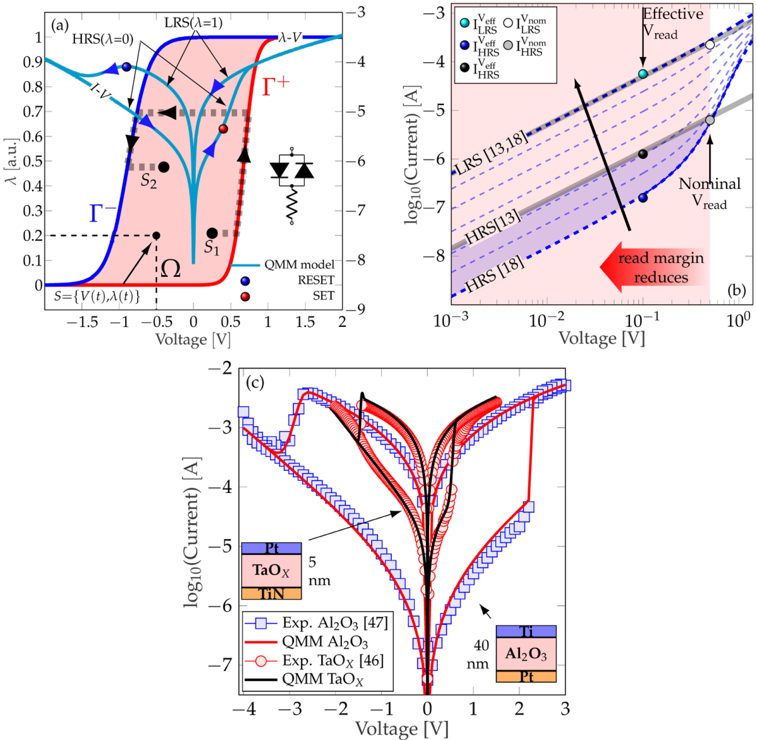
“(c) Experimental I-V loops of different materials reported in the literature fitted with the QMM model: Al2O3 [47] and TaOX [46].”
BackgroundMethodMemristive Device Fundamentals and Modeling: Applications to Circuits and Systems Simulation
Eshraghian, K., Kavehei, O., Cho, K.-R., Chappell, J. M., Iqbal, A., Al-Sarawi, S. F., & Abbott, D. (2012) · Proceedings of the IEEE · doi:10.1109/jproc.2012.2188770 · Cited by 139 · cited 2×
“This is a significant advantage when compared to other widely explored memristor models such as the general phenomenological models (Yakopcic [20], TEAM [21], VTEAM [22], Eshraghian [23], etc.”
BackgroundReduction and IR-drop compensations techniques for reliable neuromorphic computing systems
Liu, B., Li, H., Chen, Y., Li, X., Huang, T., Wu, Q., & Barnell, M. (2014) · 2014 IEEE/ACM International Conference on Computer-Aided Design (ICCAD) · doi:10.1109/iccad.2014.7001330 · Cited by 124 · cited 2×
“Line resistance (RL) is another nonideal factor that worsens as the technology scales down [8,10].”
BackgroundTruong, S. N., & Min, K.-S. (2014) · JSTS:Journal of Semiconductor Technology and Science · doi:10.5573/jsts.2014.14.3.356 · Cited by 118
Chang, C.-C., Chen, P.-C., Chou, T., Wang, I.-T., Hudec, B., Chang, C.-C., Tsai, C.-M., Chang, T.-S., & Hou, T.-H. (2018) · IEEE Journal on Emerging and Selected Topics in Circuits and Systems · doi:10.1109/jetcas.2017.2771529 · Cited by 116 · cited 1×
“In this regard, it has been shown that activation function engineering and threshold weight update schemes effectively suppress training noise [36].”
BackgroundSynaptic electronics and neuromorphic computing
Upadhyay, N. K., Joshi, S., & Yang, J. J. (2016) · Science China Information Sciences · doi:10.1007/s11432-016-5565-1 · Cited by 98 · cited 2×
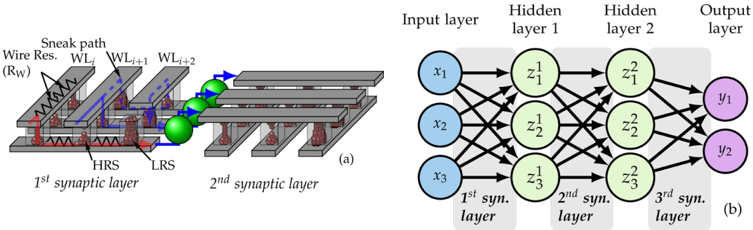
“In particular, MCAs are of great interest for the development of hardware-based deep neural networks (DNN, Figure 1b) as they are suitable for implementing the matrix-vector-multiplication (MVM) method necessary to perform operations and propagate signals through the neural layers [2] with reduced power consumption.”
BackgroundMethodTruong, S. N., Ham, S.-J., & Min, K. (2014) · Nanoscale Research Letters · doi:10.1186/1556-276x-9-629 · Cited by 85
Integration and Co-design of Memristive Devices and Algorithms for Artificial Intelligence
Wang, W., Song, W., Yao, P., Li, Y., Van Nostrand, J., Qiu, Q., Ielmini, D., & Yang, J. J. (2020) · iScience · doi:10.1016/j.isci.2020.101809 · Cited by 84
Nonlinear and multilevel resistive switching memory in Ni/Si3N4/Al2O3/TiN structures
Kim, S., & Park, B.-G. (2016) · Applied Physics Letters · doi:10.1063/1.4952719 · Cited by 76 · cited 1×
“However, nonlinearity factors well below 10 have been obtained by optimizing the device fabrication process [31,32] and have also been addressed through specific training [33,34] and voltage mapping [26] methodologies.”
MethodCross-point phase change memory with 4F 2 cell size driven by low-contact-resistivity poly-Si diode
Sasago, Kinoshita, Morikawa, Kurotsuchi, Hanzawa, Mine, Shima, Fujisaki, Kume, Moriya, et al. (2009) · Symposium on VLSI Technology · Cited by 76
Liang, J., Yeh, S., Wong, S. S., & Wong, H.-S. P. (2013) · ACM Journal on Emerging Technologies in Computing Systems · doi:10.1145/2422094.2422103 · Cited by 71 · cited 3×
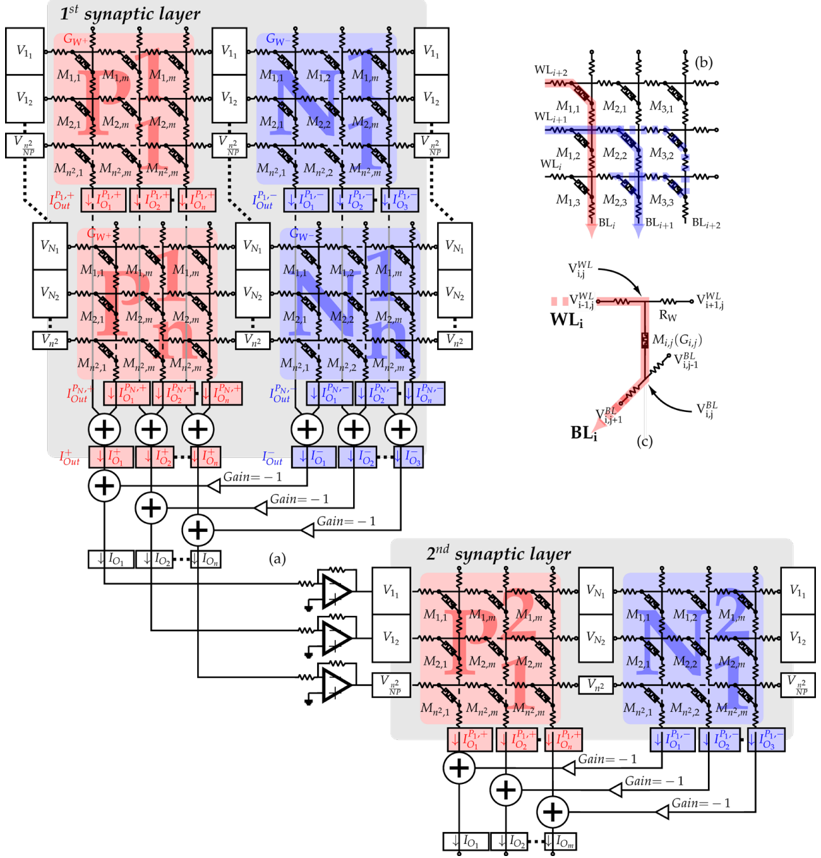
“Given that both RL and RON/ROFF are normally defined by the selected fabrication node and RS mechanism, respectively, a widely accepted [51,53] alternative design consists of dividing the large matrices into smaller partitions, whose reduced size improves the voltage effectively delivered to the memristive cell.”
BackgroundIn-Memory Computing with Memristor Arrays
Li, C., Belkin, D., Li, Y., Yan, P., Hu, M., Ge, N., Jiang, H., Montgomery, E., Lin, P., Wang, Z., et al. (2018) · IEEE International Memory Workshop (IMW) · doi:10.1109/imw.2018.8388838 · Cited by 69 · cited 6×
“Resistive memories (RRAM) [1] were found to meet these requirements as well as allowing dense memory integration (up to 4F2, F being the feature size of the technology node [3]) via architectures such as memristor cross-bar arrays (MCA see Figure 1a).”
BackgroundMethodInfluentialMemristor crossbar based hardware realization of BSB recall function
Hu, M., Li, H., Wu, Q., Rose, G. S., & Chen, Y. (2012) · The 2012 International Joint Conference on Neural Networks (IJCNN) · doi:10.1109/ijcnn.2012.6252563 · Cited by 67
Effect of Electrode Materials on AlN-Based Bipolar and Complementary Resistive Switching
Chen, C., Gao, S., Tang, G., Fu, H., Wang, G., Song, C., Zeng, F., & Pan, F. (2013) · ACS Applied Materials & Interfaces · doi:10.1021/am303128h · Cited by 65
Yakopcic, C., Taha, T. M., Subramanyam, G., & Pino, R. E. (2012) · Springer eBooks · doi:10.1007/978-94-007-4491-2_12 · Cited by 60 · cited 1×
“However, this approach is normally constrained to the limitations of the memristor model considered and to the size of the memristor-based MLP given the high computational requirements [15,16].”
MethodCompact Model for the Major and Minor Hysteretic I–V Loops in Nonlinear Memristive Devices
Miranda, E. A. (2015) · IEEE Transactions on Nanotechnology · doi:10.1109/tnano.2015.2455235 · Cited by 59 · cited 2×
“A key element in that study is the Quasi-Static Memdiode Model (QMM), a memristor model originally proposed by Miranda in [18,19], that provides high simulation accuracy at reduced computational cost.”
MethodSelf-citationRetention failure analysis of metal-oxide based resistive memory
Choi, S., Lee, J., Kim, S., & Lu, W. D. (2014) · Applied Physics Letters · doi:10.1063/1.4896154 · Cited by 56
Memristor‐based neuron circuit and method for applying learning algorithm in SPICE
Yakopcic, C., Hasan, R., Taha, T. M., McLean, M., & Palmer, D. (2014) · Electronics Letters · doi:10.1049/el.2014.0464 · Cited by 48 · cited 1×
“However, this approach is normally constrained to the limitations of the memristor model considered and to the size of the memristor-based MLP given the high computational requirements [15,16].”
MethodInput Voltage Mapping Optimized for Resistive Memory-Based Deep Neural Network Hardware
Kim, T., Kim, H., Kim, J., & Kim, J.-J. (2017) · IEEE Electron Device Letters · doi:10.1109/led.2017.2730959 · Cited by 46 · cited 2×
“However, nonlinearity factors well below 10 have been obtained by optimizing the device fabrication process [31,32] and have also been addressed through specific training [33,34] and voltage mapping [26] methodologies.”
BackgroundMethodVoltage-Driven Hysteresis Model for Resistive Switching: SPICE Modeling and Circuit Applications
Patterson, G. A., Suñé, J., & Miranda, E. A. (2017) · IEEE Transactions on Computer-Aided Design of Integrated Circuits and Systems · doi:10.1109/tcad.2017.2756561 · Cited by 43 · cited 3×
“in [19] is able to describe the major and minor I-V loops and the gradual transitions in bipolar resistive switches.”
BackgroundMethodSelf-citationTruong, S. N., Shin, S., Byeon, S.-D., Song, J.-S., & Min, K. (2015) · IEEE Transactions on Nanotechnology · doi:10.1109/tnano.2015.2473666 · Cited by 42
Reliable Modeling of Ideal Generic Memristors via State-Space Transformation
Biolek, Z., Biolek, D., Biolková, V., & Kolka, Z. (2015) · Radioengineering · doi:10.13164/re.2015.0393 · Cited by 42
Mask Technique for Fast and Efficient Training of Binary Resistive Crossbar Arrays
Fouda, M. E., Lee, S., Lee, J., Eltawil, A., & Kurdahi, F. (2019) · IEEE Transactions on Nanotechnology · doi:10.1109/tnano.2019.2927493 · Cited by 41 · cited 2×
“MCA with CMOS circuitry, vertical interconnects used to connect the outputs of the vertical MCA partitions may be placed under the partitioned structure, as well as the analogue sensing electronics, allowing the partitioned MCA to maintain a similar area consumption than the original nonpartitioned case [51].”
BackgroundMethodCross-point Resistive Memory: Nonideal Properties and Solutions
Wang, C., Feng, D., Tong, W., Liu, J., Li, Z., Chang, J., Zhang, Y., Wu, B., Xu, J., Zhao, W. J., et al. (2019) · ACM Transactions on Design Automation of Electronic Systems · doi:10.1145/3325067 · Cited by 40
Aguirre, F. L., Pazos, S. M., Palumbo, F., Sune, J., & Miranda, E. (2020) · IEEE Access · doi:10.1109/access.2020.3035638 · Cited by 36 · cited 10×
“Additionally, the use of devices with a higher ROFF/RON ratio has been shown to reduce the impact of the D2D variability [17].”
BackgroundMethodSelf-citationCross-Point phase change memory with 4F2 cell size driven by low-contact resistivity poly-si diode
Sasago, Y., Kinoshita, M., Morikawa, T., Kurotsuchi, K., Hanzawa, S., Mine, T., Shima, A., Fujisaki, Y., Kume, H., Moriya, H., et al. (2006) · Symposium on VLSI Technology · Cited by 35
Retention Model of TaO/HfO x and TaO/AlO x RRAM with Self-Rectifying Switch Characteristics
Lin, Y.-D., Chen, P.-S., Lee, H.-Y., Chen, Y.-S., Rahaman, S. Z., Tsai, K.-H., Hsu, C.-H., Chen, W.-S., Wang, P., King, Y., et al. (2017) · Nanoscale Research Letters · doi:10.1186/s11671-017-2179-5 · Cited by 30
Modeling of TiO2memristor: from analytic to numerical analyses
Biolek, D., Biolek, Z., Biolková, V., & Kolka, Z. (2014) · Semiconductor Science and Technology · doi:10.1088/0268-1242/29/12/125008 · Cited by 27 · cited 1×
“) that although capable of successfully fitting experimental data, rely on various internal equations or artificial window functions (commonly used for modeling the SET/RESET transitions) in the memory equation (ME, a first order differential equation that links the current flowing through or the voltage applied to th…”
MethodHan, R., Huang, P. C., Zhao, Y., Cui, X., Liu, X., & Kang, J. (2018) · Science China Information Sciences · doi:10.1007/s11432-018-9555-8 · Cited by 26
Complementary resistive switching in single sandwich structure for crossbar memory arrays
Duan, W., Wang, J. B., Zhong, X. L., Song, H., & Li, B. (2016) · Journal of Applied Physics · doi:10.1063/1.4961222 · Cited by 25
Ham, S.-J., Mo, H.-S., & Min, K. (2013) · IEEE Transactions on Nanotechnology · doi:10.1109/tnano.2013.2274529 · Cited by 24
Raghavan, N., Frey, D., Bosman, M., & Pey, K. L. (2015) · Microelectronics Reliability · doi:10.1016/j.microrel.2015.06.090 · Cited by 24
Energy-Efficient Write Scheme for Nonvolatile Resistive Crossbar Arrays With Selectors
Ciprut, A., & Friedman, E. G. (2018) · IEEE Transactions on Very Large Scale Integration (VLSI) Systems · doi:10.1109/tvlsi.2017.2785740 · Cited by 23 · cited 1×
“However, nonlinearity factors well below 10 have been obtained by optimizing the device fabrication process [31,32] and have also been addressed through specific training [33,34] and voltage mapping [26] methodologies.”
MethodLee, Y. K., Jeon, J. W., Park, E.-S., Yoo, C., Kim, W., Ha, M., & Hwang, C. S. (2019) · Micromachines · doi:10.3390/mi10050306 · Cited by 22
Lee, A. R., Bae, Y. C., Im, H. S., & Hong, J. P. (2013) · Applied Surface Science · doi:10.1016/j.apsusc.2013.02.100 · Cited by 18
Aguirre, F. L., Rodriguez-Fernandez, A., Pazos, S. M., Suñé, J., Miranda, E. A., & Palumbo, F. (2019) · IEEE Transactions on Electron Devices · doi:10.1109/ted.2019.2922555 · Cited by 15 · cited 2×
“For a ruptured CF, the device is in the high resistance state (HRS), often characterized by an exponential I-V relationship, while the completion of the CF leads to the low resistance state (LRS), which often exhibits a linear I-V curve [45,46].”
BackgroundSelf-citationTruong, S. N. (2019) · Micromachines · doi:10.3390/mi10100671 · Cited by 15
Fröhlich, K., Kundrata, I., Blaho, M., Precner, M., Ťapajna, M., Klimo, M., Šuch, O., & Škvarek, O. (2018) · Journal of Applied Physics · doi:10.1063/1.5025802 · Cited by 11 · cited 4×
“(c) Experimental I-V loops of different materials reported in the literature fitted with the QMM model: Al2O3 [47] and TaOX [46].”
BackgroundMethodInfluentialRRAM-VAC: A Variability-Aware Controller for RRAM-based Memory Architectures
Tuli, S., Rios, M. A., Levisse, A., & David Atienza, E. S. L. (2020) · Asia and South Pacific Design Automation Conference (ASP-DAC) · doi:10.1109/asp-dac47756.2020.9045220 · Cited by 9 · cited 1×
“Particularly, the write–verify approach, as the one described in [17,38], allows to mitigate the impact of this effect while also providing robustness against C2C and D2D variability [39].”
MethodYang, M., Wang, H., Ma, X., Gao, H., & Yue, H. (2017) · Journal of Vacuum Science & Technology B Nanotechnology and Microelectronics Materials Processing Measurement and Phenomena · doi:10.1116/1.4983193 · Cited by 5
Cited by
Hardware implementation of memristor-based artificial neural networks
Aguirre, F., Sebastian, A., Le Gallo, M., Song, W., Wang, T., Yang, J. J., Lu, W., Chang, M.-F., Ielmini, D., Yang, Y., et al. (2024) · Nature Communications · doi:10.1038/s41467-024-45670-9 · Cited by 564
“250,253, this is done by adjusting the control parameter λ that runs between 0 (HRS) and 1 (LRS).”
Self-citationIelmini, D., & Pedretti, G. (2025) · Chemical Reviews · doi:10.1021/acs.chemrev.4c00845 · Cited by 181
In-memory computing with emerging memory devices: Status and outlook
Mannocci, P., Farronato, M., Lepri, N., Cattaneo, L., Glukhov, A., Sun, Z., & Ielmini, D. (2023) · APL Machine Learning · doi:10.1063/5.0136403 · Cited by 192
Modeling and Compensation of IR Drop in Crosspoint Accelerators of Neural Networks
Lepri, N., Baldo, M., Mannocci, P., Glukhov, A., Milo, V., & Ielmini, D. (2022) · IEEE Transactions on Electron Devices · doi:10.1109/ted.2022.3141987 · Cited by 61
SPICE Implementation of the Dynamic Memdiode Model for Bipolar Resistive Switching Devices
Aguirre, F. L., Suñé, J., & Miranda, E. A. (2022) · Micromachines · doi:10.3390/mi13020330 · Cited by 59
Self-citation
Metadata
- Authors
- Aguirre, F. L., Gomez, N. M., Pazos, S. M., Palumbo, F., Suñé, J., & Miranda, E.
- Affiliations
- Universitat Autònoma de Barcelona (ES)
- National Technological University (AR)
- Unidad de Investigación y Desarrollo de las Ingenierías (UIDI), Facultad Regional Buenos Aires, Universidad Tecnológica Nacional (UTN-FRBA), Buenos Aires C1179AAQ, Argentina
- Corresponding author
- Aguirre, Fernando Leonel
- Miranda, Enrique
- Venue
- Journal of Low Power Electronics and Applications
- Publisher
- MDPI AG
- Published
- 2021-02-05
- Volume
- 11
- Issue
- 1
- Pages
- 9
- ISSN
- 2079-9268 (ISSN-L)
- OpenAlex
- W3127820121
- Cited by
- 14
- References
- 54
- Citations by year
- 2025: 2 · 2024: 2 · 2023: 5 · 2022: 3 · 2021: 2
- FWCI
- 0.88
- Type
- journal article
- Language
- en
- Open access
- gold
- doi.org
- Licence
- Locations
- Journal of Low Power Electronics and Applications (publishedVersion, cc-by)
- Dipòsit Digital de Documents de la UAB (Universitat Autònoma de Barcelona) (submittedVersion, cc-by)
- DOAJ (DOAJ: Directory of Open Access Journals) (submittedVersion, cc-by-sa)
- Conicet (submittedVersion, cc-by)
- Funders
- Ministerio de Ciencia, Tecnología e Innovación Productiva (PICT2013/1210, PICT 2016/0579, PME 2015-0196)
- Consejo Nacional de Investigaciones Científicas y Técnicas (PIP-11220130100077CO)
- Universidad Tecnológica Nacional (PID-UTN EIUTIBA4395TC3, PID-UTN CCUTIBA4764TC, PID-UTN MATUNBA4936, PID-UTN CCUTNBA5182, PID-UTN CCUTNBA6615)
- Ministerio de Ciencia e Innovación (TEC2017-84321-C4-4-R)
- Electronic Components and Systems for European Leadership (WAKeMeUP 783176)
- Topics
- Physical Sciences › Engineering › Electrical and Electronic Engineering › Advanced Memory and Neural Computing
- Physical Sciences › Computer Science › Artificial Intelligence › Neural Networks and Applications
- Physical Sciences › Engineering › Electrical and Electronic Engineering › Ferroelectric and Negative Capacitance Devices
- Keywords
- memristors, line resistance, interconnection resistance, SPICE simulation, handwritten character recognition, MNIST, iterative calibration, neuromorphic hardware
About these checks
Registry, retraction, Cites and statistics results are computed, not judged, with one exception: a printed reference that no index lists is read once by a model before it counts as a citation error. Claims are extracted by a model and kept only when their quote appears verbatim in the text; each cited source is then checked, with a model’s help, for whether it says what the claim relies on. Those verdicts can be wrong — read the claim’s quote and the cited source before relying on one.
Statistics and arithmetic are recomputed, not judged.
Confidence bands are shown only for fields calibrated on our annotated test set. None is calibrated yet, so no band is shown.
What counts as a claim ›How we measure confidence ›How we check this ›
Are you an author, or do you see a problem with this page? Request a review
Data sources
Bibliographic data: Semantic Scholar, OpenAlex, Crossref.
Contains information from the Semantic Scholar Academic Graph Datasets, made available under the ODC Attribution License (ODC-BY 1.0).
Semantic Scholar’s data is described in: Kinney, R., et al. (2023). The Semantic Scholar Open Data Platform. arXiv:2301.10140.
