

The CWI Pathway: Regulation of the Transcriptional Adaptive Response to Cell Wall Stress in Yeast
Open accessThe DOI matches its Crossref record; 95 of the 96 references it cites were found in a registry or an index.
Abstract
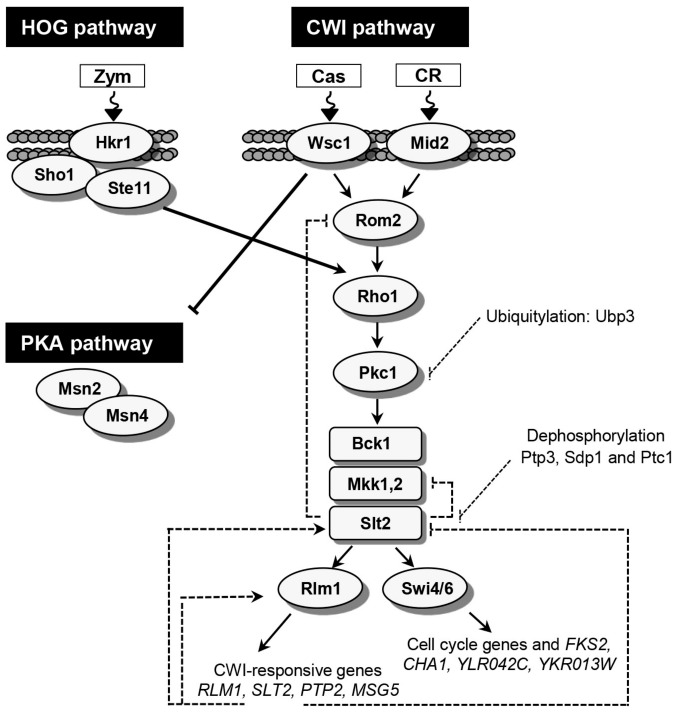
Fungi are surrounded by an essential structure, the cell wall, which not only confers cell shape but also protects cells from environmental stress. As a consequence, yeast cells growing under cell wall damage conditions elicit rescue mechanisms to provide maintenance of cellular integrity and fungal survival. Through transcriptional reprogramming, yeast modulate the expression of genes important for cell wall biogenesis and remodeling, metabolism and energy generation, morphogenesis, signal transduction and stress. The yeast cell wall integrity (CWI) pathway, which is very well conserved in other fungi, is the key pathway for the regulation of this adaptive response. In this review, we summarize the current knowledge of the yeast transcriptional program elicited to counterbalance cell wall stress situations, the role of the CWI pathway in the regulation of this program and the importance of the transcriptional input received by other pathways. Modulation of this adaptive response through the CWI pathway by positive and negative transcriptional feedbacks is also discussed. Since all these regulatory mechanisms are well conserved in pathogenic fungi, improving our knowledge about them will have an impact in the developing of new antifungal therapies.
Overview
The claims and statistics of this paper haven’t been checked yet.
Free: it reads the open-access text and checks the first 5 claims that cite a source we can check. Create a free account to check every claim.
Integrity signals
Registry
Cites
Statistics
Figures
Verification
Claims the paper makes
The claims and statistics of this paper haven’t been checked yet.
Free: it reads the open-access text and checks the first 5 claims that cite a source we can check. Create a free account to check every claim.
Claims other papers make about this one
Each is checked against this paper’s own text: does it say what the citing paper says it does?
The source backs part of the claim, not all of it — or backs it for a different population, condition or comparison.
In the citing paper
“Among these are the cell wall integrity/protein kinase C pathway, the Ca2+/calcineurin pathway, a second MAPK cascade, the HOG pathway, and the pH-sensing PacC pathway (461–463).”
From Aspergillus fumigatus and Aspergillosis in 2019 (2019) · cites this paper as [463]
Experimental — accuracy not yet measured
Self-check
Percentages, sums and reported differences re-computed from the paper’s own numbers.
The self-check needs the paper’s full text.
Citations
Cites
Engineering stability in gene networks by autoregulation
Becskei, A., & Serrano, L. (2000) · Nature · doi:10.1038/35014651 · Cited by 1,520 · cited 1×
“In contrast to negative autoregulation, which speed up transcriptional gene circuits [81], positive autoregulation that occurs when a transcription factor enhance its own production rate amplifies gene expression and slow down the kinetics of gene expression [82].”
BackgroundThe Fungal Cell Wall: Structure, Biosynthesis, and Function
Gow, N. A. R., Latge, J.-P., & Munro, C. A. (2017) · Microbiology Spectrum · doi:10.1128/microbiolspec.funk-0035-2016 · Cited by 1,423 · cited 3×
“α-1,3-glucan plays an important role in the organization of the cell wall of Schizosaccharomyces pombe and many human pathogens but is absent from the Candida and Saccharomyces cell walls [12,14].”
BackgroundThe cell wall: a carbohydrate armour for the fungal cell
Latgé, J. (2007) · Molecular Microbiology · doi:10.1111/j.1365-2958.2007.05872.x · Cited by 987 · cited 1×
“In contrast, galactomannan and β-1,3/1,4-glucan are present in Aspergillus but not in yeast [18].”
BackgroundRoberts, C. J., Nelson, B., Marton, M. J., Stoughton, R., Meyer, M. R., Bennett, H. A., He, Y. D., Dai, H., Walker, W. L., Hughes, T. R., et al. (2000) · Science · doi:10.1126/science.287.5454.873 · Cited by 855 · cited 1×
“As described above, expression of RLM1 and SLT2 is induced by cell wall stress in an Rlm1-dependent manner [30,40,63,83].”
BackgroundCell Wall Assembly in Saccharomyces cerevisiae
Lesage, G., & Bussey, H. (2006) · Microbiology and Molecular Biology Reviews · doi:10.1128/mmbr.00038-05 · Cited by 849 · cited 3×
“In accordance, the transcription of many cell wall genes varies during the cell cycle and particularly at G1 for isotropic cell wall synthesis [15].”
BackgroundLevin, D. E. (2011) · Genetics · doi:10.1534/genetics.111.128264 · Cited by 831 · cited 3×
“Therefore, treatments with cell wall perturbing agents that directly induce cell wall stress by interfering cell wall construction or mutational loss of proteins necessary for cell wall biogenesis elicit a rescue mechanism known as “compensatory salvage response” that provides compensatory synthesis of cell wall mater…”
BackgroundCell wall construction in Saccharomyces cerevisiae
Klis, F. M., Boorsma, A., & De Groot, P. W. J. (2006) · Yeast · doi:10.1002/yea.1349 · Cited by 759 · cited 1×
“In particular, the cell wall structure needs to be remodeled under those stress conditions with a direct impact on cell wall integrity [28].”
BackgroundArchitecture of the Yeast Cell Wall
Kollár, R., Reinhold, B. B., Petráková, E., Yeh, H. J. C., Ashwell, G., Drgonová, J., Kapteyn, J. C., Klis, F. M., & Cabib, E. (1997) · Journal of Biological Chemistry · doi:10.1074/jbc.272.28.17762 · Cited by 644
Growth factor-induced MAPK network topology shapes Erk response determining PC-12 cell fate
Santos, S. D. M., Verveer, P. J., & Bastiaens, P. I. H. (2007) · Nature Cell Biology · doi:10.1038/ncb1543 · Cited by 609 · cited 1×
“Triggering sustained or transient cellular responses through MAPK signaling pathways requires precise regulatory mechanisms that define different dynamics which determine different outputs [71].”
BackgroundFungal Cell Wall Organization and Biosynthesis
Free, S. J. (2013) · Advances in Genetics · doi:10.1016/b978-0-12-407677-8.00002-6 · Cited by 576 · cited 2×
“α-1,3-glucan plays an important role in the organization of the cell wall of Schizosaccharomyces pombe and many human pathogens but is absent from the Candida and Saccharomyces cell walls [12,14].”
Background
Cited by
Aspergillus fumigatus and Aspergillosis in 2019
Latgé, J.-P., & Chamilos, G. (2019) · Clinical Microbiology Reviews · doi:10.1128/cmr.00140-18 · Cited by 1,400
The cell wall and the response and tolerance to stresses of biotechnological relevance in yeasts
Ribeiro, R. A., Bourbon-Melo, N., & Sá‐Correia, I. (2022) · Frontiers in Microbiology · doi:10.3389/fmicb.2022.953479 · Cited by 181
“Together with phosphatidylinositol 4,5-biphosphate, PIP2, which recruits the guanine nucleotide exchange factors (GEFs) Rom1 and Rom2, the surface sensors activate the Rho1 GTPase (Levin, 2011; Sanz et al., 2018).”
BackgroundCurrent trends, limitations and future research in the fungi?
Hyde, K. D., Baldrián, P., Chen, Y., Chethana, K. W. T., de Hoog, S., Doilom, M., de Farias, A. R. G., Gonçalves, M. F. M., Gonkhom, D., Gui, H., et al. (2024) · Fungal Diversity · doi:10.1007/s13225-023-00532-5 · Cited by 178
Cell wall traits that influence plant development, immunity, and bioconversion
Lorenzo, G. D., Ferrari, S., Giovannoni, M., Mattei, B., & Cervone, F. (2019) · The Plant Journal · doi:10.1111/tpj.14196 · Cited by 133
Spent Brewer’s Yeast as a Source of Insoluble β-Glucans
Avrămia, I., & Amariei, S. (2021) · International Journal of Molecular Sciences · doi:10.3390/ijms22020825 · Cited by 130
Zhang, X., Wang, Z., Jiang, C., & Xu, J. (2021) · Stress Biology · doi:10.1007/s44154-021-00004-3 · Cited by 103
“The CWI MAPK pathway also has been characterized in a number of plant pathogenic fungi, including B. cinerea, C. parasitica, C. purpurea, F. graminearum, M. graminicola, and Sclerotinia sclerotiorum (Sanz et al. 2017; Jiang et al. 2018).”
BackgroundSpecial Issue: Fungal Cell Wall
Beauvais, A., & Latgé, J. (2018) · Journal of Fungi · doi:10.3390/jof4030091 · Cited by 104
“Rml1 is the transcription factor responsible for the expression of the majority of the genes induced under cell wall stress [38].”
Fungal plasma membrane domains
Αθανασόπουλος, Α., André, B., Sophianopoulou, V., & Gournas, C. (2019) · FEMS Microbiology Reviews · doi:10.1093/femsre/fuz022 · Cited by 86
Overview of yeast environmental stress response pathways and the development of tolerant yeasts
Lin, N.-X., Xu, Y., & Yu, X. (2021) · Systems Microbiology and Biomanufacturing · doi:10.1007/s43393-021-00058-4 · Cited by 81
Yeast Cellular Stress: Impacts on Bioethanol Production
Eardley, J., & Timson, D. J. (2020) · Fermentation · doi:10.3390/fermentation6040109 · Cited by 78
“How these stresses are sensed is currently unknown [136].”
BackgroundNot just the wall: the other ways to turn the yeast CWI pathway on
Jiménez‐Gutiérrez, E., Alegría‐Carrasco, E., Sellers-Moya, Á., Molina, M., & Martín, H. (2019) · International Microbiology · doi:10.1007/s10123-019-00092-2 · Cited by 61
β-Glucans from Yeast—Immunomodulators from Novel Waste Resources
Thomas, S., Rezoagli, E., Abidin, I. Z., Major, I., Murray, P., & Murphy, E. J. (2022) · Applied Sciences · doi:10.3390/app12105208 · Cited by 58
Post-Translational Modifications Drive Success and Failure of Fungal–Host Interactions
Retanal, C., Ball, B., & Geddes‐McAlister, J. (2021) · Journal of Fungi · doi:10.3390/jof7020124 · Cited by 56
Control of Gene Expression via the Yeast CWI Pathway
Sanz, A. B., García, R., Pavón‐Vergés, M., Rodríguez-Peña, J. M., & Arroyo, J. (2022) · International Journal of Molecular Sciences · doi:10.3390/ijms23031791 · Cited by 48
“The final consequence of this response, known as “compensatory salvage response”, is to provide the cell with the mechanisms for the synthesis and crosslinking of cell wall polymers necessary for the maintenance of cellular integrity and fungal survival [5,102].”
BackgroundInfluentialSelf-citationLu, K., Chen, R., Yang, Y., Xu, H., Jiang, J., & Li, L. (2023) · Molecular Plant-Microbe Interactions · doi:10.1094/mpmi-11-22-0231-cr · Cited by 43
Extreme Low Cytosolic pH Is a Signal for Cell Survival in Acid Stressed Yeast
de Lucena, R. M., Edo, L. D., Brul, S., de Morais, M. A., & Smits, G. J. (2020) · Genes · doi:10.3390/genes11060656 · Cited by 46
Gao, L., Meng, J., Dai, W., Zhang, Z., Dong, H., Yuan, Q., Zhang, W., Liu, S., & Wu, X. (2023) · Biotechnology for Biofuels and Bioproducts · doi:10.1186/s13068-023-02428-7 · Cited by 44
“This result was in agreement with previous reports that Slt2 activity can be negatively regulated by dephosphorylation through the activity of different phosphatases such as Ptp2 and Ptp3 [33, 34].”
ResultQiu, X., Zhang, J., Zhou, J., Fang, Z., Zhu, Z., Li, J., & Du, G. (2019) · Applied Microbiology and Biotechnology · doi:10.1007/s00253-019-09993-8 · Cited by 45
Zhang, T., Cao, Q., Li, N., Liu, D., & Yuan, Y. (2020) · BMC Genomics · doi:10.1186/s12864-020-6564-6 · Cited by 43
Hua, C., Kai, K., Wang, X., Shi, W. M., Zhang, D., & Liu, Y. (2019) · Postharvest Biology and Technology · doi:10.1016/j.postharvbio.2019.02.006 · Cited by 40
García, R., Pulido, V., Orellana‐Muñoz, S., Nombela, C., de Aldana, C. R. V., Rodríguez-Peña, J. M., & Arroyo, J. (2019) · Scientific Reports · doi:10.1038/s41598-019-40112-9 · Cited by 38
Self-citationSignals and Their Perception for Remodelling, Adjustment and Repair of the Plant Cell Wall
Oelmüller, R., Tseng, Y.-H., & Gandhi, A. (2023) · International Journal of Molecular Sciences · doi:10.3390/ijms24087417 · Cited by 35
Shree, A., Pal, S., & Verma, P. K. (2024) · Physiology and Molecular Biology of Plants · doi:10.1007/s12298-024-01453-6 · Cited by 35
“This pathway is highly conserved among fungi (Sanz et al. 2017).”
Sariki, S. K., Kumawat, R., Singh, V., & Tomar, R. S. (2019) · Molecular Microbiology · doi:10.1111/mmi.14375 · Cited by 38
“The CWI pathway is one of the key pathways required for adaptive response during cell wall damage through induction of specific transcriptional program (Sanz et al., 2017).”
BackgroundCurcumin inhibits Diaporthe phaseolorum and reduces postharvest decay in kiwifruit
Kai, K., Bi, W., Sui, Y., Hua, C., Liu, Y., & Zhang, D. (2019) · Scientia Horticulturae · doi:10.1016/j.scienta.2019.108860 · Cited by 37
Otero, C., Carreño, A., Polanco, R., Llancalahuén, F. M., Arratia‐Pérez, R., Gacitúa, M. A., & Fuentes, J. A. (2019) · Frontiers in Chemistry · doi:10.3389/fchem.2019.00454 · Cited by 33
“Both bacteria and fungi possess a rigid structure found in their respective envelop, called cell wall (Sanz et al., 2017; Caveney et al., 2018).”
BackgroundTargeting Fks1 proteins for novel antifungal drug discovery
Kumar, V., Huang, J., Dong, Y., & Hao, G. (2024) · Trends in Pharmacological Sciences · doi:10.1016/j.tips.2024.02.007 · Cited by 32
Ortiz-Ramírez, J. A., Cuéllar‐Cruz, M., & López-Romero, E. (2022) · Frontiers in Cellular and Infection Microbiology · doi:10.3389/fcimb.2022.976924 · Cited by 31
Lichius, A., & Zeilinger, S. (2019) · Journal of Visualized Experiments · doi:10.3791/60613 · Cited by 33
de Oliveira, H. C., Rossi, S. A., García-Barbazán, I., Zaragoza, Ó., & Trevijano‐Contador, N. (2021) · Journal of Fungi · doi:10.3390/jof7100831 · Cited by 27
“This pathway is integrated by different receptors and factors that in a last step activate the MAPK (mitogen-activated protein kinase) module [27,28].”
BackgroundInfluentialPérez, G., Lopez‐Moya, F., Tomazeli, E. C., Ibáñez-Vea, M., Garde, E., Lopez-Llorca, L. V., Pisabarro, A. G., & Ramírez, L. (2021) · Journal of Fungi · doi:10.3390/jof7100862 · Cited by 26
“The HOG pathway is activated by different stresses [99,100], while the CWI pathway is necessary for the integrity of the cell wall [101].”
BackgroundQin, L., Li, D., Zhao, J., Yang, G., Wang, Y., Yang, K., Tumukunde, E., Wang, S., & Yuan, J. (2020) · Microbial Biotechnology · doi:10.1111/1751-7915.13701 · Cited by 24
Signalling mechanisms involved in stress response to antifungal drugs
Víglaš, J., & Olejníková, P. (2020) · Research in Microbiology · doi:10.1016/j.resmic.2020.10.001 · Cited by 24
Non-coding RNAs as cell wall regulators inSaccharomyces cerevisiae
Novačić, A., Vučenović, I., Primig, M., & Stuparević, I. (2020) · Critical Reviews in Microbiology · doi:10.1080/1040841x.2020.1715340 · Cited by 24
The CWI Pathway: A Versatile Toolbox to Arrest Cell-Cycle Progression
Quilis, I., Gomar‐Alba, M., & Igual, J. C. (2021) · Journal of Fungi · doi:10.3390/jof7121041 · Cited by 22
“This is intriguing, given that the activation of Rlm1 is dependent on Slt2, although it cannot be ruled out that, under these particular conditions, Rlm1 can be activated by mechanisms independent of Slt2 and that Whi7 could be involved.”
BackgroundInfluentialSellers-Moya, Á., Nuévalos, M., Molina, M., & Martín, H. (2021) · Journal of Fungi · doi:10.3390/jof7080647 · Cited by 23
“Once activated, Slt2 can phosphorylate a diverse set of substrates, including the transcription factors Rlm1 and SBF complex (consisting of Swi4 and Swi6), which regulate the expression of genes implicated in cell-wall repair such as MLP1 and FKS1, respectively [12].”
BackgroundWu, C., Liu, L., Zhang, M., Jike, X., Zhang, H., Yang, N., Yang, H., Xu, H., & Lei, H. (2023) · Journal of Agricultural and Food Chemistry · doi:10.1021/acs.jafc.3c03793 · Cited by 21
A walk-through MAPK structure and functionality with the 30-year-old yeast MAPK Slt2
González-Rubio, G., Sellers-Moya, Á., Martín, H., & Molina, M. (2021) · International Microbiology · doi:10.1007/s10123-021-00183-z · Cited by 21
“Interaction of Slt2 with the transcription factor Rlm1 seems to involve quite the same determinants as with Mkks. Mutation of the hydrophobic residues of the Rlm1 D-site (L324A, V326A) or (I328, P329) resulted in defectiveness for cell wall stress-induced transcriptional activation, suggesting that these mutations abo…”
BackgroundInfluentialGarcía, R., Itto‐Nakama, K., Rodríguez-Peña, J. M., Chen, X., Sanz, A. B., de Lorenzo, A., Pavón‐Vergés, M., Kubo, K., Ohnuki, S., Nombela, C., et al. (2021) · The FASEB Journal · doi:10.1096/fj.202100278r · Cited by 24
Self-citationThe phosphatase Ptc6 is involved in virulence and MAPK signalling in Fusarium oxysporum
Nunez‐Rodriguez, J. C., Ruiz‐Roldán, C., Lemos, P. P. F., Membrives, S., & Hera, C. (2019) · Molecular Plant Pathology · doi:10.1111/mpp.12889 · Cited by 21
“To further study the role of Ptc6 in the regulation of the cell wall integrity pathway, we performed gene expression analyses of downstream components of the Mpk1 cascade reported to be activated in response to CFW (Boorsma et al., 2004; Sanz et al., 2017), including the own Mpk1 MAPK, the Gfa1 (the major controller o…”
BackgroundMethodTecho, T., Charoenpuntaweesin, S., & Auesukaree, C. (2020) · Applied and Environmental Microbiology · doi:10.1128/aem.01339-20 · Cited by 21
“initiating cell wall reconstruction and G1/S mitotic transition, respectively (13, 20).”
BackgroundBanu, F. T., Pham, N. N., Wu, Z., Hsieh, P.-H., & Yoshikuni, Y. (2025) · FEMS Yeast Research · doi:10.1093/femsyr/foaf024 · Cited by 19
“To counteract these effects, these cells reinforce their cell walls and membranes by upregulating genes involved in CWI, including those encoding CWPs and components of CWI pathway (Jung and Levin 1999 , Sanz et al. 2017 ).”
Wu, C., Zhang, H., Yang, N., Liu, N., Yang, H., Xu, H., & Lei, H. (2024) · Journal of Agricultural and Food Chemistry · doi:10.1021/acs.jafc.3c09320 · Cited by 19
Kollu, N. V., & LaJeunesse, D. (2021) · ACS Omega · doi:10.1021/acsomega.0c04980 · Cited by 22
Tan, C., Deng, J., Zhang, F., Zhu, Z., Yan, L., Zhang, M., Yuan, J., & Wang, S. (2021) · iScience · doi:10.1016/j.isci.2021.103159 · Cited by 23
“The CWI pathway controls the processes of the remodeled and polarized manner of the cell wall, responding to environmental stimuli, growth, and morphogenesis (Fuchs and Mylonakis, 2009; Nishida et al., 2014; Sanz et al., 2017).”
BackgroundCai, Y., Liu, X., Shen, L., Wang, N., He, Y., Zhang, H., Wang, P., & Zhang, Z. (2022) · Molecular Plant Pathology · doi:10.1111/mpp.13225 · Cited by 18
“Asterisks denote statistically significant differences (p < 0.01) & Brown, 1999; Nordzieke et al., 2019; Sanz et al., 2017; Willis et al., 2018).”
BackgroundInfluentialEffect of cinnamaldehyde on Rhizopus stolonifer and on the conservation of sweet potato
Chen, C., Xue, Z., Pristijono, P., Golding, J. B., Chen, G., Li, Y., & Yang, H. (2024) · Food Quality and Safety · doi:10.1093/fqsafe/fyad072 · Cited by 18
Francisco, C. S., McDonald, B. A., & Palma‐Guerrero, J. (2023) · Fungal Genetics and Biology · doi:10.1016/j.fgb.2023.103811 · Cited by 17
Tondini, F., Onetto, C. A., & Jiranek, V. (2020) · Food Microbiology · doi:10.1016/j.fm.2020.103463 · Cited by 17
Ethanol production process driving changes on industrial strains
Nagamatsu, S. T., Coutouné, N., José, J., Fiamenghi, M. B., Pereira, G. A. G., Oliveira, J., & Carazzolle, M. F. (2021) · FEMS Yeast Research · doi:10.1093/femsyr/foaa071 · Cited by 16
Resilience in Resistance: The Role of Cell Wall Integrity in Multidrug-Resistant Candida
Banda-Flores, I. A., Torres‐Tirado, D., Mora-Montes, H. M., Pérez‐Flores, G., & Pérez-García, L. A. (2025) · Journal of Fungi · doi:10.3390/jof11040271 · Cited by 17
“This observation suggests that Slt2, as well as Hog1, is important both for the initiation and the elongation during the transcription of cell wall genes (Figure 2) [62].”
Coradini, A. L. V., de Mello, F. D. S. B., Furlan, M., Maneira, C., Carazzolle, M. F., Pereira, G. A. G., & Teixeira, G. S. (2021) · Biotechnology for Biofuels · doi:10.1186/s13068-021-02079-6 · Cited by 16
“In summary, the stress sensor Mid2 mediates a response to acidic conditions that leads to activation of the Rlm1 transcription factor through phosphorylation of MAP kinase Slt2p/Mpk1p [74, 75].”
BackgroundXie, D., Tang, C., Wang, Y., Jin, H., & Wang, Y. (2023) · Applied and Environmental Microbiology · doi:10.1128/aem.00661-23 · Cited by 15
“tion, which involves fine transcriptional regulation, especially transcription factors (3).”
BackgroundMühlhofer, M., Offensperger, F., Reschke, S., Wallmann, G., Csaba, G., Berchtold, E., Riedl, M., Blum, H., Haslbeck, M., Zimmer, R., et al. (2024) · FEBS Letters · doi:10.1002/1873-3468.14821 · Cited by 15
“Whereas Rlm1 is linked to the regulation of cell wall stress-responsive genes, Swi4 is connected to cell cycle and sporulation [82].”
BackgroundCañonero, L., Pautasso, M. C., Galello, F., Sigaut, L., Pietrasanta, L. I., Arroyo, J., Moretti, M. B., Portela, P., & Rossi, S. (2022) · Biochimica et Biophysica Acta (BBA) - Molecular Cell Research · doi:10.1016/j.bbamcr.2021.119209 · Cited by 18
Self-citationYeast Stress Response to Synthetic Constructs
Tartik, M. (2026) · ACS Synthetic Biology · doi:10.1021/acssynbio.5c00715 · Cited by 13
“102,105 In metabolic engineering, it is essential to realize that expressing membrane-bound proteins can trigger CWI activation via cell envelope stress.”
Roles of Different Signaling Pathways in Cryptococcus neoformans Virulence
Mahmood, F., Chen, J., Al-Huthaifi, A. M., Al-Alawi, A. A., & Liu, T. (2024) · Journal of Fungi · doi:10.3390/jof10110786 · Cited by 14
“…wall formation are induced through the transcription factors ScRlm1 and the ScSwi4/ScSwi6 complex, as observed in classical studies on S. cerevisiae transcription factors’ activation via the CWI pathway [76]. integrality-related pathways, contributing to the morphological change of C. neoformans .”
Wu, C., Zhang, H., Yang, N., Wang, C., Zhang, M., Liu, N., & Lei, H. (2024) · Food Chemistry · doi:10.1016/j.foodchem.2024.141694 · Cited by 12
Anwar, A., Zhang, S., Wang, L., Wang, F., He, L., & Gao, J. (2022) · Antioxidants · doi:10.3390/antiox11091782 · Cited by 12
“On the other hand, the overexpression of Bra034084 and Bra029784 enhanced the accumulation of H2O2, O2− and MDA in the S1fa overexpressing yeast cells compared with the wild type (EV) (Figure 11).”
InfluentialImpact of Lysine Succinylation on the Biology of Fungi
Adejor, J., Tumukunde, E., Li, G., Lin, H., Xie, R., & Wang, S. (2024) · Current Issues in Molecular Biology · doi:10.3390/cimb46020065 · Cited by 13
“…integrity (CWI) pathway, responsible for controlling cell wall biosynthesis and repair; the high osmotic glycerol (HOG) pathway, which governs the cellular response to osmotic stress; and the mitogen-activated protein kinase (MAPK) signaling pathway, crucial for environmental adaptation [27,34–37].”
BackgroundCarreño, A., Páez‐Hernández, D., Zúñiga, C., Ramírez-Osorio, A., Pizarro, N., Vega, A. I., Solís-Céspedes, E., Rivera-Zaldívar, M. M., Silva, A., & Fuentes, J. A. (2020) · Dyes and Pigments · doi:10.1016/j.dyepig.2020.108876 · Cited by 12
Méndez, E., Gomar‐Alba, M., Bañó, M. C., Mendoza, M., Quilis, I., & Igual, J. C. (2020) · Journal of Cell Science · doi:10.1242/jcs.251413 · Cited by 11
Mannix-Fisher, E., & McLean, S. (2021) · PeerJ · doi:10.7717/peerj.11196 · Cited by 11
Ramos-Viana, V., Møller‐Hansen, I., Kempen, P. J., & Borodina, I. (2022) · FEMS Yeast Research · doi:10.1093/femsyr/foac037 · Cited by 11
Nguyen, A., Tunn, I., Penttilä, M. E., & Frey, A. D. (2025) · ACS Synthetic Biology · doi:10.1021/acssynbio.4c00436 · Cited by 10
Farinha, I., Baptista, S., Reis, M. A. M., & Freitas, F. (2022) · Life · doi:10.3390/life12020161 · Cited by 9
“It was reported that environmental (pH, DO level or temperature) or chemical induced factors (medium composition) can trigger cell-wall compensatory mechanisms to protect the yeast cells, keeping their integrity [9].”
BackgroundResultInfluentialSteffen, H. C., Bosch, C., Wolfaardt, G. M., & Botha, A. (2022) · Water SA · doi:10.17159/wsa/2022.v48.i2.3918 · Cited by 14
Wang, Y., Fan, J., Zhou, Z., Goldman, G. H., Lü, L., & Zhang, Y. (2024) · Applied and Environmental Microbiology · doi:10.1128/aem.01885-23 · Cited by 13
“The MAP kinase MpkA is the central regulator of CWI pathway in A. fumigatus and is phosphorylated under cell wall stresses (28, 29).”
BackgroundThe Role of Sfp1 in Candida albicans Cell Wall Maintenance
Chang, C.-K., Yang, M.-C., Chen, H., Liao, Y.-L., & Lan, C. (2022) · Journal of Fungi · doi:10.3390/jof8111196 · Cited by 10
“For example, cell response to cell wall stress is mediated through different signaling pathways, including the protein kinase C (PKC) and mitogen-activated protein kinase (MAPK) Mkc1 cascade [65,66].”
BackgroundThermotolerant yeasts promoting climate-resilient bioproduction
Shirvani, R., Babaei, M., Baladi, M., Steiger, M. G., & Tashnizi, M. B. (2025) · FEMS Yeast Research · doi:10.1093/femsyr/foaf047 · Cited by 8
“The mechanism of heat-induced CWI activation remains unclear, but membrane-associated stress sensors such as Wsc1 and Mid2 are involved (Gray 1997 , Verna et al. 1997 , Rajavel et al. 1999 , Kock et al. 2016 , Sanz et al. 2017 ).”
Changes in cell wall structure and protein set in Candida maltosa grown on hexadecane
Zvonarev, A. N., Farofonova, V. V., Kulakovskaya, E. V., Kulakovskaya, T. V., Валериевич, М. А., Соколов, С. С., & Dmitriev, V. V. (2020) · Folia Microbiologica · doi:10.1007/s12223-020-00840-2 · Cited by 8
“The yeast cell wall provides a direct contact with the environment and plays an important role in the adaptation of cells to various carbon sources, their development, aging, stress response, morphogenesis, and adhesion (Sanz et al. 2017; Molon et al. 2018; Willaert 2018; Davì et al. 2019).”
BackgroundJohnston, E. J., Tallis, J., Cunningham-Oakes, E., Moses, T., Moore, S. J., Hosking, S., & Rosser, S. J. (2023) · Scientific Reports · doi:10.1038/s41598-023-40308-0 · Cited by 8
“Due to cross-over between stress signalling pathways 52–54 , the specific initial perturbation which induces the transcriptome response cannot be pinpointed using transcriptome data alone.”
Shaping the Transcriptional Landscape through MAPK Signaling
Nadal‐Ribelles, M., Solé, C., Martínez-Cebrián, G., Posas, F., & de Nadal, E. (2019) · IntechOpen eBooks · doi:10.5772/intechopen.80634 · Cited by 9
González-Rubio, G., Martín, H., & Molina, M. (2023) · Microbiology Spectrum · doi:10.1128/spectrum.05249-22 · Cited by 9
“Considering that the activation of the CWI pathway promotes the expression of a subset of genes implicated in cell wall remodeling (73), hyperactivation of Slt2 in ptc1D mutants”
BackgroundImportance of Non-Covalent Interactions in Yeast Cell Wall Molecular Organization
Kalebina, T. S., Rekstina, V. V., Pogarskaia, E. E., & Kulakovskaya, T. V. (2024) · International Journal of Molecular Sciences · doi:10.3390/ijms25052496 · Cited by 8
“It also plays an important role in the adaptation of these microorganisms to various carbon sources, in development and aging, in response to stress [14–17], in the regulation of morphogenesis [18] and in adhesion [19].”
BackgroundIntertwining of Cellular Osmotic Stress Handling Mechanisms and Heavy Metal Accumulation
Sánchez‐Thomas, R., Hernández-Garnica, M., Granados-Rivas, J. C., Saavedra, E., Castro, I. P., Rodríguez‐Enríquez, S., & Moreno‐Sánchez, R. (2024) · Molecular Biotechnology · doi:10.1007/s12033-024-01351-y · Cited by 10
“On the other hand, the cell wall-containing yeast S. cerevisiae, like others eukaryotic organisms, responds to high osmolarity activating the high osmolarity glycerol pathway (HOG) and the cell wall integrity pathway (CWI) mediated by mitogen-activated protein kinases (MAPK) [13, 134].”
Martínez, N., Chorna, N., González‐Crespo, S., Villanueva, L., Montes‐Rodríguez, I. M., Meléndez, L. M., Roche-Lima, A., Carrasquillo-Carrión, K., Santiago, E., Rymond, B. C., et al. (2021) · Scientific Reports · doi:10.1038/s41598-021-86671-8 · Cited by 7
Porras–Agüera, J. A., Mauricio, J. C., Moreno‐García, J., Moreno, J. J., & García‐Martínez, T. (2020) · Microorganisms · doi:10.3390/microorganisms8081188 · Cited by 7
“Under stress conditions, cell wall composition varies in response to environment, and the existence of a cell response illustrates its dynamic nature [10,11].”
BackgroundPulido, V., Rodríguez-Peña, J. M., Alonso, G., Sanz, A. B., Arroyo, J., & García, R. (2024) · Journal of Molecular Biology · doi:10.1016/j.jmb.2024.168570 · Cited by 6
Self-citationWith an Ear Up against the Wall: An Update on Mechanoperception in Arabidopsis
Behnami, S., & Bonetta, D. T. (2021) · Plants · doi:10.3390/plants10081587 · Cited by 7
“Once activated, SLT2 activates transcription of the transcription factors RLM1 and SBF (SWI4/SWI6 complex), which regulate the expression of genes involved in cell wall synthesis and repair [115].”
BackgroundVillota-Salazar, N. A., Ramos-García, V. H., González-Prieto, J. M., & Hernández‐Delgado, S. (2023) · Revista Argentina de Microbiología · doi:10.1016/j.ram.2023.04.002 · Cited by 7
Carreño, A., Páez‐Hernández, D., Zúñiga, C., Ramírez-Osorio, A., Nevermann, J., Rivera-Zaldívar, M. M., Otero, C., & Fuentes, J. A. (2019) · Chemical Papers · doi:10.1007/s11696-019-00714-z · Cited by 6
Genetic dissection of the signaling pathway required for the cell wall integrity checkpoint
Sukegawa, Y., Negishi, T., Kikuchi, Y., Keiko, I., Imanari, M., Ghanegolmohammadi, F., Nogami, S., & Ohya, Y. (2018) · Journal of Cell Science · doi:10.1242/jcs.219063 · Cited by 7
“Taking these findings together, the sequential connection of the HOG and CWI pathways is important for the checkpoint, representing another example of sequential regulation of MAP kinases in budding yeast (Leng and Song, 2015; Sanz et al., 2017).”
BackgroundAndriani, D. R., & Pargaputri, A. F. (2019) · IOP Conference Series Earth and Environmental Science · doi:10.1088/1755-1315/217/1/012056 · Cited by 9
Franco, P. H. C., Vieira, J. G., Ramos, C. A. D. O., Johann, S., de Oliveira, R. B., & César, I. C. (2020) · Biomedical Chromatography · doi:10.1002/bmc.5014 · Cited by 6
Novačić, A., Šupljika, N., Bekavac, N., Žunar, B., & Stuparević, I. (2021) · Microbiology Spectrum · doi:10.1128/spectrum.00295-21 · Cited by 6
García‐Martínez, J., Rodríguez-Peña, J. M., Pérez-Ortín, J. E., Arroyo, J., & García, R. (2025) · Scientific Reports · doi:10.1038/s41598-025-08815-4 · Cited by 4
Self-citationThe Mgv1–Rlm1 axis orchestrates SAGA and SWI/SNF complexes at target promoters
Xu, C., Zhang, Y., Zhang, C., Chen, L., Yin, Y., Chen, Y., Liu, Z., & Ma, Z. (2025) · Nucleic Acids Research · doi:10.1093/nar/gkaf653 · Cited by 5
“Activated Rho1 initiates the protein kinase C (Pkc1), which subsequently triggers a MAPK cascade involving Bck1 (MAPKKK), Mkk1 / Mkk2 (MAPKKs), and Slt2 / Mpk1 / Mgv1 (MAPK) [ 22 , 23 ].”
Maluleke, E., Jolly, N. P., Patterton, H., & Setati, M. E. (2025) · PLoS ONE · doi:10.1371/journal.pone.0316713 · Cited by 3
The GCN4-Swi6B module mediates low nitrogen-induced cell wall remodeling in Ganoderma lucidum
Shi, L., Wang, L., Liu, R., Zhu, J. K., Shi, L., Ren, A., Chen, H., & Zhao, M. (2025) · Applied and Environmental Microbiology · doi:10.1128/aem.00164-25 · Cited by 5
Development of a ribosome profiling protocol to study translation in Kluyveromyces marxianus
Fenton, D. A., Kiniry, S. J., Yordanova, M. M., Baranov, P. V., & Morrissey, J. P. (2022) · FEMS Yeast Research · doi:10.1093/femsyr/foac024 · Cited by 5
“This is by far the best-understood adaptive process, deployed in response to heat shock (Masser et al. 2020), osmotic stress (de Nadal and Posas 2010), oxidative stress (Morano et al. 2012) and cell wall challenges (Sanz et al. 2017, Jiménez-Gutiérrez et al. 2020).”
BackgroundWu, Y.-M., Lee, C.-H., Cheng, Y., Lu, J., & WANG, S. (2020) · Medical Mycology · doi:10.1093/mmy/myaa090 · Cited by 4
Sanz, A. B., Díez-Muñiz, S., Moya, J., Petryk, Y., Nombela, C., Rodríguez-Peña, J. M., & Arroyo, J. (2022) · Journal of Fungi · doi:10.3390/jof8070718 · Cited by 4
“CWI signalling is triggered by a variety of cell wall stressors (such as cell wall-interfering compounds) [4] or mutations in genes affecting proteins involved in cell wall homeostasis.”
BackgroundInfluentialSelf-citationFortuin, J., & den Haan, R. (2025) · Applied Microbiology and Biotechnology · doi:10.1007/s00253-025-13563-6 · Cited by 4
“…the stress of fermentative conditions, SED1 P may have been upregulated in an effort to maintain cell wall stability through remodelling (Sanz et al. 2017), potentially affecting cell-tethered xylosidase activity and allowing it to reach levels comparable to the best-performing strain,…”
Stapley, J., Zhong, Z., & McDonald, B. A. (2025) · G3 Genes Genomes Genetics · doi:10.1093/g3journal/jkaf094 · Cited by 4
“2018) and (2) the cell-wall integrity (CWI) pathway (Sanz et al .”
Torulaspora delbrueckii: Towards Innovating in the Legendary Baking and Brewing Industries
Pech‐Canul, Á., Ortega, D., García-Triana, A., & Solís-Oviedo, R. L. (2019) · IntechOpen eBooks · doi:10.5772/intechopen.83522 · Cited by 4
Piccirillo, S., McCune, A. H., Dedert, S. R., Kempf, C. G., Jimenez, B., Solst, S. R., Tiede-Lewis, L. M., & Honigberg, S. M. (2019) · Genetics · doi:10.1534/genetics.119.302700 · Cited by 3
Transcriptional and epigenetic control of regulated cell death in yeast
Zimmermann, A., Tadić, J., Kainz, K., Hofer, S. J., Bauer, M. A., Carmona‐Gutiérrez, D., & Madeo, F. (2020) · International review of cytology · doi:10.1016/bs.ircmb.2019.12.003 · Cited by 3
Fungal Beta-glucans: Structure and Effect on Host Immune Responses
Ohno, N. (2021) · YAKUGAKU ZASSHI · doi:10.1248/yakushi.20-00245 · Cited by 3
BrCYP71A15 Negatively Regulates Hg Stress Tolerance by Modulating Cell Wall Biosynthesis in Yeast
Anwar, A., Zhang, S., Wang, L., He, L., & Gao, J. (2023) · Plants · doi:10.3390/plants12040723 · Cited by 3
“Studies have reported that SLT2, MAPK and MAPKK1 are involved in cell wall biosynthesis [31,34].”
BackgroundInfluential
Metadata
- Authors
- Sanz, A., García, R., Rodríguez-Peña, J., & Arroyo, J.
- Affiliations
- Universidad Complutense de Madrid (ES)
- Corresponding author
- Arroyo, Javier
- Venue
- Journal of Fungi
- Publisher
- MDPI AG
- Published
- 2017-12-21
- Volume
- 4
- Issue
- 1
- Pages
- 1
- ISSN
- 2309-608X (ISSN-L)
- PMC
- PMC5872304
- OpenAlex
- W2783112343
- Cited by
- 149
- References
- 96
- Citations by year
- 2026: 14 · 2025: 19 · 2024: 19 · 2023: 16 · 2022: 19 · 2021: 22 · 2020: 16 · 2019: 19 · 2018: 5
- FWCI
- 1.02
- Type
- journal article
- Language
- en
- Open access
- gold
- doi.org
- Licence
- Locations
- Journal of Fungi (publishedVersion, cc-by)
- Europe PMC (PubMed Central) (publishedVersion, cc-by)
- PubMed Central (publishedVersion, cc-by)
- PubMed (publishedVersion)
- Library Open Repository (Universidad Complutense Madrid) (submittedVersion, cc-by)
- LA Referencia (Red Federada de Repositorios Institucionales de Publicaciones Científicas) (submittedVersion, other-oa)
- DOAJ (DOAJ: Directory of Open Access Journals) (submittedVersion, cc-by-sa)
- Funders
- MINECO (BIO2013-48136-P, BIO2016-79289-P)
- Topics
- Life Sciences › Biochemistry, Genetics and Molecular Biology › Molecular Biology › Fungal and yeast genetics research
- Health Sciences › Medicine › Infectious Diseases › Antifungal resistance and susceptibility
- Life Sciences › Biochemistry, Genetics and Molecular Biology › Genetics › Bacterial Genetics and Biotechnology
- Keywords
- cell wall integrity pathway, cell wall stress, transcriptional regulation, adaptive response, Saccharomyces cerevisiae, transcriptional feedback loop, cell wall biosynthesis, cell wall remodeling, fungal pathogens, antifungal drug targets, stress response
About these checks
Registry, retraction, Cites and statistics results are computed, not judged, with one exception: a printed reference that no index lists is read once by a model before it counts as a citation error. Claims are extracted by a model and kept only when their quote appears verbatim in the text; each cited source is then checked, with a model’s help, for whether it says what the claim relies on. Those verdicts can be wrong — read the claim’s quote and the cited source before relying on one.
Statistics and arithmetic are recomputed, not judged.
Confidence bands are shown only for fields calibrated on our annotated test set. None is calibrated yet, so no band is shown.
What counts as a claim ›How we measure confidence ›How we check this ›
Are you an author, or do you see a problem with this page? Request a review
Data sources
Bibliographic data: Semantic Scholar, OpenAlex, Crossref.
Contains information from the Semantic Scholar Academic Graph Datasets, made available under the ODC Attribution License (ODC-BY 1.0).
Semantic Scholar’s data is described in: Kinney, R., et al. (2023). The Semantic Scholar Open Data Platform. arXiv:2301.10140.
