

The CWI Pathway: Regulation of the Transcriptional Adaptive Response to Cell Wall Stress in Yeast
Open accessThe DOI matches its Crossref record; 95 of the 96 references it cites were found in a registry or an index.
Abstract
Fungi are surrounded by an essential structure, the cell wall, which not only confers cell shape but also protects cells from environmental stress. As a consequence, yeast cells growing under cell wall damage conditions elicit rescue mechanisms to provide maintenance of cellular integrity and fungal survival. Through transcriptional reprogramming, yeast modulate the expression of genes important for cell wall biogenesis and remodeling, metabolism and energy generation, morphogenesis, signal transduction and stress. The yeast cell wall integrity (CWI) pathway, which is very well conserved in other fungi, is the key pathway for the regulation of this adaptive response. In this review, we summarize the current knowledge of the yeast transcriptional program elicited to counterbalance cell wall stress situations, the role of the CWI pathway in the regulation of this program and the importance of the transcriptional input received by other pathways. Modulation of this adaptive response through the CWI pathway by positive and negative transcriptional feedbacks is also discussed. Since all these regulatory mechanisms are well conserved in pathogenic fungi, improving our knowledge about them will have an impact in the developing of new antifungal therapies.
Overview
The claims and statistics of this paper haven’t been checked yet.
Free: it reads the open-access text and checks the first 5 claims that cite a source we can check. Create a free account to check every claim.
Integrity signals
Registry
Cites
Statistics
Figures
Verification
Claims the paper makes
The claims and statistics of this paper haven’t been checked yet.
Free: it reads the open-access text and checks the first 5 claims that cite a source we can check. Create a free account to check every claim.
Claims other papers make about this one
Each is checked against this paper’s own text: does it say what the citing paper says it does?
The source backs part of the claim, not all of it — or backs it for a different population, condition or comparison.
In the citing paper
“Among these are the cell wall integrity/protein kinase C pathway, the Ca2+/calcineurin pathway, a second MAPK cascade, the HOG pathway, and the pH-sensing PacC pathway (461–463).”
From Aspergillus fumigatus and Aspergillosis in 2019 (2019) · cites this paper as [463]
Experimental — accuracy not yet measured
Self-check
Percentages, sums and reported differences re-computed from the paper’s own numbers.
The self-check needs the paper’s full text.
Citations
Cites
Engineering stability in gene networks by autoregulation
Becskei, A., & Serrano, L. (2000) · Nature · doi:10.1038/35014651 · Cited by 1,520 · cited 1×
“In contrast to negative autoregulation, which speed up transcriptional gene circuits [81], positive autoregulation that occurs when a transcription factor enhance its own production rate amplifies gene expression and slow down the kinetics of gene expression [82].”
BackgroundThe Fungal Cell Wall: Structure, Biosynthesis, and Function
Gow, N. A. R., Latge, J.-P., & Munro, C. A. (2017) · Microbiology Spectrum · doi:10.1128/microbiolspec.funk-0035-2016 · Cited by 1,423 · cited 3×
“α-1,3-glucan plays an important role in the organization of the cell wall of Schizosaccharomyces pombe and many human pathogens but is absent from the Candida and Saccharomyces cell walls [12,14].”
BackgroundThe cell wall: a carbohydrate armour for the fungal cell
Latgé, J. (2007) · Molecular Microbiology · doi:10.1111/j.1365-2958.2007.05872.x · Cited by 987 · cited 1×
“In contrast, galactomannan and β-1,3/1,4-glucan are present in Aspergillus but not in yeast [18].”
BackgroundRoberts, C. J., Nelson, B., Marton, M. J., Stoughton, R., Meyer, M. R., Bennett, H. A., He, Y. D., Dai, H., Walker, W. L., Hughes, T. R., et al. (2000) · Science · doi:10.1126/science.287.5454.873 · Cited by 855 · cited 1×
“As described above, expression of RLM1 and SLT2 is induced by cell wall stress in an Rlm1-dependent manner [30,40,63,83].”
BackgroundCell Wall Assembly in Saccharomyces cerevisiae
Lesage, G., & Bussey, H. (2006) · Microbiology and Molecular Biology Reviews · doi:10.1128/mmbr.00038-05 · Cited by 849 · cited 3×
“In accordance, the transcription of many cell wall genes varies during the cell cycle and particularly at G1 for isotropic cell wall synthesis [15].”
BackgroundLevin, D. E. (2011) · Genetics · doi:10.1534/genetics.111.128264 · Cited by 831 · cited 3×
“Therefore, treatments with cell wall perturbing agents that directly induce cell wall stress by interfering cell wall construction or mutational loss of proteins necessary for cell wall biogenesis elicit a rescue mechanism known as “compensatory salvage response” that provides compensatory synthesis of cell wall mater…”
BackgroundCell wall construction in Saccharomyces cerevisiae
Klis, F. M., Boorsma, A., & De Groot, P. W. J. (2006) · Yeast · doi:10.1002/yea.1349 · Cited by 759 · cited 1×
“In particular, the cell wall structure needs to be remodeled under those stress conditions with a direct impact on cell wall integrity [28].”
BackgroundArchitecture of the Yeast Cell Wall
Kollár, R., Reinhold, B. B., Petráková, E., Yeh, H. J. C., Ashwell, G., Drgonová, J., Kapteyn, J. C., Klis, F. M., & Cabib, E. (1997) · Journal of Biological Chemistry · doi:10.1074/jbc.272.28.17762 · Cited by 644
Growth factor-induced MAPK network topology shapes Erk response determining PC-12 cell fate
Santos, S. D. M., Verveer, P. J., & Bastiaens, P. I. H. (2007) · Nature Cell Biology · doi:10.1038/ncb1543 · Cited by 609 · cited 1×
“Triggering sustained or transient cellular responses through MAPK signaling pathways requires precise regulatory mechanisms that define different dynamics which determine different outputs [71].”
BackgroundFungal Cell Wall Organization and Biosynthesis
Free, S. J. (2013) · Advances in Genetics · doi:10.1016/b978-0-12-407677-8.00002-6 · Cited by 576 · cited 2×
“α-1,3-glucan plays an important role in the organization of the cell wall of Schizosaccharomyces pombe and many human pathogens but is absent from the Candida and Saccharomyces cell walls [12,14].”
BackgroundResponse to Hyperosmotic Stress
Saito, H., & Posas, F. (2012) · Genetics · doi:10.1534/genetics.112.140863 · Cited by 513 · cited 2×
“The yeast adaptive program to hyperosmotic stress that includes temporary arrest of cell-cycle progression, adjustment of transcription and translation patterns, and the synthesis and retention of glycerol, is governed by the HOG pathway [69].”
BackgroundArchitecture and Biosynthesis of the Saccharomyces cerevisiae Cell Wall
Orlean, P. (2012) · Genetics · doi:10.1534/genetics.112.144485 · Cited by 478 · cited 1×
“Yeast cell integrity depends on the cell wall, an essential structure necessary not only for maintaining morphology but also for protecting cells against environmental stress conditions [1,2].”
BackgroundAguilar-Uscanga, B., & Francois, J. M. (2003) · Letters in Applied Microbiology · doi:10.1046/j.1472-765x.2003.01394.x · Cited by 465 · cited 2×
“In addition to the clinical interest of these studies, they could also be relevant for biotechnological purposes derived from the interest in the optimization of fermentation processes [27,93] or production of cell wall polysaccharides (i.”
BackgroundStimulation of Chitin Synthesis Rescues Candida albicans from Echinocandins
Walker, L. A., Munro, C. A., de Bruijn, I., Lenardon, M. D., McKinnon, A., & Gow, N. A. R. (2008) · PLoS Pathogens · doi:10.1371/journal.ppat.1000040 · Cited by 445 · cited 1×
“fumigatus [23,24,87,88] and can compromise the clinical treatment success [25,89,90].”
BackgroundThe function of chitin synthases 2 and 3 in the Saccharomyces cerevisiae cell cycle.
Shaw, J. A., Mol, P. C., Bowers, B., Silverman, S. J., Valdivieso, M. H., Durán, A., & Cabib, E. (1991) · The Journal of cell biology · doi:10.1083/jcb.114.1.111 · Cited by 443 · cited 1×
“In agreement, genes encoding enzymes of the chitin synthesis pathway like GFA1, which encodes glutamine-fructose-6-phosphate amidotransferase, the first committed enzyme of this pathway [58] and CHS3, encoding the catalytic subunit of the chitin synthase III [59], are overexpressed in almost all the conditions referen…”
BackgroundJung, U. S., & Levin, D. E. (1999) · Molecular Microbiology · doi:10.1046/j.1365-2958.1999.01667.x · Cited by 421 · cited 3×
“This study revealed that constitutive activation of the CWI pathway, through the activation of the transcription factor Rlm1, induces the expression of approximately 25 genes, most of them related to cell wall biogenesis [40].”
BackgroundThe contribution of cell wall proteins to the organization of the yeast cell wall
Kapteyn, J. C., Van Den Ende, H., & Klis, F. M. (1999) · Biochimica et Biophysica Acta (BBA) - General Subjects · doi:10.1016/s0304-4165(98)00137-8 · Cited by 386 · cited 1×
“Compensatory mechanisms also include: an increment in the amount of several cell wall proteins [39,40], transient re-distribution of β-1,3-glucan synthase complex through the cell [41,42] and changes in the cross-linking between cell wall polymers [43].”
BackgroundMolecular organization of the cell wall of Candida albicans and its relation to pathogenicity
Ruiz-Herrera, J., Victoria Elorza, M., ValentÃn, E., & Sentandreu, R. (2006) · FEMS Yeast Research · doi:10.1111/j.1567-1364.2005.00017.x · Cited by 376 · cited 1×
“Candida albicans [15,16], although it is absent in Aspergillus fumigatus [17].”
BackgroundMouyna, I., Fontaine, T., Vai, M., Monod, M., Fonzi, W. A., Diaquin, M., Popolo, L., Hartland, R. P., & Latgé, J.-P. (2000) · Journal of Biological Chemistry · doi:10.1074/jbc.275.20.14882 · Cited by 353
García, R., Bermejo, C., Grau, C., Pérez, R., Rodríguez-Peña, J. M., Francois, J., Nombela, C., & Arroyo, J. (2004) · Journal of Biological Chemistry · doi:10.1074/jbc.m312954200 · Cited by 338 · cited 10×
“As discussed in more detail below, many of these changes are the result of a transcriptional reprogramming elicited by the yeast as a consequence of cell wall stress, that include among others, the induction of a large group of genes related to cell wall biogenesis [30,45].”
BackgroundInfluentialSelf-citationStress-activated Genomic Expression Changes Serve a Preparative Role for Impending Stress in Yeast
Berry, D. B., & Gasch, A. P. (2008) · Molecular Biology of the Cell · doi:10.1091/mbc.e07-07-0680 · Cited by 326 · cited 1×
“Although the immediate role of gene expression in rapid adaptation is still being discussed, it is accepted that gene expression is important for long-term adaptation to stress and for protection against future stress [56,57].”
BackgroundFeatures and functions of covalently linked proteins in fungal cell walls
De Groot, P. W. J., Ram, A. F., & Klis, F. M. (2005) · Fungal Genetics and Biology · doi:10.1016/j.fgb.2005.04.002 · Cited by 309 · cited 1×
“Cell wall mannoproteins, including those involved in adhesion, cell wall remodeling, structural proteins and somatic antigens [6–9] can be linked directly to the β-1,3-glucan via alkali-labile bonds [9,10] and indirectly via β-1,6-glucan through a glycosylphosphatidylinositol (GPI) anchor [9,11].”
BackgroundCell Wall Stress Depolarizes Cell Growth via Hyperactivation of Rho1
Delley, P.-A., & Hall, M. N. (1999) · The Journal of Cell Biology · doi:10.1083/jcb.147.1.163 · Cited by 297 · cited 1×
“Compensatory mechanisms also include: an increment in the amount of several cell wall proteins [39,40], transient re-distribution of β-1,3-glucan synthase complex through the cell [41,42] and changes in the cross-linking between cell wall polymers [43].”
BackgroundHistory and Current Use of Antimicrobial Drugs in Veterinary Medicine
Prescott, J. F. (2017) · Microbiology Spectrum · doi:10.1128/microbiolspec.arba-0002-2017 · Cited by 296
A Biochemical Guide to Yeast Adhesins: Glycoproteins for Social and Antisocial Occasions
Dranginis, A. M., Rauceo, J. M., Coronado, J. E., & Lipke, P. N. (2007) · Microbiology and Molecular Biology Reviews · doi:10.1128/mmbr.00037-06 · Cited by 292
Structural diversity of fungal glucans
Synytsya, A., & Novák, M. (2013) · Carbohydrate Polymers · doi:10.1016/j.carbpol.2012.09.077 · Cited by 285 · cited 1×
“Among fungal glucans, diversities in configuration, position of glyosidic bonds and branching have been reported [13].”
BackgroundStress, drugs, and evolution: the role of cellular signaling in fungal drug resistance.
Cowen, L. E., & Steinbach, W. J. (2008) · Eukaryotic Cell · doi:10.1128/ec.00041-08 · Cited by 285 · cited 1×
“fumigatus [23,24,87,88] and can compromise the clinical treatment success [25,89,90].”
Backgroundde Nobel, H., Ruiz, C., Martin, H., Morris, W., Brul, S., Molina, M., & Klis, F. M. (2000) · Microbiology · doi:10.1099/00221287-146-9-2121 · Cited by 269 · cited 2×
“After treatment, the phosphorylation of the MAPK decreases but it can still be detected even after 6 h [30,39,70].”
BackgroundFungal echinocandin resistance
Walker, L. A., Gow, N. A. R., & Munro, C. A. (2010) · Fungal Genetics and Biology · doi:10.1016/j.fgb.2009.09.003 · Cited by 267
Architecture of the Yeast Cell Wall
Kollár, R., Petráková, E., Ashwell, G., Robbins, P. W., & Cabib, E. (1995) · Journal of Biological Chemistry · doi:10.1074/jbc.270.3.1170 · Cited by 266
Ketela, T., Green, R., & Bussey, H. (1999) · Journal of Bacteriology · doi:10.1128/jb.181.11.3330-3340.1999 · Cited by 263 · cited 1×
“Among those chemical agents that interfere with cell wall biogenesis inducing cell wall stress in yeast are: Congo red and Calcofluor white, both of them binding to chitin and interfering with proper cell wall construction [30,31]; zymolyase which alters the cell wall through its β-1,3-glucanase, protease and chitinas…”
BackgroundCell Wall Remodeling Enzymes Modulate Fungal Cell Wall Elasticity and Osmotic Stress Resistance
Ene, I. V., Walker, L. A., Schiavone, M., Lee, K. K., Martin-Yken, H., Dague, E., Gow, N. A. R., Munro, C. A., & Brown, A. J. P. (2015) · mBio · doi:10.1128/mbio.00986-15 · Cited by 254 · cited 1×
“In fact, overexpression of cell wall remodeling enzymes reduces fungal cell wall elasticity and increase osmotic stress resistance [44].”
BackgroundGenome-wide Analysis of the Response to Cell Wall Mutations in the Yeast Saccharomyces cerevisiae
Lagorce, A., Hauser, N. C., Labourdette, D., Rodriguez, C., Martin-Yken, H., Arroyo, J., Hoheisel, J. D., & François, J. (2003) · Journal of Biological Chemistry · doi:10.1074/jbc.m211604200 · Cited by 254 · cited 2×
“As discussed in more detail below, many of these changes are the result of a transcriptional reprogramming elicited by the yeast as a consequence of cell wall stress, that include among others, the induction of a large group of genes related to cell wall biogenesis [30,45].”
Self-citationThe PMT gene family: protein O-glycosylation in Saccharomyces cerevisiae is vital.
Gentzsch, M., & Tanner, W. (1996) · The EMBO Journal · doi:10.1002/j.1460-2075.1996.tb00961.x · Cited by 249
Kapteyn, J. C., Montijin, R. C., Vink, E., de la Cruz, J., Llobell, A., Douwes, J. E., Shimoi, H., Lipke, P. N., & Klis, F. M. (1996) · Glycobiology · doi:10.1093/glycob/6.3.337 · Cited by 240
Regulation of the yeast Rlm1 transcription factor by the Mpk1 cell wall integrity MAP kinase
Jung, U. S., Sobering, A. K., Romeo, M. J., & Levin, D. E. (2002) · Molecular Microbiology · doi:10.1046/j.1365-2958.2002.03198.x · Cited by 237 · cited 1×
“The transcriptional activity of Rlm1 is regulated by Slt2-mediated phosphorylation of residues Ser427 and Thr435 [64].”
BackgroundDallies, N., François, J., & Paquet, V. (1998) · Yeast · doi:10.1002/(sici)1097-0061(1998100)14:14<1297::aid-yea310>3.0.co;2-l · Cited by 236
Clinical and Physiological Perspectives of β-Glucans: The Past, Present, and Future
Bashir, K. M., & Choi, J.-S. (2017) · International Journal of Molecular Sciences · doi:10.3390/ijms18091906 · Cited by 231 · cited 1×
“, glucans, mannoproteins, chitin) for functional foods and pharmaceutical and cosmetic purposes [94].”
BackgroundJ Smits, G., C Kapteyn, J., van den Ende, H., & M Klis, F. (1999) · Current Opinion in Microbiology · doi:10.1016/s1369-5274(99)80061-7 · Cited by 227 · cited 1×
“One of the best characterized mechanisms included in the yeast compensatory response consists of variations in cell wall polysaccharide contents, the most remarkable being the increase in the chitin fraction [29,34].”
BackgroundPopolo, L., Gilardelli, D., Bonfante, P., & Vai, M. (1997) · Journal of Bacteriology · doi:10.1128/jb.179.2.463-469.1997 · Cited by 226
Lipopeptide inhibitors of fungal glucan synthase
Kurtz, M. B., & Douglas, C. M. (1997) · Medical Mycology · doi:10.1080/02681219780000961 · Cited by 216 · cited 2×
“Among those chemical agents that interfere with cell wall biogenesis inducing cell wall stress in yeast are: Congo red and Calcofluor white, both of them binding to chitin and interfering with proper cell wall construction [30,31]; zymolyase which alters the cell wall through its β-1,3-glucanase, protease and chitinas…”
BackgroundElevated Chitin Content Reduces the Susceptibility of Candida Species to Caspofungin
Walker, L. A., Gow, N. A. R., & Munro, C. A. (2013) · Antimicrobial Agents and Chemotherapy · doi:10.1128/aac.01486-12 · Cited by 214 · cited 1×
“fumigatus [23,24,87,88] and can compromise the clinical treatment success [25,89,90].”
BackgroundBermejo, C., Rodríguez, E., García, R., Rodríguez-Peña, J. M., Rodríguez de la Concepción, M. L., Rivas, C., Arias, P., Nombela, C., Posas, F., & Arroyo, J. (2008) · Molecular Biology of the Cell · doi:10.1091/mbc.e07-08-0742 · Cited by 204 · cited 2×
“After treatment, the phosphorylation of the MAPK decreases but it can still be detected even after 6 h [30,39,70].”
BackgroundSelf-citationAgarwal, A. K., Rogers, P. D., Baerson, S. R., Jacob, M. R., Barker, K. S., Cleary, J. D., Walker, L. A., Nagle, D. G., & Clark, A. M. (2003) · Journal of Biological Chemistry · doi:10.1074/jbc.m306291200 · Cited by 204 · cited 4×
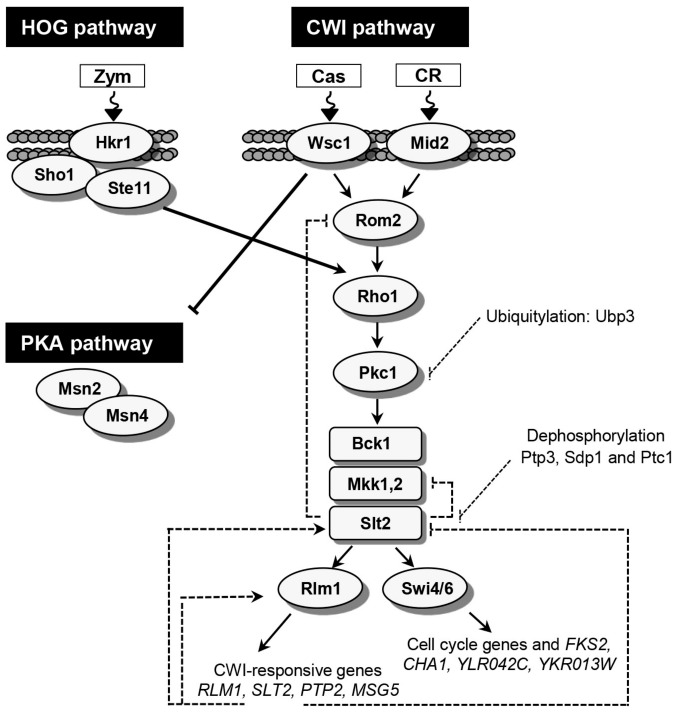
“Cell wall alterations derived from this stress induce, through Wsc1, the activation of the CWI pathway and parallel inhibition of PKA signaling [51–54] (Figure 1).”
BackgroundInfluentialReinoso-Martín, C., Schüller, C., Schuetzer-Muehlbauer, M., & Kuchler, K. (2003) · Eukaryotic Cell · doi:10.1128/ec.2.6.1200-1210.2003 · Cited by 193 · cited 4×
“Cell wall alterations derived from this stress induce, through Wsc1, the activation of the CWI pathway and parallel inhibition of PKA signaling [51–54] (Figure 1).”
BackgroundInfluentialWatanabe, Y., Takaesu, G., Hagiwara, M., Irie, K., & Matsumoto, K. (1997) · Molecular and Cellular Biology · doi:10.1128/mcb.17.5.2615 · Cited by 191 · cited 1×
“Slt2 acts on two transcription factors: Rlm1 [47] and SBF (Swi4/6) [48].”
BackgroundHow carbohydrates sculpt cells: chemical control of morphogenesis in the yeast cell wall
Cabib, E., & Arroyo, J. (2013) · Nature Reviews Microbiology · doi:10.1038/nrmicro3090 · Cited by 188 · cited 2×
“CRH1, which is also overexpressed in all cell wall stress conditions tested so far [60], encodes for a transglycosylase involved in the formation of chitin-glucan cross-links [6,61].”
BackgroundSelf-citationKapteyn, J. C., Ram, A. F., Groos, E. M., Kollar, R., Montijn, R. C., Van Den Ende, H., Llobell, A., Cabib, E., & Klis, F. M. (1997) · Journal of Bacteriology · doi:10.1128/jb.179.20.6279-6284.1997 · Cited by 181 · cited 1×
“Compensatory mechanisms also include: an increment in the amount of several cell wall proteins [39,40], transient re-distribution of β-1,3-glucan synthase complex through the cell [41,42] and changes in the cross-linking between cell wall polymers [43].”
BackgroundKapteyn, J. C., Van Egmond, P., Sievi, E., Van Den Ende, H., Makarow, M., & Klis, F. M. (1999) · Molecular Microbiology · doi:10.1046/j.1365-2958.1999.01320.x · Cited by 168 · cited 1×
“Cell wall mannoproteins, including those involved in adhesion, cell wall remodeling, structural proteins and somatic antigens [6–9] can be linked directly to the β-1,3-glucan via alkali-labile bonds [9,10] and indirectly via β-1,6-glucan through a glycosylphosphatidylinositol (GPI) anchor [9,11].”
BackgroundGarcía, R., Rodríguez-Peña, J. M., Bermejo, C., Nombela, C., & Arroyo, J. (2009) · Journal of Biological Chemistry · doi:10.1074/jbc.m808693200 · Cited by 165 · cited 3×
“Other studies covered the analysis of the yeast response to transient cell wall stress by characterization of the transcriptional program to treatments with cell wall perturbing agents that interfe with cell wall biogenesis through different mechanisms of action like Congo red [30], Calcofluor white [49], zymolyase [5…”
BackgroundSelf-citationStress resistance and signal fidelity independent of nuclear MAPK function
Westfall, P. J., Patterson, J. C., Chen, R. E., & Thorner, J. (2008) · Proceedings of the National Academy of Sciences · doi:10.1073/pnas.0805797105 · Cited by 163 · cited 1×
“Although the immediate role of gene expression in rapid adaptation is still being discussed, it is accepted that gene expression is important for long-term adaptation to stress and for protection against future stress [56,57].”
BackgroundCell Wall β-(1,6)-Glucan of Saccharomyces cerevisiae
Aimanianda, V., Clavaud, C., Simenel, C., Fontaine, T., Delepierre, M., & Latgé, J.-P. (2009) · Journal of Biological Chemistry · doi:10.1074/jbc.m807667200 · Cited by 156 · cited 1×
“Candida albicans [15,16], although it is absent in Aspergillus fumigatus [17].”
BackgroundFortwendel, J. R., Juvvadi, P. R., Perfect, B. Z., Rogg, L. E., Perfect, J. R., & Steinbach, W. J. (2010) · Antimicrobial Agents and Chemotherapy · doi:10.1128/aac.00854-09 · Cited by 153 · cited 2×
“fumigatus [23,24,87,88] and can compromise the clinical treatment success [25,89,90].”
BackgroundCharacterization of the transcriptional response to cell wall stress in Saccharomyces cerevisiae
Boorsma, A., Nobel, H. D., Riet, B. T., Bargmann, B., Brul, S., Hellingwerf, K. J., & Klis, F. M. (2004) · Yeast · doi:10.1002/yea.1109 · Cited by 150
The antifungal arsenal: alternative drugs and future targets
Wiederhold, N. P. (2018) · International Journal of Antimicrobial Agents · doi:10.1016/j.ijantimicag.2017.09.002 · Cited by 149 · cited 1×
“Antifungal resistance represents a major challenge for treating invasive fungal infections due to the limited arsenal of available antifungal agents [85].”
BackgroundCabib, E., Blanco, N., Grau, C., Rodríguez‐Peña, J. M., & Arroyo, J. (2007) · Molecular Microbiology · doi:10.1111/j.1365-2958.2006.05565.x · Cited by 146 · cited 3×
“CRH1, which is also overexpressed in all cell wall stress conditions tested so far [60], encodes for a transglycosylase involved in the formation of chitin-glucan cross-links [6,61].”
BackgroundSelf-citationCell wall integrity signalling in human pathogenic fungi: CWI signalling in pathogenic fungi
Dichtl, K., Samantaray, S., & Wagener, J. (2016) · Cellular Microbiology · doi:10.1111/cmi.12612 · Cited by 144 · cited 1×
“This pathway is very well conserved in the fungal kingdom [46].”
BackgroundKim, K.-Y., Truman, A. W., & Levin, D. E. (2008) · Molecular and Cellular Biology · doi:10.1128/mcb.01795-07 · Cited by 143
The yeast cell-wall salvage pathway
Popolo, L., Gualtieri, T., & Ragni, E. (2001) · Medical Mycology · doi:10.1080/mmy.39.1.111.121 · Cited by 142 · cited 2×
“Therefore, treatments with cell wall perturbing agents that directly induce cell wall stress by interfering cell wall construction or mutational loss of proteins necessary for cell wall biogenesis elicit a rescue mechanism known as “compensatory salvage response” that provides compensatory synthesis of cell wall mater…”
BackgroundArroyo, J., Farkaš, V., Sanz, A. B., & Cabib, E. (2016) · Cellular Microbiology · doi:10.1111/cmi.12615 · Cited by 140 · cited 3×
“CRH1, which is also overexpressed in all cell wall stress conditions tested so far [60], encodes for a transglycosylase involved in the formation of chitin-glucan cross-links [6,61].”
BackgroundSelf-citationHahn, J.-S., & Thiele, D. J. (2002) · Journal of Biological Chemistry · doi:10.1074/jbc.m202557200 · Cited by 126 · cited 1×
“Interestingly, Ptp2 and Msg5 are transcriptionally induced in several cell wall stress conditions in a Slt2-dependent manner, indicating a transcriptional negative feedback at this level [30,50,72,77] (Figure 1).”
BackgroundBaetz, K., Moffat, J., Haynes, J., Chang, M., & Andrews, B. (2001) · Molecular and Cellular Biology · doi:10.1128/mcb.21.19.6515-6528.2001 · Cited by 125 · cited 1×
“Slt2 acts on two transcription factors: Rlm1 [47] and SBF (Swi4/6) [48].”
BackgroundMpk1 MAPK Association with the Paf1 Complex Blocks Sen1-Mediated Premature Transcription Termination
Kim, K.-Y., & Levin, D. E. (2011) · Cell · doi:10.1016/j.cell.2011.01.034 · Cited by 119 · cited 1×
“Slt2 and Mlp1 travels along the coding region associated with the Pol II and Paf1C to avoid premature termination by the Sen1-Nrd1-Nab3 complex [66].”
BackgroundGlycosylphosphatidylinositol Anchors
Menon, A. K. (2013) · Elsevier eBooks · doi:10.1016/b978-0-12-378630-2.00211-5 · Cited by 118
Mattison, C. P., Spencer, S. S., Kresge, K. A., Lee, J., & Ota, I. M. (1999) · Molecular and Cellular Biology · doi:10.1128/mcb.19.11.7651 · Cited by 111 · cited 2×
“Interestingly, Ptp2 and Msg5 are transcriptionally induced in several cell wall stress conditions in a Slt2-dependent manner, indicating a transcriptional negative feedback at this level [30,50,72,77] (Figure 1).”
BackgroundLagorce, A., Le Berre‐Anton, V., Aguilar‐Uscanga, B., Martin‐Yken, H., Dagkessamanskaia, A., & François, J. (2002) · European Journal of Biochemistry · doi:10.1046/j.1432-1327.2002.02814.x · Cited by 105 · cited 1×
“In agreement, genes encoding enzymes of the chitin synthesis pathway like GFA1, which encodes glutamine-fructose-6-phosphate amidotransferase, the first committed enzyme of this pathway [58] and CHS3, encoding the catalytic subunit of the chitin synthase III [59], are overexpressed in almost all the conditions referen…”
BackgroundKitichantaropas, Y., Boonchird, C., Sugiyama, M., Kaneko, Y., Harashima, S., & Auesukaree, C. (2016) · AMB Express · doi:10.1186/s13568-016-0285-x · Cited by 94
Schiavone, M., Vax, A., Formosa, C., Martin-Yken, H., Dague, E., & François, J. M. (2014) · FEMS Yeast Research · doi:10.1111/1567-1364.12182 · Cited by 90 · cited 4×
“In addition to an induction of chitin content, heat shock and caspofungin treatments also causes an increase in the β-1,6-glucan polysaccharide fraction and a partial reduction of β-1,3-glucan [26].”
BackgroundInfluentialWalker, L. A., Lee, K. K., Munro, C. A., & Gow, N. A. R. (2015) · Antimicrobial Agents and Chemotherapy · doi:10.1128/aac.00862-15 · Cited by 90 · cited 1×
“fumigatus [23,24,87,88] and can compromise the clinical treatment success [25,89,90].”
BackgroundPolyoxins and Nikkomycins: Progress in Synthetic and Biological Studies
Miller, M. J., & Zhang, D. (1999) · Current Pharmaceutical Design · doi:10.2174/1381612805666230109204948 · Cited by 88
Charoenbhakdi, S., Dokpikul, T., Burphan, T., Techo, T., & Auesukaree, C. (2016) · Applied and Environmental Microbiology · doi:10.1128/aem.00376-16 · Cited by 86 · cited 2×
“Cell wall remodeling is also induced in response to a variety of environmental stresses that indirectly affect cell wall integrity and therefore activate the stress adaptive rescue responses, including heat, ethanol, osmotic or oxidative stresses [26,33].”
BackgroundSurvival in the Presence of Antifungals
Meyer, V., Damveld, R. A., Arentshorst, M., Stahl, U., van den Hondel, C. A. M. J. J., & Ram, A. F. J. (2007) · Journal of Biological Chemistry · doi:10.1074/jbc.m705856200 · Cited by 85 · cited 1×
“fumigatus [23,24,87,88] and can compromise the clinical treatment success [25,89,90].”
BackgroundRecent advancements in synthetic biology: Current status and challenges
Singh, V. (2013) · Gene · doi:10.1016/j.gene.2013.11.025 · Cited by 84 · cited 1×
“In contrast to negative autoregulation, which speed up transcriptional gene circuits [81], positive autoregulation that occurs when a transcription factor enhance its own production rate amplifies gene expression and slow down the kinetics of gene expression [82].”
BackgroundFlández, M., Cosano, I. C., Nombela, C., Martín, H., & Molina, M. (2004) · Journal of Biological Chemistry · doi:10.1074/jbc.m306412200 · Cited by 80 · cited 2×
“Interestingly, Ptp2 and Msg5 are transcriptionally induced in several cell wall stress conditions in a Slt2-dependent manner, indicating a transcriptional negative feedback at this level [30,50,72,77] (Figure 1).”
BackgroundPtc1p regulates cortical ER inheritance via Slt2p
Du, Y., Walker, L., Novick, P., & Ferro‐Novick, S. (2006) · The EMBO Journal · doi:10.1038/sj.emboj.7601319 · Cited by 80 · cited 1×
“In this context, Slt2 activity can be negatively regulated by dephosphorylation through the activity of different phosphatases such as Ptp2 and Ptp3 [72], Ptc1 [73,74] and the dual-specificity protein phosphatases Msg5 [75] and Sdp1, which specifically interacts with and inactivates Slt2 [76].”
BackgroundGonzález, A., Ruiz, A., Serrano, R., Ariño, J., & Casamayor, A. (2006) · Journal of Biological Chemistry · doi:10.1074/jbc.m607919200 · Cited by 77 · cited 1×
“In this context, Slt2 activity can be negatively regulated by dephosphorylation through the activity of different phosphatases such as Ptp2 and Ptp3 [72], Ptc1 [73,74] and the dual-specificity protein phosphatases Msg5 [75] and Sdp1, which specifically interacts with and inactivates Slt2 [76].”
BackgroundFunctional and genomic analyses of blocked protein O‐mannosylation in baker's yeast
Arroyo, J., Hutzler, J., Bermejo, C., Ragni, E., García‐Cantalejo, J., Botías, P., Piberger, H., Schott, A., Sanz, A. B., & Strahl, S. (2011) · Molecular Microbiology · doi:10.1111/j.1365-2958.2011.07537.x · Cited by 74 · cited 1×
“Other studies covered the analysis of the yeast response to transient cell wall stress by characterization of the transcriptional program to treatments with cell wall perturbing agents that interfe with cell wall biogenesis through different mechanisms of action like Congo red [30], Calcofluor white [49], zymolyase [5…”
BackgroundSelf-citationSanz, A. B., García, R., Rodríguez-Peña, J. M., Díez-Muñiz, S., Nombela, C., Peterson, C. L., & Arroyo, J. (2012) · Molecular Biology of the Cell · doi:10.1091/mbc.e12-04-0278 · Cited by 71 · cited 4×
“strains deleted in RLM1 when compared to a wild-type strain [30,63].”
BackgroundInfluentialSelf-citationGarcía, R., Bravo, E., Díez-Muñiz, S., Nombela, C., Rodríguez-Peña, J. M., & Arroyo, J. (2017) · Scientific Reports · doi:10.1038/s41598-017-06001-9 · Cited by 71 · cited 3×
“Additionally, the recently described novel connection between the CWI and the PKA pathways to regulate the cell wall stress mediated by caspofungin also points to possible combinational therapies interfering PKA regulation and cell wall integrity [54].”
BackgroundSelf-citationThe echinocandins: three useful choices or three too many?
Bal, A. M. (2009) · International Journal of Antimicrobial Agents · doi:10.1016/j.ijantimicag.2009.09.011 · Cited by 68 · cited 1×
“Indeed, compounds belonging to the antifungal family of echinocandins, such as caspofungin, anidulafungin and micafungin, are able to selectively inhibit the synthesis of β-1,3-glucan in the cell wall [20] and are currently in clinical use [21].”
BackgroundUndressing the fungal cell wall/cell membrane—the antifungal drug targets
Tada, R., Latge, J.-P., & Aimanianda, V. (2013) · Current Pharmaceutical Design · doi:10.2174/1381612811319200012 · Cited by 59 · cited 1×
“The essentiality of the cell wall for fungal growth viability and virulence together with the fact that most of the fungal cell wall components and the corresponding enzymatic activities necessary for cell wall biogenesis and remodeling are not present in mammals points this structure as an ideal target for therapeuti…”
BackgroundVerwer, P. E. B., van Duijn, M. L., Tavakol, M., Bakker-Woudenberg, I. A. J. M., & van de Sande, W. W. J. (2012) · Antimicrobial Agents and Chemotherapy · doi:10.1128/aac.05323-11 · Cited by 58 · cited 1×
“fumigatus [23,24,87,88] and can compromise the clinical treatment success [25,89,90].”
BackgroundRetrophosphorylation of Mkk1 and Mkk2 MAPKKs by the Slt2 MAPK in the Yeast Cell Integrity Pathway
Jiménez-Sánchez, M., Cid, V. J., & Molina, M. (2007) · Journal of Biological Chemistry · doi:10.1074/jbc.m706270200 · Cited by 55 · cited 1×
“Retrophosphorylation of the MAPKKs Mkk1 and Mkk2 by Slt2 has also been reported [79].”
BackgroundGarcía, R., Sanz, A. B., Rodríguez-Peña, J. M., Nombela, C., & Arroyo, J. (2016) · Journal of Cell Science · doi:10.1242/jcs.180190 · Cited by 52 · cited 2×
“Abrogation of the autoregulatory feedback mechanism on RLM1 by site-directed mutagenesis of the Rlm1-binding box in the upstream regulatory sequence of this gene severely affects the transcriptional response elicited by activation of the CWI pathway [84].”
BackgroundSelf-citationSanz, A. B., García, R., Rodríguez-Peña, J. M., Nombela, C., & Arroyo, J. (2016) · Nucleic Acids Research · doi:10.1093/nar/gkw324 · Cited by 52 · cited 1×
“Binding of phosphorylated Rlm1 to the promoters of Rlm1-dependent genes and assembly of the transcription initiation machinery require complete nucleosome remodeling at these promoters that is achieved through the cooperation between the ATP-dependent chromatin remodeling complex SWI/SNF and SAGA complex [63,65].”
BackgroundSelf-citationBermejo, C., García, R., Straede, A., Rodríguez-Peña, J. M., Nombela, C., Heinisch, J. J., & Arroyo, J. (2010) · OMICS A Journal of Integrative Biology · doi:10.1089/omi.2010.0060 · Cited by 48 · cited 3×
“The Congo red-mediated damage is sensed through Mid2 and elicits a transcriptional response through the CWI pathway that depends almost completely on the MAPK Slt2 and the transcription factor Rlm1 [30,53,63] (Figure 1).”
BackgroundSelf-citationGenomics in the detection of damage in microbial systems: cell wall stress in yeast
Arroyo, J., Bermejo, C., García, R., & Rodríguez-Peña, J. M. (2009) · Clinical Microbiology and Infection · doi:10.1111/j.1469-0691.2008.02676.x · Cited by 46 · cited 2×
“Indeed, the cluster of genes induced in almost all conditions could be considered as a “transcriptional fingerprint” for cell wall stress [55].”
BackgroundSelf-citationA MAP Kinase Dependent Feedback Mechanism Controls Rho1 GTPase and Actin Distribution in Yeast
Guo, S., Shen, X., Yan, G., Ma, D., Bai, X., Li, S., & Jiang, Y. (2009) · PLoS ONE · doi:10.1371/journal.pone.0006089 · Cited by 41 · cited 1×
“Slt2 exerts a negative feedback by downregulation of the guanine exchange factor activity of Rom2 through a retrophosphorylation mechanism [78].”
BackgroundRodríguez-Peña, J. M., Díez-Muñiz, S., Bermejo, C., Nombela, C., & Arroyo, J. (2013) · FEBS Letters · doi:10.1016/j.febslet.2013.09.030 · Cited by 40 · cited 2×
“Among those chemical agents that interfere with cell wall biogenesis inducing cell wall stress in yeast are: Congo red and Calcofluor white, both of them binding to chitin and interfering with proper cell wall construction [30,31]; zymolyase which alters the cell wall through its β-1,3-glucanase, protease and chitinas…”
BackgroundSelf-citationRodríguez-Peña, J. M., Pérez‐Díaz, R. M., Alvarez, S., Bermejo, C., García, R., Santiago, C., Nombela, C., & Arroyo, J. (2005) · Microbiology · doi:10.1099/mic.0.27989-0 · Cited by 39 · cited 1×
“Therefore, understanding cellular mechanisms of cell wall remodeling upon cell wall stress, including the cross-linking enzymes and regulatory circuits involved in fungal cell wall stress adaptation could allow the discovery of new cell wall targets and potential antifungal drugs [91,92] or potentiate currently used c…”
BackgroundSelf-citationCharacterization of Ccw12p, a major key player in cell wall stability of Saccharomyces cerevisiae
Ragni, E., Sipiczki, M., & Strahl, S. (2007) · Yeast · doi:10.1002/yea.1465 · Cited by 38 · cited 1×
“The overexpression of non-enzymatic structural cell wall proteins like Sed1, Cwp1, Pst1, or Ccw14, as consequence of the compensatory response, clearly reflects their collective role in maintaining cell wall stability [15,62].”
BackgroundKim, K., & Levin, D. E. (2010) · Yeast · doi:10.1002/yea.1782 · Cited by 38
Collister, M., Didmon, M. P., MacIsaac, F., Stark, M. J., MacDonald, N. Q., & Keyse, S. M. (2002) · FEBS Letters · doi:10.1016/s0014-5793(02)03220-9 · Cited by 33 · cited 1×
“In this context, Slt2 activity can be negatively regulated by dephosphorylation through the activity of different phosphatases such as Ptp2 and Ptp3 [72], Ptc1 [73,74] and the dual-specificity protein phosphatases Msg5 [75] and Sdp1, which specifically interacts with and inactivates Slt2 [76].”
BackgroundA yeast strain biosensor to detect cell wall-perturbing agents
Rodríguez-Peña, J. M., Díez-Muñiz, S., Nombela, C., & Arroyo, J. (2007) · Journal of Biotechnology · doi:10.1016/j.jbiotec.2007.10.006 · Cited by 28 · cited 1×
“Therefore, understanding cellular mechanisms of cell wall remodeling upon cell wall stress, including the cross-linking enzymes and regulatory circuits involved in fungal cell wall stress adaptation could allow the discovery of new cell wall targets and potential antifungal drugs [91,92] or potentiate currently used c…”
BackgroundSelf-citationDown-regulation of Pkc1-mediated Signaling by the Deubiquitinating Enzyme Ubp3
Wang, Y., Zhu, M. L., Ayalew, M., & Ruff, J. A. (2007) · Journal of Biological Chemistry · doi:10.1074/jbc.m705682200 · Cited by 21 · cited 1×
“Moreover, ubiquitination of Pkc1 by Ubp3 also contribute to attenuate the induction of the CWI pathway [80].”
Background
Cited by
Aspergillus fumigatus and Aspergillosis in 2019
Latgé, J.-P., & Chamilos, G. (2019) · Clinical Microbiology Reviews · doi:10.1128/cmr.00140-18 · Cited by 1,400
The cell wall and the response and tolerance to stresses of biotechnological relevance in yeasts
Ribeiro, R. A., Bourbon-Melo, N., & Sá‐Correia, I. (2022) · Frontiers in Microbiology · doi:10.3389/fmicb.2022.953479 · Cited by 181
“Together with phosphatidylinositol 4,5-biphosphate, PIP2, which recruits the guanine nucleotide exchange factors (GEFs) Rom1 and Rom2, the surface sensors activate the Rho1 GTPase (Levin, 2011; Sanz et al., 2018).”
BackgroundCurrent trends, limitations and future research in the fungi?
Hyde, K. D., Baldrián, P., Chen, Y., Chethana, K. W. T., de Hoog, S., Doilom, M., de Farias, A. R. G., Gonçalves, M. F. M., Gonkhom, D., Gui, H., et al. (2024) · Fungal Diversity · doi:10.1007/s13225-023-00532-5 · Cited by 178
Cell wall traits that influence plant development, immunity, and bioconversion
Lorenzo, G. D., Ferrari, S., Giovannoni, M., Mattei, B., & Cervone, F. (2019) · The Plant Journal · doi:10.1111/tpj.14196 · Cited by 133
Spent Brewer’s Yeast as a Source of Insoluble β-Glucans
Avrămia, I., & Amariei, S. (2021) · International Journal of Molecular Sciences · doi:10.3390/ijms22020825 · Cited by 130
Metadata
- Authors
- Sanz, A., García, R., Rodríguez-Peña, J., & Arroyo, J.
- Affiliations
- Universidad Complutense de Madrid (ES)
- Corresponding author
- Arroyo, Javier
- Venue
- Journal of Fungi
- Publisher
- MDPI AG
- Published
- 2017-12-21
- Volume
- 4
- Issue
- 1
- Pages
- 1
- ISSN
- 2309-608X (ISSN-L)
- PMC
- PMC5872304
- OpenAlex
- W2783112343
- Cited by
- 149
- References
- 96
- Citations by year
- 2026: 14 · 2025: 19 · 2024: 19 · 2023: 16 · 2022: 19 · 2021: 22 · 2020: 16 · 2019: 19 · 2018: 5
- FWCI
- 1.02
- Type
- journal article
- Language
- en
- Open access
- gold
- doi.org
- Licence
- Locations
- Journal of Fungi (publishedVersion, cc-by)
- Europe PMC (PubMed Central) (publishedVersion, cc-by)
- PubMed Central (publishedVersion, cc-by)
- PubMed (publishedVersion)
- Library Open Repository (Universidad Complutense Madrid) (submittedVersion, cc-by)
- LA Referencia (Red Federada de Repositorios Institucionales de Publicaciones Científicas) (submittedVersion, other-oa)
- DOAJ (DOAJ: Directory of Open Access Journals) (submittedVersion, cc-by-sa)
- Funders
- MINECO (BIO2013-48136-P, BIO2016-79289-P)
- Topics
- Life Sciences › Biochemistry, Genetics and Molecular Biology › Molecular Biology › Fungal and yeast genetics research
- Health Sciences › Medicine › Infectious Diseases › Antifungal resistance and susceptibility
- Life Sciences › Biochemistry, Genetics and Molecular Biology › Genetics › Bacterial Genetics and Biotechnology
- Keywords
- cell wall integrity pathway, cell wall stress, transcriptional regulation, adaptive response, Saccharomyces cerevisiae, transcriptional feedback loop, cell wall biosynthesis, cell wall remodeling, fungal pathogens, antifungal drug targets, stress response
About these checks
Registry, retraction, Cites and statistics results are computed, not judged, with one exception: a printed reference that no index lists is read once by a model before it counts as a citation error. Claims are extracted by a model and kept only when their quote appears verbatim in the text; each cited source is then checked, with a model’s help, for whether it says what the claim relies on. Those verdicts can be wrong — read the claim’s quote and the cited source before relying on one.
Statistics and arithmetic are recomputed, not judged.
Confidence bands are shown only for fields calibrated on our annotated test set. None is calibrated yet, so no band is shown.
What counts as a claim ›How we measure confidence ›How we check this ›
Are you an author, or do you see a problem with this page? Request a review
Data sources
Bibliographic data: Semantic Scholar, OpenAlex, Crossref.
Contains information from the Semantic Scholar Academic Graph Datasets, made available under the ODC Attribution License (ODC-BY 1.0).
Semantic Scholar’s data is described in: Kinney, R., et al. (2023). The Semantic Scholar Open Data Platform. arXiv:2301.10140.
