

Anti-Aspergillus Activities of the Respiratory Epithelium in Health and Disease
Open accessThe DOI matches its Crossref record; 84 of the 85 references it cites were found in a registry or an index.
Abstract
Respiratory epithelia fulfil multiple roles beyond that of gaseous exchange, also acting as primary custodians of lung sterility and inflammatory homeostasis. Inhaled fungal spores pose a continual antigenic, and potentially pathogenic, challenge to lung integrity against which the human respiratory mucosa has developed various tolerance and defence strategies. However, respiratory disease and immune dysfunction frequently render the human lung susceptible to fungal diseases, the most common of which are the aspergilloses, a group of syndromes caused by inhaled spores of Aspergillus fumigatus. Inhaled Aspergillus spores enter into a multiplicity of interactions with respiratory epithelia, the mechanistic bases of which are only just becoming recognized as important drivers of disease, as well as possible therapeutic targets. In this mini-review we examine current understanding of Aspergillus-epithelial interactions and, based upon the very latest developments in the field, we explore two apparently opposing schools of thought which view epithelial uptake of Aspergillus spores as either a curative or disease-exacerbating event.
Overview
The claims and statistics of this paper haven’t been checked yet.
Free: it reads the open-access text and checks the first 5 claims that cite a source we can check. Create a free account to check every claim.
Integrity signals
Registry
Cites
Statistics
Figures
Verification
Claims the paper makes
The claims and statistics of this paper haven’t been checked yet.
Free: it reads the open-access text and checks the first 5 claims that cite a source we can check. Create a free account to check every claim.
Claims other papers make about this one
Each is checked against this paper’s own text: does it say what the citing paper says it does?
The cited source says what the claim attributes to it.
In the citing paper
“Lung epithelia comprise the first line of host defense during interaction with Aspergillus (212, 213).”
From Aspergillus fumigatus and Aspergillosis in 2019 (2019) · cites this paper as [213]
Self-check
Percentages, sums and reported differences re-computed from the paper’s own numbers.
The self-check needs the paper’s full text.
Citations
Cites
Hidden Killers: Human Fungal Infections
Brown, G. D., Denning, D. W., Gow, N. A. R., Levitz, S. M., Netea, M. G., & White, T. C. (2012) · Science Translational Medicine · doi:10.1126/scitranslmed.3004404 · Cited by 4,284 · cited 1×
“Aspergillus-related diseases occur frequently in the human population and pathological outcomes are diverse [1].”
BackgroundSelf-citationSurface hydrophobin prevents immune recognition of airborne fungal spores
Aimanianda, V., Bayry, J., Bozza, S., Kniemeyer, O., Perruccio, K., Elluru, S. R., Clavaud, C., Paris, S., Brakhage, A. A., Kaveri, S. V., et al. (2009) · Nature · doi:10.1038/nature08264 · Cited by 792 · cited 2×
“In the context of healthy defence against inhaled fungal spores, RodA is argued as being a facilitator of immune evasion at the earliest of time points following spore inhalation [46].”
BackgroundInfluentialGravelat, F. N., Beauvais, A., Liu, H., Lee, M. J., Snarr, B. D., Chen, D., Xu, W., Kravtsov, I., Hoareau, C. M. Q., Vanier, G., et al. (2013) · PLoS Pathogens · doi:10.1371/journal.ppat.1003575 · Cited by 320 · cited 13×
“Deletion of agd3 attenuates A. fumigatus virulence in a leukopenic mouse model of invasive aspergillosis, demonstrating that deacetylation of GAG is required for full virulence of A. fumigatus [54].”
BackgroundInfluentialCunha, C., Di Ianni, M., Bozza, S., Giovannini, G., Zagarella, S., Zelante, T., D'Angelo, C., Pierini, A., Pitzurra, L., Falzetti, F., et al. (2010) · Blood · doi:10.1182/blood-2010-04-279307 · Cited by 286 · cited 11×
“Supporting a role for Dectin-1 in mediating curative spore clearance in vivo a high risk of invasive pulmonary aspergillosis has been reported in hematopoietic stem cell transplantees carrying a non-functional truncated version of Dectin-1 [59].”
BackgroundInfluentialSugui, J. A., Pardo, J., Chang, Y. C., Zarember, K. A., Nardone, G., Galvez, E. M., Müllbacher, A., Gallin, J. I., Simon, M. M., & Kwon-Chung, K. J. (2007) · Eukaryotic Cell · doi:10.1128/ec.00141-07 · Cited by 242 · cited 1×
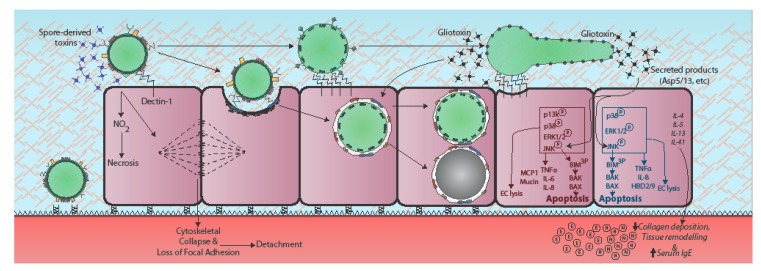
“Abolition of Gt biosynthesis by deletion of GliP, encoding the Gt peptide synthase, strongly reduces the cytotoxic activity of culture filtrates and results in attenuated virulence in infected non-neutropenic mice [81,82].”
BackgroundGalactosaminogalactan, a New Immunosuppressive Polysaccharide of Aspergillus fumigatus
Fontaine, T., Delangle, A., Simenel, C., Coddeville, B., van Vliet, S. J., van Kooyk, Y., Bozza, S., Moretti, S., Schwarz, F., Trichot, C., et al. (2011) · PLoS Pathogens · doi:10.1371/journal.ppat.1002372 · Cited by 241 · cited 1×
“GAG is a heteroglycan composed of galactose and N-acetyl-galactosamine (GalNAc), produced by hyphae but not conidia [52], via the activity of the fungal epimerase Uge3.”
BackgroundConidial Hydrophobins of Aspergillus fumigatus
Paris, S., Debeaupuis, J.-P., Crameri, R., Carey, M., Charlès, F., Prévost, M. C., Schmitt, C., Philippe, B., & Latgé, J. P. (2003) · Applied and Environmental Microbiology · doi:10.1128/aem.69.3.1581-1588.2003 · Cited by 235 · cited 1×
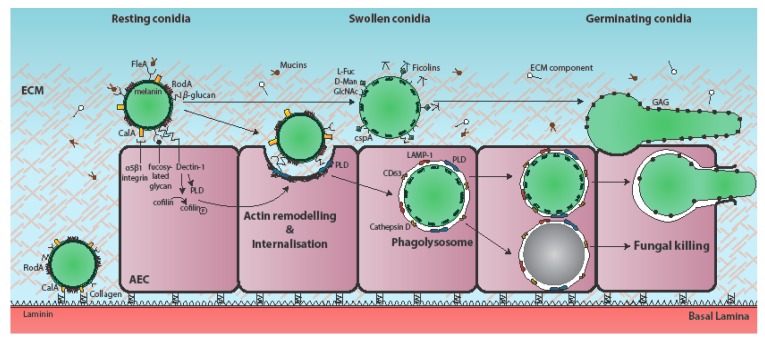
“fumigatus spores immunologically inert, but is shed from the spore surface during germination, is required for adherence to collagen, but not to A549 cells or other basement membrane components, such as laminin and fibronectin [24] (Figure 1).”
BackgroundSeidler, M. J., Salvenmoser, S., & Müller, F.-M. C. (2008) · Antimicrobial Agents and Chemotherapy · doi:10.1128/aac.00234-08 · Cited by 229 · cited 1×
“Although the propensity to form biofilms is not hindered by co-culture with human bronchial epithelial cells [86], too few intact epithelial cells remain after 2–3 days of co-culture to promote the study of the host-pathogen interaction over a sustained period of time.”
BackgroundAspergillus Cell Wall Melanin Blocks LC3-Associated Phagocytosis to Promote Pathogenicity
Akoumianaki, T., Kyrmizi, I., Valsecchi, I., Gresnigt, M. S., Samonis, G., Drakos, E., Boumpas, D., Muszkieta, L., Prevost, M.-C., Kontoyiannis, D. P., et al. (2016) · Cell Host & Microbe · doi:10.1016/j.chom.2015.12.002 · Cited by 218 · cited 1×
“fumigatus conidia and, in particular, cell wall melanin removal during germination, is required for the activation of a specialized autophagy pathway called LC3-associated phagocytosis (LAP) which ultimately results in fungal killing [65,66].”
BackgroundTomee, J. F. C., Wierenga, A. T. J., Hiemstra, P. S., & Kauffman, H. F. (1997) · The Journal of Infectious Diseases · doi:10.1086/517272 · Cited by 201 · cited 1×
“fumigatus culture filtrate for 48 h is also abrogated by treating with serine protease inhibitors [71] (Figure 2).”
Background
Research works printed but not linked: 1
- Zheng J. Zuo J. Han Y. Zhang L. Yan L. Shen L. Jiang Y. Cao Y. Zhao J. Gliotoxin produced by Aspergillus fumigatus induces apoptosis of human bronchial epithelial cells via the Bcl-2 pathway Int. J. Clin. Exp. Med. 2017 10 12
Cited by
Aspergillus fumigatus and Aspergillosis in 2019
Latgé, J.-P., & Chamilos, G. (2019) · Clinical Microbiology Reviews · doi:10.1128/cmr.00140-18 · Cited by 1,400
Pathogenesis of Respiratory Viral and Fungal Coinfections
Salazar, F., Bignell, E., Brown, G. D., Cook, P. C., & Warris, A. (2021) · Clinical Microbiology Reviews · doi:10.1128/cmr.00094-21 · Cited by 178
“infection [206]) could facilitate fungal adhesion to the basal lamina (175, 207).”
BackgroundSelf-citationPathophysiological aspects of Aspergillus colonization in disease
Gago, S., Denning, D. W., & Bowyer, P. (2018) · Medical Mycology · doi:10.1093/mmy/myy076 · Cited by 135
Self-citationvan Rhijn, N., & Bromley, M. (2021) · Journal of Fungi · doi:10.3390/jof7050367 · Cited by 132
“When this barrier is damaged, spores which would ordinarily be cleared before they shed their immunoprotective outer coat [71], have the opportunity to swell and germinate, releasing a payload of allergenic proteins.”
BackgroundPathogenicity and virulence of Aspergillus fumigatus
Earle, K., Valero, C., Conn, D. P., Vere, G., Cook, P. C., Bromley, M., Bowyer, P., & Gago, S. (2023) · Virulence · doi:10.1080/21505594.2023.2172264 · Cited by 132
“Indeed, this is the case for SARS-CoV-2, where infection has been shown to alter the expression of ECM components like collagen, fibronectin, and laminin, which could promote A. fumigatus conidial adhesion [204,436].”
BackgroundMethodA Visual and Comprehensive Review on COVID-19-Associated Pulmonary Aspergillosis (CAPA)
Feys, S., Almyroudi, M. P., Braspenning, R., Lagrou, K., Spriet, I., Dimοpoulos, G., & Wauters, J. (2021) · Journal of Fungi · doi:10.3390/jof7121067 · Cited by 104
“The epithelium fulfills not only a barrier role, but also releases cytokines, chemokines and antimicrobial proteins [72,73].”
BackgroundInvasive pulmonary aspergillosis associated with viral pneumonitis
Dewi, I. M. W., Janssen, N. A. F., Rosati, D., Bruno, M., Netea, M. G., Brüggemann, R. J. M., Verweij, P. E., & van de Veerdonk, F. L. (2021) · Current Opinion in Microbiology · doi:10.1016/j.mib.2021.04.006 · Cited by 79
Amich, J., Mokhtari, Z., Strobel, M., Vialetto, E., Sheta, D., Yu, Y., Hartweg, J., Kalleda, N., Jarick, K. J., Brede, C., et al. (2020) · mBio · doi:10.1128/mbio.02752-19 · Cited by 64
The clinical spectrum of aspergillosis in chronic obstructive pulmonary disease
Otu, A., Kosmidis, C., Mathioudakis, A. G., Ibe, C., & Denning, D. W. (2023) · Infection · doi:10.1007/s15010-022-01960-2 · Cited by 68
Self-citationLung colonization by Aspergillus fumigatus is controlled by ZNF77
Gago, S., Overton, N. L. D., Ben-Ghazzi, N., Novak-Frazer, L., Read, N. D., Denning, D. W., & Bowyer, P. (2018) · Nature Communications · doi:10.1038/s41467-018-06148-7 · Cited by 51
Self-citationPalmieri, F., Koutsokera, A., Bernasconi, E., Junier, P., von Garnier, C., & Ubags, N. D. J. (2022) · Frontiers in Medicine · doi:10.3389/fmed.2022.832510 · Cited by 66
Richard, N., Marti, L., Varrot, A., Guillot, L., Guitard, J., Hennequin, C., Imberty, A., Corvol, H., Chignard, M., & Balloy, V. (2018) · Scientific Reports · doi:10.1038/s41598-018-33902-0 · Cited by 44
Aspergillus fumigatus—Host Interactions Mediating Airway Wall Remodelling in Asthma
Namvar, S., Labram, B., Rowley, J. E., & Herrick, S. E. (2022) · Journal of Fungi · doi:10.3390/jof8020159 · Cited by 32
“Conidia internalisation can lead to clearance by epithelial cells, but also inflammation and/or epithelial cell death (for review see [45]).”
BackgroundAspergillus fumigatus escape mechanisms from its harsh survival environments
Liu, F., Zeng, M., Zhou, X., Huang, F., & Song, Z. (2024) · Applied Microbiology and Biotechnology · doi:10.1007/s00253-023-12952-z · Cited by 33
“Consequently, conidia breakdown barriers to reach the lower respiratory tract, and compromised lung epithelia provide an entry portal for fungi (Bertuzzi et al. 2018).”
van Rhijn, N., Zhao, C., Al-Furaiji, N., Storer, I. S. R., Valero, C., Gago, S., Chown, H., Baldin, C., Grant, R.-F., Bin Shuraym, H., et al. (2024) · Nature Communications · doi:10.1038/s41467-024-48592-8 · Cited by 30
“Despite the limited nutrient resources present in the lung, A. fumigatus spores are able to germinate and form hyphae that, in invasive disease, penetrate through the basal lamina, alveolar epithelium and basement membrane resulting in destruction of surrounding lung tissues and vasculature 4 .”
Self-citationAspergillus fumigatus induction of IL‐33 expression in chronic rhinosinusitis is PAR2‐dependent
Dietz, C. J. P., Sun, H., Yao, W. C., Citardi, M. J., Corry, D. B., & Luong, A. (2019) · The Laryngoscope · doi:10.1002/lary.28000 · Cited by 31
Aspergillus fumigatus Cell Wall Promotes Apical Airway Epithelial Recruitment of Human Neutrophils
Feldman, M. B., Dutko, R. A., Wood, M. A., Ward, R., Leung, H. M., Snow, R. F., Flor, D. J. D. L., Yonker, L. M., Reedy, J. L., Tearney, G. J., et al. (2019) · Infection and Immunity · doi:10.1128/iai.00813-19 · Cited by 29
“and toxins which could potentially affect the epithelial membrane (48).”
BackgroundMicrobial uptake by the respiratory epithelium: outcomes for host and pathogen
Bertuzzi, M., Hayes, G., & Bignell, E. (2019) · FEMS Microbiology Reviews · doi:10.1093/femsre/fuy045 · Cited by 36
“fumigatus spores can result in either fungal killing or intraphagosomal occupancy (Osherov 2012; Sheppard and Filler 2014; Croft et al. 2016; Bertuzzi et al. 2018), the latter occurring at a low frequency in vitro.”
BackgroundSelf-citationRowley, J. E., Namvar, S., Gago, S., Labram, B., Bowyer, P., Richardson, M. D., & Herrick, S. E. (2021) · Journal of Fungi · doi:10.3390/jof7060468 · Cited by 26
“fumigatus-exposed airway epithelium in directing inflammatory responses including regulation of the cytokine signature [10–13], generation of reactive oxygen species [14] and defensins production [15], thereby contributing to the pathogenesis of airway disease [16].”
BackgroundEpithelial uptake leads to fungal killing in vivo and is aberrant in COPD-derived epithelial cells
Bertuzzi, M., Howell, G. J., Thomson, D. D., Fortune‐Grant, R., Möslinger, A., Dancer, P., van Rhijn, N., Motsi, N., Du, X., Codling, A., et al. (2024) · iScience · doi:10.1016/j.isci.2024.109939 · Cited by 20
Self-citationOkaa, U. J., Bertuzzi, M., Fortune‐Grant, R., Thomson, D. D., Moyes, D. L., Naglik, J. R., & Bignell, E. (2023) · Infection and Immunity · doi:10.1128/iai.00333-22 · Cited by 20
Self-citationOrtiz, S. C., Pennington, K., Thomson, D. D., & Bertuzzi, M. (2022) · Journal of Fungi · doi:10.3390/jof8030264 · Cited by 31
“of defence mechanisms, including mucociliary clearance and the phagocytic and antimicrobial activities of resident epithelial cells and innate immune cells [20,21]; however, in certain individuals, A.”
BackgroundSelf-citationExploring a novel genomic safe-haven site in the human pathogenic mould Aspergillus fumigatus
Furukawa, T., van Rhijn, N., Chown, H., Rhodes, J. L., Alfuraiji, N., Fortune‐Grant, R., Bignell, E., Fisher, M. C., & Bromley, M. (2022) · Fungal Genetics and Biology · doi:10.1016/j.fgb.2022.103702 · Cited by 17
“As spores interact with lung epithelial cells at the early stages of infection (Bertuzzi et al. 2018; Bertuzzi et al. 2019), we co-cultured the deletion mutants with human A549 lung epithelial cells.”
Self-citationClark, H. R., Powell, A. B., Simmons, K., Ayubi, T., & Kale, S. D. (2019) · mSphere · doi:10.1128/msphere.00663-18 · Cited by 21
“There has been substantial effort to characterize the interactions between A. fu-migatus conidia and specific cell types of the respiratory epithelium (reviewed in reference 5).”
Han, X., Su, X., Li, Z., Liu, Y., Wang, S., Zhu, M., Zhang, C., Yang, F., Zhao, J., Li, X., et al. (2021) · Virulence · doi:10.1080/21505594.2021.1958042 · Cited by 18
The Fungal and Bacterial Interface in the Respiratory Mycobiome with a Focus on Aspergillus spp.
Rozaliyani, A., Antariksa, B., Nurwidya, F., Zaini, J., Setianingrum, F., Hasan, F. N., Nugrahapraja, H., Yusva, H., Wibowo, H., Bowolaksono, A., et al. (2023) · Life · doi:10.3390/life13041017 · Cited by 22
Respiratory Epithelial Cells: More Than Just a Physical Barrier to Fungal Infections
Barros, B. C. S. C., Almeida, B. R., Barros, D. T. L., Toledo, M. S., & Suzuki, É. (2022) · Journal of Fungi · doi:10.3390/jof8060548 · Cited by 20
“Some studies have indicated that fungal spores can be absorbed by respiratory epithelial cells efficiently and rapidly, which contributes to Aspergillus spores digestion by mature host phagolysosomes [14,30].”
BackgroundEndothelin‐1 mediates Aspergillus fumigatus‐induced airway inflammation and remodelling
Labram, B., Namvar, S., Hussell, T., & Herrick, S. E. (2019) · Clinical & Experimental Allergy · doi:10.1111/cea.13367 · Cited by 17
Ben-Ghazzi, N., Moreno-Velásquez, S. D., Seidel, C., Thomson, D. D., Denning, D. W., Read, N. D., Bowyer, P., & Gago, S. (2021) · Journal of Fungi · doi:10.3390/jof7060454 · Cited by 19
“Direct comparisons of Aspergillus fate in A549 and 16HBE cell lines have not been previously addressed (for review [70]), despite differential activation with lipopolysaccharide [46], Fusobacterium [71], glucocorticoids [72] and cigarette smoke [73] exposure.”
BackgroundSelf-citationValsecchi, I., Victor, E. S., Wong, S. S. W., Karnam, A., Sunde, M., Guijarro, J. I., de Francisco, B. R., Krüger, T., Kniemeyer, O., Brown, G. D., et al. (2020) · Journal of Fungi · doi:10.3390/jof6030151 · Cited by 16
“Even though conidia (the asexual spores) produced by Aspergillus fumigatus, an opportunistic airborne fungal pathogen, are constantly inhaled by humans, the conidial surface rodlet layer masks immediate immune recognition of the conidia, resulting in a balanced immune response [1,2].”
BackgroundDuca, M., Haksar, D., van Neer, J., Thies‐Weesie, D. M. E., Martínez-Alarcón, D., de Cock, H., Varrot, A., & Pieters, R. J. (2022) · ACS Chemical Biology · doi:10.1021/acschembio.2c00708 · Cited by 14
Gioia, F., Albasata, H., & Hosseini-Moghaddam, S. M. (2022) · Journal of Fungi · doi:10.3390/jof8060585 · Cited by 11
“In immunocompromised patients, COVID-19 is more likely to be severe [74–76], and concurrent IFIs should be considered in the differential diagnosis.”
BackgroundInfluentialBruch, A., Lazarova, V., Berg, M., Krüger, T., Schäuble, S., Kelani, A. A., Mertens, B., Lehenberger, P., Kniemeyer, O., Kaiser, S., et al. (2024) · Nucleic Acids Research · doi:10.1093/nar/gkae1205 · Cited by 11
Morton, C. O., Wurster, S., Fließer, M., Ebel, F., Page, L., Hünniger, K., Kurzai, O., Schmitt, A. L., Michel, D., Springer, J., et al. (2018) · International Journal of Medical Microbiology · doi:10.1016/j.ijmm.2018.09.001 · Cited by 10
Bioactive Peptides and Their Natural Sources
Mustafa, K., Kanwal, J., Musaddiq, S., & Khakwani, S. (2020) · Springer eBooks · doi:10.1007/978-3-030-42319-3_5 · Cited by 11
Rahman, S., van Rhijn, N., Papastamoulis, P., Thomson, D. D., Carter, Z., Gregson, L., Fortune‐Grant, R., Rattray, M., Bromley, J. M., & Bignell, M. E. (2022) · Frontiers in Cellular and Infection Microbiology · doi:10.3389/fcimb.2022.907519 · Cited by 9
Special Issue: Mucosal Fungal Infections
Richardson, J., & Naglik, J. R. (2018) · Journal of Fungi · doi:10.3390/jof4020043 · Cited by 9
“[6] explore the temporal and mechanistic events that underpin attachment and uptake of A.”
BackgroundThammasit, P., Sripetchwandee, J., Nosanchuk, J. D., Chattipakorn, S. C., Chattipakorn, N., & Youngchim, S. (2021) · Journal of Fungi · doi:10.3390/jof7090753 · Cited by 9
“fumigatus spores by respiratory epithelia plays a crucial role in either fungal killing the fungus or containing the organisms within the airway epithelial cells’ (AECs) phagosome [13].”
BackgroundBrown, A. C., Mead, M. E., Steenwyk, J. L., Goldman, G. H., & Rokas, A. (2022) · Frontiers in Fungal Biology · doi:10.3389/ffunb.2022.802494 · Cited by 9
“, 2016), secretion of antimicrobial peptides (Wiesner and Klein, 2017), and recruitment of specialized immune cells are employed by the human host to prevent spore germination (Bertuzzi et al., 2018).”
BackgroundBertuzzi, M., & Howell, G. J. (2021) · Methods in molecular biology · doi:10.1007/978-1-0716-1182-1_6 · Cited by 7
Self-citationWang, Y., Zhang, L., Sun, Y., & Zhang, Y. (2025) · International Archives of Allergy and Immunology · doi:10.1159/000547550 · Cited by 10
“In individuals with compromised epithelial barriers, such as those with asthma, A. fumigatus conidia residing in mucus can reach the basement membrane and bind to host proteins such as fibrinogen, fibronectin, laminin, and type I collagen, facilitating persistent colonization [54].”
Cui, X., Chen, F., Zhao, J., Li, D., Hu, M., Chen, X., Zhang, Y., & Han, L. (2023) · Scientific Reports · doi:10.1038/s41598-023-28567-3 · Cited by 7
Could the Lung Be a Gateway for Amphotericin B to Attack the Army of Fungi?
Patricio, B. F. D. C., Pereira, J. O. D. S. L., Sarcinelli, M. A., de Moraes, B. P. T., Rocha, H. V. A., & Gonçalves-de-Albuquerque, C. F. (2022) · Pharmaceutics · doi:10.3390/pharmaceutics14122707 · Cited by 5
Baltussen, T. J. H., Coolen, J. P. M., Verweij, P. E., Dijksterhuis, J., & Melchers, W. J. G. (2021) · Journal of Fungi · doi:10.3390/jof7040270 · Cited by 5
“The pathogenesis of IA is characterized by the germination of inhaled conidia, and, if not internalized by epithelial cells and phagocytized by alveolar macrophages, hyphal growth and penetration into lung tissue [5,12].”
BackgroundBrown, A. C., Steenwyk, J. L., & Rokas, A. (2024) · G3 Genes Genomes Genetics · doi:10.1093/g3journal/jkae091 · Cited by 4
“Once in the lung, A. fumigatus must survive a hostile environment and host defense system (Bertuzzi et al .”
BackgroundStimulation of surfactant exocytosis in primary alveolar type II cells by A. fumigatus
Schiefermeier-Mach, N., Perkhofer, S., Heinrich, L., & Haller, T. (2020) · Medical Mycology · doi:10.1093/mmy/myaa042 · Cited by 3
Dancer, P., Pickard, A., Potocka, W., Earle, K., Fortune‐Grant, R., Kadler, K. E., Bertuzzi, M., & Gago, S. (2022) · bioRxiv (Cold Spring Harbor Laboratory) · doi:10.1101/2022.04.13.488236 · Cited by 3
“Live-cell imaging and analyses of fungal uptake and intracellular killing 198 were performed as described in (13) at 6 and 16 h post-infection.”
MethodSelf-citationCryptococcus displays spore-specific uptake by alveolar epithelial cells
Ortiz, S. C., Fortune‐Grant, R., Thom, A., Davies, J., May, R. C., Drummond, R. A., & Bertuzzi, M. (2025) · mBio · doi:10.1128/mbio.01831-25 · Cited by 2
“A growing body of evidence shows an important role for AECs in the antimicrobial potency of the lung, where the interactions of these non-professional phagocytes with pathogens can be either a benefit or detriment to the host (15, 16).”
Self-citationBiologie et diagnostic des infections à Aspergillus
Gangneux, J., Bouchara, J. P., & Chabasse, D. (2013) · Cited by 3
Spectrum of Pulmonary Aspergillosis in Patients with Chronic Obstructive Pulmonary Disease (COPD)
Otu, A., Ibe, C., & Kosmidis, C. (2024) · Springer eBooks · doi:10.1007/978-3-031-76524-7_14 · Cited by 1
Automated Quantitative Analysis of Airway Epithelial Cell Detachment Upon Fungal Challenge
Rahman, S., Thomson, D. D., & Bertuzzi, M. (2021) · Methods in molecular biology · doi:10.1007/978-1-0716-1182-1_16 · Cited by 2
Self-citationvan Rhijn, N., Uzzell, C. B., & Shelton, J. (2025) · Research Square · doi:10.21203/rs.3.rs-6545782/v1 · Cited by 1
Genetic Regulation of the Host-Fungus Interaction in the Pathogenesis of Aspergillosis
Antunes, D., Cunha, C., & Carvalho, A. (2019) · Current Fungal Infection Reports · doi:10.1007/s12281-019-00344-8
Brown, A. C., Mead, M. E., Steenwyk, J. L., Goldman, G. H., & Rokas, A. (2021) · bioRxiv (Cold Spring Harbor Laboratory) · doi:10.1101/2021.10.26.465918
“Several defense mechanisms including physical removal of asexual spores (Croft et al., 2016), secretion of antimicrobial peptides (Wiesner et al., 2017) and recruitment of specialized immune cells are employed by the human host to prevent spore growth (Bertuzzi et al., 2018).”
BackgroundDuca, M. (2023) · theses.fr (ABES) · doi:10.33540/1692 · Cited by 1
Cryptococcus displays spore-specific invasion of alveolar epithelial cellsPreprint
Ortiz, S. C., Fortune‐Grant, R., Thom, A. J., Davies, J., May, R. C., Drummond, R. A., & Bertuzzi, M. (2023) · bioRxiv (Cold Spring Harbor Laboratory) · doi:10.1101/2023.12.14.571430
“A growing body of evidence shows an important role for AECs in the antimicrobial potency of the lung, where the interactions of these non-professional phagocytes with pathogens can be either a benefit or detriment to the host [15,16].”
Self-citationBrown, A. C., Steenwyk, J. L., & Rokas, A. (2024) · bioRxiv (Cold Spring Harbor Laboratory) · doi:10.1101/2024.01.08.574724
Fungal Respiratory Colonization and Infections in Cystic Fibrosis Patients in the Middle East
Hedayati, M. T., Ghazanfari, M., Shirvan, B. N., Sarae, S. A. S., Ghanbari, S., Yaalimadad, S., Parsay, S., Hedayati, S., Hedayati, N., & Hoenigl, M. (2024) · Current Fungal Infection Reports · doi:10.1007/s12281-024-00486-4
“In this situation, the fungal conidia have the opportunity for morphological alternation and germination and release allergenic proteins [93].”
Aspergillose invasive en réanimation : ce que doit connaître l’anesthésiste-réanimateur
Atchade, E., Zappella, N., Bonnal, C., Tanaka, S., & Montravers, P. (2025) · Anesthésie & Réanimation · doi:10.1016/j.anrea.2025.06.007
The Elucidation of Hydrogen Sulfide Signalling Through Persulfidation
Kouroussis, E. (2019) · theses.fr (ABES) · doi:10.70675/7d7beb54z2f84z43cdz8a1fz2342abbe3731 · Cited by 1
Sy, K. A., Valsecchi, I., Briottet, M., Vaudin, M., Barny, E. F., Moustaphaoui, M. E., Botterel, F., & Urbach, V. (2026) · Mucosal Immunology · doi:10.1016/j.mucimm.2026.100379
Early inflammatory macrophage reprogramming by Scedosporium apiospermum determines fungal survival
Guegan, H., Robert-Gangneux, F., Dion, S., Delabarre, A., & Gangneux, J. (2026) · Virulence · doi:10.1080/21505594.2026.2707829
“In lung infections, inhaled fungal conidia cross the epithelial barrier [8] and rapidly encounter first-line immune cells, in the form of resident macrophages and PMNs [9,10].”
Metadata
- Authors
- Bertuzzi, M., Hayes, G., Icheoku, U., Van Rhijn, N., Denning, D., Osherov, N., & Bignell, E.
- Affiliations
- University of Manchester (GB)
- North Devon District Hospital (GB)
- Manchester Fungal Infection Group, Faculty of Biology, Medicine and Health, University of Manchester, Manchester M13 9NT, UK
- Manchester University NHS Foundation Trust (GB)
- Tel Aviv University (IL)
- Corresponding author
- Bignell, Elaine
- Venue
- Journal of Fungi
- Publisher
- MDPI AG
- Published
- 2018-01-08
- Volume
- 4
- Issue
- 1
- Pages
- 8
- ISSN
- 2309-608X (ISSN-L)
- PMC
- PMC5872311
- OpenAlex
- W2782834892
- Cited by
- 64
- References
- 85
- Citations by year
- 2026: 2 · 2025: 4 · 2024: 8 · 2023: 8 · 2022: 11 · 2021: 13 · 2020: 4 · 2019: 8 · 2018: 5
- FWCI
- 1.10
- Type
- journal article
- Language
- en
- Open access
- gold
- doi.org
- Licence
- Locations
- Journal of Fungi (publishedVersion, cc-by)
- Europe PMC (PubMed Central) (publishedVersion, cc-by)
- PubMed Central (publishedVersion, cc-by)
- PubMed (publishedVersion)
- DOAJ (DOAJ: Directory of Open Access Journals) (submittedVersion, cc-by-sa)
- Research Explorer (The University of Manchester) (submittedVersion, cc-by)
- Funders
- Medical Research Council (G0501164, MR/L000822/1, MR/M02010X/1)
- Biotechnology and Biological Sciences Research Council (BB/G009619/1)
- Wellcome Trust (WT093596MA)
- Imperial College London (Division of Investigative Sciences PhD Studentships)
- Wellcome Trust Strategic Award (097377/Z/11/Z)
- BBSRC Doctoral Training Programme (BB/M011208/1)
- Israel Science Foundation (ISF No. 1347/14)
- Topics
- Health Sciences › Medicine › Infectious Diseases › Antifungal resistance and susceptibility
- Health Sciences › Medicine › Pulmonary and Respiratory Medicine › Asthma and respiratory diseases
- Life Sciences › Biochemistry, Genetics and Molecular Biology › Molecular Biology › Fungal and yeast genetics research
- Keywords
- Aspergillus fumigatus, aspergillosis, respiratory epithelium, fungal pathogenesis, lung inflammation, antifungal immunity
About these checks
Registry, retraction, Cites and statistics results are computed, not judged, with one exception: a printed reference that no index lists is read once by a model before it counts as a citation error. Claims are extracted by a model and kept only when their quote appears verbatim in the text; each cited source is then checked, with a model’s help, for whether it says what the claim relies on. Those verdicts can be wrong — read the claim’s quote and the cited source before relying on one.
Statistics and arithmetic are recomputed, not judged.
Confidence bands are shown only for fields calibrated on our annotated test set. None is calibrated yet, so no band is shown.
What counts as a claim ›How we measure confidence ›How we check this ›
Are you an author, or do you see a problem with this page? Request a review
Data sources
Bibliographic data: Semantic Scholar, OpenAlex, Crossref.
Contains information from the Semantic Scholar Academic Graph Datasets, made available under the ODC Attribution License (ODC-BY 1.0).
Semantic Scholar’s data is described in: Kinney, R., et al. (2023). The Semantic Scholar Open Data Platform. arXiv:2301.10140.
