

Anti-Aspergillus Activities of the Respiratory Epithelium in Health and Disease
Open accessThe DOI matches its Crossref record; 84 of the 85 references it cites were found in a registry or an index.
Abstract
Respiratory epithelia fulfil multiple roles beyond that of gaseous exchange, also acting as primary custodians of lung sterility and inflammatory homeostasis. Inhaled fungal spores pose a continual antigenic, and potentially pathogenic, challenge to lung integrity against which the human respiratory mucosa has developed various tolerance and defence strategies. However, respiratory disease and immune dysfunction frequently render the human lung susceptible to fungal diseases, the most common of which are the aspergilloses, a group of syndromes caused by inhaled spores of Aspergillus fumigatus. Inhaled Aspergillus spores enter into a multiplicity of interactions with respiratory epithelia, the mechanistic bases of which are only just becoming recognized as important drivers of disease, as well as possible therapeutic targets. In this mini-review we examine current understanding of Aspergillus-epithelial interactions and, based upon the very latest developments in the field, we explore two apparently opposing schools of thought which view epithelial uptake of Aspergillus spores as either a curative or disease-exacerbating event.
Overview
The claims and statistics of this paper haven’t been checked yet.
Free: it reads the open-access text and checks the first 5 claims that cite a source we can check. Create a free account to check every claim.
Integrity signals
Registry
Cites
Statistics
Figures
Verification
Claims the paper makes
The claims and statistics of this paper haven’t been checked yet.
Free: it reads the open-access text and checks the first 5 claims that cite a source we can check. Create a free account to check every claim.
Claims other papers make about this one
Each is checked against this paper’s own text: does it say what the citing paper says it does?
The cited source says what the claim attributes to it.
In the citing paper
“Lung epithelia comprise the first line of host defense during interaction with Aspergillus (212, 213).”
From Aspergillus fumigatus and Aspergillosis in 2019 (2019) · cites this paper as [213]
Self-check
Percentages, sums and reported differences re-computed from the paper’s own numbers.
The self-check needs the paper’s full text.
Citations
Cites
Hidden Killers: Human Fungal Infections
Brown, G. D., Denning, D. W., Gow, N. A. R., Levitz, S. M., Netea, M. G., & White, T. C. (2012) · Science Translational Medicine · doi:10.1126/scitranslmed.3004404 · Cited by 4,284 · cited 1×
“Aspergillus-related diseases occur frequently in the human population and pathological outcomes are diverse [1].”
BackgroundSelf-citationSurface hydrophobin prevents immune recognition of airborne fungal spores
Aimanianda, V., Bayry, J., Bozza, S., Kniemeyer, O., Perruccio, K., Elluru, S. R., Clavaud, C., Paris, S., Brakhage, A. A., Kaveri, S. V., et al. (2009) · Nature · doi:10.1038/nature08264 · Cited by 792 · cited 2×
“In the context of healthy defence against inhaled fungal spores, RodA is argued as being a facilitator of immune evasion at the earliest of time points following spore inhalation [46].”
BackgroundInfluentialGravelat, F. N., Beauvais, A., Liu, H., Lee, M. J., Snarr, B. D., Chen, D., Xu, W., Kravtsov, I., Hoareau, C. M. Q., Vanier, G., et al. (2013) · PLoS Pathogens · doi:10.1371/journal.ppat.1003575 · Cited by 320 · cited 13×
“Deletion of agd3 attenuates A. fumigatus virulence in a leukopenic mouse model of invasive aspergillosis, demonstrating that deacetylation of GAG is required for full virulence of A. fumigatus [54].”
BackgroundInfluentialCunha, C., Di Ianni, M., Bozza, S., Giovannini, G., Zagarella, S., Zelante, T., D'Angelo, C., Pierini, A., Pitzurra, L., Falzetti, F., et al. (2010) · Blood · doi:10.1182/blood-2010-04-279307 · Cited by 286 · cited 11×
“Supporting a role for Dectin-1 in mediating curative spore clearance in vivo a high risk of invasive pulmonary aspergillosis has been reported in hematopoietic stem cell transplantees carrying a non-functional truncated version of Dectin-1 [59].”
BackgroundInfluentialSugui, J. A., Pardo, J., Chang, Y. C., Zarember, K. A., Nardone, G., Galvez, E. M., Müllbacher, A., Gallin, J. I., Simon, M. M., & Kwon-Chung, K. J. (2007) · Eukaryotic Cell · doi:10.1128/ec.00141-07 · Cited by 242 · cited 1×
“Abolition of Gt biosynthesis by deletion of GliP, encoding the Gt peptide synthase, strongly reduces the cytotoxic activity of culture filtrates and results in attenuated virulence in infected non-neutropenic mice [81,82].”
BackgroundGalactosaminogalactan, a New Immunosuppressive Polysaccharide of Aspergillus fumigatus
Fontaine, T., Delangle, A., Simenel, C., Coddeville, B., van Vliet, S. J., van Kooyk, Y., Bozza, S., Moretti, S., Schwarz, F., Trichot, C., et al. (2011) · PLoS Pathogens · doi:10.1371/journal.ppat.1002372 · Cited by 241 · cited 1×
“GAG is a heteroglycan composed of galactose and N-acetyl-galactosamine (GalNAc), produced by hyphae but not conidia [52], via the activity of the fungal epimerase Uge3.”
BackgroundConidial Hydrophobins of Aspergillus fumigatus
Paris, S., Debeaupuis, J.-P., Crameri, R., Carey, M., Charlès, F., Prévost, M. C., Schmitt, C., Philippe, B., & Latgé, J. P. (2003) · Applied and Environmental Microbiology · doi:10.1128/aem.69.3.1581-1588.2003 · Cited by 235 · cited 1×
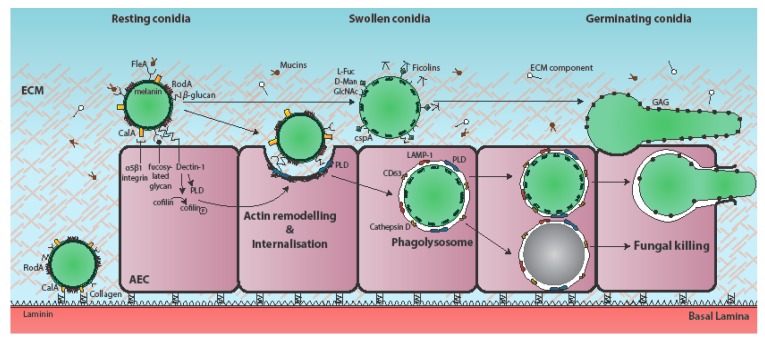
“fumigatus spores immunologically inert, but is shed from the spore surface during germination, is required for adherence to collagen, but not to A549 cells or other basement membrane components, such as laminin and fibronectin [24] (Figure 1).”
BackgroundSeidler, M. J., Salvenmoser, S., & Müller, F.-M. C. (2008) · Antimicrobial Agents and Chemotherapy · doi:10.1128/aac.00234-08 · Cited by 229 · cited 1×
“Although the propensity to form biofilms is not hindered by co-culture with human bronchial epithelial cells [86], too few intact epithelial cells remain after 2–3 days of co-culture to promote the study of the host-pathogen interaction over a sustained period of time.”
BackgroundAspergillus Cell Wall Melanin Blocks LC3-Associated Phagocytosis to Promote Pathogenicity
Akoumianaki, T., Kyrmizi, I., Valsecchi, I., Gresnigt, M. S., Samonis, G., Drakos, E., Boumpas, D., Muszkieta, L., Prevost, M.-C., Kontoyiannis, D. P., et al. (2016) · Cell Host & Microbe · doi:10.1016/j.chom.2015.12.002 · Cited by 218 · cited 1×
“fumigatus conidia and, in particular, cell wall melanin removal during germination, is required for the activation of a specialized autophagy pathway called LC3-associated phagocytosis (LAP) which ultimately results in fungal killing [65,66].”
BackgroundTomee, J. F. C., Wierenga, A. T. J., Hiemstra, P. S., & Kauffman, H. F. (1997) · The Journal of Infectious Diseases · doi:10.1086/517272 · Cited by 201 · cited 1×
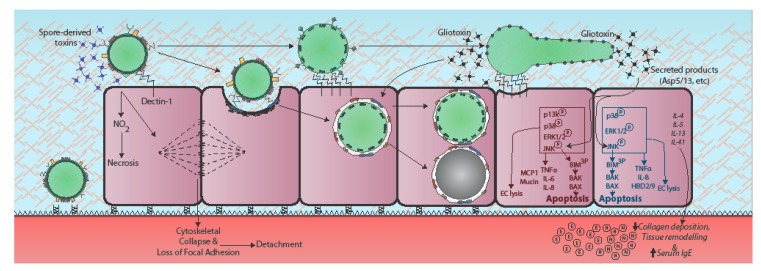
“fumigatus culture filtrate for 48 h is also abrogated by treating with serine protease inhibitors [71] (Figure 2).”
BackgroundAmitani, R., Taylor, G., Elezis, E. N., Llewellyn-Jones, C., Mitchell, J., Kuze, F., Cole, P. J., & Wilson, R. (1995) · Infection and Immunity · doi:10.1128/iai.63.9.3266-3271.1995 · Cited by 200
Wasylnka, J. A., & Moore, M. M. (2002) · Infection and Immunity · doi:10.1128/iai.70.6.3156-3163.2002 · Cited by 188
Gliotoxin Production in Aspergillus fumigatus Contributes to Host‐Specific Differences in Virulence
Spikes, S., Xu, R., Nguyen, C. K., Chamilos, G., Kontoyiannis, D. P., Jacobson, R. H., Ejzykowicz, D. E., Chiang, L. Y., Filler, S. G., & May, G. S. (2008) · The Journal of Infectious Diseases · doi:10.1086/525044 · Cited by 186 · cited 1×
“Abolition of Gt biosynthesis by deletion of GliP, encoding the Gt peptide synthase, strongly reduces the cytotoxic activity of culture filtrates and results in attenuated virulence in infected non-neutropenic mice [81,82].”
BackgroundDetection of Gliotoxin in Experimental and Human Aspergillosis
Lewis, R. E., Wiederhold, N. P., Chi, J., Han, X. Y., Komanduri, K. V., Kontoyiannis, D. P., & Prince, R. A. (2005) · Infection and Immunity · doi:10.1128/iai.73.1.635-637.2005 · Cited by 175 · cited 1×
“fumigatus during murine and human infection and can be detected in the lungs at bioactive levels [79,80].”
BackgroundBriard, B., Bomme, P., Lechner, B. E., Mislin, G. L. A., Lair, V., Prévost, M.-C., Latgé, J.-P., Haas, H., & Beauvais, A. (2015) · Scientific Reports · doi:10.1038/srep08220 · Cited by 161
Aspergillus fumigatus conidia survive and germinate in acidic organelles of A549 epithelial cells
Wasylnka, J. A., & Moore, M. M. (2003) · Journal of Cell Science · doi:10.1242/jcs.00329 · Cited by 161 · cited 6×
“PLD co-localises with internalised conidia, as do the late endosomal/lysosomal markers LAMP-1, CD63, and cathepsin D [6,9].”
BackgroundInfluentialThywißen, A., Heinekamp, T., Dahse, H.-M., Schmaler-Ripcke, J., Nietzsche, S., Zipfel, P. F., & Brakhage, A. A. (2011) · Frontiers in Microbiology · doi:10.3389/fmicb.2011.00096 · Cited by 161
Bertuzzi, M., Schrettl, M., Alcazar-Fuoli, L., Cairns, T. C., Muñoz, A., Walker, L. A., Herbst, S., Safari, M., Cheverton, A. M., Chen, D., et al. (2014) · PLoS Pathogens · doi:10.1371/journal.ppat.1004413 · Cited by 158 · cited 6×
“fumigatus conidia internalisation by A549 cells [8,9].”
BackgroundInfluentialSelf-citationInternalization of Aspergillus fumigatus conidia by epithelial and endothelial cells
Paris, S., Boisvieux-Ulrich, E., Crestani, B., Houcine, O., Taramelli, D., Lombardi, L., & Latgé, J. P. (1997) · Infection and Immunity · doi:10.1128/iai.65.4.1510-1514.1997 · Cited by 149
Yue, Y., Huang, W., Liang, J., Guo, J., Ji, J., Yao, Y., Zheng, M., Cai, Z., Lu, L., & Wang, J. (2015) · PLoS ONE · doi:10.1371/journal.pone.0142979 · Cited by 144 · cited 1×
“Considering these facts, and coupled with the role of IL4I1 in driving M2 macrophage polarization [73], expression of IL4I1 by alveolar epithelia cells in response to A.”
BackgroundInteractions of Aspergillus fumigatus Conidia with Airway Epithelial Cells: A Critical Review
Croft, C. A., Culibrk, L., Moore, M. M., & Tebbutt, S. J. (2016) · Frontiers in Microbiology · doi:10.3389/fmicb.2016.00472 · Cited by 142
Resistance is not futile: gliotoxin biosynthesis, functionality and utility
Dolan, S. K., O’Keeffe, G., Jones, G. W., & Doyle, S. (2015) · Trends in Microbiology · doi:10.1016/j.tim.2015.02.005 · Cited by 137 · cited 1×
“At higher levels (>250 ng/mL) it induces apoptotic cell death (reviewed in [77]).”
BackgroundInteraction of Human Phagocytes with Pigmentless Aspergillus Conidia
Jahn, B., Boukhallouk, F., Lotz, J., Langfelder, K., Wanner, G., & Brakhage, A. A. (2000) · Infection and Immunity · doi:10.1128/iai.68.6.3736-3739.2000 · Cited by 131
Lee, H., Yuk, J., Shin, D., & Jo, E. (2009) · Journal of Clinical Immunology · doi:10.1007/s10875-009-9319-3 · Cited by 127 · cited 1×
“Studies in A549 and immortalised human bronchial epithelial cells (HBECs) have revealed conflicting reports [9,36,60,61] of Dectin-1 expression levels whereby immunohistochemical staining of human lung sections reveals predominantly apical expression of Dectin-1 on bronchial and alveolar human epithelium [60], while f…”
ResultDeacetylation of Fungal Exopolysaccharide Mediates Adhesion and Biofilm Formation
Lee, M. J., Geller, A. M., Bamford, N. C., Liu, H., Gravelat, F. N., Snarr, B. D., Le Mauff, F., Chabot, J., Ralph, B., Ostapska, H., et al. (2016) · mBio · doi:10.1128/mbio.00252-16 · Cited by 122 · cited 9×
“Deletion of agd3 attenuates A. fumigatus virulence in a leukopenic mouse model of invasive aspergillosis, demonstrating that deacetylation of GAG is required for full virulence of A. fumigatus [54].”
BackgroundInfluentialBen-Ami, R., Lewis, R. E., Leventakos, K., & Kontoyiannis, D. P. (2009) · Blood · doi:10.1182/blood-2009-07-231209 · Cited by 120 · cited 1×
“Gt also exhibits strong anti-angiogenic activity, disrupting the formation of capillaries [78].”
BackgroundCarbohydrate Recognition Properties of Human Ficolins
Gout, E., Garlatti, V., Smith, D. F., Lacroix, M., Dumestre-Pérard, C., Lunardi, T., Martin, L., Cesbron, J.-Y., Arlaud, G. J., Gaboriaud, C., et al. (2010) · Journal of Biological Chemistry · doi:10.1074/jbc.m109.065854 · Cited by 119 · cited 1×
“Recombinant M-ficolin was found via glycan arrays [49] to bind to acetylated compounds including GalNAc, and via pull-down assays [27] to bind to chitin and β-1,3 glucan on the A.”
BackgroundLee, M. J., Gravelat, F. N., Cerone, R. P., Baptista, S. D., Campoli, P. V., Choe, S.-I., Kravtsov, I., Vinogradov, E., Creuzenet, C., Liu, H., et al. (2014) · Journal of Biological Chemistry · doi:10.1074/jbc.m113.522516 · Cited by 113 · cited 9×
“Deletion of agd3 attenuates A. fumigatus virulence in a leukopenic mouse model of invasive aspergillosis, demonstrating that deacetylation of GAG is required for full virulence of A. fumigatus [54].”
BackgroundInfluentialSun, W., Lu, X., Li, X., Sun, Q.-Y., Su, X., Song, Y., Sun, H., & Shi, Y. P. (2012) · European Journal of Clinical Microbiology & Infectious Diseases · doi:10.1007/s10096-012-1624-8 · Cited by 112 · cited 3×
“fumigatus conidia a papilloma virus-immortalised bronchial epithelial cell line upregulates Dectin-1 expression at the cell membrane at 6 and 18 h post challenge with resting conidia compared to challenge with heat-killed conidia, latex beads, or laminarin, thereby suggesting that fungal viability, rather than mere pa…”
BackgroundResultHouser, J., Komarek, J., Kostlanova, N., Cioci, G., Varrot, A., Kerr, S. C., Lahmann, M., Balloy, V., Fahy, J. V., Chignard, M., et al. (2013) · PLoS ONE · doi:10.1371/journal.pone.0083077 · Cited by 108 · cited 8×
“Subsequent analyses of FleA-mediated glycoprotein binding revealed that FleA mediates binding of A. fumigatus conidia to airway mucin in a fucose-dependent manner (Figure 1) and is a necessary prerequisite for macrophage-mediated phagocytosis of A. fumigatus spores.”
BackgroundInfluentialHeyl, K. A., Klassert, T. E., Heinrich, A., Müller, M. M., Klaile, E., Dienemann, H., Grünewald, C., Bals, R., Singer, B. B., & Slevogt, H. (2014) · mBio · doi:10.1128/mbio.01492-14 · Cited by 106 · cited 1×
“Studies in A549 and immortalised human bronchial epithelial cells (HBECs) have revealed conflicting reports [9,36,60,61] of Dectin-1 expression levels whereby immunohistochemical staining of human lung sections reveals predominantly apical expression of Dectin-1 on bronchial and alveolar human epithelium [60], while f…”
ResultBalloy, V., Sallenave, J.-M., Wu, Y., Touqui, L., Latgé, J.-P., Si-Tahar, M., & Chignard, M. (2008) · Journal of Biological Chemistry · doi:10.1074/jbc.m803149200 · Cited by 102
Kogan, T. V., Jadoun, J., Mittelman, L., Hirschberg, K., & Osherov, N. (2004) · The Journal of Infectious Diseases · doi:10.1086/420850 · Cited by 101 · cited 3×
“fumigatus spores prompts r pid cyt skeletal reorganisation and loss of focal adhere ce, possibly via spore-associated toxins [35].”
BackgroundInfluentialSelf-citationWasylnka, J. A., & Moore, M. M. (2000) · Infection and Immunity · doi:10.1128/iai.68.6.3377-3384.2000 · Cited by 100
Trypacidin, a Spore-Borne Toxin from Aspergillus fumigatus, Is Cytotoxic to Lung Cells
Gauthier, T., Wang, X., Sifuentes Dos Santos, J., Fysikopoulos, A., Tadrist, S., Canlet, C., Artigot, M. P., Loiseau, N., Oswald, I. P., & Puel, O. (2012) · PLoS ONE · doi:10.1371/journal.pone.0029906 · Cited by 97 · cited 7×
“In A549 epithelial cells, lysis was detectable as early as 1 h post exposure and was directly proportional to the dose of trypacidin used [68].”
BackgroundMethodInfluentialInteraction of the pathogenic mold Aspergillus fumigatus with lung epithelial cells
Osherov, N. (2012) · Frontiers in Microbiology · doi:10.3389/fmicb.2012.00346 · Cited by 96
Self-citationAspergillus fumigatus CalA binds to integrin α5β1 and mediates host cell invasion
Liu, H., Lee, M. J., Solis, N. V., Phan, Q. T., Swidergall, M., Ralph, B., Ibrahim, A. S., Sheppard, D. C., & Filler, S. G. (2016) · Nature Microbiology · doi:10.1038/nmicrobiol.2016.211 · Cited by 95 · cited 5×
“fumigatus strain lacking calA was not deficient in binding immobilized laminin or A549 cells, indicating that any role CalA plays in adhesion can be served by other adhesion factors [17].”
BackgroundInfluentialThorley, A. J., Grandolfo, D., Lim, E., Goldstraw, P., Young, A., & Tetley, T. D. (2011) · PLoS ONE · doi:10.1371/journal.pone.0021827 · Cited by 94 · cited 1×
“transformed Type I cell line has been generated recently [83] and a move towards new proteomic and single-cell technologies will move the field on further still [84].”
BackgroundCoding Tandem Repeats Generate Diversity in Aspergillus fumigatus Genes
Levdansky, E., Romano, J., Shadkchan, Y., Sharon, H., Verstrepen, K. J., Fink, G. R., & Osherov, N. (2007) · Eukaryotic Cell · doi:10.1128/ec.00229-06 · Cited by 92 · cited 5×
“Attachment of A. fumigatus to the Respiratory Epithelium A. fumigatus conidia bind in a concentration-dependent manner to A549 epithelia and extracellular matrix (ECM), and to purified basement membrane components, such as fibrinogen, fibronectin, laminin, type I collagen, and type IV collagen [21–23].”
BackgroundInfluentialSelf-citationHost Cell Invasion by Medically Important Fungi
Sheppard, D. C., & Filler, S. G. (2015) · Cold Spring Harbor Perspectives in Medicine · doi:10.1101/cshperspect.a019687 · Cited by 89
Volling, K., Thywissen, A., Brakhage, A. A., & Saluz, H. P. (2011) · Cellular Microbiology · doi:10.1111/j.1462-5822.2011.01605.x · Cited by 87
Endo, Y., Liu, Y., Kanno, K., Takahashi, M., Matsushita, M., & Fujita, T. (2004) · Genomics · doi:10.1016/j.ygeno.2004.07.006 · Cited by 83 · cited 2×
“fumigatus infection, a recent study showed that mice lacking both ficolin A and B (murine orthologues of the human L- and M-ficolins [50]) suffer significantly higher pulmonary fungal burden compared to their wild-type counterparts [51].”
BackgroundAlekseeva, L., Huet, D., Féménia, F., Mouyna, I., Abdelouahab, M., Cagna, A., Guerrier, D., Tichanné-Seltzer, V., Baeza-Squiban, A., Chermette, R., et al. (2009) · BMC Microbiology · doi:10.1186/1471-2180-9-33 · Cited by 83 · cited 1×
“Similarly, expression and production of β-defensin 2 (HBD-2) and HBD-9 is significantly increased in response to live, swollen conidia, but not in response to resting conidia or heat dried hyphal fragments [38].”
BackgroundInteraction of airway epithelial cells (A549) with spores and mycelium of Aspergillus fumigatus
Zhang, Z., Liu, R., Noordhoek, J. A., & Kauffman, H. F. (2005) · Journal of Infection · doi:10.1016/j.jinf.2004.12.012 · Cited by 82
Binding and Germination of Aspergillus fumigatus Conidia on Cultured A549 Pneumocytes
DeHart, D. J., Agwu, D. E., Julian, N. C., & Washburn, R. G. (1997) · Journal of Infectious Diseases · doi:10.1093/infdis/175.1.146 · Cited by 82
Chaudhary, N., Datta, K., Askin, F. B., Staab, J. F., & Marr, K. A. (2012) · American Journal of Respiratory and Critical Care Medicine · doi:10.1164/rccm.201106-1027oc · Cited by 79 · cited 1×
“The relevance of spore uptake to health likely encompasses several outcomes of the host-pathogen interaction, including those where uptake serves as a useful means of neutralising low-level spore exposure or as driving invasive growth and pathogenesis [6,8,14,16,17] where fungal killing is unachievable (such as during…”
BackgroundBromley, I. M., & Donaldson, K. (1996) · Thorax · doi:10.1136/thx.51.12.1203 · Cited by 78 · cited 1×
“Basement membrane components are not normally accessible to pathogens in healthy lungs, but often become exposed in lungs of asthmatic patients, hence, adhesion to the basal lamina could facilitate fungal infection and persistence, exacerbating the risk of aspergillosis in this cohort of patients [21], as well as in o…”
BackgroundMelanin dependent survival of Apergillus fumigatus conidia in lung epithelial cells
Amin, S., Thywißen, A., Heinekamp, T., Saluz, H. P., & Brakhage, A. A. (2014) · International Journal of Medical Microbiology · doi:10.1016/j.ijmm.2014.04.009 · Cited by 76 · cited 3×
“fumigatus spores by A549 cells [34], as demonstrated by an analysis of epithelial uptake of non-pigmented ∆pksP mutants versus that of the respective parental isolate.”
BackgroundInfluentialNamvar, S., Warn, P., Farnell, E., Bromley, M., Fraczek, M., Bowyer, P., & Herrick, S. (2015) · Clinical & Experimental Allergy · doi:10.1111/cea.12426 · Cited by 76 · cited 3×
“fumigatus have been recently demonstrated to provoke remodelling of the respiratory epithelium in immunocompetent BALB/c mice [41].”
BackgroundResultInfluentialApoptosis induced by the fungal pathogen gliotoxin requires a triple phosphorylation of Bim by JNK
Geissler, A., Haun, F., Frank, D. O., Wieland, K., Simon, M. M., Idzko, M., Davis, R. J., Maurer, U., & Borner, C. (2013) · Cell Death and Differentiation · doi:10.1038/cdd.2013.78 · Cited by 76 · cited 1×
“The signalling pathways mediating the response of lung epithelial cells to Gt have been analysed in A549 alveolar cells, primary type II alveolar cells, and BEAS-2B bronchial epithelial cells in culture [42,44].”
BackgroundLevdansky, E., Kashi, O., Sharon, H., Shadkchan, Y., & Osherov, N. (2010) · Eukaryotic Cell · doi:10.1128/ec.00126-10 · Cited by 73 · cited 2×
“, reported Dectin-1 expression in a papilloma virus-immortalised human bronchial epithelial cell line [47] and anti-Dectin-1 antibodies significantly ameliorate conidial internalisation and epithelial damage following A.”
BackgroundSelf-citationPhagocytosis of Aspergillus fumigatus conidia by primary nasal epithelial cells in vitro
Botterel, F., Gross, K., Ibrahim-Granet, O., Khoufache, K., Escabasse, V., Coste, A., Cordonnier, C., Escudier, E., & Bretagne, S. (2008) · BMC Microbiology · doi:10.1186/1471-2180-8-97 · Cited by 70 · cited 1×
“The relevance of spore uptake to health likely encompasses several outcomes of the host-pathogen interaction, including those where uptake serves as a useful means of neutralising low-level spore exposure or as driving invasive growth and pathogenesis [6,8,14,16,17] where fungal killing is unachievable (such as during…”
BackgroundOosthuizen, J. L., Gomez, P., Ruan, J., Hackett, T. L., Moore, M. M., Knight, D. A., & Tebbutt, S. J. (2011) · PLoS ONE · doi:10.1371/journal.pone.0020527 · Cited by 69
Upadhyay, S. K., Mahajan, L., Ramjee, S., Singh, Y., Basir, S. F., & Madan, T. (2009) · Journal of Medical Microbiology · doi:10.1099/jmm.0.005991-0 · Cited by 68 · cited 2×
“wild-type mice [17,56,57], but not in mice with conditional inactivation of Atg5 in hematopoietic cells.”
BackgroundHan, X., Yu, R., Zhen, D., Tao, S., Schmidt, M., & Han, L. (2011) · PLoS ONE · doi:10.1371/journal.pone.0021468 · Cited by 62 · cited 11×
“Spore internalisation is thought to be dependent on E-cadherin [30–32], and the actin regulators phospholipase D (PLD) [9] and cofilin-1 [33].”
BackgroundInfluentialDomingo, M. P., Colmenarejo, C., Martínez‐Lostao, L., Müllbacher, A., Jarne, C., Revillo, M. J., Delgado, P., Roc, L., Meis, J. F. G. M., Rezusta, A., et al. (2012) · Diagnostic Microbiology and Infectious Disease · doi:10.1016/j.diagmicrobio.2012.01.012 · Cited by 57 · cited 1×
“fumigatus during murine and human infection and can be detected in the lungs at bioactive levels [79,80].”
BackgroundAspergillus fumigatus conidia induce interferon-β signalling in respiratory epithelial cells
Beisswenger, C., Hess, C., & Bals, R. (2012) · European Respiratory Journal · doi:10.1183/09031936.00096110 · Cited by 56 · cited 1×
“Other groups have reported that physical contact with conidia, irrespective of fungal viability, is also important [67], as only inactivated resting, but not swollen or germinated conidia, induced IFN-β signalling through the RIP-1/TBK1 pathway in human primary bronchial epithelial cells.”
BackgroundPollmächer, J., & Figge, M. T. (2014) · PLoS ONE · doi:10.1371/journal.pone.0111630 · Cited by 54 · cited 1×
“transformed Type I cell line has been generated recently [83] and a move towards new proteomic and single-cell technologies will move the field on further still [84].”
BackgroundBidula, S. M., Sexton, D. W., Abdolrasouli, A., Shah, A., Reed, A. K., Armstrong-James, D. P. H., & Schelenz, S. (2015) · The Journal of Infectious Diseases · doi:10.1093/infdis/jiv027 · Cited by 53
Kerr, S. C., Fischer, G. J., Sinha, M., McCabe, O., Palmer, J. M., Choera, T., Yun Lim, F., Wimmerova, M., Carrington, S. D., Yuan, S., et al. (2016) · PLOS Pathogens · doi:10.1371/journal.ppat.1005555 · Cited by 53 · cited 3×
“fumigatus to host cells, such as epithelial cells and macrophages, via membrane-tethered mucins [48].”
BackgroundChen, F., Zhang, C., Jia, X., Wang, S., Wang, J., Chen, Y., Zhao, J., Tian, S., Han, X., & Han, L. (2015) · PLOS ONE · doi:10.1371/journal.pone.0135720 · Cited by 52 · cited 3×
“fumigatus challenge, have been implicated as influencing uptake of conidia by A549 cells, as siRNA mediated knockdown of the respective gene functions diminished conidial uptake by approximately 20% and 40%, respectively [58].”
BackgroundInfluentialGomez, P., Hackett, T. L., Moore, M. M., Knight, D. A., & Tebbutt, S. J. (2010) · BMC Genomics · doi:10.1186/1471-2164-11-358 · Cited by 52
Escobar, N., Ordonez, S. R., Wösten, H. A. B., Haas, P.-J. A., de Cock, H., & Haagsman, H. P. (2016) · Frontiers in Microbiology · doi:10.3389/fmicb.2016.00438 · Cited by 48
Bidula, S. M., Sexton, D. W., Yates, M. P., Abdolrasouli, A., Shah, A., Wallis, R., Reed, A. K., Armstrong-James, D. P. H., & Schelenz, S. (2015) · Immunology · doi:10.1111/imm.12501 · Cited by 47 · cited 2×
“At this pH, H-ficolin opsonised conidia are twice as adherent to A549 cells relative to their non-opsonised counterparts [29].”
BackgroundMelanin targets LC3-associated phagocytosis (LAP): A novel pathogenetic mechanism in fungal disease
Chamilos, G., Akoumianaki, T., Kyrmizi, I., Brakhage, A., Beauvais, A., & Latge, J.-P. (2016) · Autophagy · doi:10.1080/15548627.2016.1157242 · Cited by 46 · cited 1×
“fumigatus conidia and, in particular, cell wall melanin removal during germination, is required for the activation of a specialized autophagy pathway called LC3-associated phagocytosis (LAP) which ultimately results in fungal killing [65,66].”
BackgroundBidula, S. M., Kenawy, H. I., Ali, Y. M., Sexton, D. W., Schwaeble, W., & Schelenz, S. (2013) · Infection and Immunity · doi:10.1128/iai.00032-13 · Cited by 45
Jia, X., Chen, F., Pan, W., Yu, R., Tian, S., Han, G., Fang, H., Wang, S., Zhao, J., Li, X., et al. (2014) · Microbes and Infection · doi:10.1016/j.micinf.2014.03.001 · Cited by 41 · cited 1×
“The signalling pathways mediating the response of lung epithelial cells to Gt have been analysed in A549 alveolar cells, primary type II alveolar cells, and BEAS-2B bronchial epithelial cells in culture [42,44].”
BackgroundHomma, T., Kato, A., Bhushan, B., Norton, J. E., Suh, L. A., Carter, R. G., Gupta, D. S., & Schleimer, R. P. (2015) · American Journal of Respiratory Cell and Molecular Biology · doi:10.1165/rcmb.2015-0062oc · Cited by 39 · cited 1×
“fumigatus extracts suppressed Th1 bias in primary normal human bronchial epithelial cells [76].”
BackgroundSharon, H., Amar, D., Levdansky, E., Mircus, G., Shadkchan, Y., Shamir, R., & Osherov, N. (2011) · PLoS ONE · doi:10.1371/journal.pone.0017509 · Cited by 35 · cited 5×
“fumigatus conidia for 3 h resulted in only a slight increase in ERK1/2 phosphorylation compared to polystyrene beads and no significant MAPK p38 activation, as monitored by Western blot using anti-p-ERK and anti-p-p38 specific antibodies [39].”
BackgroundMethodInfluentialSelf-citationJensen, K., Lund, K. P., Christensen, K. B., Holm, A. T., Dubey, L. K., Moeller, J. B., Jepsen, C. E. S., Schlosser, A. G., Galgóczy, L., Thiel, S., et al. (2017) · Virulence · doi:10.1080/21505594.2016.1278337 · Cited by 33 · cited 1×
“Recombinant M-ficolin was found via glycan arrays [49] to bind to acetylated compounds including GalNAc, and via pull-down assays [27] to bind to chitin and β-1,3 glucan on the A.”
BackgroundIn silico modeling of spore inhalation reveals fungal persistence following low dose exposure
Tanaka, R. J., Boon, N. J., Vrcelj, K., Nguyen, A., Vinci, C., Armstrong-James, D. P. H., & Bignell, E. (2015) · Scientific Reports · doi:10.1038/srep13958 · Cited by 32 · cited 2×
“fumigatus infection [85] and low-dose exposure to A.”
BackgroundSelf-citationGenster, N., Cramer, E. P., Rosbjerg, A., Pilely, K., Cowland, J. B., & Garred, P. (2016) · Journal of Innate Immunity · doi:10.1159/000447714 · Cited by 32
Takahashi‐Nakaguchi, A., Sakai, K., Takahashi, H., Hagiwara, D., Toyotome, T., Chibana, H., Watanabe, A., Yaguchi, T., Yamaguchi, M., Kamei, K., et al. (2017) · Cellular Microbiology · doi:10.1111/cmi.12802 · Cited by 32 · cited 2×
“RNAseq analysis of the four most highly adherent isolates revealed a common cluster of 31 differentially-expressed genes during conidial formation, two of which (AFUA_4G01030 and AFUA_4G08805) were found by mutational analysis to be important for adhesion to AECs [20].”
BackgroundSeddigh, P., Bracht, T., Molinier‐Frenkel, V., Castellano, F., Kniemeyer, O., Schuster, M., Weski, J., Hasenberg, A., Kraus, A., Poschet, G., et al. (2017) · Molecular & Cellular Proteomics · doi:10.1074/mcp.ra117.000072 · Cited by 31 · cited 2×
“recently developed a novel negative immunomagnetic protocol for isolating untouched primary AECs from murine lung for quantitative-label free in vivo proteomics [72].”
BackgroundBasu, T., Seyedmousavi, S., Sugui, J. A., Balenga, N. A. B., Zhao, M., Chung, K. J. K., Biardel, S., Laviolette, M., & Druey, K. M. (2017) · Journal of Allergy and Clinical Immunology · doi:10.1016/j.jaci.2017.07.034 · Cited by 27 · cited 1×
“The presence of Aspf13 (also known as Alp1, a 33 kDa serine protease) in sputum has recently been reported to correlate with asthma severity in atopic patients, having been repeatedly detected in sputum from asthmatic but not healthy patients [74].”
BackgroundBhushan, B., Homma, T., Norton, J. E., Sha, Q., Siebert, J., Gupta, D. S., Schroeder, J. W., & Schleimer, R. P. (2015) · American Journal of Respiratory Cell and Molecular Biology · doi:10.1165/rcmb.2014-0333oc · Cited by 26 · cited 2×
“fumigatus extracts suppress JAK-STAT signalling, potentially promoting Th2 bias [75].”
BackgroundBao, Z., Han, X., Chen, F., Jia, X., Zhao, J., Zhang, C., Yong, C., Tian, S., Zhou, X., & Han, L. (2015) · BMC Microbiology · doi:10.1186/s12866-015-0500-y · Cited by 26 · cited 3×
“Spore internalisation is dependent on two crucial regulators of host actin dynamics, phospholipase D (PLD) and cofilin-1, whose activation and phosphorylation state, respectively, are modulated by exposure to β-1,3-glucan on the surface of germinating conidia [9,33] (Figure 1).”
BackgroundBelaish, R., Sharon, H., Levdansky, E., Greenstein, S., Shadkchan, Y., & Osherov, N. (2007) · Fungal Genetics and Biology · doi:10.1016/j.fgb.2007.07.005 · Cited by 26 · cited 2×
“wild-type mice [17,56,57], but not in mice with conditional inactivation of Atg5 in hematopoietic cells.”
BackgroundSelf-citationFekkar, A., Balloy, V., Pionneau, C., Marinach-Patrice, C., Chignard, M., & Mazier, D. (2012) · The Journal of Infectious Diseases · doi:10.1093/infdis/jis031 · Cited by 25 · cited 4×
“enzymes by bronchial cells and proteins of the redox system, suggests that degranulation of lysosomal enzymes may participate in controlling fungal growth and human cell self-damage [70].”
BackgroundInfluentialMolecular characterization of AfuFleA, an l-fucose-specific lectin from Aspergillus fumigatus
Kuboi, S., Ishimaru, T., Tamada, S., Bernard, E. M., Kuboi, S., Perlin, D. S., & Armstrong, D. (2013) · Journal of Infection and Chemotherapy · doi:10.1007/s10156-013-0614-9 · Cited by 23 · cited 8×
“Subsequent analyses of FleA-mediated glycoprotein binding revealed that FleA mediates binding of A. fumigatus conidia to airway mucin in a fucose-dependent manner (Figure 1) and is a necessary prerequisite for macrophage-mediated phagocytosis of A. fumigatus spores.”
BackgroundInfluentialRammaert, B., Jouvion, G., de Chaumont, F., Garcia-Hermoso, D., Szczepaniak, C., Renaudat, C., Olivo-Marin, J.-C., Chrétien, F., Dromer, F., & Bretagne, S. (2015) · The American Journal of Pathology · doi:10.1016/j.ajpath.2015.04.027 · Cited by 22 · cited 2×
“recently demonstrated the absence, in vivo, of fungal spore internalisation in the bronchial epithelium of mice [15].”
BackgroundLiu, Z., Wang, M., Sun, W., Xia, D., Tan, M., Ding, Y., Qian, Q., Su, X., & Shi, Y. P. (2015) · PubMed Central · Cited by 20
E-cadherin mediates adhesion of Aspergillus fumigatus to non-small cell lung cancer cells
Yan, T., Han, J., & Yu, X. (2015) · Tumor Biology · doi:10.1007/s13277-015-4195-3 · Cited by 12
Xu, X., Chen, F., Sun, H., Chen, C., & Zhao, B. (2016) · PubMed Central · Cited by 8
Research works printed but not linked: 1
- Zheng J. Zuo J. Han Y. Zhang L. Yan L. Shen L. Jiang Y. Cao Y. Zhao J. Gliotoxin produced by Aspergillus fumigatus induces apoptosis of human bronchial epithelial cells via the Bcl-2 pathway Int. J. Clin. Exp. Med. 2017 10 12
Cited by
Aspergillus fumigatus and Aspergillosis in 2019
Latgé, J.-P., & Chamilos, G. (2019) · Clinical Microbiology Reviews · doi:10.1128/cmr.00140-18 · Cited by 1,400
Pathogenesis of Respiratory Viral and Fungal Coinfections
Salazar, F., Bignell, E., Brown, G. D., Cook, P. C., & Warris, A. (2021) · Clinical Microbiology Reviews · doi:10.1128/cmr.00094-21 · Cited by 178
“infection [206]) could facilitate fungal adhesion to the basal lamina (175, 207).”
BackgroundSelf-citationPathophysiological aspects of Aspergillus colonization in disease
Gago, S., Denning, D. W., & Bowyer, P. (2018) · Medical Mycology · doi:10.1093/mmy/myy076 · Cited by 135
Self-citationvan Rhijn, N., & Bromley, M. (2021) · Journal of Fungi · doi:10.3390/jof7050367 · Cited by 132
“When this barrier is damaged, spores which would ordinarily be cleared before they shed their immunoprotective outer coat [71], have the opportunity to swell and germinate, releasing a payload of allergenic proteins.”
BackgroundPathogenicity and virulence of Aspergillus fumigatus
Earle, K., Valero, C., Conn, D. P., Vere, G., Cook, P. C., Bromley, M., Bowyer, P., & Gago, S. (2023) · Virulence · doi:10.1080/21505594.2023.2172264 · Cited by 132
“Indeed, this is the case for SARS-CoV-2, where infection has been shown to alter the expression of ECM components like collagen, fibronectin, and laminin, which could promote A. fumigatus conidial adhesion [204,436].”
BackgroundMethod
Metadata
- Authors
- Bertuzzi, M., Hayes, G., Icheoku, U., Van Rhijn, N., Denning, D., Osherov, N., & Bignell, E.
- Affiliations
- University of Manchester (GB)
- North Devon District Hospital (GB)
- Manchester Fungal Infection Group, Faculty of Biology, Medicine and Health, University of Manchester, Manchester M13 9NT, UK
- Manchester University NHS Foundation Trust (GB)
- Tel Aviv University (IL)
- Corresponding author
- Bignell, Elaine
- Venue
- Journal of Fungi
- Publisher
- MDPI AG
- Published
- 2018-01-08
- Volume
- 4
- Issue
- 1
- Pages
- 8
- ISSN
- 2309-608X (ISSN-L)
- PMC
- PMC5872311
- OpenAlex
- W2782834892
- Cited by
- 64
- References
- 85
- Citations by year
- 2026: 2 · 2025: 4 · 2024: 8 · 2023: 8 · 2022: 11 · 2021: 13 · 2020: 4 · 2019: 8 · 2018: 5
- FWCI
- 1.10
- Type
- journal article
- Language
- en
- Open access
- gold
- doi.org
- Licence
- Locations
- Journal of Fungi (publishedVersion, cc-by)
- Europe PMC (PubMed Central) (publishedVersion, cc-by)
- PubMed Central (publishedVersion, cc-by)
- PubMed (publishedVersion)
- DOAJ (DOAJ: Directory of Open Access Journals) (submittedVersion, cc-by-sa)
- Research Explorer (The University of Manchester) (submittedVersion, cc-by)
- Funders
- Medical Research Council (G0501164, MR/L000822/1, MR/M02010X/1)
- Biotechnology and Biological Sciences Research Council (BB/G009619/1)
- Wellcome Trust (WT093596MA)
- Imperial College London (Division of Investigative Sciences PhD Studentships)
- Wellcome Trust Strategic Award (097377/Z/11/Z)
- BBSRC Doctoral Training Programme (BB/M011208/1)
- Israel Science Foundation (ISF No. 1347/14)
- Topics
- Health Sciences › Medicine › Infectious Diseases › Antifungal resistance and susceptibility
- Health Sciences › Medicine › Pulmonary and Respiratory Medicine › Asthma and respiratory diseases
- Life Sciences › Biochemistry, Genetics and Molecular Biology › Molecular Biology › Fungal and yeast genetics research
- Keywords
- Aspergillus fumigatus, aspergillosis, respiratory epithelium, fungal pathogenesis, lung inflammation, antifungal immunity
About these checks
Registry, retraction, Cites and statistics results are computed, not judged, with one exception: a printed reference that no index lists is read once by a model before it counts as a citation error. Claims are extracted by a model and kept only when their quote appears verbatim in the text; each cited source is then checked, with a model’s help, for whether it says what the claim relies on. Those verdicts can be wrong — read the claim’s quote and the cited source before relying on one.
Statistics and arithmetic are recomputed, not judged.
Confidence bands are shown only for fields calibrated on our annotated test set. None is calibrated yet, so no band is shown.
What counts as a claim ›How we measure confidence ›How we check this ›
Are you an author, or do you see a problem with this page? Request a review
Data sources
Bibliographic data: Semantic Scholar, OpenAlex, Crossref.
Contains information from the Semantic Scholar Academic Graph Datasets, made available under the ODC Attribution License (ODC-BY 1.0).
Semantic Scholar’s data is described in: Kinney, R., et al. (2023). The Semantic Scholar Open Data Platform. arXiv:2301.10140.
