

Mechanisms of Pulmonary Escape and Dissemination by Cryptococcus neoformans
Open accessThe DOI matches its Crossref record; 134 of the 135 references it cites were found in a registry or an index.
Abstract
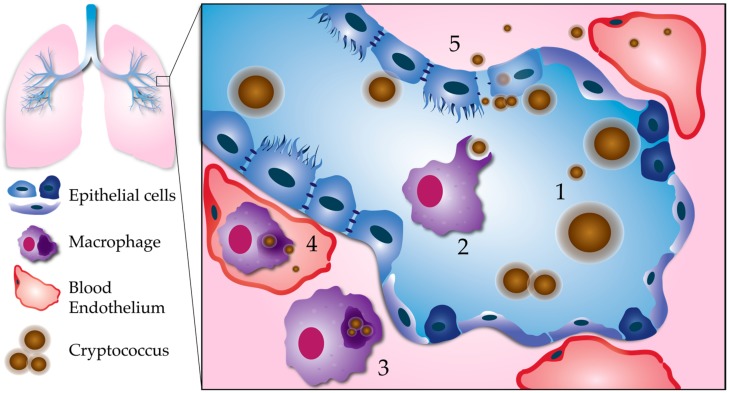
Cryptococcus neoformans is a common environmental saprophyte and human fungal pathogen that primarily causes disease in immunocompromised individuals. Similar to many environmentally acquired human fungal pathogens, C. neoformans initiates infection in the lungs. However, the main driver of mortality is invasive cryptococcosis leading to fungal meningitis. After C. neoformans gains a foothold in the lungs, a critical early step in invasion is transversal of the respiratory epithelium. In this review, we summarize current knowledge relating to pulmonary escape. We focus on fungal factors that allow C. neoformans to disseminate from the lungs via intracellular and extracellular routes.
Overview
The claims and statistics of this paper haven’t been checked yet.
Free: it reads the open-access text and checks the first 5 claims that cite a source we can check. Create a free account to check every claim.
Integrity signals
Registry
Cites
Statistics
Figures
Verification
Claims the paper makes
The claims and statistics of this paper haven’t been checked yet.
Free: it reads the open-access text and checks the first 5 claims that cite a source we can check. Create a free account to check every claim.
Claims other papers make about this one
Each is checked against this paper’s own text: does it say what the citing paper says it does?
In the citing paper
“This enables viable yeast to be transported out of the lungs within migrating phagocytes; a process known as the Trojan horse mechanism of dissemination [12].”
From Mechanisms of fungal dissemination (2021) · cites this paper as [12]
In the citing paper
“In order to utilize phagocytes as vehicles for dissemination, C. neoformans must successfully survive within and exit from these cells following internalization. This requires that C. neoformans defend against acidic, oxidative and nitrosative stresses commonly encountered within macrophages [12].”
From Mechanisms of fungal dissemination (2021) · cites this paper as [12]
In the citing paper
“Infectious propagules in the form of desiccated yeast or spores are inhaled into the respiratory tract on a daily basis [12]. Due to their small size these organisms are able to avoid cough and mucociliary clearance and penetrate deep into alveolar spaces [1].”
From Mechanisms of fungal dissemination (2021) · cites this paper as [12]
In the citing paper
“One such pathway is transcellular crossing, also known as transcytosis. This mechanism involves exploitation of host cell endocytic pathways to facilitate fungal traversal of epithelial barriers and grants C. neoformans access to the lung interstitium, vasculature or lymph system [12].”
From Mechanisms of fungal dissemination (2021) · cites this paper as [12]
In the citing paper
“Disseminated C. neoformans enters the bloodstream and can infect distant organs, but preferentially targets the central nervous system (CNS) [12].”
From Mechanisms of fungal dissemination (2021) · cites this paper as [12]
2 more claims about this paper
Create a free account to see every claim other papers make about this one.
Self-check
Percentages, sums and reported differences re-computed from the paper’s own numbers.
The self-check needs the paper’s full text.
Citations
Cites
Hidden Killers: Human Fungal Infections
Brown, G. D., Denning, D. W., Gow, N. A. R., Levitz, S. M., Netea, M. G., & White, T. C. (2012) · Science Translational Medicine · doi:10.1126/scitranslmed.3004404 · Cited by 4,284 · cited 1×
“, Coccidiodes immitis, Blastomyces dermatitis, and Histoplasma capsulatum, initiate infection via inhalation [2].”
BackgroundA pathology atlas of the human cancer transcriptome
Uhlen, M., Zhang, C., Lee, S., Sjöstedt, E., Fagerberg, L., Bidkhori, G., Benfeitas, R., Arif, M., Liu, Z., Edfors, F., et al. (2017) · Science · doi:10.1126/science.aan2507 · Cited by 3,371
Global burden of disease of HIV-associated cryptococcal meningitis: an updated analysis
Rajasingham, R., Smith, R. M., Park, B. J., Jarvis, J. N., Govender, N. P., Chiller, T. M., Denning, D. W., Loyse, A., & Boulware, D. R. (2017) · The Lancet Infectious Diseases · doi:10.1016/s1473-3099(17)30243-8 · Cited by 1,861 · cited 7×
“In the case of C. neoformans, it is most commonly low CD4+ T cell count due to HIV/AIDS [4].”
BackgroundInfluentialRespiratory epithelial cells orchestrate pulmonary innate immunity
Whitsett, J. A., & Alenghat, T. (2015) · Nature Immunology · doi:10.1038/ni.3045 · Cited by 801 · cited 2×
“The lung epithelium also plays a constitutive role in regulating microbial load through mechanisms such as secretion of antimicrobial defensins and mucociliary clearance [6].”
BackgroundSynthesis and assembly of fungal melanin
Eisenman, H. C., & Casadevall, A. (2012) · Applied Microbiology and Biotechnology · doi:10.1007/s00253-011-3777-2 · Cited by 711 · cited 1×
“neoformans, melanin pigment is exported to the cell wall [105], where it provides protection against ultraviolet radiation and oxidative damage [106,107].”
BackgroundCryptococcus: from environmental saprophyte to global pathogen
May, R. C., Stone, N. R. H., Wiesner, D. L., Bicanic, T., & Nielsen, K. (2016) · Nature Reviews Microbiology · doi:10.1038/nrmicro.2015.6 · Cited by 541
Cryptococcus neoformans and Cryptococcus gattii, the etiologic agents of cryptococcosis
Kwon-Chung, K. J., Fraser, J. A., Doering, T. L., Wang, Z. A., Janbon, G., Idnurm, A., & Bahn, Y.-S. (2014) · Cold Spring Harbor Perspectives in Medicine · doi:10.1101/cshperspect.a019760 · Cited by 531 · cited 1×
“gattii is more likely to infect immunocompetent individuals [10,11].”
BackgroundHigh diversity of fungi in air particulate matter
Fröhlich-Nowoisky, J., Pickersgill, D. A., Després, V. R., & Pöschl, U. (2009) · Proceedings of the National Academy of Sciences · doi:10.1073/pnas.0811003106 · Cited by 506 · cited 1×
“In fact, it is estimated that every breath contains 1–10 fungal spores [1].”
BackgroundChapter 4 The Capsule of the Fungal Pathogen Cryptococcus neoformans
Zaragoza, O., Rodrigues, M. L., De Jesus, M., Frases, S., Dadachova, E., & Casadevall, A. (2009) · Advances in Applied Microbiology · doi:10.1016/s0065-2164(09)01204-0 · Cited by 457
Systematic Genetic Analysis of Virulence in the Human Fungal Pathogen Cryptococcus neoformans
Liu, O. W., Chun, C. D., Chow, E. D., Chen, C., Madhani, H. D., & Noble, S. M. (2008) · Cell · doi:10.1016/j.cell.2008.07.046 · Cited by 443 · cited 6×
“1 cells will associate with a cryptococcal cell in in vitro experiments [33].”
BackgroundInfluential
Research works printed but not linked: 1
- Mitchell T.G. Castaneda E. Nielsen K. Wanke B. Lazera M.S. Environmental niches for Cryptococcus neoformans and Cryptococcus gattii Cryptococcus: From Human Pathogen to Model Yeast ASM Press Washington, DC, USA 2011
Cited by
Mechanisms of fungal dissemination
Strickland, A. B., & Shi, M. (2021) · Cellular and Molecular Life Sciences · doi:10.1007/s00018-020-03736-z · Cited by 127
Immunomodulatory Role of Capsular Polysaccharides Constituents of Cryptococcus neoformans
Decotè-Ricardo, D., LaRocque-de-Freitas, I. F., da Rocha, J. D. B., Nascimento, D. O., Nunes, M. P., Morrot, A., Freire‐de‐Lima, L., Previato, J. O., Mendonça‐Previato, L., & Freire-de-Lima, C. G. (2019) · Frontiers in Medicine · doi:10.3389/fmed.2019.00129 · Cited by 109
“Most of these pathogens kill the host cell to escape and infect other tissues (37, 38).”
BackgroundA dissemination-prone morphotype enhances extrapulmonary organ entry by Cryptococcus neoformans
Denham, S. T., Brammer, B., Chung, K. Y., Wambaugh, M. A., Bednarek, J. M., Guo, L., Moreau, C. T., & Brown, J. C. S. (2022) · Cell Host & Microbe · doi:10.1016/j.chom.2022.08.017 · Cited by 80
Self-citationWalsh, N. M., Botts, M. R., McDermott, A. J., Ortiz, S. C., Wüthrich, M., Klein, B., & Hull, C. M. (2019) · PLOS Pathogens · doi:10.1371/journal.ppat.1007777 · Cited by 60
Fungal Pathogens: Shape-Shifting Invaders
Min, K., Neiman, A. M., & Konopka, J. B. (2020) · Trends in Microbiology · doi:10.1016/j.tim.2020.05.001 · Cited by 64
“the major capsular components GXM and GXMGal are thought to modulate the host immune response by inhibiting immune recognition and activation [16, 17].”
BackgroundIn vitroinfection models to study fungal–host interactions
Last, A., Maurer, M., Mosig, A. S., Gresnigt, M. S., & Hube, B. (2021) · FEMS Microbiology Reviews · doi:10.1093/femsre/fuab005 · Cited by 49
Intron distribution and emerging role of alternative splicing in fungi
Muzafar, S., Sharma, R. D., Chauhan, N., & Prasad, R. (2021) · FEMS Microbiology Letters · doi:10.1093/femsle/fnab135 · Cited by 54
Chrissian, C., Camacho, E., Kelly, J. E., Wang, H., Casadevall, A., & Stark, R. E. (2020) · Journal of Biological Chemistry · doi:10.1074/jbc.ra120.015201 · Cited by 41
“However, in immunocompromised individuals, the outcome is typically cryptococcal pneumonia followed by rapid dissemination to the central nervous system (3).”
BackgroundNormile, T. G., Bryan, A. M., & Poeta, M. D. (2020) · Frontiers in Immunology · doi:10.3389/fimmu.2020.581750 · Cited by 42
“Conversely, uptake of spores does not lead to a strong inflammation as spores can exist within macrophages for long periods of time without damaging them (13, 42, 45).”
BackgroundSphingolipids: Regulators of azole drug resistance and fungal pathogenicity
Song, J., Xiao, L., & Li, R. (2020) · Molecular Microbiology · doi:10.1111/mmi.14586 · Cited by 40
Reuwsaat, J. C. V., Agustinho, D. P., Motta, H., Brown, H., Chang, A. L., Brent, M. R., Kmetzsch, L., & Doering, T. L. (2021) · mBio · doi:10.1128/mbio.03457-20 · Cited by 41
“First, the limited accumulation of the pdr802mutant in the lungs, due to factors summarized above, may directly affect dissemination (97).”
BackgroundAl-Huthaifi, A. M., Radman, B. A., Al-Alawi, A. A., Mahmood, F., & Liu, T. (2024) · Journal of Fungi · doi:10.3390/jof10080586 · Cited by 46
“For C. neoformans to use phagocytes as a means of dissemination, it needs to survive within them and then successfully escape after being taken in while also protecting itself from the acidic, oxidative, and nitrosative stresses that macrophages regularly encounter [84].”
BackgroundCryptococcus: History, Epidemiology and Immune Evasion
Diniz-Lima, I., da Fonseca, L. M., da Silva-Júnior, E. B., Guimarães-de-Oliveira, J. C., Freire‐de‐Lima, L., Nascimento, D. O., Morrot, A., Previato, J. O., Mendonça‐Previato, L., Decotè-Ricardo, D., et al. (2022) · Applied Sciences · doi:10.3390/app12147086 · Cited by 43
Fungal CNS Infections in Africa: The Neuroimmunology of Cryptococcal Meningitis
Mohamed, S. H., Nyazika, T. K., Ssebambulidde, K., Lionakis, M. S., Meya, D. B., & Drummond, R. A. (2022) · Frontiers in Immunology · doi:10.3389/fimmu.2022.804674 · Cited by 39
Environmental Factors That Contribute to the Maintenance of Cryptococcus neoformans Pathogenesis
Maliehe, M., Ntoi, M. A., Lahiri, S., Folorunso, O. S., Ogundeji, A. O., Pohl, C. H., & Sebolai, O. M. (2020) · Microorganisms · doi:10.3390/microorganisms8020180 · Cited by 37
Dangerous Liaisons: Interactions of Cryptococcus neoformans with Host Phagocytes
Gaylord, E. A., Choy, H. L., & Doering, T. L. (2020) · Pathogens · doi:10.3390/pathogens9110891 · Cited by 33
“Cryptococci disseminate from the lung either within host phagocytes or as free fungi (reviewed in detail by Denham and Brown, 2018) [87], although the precise contribution of each mechanism is unknown.”
BackgroundThe Cryptococcus neoformans Titan Cell: From In Vivo Phenomenon to In Vitro Model
Zhou, X., & Ballou, E. R. (2018) · Current Clinical Microbiology Reports · doi:10.1007/s40588-018-0107-9 · Cited by 35
Cheng, L., Niu, M., Tong, Y., Ma, Z., Huang, K., Yang, L., Zhong, X., & Li, C. (2021) · Acta Pharmaceutica Sinica B · doi:10.1016/j.apsb.2021.04.020 · Cited by 33
Thak, E. J., Lee, S.-B., Xu-Vanpala, S., Lee, D.-J., Chung, S. Y., Bahn, Y., Oh, D., Shinohara, M. L., & Kang, H. A. (2020) · mBio · doi:10.1128/mbio.00711-20 · Cited by 34
de Oliveira, H. C., Rossi, S. A., García-Barbazán, I., Zaragoza, Ó., & Trevijano‐Contador, N. (2021) · Journal of Fungi · doi:10.3390/jof7100831 · Cited by 27
Kindermann, M., Knipfer, L., Obermeyer, S., Müller, U., Alber, G., Bogdan, C., Schleicher, U., Neurath, M. F., & Wirtz, S. J. (2020) · Frontiers in Immunology · doi:10.3389/fimmu.2020.00209 · Cited by 27
“Conversely, type 2 biased immune responses have been implicated in disease progression and detrimental outcomes (8).”
BackgroundMonitoring Glycolysis and Respiration Highlights Metabolic Inflexibility of Cryptococcus neoformans
Lev, S., Li, C., Desmarini, D., Liuwantara, D., Sorrell, T. C., Hawthorne, W. J., & Djordjevic, J. T. (2020) · Pathogens · doi:10.3390/pathogens9090684 · Cited by 23
Normile, T. G., & Poeta, M. D. (2022) · Frontiers in Immunology · doi:10.3389/fimmu.2022.868523 · Cited by 23
Alternatively activated lung alveolar and interstitial macrophages promote fungal growth
Strickland, A. B., Chen, Y., Sun, D., & Shi, M. (2023) · iScience · doi:10.1016/j.isci.2023.106717 · Cited by 21
“neoformans infection occurs when this organism escapes the lungs and disseminates to the CNS.(3,4) If C.”
BackgroundInfluentialBrilacidin, a novel antifungal agent against Cryptococcus neoformans
Diehl, C., Pinzan, C. F., de Castro, P. A., Delbaje, E., García-Carnero, L. C., Sánchez‐León, E., Bhalla, K., Kronstad, J. W., Kim, D.-G., Doering, T. L., et al. (2024) · mBio · doi:10.1128/mbio.01031-24 · Cited by 19
“We've got to get out”—Strategies of human pathogenic fungi to escape from phagocytes
Sonnberger, J., Kasper, L., Lange, T., Brunke, S., & Hube, B. (2023) · Molecular Microbiology · doi:10.1111/mmi.15149 · Cited by 17
Vanhoffelen, E., Vermoesen, L., Michiels, L., Lagrou, K., Reséndiz-Sharpe, A., & Velde, G. V. (2024) · Virulence · doi:10.1080/21505594.2024.2327883 · Cited by 14
“Upon inhalation, environmental CN cells or spores initially cause pulmonary cryptococcosis; however, under immunosuppressive conditions, they can disseminate to the central nervous system (CNS) and cause life-threatening cryptococcal meningitis [1].”
BackgroundVomocytosis: Too Much Booze, Base, or Calcium?
Cruz‐Acuña, M., Pacifici, N. J., & Lewis, J. S. (2019) · mBio · doi:10.1128/mbio.02526-19 · Cited by 14
“This enzyme breaks down urea into ammonia, which, in turn, increases the phagosomal pH in infected macrophages (75, 76).”
BackgroundRole of sphingolipids in the host-pathogen interaction
Matos, G. S., Fernandes, C. M., & Poeta, M. D. (2023) · Biochimica et Biophysica Acta (BBA) - Molecular and Cell Biology of Lipids · doi:10.1016/j.bbalip.2023.159384 · Cited by 11
The emerging links between immunosenescence in innate immune system and neurocryptococcosis
Soraci, L., Beccacece, A., Princiotto, M., Savedra, E. V., Gambuzza, M. E., Aguennouz, M., Corsonello, A., Luciani, F., Muglia, L., Filicetti, E., et al. (2024) · Frontiers in Immunology · doi:10.3389/fimmu.2024.1410090 · Cited by 11
Hawkins, A. N., Determann, B. F., Nelson, B. N., & Wozniak, K. L. (2021) · Frontiers in Immunology · doi:10.3389/fimmu.2021.722500 · Cited by 12
“neoformans can survive intracellularly in macrophages by producing many factors (including laccase, phospholipase B, and HSP70) and by detoxification of copper, interference with host signaling pathways, actin flashes, induction of lysosomal damage, induction of host cell apoptosis and leaky phagosomes [reviewed in (2…”
BackgroundOkafor, E. C., Hullsiek, K. H., Williams, D. A., Scriven, J. E., Rhein, J., Nabeta, H. W., Musubire, A. K., Rajasingham, R., Muzoora, C. K., Schutz, C., et al. (2020) · Mediators of Inflammation · doi:10.1155/2020/8818044 · Cited by 11
“The cytokine environment was strikingly different, even though cryptococcosis is a disseminated infection throughout the vasculature, lungs, and CNS [2, 5, 6].”
BackgroundInfluentialCalcium: a central player in Cryptococcus biology
Squizani, E. D., Reuwsaat, J. C. V., Motta, H., Tavanti, A. G., & Kmetzsch, L. (2021) · Fungal Biology Reviews · doi:10.1016/j.fbr.2021.03.004 · Cited by 12
Vomocytosis of Cryptococcus neoformans cells from murine, bone marrow-derived dendritic cells
Pacifici, N. J., Cruz‐Acuña, M., Diener, A., Tu, A. B., Senthil, N., Han, H., & Lewis, J. S. (2023) · PLoS ONE · doi:10.1371/journal.pone.0280692 · Cited by 12
Souza, E. S. E., Barcellos, V. D. A., Sbaraini, N., Reuwsaat, J. C. V., Schneider, R., da Silva, A. C., Garcia, A. W. A., von Poser, G. L., Barbosa, E. G., Lima, J. P. M. S., et al. (2020) · Frontiers in Microbiology · doi:10.3389/fmicb.2020.02058 · Cited by 11
“Under conditions of immunocompromise, the pathogen can disseminate from the lungs to the brain through different mechanisms and frequently cause fatal meningitis (Srikanta et al., 2014; Denham and Brown, 2018).”
BackgroundCryptococcus neoformans osteomyelitis of the calcaneus: Case report and literature review
Ghioldi, M. E., Dealbera, E. D., Chemes, L. N., Caballero, G. A., & Vecchio, J. J. D. (2021) · SAGE Open Medical Case Reports · doi:10.1177/2050313x211027094 · Cited by 10
Brilhante, R. S., da Rocha, M. G., de Oliveira, J. S., Acosta-España, J. D., Pereira, V. S., Castelo‐Branco, D. D. S. C. M., Pereira‐Neto, W. D. A., Sidrim, J. J. C., Cordeiro, R. D. A., & Rocha, M. F. G. (2019) · Future Microbiology · doi:10.2217/fmb-2018-0340 · Cited by 10
Cryptococcus neoformans: Diagnostic Dilemmas, Electron Microscopy and Capsular Variants
Birkhead, M., Naicker, S. D., Blasich, N. P., Rukasha, I., Thomas, J., Sriruttan, C., Abrahams, S., Mavuso, G. S., & Govender, N. P. (2018) · Tropical Medicine and Infectious Disease · doi:10.3390/tropicalmed4010001 · Cited by 9
Clinical impact of advanced chronic kidney disease in patients with non-HIV pulmonary cryptococcosis
Tashiro, H., Haraguchi, T., Takahashi, K., Sadamatsu, H., Tajiri, R., Takamori, A., Kimura, S. H., & Sueoka‐Aragane, N. (2020) · BMC Pulmonary Medicine · doi:10.1186/s12890-020-1149-3 · Cited by 11
“The most dominant chest radiologic finding was classified based on the following patterns: [1] single nodule (< 30 mm), [2] multiple nodules, [3] mass (> 30mm), [4] cavitation, [5] consolidation, [6] ground glass attenuation, or [7] pleural effusion.”
BackgroundZhou, X., Zafar, H., Sephton-Clark, P., Mohamed, S. H., Chapuis, A. F., Makarova, M., MacCallum, D. M., Drummond, R. A., Dambuza, I. M., & Ballou, E. R. (2020) · bioRxiv (Cold Spring Harbor Laboratory) · doi:10.1101/2020.01.03.894709 · Cited by 6
Okafor, E. C., Mukaremera, L., Hullsiek, K. H., Engen, N. W., Tugume, L., Ssebambulidde, K., Musubire, A. K., Nuwagira, E., Mpoza, E., Williams, D. A., et al. (2024) · The Journal of Infectious Diseases · doi:10.1093/infdis/jiae421 · Cited by 5
Follow-Up of Surgical or Nonsurgical Patients with Pulmonary Cryptococcosis: A Real-World Study
Li, H., Ma, Y., Zeng, Z., Luo, L., Li, T., Zeng, H., & Chen, Y. (2022) · Infection and Drug Resistance · doi:10.2147/idr.s352966 · Cited by 4
“Although Cryptococcus is more likely to invade the central nervous system,(3) the lung is always the first stop via inhalation that triggers pulmonary cryptococcosis (PC).(4) PC shows a gradually increased incidence over the past 20 years,(5) to the extent that it has become one of the most common opportunistic invasi…”
BackgroundGoich, D., Bloom, A. L. M., Duffy, S. R., Ventura, M. N., & Panepinto, J. C. (2024) · mBio · doi:10.1128/mbio.01762-24 · Cited by 7
Winski, C. J., Stuckey, P. V., Marrufo, A. M., Agyei, G., Ross, R. L., Urmi, T., Chapman, S., & Santiago-Tirado, F. H. (2025) · mBio · doi:10.1128/mbio.01321-25 · Cited by 5
“Several lines of evidence indicate that in addition to its use of host immune cells as replication havens, C. neoformans can use infected cells as vehicles for dissemination and brain invasion (5, 6).”
Kasibante, J., Kagimu, E., Rutakingirwa, M. K., Jjunju, S., Tugume, L., & Meya, D. B. (2022) · Medical Mycology Case Reports · doi:10.1016/j.mmcr.2022.10.006 · Cited by 2
“neoformans’ primary infection in the lungs mainly disseminates to the central nervous system as meningoencephalitis [5].”
BackgroundGuo, T., Wen, F., Feng, Y., Huang, W., Tao, Y., Kong, C., Wang, W., Zhou, W., Fu, Z., & Liao, G. (2026) · Analytical Chemistry · doi:10.1021/acs.analchem.5c07912 · Cited by 2
de Souza, H. I., Pereira, A. B. M., de Oliveira, J. R., da Silva, P. R., Teixeira, D. N. S., Silva-Vergara, M. L., & Rogério, A. D. P. (2022) · Inflammation · doi:10.1007/s10753-021-01619-4 · Cited by 2
“These results may be due to an increase in structural changes and alterations in the permeability of cells as a consequence of enzymes present in both [6], [37].”
BackgroundCryptococcal Peritonitis in a Patient with Decompensated Liver Cirrhosis
Libera, R., Dimala, C. A., Oakes, K., & Moss, C. (2023) · Journal of Community Hospital Internal Medicine Perspectives · doi:10.55729/2000-9666.1139 · Cited by 2
Goich, D., Furfaro, J. R., & Panepinto, J. C. (2025) · bioRxiv (Cold Spring Harbor Laboratory) · doi:10.1101/2025.05.19.654802 · Cited by 2
Paint It Black: Staining of the Yeast Cryptococcus Neoformans with India Ink
Siagian, F. E. (2024) · International Journal of Pathogen Research · doi:10.9734/ijpr/2024/v13i3286 · Cited by 1
Cryptococcosis in patients with myasthenia gravis: clinical characteristics and management strategy
Zhang, C., Lv, M., Zhang, X., Wang, S., Yang, C., Wang, Q., Ma, L., Li, Z., Zhao, C., Zhao, Q., et al. (2025) · Frontiers in Cellular and Infection Microbiology · doi:10.3389/fcimb.2025.1653458 · Cited by 1
Mechanisms of chronic infection: The multificated strategy of Cryptococcus
Qian, S., Fang, D., Fu, H., Wu, W., & Du, W. (2025) · Fungal Biology Reviews · doi:10.1016/j.fbr.2025.100469 · Cited by 1
Rewiring the Lung–CNS Axis After Spinal Cord Injury
Wu, H., Li, X., Zhao, W., Li, Y., Zhang, H., Yin, H., & Gu, X. (2026) · Journal of Inflammation Research · doi:10.2147/jir.s542308 · Cited by 1
“160 Additionally, certain respiratory viruses may invade the CNS through retrograde axonal transport along the vagus nerve, reaching brainstem respiratory centers and exacerbating respiratory symptoms such as respiratory distress.”
Mei, H., Bao, P., Wang, Y., Wei, Z., Yang, Q., Chen, C., Sun, Y., Su, X., Kang, J., & Li, W. (2025) · Frontiers in Medicine · doi:10.3389/fmed.2025.1569949 · Cited by 1
“Previously, cryptococcal dissemination was observed to be associated with underlying diseases such as organ transplantation, malignant tumors, hematological malignancies, and rheumatoid arthritis (36, 37).”
Barrera, S. M., Byrum, S. D., Mackintosh, S. G., & Kozubowski, L. (2020) · PLoS ONE · doi:10.1371/journal.pone.0242381 · Cited by 1
“neoformans is capable of proliferating within the phagolysosome [9,10], an ability it utilizes as a Trojan horse mechanism to disseminate into the central nervous system (CNS) [11].”
BackgroundBahn, Y., Lee, S., Sun, S., Jang, Y.-B., Yu, S.-R., Choi, J.-T., Choi, Y., Kim, E.-S., Lee, J.-S., Heitman, J., et al. (2026) · Research Square · doi:10.21203/rs.3.rs-9581746/v1 · Cited by 1
“The primer pairs CTR4 _L1/ CTR4 _L2 and H3 _R1/ CTR4 _R2 were used to amplify the 3′ region of the promoter and the 5′ region of the exons, respectively, with H99 gDNA as a template (primers listed in Supplementary Data 4).”
InfluentialCalvete, C. L. (2019) · Digital Library of Theses and Dissertations (Universidade de São Paulo) · doi:10.11606/d.87.2019.tde-13112019-102408
The Essential Role of Carbon Metabolism in the Virulence of Cryptococcus neoformans
Weigner, M. (2019) · Digital Commons (Liberty University)
Safaei, S., Rezvan, H., Fateh, R., & Gholi, M. K. (2020) · Journal of Medical Microbiology and Infectious Diseases · doi:10.29252/jommid.8.2.60
Liu, W. Y., Chen, J., Wang, T., Gong, Y., Chen, Y., Li, Y., Yan, X., Duan, H., Wang, X., & Zhang, M. (2025) · Infection and Immunity · doi:10.1128/iai.00145-25 · Cited by 1
Molecular mechanism of host-yeast interactions and prevention by nanoformulation approaches
Oshika, & Bari, V. K. (2025) · Microbial Pathogenesis · doi:10.1016/j.micpath.2025.107663
Tavanti, A. G. (2021) · Lume (Universidade Federal do Rio Grande do Sul)
Estudo funcional do fator de transcrição Pdr802 na biologia do patógeno Cryptococcus neoformans
Reuwsaat, J. C. V. (2021) · Lume (Universidade Federal do Rio Grande do Sul)
The role of Ire1 in azole sensitivity in Saccharomyces cerevisiae
Fernando, M. N. (2022) · Scholarship@Western (Western University)
Tavanti, A. G., Reuwsaat, J. C. V., Motta, H., Squizani, E. D., Streit, R. S. A., Ferrareze, P. A. G., Camargo, M. D. S., Feltes, B. C., Vainstein, M. H., Staats, C. C., et al. (2026) · Microorganisms · doi:10.3390/microorganisms14010122
“Under favorable conditions, crypto-coccal cells can evade the innate immune response and establish a lung infection [4,12,13].”
Alves, V., Araújo, G. R. D. S., Miranda, B. P., Avellar-Moura, I., de Andrade, I. B., Corrêa-Junior, D., Pereira, L., Rodrigues-Alves, T., Carraro, D., Luckshal, M., et al. (2026) · Microbial Pathogenesis · doi:10.1016/j.micpath.2026.108688
Ueno, K., Nagamori, A., Honkyu, N. O., Yamanaka, D., Miyazawa, K., Koizumi, A., Kwon-Chung, K. J., & Miyazaki, Y. (2026) · bioRxiv (Cold Spring Harbor Laboratory) · doi:10.64898/2026.07.27.740439
Bhalla, K., Sánchez‐León, E., Huang, Y., Hu, G., Neogi, A., Torres-Cano, A., Zaragoza, Ó., Johnson, P., & Kronstad, J. W. (2026) · Infection and Immunity · doi:10.1128/iai.00100-26 · Cited by 1
“C. neoformans has evolved various strategies to escape the lung, including exploiting macrophages and monocytes as “Trojan horses” to carry the yeast cells across the respiratory epithelium (29).”
Uncovering the impact of co-infections on disease severity and mortality in pulmonary cryptococcosis
Wu, L., Fu, X., Weng, L., Pütz, B., Zhang, R., Liu, L., Shao, Y., Zheng, Z., Xun, J., Han, X., et al. (2026) · BMC Infectious Diseases · doi:10.1186/s12879-026-14444-7
“The infection predominantly affects immunocompromised individuals, including people living with HIV (PLWH), organ transplant recipients, and those with malignancies, who are at heightened risk for extrapulmonary spread and increased mortality [8, 9].”
Potton, A. M., Kalinina, I. M., Brown, G. D., Makarova, M., Catania, S., Corzo-León, D., & Ballou, E. R. (2026) · PLoS Biology · doi:10.1371/journal.pbio.3004031
“It is well established that during disease progression morphogenesis and heterogenous fungal responses to host-relevant signals enable a subpopulation of cryptococcal cells to enlarge, enhancing protection and persistence, while smaller cells facilitate dissemination [2,4,7,12,73,74].”
Metadata
- Authors
- Denham, S., & Brown, J.
- Affiliations
- University of Utah (US)
- Corresponding author
- Brown, Jessica
- Venue
- Journal of Fungi
- Publisher
- MDPI AG
- Published
- 2018-02-17
- Volume
- 4
- Issue
- 1
- Pages
- 25
- ISSN
- 2309-608X (ISSN-L)
- PMC
- PMC5872328
- OpenAlex
- W2793310115
- Cited by
- 67
- References
- 135
- Citations by year
- 2026: 9 · 2025: 7 · 2024: 7 · 2023: 5 · 2022: 8 · 2021: 9 · 2020: 15 · 2019: 5 · 2018: 2
- FWCI
- 1.11
- Type
- journal article
- Language
- en
- Open access
- gold
- doi.org
- Licence
- Locations
- Journal of Fungi (publishedVersion, cc-by)
- Europe PMC (PubMed Central) (publishedVersion, cc-by)
- PubMed Central (publishedVersion, cc-by)
- PubMed (publishedVersion)
- DOAJ (DOAJ: Directory of Open Access Journals) (submittedVersion)
- Topics
- Health Sciences › Medicine › Infectious Diseases › Fungal Infections and Studies
- Health Sciences › Medicine › Infectious Diseases › Antifungal resistance and susceptibility
- Health Sciences › Medicine › Epidemiology › Pneumocystis jirovecii pneumonia detection and treatment
- Keywords
- Cryptococcus neoformans, dissemination, fungal meningitis, respiratory epithelium, intracellular infection, fungal virulence factors, pulmonary infection
About these checks
Registry, retraction, Cites and statistics results are computed, not judged, with one exception: a printed reference that no index lists is read once by a model before it counts as a citation error. Claims are extracted by a model and kept only when their quote appears verbatim in the text; each cited source is then checked, with a model’s help, for whether it says what the claim relies on. Those verdicts can be wrong — read the claim’s quote and the cited source before relying on one.
Statistics and arithmetic are recomputed, not judged.
Confidence bands are shown only for fields calibrated on our annotated test set. None is calibrated yet, so no band is shown.
What counts as a claim ›How we measure confidence ›How we check this ›
Are you an author, or do you see a problem with this page? Request a review
Data sources
Bibliographic data: Semantic Scholar, OpenAlex, Crossref.
Contains information from the Semantic Scholar Academic Graph Datasets, made available under the ODC Attribution License (ODC-BY 1.0).
Semantic Scholar’s data is described in: Kinney, R., et al. (2023). The Semantic Scholar Open Data Platform. arXiv:2301.10140.
