

Mechanisms of Pulmonary Escape and Dissemination by Cryptococcus neoformans
Open accessThe DOI matches its Crossref record; 134 of the 135 references it cites were found in a registry or an index.
Abstract
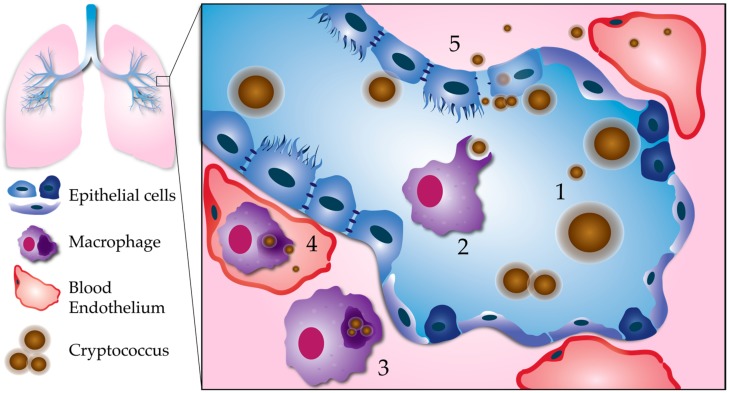
Cryptococcus neoformans is a common environmental saprophyte and human fungal pathogen that primarily causes disease in immunocompromised individuals. Similar to many environmentally acquired human fungal pathogens, C. neoformans initiates infection in the lungs. However, the main driver of mortality is invasive cryptococcosis leading to fungal meningitis. After C. neoformans gains a foothold in the lungs, a critical early step in invasion is transversal of the respiratory epithelium. In this review, we summarize current knowledge relating to pulmonary escape. We focus on fungal factors that allow C. neoformans to disseminate from the lungs via intracellular and extracellular routes.
Overview
The claims and statistics of this paper haven’t been checked yet.
Free: it reads the open-access text and checks the first 5 claims that cite a source we can check. Create a free account to check every claim.
Integrity signals
Registry
Cites
Statistics
Figures
Verification
Claims the paper makes
The claims and statistics of this paper haven’t been checked yet.
Free: it reads the open-access text and checks the first 5 claims that cite a source we can check. Create a free account to check every claim.
Claims other papers make about this one
Each is checked against this paper’s own text: does it say what the citing paper says it does?
In the citing paper
“This enables viable yeast to be transported out of the lungs within migrating phagocytes; a process known as the Trojan horse mechanism of dissemination [12].”
From Mechanisms of fungal dissemination (2021) · cites this paper as [12]
In the citing paper
“In order to utilize phagocytes as vehicles for dissemination, C. neoformans must successfully survive within and exit from these cells following internalization. This requires that C. neoformans defend against acidic, oxidative and nitrosative stresses commonly encountered within macrophages [12].”
From Mechanisms of fungal dissemination (2021) · cites this paper as [12]
In the citing paper
“Infectious propagules in the form of desiccated yeast or spores are inhaled into the respiratory tract on a daily basis [12]. Due to their small size these organisms are able to avoid cough and mucociliary clearance and penetrate deep into alveolar spaces [1].”
From Mechanisms of fungal dissemination (2021) · cites this paper as [12]
In the citing paper
“One such pathway is transcellular crossing, also known as transcytosis. This mechanism involves exploitation of host cell endocytic pathways to facilitate fungal traversal of epithelial barriers and grants C. neoformans access to the lung interstitium, vasculature or lymph system [12].”
From Mechanisms of fungal dissemination (2021) · cites this paper as [12]
In the citing paper
“Disseminated C. neoformans enters the bloodstream and can infect distant organs, but preferentially targets the central nervous system (CNS) [12].”
From Mechanisms of fungal dissemination (2021) · cites this paper as [12]
2 more claims about this paper
Create a free account to see every claim other papers make about this one.
Self-check
Percentages, sums and reported differences re-computed from the paper’s own numbers.
The self-check needs the paper’s full text.
Citations
Cites
Hidden Killers: Human Fungal Infections
Brown, G. D., Denning, D. W., Gow, N. A. R., Levitz, S. M., Netea, M. G., & White, T. C. (2012) · Science Translational Medicine · doi:10.1126/scitranslmed.3004404 · Cited by 4,284 · cited 1×
“, Coccidiodes immitis, Blastomyces dermatitis, and Histoplasma capsulatum, initiate infection via inhalation [2].”
BackgroundA pathology atlas of the human cancer transcriptome
Uhlen, M., Zhang, C., Lee, S., Sjöstedt, E., Fagerberg, L., Bidkhori, G., Benfeitas, R., Arif, M., Liu, Z., Edfors, F., et al. (2017) · Science · doi:10.1126/science.aan2507 · Cited by 3,371
Global burden of disease of HIV-associated cryptococcal meningitis: an updated analysis
Rajasingham, R., Smith, R. M., Park, B. J., Jarvis, J. N., Govender, N. P., Chiller, T. M., Denning, D. W., Loyse, A., & Boulware, D. R. (2017) · The Lancet Infectious Diseases · doi:10.1016/s1473-3099(17)30243-8 · Cited by 1,861 · cited 7×
“In the case of C. neoformans, it is most commonly low CD4+ T cell count due to HIV/AIDS [4].”
BackgroundInfluentialRespiratory epithelial cells orchestrate pulmonary innate immunity
Whitsett, J. A., & Alenghat, T. (2015) · Nature Immunology · doi:10.1038/ni.3045 · Cited by 801 · cited 2×
“The lung epithelium also plays a constitutive role in regulating microbial load through mechanisms such as secretion of antimicrobial defensins and mucociliary clearance [6].”
BackgroundSynthesis and assembly of fungal melanin
Eisenman, H. C., & Casadevall, A. (2012) · Applied Microbiology and Biotechnology · doi:10.1007/s00253-011-3777-2 · Cited by 711 · cited 1×
“neoformans, melanin pigment is exported to the cell wall [105], where it provides protection against ultraviolet radiation and oxidative damage [106,107].”
BackgroundCryptococcus: from environmental saprophyte to global pathogen
May, R. C., Stone, N. R. H., Wiesner, D. L., Bicanic, T., & Nielsen, K. (2016) · Nature Reviews Microbiology · doi:10.1038/nrmicro.2015.6 · Cited by 541
Cryptococcus neoformans and Cryptococcus gattii, the etiologic agents of cryptococcosis
Kwon-Chung, K. J., Fraser, J. A., Doering, T. L., Wang, Z. A., Janbon, G., Idnurm, A., & Bahn, Y.-S. (2014) · Cold Spring Harbor Perspectives in Medicine · doi:10.1101/cshperspect.a019760 · Cited by 531 · cited 1×
“gattii is more likely to infect immunocompetent individuals [10,11].”
BackgroundHigh diversity of fungi in air particulate matter
Fröhlich-Nowoisky, J., Pickersgill, D. A., Després, V. R., & Pöschl, U. (2009) · Proceedings of the National Academy of Sciences · doi:10.1073/pnas.0811003106 · Cited by 506 · cited 1×
“In fact, it is estimated that every breath contains 1–10 fungal spores [1].”
BackgroundChapter 4 The Capsule of the Fungal Pathogen Cryptococcus neoformans
Zaragoza, O., Rodrigues, M. L., De Jesus, M., Frases, S., Dadachova, E., & Casadevall, A. (2009) · Advances in Applied Microbiology · doi:10.1016/s0065-2164(09)01204-0 · Cited by 457
Systematic Genetic Analysis of Virulence in the Human Fungal Pathogen Cryptococcus neoformans
Liu, O. W., Chun, C. D., Chow, E. D., Chen, C., Madhani, H. D., & Noble, S. M. (2008) · Cell · doi:10.1016/j.cell.2008.07.046 · Cited by 443 · cited 6×
“1 cells will associate with a cryptococcal cell in in vitro experiments [33].”
BackgroundInfluentialCryptococcus neoformans Is a Facultative Intracellular Pathogen in Murine Pulmonary Infection
Feldmesser, M., Kress, Y., Novikoff, P., & Casadevall, A. (2000) · Infection and Immunity · doi:10.1128/iai.68.7.4225-4237.2000 · Cited by 423 · cited 3×
“The cell surface capsule is also necessary for cryptococcal cell survival following phagocytosis, as acapsular cells cannot replicate inside macrophages [24].”
BackgroundSerologic Evidence for Cryptococcus neoformans Infection in Early Childhood
Goldman, D. L., Khine, H., Abadi, J., Lindenberg, D. J., Pirofski, L.-A., Niang, R., & Casadevall, A. (2001) · Pediatrics · doi:10.1542/peds.107.5.e66 · Cited by 413 · cited 1×
“neoformans is predicted to be near universal, first occurring in early childhood [14].”
BackgroundEffect of the laccase gene CNLAC1, on virulence of Cryptococcus neoformans.
Salas, S. D., Bennett, J. E., Kwon-Chung, K. J., Perfect, J. R., & Williamson, P. R. (1996) · The Journal of experimental medicine · doi:10.1084/jem.184.2.377 · Cited by 404 · cited 2×
“Multiple studies have suggested that melanin is more important for dissemination and CNS infection than pulmonary infectivity [33,109,110].”
BackgroundLegionella pneumophila inhibits acidification of its phagosome in human monocytes.
Horwitz, M. A., & Maxfield, F. R. (1984) · The Journal of cell biology · doi:10.1083/jcb.99.6.1936 · Cited by 380 · cited 1×
“However, it appears to be more acidic than commonly seen when macrophages are infected with other pathogens that prevent full maturation of the phagolysosome, such as Legionella pneumophila [44].”
BackgroundColor me bad: microbial pigments as virulence factors
Liu, G. Y., & Nizet, V. (2009) · Trends in Microbiology · doi:10.1016/j.tim.2009.06.006 · Cited by 378 · cited 1×
“neoformans, melanin pigment is exported to the cell wall [105], where it provides protection against ultraviolet radiation and oxidative damage [106,107].”
BackgroundJanbon, G., Ormerod, K. L., Paulet, D., Byrnes, E. J., Yadav, V., Chatterjee, G., Mullapudi, N., Hon, C.-C., Billmyre, R. B., Brunel, F., et al. (2014) · PLoS Genetics · doi:10.1371/journal.pgen.1004261 · Cited by 371
The Cryptococcus neoformans Capsule: a Sword and a Shield
O'Meara, T. R., & Alspaugh, J. A. (2012) · Clinical Microbiology Reviews · doi:10.1128/cmr.00001-12 · Cited by 364 · cited 1×
“neoformans produces a polysaccharide surface capsule that can double the 5–10 μm diameter of a typical haploid yeast cell grown in vitro [32].”
BackgroundEvidence of a Role for Monocytes in Dissemination and Brain Invasion by Cryptococcus neoformans
Charlier, C., Nielsen, K., Daou, S., Brigitte, M., Chretien, F., & Dromer, F. (2009) · Infection and Immunity · doi:10.1128/iai.01065-08 · Cited by 362 · cited 2×
“The first is an intracellular route within macrophages or other phagocytes migrating out from the lungs, known as the “Trojan horse” mechanism [21,22].”
BackgroundCryptococcal cell morphology affects host cell interactions and pathogenicity
Okagaki, L. H., Strain, A. K., Nielsen, J. N., Charlier, C., Baltes, N. J., Chrétien, F., Heitman, J., Dromer, F., & Nielsen, K. (2010) · PLoS Pathogens · doi:10.1371/journal.ppat.1000953 · Cited by 345 · cited 3×
“Titan cell formation is regulated by multiple environmental signals, including stimulation by mating pheromone [85] and host phospholipids [87], and signal transduction through G-coupled protein receptors [88].”
BackgroundByrnes, E. J., Li, W., Lewit, Y., Ma, H., Voelz, K., Ren, P., Carter, D. A., Chaturvedi, V., Bildfell, R. J., May, R. C., et al. (2010) · PLoS Pathogens · doi:10.1371/journal.ppat.1000850 · Cited by 330 · cited 1×
“gattii is more likely to infect immunocompetent individuals [10,11].”
BackgroundPhagosome dynamics during phagocytosis by neutrophils
Nordenfelt, P., & Tapper, H. (2011) · Journal of Leukocyte Biology · doi:10.1189/jlb.0810457 · Cited by 328 · cited 1×
“However, the reactive oxygen burst produced by macrophages is weaker than the neutrophil burst [55].”
BackgroundA neglected epidemic: Fungal infections in HIV/AIDS
Armstrong-James, D., Meintjes, G., & Brown, G. D. (2014) · Trends in Microbiology · doi:10.1016/j.tim.2014.01.001 · Cited by 325 · cited 2×
“Treatment is especially difficult because the central nervous system (CNS) stage of disease is both the presenting illness and the driver of mortality [9].”
BackgroundEpidemiological Evidence for Dormant Cryptococcus neoformans Infection
Garcia-Hermoso, D., Janbon, G., & Dromer, F. (1999) · Journal of Clinical Microbiology · doi:10.1128/jcm.37.10.3204-3209.1999 · Cited by 323 · cited 1×
“neoformans may be completely cleared by the immune system, or persist asymptomatically for indefinite periods of time within granulomas [15,16].”
BackgroundFungal cell gigantism during mammalian infection
Zaragoza, O., García-Rodas, R., Nosanchuk, J. D., Cuenca-Estrella, M., Rodríguez-Tudela, J. L., & Casadevall, A. (2010) · PLoS Pathogens · doi:10.1371/journal.ppat.1000945 · Cited by 311 · cited 2×
“Notably, Titan cells bud smaller haploid and aneuploid daughter cells, which can inherit some stress resistance from their mothers, demonstrating how Titan cells could support population level adaptation to host stresses [84,92].”
BackgroundTucker, S. C., & Casadevall, A. (2002) · Proceedings of the National Academy of Sciences · doi:10.1073/pnas.052702799 · Cited by 306 · cited 2×
“neoformans first permeabilizes the phagosome by an unknown mechanism [51,52].”
BackgroundMüller, U., Stenzel, W., Köhler, G., Werner, C., Polte, T., Hansen, G., Schütze, N., Straubinger, R. K., Blessing, M., McKenzie, A. N. J., et al. (2007) · The Journal of Immunology · doi:10.4049/jimmunol.179.8.5367 · Cited by 271 · cited 1×
“neoformans cells are less efficiently killed by M2 than M1 polarized macrophages [25,26], controlling macrophage activation state could be a powerful strategy to promote fungal survival.”
BackgroundZaragoza, O., Chrisman, C. J., Castelli, M. V., Frases, S., Cuenca-Estrella, M., Rodríguez-Tudela, J. L., & Casadevall, A. (2008) · Cellular Microbiology · doi:10.1111/j.1462-5822.2008.01186.x · Cited by 250 · cited 1×
“Some of this could be due to reactive oxygen and nitrogen species released by the host, as capsule protects against these insults [54].”
BackgroundGlucosylceramide synthase is an essential regulator of pathogenicity of Cryptococcus neoformans
Rittershaus, P. C. (2006) · Journal of Clinical Investigation · doi:10.1172/jci27890 · Cited by 239 · cited 1×
“The gcs1∆ mutant cannot grow at physiological pH, but can replicate within the acidic phagolysosome of macrophages, and is contained within lung granulomas upon intranasal inoculation of mice [121,124].”
Trojan Horse Transit Contributes to Blood-Brain Barrier Crossing of a Eukaryotic Pathogen
Santiago-Tirado, F. H., Onken, M. D., Cooper, J. A., Klein, R. S., & Doering, T. L. (2017) · mBio · doi:10.1128/mbio.02183-16 · Cited by 238 · cited 1×
“neoformans dissemination from the lungs and even transversal of the blood–brain barrier [22,27].”
BackgroundCryptococcus neoformans Resides in an Acidic Phagolysosome of Human Macrophages
Levitz, S. M., Nong, S.-H., Seetoo, K. F., Harrison, T. S., Speizer, R. A., & Simons, E. R. (1999) · Infection and Immunity · doi:10.1128/iai.67.2.885-890.1999 · Cited by 231 · cited 1×
“neoformans’s access to iron, as iron is bound to transferrin at neutral pH and cannot be utilized by invading microbes [42,45].”
BackgroundDynamic changes in the morphology of Cryptococcus neoformans during murine pulmonary infection
Feldmesser, M., Kress, Y., & Casadevall, A. (2001) · Microbiology · doi:10.1099/00221287-147-8-2355 · Cited by 220
Doering, T. L. (2009) · Annual Review of Microbiology · doi:10.1146/annurev.micro.62.081307.162753 · Cited by 220
Chang, W.-C., Tzao, C., Hsu, H.-H., Lee, S.-C., Huang, K.-L., Tung, H.-J., & Chen, C.-Y. (2006) · Chest · doi:10.1378/chest.129.2.333 · Cited by 218 · cited 1×
“Although cryptococcal pneumonia does account for a potentially underdiagnosed disease burden [19,20], the most life-threatening presentation is cryptococcal meningitis [4].”
BackgroundCharlier, C., Chrétien, F., Baudrimont, M., Mordelet, E., Lortholary, O., & Dromer, F. (2005) · The American Journal of Pathology · doi:10.1016/s0002-9440(10)62265-1 · Cited by 215 · cited 1×
“Median cell and capsule sizes vary by infected tissue [56,96,97].”
BackgroundWiesner, D. L., Specht, C. A., Lee, C. K., Smith, K. D., Mukaremera, L., Lee, S. T., Lee, C. G., Elias, J. A., Nielsen, J. N., Boulware, D. R., et al. (2015) · PLOS Pathogens · doi:10.1371/journal.ppat.1004701 · Cited by 214 · cited 1×
“The precise casual relationships behind these associations will require additional studies, although greater Th2 activation could be related to increased chitin content in Titan cell walls [95].”
BackgroundInteraction of Cryptococcus neoformans Rim101 and Protein Kinase A Regulates Capsule
O'Meara, T. R., Norton, D., Price, M. S., Hay, C., Clements, M. F., Nichols, C. B., & Alspaugh, J. A. (2010) · PLoS Pathogens · doi:10.1371/journal.ppat.1000776 · Cited by 198 · cited 2×
“In contrast, the rim101∆ mutant displays a severe capsule attachment defect [117], but also a thickened cell wall that induces hyper-inflammatory pathology in the lungs [90,118].”
BackgroundLong-term outcome of AIDS-associated cryptococcosis in the era of combination antiretroviral therapy
Lortholary, O., Poizat, G., Zeller, V., Neuville, S., Boibieux, A., Alvarez, M., Dellamonica, P., Botterel, F., Dromer, F., & Chêne, G. (2006) · AIDS · doi:10.1097/01.aids.0000252060.80704.68 · Cited by 198
Chang, Y. C., & Kwon-Chung, K. J. (1998) · Infection and Immunity · doi:10.1128/iai.66.5.2230-2236.1998 · Cited by 195 · cited 1×
“The production of surface capsule is critical for all stages of virulence, as acapsular variants are quickly cleared after murine inoculation [79,80] and are rarely seen in human patients [81].”
BackgroundPukkila-Worley, R., Gerrald, Q. D., Kraus, P. R., Boily, M.-J., Davis, M. J., Giles, S. S., Cox, G. M., Heitman, J., & Alspaugh, J. A. (2005) · Eukaryotic Cell · doi:10.1128/ec.4.1.190-201.2005 · Cited by 181 · cited 1×
“Transcription of lac2 is significantly lower than lac1, and as such the greatest defects in melanization are seen when either lac1 or both lac1 and lac2 are disrupted [108].”
BackgroundTitan Cells Confer Protection from Phagocytosis in Cryptococcus neoformans Infections
Okagaki, L. H., & Nielsen, K. (2012) · Eukaryotic Cell · doi:10.1128/ec.00121-12 · Cited by 173 · cited 2×
“However, the presence of Titan cells can also protect smaller cells from phagocytosis, so there are likely other mechanisms at work [93].”
BackgroundBojarczuk, A., Miller, K. A., Hotham, R., Lewis, A., Ogryzko, N. V., Kamuyango, A. A., Frost, H., Gibson, R. H., Stillman, E., May, R. C., et al. (2016) · Scientific Reports · doi:10.1038/srep21489 · Cited by 170 · cited 3×
“Powerful microscopy work in the zebrafish model of cryptococcosis actually found that, following phagocytosis by macrophages, the size of the cell surface capsule decreases [29].”
BackgroundInfluentialSantangelo, R., Zoellner, H., Sorrell, T., Wilson, C., Donald, C., Djordjevic, J., Shounan, Y., & Wright, L. (2004) · Infection and Immunity · doi:10.1128/iai.72.4.2229-2239.2004 · Cited by 169 · cited 3×
“Plb1 promotes survival in macrophages, and is required for efficient dissemination from the lungs [49,50].”
BackgroundPolyploid titan cells produce haploid and aneuploid progeny to promote stress adaptation
Gerstein, A. C., Fu, M. S., Mukaremera, L., Li, Z., Ormerod, K. L., Fraser, J. A., Berman, J., & Nielsen, K. (2015) · mBio · doi:10.1128/mbio.01340-15 · Cited by 167 · cited 3×
“Titan cells exhibit thickened cell walls, and a denser capsule structure [82–86], which may contribute to their increased resistance to oxidative and nitrosative stresses [85,92], therapeutic antifungals [92], and phagocytosis [92,93].”
BackgroundControl of local immunity by airway epithelial cells
Weitnauer, M., Mijošek, V., & Dalpke, A. H. (2015) · Mucosal Immunology · doi:10.1038/mi.2015.126 · Cited by 160 · cited 3×
“Respiratory epithelial cells are also capable of recognizing potential pathogens and initiating innate immune responses through the early production of cytokines and chemokines [7].”
BackgroundIdentification of App1 as a regulator of phagocytosis and virulence of Cryptococcus neoformans
Luberto, C., Martinez-Mariño, B., Taraskiewicz, D., Bolaños, B., Chitano, P., Toffaletti, D. L., Cox, G. M., Perfect, J. R., Hannun, Y. A., Balish, E., et al. (2003) · Journal of Clinical Investigation · doi:10.1172/jci18309 · Cited by 156 · cited 2×
“App1, a secreted protein involved in phagocytosis evasion by opsonized cells [38] binds to complement receptors CR2 and CR3, which can also serve as opsonins [39].”
BackgroundGoldman, D. L., Lee, S. C., Mednick, A. J., Montella, L., & Casadevall, A. (2000) · Infection and Immunity · doi:10.1128/iai.68.2.832-838.2000 · Cited by 156 · cited 3×
“neoformans maintain a persistent fungal burden for up to six months [15].”
BackgroundGrowth of Cryptococcus neoformans Within Human Macrophages In Vitro
Diamond, R. D., & Bennett, J. E. (1973) · Infection and Immunity · doi:10.1128/iai.7.2.231-236.1973 · Cited by 152 · cited 1×
“neoformans replicates more rapidly within tissue culture macrophages than in tissue culture medium itself [41], and is capable of lysing macrophages from within [24].”
BackgroundTitan Cell Production Enhances the Virulence of Cryptococcus neoformans
Crabtree, J. N., Okagaki, L. H., Wiesner, D. L., Strain, A. K., Nielsen, J. N., & Nielsen, K. (2012) · Infection and Immunity · doi:10.1128/iai.00507-12 · Cited by 147 · cited 3×
“The G-protein coupled receptors Gpr4 and Gpr5 are especially important, as deletion of both gpr4 and gpr5, (gpr4∆/gpr5∆) results in a severe deficiency in Titan cell formation [88,89].”
BackgroundJohnston, S. A., & May, R. C. (2013) · Cellular Microbiology · doi:10.1111/cmi.12067 · Cited by 145 · cited 1×
“These processes are all poorly understood, but are reviewed in [64,65].”
BackgroundOsterholzer, J. J., Surana, R., Milam, J. E., Montano, G. T., Chen, G.-H., Sonstein, J., Curtis, J. L., Huffnagle, G. B., Toews, G. B., & Olszewski, M. A. (2009) · American Journal Of Pathology · doi:10.2353/ajpath.2009.080673 · Cited by 143 · cited 2×
“Evidence suggests that a number of fungal factors, including urease [58,59] and the Hsp70 family protein Ssa1 [61] promote M2 polarization in macrophages.”
BackgroundJohnston, S. A., & May, R. C. (2010) · PLoS Pathogens · doi:10.1371/journal.ppat.1001041 · Cited by 141
Arora, S., Olszewski, M. A., Tsang, T. M., McDonald, R. A., Toews, G. B., & Huffnagle, G. B. (2011) · Infection and Immunity · doi:10.1128/iai.01270-10 · Cited by 140 · cited 1×
“neoformans cells are less efficiently killed by M2 than M1 polarized macrophages [25,26], controlling macrophage activation state could be a powerful strategy to promote fungal survival.”
BackgroundHardison, S. E., Ravi, S., Wozniak, K. L., Young, M. L., Olszewski, M. A., & Wormley, F. L. (2010) · American Journal Of Pathology · doi:10.2353/ajpath.2010.090634 · Cited by 137
Efficient phagocytosis and laccase activity affect the outcome of HIV-associated cryptococcosis
Sabiiti, W., Robertson, E., Beale, M. A., Johnston, S. A., Brouwer, A. E., Loyse, A., Jarvis, J. N., Gilbert, A. S., Fisher, M. C., Harrison, T. S., et al. (2014) · Journal of Clinical Investigation · doi:10.1172/jci72950 · Cited by 137
Nicola, A. M., Robertson, E. J., Albuquerque, P., Derengowski, L. D. S., & Casadevall, A. (2011) · mBio · doi:10.1128/mbio.00167-11 · Cited by 135 · cited 1×
“neoformans can escape from macrophages through a nonlytic process called vomocytosis [62].”
BackgroundChrisman, C. J., Albuquerque, P., Guimaraes, A. J., Nieves, E., & Casadevall, A. (2011) · PLoS Pathogens · doi:10.1371/journal.ppat.1002047 · Cited by 128 · cited 1×
“Titan cell formation is regulated by multiple environmental signals, including stimulation by mating pheromone [85] and host phospholipids [87], and signal transduction through G-coupled protein receptors [88].”
BackgroundImmunity to Cryptococcus neoformans and C. gattii during cryptococcosis
Gibson, J. F., & Johnston, S. A. (2014) · Fungal Genetics and Biology · doi:10.1016/j.fgb.2014.11.006 · Cited by 128 · cited 4×
“This includes production of cytokines such as interleukin 12 (IL-12), interferon gamma (IFNγ), tumor necrosis factor alpha (TNFα), and classically activated, or M1, skewing monocytes/macrophages [17].”
BackgroundInfluentialO'Meara, T. R., Holmer, S. M., Selvig, K., Dietrich, F., & Alspaugh, J. A. (2013) · mBio · doi:10.1128/mbio.00522-12 · Cited by 124 · cited 3×
“In contrast, the rim101∆ mutant displays a severe capsule attachment defect [117], but also a thickened cell wall that induces hyper-inflammatory pathology in the lungs [90,118].”
BackgroundRivera, J., Feldmesser, M., Cammer, M., & Casadevall, A. (1998) · Infection and Immunity · doi:10.1128/iai.66.10.5027-5030.1998 · Cited by 123 · cited 1×
“Titan cells are rarely observed outside of the lungs, and cells found in the brain typically display smaller median cell diameter and capsule thickness than those in the lungs, suggesting that cell size could influence proclivity for dissemination [56,96,98].”
BackgroundChen, S. C., Wright, L. C., Santangelo, R. T., Muller, M., Moran, V. R., Kuchel, P. W., & Sorrell, T. C. (1997) · Infection and Immunity · doi:10.1128/iai.65.2.405-411.1997 · Cited by 121
Okagaki, L. H., Wang, Y., Ballou, E. R., O'Meara, T. R., Bahn, Y.-S., Alspaugh, J. A., Xue, C., & Nielsen, K. (2011) · Eukaryotic Cell · doi:10.1128/ec.05179-11 · Cited by 117 · cited 3×
“The G-protein coupled receptors Gpr4 and Gpr5 are especially important, as deletion of both gpr4 and gpr5, (gpr4∆/gpr5∆) results in a severe deficiency in Titan cell formation [88,89].”
BackgroundNoverr, M. C., Williamson, P. R., Fajardo, R. S., & Huffnagle, G. B. (2004) · Infection and Immunity · doi:10.1128/iai.72.3.1693-1699.2004 · Cited by 112 · cited 3×
“Multiple studies have suggested that melanin is more important for dissemination and CNS infection than pulmonary infectivity [33,109,110].”
BackgroundShea, J. M., Kechichian, T. B., Luberto, C., & Del Poeta, M. (2006) · Infection and Immunity · doi:10.1128/iai.00768-06 · Cited by 110 · cited 4×
“While GlcCer appears to be overall more important for extracellular growth in the host at alkaline pH, inositol phosphosphingolipid biology seems to be critical for regulating intracellular growth at acidic pH [122,127].”
BackgroundInfluentialChen, W., Wright, L. C., GOLDING, J. C., & Sorrell, T. C. (2000) · Biochemical Journal · doi:10.1042/0264-6021:3470431 · Cited by 106
Beattie, S. R., Mark, K. M. K., Thammahong, A., Ries, L. N. A., Dhingra, S., Caffrey-Carr, A. K., Cheng, C., Black, C. C., Bowyer, P., Bromley, M. J., et al. (2017) · PLOS Pathogens · doi:10.1371/journal.ppat.1006340 · Cited by 103 · cited 1×
“This framework was outlined for infections caused by the filamentous fungus Aspergillus fumigatus [128], and is broadly applicable to additional fungal infections.”
BackgroundChayakulkeeree, M., Johnston, S. A., Oei, J. B., Lev, S., Williamson, P. R., Wilson, C. F., Zuo, X., Leal, A. L., Vainstein, M. H., Meyer, W., et al. (2011) · Molecular Microbiology · doi:10.1111/j.1365-2958.2011.07632.x · Cited by 100
Smith, L. M., Dixon, E. F., & May, R. C. (2015) · Cellular Microbiology · doi:10.1111/cmi.12394 · Cited by 99 · cited 2×
“neoformans, in which Rab5 and Rab11 associate with the phagosome for longer than 120 min [43].”
BackgroundChun, C. D., Brown, J. C. S., & Madhani, H. D. (2011) · Cell Host & Microbe · doi:10.1016/j.chom.2011.02.003 · Cited by 96 · cited 2×
“The molecular mechanisms underlying phagocytosis evasion by unopsonized cells are poorly understood, but likely involve multilayer transcriptional networks controlled by the master regulator Gat201 [33,37].”
BackgroundSelf-citationElucidating the Immunological Function of the Cryptococcus Neoformans Capsule
Vecchiarelli, A., Pericolini, E., Gabrielli, E., Kenno, S., Perito, S., Cenci, E., & Monari, C. (2013) · Future Microbiology · doi:10.2217/fmb.13.84 · Cited by 96 · cited 1×
“Since GXM inhibits a variety of phagocyte functions [36], accumulation of exo-GXM could serve as a method for suppressing macrophage activity during cryptococcal disease.”
MethodCryptococcal therapies and drug targets: the old, the new and the promising
Coelho, C., & Casadevall, A. (2016) · Cellular Microbiology · doi:10.1111/cmi.12590 · Cited by 95 · cited 1×
“neoformans, melanin pigment is exported to the cell wall [105], where it provides protection against ultraviolet radiation and oxidative damage [106,107].”
BackgroundCatch me if you can: phagocytosis and killing avoidance by Cryptococcus neoformans
García-Rodas, R., & Zaragoza, O. (2012) · FEMS Immunology & Medical Microbiology · doi:10.1111/j.1574-695x.2011.00871.x · Cited by 94 · cited 1×
“These processes are all poorly understood, but are reviewed in [64,65].”
BackgroundCryptococcus neoformans of Unusual Morphology
Cruickshank, J. G., Cavill, R. H., & Jelbert, M. (1973) · Applied Microbiology · doi:10.1128/aem.25.2.309-312.1973 · Cited by 88
Shirley, R. M., & Baddley, J. W. (2009) · Current Opinion in Pulmonary Medicine · doi:10.1097/mcp.0b013e328329268d · Cited by 87 · cited 1×
“Although cryptococcal pneumonia does account for a potentially underdiagnosed disease burden [19,20], the most life-threatening presentation is cryptococcal meningitis [4].”
BackgroundPirofski, L., & Casadevall, A. (2017) · mBio · doi:10.1128/mbio.02063-17 · Cited by 86 · cited 1×
“neoformans, significantly weak or strong immune responses can result in disease [129].”
BackgroundGanendren, R., Carter, E., Sorrell, T., Widmer, F., & Wright, L. (2006) · Microbes and Infection · doi:10.1016/j.micinf.2005.10.018 · Cited by 85 · cited 3×
“neoformans plays an active role in entry [67,70].”
BackgroundAnalysis of sphingolipids, sterols, and phospholipids in human pathogenic Cryptococcus strains
Singh, A., MacKenzie, A., Girnun, G., & Del Poeta, M. (2017) · Journal of Lipid Research · doi:10.1194/jlr.m078600 · Cited by 85 · cited 1×
“Plasma membrane sphingolipids are involved in various cellular functions including signaling, lipid raft architecture, and general membrane stability [119].”
BackgroundOst, K. S., O’Meara, T. R., Huda, N., Esher, S. K., & Alspaugh, J. A. (2015) · PLOS Genetics · doi:10.1371/journal.pgen.1005159 · Cited by 84 · cited 2×
“The protein kinase A pathway also plays a role in regulating Titan cell formation through the pleiotropic, pH responsive transcription factor Rim101, since rim101∆ cells are severely deficient for Titan cell formation [90,91].”
BackgroundCorrection: Fungal Cell Gigantism during Mammalian Infection
Zaragoza, O., García-Rodas, R., Nosanchuk, J. D., Cuenca-Estrella, M., Rodríguez-Tudela, J. L., & Casadevall, A. (2010) · PLoS Pathogens · doi:10.1371/annotation/0675044c-d80f-456f-bb63-4f85fb1d0c33 · Cited by 83
Singh, A., Wang, H., Silva, L. C., Na, C., Prieto, M., Futerman, A. H., Luberto, C., & Del Poeta, M. (2012) · Cellular Microbiology · doi:10.1111/j.1462-5822.2011.01735.x · Cited by 81 · cited 8×
“Glucosylceramide synthase, encoded by the gcs1 gene, is required for synthesis of GlcCer.”
BackgroundInfluentialCryptococcus neoformans–Induced Macrophage Lysosome Damage Crucially Contributes to Fungal Virulence
Davis, M. J., Eastman, A. J., Qiu, Y., Gregorka, B., Kozel, T. R., Osterholzer, J. J., Curtis, J. L., Swanson, J. A., & Olszewski, M. A. (2015) · The Journal of Immunology · doi:10.4049/jimmunol.1402376 · Cited by 79
An encapsulation of iron homeostasis and virulence in Cryptococcus neoformans
Kronstad, J. W., Hu, G., & Jung, W. H. (2013) · Trends in Microbiology · doi:10.1016/j.tim.2013.05.007 · Cited by 78 · cited 1×
“neoformans’s access to iron, as iron is bound to transferrin at neutral pH and cannot be utilized by invading microbes [42,45].”
BackgroundChitin scar breaks in aged Saccharomyces cerevisiae
Powell, C. D., Quain, D. E., & Smart, K. A. (2003) · Microbiology · doi:10.1099/mic.0.25940-0 · Cited by 75
Capsule Growth in Cryptococcus neoformans Is Coordinated with Cell Cycle Progression
García-Rodas, R., Cordero, R. J. B., Trevijano-Contador, N., Janbon, G., Moyrand, F., Casadevall, A., & Zaragoza, O. (2014) · mBio · doi:10.1128/mbio.00945-14 · Cited by 73 · cited 1×
“Additionally, replicative aging results in a proportional increase in both cell size and capsule [101,102], consistent with cell cycle regulation of capsule growth [103].”
BackgroundCorrection: Cryptococcal Cell Morphology Affects Host Cell Interactions and Pathogenicity
Okagaki, L. H., Strain, A. K., Nielsen, J. N., Charlier, C., Baltes, N. J., Chrétien, F., Heitman, J., Dromer, F., & Nielsen, K. (2010) · PLoS Pathogens · doi:10.1371/annotation/1b59fd9e-9ac9-4ea8-a083-14c413c80b03 · Cited by 71
The blood-brain barrier internalises Cryptococcus neoformans via the EphA2-tyrosine kinase receptor
Aaron, P. A., Jamklang, M., Uhrig, J. P., & Gelli, A. (2018) · Cellular Microbiology · doi:10.1111/cmi.12811 · Cited by 70 · cited 1×
“neoformans cells’ ability to cross the blood–brain barrier [74] and the EPHA2 gene is expressed in lung tissue [75].”
BackgroundGuillot, L., Carroll, S. F., Homer, R., & Qureshi, S. T. (2008) · Infection and Immunity · doi:10.1128/iai.00341-08 · Cited by 68 · cited 1×
“interactions with epithelial cells in vitro results in the secretion of the chemokines IL-8 and CXCL1, which recruit monocyte and neutrophils, and could provide an early signal for host-defense [7,68,76,77].”
BackgroundLev, S., Li, C., Desmarini, D., Saiardi, A., Fewings, N., Schibeci, S. D., Sharma, R. N., Sorrell, T. C., & Djordjevic, J. T. (2015) · mBio · doi:10.1128/mbio.00531-15 · Cited by 67
Barbosa, F. M., Fonseca, F. L., Holandino, C., Alviano, C. S., Nimrichter, L., & Rodrigues, M. L. (2006) · Microbes and Infection · doi:10.1016/j.micinf.2005.07.027 · Cited by 64 · cited 4×
“On the fungal side, adherence is likely mediated by capsule GXM, which binds to CD14 on epithelial cells [67,68].”
BackgroundInfluentialA Call to Arms: Quest for a Cryptococcal Vaccine
Caballero Van Dyke, M. C., & Wormley, F. L. (2018) · Trends in Microbiology · doi:10.1016/j.tim.2017.10.002 · Cited by 61 · cited 1×
“neoformans and the feasibility of vaccine development [17,18].”
BackgroundApp1: An Antiphagocytic Protein That Binds to Complement Receptors 3 and 2
Stano, P., Williams, V., Villani, M., Cymbalyuk, E. S., Qureshi, A., Huang, Y., Morace, G., Luberto, C., Tomlinson, S., & Del Poeta, M. (2009) · The Journal of Immunology · doi:10.4049/jimmunol.182.1.84 · Cited by 60 · cited 1×
“App1, a secreted protein involved in phagocytosis evasion by opsonized cells [38] binds to complement receptors CR2 and CR3, which can also serve as opsonins [39].”
BackgroundEastman, A. J., He, X., Qiu, Y., Davis, M. J., Vedula, P., Lyons, D. M., Park, Y., Hardison, S. E., Malachowski, A. N., Osterholzer, J. J., et al. (2015) · The Journal of Immunology · doi:10.4049/jimmunol.1402719 · Cited by 60 · cited 1×
“Evidence suggests that a number of fungal factors, including urease [58,59] and the Hsp70 family protein Ssa1 [61] promote M2 polarization in macrophages.”
BackgroundDenham, S. T., Verma, S., Reynolds, R. C., Worne, C. L., Daugherty, J. M., Lane, T. E., & Brown, J. C. S. (2018) · Infection and Immunity · doi:10.1128/iai.00662-17 · Cited by 59 · cited 6×
“Titan cells are rarely observed outside of the lungs, and cells found in the brain typically display smaller median cell diameter and capsule thickness than those in the lungs, suggesting that cell size could influence proclivity for dissemination [56,96,98].”
BackgroundInfluentialSelf-citationMurdock, B. J., Teitz-Tennenbaum, S., Chen, G.-H., Dils, A. J., Malachowski, A. N., Curtis, J. L., Olszewski, M. A., & Osterholzer, J. J. (2014) · The Journal of Immunology · doi:10.4049/jimmunol.1400650 · Cited by 57 · cited 2×
“Evidence suggests that a number of fungal factors, including urease [58,59] and the Hsp70 family protein Ssa1 [61] promote M2 polarization in macrophages.”
BackgroundVomocytosis of live pathogens from macrophages is regulated by the atypical MAP kinase ERK5
Gilbert, A. S., Seoane, P. I., Sephton-Clark, P., Bojarczuk, A., Hotham, R., Giurisato, E., Sarhan, A. R., Hillen, A., Velde, G. V., Gray, N. S., et al. (2017) · Science Advances · doi:10.1126/sciadv.1700898 · Cited by 54 · cited 2×
“Vomocytosis is also regulated by the mitogen-activated protein kinase (MAP kinase), extracellular-signal-regulated kinase 5 (ERK5), and pharmacological inhibition of ERK5 increases vomocytosis [63].”
BackgroundEvans, R. J., Li, Z., Hughes, W. S., Djordjevic, J. T., Nielsen, K., & May, R. C. (2015) · Infection and Immunity · doi:10.1128/iai.03104-14 · Cited by 53 · cited 4×
“Plb1 promotes survival in macrophages, and is required for efficient dissemination from the lungs [49,50].”
BackgroundInfluentialMcQuiston, T., Luberto, C., & Del Poeta, M. (2011) · Microbiology · doi:10.1099/mic.0.045989-0 · Cited by 49 · cited 1×
“neoformans by macrophages [120,121], intracellular proliferation [122], and overall virulence [123].”
BackgroundOst, K. S., Esher, S. K., Leopold Wager, C. M., Walker, L., Wagener, J., Munro, C., Wormley, F. L., & Alspaugh, J. A. (2017) · mBio · doi:10.1128/mbio.02290-16 · Cited by 49 · cited 1×
“In contrast, the rim101∆ mutant displays a severe capsule attachment defect [117], but also a thickened cell wall that induces hyper-inflammatory pathology in the lungs [90,118].”
BackgroundGarcía-Barbazán, I., Trevijano-Contador, N., Rueda, C., de Andrés, B., Pérez-Tavárez, R., Herrero-Fernández, I., Gaspar, M. L., & Zaragoza, O. (2016) · Cellular Microbiology · doi:10.1111/cmi.12488 · Cited by 48 · cited 1×
“neoformans with a strong Th2 profile, have more Titan cells in their lungs than CD1 mice, which trend towards Th1 immune responses [94].”
BackgroundChang, Y. C., Cherniak, R., Kozel, T. R., Granger, D. L., Morris, L. C., Weinhold, L. C., & Kwon-Chung, K. J. (1997) · Infection and Immunity · doi:10.1128/iai.65.5.1584-1592.1997 · Cited by 48 · cited 1×
“The production of surface capsule is critical for all stages of virulence, as acapsular variants are quickly cleared after murine inoculation [79,80] and are rarely seen in human patients [81].”
BackgroundLev, S., Kaufman-Francis, K., Desmarini, D., Juillard, P. G., Li, C., Stifter, S. A., Feng, C. G., Sorrell, T. C., Grau, G. E. R., Bahn, Y.-S., et al. (2017) · mSphere · doi:10.1128/msphere.00381-16 · Cited by 48 · cited 6×
“Thus, Rim101 and Pho4 may respond to alkaline pH independently, with distinct effects on virulence [90,115].”
BackgroundInfluentialJain, N., Cook, E., Xess, I., Hasan, F., Fries, D., & Fries, B. C. (2009) · Eukaryotic Cell · doi:10.1128/ec.00017-09 · Cited by 47 · cited 2×
“The increase in size also increases resistance to phagocytosis by macrophages [101,102].”
BackgroundNa Pombejra, S., Salemi, M., Phinney, B. S., & Gelli, A. (2017) · Frontiers in Cellular and Infection Microbiology · doi:10.3389/fcimb.2017.00296 · Cited by 47
Bolaños, B., & Mitchell, T. G. (1989) · Journal of Leukocyte Biology · doi:10.1002/jlb.46.6.521 · Cited by 46 · cited 3×
“Unopsonized cells are rarely phagocytosed [28]: ~1% of RAW264.”
BackgroundInfluentialOld Cryptococcus neoformans Cells Contribute to Virulence in Chronic Cryptococcosis
Bouklas, T., Pechuan, X., Goldman, D. L., Edelman, B., Bergman, A., & Fries, B. C. (2013) · mBio · doi:10.1128/mbio.00455-13 · Cited by 46 · cited 2×
“The increase in size also increases resistance to phagocytosis by macrophages [101,102].”
BackgroundRaj, S., Nazemidashtarjandi, S., Kim, J., Joffe, L. S., Zhang, X., Singh, A., Mor, V., Desmarini, D., Djordjevic, J. T., Raleigh, D. P., et al. (2017) · Biochimica et Biophysica Acta (BBA) - Biomembranes · doi:10.1016/j.bbamem.2017.08.017 · Cited by 46 · cited 10×
“Glucosylceramide synthase, encoded by the gcs1 gene, is required for synthesis of GlcCer.”
BackgroundInfluentialHeyen, L., Müller, U., Siegemund, S., Schulze, B., Protschka, M., Alber, G., & Piehler, D. (2016) · Pathogens and Disease · doi:10.1093/femspd/ftw086 · Cited by 45 · cited 1×
“neoformans can induce potent IL-33 production from the lung epithelia, promoting non-protective Th2 responses [78].”
BackgroundLung epithelium: barrier immunity to inhaled fungi and driver of fungal-associated allergic asthma
Wiesner, D. L., & Klein, B. S. (2017) · Current Opinion in Microbiology · doi:10.1016/j.mib.2017.10.007 · Cited by 45 · cited 2×
“Thus, it is paramount for the host to maintain proper barrier function and immunosurveillance in order to prevent the invasion of potentially harmful microbes [5].”
BackgroundGuillot, L., Carroll, S. F., Badawy, M., & Qureshi, S. T. (2008) · Respiratory Research · doi:10.1186/1465-9921-9-9 · Cited by 44 · cited 1×
“interactions with epithelial cells in vitro results in the secretion of the chemokines IL-8 and CXCL1, which recruit monocyte and neutrophils, and could provide an early signal for host-defense [7,68,76,77].”
BackgroundMannoprotein MP84 mediates the adhesion of Cryptococcus neoformans to epithelial lung cells
Teixeira, P. A. C., Penha, L. L., Mendonça-Previato, L., & Previato, J. O. (2014) · Frontiers in Cellular and Infection Microbiology · doi:10.3389/fcimb.2014.00106 · Cited by 44 · cited 1×
“neoformans, suggesting that GXM and MP84 engage epithelial cells via separate mechanisms [69].”
BackgroundHow Cryptococcus Interacts with the Blood–Brain Barrier
Tseng, H.-K., Huang, T.-Y., Wu, A. Y.-J., Chen, H.-H., Liu, C.-P., & Jong, A. (2015) · Future Microbiology · doi:10.2217/fmb.15.83 · Cited by 44 · cited 3×
“neoformans cells cross the blood–brain barrier [21].”
BackgroundStukes, S., Coelho, C., Rivera, J., Jedlicka, A. E., Hajjar, K. A., & Casadevall, A. (2016) · The Journal of Immunology · doi:10.4049/jimmunol.1501855 · Cited by 44
Wiesner, D. L., Smith, K. D., Kashem, S. W., Bohjanen, P. R., & Nielsen, K. (2017) · The Journal of Immunology · doi:10.4049/jimmunol.1600821 · Cited by 44 · cited 1×
“Despite reduced lung eosinophil recruitment, Th2 lymphocyte deficient STAT6−/− mice reach endpoints more quickly than wild-type C57BL6/J mice, likely due to over compensatory neutrophil recruitment and excessive pulmonary inflammation [133].”
BackgroundThe cause and effect of Cryptococcus interactions with the host
Ballou, E. R., & Johnston, S. A. (2017) · Current Opinion in Microbiology · doi:10.1016/j.mib.2017.10.012 · Cited by 44
Li, C., Lev, S., Saiardi, A., Desmarini, D., Sorrell, T. C., & Djordjevic, J. T. (2016) · Scientific Reports · doi:10.1038/srep23927 · Cited by 43
Identification of genes involved in the phosphate metabolism in Cryptococcus neoformans
Toh‐e, A., Ohkusu, M., Li, H.-M., Shimizu, K., Takahashi‐Nakaguchi, A., Gonoi, T., Kawamoto, S., Kanesaki, Y., Yoshikawa, H., & Nishizawa, M. (2015) · Fungal Genetics and Biology · doi:10.1016/j.fgb.2015.04.019 · Cited by 41 · cited 1×
“Loss of Pho4 (pho4∆), a transcription factor that regulates genes related to phosphate acquisition, results in sensitivity to both phosphate deprivation and alkaline pH [115,116].”
BackgroundFarnoud, A. M., Bryan, A. M., Kechichian, T. B., Luberto, C., & Poeta, M. D. (2015) · Infection and Immunity · doi:10.1128/iai.00056-15 · Cited by 36 · cited 1×
“neoformans by macrophages [120,121], intracellular proliferation [122], and overall virulence [123].”
BackgroundRole of Cytokines in T Cell Immunity to a Pulmonary Cryptococcus neoformans Infection
Huffnagle, G. B. (1996) · Neurosignals · doi:10.1159/000109193 · Cited by 34 · cited 1×
“neoformans can induce a Th2 immune response in the lungs [57].”
BackgroundNaïve B cells reduce fungal dissemination in Cryptococcus neoformans infected Rag1−/− mice
Dufaud, C. R., Rivera, J., Rohatgi, S., & Pirofski, L. (2017) · Virulence · doi:10.1080/21505594.2017.1370529 · Cited by 34 · cited 1×
“Rag1−/− mice against CNS dissemination, but not pulmonary fungal proliferation [131].”
BackgroundRole of Host Sphingosine Kinase 1 in the Lung Response against Cryptococcosis
McQuiston, T. J., Luberto, C., & Poeta, M. D. (2010) · Infection and Immunity · doi:10.1128/iai.01140-09 · Cited by 33 · cited 2×
“The gcs1∆ mutant cannot grow at physiological pH, but can replicate within the acidic phagolysosome of macrophages, and is contained within lung granulomas upon intranasal inoculation of mice [121,124].”
BackgroundBarbosa, F. M., Fonseca, F. L., Figueiredo, R. T., Bozza, M. T., Casadevall, A., Nimrichter, L., & Rodrigues, M. L. (2007) · Clinical and Vaccine Immunology · doi:10.1128/cvi.00296-06 · Cited by 33 · cited 2×
“On the fungal side, adherence is likely mediated by capsule GXM, which binds to CD14 on epithelial cells [67,68].”
BackgroundFarnoud, A. M., Mor, V., Singh, A., & Del Poeta, M. (2014) · FEBS Letters · doi:10.1016/j.febslet.2014.09.005 · Cited by 32 · cited 2×
“While GlcCer appears to be overall more important for extracellular growth in the host at alkaline pH, inositol phosphosphingolipid biology seems to be critical for regulating intracellular growth at acidic pH [122,127].”
BackgroundChang, Z. L., Netski, D., Thorkildson, P., & Kozel, T. R. (2006) · Infection and Immunity · doi:10.1128/iai.74.1.144-151.2006 · Cited by 32 · cited 1×
“GXM that is unattached to the fungal cell surface, or exo-GXM, is also known to accumulate in macrophages [35].”
BackgroundRohatgi, S., Nakouzi, A. S., Carreño, L. J., Slosar-Cheah, M., Kuniholm, M. H., Wang, T., Pappas, P. G., & Pirofski, L. (2017) · Open Forum Infectious Diseases · doi:10.1093/ofid/ofx255 · Cited by 31 · cited 2×
“Indeed, HIV negative cryptococcosis patients have fewer B cells that uninfected control patients [132].”
BackgroundCryptococcus–Epithelial Interactions
Taylor-Smith, L. M. (2017) · Journal of Fungi · doi:10.3390/jof3040053 · Cited by 29
Wang, J., Zhou, Q., Cai, H., Zhuang, Y., Zhang, Y., Xin, X.-Y., Meng, F., & Wang, Y. (2014) · Europe PMC (PubMed Central) · Cited by 28
Modulation of Replicative Lifespan in Cryptococcus neoformans: Implications for Virulence
Bouklas, T., Jain, N., & Fries, B. C. (2017) · Frontiers in Microbiology · doi:10.3389/fmicb.2017.00098 · Cited by 27 · cited 4×
“Deletion of the sir2 gene (sir2∆) results in pleiotropic changes to the transcriptome and shortens median RLS by 33%.”
BackgroundInfluentialThe still obscure attributes of cryptococcal glucuronoxylomannan
Rodrigues, M. L., Fonseca, F. L., Frasés, S., Casadevall, A., & Nimrichter, L. (2009) · Medical Mycology · doi:10.3109/13693780902788621 · Cited by 26 · cited 1×
“neoformans might enter and transverse respiratory epithelial cells after adhesion, a process known as transcytosis [66,67].”
BackgroundComplex Roles of Annexin A2 in Host Blood–Brain Barrier Invasion by Cryptococcus neoformans
Fang, W., Fa, Z., Xie, Q., Wang, G., Yi, J., Zhang, C., Meng, G., Gu, J., & Liao, W. (2017) · CNS Neuroscience & Therapeutics · doi:10.1111/cns.12673 · Cited by 24
Li, C., Lev, S., Desmarini, D., Kaufman‐Francis, K., Saiardi, A., Silva, A. P. G., Mackay, J. P., Thompson, P. E., Sorrell, T. C., & Djordjevic, J. T. (2017) · Virulence · doi:10.1080/21505594.2017.1385692 · Cited by 20
Xie, S., Sao, R., Braun, A., & Bottone, E. J. (2012) · Diagnostic Microbiology and Infectious Disease · doi:10.1016/j.diagmicrobio.2012.01.008 · Cited by 19 · cited 2×
“Titan cells are rarely observed outside of the lungs, and cells found in the brain typically display smaller median cell diameter and capsule thickness than those in the lungs, suggesting that cell size could influence proclivity for dissemination [56,96,98].”
BackgroundMahajan, K. R., Roberts, A. L., Curtis, M. T., Fortuna, D., Dharia, R. N., & Sheehan, L. B. (2016) · Case Reports in Neurological Medicine · doi:10.1155/2016/7381943 · Cited by 18 · cited 1×
“The production of surface capsule is critical for all stages of virulence, as acapsular variants are quickly cleared after murine inoculation [79,80] and are rarely seen in human patients [81].”
BackgroundAging as an emergent factor that contributes to phenotypic variation in Cryptococcus neoformans
Bouklas, T., & Fries, B. C. (2014) · Fungal Genetics and Biology · doi:10.1016/j.fgb.2014.10.004 · Cited by 17 · cited 3×
“Similar to Titan cells, C. neoformans cells of increased replicative age are more resistant to clearance by the host, and thus may serve as a reservoir for fungal persistence, although older C. neoformans likely disseminate at a greater frequency than Titans [99].”
BackgroundInfluentialBrown, J. C. S., & Madhani, H. D. (2012) · PLoS Genetics · doi:10.1371/journal.pgen.1003168 · Cited by 10 · cited 1×
“When opsonized, that number increases to >20% [34].”
BackgroundSelf-citationPrimary Isolation Medium for Cryptococcus neoformans
Vogel, R. A. (1969) · Applied Microbiology · doi:10.1128/am.18.6.1100-1100.1969 · Cited by 6 · cited 1×
“neoformans’s ability to survive low pH environments [40].”
Background
Research works printed but not linked: 1
- Mitchell T.G. Castaneda E. Nielsen K. Wanke B. Lazera M.S. Environmental niches for Cryptococcus neoformans and Cryptococcus gattii Cryptococcus: From Human Pathogen to Model Yeast ASM Press Washington, DC, USA 2011
Cited by
Mechanisms of fungal dissemination
Strickland, A. B., & Shi, M. (2021) · Cellular and Molecular Life Sciences · doi:10.1007/s00018-020-03736-z · Cited by 127
Immunomodulatory Role of Capsular Polysaccharides Constituents of Cryptococcus neoformans
Decotè-Ricardo, D., LaRocque-de-Freitas, I. F., da Rocha, J. D. B., Nascimento, D. O., Nunes, M. P., Morrot, A., Freire‐de‐Lima, L., Previato, J. O., Mendonça‐Previato, L., & Freire-de-Lima, C. G. (2019) · Frontiers in Medicine · doi:10.3389/fmed.2019.00129 · Cited by 109
“Most of these pathogens kill the host cell to escape and infect other tissues (37, 38).”
BackgroundA dissemination-prone morphotype enhances extrapulmonary organ entry by Cryptococcus neoformans
Denham, S. T., Brammer, B., Chung, K. Y., Wambaugh, M. A., Bednarek, J. M., Guo, L., Moreau, C. T., & Brown, J. C. S. (2022) · Cell Host & Microbe · doi:10.1016/j.chom.2022.08.017 · Cited by 80
Self-citationWalsh, N. M., Botts, M. R., McDermott, A. J., Ortiz, S. C., Wüthrich, M., Klein, B., & Hull, C. M. (2019) · PLOS Pathogens · doi:10.1371/journal.ppat.1007777 · Cited by 60
Fungal Pathogens: Shape-Shifting Invaders
Min, K., Neiman, A. M., & Konopka, J. B. (2020) · Trends in Microbiology · doi:10.1016/j.tim.2020.05.001 · Cited by 64
“the major capsular components GXM and GXMGal are thought to modulate the host immune response by inhibiting immune recognition and activation [16, 17].”
Background
Metadata
- Authors
- Denham, S., & Brown, J.
- Affiliations
- University of Utah (US)
- Corresponding author
- Brown, Jessica
- Venue
- Journal of Fungi
- Publisher
- MDPI AG
- Published
- 2018-02-17
- Volume
- 4
- Issue
- 1
- Pages
- 25
- ISSN
- 2309-608X (ISSN-L)
- PMC
- PMC5872328
- OpenAlex
- W2793310115
- Cited by
- 67
- References
- 135
- Citations by year
- 2026: 9 · 2025: 7 · 2024: 7 · 2023: 5 · 2022: 8 · 2021: 9 · 2020: 15 · 2019: 5 · 2018: 2
- FWCI
- 1.11
- Type
- journal article
- Language
- en
- Open access
- gold
- doi.org
- Licence
- Locations
- Journal of Fungi (publishedVersion, cc-by)
- Europe PMC (PubMed Central) (publishedVersion, cc-by)
- PubMed Central (publishedVersion, cc-by)
- PubMed (publishedVersion)
- DOAJ (DOAJ: Directory of Open Access Journals) (submittedVersion)
- Topics
- Health Sciences › Medicine › Infectious Diseases › Fungal Infections and Studies
- Health Sciences › Medicine › Infectious Diseases › Antifungal resistance and susceptibility
- Health Sciences › Medicine › Epidemiology › Pneumocystis jirovecii pneumonia detection and treatment
- Keywords
- Cryptococcus neoformans, dissemination, fungal meningitis, respiratory epithelium, intracellular infection, fungal virulence factors, pulmonary infection
About these checks
Registry, retraction, Cites and statistics results are computed, not judged, with one exception: a printed reference that no index lists is read once by a model before it counts as a citation error. Claims are extracted by a model and kept only when their quote appears verbatim in the text; each cited source is then checked, with a model’s help, for whether it says what the claim relies on. Those verdicts can be wrong — read the claim’s quote and the cited source before relying on one.
Statistics and arithmetic are recomputed, not judged.
Confidence bands are shown only for fields calibrated on our annotated test set. None is calibrated yet, so no band is shown.
What counts as a claim ›How we measure confidence ›How we check this ›
Are you an author, or do you see a problem with this page? Request a review
Data sources
Bibliographic data: Semantic Scholar, OpenAlex, Crossref.
Contains information from the Semantic Scholar Academic Graph Datasets, made available under the ODC Attribution License (ODC-BY 1.0).
Semantic Scholar’s data is described in: Kinney, R., et al. (2023). The Semantic Scholar Open Data Platform. arXiv:2301.10140.
