

SAGA Complex Subunit Hfi1 Is Important in the Stress Response and Pathogenesis of Cryptococcus neoformans
Open accessThe DOI matches its Crossref record; 72 of the 74 references it cites were found in a registry or an index.
Abstract
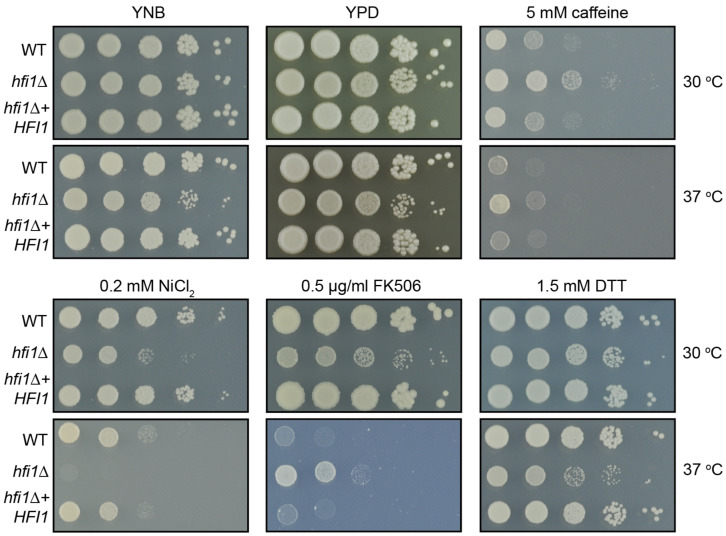
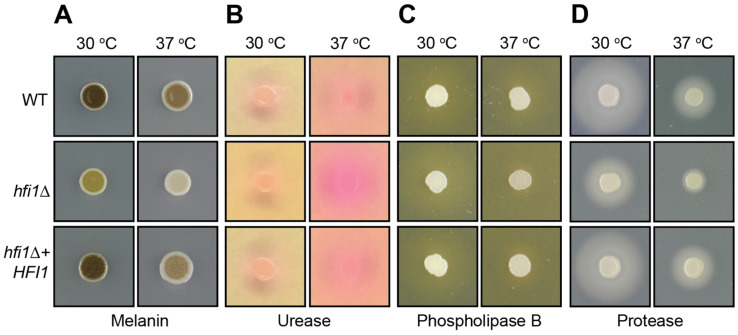
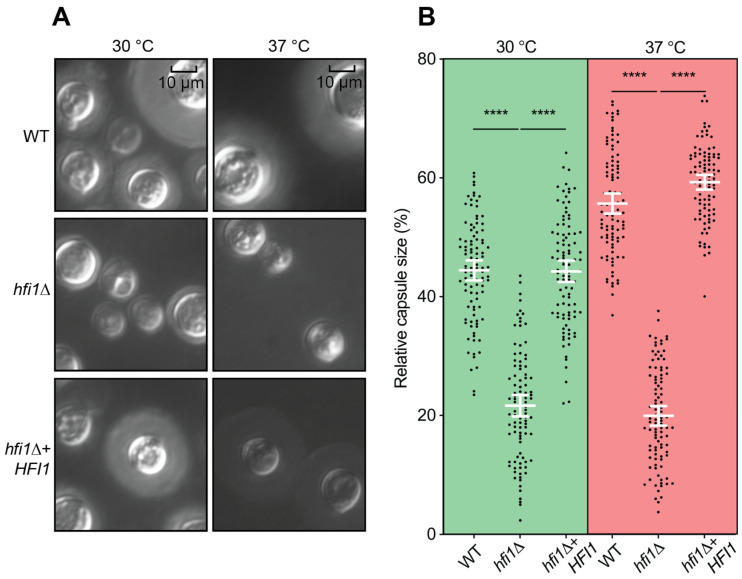
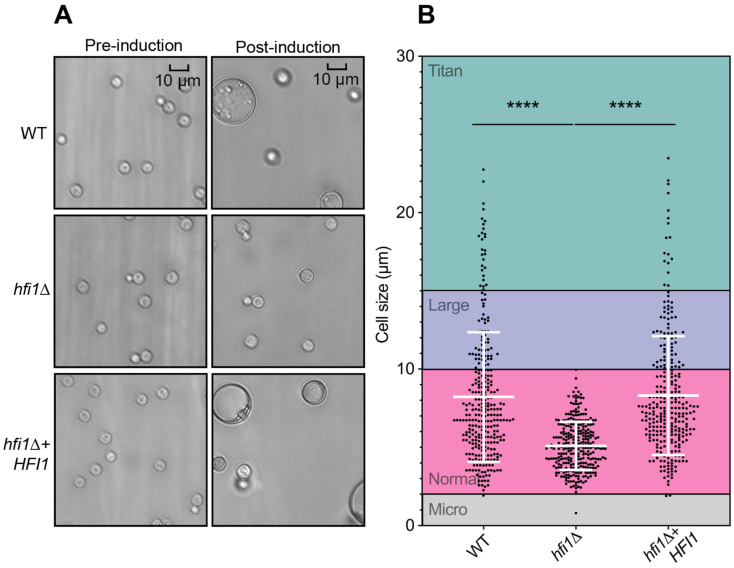
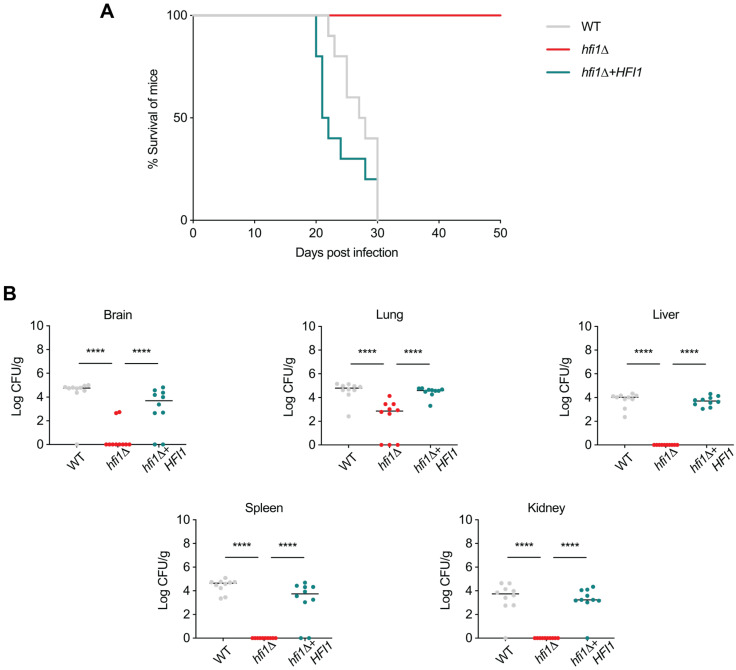
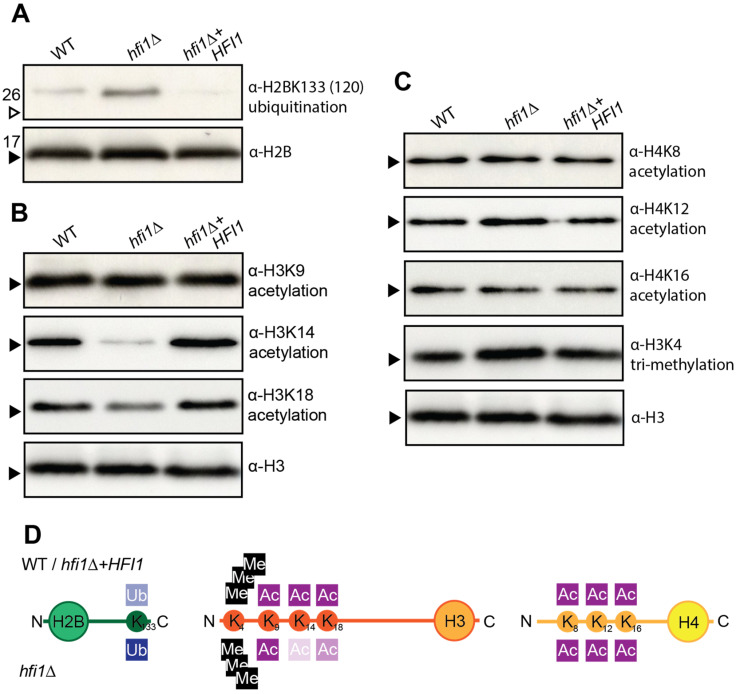
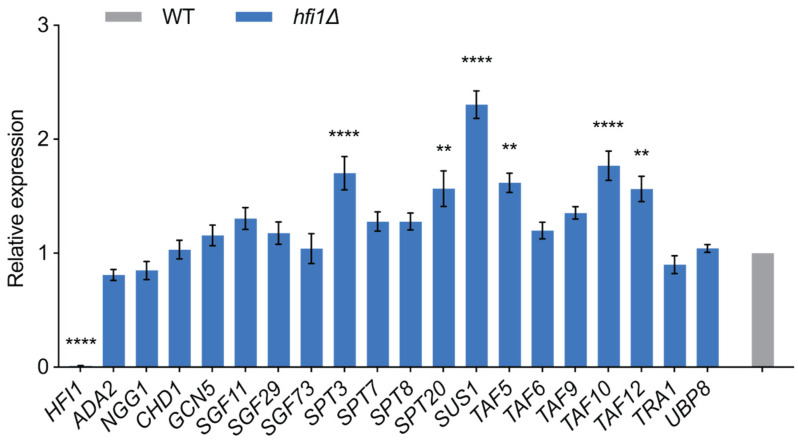
The Spt-Ada-Gcn Acetyltransferase (SAGA) complex is a highly conserved co-activator found across eukaryotes. It is composed of a number of modules which can vary between species, but all contain the core module. Hfi1 (known as TADA1 in Homo sapiens) is one of the proteins that forms the core module, and has been shown to play an important role in maintaining complex structural integrity in both brewer’s yeast and humans. In this study we successfully identified the gene encoding this protein in the important fungal pathogen, Cryptococcus neoformans, and named it HFI1. The hfi1Δ mutant is highly pleiotropic in vitro, influencing phenotypes, ranging from temperature sensitivity and melanin production to caffeine resistance and titan cell morphogenesis. In the absence of Hfi1, the transcription of several other SAGA genes is impacted, as is the acetylation and deubiquination of several histone residues. Importantly, loss of the gene significantly impacts virulence in a murine inhalation model of cryptococcosis. In summary, we have established that Hfi1 modulates multiple pathways that directly affect virulence and survival in C. neoformans, and provided deeper insight into the importance of the non-enzymatic components of the SAGA complex.
Overview
The claims and statistics of this paper haven’t been checked yet.
Free: it reads the open-access text and checks the first 5 claims that cite a source we can check. Create a free account to check every claim.
Integrity signals
Registry
Cites
Statistics
Figures
Verification
Claims the paper makes
The claims and statistics of this paper haven’t been checked yet.
Free: it reads the open-access text and checks the first 5 claims that cite a source we can check. Create a free account to check every claim.
Claims other papers make about this one
Each is checked against this paper’s own text: does it say what the citing paper says it does?
The source backs part of the claim, not all of it — or backs it for a different population, condition or comparison.
In the citing paper
“Disrupting the gene encoding the acetyltransferase catalytic subunit Gcn5 results in significant defects in the pathogenicity and drug resistance of C. albicans and N. glabratus, as well as reduced pathogenicity in C. neoformans and multiple virulence-related phenotypes in A. fumigatus.”
From Targeting epigenetic regulators to overcome drug resistance in the emerging human fungal pathogen Candida auris (2025) · cites this paper as [27]
Experimental — accuracy not yet measuredThe source backs part of the claim, not all of it — or backs it for a different population, condition or comparison.
In the citing paper
“Recent studies have demonstrated the critical role of histone H3 PTMs, such as methylation and acetylation, in driving both drug resistance and pathogenicity in human fungal pathogens.”
From Targeting epigenetic regulators to overcome drug resistance in the emerging human fungal pathogen Candida auris (2025) · cites this paper as [27]
Experimental — accuracy not yet measured
Self-check
Percentages, sums and reported differences re-computed from the paper’s own numbers.
The self-check needs the paper’s full text.
Citations
Cites
Analysis of Relative Gene Expression Data Using Real-Time Quantitative PCR and the 2−ΔΔCT Method
Livak, K. J., & Schmittgen, T. D. (2001) · Methods · doi:10.1006/meth.2001.1262 · Cited by 180,860
Regulation of chromatin by histone modifications
Bannister, A. J., & Kouzarides, T. (2011) · Cell Research · doi:10.1038/cr.2011.22 · Cited by 6,012 · cited 1×
“Interactions among different PTMs can be complex, as the enzymes associated with these changes may compete for the same site, or their activity may be influenced by adjacent modifications [4,5].”
BackgroundMutation of the mouse klotho gene leads to a syndrome resembling ageing
Kuro-o, M., Matsumura, Y., Aizawa, H., Kawaguchi, H., Suga, T., Utsugi, T., Ohyama, Y., Kurabayashi, M., Kaname, T., Kume, E., et al. (1997) · Nature · doi:10.1038/36285 · Cited by 3,837
Chromatin modification and epigenetic reprogramming in mammalian development
Li, E. (2002) · Nature Reviews Genetics · doi:10.1038/nrg887 · Cited by 1,900 · cited 1×
“Epigenetic modifications can also occur on the proteins that package DNA, particularly histones, in the form of post-translational modifications (PTMs) [3].”
BackgroundEpigenetics and gene expression
Gibney, E. R., & Nolan, C. M. (2010) · Heredity · doi:10.1038/hdy.2010.54 · Cited by 1,109 · cited 1×
“A widely studied epigenetic modification is the addition of a methyl group to C 5 of cytosine in DNA, which inhibits DNA-binding proteins and plays a role in transcriptional regulation [1,2].”
BackgroundTHE QUANTITATIVE SEPARATION OF PURINES, PYRIMIDINES, AND NUCLEOSIDES BY PAPER CHROMATOGRAPHY
Hotchkiss, R. D. (1948) · Journal of Biological Chemistry · doi:10.1016/s0021-9258(18)57261-6 · Cited by 766
Christensen, W. B. (1946) · Journal of Bacteriology · doi:10.1128/jb.52.4.461-466.1946 · Cited by 726 · cited 1×
“For observation of virulence trait production, 3 µ L of 10 − 1 dilution suspension was spotted on the media of interest (Christensen’s urea agar [53], L -DOPA agar [54], or egg yolk agar [55]).”
MethodHenry, K. W., Wyce, A., Lo, W.-S., Duggan, L. J., Emre, N. C. T., Kao, C.-F., Pillus, L., Shilatifard, A., Osley, M. A., & Berger, S. L. (2003) · Genes & Development · doi:10.1101/gad.1144003 · Cited by 714 · cited 1×
“In S. cerevisiae , Gcn5 acetylates histone lysine residues, H3K9, H3K14, H3K18, H4K8, H4K12, and H4K16, Sgf29 recognizes H3K4 tri-and di-methylation, and Ubp8 deubiq-uitinates histone lysine residue, H2BK123 [14,60,70].”
The Language of Histone Crosstalk
Lee, J.-S., Smith, E., & Shilatifard, A. (2010) · Cell · doi:10.1016/j.cell.2010.08.011 · Cited by 597 · cited 1×
“Interactions among different PTMs can be complex, as the enzymes associated with these changes may compete for the same site, or their activity may be influenced by adjacent modifications [4,5].”
BackgroundTranscription-linked acetylation by Gcn5p of histones H3 and H4 at specific lysines
Kuo, M.-H., Brownell, J. E., Sobel, R. E., Ranalli, T. A., Cook, R. G., Edmondson, D. G., Roth, S. Y., & Allis, C. D. (1996) · Nature · doi:10.1038/383269a0 · Cited by 596 · cited 2×
“In S. cerevisiae , Gcn5 acetylates histone lysine residues, H3K9, H3K14, H3K18, H4K8, H4K12, and H4K16, Sgf29 recognizes H3K4 tri-and di-methylation, and Ubp8 deubiq-uitinates histone lysine residue, H2BK123 [14,60,70].”
Background
Cited by
Zhang, Y., Zeng, L., Huang, X., Wang, Y., Chen, G., Moses, M., Zou, Y., Xiong, S., Xue, W., Dong, Y., et al. (2025) · Nature Communications · doi:10.1038/s41467-025-59898-6 · Cited by 33
Yu, C. K., Stephenson, C. J., Villamor, T. C., Dyba, T. G., Schulz, B. L., & Fraser, J. A. (2025) · Life Sciences · doi:10.1016/j.lfs.2025.123509 · Cited by 2
Self-citationSpt7 Deletion Reveals Vulnerabilities in Cryptococcus neoformans Stress Adaptation and Virulence
Yu, C. K., Stephenson, C. J., Schulz, B. L., & Fraser, J. A. (2026) · Microorganisms · doi:10.3390/microorganisms14010095
“RNA extraction and RT-qPCR analyses were performed as previously described in our related studies [28,29], with primers targeting SAGA-related genes listed in Supplementary Table S2.”
InfluentialSelf-citationPoonia, P., Srivastav, M. K., Nagar, P., & Natarajan, K. (2026) · bioRxiv (Cold Spring Harbor Laboratory) · doi:10.64898/2026.02.06.704420
“While ADA1 is nonessential in S. cerevisiae and C. neoformans (36), a study reported it essential in C. glabrata (37), suggesting possible Candida - specific roles.”
Metadata
- Authors
- Yu, C. K., Stephenson, C. J., Villamor, T. C., Dyba, T. G., Schulz, B. L., & Fraser, J. A.
- Affiliations
- The University of Queensland (AU)
- Corresponding author
- Fraser, James A.
- Venue
- Journal of Fungi
- Publisher
- MDPI AG
- Published
- 2023-12-15
- Volume
- 9
- Issue
- 12
- Pages
- 1198
- ISSN
- 2309-608X (ISSN-L)
- PMC
- PMC10744473
- OpenAlex
- W4389819333
- Cited by
- 4
- References
- 74
- Citations by year
- 2026: 2 · 2025: 2
- FWCI
- 0.80
- Type
- journal article
- Language
- en
- Open access
- gold
- doi.org
- Licence
- Locations
- Journal of Fungi (publishedVersion, cc-by)
- PubMed Central (publishedVersion, cc-by)
- PubMed (publishedVersion)
- DOAJ (DOAJ: Directory of Open Access Journals) (submittedVersion, cc-by-sa)
- Funders
- National Health and Medical Research Council (APP1130192)
- Topics
- Health Sciences › Medicine › Infectious Diseases › Fungal Infections and Studies
- Life Sciences › Biochemistry, Genetics and Molecular Biology › Molecular Biology › Fungal and yeast genetics research
- Life Sciences › Biochemistry, Genetics and Molecular Biology › Molecular Biology › Genomics and Chromatin Dynamics
- Keywords
- SAGA complex, Cryptococcus neoformans, histone acetylation, transcriptional coactivator, virulence, cryptococcosis, stress response, melanogenesis, temperature sensitivity, caffeine resistance, titan cells, cell morphogenesis, pleiotropic mutants
About these checks
Registry, retraction, Cites and statistics results are computed, not judged, with one exception: a printed reference that no index lists is read once by a model before it counts as a citation error. Claims are extracted by a model and kept only when their quote appears verbatim in the text; each cited source is then checked, with a model’s help, for whether it says what the claim relies on. Those verdicts can be wrong — read the claim’s quote and the cited source before relying on one.
Statistics and arithmetic are recomputed, not judged.
Confidence bands are shown only for fields calibrated on our annotated test set. None is calibrated yet, so no band is shown.
What counts as a claim ›How we measure confidence ›How we check this ›
Are you an author, or do you see a problem with this page? Request a review
Data sources
Bibliographic data: Semantic Scholar, OpenAlex, Crossref.
Contains information from the Semantic Scholar Academic Graph Datasets, made available under the ODC Attribution License (ODC-BY 1.0).
Semantic Scholar’s data is described in: Kinney, R., et al. (2023). The Semantic Scholar Open Data Platform. arXiv:2301.10140.
