

Coupled Phases and Combinatorial Selection in Fluctuating Hydrothermal Pools: A Scenario to Guide Experimental Approaches to the Origin of Cellular Life
Open accessThe DOI matches its Crossref record; 37 of the 37 references it cites were found in a registry or an index.
Abstract
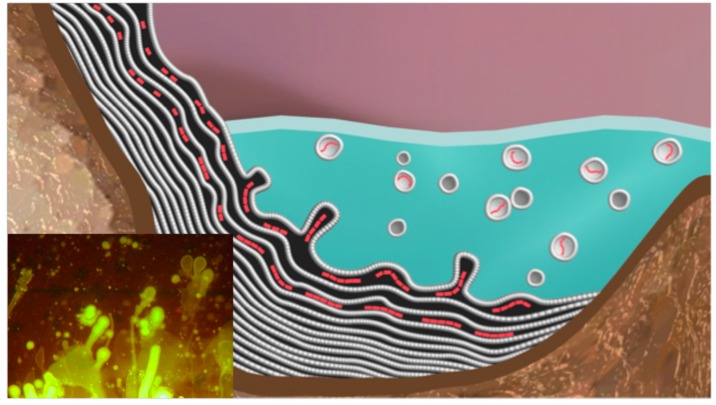
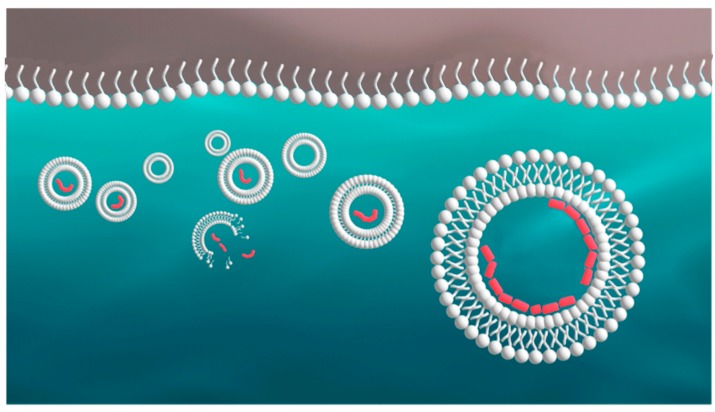
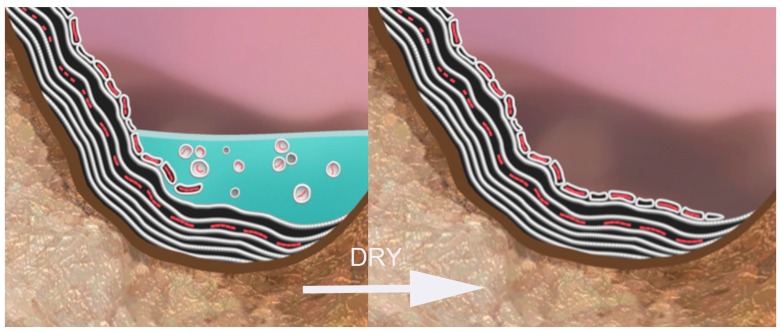
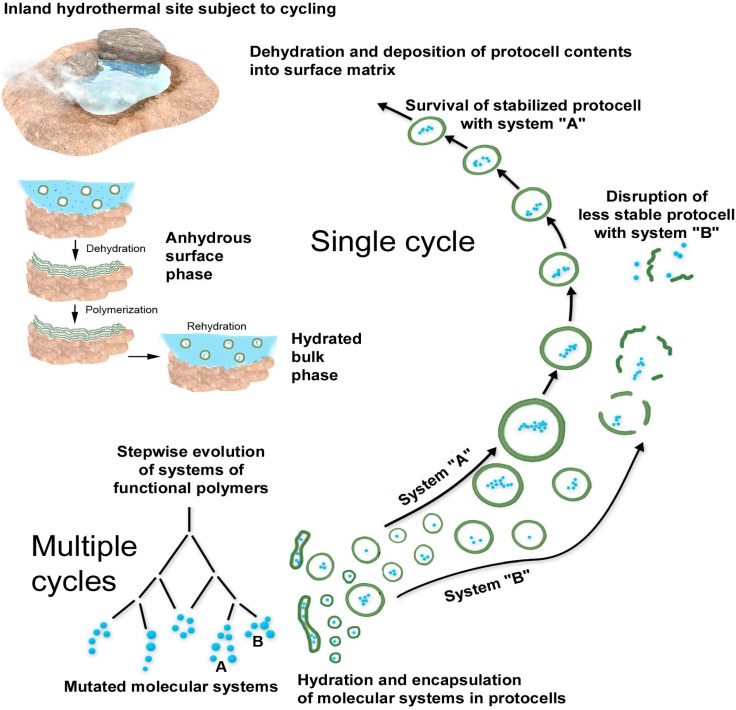
Hydrothermal fields on the prebiotic Earth are candidate environments for biogenesis. We propose a model in which molecular systems driven by cycles of hydration and dehydration in such sites undergo chemical evolution in dehydrated films on mineral surfaces followed by encapsulation and combinatorial selection in a hydrated bulk phase. The dehydrated phase can consist of concentrated eutectic mixtures or multilamellar liquid crystalline matrices. Both conditions organize and concentrate potential monomers and thereby promote polymerization reactions that are driven by reduced water activity in the dehydrated phase. In the case of multilamellar lipid matrices, polymers that have been synthesized are captured in lipid vesicles upon rehydration to produce a variety of molecular systems. Each vesicle represents a protocell, an “experiment” in a natural version of combinatorial chemistry. Two kinds of selective processes can then occur. The first is a physical process in which relatively stable molecular systems will be preferentially selected. The second is a chemical process in which rare combinations of encapsulated polymers form systems capable of capturing energy and nutrients to undergo growth by catalyzed polymerization. Given continued cycling over extended time spans, such combinatorial processes will give rise to molecular systems having the fundamental properties of life.
Overview
The claims and statistics of this paper haven’t been checked yet.
Free: it reads the open-access text and checks the first 5 claims that cite a source we can check. Create a free account to check every claim.
Integrity signals
Registry
Cites
Statistics
Figures
Verification
Claims the paper makes
The claims and statistics of this paper haven’t been checked yet.
Free: it reads the open-access text and checks the first 5 claims that cite a source we can check. Create a free account to check every claim.
Claims other papers make about this one
Each is checked against this paper’s own text: does it say what the citing paper says it does?
The cited source says what the claim attributes to it.
In the citing paper
“If some of the organics were amphiphilic compounds, they would self-assemble into vast numbers of microscopic membranous compartments called protocells that encapsulate systems of potential reactants and products [11].”
From The Role of Lipid Membranes in Life’s Origin (2017) · cites this paper as [11]
The cited source says what the claim attributes to it.
In the citing paper
“We have proposed (Damer and Deamer, 2015; Deamer, 2019) that the first selective step initiating evolution in a population of protocells is that polymers interact with the membranes in such a way that the protocells become more resistant to environmental stresses such as shear forces.”
From The Hot Spring Hypothesis for an Origin of Life (2020) · cites this paper as Damer and Deamer, 2015
The cited source says what the claim attributes to it.
In the citing paper
“Whether or not this was really the case (indeed, cells could have emerged in a number of environments around the globe), it is possible that various prebiotic molecules could have been formed in a variety of environments, ranging from subaerial springs (Damer and Deamer 2015), to coastal volcanic splash pools (Fox and Strasdeit 2013), to pumice rafts (Brasier et al. 2011), or submarine”
From The Emergence of Life (2019) · cites this paper as Damer and Deamer 2015
Self-check
Percentages, sums and reported differences re-computed from the paper’s own numbers.
The self-check needs the paper’s full text.
Citations
Cites
Phylogenetic Classification and the Universal Tree
Doolittle, W. F. (1999) · Science · doi:10.1126/science.284.5423.2124 · Cited by 1,888 · cited 1×
“[7] and Doolittle [8] that the first forms of life continuously exchanged genetic information rather than existing as individual organisms.”
BackgroundHydrothermal vents and the origin of life
Martin, W., Baross, J., Kelley, D., & Russell, M. J. (2008) · Nature Reviews Microbiology · doi:10.1038/nrmicro1991 · Cited by 1,608 · cited 1×
“Two such sites have been proposed, one associated with submarine hydrothermal activity [1,2] and a second associated with volcanic land-masses emerging through a global ocean [3].”
BackgroundChyba, C., & Sagan, C. (1992) · Nature · doi:10.1038/355125a0 · Cited by 1,321 · cited 1×
“This fact makes it plausible that they were likely to be available in the prebiotic environment, either delivered during late accretion or synthesized geochemically [30–32].”
BackgroundIsolation of New Ribozymes from a Large Pool of Random Sequences
Bartel, D. P., & Szostak, J. W. (1993) · Science · doi:10.1126/science.7690155 · Cited by 900 · cited 1×
“In an earlier demonstration of the power of large numbers, Bartel and Szostak [37] exposed random sequence RNA to cycles of selection and amplification, with the selection target being ligase activity.”
BackgroundOrganic compounds in carbonaceous meteorites
Sephton, M. A. (2002) · Natural Product Reports · doi:10.1039/b103775g · Cited by 704
FtsZ in Bacterial Cytokinesis: Cytoskeleton and Force Generator All in One
Erickson, H. P., Anderson, D. E., & Osawa, M. (2010) · Microbiology and Molecular Biology Reviews · doi:10.1128/mmbr.00021-10 · Cited by 638 · cited 1×
“The first D-polymer may have been a primitive version of FtsZ protein that forms a contractile ring in today's bacteria and is required for cell division [29].”
BackgroundSegré, D., Ben-Eli, D., Deamer, D. W., & Lancet, D. (2001) · Origins of life and evolution of the biosphere · doi:10.1023/a:1006746807104 · Cited by 620
Self-citationOrigin of first cells at terrestrial, anoxic geothermal fields
Mulkidjanian, A. Y., Bychkov, A. Y., Dibrova, D. V., Galperin, M. Y., & Koonin, E. V. (2012) · Proceedings of the National Academy of Sciences · doi:10.1073/pnas.1117774109 · Cited by 447 · cited 1×
“Two such sites have been proposed, one associated with submarine hydrothermal activity [1,2] and a second associated with volcanic land-masses emerging through a global ocean [3].”
BackgroundCollective evolution and the genetic code
Vetsigian, K., Woese, C., & Goldenfeld, N. (2006) · Proceedings of the National Academy of Sciences · doi:10.1073/pnas.0603780103 · Cited by 379
A Reassessment of Prebiotic Organic Synthesis in Neutral Planetary Atmospheres
Cleaves, H. J., Chalmers, J. H., Lazcano, A., Miller, S. L., & Bada, J. L. (2008) · Origins of Life and Evolution of Biospheres · doi:10.1007/s11084-007-9120-3 · Cited by 313 · cited 1×
“Two obvious possibilities, not mutually exclusive, include the continuous influx of organic material on interplanetary dust particles that is still occurring today [34], synthesis in the atmosphere [35] or volcanic geochemical processes [36].”
Background
Cited by
The Hot Spring Hypothesis for an Origin of Life
Damer, B., & Deamer, D. (2020) · Astrobiology · doi:10.1089/ast.2019.2045 · Cited by 478
“429 equilibrium to a more complex, systems-chemistry approach (Dyson, 1999; Pross, 2012; Damer and Deamer, 2015).”
BackgroundMethodSelf-citationPrebiotic Peptides: Molecular Hubs in the Origin of Life
Frenkel-Pinter, M., Samanta, M., Ashkenasy, G., & Leman, L. J. (2020) · Chemical Reviews · doi:10.1021/acs.chemrev.9b00664 · Cited by 354
The Role of Lipid Membranes in Life’s Origin
Deamer, D. (2017) · Life · doi:10.3390/life7010005 · Cited by 261
“If some of the organics were amphiphilic compounds, they would self-assemble into vast numbers of microscopic membranous compartments called protocells that encapsulate systems of potential reactants and products [11].”
Self-citationOrigin of the RNA world: The fate of nucleobases in warm little ponds
Pearce, B. K. D., Pudritz, R. E., Semenov, D. A., & Henning, T. K. (2017) · Proceedings of the National Academy of Sciences · doi:10.1073/pnas.1710339114 · Cited by 210
The Importance of Water for Life
Westall, F., & Brack, A. (2018) · Space Science Reviews · doi:10.1007/s11214-018-0476-7 · Cited by 208
A Hydrothermal-Sedimentary Context for the Origin of Life
Westall, F., Hickman-Lewis, K., Hinman, N., Gautret, P., Campbell, K. A., Bréhéret, J. G., Foucher, F., Hubert, A., Sorieul, S., Dass, A. V., et al. (2018) · Astrobiology · doi:10.1089/ast.2017.1680 · Cited by 189
“These polymerized nucleotides could stabilize protocell membranes, control pore insertion that provides access to nutrients, and catalyze metabolisms (Damer and Deamer, 2015).”
BackgroundThe Role of Meteorite Impacts in the Origin of Life
Osinski, G. R., Cockell, C. S., Pontefract, A., & Sapers, H. M. (2020) · Astrobiology · doi:10.1089/ast.2019.2203 · Cited by 183
“…candidate habitat or ‘‘cradle’’ for the origin and early evolution of life on Earth (e.g., Baross and Hoffman, 1985; Martin et al., 2008; Russell et al., 2013; Damer and Deamer, 2015, 2020; Deamer et al., 2019) and possibly other planets such as Mars (e.g., Farmer 2000; Schwenzer and Kring, 2009).”
BackgroundCurrent Ideas about Prebiological Compartmentalization
Monnard, P.-A., & Walde, P. (2015) · Life · doi:10.3390/life5021239 · Cited by 179
“Such dispersed systems may have encompassed various types of molecular assemblies, for example: “self-organized entities of congealed organic matter” [7,10]; organic hydrogels [7]; coacervates (gelling mixtures of macromolecules and other organic ingredients) [7,10]; thermal proteinoids (microspheres) [7,69]; micellar…”
BackgroundDry/Wet Cycling and the Thermodynamics and Kinetics of Prebiotic Polymer Synthesis
Ross, D., & Deamer, D. (2016) · Life · doi:10.3390/life6030028 · Cited by 157
“More generally and depending on their size, typical pools in hydrothermal sites evaporate on time scales of hours to days and are then refilled by precipitation or geyser activity, and still more brief wet-dry cycles occur around the edges of pools due to fluctuating water levels [44].”
BackgroundSelf-citationBecker, S., Schneider, C., Okamura, H., Crisp, A., Amatov, T., Dejmek, M., & Carell, T. (2018) · Nature Communications · doi:10.1038/s41467-017-02639-1 · Cited by 153
Protocells: Milestones and Recent Advances
Gözen, İ., Köksal, E. S., Põldsalu, I., Xue, L., Spustová, K., Pedrueza‐Villalmanzo, E., Ryskulov, R., Meng, F., & Jesorka, A. (2022) · Small · doi:10.1002/smll.202106624 · Cited by 157
Phosphorylation on the Early Earth
Pasek, M. A., Gull, M., & Herschy, B. (2017) · Chemical Geology · doi:10.1016/j.chemgeo.2017.11.008 · Cited by 129
Lipids as Universal Biomarkers of Extraterrestrial Life
Georgiou, C. D., & Deamer, D. W. (2014) · Astrobiology · doi:10.1089/ast.2013.1134 · Cited by 121
Self-citationPrebiotic amino acids bind to and stabilize prebiotic fatty acid membranes
Cornell, C. E., Black, R. A., Xue, M., Litz, H. E., Ramsay, A., Gordon, M., Mileant, A., Cohen, Z. R., Williams, J. A., Lee, K. K., et al. (2019) · Proceedings of the National Academy of Sciences · doi:10.1073/pnas.1900275116 · Cited by 114
“Our results (summarized in SI Appendix, Table S1) are particularly compelling in the context of the hypothesis that protocells arose in pools undergoing cycles of drying and rehydration (39).”
BackgroundResultInfluentialSynthesis of lipid membranes for artificial cells
Podolsky, K. A., & Devaraj, N. K. (2021) · Nature Reviews Chemistry · doi:10.1038/s41570-021-00303-3 · Cited by 129
Terrestrial Hot Spring Systems: Introduction
Marais, D. J. D., & Walter, M. R. (2019) · Astrobiology · doi:10.1089/ast.2018.1976 · Cited by 118
“…but particularly because the lower temperatures are less destructive of organic molecules and the characteristic wetting and drying cycles are conducive to the polymerization of large molecules (Damer and Deamer, 2015; Deamer and Georgiou, 2015; Van Kranendonk et al., 2017; Westall et al., 2018).”
BackgroundThermodynamics of Prebiotic Phosphorylation
Pasek, M. A. (2019) · Chemical Reviews · doi:10.1021/acs.chemrev.9b00492 · Cited by 114
Milshteyn, D., Damer, B., Havig, J., & Deamer, D. (2018) · Life · doi:10.3390/life8020011 · Cited by 89
“An alternative, then, is that life began in fresh water and later adapted to seawater [2,6,7].”
BackgroundSelf-citationLopez, A., & Fiore, M. (2019) · Life · doi:10.3390/life9020049 · Cited by 89
“Among all the different proposed environments, hydrothermal fields [44] and hydrothermal vents [43] are the most conducive.”
BackgroundMaruyama, S., Kurokawa, K., Ebisuzaki, T., Sawaki, Y., Suda, K., & Santosh, M. (2018) · Geoscience Frontiers · doi:10.1016/j.gsf.2018.09.011 · Cited by 91
“Alternating dry and wet conditions are necessary for the emergence of life, as exemplified by a suite of diverse prebiotic chemical reactions including polymerization of amino acids to peptides and synthesis of RNA from nucleotides by repeated dehydration-hydration in tidal flats, that has been repeatedly emphasized (…”
BackgroundFares, H. M., Marras, A. E., Ting, J., Tirrell, M., & Keating, C. D. (2020) · Nature Communications · doi:10.1038/s41467-020-19184-z · Cited by 90
Camprubí, E., de Leeuw, J. W., House, C. H., Raulin, F., Russell, M. J., Spang, A., Tirumalai, M. R., & Westall, F. (2019) · Space Science Reviews · doi:10.1007/s11214-019-0624-8 · Cited by 84
Chatterjee, S., & Yadav, S. (2019) · Life · doi:10.3390/life9010025 · Cited by 80
“The primordial vent environment that could support RNA synthesis no doubt also created many other organic compounds—for example, peptides—and lipid-like membranes, which are much less chemically challenging to generate [43].”
BackgroundHydrothermal conditions and the origin of cellular life
Deamer, D. W., & Georgiou, C. D. (2015) · Astrobiology · doi:10.1089/ast.2015.1338 · Cited by 81
“Cycles of hydration and dehydration drive increased complexity as products accumulate in closed systems of hydrothermal pools (Damer and Deamer, 2015).”
Self-citationElectrostatic Localization of RNA to Protocell Membranes by Cationic Hydrophobic Peptides
Kamat, N. P., Tobé, S., Hill, I. T., & Szostak, J. W. (2015) · Angewandte Chemie International Edition · doi:10.1002/anie.201505742 · Cited by 77
Defining Lyfe in the Universe: From Three Privileged Functions to Four Pillars
Bartlett, S., & Wong, M. L. (2020) · Life · doi:10.3390/life10040042 · Cited by 77
“However, geothermal pools are favored for the spontaneous membrane assembly of lipid vesicles due, in part, to their low concentrations of divalent cations [13].”
BackgroundCan Life Begin on Enceladus? A Perspective from Hydrothermal Chemistry
Deamer, D., & Damer, B. (2017) · Astrobiology · doi:10.1089/ast.2016.1610 · Cited by 76
“We have argued that hydration-dehydration cycles commonly occurring in hydrothermal fields not only provide energy for condensation reactions but also present sequential environmental stresses that initiate selection and evolution within protocell populations (Damer and Deamer, 2015; Damer, 2016).”
BackgroundSelf-citationA Field Trip to the Archaean in Search of Darwin’s Warm Little Pond
Damer, B. (2016) · Life · doi:10.3390/life6020021 · Cited by 75
“The kinetic t ap provid s scaffolding for the stepwise emergence of encapsulated systems of functional polymers described ear ier in the coupled phas s scenario proposed by Damer and Deamer [27].”
BackgroundMethodInfluentialSelf-citationCellular remains in a ~3.42-billion-year-old subseafloor hydrothermal environment
Cavalazzi, B., Lemelle, L., Simionovici, A., Cady, S. L., Russell, M. J., Bailo, E., Canteri, R., Enrico, E., Manceau, A., Maris, A., et al. (2021) · Science Advances · doi:10.1126/sciadv.abf3963 · Cited by 95
Prebiological Membranes and Their Role in the Emergence of Early Cellular Life
Sarkar, S., Das, S., Dagar, S., Joshi, M. P., Mungi, C. V., Sawant, A. A., Patki, G. M., & Rajamani, S. (2020) · The Journal of Membrane Biology · doi:10.1007/s00232-020-00155-w · Cited by 78
Higgs, P. (2016) · Life · doi:10.3390/life6020024 · Cited by 64
“The wet phase may also involve trapping of the polymers inside lipid vesicles, which is a potential route towards formation of protocells and increasing the complexity of life [26].”
BackgroundFreeze-thaw cycles induce content exchange between cell-sized lipid vesicles
Litschel, T., Ganzinger, K. A., Movinkel, T., Heymann, M., Robinson, T., Mutschler, H., & Schwille, P. (2018) · New Journal of Physics · doi:10.1088/1367-2630/aabb96 · Cited by 73
Vincent, L., Berg, M., Krismer, M., Saghafi, S. T., Cosby, J., Sankari, T., Vetsigian, K., Cleaves, H. J., & Baum, D. A. (2019) · Life · doi:10.3390/life9040080 · Cited by 62
Prebiotic Lipidic Amphiphiles and Condensing Agents on the Early Earth
Fiore, M., & Strazewski, P. (2016) · Life · doi:10.3390/life6020017 · Cited by 60
“A crucial feature was fluctuations of hydrated and dehydrated conditions related to precipitation and evaporation of water on volcanic land masses [33].”
BackgroundFinkel, P. D. L., Carrizo, D., Parro, V., & Sánchez‐García, L. (2023) · Astrobiology · doi:10.1089/ast.2022.0083 · Cited by 67
“…simple organic compounds that need to occur at high temperatures (Farmer, 2000), as well as accomplishing a series of environmental constrains such as interacting interfaces that promote the accumulation and polymerization of prebiotic compounds (Damer and Deamer, 2015; Deamer and Georgiou, 2015).”
BackgroundChemical Evolution and the Evolutionary Definition of Life
Higgs, P. G. (2017) · Journal of Molecular Evolution · doi:10.1007/s00239-017-9799-3 · Cited by 58
A symbiotic view of the origin of life at hydrothermal impact crater-lakes
Chatterjee, S. (2016) · Physical Chemistry Chemical Physics · doi:10.1039/c6cp00550k · Cited by 57
Membranes and the Origin of Life: A Century of Conjecture
Deamer, D. W. (2016) · Journal of Molecular Evolution · doi:10.1007/s00239-016-9770-8 · Cited by 312
“The fact that specific combinations of membrane components and encapsulated contents will have variations that are subject to selection represents the first step in the long evolutionary process leading to the origin of life (Damer and Deamer 2015; Damer 2016).”
BackgroundSelf-citationAn ecological framework for the analysis of prebiotic chemical reaction networks
Peng, Z., Plum, A. M., Gagrani, P., & Baum, D. (2020) · Journal of Theoretical Biology · doi:10.1016/j.jtbi.2020.110451 · Cited by 64
“…understand how such a reactor may model the prebiotic environment, we might view this reactor as a small, well-mixed pool in a hydrothermal field receiving a constant flux of liquid from an uphill volcano and simultaneously losing a similar amount through a downhill outlet (Damer and Deamer, 2015).”
BackgroundThe interaction of heat shock proteins with cellular membranes: a historical perspective
Maio, A. D., & Hightower, L. E. (2021) · Cell Stress and Chaperones · doi:10.1007/s12192-021-01228-y · Cited by 58
“Prebiotic fatty acids were likely to form small vesicles due to their amphiphilic nature in aqueous solutions that could encapsulate chemicals, forcing them to react, forming new compounds (Black and Blosser 2016; Damer and Deamer 2015).”
BackgroundBlack, R., & Blosser, M. (2016) · Life · doi:10.3390/life6030033 · Cited by 52
“A fresh water origin for protocells has been proposed as another solution [14].”
BackgroundInfluentialSimple prebiotic synthesis of high diversity dynamic combinatorial polyester libraries
Chandru, K., Guttenberg, N., Giri, C., Hongo, Y., Butch, C., Mamajanov, I., & Cleaves, H. J. (2018) · Communications Chemistry · doi:10.1038/s42004-018-0031-1 · Cited by 52
Molecular Evolution in a Peptide-Vesicle System
Mayer, C., Schreiber, U., Dávila, M. J., Schmitz, O. J., Bronja, A., Meyer, M., Klein, J., & Meckelmann, S. W. (2018) · Life · doi:10.3390/life8020016 · Cited by 48
“Those amphiphilic mesostructures may occur naturally in a variety of environments, such as shore lines, hot springs [11,17], or even in bulk liquid phases.”
BackgroundNonenzymatic Polymerization into Long Linear RNA Templated by Liquid Crystal Self-Assembly
Todisco, M., Fraccia, T. P., Smith, G. P., Corno, A., Bethge, L., Klußmann, S., Paraboschi, E. M., Asselta, R., Colombo, D., Zanchetta, G., et al. (2018) · ACS Nano · doi:10.1021/acsnano.8b05821 · Cited by 56
Joshi, M. P., Sawant, A. A., & Rajamani, S. (2021) · Chemical Science · doi:10.1039/d0sc05650b · Cited by 50
A History of Autocatalytic Sets: A Tribute to Stuart Kauffman
Hordijk, W. (2019) · Biological Theory · doi:10.1007/s13752-019-00330-w · Cited by 55
Kaplan, M., Chreifi, G., Metskas, L. A., Liedtke, J., Wood, C. R., Oikonomou, C. M., Nicolas, W. J., Subramanian, P., Zacharoff, L. A., Wang, Y., et al. (2021) · eLife · doi:10.7554/elife.73099 · Cited by 41
“Early in the history of life, lipid vesicles and elementary protocells likely experienced destabilizing conditions such as repeated cycles of dehydration and rehydration ( Damer and Deamer, 2015 ).”
BackgroundFougerite: the not so simple progenitor of the first cells
Duval, S., Baymann, F., Schoepp-Cothenet, B., Trolard, F., Bourrié, G., Grauby, O., Branscomb, E., Russell, M. J., & Nitschke, W. (2019) · Interface Focus · doi:10.1098/rsfs.2019.0063 · Cited by 44
Biomolecules from Fossilized Hot Spring Sinters: Implications for the Search for Life on Mars
Teece, B. L., George, S. C., Djokic, T., Campbell, K. A., Ruff, S. W., & Kranendonk, M. J. V. (2020) · Astrobiology · doi:10.1089/ast.2018.2018 · Cited by 47
Formation and Preservation of Microbial Palisade Fabric in Silica Deposits from El Tatio, Chile
Gong, J., Myers, K. D., Muñoz-Sáez, C., Homann, M., Rouillard, J., Wirth, R., Schreiber, A., & van Zuilen, M. A. (2019) · Astrobiology · doi:10.1089/ast.2019.2025 · Cited by 41
“Hot spring environments not only have the potential to preserve some of the earliest signatures of life 3.5 billion years ago (Djokic et al. , 2017), but they could also have contributed to the origin of life itself (Damer et al. , 2015).”
InfluentialThe “Water Problem”(sic), the Illusory Pond and Life’s Submarine Emergence—A Review
Russell, M. J. (2021) · Life · doi:10.3390/life11050429 · Cited by 48
Fayolle, D., Altamura, E., D’Onofrio, A., Madanamothoo, W., Fenet, B., Mavelli, F., Buchet, R., Stano, P., Fiore, M., & Strazewski, P. (2017) · Scientific Reports · doi:10.1038/s41598-017-18053-y · Cited by 42
Kırtel, O., Versluys, M., den Ende, W. V., & Öner, E. T. (2018) · Biotechnology Advances · doi:10.1016/j.biotechadv.2018.06.009 · Cited by 48
Meteoritic abundances of fatty acids and potential reaction pathways in planetesimals
Lai, J. C.-Y., Pearce, B. K. D., Pudritz, R. E., & Lee, D. (2018) · Icarus · doi:10.1016/j.icarus.2018.09.028 · Cited by 45
The Coevolution of Cellularity and Metabolism Following the Origin of Life
Takagi, Y. A., Nguyen, D. H., Wexler, T., & Goldman, A. D. (2020) · Journal of Molecular Evolution · doi:10.1007/s00239-020-09961-1 · Cited by 41
Organization of Nucleotides in Different Environments and the Formation of Pre-Polymers
Himbert, S., Chapman, M., Deamer, D. W., & Rheinstädter, M. C. (2016) · Scientific Reports · doi:10.1038/srep31285 · Cited by 40
Self-citationRole of Acetylene in the Chemical Evolution of Carbon Complexity
Pentsak, E. O., Murga, M. S., & Ananikov, V. P. (2024) · ACS Earth and Space Chemistry · doi:10.1021/acsearthspacechem.3c00223 · Cited by 46
Fiore, M. (2018) · Organic & Biomolecular Chemistry · doi:10.1039/c8ob00469b · Cited by 41
Co-operation between Polymerases and Nucleotide Synthetases in the RNA World
Kim, Y. E., & Higgs, P. G. (2016) · PLoS Computational Biology · doi:10.1371/journal.pcbi.1005161 · Cited by 41
Emergence of Life on Earth: A Physicochemical Jigsaw Puzzle
Spitzer, J. J. (2016) · Journal of Molecular Evolution · doi:10.1007/s00239-016-9775-3 · Cited by 38
“The microspaces are regularly re-shaped by tidal wetting and drying that brings about large hyperosmotic forces; hypoosmotic forces come from rains and from mixing of river water with seawater in estuaries (Damer and Deamer 2015).”
BackgroundThe Complex Roles of Adenosine Triphosphate in Bioenergetics
Fontecilla-Camps, J. C. (2022) · ChemBioChem · doi:10.1002/cbic.202200064 · Cited by 39
Implications of Tides for Life on Exoplanets
Lingam, M., & Loeb, A. (2018) · Astrobiology · doi:10.1089/ast.2017.1718 · Cited by 41
“The importance of dry-wet cycles ( e.g., due to tides) in synthesizing prebiotic polymers has been analyzed from a thermodynamic perspective (Damer and Deamer, 2015; Ross and Deamer, 2016).”
Implications of tides for life on exoplanets
Lingam, M., & Loeb, A. (2017) · arXiv · doi:10.48550/arxiv.1707.04594 · Cited by 37
“The importance of dry-wet cycles ( e.g., due to tides) in synthesizing prebiotic polymers has been analyzed from a thermodynamic perspective (Damer and Deamer, 2015; Ross and Deamer, 2016).”
Hidden Concepts in the History and Philosophy of Origins-of-Life Studies: A Workshop Report
Mariscal, C., Barahona, A., Aubert-Kato, N., Aydinoglu, A. U., Bartlett, S., Cárdenas, M. L., Chandru, K., Cleland, C., Cocanougher, B. T., Comfort, N., et al. (2019) · Origins of Life and Evolution of Biospheres · doi:10.1007/s11084-019-09580-x · Cited by 36
Better than Membranes at the Origin of Life?
Hansma, H. G. (2017) · Life · doi:10.3390/life7020028 · Cited by 43
“The spaces between mica sheets are a hospitable environment for most of the origins-of-life scenarios, such as the RNA world [26], lipid worlds [33,34], hot or icy origins [35,36], ‘metabolism first’ [37], or even separate origins for replication and metabolism [38].”
BackgroundA Constructive Way to Think about Different Hydrothermal Environments for the Origins of Life
Omran, A. P., & Pasek, M. A. (2020) · Life · doi:10.3390/life10040036 · Cited by 41
Sánchez‐García, L., Fernández-Martínez, M. Á., García‐Villadangos, M., Blanco, Y., Cady, S. L., Hinman, N. W., Bowden, M., Pointing, S. B., Lee, K. C. Y., Warren-Rhodes, K., et al. (2019) · Frontiers in Microbiology · doi:10.3389/fmicb.2018.03350 · Cited by 36
Mineral surfaces select for longer RNA molecules
Mizuuchi, R., Blokhuis, A. W. P., Vincent, L., Nghe, P., Lehman, N., & Baum, D. (2019) · Chemical Communications · doi:10.1039/c8cc10319d · Cited by 38
Factoring Origin of Life Hypotheses into the Search for Life in the Solar System and Beyond
Longo, A., & Damer, B. (2020) · Life · doi:10.3390/life10050052 · Cited by 45
“Mineral surfaces at the edge of hot spring pools, such as silica nodule faces, can support wet-dry cycling and, therefore, become kinetic traps where the rate of condensation of organic molecules exceeds the rate of hydrolysis [49].”
BackgroundInfluentialSelf-citationFiore, M., Chieffo, C., Lopez, A., Fayolle, D., Ruiz, J., Soulère, L., Oger, P., Altamura, E., Popowycz, F., & Buchet, R. (2022) · Astrobiology · doi:10.1089/ast.2021.0059 · Cited by 38
“Recently, Damer and Deamer (2015, 2020), pointed out that fluctuating hydrothermal pools could be considered as plausible prebiotic reactors for the synthesis of several key molecules in the development of life, including lipids, nucleic acids, and peptides.”
Heat shock proteins and the biogenesis of cellular membranes
Maio, A. D., & Hightower, L. E. (2020) · Cell Stress and Chaperones · doi:10.1007/s12192-020-01173-2 · Cited by 35
“These rudimentary vesicles could have encapsulated chemicals, concentrating them in a novel environment that may have forced them to react, or perhaps the fatty acid leaflet acted as a catalyzing platform (Black and Blosser 2016; Damer and Deamer 2015).”
BackgroundPearce, B. K. D., Ayers, P. W., & Pudritz, R. E. (2019) · The Journal of Physical Chemistry A · doi:10.1021/acs.jpca.8b11323 · Cited by 36
Walde, P., & Ichikawa, S. (2021) · Applied Sciences · doi:10.3390/app112110345 · Cited by 34
Prebiotic Oligomer Assembly: What Was the Energy Source?
Ross, D. S., & Deamer, D. W. (2019) · Astrobiology · doi:10.1089/ast.2018.1918 · Cited by 32
“O ver the past century, studies of life’s origins have considered broad spans of venues, including deep-sea hydrothermal vents (Martin and Russell, 2007), fluctuating hydrothermal pools (DeGuzman et al. , 2014; Damer and Deamer, 2015), and organic aerosols (Donaldson et al. , 2004).”
Self-citationMaurer, S. (2017) · Life · doi:10.3390/life7040044 · Cited by 29
“Inland locations with access to fresh water, likely through precipitation, are also possible locations for the origin of life [10,11].”
BackgroundSpontaneous advent of genetic diversity in RNA populations through multiple recombination mechanisms
Smail, B. A., Clifton, B. E., Mizuuchi, R., & Lehman, N. (2019) · RNA · doi:10.1261/rna.068908.118 · Cited by 28
Possibilities for an Aerial Biosphere in Temperate Sub Neptune-Sized Exoplanet Atmospheres
Seager, S., Petkowski, J. J., Günther, M. N., Bains, W., Evans, T. M., & Deming, D. (2021) · Universe · doi:10.3390/universe7060172 · Cited by 34
Joshi, M. P., Samanta, A., Tripathy, G. R., & Rajamani, S. (2017) · Life · doi:10.3390/life7040051 · Cited by 32
Moosmann, B., Schindeldecker, M., & Hajieva, P. (2019) · Biological Chemistry · doi:10.1515/hsz-2019-0232 · Cited by 30
On the importance of studying asteroids: A comprehensive review
Azadmanesh, M., Roshanian, J., & Hassanalian, M. (2023) · Progress in Aerospace Sciences · doi:10.1016/j.paerosci.2023.100957 · Cited by 30
Fiore, M., Madanamoothoo, W., Berlioz‐Barbier, A., Maniti, O., Girard-Egrot, A., Buchet, R., & Strazewski, P. (2017) · Organic & Biomolecular Chemistry · doi:10.1039/c7ob00708f · Cited by 29
The Origin(s) of Cell(s): Pre-Darwinian Evolution from FUCAs to LUCA
Tang, S. (2021) · Journal of Molecular Evolution · doi:10.1007/s00239-021-10014-4 · Cited by 28
Greenalite Nanoparticles in Alkaline Vent Plumes as Templates for the Origin of Life
Rasmussen, B., Muhling, J. R., & Fischer, W. W. (2021) · Astrobiology · doi:10.1089/ast.2020.2270 · Cited by 29
“…et al., 2001; Russell et al., 2005; Martin et al., 2008, 2014; Mielke et al., 2010; Mulkidjanian et al., 2012; Yamaguchi et al., 2014; Deamer and Georgiou, 2015; Roldan et al., 2015; Kitadai et al., 2018; Li et al., 2018; Ooka et al., 2018; Westall et al., 2018; Jordan et al., 2019; White et…”
Kunnev, D., & Gospodinov, A. (2018) · Life · doi:10.3390/life8040044 · Cited by 24
Chatterjee, S., & Yadav, S. B. (2022) · Life · doi:10.3390/life12060834 · Cited by 29
“The bilayer membranes are stabilized by this hydrophobic effect and the Van der Waals interactions between tails [28,29].”
BackgroundSubbotin, V., & Fiksel, G. (2023) · Astrobiology · doi:10.1089/ast.2021.0161 · Cited by 28
“This hypothesis was further elaborated in theoretical and experimental studies by several research groups (e.g., Luisi et al., 1999; Segré and Lancet, 2000; Segré et al., 2001; Szostak et al., 2001; Stano and Luisi, 2010; Damer and Deamer, 2015; Deamer, 2017, 2018).”
BackgroundResultSelection Dynamics in Transient Compartmentalization
Blokhuis, A. W. P., Lacoste, D., Nghe, P., & Peliti, L. (2018) · Physical Review Letters · doi:10.1103/physrevlett.120.158101 · Cited by 24
Survival of RNA Replicators Is Much Easier in Protocells Than in Surface-Based, Spatial Systems
Shah, V., de Bouter, J., Pauli, Q., Tupper, A. S., & Higgs, P. G. (2019) · Life · doi:10.3390/life9030065 · Cited by 28
“The stability of membranes in fresh water conditions and the possibility of wetting and drying cycles occurring in shallow water has led to his current view that life began in freshwater pools associated with volcanic islands [41,42].”
BackgroundMolecular Diversity Required for the Formation of Autocatalytic Sets
Hordijk, W., Steel, M., & Kauffman, S. A. (2019) · Life · doi:10.3390/life9010023 · Cited by 24
“As these authors argue, “selection of vesicles encapsulating these polymers leads to stepwise increments toward the emergence of functional systems capable of growth, reproduction, and evolution” [16] (p.”
BackgroundOrigin of life: Drawing the big picture
Prosdocimi, F., & de Farías, S. T. (2023) · Progress in Biophysics and Molecular Biology · doi:10.1016/j.pbiomolbio.2023.04.005 · Cited by 29
“…Marín-Yaseli, 2013), small peptides (Levy et al., 2000; Johnson et al., 2008), carbohydrates (Hollis et al., 2000), lipids (Lopez and Fiore, 2019; Damer and Deamer, 2015; Pasek and Lauretta, 2008), and other compounds that constitute the contemporary biological systems (Orgel, 2004; Becker et…”
BackgroundHavig, J. R., Kuether, J. E., Gangidine, A., Schroeder, S., & Hamilton, T. L. (2021) · Astrobiology · doi:10.1089/ast.2019.2086 · Cited by 25
“…idea that terrestrial hot springs may have provided the environments necessary for the initiation of life on Earth ( e.g. , Follmann and Brownson, 2009; Damer and Deamer, 2015; Deamer and Georgiou, 2015; Forsythe et al. , 2015; Pearce et al. , 2017; Van Kranendonk et al. , 2017; Milshteyn et al.…”
A Chemical Engineering Perspective on the Origins of Life
Grover, M. A., He, C., Hsieh, M.-C., & Yu, S. (2015) · Processes · doi:10.3390/pr3020309 · Cited by 22
“on the prebiotic Earth [37]; periodicity driven by day/night, tidal, or seasonal cycles may have driven polymerization under non-equilibrium conditions, prior to the advent of the energy storing molecule adenosine triphosphate (ATP).”
BackgroundPopulation Dynamics of Autocatalytic Sets in a Compartmentalized Spatial World
Hordijk, W., Naylor, J., Krasnogor, N., & Fellermann, H. M. (2018) · Life · doi:10.3390/life8030033 · Cited by 24
Fox, S., Pleyer, H. L., & Strasdeit, H. (2018) · International Journal of Astrobiology · doi:10.1017/s1473550418000010 · Cited by 22
“According to a model proposed by Damer & Deamer (2015), amphiphile vesicles, minerals and hydration–dehydration cycles on volcanic islands could have been central to the evolution of systems of functional polymers (‘protocells’).”
MethodBrown Dwarf Atmospheres as the Potentially Most Detectable and Abundant Sites for Life
Lingam, M., & Loeb, A. (2019) · The Astrophysical Journal · doi:10.3847/1538-4357/ab3f35 · Cited by 28
“The importance of such wet-dry cycles is well established, as they enable the selection, concentration and polymerization of prebiotic monomers (Damer & Deamer 2015; Becker et al. 2018).”
BackgroundSarkar, S., Dagar, S., & Rajamani, S. (2021) · ChemSystemsChem · doi:10.1002/syst.202100014 · Cited by 19
The generality of transient compartmentalization and its associated error thresholds
Blokhuis, A. W. P., Nghe, P., Peliti, L., & Lacoste, D. (2019) · Journal of Theoretical Biology · doi:10.1016/j.jtbi.2019.110110 · Cited by 21
“…, pores reysing et al., 2015; Baaske et al., 2007 , inorganic compart- ents Koonin and Martin, 2005 , coacervates Oparin, 1952; Zwicker t al., 2017 or aerosols Dobson et al., 20 0 0 ) or various protocols f transient compartmentalization ( Damer and Deamer, 2015; Fuubayashi and Ichihashi, 2018 ).”
BackgroundLife in The Context of Order and Complexity
Mayer, C. (2020) · Life · doi:10.3390/life10010005 · Cited by 25
“Random formation of oligomers, e.g., during wet-dry cycling, would initially increase the system’s complexity [24,25].”
BackgroundGeochemical influences on nonenzymatic oligomerization of prebiotically relevant cyclic nucleotides
Dagar, S., Sarkar, S., & Rajamani, S. (2020) · RNA · doi:10.1261/rna.074302.119 · Cited by 20
Zhou, X., Dalai, P., & Sahai, N. (2020) · Life · doi:10.3390/life10040039 · Cited by 22
Metadata
- Authors
- Damer, B., & Deamer, D.
- Affiliations
- University of California, Santa Cruz (US)
- Corresponding author
- Damer, Bruce
- Venue
- Life
- Publisher
- MDPI AG
- Published
- 2015-03-13
- Volume
- 5
- Issue
- 1
- Pages
- 872-887
- ISSN
- 2075-1729 (ISSN-L)
- PMC
- PMC4390883
- OpenAlex
- W1993942594
- Cited by
- 309
- References
- 37
- Citations by year
- 2026: 29 · 2025: 22 · 2024: 25 · 2023: 23 · 2022: 27 · 2021: 36 · 2020: 34 · 2019: 38 · 2018: 31 · 2017: 18 · 2016: 17 · 2015: 7
- FWCI
- 13.84
- Type
- journal article
- Language
- en
- Open access
- gold
- doi.org
- Licence
- Locations
- Life (publishedVersion, cc-by)
- Europe PMC (PubMed Central) (publishedVersion, cc-by)
- PubMed Central (publishedVersion, cc-by)
- PubMed (publishedVersion)
- DOAJ (DOAJ: Directory of Open Access Journals) (submittedVersion, cc-by-sa)
- Funders
- National Aeronautics and Space Administration
- Topics
- Physical Sciences › Physics and Astronomy › Astronomy and Astrophysics › Origins and Evolution of Life
- Life Sciences › Biochemistry, Genetics and Molecular Biology › Genetics › Evolution and Genetic Dynamics
- Life Sciences › Biochemistry, Genetics and Molecular Biology › Molecular Biology › RNA and protein synthesis mechanisms
- Keywords
- origin of life, hydrothermal vents, prebiotic chemistry, biogenesis, eutectic mixtures, lipid vesicles, protocells, combinatorial selection, encapsulation, polymerization, water activity, chemical evolution
About these checks
Registry, retraction, Cites and statistics results are computed, not judged, with one exception: a printed reference that no index lists is read once by a model before it counts as a citation error. Claims are extracted by a model and kept only when their quote appears verbatim in the text; each cited source is then checked, with a model’s help, for whether it says what the claim relies on. Those verdicts can be wrong — read the claim’s quote and the cited source before relying on one.
Statistics and arithmetic are recomputed, not judged.
Confidence bands are shown only for fields calibrated on our annotated test set. None is calibrated yet, so no band is shown.
What counts as a claim ›How we measure confidence ›How we check this ›
Are you an author, or do you see a problem with this page? Request a review
Data sources
Bibliographic data: Semantic Scholar, OpenAlex, Crossref.
Contains information from the Semantic Scholar Academic Graph Datasets, made available under the ODC Attribution License (ODC-BY 1.0).
Semantic Scholar’s data is described in: Kinney, R., et al. (2023). The Semantic Scholar Open Data Platform. arXiv:2301.10140.
