

Recent Developments in Lactone Monomers and Polymer Synthesis and Application
Open accessThe DOI matches its Crossref record; 91 of the 96 references it cites were found in a registry or an index, and 1 are not checked yet.
Abstract
Lactones are a group of compounds that have been known for several decades. The commercial importance of lactones results from the possibility of manufacturing of a broad scope of derivatives and polymers with a wide spectrum of applications. In this work the synthesis and characterization of simple lactones are described, which due to the easy methods of the synthesis are of high importance for the industry. The chemical as well as biochemical methods are included with special attention paid to the methods that avoid metal catalysts, initiators or toxic solvents, allowing the use of the final products for the medical applications, e.g., for controlled drug-release systems, resorbable surgical threads, implants, tissue scaffolds or for the production of drugs. Lactone-based derivatives, such as polymers, copolymers, composites or three-dimensional structures are also presented. The work is focused on the methods for the synthesis of lactones and lactones derivates, as well as on the special properties and application of the studied compounds.
Overview
The claims and statistics of this paper haven’t been checked yet.
Free: it reads the open-access text and checks the first 5 claims that cite a source we can check. Create a free account to check every claim.
Integrity signals
Registry
Cites
Statistics
Figures

Verification
Claims the paper makes
The claims and statistics of this paper haven’t been checked yet.
Free: it reads the open-access text and checks the first 5 claims that cite a source we can check. Create a free account to check every claim.
Self-check
Percentages, sums and reported differences re-computed from the paper’s own numbers.
The self-check needs the paper’s full text.
Citations
Cites
The return of a forgotten polymer—Polycaprolactone in the 21st century
Woodruff, M. A., & Hutmacher, D. W. (2010) · Progress in Polymer Science · doi:10.1016/j.progpolymsci.2010.04.002 · Cited by 4,033 · cited 1×
“Its rheological properties make it easy to manufacture and process into implants [50].”
BackgroundRecent Developments in Ring Opening Polymerization of Lactones for Biomedical Applications
Albertsson, A.-C., & Varma, I. K. (2003) · Biomacromolecules · doi:10.1021/bm034247a · Cited by 1,582 · cited 1×
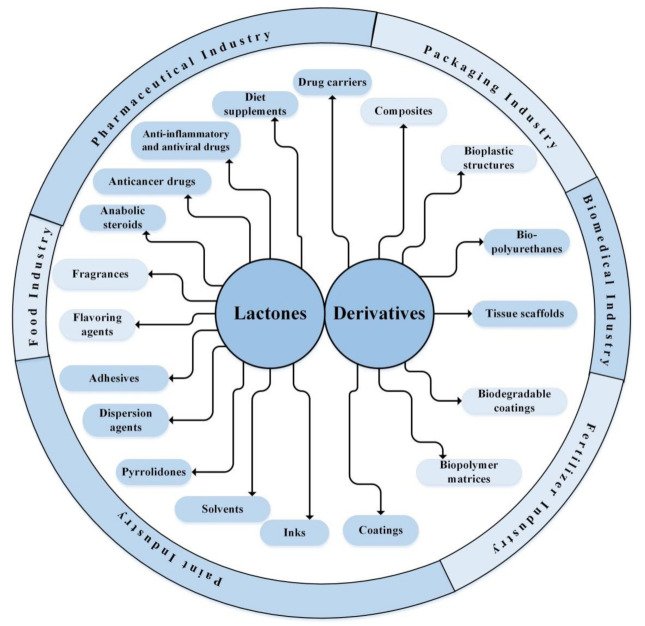
“Lactone-based polymers and copolymers, due to their biodegradability and biocompatibility, are mainly used in the medical industry, as scaffolds for the regeneration of bones and soft tissues, as well as in the pharmaceutical industry as the carriers of the active ingredients [5].”
BackgroundThe Baeyer−Villiger Reaction: New Developments toward Greener Procedures
ten Brink, G.-J., Arends, I. W. C. E., & Sheldon, R. A. (2004) · Chemical Reviews · doi:10.1021/cr030011l · Cited by 731
100 Years of Baeyer–Villiger Oxidations
Renz, M., & Meunier, B. (1999) · European Journal of Organic Chemistry · doi:10.1002/(sici)1099-0690(199904)1999:4<737::aid-ejoc737>3.0.co;2-b · Cited by 582
Approaches to Sustainable and Continually Recyclable Cross-Linked Polymers
Fortman, D. J., Brutman, J. P., De Hoe, G. X., Snyder, R. L., Dichtel, W. R., & Hillmyer, M. A. (2018) · ACS Sustainable Chemistry & Engineering · doi:10.1021/acssuschemeng.8b02355 · Cited by 559 · cited 1×
“Polyesters are very useful materials due to their biodegradability in the presence of enzymes, mechanical properties and many other important functional properties [1].”
BackgroundZhou, S., Deng, X., & Yang, H. (2003) · Biomaterials · doi:10.1016/s0142-9612(03)00207-2 · Cited by 383
Critical evaluation of biodegradable polymers used in nanodrugs
Caballero-George, C., Marin, & Briceño (2013) · International Journal of Nanomedicine · doi:10.2147/ijn.s47186 · Cited by 252 · cited 1×
“These include, in particular, PCL and Polylactic acid (PLA) [37,38].”
BackgroundRecent Advances in Ring-Opening Polymerization of Lactones and Related Compounds
Löfgren, A., Albertsson, A.-C., Dubois, P., & Jérôme, R. (1995) · Journal of Macromolecular Science, Part C · doi:10.1080/15321799508014594 · Cited by 235
P.Pêgo, A., Poot, A. A., Grijpma, D. W., & Feijen, J. (2001) · Journal of Biomaterials Science, Polymer Edition · doi:10.1163/156856201744434 · Cited by 188 · cited 1×
“Trimethylene carbonate Poly(ε-CL-co-TMC) Tin octanoate (SnOct2 ) [90,91] Methanesulfonic acid [92] Carbonate, 2-allyloxymethyl-2ethyl-trimethylene (AOMEC) Poly(ε-CL-co- AOMEC) 1,5,7-triazabicyclo [4.”
Majeed, Z., Ramli, N. K., Mansor, N., & Man, Z. (2015) · Reviews in Chemical Engineering · doi:10.1515/revce-2014-0021 · Cited by 185 · cited 1×
“Lactone copolymers can also be used in the fertilizer industry as coatings for fertilizers with slow and/or controlled release of nutrients, which in turn will help to reduce the leaching of these components to the soil and atmosphere [7].”
Background
Research works printed but not linked: 4
- Pelouze J. Memoir on lactic acid Comptes Rendus 1844 19 1219 1227
- Libiszewska K. Lactones as biologically active compounds Biotechnol. Food Sci. 2011 75 45 53
- WHO Gamma-butyrolactone (GBL) Critical Review Report Agenda item 4.3. Expert Committee on Drug Dependence Thirty-sixth Meeting World Health Assembly Geneva, Switzerland 2014
- Krow G. The Baeyer-Villiger Oxidation of Ketones and Aldehydes Org. React. 1993 43 251 798
Cited by
Ntrivala, M. A., Pitsavas, A. C., Lazaridou, K., Baziakou, Z., Karavasili, D., Papadimitriou, M., Ntagkopoulou, C., Balla, E., & Bikiaris, D. N. (2025) · European Polymer Journal · doi:10.1016/j.eurpolymj.2025.114033 · Cited by 178
Li, X., Clarke, R. W., An, H., Gowda, R. R., Jiang, J., Xu, T., & Chen, E. Y. ‐. (2023) · Angewandte Chemie International Edition · doi:10.1002/anie.202303791 · Cited by 93
Sheta, S. M., Hamouda, M. A., Ali, O. I. M., Kandil, A. T., Sheha, R. R., & El‐Sheikh, S. M. (2023) · RSC Advances · doi:10.1039/d3ra04177h · Cited by 77
High-throughput experimentation for discovery of biodegradable polyesters
Fransen, K. A., Av-Ron, S. H. M., Buchanan, T. R., Walsh, D. J., Rota, D. T., Note, L. V., & Olsen, B. D. (2023) · Proceedings of the National Academy of Sciences · doi:10.1073/pnas.2220021120 · Cited by 73
“Specifically, lactide, ε -caprolactone, and δ -valerolactone were synthesized via ring-opening polymerization, (51) while all other lactones were polymerized via melt ring-opening polymerization.”
MethodTriazabicyclodecene: A versatile catalyst for polymer synthesis
Kim, J. G., Lee, G. S., & Lee, A. (2023) · Journal of Polymer Science · doi:10.1002/pol.20230643 · Cited by 65
Aluminum-Containing Heterobimetallic Complexes as Versatile Platforms for Homogeneous Catalysis
Singh, R. P., Sinhababu, S., & Mankad, N. P. (2023) · ACS Catalysis · doi:10.1021/acscatal.3c03315 · Cited by 47
Thiolactone chemistry, a versatile platform for macromolecular engineering
Illy, N., & Mongkhoun, E. (2022) · Polymer Chemistry · doi:10.1039/d2py00731b · Cited by 34
Metal‐Free Electrocatalytic Diacetoxylation of Alkenes
Vanhoof, J. R., Smedt, P. J. D., Derhaeg, J., Ameloot, R., & Vos, D. E. D. (2023) · Angewandte Chemie International Edition · doi:10.1002/anie.202311539 · Cited by 19
Ring-Opening Copolymerizations of a CO 2 -Derived δ-Valerolactone with ε-Caprolactone and l -Lactide
Anderson, R. J., Fine, R. L., Rapagnani, R. M., & Tonks, I. A. (2024) · Macromolecules · doi:10.1021/acs.macromol.4c00770 · Cited by 17
Kinetically guided high‐yield and rapid production of ε‐caprolactone in a microreactor system
Yang, Y., Du, W., Qian, G., Duan, X., Gu, X., Zhou, X., Yang, Z., & Zhang, J. (2022) · AIChE Journal · doi:10.1002/aic.17867 · Cited by 17
Abduh, N. A. Y., Al‐Kahtani, A. A., Algarni, T. S., & Al-Odayni, A.-B. M. (2023) · Catalysts · doi:10.3390/catal13040692 · Cited by 13
Wang, Y., Zhang, M., Ding, G., Wei, R., Zheng, R., Li, C., Wang, W., Zhang, H., Sun, Q., Zhao, X., et al. (2023) · Colloids and Surfaces B Biointerfaces · doi:10.1016/j.colsurfb.2023.113256 · Cited by 12
γ-Butyrolactone Synthesis from Allylic Alcohols Using the CO2 Radical Anion
Mangaonkar, S. R., Hayashi, H., Kanna, W., Debbarma, S., Harabuchi, Y., Maeda, S., & Mita, T. (2024) · Precision Chemistry · doi:10.1021/prechem.3c00117 · Cited by 11
Lessa, M. D., Fajardo, J. R. D., Delarmelina, M., & Carneiro, J. W. D. M. (2021) · Molecular Catalysis · doi:10.1016/j.mcat.2021.111896 · Cited by 11
Narasimharaj, V., Soundararajan, R., Vasanth, R., & Rajesh Kumar, D. (2026) · Polymer Bulletin · doi:10.1007/s00289-025-06132-4 · Cited by 10
Li, X., Clarke, R. W., An, H., Gowda, R. R., Jiang, J., Xu, T., & Chen, E. Y. ‐. (2023) · Angewandte Chemie · doi:10.1002/ange.202303791 · Cited by 8
Bińczak, J., Szelwicka, A., Siewniak, A., Dziuba, K., & Chrobok, A. (2022) · Materials · doi:10.3390/ma15196608 · Cited by 7
Self-citationCampana, F., Lanari, D., Angelis, F. D., & Vaccaro, L. (2025) · Green Chemistry · doi:10.1039/d5gc03582a · Cited by 5
Wu, B., Feng, X., Du, W., Li, Z., Qian, G., Duan, X., Zhou, X., Liu, Z., & Zhang, J. (2023) · Journal of Flow Chemistry · doi:10.1007/s41981-023-00301-0 · Cited by 4
Synthesis and Biodegradation of Optically Active Polymers Based on (R)‐3‐Hydroxybutyric Acid
Yokaryo, H., Nakayama, A., Kawasaki, N., Yamano, N., Ida, S., & Tokiwa, Y. (2023) · Asian Journal of Organic Chemistry · doi:10.1002/ajoc.202300330 · Cited by 3
Abduh, N. A. Y., Al‐Kahtani, A. A., Amer, M. S., Algarni, T. S., & Al-Odayni, A.-B. M. (2023) · Molecules · doi:10.3390/molecules28207192 · Cited by 3
Sustainable C–H Methylation Employing Dimethyl Carbonate
Shinde, S. D., Narang, G., Mahajan, G. M., & Kumar, D. (2024) · The Journal of Organic Chemistry · doi:10.1021/acs.joc.4c01719 · Cited by 4
Intramolecular C–H Functionalization of α-Alkyl-α-diazoesters toward the Synthesis of Lactones
Bagale, B., Nolan, A. L., Heuser, E., & Mighion, J. D. (2026) · Organic Letters · doi:10.1021/acs.orglett.6c01332 · Cited by 2
Metal‐Free Electrocatalytic Diacetoxylation of Alkenes
Vanhoof, J. R., Smedt, P. J. D., Derhaeg, J., Ameloot, R., & Vos, D. E. D. (2023) · Angewandte Chemie · doi:10.1002/ange.202311539 · Cited by 2
Catalyst‐Free Diastereoselective Halo‐Cycloacetalization of Olefinic Aldehydes
Qiang, S., Chan, T., & Yeung, Y. (2023) · Asian Journal of Organic Chemistry · doi:10.1002/ajoc.202300564 · Cited by 2
Ring-expansion reactions of Cyrene and derivatives with ethyl diazoacetate
Puschnig, J., Lamb, O. J., Sumby, C. J., & Greatrex, B. W. (2025) · Australian Journal of Chemistry · doi:10.1071/ch24163 · Cited by 1
Apostolidis, D., Dyer, W. E., Dransfeld, C. A., & Kumru, B. (2025) · RSC Advances · doi:10.1039/d5ra02151k · Cited by 1
Synthesis of functionalized lactones: catalytic cross-coupling of 1,2-diols and allylic alcohols
Maharana, P., Sankar, R. V., Sankaralingam, M., & Gunanathan, C. (2025) · Chemical Communications · doi:10.1039/d5cc02207j · Cited by 1
Typek, R., Dybowski, M. P., & Dawidowicz, A. L. (2025) · Forensic Toxicology · doi:10.1007/s11419-025-00738-z · Cited by 1
“GHBA contains both hydroxyl and carboxyl functional groups, which may undergo polycondensation in the high-temperature GC injector, forming polyesters and/ or its cyclic ester, GBL [19–21].”
Wolny, A., Procek, A., Biały, I., Ziębińska, I., Kudzia, L., & Gielarowska, E. (2026) · Molecules · doi:10.3390/molecules31132226 · Cited by 1
Aparicio, A. E. E., de León, R. E. D., Vázquez, P., & Facio, A. O. C. (2023) · Afinidad · doi:10.55815/417970
Electrochemical Mediated Esterification Reaction of Carboxylic Acids and Alcohols
Zhong, Y., hen, Y., Yu, L., & Zhou, H. (2023) · Chinese Journal of Organic Chemistry · doi:10.6023/cjoc202302004
Microbial Production of Lactones (Peach and Fruity Flavors)
Braga, A., & Belo, I. (2024) · Springer eBooks · doi:10.1007/978-3-030-81403-8_55-1
Microbial Production of Lactones (Peach and Fruity Flavors)
Braga, A., & Belo, I. (2025) · Springer eBooks · doi:10.1007/978-3-031-90974-0_55
Varshini, K. P., Balakumar, S., & Mahesh, N. (2025) · De Gruyter eBooks · doi:10.1515/9783111673431-003
Chauhan, S. B., Singh, I., Chauhan, Y., & Jain, C. (2025) · Biomedical Materials & Devices · doi:10.1007/s44174-025-00619-4
Shakaroun, R. M. (2021) · theses.fr (ABES) · doi:10.70675/2f088127z472bz4b2fzb9bfza1f8d1bdb9b1 · Cited by 4
Pan, X., Wang, X., & Wu, M. (2026) · Journal of Materials Engineering and Performance · doi:10.1007/s11665-026-13768-4
Visible-Light-Driven Palladium-Catalyzed Cyclocarbonylative Synthesis of Aliphatic Lactones
Zhou, C., Ennifer, B. J., & Arndtsen, B. A. (2026) · Organic Letters · doi:10.1021/acs.orglett.6c02707
Li, D., Shen, C., Si, Z., Pu, G., Zhang, J., Wu, X., & Liu, L. (2026) · Chinese Journal of Chemistry · doi:10.1002/cjoc.70740
Kalia, V., Rajendrakumar, A. L., Cruz-Nieto, R., Ramírez, A., González-Ruíz, J., Nandakumar, R., Udhani, H. H., McNeil, B., Xie, C., Dubey, S., et al. (2026) · Environmental Research · doi:10.1016/j.envres.2026.125601
Aghamoosa, F., Faysal, A., & Gramlich, W. M. (2026) · Polymer Chemistry · doi:10.1039/d6py00529b
Kumar, V., Zaman, M. M. U., Wilén, C., Rosenholm, J. M., & Bansal, K. K. (2026) · Discover Nano · doi:10.1186/s11671-026-04996-7
“Lactones are cyclic esters formed from hydroxy carboxylic acids and the name “lac-tones” was given by French chemist T.J. Pelouze, who extracted the lactone from lactic acid (LA) in 1980 [30].”
Influential
Metadata
- Authors
- Bińczak, J., Dziuba, K., & Chrobok, A.
- Affiliations
- Silesian University of Technology (PL)
- Grupa Azoty (Poland) (PL)
- Corresponding author
- Chrobok, Anna
- Venue
- Materials
- Publisher
- MDPI AG
- Published
- 2021-05-27
- Volume
- 14
- Issue
- 11
- Pages
- 2881
- ISSN
- 1996-1944 (ISSN-L)
- PMC
- PMC8198756
- OpenAlex
- W3165610759
- Cited by
- 43
- References
- 96
- Citations by year
- 2026: 9 · 2025: 9 · 2024: 4 · 2023: 16 · 2022: 3 · 2021: 2
- FWCI
- 0.43
- Type
- journal article
- Language
- en
- Open access
- gold
- doi.org
- Licence
- Locations
- Materials (publishedVersion, cc-by)
- PubMed Central (publishedVersion, cc-by)
- PubMed (publishedVersion)
- DOAJ (DOAJ: Directory of Open Access Journals) (submittedVersion, cc-by-sa)
- Funders
- Narodowe Centrum Badań i Rozwoju (POIR.01.02.00-00-00042/16)
- Topics
- Physical Sciences › Materials Science › Biomaterials › biodegradable polymer synthesis and properties
- Physical Sciences › Chemistry › Organic Chemistry › Advanced Polymer Synthesis and Characterization
- Physical Sciences › Materials Science › Polymers and Plastics › Polymer Synthesis and Characterization
- Keywords
- lactones, lactone monomers, lactone polymerization, copolymers, biodegradable polymers, metal-free synthesis, green chemistry, controlled drug release, tissue engineering scaffolds, implants, biomaterials
About these checks
Registry, retraction, Cites and statistics results are computed, not judged, with one exception: a printed reference that no index lists is read once by a model before it counts as a citation error. Claims are extracted by a model and kept only when their quote appears verbatim in the text; each cited source is then checked, with a model’s help, for whether it says what the claim relies on. Those verdicts can be wrong — read the claim’s quote and the cited source before relying on one.
Statistics and arithmetic are recomputed, not judged.
Confidence bands are shown only for fields calibrated on our annotated test set. None is calibrated yet, so no band is shown.
What counts as a claim ›How we measure confidence ›How we check this ›
Are you an author, or do you see a problem with this page? Request a review
Data sources
Bibliographic data: Semantic Scholar, OpenAlex, Crossref.
Contains information from the Semantic Scholar Academic Graph Datasets, made available under the ODC Attribution License (ODC-BY 1.0).
Semantic Scholar’s data is described in: Kinney, R., et al. (2023). The Semantic Scholar Open Data Platform. arXiv:2301.10140.
