

The DOI matches its Crossref record; 176 of the 177 references it cites were found in a registry or an index.
Bioactive Compounds from Macroalgae in the New Millennium: Implications for Neurodegenerative Diseases
Open accessAbstract
Marine environment has proven to be a rich source of structurally diverse and complex compounds exhibiting numerous interesting biological effects. Macroalgae are currently being explored as novel and sustainable sources of bioactive compounds for both pharmaceutical and nutraceutical applications. Given the increasing prevalence of different forms of dementia, researchers have been focusing their attention on the discovery and development of new compounds from macroalgae for potential application in neuroprotection. Neuroprotection involves multiple and complex mechanisms, which are deeply related. Therefore, compounds exerting neuroprotective effects through different pathways could present viable approaches in the management of neurodegenerative diseases, such as Alzheimer's and Parkinson's. In fact, several studies had already provided promising insights into the neuroprotective effects of a series of compounds isolated from different macroalgae species. This review will focus on compounds from macroalgae that exhibit neuroprotective effects and their potential application to treat and/or prevent neurodegenerative diseases.
Overview
The claims and statistics of this paper haven’t been checked yet.
Run the check — free, no account needed. It reads the open-access text and checks the sources it cites.
Integrity signals
Registry
Cites
Statistics
Figures
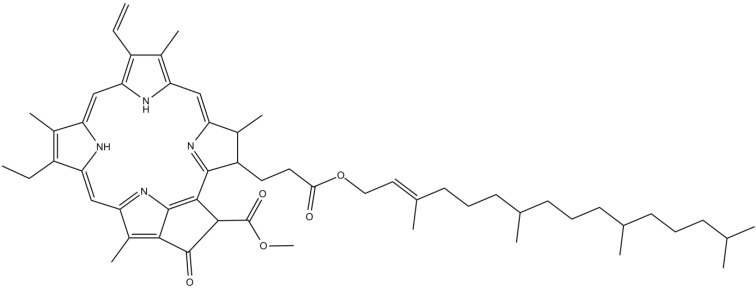
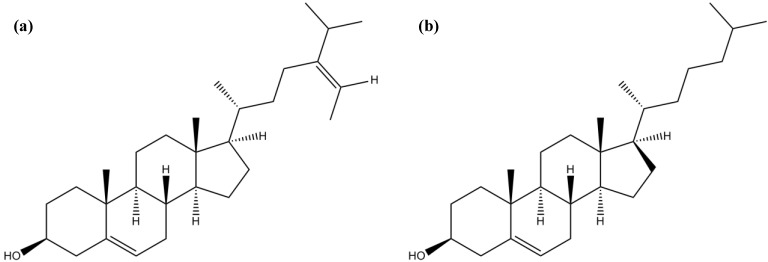
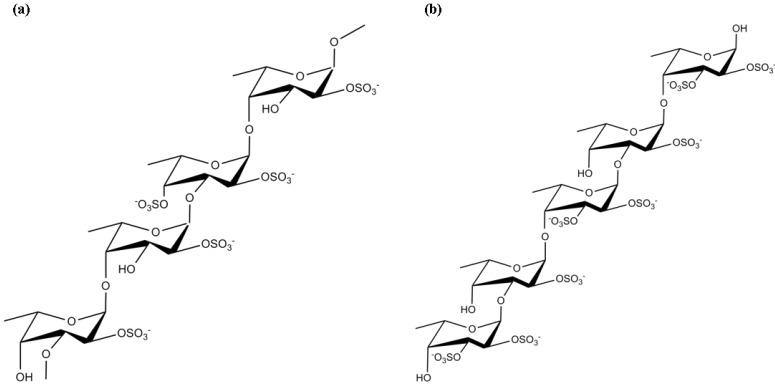
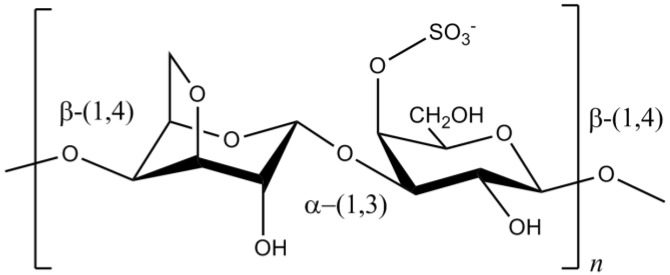
Verification
Claims the paper makes
The claims and statistics of this paper haven’t been checked yet.
Run the check — free, no account needed. It reads the open-access text and checks the sources it cites.
Claims other papers make about this one
Each is checked against this paper’s own text: does it say what the citing paper says it does?
In the citing paper
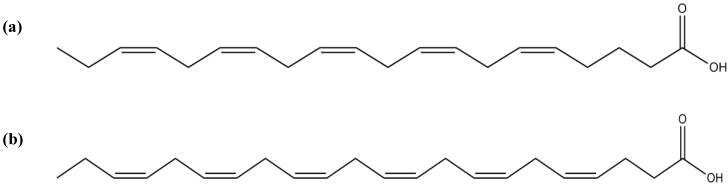
“Since polyunsaturated fatty acids (Figure 5) show biological properties, like cardiovascular protection, antiproliferative, and anti-inflammatory activity, their presence in macroalgae makes them very important for human health [6].”
From Overview on the Application of Modern Methods for the Extraction of Bioactive Compounds from Marine Macroalgae (2018) · cites this paper as [6]
In the citing paper
“Due to the presence of biocompounds in macroalgae, they possess a wide range of bioactivities, such as anti-aging, antioxidant, antimicrobial, antiproliferative, anti-inflammatory, antidiabetic, and neuroprotective activity [5,6,7].”
From Overview on the Application of Modern Methods for the Extraction of Bioactive Compounds from Marine Macroalgae (2018) · cites this paper as [6]
Self-check
Percentages, sums and reported differences re-computed from the paper’s own numbers.
The self-check needs the paper’s full text.
Citations
Cites
2 retracted
Rao, J. S., Ertley, R. N., Lee, H.-J., DeMar, J. C., Arnold, J. T., Rapoport, S. I., & Bazinet, R. P. (2006) · Molecular Psychiatry · doi:10.1038/sj.mp.4001888 · Cited by 291
RetractedChu, J., & Praticò, D. (2011) · American Journal Of Pathology · doi:10.1016/j.ajpath.2010.12.032 · Cited by 81
RetractedGlutamate neurotoxicity and diseases of the nervous system
Choi, D. W. (1988) · Neuron · doi:10.1016/0896-6273(88)90162-6 · Cited by 8,188
Uttara, B., Singh, A., Zamboni, P., & Mahajan, R. (2009) · Current Neuropharmacology · doi:10.2174/157015909787602823 · Cited by 3,378
2013 Alzheimer's disease facts and figures
Thies, W. H., & Bleiler, L. (2013) · Alzheimer s & Dementia · doi:10.1016/j.jalz.2013.02.003 · Cited by 3,372
n−3 Polyunsaturated fatty acids, inflammation, and inflammatory diseases
Calder, P. C. (2006) · The American Journal of Clinical Nutrition · doi:10.1093/ajcn/83.6.1505s · Cited by 2,525
Bioactive compounds in seaweed: functional food applications and legislation
Holdt, S. L., & Kraan, S. (2011) · Journal of Applied Phycology · doi:10.1007/s10811-010-9632-5 · Cited by 2,135
Ambati, R., Phang, S. M., Ravi, S., & Ravishankar, G. A. (2014) · Marine Drugs · doi:10.3390/md12010128 · Cited by 2,026
Melnick, V. L., & Dubler, N. N. (1985) · Contemporary Issues in Biomedicine, Ethics, and Society · doi:10.1007/978-1-4612-5174-3 · Cited by 1,986
Non-motor symptoms of Parkinson's disease: dopaminergic pathophysiology and treatment
Chaudhuri, К. R., & Schapira, A. H. V. (2009) · The Lancet Neurology · doi:10.1016/s1474-4422(09)70068-7 · Cited by 1,818
Research works printed but not linked: 4
- Kim, S.-K. (2012). Marine Pharmacognosy: Trends and Applications, Taylor & Francis.
- Ramawat, K.G., and Mérillon, J.-M. (2013). Natural Products: Phytochemistry, Botany and Metabolism of Alkaloids, Phenolics and Terpenes, Springer Berlin Heidelberg. · DOI
- Ramawat, K.G., and Mérillon, J.-M. (2013). Natural Products: Phytochemistry, Botany and Metabolism of Alkaloids, Phenolics and Terpenes, Springer (Berlin Heidelberg). · DOI
- Zhang, L., and Demain, A. (2005). Natural Products: Phytochemistry, Botany and Metabolism of Alkaloids, Phenolics and Terpenes, Humana Press.
Cited by
Sorted by citations
Antimicrobial Action of Compounds from Marine Seaweed
Pérez, M. J., Falqué, E., & Domı́nguez, H. (2016) · Marine Drugs · doi:10.3390/md14030052 · Cited by 663
Seaweeds as a Functional Ingredient for a Healthy Diet
Peñalver, R., Lorenzo, J. M., Ros, G., Amarowicz, R., Pateiro, M., & Nieto, G. (2020) · Marine Drugs · doi:10.3390/md18060301 · Cited by 541
Macroalgae—A Sustainable Source of Chemical Compounds with Biological Activities
BIRIȘ-DORHOI, E. S., MICHIU, D., Pop, C. R., Rotar, A. M., Tofană, M., Pop, O. L., Socaci, S., & Fărcaș, A. C. (2020) · Nutrients · doi:10.3390/nu12103085 · Cited by 319
Novel Bioactive Compounds From Marine Sources as a Tool for Functional Food Development
Ghosh, S., Sarkar, T., Pati, S., Kari, Z. A., Edinur, H. A., & Chakraborty, R. (2022) · Frontiers in Marine Science · doi:10.3389/fmars.2022.832957 · Cited by 287
Seaweeds as nutraceuticals for health and nutrition
Shannon, E., & Abu‐Ghannam, N. (2019) · Phycologia · doi:10.1080/00318884.2019.1640533 · Cited by 288
Metadata
- Authors
- Barbosa, M., Valentão, P., & Andrade, P.
- Affiliations
- Universidade do Porto (PT)
- REQUIMTE/Laboratory of Pharmacognosy, Department of Chemistry, Faculty of Pharmacy, University of Porto, Rua de Jorge Viterbo Ferreira n° 228, 4050-313 Porto, Portugal
- Corresponding author
- Andrade, Paula
- Venue
- Marine Drugs
- Publisher
- MDPI AG
- Published
- 2014-09-25
- Volume
- 12
- Issue
- 9
- Pages
- 4934-4972
- ISSN
- 1660-3397 (ISSN-L)
- PMC
- PMC4178484
- OpenAlex
- W1975237170
- Cited by
- 181
- References
- 177
- Citations by year
- 2026: 15 · 2025: 10 · 2024: 23 · 2023: 14 · 2022: 19 · 2021: 15 · 2020: 21 · 2019: 19 · 2018: 23 · 2017: 6 · 2016: 11 · 2015: 4 · 2014: 1
- FWCI
- 1.11
- Type
- journal article
- Language
- en
- Open access
- gold
- doi.org
- Licence
- Locations
- Marine Drugs (publishedVersion, cc-by)
- Europe PMC (PubMed Central) (publishedVersion, cc-by)
- PubMed Central (publishedVersion, cc-by)
- PubMed (publishedVersion)
- DOAJ (DOAJ: Directory of Open Access Journals) (submittedVersion, cc-by-sa)
- Funders
- European Commission (Pest-C/EQB/LA0006/2013)
- Fundação para a Ciência e a Tecnologia (COMPETE, C/EQB/LA0006/2013, PEst-C/EQB/LA0006/2013, SFRH/BD/95861/2013)
- Topics
- Life Sciences › Agricultural and Biological Sciences › Aquatic Science › Seaweed-derived Bioactive Compounds
- Health Sciences › Medicine › Complementary and alternative medicine › Medicinal Plants and Neuroprotection
- Life Sciences › Neuroscience › Cellular and Molecular Neuroscience › Alzheimer's disease research and treatments
- Keywords
- seaweed, bioactive compounds, neuroprotection, neurodegenerative diseases, Alzheimer's disease, Parkinson's disease, marine natural products, nutraceuticals, pharmaceuticals, dementia
- MeSH terms
- Animals, Antioxidants, Humans, Seaweed, Water Microbiology, Neuroprotective Agents, Neurodegenerative Diseases
About these checks
Registry, retraction, Cites and statistics results are computed, not judged, with one exception: a printed reference that no index lists is read once by a model before it counts as a citation error. Claims are extracted by a model and kept only when their quote appears verbatim in the text; each cited source is then checked, with a model’s help, for whether it says what the claim relies on. Those verdicts can be wrong — read the claim’s quote and the cited source before relying on one.
Statistics and arithmetic are recomputed, not judged.
Confidence bands are shown only for fields calibrated on our annotated test set. None is calibrated yet, so no band is shown.
What counts as a claim ›How we measure confidence ›How we check this ›
Are you an author, or do you see a problem with this page? Request a review
