

GLP-1 Receptor Agonists and Kidney Protection
Open accessThe DOI matches its Crossref record; 49 of the 49 references it cites were found in a registry or an index.
Abstract
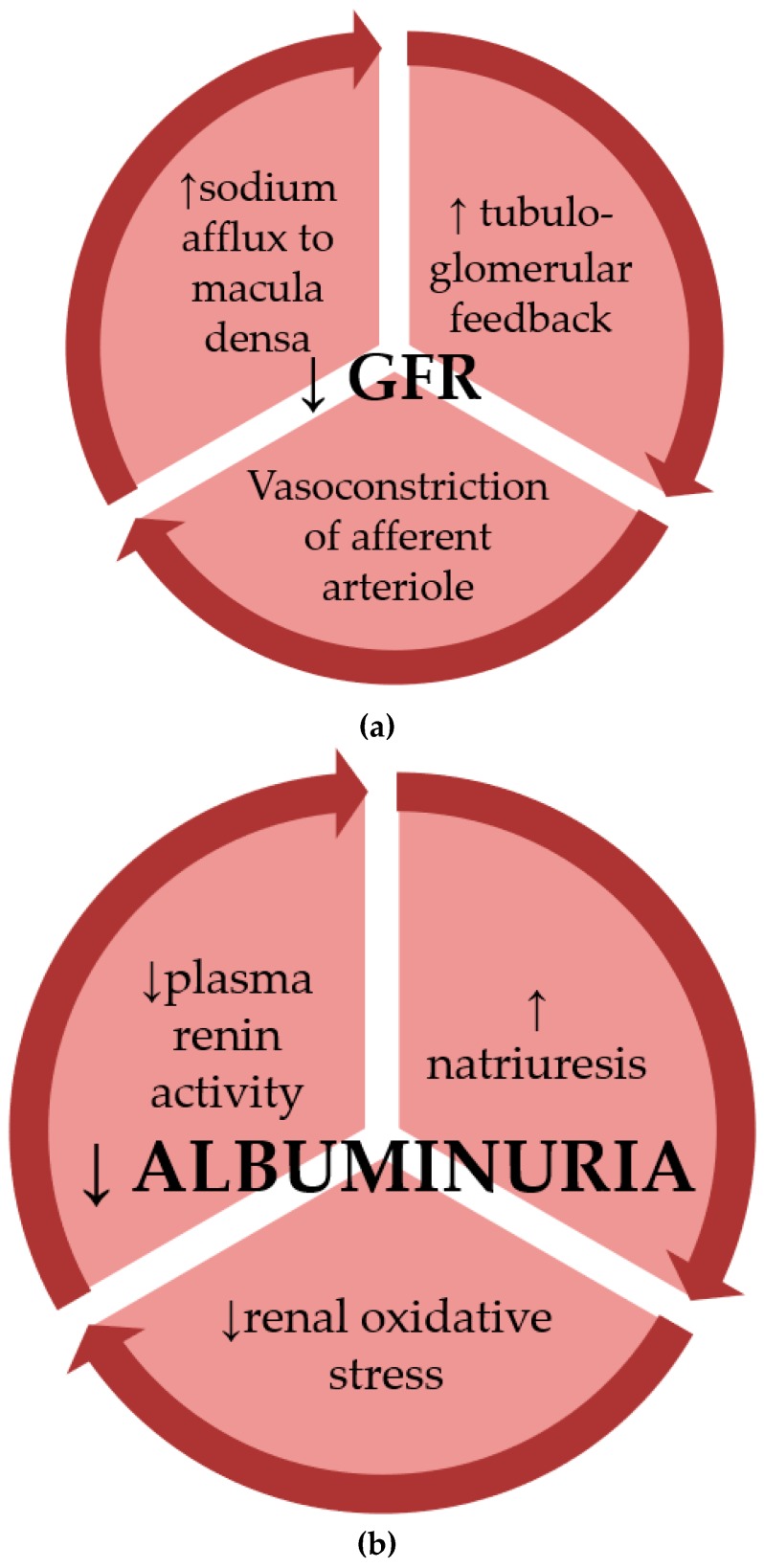
Type 2 diabetes mellitus (T2DM) is the leading cause of chronic kidney disease (CKD). Diabetic nephropathy (DN) is determined by specific pathological structural and functional alterations of the kidneys in patients with diabetes, and its clinical manifestations are albuminuria and decline of glomerular filtration rate (GFR). Apart from renin–angiotensin–aldosterone system (RAAS) inhibitors, no other drugs are currently available as therapy for diabetic kidney disease (DKD). Glucagon-like peptide-1 receptor (GLP-1R) agonists are a new class of anti-hyperglycemic drugs which have been demonstrated to prevent the onset of macroalbuminuria and reduce the decline of GFR in diabetic patients. These drugs may exert their beneficial actions on the kidneys through blood glucose- and blood pressure (BP)-lowering effects, reduction of insulin levels and weight loss. Clinical benefits of GLP-1R agonists were acknowledged due to data from large randomized phase III clinical trials conducted to assess their cardiovascular(CV) safety. These drugs improved renal biomarkers in placebo-controlled clinical studies, with effects supposed to be independent of the actions on glycemic control. In this review, we will focus on the actions of GLP-1R agonists on glucose metabolism and kidney physiology, and evaluate direct and indirect mechanisms through which these drugs may confer renal protection.
Overview
The claims and statistics of this paper haven’t been checked yet.
Free: it reads the open-access text and checks the first 5 claims that cite a source we can check. Create a free account to check every claim.
Integrity signals
Registry
Cites
Statistics
Figures
Verification
Claims the paper makes
The claims and statistics of this paper haven’t been checked yet.
Free: it reads the open-access text and checks the first 5 claims that cite a source we can check. Create a free account to check every claim.
Claims other papers make about this one
Each is checked against this paper’s own text: does it say what the citing paper says it does?
The cited source says what the claim attributes to it.
In the citing paper
“GLP1-RA may exert favorable effects on the kidneys through direct or indirect effects (Fig. 1/Central Illustration) [31], [32], [33], [34].”
From Glucagon-like peptide-1 receptor agonists in diabetic kidney disease: a review of their kidney and heart protection (2023) · cites this paper as [31]
In the citing paper
“Direct effects include increasing natriuresis and diuresis, decreasing oxidative stress and inflammation, and possible glomerular hemodynamic effects.”
From Glucagon-like peptide-1 receptor agonists in diabetic kidney disease: a review of their kidney and heart protection (2023) · cites this paper as [31]
In the citing paper
“GLP1-RA also lower blood pressure; the mechanisms underlying this effect are still under investigation[36] but may be partially attributed to the increase in natriuresis [31].”
From Glucagon-like peptide-1 receptor agonists in diabetic kidney disease: a review of their kidney and heart protection (2023) · cites this paper as [31]
In the citing paper
“In addition, GLP1-RA stimulate pathways responsible for reducing reactive oxygen species in the kidneys [31].”
From Glucagon-like peptide-1 receptor agonists in diabetic kidney disease: a review of their kidney and heart protection (2023) · cites this paper as [31]
In the citing paper
“Specifically, GLP1-RA inhibit the sodium-hydrogen exchanger 3 in proximal tubular cells to ultimately increase natriuresis and diuresis [31].”
From Glucagon-like peptide-1 receptor agonists in diabetic kidney disease: a review of their kidney and heart protection (2023) · cites this paper as [31]
Self-check
Percentages, sums and reported differences re-computed from the paper’s own numbers.
The self-check needs the paper’s full text.
Citations
Cites
Liraglutide and Cardiovascular Outcomes in Type 2 Diabetes
Marso, S. P., Daniels, G. H., Brown-Frandsen, K., Kristensen, P., Mann, J. F. E., Nauck, M. A., Nissen, S. E., Pocock, S., Poulter, N. R., Ravn, L. S., et al. (2016) · New England Journal of Medicine · doi:10.1056/nejmoa1603827 · Cited by 7,629
Semaglutide and Cardiovascular Outcomes in Patients with Type 2 Diabetes
Marso, S. P., Bain, S. C., Consoli, A., Eliaschewitz, F. G., Jódar, E., Leiter, L. A., Lingvay, I., Rosenstock, J., Seufert, J., Warren, M. L., et al. (2016) · New England Journal of Medicine · doi:10.1056/nejmoa1607141 · Cited by 6,900
Biology of Incretins: GLP-1 and GIP
Baggio, L. L., & Drucker, D. J. (2007) · Gastroenterology · doi:10.1053/j.gastro.2007.03.054 · Cited by 3,639 · cited 2×
“Moreover, incretins improve glucose sensitivity in pancreatic β-cells, stimulate β-cell proliferation, and reduce their apoptosis [11].”
BackgroundLixisenatide in Patients with Type 2 Diabetes and Acute Coronary Syndrome
Pfeffer, M. A., Claggett, B., Diaz, R., Dickstein, K., Gerstein, H. C., Køber, L. V., Lawson, F. C., Ping, L., Wei, X., Lewis, E. F., et al. (2015) · New England Journal of Medicine · doi:10.1056/nejmoa1509225 · Cited by 2,409 · cited 1×
“004), the median values at baseline (ratio, 10 in each study treatment group) and follow-up (ratio, 12 in the lixisenatide group and 13 in the placebo group) were clinically almost similar [42].”
ResultEffects of once-weekly exenatide on cardiovascular outcomes in type 2 diabetes
Holman, R. R., Bethel, M. A., Mentz, R. J., Thompson, V. P., Lokhnygina, Y., Buse, J. B., Chan, J. C., Choi, J., Gustavson, S. M., Iqbal, N., et al. (2017) · New England Journal of Medicine · doi:10.1056/nejmoa1612917 · Cited by 2,162 · cited 1×
“The trial demonstrated the CV safety of exenatide once-weekly [44].”
BackgroundDiabetic nephropathy: diagnosis, prevention, and treatment
Gross, J. L., de Azevedo, M. J., Silveiro, S. P., Canani, L. H., Caramori, M. L., & Zelmanovitz, T. (2005) · Diabetes Care · doi:10.2337/diacare.28.1.164 · Cited by 1,839
Hernandez, A. F., Green, J. B., Janmohamed, S., D'Agostino, R. B., Granger, C. B., Jones, N. P., Leiter, L. A., Rosenberg, A. E., Sigmon, K. N., Somerville, M. C., et al. (2018) · The Lancet · doi:10.1016/s0140-6736(18)32261-x · Cited by 1,829 · cited 1×
“Albiglutide was superior to placebo with respect to major adverse CV events, reducing the risk of the primary composite outcome (death from CV causes, non-fatal myocardial infarction, or non-fatal stroke) by 22% compared to placebo [47].”
BackgroundPathologic Classification of Diabetic Nephropathy
Tervaert, T. W. C., Mooyaart, A. L., Amann, K., Cohen, A. H., Cook, H. T., Drachenberg, C. B., Ferrario, F., Fogo, A. B., Haas, M., de Heer, E., et al. (2010) · Journal of the American Society of Nephrology · doi:10.1681/asn.2010010010 · Cited by 1,690
GLP-1 receptor agonists for individualized treatment of type 2 diabetes mellitus
Meier, J. J. (2012) · Nature Reviews Endocrinology · doi:10.1038/nrendo.2012.140 · Cited by 1,311
Liraglutide and renal outcomes in type 2 diabetes
Mann, J. F. E., Ørsted, D. D., Brown-Frandsen, K., Marso, S. P., Poulter, N. R., Rasmussen, S., Tornøe, K., Zinman, B., & Buse, J. B. (2017) · New England Journal of Medicine · doi:10.1056/nejmoa1616011 · Cited by 1,253
Cited by
Therapeutic Peptides: Current Applications and Future Directions
Wang, L., Wang, N., Zhang, W., Cheng, X., Yan, Z., Shao, G., Wang, X., Wang, R., & Fu, C. (2022) · Signal Transduction and Targeted Therapy · doi:10.1038/s41392-022-00904-4 · Cited by 2,131
Glucagon-like peptide-1: a multi-faceted anti-inflammatory agent
Mehdi, S. F., Pusapati, S., Anwar, M. S., Lohana, D., Kumar, P., Nandula, S. A., Nawaz, F. K., Tracey, K., Yang, H., LeRoith, D., et al. (2023) · Frontiers in Immunology · doi:10.3389/fimmu.2023.1148209 · Cited by 317
Xie, Y., Bowe, B., Gibson, A. K., McGill, J. B., Maddukuri, G., Yan, Y., & Al-Aly, Z. (2020) · Diabetes Care · doi:10.2337/dc20-1890 · Cited by 153
GLP-1 Receptor Agonists and Diabetic Kidney Disease: A Call of Attention to Nephrologists
Górriz, J. L., Soler, M. J., Navarro-González, J. F., García-Carro, C., Puchades, M. J., D’Marco, L., Martínez Castelao, A., Fernández-Fernández, B., Ortiz, A., Górriz-Zambrano, C., et al. (2020) · Journal of Clinical Medicine · doi:10.3390/jcm9040947 · Cited by 144
“GLP-1R activation leads to stimulation of cyclic adenosine monophosphate–protein kinase A pathways, producing antioxidative effects; it, therefore, seems likely that GLP-1 protects the kidney from oxidative injury [40].”
BackgroundSharma, D., Tekade, R. K., & Kalia, K. (2020) · Phytomedicine · doi:10.1016/j.phymed.2020.153235 · Cited by 132
Michos, E. D., Bakris, G. L., Rodbard, H. W., & Tuttle, K. R. (2023) · American Journal of Preventive Cardiology · doi:10.1016/j.ajpc.2023.100502 · Cited by 125
“In addition, GLP1-RA stimulate pathways responsible for reducing reactive oxygen species in the kidneys [31].”
BackgroundWang, Y., Jin, M., Cheng, C. K., & Li, Q. (2023) · Frontiers in Endocrinology · doi:10.3389/fendo.2023.1238927 · Cited by 151
Min, J. S., Jo, S. J., Lee, S., Kim, D. Y., Kim, D. H., Lee, C. B., & Bae, S. K. (2025) · Drug Design Development and Therapy · doi:10.2147/dddt.s506957 · Cited by 133
“215 Moreover, GLP-1 RA treatment reportedly increased renal plasma flow and GFR in rats, leading to natriuresis and diuresis.”
Edwards, K., Li, X., & Lingvay, I. (2023) · The Journal of Clinical Endocrinology & Metabolism · doi:10.1210/clinem/dgac618 · Cited by 92
New progress in drugs treatment of diabetic kidney disease
Wang, J., Xiang, H., Lu, Y., Wu, T., & Ji, G. (2021) · Biomedicine & Pharmacotherapy · doi:10.1016/j.biopha.2021.111918 · Cited by 74
Rossing, P. R., Agarwal, R., Anker, S. D., Filippatos, G. S., Pitt, B., Ruilope, L. M., Amod, A., Marre, M., Joseph, A., Lage, A. Z., et al. (2021) · Diabetes Obesity and Metabolism · doi:10.1111/dom.14558 · Cited by 77
“Given that the prevalence of CKD in T2D is predicted to increase over the next 20 years,(1) additional treatment strategies that offer kidney protection will be critical for this patient population.(2) Therapeutic agents that showed CV and/or kidney benefits are approved for use in patients with T2D, including treatme…”
BackgroundHow glucagon-like peptide 1 receptor agonists work
Andreasen, C. R., Andersen, A., Knop, F. K., & Vilsbøll, T. (2021) · Endocrine Connections · doi:10.1530/ec-21-0130 · Cited by 71
Autophagy and its therapeutic potential in diabetic nephropathy
Han, Y.-P., Liu, L., Yan, J.-L., Chen, M., Meng, X., Zhou, X., & Qian, L.-B. (2023) · Frontiers in Endocrinology · doi:10.3389/fendo.2023.1139444 · Cited by 74
Alternative role of glucagon-like Peptide-1 receptor agonists in neurodegenerative diseases
Chen, S., Chuang, Y., Lin, T., & Yang, J. (2022) · European Journal of Pharmacology · doi:10.1016/j.ejphar.2022.175439 · Cited by 73
Role of Uremic Toxins, Oxidative Stress, and Renal Fibrosis in Chronic Kidney Disease
Frąk, W., Dąbek, B., Balcerczyk-Lis, M., Motor, J., Radzioch, E., Młynarska, E., Rysz, J., & Franczyk, B. (2024) · Antioxidants · doi:10.3390/antiox13060687 · Cited by 87
“These agents mimic the action of GLP-1, an incretin hormone produced in the intestine in response to food intake [64].”
BackgroundRenal Outcomes in Type 2 Diabetes: A Review of Cardiovascular and Renal Outcome Trials
Williams, D. M., Nawaz, A., & Evans, M. (2020) · Diabetes Therapy · doi:10.1007/s13300-019-00747-3 · Cited by 64
Chen, J., Hsu, T., Liu, J.-H., Pan, H., Lai, C., Yang, S., & Wu, V. (2025) · American Journal of Kidney Diseases · doi:10.1053/j.ajkd.2024.11.013 · Cited by 83
González, C. D., Negueruela, M. P. C., Santamarina, C. N., Resnik, R., & Vaccaro, M. I. (2021) · Cells · doi:10.3390/cells10092497 · Cited by 65
“) are highly effective antidiabetic agents with some renoprotective effects mediated by GLP-1 receptor signaling [114].”
BackgroundTargeting Redox Imbalance as an Approach for Diabetic Kidney Disease
Matoba, K., Takeda, Y., Nagai, Y., Yokota, T., Utsunomiya, K., & Nishimura, R. (2020) · Biomedicines · doi:10.3390/biomedicines8020040 · Cited by 63
New Pandemic: Obesity and Associated Nephropathy
Sharma, I., Liao, Y., Zheng, X., & Kanwar, Y. S. (2021) · Frontiers in Medicine · doi:10.3389/fmed.2021.673556 · Cited by 68
Eid, L. E., Reynolds, C. A., Tomás, A., & Jones, B. J. (2022) · Pharmacological Research · doi:10.1016/j.phrs.2022.106411 · Cited by 57
Huang, L., Lin, T., Shi, M., Chen, X., & Wu, P. (2020) · American Journal of Physiology-Renal Physiology · doi:10.1152/ajprenal.00128.2020 · Cited by 46
Cannabinoid Receptor 1 Inhibition in Chronic Kidney Disease: A New Therapeutic Toolbox
Dao, M., & François, H. (2021) · Frontiers in Endocrinology · doi:10.3389/fendo.2021.720734 · Cited by 49
“Recently, new therapeutic classes have improved the management of diabetic nephropathy, which is the main cause of CKD and ESRD worldwide (3), particularly sodium glucose co-transporter 2 (SGLT2) inhibitors (4–8) and glucagon-like peptide-1 receptor (GLP-1R) agonists (9, 10).”
BackgroundNajafi, S., Bahrami, M., Butler, A. E., & Sahebkar, A. (2022) · British Journal of Clinical Pharmacology · doi:10.1111/bcp.15344 · Cited by 39
Mirabelli, M., Chiefari, E., Tocci, V., Caroleo, P., Giuliano, S., Greco, E., Luque, R. M., Puccio, L., Foti, D. P., Aversa, A., et al. (2021) · Journal of Clinical Medicine · doi:10.3390/jcm10050985 · Cited by 37
“In absence of dedicated clinical trials, with long-term and comparative follow-up, the effect of DU on the risk of diabetic kidney disease remains equivocal [36], as both DU and LIRA treatments could relate with significant declines in eGFR at 12-month follow-up in real-world scenarios [14].”
BackgroundSelf-citationPérez-Belmonte, L. M., Sanz-Cánovas, J., García de Lucas, M. D., Ricci, M., Avilés-Bueno, B., Cobos-Palacios, L., Pérez-Velasco, M. A., López-Sampalo, A., Bernal-López, M. R., Jansen-Chaparro, S., et al. (2022) · Frontiers in Endocrinology · doi:10.3389/fendo.2022.851035 · Cited by 35
“GLP-1 receptor agonists have been shown to modulate water and sodium homeostasis , reducing hyperfiltration and increasing natriuresis (36).”
BackgroundYuan, D., Sharma, H., Krishnan, A., Vangaveti, V., & Malabu, U. H. (2022) · Diabetes Obesity and Metabolism · doi:10.1111/dom.14776 · Cited by 41
Recent Advances in the Emerging Therapeutic Strategies for Diabetic Kidney Diseases
Huang, W., Chen, Y., Li, Z., He, F., & Zhang, C. (2022) · International Journal of Molecular Sciences · doi:10.3390/ijms231810882 · Cited by 36
“Incretins exert hypoglycemic effects by stimulating pancreatic β-cell proliferation to increase insulin and inhibit glucagon release from pancreatic α-cells [97].”
BackgroundRos-Madrid, I., Cano-Mármol, R. P., Ferrer-Gomez, M., & Ramos-Molina, B. (2025) · Canadian Journal of Physiology and Pharmacology · doi:10.1139/cjpp-2025-0148 · Cited by 31
Wang, Y., He, W., Wei, W., Mei, X., Yang, M., & Wang, Y. (2021) · Frontiers in Endocrinology · doi:10.3389/fendo.2021.622737 · Cited by 30
“The benefits might be consistent with the known effects of GLP-1RA on traditional risk factors for progressive kidney disease, including improving glucose metabolism, lowering blood pressure and reducing body weight (8).”
BackgroundUnlocking the multifaceted roles of GLP-1: Physiological functions and therapeutic potential
AL-Noshokaty, T. M., Abdelhamid, R., Abdelmaksoud, N. M., Khaled, A., Hossam, M., Ahmed, R., Saber, T., Khaled, S., Elshaer, S. S., & Abulsoud, A. I. (2025) · Toxicology Reports · doi:10.1016/j.toxrep.2025.101895 · Cited by 30
Lu, C., Xu, C., Li, S., Ni, H., & Yang, J. (2024) · Redox Biology · doi:10.1016/j.redox.2024.103468 · Cited by 36
Review of the veteran affairs diabetes trial: Lessons learned
Tran, K., & Reaven, P. D. (2020) · Reviews in Endocrine and Metabolic Disorders · doi:10.1007/s11154-020-09558-5 · Cited by 28
Vanek, L., Kurnikowski, A., Krenn, S., Mussnig, S., & Hecking, M. (2024) · Diabetes, Obesity and Metabolism · doi:10.1111/dom.15967 · Cited by 28
AL-Qabbaa, S. M., Qaboli, S. I., Alshammari, T. K., Alamin, M. A., Alrajeh, H. M., Almuthnabi, L. A., Alotaibi, R. R., Alonazi, A. S., Dayel, A. F. B., Al‐Rasheed, N. M., et al. (2023) · International Journal of Molecular Sciences · doi:10.3390/ijms24076532 · Cited by 33
“Furthermore, augment d levels of GLP-1, mediate by the inhibit on of DPP-4, exert anti-inflamma ory actions in hyperglycemia, wh ch may itigate DN [43].”
BackgroundBinding sites and design strategies for small molecule GLP-1R agonists
Zhang, H., Wu, T., Wu, Y., Peng, Y., Wei, X. H., Lu, T., & Jiao, Y. (2024) · European Journal of Medicinal Chemistry · doi:10.1016/j.ejmech.2024.116632 · Cited by 29
Novel Therapeutic Approaches in the Management of Chronic Kidney Disease
Dąbek, B., Dybiec, J., Frąk, W., Fularski, P., Lisińska, W., Radzioch, E., Młynarska, E., Rysz, J., & Franczyk, B. (2023) · Biomedicines · doi:10.3390/biomedicines11102746 · Cited by 42
“In CKD terms, GLP-1 receptor agonists help reduce risk factors by: lowering insulin levels, lowering glucose levels, lowering blood pressure, and causing weight loss [84,85].”
BackgroundGómez‐Huelgas, R., Sanz‐Cánovas, J., Cobos-Palacios, L., Sampalo, A. L., & Perez-Belmonte, L. M. (2021) · European Journal of Internal Medicine · doi:10.1016/j.ejim.2021.11.008 · Cited by 29
Rroji, M., & Spasovski, G. B. (2024) · Biomedicines · doi:10.3390/biomedicines12030657 · Cited by 34
“Notably, GLP-1-based therapies have been shown to ameliorate cardiac dysfunction in disease models by inhibiting proinflammatory mediators [53,89].”
BackgroundCardiometabolic comorbidities and complications of obesity and chronic kidney disease (CKD)
Ali, M. M., Parveen, S., Williams, V. R., Dons, R. F., & Uwaifo, G. I. (2024) · Journal of Clinical & Translational Endocrinology · doi:10.1016/j.jcte.2024.100341 · Cited by 42
Fatty kidney: A possible future for chronic kidney disease research
Kanbay, M., Çöpür, S., Demiray, A., Sag, A. A., Covic, A. C., Ortíz, A., & Tuttle, K. R. (2022) · European Journal of Clinical Investigation · doi:10.1111/eci.13748 · Cited by 26
Exercise in Diabetic Nephropathy: Protective Effects and Molecular Mechanism
Li, R.-Y., & Guo, L. (2024) · International Journal of Molecular Sciences · doi:10.3390/ijms25073605 · Cited by 30
“The treatment of diabetic patients with GLP-1 receptor (GLP-1R) agonists can prevent the occurrence of large amounts of albuminuria, reduce the decline in the GFR, and play a protective role in the kidneys [137].”
BackgroundGLP-1 receptor agonists: A review of glycemic benefits and beyond
Clark, L. (2024) · JAAPA · doi:10.1097/01.jaa.0001007388.97793.41 · Cited by 28
“…Cardiovascular Outcome Results ( leader ) trial and Trial to Evaluate Cardiovascular and Other Long-term Outcomes with Semaglutide in Subjects with Type 2 Diabetes ( sustain-6 ), primarily 8,15,16 of macroalbuminuria and reduce the decline in glomerular filtration rate (GFR) in patients with T2DM.”
BackgroundIvashkin, V. T., Drapkina, O. M., Maevskaya, M. V., Raikhelson, K. L., Okovityi, S. V., Жаркова, М. С., Grechishnikova, V. R., Abdulganieva, D. I., Alekseenko, S. A., Ardatskaya, M. D., et al. (2025) · Russian Journal of Gastroenterology Hepatology Coloproctology · doi:10.22416/1382-4376-2025-35-1-94-152 · Cited by 31
Ertuğlu, L. A., Porrini, E., Hornum, M., Demiray, A., Afşar, B., Ortíz, A., Covic, A. C., Rossing, P. R., & Kanbay, M. (2021) · Transplant International · doi:10.1111/tri.13883 · Cited by 26
“In addition to their cardioprotective benefits, some GLP-1RA may have renal benefits and delay or prevent the onset of macroalbuminuria [58] according to the secondary endpoints in cardiovascular safety trials.”
BackgroundBulum, T. (2022) · Biomedicines · doi:10.3390/biomedicines10102586 · Cited by 31
Multidisciplinary Approach to Management and Care of Patients with Type 2 Diabetes Mellitus
Bain, S., Cummings, M. H., & McKay, G. A. (2019) · EMJ Diabetes · doi:10.33590/emjdiabet/10314374 · Cited by 22
Cherney, D. Z. I., Belmar, N., Bjornstad, P., Chacko, M. M., Gunnarsson, T. P., Hodgin, J. B., Kretzler, M., Pruijm, M. T., Schytz, P. A., & Tuttle, K. R. (2025) · Nephrology Dialysis Transplantation · doi:10.1093/ndt/gfaf114 · Cited by 26
“GLP-1R activation may also reduce cellular oxidative stress, potentially through a cyclic adenosine monophosphate (cAMP)–protein kinase A–mediated pathway [26 –28 ].”
Cellular crosstalk of glomerular endothelial cells and podocytes in diabetic kidney disease
Jiang, S., Luo, M., Bai, X., Nie, P., Zhu, Y., Cai, H., Li, B., & Luo, P. (2022) · Journal of Cell Communication and Signaling · doi:10.1007/s12079-021-00664-w · Cited by 25
“2016), and glucagon-like protein 1 receptor (GLP-1R) agonists (Greco et al. 2019).”
BackgroundGórriz, J. L., Romera, I., Cobo, A., O’Brien, P. D., & Merino-Torres, J. F. (2022) · Diabetes Therapy · doi:10.1007/s13300-021-01198-5 · Cited by 33
“For a more detailed overview on the potential mechanisms by which GLP-1 RA may exert these effects on the kidney, we refer readers to recent review articles [34, 35].”
BackgroundChuang, C., Wang, K., Chang, C., Lee, C., Huang, J., Wu, H., Yang, P., & Yang, S. (2024) · International Journal of Medical Sciences · doi:10.7150/ijms.90273 · Cited by 23
Zou, L., Wang, X., Hou, Z.-L., Sun, L., & Lu, J.-T. (2025) · Renal Failure · doi:10.1080/0886022x.2025.2486558 · Cited by 33
“…of renin-angiotensin system (RAS) inhibitors, sodium-glucose cotransporter-2 (SGLT2) inhibitors [6], glucagon-like peptide one agonists (GLP-1RAs) [7], and nonsteroidal mineralocorticoid receptor antagonists (MRAs) [8] are strongly recommended to improve the renal and cardiovascular outcomes…”
Liu, X., Patel, K. P., & Zheng, H. (2021) · Journal of the American Heart Association · doi:10.1161/jaha.121.022542 · Cited by 21
Olukorode, J., Orimoloye, D. A., Nwachukwu, N. O., ONWUZO, C. N., Oloyede, P. O., Fayemi, T., Odunaike, O. S., Ayobami-Ojo, P. S., Divine, N., Alo, D. J., et al. (2024) · Cureus · doi:10.7759/cureus.72080 · Cited by 42
Liu, J., Guo, S., Li, H., & Liu, X.-Y. (2022) · Pakistan Journal of Medical Sciences · doi:10.12669/pjms.38.5.4719 · Cited by 19
Katsiki, N., Ferrannini, E., & Mantzoros, C. S. (2020) · Metabolism · doi:10.1016/j.metabol.2020.154218 · Cited by 20
Elnaem, M. H., Mansour, N. O., Nahas, A. R. F., Baraka, M. A., Elkalmi, R. M., & Cheema, E. U. (2020) · International Journal of General Medicine · doi:10.2147/ijgm.s285191 · Cited by 20
Incretin-Based Therapies Through the Decades: Molecular Innovations and Clinical Impact
Lee, A. A., Khotina, V. A., Kashirskikh, D. A., Voronko, O. E., Gasanov, V. A. O., & Vasiliev, A. V. (2025) · Medical Sciences · doi:10.3390/medsci13040269 · Cited by 26
Gong, Y., Bai, X., Zhang, D., Yang, X., Qin, Z., Yu, Y., Zhou, Y., Meng, J., & Liu, X. (2024) · Lipids in Health and Disease · doi:10.1186/s12944-024-02132-x · Cited by 21
“Evidence demonstrated that weight reduction also contributed to a decrease of albuminuria during semaglutide treatment [30].”
BackgroundXu, G., Yuan, H., Liu, J., Wang, X., Ma, L., Wang, Y., & Dong, G. (2025) · International Journal of Molecular Sciences · doi:10.3390/ijms26041470 · Cited by 21
“At present, the clinical management of DN involves sodium glucose cotransporter 2 inhibitors [15], angiotensin converting enzyme inhibitors [16], and GLP-1 receptor agonists [17].”
Felix, N. S., Gauza, M. D. M., Bittar, V., Nogueira, A., Costa, T. A., Godoi, A., de Lucena, L. A., Gonçalves, O. R., Pinto, L. C. S., Tramujas, L., et al. (2025) · Cardiorenal Medicine · doi:10.1159/000543149 · Cited by 18
“In addition, GLP-1 RAs might directly reduce oxidative stress and in fl ammation in the kidneys, further attenuating the mechanisms behind kidney impairment progression [27].”
Sumida, Y., Yoneda, M., Toyoda, H., Yasuda, S., Tada, T., Hayashi, H., Nishigaki, Y., Suzuki, Y., Naiki, T., Morishita, A., et al. (2020) · International Journal of Molecular Sciences · doi:10.3390/ijms21144939 · Cited by 16
Will GLP-1 Analogues and SGLT-2 Inhibitors Become New Game Changers for Diabetic Retinopathy?
Wołos-Kłosowicz, K., Matuszewski, W., Rutkowska, J., Krankowska, K., & Bandurska-Stankiewicz, E. M. (2022) · Journal of Clinical Medicine · doi:10.3390/jcm11206183 · Cited by 19
“Moreover, since retinopathy and nephropathy share pathophysiological mechanisms [86] and there is a defined correlation between severity of DR and diabetic nephropathy [87,88], renoprotective properties of SGLT-2 inhibitors [58] and GLP-1 RAs [89,90] should be translatable to retinopathy.”
BackgroundLi, R., She, D., Ye, Z., Fang, P., Zong, G., Zhao, Y., Hu, K., Zhang, L., Lei, S., Zhang, K., et al. (2022) · Diabetes Metabolic Syndrome and Obesity · doi:10.2147/dmso.s353717 · Cited by 15
de la Flor, J. C., Lorenzo, J. D., Marschall, A., Valga, F., Monzón, T., & Cícero, E. R. (2022) · Case Reports in Nephrology and Dialysis · doi:10.1159/000527919 · Cited by 15
Zhang, S., Sidra, F. N. U., Álvarez, C. A., Kinaan, M., Lingvay, I., & Mansi, I. A. (2024) · Nature Communications · doi:10.1038/s41467-024-54009-3 · Cited by 20
Non-Albumin Proteinuria (NAP) as a Complementary Marker for Diabetic Kidney Disease (DKD)
Bae, J., Won, Y. J., & Lee, B. (2021) · Life · doi:10.3390/life11030224 · Cited by 19
Inter-relationships between gastric emptying and glycaemia: Implications for clinical practice
Murthy, T. A., Chapman, M. J., Jones, K. L., Horowitz, M., & Marathe, C. S. (2023) · World Journal of Diabetes · doi:10.4239/wjd.v14.i5.447 · Cited by 17
Can Newer Anti-Diabetic Therapies Delay the Development of Diabetic Nephropathy?
Aziz, S., Ghadzi, S. M. S., Sulaiman, S. A. S., Hanafiah, N. H. M., & Harun, S. N. (2021) · Journal of Pharmacy And Bioallied Sciences · doi:10.4103/jpbs.jpbs_497_21 · Cited by 13
“[35] Dipeptidyl Peptidase‑4 Inhibitors DPP‑4 inhibitors are also among the new class of drugs under critical observation for their role in cardiorenal outcomes.”
Edwards, K., Uruska, A. A., Duda‐Sobczak, A., Zozulińska‐Ziółkiewicz, D., & Lingvay, I. (2023) · Therapeutic Advances in Endocrinology and Metabolism · doi:10.1177/20420188231180987 · Cited by 15
Lu, C., Xu, C., & Yang, J. (2024) · Medicina · doi:10.3390/medicina61010017 · Cited by 14
Cheng, H., Yang, S., Liao, P., Lee, C., & Jong, G. (2025) · Diabetes/Metabolism Research and Reviews · doi:10.1002/dmrr.70058 · Cited by 15
Fan, Y.-C., Peng, S.-Y., Chang, C., Lee, C., Huang, J., Hsieh, M., & Yang, S. (2023) · Healthcare · doi:10.3390/healthcare11202749 · Cited by 15
“In addition, the GLP-1 agonist could retard the inflammation and glomerular alteration in diabetic kidney disease [30].”
BackgroundHsu, W.-C., Lin, C., Chen, J., & Chang, C. (2022) · Journal of Clinical Medicine · doi:10.3390/jcm11092653 · Cited by 14
“These actions contribute to the amelioration of glycemic control and reductions in body weight [19,20].”
BackgroundBorah, A. K., Ahmed, S. A., & Borah, J. C. (2022) · Phytomedicine Plus · doi:10.1016/j.phyplu.2022.100225 · Cited by 15
Lohia, S., Siwy, J., Mavrogeorgis, E., Eder, S., Thöni, S., Mayer, G. J., Mischak, H., Vlahou, A., & Jankowski, V. (2023) · International Journal of Molecular Sciences · doi:10.3390/ijms241713540 · Cited by 13
Grandhi, N., Liu, L., Wang, M., Thomas, T. S., Schoen, M. W., Sanfilippo, K. M., Gao, F., Colditz, G. A., Carson, K. R., Janakiram, M., et al. (2024) · JNCI Cancer Spectrum · doi:10.1093/jncics/pkae095 · Cited by 13
“Glucagon-like peptide-1 (GLP-1) receptor agonists are antidia-betes medications with clinically significant cardioprotective and nephron-protective effects as well as potential anticancer properties (16-18).”
Alqifari, S. F., Komi, O. A., Esmail, A., Alkhawami, K., Yousri, S., Muqresh, M. A., Alharbi, N., Khojah, A. A. A., Aljabri, A. M., Allahham, A., et al. (2024) · World Journal of Diabetes · doi:10.4239/wjd.v15.i3.331 · Cited by 11
New perspectives in the management of diabetic nephropathy
Psyllaki, A., & Τζιόμαλος, Κ. (2024) · World Journal of Diabetes · doi:10.4239/wjd.v15.i6.1086 · Cited by 12
Bell, D. S. H. (2022) · Journal of Diabetes Research · doi:10.1155/2022/7787732 · Cited by 12
“The direct renoprotective effects of GLP-1 receptor agonists are thought to be due to natriuresis through stimulation of the proximal tubule, modulation of AMP-PKA signaling, inhibition of the reninangiotensin system, decreased renal hypoxia, decreased glomerular atherosclerosis, endothelial dependent vasodilatation,…”
BackgroundGhaleb, J., Khouzami, K. K., Nassif, N., Attieh, P., Ajlani, M. F. A., Sleiman, J. B., Khalouf, A., Harb, F., Azar, S. T., Kanaan, A., et al. (2025) · International Journal of Endocrinology · doi:10.1155/ije/2876156 · Cited by 11
Veneti, S., & Τζιόμαλος, Κ. (2020) · World Journal of Diabetes · doi:10.4239/wjd.v11.i9.370 · Cited by 11
Overhydration: A cause or an effect of kidney damage and how to treat it
Szymczak, A., Kusztal, M. A., & Krajewska, M. (2021) · Advances in Clinical and Experimental Medicine · doi:10.17219/acem/132035 · Cited by 9
Chronic Kidney Disease in Brazil: Current Status and Recommended Improvements
Bauer, A. C., Elias, R. M., Abensur, H., Batista, M. C., Jansen, A. M., & RIELLA, M. C. (2024) · Kidney Diseases · doi:10.1159/000538068 · Cited by 20
“Another class of antidiabetic drugs, the glucagon-like peptide-1 receptor agonists, has also shown a proteinuria reduction [46, 47].”
BackgroundYan, W., Wen, S., & Zhou, L. (2023) · Diabetes Metabolic Syndrome and Obesity · doi:10.2147/dmso.s429068 · Cited by 10
Kidney health for everyone everywhere— from prevention to detection and equitable access to care
Li, P. K., García-García, G., Lui, S., Andreoli, S. P., Fung, W. W., Hradsky, A., Kumaraswami, L. A., Liakopoulos, V., Rakhimova, Z., Saadi, G. E., et al. (2020) · Hong Kong Medical Journal · doi:10.12809/hkmj198292 · Cited by 8
Zhang, R. M., Oh, J., Wice, B. M., Dusso, A., & Bernal‐Mizrachi, C. (2025) · The Journal of Steroid Biochemistry and Molecular Biology · doi:10.1016/j.jsbmb.2025.106676 · Cited by 9
“…prolonged hyperglycemia-induced podocyte apoptosis by reducing hyperglycemia-induced podocyte ROS [33], but also by additional systemic beneficial effects, such as lowering glucose and blood pressure, and suppressing renin-angiotensin-aldosterone system (RAAS) activation and inflammation [34 – 38].”
Li, B., Yang, M. Y., Kim, S., & Goddard, W. A. (2024) · Journal of the American Chemical Society · doi:10.1021/jacs.4c08128 · Cited by 9
Paggers, L., Mesotten, D., & Stragier, H. (2024) · European Journal of Anaesthesiology · doi:10.1097/eja.0000000000002103 · Cited by 8
Physiology and pharmacology of glucagon-like peptide-1 receptor
Куркин, Д. В., Bakulin, D. A., Morkovin, E. I., Petrov, V. I., Strygin, A. V., Koryanova, K. N., Gorbunova, Y. V., Kolosov, Y. A., Ivanova, O. V., Pavlova, E. V., et al. (2024) · Pharmacy & Pharmacology · doi:10.19163/2307-9266-2023-11-4-347-380 · Cited by 13
Independent and Combined Impacts of Obesity and Aging on Chronic Kidney Disease
Ma, Y., Xu, C., Shen, Y., Cheng, Y., & Zhao, W. (2025) · Obesity Reviews · doi:10.1111/obr.70023 · Cited by 8
Tsai, K.-Y., Chen, S. L., Chou, C., Tzeng, T., Lee, Y., & Chen, M. (2022) · PeerJ · doi:10.7717/peerj.13636 · Cited by 8
Rajagopal, D., Rashid, S. A., Prasad, M., & Fareed, M. (2024) · Cureus · doi:10.7759/cureus.65910 · Cited by 12
“This action can enhance glomerular hemodynamics, elevate renal blood flow, and possibly lower intraglomerular pressure, offering advantages for individuals with renal dysfunction [22].”
BackgroundPladevall, M., ZIEMIECKI, R. M., Johannes, C. B., Khan, A. M., Mines, D. I., Ebert, N., Kovesdy, C. P., Thomsen, R. W., Baak, B. N., García‐Sempere, A., et al. (2025) · Diabetes Therapy · doi:10.1007/s13300-025-01717-8 · Cited by 8
Zahed, M., Elmesalmi, M., Al-Kharouf, K. F., Elbahnasawy, S. E., Menawy, Z. E., Elhanash, S., Odeh, M., Elnaggar, N., Gamal, M. H., & Elhady, M. M. (2025) · Cureus · doi:10.7759/cureus.93065 · Cited by 8
“…mechanisms, including perioperative volume depletion from GLP-1-induced nausea and vomiting, drug-drug interactions with nephrotoxic perioperative medications, altered hemodynamics from combined anesthetic and GLP-1 effects, and prolonged dehydration secondary to delayed gastric emptying [29-31].”
Salmen, T., Rizvi, A. A., Rizzo, M., Pietroșel, V.-A., Bica, I.-C., Diaconu, C.-T., Potcovaru, C.-G., Salmen, B.-M., Coman, O. A., Bobirca, A. V., et al. (2023) · Biomedicines · doi:10.3390/biomedicines11092455 · Cited by 5
“GLP-1 RAs in T2DM are reported to lower BP secondary to weight loss, increase in natriuresis, and provide better regulation of the renin–angiotensin–aldosterone system [17,19,29,34,35].”
BackgroundHan, L., Chen, X., Wan, D.-W., Xie, M., & Ouyang, S. (2024) · Clinical and Experimental Nephrology · doi:10.1007/s10157-024-02516-4 · Cited by 4
“Plenty of studies have elucidated that GLP-1R agonist therapy benefits on chronic and acute kidney diseases [32].”
Emerging therapeutic landscape: Incretin agonists in chronic kidney disease management
Lian, K., Zhang, K., Kan, C., Hou, N., Han, F., Sun, X., Qiu, H., & Guo, Z. (2024) · Life Sciences · doi:10.1016/j.lfs.2024.122801 · Cited by 7
Assessing the Renal Outcomes of Semaglutide in Diabetic Kidney Disease: A Systematic Review
Rehman, S. U., Kolanu, N. D., Mushtaq, M. M., Ali, H., Ahmed, Z., Mushtaq, M., Liaqat, M., Sarwer, M. A., Bokhari, S. F. H., Ahmed, F., et al. (2024) · Cureus · doi:10.7759/cureus.64038 · Cited by 6
“Additionally, GLP-1 receptor agonists have been shown to exert direct renoprotective effects through various mechanisms, including amelioration of inflammation, oxidative stress, and endothelial dysfunction [11,12].”
BackgroundGupta, H., & Bhandari, U. (2024) · Current Drug Targets · doi:10.2174/0113894501314788241008115712 · Cited by 9
Metadata
- Authors
- Greco, E., Russo, G., Giandalia, A., Viazzi, F., Pontremoli, R., & De Cosmo, S.
- Affiliations
- Casa Sollievo della Sofferenza (IT)
- University of Messina (IT)
- Ospedale Policlinico San Martino (IT)
- Unit of Internal Medicine, Department of Medical Sciences, IRCCS Casa Sollievo della Sofferenza, 71013 San Giovanni Rotondo (FG), Italy
- Venue
- Medicina
- Publisher
- MDPI AG
- Published
- 2019-05-31
- Volume
- 55
- Issue
- 6
- Pages
- 233
- ISSN
- 1010-660X (ISSN-L)
- 1648-9144
- PMC
- PMC6630923
- OpenAlex
- W2947335986
- Cited by
- 173
- References
- 49
- Citations by year
- 2026: 18 · 2025: 36 · 2024: 37 · 2023: 17 · 2022: 32 · 2021: 17 · 2020: 14 · 2019: 2
- FWCI
- 2.54
- Type
- journal article
- Language
- en
- Open access
- gold
- dx.doi.org
- Licence
- Locations
- Medicina (publishedVersion, cc-by)
- Europe PMC (PubMed Central) (publishedVersion, cc-by)
- PubMed Central (publishedVersion, cc-by)
- PubMed (publishedVersion)
- DOAJ (DOAJ: Directory of Open Access Journals) (submittedVersion, cc-by-sa)
- CINECA IRIS Institutial Research Information System (University of Genoa) (submittedVersion)
- Topics
- Health Sciences › Medicine › Nephrology › Chronic Kidney Disease and Diabetes
- Health Sciences › Medicine › Endocrinology, Diabetes and Metabolism › Diabetes Treatment and Management
- Health Sciences › Medicine › Nephrology › Acute Kidney Injury Research
- Keywords
- GLP-1 receptor agonists, renal protection, diabetic nephropathy, type 2 diabetes, chronic kidney disease, albuminuria, glomerular filtration rate decline, renin-angiotensin-aldosterone system, blood pressure reduction, insulin reduction, weight loss, renal biomarkers, cardiovascular safety
- MeSH terms
- Glucagon-Like Peptide-1 Receptor, Glucagon-Like Peptide-1 Receptor Agonists, Diabetes Mellitus, Type 2, Diabetic Nephropathies, Humans, Kidney, Protective Agents
About these checks
Registry, retraction, Cites and statistics results are computed, not judged, with one exception: a printed reference that no index lists is read once by a model before it counts as a citation error. Claims are extracted by a model and kept only when their quote appears verbatim in the text; each cited source is then checked, with a model’s help, for whether it says what the claim relies on. Those verdicts can be wrong — read the claim’s quote and the cited source before relying on one.
Statistics and arithmetic are recomputed, not judged.
Confidence bands are shown only for fields calibrated on our annotated test set. None is calibrated yet, so no band is shown.
What counts as a claim ›How we measure confidence ›How we check this ›
Are you an author, or do you see a problem with this page? Request a review
Data sources
Bibliographic data: Semantic Scholar, OpenAlex, Crossref.
Contains information from the Semantic Scholar Academic Graph Datasets, made available under the ODC Attribution License (ODC-BY 1.0).
Semantic Scholar’s data is described in: Kinney, R., et al. (2023). The Semantic Scholar Open Data Platform. arXiv:2301.10140.
