

GLP-1 Receptor Agonists and Kidney Protection
Open accessThe DOI matches its Crossref record; 49 of the 49 references it cites were found in a registry or an index.
Abstract
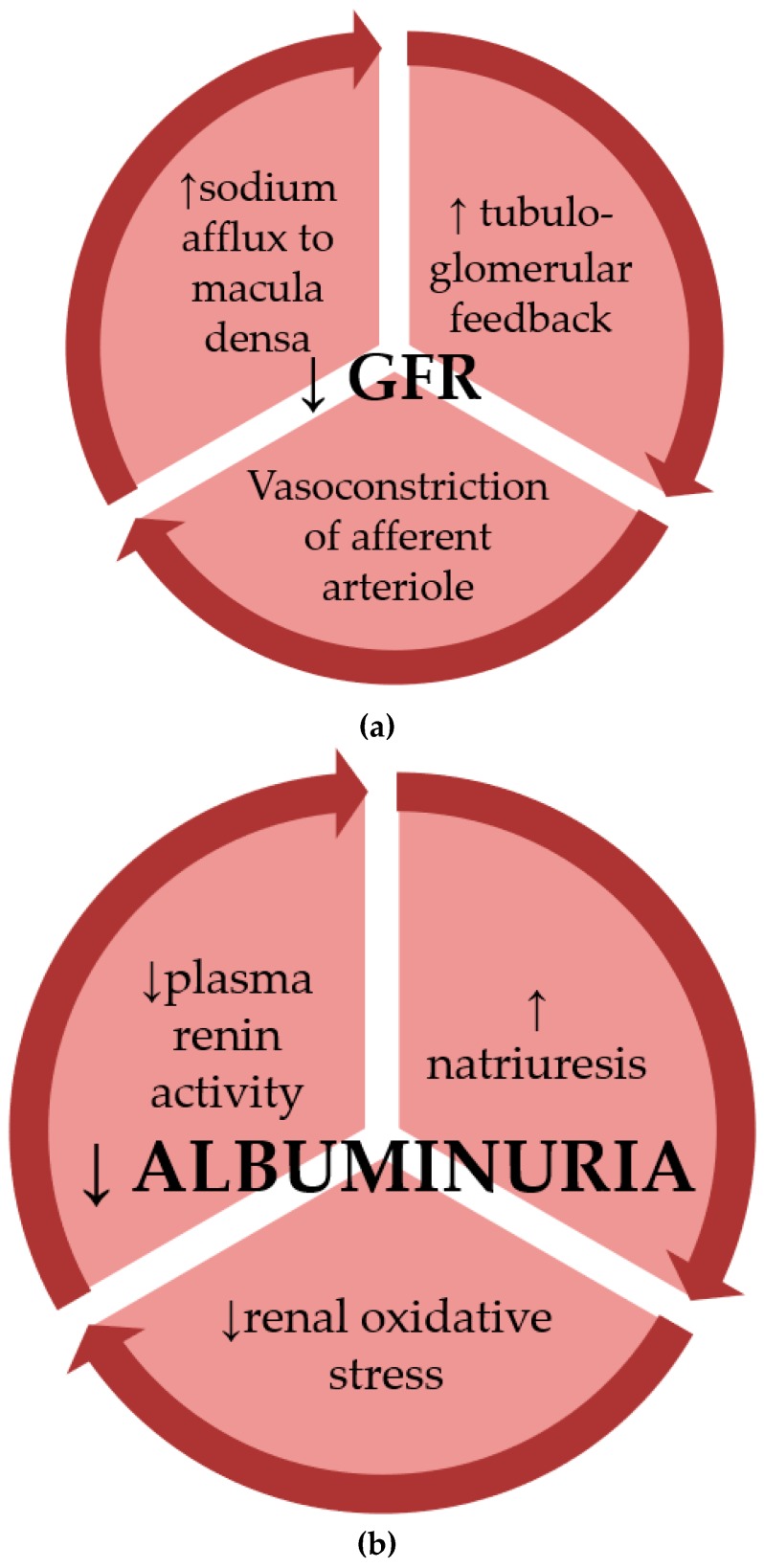
Type 2 diabetes mellitus (T2DM) is the leading cause of chronic kidney disease (CKD). Diabetic nephropathy (DN) is determined by specific pathological structural and functional alterations of the kidneys in patients with diabetes, and its clinical manifestations are albuminuria and decline of glomerular filtration rate (GFR). Apart from renin–angiotensin–aldosterone system (RAAS) inhibitors, no other drugs are currently available as therapy for diabetic kidney disease (DKD). Glucagon-like peptide-1 receptor (GLP-1R) agonists are a new class of anti-hyperglycemic drugs which have been demonstrated to prevent the onset of macroalbuminuria and reduce the decline of GFR in diabetic patients. These drugs may exert their beneficial actions on the kidneys through blood glucose- and blood pressure (BP)-lowering effects, reduction of insulin levels and weight loss. Clinical benefits of GLP-1R agonists were acknowledged due to data from large randomized phase III clinical trials conducted to assess their cardiovascular(CV) safety. These drugs improved renal biomarkers in placebo-controlled clinical studies, with effects supposed to be independent of the actions on glycemic control. In this review, we will focus on the actions of GLP-1R agonists on glucose metabolism and kidney physiology, and evaluate direct and indirect mechanisms through which these drugs may confer renal protection.
Overview
The claims and statistics of this paper haven’t been checked yet.
Free: it reads the open-access text and checks the first 5 claims that cite a source we can check. Create a free account to check every claim.
Integrity signals
Registry
Cites
Statistics
Figures
Verification
Claims the paper makes
The claims and statistics of this paper haven’t been checked yet.
Free: it reads the open-access text and checks the first 5 claims that cite a source we can check. Create a free account to check every claim.
Claims other papers make about this one
Each is checked against this paper’s own text: does it say what the citing paper says it does?
The cited source says what the claim attributes to it.
In the citing paper
“GLP1-RA may exert favorable effects on the kidneys through direct or indirect effects (Fig. 1/Central Illustration) [31], [32], [33], [34].”
From Glucagon-like peptide-1 receptor agonists in diabetic kidney disease: a review of their kidney and heart protection (2023) · cites this paper as [31]
In the citing paper
“Direct effects include increasing natriuresis and diuresis, decreasing oxidative stress and inflammation, and possible glomerular hemodynamic effects.”
From Glucagon-like peptide-1 receptor agonists in diabetic kidney disease: a review of their kidney and heart protection (2023) · cites this paper as [31]
In the citing paper
“GLP1-RA also lower blood pressure; the mechanisms underlying this effect are still under investigation[36] but may be partially attributed to the increase in natriuresis [31].”
From Glucagon-like peptide-1 receptor agonists in diabetic kidney disease: a review of their kidney and heart protection (2023) · cites this paper as [31]
In the citing paper
“In addition, GLP1-RA stimulate pathways responsible for reducing reactive oxygen species in the kidneys [31].”
From Glucagon-like peptide-1 receptor agonists in diabetic kidney disease: a review of their kidney and heart protection (2023) · cites this paper as [31]
In the citing paper
“Specifically, GLP1-RA inhibit the sodium-hydrogen exchanger 3 in proximal tubular cells to ultimately increase natriuresis and diuresis [31].”
From Glucagon-like peptide-1 receptor agonists in diabetic kidney disease: a review of their kidney and heart protection (2023) · cites this paper as [31]
Self-check
Percentages, sums and reported differences re-computed from the paper’s own numbers.
The self-check needs the paper’s full text.
Citations
Cites
Liraglutide and Cardiovascular Outcomes in Type 2 Diabetes
Marso, S. P., Daniels, G. H., Brown-Frandsen, K., Kristensen, P., Mann, J. F. E., Nauck, M. A., Nissen, S. E., Pocock, S., Poulter, N. R., Ravn, L. S., et al. (2016) · New England Journal of Medicine · doi:10.1056/nejmoa1603827 · Cited by 7,629
Semaglutide and Cardiovascular Outcomes in Patients with Type 2 Diabetes
Marso, S. P., Bain, S. C., Consoli, A., Eliaschewitz, F. G., Jódar, E., Leiter, L. A., Lingvay, I., Rosenstock, J., Seufert, J., Warren, M. L., et al. (2016) · New England Journal of Medicine · doi:10.1056/nejmoa1607141 · Cited by 6,900
Biology of Incretins: GLP-1 and GIP
Baggio, L. L., & Drucker, D. J. (2007) · Gastroenterology · doi:10.1053/j.gastro.2007.03.054 · Cited by 3,639 · cited 2×
“Moreover, incretins improve glucose sensitivity in pancreatic β-cells, stimulate β-cell proliferation, and reduce their apoptosis [11].”
BackgroundLixisenatide in Patients with Type 2 Diabetes and Acute Coronary Syndrome
Pfeffer, M. A., Claggett, B., Diaz, R., Dickstein, K., Gerstein, H. C., Køber, L. V., Lawson, F. C., Ping, L., Wei, X., Lewis, E. F., et al. (2015) · New England Journal of Medicine · doi:10.1056/nejmoa1509225 · Cited by 2,409 · cited 1×
“004), the median values at baseline (ratio, 10 in each study treatment group) and follow-up (ratio, 12 in the lixisenatide group and 13 in the placebo group) were clinically almost similar [42].”
ResultEffects of once-weekly exenatide on cardiovascular outcomes in type 2 diabetes
Holman, R. R., Bethel, M. A., Mentz, R. J., Thompson, V. P., Lokhnygina, Y., Buse, J. B., Chan, J. C., Choi, J., Gustavson, S. M., Iqbal, N., et al. (2017) · New England Journal of Medicine · doi:10.1056/nejmoa1612917 · Cited by 2,162 · cited 1×
“The trial demonstrated the CV safety of exenatide once-weekly [44].”
BackgroundDiabetic nephropathy: diagnosis, prevention, and treatment
Gross, J. L., de Azevedo, M. J., Silveiro, S. P., Canani, L. H., Caramori, M. L., & Zelmanovitz, T. (2005) · Diabetes Care · doi:10.2337/diacare.28.1.164 · Cited by 1,839
Hernandez, A. F., Green, J. B., Janmohamed, S., D'Agostino, R. B., Granger, C. B., Jones, N. P., Leiter, L. A., Rosenberg, A. E., Sigmon, K. N., Somerville, M. C., et al. (2018) · The Lancet · doi:10.1016/s0140-6736(18)32261-x · Cited by 1,829 · cited 1×
“Albiglutide was superior to placebo with respect to major adverse CV events, reducing the risk of the primary composite outcome (death from CV causes, non-fatal myocardial infarction, or non-fatal stroke) by 22% compared to placebo [47].”
BackgroundPathologic Classification of Diabetic Nephropathy
Tervaert, T. W. C., Mooyaart, A. L., Amann, K., Cohen, A. H., Cook, H. T., Drachenberg, C. B., Ferrario, F., Fogo, A. B., Haas, M., de Heer, E., et al. (2010) · Journal of the American Society of Nephrology · doi:10.1681/asn.2010010010 · Cited by 1,690
GLP-1 receptor agonists for individualized treatment of type 2 diabetes mellitus
Meier, J. J. (2012) · Nature Reviews Endocrinology · doi:10.1038/nrendo.2012.140 · Cited by 1,311
Liraglutide and renal outcomes in type 2 diabetes
Mann, J. F. E., Ørsted, D. D., Brown-Frandsen, K., Marso, S. P., Poulter, N. R., Rasmussen, S., Tornøe, K., Zinman, B., & Buse, J. B. (2017) · New England Journal of Medicine · doi:10.1056/nejmoa1616011 · Cited by 1,253
Cited by
Items 101–173 of 173
Rico-Fontalvo, J. E., Reina, M., Soler, M. J., Unigarro-Palacios, M., Castañeda-González, J. P., Quintero, J. J., Raad-Sarabia, M., de Moraes, T. P., & Daza-Arnedo, R. (2024) · Brazilian Journal of Nephrology · doi:10.1590/2175-8239-jbn-2024-0101en · Cited by 7
“This effect, which was dose-dependent, was also associated with a reduction in GFR, suggesting a potential renoprotective effect of GLP1-RAs since the mid-2000s 20,21 .”
BackgroundKim, M. K., & Kim, D. M. (2021) · Journal of Diabetes Investigation · doi:10.1111/jdi.13552 · Cited by 4
Qian, J., Yin, S., Lin, Y., Wang, Z., Shu, S., Mou, Z., Xu, M., Chattipakorn, N., Liu, Z., & Liang, G. (2021) · Journal of Inflammation Research · doi:10.2147/jir.s308353 · Cited by 4
Russo, G. T., Giandalia, A., Ceriello, A., Bartolo, P. D., Cianni, G. D., Fioretto, P., Giorda, C. B., Manicardi, V., Pontremoli, R., Viazzi, F. C., et al. (2022) · Diabetes Research and Clinical Practice · doi:10.1016/j.diabres.2022.110092 · Cited by 5
Self-citationAli, A. M. E. A., Osman, H. M., Zaki, A. M., Shaker, O. G., Elsayed, A. M., Abdelwahed, M. Y., & Mohammed, R. A. (2022) · PubMed Central · doi:10.22038/ijbms.2022.65061.14494 · Cited by 4
“(22) reported the presence of GLP-1R mRNA in the glomerulus and the initial part of proximal convoluted tubes, induced natriuresis and diuresis and inhibition of the sodium–hydrogen exchanger 3 (NHE3).”
BackgroundChewcharat, A., Takkavatakarn, K., Isaranuwatchai, S., Katavetin, P., Praditpornsilpa, K., Eiam‐Ong, S., & Susantitaphong, P. (2020) · International Urology and Nephrology · doi:10.1007/s11255-020-02520-z · Cited by 6
Cardiovascular-kidney-metabolic syndrome and treatment advances: a narrative review
Peña, C., Flores, J., & NUGENT, K. M. (2025) · Minerva Medica · doi:10.23736/s0026-4806.25.09607-7 · Cited by 6
Targeting Mitochondrial Dysfunction by Natural Products for the Treatment of Diabetic Kidney Disease
Huo, J., Li, P., Feng, Q., Fu, W., Pan, S., Liu, D., & Liu, Z. (2025) · Phytotherapy Research · doi:10.1002/ptr.70059 · Cited by 3
Florescu, A. G., Pucerea, S. A., Floria, M., Rusu, E., Cuiban, E., Jinga, M., Galrinho, R. D., & Stanciu, S. M. (2025) · Romanian Journal of Military Medicine · doi:10.55453/rjmm.2025.128.6.9 · Cited by 8
First-in-Class Oral Semaglutide: Overcoming Barriers of Incretinisation in the Indian Context
Rajput, R., Ghosh, S., Banerjee, S., Bansal, B., Chawla, M. S., Ahluwalia, A. I., Lathia, T. B., & Das, A. K. (2022) · Indian Journal of Endocrinology and Metabolism · doi:10.4103/ijem.ijem_217_22 · Cited by 4
“These drugs may benefit the kidneys through blood glucose and blood pressure (BP), lowering effects, reducing insulin levels and decreasing weight.[63] In the PIONEER 6 trial, greater HbA1c reduction was observed with OS than placebo at the end of the trial compared with baseline (–1.”
BackgroundHe, Y., Xu, R., Ma, X., Zhou, J., & Qiu, L. (2024) · Translational Pediatrics · doi:10.21037/tp-23-518 · Cited by 3
“Therefore, GLP-1 receptor agonists provide renal protection while lowering blood glucose levels (14-17).”
Supramanian, K., Sekar, M., & Afendi, N. S. H. N. (2024) · IntechOpen eBooks · doi:10.5772/intechopen.1005083 · Cited by 10
Targeting GLP-1 Signaling Ameliorates Cystogenesis in a Zebrafish Model of Nephronophthisis
Eckert, P., Nöller, M., Müller, M., Haas, R., Ruf, J., Franz, H., Moos, K., Yu, J.-A., Zhao, D., Xie, W., et al. (2025) · International Journal of Molecular Sciences · doi:10.3390/ijms26157366 · Cited by 4
Glucagon-like Peptide-1 Receptor Agonists: Limitless Potential
Demidova, T. Y., & Kozhevnikov, A. A. (2020) · Doctor Ru · doi:10.31550/1727-2378-2020-19-2-6-12 · Cited by 3
New and Emerging Nonimmunosuppressive Drug Therapies for Primary Adult Glomerular Diseases
Mushailov, V., & Radhakrishnan, J. (2025) · Kidney Medicine · doi:10.1016/j.xkme.2025.101133 · Cited by 2
GLP‐1RA use improves outcomes post partial nephrectomy in T2DM patients with RCC: A TriNetX study
Kwon, S. H., Wardrop, F., Gonzalez, D., Ryan, F., Khutsishvili, L., Turner, R., Deameh, M. G., & Whalen, M. J. (2026) · BJUI Compass · doi:10.1002/bco2.70169 · Cited by 2
Braha, A., Timar, B., Sturza, A., & Timar, R. Z. (2026) · Medicina · doi:10.3390/medicina62081509 · Cited by 2
Novel Treatments and the Future of DKD: What Is on the Horizon?
Wu, H., & Batuman, V. (2022) · Springer eBooks · doi:10.1007/978-3-030-86020-2_28 · Cited by 2
Singh, A. N., & Swathi, T. (2022) · Cardiovascular & Hematological Agents in Medicinal Chemistry · doi:10.2174/1871525720666220610160310 · Cited by 2
de Oliveira, K. C., Wei, Y., Repetti, R. L., Meth, J. L., Majumder, N., Sapkota, A., Gusella, G. L., & Rohatgi, R. (2023) · American Journal of Physiology-Renal Physiology · doi:10.1152/ajprenal.00154.2023 · Cited by 2
Chen, S., He, M., Qin, Y., Tian, J., Liang, Z., Li, Y., Wang, P., Zhang, Y., Zhou, C. L., & Xiao, J. (2024) · Medicine · doi:10.1097/md.0000000000040438 · Cited by 2
“[35] However, the underlying mechanism is not clear.”
Fadem, S. Z. (2022) · Springer eBooks · doi:10.1007/978-3-030-93528-3_4 · Cited by 2
Kidney outcomes are altered by preconception weight modulation in rodent mothers with obesity
Rodrigo, N., Chen, H., Pollock, C. A., & Glastras, S. J. (2024) · Scientific Reports · doi:10.1038/s41598-024-68234-9 · Cited by 1
Shirai, T., Inaba, S., Maemura, M., Saho, M., Sato, M., Sanada, M., Tsukamoto, Y., Inoue, G., Nagahisa, T., Tanaka, S., et al. (2025) · Diabetology International · doi:10.1007/s13340-025-00808-y · Cited by 1
“…history to evaluate the above eGFR result revealed that the prescription rate of any medication that is proposed to protect the kidney, such as SGLT-2 inhibitor, mineralocorticoid receptor inhibitor, and GLP-1 receptor agonist, did not differ significantly between the two groups (Table 5) [33–35].”
Karaban, Ł., Kuźnieców, T., Paszkowska, M., Mularczyk, K., Borawski, M., Ciuła, A., Jakubiak, A., Miśkiewicz, J., Znamirowska, P., & Kupis, M. (2025) · Quality in Sport · doi:10.12775/qs.2025.41.60343 · Cited by 2
“Combining this with the satisfactory effects of albuminuria reduction and the fact that albuminuria is a strong predictor of worsening renal function, a reduction in albuminuria may indicate a reduction in nephrological risk [8].”
InfluentialЛазебник, Л. Б., Туркина, С. В., & Golovanova, E. V. (2024) · Экспериментальная и клиническая гастроэнтерология · doi:10.31146/1682-8658-ecg-230-10-11-35 · Cited by 1
Glucagon-like Peptide-1 Agonists and Exercise for Weight Reduction: A Review of Current Evidence
Owaidat, J. F., Zuaiter, S., Daseh, A. I., Nemrawi, F. A. A., Abu‐Jeyyab, M., & Al-Jafari, M. (2025) · JAP Academy Journal · doi:10.4103/japaj.japaj_5_24 · Cited by 1
Wicik, Z., Nowak-Szwed, A., Eyileten, C., Sourij, H., von Lewinski, D., Kistkins, S., Borkowska, J., & Postula, M. A. (2025) · npj Systems Biology and Applications · doi:10.1038/s41540-025-00619-6 · Cited by 1
Eubanks, A., Allen, K. C., Kearney, D., Bell, B., Albornoz, A., Elkomi, R., Ross, D., Beyene, E., Bisrat, M., Gillani, S. F., et al. (2026) · British Journal of Clinical Pharmacology · doi:10.1002/bcp.70566 · Cited by 1
“Another possible mechanism may be an increase in natriuresis and urinary Ca 2 + excretion, 14,24 further lowering serum Ca 2 + , stimulating parathyroid hormone (PTH) release and increasing bone resorption.”
Association of GLP-1 Receptor Agonist Use With Chronic Kidney Disease Risk in Type 2 Diabetes
Yen, F., Hsu, C., Hung, Y., Huang, J.-Y., Hwu, C., & Wei, J. C. (2026) · Mayo Clinic Proceedings · doi:10.1016/j.mayocp.2026.01.035 · Cited by 1
Carlino, I., Franco, S. D., Colalillo, N., Bisogno, S., Gennari, L., & Palazzuoli, A. (2026) · Biomedicines · doi:10.3390/biomedicines14061289 · Cited by 1
Ozturk, S. S., & Akyol, E. M. B. (2026) · Journal of Clinical Medicine · doi:10.3390/jcm15135049 · Cited by 1
“Proposed Proposed mechanisms include improved glycemic control, weight reduction, blood pressure lowering, anti-inflammatory effects, natriuresis, and direct renal actions mediated through GLP-1 receptor pathways [29,30].”
Association of GLP1 ‐Receptor Agonists With Diabetic Retinopathy
Gonzalez, A., Chastain, L. M., Karasik, O., Asmar, A., Farhangi, M., Álvarez, C. A., & Mansi, I. A. (2026) · Diabetes Obesity and Metabolism · doi:10.1111/dom.71267 · Cited by 2
Effects of insonification on repairing the renal injury of diabetic nephropathy rats
Xiao, X., Liu, W., Deng, J., Li, J., Zhou, Y., He, S., Li, F., & Wang, Y. (2024) · BMJ Open Diabetes Research & Care · doi:10.1136/bmjdrc-2024-004146 · Cited by 1
“5 Hence, there exists an urgent necessity to identify a more efficacious treatment approach.”
Ramadan, O., Damanhory, A. A., Allah, E. E.-D. A., Gomah, T. A., Mahmoud, M. E., Abd-Allah, F. M., Sewilam, H. M., Fayyad, R. M. A., Darwish, M., Hashem, F. A., et al. (2024) · Journal of Research in Pharmacy · doi:10.29228/jrp.811 · Cited by 4
“…the DPP-4 inhibitors like vildagliptin, which results in an increase in cAMP and a subsequent decrease in levels of nicotinamide adenine dinucleotide phosphate (NAD(P)H) oxidase, this may protect the kidneys from hyperglycemia-induced by oxidative stress according to preclinical studies [35, 36].”
BackgroundGLP-1 Receptor Agonists and Diabetic Kidney Disease: A Game Charger in the Field?
Doumani, G., Theofilis, P., Tsimihodimos, V., & Kalaitzidis, R. (2024) · Life · doi:10.3390/life14111478 · Cited by 5
Chen, T., Tseng, C.-J., Li, Y., Lin, Y., Chen, D., Yang, N., Wang, T.-H., Hung, M., & Tsai, M. (2025) · Acta Diabetologica · doi:10.1007/s00592-024-02443-6 · Cited by 1
“These agents reduce blood pressure through multiple mechanisms, including enhanced natriuresis and modulation of glomerular hemo - dynamics [31, 32 ].”
Inflammatory Mechanisms in Diabetic Kidney Disease
Alicic, R. Z., Cox, E. J., Neumiller, J. J., & Tuttle, K. R. (2020) · Springer eBooks · doi:10.1007/978-3-030-53370-0_32 · Cited by 1
Precision Medicine Approaches for Management of Type 2 Diabetes
Chen, D., Fulcher, J., SCOTT, E. S., & Jenkins, A. J. (2022) · Springer eBooks · doi:10.1007/978-3-030-98927-9_1 · Cited by 4
Effect of treatment with GLP-1R agonists on the urinary peptidome of T2DM patientsPreprint
Lohia, S., Siwy, J., Mavrogeorgis, E., Eder, S., Thöni, S., Mayer, G. J., Mischak, H., Vlahou, A., & Jankowski, V. (2023) · medRxiv · doi:10.1101/2023.05.03.23289439 · Cited by 1
Rational Design of Peptides and Protein Molecules in Drug Discovery
Padhy, I., Biswas, A., Nayak, C. K., & Sharma, T. (2024) · Wiley eBooks · doi:10.1002/9781394249190.ch15 · Cited by 2
Liu, L., Luo, H., Shu, Y., Liang, Y., & Tang, J.-L. (2021) · International Journal of Diabetes in Developing Countries · doi:10.1007/s13410-021-00946-4 · Cited by 1
Advances in Biological and Clinical Research of GLP-1 Receptor Agonists
李, 鑫. (2022) · Advances in Clinical Medicine · doi:10.12677/acm.2022.124430
Clinical practice guidelines update 2022: Focus on diabetes
Cornell, S. A. (2022) · Pharmacy Today · doi:10.1016/j.ptdy.2022.05.022
Renal Nutrition—Where It Has Been and Where It Is Going
Kopple, J. D., & Ekramzadeh, M. (2022) · Kidney and Dialysis · doi:10.3390/kidneydial2040046 · Cited by 1
Therapieoptionen bei diabetischer Nephropathie
Morgenroth, R., Mertens, P. R., Herzog, C. A., & Scurt, F. G. (2023) · Die Diabetologie · doi:10.1007/s11428-023-01003-w
Pascutti, P. F. G., Lorenzo, V. T. D., Oliveira, S. D. A., Oliveira, P. R. P. F. D., Oliveira, I. C. F. D., Pizzolatto, C. A., Machado, N. T. D. C., Rocha, Y. L. N., Batista, A. C. R. D. C., Eismann, F. C. P., et al. (2023) · Brazilian Journal of Health Review · doi:10.34119/bjhrv6n3-058
del Valle, K. M. P., Boldoba, N. B., Fernández, E. M. B., Fuente, A. A., & Bouarich, H. (2023) · Medicine - Programa de Formación Médica Continuada Acreditado · doi:10.1016/j.med.2023.05.013 · Cited by 1
Alves, W. F., & Cunha, R. M. (2024) · Manual Therapy Posturology & Rehabilitation Journal · doi:10.17784/mtprehabjournal.2024.22.1311
Introduction to Prehabilitation
Watson, A., & Barr, K. P. (2024) · Springer eBooks · doi:10.1007/978-3-031-72862-4_1
Advancements in the Research of Non-Immunosuppressive Therapies for Chronic Kidney Disease
王, 欣. (2025) · Advances in Clinical Medicine · doi:10.12677/acm.2025.151288
Zhu, X., Lin, C., Li, Z., Cai, X., Lv, F., Yang, W., & Ji, L. (2025) · Diabetes/Metabolism Research and Reviews · doi:10.1002/dmrr.70052
“Re-sults indicated that these antidiabetic medications or strategies may not only improve glycaemic control but also bring additional metabolic benefits such as weight reduction [8–10], blood pressure reduction [11, 12] and eGFR improvement [13, 14].”
López, J. P., Capote, P. A. C., Pozo, A. H., Guerra, L. C., García, J. L., Olmo, R. F., & Huete, M. J. E. (2025) · Nefrología · doi:10.1016/j.nefro.2025.501359 · Cited by 1
Mo, Q., Adam, T. J., Johnson, S., Moheet, A. A., & Pieczkiewicz, D. S. (2025) · Scientific Reports · doi:10.1038/s41598-025-10299-1
“The comanagement of hyperglycemia and weight plays a very important role in DKD care.”
InfluentialImpact of liraglutide on albumin-to-creatinine ratio in type 2 diabetes mellitus: a meta-analysis
Wang, F., Xu, G., Feng, W., Qu, G., Li, P., & Li, K. (2025) · European journal of medical research · doi:10.1186/s40001-025-02801-2 · Cited by 1
“Evidence suggested that liraglutide reduced ACR, potentially slowing DKD progression in T2DM [8].”
Arif, A., Lama, S., Singla, B., Singla, S., Kumawat, S., Tharwani, A., Usman, M., Khalid, H., Kanukollu, V. M. R., Ekomwereren, O., et al. (2025) · Cureus · doi:10.7759/cureus.92976
“The renal benefits of GLP-1 receptor agonists likely reflect multifactorial mechanisms, including reductions in albuminuria, improvements in blood pressure and body weight, and possible direct effects on endothelial function and renal hemodynamics [15-17].”
Doumani, G., Theofilis, P., Vordoni, A., Smirloglou, D., & Kalaitzidis, R. (2025) · Minerva Medica · doi:10.23736/s0026-4806.25.09747-2
EFEITOS TERAPÊUTICOS DOS AGONISTAS DO RECEPTOR DO GLP-1: UM ESTUDO DE REVISÃO
Gonçalves, F. M., Araújo, F. D. S., Barbosa, G. F., Presoto, C. L. Z., & Gardizani, T. P. (2025) · Revista Omnia Saúde · doi:10.69719/ros.v8.862
López, J. P., Capote, P. A. C., Pozo, A. H., Castilla‐Guerra, L., Fernández‐García, J. C., Olmo, R. F., & Huete, M. J. E. (2025) · Nefrología (English Edition) · doi:10.1016/j.nefroe.2025.501359 · Cited by 1
Kumar, C. S., Thangavel, N., Johnson, D. B., Madhuranthagan, M., Raj, S. R., Roshni, A., & Abimanyu, R. (2026) · Research Journal of Pharmacology and Pharmacodynamics · doi:10.52711/2321-5836.2026.00012
Sheashaa, H., Ibrahim, R., Elshaer, A., Pham, H. N., Mouhaffel, R., Habib, E., Abdelnabi, M., Farina, J. M., Lester, S. J., Simper, D., et al. (2026) · Transplantation Direct · doi:10.1097/txd.0000000000001932
“15 In the context of calcineurin inhibitor nephrotoxicity, these benefits may be especially valuable.”
Gembillo, G., Visconti, L., Tranchida, V., Nardi, C., Calimeri, S., Gambuzza, M. E., Princiotto, M., Chinigò, C., Soraci, L., & Santoro, D. (2026) · World Journal of Diabetes · doi:10.4239/wjd.v17.i4.115058 · Cited by 2
Association Between Glucagon‐Like Peptide‐1 Receptor Agonists and Suicidality: A Systematic Review
Chan, T. H., Cosler, L. E., Gionfriddo, M. R., Leppien, E. E., Sommers, E. J., & Lussier, M. E. (2026) · Diabetes Obesity and Metabolism · doi:10.1111/dom.70878
Trenas, A., Prieto-Laín, N., Velasco, M. Á. P., Padilla-Leiva, C., Pérez-Ruiz, J. M., Ruíz-Rodríguez, F. I., Gómez‐Huelgas, R., Bernal-López, M. R., & Perez-Belmonte, L. M. (2026) · Pharmaceuticals · doi:10.3390/ph19060894 · Cited by 1
Cardio-Kidney-Metabolic Syndrome and Role of Oral Semaglutide
Roy, N., Nallaperumal, S., Mondal, S., Mathur, R., Prakash, A. S., Chakraborty, S., Vedire, A., Ankathi, S. K., Bande, A. R., & Boppana, R. (2026) · International Journal of Diabetes and Technology · doi:10.4103/ijdt.ijdt_24_26
Hinton, W., Joy, M., Forbes, A., Whyte, M., Ordóñez-Mena, J. M., Fan, X., Ferreira, F., Meza-Torres, B., Munro, N. M., de Lusignan, S., et al. (2026) · Diabetes Obesity and Metabolism · doi:10.1111/dom.70946
“GLP-1 RAs have similarly shown beneficial effects on composite kidney outcomes through reductions in albuminuria and slowing of renal function decline [3, 4, 8], possibly through improved glycaemic control, anti-inflammatory effects, and reduction in blood pressure and body weight [30–32].”
Risk factor obesity: treatment standard
Mashayekhi, M., Qing, J., Heidari‐Bateni, G., Mathew, R. O., Liew, A., Kronbichler, A., Lerma, E. V., Abdipour, A., Codorniz, K., Wu, J., et al. (2026) · Nephrology Dialysis Transplantation · doi:10.1093/ndt/gfag164
“These include promotion of natriuresis via inhibition of proximal tubular sodium–hydrogen exchanger activity, reduction in intraglomerular pressure and hyperfiltration, and modulation of inflammatory and fibrotic pathways within the kidney [ 20 ].”
ПЛЕЙОТРОПНЫЕ ЭФФЕКТЫ АГОНИСТОВ РЕЦЕПТОРОВ ГЛЮКАГОНОПОДОБНОГО ПЕПТИДА‑1
Юрьевич, Ц. В., Lazareva, I. A., Владимировна, Б. Н., Полякова, О. В., & Николаевна, У. С. (2026) · Современные проблемы науки и образования · doi:10.17513/spno.34690
Møller, A. L., Thöni, S., Keller, F., Sharifli, S., Genovese, F., Karsdal, M. A., Rasmussen, D. G. K., & Mayer, G. (2026) · American Journal of Physiology-Cell Physiology · doi:10.1152/ajpcell.00526.2025 · Cited by 1
Ahsan, M., Mazhar, S., Zafar, H., Mansoor, H., Nancy, F., Abbas, S. M., Shaikh, H., Khan, D. Z., Khan, A., Zahoor, B., et al. (2026) · Comprehensive physiology · doi:10.1002/cph4.70246
“…outcomes for patients with atherosclerotic cardiovascular disease, and recent studies suggest that they may also have renoprotective effects like lowering albuminuria and maintaining estimated glomerular filtration rate (eGFR) (Neuen et al. 2024; Rossing et al. 2023; Greco et al. 2019).”
BindingDB Entry 50022117: Binding sites and design strategies for small molecule GLP-1R agonists.
BindingDB (2025) · UC San Diego · doi:10.7270/q2474gk6
Metadata
- Authors
- Greco, E., Russo, G., Giandalia, A., Viazzi, F., Pontremoli, R., & De Cosmo, S.
- Affiliations
- Casa Sollievo della Sofferenza (IT)
- University of Messina (IT)
- Ospedale Policlinico San Martino (IT)
- Unit of Internal Medicine, Department of Medical Sciences, IRCCS Casa Sollievo della Sofferenza, 71013 San Giovanni Rotondo (FG), Italy
- Venue
- Medicina
- Publisher
- MDPI AG
- Published
- 2019-05-31
- Volume
- 55
- Issue
- 6
- Pages
- 233
- ISSN
- 1010-660X (ISSN-L)
- 1648-9144
- PMC
- PMC6630923
- OpenAlex
- W2947335986
- Cited by
- 173
- References
- 49
- Citations by year
- 2026: 18 · 2025: 36 · 2024: 37 · 2023: 17 · 2022: 32 · 2021: 17 · 2020: 14 · 2019: 2
- FWCI
- 2.54
- Type
- journal article
- Language
- en
- Open access
- gold
- dx.doi.org
- Licence
- Locations
- Medicina (publishedVersion, cc-by)
- Europe PMC (PubMed Central) (publishedVersion, cc-by)
- PubMed Central (publishedVersion, cc-by)
- PubMed (publishedVersion)
- DOAJ (DOAJ: Directory of Open Access Journals) (submittedVersion, cc-by-sa)
- CINECA IRIS Institutial Research Information System (University of Genoa) (submittedVersion)
- Topics
- Health Sciences › Medicine › Nephrology › Chronic Kidney Disease and Diabetes
- Health Sciences › Medicine › Endocrinology, Diabetes and Metabolism › Diabetes Treatment and Management
- Health Sciences › Medicine › Nephrology › Acute Kidney Injury Research
- Keywords
- GLP-1 receptor agonists, renal protection, diabetic nephropathy, type 2 diabetes, chronic kidney disease, albuminuria, glomerular filtration rate decline, renin-angiotensin-aldosterone system, blood pressure reduction, insulin reduction, weight loss, renal biomarkers, cardiovascular safety
- MeSH terms
- Glucagon-Like Peptide-1 Receptor, Glucagon-Like Peptide-1 Receptor Agonists, Diabetes Mellitus, Type 2, Diabetic Nephropathies, Humans, Kidney, Protective Agents
About these checks
Registry, retraction, Cites and statistics results are computed, not judged, with one exception: a printed reference that no index lists is read once by a model before it counts as a citation error. Claims are extracted by a model and kept only when their quote appears verbatim in the text; each cited source is then checked, with a model’s help, for whether it says what the claim relies on. Those verdicts can be wrong — read the claim’s quote and the cited source before relying on one.
Statistics and arithmetic are recomputed, not judged.
Confidence bands are shown only for fields calibrated on our annotated test set. None is calibrated yet, so no band is shown.
What counts as a claim ›How we measure confidence ›How we check this ›
Are you an author, or do you see a problem with this page? Request a review
Data sources
Bibliographic data: Semantic Scholar, OpenAlex, Crossref.
Contains information from the Semantic Scholar Academic Graph Datasets, made available under the ODC Attribution License (ODC-BY 1.0).
Semantic Scholar’s data is described in: Kinney, R., et al. (2023). The Semantic Scholar Open Data Platform. arXiv:2301.10140.
