

The DOI matches its Crossref record; 3 of the 3 references it cites were found in a registry or an index.
Pollen-Food Allergy Syndrome: A not so Rare Disease in Childhood
Abstract
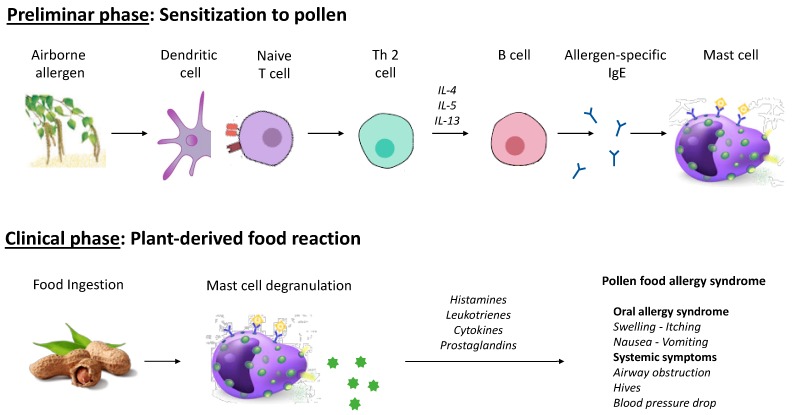
Seasonal allergic rhinoconjunctivitis (SAR) affects millions of people worldwide, particularly in childhood and adolescence. Pollen food allergy syndrome (PFAS) is a common adverse reaction occurring few minutes after the consumption of vegetable foods in patients with pollen-induced SAR. PFAS has rarely been investigated in the pediatric population, as it has been mainly examined as an adult disease. Recent studies suggested that PFAS might be more frequent in childhood than previously recognized. The present review aims to give an overview of the epidemiology, pathophysiology, diagnosis, management and prognosis of PFAS in children with SAR-induced by pollens.
Overview
The claims and statistics of this paper haven’t been checked yet.
Run the check — free, no account needed. It reads the open-access text and checks the sources it cites.
Integrity signals
Registry
Cites
Statistics
Figures
Verification
Claims the paper makes
The claims and statistics of this paper haven’t been checked yet.
Run the check — free, no account needed. It reads the open-access text and checks the sources it cites.
Claims other papers make about this one
Each is checked against this paper’s own text: does it say what the citing paper says it does?
In the citing paper
“In Mexico, pineapples are a notable PFAS trigger, likely related to the local dietary prominence of this fruit and its cross-reactivity with pollens such as oak and ash [57].”
From Pollen–Food Allergy Syndrome: Allergens, Clinical Insights, Diagnostic and Therapeutic Challenges (2024) · cites this paper as [57]
In the citing paper
“Systemic reactions are estimated to occur in approximately 2-10% of PFAS cases, with severe outcomes such as hypotension and respiratory distress being extremely rare (1-2%) [54,57,62,63].”
From Pollen–Food Allergy Syndrome: Allergens, Clinical Insights, Diagnostic and Therapeutic Challenges (2024) · cites this paper as [57]
In the citing paper
“For instance, individuals allergic to birch pollen (Bet v 1) often experience symptoms after consuming raw apples (Mal d 1), apricots (Pru ar 1f), cherries (Pru av 1), peaches (Pru p 1), celery (Api g 1), soy (Gly m 4), peanuts (Ara h 8), hazelnuts (Cor a 1), chestnuts (Cas s 1), or tomatoes (Sola l 4), because of shared epitopes recognized by IgE antibodies [57,100].”
From Pollen–Food Allergy Syndrome: Allergens, Clinical Insights, Diagnostic and Therapeutic Challenges (2024) · cites this paper as [57]
In the citing paper
“Systemic reactions are estimated to occur in approximately 2-10% of PFAS cases, with severe outcomes such as hypotension and respiratory distress being extremely rare (1-2%) [54,57,62,63].”
From Pollen–Food Allergy Syndrome: Allergens, Clinical Insights, Diagnostic and Therapeutic Challenges (2024) · cites this paper as [57]
In the citing paper
“as this geographic correlation reflects the widespread sensitization to Bet v 1, which primes the immune system to recognize structurally similar proteins in fruits, vegetables, and nuts [43,57].”
From Pollen–Food Allergy Syndrome: Allergens, Clinical Insights, Diagnostic and Therapeutic Challenges (2024) · cites this paper as [57]
In the citing paper
“The prevalence of PR-10-mediated PFAS is particularly high in regions where birch pollen allergy is common, where it may affect more than 75% of birch-allergic patients [57,127]”
From Pollen–Food Allergy Syndrome: Allergens, Clinical Insights, Diagnostic and Therapeutic Challenges (2024) · cites this paper as [57]
Self-check
Percentages, sums and reported differences re-computed from the paper’s own numbers.
The self-check needs the paper’s full text.
Citations
Cites
Kondo, Y., & Urisu, A. (2009) · Allergology International · doi:10.2332/allergolint.09-rai-0136 · Cited by 120
Natural course and comorbidities of allergic and nonallergic rhinitis in children
Westman, M., Stjärne, P., Asarnoj, A., Kull, I., van Hage, M., Wickman, M., & Toskala, E. (2012) · Journal of Allergy and Clinical Immunology · doi:10.1016/j.jaci.2011.09.036 · Cited by 111
Birch-Apple Syndrome Treated with Birch Pollen Immunotherapy
Mauro, M., Russello, M., Incorvaia, C., Gazzola, G., Frati, F., Moingeon, P., & Passalacqua, G. (2011) · International Archives of Allergy and Immunology · doi:10.1159/000323909 · Cited by 90
Research works printed but not linked: 68
- Werfel, 2015, Position paper of the EAACI: Food allergy due to immunological cross-reactions with common inhalant allergens, Allergy, 70, 1079, 10.1111/all.12666 · DOI · Paper page
- Webber, 2010, Oral allergy syndrome: A clinical, diagnostic, and therapeutic challenge, Ann. Allergy Asthma Immunol., 104, 101, 10.1016/j.anai.2009.11.007 · DOI
- Waserman, 2018, IgE-mediated food allergy, Allergy Asthma Clin. Immunol., 14, 55, 10.1186/s13223-018-0284-3 · DOI
- Ortolani, 1988, The oral allergy syndrome, Ann. Allergy, 61, 47
- Tuft, 1942, Studies in food allergy—sensitization to fresh fruits: Clinical and experimental observations, J. Allergy, 13, 574, 10.1016/S0021-8707(42)90070-4 · DOI
- Amlot, 1987, Oral allergy syndrome (OAS): Symptoms of IgE mediated hypersensitivity to foods, Clin. Allergy, 17, 33, 10.1111/j.1365-2222.1987.tb02317.x · DOI
- Katelaris, 2010, Food allergy and oral allergy or pollen-food syndrome, Curr. Opin. Allergy Clin. Immunol., 10, 246e51, 10.1097/ACI.0b013e32833973fb · DOI
- Zuidmeer, 2008, The prevalence of plant food allergies: A systematic review, J. Allergy Clin. Immunol., 121, 1210, 10.1016/j.jaci.2008.02.019 · DOI
- Nwaru, 2014, The epidemiology of food allergy in Europe: A systematic review and meta-analysis, Allergy, 69, 62, 10.1111/all.12305 · DOI
- Kim, 2018, Pollen-Food Allergy Syndrome in Korean Pollinosis Patients: A Nationwide Survey, Allergy Asthma Immunol. Res., 10, 648, 10.4168/aair.2018.10.6.648 · DOI
- Mastrorilli, 2016, Endotypes of pollen-food syndrome in children with seasonal allergic rhinoconjunctivitis: A molecular classification, Allergy, 71, 1181, 10.1111/all.12888 · DOI
- Ludman, 2016, Pollen food syndrome amongst children with seasonal allergic rhinitis attending allergy clinic, Pediatr. Allergy Immunol., 27, 134, 10.1111/pai.12504 · DOI
- Nwaru, 2014, Prevalence of common food allergies in Europe: A systematic review and meta-analysis, Allergy, 69, 992, 10.1111/all.12423 · DOI
- 2017, Prevalence of oral allergy syndrome in children with allergic diseases, Allergol. Immunopathol. (Madr.), 45, 127, 10.1016/j.aller.2016.04.017 · DOI
- Eriksson, 1982, Food hypersensitivity in patients with pollen allergy, Allergy, 37, 437, 10.1111/j.1398-9995.1982.tb02323.x · DOI
- Dreborg, 1988, Food allergy in pollen-sensitive patients, Ann. Allergy, 61, 41
- Ma, 2003, A survey on the management of pollen-food allergy syndrome in allergy practices, J. Allergy Clin. Immunol., 112, 784, 10.1016/S0091-6749(03)02008-6 · DOI
- Dondi, 2013, Pollen-induced allergic rhinitis in 1360 Italian children: Comorbidities and determinants of severity, Pediatr. Allergy Immunol., 24, 742, 10.1111/pai.12136 · DOI
- 2015, Oral allergy syndrome in children, Int. Dent. J., 65, 164, 10.1111/idj.12164 · DOI
- Brown, 2014, The prevalence of the oral allergy syndrome and pollen-food syndrome in an atopic paediatric population in south-west Sydney, J. Paediatr. Child Health, 50, 795, 10.1111/jpc.12658 · DOI
- Ozdemir, 2018, Pollen food allergy syndrome in Turkey: Clinical characteristics and pollen sensitization, Asian Pac. J. Allergy Immunol., 36, 77
- Osterballe, 2005, The clinical relevance of sensitization to pollen-related fruits and vegetables in unselected pollen-sensitized adults, Allergy, 60, 218, 10.1111/j.1398-9995.2005.00674.x · DOI · Paper page
- Breiteneder, 2000, Molecular and biochemical classification of plant-derived food allergens, J. Allergy Clin. Immunol., 106, 27, 10.1067/mai.2000.106929 · DOI
- Kelava, 2014, Oral allergy syndrome—The need of a multidisciplinary approach, Acta Clin. Croat., 53, 210
- Aalberse, 2000, Structural biology of allergens, J. Allergy Clin. Immunol., 106, 228, 10.1067/mai.2000.108434 · DOI
- Caffarelli, 2016, Asthma and food allergy in children: Is there a connection or interaction?, Front. Pediatrics, 4, 34, 10.3389/fped.2016.00034 · DOI
- Zinelli, 2009, Measurement of nitric oxide and 8-isoprostane in exhaled breath of children with atopic eczema, Clin. Exp. Dermatol., 34, 607, 10.1111/j.1365-2230.2008.03142.x · DOI
- Caffarelli, 2015, Use of probiotics in pediatric infectious diseases, Expert Rev. Anti-Infect. Ther., 13, 1517, 10.1586/14787210.2015.1096775 · DOI
- Barber, 2009, Component- resolved diagnosis of pollen allergy based on skin testing with profilin, polcalcin, Clin. Exp. Allergy, 39, 1764, 10.1111/j.1365-2222.2009.03351.x · DOI
- Moverare, 2002, Different IgE reactivity profiles in birch pollen-sensitive patients from six European populations revealed by recombinant allergens: An imprint of local sensitization, Int. Arch. Allergy Immunol., 128, 325, 10.1159/000063855 · DOI
- Kondo, 2002, Assessment of cross-reactivity between Japanese cedar (Cryptomeria japonica) pollen and tomato fruit extracts by RAST inhibition and immunoblot inhibition, Clin. Exp. Allergy, 32, 590, 10.1046/j.0954-7894.2002.01337.x · DOI
- Maeda, 2010, Correlation of oral allergy syndrome due to plant-derived foods with pollen sensitization in Japan, Ann. Allergy Asthma Immunol., 104, 205, 10.1016/j.anai.2009.11.049 · DOI
- Sussman, 2010, Oral allergy syndrome, CMAJ, 182, 1210, 10.1503/cmaj.090314 · DOI
- Bonds, 2019, Pollen food allergy syndrome to tomato in mountain cedar pollen hypersensitivity, Mol. Immunol., 111, 83, 10.1016/j.molimm.2019.04.007 · DOI
- Ortolani, 1993, IgE-mediated allergy from vegetable allergens, Ann. Allergy, 71, 470
- Caffarelli, 2007, Characterization of irritable bowel sindrome and constipation in children with allergic diseases, Eur. J. Ped., 166, 1245, 10.1007/s00431-006-0410-y · DOI
- Vogel, 2002, Severe oral allergy syndrome and anaphylactic reactions caused by a Bet v 1- related PR-10 protein in soybean, SAM22, J. Allergy Clin. Immunol., 110, 797, 10.1067/mai.2002.128946 · DOI
- Bohle, 2007, The impact of pollen-related food allergens on pollen allergy, Allergy, 62, 3, 10.1111/j.1398-9995.2006.01258.x · DOI
- Bohle, 2006, Cooking birch pollen-related food: Divergent consequences for IgE- and T cell-mediated reactivity in vitro and in vivo, J. Allergy Clin. Immunol., 118, 242, 10.1016/j.jaci.2006.03.011 · DOI · Paper page
- Skyla, 2011, Development and validation of a structured questionnaire for the diagnosis of oral allergy syndrome in subjects with seasonal allergic rhinitis during the UK birch pollen season, Clin. Exp. Allergy, 41, 1001, 10.1111/j.1365-2222.2011.03759.x · DOI
- Anhui, 2001, Diagnostic evaluation of grass- and birch-allergic patients with oral allergy syndrome, Allergy, 56, 548, 10.1034/j.1398-9995.2001.056006548.x · DOI
- Ortolani, 1989, Comparison of results of skin prick tests (with fresh foods and commercial food extracts) and RAST in 100 patients with oral allergy syndrome, J. Allergy Clin. Immunol., 83, 683, 10.1016/0091-6749(89)90083-3 · DOI · Paper page
- Caffarelli, 2013, Skin prick test to foods in childhood atopic eczema: Pros and cons, Ital. J. Pediatr., 39, 26, 10.1186/1824-7288-39-26 · DOI
- Nguyen, 2011, Freezing does not alter antigenic properties of fresh fruits for skin testing in patients with birch tree pollen-induced oral allergy syndrome, J. Allergy Clin. Immunol., 127, 1624, 10.1016/j.jaci.2011.01.028 · DOI
- Mastrorilli, 2015, Diagnostic accuracy of patch test in children with food allergy, Pediatr. Allergy Immunol., 26, 416, 10.1111/pai.12377 · DOI
- Breiteneder, 1989, The gene coding for the major birch pollen allergen Betv1, is highly homologous to a pea disease resistance response gene, EMBO J., 8, 1935, 10.1002/j.1460-2075.1989.tb03597.x · DOI
- Radauer, 1997, Genomic characterization of members of the Bet v 1 family: Genes coding for allergens and pathogenesis-related proteins share intron positions, Gene, 197, 91, 10.1016/S0378-1119(97)00246-1 · DOI
- Breiteneder, 2005, Plant food allergens–structural and functional aspects of allergenicity, Biotechnol. Adv., 23, 395, 10.1016/j.biotechadv.2005.05.004 · DOI
- Bartra, 2009, From pollinosis to digestive allergy, J. Investig. Allergol. Clin. Immunol., 19, 3
- Zelniker, 2011, Birch pollen-related food allergy: Clinical aspects and the role of allergen-specific IgE and IgG4 antibodies, J. Allergy Clin. Immunol., 127, 616, 10.1016/j.jaci.2010.10.027 · DOI
- Hauser, 2010, Panallergens and their impact on the allergic patient, Allergy Asthma Clin. Immunol., 6, 1, 10.1186/1710-1492-6-1 · DOI · Paper page
- Asero, 2015, Prevalence and Clinical Relevance of IgE Sensitization to Profilin in Childhood: A Multicenter Study, Int. Arch. Allergy Immunol., 168, 25, 10.1159/000441222 · DOI
- Cipriani, 2018, Diagnostic relevance of IgE sensitization profiles to eight recombinant Phleum pratense molecules, Allergy, 73, 673, 10.1111/all.13338 · DOI
- Nunez, 2012, Profilin as an aeroallergen by means of conjunctival allergen challenge with purified date palm profilin, Int. Arch. Allergy Immunol., 158, 115, 10.1159/000330822 · DOI
- Asero, 2003, Detection of clinical markers of sensitization to profilin in patients allergic to plant-derived foods, J. Allergy Clin. Immunol., 112, 427, 10.1067/mai.2003.1611 · DOI
- Kader, 1996, Lipid transfer proteins in plants, Ann. Rev. Plant Phys. Plant Mol. Biol., 47, 627, 10.1146/annurev.arplant.47.1.627 · DOI
- Hartz, 2010, Comparison of IgE-binding capacity, cross-reactivity and biological potency of allergenic non-specific lipid transfer proteins from peach, cherry and hazelnut, Int. Arch. Allergy Immunol., 153, 335, 10.1159/000316344 · DOI
- Lombardero, 2004, Prevalence of sensitization to Artemisia allergens Art v 1, Art v 3 and Art v 60 kDa. Cross-reactivity among Art v 3 and other relevant lipid-transfer protein allergens, Clin. Exp. Allergy, 34, 1415, 10.1111/j.1365-2222.2004.02053.x · DOI
- Pastorello, 2011, Pru p 3-Sensitised Italian Peach-Allergic Patients Are Less Likely to Develop Severe Symptoms When Also Presenting IgE Antibodies to Pru p 1 and Pru p 4, Int. Arch. Allergy Immunol., 156, 362, 10.1159/000324440 · DOI
- Scala, 2018, Cosensitization to profilin is associated with less severe reactions to foods in nsLTPs and storage proteins reactors and with less severe respiratory allergy, Allergy, 73, 1921, 10.1111/all.13501 · DOI
- Ciprandi, 2019, Pru p 3 sensitization in children with allergy to Parietaria pollens, Acta Biomed., 90, 265
- Rodriguez, 2000, Clinical crossreactivity among foods of the Rosaceae family, J. Allergy Clin. Immunol., 106, 183, 10.1067/mai.2000.106927 · DOI
- Pajno, 2017, Clinical practice recommendations for allergen-specific immunotherapy in children: The Italian consensus report, Ital. J. Pediatr., 43, 13, 10.1186/s13052-016-0315-y · DOI
- Kopac, 2012, Continuous apple consumption induces oral tolerance in birch-pollen-associated apple allergy, Allergy, 67, 280, 10.1111/j.1398-9995.2011.02744.x · DOI
- Kinaciyan, 2013, Oral exposure to Mal d 1 affects the immune response in patients with birch pollen allergy, J. Allergy Clin. Immunol., 131, 94, 10.1016/j.jaci.2012.06.039 · DOI
- Chu, 2019, Oral immunotherapy for peanut allergy (PACE): A systematic review and meta-analysis of efficacy and safety, Lancet, 393, 2222, 10.1016/S0140-6736(19)30420-9 · DOI
- Bohle, 2007, Sublingual immunotherapy induces IL-10-producing T regulatory cells, allergen specific T-cell tolerance, and immune deviation, J. Allergy Clin. Immunol., 120, 707, 10.1016/j.jaci.2007.06.013 · DOI
- Kinaciyan, 2007, Successful sublingual immunotherapy with birch pollen has limited effects on concomitant food allergy to apple and the immune response to the Bet v 1 homolog Mal d 1, J. Allergy Clin. Immunol., 119, 937, 10.1016/j.jaci.2006.11.010 · DOI
Cited by
Sorted by citations
Pollen–Food Allergy Syndrome: Allergens, Clinical Insights, Diagnostic and Therapeutic Challenges
Haidar, L., Bănărescu, C. F., Uța, C., Moldovan, S. I., Zimbru, E.-L., Zimbru, R.-I., Ciurariu, E., Georgescu, M., & Panaitescu, C. (2024) · Applied Sciences · doi:10.3390/app15010066 · Cited by 21
Metadata
- Authors
- Mastrorilli, C., Cardinale, F., Giannetti, A., & Caffarelli, C.
- Venue
- Medicina
- Publisher
- MDPI AG
- Published
- 2019-09-26
- Volume
- 55
- Issue
- 10
- Pages
- 641
- ISSN
- 1648-9144
- PMC
- PMC6843262
- Cited by
- 78
- References
- 3
- Language
- en
About these checks
Registry, retraction, Cites and statistics results are computed, not judged, with one exception: a printed reference that no index lists is read once by a model before it counts as a citation error. Claims are extracted by a model and kept only when their quote appears verbatim in the text; each cited source is then checked, with a model’s help, for whether it says what the claim relies on. Those verdicts can be wrong — read the claim’s quote and the cited source before relying on one.
Statistics and arithmetic are recomputed, not judged.
Confidence bands are shown only for fields calibrated on our annotated test set. None is calibrated yet, so no band is shown.
What counts as a claim ›How we measure confidence ›How we check this ›
Are you an author, or do you see a problem with this page? Request a review
How to cite
Cite CoChat for the checks on this page, and the paper for its own findings.
- This page
- CoChat. (2026). Citation check: Pollen-Food Allergy Syndrome: A not so Rare Disease in Childhood. https://app.cochat.ai/papers/10.3390/medicina55100641
- The paper
- Mastrorilli, C., Cardinale, F., Giannetti, A., & Caffarelli, C. (2019). Pollen-Food Allergy Syndrome: A not so Rare Disease in Childhood. Medicina. https://doi.org/10.3390/medicina55100641
