

Real-World Sex Differences in Response to Treatment with Glucagon-like Peptide-1 Receptor Agonists: Analysis of Single-Center Outpatient Case Series
Open accessThe DOI matches its Crossref record; 46 of the 47 references it cites were found in a registry or an index.
Abstract
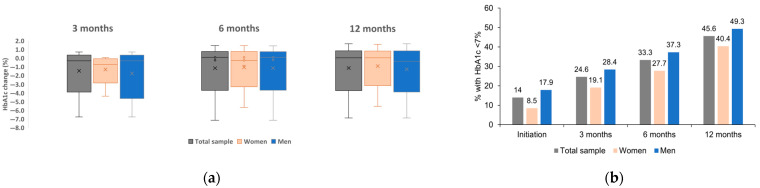
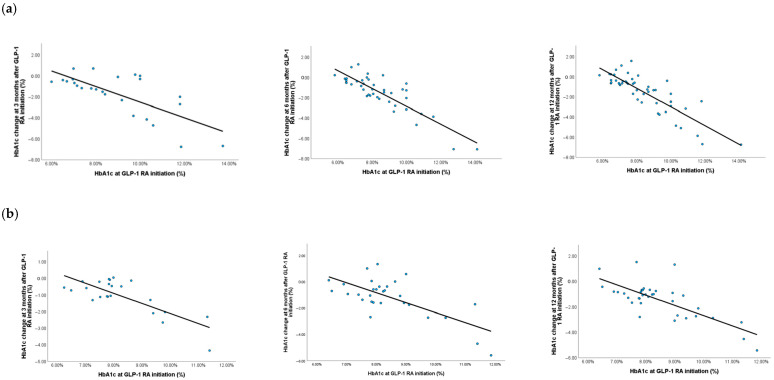
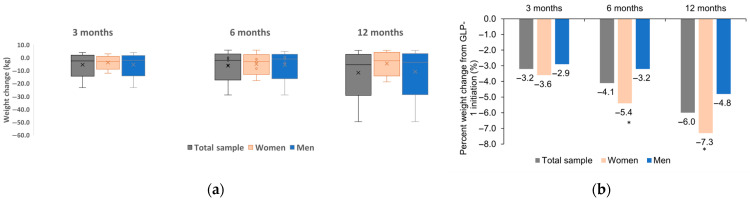
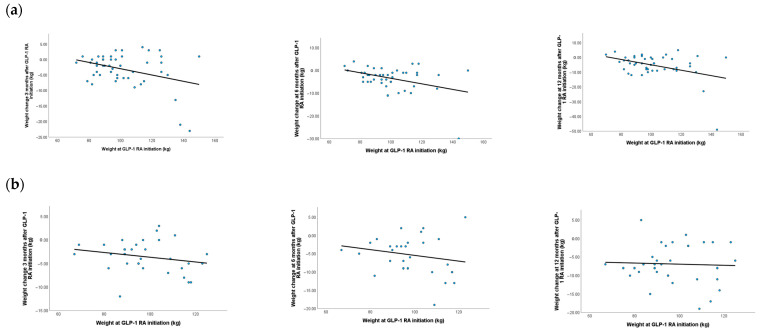
Background and Objectives: Type 2 diabetes (T2D) is a global health burden with increasing prevalence, necessitating effective management strategies. Glucagon-like peptide-1 receptor agonists (GLP-1 RAs) have emerged as beneficial therapies, promoting both glycemic control and weight loss, yet real-world data on sex differences in response are limited. This study aimed to investigate sex-based differences in glycemic and weight outcomes, as well as adverse effects, in T2D patients treated with GLP-1 RAs at a single diabetes center. Materials and Methods: In this retrospective analysis, 114 patients (58.8% men) with T2D who were initiated on GLP-1 RA therapy between 2015 and 2023 were evaluated. Data on HbA1c, BMI, and adverse events were collected at baseline and 3, 6, and 12 months post-treatment initiation. Results: Our findings indicated a statistically significant HbA1c reduction (from 8.6% at GLP-1 RA initiation to 6.9% at 12 months in men (p < 0.001) and from 8.4% at initiation to 7.0% at 12 months after GLP-1 RA initiation (p < 0.001) in women). By 12 months, a significantly greater proportion of women compared to men achieved ≥ 5% (51.1% vs. 28.4%, p = 0.019) and ≥10% weight loss (29.8% vs. 9.0%, p = 0.006), with both differences reaching statistical significance. A statistically significant difference in weight loss in mean weight change and percent weight change in men vs. women was observed from month 6 of therapy. Conclusions: These findings underscore the effectiveness of GLP-1 RAs in improving glycemic control and weight loss in a real-world setting and suggest that women may experience greater weight reduction. Understanding these differences could inform personalized treatment strategies for optimized outcomes in T2D management.
Overview
The claims and statistics of this paper haven’t been checked yet.
Free: it reads the open-access text and checks the first 5 claims that cite a source we can check. Create a free account to check every claim.
Integrity signals
Registry
Cites
Statistics
Figures
Verification
Claims the paper makes
The claims and statistics of this paper haven’t been checked yet.
Free: it reads the open-access text and checks the first 5 claims that cite a source we can check. Create a free account to check every claim.
Self-check
Percentages, sums and reported differences re-computed from the paper’s own numbers.
The self-check needs the paper’s full text.
Citations
Cites
Ong, K. L., Stafford, L. K., McLaughlin, S. A., Boyko, E. J., Vollset, S. E., Smith, A. E., Dalton, B. E., Duprey, J., Cruz, J. A., Hagins, H., et al. (2023) · The Lancet · doi:10.1016/s0140-6736(23)01301-6 · Cited by 6,146
Once-Weekly Semaglutide in Adults with Overweight or Obesity
Wilding, J. P. H., Batterham, R. L., Calanna, S., Davies, M., Van Gaal, L. F., Lingvay, I., McGowan, B. M., Rosenstock, J., Tran, M. T. D., Wadden, T. A., et al. (2021) · New England Journal of Medicine · doi:10.1056/nejmoa2032183 · Cited by 5,205 · cited 1×
“Consequently, GLP-1 RAs not only improve glycemic control but also lead to clinically significant weight loss, making them particularly valuable for overweight and obese patients with T2D [6,7].”
Davies, M. J., D’Alessio, D. A., Fradkin, J., Kernan, W. N., Mathieu, C., Mingrone, G., Rossing, P., Tsapas, A., Wexler, D. J., & Buse, J. B. (2018) · Diabetes Care · doi:10.2337/dci18-0033 · Cited by 3,518
Davies, M. J., Aroda, V. R., Collins, B. S., Gabbay, R. A., Green, J., Maruthur, N. M., Rosas, S. E., Del Prato, S., Mathieu, C., Mingrone, G., et al. (2022) · Diabetes Care · doi:10.2337/dci22-0034 · Cited by 2,104 · cited 3×
“…the efficacy in reducing HbA1c, accompanied by a weight loss effect, low risk of hypoglycemia, and ease of use (simple titration plan and once-daily or even once-weekly administration), the ADA/EASD Guideline recommends to preferentially use GLP-1 RAs in T2D patients before insulin therapy [3,4].”
Effects of Semaglutide on Chronic Kidney Disease in Patients with Type 2 Diabetes.
Perkovic, V., Tuttle, K. R., Rossing, P., Mahaffey, K. W., Mann, J. F. E., Bakris, G., Baeres, F. M. M., Idorn, T., Bosch-Traberg, H., Lausvig, N. L., et al. (2024) · New England Journal of Medicine · doi:10.1056/nejmoa2403347 · Cited by 2,099 · cited 1×
“Also, the presence of existing chronic kidney disease and cardiovascular disease may influence the choice of GLP-1 RAs over other drug classes due to their additional renal and cardiovascular benefits [28,30].”
GLP-1 receptor agonists in the treatment of type 2 diabetes - state-of-the-art
Nauck, M. A., Quast, D. R., Wefers, J., & Meier, J. J. (2021) · Molecular Metabolism · doi:10.1016/j.molmet.2020.101102 · Cited by 1,647 · cited 3×
“GLP-1 RAs are comparable to basal insulin regarding the glycemic effect, especially long-acting agents (semaglutide and dulaglutide) [33].”
InfluentialBuse, J. B., Wexler, D. J., Tsapas, A., Rossing, P., Mingrone, G., Mathieu, C., D’Alessio, D. A., & Davies, M. J. (2020) · Diabetes Care · doi:10.2337/dci19-0066 · Cited by 1,192
Incretin hormones: Their role in health and disease
Nauck, M. A., & Meier, J. J. (2018) · Diabetes, Obesity and Metabolism · doi:10.1111/dom.13129 · Cited by 950 · cited 1×
“These agents mimic the action of endogenous GLP-1, an incretin hormone that stimulates insulin secretion, inhibits glucagon release, slows gastric emptying, and promotes satiety [5].”
Obesity management as a primary treatment goal for type 2 diabetes: time to reframe the conversation
Lingvay, I., Sumithran, P., Cohen, R. V., & le Roux, C. W. (2022) · The Lancet · doi:10.1016/s0140-6736(21)01919-x · Cited by 581 · cited 1×
“Mechanisms hypothesized to be involved were associated medication for comorbidities (such as beta blockers), effect on appetite and satiety signals, higher risk of gastrointestinal adverse drug reactions, and lower medication adherence in those with diabetic neuropathy [27,29].”
Capehorn, M. S., Catarig, A.-M., Furberg, J. K., Janez, A., Price, H. C., Tadayon, S., Vergès, B., & Marre, M. (2020) · Diabetes & Metabolism · doi:10.1016/j.diabet.2019.101117 · Cited by 412 · cited 1×
“While the efficacy of GLP-1 RAs in lowering hemoglobin A1c (HbA1c) and promoting weight loss has been well documented in clinical trials [9,10], there is a large variability in response.”
Wysham, C., Blevins, T., Arakaki, R., Colon, G., Garcia, P., Atisso, C., Kuhstoss, D., & Lakshmanan, M. (2014) · Diabetes Care · doi:10.2337/dc13-2760 · Cited by 396 · cited 1×
“While the efficacy of GLP-1 RAs in lowering hemoglobin A1c (HbA1c) and promoting weight loss has been well documented in clinical trials [9,10], there is a large variability in response.”
Gorgojo-Martínez, J. J., Mezquita-Raya, P., Carretero-Gómez, J., Castro, A., Cebrián-Cuenca, A., de Torres-Sánchez, A., García-de-Lucas, M. D., Núñez, J., Obaya, J. C., Soler, M. J., et al. (2022) · Journal of Clinical Medicine · doi:10.3390/jcm12010145 · Cited by 358 · cited 1×
“Other concerns include an increased risk of thyroid C-cell tumors, although this has been seen mainly in animal studies, and human data have not confirmed this risk [18].”
Brown, E., Wilding, J. P. H., Barber, T. M., Alam, U., & Cuthbertson, D. J. (2019) · Obesity Reviews · doi:10.1111/obr.12841 · Cited by 222 · cited 1×
“Non-responders for weight loss were defined as patients with a weight loss 5% at all timepoints [23,24].”
American Diabetes Association Professional Practice Committee, ElSayed, N. A., McCoy, R. G., Aleppo, G., Bajaj, M., Balapattabi, K., Beverly, E. A., Briggs Early, K., Bruemmer, D., Cusi, K., et al. (2025) · Diabetes Care · doi:10.2337/dc25-s004 · Cited by 205 · cited 1×
“As the prevalence of T2D continues to rise, particularly in middle-and high-income countries, effective long-term management strategies are needed to reduce morbidity and improve patient outcomes [2].”
Jendle, J., Grunberger, G., Blevins, T., Giorgino, F., Hietpas, R. T., & Botros, F. T. (2016) · Diabetes/Metabolism Research and Reviews · doi:10.1002/dmrr.2810 · Cited by 158 · cited 1×
“Consequently, GLP-1 RAs not only improve glycemic control but also lead to clinically significant weight loss, making them particularly valuable for overweight and obese patients with T2D [6,7].”
Abd El Aziz, M. S., Kahle, M., Meier, J. J., & Nauck, M. A. (2017) · Diabetes, Obesity and Metabolism · doi:10.1111/dom.12804 · Cited by 155 · cited 1×
“Their potency appears to increase with higher baseline HbA1c levels, and in patients with lower baseline HbA1c, GLP-1 RAs may outperform basal insulin—possibly due to suboptimal insulin titration driven by concerns over hypoglycemia [41].”
Rivera, F. B., Cruz, L. L. A., Magalong, J. V., Ruyeras, J. M. M. J., Aparece, J. P., Bantayan, N. R. B., Lara-Breitinger, K., & Gulati, M. (2024) · American Journal of Preventive Cardiology · doi:10.1016/j.ajpc.2024.100679 · Cited by 155 · cited 1×
“…significant reductions in major adverse cardiovascular events (MACEs), like myocardial infarction, stroke, or cardiovascular mortality, as well as reduction in hospitalizations for heart failure and slower progression of diabetic chronic kidney diseases among patients treated with GLP-1 RAs [8].”
Rentzeperi, E., Pegiou, S., Koufakis, T., Grammatiki, M., & Kotsa, K. (2022) · Journal of Personalized Medicine · doi:10.3390/jpm12030454 · Cited by 140 · cited 3×
“Prior studies have suggested potential sex differences in response to GLP-1 RA therapy, particularly in terms of glycemic control, weight reduction, and adverse drug reactions, but real-world data on this topic are limited and remain to be verified [12].”
Dawed, A. Y., Mari, A., Brown, A., McDonald, T. J., Li, L., Wang, S., Hong, M.-G., Sharma, S., Robertson, N. R., Mahajan, A., et al. (2023) · The Lancet Diabetes & Endocrinology · doi:10.1016/s2213-8587(22)00340-0 · Cited by 131 · cited 1×
“Dawed AY et al. recently published a genome-wide pharmacogenomic study of GLP-1 RAs and observed that some variants of the β -arrestin1 gene (ARBB1) and GLP-1 receptor gene (GLP1R) are associated with better glycemic response in the first 6 months of therapy [42].”
Gallwitz, B., Dagogo‐Jack, S., Thieu, V., Garcia‐Perez, L., Pavo, I., Yu, M., Robertson, K. E., Zhang, N., & Giorgino, F. (2018) · Diabetes Obesity and Metabolism · doi:10.1111/dom.13086 · Cited by 98 · cited 3×
“Another pooled analysis of clinical trials that evaluated the use of dulaglutide in people with diabetes concluded that sex did not influence the effect of dulaglutide in reducing HbA1c level [14].”
InfluentialSchlögl, H., Kabisch, S., Horstmann, A., Lohmann, G., Müller, K., Lepsien, J., Busse-Voigt, F., Kratzsch, J., Pleger, B., Villringer, A., et al. (2013) · Diabetes Care · doi:10.2337/dc12-1925 · Cited by 88 · cited 2×
“Finally, functional MRI analysis showed that responders had significantly higher hypothalamic connectivity than non-responders, suggesting that the weight effect of GLP-1 RAs is mediated by the responsiveness of the hypothalamus to the pharmacological agent [44].”
Prevention of cardiorenal complications in people with type 2 diabetes and obesity
Drucker, D. J. (2024) · Cell Metabolism · doi:10.1016/j.cmet.2023.12.018 · Cited by 67 · cited 2×
“…variables for the adjustment of the regression models based on previous research which showed that weight loss and HbA1c change after GLP-1 RA initiation might be influenced by several factors including age and the presence of chronic microvascular complications and cardiovascular disease [26–28].”
White, G. E., Shu, I., Rometo, D., Arnold, J., Korytkowski, M., & Luo, J. (2023) · Obesity · doi:10.1002/oby.23622 · Cited by 66 · cited 1×
“In T2D patients a significant weight loss (more than 5% of the initial body weight) was observed only in one third of the patients, meaning that two thirds of the patients were non-responders to the weight loss effect [45].”
Liraglutide 3.0 mg for Weight Management: A Population Pharmacokinetic Analysis
Overgaard, R. V., Petri, K. C., Jacobsen, L. V., & Jensen, C. B. (2016) · Clinical Pharmacokinetics · doi:10.1007/s40262-016-0410-7 · Cited by 64 · cited 1×
“The pharmacokinetic analysis of samples drawn during SCALE Obesity and Prediabetes and SCALE Diabetes studies showed a 32% higher exposure in women than men with the same body weight [40].”
Gender differences in adverse event reports associated with antidiabetic drugs
Joung, K.-I., Jung, G.-W., Park, H.-H., Lee, H., Park, S.-H., & Shin, J.-Y. (2020) · Scientific Reports · doi:10.1038/s41598-020-74000-4 · Cited by 61 · cited 1×
“Most studies focusing on safety profile of GLP-1 RAs have indicated that women may be more susceptible to gastrointestinal side effects compared with men, suggesting that female sex could be an independent risk factor for adverse events in GLP-1 RA therapy [12,19,20].”
Exposure-response analysis for evaluation of semaglutide dose levels in type 2 diabetes
Petri, K. C. C., Ingwersen, S. H., Flint, A., Zacho, J., & Overgaard, R. V. (2018) · Diabetes, Obesity and Metabolism · doi:10.1111/dom.13358 · Cited by 53 · cited 1×
“Most studies focusing on safety profile of GLP-1 RAs have indicated that women may be more susceptible to gastrointestinal side effects compared with men, suggesting that female sex could be an independent risk factor for adverse events in GLP-1 RA therapy [12,19,20].”
Pencek, R., Blickensderfer, A., Li, Y., Brunell, S. C., & Anderson, P. W. (2012) · Postgraduate Medicine · doi:10.3810/pgm.2012.07.2567 · Cited by 52 · cited 1×
“In a large-scale retrospective pooled analysis of patients receiving exenatide twice daily, HbA1c reduction appeared to be irrespective of sex but highly dependent on baseline HbA1c values [13].”
Onishi, Y., Oura, T., Matsui, A., Matsuura, J., & Iwamoto, N. (2017) · Endocrine Journal · doi:10.1507/endocrj.ej16-0552 · Cited by 47 · cited 2×
“This interesting phenomenon was observed in studies carried out in a T2D population [17] and in people with obesity without T2D [39].”
Divino, V., Boye, K. S., Lebrec, J., DeKoven, M., & Norrbacka, K. (2019) · Diabetes Therapy · doi:10.1007/s13300-019-0615-5 · Cited by 42 · cited 1×
“The GLP-1 RA class has expanded in recent years, and weekly injection or oral administration is preferred [34].”
Alsaqaaby, M. S., Cooney, S., le Roux, C. W., & Pournaras, D. J. (2024) · The Lancet Diabetes & Endocrinology · doi:10.1016/s2213-8587(24)00098-6 · Cited by 39 · cited 1×
“In trials focused on obesity, the proportion of female participants is higher, whereas in studies involving patients with type 2 diabetes, a higher percentage of male participants is typically observed, as was the case in our study [36].”
Real‐world GLP‐1 RA therapy in type 2 diabetes: A long‐term effectiveness observational study
Tofé, S., Argüelles, I., Mena, E., Serra, G., Codina, M., Urgeles, J. R., García, H., & Pereg, V. (2019) · Endocrinology, Diabetes & Metabolism · doi:10.1002/edm2.51 · Cited by 38 · cited 1×
“These data were also observed in other real-world studies addressing GLP-1 RA therapy in type 2 diabetes [31,32].”
Aroda, V. R., Bauer, R., Christiansen, E., Haluzík, M., Kallenbach, K., Montanya, E., Rosenstock, J., & Meier, J. J. (2022) · Diabetes, Obesity and Metabolism · doi:10.1111/dom.14710 · Cited by 38 · cited 1×
“Also, subgroup analyses of patients treated with semaglutide revealed sex differences in glycemic response, but with no convergent results [38].”
Semaglutide in Obesity: Unmet Needs in Men
Jensterle, M., Rizzo, M., & Janež, A. (2023) · Diabetes Therapy · doi:10.1007/s13300-022-01360-7 · Cited by 36 · cited 1×
“This interesting phenomenon was observed in studies carried out in a T2D population [17] and in people with obesity without T2D [39].”
Guo, H., Yang, J., Huang, J., Xu, L., Lv, Y., Wang, Y., Ren, J., Feng, Y., Zheng, Q., & Li, L. (2025) · Obesity Pillars · doi:10.1016/j.obpill.2025.100162 · Cited by 32 · cited 1×
“…variables for the adjustment of the regression models based on previous research which showed that weight loss and HbA1c change after GLP-1 RA initiation might be influenced by several factors including age and the presence of chronic microvascular complications and cardiovascular disease [26–28].”
Durden, E., Liang, M., Fowler, R., Panton, U. H., & Mocevic, E. (2019) · Journal of Managed Care & Specialty Pharmacy · doi:10.18553/jmcp.2019.18429 · Cited by 30 · cited 1×
“The early glycemic and/or weight response observed in the first 3–6 months of GLP-1 RA therapy is associated with long-term persistence and adherence in patients with T2D [43].”
Hemmer, A., Maiter, D., Buysschaert, M., & Preumont, V. (2019) · Diabetes & Metabolic Syndrome: Clinical Research & Reviews · doi:10.1016/j.dsx.2018.09.007 · Cited by 29 · cited 1×
“By contrast, the efficacy of GLP-1 RAs in reducing HbA1c was found to be superior in females vs. males in several other studies [15,16].”
Ard, J. D., Lee, C. J., Gudzune, K. A., Addison, B., Lingvay, I., Cao, D., Mast, C. J., Stefański, A., Falcón, B. L., & Mojdami, D. (2025) · Diabetes Obesity and Metabolism · doi:10.1111/dom.16554 · Cited by 28
Durden, E., Lenhart, G., Lopez-Gonzalez, L., Hammer, M., & Langer, J. (2016) · Journal of Medical Economics · doi:10.3111/13696998.2015.1131703 · Cited by 23 · cited 1×
“By contrast, the efficacy of GLP-1 RAs in reducing HbA1c was found to be superior in females vs. males in several other studies [15,16].”
Predicting responsiveness to GLP-1 pathway drugs using real-world data
Zhu, X., Fowler, M. J., Wells, Q. S., Stafford, J. M., & GANNON, M. A. (2024) · BMC Endocrine Disorders · doi:10.1186/s12902-024-01798-9 · Cited by 22 · cited 1×
“Non-responders for glycemic management were considered patients with no improvement or increase in the HbA1c if the baseline value was 7% or reduction of less than 0.5% of HbA1c if the starting value was over 7% [25].”
InfluentialReal-world sex differences in type 2 diabetes patients treated with GLP-1 receptor agonists
Piccini, S., Favacchio, G., Morenghi, E., Mazziotti, G., A. Lania, A. G., & Mirani, M. (2024) · Diabetes Research and Clinical Practice · doi:10.1016/j.diabres.2024.111689 · Cited by 15 · cited 1×
“A recent published study by Piccini S et al. showed that discontinuation of GLP-1 RA therapy over time was associated with MACE risk in primary prevention in both sexes and only in men with previous CV events [35].”
GLP-1 RAs in Spain: A Short Narrative Review of Their Use in Real Clinical Practice
Romera, I., Santos, M. R., Artola, S., Fernández, C. S., & Conget, I. (2023) · Advances in Therapy · doi:10.1007/s12325-023-02442-z · Cited by 12 · cited 1×
“These data were also observed in other real-world studies addressing GLP-1 RA therapy in type 2 diabetes [31,32].”
Franch‐Nadal, J., Granado-Casas, M., Mata‐Cases, M., Ortega, E., Vlacho, B., & Mauricio, D. (2022) · Primary care diabetes · doi:10.1016/j.pcd.2022.10.005 · Cited by 12 · cited 1×
“Non-responders for weight loss were defined as patients with a weight loss 5% at all timepoints [23,24].”
Liraglutide-Induced Weight Loss May be Affected by Autonomic Regulation in Type 1 Diabetes
Hansen, C. S., Frandsen, C. S., Fleischer, J., Vistisen, D., Holst, J. J., Tarnow, L., Knop, F. K., Madsbad, S., Andersen, H. U., & Dejgaard, T. F. (2019) · Frontiers in Endocrinology · doi:10.3389/fendo.2019.00242 · Cited by 11 · cited 1×
“Mechanisms hypothesized to be involved were associated medication for comorbidities (such as beta blockers), effect on appetite and satiety signals, higher risk of gastrointestinal adverse drug reactions, and lower medication adherence in those with diabetic neuropathy [27,29].”
Lombrea, A., Romanescu, M., Jianu, N., Andor, M., Suciu, M., Man, D. E., Danciu, C., Dehelean, C. A., & Buda, V. (2023) · Pharmaceuticals · doi:10.3390/ph16060853 · Cited by 8
Chen, Y., Chen, J., Zhang, S., Zhu, D., Deng, F., Zuo, R., Hu, Y., Zhao, Y., Duan, Y., Lin, B., et al. (2024) · Frontiers in Pharmacology · doi:10.3389/fphar.2024.1370594 · Cited by 5 · cited 1×
“Furthermore, Chen Y et al. recently showed that GLP-1 RAs improved time spent in range by T2D patients after 3–6 months of therapy versus OADs, with better results with once-weekly GLP-1 RAs versus once-daily GLP-1 RAs [37].”
Gudzune, K. A., Gudzune, K. A., Lingvay, I., Cao, D., Mojdami, D., Stefański, A., Mast, C. J., & Lee, C. J. (2024) · Endocrine Practice · doi:10.1016/j.eprac.2024.03.253 · Cited by 2 · cited 1×
“Early responders were considered patients with more than 5% weight loss [21] and more than 1% HbA1c reduction after 3–6 months of therapy [22].”
Cited by
Moscucci, F., Baratta, F., Pastori, D., Menichelli, D., Mattioli, A. V., Gallina, S., Lospinuso, I., Sciomer, S., Piccirillo, G., & Desideri, G. (2026) · Nutrients · doi:10.3390/nu18040632 · Cited by 11
“…lean body mass and functional capacity in younger individuals may appear marginal compared with the metabolic benefits associated with weight loss [75], in older adults this reduction may be crucial, potentially leading to loss of independence and the development of clinical frailty, with all the…”
Gu, S. (2026) · Drug Healthcare and Patient Safety · doi:10.2147/dhps.s556918 · Cited by 15
“35 The Time-to-Onset Analysis TTO measures the interval between medication initiation and the first occurrence of an adverse drug reaction (ADR).”
Weiskirchen, R., & Lonardo, A. (2026) · Exploration of Endocrine and Metabolic Diseases · doi:10.37349/eemd.2026.101458 · Cited by 2
Navas, A., NOONE, J., Laney, N., SHETH, S. T., Tan, X., Liang, Y. M., Munoz, P., & Swift, C. (2026) · Diabetes Therapy · doi:10.1007/s13300-026-01875-3 · Cited by 1
“Furthermore, prior research has largely shown that women have a greater therapeutic response to GLP-1RAs in clinical trials [37, 38] and real-world settings [39], whereas data related to the influence of HbA1c values and age on treat-ment efficacy are less conclusive [37, 38, 40].”
Metadata
- Authors
- Inceu, G. V., Crăciun, A.-E., Ciobanu, D. M., Berchisan, A., Fodor, A., Bala, C., Roman, G., & Rusu, A.
- Affiliations
- Iuliu Hațieganu University of Medicine and Pharmacy (RO)
- Department of Diabetes and Nutrition Diseases, “Iuliu Hațieganu” University of Medicine and Pharmacy, 2-4 Clinicilor St., 400006 Cluj-Napoca, Romania
- Spitalul Clinic Județean de Urgență Cluj-Napoca (RO)
- ORCID
- Venue
- Medicina
- Publisher
- MDPI AG
- Published
- 2025-07-25
- Volume
- 61
- Issue
- 8
- Pages
- 1343
- ISSN
- 1010-660X (ISSN-L)
- 1648-9144
- PMC
- PMC12388165
- OpenAlex
- W4412917849
- Cited by
- 3
- References
- 47
- Citations by year
- 2026: 3
- FWCI
- 2.04
- Type
- journal article
- Language
- en
- Open access
- gold
- doi.org
- Licence
- Locations
- Medicina (publishedVersion, cc-by)
- Europe PMC (PubMed Central) (publishedVersion, cc-by)
- PubMed Central (publishedVersion, cc-by)
- PubMed (publishedVersion)
- DOAJ (DOAJ: Directory of Open Access Journals) (submittedVersion, cc-by-sa)
- Funders
- “Iuliu Hatieganu” University of Medicine and Pharmacy
- Topics
- Health Sciences › Medicine › Endocrinology, Diabetes and Metabolism › Diabetes Treatment and Management
- Health Sciences › Medicine › Public Health, Environmental and Occupational Health › Sex and Gender in Healthcare
- Health Sciences › Medicine › Endocrinology, Diabetes and Metabolism › Diabetes Management and Research
- Keywords
- type 2 diabetes, GLP-1 receptor agonists, sex differences, glycemic control, HbA1c, weight loss, adverse events, real-world effectiveness, women
- MeSH terms
- Glycemic Control, Glucagon-Like Peptide-1 Receptor Agonists, Aged, Body Weight, Diabetes Mellitus, Type 2, Female, Glycated Hemoglobin, Humans, Male, Middle Aged, Retrospective Studies, Sex Factors, Weight Loss, Treatment Outcome
About these checks
Registry, retraction, Cites and statistics results are computed, not judged, with one exception: a printed reference that no index lists is read once by a model before it counts as a citation error. Claims are extracted by a model and kept only when their quote appears verbatim in the text; each cited source is then checked, with a model’s help, for whether it says what the claim relies on. Those verdicts can be wrong — read the claim’s quote and the cited source before relying on one.
Statistics and arithmetic are recomputed, not judged.
Confidence bands are shown only for fields calibrated on our annotated test set. None is calibrated yet, so no band is shown.
What counts as a claim ›How we measure confidence ›How we check this ›
Are you an author, or do you see a problem with this page? Request a review
Data sources
Bibliographic data: Semantic Scholar, OpenAlex, Crossref.
Contains information from the Semantic Scholar Academic Graph Datasets, made available under the ODC Attribution License (ODC-BY 1.0).
Semantic Scholar’s data is described in: Kinney, R., et al. (2023). The Semantic Scholar Open Data Platform. arXiv:2301.10140.
