

The DOI matches its Crossref record; 247 of the 252 references it cites were found in a registry or an index.
Nitric Oxide in Macrophage Immunometabolism: Hiding in Plain Sight
Open accessAbstract
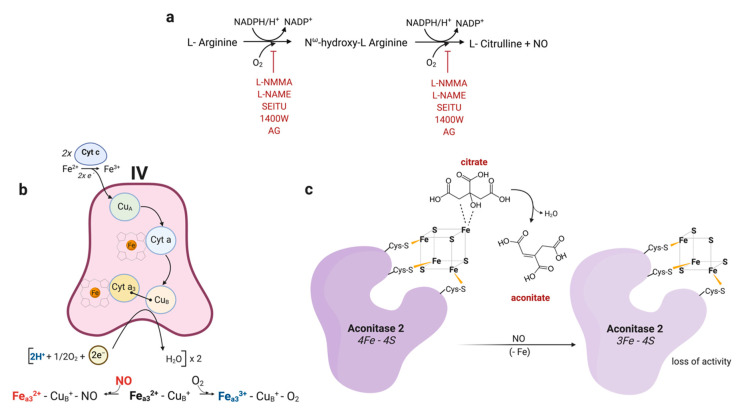
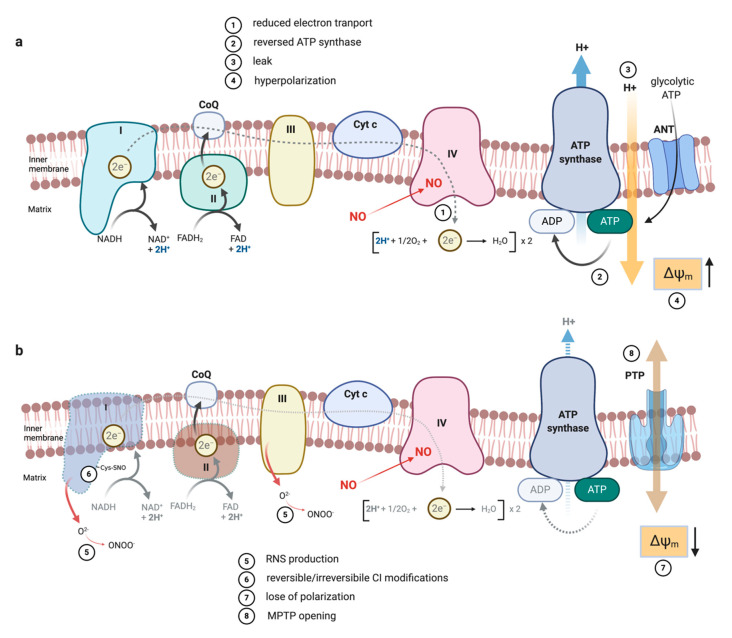
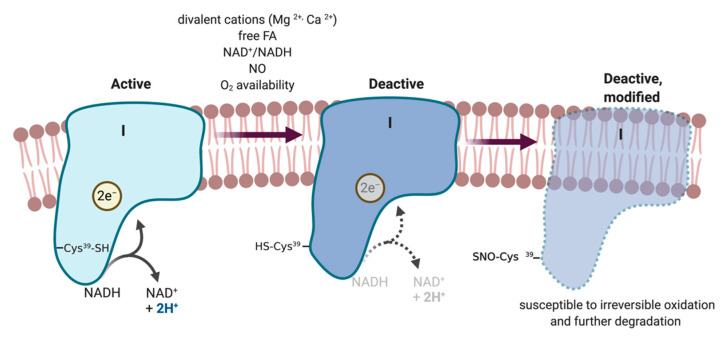
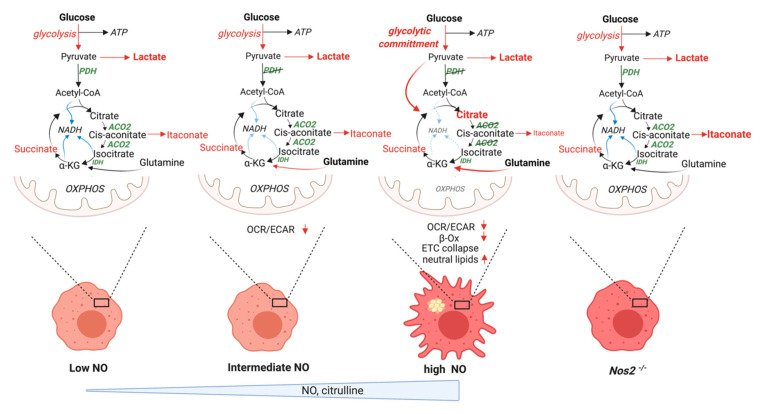
Nitric Oxide (NO) is a soluble endogenous gas with various biological functions like signaling, and working as an effector molecule or metabolic regulator. In response to inflammatory signals, immune myeloid cells, like macrophages, increase production of cytokines and NO, which is important for pathogen killing. Under these proinflammatory circumstances, called “M1”, macrophages undergo a series of metabolic changes including rewiring of their tricarboxylic acid (TCA) cycle. Here, we review findings indicating that NO, through its interaction with heme and non-heme metal containing proteins, together with components of the electron transport chain, functions not only as a regulator of cell respiration, but also a modulator of intracellular cell metabolism. Moreover, diverse effects of NO and NO-derived reactive nitrogen species (RNS) involve precise interactions with different targets depending on concentration, temporal, and spatial restrictions. Although the role of NO in macrophage reprogramming has been in evidence for some time, current models have largely minimized its importance. It has, therefore, been hiding in plain sight. A review of the chemical properties of NO, past biochemical studies, and recent publications, necessitates that mechanisms of macrophage TCA reprogramming during stimulation must be re-imagined and re-interpreted as mechanistic results of NO exposure. The revised model of metabolic rewiring we describe here incorporates many early findings regarding NO biochemistry and brings NO out of hiding and to the forefront of macrophages immunometabolism.
Overview
The claims and statistics of this paper haven’t been checked yet.
Run the check — free, no account needed. It reads the open-access text and checks the sources it cites.
Integrity signals
Registry
Cites
Statistics
Figures
Verification
Claims the paper makes
The claims and statistics of this paper haven’t been checked yet.
Run the check — free, no account needed. It reads the open-access text and checks the sources it cites.
Claims other papers make about this one
Each is checked against this paper’s own text: does it say what the citing paper says it does?
In the citing paper
“The role of •NO in macrophage reprogramming has been known for a long time, but current models greatly underestimate its importance [125].”
From The Role of Reactive Species on Innate Immunity (2022) · cites this paper as [125]
In the citing paper
“The •NO/ROS balance is also important during the transition from Th1 to Th2 [125,126].”
From The Role of Reactive Species on Innate Immunity (2022) · cites this paper as [125]
Self-check
Percentages, sums and reported differences re-computed from the paper’s own numbers.
The self-check needs the paper’s full text.
Citations
Cites
Nitric oxide: physiology, pathophysiology, and pharmacology.
Moncada, S., Palmer, R. M., & Higgs, E. A. (1991) · Pharmacological Reviews · doi:10.1016/s0031-6997(25)06663-3 · Cited by 15,525
Furchgott, R. F., & Zawadzki, J. V. (1980) · Nature · doi:10.1038/288373a0 · Cited by 12,064 · cited 1×
“Early descriptions of an Endothelium-derived relaxing factor (EDRF) capable of inducing vasodilation began in 1980 [1].”
BackgroundAnalysis of nitrate, nitrite, and [15N]nitrate in biological fluids
Green, L. C., Wagner, D. A., Glogowski, J. A., Skipper, P. L., Wishnok, J. S., & Tannenbaum, S. R. (1982) · Analytical Biochemistry · doi:10.1016/0003-2697(82)90118-x · Cited by 12,061
Endothelium-derived relaxing factor produced and released from artery and vein is nitric oxide.
Ignarro, L. J., Buga, G. M., Wood, K. S., Byrns, R. E., & Chaudhuri, G. (1987) · Proceedings of the National Academy of Sciences · doi:10.1073/pnas.84.24.9265 · Cited by 5,074
NITRIC OXIDE AND MACROPHAGE FUNCTION
MacMicking, J. D., Xie, Q. W., & Nathan, C. (1997) · Annual Review of Immunology · doi:10.1146/annurev.immunol.15.1.323 · Cited by 4,245 · cited 1×
“nitrogen intermediates through NOS2 [135], and increased production of effectors such as cationic peptides, lysosomal hydrolases, and metabolic inhibitors [136], including itaconate (antibacterial) [107] and 25-hydroxycholesterol (antiviral) [137], all contribute to macrophage antimicrobial responses.”
BackgroundSuccinate is an inflammatory signal that induces IL-1β through HIF-1α
Tannahill, G. M., Curtis, A. M., Adamik, J., Palsson-McDermott, E. M., McGettrick, A. F., Goel, G., Frezza, C., Bernard, N. J., Kelly, B., Foley, N. H., et al. (2013) · Nature · doi:10.1038/nature11986 · Cited by 4,176 · cited 23×
“Both groups have reported elevated IL-1β in Nos2−/− macrophages likely due to the lack of NO-mediated nitrosation of the inflammasome complex [179–181].”
BackgroundInfluentialKim, J.-W., Tchernyshyov, I., Semenza, G. L., & Dang, C. V. (2006) · Cell Metabolism · doi:10.1016/j.cmet.2006.02.002 · Cited by 3,905
Ischaemic accumulation of succinate controls reperfusion injury through mitochondrial ROS
Chouchani, E. T., Pell, V. R., Gaude, E., Aksentijević, D., Sundier, S. Y., Robb, E. L., Logan, A., Nadtochiy, S. M., Ord, E. N. J., Smith, A. C., et al. (2014) · Nature · doi:10.1038/nature13909 · Cited by 2,907 · cited 1×
“A similar mechanism has been proposed for the involvement of succinate in damage associated with reperfusion injury in the heart [133].”
BackgroundPeroxynitrite oxidation of sulfhydryls.
Radí, R., Beckman, J. S., Bush, K., & Freeman, B. Α. (1991) · Journal of Biological Chemistry · doi:10.1016/s0021-9258(20)64313-7 · Cited by 2,492
Mills, E. L., Kelly, B., Logan, A., Costa, A. S. H., Varma, M., Bryant, C. E., Tourlomousis, P., Däbritz, J. H. M., Gottlieb, E., Latorre, I., et al. (2016) · Cell · doi:10.1016/j.cell.2016.08.064 · Cited by 2,291 · cited 2×
“As a fuel for Complex II, succinate can drive ROS production in macrophages and, therefore, be critical in antibacterial function [131], and via reverse electron transport, succinate can fuel ROS production by Complex I.”
Background
Cited by
Sorted by citations
Macrophages in immunoregulation and therapeutics
Chen, S., Saeed, A. F. U. H., Liu, Q., Jiang, Q., Xu, H., Xiao, G. G., Rao, L., & Duo, Y. (2023) · Signal Transduction and Targeted Therapy · doi:10.1038/s41392-023-01452-1 · Cited by 2,477
Macrophage plasticity: signaling pathways, tissue repair, and regeneration
Yan, L., Wang, J., Cai, X., Liou, Y., Shen, H., Hao, J., Huang, C., Luo, G., & He, W. (2024) · MedComm · doi:10.1002/mco2.658 · Cited by 406
Macrophage Reprogramming and Cancer Therapeutics: Role of iNOS-Derived NO
Kashfi, K., Kannikal, J. J., & Nath, N. (2021) · Cells · doi:10.3390/cells10113194 · Cited by 244
“If the cell situation could be altered such that the TME’s low iNOS activity is reprogrammed to produce higher iNOS/NO concentrations, it may then be of therapeutic value [74,75].”
BackgroundMarrocco, A., & Ortiz, L. A. (2022) · Frontiers in Immunology · doi:10.3389/fimmu.2022.936167 · Cited by 173
The Role of Reactive Species on Innate Immunity
Andrés, C., Pérez de la Lastra, J., Juan, C., Plou, F., & Pérez-Lebeña, E. (2022) · Vaccines · doi:10.3390/vaccines10101735 · Cited by 142
“The •NO/ROS balance is also important during the transition from Th1 to Th2 [125,126].”
Background
Metadata
- Authors
- Palmieri, E. M., McGinity, C., Wink, D. A., & McVicar, D. W.
- Affiliations
- National Cancer Institute (US)
- Corresponding author
- McVicar, Daniel W.
- Venue
- Metabolites
- Publisher
- MDPI AG
- Published
- 2020-10-26
- Volume
- 10
- Issue
- 11
- Pages
- 429
- ISSN
- 2218-1989 (ISSN-L)
- PMC
- PMC7693038
- OpenAlex
- W3096340664
- Cited by
- 237
- References
- 252
- Citations by year
- 2026: 40 · 2025: 59 · 2024: 56 · 2023: 46 · 2022: 15 · 2021: 20 · 2020: 1
- FWCI
- 2.00
- Type
- journal article
- Language
- en
- Open access
- gold
- doi.org
- Licence
- Locations
- Metabolites (publishedVersion, cc-by)
- PubMed Central (publishedVersion, cc-by)
- PubMed (publishedVersion)
- DOAJ (DOAJ: Directory of Open Access Journals) (submittedVersion, cc-by-sa)
- Funders
- National Cancer Institute (ZIA BC 010300, ZIA BC 010899)
- Topics
- Life Sciences › Immunology and Microbiology › Immunology › Immune cells in cancer
- Health Sciences › Medicine › Physiology (medical) › Nitric Oxide and Endothelin Effects
- Life Sciences › Biochemistry, Genetics and Molecular Biology › Molecular Biology › Redox biology and oxidative stress
- Keywords
- nitric oxide, macrophage immunometabolism, M1 macrophages, reactive nitrogen species, electron transport chain, heme proteins, cellular respiration, macrophage metabolic reprogramming, inflammation
About these checks
Registry, retraction, Cites and statistics results are computed, not judged, with one exception: a printed reference that no index lists is read once by a model before it counts as a citation error. Claims are extracted by a model and kept only when their quote appears verbatim in the text; each cited source is then checked, with a model’s help, for whether it says what the claim relies on. Those verdicts can be wrong — read the claim’s quote and the cited source before relying on one.
Statistics and arithmetic are recomputed, not judged.
Confidence bands are shown only for fields calibrated on our annotated test set. None is calibrated yet, so no band is shown.
What counts as a claim ›How we measure confidence ›How we check this ›
Are you an author, or do you see a problem with this page? Request a review
