

The DOI matches its Crossref record; 247 of the 252 references it cites were found in a registry or an index.
Nitric Oxide in Macrophage Immunometabolism: Hiding in Plain Sight
Open accessAbstract
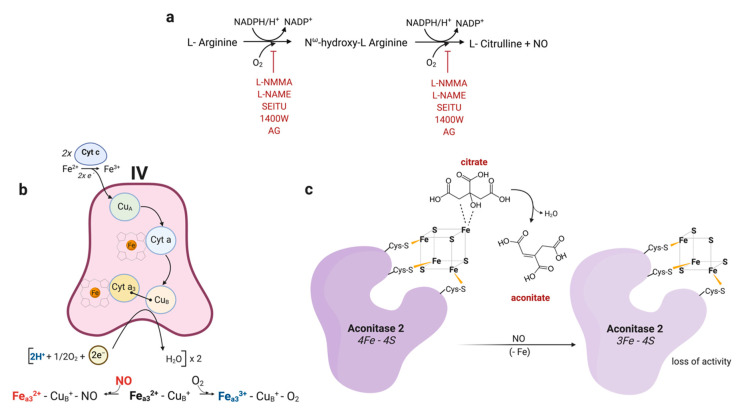
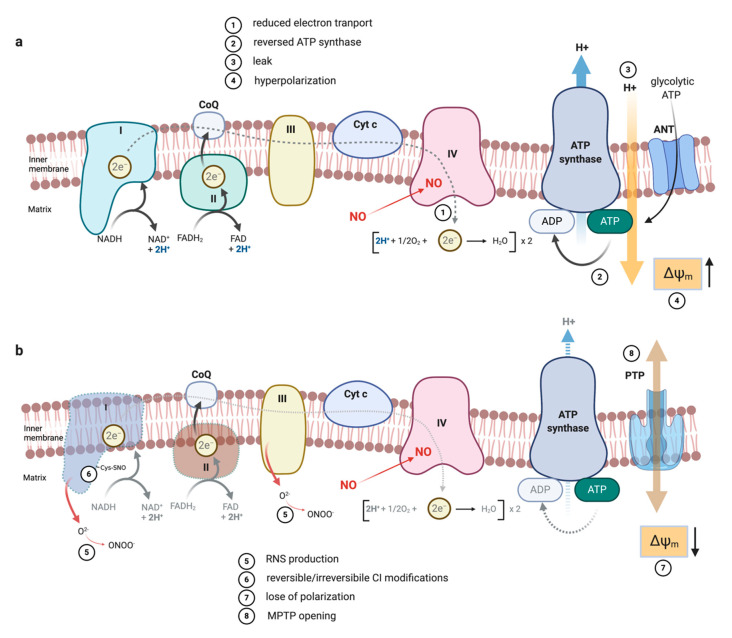
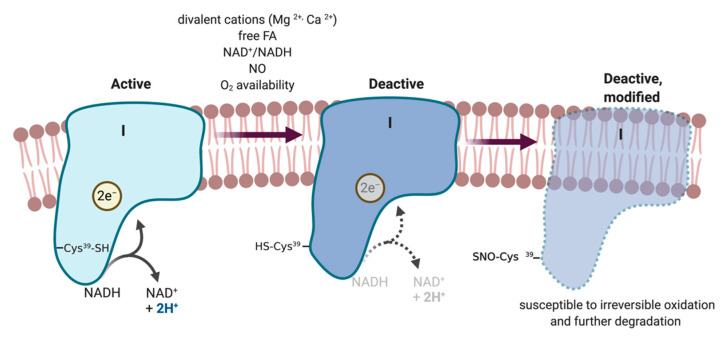
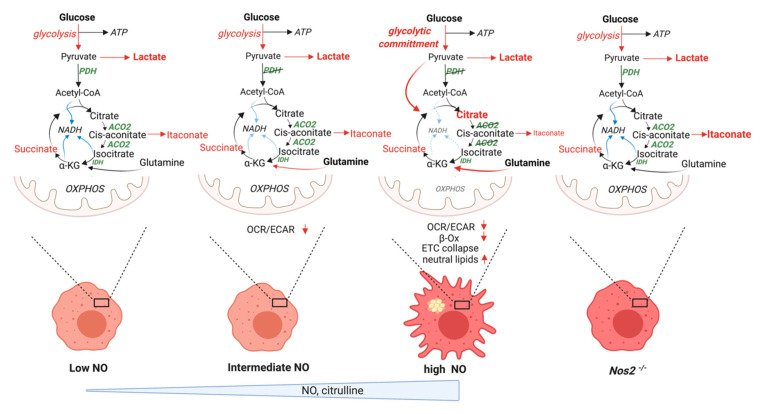
Nitric Oxide (NO) is a soluble endogenous gas with various biological functions like signaling, and working as an effector molecule or metabolic regulator. In response to inflammatory signals, immune myeloid cells, like macrophages, increase production of cytokines and NO, which is important for pathogen killing. Under these proinflammatory circumstances, called “M1”, macrophages undergo a series of metabolic changes including rewiring of their tricarboxylic acid (TCA) cycle. Here, we review findings indicating that NO, through its interaction with heme and non-heme metal containing proteins, together with components of the electron transport chain, functions not only as a regulator of cell respiration, but also a modulator of intracellular cell metabolism. Moreover, diverse effects of NO and NO-derived reactive nitrogen species (RNS) involve precise interactions with different targets depending on concentration, temporal, and spatial restrictions. Although the role of NO in macrophage reprogramming has been in evidence for some time, current models have largely minimized its importance. It has, therefore, been hiding in plain sight. A review of the chemical properties of NO, past biochemical studies, and recent publications, necessitates that mechanisms of macrophage TCA reprogramming during stimulation must be re-imagined and re-interpreted as mechanistic results of NO exposure. The revised model of metabolic rewiring we describe here incorporates many early findings regarding NO biochemistry and brings NO out of hiding and to the forefront of macrophages immunometabolism.
Overview
The claims and statistics of this paper haven’t been checked yet.
Run the check — free, no account needed. It reads the open-access text and checks the sources it cites.
Integrity signals
Registry
Cites
Statistics
Figures
Verification
Claims the paper makes
The claims and statistics of this paper haven’t been checked yet.
Run the check — free, no account needed. It reads the open-access text and checks the sources it cites.
Claims other papers make about this one
Each is checked against this paper’s own text: does it say what the citing paper says it does?
In the citing paper
“The role of •NO in macrophage reprogramming has been known for a long time, but current models greatly underestimate its importance [125].”
From The Role of Reactive Species on Innate Immunity (2022) · cites this paper as [125]
In the citing paper
“The •NO/ROS balance is also important during the transition from Th1 to Th2 [125,126].”
From The Role of Reactive Species on Innate Immunity (2022) · cites this paper as [125]
Self-check
Percentages, sums and reported differences re-computed from the paper’s own numbers.
The self-check needs the paper’s full text.
Citations
Cites
Nitric oxide: physiology, pathophysiology, and pharmacology.
Moncada, S., Palmer, R. M., & Higgs, E. A. (1991) · Pharmacological Reviews · doi:10.1016/s0031-6997(25)06663-3 · Cited by 15,525
Furchgott, R. F., & Zawadzki, J. V. (1980) · Nature · doi:10.1038/288373a0 · Cited by 12,064 · cited 1×
“Early descriptions of an Endothelium-derived relaxing factor (EDRF) capable of inducing vasodilation began in 1980 [1].”
BackgroundAnalysis of nitrate, nitrite, and [15N]nitrate in biological fluids
Green, L. C., Wagner, D. A., Glogowski, J. A., Skipper, P. L., Wishnok, J. S., & Tannenbaum, S. R. (1982) · Analytical Biochemistry · doi:10.1016/0003-2697(82)90118-x · Cited by 12,061
Endothelium-derived relaxing factor produced and released from artery and vein is nitric oxide.
Ignarro, L. J., Buga, G. M., Wood, K. S., Byrns, R. E., & Chaudhuri, G. (1987) · Proceedings of the National Academy of Sciences · doi:10.1073/pnas.84.24.9265 · Cited by 5,074
NITRIC OXIDE AND MACROPHAGE FUNCTION
MacMicking, J. D., Xie, Q. W., & Nathan, C. (1997) · Annual Review of Immunology · doi:10.1146/annurev.immunol.15.1.323 · Cited by 4,245 · cited 1×
“nitrogen intermediates through NOS2 [135], and increased production of effectors such as cationic peptides, lysosomal hydrolases, and metabolic inhibitors [136], including itaconate (antibacterial) [107] and 25-hydroxycholesterol (antiviral) [137], all contribute to macrophage antimicrobial responses.”
BackgroundSuccinate is an inflammatory signal that induces IL-1β through HIF-1α
Tannahill, G. M., Curtis, A. M., Adamik, J., Palsson-McDermott, E. M., McGettrick, A. F., Goel, G., Frezza, C., Bernard, N. J., Kelly, B., Foley, N. H., et al. (2013) · Nature · doi:10.1038/nature11986 · Cited by 4,176 · cited 23×
“Both groups have reported elevated IL-1β in Nos2−/− macrophages likely due to the lack of NO-mediated nitrosation of the inflammasome complex [179–181].”
BackgroundInfluentialKim, J.-W., Tchernyshyov, I., Semenza, G. L., & Dang, C. V. (2006) · Cell Metabolism · doi:10.1016/j.cmet.2006.02.002 · Cited by 3,905
Ischaemic accumulation of succinate controls reperfusion injury through mitochondrial ROS
Chouchani, E. T., Pell, V. R., Gaude, E., Aksentijević, D., Sundier, S. Y., Robb, E. L., Logan, A., Nadtochiy, S. M., Ord, E. N. J., Smith, A. C., et al. (2014) · Nature · doi:10.1038/nature13909 · Cited by 2,907 · cited 1×
“A similar mechanism has been proposed for the involvement of succinate in damage associated with reperfusion injury in the heart [133].”
BackgroundPeroxynitrite oxidation of sulfhydryls.
Radí, R., Beckman, J. S., Bush, K., & Freeman, B. Α. (1991) · Journal of Biological Chemistry · doi:10.1016/s0021-9258(20)64313-7 · Cited by 2,492
Mills, E. L., Kelly, B., Logan, A., Costa, A. S. H., Varma, M., Bryant, C. E., Tourlomousis, P., Däbritz, J. H. M., Gottlieb, E., Latorre, I., et al. (2016) · Cell · doi:10.1016/j.cell.2016.08.064 · Cited by 2,291 · cited 2×
“As a fuel for Complex II, succinate can drive ROS production in macrophages and, therefore, be critical in antibacterial function [131], and via reverse electron transport, succinate can fuel ROS production by Complex I.”
Background
Cited by
Sorted by citations
Macrophages in immunoregulation and therapeutics
Chen, S., Saeed, A. F. U. H., Liu, Q., Jiang, Q., Xu, H., Xiao, G. G., Rao, L., & Duo, Y. (2023) · Signal Transduction and Targeted Therapy · doi:10.1038/s41392-023-01452-1 · Cited by 2,477
Macrophage plasticity: signaling pathways, tissue repair, and regeneration
Yan, L., Wang, J., Cai, X., Liou, Y., Shen, H., Hao, J., Huang, C., Luo, G., & He, W. (2024) · MedComm · doi:10.1002/mco2.658 · Cited by 406
Macrophage Reprogramming and Cancer Therapeutics: Role of iNOS-Derived NO
Kashfi, K., Kannikal, J. J., & Nath, N. (2021) · Cells · doi:10.3390/cells10113194 · Cited by 244
“If the cell situation could be altered such that the TME’s low iNOS activity is reprogrammed to produce higher iNOS/NO concentrations, it may then be of therapeutic value [74,75].”
BackgroundMarrocco, A., & Ortiz, L. A. (2022) · Frontiers in Immunology · doi:10.3389/fimmu.2022.936167 · Cited by 173
The Role of Reactive Species on Innate Immunity
Andrés, C., Pérez de la Lastra, J., Juan, C., Plou, F., & Pérez-Lebeña, E. (2022) · Vaccines · doi:10.3390/vaccines10101735 · Cited by 142
“The •NO/ROS balance is also important during the transition from Th1 to Th2 [125,126].”
BackgroundHan, C., Zhang, X., Wang, F., Yu, Q., Chen, F., Shen, D., Yang, Z., Wang, T., Jiang, M., Deng, T., et al. (2021) · Carbon · doi:10.1016/j.carbon.2021.07.063 · Cited by 133
An Overview of NO Signaling Pathways in Aging
Pourbagher-Shahri, A. M., Farkhondeh, T., Talebi, M., Kopustinskiene, D. M., Samarghandian, S., & Bernatoniene, J. (2021) · Molecules · doi:10.3390/molecules26154533 · Cited by 101
Errico, S., Spagnoletta, A., Verardi, A., Moliterni, S., Dimatteo, S., & Sangiorgio, P. (2021) · Comprehensive Reviews in Food Science and Food Safety · doi:10.1111/1541-4337.12863 · Cited by 100
Redox regulation of macrophages
Tran, N., & Mills, E. L. (2024) · Redox Biology · doi:10.1016/j.redox.2024.103123 · Cited by 101
“S cluster (see reviews [65,93] for further discussion).”
BackgroundArginine metabolism in myeloid cells in health and disease
Karadima, E., Chavakis, T., & Alexaki, V. I. (2025) · Seminars in Immunopathology · doi:10.1007/s00281-025-01038-9 · Cited by 86
“Aside from its function in elimination of bacteria, NO exerts numerous functions within macrophages and their surrounding micro-environment [37].”
Modulation of macrophage metabolism as an emerging immunotherapy strategy for cancer
Dussold, C., Zilinger, K., Turunen, J. R., Heimberger, A. B., & Miska, J. M. (2024) · Journal of Clinical Investigation · doi:10.1172/jci175445 · Cited by 81
“These changes, which are mediated by LPS, promote inflammatory polarization, which leads to increased cytokine and NO production by macrophages (128).”
Modulating Nitric Oxide: Implications for Cytotoxicity and Cytoprotection
Belenichev, I. F., Popazova, O., Bukhtiyarova, N. V., Savchenko, D., Oksenych, V., & Kamyshnyi, O. (2024) · Antioxidants · doi:10.3390/antiox13050504 · Cited by 89
Effect of micro- and nanoplastic particles on human macrophages
Adler, M. Y., Issoual, I., Rückert, M., Deloch, L., Meier, C., Tschernig, T., Alexiou, C., Pfister, F., Ramsperger, A. F. R. M., Laforsch, C., et al. (2024) · Journal of Hazardous Materials · doi:10.1016/j.jhazmat.2024.134253 · Cited by 74
Zhang, X., Liu, Z., Zhong, C., Pu, Y., Yang, Z., & Bao, Y. (2021) · International Journal of Biological Macromolecules · doi:10.1016/j.ijbiomac.2021.08.176 · Cited by 64
Ji, C., Zhang, Z., Chen, J., Song, D., Liu, B., Li, J., Liu, R., Niu, J., Wang, D., Ling, N., et al. (2021) · Journal of Agricultural and Food Chemistry · doi:10.1021/acs.jafc.1c03850 · Cited by 61
Peng, C., Feng, Z., Ou, L., Zou, Y., Sang, S., Liu, H., Zhu, W., Gan, G., Zhang, G., & Yao, M. (2023) · Journal of Functional Foods · doi:10.1016/j.jff.2023.105626 · Cited by 57
Palmieri, E. M., Holewinski, R. J., McGinity, C. L., Pierri, C. L., Maio, N., Weiss, J. M., Tragni, V., Miranda, K. M., Rouault, T. A., Andrésson, Þ., et al. (2023) · Nature Communications · doi:10.1038/s41467-023-40738-4 · Cited by 58
“In addition, NO suppresses mitochondrial aconitase (ACO2) activity, leading to the accumulation of citrate, which upon export to the cytoplasm supports in fl ammatory lipid production 6 – 8 .”
Self-citationWu, J., Mo, J., Xiang, W. D., Shi, X., Guo, L., Li, Y., Bao, Y., & Li, Z. (2023) · Biomedicine & Pharmacotherapy · doi:10.1016/j.biopha.2023.114471 · Cited by 54
Evaluation of the Molecular Mechanisms of Sepsis Using Proteomics
He, M., Chen, S., & Ding, R. (2021) · Frontiers in Immunology · doi:10.3389/fimmu.2021.733537 · Cited by 52
Histone deacetylase 3 regulates microglial function through histone deacetylation
Meleady, L., Towriss, M., Kim, J. S., Bacarac, V., Dang, V., Rowland, M. E., & Ciernia, A. V. (2023) · Epigenetics · doi:10.1080/15592294.2023.2241008 · Cited by 47
“The primary function of NO release by immune cells is to defend against pathogens [42].”
BackgroundDrehmer, D., Luiz, J. P. M., Speck‐Hernandez, C. A., Alves-Filho, J. C., Hussell, T., Townsend, P. A., & Moncada, S. (2022) · Redox Biology · doi:10.1016/j.redox.2022.102350 · Cited by 48
“8 decreased availability of the essential cofactor tetrahydrobiopterin, hence have limited ability to generate NO [54].”
BackgroundNitric Oxide Modulates Metabolic Processes in the Tumor Immune Microenvironment
McGinity, C. L., Palmieri, E. M., Somasundaram, V., Bhattacharyya, D. D., Ridnour, L. A., Cheng, R. Y. S., Ryan, A. E., Glynn, S. A., Thomas, D. D., Miranda, K. M., et al. (2021) · International Journal of Molecular Sciences · doi:10.3390/ijms22137068 · Cited by 44
“, heme and non-heme iron proteins) [35,69] and (2) reactive radicals (i.”
BackgroundSelf-citationFujii, J., & Osaki, T. (2023) · Molecules · doi:10.3390/molecules28020814 · Cited by 42
The Cys Sense: Thiol Redox Switches Mediate Life Cycles of Cellular Proteins
Radzinski, M., Oppenheim, T., Metanis, N., & Reichmann, D. (2021) · Biomolecules · doi:10.3390/biom11030469 · Cited by 38
“One of the major sources of cellular nitric oxide molecules is the enzymatic activity of a family of nitric oxide synthetase (NOS) enzymes involved in cell signaling and immune defense [65,66].”
BackgroundCoutinho, L. L., Femino, E. L., González, A. L., Moffat, R. L., Heinz, W. F., Cheng, R. Y. S., Lockett, S., Rangel, M. C., Ridnour, L. A., & Wink, D. A. (2024) · International Journal of Molecular Sciences · doi:10.3390/ijms25116103 · Cited by 38
“Similarly to oxygen, NO is a gas with diffusible properties that exhibits higher sol-ubility in hydrophobic compartments than in aqueous environments [24].”
BackgroundSelf-citationWu, J., Yu, G., Zhang, X., Staiger, M. P., Gupta, T. B., Yao, H. L., & Wu, X. (2024) · Carbohydrate Polymers · doi:10.1016/j.carbpol.2024.122530 · Cited by 38
iNOS in Macrophage Polarization: Pharmacological and Regulatory Insights
Kang, J.-H., Kim, J., Gim, J., & Lee, M. (2025) · International Journal of Molecular Sciences · doi:10.3390/ijms262412056 · Cited by 39
“…the iNOS heme-or BH 4 -binding environment [3]. iNOS is primarily induced in immune cells such as macrophages and T lymphocytes upon exposure to pro-inflammatory signals including lipopolysaccharide (LPS), interleukin-1 β (IL-1 β ), tumor necrosis factor-α (TNF-α ), and interferon-γ (IFN-γ ) [4].”
Medikonda, R. T., Abikenari, M. A., Schonfeld, E., & Lim, M. K. (2025) · Cancers · doi:10.3390/cancers17111881 · Cited by 35
“Glutamine deficiency also polarizes TAMs and MDSCs toward more immunosuppressive phenotypes and promotes Treg expansion [56,58].”
BODIPY-Based NO Probe for Macrophage-Targeted Immunotherapy Response Monitoring
Li, X., Chen, H., Wang, Y., Chen, H., & Gao, Y. (2023) · Analytical Chemistry · doi:10.1021/acs.analchem.3c00409 · Cited by 32
Wei, J., Wang, B., Chen, Y., Wang, Q., Ahmed, A. F., Zhang, Y., & Kang, W. (2022) · Frontiers in Nutrition · doi:10.3389/fnut.2022.899797 · Cited by 37
Zhao, W., Xu, D., Hong, W., Zhang, L., Wu, Q., Gao, M., & Wang, J. (2022) · International Immunopharmacology · doi:10.1016/j.intimp.2022.109190 · Cited by 30
Chun, J., Mah, S. Y., & Kim, Y. S. (2023) · Plants · doi:10.3390/plants12152845 · Cited by 29
“However, NO is regarded as a proinflammatory mediator that induces inflammation because of excessive production in abnormal physiological situations [20].”
BackgroundThe versatile biochemistry of iron in macrophage effector functions
Behmoaras, J. V. (2020) · FEBS Journal · doi:10.1111/febs.15682 · Cited by 30
Recent Advances in the Development of Non‐Invasive Imaging Probes for Cancer Immunotherapy
Kazim, M., & Yoo, E. (2023) · Angewandte Chemie International Edition · doi:10.1002/anie.202310694 · Cited by 28
Nitric oxide-based multi-synergistic nanomedicine: an emerging therapeutic for anticancer
Tang, Y., Li, Q., Zhou, Z., Bai, H., Xiao, N., Xie, J., & Li, C. (2024) · Journal of Nanobiotechnology · doi:10.1186/s12951-024-02929-z · Cited by 27
“Moreover, NO has a complex effect on the activity of natural killer (NK) cells and macrophages [25, 133, 134].”
BackgroundKumar, S. S., Gunda, V., Reinartz, D. M., Pond, K. W., Thorne, C. A., Raj, P. V. S., Johnson, M. D. L., & Wilson, J. E. (2024) · Infection and Immunity · doi:10.1128/iai.00536-23 · Cited by 29
From Gasotransmitter to Immunomodulator: The Emerging Role of Hydrogen Sulfide in Macrophage Biology
Cornwell, A., & Badiei, A. (2023) · Antioxidants · doi:10.3390/antiox12040935 · Cited by 27
“NO interacts with metal-containing proteins and the electron transport chain, altering cellular respiration and regulating energy production [10].”
BackgroundNitric Oxide: The Missing Factor in COVID-19 Severity?
Nikolaidis, A., Kramer, R., & Ostojić, S. M. (2021) · Medical Sciences · doi:10.3390/medsci10010003 · Cited by 25
“Nitric oxide is also essential in macrophage activation in response to infection and to the body’s whole immune response [58],—macrophage cells release NO in response to inflammatory signals—and the NO increase in macrophages results in a multitude of changes in macrophage immunometabolism with multiple implications i…”
BackgroundImpact of nitric oxide in liver cancer microenvironment
Barbeito, S. D., González, R., Cadenas, M., García, L. F., Víctor, V. M., Padillo, F. J., & Muntané, J. (2022) · Nitric Oxide · doi:10.1016/j.niox.2022.07.006 · Cited by 26
Francolino, R., Martino, M., Caputo, L., Amato, G., Chianese, G., Gargiulo, E., Formisano, C., Romano, B., Ercolano, G., Ianaro, A., et al. (2023) · Antioxidants · doi:10.3390/antiox12081633 · Cited by 28
“To better characterize the anti-inflammatory effect of WRO and CRO, their ability to modulate the NO pathway, one of the major players involved in macrophage activation [36], was also investigated.”
BackgroundLi, B., Tian, J., Wu, C., Li, Z., Qiao, L., Xie, Z., Song, B., Shan, Y., Chen, S., Tang, Y., et al. (2024) · Advanced Materials · doi:10.1002/adma.202405502 · Cited by 25
Peptidoglycan-induced modulation of metabolic and inflammatory responses
Wolf, A. J. (2023) · Immunometabolism · doi:10.1097/in9.0000000000000024 · Cited by 22
“The impact of PGE2 on mitochondrial function may be a result of increased iNOS expression induced by PGE2 leading to high levels of NO production, which has been shown to inhibit mitochondrial complex IV function [56].”
BackgroundMagri, K., Eftedal, I., Magri, V. P., Mátity, L., Azzopardi, C. P., Muscat, S., & Pace, N. P. (2021) · Frontiers in Physiology · doi:10.3389/fphys.2021.660402 · Cited by 21
“Metabolic differences between murine and human M1 macrophages have been described (Vijayan et al., 2019; Palmieri et al., 2020).”
BackgroundSun, L., Yu, Y., Peng, Y., Wang, D., Wang, S., Noh, I., Fang, R. H., Gao, W., & Zhang, L. (2023) · Small · doi:10.1002/smll.202308327 · Cited by 21
Izu, G. O., Njoya, E. M., Tabakam, G. T., Nambooze, J., Otukile, K. P., Tsoeu, S. E., Fasiku, V. O., Adegoke, A. M., Erukainure, O. L., Mashele, S. S., et al. (2024) · Antioxidants · doi:10.3390/antiox13040456 · Cited by 20
Pradhan, P., Vijayan, V., Liu, B., Martínez–Delgado, B., Matamala, N., Nikolin, C., Greite, R., DeLuca, D. S., Janciauskiene, S. M., Motterlini, R., et al. (2024) · Redox Biology · doi:10.1016/j.redox.2024.103191 · Cited by 20
“Accordingly, a number of metabolic changes in mouse macrophages, including impairment of mitochondrial respiration and mitochondrial function due to inflammatory activation, have been attributed to NO [37,38].”
Dynamic changes of macrophage activation in mice infected with Trichinella spiralis
Sun, Q., Huang, J., Gu, Y., Liu, S., & Zhu, X. (2022) · International Immunopharmacology · doi:10.1016/j.intimp.2022.108716 · Cited by 19
A matter of time: temporal structure and functional relevance of macrophage metabolic rewiring
Seim, G. L., & Fan, J. (2022) · Trends in Endocrinology and Metabolism · doi:10.1016/j.tem.2022.02.005 · Cited by 22
“Drug-Free” chitosan nanoparticles as therapeutic for cancer treatment
Iskandar, A., Kim, S., & Wong, T. W. (2024) · Journal of macromolecular science. Part C, Reviews in macromolecular chemistry and physics/Journal of macromolecular science. Reviews in macromolecular chemistry and physics · doi:10.1080/15583724.2024.2323943 · Cited by 19
Hu, X., Li, Y., Cao, Y., Shi, F., & Li, S. (2024) · Biochimica et Biophysica Acta (BBA) - Reviews on Cancer · doi:10.1016/j.bbcan.2024.189156 · Cited by 20
Zavadinack, M., Bellan, D. D. L., Bonaldi, M. P. F., Milhorini, S. D. S., Cordeiro, L. M. C., Simas, F. F., & Iacomini, M. (2024) · Food Research International · doi:10.1016/j.foodres.2024.115205 · Cited by 18
Fever-Range Hyperthermia Promotes Macrophage Polarization towards Regulatory Phenotype M2b
Kozłowski, H. M., Sobocińska, J., Jędrzejewski, T., Maciejewski, B., Dzialuk, A., & Wrotek, S. (2023) · International Journal of Molecular Sciences · doi:10.3390/ijms242417574 · Cited by 20
“To protect the body against infections, macrophages produce various molecules, including reactive oxygen species (ROS) and nitrogen oxide (NO) [23,24].”
BackgroundBian, B., Miao, X., Zhao, X., Lai, C., Chen, Y., Zhou, M., & Yong, Q. (2024) · Carbohydrate Polymers · doi:10.1016/j.carbpol.2024.122006 · Cited by 18
Polarization of M2 Tumor-Associated Macrophages (TAMs) in Cancer Immunotherapy
Bui, I., & Bonavida, B. (2024) · Critical Reviews™ in Oncogenesis · doi:10.1615/critrevoncog.2024053830 · Cited by 18
Tomal, F., Sausset, A., Vern, Y. L., Sedano, L., Técher, C., Lacroix‐Lamandé, S., Laurent, F., Silvestre, A., & Bussière, F. I. (2023) · Gut Pathogens · doi:10.1186/s13099-023-00591-8 · Cited by 18
Mangmool, S., Duangrat, R., Rujirayunyong, T., & Anantachoke, N. (2024) · Journal of Ethnopharmacology · doi:10.1016/j.jep.2024.117997 · Cited by 22
Bei, H., Ji, X., Xu, T., Chen, Z., Lam, C.-H., Zhou, X., Yang, Y., Zhang, Y., Wen, C., Liu, Y., et al. (2024) · Composites Part B Engineering · doi:10.1016/j.compositesb.2024.111410 · Cited by 18
Endothelial cell, myeloid, and adaptive immune responses in SARS‐CoV‐2 infection
Degauque, N., Haziot, A., Brouard, S., & Mooney, N. (2021) · The FASEB Journal · doi:10.1096/fj.202100024r · Cited by 14
Куркин, Д. В., Абросимова, Е. Е., Bakulin, D. A., Kovalev, N. S., Дубровина, М. А., Borisov, A. V., Strygin, A. V., Morkovin, E. I., & Tyurenkov, I. N. (2022) · Pharmacy & Pharmacology · doi:10.19163/2307-9266-2022-10-2-130-153 · Cited by 20
Sulfated polysaccharides as multi target molecules to fight COVID 19 and comorbidities
Barriga, E. J. C., & Fields, R. D. (2023) · Heliyon · doi:10.1016/j.heliyon.2023.e13797 · Cited by 17
“NO is the critical effector molecule to activate macrophages, as seen in murine cells (Palmieri et al., 2020).”
Mycobacterium tuberculosis and its clever approaches to escape the deadly macrophage
Krishnan, V., Nath, S., Nair, P., & Das, B. (2023) · World Journal of Microbiology and Biotechnology · doi:10.1007/s11274-023-03735-9 · Cited by 17
Pro-inflammatory macrophage activation does not require inhibition of oxidative phosphorylation
Ball, A. B., Jones, A. E., Nguyễn, K. B., Rios, A., Marx, N., Hsieh, W. Y., Yang, K., Desousa, B. R., Kim, K. K. O., Veliova, M., et al. (2025) · EMBO Reports · doi:10.1038/s44319-024-00351-y · Cited by 22
“Other reports, however, have demonstrated preserved or even enhanced pro-in fl ammatory macrophage function under conditions where oxidative phosphorylation remains functional (Cao et al, 2020; Bailey et al, 2019; Palmieri et al, 2020a; Vijayan et al, 2019).”
InfluentialRuksiriwanich, W., Linsaenkart, P., Khantham, C., Muangsanguan, A., Sringarm, K., Jantrawut, P., Prom‐u‐thai, C., Jamjod, S., Yamuangmorn, S., Arjin, C., et al. (2023) · Plants · doi:10.3390/plants12030653 · Cited by 16
Park, M. A., Park, M., Jang, H., Lee, S. H., Hwang, Y. M., Park, S., Shin, D., & Kim, Y. (2024) · PLoS ONE · doi:10.1371/journal.pone.0299792 · Cited by 18
Moses, J. C., Sapkota, A., Wu, Y., Martinez, I., Handa, H., & Brisbois, E. J. (2025) · Small · doi:10.1002/smll.202411984 · Cited by 16
Harnessing stimuli-responsive NO nanomaterials for advanced multi-disease therapy
Zhang, J., Guo, H., Tang, L., Liu, J., Fang, Q., Yang, D., & Fan, W. (2025) · Coordination Chemistry Reviews · doi:10.1016/j.ccr.2025.216540 · Cited by 17
The M2 Macrophages Importance Role in Psoriasis
Alshihmani, A. H. H., Mahmoudi, M., Kheder, R. K., Fadaee, A., & Esmaeili, S. (2025) · Immunity, Inflammation and Disease · doi:10.1002/iid3.70211 · Cited by 16
Macrophages from naked mole-rat possess distinct immunometabolic signatures upon polarization
Gorshkova, E. A., Gubernatorova, E. O., Dvorianinova, E. M., Yurakova, T. R., Marey, M. V., Averina, O. A., Holtze, S., Hildebrandt, T. B., Dmitriev, A. A., Drutskaya, M. S., et al. (2023) · Frontiers in Immunology · doi:10.3389/fimmu.2023.1172467 · Cited by 11
Unraveling the complexities of diet induced obesity and glucolipid dysfunction in metabolic syndrome
Dutta, B., Tripathy, A., Archana, P. R., & Kamath, S. U. (2025) · Diabetology & Metabolic Syndrome · doi:10.1186/s13098-025-01837-y · Cited by 19
Li, X., Sun, X., Chen, H., Wang, Y., Chen, H., & Gao, Y. (2024) · ACS Nano · doi:10.1021/acsnano.4c00650 · Cited by 14
Sanjay, S., Yoon, N. Y., Park, E., & Lee, H. (2024) · Applied Sciences · doi:10.3390/app14051794 · Cited by 13
Li, S., Cui, X., Cao, Y., & Sun, J. (2024) · Fish & Shellfish Immunology · doi:10.1016/j.fsi.2024.109469 · Cited by 13
Zeng, J., Liu, J., Zhao, N., Wong, I. N., & Huang, R. (2024) · International Journal of Biological Macromolecules · doi:10.1016/j.ijbiomac.2024.134450 · Cited by 14
Ma, D., Zhang, Y., Zhang, J., Shi, J., Gao, S., Long, F., Wang, X., Pu, X., Sun, J., Liang, S., et al. (2025) · Frontiers in Immunology · doi:10.3389/fimmu.2025.1501174 · Cited by 14
Cho, H., Park, J.-H., Olawuyi, I. F., Nam, J., & Lee, W. (2024) · Food Chemistry · doi:10.1016/j.foodchem.2024.142519 · Cited by 13
Smith, K. W. Y., Fung, S. L., Wu, H.-F., Chiesa, I., Vozzi, G., Maria, C. D., & Gottardi, R. (2025) · Frontiers in Immunology · doi:10.3389/fimmu.2025.1495613 · Cited by 12
Wu, Y., Chen, Z., Chen, X., Hu, Y., & Ma, Y. (2025) · Redox Report · doi:10.1080/13510002.2025.2564593 · Cited by 11
“These inhibitory effects are dependent on the presence of NO [145].”
Mucorales fungi suppress nitric oxide production by macrophages
Soare, A. Y., & Bruno, V. M. (2023) · mBio · doi:10.1128/mbio.02848-23 · Cited by 11
de Sousa, K. M., Linklater, D. P., Baulin, V. A., Dekiwadia, C. D., Mayes, E. L. H., Murdoch, B. J., Le, P. H., Fluke, C. J., Boshkovikj, V., Wen, C., et al. (2024) · Advanced Materials Interfaces · doi:10.1002/admi.202301021 · Cited by 11
Immunomodulatory Activities of Ammodytes personatus Egg Lipid in RAW264.7 Cells
Lim, J. H., Choi, G. S., Monmai, C., Rod–in, W., Jang, A.-Y., & Park, W. J. (2021) · Molecules · doi:10.3390/molecules26196027 · Cited by 11
“The cell surface receptors respond to external stimuli such as lipopolysaccharides (LPS) or bacteria, which induce the increased synthesis of pro-inflammatory cytokines and NO to eliminate external invaders [7] via activation of the mitogen-activated protein kinase (MAPK) and nuclear factor (NF)-κB [8,9].”
BackgroundDai, X., Yang, L., Zhang, Y. J., Li, Y., Liu, X., Xu, Q., & Gao, F. (2023) · ACS Macro Letters · doi:10.1021/acsmacrolett.3c00052 · Cited by 10
Switzer, C. (2023) · British Journal of Pharmacology · doi:10.1111/bph.16302 · Cited by 10
“Furthermore, recent work elucidating the role of NO signalling on cancer and immune cell metabolism have revealed that NO promotes many aspects of an aggressive cancer cell phenotype (Palmieri et al., 2020).”
Piccionello, A. P., Sassaroli, S., Pennasilico, L., Rossi, G., Cerbo, A. D., Riccio, V., Bella, C. D., Laghi, L., Angelini, M., Marini, C., et al. (2024) · Scientific Reports · doi:10.1038/s41598-024-54144-3 · Cited by 10
Models of Trigeminal Activation: Is There an Animal Model of Migraine?
Spekker, E., Fejes-Szabó, A., & Nagy-Grócz, G. (2024) · Brain Sciences · doi:10.3390/brainsci14040317 · Cited by 10
“Macrophages and other immune cells express iNOS in response to inflammatory signals, leading to the production of large amounts of NO [95].”
BackgroundGrubwieser, P., Böck, N., Soto, E. K., Hilbe, R., Moser, P. L., Seifert, M., Dichtl, S., Govrins, M. A., Posch, W., Sonnweber, T., et al. (2024) · Frontiers in Immunology · doi:10.3389/fimmu.2024.1508727 · Cited by 10
Wang, G., Zhang, W., Cheng, K., Chen, T., Huang, Z., & Xie, J. (2024) · Food Bioscience · doi:10.1016/j.fbio.2024.105777 · Cited by 11
An ultra-rare missense variant in the KIF1B gene linked to autoinflammatory Menière’s disease
Cruz‐Granados, P., Bortoletto, G. B., Arán, I., de Jesús, V. R., & Lopez-Escamez, J. A. (2025) · npj Genomic Medicine · doi:10.1038/s41525-025-00503-6 · Cited by 10
“Nitricoxide (NO) is a byproduct of the immune myeloid cells' in fl ammatory response 30 .”
Choromańska, B., Myśliwiec, P., Kozłowski, T., Łuba, M., Wojskowicz, P., Dadan, J., Myśliwiec, H., Choromańska, K., Makarewicz, K., Zalewska, A., et al. (2021) · Journal of Inflammation Research · doi:10.2147/jir.s337910 · Cited by 10
“of NO, which increase, on a positive feedback, the formation of cytokines, chemokines, and growth factors.(49) This”
BackgroundHu, Y., Lin, Z., Fu, H., Xia, J., Xiong, W., & Li, G. (2022) · Cellular and Molecular Biology · doi:10.14715/cmb/2022.68.4.4 · Cited by 10
Nitric oxide and thiols: Chemical biology, signalling paradigms and vascular therapeutic potential
Dent, M. R., & DeMartino, A. W. (2023) · British Journal of Pharmacology · doi:10.1111/bph.16274 · Cited by 11
“In some circumstances, the relatively electrophilic RSNO sulfur atom may be subject to nucleophilic attack by a thiolate nucleophile in a process called S -thiolation, generating a disulfide and an equivalent of nitroxyl (HNO), another signalling species (Equation 7) (Ford & Miranda, 2020; Hogg, 2000; Wolhuter et al.,…”
InfluentialBőgel, G., Murányi, J., Szokol, B., Kukor, Z., Móra, I., Kardon, T., Őrfi, L., & Hrabák, A. (2021) · Heliyon · doi:10.1016/j.heliyon.2021.e08670 · Cited by 11
A Mitochondria-Targeted Nitric Oxide Probe for Multimodality Imaging of Macrophage Immune Responses
Wen, Y., Wu, X., Wu, W., Feng, T., Pan, Y., He, Y., Ji, L., & Chao, H. (2024) · Analytical Chemistry · doi:10.1021/acs.analchem.4c00083 · Cited by 9
Alcarranza, M., Alarcón‐de‐la‐Lastra, C., Recio, R., Fernández, I., Martínez, M. L., & Villegas, I. (2024) · Journal of Agricultural and Food Chemistry · doi:10.1021/acs.jafc.4c02943 · Cited by 9
Tedeschi, G., Navarro, M. X., Scipioni, L., Sondhi, T. K., Prescher, J. A., & Digman, M. A. (2024) · Chemical & Biomedical Imaging · doi:10.1021/cbmi.4c00049 · Cited by 10
“32,40,41 M2 macro-Table phage polarization relies on the phosphorylation of signal transducer and activator of transcription 6 (STAT6).”
Li, G., Wei, X., Lv, K., Xie, D., Liu, M., Xu, Y., Ma, D., & Jiao, G. (2025) · Carbohydrate Polymers · doi:10.1016/j.carbpol.2025.123578 · Cited by 9
Chen, L., Nie, F., Jiang, H., Gao, T., Yu, C., Xu, J., & Guo, Y. (2025) · International Journal of Biological Macromolecules · doi:10.1016/j.ijbiomac.2025.145218 · Cited by 9
Zabłocka, A., Jakubczyk, D., Leszczyńska, K., Pacyga-Prus, K., Macała, J., & Górska, S. (2023) · Probiotics and Antimicrobial Proteins · doi:10.1007/s12602-023-10093-3 · Cited by 9
“NO, synthesized from L-arginine by NOS (NO synthase), is an endogenous gas, which fulfills many biological functions, including metabolic regulator, signaling, and effector molecule [29, 30].”
BackgroundDwijayanti, D. R., Widyananda, M. H., Hermanto, F. E., Soewondo, A., Afiyanti, M., & Widodo, N. (2024) · Food and Agricultural Immunology · doi:10.1080/09540105.2024.2351360 · Cited by 10
“Macrophage secretes nitric oxide (NO) in response to pathogen infection (Palmieri et al., 2020).”
Allen, C. H., Ahmed, D., Raiche-Tanner, O., Chauhan, V., Mostaço-Guidolin, L. B., Cassol, E., & Murugkar, S. (2021) · Scientific Reports · doi:10.1038/s41598-021-93043-9 · Cited by 9
Li, X., Guo, F., Deng, J., Li, J., Zhang, J., Fu, M. C., & Fan, H. (2024) · Immunity Inflammation and Disease · doi:10.1002/iid3.70064 · Cited by 8
Metadata
- Authors
- Palmieri, E. M., McGinity, C., Wink, D. A., & McVicar, D. W.
- Affiliations
- National Cancer Institute (US)
- Corresponding author
- McVicar, Daniel W.
- Venue
- Metabolites
- Publisher
- MDPI AG
- Published
- 2020-10-26
- Volume
- 10
- Issue
- 11
- Pages
- 429
- ISSN
- 2218-1989 (ISSN-L)
- PMC
- PMC7693038
- OpenAlex
- W3096340664
- Cited by
- 237
- References
- 252
- Citations by year
- 2026: 40 · 2025: 59 · 2024: 56 · 2023: 46 · 2022: 15 · 2021: 20 · 2020: 1
- FWCI
- 2.00
- Type
- journal article
- Language
- en
- Open access
- gold
- doi.org
- Licence
- Locations
- Metabolites (publishedVersion, cc-by)
- PubMed Central (publishedVersion, cc-by)
- PubMed (publishedVersion)
- DOAJ (DOAJ: Directory of Open Access Journals) (submittedVersion, cc-by-sa)
- Funders
- National Cancer Institute (ZIA BC 010300, ZIA BC 010899)
- Topics
- Life Sciences › Immunology and Microbiology › Immunology › Immune cells in cancer
- Health Sciences › Medicine › Physiology (medical) › Nitric Oxide and Endothelin Effects
- Life Sciences › Biochemistry, Genetics and Molecular Biology › Molecular Biology › Redox biology and oxidative stress
- Keywords
- nitric oxide, macrophage immunometabolism, M1 macrophages, reactive nitrogen species, electron transport chain, heme proteins, cellular respiration, macrophage metabolic reprogramming, inflammation
About these checks
Registry, retraction, Cites and statistics results are computed, not judged, with one exception: a printed reference that no index lists is read once by a model before it counts as a citation error. Claims are extracted by a model and kept only when their quote appears verbatim in the text; each cited source is then checked, with a model’s help, for whether it says what the claim relies on. Those verdicts can be wrong — read the claim’s quote and the cited source before relying on one.
Statistics and arithmetic are recomputed, not judged.
Confidence bands are shown only for fields calibrated on our annotated test set. None is calibrated yet, so no band is shown.
What counts as a claim ›How we measure confidence ›How we check this ›
Are you an author, or do you see a problem with this page? Request a review
