

Purification, Identification and Evaluation of Antioxidant Peptides from Pea Protein Hydrolysates
Open accessThe DOI matches its Crossref record; 40 of the 40 references it cites were found in a registry or an index.
Abstract
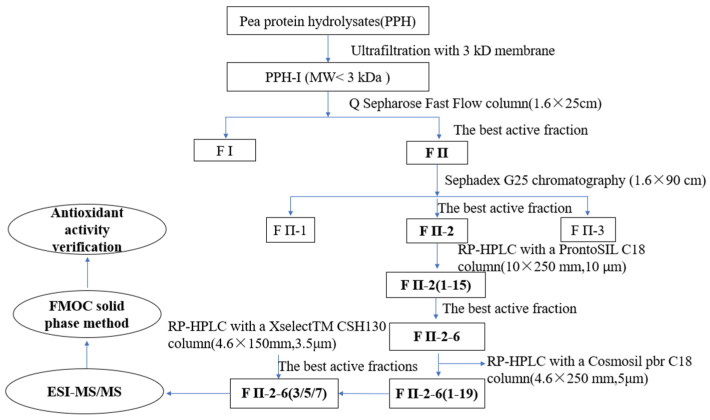
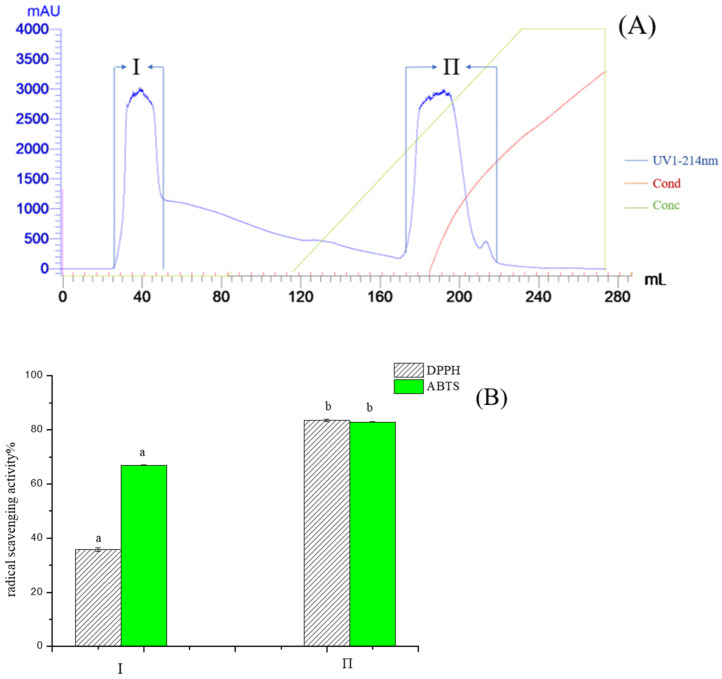
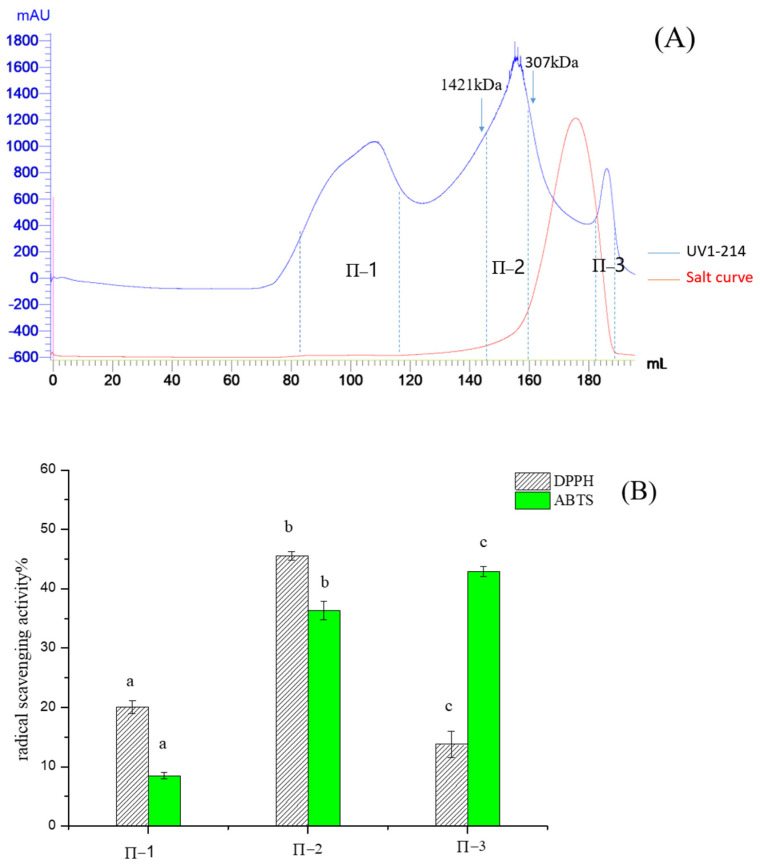
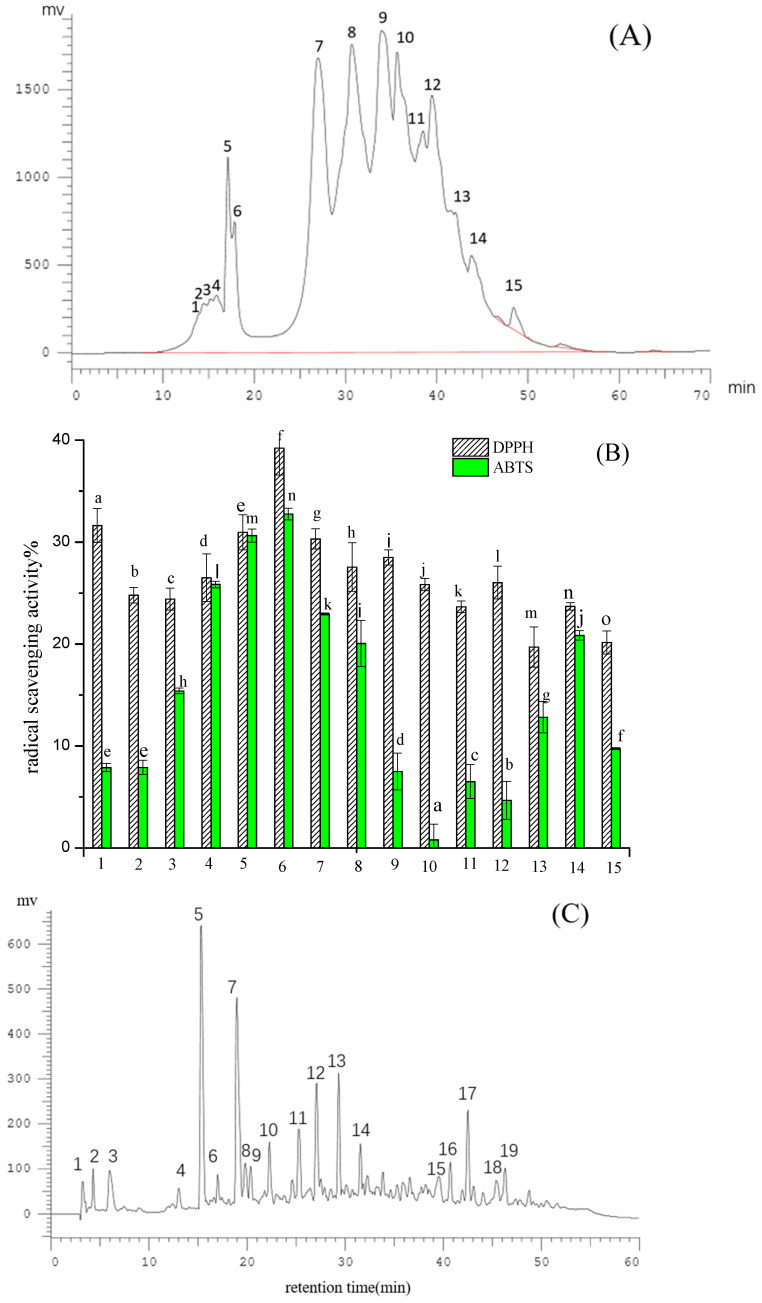
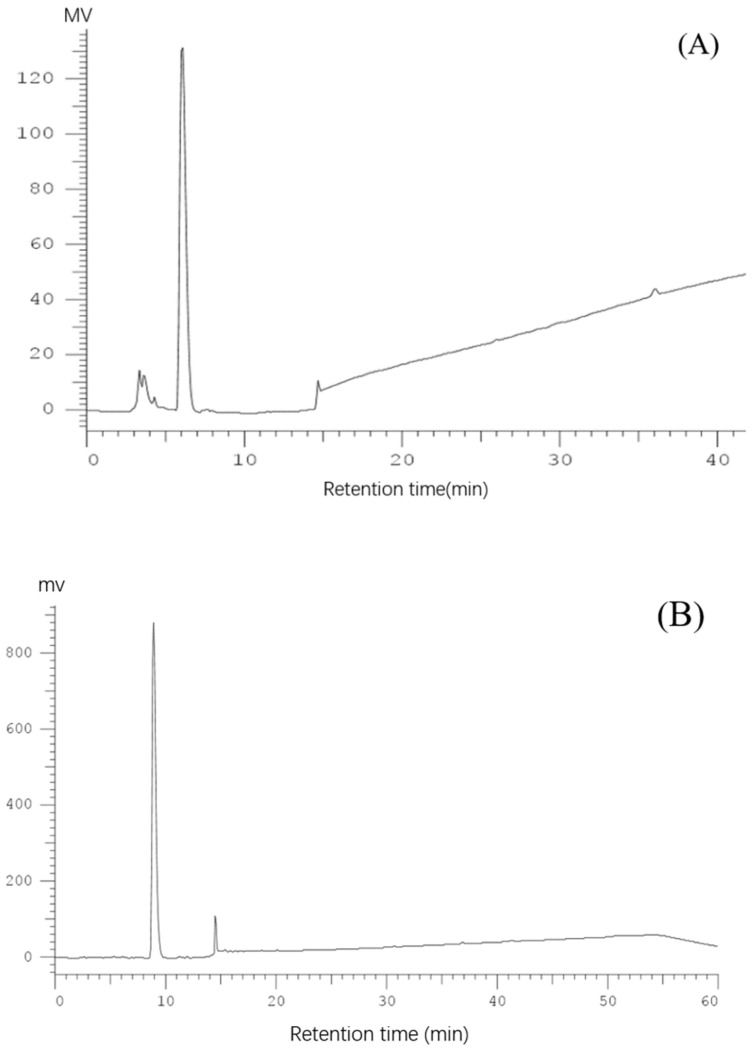
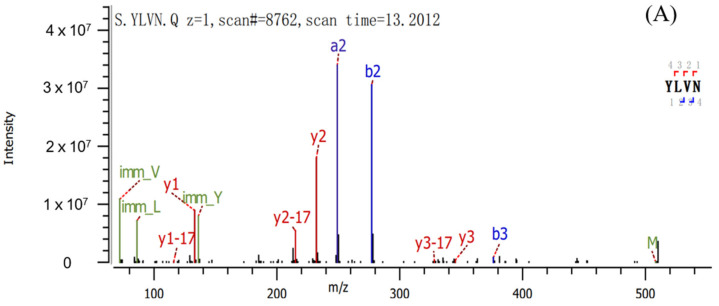
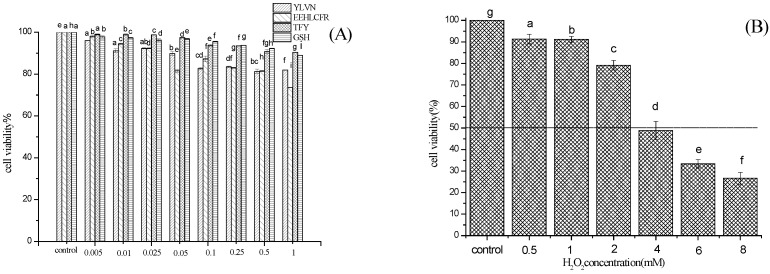
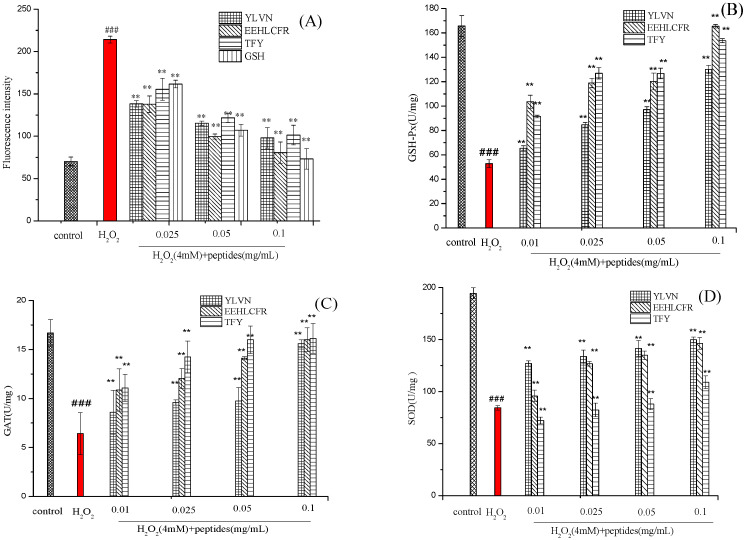
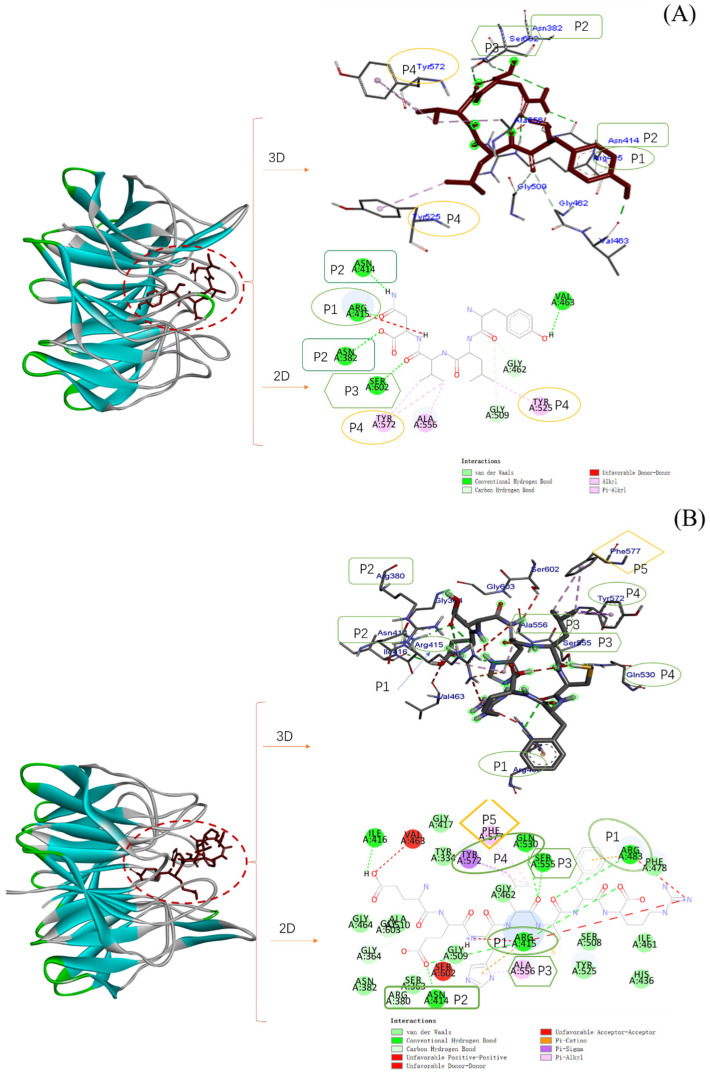
Food-derived antioxidant peptides can be explored as natural antioxidants due to their potential health benefits. In this study, antioxidant peptides were isolated and purified from pea protein hydrolysates (PPH). The DPPH and ABTS radical scavenging activities were used as indexes to purify the antioxidant peptides by a series of purification steps including ultrafiltration, ion exchange chromatography, G25 gel filtration chromatography, and reversed-phase chromatography. Three novel antioxidant peptides YLVN, EEHLCFR and TFY were identified, which all exhibited strong antioxidant activity in vitro. EEHLCFR showed stronger DPPH scavenging activity with an IC50 value of 0.027 mg/mL. YLVN showed stronger ABTS scavenging activity with an IC50 value of 0.002 mg/mL and higher ORAC values of 1.120 ± 0.231 μmol TE/μmol, which is even better than that of GSH. Three novel antioxidant peptides significantly elevated LO2 cells viability even at the concentration of 0.025 mg/mL, and cell viability enhanced to 53.42 ± 1.19%, 55.78 ± 1.03%, and 51.09 ± 1.06% respectively, compared to that of H2O2 injury group (48.35 ± 0.96%), and prevented the accumulation of ROS by enhancing the activities of antioxidant enzymes in H2O2-induced oxidative stress LO2 cells. The molecular docking results showed that the potential molecular mechanism of the three novel antioxidant peptides may be in high correlation with the activation of the Keap1-Nrf2 pathway by occupying the Keap1-Nrf2 binding site. These results demonstrate that the three novel antioxidant peptides are potential natural antioxidants that can be devoted to medicine or functional food ingredients.
Overview
The claims and statistics of this paper haven’t been checked yet.
Free: it reads the open-access text and checks the first 5 claims that cite a source we can check. Create a free account to check every claim.
Integrity signals
Registry
Cites
Statistics
Figures
Verification
Claims the paper makes
The claims and statistics of this paper haven’t been checked yet.
Free: it reads the open-access text and checks the first 5 claims that cite a source we can check. Create a free account to check every claim.
Claims other papers make about this one
Each is checked against this paper’s own text: does it say what the citing paper says it does?
The source backs part of the claim, not all of it — or backs it for a different population, condition or comparison.
In the citing paper
“Peas represent a rich source of high-quality protein, distinguished by their favorable amino acid composition and digestibility [1,2,3].”
From Pea Protein Isolates: From Extraction to Functionality. (2025) · cites this paper as [3]
Experimental — accuracy not yet measuredThe cited source says what the claim attributes to it.
In the citing paper
“Peptides derived from pea protein exhibit potent antioxidant capabilities, acting to scavenge free radicals and thereby reducing oxidative stress [3].”
From Pea Protein Isolates: From Extraction to Functionality. (2025) · cites this paper as [3]
The check wasn’t confident either way, so it gives no verdict — never disputed.
In the citing paper
“Furthermore, these peptides have been shown to inhibit angiotensin-converting enzyme (ACE) activity, which may lead to blood pressure-lowering effects and cardiovascular health benefits [3,7].”
From Pea Protein Isolates: From Extraction to Functionality. (2025) · cites this paper as [3]
Experimental — accuracy not yet measured
Self-check
Percentages, sums and reported differences re-computed from the paper’s own numbers.
The self-check needs the paper’s full text.
Citations
Cites
Antioxidants and antioxidant methods: an updated overview
Gulcin, İ. (2020) · Archives of Toxicology · doi:10.1007/s00204-020-02689-3 · Cited by 2,205 · cited 1×
“Oxidative stress can damage cell membranes and biological molecules; sustained oxidative stress damage could consequently give rise to a variety of chronic diseases like cardiovascular diseases, diabetes, obesity, and neurodegenerative diseases [3], while it could be alleviated by the provision of exogenous antioxidan…”
BackgroundPea protein isolates: Structure, extraction, and functionality
Lam, A. C. Y., Can Karaca, A., Tyler, R. T., & Nickerson, M. T. (2018) · Food Reviews International · doi:10.1080/87559129.2016.1242135 · Cited by 902
The Structure-Activity Relationship of the Antioxidant Peptides from Natural Proteins
Zou, T.-B., He, T.-P., Li, H.-B., Tang, H.-W., & Xia, E.-Q. (2016) · Molecules · doi:10.3390/molecules21010072 · Cited by 879
Oxidative Stress in Cardiovascular Diseases
Dubois-Deruy, E., Peugnet, V., Turkieh, A., & Pinet, F. (2020) · Antioxidants · doi:10.3390/antiox9090864 · Cited by 646
ORAC and TEAC assays comparison to measure the antioxidant capacity of food products
Zulueta, A., Esteve, M. J., & Frígola, A. (2009) · Food Chemistry · doi:10.1016/j.foodchem.2008.09.033 · Cited by 623
Bioactive peptides as natural antioxidants in food products – A review
Lorenzo, J. M., Munekata, P. E. S., Gómez, B., Barba, F. J., Mora, L., Pérez-Santaescolástica, C., & Toldrá, F. (2018) · Trends in Food Science & Technology · doi:10.1016/j.tifs.2018.07.003 · Cited by 502
Pownall, T. L., Udenigwe, C. C., & Aluko, R. E. (2010) · Journal of Agricultural and Food Chemistry · doi:10.1021/jf904456r · Cited by 479
Jin, D.-X., Liu, X.-L., Zheng, X.-Q., Wang, X.-J., & He, J.-F. (2016) · Food Chemistry · doi:10.1016/j.foodchem.2016.02.119 · Cited by 241
Self-citationWen, C., Zhang, J., Feng, Y., Duan, Y., Ma, H., & Zhang, H. (2020) · Food Chemistry · doi:10.1016/j.foodchem.2020.127059 · Cited by 227
Zheng, L., Zhao, Y., Dong, H., Su, G., & Zhao, M. (2016) · Journal of Functional Foods · doi:10.1016/j.jff.2015.12.003 · Cited by 213
Cited by
Xu, B., Dong, Q., Yu, C., Chen, H., Zhao, Y., Zhang, B., Yu, P., & Chen, M. (2024) · Antioxidants · doi:10.3390/antiox13040479 · Cited by 182
Zhang, Y., Li, Y., Quan, Z., Xiao, P., & Duan, J. (2024) · Antioxidants · doi:10.3390/antiox13020203 · Cited by 104
Sun, L., Liu, J., He, Z., & Du, R. (2024) · Nutrients · doi:10.3390/nu16193277 · Cited by 50
Chen, H., Sun, J., Fang, H., Lin, Y., Wu, H., Lin, D., Yang, Z., Zhou, Q., Zhao, B., Zhou, T., et al. (2025) · Journal of Zhejiang University SCIENCE B · doi:10.1631/jzus.b2400106 · Cited by 29
Self-citationLiu, L., Liang, J., He, M., Jiang, B., Liu, J., Wu, J., Li, P., & Du, B. (2025) · Food Chemistry · doi:10.1016/j.foodchem.2025.145014 · Cited by 25
Metadata
- Authors
- Zhao, D., & Liu, X.
- Affiliations
- Harbin University of Commerce (CN)
- Qiqihar University (CN)
- Corresponding author
- Liu, Xiaolan
- Venue
- Molecules
- Publisher
- MDPI AG
- Published
- 2023-03-25
- Volume
- 28
- Issue
- 7
- Pages
- 2952
- ISSN
- 1420-3049 (ISSN-L)
- PMC
- PMC10096042
- OpenAlex
- W4361010503
- Cited by
- 59
- References
- 40
- Citations by year
- 2026: 20 · 2025: 25 · 2024: 11 · 2023: 3
- FWCI
- 5.26
- Type
- journal article
- Language
- en
- Open access
- gold
- doi.org
- Licence
- Locations
- Molecules (publishedVersion, cc-by)
- PubMed Central (publishedVersion, cc-by)
- PubMed (publishedVersion)
- DOAJ (DOAJ: Directory of Open Access Journals) (submittedVersion, cc-by-sa)
- Funders
- National Key Research Program of the 13th Five-Year Plan of the Ministry of Science and Technology (2017YFD0400200, 202012-202312, 2020GSP08, YJSCX2018-483HSD)
- central government (2017YFD0400200, 202012-202312, 2020GSP08, YJSCX2018-483HSD)
- Talent Foundation of the Central Government Supporting Local Universities (2017YFD0400200, 202012-202312, 2020GSP08, YJSCX2018-483HSD)
- Harbin University of Commerce Graduate Innovation Fund (2017YFD0400200, 202012-202312, 2020GSP08, YJSCX2018-483HSD)
- Topics
- Life Sciences › Agricultural and Biological Sciences › Food Science › Protein Hydrolysis and Bioactive Peptides
- Health Sciences › Medicine › Biochemistry (medical) › Phytochemicals and Antioxidant Activities
- Life Sciences › Agricultural and Biological Sciences › Food Science › Proteins in Food Systems
- Keywords
- antioxidant peptides, pea protein hydrolysate, peptide purification, free radical scavenging, ORAC value, hydrogen peroxide stress, LO2 cells, Nrf2/Keap1 pathway, molecular docking, functional food ingredients, natural antioxidants
- MeSH terms
- Kelch-Like ECH-Associated Protein 1, Antioxidants, Hydrogen Peroxide, Peptides, Protein Hydrolysates, Sulfonic Acids, Pisum sativum, NF-E2-Related Factor 2, Benzothiazoles, Molecular Docking Simulation
About these checks
Registry, retraction, Cites and statistics results are computed, not judged, with one exception: a printed reference that no index lists is read once by a model before it counts as a citation error. Claims are extracted by a model and kept only when their quote appears verbatim in the text; each cited source is then checked, with a model’s help, for whether it says what the claim relies on. Those verdicts can be wrong — read the claim’s quote and the cited source before relying on one.
Statistics and arithmetic are recomputed, not judged.
Confidence bands are shown only for fields calibrated on our annotated test set. None is calibrated yet, so no band is shown.
What counts as a claim ›How we measure confidence ›How we check this ›
Are you an author, or do you see a problem with this page? Request a review
Data sources
Bibliographic data: Semantic Scholar, OpenAlex, Crossref.
Contains information from the Semantic Scholar Academic Graph Datasets, made available under the ODC Attribution License (ODC-BY 1.0).
Semantic Scholar’s data is described in: Kinney, R., et al. (2023). The Semantic Scholar Open Data Platform. arXiv:2301.10140.
