

Nanoparticles Engineering by Pulsed Laser Ablation in Liquids: Concepts and Applications
Open accessThe DOI matches its Crossref record; 278 of the 288 references it cites were found in a registry or an index; 30 of the 288 sources its claims cite were checked for support.
Abstract
Laser synthesis emerges as a suitable technique to produce ligand-free nanoparticles, alloys and functionalized nanomaterials for catalysis, imaging, biomedicine, energy and environmental applications. In the last decade, laser ablation and nanoparticle generation in liquids has proven to be a unique and efficient technique to generate, excite, fragment and conjugate a large variety of nanostructures in a scalable and clean way. In this work, we give an overview on the fundamentals of pulsed laser synthesis of nanocolloids and new information about its scalability towards selected applications. Biomedicine, catalysis and sensing are the application areas mainly discussed in this review, highlighting advantages of laser-synthesized nanoparticles for these types of applications and, once partially resolved, the limitations to the technique for large-scale applications.
Overview
CoChat Summary
TL;DR
This review surveys pulsed laser ablation in liquids (LAL) as a chemically clean route to ligand-free nanoparticles, alloys, and functional nanomaterials for biomedicine, catalysis, sensing, energy, and environmental applications. It concludes that LAL offers strong control over purity, crystal structure, and size distribution, but large-scale application still requires better colloidal stability, surface control, and defined gram-scale protocols.
Key findings
- LAL is presented as a scalable and clean synthesis route for nanocolloids, with applications in plasmonic sensing, nanomedicine, catalysis, and pollutant degradation; however, the review states that LAL colloids are “not yet applicable on a large scale.”
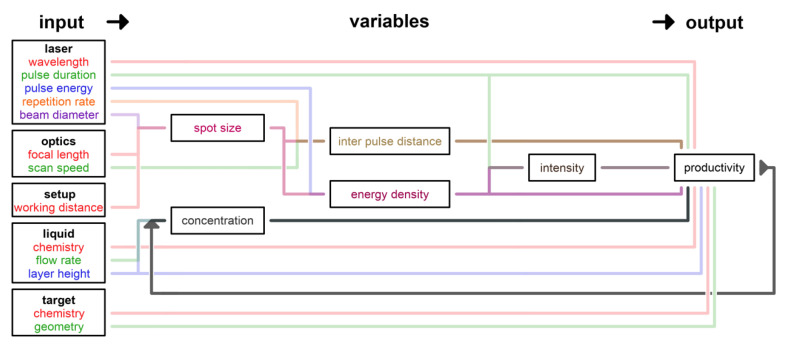
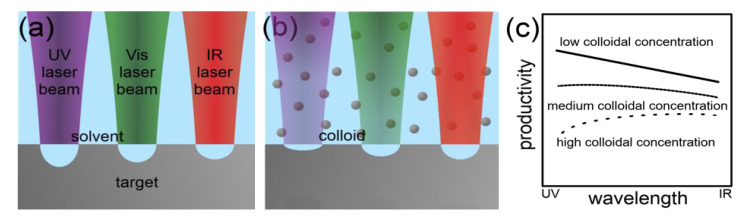
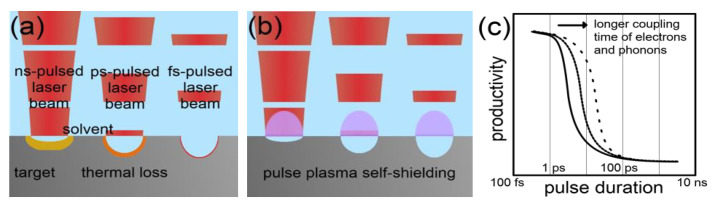
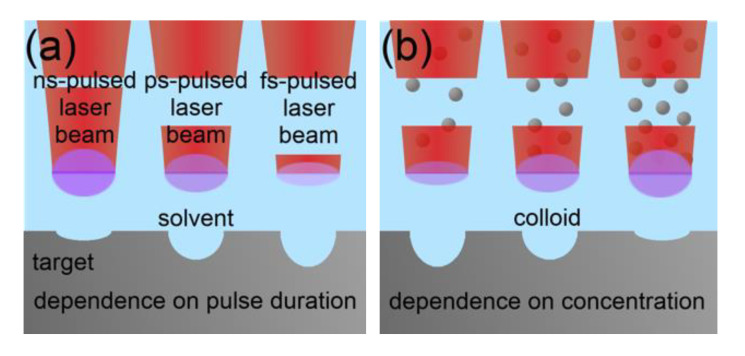
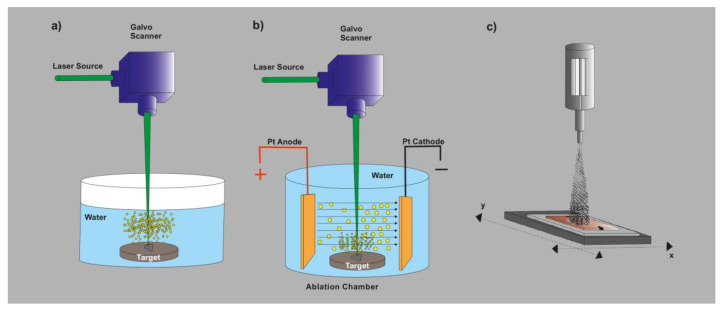
- Process parameters strongly affect productivity: IR laser light generally gives higher metal productivity than UV or Vis, but short wavelengths can become less productive at high colloid concentrations due to NP shielding; an optimum pulse duration is probably around single picoseconds. Electric-field-assisted LAL increased ablation rate by a factor of three, about 300 mg/30 min versus 100 mg/30 min without the field.
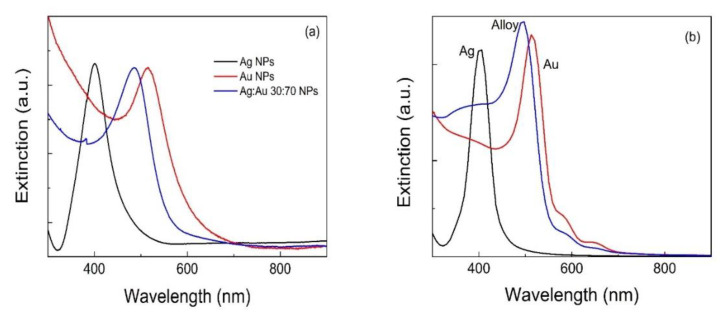
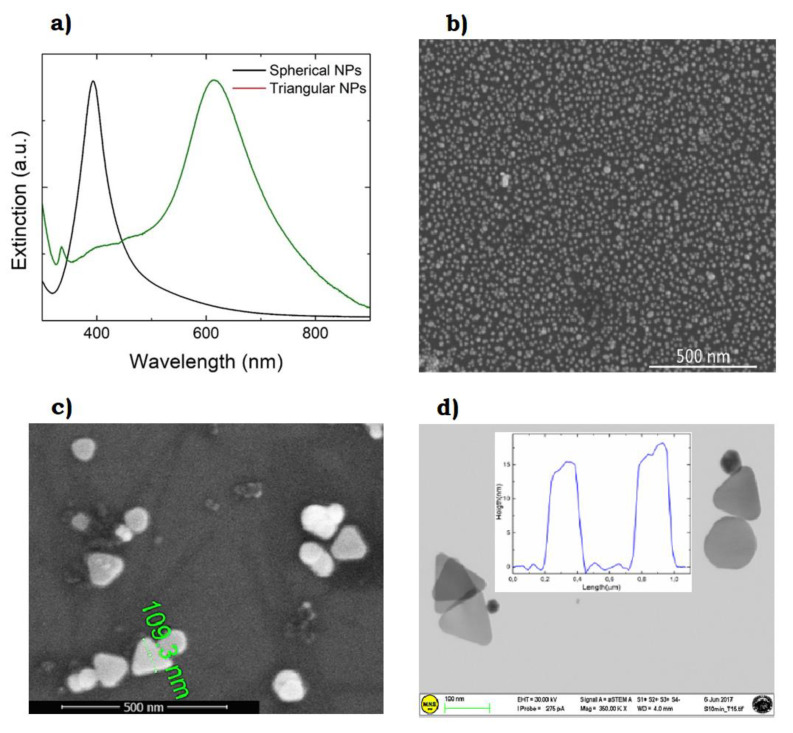
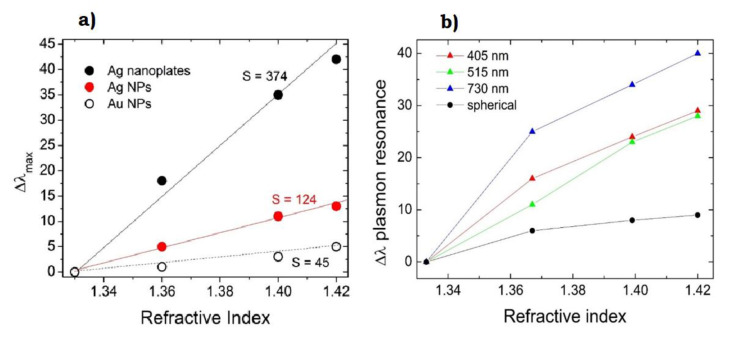
- Plasmonic tuning is demonstrated: Au/Ag alloy colloids can tune plasmon resonance continuously from about 400 nm (Ag) to 520 nm (Au); Ag spherical NPs showed higher plasmon sensitivity (125 nm/RIU) than Au NPs (45 nm/RIU), with roughly threefold increase after conversion to nanoplates and S = 460 nm/RIU after 730 nm irradiation.
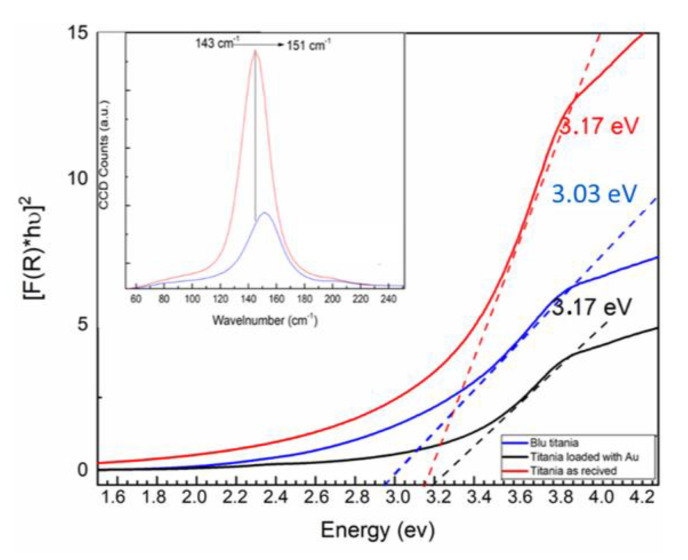
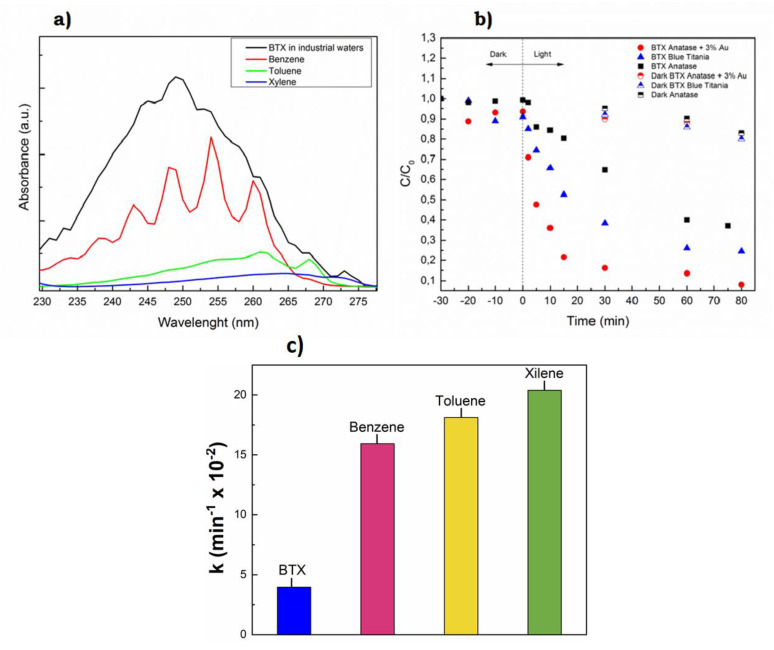
- In photocatalysis, blue titania removed 76% of benzene after 80 min, while AuTiO2 left less than 1% residual benzene; after 5 min, BTX decreased by 53% with Au-decorated TiO2, 26% with blue TiO2, and 14% with commercial TiO2. Apparent rate constants increased from 1.4 × 10⁻² min−1 (bare TiO2) to 3.8 × 10⁻² min−1 (blue TiO2) and 8.3 × 10⁻² min−1 (Au-loaded TiO2).
Methods
- Design: narrative review/overview of LAL fundamentals, process parameters, upscaling, and selected applications, not a primary systematic experimental study.
- Data/sample: synthesizes literature and the authors’ own contributions on ns/ps/fs LAL of metals and semiconductors in water and organic solvents, field-assisted LAL, plasmonic Au/Ag/Rh nanocolloids, SERS-based targeting, and TiO2/ZnO photocatalysis including BTX-contaminated industrial waters.
- Main analysis: qualitative and quantitative synthesis of cited experimental results, including optical emission spectroscopy, XRD/XPS, Raman/SERS, UV–Vis, plasmon sensitivity measurements, and photocatalytic degradation kinetics.
Limitations
- The paper states that LAL colloids are not yet large-scale applicable; reaching gram-scale production requires a properly defined LAL procedure and protocol, higher colloidal stability, and prevention of aggregation and larger-particle formation.
- It states that “ligand/surfactant-free” LAL NPs are not totally naked and still bear surface chemistry, with some surface atoms oxidized or complexed; an appropriate protocol for performance-oriented colloidal synthesis and isochronous surface modification is still not defined.
- The text also notes practical limits for nanoadsorption/nanophotocatalysis, the need for higher UV-SERS signal-to-noise, moderate Rh SERS enhancement with photo-degradation under 457 nm irradiation, and that the literature lacks full-range parameter data for productivity evaluation; as a review, it also relies on cited studies and selected examples rather than exhaustive primary data.
Model-written summary. Check it against the paper before relying on it.
Integrity signals
Registry
Cites
Statistics
Figures
Verification
Claims the paper makes
21 Valid · 10 Not valid · 150 Not checked · 135 Own results and interpretations
Some cited sources support this claim and some don’t — read each source’s verdict below.
In the paper
“All studies agree independently from the ablated matter, the chosen liquid and the used laser pulse duration on a higher productivity by using IR laser light compared to UV or Vis.”
§ Nanoparticles Engineering by Pulsed Laser Ablation in Liquids: Concepts and Applications > 2. LAL Synthesis Methods: Principle, Process Parameters and Liquids Effects on Nanoparticle Formation > 2.2. Upscaling of Laser Synthesis of Colloids
What the sources say
- Partly supportedcites [54] Schwenke A. Wagener P. Nolte S. Barcikowski S. Influence of processing time on nanoparticle generation during picosecond-pulsed fundamental and second harmonic laser ablation of metals in tetrahydrofuran Appl. Phys. A 2011 104 77 82 10.1007/s00339-011-6398-9 sourceExperimental — accuracy not yet measured
The Results and discussion and Conclusions report higher nanoparticle productivity at the fundamental IR wavelength than at the visible second harmonic wavelength for Ag, Zn, and Mg ablated with picosecond pulses in polyurethane-doped tetrahydrofuran. The Introduction also reports similar findings from several studies using nanosecond pulses. These passages do not establish agreement among all studies regardless of material, liquid, or pulse duration, and the paper does not test a UV comparison. Page numbers were not provided for these passages. (LLM, conf=0.88)
- Disputedcites [67] Tsuji T. Iryo K. Ohta H. Nishimura Y. Preparation of Metal Colloids by a Laser Ablation Technique in Solution: Influence of Laser Wavelength on the Efficiencies of Colloid Formation Jpn. J. Appl. Phys. 2000 39 L981 L983 10.1143/JJAP.39.L981 sourceExperimental — accuracy not yet measured
Our copy of Tsuji et al. (2000) reports the opposite of the claim for its principal (nonfocused) condition: in Section 3.1 (Experimental/Results) 'it is clear that the efficiency of the colloid formation increases as the wavelength decreases' and 'the ablation efficiency is larger at shorter wavelengths than at longer wavelengths over the entire fluence range' (Fig. 3, nonfocused 355/532/1064 nm). Longer-wavelength (IR) superiority appears only under focused irradiation (Section 3.2, Fig. 2(b)/Fig. 4): 'The colloid formation efficiency is higher at longer wavelengths than at shorter wavelengths. This wavelength dependence of the efficiency is the reverse of the result obtained with the nonfocused laser pulses,' attributed to reabsorption of the later part of the pulse by Ag colloids at shorter wavelengths. Moreover the study covers only Ag targets in distilled water with 5-9 ns Nd:YAG pulses, so it supports neither the 'all studies agree' generality nor independence of ablated matter, liquid and pulse duration. (LLM, conf=0.85)
Checked by a reasoning model — may be wrong.
- Not matchedcites [68] Šmejkal P. Pfleger J. Vlčková B. Dammer O. Laser ablation of silver in aqueous ambient: Effect of laser pulse wavelength and energy on efficiency of the process J. Physics: Conf. Ser. 2007 59 185 188 10.1088/1742-6596/59/1/040
We searched by its title and found no matching paper.
- Not checked yetcites [69] Intartaglia R. Bagga K. Brandi F. Study on the productivity of silicon nanoparticles by picosecond laser ablation in water: Towards gram per hour yield Opt. Express 2014 22 3117 3127 10.1364/OE.22.003117 24663602 source
Checked before — its earlier verdict is held back until a new check runs.
- Not checked — no full text of the sourcecites [70] Kim J. Reddy D.A. Ma R. Kim T.K. The influence of laser wavelength and fluence on palladium nanoparticles produced by pulsed laser ablation in deionized water Solid State Sci. 2014 37 96 102 10.1016/j.solidstatesciences.2014.09.005 source
boostedstates a cause- Asserted: passes — The authors put it forward as true.
- Checkable: passes — It can be checked against evidence.
- Load-bearing: unclear — It is unclear whether the paper’s conclusions depend on it.
- Based: passes — The paper gives a reason why it holds.
- Partly supported
The cited sources support only part of this claim — read each source’s verdict below.
In the paper
“The basic mechanisms inducing the laser ablation in liquid, as well as their dependence on laser pulse properties, do not differ notably, with respect of laser ablation in gaseous environment [54].”
§ Nanoparticles Engineering by Pulsed Laser Ablation in Liquids: Concepts and Applications > 2. LAL Synthesis Methods: Principle, Process Parameters and Liquids Effects on Nanoparticle Formation > 2.1. Mechanism in ns-Pulsed Laser Ablation in Liquid for the Production of Metallic Nanoparticles
What the sources say
- Partly supportedcites [54] Schwenke A. Wagener P. Nolte S. Barcikowski S. Influence of processing time on nanoparticle generation during picosecond-pulsed fundamental and second harmonic laser ablation of metals in tetrahydrofuran Appl. Phys. A 2011 104 77 82 10.1007/s00339-011-6398-9 sourceExperimental — accuracy not yet measured
The Introduction (page unavailable) says pulse duration changes the ablation mechanism in liquid, and the Results and discussion report effects of wavelength and fluence. The paper does not compare those mechanisms or their dependence on pulse properties with ablation in a gaseous environment, so the claimed similarity is unsupported. (LLM, conf=0.78)
plain- Asserted: passes — The authors put it forward as true.
- Checkable: passes — It can be checked against evidence.
- Load-bearing: unclear — It is unclear whether the paper’s conclusions depend on it.
- Based: passes — The paper gives a reason why it holds.
- Rests on an assumption not shown here.
- Partly supported
The cited sources support only part of this claim — read each source’s verdict below.
In the paper
“The absence of the typical atomic spectral lines of the LIP expanding in a gaseous environment is due to the high density reached by the ablated matter under liquid confinement as discussed in [40,41,42].”
§ Nanoparticles Engineering by Pulsed Laser Ablation in Liquids: Concepts and Applications > 2. LAL Synthesis Methods: Principle, Process Parameters and Liquids Effects on Nanoparticle Formation > 2.1. Mechanism in ns-Pulsed Laser Ablation in Liquid for the Production of Metallic Nanoparticles
What the sources say
- Could not verifycites [40] Wagener P. Barcikowski S. Laser fragmentation of organic microparticles into colloidal nanoparticles in a free liquid jet Appl. Phys. A 2010 101 435 439 10.1007/s00339-010-5814-x sourceExperimental — accuracy not yet measured
Our copy of Wagener, Philipp & Barcikowski (2010) covers laser fragmentation of melamine cyanurate microcrystals in a free liquid jet, with UV/VIS, DLS and TEM characterization (Abstract; §1 Introduction; §3 Results and discussion); its only mention of plasma is mechanistic — 'a focused laser pulse which generates a plasma and a subsequent shock wave within the microparticles' (§3). No passage addresses optical emission spectroscopy of the laser-induced plasma, atomic spectral lines, or their suppression under liquid confinement versus gaseous expansion (searched: 'absence of atomic spectral lines … liquid confinement', 'plasma emission shielding confining medium density', 'atomic emission lines plasma spectroscopy'). The claim's point is therefore not treated in our copy, neither supported nor contradicted. (LLM, conf=0.72)
- Not checked — no full text of the sourcecites [41] Amendola V. Polizzi S. Meneghetti M. Free Silver Nanoparticles Synthesized by Laser Ablation in Organic Solvents and Their Easy Functionalization Langmuir 2007 23 6766 6770 10.1021/la0637061 17489616 source
- Partly supportedcites [42] Chemin A. Lam J. Laurens G. Trichard F. Motto-Ros V. LeDoux G. Jary V. Laguta V. Nikl M. Dujardin C. Doping nanoparticles using pulsed laser ablation in a liquid containing the doping agent Nanoscale Adv. 2019 1 3963 3972 10.1039/C9NA00223E PMC9419851 36132111 sourceExperimental — accuracy not yet measured
The Introduction describes a hot, dense plasma produced by laser ablation in liquid. It does not say that this density causes typical atomic spectral lines to be absent. The Experimental section’s LIBS measurements report atomic emission lines, but those measurements were made with argon gas flowing through the plasma region, not in the liquid-confined plume. (LLM, conf=0.78)
plainstates a cause- Asserted: passes — The authors put it forward as true.
- Checkable: passes — It can be checked against evidence.
- Load-bearing: unclear — It is unclear whether the paper’s conclusions depend on it.
- Based: passes — The paper gives a reason why it holds.
- Could not verify
The sources with a verdict support this claim; the rest weren’t checked yet, have no full text we could read, or their verdicts aren’t rated yet.
In the paper
“This is strongly indicated by the observed smaller NP diameters at shorter applied wavelengths [54,69,70], which may be the result of fragmentation induced by subsequent laser pulses during batch-LAL.”
§ Nanoparticles Engineering by Pulsed Laser Ablation in Liquids: Concepts and Applications > 2. LAL Synthesis Methods: Principle, Process Parameters and Liquids Effects on Nanoparticle Formation > 2.2. Upscaling of Laser Synthesis of Colloids
What the sources say
- Supportedcites [54] Schwenke A. Wagener P. Nolte S. Barcikowski S. Influence of processing time on nanoparticle generation during picosecond-pulsed fundamental and second harmonic laser ablation of metals in tetrahydrofuran Appl. Phys. A 2011 104 77 82 10.1007/s00339-011-6398-9 source
The Results and discussion section (page unavailable) reports that, for silver colloids, particle diameter decreased more sharply at the shorter wavelength (515 nm) than at 1030 nm. It says the decrease could be attributed to fragmentation of dispersed nanoparticles during post-irradiation, matching the claim's tentative explanation. (LLM, conf=0.89)
- Not checked yetcites [69] Intartaglia R. Bagga K. Brandi F. Study on the productivity of silicon nanoparticles by picosecond laser ablation in water: Towards gram per hour yield Opt. Express 2014 22 3117 3127 10.1364/OE.22.003117 24663602 source
Checked before — its earlier verdict is held back until a new check runs.
- Not checked — no full text of the sourcecites [70] Kim J. Reddy D.A. Ma R. Kim T.K. The influence of laser wavelength and fluence on palladium nanoparticles produced by pulsed laser ablation in deionized water Solid State Sci. 2014 37 96 102 10.1016/j.solidstatesciences.2014.09.005 source
hedgedstates a possible cause- Asserted: passes — The authors put it forward as true.
- Checkable: passes — It can be checked against evidence.
- Load-bearing: unclear — It is unclear whether the paper’s conclusions depend on it.
- Based: passes — The paper gives a reason why it holds.
- Supported
The sources with a verdict support this claim; the rest weren’t checked yet, have no full text we could read, or their verdicts aren’t rated yet.
In the paper
“The laser wavelength essentially influences the ablation rate in LAL [54,67,68,69,70].”
§ Nanoparticles Engineering by Pulsed Laser Ablation in Liquids: Concepts and Applications > 2. LAL Synthesis Methods: Principle, Process Parameters and Liquids Effects on Nanoparticle Formation > 2.2. Upscaling of Laser Synthesis of Colloids
What the sources say
- Supportedcites [54] Schwenke A. Wagener P. Nolte S. Barcikowski S. Influence of processing time on nanoparticle generation during picosecond-pulsed fundamental and second harmonic laser ablation of metals in tetrahydrofuran Appl. Phys. A 2011 104 77 82 10.1007/s00339-011-6398-9 source
The Results and discussion report that silver ablation at 1030 nm maintained a linear ablation rate, whereas at 515 nm losses of excitation light led to saturation of cumulative ablated mass. The Conclusions likewise identify laser wavelength as a factor in ablation efficiency, while noting that pulse energy, fluence, and colloidal properties also matter. (LLM, conf=0.90)
- Supportedcites [67] Tsuji T. Iryo K. Ohta H. Nishimura Y. Preparation of Metal Colloids by a Laser Ablation Technique in Solution: Influence of Laser Wavelength on the Efficiencies of Colloid Formation Jpn. J. Appl. Phys. 2000 39 L981 L983 10.1143/JJAP.39.L981 source
The paper's entire subject is the wavelength dependence of ablation in laser ablation in solution: Section 3.1/Experimental states that 'the efficiency of the colloid formation increases as the wavelength decreases' and that 'the ablation efficiency is larger at shorter wavelengths than at longer wavelengths over the entire fluence range' (nonfocused 355/532/1064 nm, Ag target in water). Section 3.2 adds that under focused irradiation the relation between ablation efficiency and focusing 'significantly depends on the irradiation wavelength', with the dependence reversing to longer wavelengths, described as 'characteristic of laser ablation in solution'. The only nuance is that our copy quantifies ablation/colloid-formation efficiency via the 400 nm plasmon absorbance rather than a target mass-removal rate, but the attributed point — that wavelength strongly governs the ablation yield in LAL — is stated directly. (LLM, conf=0.85)
- Not matchedcites [68] Šmejkal P. Pfleger J. Vlčková B. Dammer O. Laser ablation of silver in aqueous ambient: Effect of laser pulse wavelength and energy on efficiency of the process J. Physics: Conf. Ser. 2007 59 185 188 10.1088/1742-6596/59/1/040
We searched by its title and found no matching paper.
- Not checked yetcites [69] Intartaglia R. Bagga K. Brandi F. Study on the productivity of silicon nanoparticles by picosecond laser ablation in water: Towards gram per hour yield Opt. Express 2014 22 3117 3127 10.1364/OE.22.003117 24663602 source
Checked before — its earlier verdict is held back until a new check runs.
- Not checked — no full text of the sourcecites [70] Kim J. Reddy D.A. Ma R. Kim T.K. The influence of laser wavelength and fluence on palladium nanoparticles produced by pulsed laser ablation in deionized water Solid State Sci. 2014 37 96 102 10.1016/j.solidstatesciences.2014.09.005 source
plainstates a cause- Asserted: passes — The authors put it forward as true.
- Checkable: passes — It can be checked against evidence.
- Load-bearing: unclear — It is unclear whether the paper’s conclusions depend on it.
- Based: passes — The paper gives a reason why it holds.
- Supported
179 more claims · 11 with their cited sources checked
Create a free account to see all 316 claims and to verify the 36 references still open.
- It may state two separate claims as one. 94
- The quote only partly states this claim. 5
- Probably not a substantial claim. 43
Self-check
Percentages, sums and reported differences re-computed from the paper’s own numbers.
Each contradiction between two passages listed here was confirmed by an independent check.
Rated minor: it would not touch a result — a value no result rests on, a p-value that stays on the same side of the significance level, or a conflict that is clerical, resolved elsewhere in the paper, or outside its own findings.
In the paper
§ Nanoparticles Engineering by Pulsed Laser Ablation in Liquids: Concepts and Applications > 3. Promising Applications of LAL Nanostructures for Biotechnology Applications and for Organic Pollutants Degradation > 3.1. Plasmonic Properties of Metal Nanoparticles and Plasmon Sensitivity
“It has to be noted that Equation (1) is strictly valid only for spherical particles, while for particles with different shapes, the geometry must be taken into account and a plasmon resonance shift can be expected.”
§ Nanoparticles Engineering by Pulsed Laser Ablation in Liquids: Concepts and Applications > 3. Promising Applications of LAL Nanostructures for Biotechnology Applications and for Organic Pollutants Degradation > 3.1. Plasmonic Properties of Metal Nanoparticles and Plasmon Sensitivity
“In this case the polarizability is expressed as:(11)α=4πε0R3ε−εmε+2εm where ε is the dielectric function [ε1(ω)+iε2(ω)] and R the radius of the NP.”
Cited works that were retracted
Works this paper cites that were later retracted, from the retraction notices publishers deposit. Major when the notice came out before this paper was published.
A note, not an issue: for example, a cited work that was retracted only after this paper was published, which its authors could not have known.
In the paper
“The availability of a consistent SERS enhancement in the deep-UV spectral region would therefore allow recording Raman spectra with very low excitation power [190,209], which would be beneficial to reduce photo-degradation issues.”
Cited work 10.1039/c8an00341f · retracted 2021-07-06 · notice 10.1039/d1an90061g · this paper published 2020-11-23
Citations
Cites
1 retracted
Das, R., & Soni, R. K. (2018) · The Analyst · doi:10.1039/c8an00341f · Cited by 11 · cited 1×
“The availability of a consistent SERS enhancement in the deep-UV spectral region would therefore allow recording Raman spectra with very low excitation power [190,209], which would be beneficial to reduce photo-degradation issues.”
BackgroundRetractedElectrochemical Photolysis of Water at a Semiconductor Electrode
FUJISHIMA, A., & HONDA, K. (1972) · Nature · doi:10.1038/238037a0 · Cited by 34,169 · cited 6×
“In the second part of ‘900, after Fujishima and Honda (1972) discussed the photocatalytic water splitting on a TiO2 electrode [242], environmental applications (energy production and degradation of organic pollutants) using solar light and semiconductor oxides became one of the attractive topics of photocatalysis.”
BackgroundInfluentialAbsorption and Scattering of Light by Small Particles
Bohren, C. F., & Huffman, D. R. (1998) · doi:10.1002/9783527618156 · Cited by 18,474
Biosensing with plasmonic nanosensors
Anker, J. N., Hall, W. P., Lyandres, O., Shah, N. C., Zhao, J., & Van Duyne, R. P. (2008) · Nature Materials · doi:10.1038/nmat2162 · Cited by 6,786
Plasmonics beyond the diffraction limit
Gramotnev, D. K., & Bozhevolnyi, S. I. (2010) · Nature Photonics · doi:10.1038/nphoton.2009.282 · Cited by 3,903 · cited 2×
“Much more complex is the situation in all those cases where the NP has a shape far from spherical-like and proper simulations about the plasmonic response should be conducted to interpret the response [142,144,145].”
BackgroundShell-isolated nanoparticle-enhanced Raman spectroscopy
Li, J. F., Huang, Y. F., Ding, Y., Yang, Z. L., Li, S. B., Zhou, X. S., Fan, F. R., Zhang, W., Zhou, Z. Y., Wu, D. Y., et al. (2010) · Nature · doi:10.1038/nature08907 · Cited by 3,559
TiO2 Photocatalysis: A Historical Overview and Future Prospects
Hashimoto, K., Irie, H., & Fujishima, A. (2005) · Japanese Journal of Applied Physics · doi:10.1143/jjap.44.8269 · Cited by 3,367 · cited 1×
“The discovery of photoinduced water splitting together with other results such as photoinduced redox reactions of adsorbed substances on TiO2 by UV irradiation [243] and the decomposition of CN− ions in UV-irradiated aqueous TiO2 suspensions [244] have significantly expanded the field of application of TiO2 based phot…”
BackgroundReview on nanoparticles and nanostructured materials: history, sources, toxicity and regulations
Jeevanandam, J., Barhoum, A., Chan, Y. S., Dufresne, A., & Danquah, M. K. (2018) · Beilstein Journal of Nanotechnology · doi:10.3762/bjnano.9.98 · Cited by 3,297 · cited 1×
“, edible and nontoxic nano-delivery systems, or effective formulations that are safe for human consumption and drug treatments [22].”
BackgroundDecontamination and disinfection of water by solar photocatalysis: Recent overview and trends
Malato, S., Fernández-Ibáñez, P., Maldonado, M. I., Blanco, J., & Gernjak, W. (2009) · Catalysis Today · doi:10.1016/j.cattod.2009.06.018 · Cited by 3,004 · cited 3×
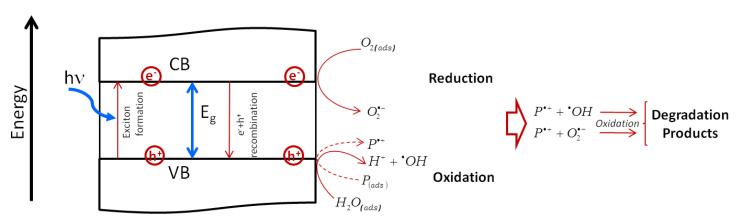
“The main redox reactions are summarized by Horikoshi and Malato [250,251] as follows: e− + O2 → O−·2 O−·2 (ads) + H + → HO·2(ads) h+ + H2O→ ·OH(ads) + H+ h+ + O−·2 (ads)→ 2O·(ads) h+ + P→ P·+ (14) Then, oxygen and pollutant radicals further react to give oxidation of organic products.”
BackgroundHeberer, T. (2002) · Toxicology Letters · doi:10.1016/s0378-4274(02)00041-3 · Cited by 2,995
Research works printed but not linked: 10
- Stafe M. Negutu C. Puscas N.N. Popescu I. Pulsed laser ablation of solids Rom. Rep. Phys. 2010 62 758 770
- Nedialkov N.N. Atanasov P.A. Sawczak M. Sliwinski G. Ablation of ceramics with ultraviolet, visible, and infrared nanosecond laser pulses Proceedings of the XIV International Symposium on Gas Flow, Chemical Lasers, and High-Power Lasers Wrocław, Poland 25–30 August 2002 703 709
- Al-Haddad R.M.S. Hamid M.K. Jumaa T. Electric field effect on the synthesis of nanogold particles by PLAL Int. J. Chem. Nat. Sci. 2015 3 269 274
- Santoro M. Fazio E. Trusso S. Ossi P.M. Tommasini M. Neri F. Rhodium nanoparticles synthesized by nanosecond and picosecond Pulsed Laser Ablation in Liquid. GISR2016 Proceedings of the Italian Meeting on Raman Spectroscopy and Non Linear Optic Effects Padova, Italy 14–16 September 2016
- Santoro M. Bertoncini A. Fazio E. Tommasini M. Neri F. Ossi P.M. Trusso S. Nanostructured Rhodium Thin Films Deposited by Pulsed Laser Deposition for SERS Detection. CNS2018—4° Proceedings of the Congresso Nazionale Sensori Catania, Italy 21–23 February 2018
- Eibner A. Action of Light on Pigments Chem. Ztg. 1911 35 753 775
- Keidel E. The Fading of Aniline Dyes in the Presence of Titanium White Farben Ztg. 1929 34 1242 1243
- Osugi M. Aoki S. On the photoxidation of ammonium compounds in solution and soil Jpn. J. Soil Manure. 1936 10 11 24
- Frenkel J. On the Absorption of Light and the Trapping of Electrons and Positive Holes in Crystalline Dielectrics Phys. Zs. Sowjetunion. 1936 9 158 186
- Negrea P. Sidea F. Negrea A. Lupa L. Ciopec M. Muntean C. Stuies regarding the Benzene, Toluene and o-Xylene Removal from Waste Water Politeh. Univ. 2008 53 1 2
Cited by
Items 201–300 of 349
EVQ-218: Characterization of High-Energy Nanoparticles that Measure up to NIST Standards
Kennon, B. S., & Niedermeyer, W. H. (2024) · ACS Omega · doi:10.1021/acsomega.3c07745 · Cited by 4
Miletić, M., Čalija, S., Korićanac, L., Žakula, J. J., Vilotić, A., Radović, M., Golić, I., Korać, A., Nacka-Aleksić, M., Stojadinović, B. S., et al. (2025) · Nanotoxicology · doi:10.1080/17435390.2025.2453576 · Cited by 3
“Differences in the Raman spectra of NP-treated cells enable monitoring of different modalities of interactions between NPs and the cell and correlate spectroscopic with biochemical and morphological changes (Lasalvia, Perna, and Capozzi 2019; Fazio et al. 2020).”
Pulsed Laser Ablation in Liquid: Numerical Evaluation of Laser Fluence
Pò, C. L., Ruffino, F., Grimaldi, M. G., & Boscarino, S. (2025) · physica status solidi (RRL) - Rapid Research Letters · doi:10.1002/pssr.202400348 · Cited by 5
Shanon, Z. S., & Al-Helaly, M. T. (2025) · Plasmonics · doi:10.1007/s11468-025-03086-1 · Cited by 3
“The pulse laser ablation method is considered a faster technique for producing nanoparticles [10].”
Yakunin, A. N., Avetisyan, Y. A., Akchurin, G. G., Zarkov, S. V., Aban’shin, N. P., Андреевич, Х. В., & Tuchin, V. V. (2022) · Sensors · doi:10.3390/s22114127 · Cited by 3
“Thermal processes accompanying the interaction of intense optical radiation with the emitter material, along with the stimulation of optical field emission, can significantly limit the performance of such a current source due to melting, ablation, and Coulomb destruction of the emitter material [24,38,39].”
BackgroundMethodSynthesis of nanoparticles using pulsed laser
Naderi-Samani, H., & Razavi, R. S. (2024) · IntechOpen eBooks · doi:10.5772/intechopen.1004415 · Cited by 7
Review on bioengineering of metal sulphide nanoparticles using plant extracts
Botha, N. L., & Matinise, N. (2024) · Chemistry of Inorganic Materials · doi:10.1016/j.cinorg.2024.100072 · Cited by 6
Ahmed, A. M., Halim, M. M., Ahmed, N. M., & Suardi, N. (2026) · Plasmonics · doi:10.1007/s11468-025-03336-2 · Cited by 2
Subhan, A., Columbus, S., Karthigaimuthu, D., Francis, D. V., & MOurad, A.-H. I. (2026) · Plasmonics · doi:10.1007/s11468-026-03373-5 · Cited by 2
“Several research groups have studied PLAL in depth using optical imaging techniques like time-resolved shadowgraphs and numerical simulations explaining the dynamics of the process [54–57].”
Strongly Confined Bismuth Antimonide Quantum Dots
Khadka, M., Subedi, R., Zhou, Q., Lu, X., Agyei‐Mensah, J. A., José–Yacamán, M., Lang, G., Herth, É., & Guisbiers, G. (2026) · ACS Materials Au · doi:10.1021/acsmaterialsau.5c00233 · Cited by 2
Wide Range Responsivity Photodetector of Zr-Au-Ag Oxide NPs Prepared By Pulsed Laser Ablation
Hassan, H. J., Abbas, A. K., & Ibrahim, I. M. (2021) · Journal of Physics Conference Series · doi:10.1088/1742-6596/2114/1/012073 · Cited by 2
“2 generated, as well as the ability to guarantee that they are free of contamination, are two benefits of this approach over conventional techniques [2,3].”
BackgroundMir, M. A., Bansal, N., Sharma, S., & Negi, N. P. (2023) · Indian Journal of Agricultural Biochemistry · doi:10.5958/0974-4479.2023.00002.3 · Cited by 4
Porous silicon modified as an ultrasensitive gas sensor via laser ablation
Fzaa, W. T. (2023) · Journal of Optics · doi:10.1007/s12596-023-01371-y · Cited by 2
Fabrication of hafnium-based nanoparticles and nanostructures using picosecond laser ablation
Das, A., Akkanaboina, M., Rathod, J., Goud, R. S. P., Kumar, K. R., Reddy, R. C., Ravendran, R., Vutova, K., Rao, S. V. S. N., & Rao, S. V. (2024) · Beilstein Journal of Nanotechnology · doi:10.3762/bjnano.15.129 · Cited by 2
Zaman, F., Jan, S., Assad, N., et al. (2026) · Discover Nano · doi:10.1186/s11671-026-04716-1 · Cited by 2
“Physical techniques, such as laser ablation and evaporation-condensation, do not involve solvent contamination; however, they require advanced equipment and are expensive for large-scale production [26].”
Pò, C. L., Boscarino, S., Grochowska, K., Scalese, S., Kramek, A., Gumieniak, J., Siuzdak, K., & Ruffino, F. (2026) · Advanced Sustainable Systems · doi:10.1002/adsu.70508 · Cited by 3
“When working with bulk targets, the greater the fluence, the greater is the productivity in terms of the amount of ablated weight over time [24, 25, 27].”
Chen, Y., Du, X., Law, J., & Sun, Y. (2025) · International Journal of Extreme Manufacturing · doi:10.1088/2631-7990/ae2242 · Cited by 6
In Situ TEM Crystallization of Amorphous SmNiO3 Nanoparticles into the Perovskite Phase
Calvo-Mola, C., Bruyère, S., Torres‐Costa, V., & Barrat, S. (2025) · The Journal of Physical Chemistry C · doi:10.1021/acs.jpcc.5c04120 · Cited by 2
Hassan, A. M., & Muhmood, A. A. (2025) · Journal of Nano Materials Impact · doi:10.71109/nmi.2025.1.1.7 · Cited by 2
“This process is relatively rapid, exhibits efficient mass production, and low cost [22] .”
Chiechio, R. M., Boscarino, S., Pò, C. L., Spadaro, M. C., Salutari, F., Hernandez, O., Guizouarn, T., Marchi, V., Musumeci, P., Grimaldi, M. G., et al. (2026) · Journal of Physics and Chemistry of Solids · doi:10.1016/j.jpcs.2026.113825 · Cited by 2
Luminescent carbon nanostructures synthesized by ultrasound-assisted laser ablation in liquid media
Escobar-Alarcón, L., Limas-Escobar, A., Solís-Casados, D. A., Romero, S., & Haro‐Poniatowski, E. (2022) · Applied Physics A · doi:10.1007/s00339-022-05914-1 · Cited by 2
Kaimlová, M., Pryjmaková, J., Šlouf, M., Lyutakov, O., Ceccio, G., Vacik, J., & Siegel, J. (2022) · Materials · doi:10.3390/ma15248950 · Cited by 2
Controllable preparation of bare nano-diamonds through femtosecond laser ablation in liquid
Hao, J., Li, S., & Dong, M. (2024) · Colloids and Surfaces A Physicochemical and Engineering Aspects · doi:10.1016/j.colsurfa.2024.135623 · Cited by 2
Takeda, Y., Toyama, N., & Egashira, K. (2022) · Surface Science · doi:10.1016/j.susc.2022.122199 · Cited by 2
Ibrahim, N. Q., Ghalib, L., & Hasan, L. M. (2025) · Journal of Bio- and Tribo-Corrosion · doi:10.1007/s40735-025-01069-7 · Cited by 2
“Recently, nanoparticles prepared via PLAL have been explored in diverse applications such as friction reduction, solar nanofluids, optical limiting devices, and more [21, 22].”
Structural evolution of Ni/NiO nanostructures synthesized by pulsed laser ablation in water
Chowdhury, M., Singh, B. K., Vadnala, S., Tiwari, A., Tripathi, A., & Rawat, R. (2025) · Academia Nano Science Materials Technology · doi:10.20935/acadnano7969 · Cited by 3
Luminescent Erbium-Based Nanoparticles Synthesized by Pulsed Laser Ablation in Liquid
Almohammed, B., Barba, D. T., Haddad, E. I., Nechache, R., Rosei, F., & Vetrone, F. (2025) · The Journal of Physical Chemistry C · doi:10.1021/acs.jpcc.4c07101 · Cited by 3
Ghosh, S., & Sinha, S. N. (2025) · Materials Today Communications · doi:10.1016/j.mtcomm.2025.112022 · Cited by 2
Al-Obaidy, R., Haider, A. J., & Al-Musaw, S. (2023) · AIP conference proceedings · doi:10.1063/5.0129974 · Cited by 3
Ahmad, I., Rehman, Z. U., Mahmood, S., Raza, A., Qureshi, U. U. R., Qayyum, H., Ali, T., Rasheed, M. A., & Hassan, S. M. U. (2025) · Physica Scripta · doi:10.1088/1402-4896/add79f · Cited by 2
Ahmed, N. M., Samsuri, S. A. M., Jasim, A. H., Radzi, N. A. B. M., Omar, N. F. N. B., Almessiere, M. A., & Rajamanickam, S. (2025) · Optik · doi:10.1016/j.ijleo.2025.172382 · Cited by 2
Effect of irradiation time on characteristics of Gd2O3:Er,Yb NPs by laser ablation in liquid
Tei, Y., Kitamoto, Y., Hara, M., & Wada, H. (2022) · Applied Physics A · doi:10.1007/s00339-022-05901-6 · Cited by 4
Metal oxide nanoparticles toxicity testing on terrestrial plants
Naz, M., Bouzroud, S., Raza, M. A., et al. (2022) · Elsevier eBooks · doi:10.1016/b978-0-323-90774-3.00013-1 · Cited by 2
Plasmon resonance detection of water adsorption isotherms
Condorelli, M., Catanzaro, L., Scardaci, V., Fazio, E., D’Urso, L., & Compagnini, G. (2025) · Applied Surface Science · doi:10.1016/j.apsusc.2025.163216 · Cited by 2
Self-citationOthman, C. H., Sabri, M. M., & Ramadan, S. O. (2025) · ARO-The Scientific Journal of Koya University · doi:10.14500/aro.12222 · Cited by 1
Koral, C., Marsico, M., Mazaheri, Z., Papari, G. P., Andreone, A., Teghil, R., & Bonis, A. D. (2025) · Materials Chemistry and Physics · doi:10.1016/j.matchemphys.2025.131137 · Cited by 3
Alghurabi, M. N. A. K., Mubarak, T. H., Judran, A. K., Hasoon, B. A., & Jawad, K. H. (2026) · BioNanoScience · doi:10.1007/s12668-026-02584-8 · Cited by 3
“Laser ablation in liquid includes a variety of nonequilibrium techniques that can effectively create colloidal nanoparticles with no need to chemical reduction agents [37–39 ].”
Synthesis of colloidal nanosilver as active agent of disinfectant using pulse laser ablation
Khumaeni, A., Arifin, Z., & Setiawati, E. (2022) · AIP conference proceedings · doi:10.1063/5.0072890 · Cited by 1
One-step synthesis of oxygen-deficient MoO3-x nanostructures by pulsed laser ablation in liquid
Pereira, D. R., Díaz-Guerra, C., Pereira, S. O., Fernandes, A. J. S., Carvalho, D. F., Zanoni, J., Batista, M., Kulyk, B., Madureira, J., Verde, S. C., et al. (2026) · Surfaces and Interfaces · doi:10.1016/j.surfin.2026.108525 · Cited by 3
Tawfeeq, A. T., Jodou, A. S., & Hamad, B. S. (2025) · Materials Today Communications · doi:10.1016/j.mtcomm.2025.111876 · Cited by 3
Intal, D., & Ebong, A. (2026) · Renewable and Sustainable Energy Reviews · doi:10.1016/j.rser.2026.117181 · Cited by 1
Application of nano based drug delivery channel against leukemia chemotherapeutic resistance
Rahul, B., Olabode, H. O., Ochigbo, V., & Samuel, F. (2021) · Global Journal of Cancer Therapy · doi:10.17352/2581-5407.000036 · Cited by 2
“There is an exponential rise in the exactness of nanoparticles for their cognate target [18] as several ligand molecules are accumulated in the nanosystems.”
BackgroundPulsed laser−produced nanomaterials in liquids for sensors
Kole, P., Gosavi, D., Naik, P. B., & Naik, B. R. (2024) · Elsevier eBooks · doi:10.1016/b978-0-443-13379-4.00014-6 · Cited by 1
Nyabadza, A., & Brabazon, D. (2025) · Crystals · doi:10.3390/cryst15070662 · Cited by 4
Khaleel, S. F., & Aadim, K. A. (2026) · The European Physical Journal Plus · doi:10.1140/epjp/s13360-025-07231-x · Cited by 1
Zhang, X. (2025) · Open Life Sciences · doi:10.1515/biol-2025-1239 · Cited by 1
Abdulghani, S. O., Mohammed, A. S., & Fahad, O. A. (2025) · Journal of Materials Science Materials in Electronics · doi:10.1007/s10854-025-16324-3 · Cited by 1
“Higher fluency and longer irradiation periods enhance particle concentration, shorter pulses promote non-thermal ejection, and wavelength affects optical absorption [20].”
Fieser, D., Yin, K., Shortt, H., Dewanjee, U., Steingrimsson, B., Ivanov, I. N., Burns, J., Liaw, P. K., Zuo, J., & Hu, A. (2025) · Langmuir · doi:10.1021/acs.langmuir.5c05617 · Cited by 5
Dadadzhanov, D. R., Палехова, А. В., Alexan, G., Baranov, M. A., & Maslova, N. A. (2024) · Optics and Spectroscopy · doi:10.1134/s0030400x24020061 · Cited by 1
Studies of the morphology and cytotoxicity of photosensitized metal chalcogenide nanoparticles
Kurilova, U. E., Chernikov, A. S., Kochuev, D. A., et al. (2024) · Biomedical Engineering · doi:10.1007/s10527-024-10376-1 · Cited by 1
“Methods of producing nanoparticles such as laser ablation using femtosecond radiation in liquid media has advantages such as precise adjustment of size and surface morphology; ablation of nanoparticles in liquid media provides the opportunity for chemical modification using solvent molecules [7, 8].”
Yaseen, M. A., Ali, A. M. A., & Abd, A. N. (2025) · Journal of Optoelectronic and Biomedical Materials · doi:10.15251/jobm.2025.172.87 · Cited by 2
Hirata, T. (2021) · BUNSEKI KAGAKU · doi:10.2116/bunsekikagaku.70.729 · Cited by 1
Rousta, A., & Dorranian, D. (2023) · Journal of the Australian Ceramic Society · doi:10.1007/s41779-023-00901-y · Cited by 1
Optimization of the CuBr+Ne+HBr brightness amplifier operating mode for high-speed imaging
Trigub, M. V., & Vasnev, N. A. (2023) · Optics Communications · doi:10.1016/j.optcom.2023.129768 · Cited by 2
Nyabadza, A., Vázquez, M., & Brabazon, D. (2022) · SSRN Electronic Journal · doi:10.2139/ssrn.4147736 · Cited by 1
Nawaf, K. T., Taha, S., El-Salam, Y. A., Samad, F. A., Rifaat, H. M., EL-Gendy, A. O., & Mohamed, T. (2025) · Engineering Technology & Applied Science Research · doi:10.48084/etasr.12452 · Cited by 1
“The interaction between laser and matter is significantly influenced by the irradiance and pulse duration [26].”
Iacono, V., Rabelo, H., Pulvirent, L., et al. (2026) · Microchemical Journal · doi:10.1016/j.microc.2026.117883 · Cited by 1
Eran, A., Daffan, G., & Patolsky, F. (2026) · ACS Applied Materials & Interfaces · doi:10.1021/acsami.6c00908 · Cited by 1
Kricke, J. L., Ebert, N., Sorarrain, A., Roth, S., Fischer, D., Schmidt, M., Gökce, B., Marimón, J. M., Kopp, S., & Doñate‐Buendía, C. (2025) · Advanced Materials Technologies · doi:10.1002/admt.202401262 · Cited by 2
Self-citationVilas, A. M., Fernández‐Arias, M., Boutinguiza, M., Rius, D. R., Solla, E. L., Vilella, T., del Val, J., Riveiro, A., Gil, J., & Pou, J. (2025) · Applied Surface Science Advances · doi:10.1016/j.apsadv.2025.100735 · Cited by 2
Enhanced elasticity in magnesium nanoparticle reinforced acrylic elastomer
Saedi, S., Blissett, S., Raji, H., Hesabizadeh, T., Osterlin, B., & Guisbiers, G. (2023) · Polymer Engineering and Science · doi:10.1002/pen.26438 · Cited by 1
Ahmed, A. M., Taha, M. J., & Halim, M. M. (2026) · ChemPhysChem · doi:10.1002/cphc.70484 · Cited by 1
Guan, X., Yang, J., Liu, Z., et al. (2024) · ACS Applied Nano Materials · doi:10.1021/acsanm.4c03971 · Cited by 1
Nanosecond pulsed laser-plasma interaction and its applications
Singh, R. (2022) · Elsevier eBooks · doi:10.1016/b978-0-323-89930-7.00010-8 · Cited by 4
Facile one-pot synthesis of lithium metal nanoparticles for superior lithium-ion anode applications
Rodríguez, J. R., Flores-Castañeda, M., Trujillo-Navarrete, B., et al. (2023) · Journal of Colloid and Interface Science · doi:10.1016/j.jcis.2023.12.036 · Cited by 1
Surface-modified nanomaterials for antimicrobial/antibacterial applications
Venkatesan, K. B., Alamelu, S., Srinivasan, M. K., et al. (2026) · Elsevier eBooks · doi:10.1016/b978-0-443-28838-8.00019-2 · Cited by 1
Taha, S., Mukhlif, I., EL-Gendy, A. O., Hassan, M., Hamblin, M. R., & Mohamed, T. (2025) · Optics Continuum · doi:10.1364/optcon.565208 · Cited by 1
Bhatia, P., Sharma, S., Kumar, S., et al. (2024) · Plasmonics · doi:10.1007/s11468-024-02653-2 · Cited by 1
“Fazio et al. in their work reveal the pulsed laser synthesis of nanocolloids and new information about its scalability with selected uses in biomedicine, catalysis, and sensing [19].”
Further Sustainable and/or Unconventional Low-temperature Wet-chemical Synthetic Methods
Barbon, F., Tajoli, F., Spolaore, F., & Gross, S. (2024) · Royal Society of Chemistry eBooks · doi:10.1039/9781839165757-00315 · Cited by 1
Pulvirenti, M., Scardaci, V., Catanzaro, L., Scuderi, M., Sfuncia, G., Brancato, A., Condorelli, M., D’Urso, L., & Compagnini, G. (2026) · Colloids and Surfaces A Physicochemical and Engineering Aspects · doi:10.1016/j.colsurfa.2026.139883
Self-citationLaser Ablation - Applications and Modeling
Harooni, M. (2023) · IntechOpen eBooks · doi:10.5772/intechopen.105251 · Cited by 2
Production of Yb:YVO4 nanoparticles by pulsed laser ablation in liquid using a femtosecond laser
Bond, L., Jönsson, E., & Engholm, M. (2024) · Laser applications in microelectronic and optoelectronic manufacturing. Conference · doi:10.1117/12.3002581
“PLAL presents unique advantages over chemical methods, such as size-tunable properties, allowing for control of aspects such as size distribution, crystal structure, and surface charge [8].”
BackgroundDouble Cylindrical-Lens beam shaping enables femtosecond colloidal nanoparticle production upscale
Molina-Prados, S., Aupart-Acosta, A., Doñate‐Buendía, C., Láncis, J., & Mínguez-Vega, G. (2026) · Optics & Laser Technology · doi:10.1016/j.optlastec.2026.116088
Nagappan, R., Narayanamurthy, K., Senthilkumar, P. K., Uthiravel, V., & Kuppusamy, K. (2025) · Journal of Alloys and Compounds Communications · doi:10.1016/j.jacomc.2025.100102
Museba, H. N., & Lee, B. (2026) · Journal of Alloys and Compounds · doi:10.1016/j.jallcom.2025.185926 · Cited by 5
Liquid Phase Modifications of Carbon Nanostructures
Anand, S., Madhushree, R., & Devi, K. R. S. (2023) · Springer eBooks · doi:10.1007/978-3-031-14955-9_27-1
Laser Modification of Graphene Oxide for Efficient Oxygen Evolution Reaction
Pò, C. L., Ruffino, F., Filice, S., Scalese, S., Grimaldi, M. G., & Boscarino, S. (2026) · Crystals · doi:10.3390/cryst16050319
Fayyad, K. M., & Obaid, A. S. (2026) · Applied Physics A · doi:10.1007/s00339-026-09745-2
Anionic Silver Nanostructures for Improved Biomimetic Attributes: A Comprehensive Review
Bogati, R., Mohite, P. B., Singh, A. K., Chittasupho, C., & Singh, S. K. (2026) · Particle & Particle Systems Characterization · doi:10.1002/ppsc.70110
“Nonetheless, the method is limited by high operational cost and difficulties in scaling up for bulk production [ 71, 72 ].”
Enhancing vibrational spectra of biomolecules using non-standard substrates and materials
Adomavičiũtė-Grabusovė, S. (2024) · doi:10.15388/vu.thesis.676
Vilas, A. M., Fernández‐Arias, M., Boutinguiza, M., et al. (2025) · SSRN Electronic Journal · doi:10.2139/ssrn.5106710
Makumuria, P., & Sharma, A. K. (2025) · Applied Surface Science · doi:10.1016/j.apsusc.2025.165226
Amin, M. H., Rashid, F. H., & Muhsin, M. S. (2026) · International Journal of Nanoscience · doi:10.1142/s0219581x26400120
Adekunle, A. A., Fofana, I., & Oparanti, S. O. (2026) · Next Nanotechnology · doi:10.1016/j.nxnano.2026.100710
Chang, H., He, C., Sha, J., et al. (2026) · Food and Bioprocess Technology · doi:10.1007/s11947-026-04486-9
“According to Fazio et al., AgNPs modulate the permeability of bacterial cell membranes, disrupting membrane integrity and releasing Ag ⁺ ions into the cytoplasm, which in turn inactivates proteins and damages DNA, ultimately leading to bacterial death (Fazio et al., 2020).”
Nehete, B. N., Wakde, B. R., Pawara, D. L., Telgote, A. A., & Tade, R. S. (2026) · Journal of Industrial and Engineering Chemistry · doi:10.1016/j.jiec.2026.06.011
Pulsed laser−produced nanomaterials in liquids for biomedical applications
Karthikeyan, N., Thiruramanathan, P., Srinivasan, R., Sivamurugan, R., & Babu, G. S. D. (2024) · Elsevier eBooks · doi:10.1016/b978-0-443-13379-4.00015-8 · Cited by 1
Chota, A., Abrahamse, H., & George, B. P. A. (2026) · Biomedicine & Pharmacotherapy · doi:10.1016/j.biopha.2026.119355
Oltmanns, J. (2023) · eDiss (Georg-August-Universität Göttingen) · doi:10.53846/goediss-9790
Nikov, R., Nedyalkov, N., Valkov, S., Koutzarova, Т., Aleksandrov, L., Atanasova, G., & Grochowska, K. (2025) · Materials · doi:10.3390/ma18030598
Takeda, Y., & Mafuné, F. (2022) · Journal of Applied Physics · doi:10.1063/5.0100205
Deciphering the effect of synthesis methods on the thermoelectric properties of ZnO nanostructures
Singh, S. K., Sharma, A. K., Yadav, J., Savita, Mishra, G., Bhasker, H. P., Dhawan, P. K., Patel, S. P., & Chaudhary, D. K. (2026) · Chemistry of Inorganic Materials · doi:10.1016/j.cinorg.2026.100161
Pulsed Laser Ablation Synthesis of Fresh Te Nanoparticles for Maldi-Ms ApplicationsPreprint
Novotný, K., Krempl, I., Pečínka, L., et al. (2024) · SSRN Electronic Journal · doi:10.2139/ssrn.4689545
Synthesis of nanoparticles used in soil-plant continuum
Shrivastava, M., Vázquez-Núñez, E., Machanuru, R., & Khandelwal, A. (2025) · Elsevier eBooks · doi:10.1016/b978-0-443-28983-5.00001-3
Plasmon Resonance Detection of Water Adsorption IsothermsPreprint
Condorelli, M., Catanzaro, L., Scardaci, V., et al. (2025) · SSRN Electronic Journal · doi:10.2139/ssrn.5088014
Self-citationBahashwan, H. A., & Kamaruddin, M. A. (2026) · Next Nanotechnology · doi:10.1016/j.nxnano.2026.100435
Zaidan, A. H., Astuti, S. D., Qadir, K. W., Qader, S. W., Yaqubi, A. K., Vania, S., Winarno, W., Arifianto, D., Susilo, Y., & Syahrom, A. (2025) · Journal of King Saud University - Science · doi:10.25259/jksus_950_2025
Pò, C. L., Ruffino, F., Scalese, S., Spadaro, M. C., Rabelo, H., Arbiol, J., Condorelli, G. G., Pulvirenti, L., Scandurra, A., & Boscarino, S. (2026) · Materials Chemistry and Physics · doi:10.1016/j.matchemphys.2026.133067 · Cited by 1
Torres-Ramírez, C. A., Triana-Camacho, D. A., & Quintero‐Orozco, J. H. (2026) · MRS Advances · doi:10.1557/s43580-026-01598-4
Sánchez-Torres, S., Pérez-García, B.-L., Tehuacanero-Cuapa, S., & Crespo-Sosa, A. (2024) · Nano Express · doi:10.1088/2632-959x/ad9c9e
Metadata
- Authors
- Fazio, E., Gökce, B., De Giacomo, A., Meneghetti, M., Compagnini, G., Tommasini, M., Waag, F., Lucotti, A., Zanchi, C. G., Ossi, P. M., Dell’Aglio, M., D’Urso, L., Condorelli, M., Scardaci, V., Biscaglia, F., Litti, L., Gobbo, M., Gallo, G., Santoro, M., Trusso, S., & Neri, F.
- Affiliations
- University of Messina (IT)
- University of Duisburg-Essen (DE)
- Department of Chemistry, University of Bari, Via Orabona 4, 70126 Bari, Italy
- University of Padua (IT)
- University of Catania (IT)
- Politecnico di Milano (IT)
- Istituto di Nanotecnologia (IT)
- STMicroelectronics (Italy) (IT)
- Institute for Chemical and Physical Processes (IT)
- Corresponding author
- Fazio, Enza
- ORCID
- Fazio, Enza
- Gökce, Bilal
- De Giacomo, Alessandro
- Meneghetti, Moreno
- Compagnini, Giuseppe
- Tommasini, Matteo
- Waag, Friedrich
- Lucotti, Andrea
- Zanchi, Chiara Giuseppina
- Ossi, Paolo Maria
- Dell’Aglio, Marcella
- D’Urso, Luisa
- Condorelli, Marcello
- Scardaci, Vittorio
- Litti, Lucio
- Gobbo, Marina
- Gallo, Giovanni
- Trusso, Sebastiano
- Neri, Fortunato
- Venue
- Nanomaterials
- Publisher
- MDPI AG
- Published
- 2020-11-23
- Volume
- 10
- Issue
- 11
- Pages
- 2317
- ISSN
- 2079-4991 (ISSN-L)
- PMC
- PMC7700616
- OpenAlex
- W3108657096
- Cited by
- 346
- References
- 288
- Citations by year
- 2026: 62 · 2025: 83 · 2024: 65 · 2023: 66 · 2022: 45 · 2021: 24
- FWCI
- 2.82
- Type
- journal article
- Language
- en
- Open access
- gold
- doi.org
- Licence
- Locations
- Nanomaterials (publishedVersion, cc-by)
- PubMed Central (publishedVersion, cc-by)
- PubMed (publishedVersion)
- Virtual Community of Pathological Anatomy (University of Castilla La Mancha) (submittedVersion, other-oa)
- DOAJ (DOAJ: Directory of Open Access Journals) (submittedVersion, cc-by-sa)
- CINECA IRIS Institutional Research Information System (University of Bari Aldo Moro) (submittedVersion)
- Padua Research Archive (University of Padova) (submittedVersion, cc-by)
- Funders
- Università degli Studi di Padova (04SID2016, 08SID2017)
- Topics
- Physical Sciences › Materials Science › Materials Chemistry › Laser-Ablation Synthesis of Nanoparticles
- Physical Sciences › Physics and Astronomy › Acoustics and Ultrasonics › Ultrasound and Cavitation Phenomena
- Physical Sciences › Materials Science › Electronic, Optical and Magnetic Materials › Gold and Silver Nanoparticles Synthesis and Applications
- Keywords
- pulsed laser ablation in liquid, laser synthesis, ligand-free nanoparticles, nanocolloids, functionalized nanomaterials, scalable nanoparticle synthesis, biomedical applications, catalysis, sensing, energy applications, environmental applications
About these checks
Registry, retraction, Cites and statistics results are computed, not judged, with one exception: a printed reference that no index lists is read once by a model before it counts as a citation error. Claims are extracted by a model and kept only when their quote appears verbatim in the text; each cited source is then checked, with a model’s help, for whether it says what the claim relies on. Those verdicts can be wrong — read the claim’s quote and the cited source before relying on one.
The claim verdicts this report counts are experimental: their accuracy is not yet measured.
A language model drew the claims from the paper on 2026-10-10, under version 3 of the claim definition (model deepseek-v4.1-flash, prompt extract-v3).
A second model labelled each claim on 2026-10-10 (model jev-1.13-20260917, definition revision gold-guideline-v0.2).
Cited sources are checked with a language model’s help (gpt-6-sol and qwen3.8-omni-flash).
Statistics and arithmetic are recomputed, not judged.
Confidence bands are shown only for fields calibrated on our annotated test set. None is calibrated yet, so no band is shown.
What counts as a claim ›How we measure confidence ›How we check this ›
Are you an author, or do you see a problem with this page? Request a review
Data sources
Bibliographic data: Semantic Scholar, OpenAlex, Crossref.
Contains information from the Semantic Scholar Academic Graph Datasets, made available under the ODC Attribution License (ODC-BY 1.0).
Semantic Scholar’s data is described in: Kinney, R., et al. (2023). The Semantic Scholar Open Data Platform. arXiv:2301.10140.
