

Nanoparticles Engineering by Pulsed Laser Ablation in Liquids: Concepts and Applications
Open accessThe DOI matches its Crossref record; 278 of the 288 references it cites were found in a registry or an index; 30 of the 288 sources its claims cite were checked for support.
Abstract
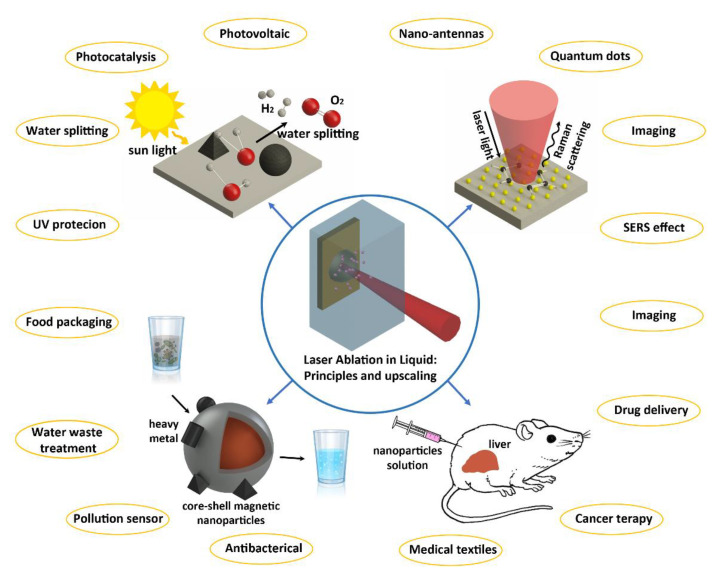
Laser synthesis emerges as a suitable technique to produce ligand-free nanoparticles, alloys and functionalized nanomaterials for catalysis, imaging, biomedicine, energy and environmental applications. In the last decade, laser ablation and nanoparticle generation in liquids has proven to be a unique and efficient technique to generate, excite, fragment and conjugate a large variety of nanostructures in a scalable and clean way. In this work, we give an overview on the fundamentals of pulsed laser synthesis of nanocolloids and new information about its scalability towards selected applications. Biomedicine, catalysis and sensing are the application areas mainly discussed in this review, highlighting advantages of laser-synthesized nanoparticles for these types of applications and, once partially resolved, the limitations to the technique for large-scale applications.
Overview
CoChat Summary
TL;DR
This review surveys pulsed laser ablation in liquids (LAL) as a chemically clean route to ligand-free nanoparticles, alloys, and functional nanomaterials for biomedicine, catalysis, sensing, energy, and environmental applications. It concludes that LAL offers strong control over purity, crystal structure, and size distribution, but large-scale application still requires better colloidal stability, surface control, and defined gram-scale protocols.
Key findings
- LAL is presented as a scalable and clean synthesis route for nanocolloids, with applications in plasmonic sensing, nanomedicine, catalysis, and pollutant degradation; however, the review states that LAL colloids are “not yet applicable on a large scale.”
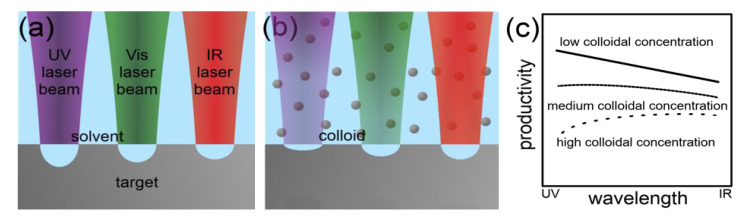
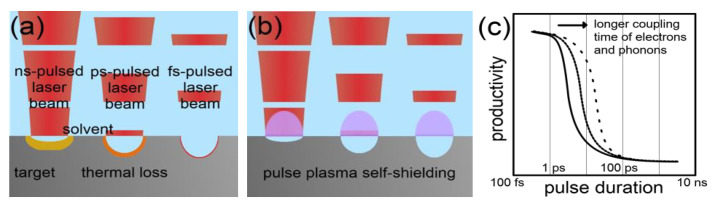
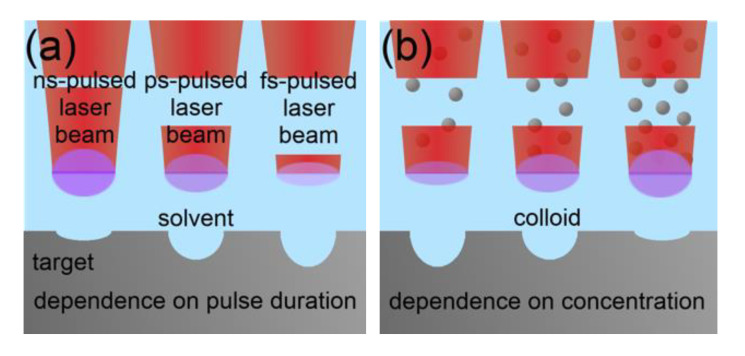
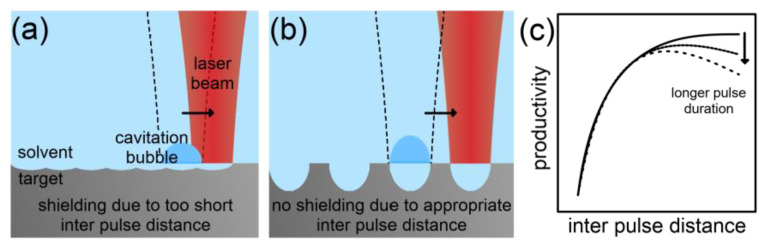
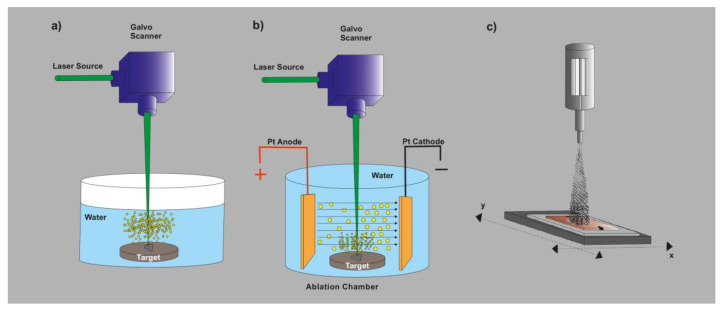
- Process parameters strongly affect productivity: IR laser light generally gives higher metal productivity than UV or Vis, but short wavelengths can become less productive at high colloid concentrations due to NP shielding; an optimum pulse duration is probably around single picoseconds. Electric-field-assisted LAL increased ablation rate by a factor of three, about 300 mg/30 min versus 100 mg/30 min without the field.
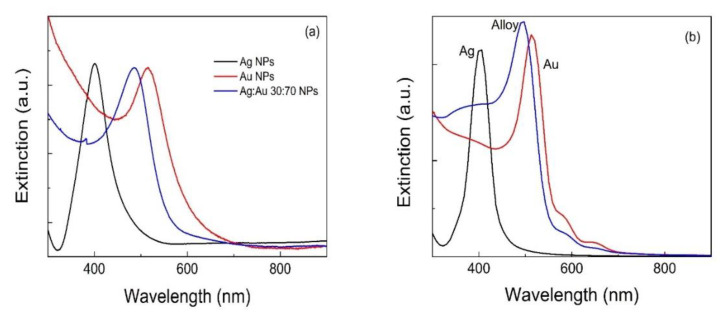
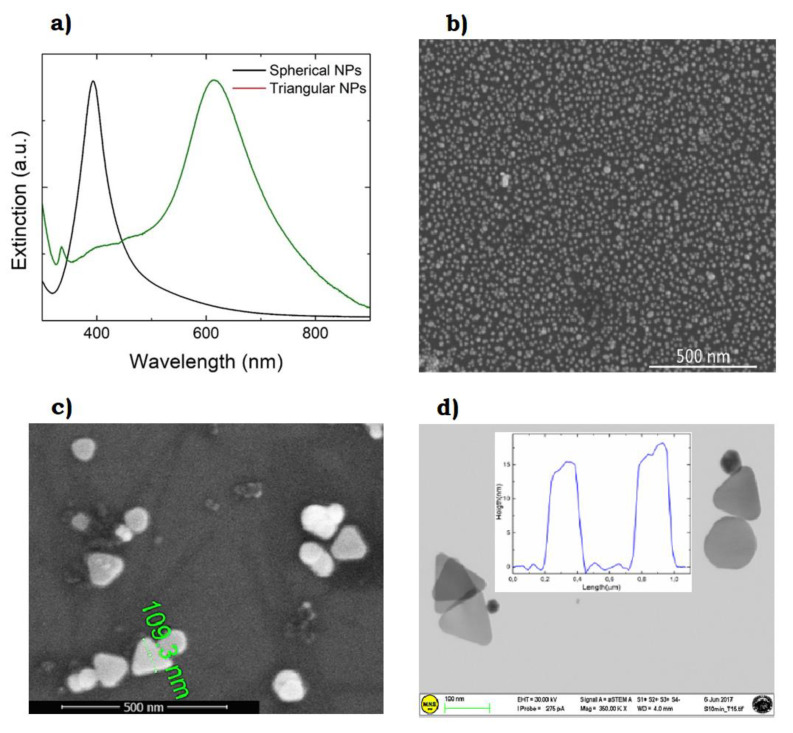
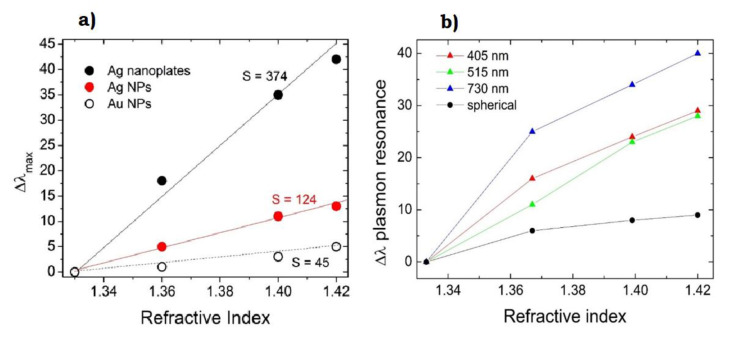
- Plasmonic tuning is demonstrated: Au/Ag alloy colloids can tune plasmon resonance continuously from about 400 nm (Ag) to 520 nm (Au); Ag spherical NPs showed higher plasmon sensitivity (125 nm/RIU) than Au NPs (45 nm/RIU), with roughly threefold increase after conversion to nanoplates and S = 460 nm/RIU after 730 nm irradiation.
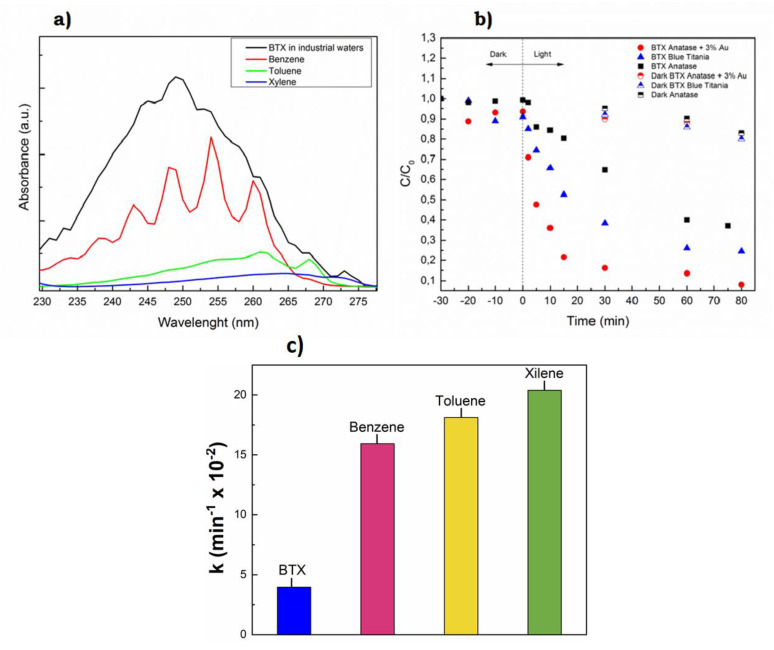
- In photocatalysis, blue titania removed 76% of benzene after 80 min, while AuTiO2 left less than 1% residual benzene; after 5 min, BTX decreased by 53% with Au-decorated TiO2, 26% with blue TiO2, and 14% with commercial TiO2. Apparent rate constants increased from 1.4 × 10⁻² min−1 (bare TiO2) to 3.8 × 10⁻² min−1 (blue TiO2) and 8.3 × 10⁻² min−1 (Au-loaded TiO2).
Methods
- Design: narrative review/overview of LAL fundamentals, process parameters, upscaling, and selected applications, not a primary systematic experimental study.
- Data/sample: synthesizes literature and the authors’ own contributions on ns/ps/fs LAL of metals and semiconductors in water and organic solvents, field-assisted LAL, plasmonic Au/Ag/Rh nanocolloids, SERS-based targeting, and TiO2/ZnO photocatalysis including BTX-contaminated industrial waters.
- Main analysis: qualitative and quantitative synthesis of cited experimental results, including optical emission spectroscopy, XRD/XPS, Raman/SERS, UV–Vis, plasmon sensitivity measurements, and photocatalytic degradation kinetics.
Limitations
- The paper states that LAL colloids are not yet large-scale applicable; reaching gram-scale production requires a properly defined LAL procedure and protocol, higher colloidal stability, and prevention of aggregation and larger-particle formation.
- It states that “ligand/surfactant-free” LAL NPs are not totally naked and still bear surface chemistry, with some surface atoms oxidized or complexed; an appropriate protocol for performance-oriented colloidal synthesis and isochronous surface modification is still not defined.
- The text also notes practical limits for nanoadsorption/nanophotocatalysis, the need for higher UV-SERS signal-to-noise, moderate Rh SERS enhancement with photo-degradation under 457 nm irradiation, and that the literature lacks full-range parameter data for productivity evaluation; as a review, it also relies on cited studies and selected examples rather than exhaustive primary data.
Model-written summary. Check it against the paper before relying on it.
Integrity signals
Registry
Cites
Statistics
Figures
Verification
Claims the paper makes
21 Valid · 10 Not valid · 150 Not checked · 135 Own results and interpretations
Some cited sources support this claim and some don’t — read each source’s verdict below.
In the paper
“All studies agree independently from the ablated matter, the chosen liquid and the used laser pulse duration on a higher productivity by using IR laser light compared to UV or Vis.”
§ Nanoparticles Engineering by Pulsed Laser Ablation in Liquids: Concepts and Applications > 2. LAL Synthesis Methods: Principle, Process Parameters and Liquids Effects on Nanoparticle Formation > 2.2. Upscaling of Laser Synthesis of Colloids
What the sources say
- Partly supportedcites [54] Schwenke A. Wagener P. Nolte S. Barcikowski S. Influence of processing time on nanoparticle generation during picosecond-pulsed fundamental and second harmonic laser ablation of metals in tetrahydrofuran Appl. Phys. A 2011 104 77 82 10.1007/s00339-011-6398-9 sourceExperimental — accuracy not yet measured
The Results and discussion and Conclusions report higher nanoparticle productivity at the fundamental IR wavelength than at the visible second harmonic wavelength for Ag, Zn, and Mg ablated with picosecond pulses in polyurethane-doped tetrahydrofuran. The Introduction also reports similar findings from several studies using nanosecond pulses. These passages do not establish agreement among all studies regardless of material, liquid, or pulse duration, and the paper does not test a UV comparison. Page numbers were not provided for these passages. (LLM, conf=0.88)
- Disputedcites [67] Tsuji T. Iryo K. Ohta H. Nishimura Y. Preparation of Metal Colloids by a Laser Ablation Technique in Solution: Influence of Laser Wavelength on the Efficiencies of Colloid Formation Jpn. J. Appl. Phys. 2000 39 L981 L983 10.1143/JJAP.39.L981 sourceExperimental — accuracy not yet measured
Our copy of Tsuji et al. (2000) reports the opposite of the claim for its principal (nonfocused) condition: in Section 3.1 (Experimental/Results) 'it is clear that the efficiency of the colloid formation increases as the wavelength decreases' and 'the ablation efficiency is larger at shorter wavelengths than at longer wavelengths over the entire fluence range' (Fig. 3, nonfocused 355/532/1064 nm). Longer-wavelength (IR) superiority appears only under focused irradiation (Section 3.2, Fig. 2(b)/Fig. 4): 'The colloid formation efficiency is higher at longer wavelengths than at shorter wavelengths. This wavelength dependence of the efficiency is the reverse of the result obtained with the nonfocused laser pulses,' attributed to reabsorption of the later part of the pulse by Ag colloids at shorter wavelengths. Moreover the study covers only Ag targets in distilled water with 5-9 ns Nd:YAG pulses, so it supports neither the 'all studies agree' generality nor independence of ablated matter, liquid and pulse duration. (LLM, conf=0.85)
Checked by a reasoning model — may be wrong.
- Not matchedcites [68] Šmejkal P. Pfleger J. Vlčková B. Dammer O. Laser ablation of silver in aqueous ambient: Effect of laser pulse wavelength and energy on efficiency of the process J. Physics: Conf. Ser. 2007 59 185 188 10.1088/1742-6596/59/1/040
We searched by its title and found no matching paper.
- Not checked yetcites [69] Intartaglia R. Bagga K. Brandi F. Study on the productivity of silicon nanoparticles by picosecond laser ablation in water: Towards gram per hour yield Opt. Express 2014 22 3117 3127 10.1364/OE.22.003117 24663602 source
Checked before — its earlier verdict is held back until a new check runs.
- Not checked — no full text of the sourcecites [70] Kim J. Reddy D.A. Ma R. Kim T.K. The influence of laser wavelength and fluence on palladium nanoparticles produced by pulsed laser ablation in deionized water Solid State Sci. 2014 37 96 102 10.1016/j.solidstatesciences.2014.09.005 source
boostedstates a cause- Asserted: passes — The authors put it forward as true.
- Checkable: passes — It can be checked against evidence.
- Load-bearing: unclear — It is unclear whether the paper’s conclusions depend on it.
- Based: passes — The paper gives a reason why it holds.
- Partly supported
The cited sources support only part of this claim — read each source’s verdict below.
In the paper
“The basic mechanisms inducing the laser ablation in liquid, as well as their dependence on laser pulse properties, do not differ notably, with respect of laser ablation in gaseous environment [54].”
§ Nanoparticles Engineering by Pulsed Laser Ablation in Liquids: Concepts and Applications > 2. LAL Synthesis Methods: Principle, Process Parameters and Liquids Effects on Nanoparticle Formation > 2.1. Mechanism in ns-Pulsed Laser Ablation in Liquid for the Production of Metallic Nanoparticles
What the sources say
- Partly supportedcites [54] Schwenke A. Wagener P. Nolte S. Barcikowski S. Influence of processing time on nanoparticle generation during picosecond-pulsed fundamental and second harmonic laser ablation of metals in tetrahydrofuran Appl. Phys. A 2011 104 77 82 10.1007/s00339-011-6398-9 sourceExperimental — accuracy not yet measured
The Introduction (page unavailable) says pulse duration changes the ablation mechanism in liquid, and the Results and discussion report effects of wavelength and fluence. The paper does not compare those mechanisms or their dependence on pulse properties with ablation in a gaseous environment, so the claimed similarity is unsupported. (LLM, conf=0.78)
plain- Asserted: passes — The authors put it forward as true.
- Checkable: passes — It can be checked against evidence.
- Load-bearing: unclear — It is unclear whether the paper’s conclusions depend on it.
- Based: passes — The paper gives a reason why it holds.
- Rests on an assumption not shown here.
- Partly supported
The cited sources support only part of this claim — read each source’s verdict below.
In the paper
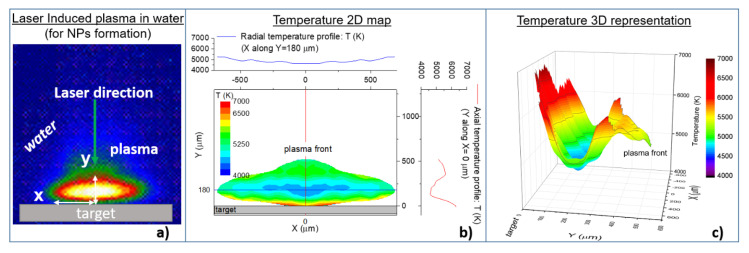
“The absence of the typical atomic spectral lines of the LIP expanding in a gaseous environment is due to the high density reached by the ablated matter under liquid confinement as discussed in [40,41,42].”
§ Nanoparticles Engineering by Pulsed Laser Ablation in Liquids: Concepts and Applications > 2. LAL Synthesis Methods: Principle, Process Parameters and Liquids Effects on Nanoparticle Formation > 2.1. Mechanism in ns-Pulsed Laser Ablation in Liquid for the Production of Metallic Nanoparticles
What the sources say
- Could not verifycites [40] Wagener P. Barcikowski S. Laser fragmentation of organic microparticles into colloidal nanoparticles in a free liquid jet Appl. Phys. A 2010 101 435 439 10.1007/s00339-010-5814-x sourceExperimental — accuracy not yet measured
Our copy of Wagener, Philipp & Barcikowski (2010) covers laser fragmentation of melamine cyanurate microcrystals in a free liquid jet, with UV/VIS, DLS and TEM characterization (Abstract; §1 Introduction; §3 Results and discussion); its only mention of plasma is mechanistic — 'a focused laser pulse which generates a plasma and a subsequent shock wave within the microparticles' (§3). No passage addresses optical emission spectroscopy of the laser-induced plasma, atomic spectral lines, or their suppression under liquid confinement versus gaseous expansion (searched: 'absence of atomic spectral lines … liquid confinement', 'plasma emission shielding confining medium density', 'atomic emission lines plasma spectroscopy'). The claim's point is therefore not treated in our copy, neither supported nor contradicted. (LLM, conf=0.72)
- Not checked — no full text of the sourcecites [41] Amendola V. Polizzi S. Meneghetti M. Free Silver Nanoparticles Synthesized by Laser Ablation in Organic Solvents and Their Easy Functionalization Langmuir 2007 23 6766 6770 10.1021/la0637061 17489616 source
- Partly supportedcites [42] Chemin A. Lam J. Laurens G. Trichard F. Motto-Ros V. LeDoux G. Jary V. Laguta V. Nikl M. Dujardin C. Doping nanoparticles using pulsed laser ablation in a liquid containing the doping agent Nanoscale Adv. 2019 1 3963 3972 10.1039/C9NA00223E PMC9419851 36132111 sourceExperimental — accuracy not yet measured
The Introduction describes a hot, dense plasma produced by laser ablation in liquid. It does not say that this density causes typical atomic spectral lines to be absent. The Experimental section’s LIBS measurements report atomic emission lines, but those measurements were made with argon gas flowing through the plasma region, not in the liquid-confined plume. (LLM, conf=0.78)
plainstates a cause- Asserted: passes — The authors put it forward as true.
- Checkable: passes — It can be checked against evidence.
- Load-bearing: unclear — It is unclear whether the paper’s conclusions depend on it.
- Based: passes — The paper gives a reason why it holds.
- Could not verify
The sources with a verdict support this claim; the rest weren’t checked yet, have no full text we could read, or their verdicts aren’t rated yet.
In the paper
“This is strongly indicated by the observed smaller NP diameters at shorter applied wavelengths [54,69,70], which may be the result of fragmentation induced by subsequent laser pulses during batch-LAL.”
§ Nanoparticles Engineering by Pulsed Laser Ablation in Liquids: Concepts and Applications > 2. LAL Synthesis Methods: Principle, Process Parameters and Liquids Effects on Nanoparticle Formation > 2.2. Upscaling of Laser Synthesis of Colloids
What the sources say
- Supportedcites [54] Schwenke A. Wagener P. Nolte S. Barcikowski S. Influence of processing time on nanoparticle generation during picosecond-pulsed fundamental and second harmonic laser ablation of metals in tetrahydrofuran Appl. Phys. A 2011 104 77 82 10.1007/s00339-011-6398-9 source
The Results and discussion section (page unavailable) reports that, for silver colloids, particle diameter decreased more sharply at the shorter wavelength (515 nm) than at 1030 nm. It says the decrease could be attributed to fragmentation of dispersed nanoparticles during post-irradiation, matching the claim's tentative explanation. (LLM, conf=0.89)
- Not checked yetcites [69] Intartaglia R. Bagga K. Brandi F. Study on the productivity of silicon nanoparticles by picosecond laser ablation in water: Towards gram per hour yield Opt. Express 2014 22 3117 3127 10.1364/OE.22.003117 24663602 source
Checked before — its earlier verdict is held back until a new check runs.
- Not checked — no full text of the sourcecites [70] Kim J. Reddy D.A. Ma R. Kim T.K. The influence of laser wavelength and fluence on palladium nanoparticles produced by pulsed laser ablation in deionized water Solid State Sci. 2014 37 96 102 10.1016/j.solidstatesciences.2014.09.005 source
hedgedstates a possible cause- Asserted: passes — The authors put it forward as true.
- Checkable: passes — It can be checked against evidence.
- Load-bearing: unclear — It is unclear whether the paper’s conclusions depend on it.
- Based: passes — The paper gives a reason why it holds.
- Supported
The sources with a verdict support this claim; the rest weren’t checked yet, have no full text we could read, or their verdicts aren’t rated yet.
In the paper
“The laser wavelength essentially influences the ablation rate in LAL [54,67,68,69,70].”
§ Nanoparticles Engineering by Pulsed Laser Ablation in Liquids: Concepts and Applications > 2. LAL Synthesis Methods: Principle, Process Parameters and Liquids Effects on Nanoparticle Formation > 2.2. Upscaling of Laser Synthesis of Colloids
What the sources say
- Supportedcites [54] Schwenke A. Wagener P. Nolte S. Barcikowski S. Influence of processing time on nanoparticle generation during picosecond-pulsed fundamental and second harmonic laser ablation of metals in tetrahydrofuran Appl. Phys. A 2011 104 77 82 10.1007/s00339-011-6398-9 source
The Results and discussion report that silver ablation at 1030 nm maintained a linear ablation rate, whereas at 515 nm losses of excitation light led to saturation of cumulative ablated mass. The Conclusions likewise identify laser wavelength as a factor in ablation efficiency, while noting that pulse energy, fluence, and colloidal properties also matter. (LLM, conf=0.90)
- Supportedcites [67] Tsuji T. Iryo K. Ohta H. Nishimura Y. Preparation of Metal Colloids by a Laser Ablation Technique in Solution: Influence of Laser Wavelength on the Efficiencies of Colloid Formation Jpn. J. Appl. Phys. 2000 39 L981 L983 10.1143/JJAP.39.L981 source
The paper's entire subject is the wavelength dependence of ablation in laser ablation in solution: Section 3.1/Experimental states that 'the efficiency of the colloid formation increases as the wavelength decreases' and that 'the ablation efficiency is larger at shorter wavelengths than at longer wavelengths over the entire fluence range' (nonfocused 355/532/1064 nm, Ag target in water). Section 3.2 adds that under focused irradiation the relation between ablation efficiency and focusing 'significantly depends on the irradiation wavelength', with the dependence reversing to longer wavelengths, described as 'characteristic of laser ablation in solution'. The only nuance is that our copy quantifies ablation/colloid-formation efficiency via the 400 nm plasmon absorbance rather than a target mass-removal rate, but the attributed point — that wavelength strongly governs the ablation yield in LAL — is stated directly. (LLM, conf=0.85)
- Not matchedcites [68] Šmejkal P. Pfleger J. Vlčková B. Dammer O. Laser ablation of silver in aqueous ambient: Effect of laser pulse wavelength and energy on efficiency of the process J. Physics: Conf. Ser. 2007 59 185 188 10.1088/1742-6596/59/1/040
We searched by its title and found no matching paper.
- Not checked yetcites [69] Intartaglia R. Bagga K. Brandi F. Study on the productivity of silicon nanoparticles by picosecond laser ablation in water: Towards gram per hour yield Opt. Express 2014 22 3117 3127 10.1364/OE.22.003117 24663602 source
Checked before — its earlier verdict is held back until a new check runs.
- Not checked — no full text of the sourcecites [70] Kim J. Reddy D.A. Ma R. Kim T.K. The influence of laser wavelength and fluence on palladium nanoparticles produced by pulsed laser ablation in deionized water Solid State Sci. 2014 37 96 102 10.1016/j.solidstatesciences.2014.09.005 source
plainstates a cause- Asserted: passes — The authors put it forward as true.
- Checkable: passes — It can be checked against evidence.
- Load-bearing: unclear — It is unclear whether the paper’s conclusions depend on it.
- Based: passes — The paper gives a reason why it holds.
- Supported
179 more claims · 11 with their cited sources checked
Create a free account to see all 316 claims and to verify the 36 references still open.
- It may state two separate claims as one. 94
- The quote only partly states this claim. 5
- Probably not a substantial claim. 43
Self-check
Percentages, sums and reported differences re-computed from the paper’s own numbers.
Each contradiction between two passages listed here was confirmed by an independent check.
Rated minor: it would not touch a result — a value no result rests on, a p-value that stays on the same side of the significance level, or a conflict that is clerical, resolved elsewhere in the paper, or outside its own findings.
In the paper
§ Nanoparticles Engineering by Pulsed Laser Ablation in Liquids: Concepts and Applications > 3. Promising Applications of LAL Nanostructures for Biotechnology Applications and for Organic Pollutants Degradation > 3.1. Plasmonic Properties of Metal Nanoparticles and Plasmon Sensitivity
“It has to be noted that Equation (1) is strictly valid only for spherical particles, while for particles with different shapes, the geometry must be taken into account and a plasmon resonance shift can be expected.”
§ Nanoparticles Engineering by Pulsed Laser Ablation in Liquids: Concepts and Applications > 3. Promising Applications of LAL Nanostructures for Biotechnology Applications and for Organic Pollutants Degradation > 3.1. Plasmonic Properties of Metal Nanoparticles and Plasmon Sensitivity
“In this case the polarizability is expressed as:(11)α=4πε0R3ε−εmε+2εm where ε is the dielectric function [ε1(ω)+iε2(ω)] and R the radius of the NP.”
Cited works that were retracted
Works this paper cites that were later retracted, from the retraction notices publishers deposit. Major when the notice came out before this paper was published.
A note, not an issue: for example, a cited work that was retracted only after this paper was published, which its authors could not have known.
In the paper
“The availability of a consistent SERS enhancement in the deep-UV spectral region would therefore allow recording Raman spectra with very low excitation power [190,209], which would be beneficial to reduce photo-degradation issues.”
Cited work 10.1039/c8an00341f · retracted 2021-07-06 · notice 10.1039/d1an90061g · this paper published 2020-11-23
Citations
Cites
1 retracted
Das, R., & Soni, R. K. (2018) · The Analyst · doi:10.1039/c8an00341f · Cited by 11 · cited 1×
“The availability of a consistent SERS enhancement in the deep-UV spectral region would therefore allow recording Raman spectra with very low excitation power [190,209], which would be beneficial to reduce photo-degradation issues.”
BackgroundRetractedElectrochemical Photolysis of Water at a Semiconductor Electrode
FUJISHIMA, A., & HONDA, K. (1972) · Nature · doi:10.1038/238037a0 · Cited by 34,169 · cited 6×
“In the second part of ‘900, after Fujishima and Honda (1972) discussed the photocatalytic water splitting on a TiO2 electrode [242], environmental applications (energy production and degradation of organic pollutants) using solar light and semiconductor oxides became one of the attractive topics of photocatalysis.”
BackgroundInfluentialAbsorption and Scattering of Light by Small Particles
Bohren, C. F., & Huffman, D. R. (1998) · doi:10.1002/9783527618156 · Cited by 18,474
Biosensing with plasmonic nanosensors
Anker, J. N., Hall, W. P., Lyandres, O., Shah, N. C., Zhao, J., & Van Duyne, R. P. (2008) · Nature Materials · doi:10.1038/nmat2162 · Cited by 6,786
Plasmonics beyond the diffraction limit
Gramotnev, D. K., & Bozhevolnyi, S. I. (2010) · Nature Photonics · doi:10.1038/nphoton.2009.282 · Cited by 3,903 · cited 2×
“Much more complex is the situation in all those cases where the NP has a shape far from spherical-like and proper simulations about the plasmonic response should be conducted to interpret the response [142,144,145].”
BackgroundShell-isolated nanoparticle-enhanced Raman spectroscopy
Li, J. F., Huang, Y. F., Ding, Y., Yang, Z. L., Li, S. B., Zhou, X. S., Fan, F. R., Zhang, W., Zhou, Z. Y., Wu, D. Y., et al. (2010) · Nature · doi:10.1038/nature08907 · Cited by 3,559
TiO2 Photocatalysis: A Historical Overview and Future Prospects
Hashimoto, K., Irie, H., & Fujishima, A. (2005) · Japanese Journal of Applied Physics · doi:10.1143/jjap.44.8269 · Cited by 3,367 · cited 1×
“The discovery of photoinduced water splitting together with other results such as photoinduced redox reactions of adsorbed substances on TiO2 by UV irradiation [243] and the decomposition of CN− ions in UV-irradiated aqueous TiO2 suspensions [244] have significantly expanded the field of application of TiO2 based phot…”
BackgroundReview on nanoparticles and nanostructured materials: history, sources, toxicity and regulations
Jeevanandam, J., Barhoum, A., Chan, Y. S., Dufresne, A., & Danquah, M. K. (2018) · Beilstein Journal of Nanotechnology · doi:10.3762/bjnano.9.98 · Cited by 3,297 · cited 1×
“, edible and nontoxic nano-delivery systems, or effective formulations that are safe for human consumption and drug treatments [22].”
BackgroundDecontamination and disinfection of water by solar photocatalysis: Recent overview and trends
Malato, S., Fernández-Ibáñez, P., Maldonado, M. I., Blanco, J., & Gernjak, W. (2009) · Catalysis Today · doi:10.1016/j.cattod.2009.06.018 · Cited by 3,004 · cited 3×
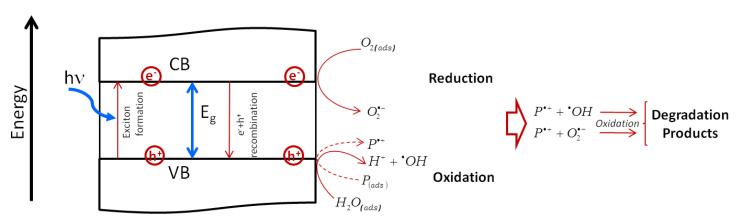
“The main redox reactions are summarized by Horikoshi and Malato [250,251] as follows: e− + O2 → O−·2 O−·2 (ads) + H + → HO·2(ads) h+ + H2O→ ·OH(ads) + H+ h+ + O−·2 (ads)→ 2O·(ads) h+ + P→ P·+ (14) Then, oxygen and pollutant radicals further react to give oxidation of organic products.”
BackgroundHeberer, T. (2002) · Toxicology Letters · doi:10.1016/s0378-4274(02)00041-3 · Cited by 2,995
Research works printed but not linked: 10
- Stafe M. Negutu C. Puscas N.N. Popescu I. Pulsed laser ablation of solids Rom. Rep. Phys. 2010 62 758 770
- Nedialkov N.N. Atanasov P.A. Sawczak M. Sliwinski G. Ablation of ceramics with ultraviolet, visible, and infrared nanosecond laser pulses Proceedings of the XIV International Symposium on Gas Flow, Chemical Lasers, and High-Power Lasers Wrocław, Poland 25–30 August 2002 703 709
- Al-Haddad R.M.S. Hamid M.K. Jumaa T. Electric field effect on the synthesis of nanogold particles by PLAL Int. J. Chem. Nat. Sci. 2015 3 269 274
- Santoro M. Fazio E. Trusso S. Ossi P.M. Tommasini M. Neri F. Rhodium nanoparticles synthesized by nanosecond and picosecond Pulsed Laser Ablation in Liquid. GISR2016 Proceedings of the Italian Meeting on Raman Spectroscopy and Non Linear Optic Effects Padova, Italy 14–16 September 2016
- Santoro M. Bertoncini A. Fazio E. Tommasini M. Neri F. Ossi P.M. Trusso S. Nanostructured Rhodium Thin Films Deposited by Pulsed Laser Deposition for SERS Detection. CNS2018—4° Proceedings of the Congresso Nazionale Sensori Catania, Italy 21–23 February 2018
- Eibner A. Action of Light on Pigments Chem. Ztg. 1911 35 753 775
- Keidel E. The Fading of Aniline Dyes in the Presence of Titanium White Farben Ztg. 1929 34 1242 1243
- Osugi M. Aoki S. On the photoxidation of ammonium compounds in solution and soil Jpn. J. Soil Manure. 1936 10 11 24
- Frenkel J. On the Absorption of Light and the Trapping of Electrons and Positive Holes in Crystalline Dielectrics Phys. Zs. Sowjetunion. 1936 9 158 186
- Negrea P. Sidea F. Negrea A. Lupa L. Ciopec M. Muntean C. Stuies regarding the Benzene, Toluene and o-Xylene Removal from Waste Water Politeh. Univ. 2008 53 1 2
Cited by
Fazio, E., Spadaro, S., Corsaro, C., Neri, G., Leonardi, S. G., Neri, F., Lavanya, N., Sekar, C., Donato, N., & Neri, G. (2021) · Sensors · doi:10.3390/s21072494 · Cited by 274
Self-citationZoubi, W. A., Putri, R. A. K., Abukhadra, M. R., & Ko, Y. G. (2023) · Nano Energy · doi:10.1016/j.nanoen.2023.108362 · Cited by 142
Yogesh, G. K., Shukla, S., Sastikumar, D., & Koinkar, P. (2021) · Applied Physics A · doi:10.1007/s00339-021-04951-6 · Cited by 149
Khairani, I. Y., Mínguez-Vega, G., Doñate-Buendía, C., & Gökce, B. (2023) · Physical Chemistry Chemical Physics · doi:10.1039/d3cp01214j · Cited by 130
Self-citationSynergistic antibacterial mechanism of silver-copper bimetallic nanoparticles
Hao, Z., Wang, M., Cheng, L., Si, M., Feng, Z., & Feng, Z. (2024) · Frontiers in Bioengineering and Biotechnology · doi:10.3389/fbioe.2023.1337543 · Cited by 156
“Compared to several prevalent manufacturing techniques, PLAL offers faster production of BNPs and effective control over the size distribution, yield, and shape of nanoparticles (Fazio et al., 2020; Nyabadza et al., 2023).”
MethodGreen synthesis of CuO nanoparticles for biological applications
Murugan, B., Rahman, M. Z., Fatimah, I., Lett, J. A., Annaraj, J., Kaus, N. H. M., Al-Anber, M. A., & Sagadevan, S. (2023) · Inorganic Chemistry Communications · doi:10.1016/j.inoche.2023.111088 · Cited by 114
Theerthagiri, J., Karuppasamy, K., Min, A., Govindarajan, D., Kumari, M. L. A., Govarthanan, M., Kheawhom, S., Kim, H., & Choi, M. Y. (2022) · Applied Physics Reviews · doi:10.1063/5.0104740 · Cited by 106
Abidin, M. Z. U., Ikram, M., Moeen, S., Nazir, G., Kanoun, M. B., & Goumri‐Said, S. (2024) · Coordination Chemistry Reviews · doi:10.1016/j.ccr.2024.216158 · Cited by 138
Fabrication of ZnO-Ag bimetallic nanoparticles by laser ablation for anticancer activity
Elsayed, K. A., Alomari, M., Drmosh, Q. A., et al. (2021) · Alexandria Engineering Journal · doi:10.1016/j.aej.2021.06.051 · Cited by 91
Subhan, A., Mourad, A.-H. I., & Al-Douri, Y. (2022) · Nanomaterials · doi:10.3390/nano12132144 · Cited by 95
“[33] focused on laser-synthesised NPs for selected applications (i.”
BackgroundLaser Micro/Nano‐Structuring Pushes Forward Smart Sensing: Opportunities and Challenges
Zhang, Y., Wang, X., Yan, K. Q., Zhu, H. F., Wang, B., & Zou, B. (2022) · Advanced Functional Materials · doi:10.1002/adfm.202211272 · Cited by 95
Al-Obaidy, R., Haider, A. J., Al-Musawi, S., & Arsad, N. (2023) · Scientific Reports · doi:10.1038/s41598-023-30221-x · Cited by 90
A Review of Bimetallic and Monometallic Nanoparticle Synthesis via Laser Ablation in Liquid
Nyabadza, A., Vázquez, M., & Brabazon, D. (2023) · Crystals · doi:10.3390/cryst13020253 · Cited by 89
Alhujaily, M. M., Jabir, M. S., Nayef, U. M., Rashid, T. M., Sulaiman, G. M., Khalil, K., Rahmah, M. I., Najm, M. A. A., Jabbar, R., & Jawad, S. F. (2023) · Metals · doi:10.3390/met13040735 · Cited by 76
Radičić, R., Maletić, D., Blažeka, D., Car, J., & Krstulović, N. (2022) · Nanomaterials · doi:10.3390/nano12193484 · Cited by 70
“Produced nanoparticles have high purity (ligand-free), and their size and shape depend on the ablation parameters (laser wavelength and fluence, repetition rate, ablation time, and liquid environment) [34].”
BackgroundFabrication of aerosol-based nanoparticles and their applications in biomedical fields
Gautam, M., Kim, J. O., & Yong, C. S. (2021) · Journal of Pharmaceutical Investigation · doi:10.1007/s40005-021-00523-1 · Cited by 70
Fu, B., Sun, J., Cheng, Y., Ouyang, H., Compagnini, G., Yin, P., Wei, S., Li, S., Li, D., Scardaci, V., et al. (2021) · Advanced Functional Materials · doi:10.1002/adfm.202107363 · Cited by 65
Self-citationDemishkevich, E. A., Юрьевич, З. А., Seteikin, A., Samusev, I., Park, I., Hwangbo, C. K., Choi, E. H., & Lee, G. J. (2023) · Materials · doi:10.3390/ma16093342 · Cited by 67
Martínez-Chávez, L. A., Hernández-Ramírez, M. Y., Feregrino‐Pérez, A. A., & Esquivel, K. (2024) · Agronomy · doi:10.3390/agronomy14122822 · Cited by 65
Attallah, A. H., Abdulwahid, F. S., Ali, Y. A., & Haider, A. J. (2023) · Plasmonics · doi:10.1007/s11468-023-01852-7 · Cited by 73
“On the other hand, a low productive ablation system exists when the laser fluence is very low [44, 103, 104].”
BackgroundPulsed laser 3D-micro/nanostructuring of materials for electrochemical energy storage and conversion
Li, Z., Wei, X., & Yang, Z. (2022) · Progress in Materials Science · doi:10.1016/j.pmatsci.2022.101052 · Cited by 52
Generation of nanomaterials by reactive laser-synthesis in liquid
Batista, L. M. F., Nag, A., Meader, V. K., & Tibbetts, K. M. (2022) · Science China Physics Mechanics and Astronomy · doi:10.1007/s11433-021-1835-x · Cited by 51
Wireless Battery-free and Fully Implantable Organ Interfaces
Bhatia, A., Hanna, J., Stuart, T., Kasper, K. A., Clausen, D. M., & Gutruf, P. (2024) · Chemical Reviews · doi:10.1021/acs.chemrev.3c00425 · Cited by 54
Ishikawa, Y., Tsuji, T., Sakaki, S., & Koshizaki, N. (2022) · Progress in Materials Science · doi:10.1016/j.pmatsci.2022.101004 · Cited by 56
Chemin, A., Fawaz, M. W., & Amans, D. (2021) · Applied Surface Science · doi:10.1016/j.apsusc.2021.151592 · Cited by 50
Rapid synthesis of metastable materials for electrocatalysis
Chen, Q., Xi, Z., Xu, Z., Ning, M., Yu, H., Sun, Y., Wang, D., Alnaser, A. S., Jin, H., & Cheng, H. (2025) · Chemical Society Reviews · doi:10.1039/d5cs00090d · Cited by 52
Graphene Nanostructures by Pulsed Laser Ablation in Liquids: A Review
Altuwirqi, R. M. (2022) · Materials · doi:10.3390/ma15175925 · Cited by 49
Synthesis of low dimensional nanomaterials by pulsed laser ablation in liquid
Ye, F., & Musselman, K. P. (2024) · APL Materials · doi:10.1063/5.0199104 · Cited by 45
Spellauge, M., Tack, M., Streubel, R., Miertz, M., Exner, K. S., Reichenberger, S., Barcikowski, S., Huber, H. P., & Ziefuß, A. R. (2023) · Small · doi:10.1002/smll.202206485 · Cited by 50
Hammad, Q. K., Ayyash, A. N., & Mutlak, F. A.-H. (2022) · Journal of Optics · doi:10.1007/s12596-022-00971-4 · Cited by 39
Pérez‐Tanoira, R., Fernández‐Arias, M., Potel, C., Carballo, R., Pérez‐Castro, S., Boutinguiza, M., Górgolas, M., Lusquiños, F., & Pou, J. (2022) · International Journal of Molecular Sciences · doi:10.3390/ijms231912027 · Cited by 46
“This method also allows the size and shape of the nanoparticles to be controlled by fine-tuning the processing parameters [58].”
BackgroundMethodMangababu, A., Goud, R. S. P., Byram, C., Rathod, J., Banerjee, D., Soma, V. R., & Rao, S. V. (2022) · Applied Surface Science · doi:10.1016/j.apsusc.2022.152802 · Cited by 38
Laser ablation in liquids: A versatile technique for nanoparticle generation
Shaheen, M. E., & Abdelwahab, A. Y. E. (2025) · Optics & Laser Technology · doi:10.1016/j.optlastec.2025.112705 · Cited by 45
Ondieki, A. M., Birech, Z., Kaduki, K. A., Mwangi, P. W., Mwenze, N. M., Juma, M. W., Jeptoo, C., Dlamini, M. S., & Mâaza, M. (2023) · Spectrochimica Acta Part A Molecular and Biomolecular Spectroscopy · doi:10.1016/j.saa.2023.122694 · Cited by 39
“Among these methods, laser ablation in liquids has gained popularity due to its ease of use, capacity to produce chemically stable NPs without contamination, and a higher degree of control over the density and size of particles [5,7].”
BackgroundCortes, F. R., Falomir, E., Doñate‐Buendía, C., & Mínguez-Vega, G. (2025) · The Journal of Physical Chemistry C · doi:10.1021/acs.jpcc.5c01343 · Cited by 38
Pulsed laser ablation in liquids: Fundamentals, solvent effects, and nonequilibrium nanostructures
Muthusamy, K., Theerthagiri, J., & Choi, M. Y. (2026) · Bulletin of the Korean Chemical Society · doi:10.1002/bkcs.70102 · Cited by 56
Acharya, T. R., Jang, M., Lee, G. J., et al. (2023) · Current Applied Physics · doi:10.1016/j.cap.2023.09.003 · Cited by 34
Nyabadza, A., Vázquez, M., Coyle, S. M., Fitzpatrick, B., & Brabazon, D. (2021) · Applied Sciences · doi:10.3390/app112210974 · Cited by 39
Wehbe, N., Mesmar, J. E., Kurdi, R. E., et al. (2025) · Scientific Reports · doi:10.1038/s41598-024-81875-0 · Cited by 33
Nyabadza, A., Vázquez, M., Fitzpatrick, B., & Brabazon, D. (2021) · Colloids and Surfaces A Physicochemical and Engineering Aspects · doi:10.1016/j.colsurfa.2021.128151 · Cited by 33
Surface plasmon resonance of gold nanoparticle aggregates induced by halide ions
Catanzaro, L., Scardaci, V., Scuderi, M., Condorelli, M., D’Urso, L., & Compagnini, G. (2023) · Materials Chemistry and Physics · doi:10.1016/j.matchemphys.2023.128245 · Cited by 35
Self-citationPalladium Nanoparticles Synthesized by Laser Ablation in Liquids for Antimicrobial Applications
Fernández‐Arias, M., Vilas, A. M., Boutinguiza, M., Rius, D. R., Arias-González, F., Pou‐Álvarez, P., Riveiro, A., Gil, J., & Pou, J. (2022) · Nanomaterials · doi:10.3390/nano12152621 · Cited by 37
“This regime depends on the laser parameters and the target features, but the specific properties of the solvent are decisive in the process [31,52].”
BackgroundMethodMercedi, A., Cardoni, F., Toffanello, F., Reguera, J., Meneghetti, M., & Litti, L. (2025) · Journal of Raman Spectroscopy · doi:10.1002/jrs.6776 · Cited by 35
Self-citationComparison between laser induced plasmas in gas and in liquid
Dell’Aglio, M., Gardette, V., Jantzi, S. C., & Giacomo, A. D. (2021) · Journal of Applied Physics · doi:10.1063/5.0039625 · Cited by 32
Self-citationAlhajj, M., Aziz, M. S. A., Al-Shammari, A. A. S., Sharma, S., Kamaruddin, W. H. A., & Ghoshal, S. K. (2022) · Applied Surface Science · doi:10.1016/j.apsusc.2022.156176 · Cited by 32
Tahir, S., Shkodich, N. F., Eggert, B., Lill, J., Gatsa, O., Flimelová, M., Adabifiroozjaei, E., Bulgakova, N. M., Molina‐Luna, L., Wende, H., et al. (2024) · ChemNanoMat · doi:10.1002/cnma.202400064 · Cited by 36
Self-citationPulsed Laser Deposition of Carbon-Based Materials: A Focused Review of Methods and Results
Gaudiuso, R. (2023) · Processes · doi:10.3390/pr11082373 · Cited by 30
Mohamed, M. J. S., Gondal, M. A., Hassan, M., Khan, A. Z., Surrati, A. M. I., & Almessiere, M. A. (2022) · Chemical Engineering Journal Advances · doi:10.1016/j.ceja.2022.100344 · Cited by 30
Dittrich, S., Spellauge, M., Barcikowski, S., Huber, H. P., & Gökce, B. (2022) · Opto-Electronic Advances · doi:10.29026/oea.2022.210053 · Cited by 36
Self-citationIndhur, R., Amoah, I. D., Bux, F., & Kumari, S. (2023) · ACS ES&T Water · doi:10.1021/acsestwater.3c00203 · Cited by 34
Alhajj, M., & Ghoshal, S. K. (2024) · Journal of Molecular Liquids · doi:10.1016/j.molliq.2024.126130 · Cited by 35
Jing, H. H., Adnan, M., Patel, M. B., & Sasidharan, S. (2025) · Microchimica Acta · doi:10.1007/s00604-025-07683-z · Cited by 40
Synthesis of Al2O3 Nanoparticles via Laser Ablation for Photodetectors Application
Rasheed, S. A., Nayef, U. M., & Muayad, M. W. (2025) · Plasmonics · doi:10.1007/s11468-025-02898-5 · Cited by 31
Alharbi, A. M., Ahmed, N. M., Rahman, A. A., Azman, N. Z. N., Algburi, S. S., Wadi, I. A., Binzowaimil, A. M., Aldaghri, O. A., & Ibnaouf, K. H. (2024) · Photonics and Nanostructures - Fundamentals and Applications · doi:10.1016/j.photonics.2024.101228 · Cited by 29
Efficient photo-thermal conversion using Pt nanofluid prepared by laser ablation in liquid
Seifikar, F., Azizian, S., Eslamipanah, M., & Jaleh, B. (2022) · Solar Energy Materials and Solar Cells · doi:10.1016/j.solmat.2022.111581 · Cited by 27
EL-Gendy, A. O., Obaid, Y., Ahmed, E., Enwemeka, C. S., Hassan, M., & Mohamed, T. A. (2022) · Nanomaterials · doi:10.3390/nano12213757 · Cited by 28
“These properties make LAL an exciting research topic for many applications [35].”
BackgroundInfluentialGold nanoparticles coated LIPSS on GaAs for trace detection of RDX and Tetryl
Akkanaboina, M., Banerjee, D., Kumar, K. R., et al. (2022) · Surfaces and Interfaces · doi:10.1016/j.surfin.2022.102563 · Cited by 24
Ma, H., Cui, Q., Xu, L., Tian, Y., Jiao, A., Wang, C., Zhang, M., Li, S., & Chen, M. (2021) · Optics Express · doi:10.1364/oe.435568 · Cited by 23
Laser-fabricated Metal Oxide Core–shell Nanoparticles for Biomedical Applications: a Mini Review
Talib, S. M., Haider, A. J., Al-Musawi, S., Joudi, F. S. A., & Ahmed, S. A. (2025) · Plasmonics · doi:10.1007/s11468-024-02469-0 · Cited by 30
Recent advances in molecular dynamics of metal laser-processed nanoparticles: A review
Ming, W., Hu, S., Xie, Z., Zhang, F., Zhang, G., Guo, X., & Huang, H. (2024) · Optics & Laser Technology · doi:10.1016/j.optlastec.2024.110618 · Cited by 23
Sohail, M., Wang, M., Shareef, M., & Yan, P. (2024) · Infrared Physics & Technology · doi:10.1016/j.infrared.2024.105127 · Cited by 28
Takeda, E., Xu, W. G., Terakawa, M., & Niidome, T. (2022) · ACS Omega · doi:10.1021/acsomega.1c07058 · Cited by 22
Hesabizadeh, T., Sung, K., Park, M., Foley, S. L., Paredes, A. M., Blissett, S., & Guisbiers, G. (2023) · Nanomaterials · doi:10.3390/nano13152206 · Cited by 31
“The novelty of this work is to synthesize antibacterial CuO/Cu2O NPs, by using a synthesis protocol called “pulsed laser ablation in liquids” (PLAL) [21,22], and test them against foodborne pathogens.”
MethodInfluentialEskandari, M. J., Araghchi, M., & Daneshmand, H. (2022) · Optics & Laser Technology · doi:10.1016/j.optlastec.2022.108420 · Cited by 22
Haider, A. J., Al-Musawi, S., Alnayli, R. S., Al-Obaidy, R., Addie, A. J., Abbas, S. F., Taha, B. A., Abdulwahid, F. S., Al-Hindawi, M. S., Kadhim, F. J., et al. (2025) · BioNanoScience · doi:10.1007/s12668-025-02144-6 · Cited by 25
“These targeted nano-delivery devices work much better than their non-targeted equivalents and result in greater cytotoxicity to tumor cells and fewer side effects [35, 64, 70, 118].”
Ricci, S., Buonomo, M., Casalini, S., Bonacchi, S., Meneghetti, M., & Litti, L. (2023) · Nanoscale Advances · doi:10.1039/d2na00917j · Cited by 21
Self-citationTarasenka, N. N., Shustava, E., Butsen, A. V., Kuchmizhak, A. A., Pashayan, S. T., Kulinich, S. A., & Тарасенко, Н. В. (2021) · Applied Surface Science · doi:10.1016/j.apsusc.2021.149570 · Cited by 21
Gold-based catalysts prepared by pulsed laser ablation: A review of recent advances
Goncharova, D. A., Salaev, M. A., Volokitina, A., Magaev, O. V., Светличный, В. А., & Vodyankina, O. V. (2023) · Materials Today Chemistry · doi:10.1016/j.mtchem.2023.101709 · Cited by 22
Aman, A. W., Krishnan, G., Sadiqi, M. A., Alhajj, M., & Hidayat, N. (2025) · Discover Nano · doi:10.1186/s11671-025-04197-8 · Cited by 22
“The structure, composition, size, and morphology of NPs synthesized by PLAL method, depend upon the laser parameters such as laser wavelength, pulse length, repetition rate, and the liquid environment [27–29].”
Xiao, W., Cai, S., Wu, T., Fu, Z., Liu, X., Wang, C., Zhang, W., & Yang, R. (2022) · Journal of Colloid and Interface Science · doi:10.1016/j.jcis.2022.12.151 · Cited by 21
Sreekala, A. P., Nair, P. R., Kadavath, J. K., Krishnan, B., Avellaneda, D. A., Anantharaman, M. R., & Shaji, S. (2025) · Beilstein Journal of Nanotechnology · doi:10.3762/bjnano.16.104 · Cited by 25
Car, J., & Krstulović, N. (2022) · Nanomaterials · doi:10.3390/nano12193302 · Cited by 23
“Pulsed laser ablation in liquids (PLAL) is a versatile physical technique that uses laser radiation to evaporate different materials immersed in liquids in order to get nanoparticles in the relevant size range up to 100 nm [1].”
MethodTuning SERS performance through the laser-induced morphology changes of gold nanostructures
Vilkevičius, K., Ignatjev, I., Selskis, A., et al. (2024) · Applied Surface Science · doi:10.1016/j.apsusc.2024.160003 · Cited by 19
Attallah, A. H., Abdulwahid, F. S., Abdulrahman, H. J., Haider, A. J., & Ali, Y. A. (2024) · Plasmonics · doi:10.1007/s11468-024-02383-5 · Cited by 28
“7 [75].”
Laser Generation of AlCrCuFeNi High-Entropy Alloy Nanocolloids
Rawat, R., Blanchard, N., Shadangi, Y., Tripathi, A., & Amans, D. (2024) · The Journal of Physical Chemistry C · doi:10.1021/acs.jpcc.4c04574 · Cited by 21
Haro‐Poniatowski, E., Escobar-Alarcón, L., Hernández‐Pozos, J. L., Mendoza‐Luna, L. G., & Guarín, C. A. (2022) · Applied Physics A · doi:10.1007/s00339-022-05956-5 · Cited by 18
Boron nitride nanosheets, quantum dots, and dots: Synthesis, properties, and biomedical applications
Dubey, R., Cowles, M., Salimi, Z., Liu, X., Oakley, R., Yapici, N., Uddin, J., Zhang, D., & Yap, Y. K. (2025) · APL Materials · doi:10.1063/5.0255590 · Cited by 18
Enhancing the Antibacterial Properties of Chitosan Coatings: Ag@Chitosan and Chitosan from Insects
Marsico, M., Azari, R., Curcio, M., Teghil, R., Triunfo, M., Falabella, P., Boccaccini, A. R., & Bonis, A. D. (2024) · Coatings · doi:10.3390/coatings14080925 · Cited by 19
Silver nanoplates paved PMMA cuvettes as a cheap and re-usable plasmonic sensing device
Condorelli, M., Litti, L., Pulvirenti, M., Scardaci, V., Meneghetti, M., & Compagnini, G. (2021) · Applied Surface Science · doi:10.1016/j.apsusc.2021.150701 · Cited by 16
Self-citationSubedi, R., & Guisbiers, G. (2024) · ACS Omega · doi:10.1021/acsomega.3c10497 · Cited by 17
Laser-induced plasma formation and cavitation in water: from nanoeffects to extreme states of matter
Linz, N., Freidank, S., Liang, X., & Vogel, A. (2025) · Reports on Progress in Physics · doi:10.1088/1361-6633/adedb3 · Cited by 31
Synthesis of silver nanoparticles using pulsed laser ablation in liquid: a review
Ganash, E. A. (2022) · Laser Physics Letters · doi:10.1088/1612-202x/acab57 · Cited by 21
Rahman, A., & Guisbiers, G. (2024) · Metals · doi:10.3390/met14020224 · Cited by 21
Laser processing materials for photo-to-thermal applications
Tan, P., Wang, C., Wei, D., Wang, F., Zhao, Z., & Zhang, W. (2024) · Advances in Colloid and Interface Science · doi:10.1016/j.cis.2024.103382 · Cited by 16
Ganash, E. A., & Altuwirqi, R. M. (2021) · Materials · doi:10.3390/ma14092326 · Cited by 15
“Recently, researchers have shown increasing interest in using the PLAL method [1].”
BackgroundAhmed, A. M., Halim, M. M., Ahmed, N. M., Rashid, M., & Taha, B. A. (2025) · physica status solidi (a) · doi:10.1002/pssa.202500382 · Cited by 20
Lanza, G., Betancourth, D., Avila, A. G., Riascos, H., & Pérez, J. (2024) · Kuwait Journal of Science · doi:10.1016/j.kjs.2024.100294 · Cited by 22
Saddique, Z., Imran, M., Javaid, A., Latif, S., Kim, T. H., Janczarek, M., Bilal, M., & Jesionowski, T. (2023) · Environmental Research · doi:10.1016/j.envres.2023.115861 · Cited by 15
Hadi, A. J., Awad, A. T., Nayef, U. M., et al. (2026) · Silicon · doi:10.1007/s12633-025-03600-4 · Cited by 14
Nyabadza, A., Vázquez, M., & Brabazon, D. (2022) · Solid State Sciences · doi:10.1016/j.solidstatesciences.2022.107003 · Cited by 16
Chiu, C.-H., Chen, Y., & Shen, J. (2023) · Nanotechnology · doi:10.1088/1361-6528/acf29c · Cited by 15
Review of ultrafast laser ablation for sensing and photonic applications
Byram, C., Moram, S. S. B., Banerjee, D., Beeram, R., Rathod, J., & Rao, S. V. (2023) · Journal of Optics · doi:10.1088/2040-8986/acbc31 · Cited by 17
Nyabadza, A., Vázquez, M., & Brabazon, D. (2022) · Colloids and Surfaces A Physicochemical and Engineering Aspects · doi:10.1016/j.colsurfa.2022.129651 · Cited by 15
Wood-Sourced Polymers as Support for Catalysis by Group 10 Transition Metals
Negui, M., Zhang, Z., Foucher, C., et al. (2022) · Processes · doi:10.3390/pr10020345 · Cited by 13
Lazăr, O. A., Nikolov, A. S., Moise, C. C., State, S., Prodana, M., & Enăchescu, M. (2022) · Applied Surface Science · doi:10.1016/j.apsusc.2022.155289 · Cited by 13
Lucero‐Prisno, D. E., Okesanya, O. J., Agboola, A. O., Adebayo, U. O., Adigun, O. A., Ahmed, M. M., Olaleke, N. O., Oso, T. A., Tan, M. I. R. S., Ogaya, J. B., et al. (2025) · Next Bioengineering · doi:10.1016/j.nxbio.2025.100003 · Cited by 23
Park, C., & Park, D.-J. (2021) · Biosensors · doi:10.3390/bios11050150 · Cited by 14
“The intrinsic properties of NPs, possibly controlling particle size and combined with other materials by the LP–PLA method have been reported in far-reaching applications, ranging from material science to vectors for drug and gene delivery [25].”
BackgroundMikoliūnaitė, L., Stankevičius, E., Adomavičiũtė-Grabusovė, S., Petrikaitė, V., Trusovas, R., Talaikis, M., Skapas, M., Zdaniauskienė, A., Selskis, A., Šablinskas, V., et al. (2023) · Coatings · doi:10.3390/coatings13091523 · Cited by 15
Emerging synthesis and characterization techniques for hybrid polymer nanocomposites
Sarma, S., & Rao, V. R. (2023) · Nanotechnology · doi:10.1088/1361-6528/acfef8 · Cited by 12
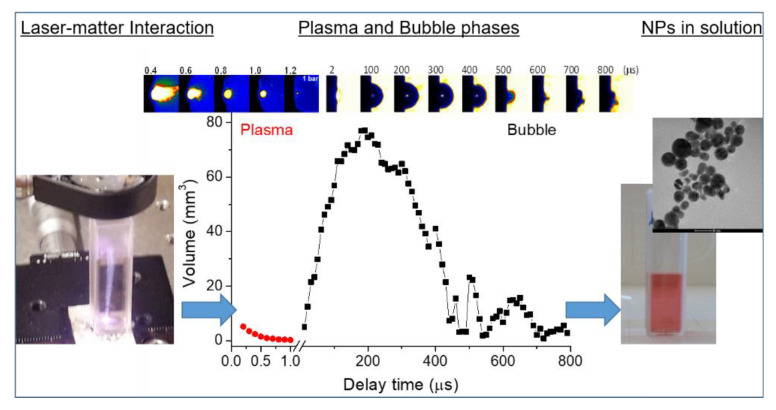
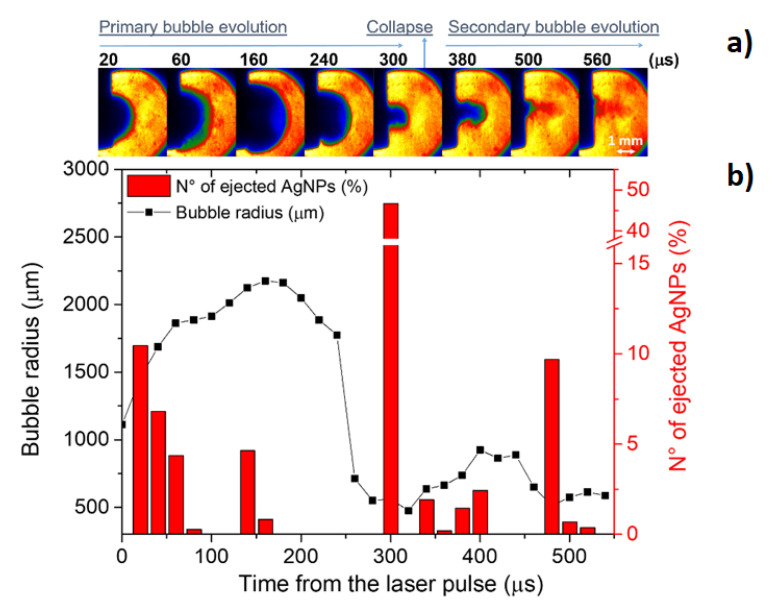
“The quick energy transfer induces a thin vapour layer around the plasma creating a cavitation bubble and as hydrodynamic instabilities progresses at the interface of liquid and plume it leads to the NP nucleation and growth [16].”
Formation of Fe-Ni Nanoparticle Strands in Macroscopic Polymer Composites: Experiment and Simulation
Nadarajah, R., Tasdemir, L., Thiel, C., Salamon, S., Semisalova, A. S., Wende, H., Farle, M., Barcikowski, S., Erni, D., & Gökce, B. (2021) · Nanomaterials · doi:10.3390/nano11082095 · Cited by 13
Self-citation
Metadata
- Authors
- Fazio, E., Gökce, B., De Giacomo, A., Meneghetti, M., Compagnini, G., Tommasini, M., Waag, F., Lucotti, A., Zanchi, C. G., Ossi, P. M., Dell’Aglio, M., D’Urso, L., Condorelli, M., Scardaci, V., Biscaglia, F., Litti, L., Gobbo, M., Gallo, G., Santoro, M., Trusso, S., & Neri, F.
- Affiliations
- University of Messina (IT)
- University of Duisburg-Essen (DE)
- Department of Chemistry, University of Bari, Via Orabona 4, 70126 Bari, Italy
- University of Padua (IT)
- University of Catania (IT)
- Politecnico di Milano (IT)
- Istituto di Nanotecnologia (IT)
- STMicroelectronics (Italy) (IT)
- Institute for Chemical and Physical Processes (IT)
- Corresponding author
- Fazio, Enza
- ORCID
- Fazio, Enza
- Gökce, Bilal
- De Giacomo, Alessandro
- Meneghetti, Moreno
- Compagnini, Giuseppe
- Tommasini, Matteo
- Waag, Friedrich
- Lucotti, Andrea
- Zanchi, Chiara Giuseppina
- Ossi, Paolo Maria
- Dell’Aglio, Marcella
- D’Urso, Luisa
- Condorelli, Marcello
- Scardaci, Vittorio
- Litti, Lucio
- Gobbo, Marina
- Gallo, Giovanni
- Trusso, Sebastiano
- Neri, Fortunato
- Venue
- Nanomaterials
- Publisher
- MDPI AG
- Published
- 2020-11-23
- Volume
- 10
- Issue
- 11
- Pages
- 2317
- ISSN
- 2079-4991 (ISSN-L)
- PMC
- PMC7700616
- OpenAlex
- W3108657096
- Cited by
- 346
- References
- 288
- Citations by year
- 2026: 62 · 2025: 83 · 2024: 65 · 2023: 66 · 2022: 45 · 2021: 24
- FWCI
- 2.82
- Type
- journal article
- Language
- en
- Open access
- gold
- doi.org
- Licence
- Locations
- Nanomaterials (publishedVersion, cc-by)
- PubMed Central (publishedVersion, cc-by)
- PubMed (publishedVersion)
- Virtual Community of Pathological Anatomy (University of Castilla La Mancha) (submittedVersion, other-oa)
- DOAJ (DOAJ: Directory of Open Access Journals) (submittedVersion, cc-by-sa)
- CINECA IRIS Institutional Research Information System (University of Bari Aldo Moro) (submittedVersion)
- Padua Research Archive (University of Padova) (submittedVersion, cc-by)
- Funders
- Università degli Studi di Padova (04SID2016, 08SID2017)
- Topics
- Physical Sciences › Materials Science › Materials Chemistry › Laser-Ablation Synthesis of Nanoparticles
- Physical Sciences › Physics and Astronomy › Acoustics and Ultrasonics › Ultrasound and Cavitation Phenomena
- Physical Sciences › Materials Science › Electronic, Optical and Magnetic Materials › Gold and Silver Nanoparticles Synthesis and Applications
- Keywords
- pulsed laser ablation in liquid, laser synthesis, ligand-free nanoparticles, nanocolloids, functionalized nanomaterials, scalable nanoparticle synthesis, biomedical applications, catalysis, sensing, energy applications, environmental applications
About these checks
Registry, retraction, Cites and statistics results are computed, not judged, with one exception: a printed reference that no index lists is read once by a model before it counts as a citation error. Claims are extracted by a model and kept only when their quote appears verbatim in the text; each cited source is then checked, with a model’s help, for whether it says what the claim relies on. Those verdicts can be wrong — read the claim’s quote and the cited source before relying on one.
The claim verdicts this report counts are experimental: their accuracy is not yet measured.
A language model drew the claims from the paper on 2026-10-10, under version 3 of the claim definition (model deepseek-v4.1-flash, prompt extract-v3).
A second model labelled each claim on 2026-10-10 (model jev-1.13-20260917, definition revision gold-guideline-v0.2).
Cited sources are checked with a language model’s help (gpt-6-sol and qwen3.8-omni-flash).
Statistics and arithmetic are recomputed, not judged.
Confidence bands are shown only for fields calibrated on our annotated test set. None is calibrated yet, so no band is shown.
What counts as a claim ›How we measure confidence ›How we check this ›
Are you an author, or do you see a problem with this page? Request a review
Data sources
Bibliographic data: Semantic Scholar, OpenAlex, Crossref.
Contains information from the Semantic Scholar Academic Graph Datasets, made available under the ODC Attribution License (ODC-BY 1.0).
Semantic Scholar’s data is described in: Kinney, R., et al. (2023). The Semantic Scholar Open Data Platform. arXiv:2301.10140.
