

The DOI matches its Crossref record; 123 of the 123 references it cites were found in a registry or an index.
The Pharmacokinetics of Vitamin C
Open accessAbstract
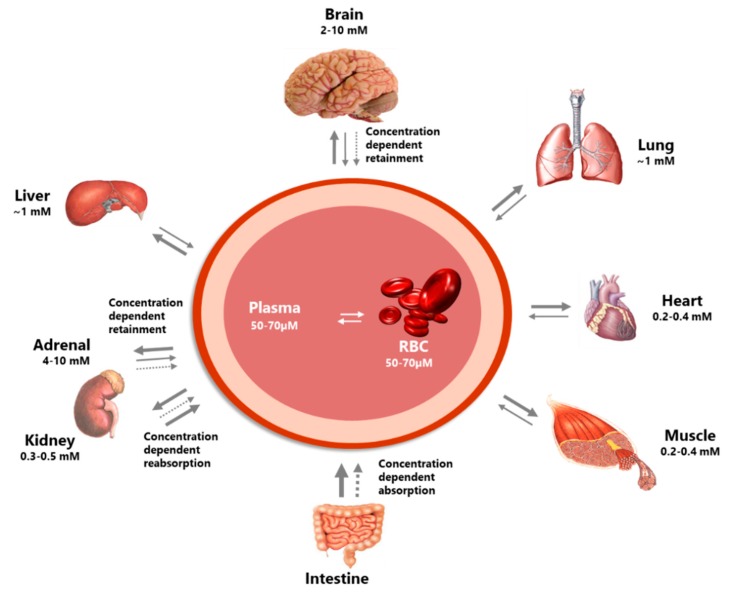
The pharmacokinetics of vitamin C (vitC) is indeed complex. Regulated primarily by a family of saturable sodium dependent vitC transporters (SVCTs), the absorption and elimination are highly dose-dependent. Moreover, the tissue specific expression levels and subtypes of these SVCTs result in a compartmentalized distribution pattern with a diverse range of organ concentrations of vitC at homeostasis ranging from about 0.2 mM in the muscle and heart, and up to 10 mM in the brain and adrenal gland. The homeostasis of vitC is influenced by several factors, including genetic polymorphisms and environmental and lifestyle factors such as smoking and diet, as well as diseases. Going from physiological to pharmacological doses, vitC pharmacokinetics change from zero to first order, rendering the precise calculation of dosing regimens in, for example, cancer and sepsis treatment possible. Unfortunately, the complex pharmacokinetics of vitC has often been overlooked in the design of intervention studies, giving rise to misinterpretations and erroneous conclusions. The present review outlines the diverse aspects of vitC pharmacokinetics and examines how they affect vitC homeostasis under a variety of conditions.
Overview
The claims and statistics of this paper haven’t been checked yet.
Run the check — free, no account needed. It reads the open-access text and checks the sources it cites.
Integrity signals
Registry
Cites
Statistics
Figures
Verification
Claims the paper makes
The claims and statistics of this paper haven’t been checked yet.
Run the check — free, no account needed. It reads the open-access text and checks the sources it cites.
Claims other papers make about this one
Each is checked against this paper’s own text: does it say what the citing paper says it does?
The source backs part of the claim, not all of it — or backs it for a different population, condition or comparison.
In the citing paper
“Interestingly, most cells contain vitamin C in millimolar concentrations, which is much higher than its plasma concentrations, and compared to other vitamins.”
From Vitamin C-Sources, Physiological Role, Kinetics, Deficiency, Use, Toxicity, and Determination (2021) · cites this paper as [52]
Experimental — accuracy not yet measuredThe source backs part of the claim, not all of it — or backs it for a different population, condition or comparison.
In the citing paper
“This can be supported by the fact that its isomer, erythorbic acid, which is a poor substrate of SVCT1, reaches similar plasma concentrations as vitamin C [52].”
From Vitamin C-Sources, Physiological Role, Kinetics, Deficiency, Use, Toxicity, and Determination (2021) · cites this paper as [52]
Experimental — accuracy not yet measuredThe source backs part of the claim, not all of it — or backs it for a different population, condition or comparison.
In the citing paper
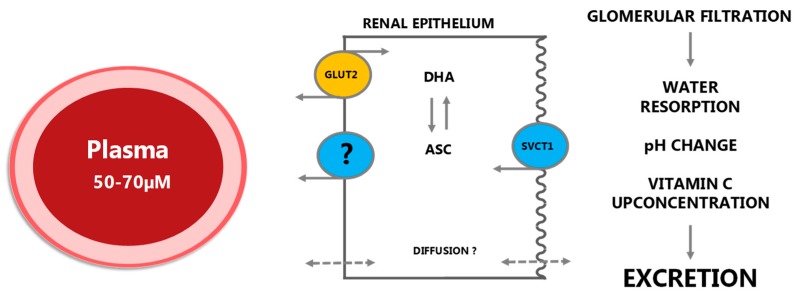
“Dehydroascorbic acid can be again transported through the basolateral membrane of these cells by glucose transporters [52].”
From Vitamin C-Sources, Physiological Role, Kinetics, Deficiency, Use, Toxicity, and Determination (2021) · cites this paper as [52]
Experimental — accuracy not yet measuredThe source backs part of the claim, not all of it — or backs it for a different population, condition or comparison.
In the citing paper
“Smoking decreases the plasma level of vitamin C on an average by 25–50% [52,61,63].”
From Vitamin C-Sources, Physiological Role, Kinetics, Deficiency, Use, Toxicity, and Determination (2021) · cites this paper as [52]
Experimental — accuracy not yet measuredThe source backs part of the claim, not all of it — or backs it for a different population, condition or comparison.
In the citing paper
“The Michaelis constant Km, i.e., the concentration of vitamin C transported by half of the maximal transport velocity, was reported to be in a wide range from 10 to 200 µM, suggesting a large capacity to absorb dietary vitamin C.”
From Vitamin C-Sources, Physiological Role, Kinetics, Deficiency, Use, Toxicity, and Determination (2021) · cites this paper as [52]
Experimental — accuracy not yet measured
The source backs part of the claim, not all of it — or backs it for a different population, condition or comparison.
In the citing paper
“The need for vitamin C in smokers is higher, but the available studies suggested different recommendations ranging from 35 to 200 mg of additional vitamin C/day needed for smokers [52].”
From Vitamin C-Sources, Physiological Role, Kinetics, Deficiency, Use, Toxicity, and Determination (2021) · cites this paper as [52]
Experimental — accuracy not yet measuredThe source backs part of the claim, not all of it — or backs it for a different population, condition or comparison.
In the citing paper
“Ex-smoking seems to slightly decrease the levels as well [52,60].”
From Vitamin C-Sources, Physiological Role, Kinetics, Deficiency, Use, Toxicity, and Determination (2021) · cites this paper as [52]
Experimental — accuracy not yet measuredThe source backs part of the claim, not all of it — or backs it for a different population, condition or comparison.
In the citing paper
“There are also reports that vitamin C can pass through the blood-brain barrier in the form of dehydroascorbic acid through the glucose transporter GLUT1 [52,53,73].”
From Vitamin C-Sources, Physiological Role, Kinetics, Deficiency, Use, Toxicity, and Determination (2021) · cites this paper as [52]
Experimental — accuracy not yet measuredThe source backs part of the claim, not all of it — or backs it for a different population, condition or comparison.
In the citing paper
“Vitamin C reaches a concentration between 0.5–5 mM in most cells with the exception of erythrocytes, which do not express SVCT2, and, hence, their cytosolic levels reflect plasma levels and are about 50 µM [52,55,68,71].”
From Vitamin C-Sources, Physiological Role, Kinetics, Deficiency, Use, Toxicity, and Determination (2021) · cites this paper as [52]
Experimental — accuracy not yet measuredThe source backs part of the claim, not all of it — or backs it for a different population, condition or comparison.
In the citing paper
“The elimination half-life of vitamin C is generally about 2 h [52].”
From Vitamin C-Sources, Physiological Role, Kinetics, Deficiency, Use, Toxicity, and Determination (2021) · cites this paper as [52]
Experimental — accuracy not yet measuredThe cited source says what the claim attributes to it.
In the citing paper
“The oxidized form of vitamin C, dehydroascorbic acid, is absorbed likely through glucose transporters, and glucose decreases absorption of dehydroascorbic acid.”
From Vitamin C-Sources, Physiological Role, Kinetics, Deficiency, Use, Toxicity, and Determination (2021) · cites this paper as [52]
The cited source says what the claim attributes to it.
In the citing paper
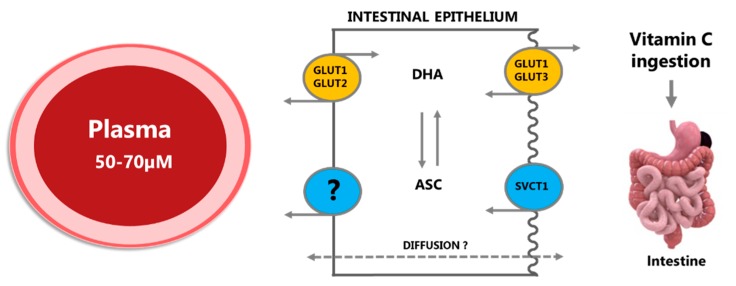
“Vitamin C is taken up by the cells via SVCT2 (SLC23A2, Figure 2C), which is a close analogue of SVCT1 with which it shares 65% sequence homology.”
From Vitamin C-Sources, Physiological Role, Kinetics, Deficiency, Use, Toxicity, and Determination (2021) · cites this paper as [52]
The cited source says what the claim attributes to it.
In the citing paper
“Erythrocytes are very active in mediating this reduction [6,52].”
From Vitamin C-Sources, Physiological Role, Kinetics, Deficiency, Use, Toxicity, and Determination (2021) · cites this paper as [52]
The cited source says what the claim attributes to it.
In the citing paper
“Since the pH of urine is also lower, passive diffusion was suggested but apparently plays a minor, if any, role at all [52,53].”
From Vitamin C-Sources, Physiological Role, Kinetics, Deficiency, Use, Toxicity, and Determination (2021) · cites this paper as [52]
The check wasn’t confident either way, so it gives no verdict — never disputed.
In the citing paper
“Its activity is highest at a neutral pH. It drops markedly with increasing acidity [51,52,53,54].”
From Vitamin C-Sources, Physiological Role, Kinetics, Deficiency, Use, Toxicity, and Determination (2021) · cites this paper as [52]
Experimental — accuracy not yet measuredThe check wasn’t confident either way, so it gives no verdict — never disputed.
In the citing paper
“In any case, the contribution of dehydroascorbic acid to the total vitamin C absorption is probably low [52].”
From Vitamin C-Sources, Physiological Role, Kinetics, Deficiency, Use, Toxicity, and Determination (2021) · cites this paper as [52]
Experimental — accuracy not yet measured
Self-check
Percentages, sums and reported differences re-computed from the paper’s own numbers.
The self-check needs the paper’s full text.
Citations
Cites
The Pecking Order of Free Radicals and Antioxidants: Lipid Peroxidation, α-Tocopherol, and Ascorbate
Buettner, G. R. (1993) · Archives of Biochemistry and Biophysics · doi:10.1006/abbi.1993.1074 · Cited by 2,417
Vitamin C pharmacokinetics in healthy volunteers: evidence for a recommended dietary allowance
Levine, M., Conry-Cantilena, C., Wang, Y., Welch, R. W., Washko, P. W., Dhariwal, K. R., Park, J. B., Lazarev, A., Graumlich, J. F., King, J., et al. (1996) · Proceedings of the National Academy of Sciences · doi:10.1073/pnas.93.8.3704 · Cited by 1,325
Oxidants in Cigarette Smoke Radicals, Hydrogen Peroxide, Peroxynitrate, and Peroxynitritea
Pryor, W. A., & Stone, K. (1993) · Annals of the New York Academy of Sciences · doi:10.1111/j.1749-6632.1993.tb39148.x · Cited by 1,179
Ascorbic acid: Chemistry, biology and the treatment of cancer
Du, J., Cullen, J. J., & Buettner, G. R. (2012) · Biochimica et Biophysica Acta (BBA) - Reviews on Cancer · doi:10.1016/j.bbcan.2012.06.003 · Cited by 1,106
Chen, Q., Espey, M. G., Krishna, M. C., Mitchell, J. B., Corpe, C. P., Buettner, G. R., Shacter, E., & Levine, M. (2005) · Proceedings of the National Academy of Sciences · doi:10.1073/pnas.0506390102 · Cited by 1,075
Vitamin C pharmacokinetics: Implications for oral and intravenous use
Padayatty, S. J., Sun, H., Wang, Y., Riordan, H. D., Hewitt, S. M., Katz, A., Wesley, R. A., & Levine, M. (2004) · Annals of Internal Medicine · doi:10.7326/0003-4819-140-7-200404060-00010 · Cited by 992
Does vitamin C act as a pro‐oxidant under physiological conditions?
Carr, A. C., & Frei, B. B. (1999) · The FASEB Journal · doi:10.1096/fasebj.13.9.1007 · Cited by 891
Hydrocortisone, Vitamin C, and Thiamine for the Treatment of Severe Sepsis and Septic Shock
Marik, P. E., Khangoora, V., Rivera, R., Hooper, M. H., & Catravas, J. (2017) · Chest · doi:10.1016/j.chest.2016.11.036 · Cited by 887
A family of mammalian Na+-dependent L-ascorbic acid transporters
Tsukaguchi, H., Tokui, T., Mackenzie, B., Berger, U. V., Chen, X.-Z., Wang, Y., Brubaker, R. F., & Hediger, M. A. (1999) · Nature · doi:10.1038/19986 · Cited by 882
Chen, Q., Espey, M. G., Sun, A. Y., Pooput, C., Kirk, K. L., Krishna, M. C., Khosh, D. B., Drisko, J., & Levine, M. (2008) · Proceedings of the National Academy of Sciences · doi:10.1073/pnas.0804226105 · Cited by 854
Research works printed but not linked: 2
- Food and Nutrition Board Staff, Panel on Dietary Antioxidants, and Institute of Medicine Staff (2000). Dietary Reference Intakes for Vitamin C, Vitamin E, Selenium and Carotenoids: A Report of the Panel on Dietary Antioxidants and Related Compounds, Subcommitties on Upper Reference Levels of Nutrients and of the Interpretation and Use of Dietary Reference Intakes, and the Standing Committee on the Scientific Evaluation of Dietary Reference Intakes, Food and Nutrition Board, Institute of Medicine, National Academy Press.
- Asard, H., May, J.M., and Smirnoff, N. (2004). Ascorbate as an antioxidant. Vitamin C: Its Functions and Biochemistry in Animals and Plants, BIOS Scientific Publishers Limited. · DOI
Cited by
Sorted by citations
Vitamin C-Sources, Physiological Role, Kinetics, Deficiency, Use, Toxicity, and Determination
Doseděl, M., Jirkovský, E., Macáková, K., Krčmová, L., Javorská, L., Pourová, J., Mercolini, L., Remião, F., Nováková, L., Mladěnka, P., et al. (2021) · Nutrients · doi:10.3390/nu13020615 · Cited by 553
Glucose transporters in adipose tissue, liver, and skeletal muscle in metabolic health and disease
Chadt, A., & Al-Hasani, H. (2020) · Pflügers Archiv - European Journal of Physiology · doi:10.1007/s00424-020-02417-x · Cited by 510
RONS and Oxidative Stress: An Overview of Basic Concepts
Aranda‐Rivera, A. K., Cruz‐Gregorio, A., Arancibia‐Hernández, Y. L., Cruz, E. Y. H., & Pedraza‐Chaverrí, J. (2022) · Oxygen · doi:10.3390/oxygen2040030 · Cited by 437
Bioactive Compounds for Skin Health: A Review
Michalak, M., Pierzak, M., Kręcisz, B., & Suliga, E. (2021) · Nutrients · doi:10.3390/nu13010203 · Cited by 345
Juszczyk, G., Mikulska, J., Kasperek, K., Pietrzak, D., Mrozek, W., & Herbet, M. (2021) · Antioxidants · doi:10.3390/antiox10091439 · Cited by 247
Metadata
- Authors
- Lykkesfeldt, J., & Tveden-Nyborg, P.
- Affiliations
- University of Copenhagen (DK)
- Faculty of Health and Medical Sciences, Department of Veterinary and Animal Sciences, University of Copenhagen, DK-1870 Frederiksberg C, Denmark
- Corresponding author
- Lykkesfeldt, Jens
- ORCID
- Lykkesfeldt, Jens
- Venue
- Nutrients
- Publisher
- MDPI AG
- Published
- 2019-10-09
- Volume
- 11
- Issue
- 10
- Pages
- 2412
- ISSN
- 2072-6643 (ISSN-L)
- PMC
- PMC6835439
- OpenAlex
- W2979508643
- Cited by
- 344
- References
- 123
- Citations by year
- 2026: 43 · 2025: 46 · 2024: 46 · 2023: 63 · 2022: 64 · 2021: 53 · 2020: 29
- FWCI
- 4.97
- Type
- journal article
- Language
- en
- Open access
- gold
- dx.doi.org
- Licence
- Locations
- Nutrients (publishedVersion, cc-by)
- PubMed Central (publishedVersion, cc-by)
- PubMed (publishedVersion)
- Research at the University of Copenhagen (University of Copenhagen) (publishedVersion, cc-by)
- DOAJ (DOAJ: Directory of Open Access Journals) (submittedVersion, cc-by-sa)
- Topics
- Health Sciences › Nursing › Nutrition and Dietetics › Vitamin C and Antioxidants Research
- Health Sciences › Medicine › Biochemistry (medical) › Antioxidant Activity and Oxidative Stress
- Health Sciences › Nursing › Nutrition and Dietetics › Trace Elements in Health
- Keywords
- vitamin C, pharmacokinetics, sodium-dependent vitamin C transporters, dose-dependent absorption, tissue distribution, genetic polymorphism, smoking, diet, cancer therapy, sepsis treatment, dosing regimen
- MeSH terms
- Ascorbic Acid, Ascorbic Acid Deficiency, Diffusion, Female, Homeostasis, Humans, Intestinal Absorption, Nutritional Requirements, Pregnancy, Smoking, Tissue Distribution, Sodium-Coupled Vitamin C Transporters
About these checks
Registry, retraction, Cites and statistics results are computed, not judged, with one exception: a printed reference that no index lists is read once by a model before it counts as a citation error. Claims are extracted by a model and kept only when their quote appears verbatim in the text; each cited source is then checked, with a model’s help, for whether it says what the claim relies on. Those verdicts can be wrong — read the claim’s quote and the cited source before relying on one.
Statistics and arithmetic are recomputed, not judged.
Confidence bands are shown only for fields calibrated on our annotated test set. None is calibrated yet, so no band is shown.
What counts as a claim ›How we measure confidence ›How we check this ›
Are you an author, or do you see a problem with this page? Request a review
